Journalist Butchery of School Board Protests Upending Politics in Virginia and Elsewhere


Loudon

The media pile-on atop Sen. Ted Cruz (R–Texas) for his comments Wednesday characterizing mock Nazi salutes at school board meetings as First Amendment–protected speech is not, unfortunately, an aberrational event when it comes to news coverage this fall of parents publicly registering their discontent with various contentious K-12 policies.

Not a day goes by without the media comparing raucous school board meetings to the January 6 Capitol Hill riots, attributing the increase in parental outrage to racism and/or manipulation by cynical puppet masters, conducting laughably one-sided fact-checks, using the phrase “Republicans seize” unironically, and taking at face value education-establishment claims that all curricular and organizational changes made in the name of racial equity are merely about being more accurate in the teaching of history.

Sometimes most or even all of these boxes can get checked off in a single article or broadcast segment. Such as on CNN’s Anderson Cooper 360 Wednesday night, when, after a minutes-long, head-shaking lecture from Cooper about how “facts are facts,” CNN legal analyst Jeffrey Toobin came on to provide this tendentious explanation for why school board politics have become heated enough to animate GOP senators and change the trajectory of next week’s Virginia gubernatorial election.

“It’s really important to remember why we are talking about school boards at all: because it’s about white supremacy, and that’s on the rise in the Republican Party,” Toobin charged. “The reason school boards are controversial is that some school boards have dared to teach that, you know, civil rights and African American rights have not been so great in this country over the centuries, like when we had slavery and when we had Jim Crow. And that has so outraged the Republican Party—telling the truth about race in America—that they feel the way to win elections and to win the governorship in Virginia, is to demonize these school boards for daring to tell the truth about race in America. And that’s really the core of what’s going on here.”

The progressive journalist Zaid Jilani, who lives in northern Virginia and teaches part time there, retorted on an episode of The Fifth Column podcast Wednesday that Toobin’s vision bore no resemblance to what he’s experienced on the ground.

“Those debates actually have been happening for a number of months, before this all became like a national thing,” Jilani said. “There were debates about some of the selective high schools, and…should they use testing to get people in, should it be a holistic process. There were debates about curriculum, there were debates about COVID and masking. And I don’t think at any point in those debates did any white supremacists show up. I didn’t see anyone in a Klan hood.”

There is something revealingly incongruous about a news organization that in one breath conducts hair-splitting fact-checks deferring to the government’s of view (“In fact, there’s no mention of ‘parents’…at all in the memo, none,” Cooper said triumphantly Wednesday, about the controversial October 4 Justice Department directive to have federal agents be on the lookout for anti–school board violence), then in the next being content to nod along when a colleague accuses citizen participants in democracy and a major political party of being primarily motivated by white supremacy.

Since this issue is not going away anytime soon, particularly if Republican gubernatorial candidate Glenn Youngkin upsets Virginia power pol Terry McAuliffe in the governor’s race next week, it’s worth being on the lookout for recurrent media framing devices that distort the depiction of an important set of debates. (K-12 instruction amounts to about 20 percent of all state and local government spending, don’t forget.) The point is not to be steered toward my admittedly idiosyncratic school policy preferences, but rather to become via pattern recognition a more discerning consumer of news.

Here are two of the most common ways the media warp school board politics.

1) Exaggerating the incidence of violence.

On October 22, in an article picked up widely and also adapted by the Associated Press, Minnesota Public Radio made this alarming assertion: “Violent school board meetings and threats toward school board members [in Minnesota] over these issues have caused dozens of board leaders to quit their positions.” Do note the serial pluralization.

Were there really multiple acts of violence, and multiple threats, causing “dozens” of board members to quit, in a state known for its niceness? The 757-word article did not explicitly list any; there was one hyperlink to a June piece that mentioned “someone had recently threatened on a community Facebook page to rush the podium” at one meeting, but no such bum-rush took place.

I was able to find one violent incident in Minnesota, from late September, when two members of the public who were on opposite sides of a school masking policy debate got into a brief scuffle that was broken up by a police officer.

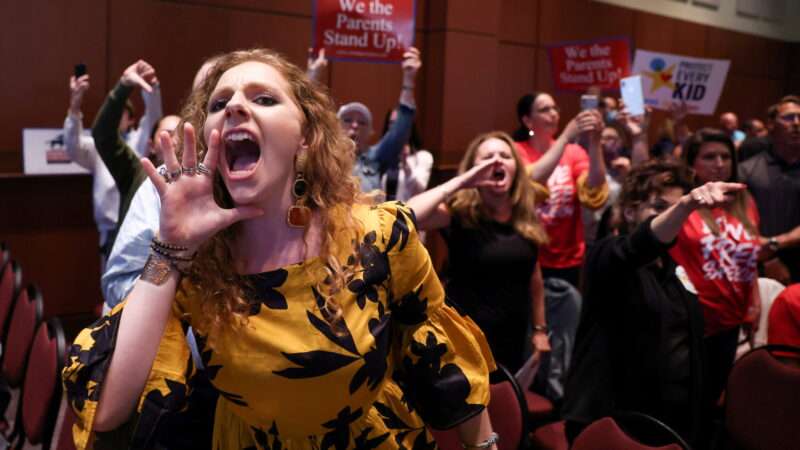
What seems to be happening much more than citizen-on-official violence, or credible threats thereof, is a recurring reaction of bewilderment on the part of the (often volunteer) school board members in the face of vein-throbbing parental outrage and doubtlessly some pretty bizarro vox-populi rants. Some board members are spooked, some don’t consider the emotional conflict worth the hassle, and some, like Mankato, Minnesota, School Board Chair Jodi Sapp, think the way out of the mess is to declare that this “is not a meeting that belongs to the public,” and then require any citizen speaker to state his or her name and home address into a microphone:

There have been indeed acts of personal violence and physical intimidation at school board meetings this summer and fall. But how many?

In its notorious but still successful letter of September 29 requesting “immediate” federal law enforcement assistance “to protect our students, school board members, and educators who are susceptible to acts of violence,” the National School Board Association (NSBA) mentioned and linked to 20 discrete incidents, using such summative language as “attacks against school board members and educators,” and “acts of malice, violence, and threats against public school officials.”

How many of the 20 incidents included a physical altercation? The bulk of them (I count 13) were meetings disrupted by shouting or defiance of mask policies. As best as I can reckon, the NSBA letter contained two references to people coming to blows: a guy in Illinois punching the school official who was escorting him out, and the now-infamous (and still-disputed) case in Loudon County, Virginia, where the father of a girl who had been sexually assaulted in a school bathroom went berserk after hearing the superintendent say that, “To my knowledge, we don’t have any record of assaults occurring in our restrooms.”

The Loudon County arrest in particular has stoked local, state, and national outrage, with all the wild-eyed truth bending that comes with it. (The NSBA letter misportrayed the incident as being tied to discussion of “critical race theory and…equity issues”; conservatives have since inaccurately blamed the attack on the school’s transgender bathroom policies.) And the personalized vitriol directed at Loudon officials has been particularly vile, worthy of heightened law enforcement attention. Still, a violent reaction from a lone father distraught over his daughter’s assault seems a poor fit for a national trend story.

There have been other acts of violence not listed in the NSBA letter—there were reportedly multiple fights in a Missouri parking lot after a September meeting on masking, for example. But the fact that we’re still counting on one hand, maybe two, the number of times people at our near testy school board meetings this year have thrown hands, in a country of 14,000 or so school boards, suggests a far more modest contextual presentation of the conflicts than we have seen in the press.

“GOP Demands Justice Department Back Off Threat To Protect School Board Members From Violent Mobs,” ran the headline this week at Above the Law. Such lopsided hyperbole, and contempt for swaths of the citizenry, has (along with restrictive blue-state educational COVID-19 policies) driven at least a half-dozen school-opening advocates I follow on Twitter away from a Democratic Party they’ve spent their lives voting for. And it may yet push voters in Democratic Virginia to vote Republican for governor.

2) Claiming that parental outrage is a contrived, ginned-up “culture war” untethered from real-world concerns.

“Fox News can’t get enough of these congressional hearings in which GOP lawmakers bash AG Merrick Garland over manufactured controversies,” wrote CNN Senior Media Reporter Oliver Darcy this week in the Reliable Sources newsletter.

“Fox News helped amplify (if not create) a furor at school board meetings several months ago,” wrote Washington Post columnist Philip Bump last week. “Over the summer, this had the (intended) effect of establishing a tea-party-like movement from the base up—one that, like the tea party a decade ago, was carefully cultivated and tended….It’s an issue that was formed from the sheer energy of the culture war more than anything else.”

I do not recall Fox having such pull in San Francisco and New York City. Yet both cosmopolitan capitals have been the site of intense school board politics—not for months, but for years. Three of the seven board members of the San Francisco Unified School District are facing a recall vote this coming February, with backers of the effort (per Ballotpedia’s write-up) “frustrated that schools in the district remained closed for nearly a year in reaction to the COVID-19 pandemic,” and also “upset that the board had spent time voting to rename 44 buildings in the district rather than focusing on opening schools.”

From 2009–2020, Ballotpedia counted between 18 and 38 school board recalls per year, targeting between 46 and 91 members. In 2021 those numbers have more than doubled—84 recalls aiming at 215 officials. Now close your eyes and think real hard: What other motivations might recallers have besides the enjoyment of responding “How high?” when Fox News yells “Jump!”?

“The combination of extended Covid-related school closures; mask mandates; an increasingly extreme race- and gender-focused curriculum; and the removal of tests, honors classes and merit-based admissions has created a bumper crop of engaged—and, in many cases, enraged—parents rightfully concerned about what is happening in their children’s schools,” wrote Manhattan-based school activist and City Council candidate Maud Maron, a “lifelong liberal,” over at Bari Weiss’ Substack on October 11.

During the 19+ months of the COVID-19 pandemic, and particularly since the fall of 2020, the United States, particularly in its biggest cities, has been a global outlier when it comes to keeping schools closed, masking children, and (soon enough) mandating vaccines for 5-year-olds. These comparatively extreme policies, driven largely by the strength of teachers unions in parts of America’s decentralized schooling system, have understandably motivated some parents to get more involved in the decision-making process.

And one of the things that they discover there is that the education establishment, particularly but not only in big cities, has only accelerated recent trends of junking Gifted & Talented programs, removing selective entrance exams, constructing “controlled choice” admission systems, and centering curricula around “anti-racist” themes, all in the name of “equity.” These choices are divisive in the most placid of times, which a pandemic is decidedly not.

“We should call this controversy what it is—a scare campaign cooked up by G.O.P. operatives” and others to “limit our students’ education and understanding of historical and current events,” American Federation of Teachers President Randi Weingarten told The New York Times last week.

Well, no. As I have been writing about for two years now, the equity-based policy changes, and the way some education officials have bulldozed the concerns of affected parents, was already beginning to alienate families away from public schooling before the onset of the pandemic. Combined with the aforementioned COVID-19 restrictions, these radical alterations are fueling a K-12 exodus.

Sometimes media outlets cover these topics with nuance and detail. Other times they spend an inordinate amount of time fact-checking the semantic difference between the academic term critical race theory and the co-opting of the term by conservative activists as a negative political branding exercise. (A branding exercise, to be sure, that has led to bad policy results, such as a Texas Republican lawmaker this week compiling a list of 850 books that “might make students feel discomfort, guilt, anguish, or any other form of psychological distress because of their race or sex.”)

As I can testify from grisly firsthand experience, there are kooks at just about any public meeting (it takes one to know one), and those who are being motivated by the apocalyptic likes of Tucker Carlson are likely to have a heightened sense of crazy. But it’s a category error to characterize most participants at school board gatherings as being driven there by national media. These politics, and relationships, are local.

So when former President Barack Obama sneers that, “We don’t have time to be wasted on these phony trumped-up culture wars, this fake outrage, the right-wing media’s pedals to juice their ratings,” as he did by McAuliffe’s side on Saturday, it’s an insult to every last one of us who has dragged ass out to the local school meeting because we care about policies affecting our kids.

from Latest – Reason.com https://ift.tt/3mrJcnd
via IFTTT

Luttig versus Kopel on the right to bear arms

Former Fourth Circuit Judge Michael Luttig and I recently debated the Second Amendment right to bear arms, in a one-hour podcast sponsored by the National Constitution Center. Our topic was the imminent U.S. Supreme Court oral argument in New York State Rifle & Pistol Association v. Bruen, which will decide whether the right to bear arms is a meaningful individual right.

Judge Luttig is well-known to Volokh Conspiracy readers for his eminent career as a Court of Appeals Judge. To me, he is a constitutional hero because of the good advice he gave to Vice-President Pence, fortifying the Vice-President’s decision not to purport to have the power to reject electoral votes delivered to Congress by the States.

In the New York case, he and I both participated in amicus briefs. He was the lead amicus in a brief on behalf of several eminent Republicans, including former U.S. Representative Constance Morella (D.-Md.), whom the Baltimore Sun admiringly called “a champion” of “gun control.” (Morella holds center, delivers the goods, Balt. Sun, Sept. 25, 2000.) The Luttig amicus brief is critiqued in a recent VC post by Stephen Halbrook. My amicus brief, on behalf of professors who teach and write on Second Amendment law, is summarized in this post.

The debate, moderated by the Constitution Center’s Jeffrey Rosen, was very civil and detailed, and focused mainly on original meaning. In the course of the debate, Judge Luttig said that he was about to “make news,” and revealed a novel argument that he expects to be made before the Supreme Court on Wednesday.

Here is a summary of the some the key pro/con arguments from the debate, which addressed the key legal history issues in the case’s many briefs. The summary does not proceed in the exact same order as the debate did. I urge readers to listen to the debate for themselves, since there is an inherent bias in a debate summary written by one of the participants. Below, I usually present Judge Luttig’s position first, and then my position, although in the actual debate, sometimes I went first on a particular issue.

The debate presumed that text, history, and tradition (THT) should guide the Court’s decision. Most of leading amicus briefs on each side of the case take the same approach. Briefs relying mainly on the tiers of scrutiny approach used by most lower federal courts post-Heller are relatively rare.

Text

Luttig: In Heller, the Court correctly upheld the right to keep arms in the home. But the right to bear arms should be left to democratic decision-making via legislatures, as it always has been.

Kopel: That would be proper for the Mexican Constitution’s right to arms, which states: “The inhabitants of the United Mexican States have a right to arms in their homes . . .” (Note: The Mexican government does obey this constitutional provision, as detailed in my article on Mexico’s gun control laws.) The Second Amendment contains the right to keep and the right to bear. Both must be judicially enforced, although the laws for each do not have to be identical. For example, few states require a license to keep a handgun, but many require a license to carry a handgun.

Early laws

Luttig: Early American laws generally forbade gun carrying. This history is so clear that it shows that courts should not interfere with legislative limits on bearing arms.

Kopel: Early laws did restrict carrying by slaves and by Indians. For free persons in the colonial polity, the only law that supports Judge Luttig’s claim is the 1686 statute from East Jersey that banned concealed carry. That law didn’t survive the consolidation of the colonies of East Jersey and West Jersey into New Jersey.

Luttig: Three different types of laws broadly forbade carrying: England’s 1328 Statute of Northampton, similar state statutes, and surety of the peace statutes.

Kopel: There isn’t a single American case where anyone peaceably bearing arms was prosecuted under these laws. With the exception of two black men in Boston and two in D.C. who were sued under surety statutes; one of the four men could afford to appeal, and when he did, the city attorney dropped the case.

Luttig: The argument about non-enforcement is a fatal concession, particularly in Paul Clement’s reply brief for petitioners. Whatever the level of enforcement, the existence of the laws themselves show that such laws are constitutionally legitimate.

Kopel: The laws weren’t enforced against peaceable carry because they didn’t apply to peaceable carry.

Luttig: Several states had broad laws against bearing arms, either openly or concealed.

Kopel: Those laws only applied to persons who were engaged in overt misbehavior. For example, Massachusetts, 1692: “such as shall Ride, or go Armed Offensively before any of Their Majesties Justices, or other Their Officers or Ministers doing their Office, or elsewhere, by Night or by Day, in Fear or Affray of Their Majesties Liege People.” New Hampshire, 1699: “affrayers, rioters, disturbers or breakers of the peace, or any other who shall go armed offensively.”

Luttig: Statutory references to “fear,” “terror,” or “offensively,” describe the effects of anyone carrying a gun in public. They are not elements of the crime.

Kopel: Statutes specify the elements of a crime; they don’t engage in mid-sentence commentary on social harms of a crime. Every court agreed that these were elements of the crime and had to be included in the indictment.

Luttig: North Carolina adopted a similar law.

Kopel: That’s based on Francois-Xavier Martin’s 1792 statutory compilation, which in 1838 was officially declared by the State of North Carolina to be “utterly unworthy of the talents and industry of the distinguished compiler, omitting many statutes, always in force, and inserting many others, which never were, and never could have been in force, either in the Province, or in the State.”

Something I wish that I had remembered to say in the debate, but didn’t, is that Virginia provides conclusive proof that statutes like the above did not apply to peaceable carry. In 1786, Virginia enacted a near-verbatim version to the Statue of Northampton, including the phrase “in terror of the Country.” The amicus brief of Michael Bloomberg’s Everytown organization characterizes this as “a broad Northampton-style prohibition.” (p. 20).[The Everytown cite is 1786 Va. Laws 33, ch. 21, but I couldn’t find it there. In the HeinOnline Sessions Law Library, the statute  appears on page 554, ch. 140, of the 1819 Revised Code of Virginia, with a listed enactment date of 1786.]

Virginians plainly did not believe that a statute against carrying arms “in terror of the Country” forbade them to carry arms peaceably. The leading law book, and the leading constitutional treatise, of the Early Republic was the annotated American edition of Blackstone written by Virginia Court of Appeals Judge and William & Mary law professor St. George Tucker. Besides annotating Blackstone’s four volumes to show how American law was different from English law, Tucker wrote a fifth volume of his own analysis. There, Tucker delved at length into Matthew Hale’s influential 1736 English treatise, The History of the Pleas of the Crown. In England, said Hale, an assembly of armed men created a rebuttable presumption of treason. But according to Tucker, there was no “such presumption in America where the right to bear arms is recognized and secured in the constitution itself. In many parts of the United States, a man no more thinks, of going out of his house on any occasion, without his rifle or musket in his hand, than an European fine gentleman without his sword by his side.” 5 St. George Tucker, Blackstone’s Commentaries 17 (1803).

The Everytown brief provides a shorter version of the Tucker quote, and then argues: “This observation is of limited significance to the constitutional question. There is no question that some state and local governments, at some points in our history, have chosen to broadly allow public carry.” Everytown br., at 13.

Thus, Everytown acknowledges that Virginia in 1803 had “chosen to broadly allow public carry.” The acknowledgement undermines the assertion Everytown (and the similar assertion by Judge Luttig’s brief) that Virginia’s 1786 statute Northampton statute amounted to “a broad …. prohibition.”

What did the 1328 Statute of Northampton actually require?

Luttig: The statute was a wide ban on carrying arms and remained so in colonial America, and thereafter in American law:

Kopel: Certainly not after 1686, when the statute was authoritatively construed by Sir John Knight’s Case to apply only to carrying that was “in malo animo” (with bad intent). As for what the meaning might have been in the 1300s or 1400s, the edicts of tyrannical kings do not define the scope of American rights centuries later. Indeed, the 1689 English Bill of Rights repudiated previous abuses by monarchs, and guaranteed the English right to arms. As stated in Edward Christian’s founding-era edition of Blackstone, “every one is at liberty to keep or carry a gun, if he does not use it for the destruction of game.” (Since commoners in England were not allowed to hunt.) Every post-1686 English case on the Statute of Northampton construed the Statute not to apply to peaceable carry. The North Carolina Supreme Court in 1843’s State v. Huntley authoritatively construed Northampton’s common law analogue to mean that: “the carrying of a gun per se constitutes no offence.”

Luttig: I’m going to make some news. In Knight’s Case, the Chief Justice of the King’s Bench misconstrued the statute. Properly read, the Statute comprehensively bans carrying arms. The “malo animo” rule is not based on the statute. This point may well be made at oral argument on Wednesday.

Mandatory carry

Luttig: Many American statutes required Americans to bear arms. (For a list, see page 25 of the Kopel brief). The widespread compulsion shows that bearing arms was always under government control. Such compulsion is incompatible with the existence of a right.

Kopel: That’s the same argument that was rejected in Heller. Many colonial and early state statutes required to people to keep arms. These applied to militiamen (all able-bodied males within a certain age range, most often 16-50). Many of the keeping mandates also applied to householders of any age or sex, including those not eligible to serve in the militia. The broad mandates to keep arms do not prove that governments ever had the authority to forbid keeping arms.

Pandora’s box

Luttig: If the Court rules for plaintiffs, it will open up a Pandora’s box. The Court will be forced to hear a multitude of follow-up cases deciding what areas are “sensitive places” (Heller‘s language) for where licensed carry can be prohibited.

Kopel: Courts in the 42 states where the right to bear arms is presently enforced have been doing so for years. There are fewer than two dozen reported cases thus far on “sensitive places,” and courts have well been able to handle them. Anytime courts get serious about enforcing a constitutional right, there will inevitably be some grey areas that need to be addressed. For example, enforcement of the First Amendment “right of the people peaceably to assemble” led to cases about certain areas where assemblies could be prohibited or specially regulated. Deciding such cases did not impose any great burden on the judiciary.

Final remarks

Kopel: Don’t worry about the doomsday scenarios propounded by opponents of the right to bear arms. The right is already respected in 42 states, and that data show that licensed carriers have a minuscule crime rate, approximately the same as law enforcement officers. If the rights of the people of New Jersey are restored, there’s no reason to expect that the people of that state will behave worse than the people of Pennsylvania, where the right to bear arms is already enforced.

Luttig: How I got involved in this case. My surprise at finding how strong the historical evidence was regarding the issue.

from Latest – Reason.com https://ift.tt/3pMyppC
via IFTTT

Supreme Court Agrees to Hear Case Challenging EPA Authority to Regulate Greenhouse Gases

Today the Supreme Court granted multiple petitions for certiorari seeking review of an opinion from the U.S. Court of Appeals for the D.C. Circuit concluding the Environmental Protection Agency has broad authority to regulate greenhouse gas emissions from power plants under the Clean Air Act. The grants are somewhat surprising because the EPA is not currently defending or seeking to enforce any such regulations, but suggest the Court is interested in clarifying the overall scope of the EPA’s regulatory authority, while potentially resolving some questions about agency authority more broadly at the same time.

The petitions all sought review of the D.C. Circuit’s opinion In invalidating the Trump Administration’s repeal of the Obama Administration’s Clean Power Plan (CPP) and adoption of the Affordable Clean Energy (ACE). In its decision, a divided panel of the D.C. Circuit concluded the EPA had far more regulatory authority than the Trump Administration admitted, and that the rescission of the CPP was arbitrary and capricious. Nonetheless, the D.C. Circuit panel did not require the EPA to readopt the CPP, and the Biden Administration has indicated it will start over from scratch and draft new regulations.

Although the Biden Administration has not yet proposed regulations of its own, the grant is bad news for them because a) the EPA will not know the scope of its regulatory authority here until the spring, and b) whatever authority remains will almost undoubtedly be less than what the EPA would like. It is unlikely the Court would have granted certiorari unless at least four justices were sufficiently concerned with the D.C. Circuit’s expansive interpretation of the EPA’s regulatory authority that they saw the need to intervene now. In this sense, by giving the Biden EPA all the regulatory authority it could have hoped for, the D.C. Circuit might have given the justices an inviting target. The fact of the grant is also further support for my argument that regulatory strategies for controlling greenhouse gas emissions are more vulnerable and brittle than alternatives, such as the adoption of a carbon tax.

This case could be tremendously significant beyond the question of the EPA’s regulation of greenhouse gases because (as detailed below) the questions presented encompass both the immediate question of what authority the EPA has under Section 7411 of the Clean Air Act, but also the broader question of how prescriptive Congress must be when delegating broad regulatory authority to federal agencies. This gives the Court room to refine and expand the “major questions” doctrine (as I have suggested it might want to do), as well as to perhaps identify some of the outer limits on delegation more generally.

Here is a quick rundown of the petitions accepted and the questions they present.

West Virginia v. EPA

In 42 U.S.C. § 7411(d), an ancillary provision of the Clean Air Act, did Congress constitutionally authorize the Environmental Protection Agency to issue significant rules—including those capable of reshaping the nation’s electricity grids and unilaterally decarbonizing virtually any sector of the economy—without any limits on what the agency can require so long as it considers cost, nonair impacts, and energy requirements?

North American Coal Corp. v. EPA

Whether 42 U.S.C. § 7411(d), which authorizes the EPA to impose standards “for any existing source” based on limits “achievable through the application of the best system of emission reduction” that has been “adequately demonstrated,” grants the EPA authority not only to impose standards based on technology and methods that can be applied at and achieved by that existing source, but also allows the agency to develop
industry-wide systems like cap-and-trade regimes.

Westmoreland Mining Holdings LLC v. EPA

Whether EPA may employ 42 U.S.C. § 7411(d) to impose standards of performance on existing stationary sources that are regulated under the “hazardous air pollutants” program of 42 U.S.C. § 7412.

[The Court did not grant certiorari on a second question presented in this petition.]

North Dakota v. EPA

Can EPA promulgate regulations for existing stationary sources that require States to apply binding nationwide “performance standards” at a generation-sector-wide level, instead of at the individual source level, and can those regulations deprive States of all implementation and decision making power in creating their Section 111(d) plans?

Given the range and wording of the questions presented, the Court will have the ability to address the scope of EPA’s authority in a narrow, technical way (relying on the Clean Air Act’s text) or in a broad way, focusing on whether and how Congress may delegate broad regulatory authority to federal agencies, or somewhere in-between. Whichever way the Court goes, this will undoubtedly be the most important environmental law case on the Court’s docket this term, and could well become one of the most significant environmental law cases of all time.

from Latest – Reason.com https://ift.tt/3EJps4P
via IFTTT

Journalist Butchery of School Board Protests Upending Politics in Virginia and Elsewhere


Loudon

The media pile-on atop Sen. Ted Cruz (R–Texas) for his comments Wednesday characterizing mock Nazi salutes at school board meetings as First Amendment–protected speech is not, unfortunately, an aberrational event when it comes to news coverage this fall of parents publicly registering their discontent with various contentious K-12 policies.

Not a day goes by without the media comparing raucous school board meetings to the January 6 Capitol Hill riots, attributing the increase in parental outrage to racism and/or manipulation by cynical puppet masters, conducting laughably one-sided fact-checks, using the phrase “Republicans seize” unironically, and taking at face value education-establishment claims that all curricular and organizational changes made in the name of racial equity are merely about being more accurate in the teaching of history.

Sometimes most or even all of these boxes can get checked off in a single article or broadcast segment. Such as on CNN’s Anderson Cooper 360 Wednesday night, when, after a minutes-long, head-shaking lecture from Cooper about how “facts are facts,” CNN legal analyst Jeffrey Toobin came on to provide this tendentious explanation for why school board politics have become heated enough to animate GOP senators and change the trajectory of next week’s Virginia gubernatorial election.

“It’s really important to remember why we are talking about school boards at all: because it’s about white supremacy, and that’s on the rise in the Republican Party,” Toobin charged. “The reason school boards are controversial is that some school boards have dared to teach that, you know, civil rights and African American rights have not been so great in this country over the centuries, like when we had slavery and when we had Jim Crow. And that has so outraged the Republican Party—telling the truth about race in America—that they feel the way to win elections and to win the governorship in Virginia, is to demonize these school boards for daring to tell the truth about race in America. And that’s really the core of what’s going on here.”

The progressive journalist Zaid Jilani, who lives in northern Virginia and teaches part time there, retorted on an episode of The Fifth Column podcast Wednesday that Toobin’s vision bore no resemblance to what he’s experienced on the ground.

“Those debates actually have been happening for a number of months, before this all became like a national thing,” Jilani said. “There were debates about some of the selective high schools, and…should they use testing to get people in, should it be a holistic process. There were debates about curriculum, there were debates about COVID and masking. And I don’t think at any point in those debates did any white supremacists show up. I didn’t see anyone in a Klan hood.”

There is something revealingly incongruous about a news organization that in one breath conducts hair-splitting fact-checks deferring to the government’s of view (“In fact, there’s no mention of ‘parents’…at all in the memo, none,” Cooper said triumphantly Wednesday, about the controversial October 4 Justice Department directive to have federal agents be on the lookout for anti–school board violence), then in the next being content to nod along when a colleague accuses citizen participants in democracy and a major political party of being primarily motivated by white supremacy.

Since this issue is not going away anytime soon, particularly if Republican gubernatorial candidate Glenn Youngkin upsets Virginia power pol Terry McAuliffe in the governor’s race next week, it’s worth being on the lookout for recurrent media framing devices that distort the depiction of an important set of debates. (K-12 instruction amounts to about 20 percent of all state and local government spending, don’t forget.) The point is not to be steered toward my admittedly idiosyncratic school policy preferences, but rather to become via pattern recognition a more discerning consumer of news.

Here are two of the most common ways the media warp school board politics.

1) Exaggerating the incidence of violence.

On October 22, in an article picked up widely and also adapted by the Associated Press, Minnesota Public Radio made this alarming assertion: “Violent school board meetings and threats toward school board members [in Minnesota] over these issues have caused dozens of board leaders to quit their positions.” Do note the serial pluralization.

Were there really multiple acts of violence, and multiple threats, causing “dozens” of board members to quit, in a state known for its niceness? The 757-word article did not explicitly list any; there was one hyperlink to a June piece that mentioned “someone had recently threatened on a community Facebook page to rush the podium” at one meeting, but no such bum-rush took place.

I was able to find one violent incident in Minnesota, from late September, when two members of the public who were on opposite sides of a school masking policy debate got into a brief scuffle that was broken up by a police officer.

What seems to be happening much more than citizen-on-official violence, or credible threats thereof, is a recurring reaction of bewilderment on the part of the (often volunteer) school board members in the face of vein-throbbing parental outrage and doubtlessly some pretty bizarro vox-populi rants. Some board members are spooked, some don’t consider the emotional conflict worth the hassle, and some, like Mankato, Minnesota, School Board Chair Jodi Sapp, think the way out of the mess is to declare that this “is not a meeting that belongs to the public,” and then require any citizen speaker to state his or her name and home address into a microphone:

There have been indeed acts of personal violence and physical intimidation at school board meetings this summer and fall. But how many?

In its notorious but still successful letter of September 29 requesting “immediate” federal law enforcement assistance “to protect our students, school board members, and educators who are susceptible to acts of violence,” the National School Board Association (NSBA) mentioned and linked to 20 discrete incidents, using such summative language as “attacks against school board members and educators,” and “acts of malice, violence, and threats against public school officials.”

How many of the 20 incidents included a physical altercation? The bulk of them (I count 13) were meetings disrupted by shouting or defiance of mask policies. As best as I can reckon, the NSBA letter contained two references to people coming to blows: a guy in Illinois punching the school official who was escorting him out, and the now-infamous (and still-disputed) case in Loudon County, Virginia, where the father of a girl who had been sexually assaulted in a school bathroom went berserk after hearing the superintendent say that, “To my knowledge, we don’t have any record of assaults occurring in our restrooms.”

The Loudon County arrest in particular has stoked local, state, and national outrage, with all the wild-eyed truth bending that comes with it. (The NSBA letter misportrayed the incident as being tied to discussion of “critical race theory and…equity issues”; conservatives have since inaccurately blamed the attack on the school’s transgender bathroom policies.) And the personalized vitriol directed at Loudon officials has been particularly vile, worthy of heightened law enforcement attention. Still, a violent reaction from a lone father distraught over his daughter’s assault seems a poor fit for a national trend story.

There have been other acts of violence not listed in the NSBA letter—there were reportedly multiple fights in a Missouri parking lot after a September meeting on masking, for example. But the fact that we’re still counting on one hand, maybe two, the number of times people at our near testy school board meetings this year have thrown hands, in a country of 14,000 or so school boards, suggests a far more modest contextual presentation of the conflicts than we have seen in the press.

“GOP Demands Justice Department Back Off Threat To Protect School Board Members From Violent Mobs,” ran the headline this week at Above the Law. Such lopsided hyperbole, and contempt for swaths of the citizenry, has (along with restrictive blue-state educational COVID-19 policies) driven at least a half-dozen school-opening advocates I follow on Twitter away from a Democratic Party they’ve spent their lives voting for. And it may yet push voters in Democratic Virginia to vote Republican for governor.

2) Claiming that parental outrage is a contrived, ginned-up “culture war” untethered from real-world concerns.

“Fox News can’t get enough of these congressional hearings in which GOP lawmakers bash AG Merrick Garland over manufactured controversies,” wrote CNN Senior Media Reporter Oliver Darcy this week in the Reliable Sources newsletter.

“Fox News helped amplify (if not create) a furor at school board meetings several months ago,” wrote Washington Post columnist Philip Bump last week. “Over the summer, this had the (intended) effect of establishing a tea-party-like movement from the base up—one that, like the tea party a decade ago, was carefully cultivated and tended….It’s an issue that was formed from the sheer energy of the culture war more than anything else.”

I do not recall Fox having such pull in San Francisco and New York City. Yet both cosmopolitan capitals have been the site of intense school board politics—not for months, but for years. Three of the seven board members of the San Francisco Unified School District are facing a recall vote this coming February, with backers of the effort (per Ballotpedia’s write-up) “frustrated that schools in the district remained closed for nearly a year in reaction to the COVID-19 pandemic,” and also “upset that the board had spent time voting to rename 44 buildings in the district rather than focusing on opening schools.”

From 2009–2020, Ballotpedia counted between 18 and 38 school board recalls per year, targeting between 46 and 91 members. In 2021 those numbers have more than doubled—84 recalls aiming at 215 officials. Now close your eyes and think real hard: What other motivations might recallers have besides the enjoyment of responding “How high?” when Fox News yells “Jump!”?

“The combination of extended Covid-related school closures; mask mandates; an increasingly extreme race- and gender-focused curriculum; and the removal of tests, honors classes and merit-based admissions has created a bumper crop of engaged—and, in many cases, enraged—parents rightfully concerned about what is happening in their children’s schools,” wrote Manhattan-based school activist and City Council candidate Maud Maron, a “lifelong liberal,” over at Bari Weiss’ Substack on October 11.

During the 19+ months of the COVID-19 pandemic, and particularly since the fall of 2020, the United States, particularly in its biggest cities, has been a global outlier when it comes to keeping schools closed, masking children, and (soon enough) mandating vaccines for 5-year-olds. These comparatively extreme policies, driven largely by the strength of teachers unions in parts of America’s decentralized schooling system, have understandably motivated some parents to get more involved in the decision-making process.

And one of the things that they discover there is that the education establishment, particularly but not only in big cities, has only accelerated recent trends of junking Gifted & Talented programs, removing selective entrance exams, constructing “controlled choice” admission systems, and centering curricula around “anti-racist” themes, all in the name of “equity.” These choices are divisive in the most placid of times, which a pandemic is decidedly not.

“We should call this controversy what it is—a scare campaign cooked up by G.O.P. operatives” and others to “limit our students’ education and understanding of historical and current events,” American Federation of Teachers President Randi Weingarten told The New York Times last week.

Well, no. As I have been writing about for two years now, the equity-based policy changes, and the way some education officials have bulldozed the concerns of affected parents, was already beginning to alienate families away from public schooling before the onset of the pandemic. Combined with the aforementioned COVID-19 restrictions, these radical alterations are fueling a K-12 exodus.

Sometimes media outlets cover these topics with nuance and detail. Other times they spend an inordinate amount of time fact-checking the semantic difference between the academic term critical race theory and the co-opting of the term by conservative activists as a negative political branding exercise. (A branding exercise, to be sure, that has led to bad policy results, such as a Texas Republican lawmaker this week compiling a list of 850 books that “might make students feel discomfort, guilt, anguish, or any other form of psychological distress because of their race or sex.”)

As I can testify from grisly firsthand experience, there are kooks at just about any public meeting (it takes one to know one), and those who are being motivated by the apocalyptic likes of Tucker Carlson are likely to have a heightened sense of crazy. But it’s a category error to characterize most participants at school board gatherings as being driven there by national media. These politics, and relationships, are local.

So when former President Barack Obama sneers that, “We don’t have time to be wasted on these phony trumped-up culture wars, this fake outrage, the right-wing media’s pedals to juice their ratings,” as he did by McAuliffe’s side on Saturday, it’s an insult to every last one of us who has dragged ass out to the local school meeting because we care about policies affecting our kids.

from Latest – Reason.com https://ift.tt/3mrJcnd
via IFTTT

Luttig versus Kopel on the right to bear arms

Former Fourth Circuit Judge Michael Luttig and I recently debated the Second Amendment right to bear arms, in a one-hour podcast sponsored by the National Constitution Center. Our topic was the imminent U.S. Supreme Court oral argument in New York State Rifle & Pistol Association v. Bruen, which will decide whether the right to bear arms is a meaningful individual right.

Judge Luttig is well-known to Volokh Conspiracy readers for his eminent career as a Court of Appeals Judge. To me, he is a constitutional hero because of the good advice he gave to Vice-President Pence, fortifying the Vice-President’s decision not to purport to have the power to reject electoral votes delivered to Congress by the States.

In the New York case, he and I both participated in amicus briefs. He was the lead amicus in a brief on behalf of several eminent Republicans, including former U.S. Representative Constance Morella (D.-Md.), whom the Baltimore Sun admiringly called “a champion” of “gun control.” (Morella holds center, delivers the goods, Balt. Sun, Sept. 25, 2000.) The Luttig amicus brief is critiqued in a recent VC post by Stephen Halbrook. My amicus brief, on behalf of professors who teach and write on Second Amendment law, is summarized in this post.

The debate, moderated by the Constitution Center’s Jeffrey Rosen, was very civil and detailed, and focused mainly on original meaning. In the course of the debate, Judge Luttig said that he was about to “make news,” and revealed a novel argument that he expects to be made before the Supreme Court on Wednesday.

Here is a summary of the some the key pro/con arguments from the debate, which addressed the key legal history issues in the case’s many briefs. The summary does not proceed in the exact same order as the debate did. I urge readers to listen to the debate for themselves, since there is an inherent bias in a debate summary written by one of the participants. Below, I usually present Judge Luttig’s position first, and then my position, although in the actual debate, sometimes I went first on a particular issue.

The debate presumed that text, history, and tradition (THT) should guide the Court’s decision. Most of leading amicus briefs on each side of the case take the same approach. Briefs relying mainly on the tiers of scrutiny approach used by most lower federal courts post-Heller are relatively rare.

Text

Luttig: In Heller, the Court correctly upheld the right to keep arms in the home. But the right to bear arms should be left to democratic decision-making via legislatures, as it always has been.

Kopel: That would be proper for the Mexican Constitution’s right to arms, which states: “The inhabitants of the United Mexican States have a right to arms in their homes . . .” (Note: The Mexican government does obey this constitutional provision, as detailed in my article on Mexico’s gun control laws.) The Second Amendment contains the right to keep and the right to bear. Both must be judicially enforced, although the laws for each do not have to be identical. For example, few states require a license to keep a handgun, but many require a license to carry a handgun.

Early laws

Luttig: Early American laws generally forbade gun carrying. This history is so clear that it shows that courts should not interfere with legislative limits on bearing arms.

Kopel: Early laws did restrict carrying by slaves and by Indians. For free persons in the colonial polity, the only law that supports Judge Luttig’s claim is the 1686 statute from East Jersey that banned concealed carry. That law didn’t survive the consolidation of the colonies of East Jersey and West Jersey into New Jersey.

Luttig: Three different types of laws broadly forbade carrying: England’s 1328 Statute of Northampton, similar state statutes, and surety of the peace statutes.

Kopel: There isn’t a single American case where anyone peaceably bearing arms was prosecuted under these laws. With the exception of two black men in Boston and two in D.C. who were sued under surety statutes; one of the four men could afford to appeal, and when he did, the city attorney dropped the case.

Luttig: The argument about non-enforcement is a fatal concession, particularly in Paul Clement’s reply brief for petitioners. Whatever the level of enforcement, the existence of the laws themselves show that such laws are constitutionally legitimate.

Kopel: The laws weren’t enforced against peaceable carry because they didn’t apply to peaceable carry.

Luttig: Several states had broad laws against bearing arms, either openly or concealed.

Kopel: Those laws only applied to persons who were engaged in overt misbehavior. For example, Massachusetts, 1692: “such as shall Ride, or go Armed Offensively before any of Their Majesties Justices, or other Their Officers or Ministers doing their Office, or elsewhere, by Night or by Day, in Fear or Affray of Their Majesties Liege People.” New Hampshire, 1699: “affrayers, rioters, disturbers or breakers of the peace, or any other who shall go armed offensively.”

Luttig: Statutory references to “fear,” “terror,” or “offensively,” describe the effects of anyone carrying a gun in public. They are not elements of the crime.

Kopel: Statutes specify the elements of a crime; they don’t engage in mid-sentence commentary on social harms of a crime. Every court agreed that these were elements of the crime and had to be included in the indictment.

Luttig: North Carolina adopted a similar law.

Kopel: That’s based on Francois-Xavier Martin’s 1792 statutory compilation, which in 1838 was officially declared by the State of North Carolina to be “utterly unworthy of the talents and industry of the distinguished compiler, omitting many statutes, always in force, and inserting many others, which never were, and never could have been in force, either in the Province, or in the State.”

Something I wish that I had remembered to say in the debate, but didn’t, is that Virginia provides conclusive proof that statutes like the above did not apply to peaceable carry. In 1786, Virginia enacted a near-verbatim version to the Statue of Northampton, including the phrase “in terror of the Country.” The amicus brief of Michael Bloomberg’s Everytown organization characterizes this as “a broad Northampton-style prohibition.” (p. 20).[The Everytown cite is 1786 Va. Laws 33, ch. 21, but I couldn’t find it there. In the HeinOnline Sessions Law Library, the statute  appears on page 554, ch. 140, of the 1819 Revised Code of Virginia, with a listed enactment date of 1786.]

Virginians plainly did not believe that a statute against carrying arms “in terror of the Country” forbade them to carry arms peaceably. The leading law book, and the leading constitutional treatise, of the Early Republic was the annotated American edition of Blackstone written by Virginia Court of Appeals Judge and William & Mary law professor St. George Tucker. Besides annotating Blackstone’s four volumes to show how American law was different from English law, Tucker wrote a fifth volume of his own analysis. There, Tucker delved at length into Matthew Hale’s influential 1736 English treatise, The History of the Pleas of the Crown. In England, said Hale, an assembly of armed men created a rebuttable presumption of treason. But according to Tucker, there was no “such presumption in America where the right to bear arms is recognized and secured in the constitution itself. In many parts of the United States, a man no more thinks, of going out of his house on any occasion, without his rifle or musket in his hand, than an European fine gentleman without his sword by his side.” 5 St. George Tucker, Blackstone’s Commentaries 17 (1803).

The Everytown brief provides a shorter version of the Tucker quote, and then argues: “This observation is of limited significance to the constitutional question. There is no question that some state and local governments, at some points in our history, have chosen to broadly allow public carry.” Everytown br., at 13.

Thus, Everytown acknowledges that Virginia in 1803 had “chosen to broadly allow public carry.” The acknowledgement undermines the assertion Everytown (and the similar assertion by Judge Luttig’s brief) that Virginia’s 1786 statute Northampton statute amounted to “a broad …. prohibition.”

What did the 1328 Statute of Northampton actually require?

Luttig: The statute was a wide ban on carrying arms and remained so in colonial America, and thereafter in American law:

Kopel: Certainly not after 1686, when the statute was authoritatively construed by Sir John Knight’s Case to apply only to carrying that was “in malo animo” (with bad intent). As for what the meaning might have been in the 1300s or 1400s, the edicts of tyrannical kings do not define the scope of American rights centuries later. Indeed, the 1689 English Bill of Rights repudiated previous abuses by monarchs, and guaranteed the English right to arms. As stated in Edward Christian’s founding-era edition of Blackstone, “every one is at liberty to keep or carry a gun, if he does not use it for the destruction of game.” (Since commoners in England were not allowed to hunt.) Every post-1686 English case on the Statute of Northampton construed the Statute not to apply to peaceable carry. The North Carolina Supreme Court in 1843’s State v. Huntley authoritatively construed Northampton’s common law analogue to mean that: “the carrying of a gun per se constitutes no offence.”

Luttig: I’m going to make some news. In Knight’s Case, the Chief Justice of the King’s Bench misconstrued the statute. Properly read, the Statute comprehensively bans carrying arms. The “malo animo” rule is not based on the statute. This point may well be made at oral argument on Wednesday.

Mandatory carry

Luttig: Many American statutes required Americans to bear arms. (For a list, see page 25 of the Kopel brief). The widespread compulsion shows that bearing arms was always under government control. Such compulsion is incompatible with the existence of a right.

Kopel: That’s the same argument that was rejected in Heller. Many colonial and early state statutes required to people to keep arms. These applied to militiamen (all able-bodied males within a certain age range, most often 16-50). Many of the keeping mandates also applied to householders of any age or sex, including those not eligible to serve in the militia. The broad mandates to keep arms do not prove that governments ever had the authority to forbid keeping arms.

Pandora’s box

Luttig: If the Court rules for plaintiffs, it will open up a Pandora’s box. The Court will be forced to hear a multitude of follow-up cases deciding what areas are “sensitive places” (Heller‘s language) for where licensed carry can be prohibited.

Kopel: Courts in the 42 states where the right to bear arms is presently enforced have been doing so for years. There are fewer than two dozen reported cases thus far on “sensitive places,” and courts have well been able to handle them. Anytime courts get serious about enforcing a constitutional right, there will inevitably be some grey areas that need to be addressed. For example, enforcement of the First Amendment “right of the people peaceably to assemble” led to cases about certain areas where assemblies could be prohibited or specially regulated. Deciding such cases did not impose any great burden on the judiciary.

Final remarks

Kopel: Don’t worry about the doomsday scenarios propounded by opponents of the right to bear arms. The right is already respected in 42 states, and that data show that licensed carriers have a minuscule crime rate, approximately the same as law enforcement officers. If the rights of the people of New Jersey are restored, there’s no reason to expect that the people of that state will behave worse than the people of Pennsylvania, where the right to bear arms is already enforced.

Luttig: How I got involved in this case. My surprise at finding how strong the historical evidence was regarding the issue.

from Latest – Reason.com https://ift.tt/3pMyppC
via IFTTT

Largest US Homeowner Raises Rents As Housing Crunch Persists

Largest US Homeowner Raises Rents As Housing Crunch Persists

Demand for single-family rental homes is off the charts and shows no signs of abating anytime soon, and that is pushing rents sky-high. This has allowed the largest owner of houses in the US to raise rents. 

According to Bloomberg, Invitation Homes Inc., which owns approximately 80,000 homes across the country, increased rents by 11% in the third quarter. They raised rents by 8% on renewals and 18% on new leases. Geographically, much of the new increases were found in the Southwest, where rents increased 30% in Las Vegas and 29% in Phoenix.

“It’s a little bit crazy,” CEO Dallas Tanner told analysts during a Thursday call. “There just isn’t enough quality housing available right now.”

In a separate report, CoreLogic wrote this week, on a national basis, rents rose 9.3% in August from the same period last year. Data showed that all top metro areas tracked by the real estate research firm recorded positive rent growth. The highest growth areas were Miami at 21%, Phoenix at 19%, and Las Vegas at 15%.

“Converging economic trends are driving a surge in single-family rent prices, and consumer confidence has driven an uptick in demand for both renters and buyers,” Molly Boesel, an economist at CoreLogic, said who was quoted by CNBC.  

“The ongoing preference toward more living space — and slim for-sale inventory — is forcing would-be buyers back into renting, putting significant strain on the single-family rental market,” Boesel said. 

However, Lawrence Yun, the National Association of Realtors’ chief economist, believes that surging rents could lead to more homebuyers to avoid rising inflation. 

Because if you can’t afford to rent, you can afford a million-dollar starter-home?

Needless to say, rising home prices and rents is more bad news for whatever is left of the middle class. Most Americans will soon be priced out of owning a home and stuck in a renting society where more and more of their incomes are used for shelter expenses, unable to save for a downpayment. 

Tyler Durden
Fri, 10/29/2021 – 17:25

via ZeroHedge News https://ift.tt/31gwaRd Tyler Durden

Supreme Court Agrees to Hear Case Challenging EPA Authority to Regulate Greenhouse Gases

Today the Supreme Court granted multiple petitions for certiorari seeking review of an opinion from the U.S. Court of Appeals for the D.C. Circuit concluding the Environmental Protection Agency has broad authority to regulate greenhouse gas emissions from power plants under the Clean Air Act. The grants are somewhat surprising because the EPA is not currently defending or seeking to enforce any such regulations, but suggest the Court is interested in clarifying the overall scope of the EPA’s regulatory authority, while potentially resolving some questions about agency authority more broadly at the same time.

The petitions all sought review of the D.C. Circuit’s opinion In invalidating the Trump Administration’s repeal of the Obama Administration’s Clean Power Plan (CPP) and adoption of the Affordable Clean Energy (ACE). In its decision, a divided panel of the D.C. Circuit concluded the EPA had far more regulatory authority than the Trump Administration admitted, and that the rescission of the CPP was arbitrary and capricious. Nonetheless, the D.C. Circuit panel did not require the EPA to readopt the CPP, and the Biden Administration has indicated it will start over from scratch and draft new regulations.

Although the Biden Administration has not yet proposed regulations of its own, the grant is bad news for them because a) the EPA will not know the scope of its regulatory authority here until the spring, and b) whatever authority remains will almost undoubtedly be less than what the EPA would like. It is unlikely the Court would have granted certiorari unless at least four justices were sufficiently concerned with the D.C. Circuit’s expansive interpretation of the EPA’s regulatory authority that they saw the need to intervene now. In this sense, by giving the Biden EPA all the regulatory authority it could have hoped for, the D.C. Circuit might have given the justices an inviting target. The fact of the grant is also further support for my argument that regulatory strategies for controlling greenhouse gas emissions are more vulnerable and brittle than alternatives, such as the adoption of a carbon tax.

This case could be tremendously significant beyond the question of the EPA’s regulation of greenhouse gases because (as detailed below) the questions presented encompass both the immediate question of what authority the EPA has under Section 7411 of the Clean Air Act, but also the broader question of how prescriptive Congress must be when delegating broad regulatory authority to federal agencies. This gives the Court room to refine and expand the “major questions” doctrine (as I have suggested it might want to do), as well as to perhaps identify some of the outer limits on delegation more generally.

Here is a quick rundown of the petitions accepted and the questions they present.

West Virginia v. EPA

In 42 U.S.C. § 7411(d), an ancillary provision of the Clean Air Act, did Congress constitutionally authorize the Environmental Protection Agency to issue significant rules—including those capable of reshaping the nation’s electricity grids and unilaterally decarbonizing virtually any sector of the economy—without any limits on what the agency can require so long as it considers cost, nonair impacts, and energy requirements?

North American Coal Corp. v. EPA

Whether 42 U.S.C. § 7411(d), which authorizes the EPA to impose standards “for any existing source” based on limits “achievable through the application of the best system of emission reduction” that has been “adequately demonstrated,” grants the EPA authority not only to impose standards based on technology and methods that can be applied at and achieved by that existing source, but also allows the agency to develop
industry-wide systems like cap-and-trade regimes.

Westmoreland Mining Holdings LLC v. EPA

Whether EPA may employ 42 U.S.C. § 7411(d) to impose standards of performance on existing stationary sources that are regulated under the “hazardous air pollutants” program of 42 U.S.C. § 7412.

[The Court did not grant certiorari on a second question presented in this petition.]

North Dakota v. EPA

Can EPA promulgate regulations for existing stationary sources that require States to apply binding nationwide “performance standards” at a generation-sector-wide level, instead of at the individual source level, and can those regulations deprive States of all implementation and decision making power in creating their Section 111(d) plans?

Given the range and wording of the questions presented, the Court will have the ability to address the scope of EPA’s authority in a narrow, technical way (relying on the Clean Air Act’s text) or in a broad way, focusing on whether and how Congress may delegate broad regulatory authority to federal agencies, or somewhere in-between. Whichever way the Court goes, this will undoubtedly be the most important environmental law case on the Court’s docket this term, and could well become one of the most significant environmental law cases of all time.

from Latest – Reason.com https://ift.tt/3EJps4P
via IFTTT

Cop Charged With Murder After Killing 11-Year-Old Girl in Car Ramming Assault


thumbnail

Police are overly fond of the practice they bloodlessly call the “precision immobilization technique,” which in layperson’s terms means ramming into a moving vehicle they want to stop. It is often done for something as simple as victimless traffic law enforcement.

This week, New York state trooper Christopher Baldner was charged with second-degree murder for his overzealous use of this technique on a vehicle evading his attempt to give the driver a speeding ticket. The second time he rammed the SUV in question from behind, he flipped it upside down over a guardrail and killed an 11-year-old girl, Monica Goods, who was a passenger in the vehicle (along with her mother and her 12-year-old sister).

Baldner had initially pulled over the driver, Monica’s father Tristin Goods, on Interstate 87 in Ulster County on December 22, 2020, for allegedly speeding while they were on their way to visit family for Christmas.

In an interview with the New York Daily News back in June, Goods described his memory of the interaction prior to his car being rammed:

“He was screaming at me, ‘You were going 100 miles per hour and you shook my car!’ Goods recalled.

“I said ‘The tractor trailer in front of me shook your car.’ I had my hands on the steering wheel. I didn’t get out of the car. I was no threat him,” Goods said. “I asked for a supervisor.”

The two argued — with the trooper demanding to know if there were “guns or drugs” in the car, Goods recounted.

“My wife said she was tired, and he said, ‘I don’t give a s–t if you’re tired,'” Good [sic] recalled.

The trooper returned to his cruiser — and when he returned, he flooded Goods’ SUV with pepper spray. Goods said the trooper was well aware there were young girls in the car when he sprayed.

“He didn’t warn us he was going to use pepper spray,” Goods said. “He didn’t say ‘Get out of the car’ or ‘You’re under arrest.'”

Goods said his daughters were crying, and he feared for his family’s safety. Instinctively, he said, he drove off.

“I didn’t know what he was going to do next,” Goods said. “I was like, ‘Holy s–t. This guy is going to kill me now.'”

Making chase after Goods as he tried to drive away, Baldner hit him twice and flipped the SUV.

Baldner had rammed into moving cars with passengers at least twice previously, though he had not previously murdered anyone doing so. His charges, as reported by the local NBC affiliate, “include second-degree murder, second-degree manslaughter and first-degree reckless endangerment.”

Baldner has a bail hearing on November 4, and faces a potential maximum of 25 years to life for the second-degree murder charge. Baldner has also been suspended from his job without pay. A state police spokesman told the Daily Freeman he could not recall in “recent times” a state trooper being indicted for murder.

Monica’s mother Michelle Surrency told the Chicago Defender, “She could make anybody laugh, it doesn’t matter how you felt and it hurts that we don’t have that no more….We were robbed and it’s not fair. It’s not fair.”

For its part, Baldner’s union, the Police Benevolent Association, says in a statement reported by Associated Press that “as this case makes its way through the legal system, we look forward to a review and public release of the facts, including the motorist’s reckless actions that started this chain of events.”

from Latest – Reason.com https://ift.tt/3vYdS2f
via IFTTT

Uranium Bull Case Strengthens As Japan Calls Nuclear “Key” To Its Decarbonization Goals

Uranium Bull Case Strengthens As Japan Calls Nuclear “Key” To Its Decarbonization Goals

Submitted by Quoth the Raven at QTR’s Fringe Finance,

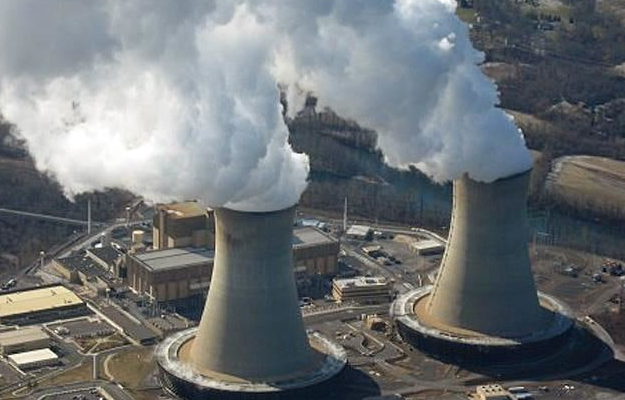
Days after the U.K. said that nuclear would be “at the heart” of its decarbonization strategy, Japan has now called nuclear reactor restarts “key” to achieving its own green energy goals. This marks a far quicker global adoption of nuclear during the ESG age than I had anticipated and, in my opinion, will likely bode well for my long-term uranium bull case.

Source: Anadolu

Last Friday, Japan adopted a new energy policy that went little noticed by those participating in the uranium market.

The plan seeks to bring the country to carbon neutrality by 2050, according to AP.

And while this plan is mostly in line with what many other countries are implementing, the proverbial angel for uranium investors may be in the details.

“Japan has been undecided over what to do about its nuclear power industry since the 2011 Fukushima plant disaster. It now says reactor restarts are key to meeting emissions targets as Japan tries to step up in the global effort against climate change,” the AP report reads.

Fumio Kishida, who is replacing Prime Minister Yoshihide Suga, is officially “a backer of nuclear plant restarts”, the report notes.

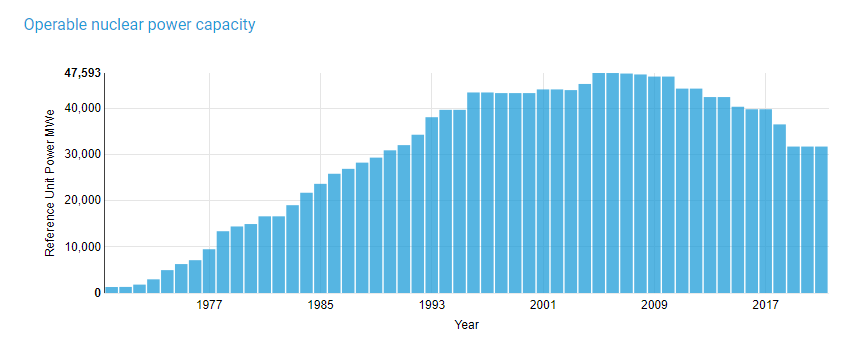
As you can see by the below chart, the country’s operable nuclear power capacity has dwindled in the years following the 2011 incident, after rising steadily in the 4 decades prior.

As common sense slowly starts to win the day in counties like Japan, I am expecting this capacity to once again rise to, and past, all time highs.

Source: World-Nuclear.org

I had pointed out a couple weeks ago a wonderful piece by Zerohedge that said Suga’s replacement would likely back nuclear.

The AP report continued:

The plan keeps the target for nuclear power unchanged at 20-22%. Japan says it aims to reduce its reliance on nuclear power as much as possible but that nuclear will remain an important energy source. Experts say a phase out is unlikely anytime soon.

Economy and industry minister Koichi Hagiuda has said “drastic energy conservation, maximum promotion of renewables and safe restarts of nuclear reactors” are key.

Japan will continue its nuclear fuel reprocessing cycle, in which spent nuclear fuel is converted to plutonium, despite the failure of its Monju plutonium-burning reactor and international concerns over safeguards for its plutonium stockpile.

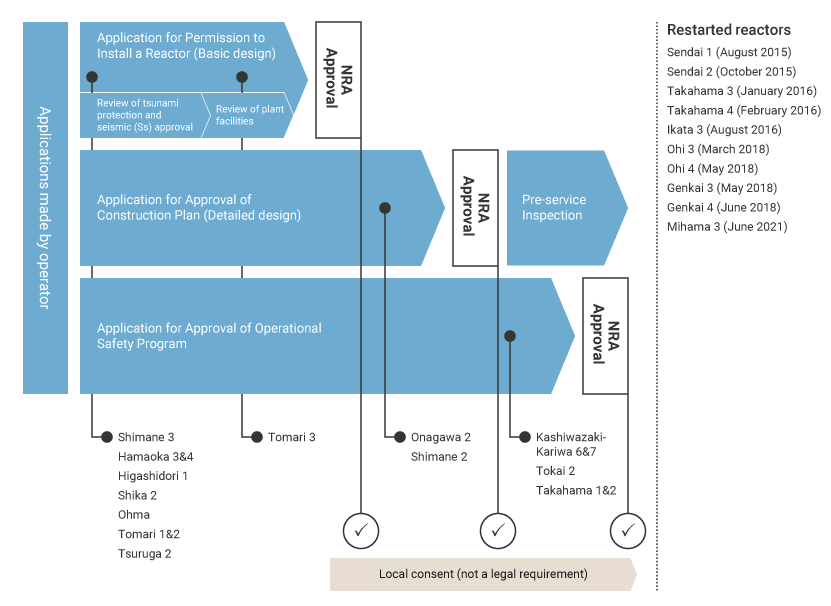
A government taskforce will “accelerate” restarts of reactors, which have been slowed by stricter safety standards set after the Fukushima meltdowns, the plan says.

And while new reactors don’t seem to be on the agenda just yet, common sense says they will be, in time. Japan, like France, is also looking at developing small modular reactors for power.

Remember, just days ago I noted that a second large uranium trust – in addition to Sprott’s already active trust – could soon be a buyer in the uranium spot market. I also noted that China could be in the midst of adoption nuclear, a path I thought would make tons of sense for the country. I explained my reasoning in this article:

Days prior to that, I wrote about how widespread coming adoption of nuclear as an ESG solution – especially in places like the U.K. – could be a serious catalyst that keeps uranium prices moving higher.

With Japan now seriously throwing its hat in the ring, I continue to expect long-term tailwinds for uranium heading into 2022 and plan to remain long the commodity.

As a wonderful supplement, the World Nuclear Association has prepared a massive and comprehensive report on the state of the nuclear industry in Japan, which can be read here.

Remember that I laid out my case for why I was going long uranium in detail in a subscriber-only post that can be viewed here.

Zerohedge readers get 10% off an annual subscription to my blog by using this special link here.

DISCLAIMER: I own URA, URNM, CCJ and have tons of uranium stocks and options. None of this is a solicitation to buy or sell securities. 

Tyler Durden
Fri, 10/29/2021 – 17:05

via ZeroHedge News https://ift.tt/3Btulgj Tyler Durden

Cop Charged With Murder After Killing 11-Year-Old Girl in Car Ramming Assault


thumbnail

Police are overly fond of the practice they bloodlessly call the “precision immobilization technique,” which in layperson’s terms means ramming into a moving vehicle they want to stop. It is often done for something as simple as victimless traffic law enforcement.

This week, New York state trooper Christopher Baldner was charged with second-degree murder for his overzealous use of this technique on a vehicle evading his attempt to give the driver a speeding ticket. The second time he rammed the SUV in question from behind, he flipped it upside down over a guardrail and killed an 11-year-old girl, Monica Goods, who was a passenger in the vehicle (along with her mother and her 12-year-old sister).

Baldner had initially pulled over the driver, Monica’s father Tristin Goods, on Interstate 87 in Ulster County on December 22, 2020, for allegedly speeding while they were on their way to visit family for Christmas.

In an interview with the New York Daily News back in June, Goods described his memory of the interaction prior to his car being rammed:

“He was screaming at me, ‘You were going 100 miles per hour and you shook my car!’ Goods recalled.

“I said ‘The tractor trailer in front of me shook your car.’ I had my hands on the steering wheel. I didn’t get out of the car. I was no threat him,” Goods said. “I asked for a supervisor.”

The two argued — with the trooper demanding to know if there were “guns or drugs” in the car, Goods recounted.

“My wife said she was tired, and he said, ‘I don’t give a s–t if you’re tired,'” Good [sic] recalled.

The trooper returned to his cruiser — and when he returned, he flooded Goods’ SUV with pepper spray. Goods said the trooper was well aware there were young girls in the car when he sprayed.

“He didn’t warn us he was going to use pepper spray,” Goods said. “He didn’t say ‘Get out of the car’ or ‘You’re under arrest.'”

Goods said his daughters were crying, and he feared for his family’s safety. Instinctively, he said, he drove off.

“I didn’t know what he was going to do next,” Goods said. “I was like, ‘Holy s–t. This guy is going to kill me now.'”

Making chase after Goods as he tried to drive away, Baldner hit him twice and flipped the SUV.

Baldner had rammed into moving cars with passengers at least twice previously, though he had not previously murdered anyone doing so. His charges, as reported by the local NBC affiliate, “include second-degree murder, second-degree manslaughter and first-degree reckless endangerment.”

Baldner has a bail hearing on November 4, and faces a potential maximum of 25 years to life for the second-degree murder charge. Baldner has also been suspended from his job without pay. A state police spokesman told the Daily Freeman he could not recall in “recent times” a state trooper being indicted for murder.

Monica’s mother Michelle Surrency told the Chicago Defender, “She could make anybody laugh, it doesn’t matter how you felt and it hurts that we don’t have that no more….We were robbed and it’s not fair. It’s not fair.”

For its part, Baldner’s union, the Police Benevolent Association, says in a statement reported by Associated Press that “as this case makes its way through the legal system, we look forward to a review and public release of the facts, including the motorist’s reckless actions that started this chain of events.”

from Latest – Reason.com https://ift.tt/3vYdS2f
via IFTTT