The California Recall Shows It’s Fine to Not Vote For Candidates You Don’t Support


recallsign_1161x653

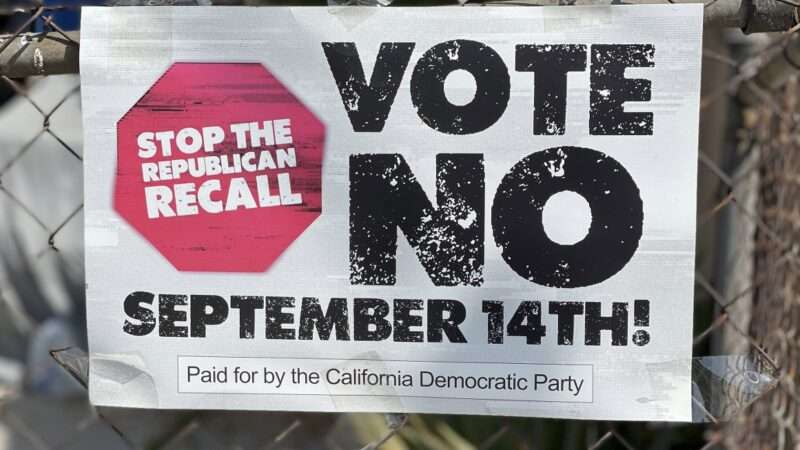
Had this week’s California recall election succeeded, millions of Democrats would have inadvertently helped to get Republican radio host Larry Elder elected governor. How? By choosing to reject alternatives to Gov. Gavin Newsom. There’s a lesson here in how Democrats and Republicans treat third-party voters and others who reject the options the two big parties feed them.

The recall failed, and it failed badly. The vote totals are still incomplete, but with about 75 percent of the ballots tallied, 3.3 million Californians voted to recall Newsom and 5.8 million voted to keep him.

But that was just the first question on the ballot. All the voters, regardless of how they voted on the first question, had the opportunity to choose one of the 46 candidates running to replace Newsom. Those votes don’t really matter now, since the recall failed. But obviously, each individual voter would have no way of knowing the recall would fail until after the election.

So far, the state has counted 9.2 million ballots. Only 5.1 million of those voters chose a candidate to replace Newsom. A full 4 million voters ignored the second question—which, to be clear, was something the Democratic establishment was encouraging them to do.

Elder got by far the most votes among the replacement candidates, with 2.3 million. In second place was Kevin Paffrath, a real estate YouTuber running as a Democrat. He received a mere 500,000 votes.

For the sake of argument, let’s assume all the voters who ignored the second question were Newsom supporters and Democrats. (In reality, there no doubt were a number of people who voted for the recall but declined to choose a successor and a number of Republicans who rejected the recall.) If all those people had voted for Paffrath, he would have beaten Elder. But if the recall had succeeded with the current replacement votes, the governor’s office would have changed parties, because those Newsom backers didn’t vote on the second question. Millions of Democrats essentially threw their second votes away, something both the major parties often accuse third-party voters of doing.

This is a thought exercise, and admittedly, a bit of a stretch. In order for the recall to have succeeded, millions of those very same people would had to have voted for the recall, meaning they no longer supported Newsom. And presumably, had they done so, they probably would have selected a replacement. There were several Democrats on the ballot, though the state Democratic Party declined to support or endorse any of them, and no major names within the party ran.

The people who declined to choose a successor didn’t know for sure that the recall would fail. But they knew that they didn’t want anybody else. So rather than choosing the most palatable of the 46 alternatives, they opted out. They rejected the choice.

Were they wrong to do so? Absolutely not. Yes, there was a chance that it would have backfired in their faces. But there’s no moral problem with looking at the choices in front of you and deciding to reject them all, or to go with some “fringe” choice that best represents your positions. These voters decided that Newsom was their man, and they weren’t going to settle for some random Democrats even if that meant that Elder might become governor.

Good for them. Well, not for supporting Newsom: He’s a terrible governor. But he’s the terrible governor that they want.

You might think that, having had the experience of deciding that the most morally correct response to the recall was to refuse to vote for a replacement, Democrats would learn that people who vote for third-party candidates or don’t vote at all might have good reasons to do so. Rather than blaming them for, say, Hillary Clinton’s presidential defeat, they might ask how the party ends up with such unappealing candidates that they have to beg, plead, and ultimately shame people into voting for them.

Instead, the Democratic establishment has concluded that democracy itself is to blame. The big argument right now is that recalls are too easy and the rules need to change. In fact, petitions circulate virtually every year to try to recall California governors and other state politicians. Very few of them ever make it to the vote.

Meanwhile, California already has mechanisms in place to deprive voters of candidate choices. The state’s top-two run-off system leaves many folks stuck with two candidates from the same political party in November, with third-party candidates shoved out months earlier.

Newsom’s recall arguably happened not because there was too much democracy but because there wasn’t enough. Too many people felt they had no say in the lockdowns or in Newsom’s authoritarian emergency orders. That the recall ever gained any traction at all reflected resistance to harmful policies that, despite what Newsom might claim, were not “following the science” about preventing the spread of COVID-19. Other states’ lawmakers have pushed back when governors abuse their emergency powers in a pandemic. But not in California, leaving citizens without a lot of recourse.

This is also why ballot initiatives have become such a big deal in California. Democratic leaders in this one-party state habitually pass laws that serve the needs of entrenched interests, leaving direct democracy as the citizens’ line of defense. We saw that with A.B. 5, the terrible law that absolutely demolishes Californians’ right to work as freelancers. It took a ballot initiative to weaken it, and the unions are still fighting it (and unfortunately winning). Sometimes ballot initiatives are the only way to bypass an unresponsive state government.

California is in not in danger of having too much democracy. Citizens should slap down (metaphorically) any attempt by the Democratic Party to undermine the state’s recall systems, which progressives put in place to give citizens the ability to respond when politicians are so beholden to special interests that voters are just ignored.

Above all, the number of people who ignored the second question on their recall ballots should remind Democrats that not voting can be a moral rejection of bad choices. Neither Democrats nor Republicans are entitled to voter support just because they’ve managed to create a political environment where they’re only the options voters are given. That’s anti-democratic.

from Latest – Reason.com https://ift.tt/3ErY5wv
via IFTTT
Clearview AI, the First Amendment, and Facial Recognition

An interesting commentary by Clayton Kozinski (Lehotsky Keller LLP) on the lawsuit in which the Duke First Amendment Clinic, Jane Bambauer, and I filed an amicus brief (which unfortunately didn’t persuade the judge); here’s the opening:

The conversation about facial recognition technology typically centers around privacy. But an ongoing lawsuit in Illinois shows that it has just as much to do with free expression.

Clearview AI is the defendant in ACLU v. Clearview AI. It produces powerful facial recognition technology used by law enforcement across the country. Like all facial recognition software, Clearview’s is powered by faceprints.

The Illinois Superior Court recently rejected Clearview’s motion to dismiss argument that the Illinois Biometric Information Privacy Act (BIPA) impermissibly infringes its First Amendment rights. BIPA prohibits companies from collecting “faceprints” — geometric measurements of facial dimensions — without first obtaining individual consent….

from Latest – Reason.com https://ift.tt/3hGsldj
via IFTTT

Taxing the Rich Isn’t Enough to Pay for Democrats’ Welfare State. They’ll Need To Soak the Middle Class Too.


Illustration_ Lex Villena, Lauren Roberts

Democrats are ready to raise taxes. They want more revenue, in part to fund an out-of-this-world amount of new spending. Some simply want to soak the rich, as Rep. Alexandria Ocasio-Cortez (D–N.Y.) plainly signaled at the Met Gala by wearing a white dress with “TAX THE RICH” scrawled across it in red paint. While the public may be more receptive to the idea because of concerns over high budget deficits, let’s not be naive—many voters believe that these tax hikes won’t hit them. There’s so much wrong about this assumption.

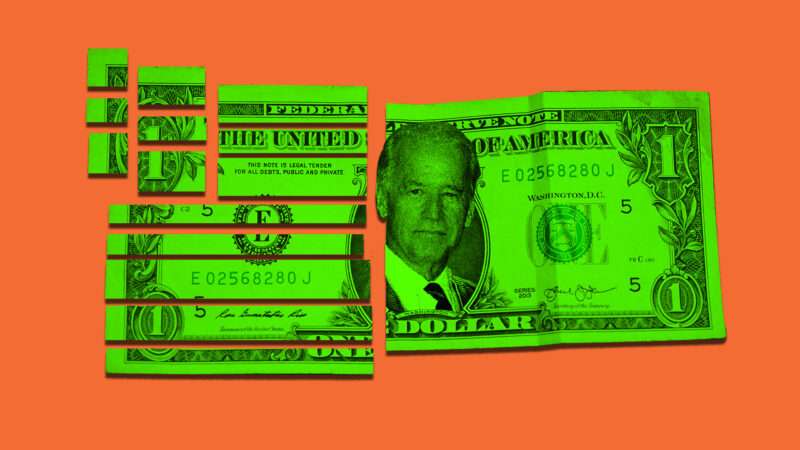
Writing for The Dispatch, the Manhattan Institute’s Brian Riedl documents President Joe Biden’s spending plan, which would expand federal government spending by $11 trillion over the next decade. This spending would help fund a cradle-to-grave new world in which government is omnipresent in our lives. The spending would increase family assistance by $550 billion. Another $700 billion would be wasted on counterproductive “Buy America” provisions. Expansion of the Affordable Care Act would cost another $1.4 trillion; some $2 trillion would go to a Green New Deal; K-12 schools would get more money. All of this is on top of the $6.6 trillion spent on COVID-19 relief.

Biden would partially pay for this $11 trillion with $3.6 trillion from higher taxes. As Riedl explains, “it would represent the largest permanent tax increase since World War II.” Even if the president got the revenue he hopes to collect with these tax hikes—which won’t happen once people start moving their capital around to avoid the oppressive tax burden—it would only cover a third of the new spending. Meanwhile, the House Democrats have their own $2.2 trillion tax plan, which covers even less of the new spending.

Many Americans may not care if they believe the spending could benefit them and other people will shoulder the tax bill, but that’s wishful thinking. They may not be the ones cutting a bigger check to the IRS, but many of them will shoulder some of the economic burden of the tax hikes through lower wages and higher prices.

Also, while many taxpayers may end up with more money in their pockets for a while, that won’t last. There simply aren’t enough rich people to pay for all the new spending. Collectively, the rich don’t even have enough wealth to pay for the kind of cradle-to-grave government that Democrats dream of. It’s only a matter of time before the politicians selling the dream of cost-free big government realize they need to raise taxes on ordinary Americans.

Just look at my native country of France for how it will be done. Pre-COVID-19, France’s revenue per GDP was 45.4 percent. It wasn’t simply raised on the backs of the rich. In fact, France raises most of its revenue through the Value Added Tax, social insurance, property tax, and payroll. Those taxes are regressive as they consume a larger share of low- and middle-income earners’ income and have fewer effects on high-income earners. Add to these some 214 taxes and duties, along with an extremely high gasoline tax, and you end up with an oppressively burdensome tax system for everyone, even the poor.

By contrast, and contrary to Ocasio-Cortez’s belief, the U.S. federal income tax is unusually progressive because it raises most of its revenue from the income tax, which some 61 percent of households don’t pay. In other words, the bulk of federal taxes is already paid by higher income taxpayers, leaving other income groups particularly vulnerable to future higher taxes.

Don’t think I’m saying that if the Democrats get it wrong, the Republicans must get it right. They don’t. GOPers say they prefer lower taxes, but they do nothing to restrain spending. I saw evidence of this during the presidencies of Donald Trump and George W. Bush. My colleague Matt Mitchell, along with our former colleague Andrea O’Sullivan, wrote a great paper documenting what’s wrong with this approach. They explain, “Cutting taxes allows policymakers to give voters something they want, while appearing to rein in the size of government. But this is a temporary illusion unless the tax cuts are combined with necessary reductions in spending—a far more difficult but also the more important task.”

With few exceptions, nobody seems ready to tell the American people how far taxes will have to rise to satisfy Washington’s gluttony for spending. Unfortunately, that’s a lesson they will learn the hard way, and perhaps sooner than later.

COPYRIGHT 2021 CREATORS.COM

from Latest – Reason.com https://ift.tt/3ClIXzc
via IFTTT

Clearview AI, the First Amendment, and Facial Recognition

An interesting commentary by Clayton Kozinski (Lehotsky Keller LLP) on the lawsuit in which the Duke First Amendment Clinic, Jane Bambauer, and I filed an amicus brief (which unfortunately didn’t persuade the judge); here’s the opening:

The conversation about facial recognition technology typically centers around privacy. But an ongoing lawsuit in Illinois shows that it has just as much to do with free expression.

Clearview AI is the defendant in ACLU v. Clearview AI. It produces powerful facial recognition technology used by law enforcement across the country. Like all facial recognition software, Clearview’s is powered by faceprints.

The Illinois Superior Court recently rejected Clearview’s motion to dismiss argument that the Illinois Biometric Information Privacy Act (BIPA) impermissibly infringes its First Amendment rights. BIPA prohibits companies from collecting “faceprints” — geometric measurements of facial dimensions — without first obtaining individual consent….

from Latest – Reason.com https://ift.tt/3hGsldj
via IFTTT

Taxing the Rich Isn’t Enough to Pay for Democrats’ Welfare State. They’ll Need To Soak the Middle Class Too.


Illustration_ Lex Villena, Lauren Roberts

Democrats are ready to raise taxes. They want more revenue, in part to fund an out-of-this-world amount of new spending. Some simply want to soak the rich, as Rep. Alexandria Ocasio-Cortez (D–N.Y.) plainly signaled at the Met Gala by wearing a white dress with “TAX THE RICH” scrawled across it in red paint. While the public may be more receptive to the idea because of concerns over high budget deficits, let’s not be naive—many voters believe that these tax hikes won’t hit them. There’s so much wrong about this assumption.

Writing for The Dispatch, the Manhattan Institute’s Brian Riedl documents President Joe Biden’s spending plan, which would expand federal government spending by $11 trillion over the next decade. This spending would help fund a cradle-to-grave new world in which government is omnipresent in our lives. The spending would increase family assistance by $550 billion. Another $700 billion would be wasted on counterproductive “Buy America” provisions. Expansion of the Affordable Care Act would cost another $1.4 trillion; some $2 trillion would go to a Green New Deal; K-12 schools would get more money. All of this is on top of the $6.6 trillion spent on COVID-19 relief.

Biden would partially pay for this $11 trillion with $3.6 trillion from higher taxes. As Riedl explains, “it would represent the largest permanent tax increase since World War II.” Even if the president got the revenue he hopes to collect with these tax hikes—which won’t happen once people start moving their capital around to avoid the oppressive tax burden—it would only cover a third of the new spending. Meanwhile, the House Democrats have their own $2.2 trillion tax plan, which covers even less of the new spending.

Many Americans may not care if they believe the spending could benefit them and other people will shoulder the tax bill, but that’s wishful thinking. They may not be the ones cutting a bigger check to the IRS, but many of them will shoulder some of the economic burden of the tax hikes through lower wages and higher prices.

Also, while many taxpayers may end up with more money in their pockets for a while, that won’t last. There simply aren’t enough rich people to pay for all the new spending. Collectively, the rich don’t even have enough wealth to pay for the kind of cradle-to-grave government that Democrats dream of. It’s only a matter of time before the politicians selling the dream of cost-free big government realize they need to raise taxes on ordinary Americans.

Just look at my native country of France for how it will be done. Pre-COVID-19, France’s revenue per GDP was 45.4 percent. It wasn’t simply raised on the backs of the rich. In fact, France raises most of its revenue through the Value Added Tax, social insurance, property tax, and payroll. Those taxes are regressive as they consume a larger share of low- and middle-income earners’ income and have fewer effects on high-income earners. Add to these some 214 taxes and duties, along with an extremely high gasoline tax, and you end up with an oppressively burdensome tax system for everyone, even the poor.

By contrast, and contrary to Ocasio-Cortez’s belief, the U.S. federal income tax is unusually progressive because it raises most of its revenue from the income tax, which some 61 percent of households don’t pay. In other words, the bulk of federal taxes is already paid by higher income taxpayers, leaving other income groups particularly vulnerable to future higher taxes.

Don’t think I’m saying that if the Democrats get it wrong, the Republicans must get it right. They don’t. GOPers say they prefer lower taxes, but they do nothing to restrain spending. I saw evidence of this during the presidencies of Donald Trump and George W. Bush. My colleague Matt Mitchell, along with our former colleague Andrea O’Sullivan, wrote a great paper documenting what’s wrong with this approach. They explain, “Cutting taxes allows policymakers to give voters something they want, while appearing to rein in the size of government. But this is a temporary illusion unless the tax cuts are combined with necessary reductions in spending—a far more difficult but also the more important task.”

With few exceptions, nobody seems ready to tell the American people how far taxes will have to rise to satisfy Washington’s gluttony for spending. Unfortunately, that’s a lesson they will learn the hard way, and perhaps sooner than later.

COPYRIGHT 2021 CREATORS.COM

from Latest – Reason.com https://ift.tt/3ClIXzc
via IFTTT

The $700 Billion Gimmick at the Center of Biden’s Tax Plan


adam-nir-wTO6MWpMrJk-unsplash

Central to President Joe Biden’s plan to hike federal spending by $3.5 trillion is a promise that middle-class Americans won’t face a tax increase.

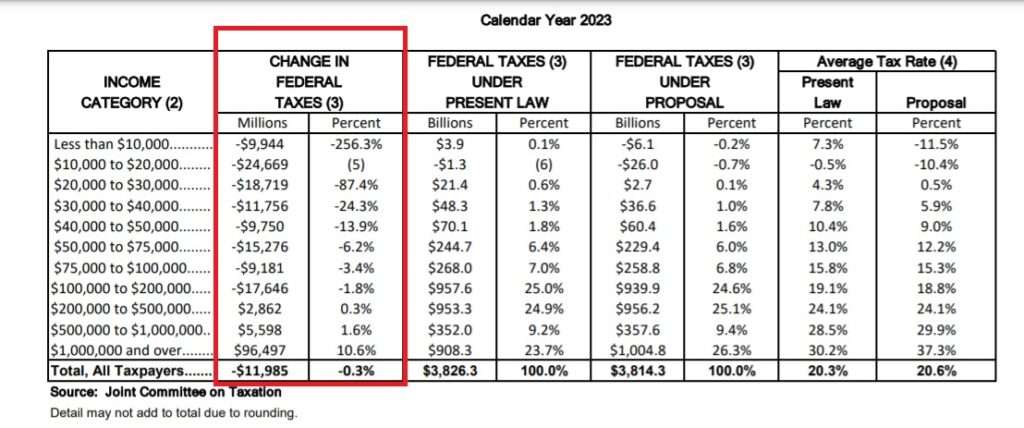
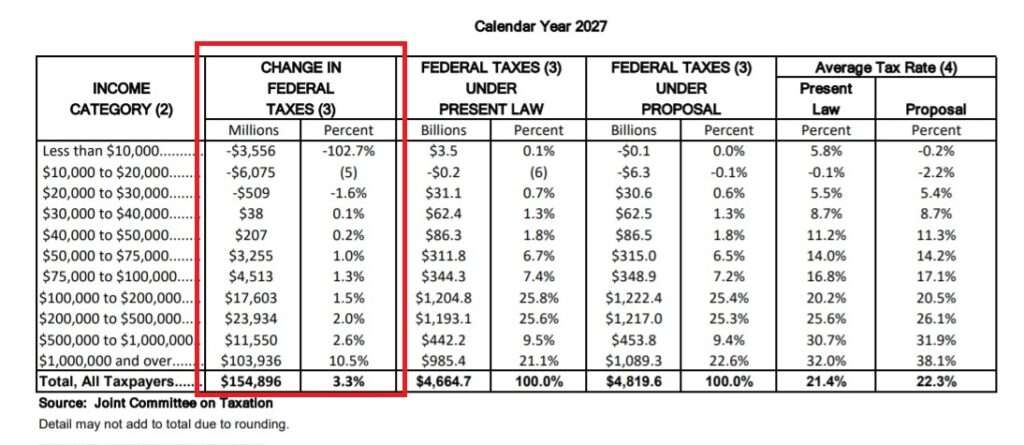
That’s a claim that is looking less and less true with each passing day. The bill Congress is drafting to pay for all that new spending includes tax hikes on tobacco products, electronic cigarettes, and cryptocurrencies—taxes that will apply to the rich and poor alike. And while the bill does not raise income taxes on anyone earning less than $200,000 annually in the immediate future, Americans earning as little as $30,000 could face a tax hike by 2027 under Biden’s plan, according to an analysis published Tuesday by the Joint Committee on Taxation (JCT), a nonpartisan number-crunching agency housed inside Congress.

The culprit for that future tax increase is the expanded child tax credit, which the House tax plan would extend through 2025 (the JCT’s report only provides estimates for every other year, so 2027 is the first child tax credit–less year included in its analysis). More accurately, the culprit is Congress’ unwillingness to address the full cost of that tax credit in this bill. By promising to raise taxes later, Democrats are able to manufacture about $700 billion in “savings” that will likely never materialize.

Let’s back up a little. The new JCT report shows that taxpayers earning less than $200,000 annually would see a net tax cut in 2023 under the changes that the House Ways and Means Committee unveiled earlier this week. The House Democrats’ plan would shift the tax burden toward wealthier Americans next year, largely because of how Biden’s proposal relies on hiking income tax rates for high earners and raising the capital gains tax rate, which is applied to investment earnings.

Skip ahead to 2027, however, and things look quite a bit different. By then, the changes House Democrats are now proposing would result in higher taxes for nearly all taxpayers—even those making as little as $30,000 per year. Middle-class Americans earning between $50,000 and $100,000 would owe, on average, several hundred dollars in additional taxes, according to the National Taxpayers Union Foundation’s breakdown of the JCT’s analysis.

That sudden shift in the tax burden is caused by the expiration of the newly expanded child tax credit. As part of the COVID-19 relief bill passed in March, Congress approved a one-year increase in the child tax credit from $2,000 per child annually to $3,600 per child under the age of 6 and $3,000 for those ages 6 to 17—delivered as monthly payments of $300 per child under age 6 and $250 for older kids. In the reconciliation bill, Democrats are proposing to maintain the expanded tax credit through 2025.

Why 2025? Because the tax credit—which isn’t really a tax credit at all, but rather a direct subsidy since it is paid out even if recipients have no income and owe no federal taxes—is expensive. The Committee for a Responsible Federal Budget estimates that the child tax credit will cost about $110 billion annually, and extending the tax credit through 2025 will cost $450 billion. Making it permanent would cost $1.1 trillion over the next 10 years.

Those amounts could make a big difference in the ultimate fate of Biden’s plan. Democrats need to use the reconciliation process to bypass the filibuster in the Senate, but the rules governing the reconciliation process forbid legislation that expands the federal budget deficit over the next decade. That means every dollar of new spending has to be offset somehow. And $1.1 trillion is a lot more than $450 billion.

Most Democrats would probably love to extend the expanded child tax credit permanently. At least a few Republicans would probably agree to that too. But by setting the expanded tax credit to expire four years from now, Democrats are able to ignore roughly $700 billion in future costs that have to be offset in order to use the reconciliation process.

“Democrats have no intention of taking away the child credit expansion after 2025—it is both popular and central to their poverty-reduction strategy,” says Brian Riedl, a senior fellow at the Manhattan Institute, a conservative think tank, and former Senate Republican staffer. “But sunsetting the policy after 2025 in this bill provides $700 billion in fake savings over the decade, as future Congresses will surely extend the policy.”

In other words, it’s a gimmick. A gimmick that, yes, Republicans have also used when trying to route major tax policy changes through the reconciliation system, but a gimmick nonetheless.

As a result of that gimmick, the JCT’s estimates for fiscal year 2027 do not include the child tax credit. And that’s why it looks like taxes will go up for a lot of middle-income families a few years from now.

This sets up a clever game. Democrats will be able to wave away objections about those future tax increases because of course Congress will extend the child tax credit beyond 2025…eventually. But they don’t have to account for the future cost of that inevitable extension in the bill they want to pass within the next few weeks.

Compared to what experts say are the other likely long-term consequences of passing this $3.5 trillion reconciliation bill—including slower economic growth, more debt, and lower wages—the gimmickry involved in gaming the reconciliation process over the child tax credit is relatively small potatoes. But make no mistake: The child tax credit is adding to the future size of government, even if that amount doesn’t show up on a balance sheet past 2025 yet.

These cynical maneuvers are one of the main reasons why it is so hard for Congress to get its hands around America’s long-term debt problem. Lawmakers are quite literally crafting legislation not in pursuit of the best policy, but in order to avoid the very barriers that have been put in place, within the reconciliation process, to limit deficit spending.

Gaming the system is no way to produce the best outcomes—and that’s especially true for today’s kids, ostensibly the beneficiaries of this policy, who are going to have to pay for it in the long run.

from Latest – Reason.com https://ift.tt/3EoKarb
via IFTTT

The $700 Billion Gimmick at the Center of Biden’s Tax Plan


adam-nir-wTO6MWpMrJk-unsplash

Central to President Joe Biden’s plan to hike federal spending by $3.5 trillion is a promise that middle-class Americans won’t face a tax increase.

That’s a claim that is looking less and less true with each passing day. The bill Congress is drafting to pay for all that new spending includes tax hikes on tobacco products, electronic cigarettes, and cryptocurrencies—taxes that will apply to the rich and poor alike. And while the bill does not raise income taxes on anyone earning less than $200,000 annually in the immediate future, Americans earning as little as $30,000 could face a tax hike by 2027 under Biden’s plan, according to an analysis published Tuesday by the Joint Committee on Taxation (JCT), a nonpartisan number-crunching agency housed inside Congress.

The culprit for that future tax increase is the expanded child tax credit, which the House tax plan would extend through 2025 (the JCT’s report only provides estimates for every other year, so 2027 is the first child tax credit–less year included in its analysis). More accurately, the culprit is Congress’ unwillingness to address the full cost of that tax credit in this bill. By promising to raise taxes later, Democrats are able to manufacture about $700 billion in “savings” that will likely never materialize.

Let’s back up a little. The new JCT report shows that taxpayers earning less than $200,000 annually would see a net tax cut in 2023 under the changes that the House Ways and Means Committee unveiled earlier this week. The House Democrats’ plan would shift the tax burden toward wealthier Americans next year, largely because of how Biden’s proposal relies on hiking income tax rates for high earners and raising the capital gains tax rate, which is applied to investment earnings.

Skip ahead to 2027, however, and things look quite a bit different. By then, the changes House Democrats are now proposing would result in higher taxes for nearly all taxpayers—even those making as little as $30,000 per year. Middle-class Americans earning between $50,000 and $100,000 would owe, on average, several hundred dollars in additional taxes, according to the National Taxpayers Union Foundation’s breakdown of the JCT’s analysis.

That sudden shift in the tax burden is caused by the expiration of the newly expanded child tax credit. As part of the COVID-19 relief bill passed in March, Congress approved a one-year increase in the child tax credit from $2,000 per child annually to $3,600 per child under the age of 6 and $3,000 for those ages 6 to 17—delivered as monthly payments of $300 per child under age 6 and $250 for older kids. In the reconciliation bill, Democrats are proposing to maintain the expanded tax credit through 2025.

Why 2025? Because the tax credit—which isn’t really a tax credit at all, but rather a direct subsidy since it is paid out even if recipients have no income and owe no federal taxes—is expensive. The Committee for a Responsible Federal Budget estimates that the child tax credit will cost about $110 billion annually, and extending the tax credit through 2025 will cost $450 billion. Making it permanent would cost $1.1 trillion over the next 10 years.

Those amounts could make a big difference in the ultimate fate of Biden’s plan. Democrats need to use the reconciliation process to bypass the filibuster in the Senate, but the rules governing the reconciliation process forbid legislation that expands the federal budget deficit over the next decade. That means every dollar of new spending has to be offset somehow. And $1.1 trillion is a lot more than $450 billion.

Most Democrats would probably love to extend the expanded child tax credit permanently. At least a few Republicans would probably agree to that too. But by setting the expanded tax credit to expire four years from now, Democrats are able to ignore roughly $700 billion in future costs that have to be offset in order to use the reconciliation process.

“Democrats have no intention of taking away the child credit expansion after 2025—it is both popular and central to their poverty-reduction strategy,” says Brian Riedl, a senior fellow at the Manhattan Institute, a conservative think tank, and former Senate Republican staffer. “But sunsetting the policy after 2025 in this bill provides $700 billion in fake savings over the decade, as future Congresses will surely extend the policy.”

In other words, it’s a gimmick. A gimmick that, yes, Republicans have also used when trying to route major tax policy changes through the reconciliation system, but a gimmick nonetheless.

As a result of that gimmick, the JCT’s estimates for fiscal year 2027 do not include the child tax credit. And that’s why it looks like taxes will go up for a lot of middle-income families a few years from now.

This sets up a clever game. Democrats will be able to wave away objections about those future tax increases because of course Congress will extend the child tax credit beyond 2025…eventually. But they don’t have to account for the future cost of that inevitable extension in the bill they want to pass within the next few weeks.

Compared to what experts say are the other likely long-term consequences of passing this $3.5 trillion reconciliation bill—including slower economic growth, more debt, and lower wages—the gimmickry involved in gaming the reconciliation process over the child tax credit is relatively small potatoes. But make no mistake: The child tax credit is adding to the future size of government, even if that amount doesn’t show up on a balance sheet past 2025 yet.

These cynical maneuvers are one of the main reasons why it is so hard for Congress to get its hands around America’s long-term debt problem. Lawmakers are quite literally crafting legislation not in pursuit of the best policy, but in order to avoid the very barriers that have been put in place, within the reconciliation process, to limit deficit spending.

Gaming the system is no way to produce the best outcomes—and that’s especially true for today’s kids, ostensibly the beneficiaries of this policy, who are going to have to pay for it in the long run.

from Latest – Reason.com https://ift.tt/3EoKarb
via IFTTT

The New York Times Is Wrong About the ‘Myth of Big Tech Competence’


starmax452072

Facebook has long claimed its standards of conduct apply equally to all users. Documents that surfaced earlier this week, first reported by The Wall Street Journal, indicate otherwise. They show that the social media company has long maintained an “XCheck” (“cross-check”) program in which high-profile accounts representing celebrities, journalists, and politicians are exempt from normal enforcement measures, with different rules applying to them than to everyday users.

About 5.8 million out of 2.9 billion monthly active Facebook users have this status, which allows them to sometimes post violating content without receiving sanctions. The types of things that normally get flagged when other users post them—bullying and harassment, revenge porn, so-called hate speech—get more lenient treatment by moderators. Worried about P.R. backlash, Facebook is more choosy with which policies to enforce for VIPs, allowing them to get away with much more, and for much longer, than typical users.

Internal documents showed that many violations by VIP accounts never received review at all, an issue that was noted to the company’s Oversight Board, formed to serve as a 20-person accountability body to oversee content moderation decisions and appeals processes. Earlier this year, the Oversight Board made recommendations to the company that it disclose “relative error rates” and “thematic consistency of determinations” between XCheck accounts and typical user accounts. Facebook rejected this suggestion.

“[The documents] show that Facebook knows, in acute detail, that its platforms are riddled with flaws that cause harm, often in ways only the company fully understands,” but the company “often lacks the will or the ability to address them,” notes the Journal. “Facebook appeared more concerned with avoiding gaffes than mitigating high-profile abuse.”

The New York Times‘ Shira Ovide seized on this in a piece entitled “The Myth of Big Tech Competence.” In it, she writes that V.I.P.s were exempt from the company’s rules less out of malicious intent than neglect,” and that The Wall Street Journal‘s “reporting ultimately points to a more fundamental error: A large organization displayed stunning mismanagement, and could not or would not fully fix its problems.” She concludes:

“It’s not shocking when Congress or the cable company act incompetently. But we see tech giants with gazillion dollars and big brains as special and all-seeing and as being smarter than everyone else. That makes it feel more surprising when tech giants mess up worker pay and won’t admit it, as Google did, or fumble for years trying to sell groceries, as Amazon has done.

Tech companies including Google, Facebook and Amazon have seemingly invincible power, but their growing wealth is not stopping these giants from also, at times, being ridiculously inept.”

Ovide’s critique misses a lot. First, people always have the ability to opt out of Facebook usage—and Amazon, Google, and Twitter usage, too. Some companies have long tentacles that are hard to free yourself from; it would be hard to fully avoid every website that uses Amazon Web Services as a host, but it would not be hard at all to give up your Prime membership and two-day shipping in favor of halcyon jaunts to Target. It would not be hard to default to Bing, which is used for a little more than 4.5 percent of the world’s search queries (China’s Baidu stands at a little under 15 percent, for contrast) instead of Google. You can have a perfectly rich social life without the use of Facebook, or even Instagram (which is owned by the former); you can choose Twitter, Snapchat, TikTok, or Reddit to interact with friends and strangers alike online. You can even try old-fashioned meatspace if you dare.

People do not, however, have the ability to opt out of being governed, to decide they don’t like the rules Congress imposes on them, and to say “enough.”

Second, Facebook has really strong incentives to self-correct. It may not always choose to do so—for reasons that are often obscured to us—but static, unwieldy bureaucracies rarely feel these same incentives and, even if they did, they would have a much harder time acting on them. The Oversight Board, which admittedly failed in this instance to compel the company to pursue a more transparent approach, was created as a means of revisiting questionable content moderation calls and what precedent gets set. Facebook has shown that it doesn’t want to be arbitrary or fickle, but is currently experiencing the fallout from its public struggle to align actions with intent.

Third, Ovide muddles the problems of Facebook malfeasance and Amazon experimenting with different grocery-selling models. The latter isn’t an example of wrongdoing or stupidity, it’s an example of the process that pretty much every company goes through while trying to innovate: attempting to figure out exactly what consumers need and how to give it to them. Amazon struggling with grocery delivery models—and then beginning to figure it out in impressive ways, including debuting a new checkout-free supermarket in Seattle and checkout-free convenience stores in four major American cities, all while grocery delivery choked a bit at the onset of the pandemic before later steadying (nuggets absent from the Timesanalysis)—is not an example of Big Tech incompetence, just as Apple struggling for years with figuring out what niche the tablet serves, or how to use multitouch technology for iPhones, is not an example of its incompetence. These are examples of companies learning what works and what doesn’t.

Worse still, the New York Times piece fundamentally excuses government incompetence, accepting it as a given, while skewering tech companies for sometimes making the wrong calls. Why do we write off incompetence on the part of Congress? They’re the ones who spend colossal amounts of our money year after year with little eye toward results.

It’s not tech companies that have “seemingly invincible power,” it’s the government that does—the entity that has a monopoly on force and wields it with no real opt-out mechanism for those of us who object.

from Latest – Reason.com https://ift.tt/3EivtpD
via IFTTT

The New York Times Is Wrong About the ‘Myth of Big Tech Competence’


starmax452072

Facebook has long claimed its standards of conduct apply equally to all users. Documents that surfaced earlier this week, first reported by The Wall Street Journal, indicate otherwise. They show that the social media company has long maintained an “XCheck” (“cross-check”) program in which high-profile accounts representing celebrities, journalists, and politicians are exempt from normal enforcement measures, with different rules applying to them than to everyday users.

About 5.8 million out of 2.9 billion monthly active Facebook users have this status, which allows them to sometimes post violating content without receiving sanctions. The types of things that normally get flagged when other users post them—bullying and harassment, revenge porn, so-called hate speech—get more lenient treatment by moderators. Worried about P.R. backlash, Facebook is more choosy with which policies to enforce for VIPs, allowing them to get away with much more, and for much longer, than typical users.

Internal documents showed that many violations by VIP accounts never received review at all, an issue that was noted to the company’s Oversight Board, formed to serve as a 20-person accountability body to oversee content moderation decisions and appeals processes. Earlier this year, the Oversight Board made recommendations to the company that it disclose “relative error rates” and “thematic consistency of determinations” between XCheck accounts and typical user accounts. Facebook rejected this suggestion.

“[The documents] show that Facebook knows, in acute detail, that its platforms are riddled with flaws that cause harm, often in ways only the company fully understands,” but the company “often lacks the will or the ability to address them,” notes the Journal. “Facebook appeared more concerned with avoiding gaffes than mitigating high-profile abuse.”

The New York Times‘ Shira Ovide seized on this in a piece entitled “The Myth of Big Tech Competence.” In it, she writes that V.I.P.s were exempt from the company’s rules less out of malicious intent than neglect,” and that The Wall Street Journal‘s “reporting ultimately points to a more fundamental error: A large organization displayed stunning mismanagement, and could not or would not fully fix its problems.” She concludes:

“It’s not shocking when Congress or the cable company act incompetently. But we see tech giants with gazillion dollars and big brains as special and all-seeing and as being smarter than everyone else. That makes it feel more surprising when tech giants mess up worker pay and won’t admit it, as Google did, or fumble for years trying to sell groceries, as Amazon has done.

Tech companies including Google, Facebook and Amazon have seemingly invincible power, but their growing wealth is not stopping these giants from also, at times, being ridiculously inept.”

Ovide’s critique misses a lot. First, people always have the ability to opt out of Facebook usage—and Amazon, Google, and Twitter usage, too. Some companies have long tentacles that are hard to free yourself from; it would be hard to fully avoid every website that uses Amazon Web Services as a host, but it would not be hard at all to give up your Prime membership and two-day shipping in favor of halcyon jaunts to Target. It would not be hard to default to Bing, which is used for a little more than 4.5 percent of the world’s search queries (China’s Baidu stands at a little under 15 percent, for contrast) instead of Google. You can have a perfectly rich social life without the use of Facebook, or even Instagram (which is owned by the former); you can choose Twitter, Snapchat, TikTok, or Reddit to interact with friends and strangers alike online. You can even try old-fashioned meatspace if you dare.

People do not, however, have the ability to opt out of being governed, to decide they don’t like the rules Congress imposes on them, and to say “enough.”

Second, Facebook has really strong incentives to self-correct. It may not always choose to do so—for reasons that are often obscured to us—but static, unwieldy bureaucracies rarely feel these same incentives and, even if they did, they would have a much harder time acting on them. The Oversight Board, which admittedly failed in this instance to compel the company to pursue a more transparent approach, was created as a means of revisiting questionable content moderation calls and what precedent gets set. Facebook has shown that it doesn’t want to be arbitrary or fickle, but is currently experiencing the fallout from its public struggle to align actions with intent.

Third, Ovide muddles the problems of Facebook malfeasance and Amazon experimenting with different grocery-selling models. The latter isn’t an example of wrongdoing or stupidity, it’s an example of the process that pretty much every company goes through while trying to innovate: attempting to figure out exactly what consumers need and how to give it to them. Amazon struggling with grocery delivery models—and then beginning to figure it out in impressive ways, including debuting a new checkout-free supermarket in Seattle and checkout-free convenience stores in four major American cities, all while grocery delivery choked a bit at the onset of the pandemic before later steadying (nuggets absent from the Timesanalysis)—is not an example of Big Tech incompetence, just as Apple struggling for years with figuring out what niche the tablet serves, or how to use multitouch technology for iPhones, is not an example of its incompetence. These are examples of companies learning what works and what doesn’t.

Worse still, the New York Times piece fundamentally excuses government incompetence, accepting it as a given, while skewering tech companies for sometimes making the wrong calls. Why do we write off incompetence on the part of Congress? They’re the ones who spend colossal amounts of our money year after year with little eye toward results.

It’s not tech companies that have “seemingly invincible power,” it’s the government that does—the entity that has a monopoly on force and wields it with no real opt-out mechanism for those of us who object.

from Latest – Reason.com https://ift.tt/3EivtpD
via IFTTT

A Win for Devin Nunes in Lawsuit Over Journalist Ryan Lizza’s Tweet


dpaphotosfive043571

Tweeting article after Nunes called it defamatory could count as “actual malice,” court says. In a disturbing ruling for fans of free speech, a federal court has partially sided with Rep. Devin Nunes (R–Calif.) in his lawsuit against journalist Ryan Lizza. Nunes has accused Lizza and Hearst Magazine Media, which publishes Esquire, of defamation and conspiracy.

Back in 2018, Esquire published an article by Lizza headlined “Devin Nunes’s Family Farm Is Hiding a Politically Explosive Secret.” The article suggested that Nunes had hidden the fact that his family had moved their dairy farm from California to Iowa. It also accused the farm of relying on undocumented labor. In addition, the article accuses Nunes of improper political activities, saying he used his position as chairman of the House Permanent Select Committee on Intelligence “to spin a baroque theory about alleged surveillance of the Trump campaign that began with a made-up Trump tweet” about former President Barack Obama tapping Trump Tower and “to discredit the Russia investigation and protect Donald Trump at all costs.”

Nunes sued, but a federal district court granted Lizza and Hearst’s motion to dismiss his claims. Among other things, it concluded that even if some information in the article was defamatory, it did not meet the standard required for a defamation claim against a public figure: actual malice. So Nunes appealed.

In its September 15 ruling, the U.S. Court of Appeals for the 8th Circuit agreed that there was no actual malice involved in the original publication of the article.

The Supreme Court’s interpretation of the First Amendment requires a public official to prove that defamatory statements or implications are made with ‘actual malice,’ meaning ‘with knowledge that it was false or with reckless disregard of whether it was false or not,'” notes the court. “In this context, ‘reckless conduct is not measured by whether a reasonably prudent man would have published.’ Instead, ‘the defendant must have made the false publication with a high degree of awareness of . . . probable falsity, or must have entertained serious doubts as to the truth of his publication.’…We agree with the district court that the complaint is insufficient to state a claim of actual malice as to the original publication.”

But a later Lizza tweet sharing the article could rise to that standard, the court said.

Tweeting a link to the article could be considered “republication,” the court explained, noting that “there is a distinction in defamation law between an original publication and a republication.” And republication could imply actual malice.

Lizza’s tweet came on November 20, 2019, several weeks after Nunes initially filed his defamation claim. “I noticed that Devin Nunes is in the news. If you’re interested in a strange tale about Nunes, small-town Iowa, the complexities of immigration policy, a few car chases, and lots of cows, I’ve got a story for you,” tweeted Lizza.

“The complaint here adequately alleges that Lizza intended to reach and actually reached a new audience by publishing a tweet about Nunes and a link to the article,” ruled the appeals court. “Although we agree that there are insufficient allegations of express defamation, we conclude that the complaint does state a claim for defamation by implication as to a republication of the article. We thus affirm in part, reverse in part, and remand for further proceedings.”

Whether the republication here rises to the level of defamation will still have to be decided.

But under the appeals court’s logic, a politician may declare something defamatory and sue in court and—whether there is merit to the original claim or not—the journalist or publication who so much as draws attention to the contested article could become guilty.

It could also have implications beyond a journalist or publication responsible for a piece accused of defamation. “One curious aspect of the ruling is that it appears to open the door to lawsuits against anyone who tweeted or retweeted the original story with knowledge of Nunes’ lawsuit, and to similar claims over members of the public or those with significant social media followings tweeting or retweeting stories after learning that the subject of the story is disputing it in some way,” notes Politico.


FREE MINDS


FREE MARKETS

Studies link luxury rentals and affordable housing. For a certain sort of misguided activist and policy wonk, new apartment buildings featuring fancy pads aren’t just irrelevant to people who can’t afford them, but actively harmful. Their theory is that it speeds up gentrification and causes rents to rise. But empirical research—including a new paper out of Finland—challenges this assumption. It suggests instead that expanding “luxury” rental housing stock actually helps create affordable housing, too, by creating “moving chains” and freeing up older places where lower-income renters can afford to live. “For each 100 new, centrally located market-rate units, roughly 60 units are created in the bottom half of neighborhood income distribution through vacancies,” and 29 units in the bottom quintile, suggests the Finnish paper.

“What about in the United States?” asks Timothy B. Lee in the Full Stack Economics newsletter.

Over the last couple of years, Notre Dame economist Evan Mast has been doing similar research in American cities, and he published his latest results in July (his 2021 paper is paywalled; you can read a preliminary version from 2019 here).

Mast looked at housing markets in 12 of the largest American cities. The US doesn’t have the kind of government population register they have in Finland, so instead Mast obtained data from a private marketing database called Infutor Data Solutions. But he used the same basic methodology as the Finnish economists and got similar—if a bit less dramatic—results. Thanks to moving chains, a new luxury apartment building created vacant units in a wide range of neighborhoods.

Mast found that 67 percent of people who moved into a new luxury apartment building came from another apartment in the same metropolitan area. Of these, only 20 percent of the people who moved into luxury apartment buildings came directly from neighborhoods with below-average incomes. But that set off a moving chain that was more likely to reach lower-income neighborhoods. By the sixth link in the chain, 40 percent of movers were coming from neighborhoods with below-average incomes.


QUICK HITS

• Treasury Secretary Janet Yellen and IRS Commissioner Charles Rettig are fighting for more information about American bank accounts.

• The U.S. Court of Appeals for the 5th Circuit has “overturned a judge’s order blocking the Department of Homeland Security (DHS) from shifting its immigration enforcement priorities, delivering a significant victory for the Biden administration,” reports The Hill. The court “unanimously ruled to stay a district court judge’s injunction against DHS from enforcing a January policy memo that directed authorities to scale back the Trump-era crackdown on undocumented immigrants. The policy included an initial effort to enact a 100-day moratorium on deportations.”

• In more good immigration news: “Senators introduced a bipartisan bill on Wednesday that would create a pathway to citizenship for some children and young adults who were raised in the United States but face deportation at age 21. “

• Los Angeles County will start requiring proof of vaccination for indoor bars, wineries, breweries, and clubs. “The mandate, which will be issued by Friday, will require patrons and employees to have at least one vaccine dose by Oct. 7 and be fully vaccinated by Nov. 4,” according to the Los Angeles Times.

• L.A. isn’t the only place to put new COVID-19 rules in place this week. Gov. Kathy Hochul yesterday announced new rules for New York schools and child care centers:

• Vape store owners aren’t sure they can survive a new tax hike.

from Latest – Reason.com https://ift.tt/3Eyu9z9
via IFTTT