Kurt Loder Reviews The Twilight Zone: New at Reason

Those of moderately advanced years may remember what a thrill it was, back in 1993, to encounter The X-Files for the first time. To see a primetime TV show rooted in semi-disreputable genres—sci-fi and horror—that took them seriously enough to bring real money and craft to bear on their revival. Everything about The X-Files, from its woodsy noir atmosphere and baroque conspiracy plot to its eerie earworm synth theme, announced that something new—or at least a cool new take on something old—was suddenly at hand. That feeling didn’t last for all nine years of the show’s original run—good writing is famously hard to sustain—but the early seasons stuck in your head, writes Kurt Loder.

View this article.

from Hit & Run https://ift.tt/2WA4OxV
via IFTTT

Blain: When This Insane Monetary Experiment Ends You Will Have Zero Chance To Exit

Blain’s Morning Porridge, submitted by Bill Blain

This is the day the UK isn’t exiting Europe. Surprised? Not really.

Think I’ll try something different this morning – a review of the week touching on some of the key themes we should be thinking about. Let me know what you think.

But firstly let me apologise for the lack of porridge this week. On Wednesday it was being unable to find anywhere to sit with a computer in London City Airport. Yesterday it was courtesy of Flybe from Edinburgh – I’d like to thank them for leaving us standing in a cold bus while they tried to rustle up a crew. The BA flight took off on time, although I wonder if it went to Duesseldorf?

Let me start with a rant:

Bond Yields and the END OF ABSALOOTLEY EVERYTHING…

While everyone is panicking about US curve inversion and the possibility it is signalling recession, is the real issue even simpler and more obvious? Should we be worried about tumbling global bond yields? Aside from it being impossible for funds to meet long term liabilities, what’s not to like about lower for longer? Actually – quite a lot. Even the ECB has noticed zero bond yields haven’t exactly stimulated growth and jobs across Europe and done nothing in terms of stimulating inflation.

Equities seem blithely unconcerned despite all the cack about trade-wars, rising political anarchy, and a distinct feel this business cycle is likely to wind-down into a slough of earnings downgrades and suchlike unpleasantness. The smart money is not worried, because they understand the truth – there is nothing to worry about BECAUSE A STOCK MARKET MELTDOWN IS ACTUALLY IMPOSSIBLE!

Apparently the taxi firm that isn’t Uber is going to IPO at $72 bln, a phenomenal $25 bln valauation, beating all records as the company getting the most money for losing the most money ever…  Why? (Clue the answer is not because Lyft and Uber will be an unbeatable oligopoly – they will probably eat each other, and I have 4 different taxi apps on my phone and none are UBER!)
Nope. The reason is because when bond yields are zero, then stocks become more attractive because they not only offer the potential of dividend yields but also the HOPE of stock price upside. As a result, even the most fantastical, utterly hat-stand, loss-making off the wall crazy as a Mad Fox, Unicorn proposition looks attractive if/when the stock price is likely to rise… (But, remember: Hope is never a good strategy.)

Forget reality – in today’s world equities are all and only about the stock price. And you can square that equation when Global Central Banks can’t afford to admit all their monetary experimentation has been about as much use as tea strainer bailing on the Titanic. The reality is the non-normalisation of monetary policy leaves every single fundamental thing I thought I understood about markets; valuations, yields, risks and returns to be wrong. Utterly.

Central banks are complicit in the illusion – understanding the brutal reality of what their monetary experimentation has led to: a world where the most sensible corporate investment is buying back stock, and stock markets can’t be allowed to fall, because such a collapse in sentiment would utterly undo the little financial good zero interest rates created. Ouch.. “Its a rat trap baby, and you been caught!”

My only recommendation would be in such a mad, mad, mad world… fill yet boots….

There is no point in worrying today about stuff you will have to worry about tomorrow: if and when the illusion ends, you will have zero chance of being able to exit, because concurrent with insane monetary policy experimentation and distortion, global regulators decided they’d better get in on the act and thus they stepped in to regulate markets to prevent a repeat of 2008. So they introduced new rules and killed liquidity, made hedging irrelevant, and turned markets from being vibrant centres of wealth creation into despondent job creation schemes for compliance officers.  

THE FUTURE OF FINANCE AND INVESTMENT

I was up in Edinburgh earlier this week, at Heriot-Watt University’s Centre for Finance and Investment. I’m hoping to become an advisor to the centre. I’d see my mission as altering today’s graduate and post-graduate students to the dangers of regulation, monetary experimentation, but, when all around in financial assets is distorted, especially the opportunities inherent in my alternative assets investments! Get them young I say.. give me the boys and girls today and I shall give you tomorrow’s CIOs!

One of the areas we discussed were ideas for research projects – and that’s particularly interesting; for instance turning around my long held belief that firms with large cash piles tend to underperform because their management lack the imagination to deploy money effectively – empirical research demonstrates they’ve actually outperformed in recent years.

Discussing research ideas with the Centre’s advisory board through up lots of fascinating ideas, concepts and approaches. Topics ranged across the board – from the underperformance of Absolute Return Funds, Corporate Governance and Behavioural Bias, The Woodford Effect, Private Equity distortions, liquidity and a host of other stuff including the promotion of gender equality across finance.

Very happy to hear ideas from readers on areas for academic research – I’ll feed the sensible ones to the centre.

BOEING – A MORE FUNDAMENTAL ISSUE?

A few weeks ago Boeing stock tumbled in the wake of the second B737 MAX crash. Then the price stabilised, waiting for the investigative reports to come in. Markets took the view the situation would quickly be fixed, the production run of over 5000 aircraft would continue, and that the 350 B-737 Max aircraft parked around the planet would be allowed to fly again.

Easier this week Boeing released a software update to the suspect MCAS stall prevention system. Yesterday officials investigating the Ethiopia crash confirmed it was broadly similar to the earlier Lion Air disaster: the MCAS system activated. The  Ethiopian Airlines flight crashed soon after. 346 people died in the two related disasters.

We know that in the Lion Air the crew spent their last precious seconds desperately trying to find out what was wrong with their the plane from the manuals – a failed sensor meant the stall system was repeatedly pointing the nose down every 15 seconds. As they didn’t know the system was even installed, and the airline hadn’t fitted the “extra cost” warning light, the crash was inevitable.. Pilots are on the record saying crews would have less than 40 seconds to save an aircraft if the stall system went off due to a faulty system – if the crew were unprepared or unaware, then it was impossible.

You can imagine the horrific situation on the very busy flight deck where the alarms are screaming, the plane is gryating up and down the sky, the sensors are telling them the plane is flying straight and level, but the automatic stall prevention system is trying to plow the plane into the ground. They have 40 seconds to figure it out, switch off the system and resume level flight.

Boeing might be in more trouble than we think. Although Boeing reacted quickly to the first crash and warned operators of the problem, the immediate issues will include; why weren’t operators more fully informed of the system from the outset of the Max programme and did Boeing deliberately downplay the significance of the stall system so they could cut the need for additional pilot training to make their aircraft a cheaper system? The law suites are coming in.

It doesn’t help the rest of the world now distrusts the US Federal Aviation Authority – considering their oversight of Boeing to have been lax, and that they were slow to act following the second crash. While US B737 Max aircraft may be back flying in US airspace in just a few days, the rest of the world could take months to approve the Boeing fix. That has serious implications for deliveries, for current schedules, for aviation linked paper, and replacement aircraft values – call for more info.

There may be a much bigger problem.

At its root is the venerable B-737 design. The decision not to replace the 50 year old design with something new now looks a mistaken management compromise. Back in the 2000s, Boeing embarked on Project Yellowstone. It was (and may still be) Boeing’s plan to replace its ageing designs with new designs using new composite technologies, cleaner more efficient engines and other next generation design enhancements. So far only the 787 Dreamliner has come to fruition. It’s a fantastic plane.

Plans to replace the B-737 (and the 757/767 series) were dropped/postponed when Boeing decided to go for the cheaper option of simply stretching the workhorse B-737 at little bit more to produce the B-737 Max. That was great for Boeing – no need to tool up for an expensive new plane, instead, keep making something they’d already delivered 10,000 of.. they could make it cheap and cheerfully. And they could say it was a completely new plane because it incorporated modern stuff, and it was called… MAX!

The pitch-book to customers must have looked perfect: an aircraft type they already knew and flew, no need for additional expensive pilot training, no major conversion costs. And it would be pretty efficient.

But, the new design MAX is a lash-up compromise. The new fuel efficient high bypass engines have been made to fit, but only by squeezing them in and making them a little bit less efficient. The are bigger, heavier and change the trim. The undercarriage has to be bigger, upsetting the trim a little more, and was difficult to fit making it a little more less efficient. The shape and weight of bigger engines changed the design – giving a nose up position, hence the need for a stall-management system.

Its now becoming clear its not such a great proposition. Pilots apparently don’t like it – knowing what was once a thoroughbred now has the aerodynamics of a brick, a carthorse of the skies. Passengers are concerned. Airlines are cancelling orders – although Lufthansa just came in with talk of a new order. The good news for Boeing is the Airbus A320/321 series is 30 years old, and is going through a similar modernisation process – the Neo series.

Supporting Boeing is the need for 30,000 new mid-size aircraft in the next 20 years. There just are not enough planes being made.  Should they have been introducing a brand-new but expensive aircraft now to take that market? Probably. It will take years before a new plane, the B-797, is ready.

In the meantime, what happens to the 5000 B-737 Max’s currently on order? If I was an airline executive.. I would not be happy.. If I was on the Boeing board…. I’d be nervous.

via ZeroHedge News https://ift.tt/2THxmU7 Tyler Durden

New at Reason: Apocalypse 2020

“We are at an inflection point in in the history of our world,” Sen. Kamala Harris (D-Calif.) pronounced when kicking off her candidacy in January. “We are here because the American dream and our American democracy are under attack and on the line like never before.”

Apocalyptic rhetoric isn’t just for Donald Trump and Bernie Sanders anymore, writes Matt Welch. It’s the whole damn Democratic field.

View this article.

from Hit & Run https://ift.tt/2CK3wJ7
via IFTTT

Pound Tumbles As May’s Brexit Deal Appears Headed For Third Defeat

The British pound dropped sharply on the morning of “the day that should have been Brexit” after a Labour Party spokesman confirmed that the opposition party would oppose PM Theresa May’s “meaningful vote 2.5”, setting the third vote on May’s unpopular withdrawal deal with the EU up for almost certain failure.

Sterling dropped to $1.3009, leaving it down roughly 2% for March, though it remained, no pun intended, up 2% on the quarter, making it the best performer among major currencies.

That might come as a surprise to some, seeing as the public has been treated to one Brexit-related disappointment after the next, with May’s deal having already been voted down twice by wide margins. Just this pass week, an indicative vote on possible Brexit alternatives showed that not one would received majority support in the Commons.

May and her team have warned MPs that if her deal is defeated again on Friday, they will risk delaying Brexit by months or even years. Then again, there’s also the risk that the UK will crash out of the EU (though May and her team have largely glossed over that possibility). International Trade Secretary Liam Fox said Friday that losing the vote would mean a longer extension to Brexit.

The DUP, the 10 unionist MPs from Northern Ireland who help shore up the Tories Parliamentary majority, have already said they will oppose the vote. And many of the ERG leaders, including Boris Johnson and Jacob Rees-Mogg who said earlier this week that they would back the deal to prevent a longer Brexit delay have flipped-flopped on their stance.

In order to meet Speaker John Bercow’s test that “substantial” alterations be made to the withdrawal agreement for it to be brought up for another vote, May decided to separate the WA from the non-binding political declaration – and EU officials confirmed that only the WA would need to be accepted for the UK to leave the EU.

UK

Given that it’s headed for defeat, observers might wonder why May is even bothering to bring it up for another vote. In an explainer for the BBC, political editor Laura Kuenssberg explained that it’s another way for May of “extending the road before it finally runs out.”

But the vote, on what was meant to be Brexit Day, is a request to MPs to allow her to keep going, to carry on pursuing her route, with its well-documented flaws.

There’s a challenge there too, not just to her own Brexiteers but to Labour and the other opposition parties, to say “no” to a long delay to our departure from the EU, the last moment when Number 10 believes anything even approaching a timely exit can be guaranteed.

There are signs now that many Eurosceptic MPs are ready to say “yes” – not because they suddenly have realised Mrs May’s deal is perfect, but because more of them officially realise that it is the clearest break from the EU they can realistically hope for.

Yet her Northern Irish allies are not persuaded. Labour, even though they have sometimes accepted that what’s on the table – the divorce deal – will never be unpicked by the EU, will still, in the main, resist.

As things stand, even though some influential Brexiteers believe there is a chance it will get through, it looks like the prime minister is heading for another loss.

But for Number 10, it is another way of extending the road before it finally runs out.

And in this environment, with control slipping away, that, for Theresa May, is worth a try.

No amendments have been selected for debate before the vote, which is expected to take place at 10:30 am ET (2:30 pm London Time).

via ZeroHedge News https://ift.tt/2CLBfBM Tyler Durden

A “Perfect Coup” Is Unfolding In Algeria

Authored by Cyril Widdershoven via Oilprice.com,

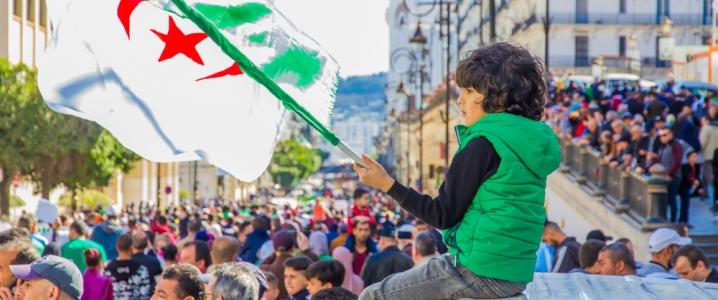
The ongoing unrest in one of North Africa’s largest oil and gas producers Algeria is reaching boiling point.

After weeks of protests from the opposition, aimed at blocking the possible re-election of long-time president Bouteflika, there still doesn’t seem to be a resolution within reach. Even after the sudden withdrawal by Bouteflika from new elections, demonstrations continued.

Opposition and some regime insiders still feel that the old guard is clinging to power. The Algerian army, however, has stepped into the fray, urging the removal of the current president. Algerian army chief of staff General Ahmed Gaid Salah suddenly stated that Abdelaziz Bouteflika should be deemed unfit to rule. The latter was greeted by support of opposition parties and European analysts. The end to the old guard and Bouteflika clan seems to be near. Officially, the Algerian army has been stepping in to support the “legitimate demands” of the hundreds of thousands of protesters flocking the streets lately. Optimism is growing and Western media is already suggesting the possibility of a new Arab Spring movement. The reality of Algeria’s political upheaval, however, is that it is less Arab Spring 2.0 and more Cairo 2.0, with the re-emergence of the army as the real power broker.

Since the Algerian Revolt against France, the North African country has been ruled by a bipartisan system based on a political party, coming from the Algerian independency groups, and the newly formed Algerian army. This system has endured a multitude of changes and crises, and got almost obliterated during the brief rule of the Islamists after their election victory in the 1990s. Soon after this Islamist victory, the Algerian army with support of the old guard, took over and reinstated their own rule. The current situation looks almost the same, with one big difference. Algerian military strategists seem to have been reading all reports and analysis pieces written during and after the Arab Spring developments in Egypt. Cairo’s long-time ruling elite, headed by president Husni Mubarak, had outlived its time. Democratic and religious opposition combined their forces and removed Mubarak from power. At the same time, the Egyptian army stayed in their barracks, not interfering at all, despite the fact that Mubarak’s rule was built with the support of the army. After the removal of Mubarak, and the electoral victory of the Muslim Brotherhood, the army put in place its own strategy to regain its grip on the fractured country. Within 2 years, Egypt’s minister of defense and general Sissi took over, with a huge mandate from the Egyptian public.

When looking at Algeria, the same structures and strategies seem to be unfolding. An old president, supported by a corrupt and undemocratic political party, is heading for the abyss. Algeria’s economy is struggling at the same time, even though the country holds vast oil, gas and mineral resources. Mismanagement and clientism, combined with paternalistic political views, have brought the country to its knees. Europe’s former 2nd largest gas supplier is even struggling to keep its gas and LNG exports in place, despite its reserves being immense. The time is rife for change, looking at the political disorder and economic crisis scenarios.

The opposition feels that there is a chance for change. However, this may not be a change to their own liking, but a re-emergence of military rule, with official political support. By acting currently on the behalf of the legitimate demands of the Algerian people, the armed forces, including the security services, can play the same role as the Egyptian armed forces played several years ago. The media’s opinion that the army’ current move can be seen as ‘supporting the people’ is most probably a misperception.

The North African country is facing the Egyptian scenario without realizing it. The movement for change, currently being supported by the Algerian armed forces, is not going to increase democracy or change the rules of engagement. The army has analyzed the situation and has come to the conclusion that it needs to enter the void left by Bouteflika. The armed forces, which have always been a prominent force in the country’s domestic politics are reinventing themselves and a new generation of military politicians is being groomed. Without any doubt, Bouteflika will be removed, either by the National Assembly or forcefully by the army in the next couple of days/weeks. With a grand gesture, General Salah will hand over the powers to the president of the Algerian Senate, Abdelkader Bensalah, who will take over as interim president. The latter however will know that he has been given the position due to action of the military forces.

If the Cairo 2.0 scenario plays out, no real changes in the power structure in the country will be made. From a Western point of view, increased powers for the army are always bad, at least in the eyes of the media and politicians. Looking at the current state of the country, a power vacuum will bring no good at all. The economic crisis, combined with a fledgling oil and gas sector, needs some hard and strict changes the coming months. The Algerian opposition is not able to do this, as all crucial economic sectors are still in the hands of the ruling party structures. The army move is already seen as the “perfect coup”, as there is no viable opposition in place to take over when given the chance.

At the same time, Algeria’s neighbors are on edge. Algiers’s main rival Morocco will aim to keep a very low profile, and make sure not to stir up a possible regional conflict, such as the one in Western Sahara. Others are very worried about instability as Algeria is an important party in neighboring Libya, which is still struggling to get its act together. The super-powers US and Russia also have a lot at stake. Certain pundits in Washington will see a possible new opportunity for a rapprochement with Algeria, as Bouteflika has been leaning towards Russia. Washington’s dream could, however, be a fata morgana, as Moscow has been on the ground since the 1960s. Putin’s Mediterranean strategy, after getting a stronghold in Syria again, entails full military cooperation (army and navy) with Algeria. And after a short break in the 1990s, Russia, once again has a full grip on the North African country, supplying it with high-tech arms while entering its oil and gas sectors too. Russian officials even have stated that around 50% of total arms exports to Africa go to Algeria. At the same time, Moscow and Algiers are both worried about US-NATO operations in and around Central Africa or Libya. Moscow’s current analysis for sure will be that a military move in the country is not going to threaten its influence at all.

Europe, as always, is waiting for things to happen without showing any pro-active strategies. Algeria is close to the soft belly of Europe, and is potentially an entry point for migrants to the continent, but Brussels and NATO have so far kept quiet. At the same time, European based agencies such as the IEA in Paris publish reports that say that Algeria’s oil and gas production and exports are not yet threatened at all. The latter is in stark contrast to reports that US oil major ExxonMobil’s talks with Algeria stalled last week due to the unrest. At present there has been no real threat made by any party to Algeria’s oil and gas fields or exports, but when the heat is on Europe’s energy supplies could be squeezed. A possible counter-reaction by either Bouteflika supporters or disillusioned protesters can be expected. Algeria’s only life-source is oil and gas, so an eye should be kept on it. Growing instability in the country also will have its detrimental effects on Western Libya and the regions of Mauritania/Western Sahara and Central Africa.

via ZeroHedge News https://ift.tt/2FFD8Rr Tyler Durden

Brickbat: Naked and Afraid

Closet DoorTwo teachers at a Head Start program run by Southern Illinois University-Edwardsville (SIUE) have been placed on leave and could face charges after police said they forced students to stand naked in a closet as punishment when they misbehaved in class. SIUE Police Chief Kevin Schmoll says at least four students, aged 4 and 5, were forced to take their clothes off.
from Hit & Run https://ift.tt/2FIjBAW
via IFTTT

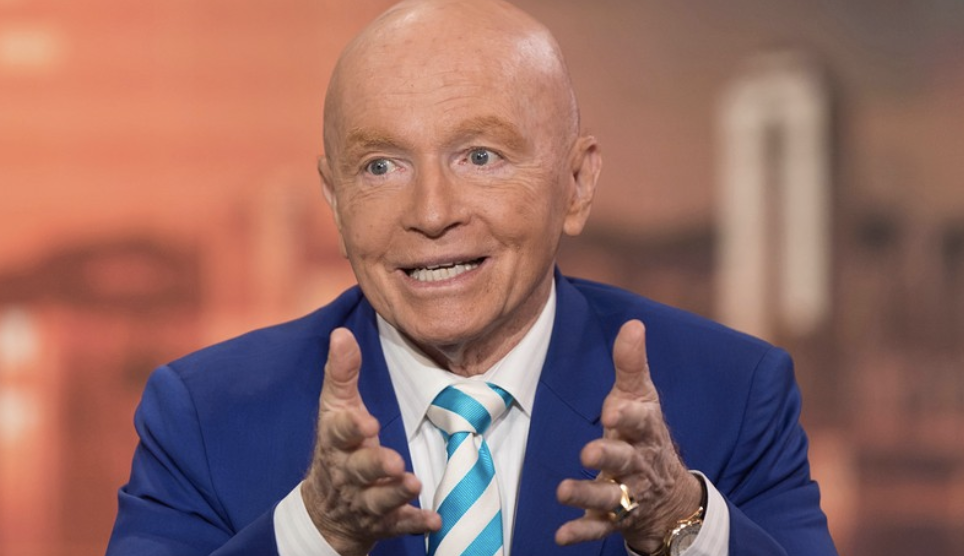
Mark Mobius: Brexit Has Turned UK Into “An Emerging Market Economy”

With all hell breaking loose in Turkey this week, one would think Mark Mobuis, the pioneering portfolio manager who launched one of the first EM-focused funds more than 30 years ago, would be focusing his attention on an issue more germane to his area of expertise – like whether Turkey’s deteriorating financial position might breed contagion – or something along those lines.

Mobius

Instead, he’s become the latest standard-bearer for “Project Fear”, warning during an interview with the FT that the UK already resembles an “emerging economy” and that the situation will only get worse once it finally departs the EU – particularly if it does so without a. deal.

“The UK is like an emerging market now. Their balance of payments is terrible; their government debt is terrible; their fiscal debt is terrible,” said Mr Mobius, who spent most of his career working for the US asset manager Franklin Templeton.

Subtly equating the UK with Greece and Portugal, Mobius argued that once the UK leaves the EU, ratings agencies will be forced to downgrade its sovereign credit rating once it no longer can “ride the coattails” of the trade bloc.

“Up to now, the UK is riding on the coat-tails of the EU, in the sense that [the UK] can have very low interest rates,” Mr Mobius told the FT at an event in New York this week hosted by the Emerging Markets Investors Alliance.

“As soon as they break, people are going to start looking hard and fast. The rating agencies will say ‘wait a minute, no more EU association? We’ve got to downgrade.'”

But getting at the real reasons behind his antipathy toward Brexit, Mobius lamented the fact that the UK might lose its status as a center for emerging market countries, thanks to its dominance in global FX markets, and the fact that many companies based in emerging markets list their shares in the UK. As it stands, Mobius can just hang out in London and “these people will come to us”. But that could easily change.

“The unfortunate thing for us in emerging markets is that the UK is really a centre for emerging countries for [public] listings or for company meetings,” Mr Mobius said.

“We can sit in London and these people will come to us.”

If the UK leaves without a deal, some 5,500 UK businesses would lose their “passporting” privileges – meaning they would need to deal with a separate set of regulatory guidelines to do business in the EU. If the UK leaves wiithout a deal, Mobius said his firm would likely leave London for “Paris, Munich or somewhere else.”

“We’ll have to go to Paris, Munich or somewhere else in the EU,” Mr Mobius said of his firm.

“I would like to go to Spain. I want warm weather.”

Does Mobius really feel that the British people “made a mistake” when they voted for Brexit? Or is he just cranky that his firm might face a heap of new regulatory hurdles and might need to move?

via ZeroHedge News https://ift.tt/2FKtQ80 Tyler Durden

Permanent Recession For Italy?

Authored by Mike Shedlock via MishTalk,

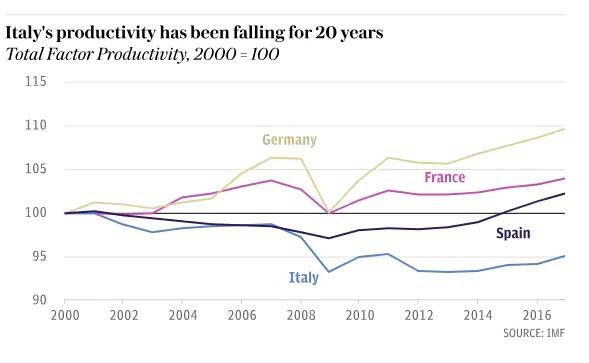
The Telegraph warns of a possible permanent recession for Italy.

Please consider Italy May Face ‘Perma-Recession’ as ECB Warns of Hazards Ahead.

Italy may be teetering on the brink of a “perma-recession” that will see its public debt spiral out of control and bring the future of the single currency into question.

The eurozone’s third-largest economy will see its GDP “flat-line at best” over the next decade, according to Jack Allen, senior Europe economist at Capital Economics. He added: “In effect, we think Italy will be in a state of ‘perma-recession’ from which there is no obvious escape. Among advanced economies, this would be unprecedented.

Deflation Takes Hold

Ambrose Evans-Pritchard warns The European Central Bank has let deflation take hold and is now an impotent spectator.

The European Central Bank has reached the end of the road. It no longer has the monetary levers or the political authority to launch another ‘shock and awe’ rescue if the eurozone tips into recession.

Mario Draghi tried valiantly to bluff his way through the ECB Watchers conference on Wednesday, laying out his surgical toolkit should the worst happen. “We are not short on instruments to deliver our mandate,” he said.

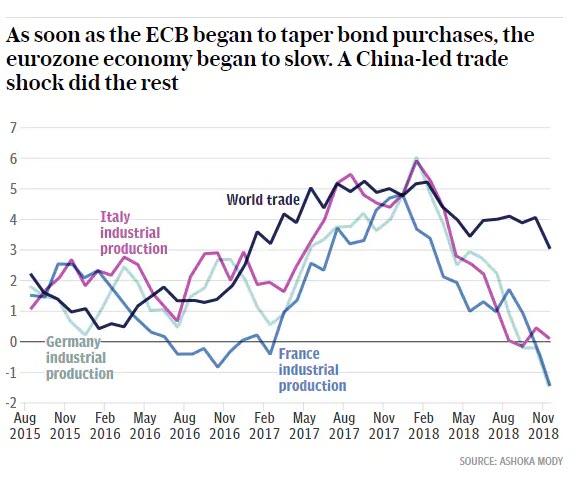
“What instruments?,” asked Ashoka Mody, the former deputy-director of the International Monetary Fund in Europe. “Aside from its jumble of words, the ECB has nothing else to offer.”

“They pulled QE too soon,” said James Ferguson, a monetarist at MacroStrategy. “The underlying economy is not fixed and the banks are not fixed. The chances of a deflationary bust have increased massively.”

Mr Draghi knows – but cannot admit – that the ECB was forced to shut down QE prematurely under pressure from Germany and the northern bloc. The real motives were political, rooted in the dysfunctional character of Europe’s half-built monetary union and German fears of debt union by stealth.

It would take ‘helicopter money’ or people’s QE injected into the veins of the real economy to pull Europe out of a deflationary vortex in today’s circumstances. That would breach the Lisbon Treaty and precipitate a storm in the German constitutional court.

In a sense Europe is paying the price for policy errors made almost a decade ago. The ECB should never have raised rates in 2011 and triggered EMU’s double-dip recession. It should not have delayed QE for five years after the Fed had already shown the way. This inertia – or hubris – allowed ‘Japanese’ pathologies to take root. Now the task is becoming impossible.

Totally Silly Stuff

One hike too many does not cause a recession. Nor does one hike less prevent one.

The EU’s problems are structural.

One size fits all does not work with interest rates. There are enormous productivity differences between peripheral Europe and Germany.

The Euro is a failure and contributes to the mess. Italy, Greece, and even France need huge work rule changes. France does not need tax hikes.

All this talk of “austerity” is a joke. France and Spain have missed budget targets for a decade. Yet here we are, Europe is headed for recession if indeed not in one already.

Inflation Expectations

Misplaced Blame

Monetarists like Pritchard blame the ECB.

The ECB’s negative interest rates were counterproductive, but that’s what the monetarists want.

One does not cure structural problems with central bank policies even if by some miracle central banks could divine the best interest rate. In the Eurozone, that’s not even possible because one size doesn’t fit all.

Finally, the inflation expectation meme is absurd. Those who don’t understand why should take a look at Hello Jerome Powell, We Have Questions.

via ZeroHedge News https://ift.tt/2YvbPBK Tyler Durden

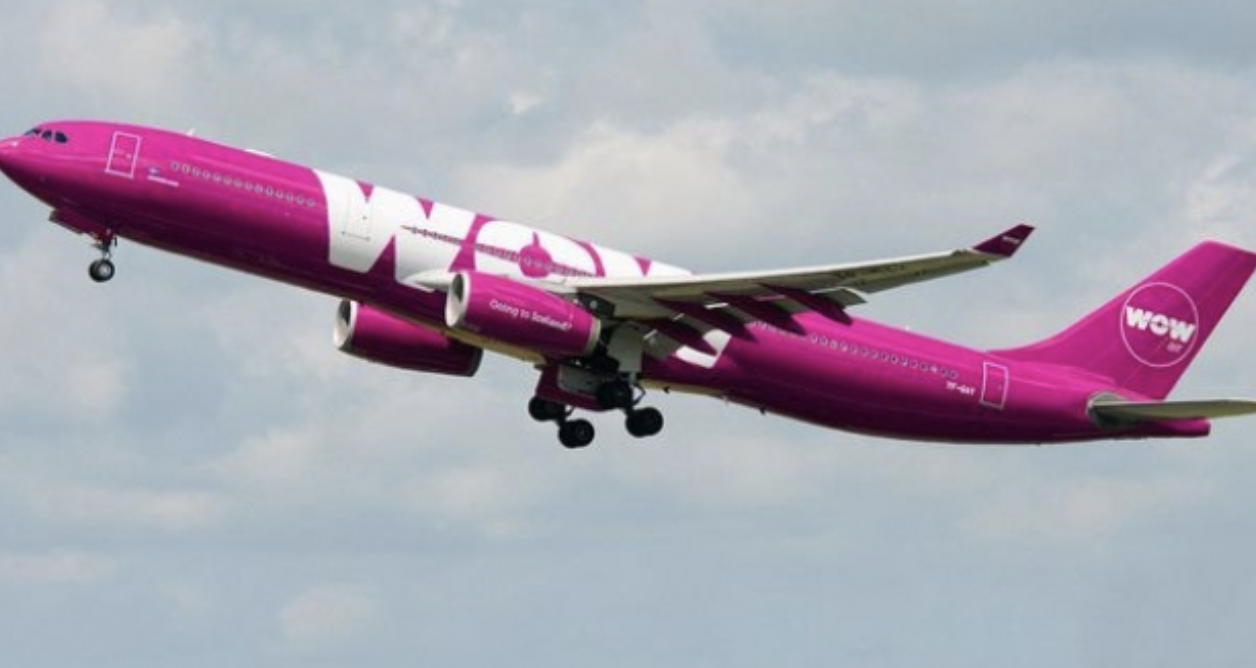
Iceland’s Wow Air Suddenly Shuts Down, Leaving Thousands Stranded; Analysts Warn Of Economic Backlash

Thousands of passengers who had booked flights with Iceland’s low-cost Wow Air have been left stranded after the airline suddenly stopped flights on Thursday, offering passengers no recourse other than to book another flight with a rival carrier and try and get their money back from their credit card company or travel agent.

According to the BBC, the airline released a statement on its website saying it would cancel all scheduled flights and cease operations immediately. It recommended that customers with urgent travel needs try and book with other airlines, which might be willing to offer a reduced “rescue” fare. Wow said it would published information about these fares when it becomes available.

Any passengers who didn’t buy their tickets via a protected booking method could be entitled to compensation “in accordance with European regulation on Air Passenger Rights” or by filing a claim “in case of a bankruptcy.”

However, a bankruptcy wasn’t a foregone conclusion, as the airline said it would resume operations after an equity deal with a group of investors had been finalized. Though we imagine the uproar over the cancellations could be a deal breaker. On March 24, Wow announced that a deal with rival Icelandair would not materialize, so it’s unclear who these other investors might be.

Wow

While Wow’s customers were left in the lurch, Icelandair shareholders benefited from the catastrophe as the rival airline’s shares surged nearly 30%. One passenger who had been stranded at an airport in Frankfurt with his family spoke with an FT reporter about his group’s struggle to book new flights.

Christian Luisi, 22, said he and nine other members of his family were stranded at the airport in Frankfurt after their Wow Air flights to the US via Keflavik airport in Iceland’s capital were cancelled this morning. He said his grandparents had “just paid thousands of dollars for tickets” to cover tickets back to the US for half the group, while the rest were attempting to find affordable flights.

Mr Luisi, who works as a supermarket manager in New York, said this was the first foreign holiday he had been on since he was eight years old. “I didn’t imagine anything like this could ever happen,” he said.

“The entire morning has been terrifying and stressful. I just can’t believe they’ve left us stranded.” Mr Luisi showed an automated text message sent by Wow Air at just after 6am on Thursday that stated the family’s flight was cancelled because of “operational restrictions.”

The automated message also informed passengers that they could choose between a full refund and changing their reservation to the next available flight. After receiving the messages, Mr Luisi said, the family “checked out of our hotel, returned the rental car and went to check in”, he said.

Mr Luisi said that, when he went to the designated Wow Air check-in desk at Frankfurt airport, “no one from Wow Air was there and of course there were no other Wow Air flights.” He said members of his group were then handed a paper note by a Frankfurt employee, a photo of which he shared with the Financial Times, signed in the name of Wow Air operations controller Andri Hrafn Armannsson. The note also informed passengers they could have a full refund or alternative flight.

According to Bloomberg, all 29 of Wow’s scheduled flights were canceled, leaving 2,700 passengers to try and find flights with other airlines. The government activated contingency plans and issued a statement seeking to offer reassurances about the consequences for the local economy.

In a letter to employees, Wow’s founder and chairman, once hailed as one of the country’s savviest businessmen, apologized for not taking action sooner.

“We have run out of time and have unfortunately not been able to secure funding for the company,” Chairman Skuli Mogensen said in a letter to employees. “I will never be able to forgive myself for not taking action sooner.”

While the cancellations elicited a torrent of outrage from stranded fliers, the airline’s sudden closure wasn’t entirely unexpected. Earlier in the week, creditors had reportedly seized Wow planes due to its financial difficulties, while dozens of flights had been cancelled earlier in the week.

According to the FT, the lossmaking carrier had suffered from falling tourism to Iceland as well as a rise in oil prices, which raised its fuel costs. In addition, more rival airlines had been offering low-cost long-haul flights, which had been a crucial business for the airline.

In a sign that Wow’s failure could have wide-ranging implications for Iceland’s economy, a government task force’s analysis published late last year found that, were Wow to collapse, it could trigger a 3% contraction in GDP for the Icelandic economy, as well as a steep drop in the Krona that would cause inflation to climb by as much as 6%. Meanwhile, exports could drop by 10%. The study had been ordered to examine the risks from a slowing tourism industry.

This could lead to the biggest economic contraction since Iceland’s economy collapsed during the financial crisis.

via ZeroHedge News https://ift.tt/2FHPhGp Tyler Durden

The EU Bows To “Systemic Rival” China

Authored by Pepe Escobar via The Asia Times,

Slowly but surely, the EU is shifting its priorities to the East..

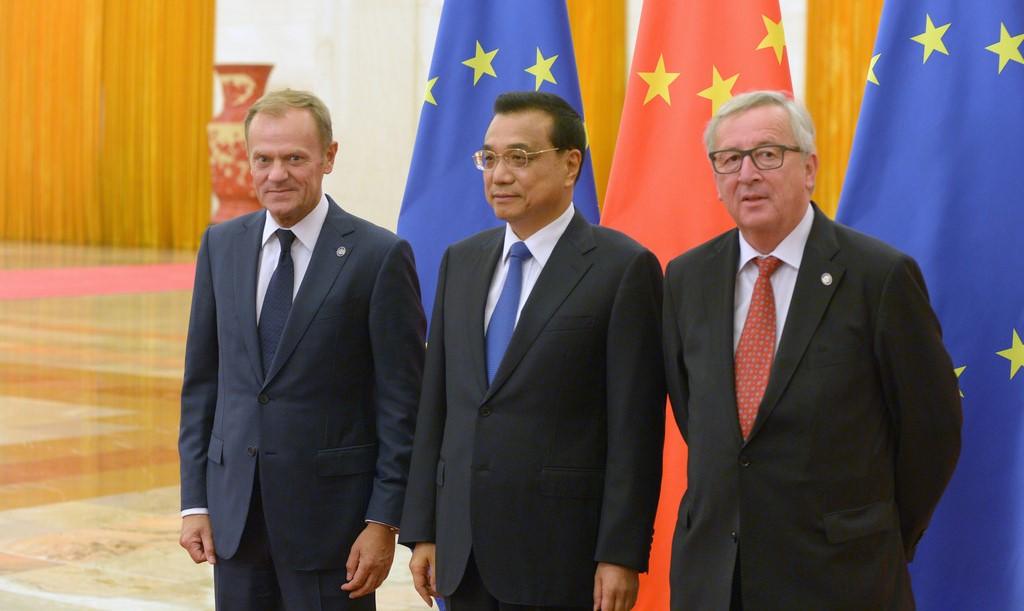
Let’s start with the essential background for the meeting in Paris on Tuesday between Chinese President Xi Jinping and three EU heavyweights – French President Emmanuel Macron, German Chancellor Angela Merkel and President of the European Commission (EC) Jean-Claude Juncker.

As imperfect as these figures may be, economic growth for the past 10 years after the 2008 financial crisis – which was a made in the West phenomenon – do tell an enlightening story.

China’s growth: 139%. India’s growth: 96%. the US’ growth: 34%. EU growth: a negative2%.

French mainstream media, controlled by a rarified group of oligarchs, spun a risible narrative that Macron “imposed” this four-way meeting on Xi to press on him the new EC strategy aiming to “clarify” Chinese ambiguity in relation to the New Silk Roads, or Belt and Road Initiative (BRI).

As I previously reported, the EC now brands China a “systemic rival,” and seems to have realized that Beijing is an “economic competitor in search of technological leadership.” And that may translate as a threat to European values and norms.

Xi had just come from Rome – where the populist, eurosceptic Lega, Five Stars coalition government became the first G7 nation to sign a partnership with the BRI, igniting massive sparks of Atlanticist fear.

So in the end, what did we get from Chancellor Angela Merkel as the EU faced a process French elites describe as Sino-globalization?

We had realpolitik. Merkel stressed the BRI was an “important” project: “We, as Europeans, want to play an active part and that must lead to certain reciprocity and we are still wrangling over that a bit.” She added: “We are seeing the project as a good visualization of interaction, interrelation and interdependence.”

Merkel was essentially relaying the position of German business elites – as a trade powerhouse, the future of Germany lies in turbo-charging business with Asia, especially China.

So, instead of demonizing Rome, in practice Berlin will eventually embark on the same path. After all, Duisburg, in the Ruhr valley, is already the de facto top BRI terminal in northern Europe.

Xi and his EU partners did not fail to emphasize multilateralism. There could not be a more glaring contrast to the Trump administration’s narrative that China is a threat and the BRI is all about Chinese “vanity.” Juncker even tried to defuse the “systemic” tension: “We understand that China does not like the expression ‘rivals,’ but it is a compliment describing our shared ambitions.”

Add to it that Xi also felt the need to remind the EU leadership of the obvious. China will continue to “open up,” as it managed in only 40 years to accomplish what Europe did over the course of the entire industrial revolution.

New Silk Air, anyone?

On the – embattled – Macron front, more than New Silk Roads a de facto New Silk Air seems to be in effect.

No one – apart from Boeing – argues about a 30 billion euro-plus Chinese order to buy 300 Airbuses. And that’s only the beginning. The fact that Beijing will use Airbus technology to enhance its aviation prowess under the framework of Made in China 2025 is another matter entirely.

So Paris may not have turned, like Rome, into an official partner to the New Silk Roads – at least not yet. But the promises are quite telling – on three fronts.

1) The emphasis on multilateralism – “strong and efficient.” That’s not exactly Trumpian rhetoric.

2) Common action with Beijing on climate change and biodiversity.

3) An economic-trade partnership that respects mutual interests. That is, in fact, New Silk Roads-BRI official policy since the beginning, in 2013.

So when we compare the different strategies by Rome and Paris, Xi has, in fact, come out with a win-win.

Merkel, predictably, was careful to hedge to the hilt: “The triangle between EU, China and US is very important. Without the US, we will not be able to have multilateralism.”

At the same time, she stressed, the US-China trade war was “hitting our German economy.”

As for Team Macron, with the leader obsessed with posing as the savior of the EU ahead of the European Parliament elections in May, they could not help but go after the administration in Rome.

According to a Macron acolyte:

“There is this bad European habit to have 28 different policies, with countries competing against each other to attract investment. We need to speak with a common voice if we want to exist. We have the same approach on the 5G issue: avoiding 28 different decisions.”

The 5G Monaco Grand Prix

Which brings us to the case of Monaco, not exactly a shabby prize – and duly visited by Xi, who was received, literally, as royalty.

The principality is absolutely avid to gobble up the fast-growing Chinese luxury tourism market. And that explains why Monaco has already signed a deal with Huawei to be the first country to be entirely covered by 5G before the end of 2019.

Paris, by the way, has not ruled out using Huawei equipment. And as a cherry on the cake, guess which city Huawei chose to globally unveil its spectacular new P30 series of smartphones? Paris.

Make no mistake, for Beijing, in terms of trade and economic relations, Berlin is way more relevant than Paris. But these big three – Berlin, Paris and Rome – all have major roles to play.

The New Silk Roads being re-connected to Italy after half a millennium will accelerate Euro-Asia integration, and even, in the long run, more influence for both the Eurasia Economic Union (EAEU) and the Shanghai Cooperation Organization (SCO).

EU businesses, if not political Eurocrats, are starting to realize that Europe cannot afford to become a battlefield in Cold War 2.0 between the US and Russia, cannot afford to become a hostage of Washington tearing up international law – see, for instance, the destruction of the Iran nuclear deal and recognizing the occupied Golan Heights as part of Israel – and cannot afford to become a victim of Washington’s trade whims.

It’s no wonder that slowly but surely, the EU is shifting its priorities to the East – including to its “systemic rival.”

via ZeroHedge News https://ift.tt/2JLwlL6 Tyler Durden