By now the phrase is a cliché – “Never apologize to the left” – but the truth behind the words couldn’t be any more compelling.
Last week at the University of Michigan for example, the Institute for the Humanities hosted the event “The Power of Pronouns,” part of its High Stakes Culture lecture series.
As reported by The Michigan Daily,those on the panel “spoke about the linguistics behind gendered pronouns and what language may be used in the future.”
The panelists included a transgender person and a lesbian, but this didn’t thwart some students from taking “issue with the framing of the discussion.”
Junior Jordan Furr, who identifies as transgender, chided the panel for getting “into so much stress about grammatical issues” because, he said, the “power of the pronoun” is really about “how powerful it is.”
Whoa — deep.
Like a good contemporary academic, linguistics professor Robin Queen (the lesbian panelist) apologized to Furr, saying it was perhaps “misguided on [her] part not to be more specific” about the political nature of pronouns for different people.
Furr didn’t appear to be placated, however.
He said trans issues, such as pronoun use, “should be represented by trans-identifying individuals who are personally affected.”
It didn’t matter to him that Scott Larson, an American culture professor, represented the trans community on the panel … because Larson doesn’t use the “they/them” pronouns. Furr said the professor was “tokenized” by the other panelists in order to gain “credibility.”
And then the ante was upped:
“At the end of the day, only trans people should be talking about this,” Furr said (emphasis added).
You might think such a statement couldn’t be topped — that is, if you’re unfamiliar with the identity political left. Furr, now joined by another student, returned to Queen:
She is “symptomatic of a system that privileges cis identity and perspective.”
“It’s not about just one individual person doing something transphobic, it’s about cis people getting away with doing that,” senior Katrina Stalcup said.
“Everything she did isn’t uniquely something that only she does. That’s quantified by all the questions that came afterwards where a cis man reiterated what Jordan said, and just completely invalidated the thing that he had said.”
Looks like another intersectional conundrum in all its glory. And don’t think for a second that if Professors Queen, Larson, and others on the panel did/said precisely what Furr, et. al. were bellyaching about … that the latter wouldn’t find something else about which to whine.
It’s all about maintaining a state of perpetual grievance.
Meet The Treasure Hunter That Has Spent Two Decades Looking For 800 Barrels Of Gold
Dutch businessman and treasure hunter Bernard Keiser has spent much of his life – two decades – on the hunt for 800 barrels crammed with gold and jewels that is rumored to be hidden on Chile’s Juan Fernandez island, according to Bloomberg.
Juan Fernandez island is 400 miles off the Chilean coast and is where “Scottish privateer Alexander Selkirk was marooned for four years in the early 18th century”. The event is said to have inspired the story of Robinson Crusoe.
The treasure supposedly arrived on the island years after Selkirk left. The story involves hurricanes, shipwrecks, looting, murder and mutiny. There are accounts that value the treasure at $10 billion and claim that it includes a “giant rose made of gold”.
Despite the fact that the story of how the 18th century gold got on the island continues to change, it hasn’t stopped Keiser from pushing forward with his search.
And this week, Chile has officially thrown their hat in the ring for the hunt, adding a new chapter to Keiser’s story.
Chile has announced that it gave Keiser permission to dig up part of a national park using heavy machinery. Environmentalists oppose the idea, saying that the intervention of a 8.7 ton excavator will be “irreversible”.
Diego Ibanez, a congressman with left-wing coalition of parties Frente Amplio said:
“It is a clear twisting of the law that’s being used to favor a Dutch multimillionaire who hasn’t found any evidence after years of searching. It’s important to preserve the land, and not to give it away to investigations that seem to be based more on religion than science.”
The treasure was rumored to have been amassed by the Spanish Crown in Latin America and then buried by admiral Juan Esteban Ubilla around 1714, during a civil war in Spain, on Juan Fernandez island.
One of the most common stories about the treasure says that Ubilla, before dying in a hurricane, told his ally and Captain George Anson where the treasure had been hidden. Anson then sent another Captain to dig the treasure up years later, but his ship was hit by a storm on his way back, forcing him to return and bury the treasure again.
Then, after hearing plans for a mutiny, the story says, the captain burned his ship, killed the crew and fled in a rowboat to the mainland, before dying.
The story garnered attention in 1950 when a letter was discovered that reportedly gave a description of the treasure’s location.
Keiser has now been conducting “yearly searches” in a rocky northwest area of the island called Puerto Ingles. Teams of about ten people using portable equipment have drilled up to 23 feet below the surface in the search for an underground cave where the treasure is supposed to be buried.
Keiser is now stepping up his excavating muscle, filing with Chile’s government that he now intends on using a backhoe that has a lifting capacity of 4.4 tons.
His plans continue to create controversy. The regional director of the forestry agency, Conaf, resigned this month in opposition to Keiser’s plans. National Heritage Minister Felipe Ward was also criticized for meeting with Keiser before Conaf approved the excavator.
But the ends could justify the means for Chile if Keiser has success: he must give 75% of any treasure he finds to the Chilean state. With the treasure valued at $10 billion, we’re sure that’s a toll Keiser would be more than willing to pay.
In any country, during prosperous times, the great majority of people go to work each day with the understanding that productivity results in an improved life. Even for those of humble means, the existence of prosperity around them is a daily assurance that, if you work hard and/or work smart, your life will steadily improve.
This is the normal state of affairs and has existed since time immemorial. Whether progress is quick or slow in a given location, the principle remains the same. A general condition of prosperity is a continual reminder of the value of a strong work ethic.
In a collectivist country, however, this is missing. The leaders live quite well, but they’re small in number and, for the most part, are outside of the view of the proletariat. What the common man sees around him is uniform poverty. No one in his midst is visibly progressing, so there’s no one to be jealous of.
This breeds complacency and so it’s not surprising that collectivism may be tolerated by the populace for many decades, even generations. People are invariably worse off under collectivism, but collectivism rarely ends due to rebellion. It ends because it’s a dysfunctional non-productive system that eventually collapses under its own weight.
But, if that’s so – if people living in a free-market system will instinctively reject collectivism and those living under a collectivist system also rarely rebel – how is it possible that, periodically, revolutions occur?
Why might the people of, say, the US, have been staunch supporters of a free-market system half a century ago and now be demonstrating a dramatically increased belief in collectivism? How is it even possible that political candidates with no experience in either politics or leadership positions be elected to Congress by promising collectivism?
Well that’s occurring for the same reason that it has occurred throughout history. The US no longer lives under a free-market system. Roughly one hundred years ago, the free market began to be replaced with corporatism. As corporatism increasingly bled the populace, the opportunity for personal prosperity declined. Over time, the average person was seeing less and less evidence of prosperity around him. At this point, he’s viewing corporate leaders enjoying unimaginable wealth, whilst those around him are experiencing stagnation. Real wages have not increased in decades.
Historically, it’s at this point that a people are ripe for the empty promises of collectivism.
And collectivists happily provide it. Although they occasionally promise to raise the proletariat up to the level of their economic betters, for the most part, they focus on the promise that they’ll bring the aristocracy down.
The selling of the idea of collectivism is based upon envy and resentment toward those who are better off than we may be. Collectivist leaders invariably accuse anyone who has prospered as being “greedy” and having “starved the poor” in order to achieve their relative wealth.
Although this is rarely accurate, it’s a great sales pitch, as those who have learned that their lives are not progressing are actively seeking an explanation and are ripe for one that blames those who have progressed.
The key here is that collectivism almost never sells well in a country where prosperity exists. In a free-market country, a strong work ethic is regularly rewarded. However, once the free market has deteriorated enough that the proletariat have come to understand that they’re not genuinely moving forward, they’re ready to jump on board with those leaders who appeal to their frustration and anger.
At this point, logic and reason cease to be important. What matters is rhetoric.
Once a people have concluded that prosperity is not truly in their future, they must choose between hopelessness and empty promises.
This is an important point, because human nature will always dictate that they choose empty promises. Left with no real hope, false hope is infinitely preferable to no hope.
Collectivism in the US began in the 1930s and was expanding nicely, when it was interrupted by World War II. The productivity of creating the goods of war for the European Allies sent the US into a period of dramatic productivity. This continued after the war, but in the 1960s, the effort to increase government’s control of production was renewed until, today, the wet blanket of government has become so heavy that prosperity has been minimized and the US is in a condition of stagnation.
And so, Americans are ripe for empty promises, and the younger the American (i.e., the less memory he has of the former prosperity), the more believable the empty promises seem to be.
Young Americans today are disinclined to daydream about a home with a white picket fence, a single wage earner, and a wife at home with three well-adjusted children. That dream sold well to their grandparents, but their grandparents witnessed people all around them achieving that dream, so it was clearly attainable if they were prepared to work for it.
Today’s young American sees this as hopeless. He’d like to be a billionaire like Jeff Bezos, but that clearly isn’t going to happen. So, he might as well not try.
His country has entered into eternal warfare, the government is broke, and he can’t even open a lemonade stand without applying for government permits and inspections.
At this point, it’s very unlikely that 1950s-style rhetoric of “Make America Great Again” will have any appeal to him whatever.
What is appealing is the promise that even if he makes no effort whatever, even if he remains in his parents’ basement for the rest of his life, unemployed, there’s a new political movement out there that understands him.
And it’s a breath of fresh air. It promises a life free from worry and effort. A free healthcare system, free college for as long as he wishes to be enrolled, and most importantly, a guaranteed living wage without the need to earn it.
In addition, instead of feeling worthless, his belief in the new collectivism gives him the ability to “stand for something.” He may now see himself as “making a difference.”
Only five years ago, Americans would have said that this would not have been possible. Leftist crackpots have always existed, but no one took them seriously. Surely, this would never come to pass in the US.
But recently, that’s been changing. Some candidates who have received the greatest support have been those who offer absurdly empty collectivist promises, and the media (whether they endorse them or not) are shining a spotlight on them every day.
The rhetoric has been classical collectivist propaganda. As impossible as it might be to actually work, it does absolutely appeal. It’s therefore spreading rapidly. I term this rhetoric, “infectious insanity” – a harsh term but, I think, an apt one.
In my belief, this will spread much as Bolshevism did after 1917, like a particularly virulent skin rash.
Historically, it’s always been true that, when prosperity has ceased to be readily visible in a nation, the false hope of collectivism becomes the drug of choice.
* * *
Unfortunately, there’s little any individual can practically do to change the trajectory of these trends in motion. The best you can and should do is to stay informed so that you can protect yourself in the best way possible, and even profit from the situation. That’s why Doug Casey and his team just released an urgent new video with all the details. Click here to watch it now.
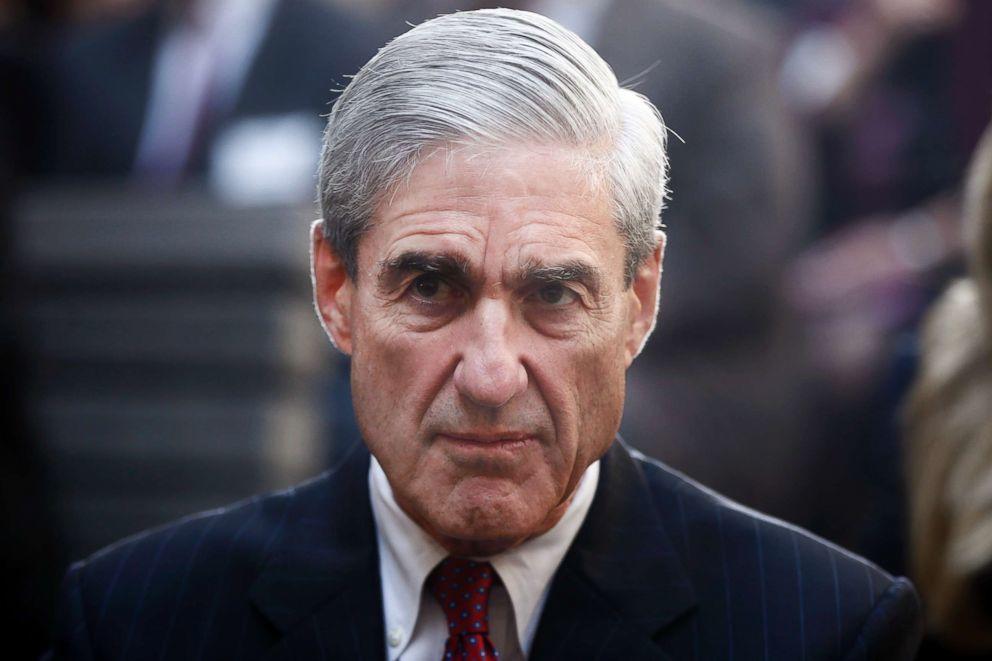
DOJ To Declassify ‘The Backbone’ Of Mueller Investigation With Monthly Document Dumps
The Department of Justice will release to the public approximately 500 pages of FBI ‘302’ witness interview forms per month, according to CNN – which sued the DOJ along with co-plaintiff BuzzFeed News under the Freedom of Information Act (FOIA).
The documents, known as 302s, memorialize interviews conducted by the office and form the backbone of much of the Mueller report. –CNN
The government has until November 1 to product the first tranche of documents, according to a fuling by federal Judge Reggie B. Walton in Washington DC.
The Mueller investigation initially sought to determine whether the Trump campaign ‘colluded’ with the Russian government during the 2016 US election, along with whether President Trump attempted to obstruct the FBI’s efforts. In his report, released April 18, Mueller’s team was unable to establish any conspiracy, while declining to render an opinion on ten instances of potential obstruction. Ultimately, Attorney General William Barr and Deputy Attorney General Rod Rosenstein determined that obstruction had not occurred.
According to DOJ attorney Courtney Enlow at a Tuesday morning hearing, a total of 800 302 forms were generated during the Mueller probe, potentially numbering around 44,000 pages – which are now subject to a release rate of 500 per week.
Enlow said the FBI had already begun to process the records but said a host of potential exemptions that had to be considered before their release, including national security implications, certain privileges, and exposure to ongoing prosecutions and investigations.
“We have been going through 302s line by line,” Enlow said. “It’s a very intensive process.“
The future production schedule for the remaining interview forms, as well as other records requested by the news outlets, is a matter of contention. –CNN
Judge Walton criticized the incredibly slow declassification, only for the Enlow to respond that the pace was ‘routine’ for the FBI.
Walton will also rule on a request by next month for the release of an unredacted version of the Mueller report, when another status hearing has been scheduled in the cases.
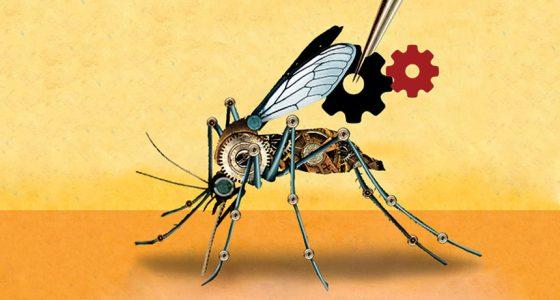
The releases of genetically-modified organisms (GMOs) into the natural environment is having a catastrophic and irreversible impact on our planet. A company known as Oxitec, based out of the United Kingdom, which had announced plans to release genetically-engineered, or transgenic, mosquitoes into the wild.
Oxitec’s stated goal was to eradicate native mosquito populations carrying potentially deadly diseases like Zika by infiltrating their ranks with transgenic impostors. These impostor mosquitoes, we were told, do not have the ability to reproduce, and thus pose no risk of causing long-term changes to the natural ecosystem, according to a report by Natural News.
What could possibly go wrong?
However, it appears that Oxitec was wrong about their GMO mosquitoes. As revealed in a new study, which was published in the esteemed journal Nature,Oxitec’s transgenic mosquitoes are not only able to reproduce, but their presence within native mosquito populations is actually causing super-mosquitoes to spawn. The world will have to face an onslaught of super-mosquitoes that are more resilient than the ones that previously existed in nature.
“To summarize the findings of the study, this mad science GMO experiment managed to create a super mutant population of mosquitoes that now carry genes that are potentially tied to enhanced insecticide resistance, making them harder to kill than ever before,” MikeAdams wrote for Natural News.
“The experiment utterly failed to achieve its promised outcome of wiping out mosquitoes, too.”
Failure is an understatement. Since the goal was a decrease in the mosquito populations that carry infectious diseases, this quote from the conclusion of the study bears mentioning:
The results of our tests of the infectivity of one strain each of the dengue and Zika viruses in females of the OX513A strain and the Jacobina natural population (before releases) indicate no significant differences (Fig. 3). –Nature
The mosquitoes are still carrying infectious diseases at the same rate as before the GMO mosquitoes were released. The study states that this whole plan broke down because the natural female mosquitoes prefer to mate with male mosquitoes that were known to be fertile, and not the infertile GMO mosquitoes released by Oxitec.
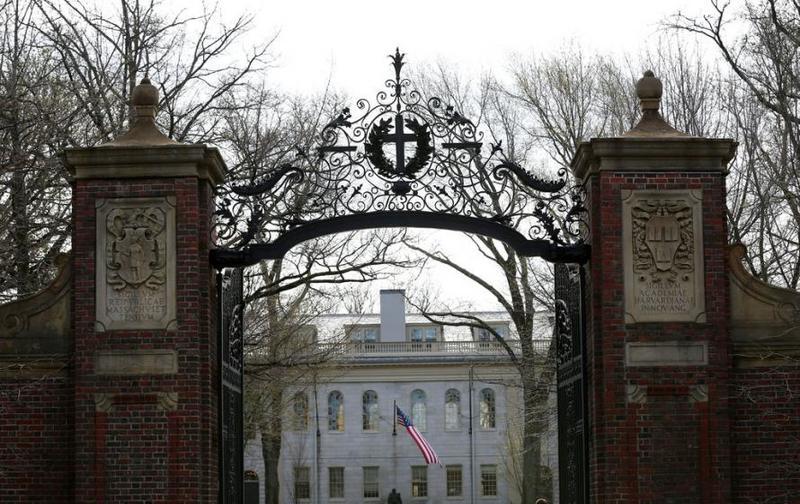
Judge Rules Harvard Can Keep Discriminating Against Asians Using ‘Race-Conscious Admissions’
A federal judge has decided in favor of Harvard University, ruling that the college can continue using Obama-era “race-conscious” affirmative action policies designed “to promote diverse educational settings,” according to NPR.
Federal District Court Judge Allison D. Burroughs issued her decision Tuesday, saying, “Harvard’s admission program passes constitutional muster,” and that “ensuring diversity at Harvard relies, in part, on race conscious admissions.“
The plaintiff, advocacy group Students for Fair Admissions, accused Harvard of discriminating against Asian-American applicants. It argued the school considers race too much, forcing Asian-Americans to meet a higher bar to get in. –NPR
The plaintiffs, Students For Fair Admissions (SFFA), are likely to appeal the case which may make it all the way to the Supreme Court. They have alleged that based on their analysis, Asian-American applicants receive Harvard’s lowest subjective personal rating scores, while consistently achieving the highest academic and extracurricular ratings of any other racial group. The personal rating is in part based on teacher recommendations, personal essays and admissions interviews, according to Harvard.
Last August, the Department of Justice lent its support to SFFA – concluding that Harvard’s use of a “personal rating” system violates the law, and that the college failed to demonstrate how its use of the system is narrowly tailored to suit a competing interest.
“Harvard acknowledges that it voluntarily uses race as a factor in deciding whether to offer certain young adults admission to, and the substantial educational benefits of, its elite institution,” reads the DOJ brief. “Harvard seeks to justify this use of race to award educational opportunities as necessary to its pursuit of the ‘educational benefits of diversity.’ But Harvard has failed to carry its demanding burden to show that its use of race does not inflict unlawful racial discrimination on Asian Americans.”
Over the summer, the DOJ and Department of Education began jointly directing schools to adopt race-neutral admissions standards – reversing the Obama-era guidance encouraging the use of race to promote diversity.
Never mind all that – for now. Harvard successfully argued that the lawsuit should be tossed because the case was founded on “invective, mischaracterizations and in some cases outright misrepresentations,” adding that the judge should rule in their favor since the lawsuit is nothing but a “litigation vehicle” to advance the ideological objectives of the plaintiffs’ group, led by Edward Blum.
The new Joker movie doesn’t hit theaters until Thursday, but it’s already proving controversial. Joaquin Phoenix’s version of the legendary Batman arch-nemesis is a frustrated, psychologically disturbed white man, akin to an incel or a mass shooter. Vanity Fair wondered if the film will be treated as “propaganda for the very men it pathologizes.” A mother of a victim of the Aurora, Colorado, movie theater shooting called the movie a “slap in the face” that could encourage the next James Holmes. The U.S. military circulated a memo warning servicemen about Joker-inspired violence.
Now the director of that film, Todd Phillips, is getting dragged on social media for pointing out something that rings true to me: Cancel culture has made it more difficult for comedians to engage in thoughtful provocation, especially if it offends progressive sensibilities.
“Go try to be funny nowadays with this woke culture,” Phillips told Vanity Fair. “There were articles written about why comedies don’t work anymore—I’ll tell you why, because all the fucking funny guys are like, ‘Fuck this shit, because I don’t want to offend you.’ It’s hard to argue with 30 million people on Twitter. You just can’t do it, right? So you just go, ‘I’m out.’ I’m out, and you know what? With all my comedies—I think that what comedies in general all have in common—is they’re irreverent. So I go, ‘How do I do something irreverent, but fuck comedy? Oh I know, let’s take the comic book movie universe and turn it on its head with this.’ And so that’s really where that came from.”
Phillips is essentially raising the same issue as Dave Chappelle, Jerry Seinfeld, Louis C.K., and a host of other comedians. They all worry that the social media shame mobs are a negative trend, and give power to those who believe it’s never okay to make light of subjects that are sacred to the political left—and that offenders should be shunned, silenced, and fired.
It’s true that invectives against cancel culture are often too broad. Sometimes, people who complain about being canceled are actually just complaining about being criticized. Sometimes, the supposedly canceled actually profit from the controversy. On this basis, The New Republic‘s Osita Nwanevu has declared cancel culture a “con.” (For a good rebuttal, read Jesse Singal here.)
Cancel culture is sometimes a con. Other times, it’s very real. Ask Nimesh Patel, whose perfectly benign comedy routine was ended mid-act at Columbia because of absurd student complaints. Ask Aziz Ansari, who had to spend a year hiding from the spotlight after being lazily smeared by a now-defunct gossip site. Ask Kyle Kashuv, who managed to make enemies on both the far-left and the far-right, and was jointly canceled by both.
These are examples that come to mind because they involve famous people, but plenty of average folks can land themselves in circumstances where they are viciously attacked (and often do not stand to profit from those attacks in the same way that Chappelle can). The Carson King debacle—in which the canceler quickly becomes the canceled—should at the very least be counted as proof that this phenomenon is in some sense real.
The new Joker movie doesn’t hit theaters until Thursday, but it’s already proving controversial. Joaquin Phoenix’s version of the legendary Batman arch-nemesis is a frustrated, psychologically disturbed white man, akin to an incel or a mass shooter. Vanity Fair wondered if the film will be treated as “propaganda for the very men it pathologizes.” A mother of a victim of the Aurora, Colorado, movie theater shooting called the movie a “slap in the face” that could encourage the next James Holmes. The U.S. military circulated a memo warning servicemen about Joker-inspired violence.
Now the director of that film, Todd Phillips, is getting dragged on social media for pointing out something that rings true to me: Cancel culture has made it more difficult for comedians to engage in thoughtful provocation, especially if it offends progressive sensibilities.
“Go try to be funny nowadays with this woke culture,” Phillips told Vanity Fair. “There were articles written about why comedies don’t work anymore—I’ll tell you why, because all the fucking funny guys are like, ‘Fuck this shit, because I don’t want to offend you.’ It’s hard to argue with 30 million people on Twitter. You just can’t do it, right? So you just go, ‘I’m out.’ I’m out, and you know what? With all my comedies—I think that what comedies in general all have in common—is they’re irreverent. So I go, ‘How do I do something irreverent, but fuck comedy? Oh I know, let’s take the comic book movie universe and turn it on its head with this.’ And so that’s really where that came from.”
Phillips is essentially raising the same issue as Dave Chappelle, Jerry Seinfeld, Louis C.K., and a host of other comedians. They all worry that the social media shame mobs are a negative trend, and give power to those who believe it’s never okay to make light of subjects that are sacred to the political left—and that offenders should be shunned, silenced, and fired.
It’s true that invectives against cancel culture are often too broad. Sometimes, people who complain about being canceled are actually just complaining about being criticized. Sometimes, the supposedly canceled actually profit from the controversy. On this basis, The New Republic‘s Osita Nwanevu has declared cancel culture a “con.” (For a good rebuttal, read Jesse Singal here.)
Cancel culture is sometimes a con. Other times, it’s very real. Ask Nimesh Patel, whose perfectly benign comedy routine was ended mid-act at Columbia because of absurd student complaints. Ask Aziz Ansari, who had to spend a year hiding from the spotlight after being lazily smeared by a now-defunct gossip site. Ask Kyle Kashuv, who managed to make enemies on both the far-left and the far-right, and was jointly canceled by both.
These are examples that come to mind because they involve famous people, but plenty of average folks can land themselves in circumstances where they are viciously attacked (and often do not stand to profit from those attacks in the same way that Chappelle can). The Carson King debacle—in which the canceler quickly becomes the canceled—should at the very least be counted as proof that this phenomenon is in some sense real.
As the exodus gathers momentum, all the reasons people clung so rabidly to urban meccas decay.
If there is any trend that’s viewed as permanent, it’s the enduring attraction of coastal urban meccas: despite the insane rents and housing costs, that’s where the jobs, the opportunities and the desirable urban culture are.
Nice, but like many other things the status quo considers permanent, this could reverse very quickly, and all those pricey urban meccas could become crime-ridden ghost towns. How could such a reversal occur?
1. Those in the top 10% who can leave reach an inflection point and decide to leave. The top 1% who live in enclaves filled with politicians, celebrities and the uber-wealthy see no reason to leave, as the police make sure no human feces land on their doorstep.
It’s everyone who lives outside these protected enclaves, in neighborhoods exposed to exasperating (and increasingly dangerous) decay who will reach a point where the “urban lifestyle” is no longer worth the sacrifices and costs.
It might be needles and human feces on the sidewalk, it might be petty crime such as your mail being stolen for the umpteenth time, it might be soul-crushing commutes that finally do crush your soul, or in Berkeley, California, it might be getting a $300 ticket for not bringing your bicycle to a complete stop at every empty intersection on a city bikeway. (I’ve personally witnessed motorcycle officers nailing dozens of bicyclists with these $300 tickets.)
It might be something that shreds the flimsy facade of safety and security complacent urban dwellers have taken for granted, something that acts as the last grain of sand on the growing pile of reasons to get the heck out that triggers the decision.
Not everyone can move, but many in the top tier can, and will. Living in a decaying situation is not a necessity for these lucky few, it’s an option.
2. Those who have to leave when they lose their job. A funny thing happens in all economies, even those with central banks: credit-cycle / business-cycle recessions are inevitable, regardless of how many times financial pundits say, “the Fed has our back” and “don’t fight the Fed.”
As I’ve noted here numerous times, a great many small businesses in these pricey urban meccas are one tiny step from closing: one more rent increase, one more bad month, one more regulatory burden, one more health issue and they’re gone. They will move to greener pastures for the same reason as everyone else–they can’t afford to live in urban meccas.
Once enough of the top 10% leave (by choice or because they can no longer afford it), the food/beverage service industry implodes. Wait staff and bartending have been a major source of jobs in these urban meccas, and when hundreds of struggling establishments fold due to a 10% decline in their sales, thousands of these employees will lose their jobs and the prospects of getting hired elsewhere decline with every new closure.
The vast majority of these service employees are renters, paying sky-high rents that unemployment can’t cover. They will hang on for a few months and then cash in their chips and move to more affordable climes.
3. Once the stock market returns to historic norms, the gargantuan capital gains that supported local tax revenues and spending dry up. WeWork is the canary in the coal mine; from a $50 billion IPO to insolvency in six weeks.
Once tax revenues plummet (no more IPOs, hundreds of restaurants closing, etc.), cities and counties will have to trim their workforces to maintain their ballooning pension payments for retirees. This will leave fewer police and social workers available to deal with everyone with little motivation (or option) to leave: thieves, those getting public services and the homeless.
4. Housing prices and rents are sticky: sellers and landlords won’t believe the good times have ended, and so they will keep home prices and rents at nosebleed valuations even as vacancies soar and the market is flooded with listings.
Neighborhoods that had fewer than 100 homes for sale will suddenly have 500 and then 1,000, as sellers realize the boom has ended and they want out–but only at top-of-the-bubble prices.
Ironically, this stubborn attachment to boom-era prices for homes and rents accelerates the exodus. As incomes decline, costs remain sky-high, so the only option left is to move away, the sooner the better.
By the time sellers grudgingly reduce prices, it’s too late: the market has soured. The Kubler-Ross dynamic is in full display, as sellers go through the stages of denial, anger, bargaining and acceptance: they grudgingly drop the price of the $1.2 million bungalow or flat to $1.15 million, then after much anger and anguish, to $1.1 million, but the market has imploded while they processed a reversal they didn’t think possible: now sales have dried up, and prices are sub-$800,000 while they ponder dropping their asking price to $995,000.
Vacant apartments pile up, as the number of laid-off and downsized employees who can still afford high rents collapses. (Recall that tens of thousands of recent arrivals in urban meccas rely heavily on tips for their income, and as service and gig-economy business dries up, so do their tips.)
5. As the exodus gathers momentum, all the reasons people clung so rabidly to urban meccas decay: venues and cafes close, street life fades, job opportunities dry up, and yet prices for everything remain high: transport, rent, taxes, employees, etc.
Friends move away, favorite places close suddenly, streets that were safe now seem foreboding, and all the friction, crime, grime and dysfunction that was once tolerable becomes intolerable.
6. In response to deteriorating city and county finances, local government jacks up fees, tickets, permits and taxes, accelerating the exodus. How many $300 tickets, fees and penalties does it take to break the resolve to stick it out?
7. Those on the cusp cave in and abandon the mecca. Once those who had the option to leave have left, and those who can no longer afford to stay leave, the decay causes those on the cusp of bailing out to abandon ship.
Renters move out in the middle of the night, homeowners who have watched their equity vanish as prices went into freefall jingle-mail the keys to the house to the lender and small businesses that had clung on, hoping for a turn-around close their doors.
8. Each of these dynamics reinforce the others. Soaring taxes, decaying services, declining business, rising insecurity and stubbornly high costs all feed on each other.
And that’s how pricey urban meccas turn into ghost towns inhabited by those who can’t leave and those living on public services, i.e. those too poor to support the enormously costly infrastructure of public spending in the urban mecca.
The lifestyle you ordered is not just out of stock, the supplier closed down.
VC Veterans Host Emergency Meeting Of Unicorns As IPO ‘Bubble’ Implodes
Recently, we have uncovered evidence that the proverbial tide is going out and also determined who is swimming naked.
SoftBank Vision Fund is one of those without a bathing suit, caught in a bind over several of its investments that are imploding, WeWork and Uber are to name a few.
Last week the Peloton IPO collapsed, turned out to be one of the worst opening trades for a unicorn IPO since 2008.
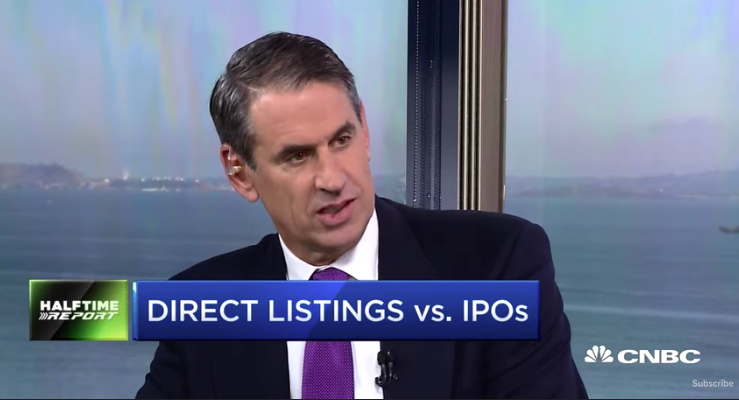
Now top venture capitalists, who are primarily based on the West Coast, are hosting an emergency meeting on Tuesday, invited more than 100 startups that will be advised not to IPO in the year ahead but rather use direct listings, considering numerous IPO failures seen this year.
Benchmark Capital partner Bill Gurley, one of the organizers of Tuesday’s meeting, told Reuters that two dozen venture capital firms would be advising more than 100 startups on how to go public in 2020.
Gurley said technology startups would need a more reliable alternative to the traditional IPO underwritten by investment banks, especially since what has happened to the latest IPO disasters: Peloton, Uber, and Lyft.
He warned of investment banks, like Goldman Sachs and JPMorgan, who have been “fleecing” companies by intentionally underpricing shares on IPO day. The ability to underprice then pop the new issuance enables the investment bank’s clients to make a quick gain.
Reuters notes that “underpriced IPOs provide the company less capital and diminish valuations for early investors such as venture capital backers, and any investors or employee stockholders who sell in the offering do not realize full value for their stakes.”
David Golden, a retired JP Morgan banker who is now managing partner at Revolution Ventures, said price action on IPO day doesn’t determine the whole story.
“If in the first few days of trading it doubles because there’s all this retail sentiment … and then it trickles down over the next two, three months, maybe even four months, then they probably priced the deal right,” said Golden.
Golden said direct listings could be the right solution for technology startups that don’t need to raise capital.
Venture capitalist sources told Reuters that Airbnb Inc is likely slated for a direct listing in 2H20.
Gurley said investment banks popping the stock on the first day is a market failure: “Giving away five hundred million dollars in one day – it’s really hard to justify.”
And here’s Gurley in 2016 when he spoke with CNBC’s Carl Quintanilla and Jon Fortt at the Code Conference about the “culling of the Silicon Valley herd,” his prediction of a bust cycle in Silicon Valley was likely three years too early.
With the IPO market bust underway, venture capitalists are now resorting to direct listings to dump worthless unicorns onto unsuspecting retail.