New Mexico Governor Quarantines Entire City, Closes All Roads That Lead Into Town
Today in “monitoring your civil liberties” news…
Taking a page out of the Wuhan coronavirus playbook, one New Mexico city has invoked the state’s Riot Control Act to lock down the entire city of Gallup, shutting down all roads leading into the city.
The decision was made by New Mexico Governor Michelle Lujan Grisham and was done “to mitigate the uninhibited spread of COVID-19 in that city,” according to CBS News.
The governor’s office said on Friday of last week: “Effective at 12 p.m., May 1, all roads into Gallup are closed. Businesses in the city of Gallup will close from 5 p.m. through 8 a.m. Vehicles may only have a maximum of two individuals. Residents of the city should remain at home except for emergency outings and those essential for health, safety and welfare.“
The city has a population of about 22,000 people and is located 100 miles west of Albuquerque. The city has grappled with coronavirus disproportionately, posting 1,027 of the state’s 3,411 cases and 19 deaths as of last Friday. Its county has the highest number of cases in all of New Mexico.
Authorities are closing off sections of roadway into the city as a result.
McKinely County, where Gallup is located, has “more than 30 percent of the state’s total positive COVID-19 cases and the most positive cases in the entire state, outstripping even far more populous counties,” the governor’s office stated.
“Its infection trend has shown no sign of flattening. The county has reported an additional 207 positive cases in the last two days alone, more than every other county in the state has reported total over the length of the pandemic save three.”
🚨COVID-19 UPDATE🚨
Effective noon today I am enacting further temporary restrictions to slow the spread of #COVID19, temporarily locking down the city of Gallup at the mayor’s request. pic.twitter.com/ThtMmZgieo
In a cry for help to the state government, Gallup mayor Jack McKinney wrote to the governor’s office, calling the city’s outbreak a “crisis of the highest order.”
He wrote: “The virus has caused many deaths, stretched medical facilities and resources to their capacity, and adversely impacted the welfare of the city of Gallup. Our community is unable to adequately address the outbreak without the imposition of certain restrictions necessary to regulate social distancing, public gatherings, sales of good, and the use of public streets.”
Meanwhile, in the neighboring city of Grants, New Mexico, Mayor Martin Hicks rallied Monday to encourage business owners to ignore the state’s guidelines and re-open for business.
The governor responded that Hicks’ plan makes “absolutely no sense whatsoever.”
She concluded: “These changes do not make our fight against the virus any easier; in fact, New Mexicans’ obligation to our social contract only deepens as we enter the next phase. The best defense against this virus, until there is a vaccine, is physical distance from other people.”
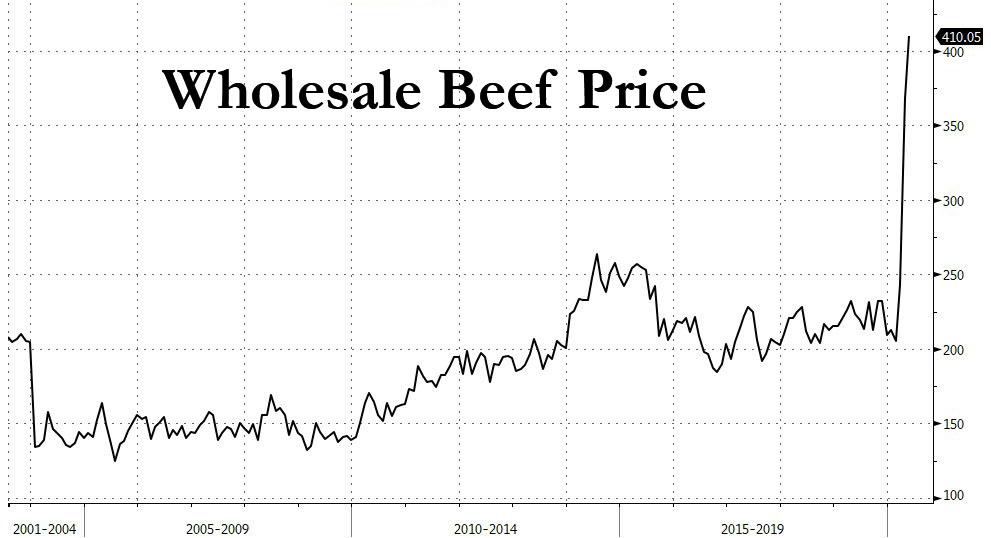
Beef Prices Explode To Record High As More Stores Limit Meat Purchases
Just a few days ago we marveled as wholesale beef prices had soared over 60% from their February lows to a record $331 per 100 pounds. Well, that was then, because today alone, the wholesale price soared by 8.6% or $32.60 to a new all time high of $410.05, almost doubling in less than a month.
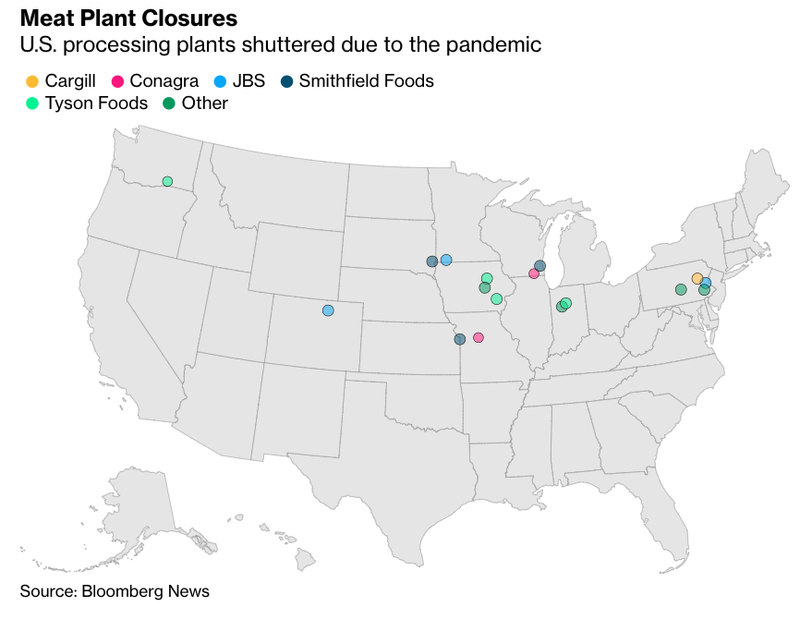
The reason: an unprecedented collapse of the nation’s food supply chain as over a dozen meat processing plants have been shuttered due to the coronavirus pandemic.
Beef prices are soaring even after Trump issued an executive order to address meat shortages, however with food workers scared and unwilling to return to work, Trump’s attempt to normalize prices has backfired, because all it has achieved was a frantic scramble by consumers to hoard beef resulting in even bigger shortages and higher prices.
Call it a bacon run.
As a result of the wave of panic-shopping at supermarkets, more grocery stores are imposing limits on meat purchases. On Friday, we reported that supermarket chain Kroger said that it has put “purchase limits” on ground beef and fresh pork at some of its stores following growing concerns over meat shortages due to coronavirus-induced supply disruptions. Other large grocers said they expect to be out of stock on different types of cuts soon.
Sure enough, on Monday Costco joined Kroger, announced it was limiting customers to three packages of meat.
Product Limitations
Costco has implemented limits on certain items to help ensure more members are able to purchase merchandise they want and need. Our buyers and suppliers are working hard to provide essential, high demand merchandise as well as everyday favorites.
Fresh meat purchases are temporarily limited to a total of 3 items per member among the beef, pork and poultry products.
Most if not all other supermarkets will follow suit in enforcing similar strict purchase limits.
With Trump’s EO failing to ease the shortage, and beef supply chains crippled, it is unclear when or how the beef shortage will be resolved, even as prices explode with each passing day, making beef a luxury for America’s 30 million suddenly unemployed who don’t know when their next paycheck will arrive.
While so far the food crisis is limited to beef and to a lesser extent pork (whose price rose to the highest in 6 years today), how long before all other food supply chains are similarly crippled resulting in the kind of food hyperinflation that sparked the Arab Spring protests and rebellions which culminated with overthrown governments across much of northern Africa and the Middle East?
Ignorance isn’t bliss. Ignorance is horrible. When the social reform movement in the late 19th and early 20th century emerged it took aim at five giants: want (poverty), ignorance (education), disease (public health), squalor (housing) and idleness (unemployment). From a social science point of view, heck from a humanitarian point of view, these do lead to misery and their eradication represents a worthy goal for any “Good Society.” As Adam Smith argued in The Wealth of Nations long ago, “No society can surely be flourishing and happy, of which the far greater part of the members are poor and miserable.” (Smith 1776, Bk I, chap 8, 88)
Economics was never heartless, and economists didn’t stand by in the face of human suffering and, as Dickens has Scrooge, declare: “If they would rather die,” “they had better do it, and decrease the surplus population.” As Carl Menger wrote in his Principles of Economics, man with his purposes and plans, and the means at his disposal to pursue them, is the beginning and end of economic analysis.
Ludwig von Mises, building on this Mengerian program in economic science titled his treatise simply Human Action and a core chapter early in the book demonstrates how “human society” is grounded in peaceful social cooperation achieved through productive specialization and mutually beneficial exchange. Economics, practiced in the tradition of the classical liberal political economist and the modern liberal political economists is humanistic in its method and humanitarian in its concern.
But that doesn’t mean policy deliberations to address want, ignorance, disease, squalor, and idleness are easy and straightforward. The question has always been what is the most effective way to address these social problems in a manner that reduces human suffering while encouraging the chances for human flourishing. There are always hard and difficult trade-offs, and economics as a discipline trains its practitioners to think in terms of trade-offs and to be attuned to unintended consequences.
The tragedy in human affairs is when policies chosen to reduce human suffering, especially among the most vulnerable, fail to do so, and in the process also reduce the opportunity for human flourishing.
The communist experiments of the 20th century are the more egregious examples of tragic consequences, but one could reasonably point to the historical experiences with social democratic welfare policies/politics as well that have destroyed lives, families and communities all in the noble effort at slaying the five giants.
The failure and frustration of the modern welfare state to effectively address social problems while threatening to bankrupt their respective economies is what led to at least a modicum of reconsideration by policy elites over the past 30-40 years throughout Europe and the US. A close examination of the public finances in the western social democracies should give pause to any simpleminded claim, if spending is any indicator, that a conscious effort was made to abandon our collective efforts to slay the giants.
Vito Tanzi’s Government versus Markets (2011) provides a balanced overview of the tax burden and public spending. Tanzi for decades was the Director of Fiscal Affairs at the IMF, so he had a front row seat to the changing and expanding role of the state in economic affairs of the Western democracies. Lawrence Kotlikoff and Scott Burns in their The Clash of Generations (2012), argue using the basic analytics of intergenerational accounting that the US public economy is bankrupt, not in 50 years, but right now.
They document how the political system has produced a six-decade plus, off-balance-sheet, unsustainable financing scheme to pay for not only the ordinary business of politics, but our foreign adventures and our domestic desires to address social problems. And, any analysis of this growth of government in both scale and scope would be woefully inadequate if it didn’t take into account the vested interest groups that form around each of the initiatives.
Again, pointing this out isn’t heartless, it is social science. We choose policy paths and government spending is committed to pursue those paths and not others, and those decisions have consequences that we can study. Deliberating about trade-offs does not commit one to this side or that side of any issue; it just means conceptually that if the costs are greater than the benefit for any particular policy there better be an overwhelming moral consensus among the population for it to be judged “the right thing” to do. In most instances, the claim in fact was always that the “right thing” was also the “good thing” to do – translated into econospeak, the benefits of the policy choice will outweigh the costs of that choice.
The political economy of the “good society” strives to maximize the opportunities for human betterment and minimize the experience of human suffering. The debate among thinkers is one of means, not one of ends. We must engage in a civil yet contested conversation over economic policy and human welfare.
In Deirdre McCloskey’s Why Liberalism Works (2019) she asks her readers to just listen, to really listen, to the other side, and to weigh the historical evidence and moral thrust of the argument for liberalism. She admits that liberalism has been imperfectly pursued, but even an imperfect liberalism has delivered unimagined benefits not just in terms of our material well-being.
Imagine, she asks us, to consider what a fully consistent liberalism might deliver for us. But to achieve that, we have to give up our arrogance and our will to rule over others. We are instead, one another’s dignified equals. And, we are called to interact with one another accordingly, with mutual respect for each other. A society of self-governors doesn’t need a nanny, let alone a boss, to guide and direct us.
In The Wealth of Nations (1776, Book IV, chap. 9, 183) talks about “the liberal play of equality, liberty, and justice.” And, as he writes later in that chapter:
All systems either of preference or of restraint, therefore, being thus completely taken away, the obvious and simply system of natural liberty establishes itself of its own accord. Every man, as long as he does not violate the laws of justice, is left perfectly free to pursue his own interest his own way, and to bring both his industry and capital into competition with those of any other man, or order of men. The sovereign is completely discharged from a duty, in the attempting to perform which he must always be exposed to innumerable delusions, and for the proper performance of which no human wisdom or knowledge could ever be sufficient; the duty of superintending the industry of private people, and of directing it towards the employment most suitable to the interests of the society. (ibid., 208, emphasis added)
Smith’s good friend David Hume argued that in crafting the institutions of government, we would be wise to assume all men are knaves. By this he meant opportunistic power seekers intent on acquiring for themselves fame and fortune. Smith certainly understood this form of opportunistic motive in man, but he is addressing himself to something slightly different in the above passage, and that is ideological delusion and arrogance.
In the paragraph immediately following his famous invisible hand passage, Smith actually writes that:
“The statesman, who should attempt to direct private people in what manner they ought to employ their capitals, would not only load himself with a most unnecessary attention, but assume an authority which could safely be trusted, not only to no single person, but to no council or senate whatever, and which would no-where be so dangerous as in the hands of a man who had folly and presumption enough to fancy himself fit to exercise it.” (Smith 1776, Book IV, chap. 2, 478, emphasis added)
In the closing passages of Elinor Ostrom’s Governing the Commons (1990, 215) she states that the “intellectual trap” of much of modern economic theory and public policy is that scholars “presume that they are omniscient observers able to comprehend the essentials of how complex, dynamic systems work by creating stylized descriptions of some aspects of those systems.” This is what their models enable them to do if they come to be exclusively relied upon. The implication for public discourse is damaging because this enables the social scientist to assume the mantle of advisor to a government presiding over a society. “With the false confidence of presumed omniscience,” Ostrom continues, “scholars feel perfectly comfortable in addressing proposals to governments that are conceived in their models as omnicompetent powers able to rectify the imperfections that exist in all field settings.”
It is not our ignorance that kills us, it is our arrogance. This is Hayek’s “fatal conceit,” and it is not limited to the would-be socialist planner, but permeates modern social science and politics. Rather than trade-offs, we get one-size-fits-all solutions. Rather than binding rules, we get discretionary authority. Rather than listening and learning from one another, we get a rigid insistence that one side is right and all other viewpoints are either woefully ignorant of the science, or morally bankrupt, or some combination of both.
So join me in collectively repeating the following — I do not know what is best for everyone to do. If we internalize that, we begin to realize that is true for everyone. This prevents us from falling prey to what Adam Smith referred to as innumerable delusions. There is no panacea to our social ills. There are social ills, but there is no one size fits all solution to it.
Let me be clear. There are experts in science, in art, and in culture (including sports). I prefer painting my Mondrian to the watercolors of one of my old professors who painted for fun, and I prefer to watch my Yankees play, rather than a battle of softball teams between two bar teams along the Jersey shore of my youth. And, I want to listen to scientists and learn from them. But listening and learning doesn’t mean blindly following. Let me be clear again – I DO NOT KNOW – so that means I must try to learn, and that requires listening.
What I do know, and can say with more confidence, is that people are people, and that we all face incentives in making our decisions, and we rely on flows of information to inform those decisions. When I hear a politician talk, I understand that whatever they say it is against the constraint that they must garner votes and campaign contributions to continue being a politician. When I hear a journalist talk, I understand that they do so against the constraint that they must grab my attention in a world full of activities that could draw my attention away from them.
And, when I hear an expert speak, I understand that they have a position and reputation to maintain in the public space, and that is the constant constraint against which they weigh how and what they will say. So, when I hear a question about on-the-ground contradictory facts being raised to an expert, and the expert answers by retreating to the forecasts of their model unencumbered by that tough empirical check implied in the question, my critical antennae go on high alert.
And, when I hear a political leader asked about policies put in place under one set of assumptions which have proved to be off – sometimes by an order of magnitude – and they insist that they not only did the right thing but would do it again with all the information that has since been revealed in the actual historical experience, those critical antennae go up again.
Here is what I can say: question presumed authority, value earned authority, treat others with dignity and respect, as you would want them to treat you, and listen and learn. It is this path, rather than marching in lockstep with the crowd, that will lead to you balancing your trade-offs and choosing your appropriate risk preference, and living your life as a fallible but capable self-governing individual.
Renters Now Have 12 Months To Repay Unpaid Rent In Santa Monica
In a move that is undoubtedly going to cause chaos for landlords in Santa Monica, the city extended its moratorium on residential and commercial evictions to June 30 and extended from six to twelve months the time tenants have to pay rent they were unable to pay late last week.
But it was both tenants and landlords who critiqued the city’s previous bill allowing 6 months when neighboring Los Angeles had passed a bill allowing tenants to have 12 months to repay, according to the Santa Monica Daily Press.
Interim City Manager Lane Dilg said: “The city is constantly monitoring the emergency situation and updating our local orders to provide the most sensible and meaningful response. The extensions of the moratorium period and the time to pay the unpaid rents, are intended to provide some relief to our residents and small businesses, restaurants, stores and offices, in light of the uncertainties we face as to when the safe-at-home orders will be lifted, and when we can all go back to work.”
The kicker is that under the previous moratorium, renters needed to prove that their earnings had been affected by coronavirus. Under the new bill, tenants can simply describe in a written notice – without definitive proof – how their earnings have been impacted.
City spokesperson Constance Farrell said: “Landlords must notify tenants of the moratorium and may not require tenants to enter into payment plans for delayed rent, although tenants must repay any unpaid rent 12 months after the city lifts its emergency orders.”
The order also clears up that commercial eviction bans do not apply to “multi-national companies, publicly traded companies and companies that employ more than 500 employees.”
Santa Monica’s coronavirus tally is now at just 159. Cases have increased just 10% week over week, down from a 44% clip from the week prior.
But the facts like are that, regardless of when things return to normal, we’re certain tenants are going to use their full 12 months before eventually paying their landlords – or deciding to stiff them. Regardless, even though they may not understand it yet, it seems to us that landlords in Santa Monica will be getting the short end of the stick.
Here at Zero Hedge, we’ll be poised on watch for crashing housing prices in the area after landlords finally decide the income isn’t worth dealing with the red tape and eventually turn around and hit the housing market bid with a barrage of properties.
After Cuomo, Clintons And Newsom Call For ‘Army Of Contact Tracers’ To Monitor Citizens, DC Posts Job Openings For ‘Trace Force’
After former President Clinton, NY Governor Cuomo, Chelsea Clinton and CA Governor Newsom called for an ‘army of contact tracers’ to monitor citizens who have tested positive for COVID-19 and their contacts, Washington DC posted job openings to become an investigator with “Trace Force.”
Operating under the Department of Health (DC Health), Trace Force investigators will interview those who have tested positive for the virus – collecting “demographic, clinical, social and historical data,” while “conducting an assessment to determine whether safe isolation can be achieved at home.” The program is a 13-month appointment.
Those who have been in contact with a positive case will be contacted to assess whether they have symptoms and require quarantine, and will ‘appropriate escalate’ cases when needed. Investigators will also use ‘data management systems’ to log interactions.
Entry level investigators will earn between $51,059and 65,747 per year, while lead investigators will make between $76,126and $97,375. The program manager, who will provide “management oversight and direction” to multiple contact tracing units, will earn between $119,706 and $167,586 per year.
DC currently employs 65 contact tracers according to Mayor Muriel Bowser, who said last week that the district will add 135 more workers, and will eventually need 900.
“The goal of contact tracing is to identify nearly all cases of COVID-19, isolate infected individuals, find and alert their contacts, and then quarantine all the contacts,” said Bowser, adding “How we identify [the sick], isolate them, reach their contacts, and quarantine them, will determine how successful we are in reopening” the city.
According to DC Health contact tracer Malachi Stewart, contact tracers will call people to let them know they may have been in an area where coronavirus was detected, reports WUSA9. Beyond that, “[We’ll ask] what health equipment did you have on?” adding “Were you wearing a mask? Were you staying 6 feet away from people?”
During a recent Clinton Global Initiative University livestream, former President Bill Clinton spoke of the need to track people “who are positive” with COVID-19, and described the need for an “army” of young people, according to DC Dirty Laundry.
California Governor Gavin Newsom agreed, responding that “The predicate for getting back to some semblance of normalcy is our ability to identify individuals through testing; to be able to trace their contacts; to isolate individuals that have either been exposed or quarantine people that are testing positive.”
This can only be accomplished if people “allow for their privacy to be impacted by that kind of acuity of attention based upon where they’ve been and who they talked to.”
Here Is JPMorgan’s Latest Trade Idea: Buy Bond ETFs Before The Fed Does
It’s strange how capital markets work under central planning.
Late last Friday bond king Jeff Gundlach tweeted something which we had observed just one day earlier, namely that “the Fed has not actually bought any Corporate Bonds via the shell company set up to circumvent the restrictions of the Federal Reserve Act of 1913” adding that this “must be the most effective jawboning success in Fed history if that is true”…
I am told the Fed has not actually bought any Corporate Bonds via the shell company set up to circumvent the restrictions of the Federal Reserve Act of 1913. Must be the most effective jawboning success in Fed history if that is true.
This followed our own musings on the latest Fed balance sheet (currently at $6.66 trillion) in which we pointed out that “what is most interesting is that so far the Fed has not yet purchased a single corporate bond, whether investment grade of fallen angel junk. In other words, without lifting a finger, the Fed’s “whatever it takes” jawboning managed to inject trillions “in value” in countless debt and credit products.”
Bank of America also chimed one day later, which published a “A Note To Fed” which was meant to precipitate the Fed’s decision to get off the fence and to start waving bonds in, as “a lot of investors (including non-credit ones) have bought IG corporate bonds the past two months on the expectation they can sell to you. So would be helpful if you soon began buying broadly and in size.”
So in response to Gundlach’s query and BofA’s lament, and concerned there may be some selling by trapped LQD and JNK bagholders who suddenly are worried the Fed isn’t buying corporate bonds as it had promised, today the NY Fed unveiled that it expects to begin purchasing eligible ETFs under its Secondary Market Corporate Credit Facility “in early May.”
The SMCCF is expected to begin purchasing eligible ETFs in early May. The PMCCF is expected to become operational and the SMCCF is expected to begin purchasing eligible corporate bonds soon thereafter. Additional details on timing will be made available as those dates approach.
And so, just a few hours later, perhaps inspired by Blackrock’s Rick Rieder, head of the firm’s global allocation team, who in April wrote a blog post explaininghow the world’s largest asset manager will invest going forward, namely “follow the Fed and other DM central banks by purchasing what they’re purchasing, and assets that rhyme with those“, none other than JPMorgan had a brilliant trade idea for its clients, which basically boils down to this: buy corporate bond ETFs before the Fed does.
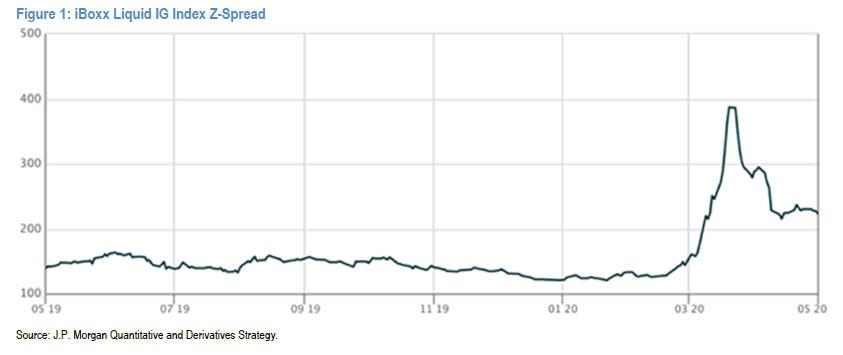
As JPM’s Shawn Quigg explains, “with the CCFs officially entering the market this month, it may further solidify the market’s perception of the Fed’s perceived put, and tighten credit spreads further.“
Of course, since such a simple trade reco would be frankly humiliating for such a “sophisticated” group of people as JPM’s derivatives team led by the rocket scientist Marko Kolanovic who every week or so writes a report on how stocks are undervalued when – it appears – all he means is one should simply frontrun the Fed…
… not to mention not generate any commission revenues for the bank, JPM had to make its trade reco sexier and more complex, and instead of simply buying the LQD, JPM recommended buying an LQD July 125p/ 130c/ 135c call spread collar – i.e., selling the put to fund the purchase of the call spread – for a zero cost, indicatively and a $128.66 reference price.
Also, since a stated rationale of simply “frontrun the Fed” would make a mockery out of JPM – and every other sellside strategist whose job is to divine the future of risk prices based on such obsolete anachronisms as fundamentals not how much money a central bank is going to print – the bank felt compelled to embellish just a bit, and that’s precisely what the Kolanovic-led team did:
Rationale & Considerations: The combined size of the CCFs will be up to $750 billion. The PMCCF and SMCCF will leverage the Treasury’s equity at 10 to 1 when acquiring corporate bonds of issuers that are investment grade and for ETFs whose primary investment objective is exposure to U.S. investment grade corporate bonds. The CCFs will cease purchasing eligible corporate bonds and ETFs no later than September 30, 2020, unless extended by the Board of Governors of the Federal Reserve and the Department of the Treasury. If at expiration shares close at/below the put strike, investors will purchase shares at $125, representing spread levels in early April (and below its 50/100/200d technical moving averages). Conversely, the LQD spreads still trade substantially above the pre-COVID-19 levels, leaving much room for potential compression.
Current 3M volatility skew (95%-105%) ranks in its 85th %-ile over the last year, but with the execution of the CCFs we believe there is an argument to be made that volatility skew should cheapen further moving forward.
An even simpler argument to be made, yet one which won’t be, is that in this day and age of what Deutsche Bank accurately calls “administered markets” where “market outcomes will be dictated by the policy goals of the Fed and Treasury, and the tools they select to implement policy”…
…all that matters is what the Fed will or won’t be buying, and since by endorsing this trade JPM effectively agrees that frontrunning central banks is the only thing that matters, we wonder if JPM realizes the irony in that it has effectively “reco-ed” itself right out of all relevance, because it doesn’t take a rocket scientist to read a Fed press release and figure out what asset class the central bank will buy next (spoiler alert: after the next crash, it will be equities. At that point Wall Street becomes meaningless).
Incidentally, another side effect of Wall Street analysts admitting they are now irrelevant in this time of centrally-planned markets, is that as Jeff Gundlach tweeted in a follow up to his original Friday observation, closing the loop on a process that he himself started with a tweet just three days earlier, once Main Street realizes that the Fed is buying ETFs “broadly and in size” to not “let down” the buyers who front ran the Fed, it will “not be well received on Main Street.”
If the Fed does start buying ETFs “broadly and in size” in response to recent requests they do so as to not “let down” the buyers who front ran the Fed April 9th will not and should not be well received on Main Street.
We doubt JPM is too worried about condemning its clients to a fate of angry Main Street pitchforks, because unlike Gundlach, we are confident that the vast majority of Americans neither care, nor have any idea about the vast wealth transfer that is taking place below the surface of what was one a market courtesy of the Fed’s helicopter money, which is now openly destroying future generations of Americans by burying them under simply laughable amounts of debt just to keep a handful of millionaires and billionaires filthy rich here and now.
This is a research article published as information for health care professionals and public officials, and for an open peer review. It is not medical advice.
Summary
I reviewed the scientific literature on hydroxychloroquine (HCQ), azithromycin (AZ), and their use for COVID-19. My conclusions:
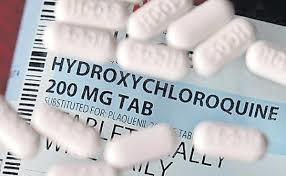
HCQ-based treatments are effective in treating COVID-19, unless started too late.
Studies, cited in opposition, have been misinterpreted, invalid, or worse.
HCQ and AZ are some of the most tested and safest prescription drugs.
Severe COVID-19 frequently causes cardiac effects, including heart arrhythmia. QTc prolonging drugs might amplify this tendency. Millions of people regularly take drugs having strong QTc prolongation effect, and neither FDA nor CDC bother to warn them. HCQ+AZ combination, probably has a mild QTc prolongation effect. Concerns over its negative effects, however minor, can be addressed by respecting contra-indications.
Effectiveness of HCQ-based treatment for COVID-19 is hampered by conditions that are presented as precautions, delaying the onset of treatment. For examples, some states require that COVID-19 patients be treated with HCQ exclusively in hospital settings.
The COVID-19 Treatment Panel of NIH evaded disclosure of the massive financial links of its members to Gilead Sciences, the manufacturer of a competing drug remdesivir. Among those who failed to disclose such links are 2 out of 3 of its co-chairs.
Despite all the attempts by certain authorities to prevent COVID-19 treatment with HCQ and HCQ+AZ, both components are approved by FDA, and doctors can prescribe them for COVID-19.
Intro
Hydroxychloroquine (HCQ) was accepted as a COVID-19 treatment by the medical community in the US and worldwide by early April. 67% of the US physicians said they would prescribe HCQ or chloroquine CQ for COVID-19 to a family member (Town Hall, 2020-04-08). An international poll of doctors rated HCQ the most effective coronavirus treatment (NY Post, 2020-04-02). On April 6, Peter Navarro told CNN that “Virtually Every COVID-19 Patient In New York Is Given Hydroxychloroquine.” This might explain decrease in COVID-19 deaths in the New York state after April 15. The time lag is because COVID-19 deaths happen on average 14 days after showing symptoms.
But on April 21, several perfectly coordinated events took place, attacking HCQ’s use for COVID-19 patients.
The COVID-19 Treatment Guidelines Panel of the National Institute of Health issued recommendations with negative-ambivalent stance regarding the use of HCQ as a COVID-19 treatment. This surprising stance was taken contrary to the ample evidence of the efficacy and safety of HCQ and despite absence evidence of its harm. The panel also strongly recommended against the use of hydroxychloroquine with azithromycin (AZ), the combination of choice among practitioners.
On the same day, a paper (Magagnoli, 2020) was posted on a pre-print server medRxiv, insinuating that HCQ is not only ineffective, but even harmful. This not-yet peer reviewed paper, by unqualified authors with conflicts of interest, received wall-to-wall media coverage, as it if were a cancer cure. It used data from Veterans Administration hospitals, spicing its effects. The paper has shown to be somewhere between junk science and fraud.
Rick Bright, a government official who was probably more responsible for the low level of preparedness to the epidemic than most others, and had been re-assigned to a lower position earlier, emerged as a “whistleblower.” He claimed he had been demoted for opposing hydroxychloroquine, the claim to be soon debunked by documents bearing his signature. The media also gave him a wall-to-wall coverage.
On April 24, the FDA struck its own blow, issuing a stern warning against use of HCQ for COVID-19 treatment.
While these warnings are not binding to doctors, they do produce a chilling effect. Consequently, either patients do not receive necessary treatment, or they receive it with a delay, sharper decreasing its effect. This allows detractors to question HCQ efficacy even more aggressively. Below, I review problems in the NIH COVID-19 Treatment Guidelines and other sources, used to wage anti-HCQ propaganda.
NIH Panel Guidelines
The relevant section of (COVID-19 Treatment Guidelines Panel, 2020) is Potential Antiviral Drugs. The antiviral treatment recommendations (more accurately, failure to provide recommendations) include:
“Remdesivir
There are insufficient clinical data to recommend either for or against the use of the investigational antiviral agent remdesivir for the treatment of COVID-19 (AIII).
Clinical Data to Date:
Only anecdotal data are available.“
“AIII” means a strong position based on expert opinion rather than on evidence.
“Chloroquine or Hydroxychloroquine
There are insufficient clinical data to recommend either for or against using chloroquine or hydroxychloroquine for the treatment of COVID-19 (AIII).
When chloroquine or hydroxychloroquine is used, clinicians should monitor the patient for adverse effects (AEs), especially prolonged QTc interval (AIII).
Clinical Data in COVID-19
The clinical data available to date on the use of chloroquine and hydroxychloroquine to treat COVID-19 have been mostly from use in patients with mild, and in some cases, moderate disease; data on use of the drugs in patients with severe and critical COVID-19 are very limited.
[Follows is a description of some studies]“
Notice that CQ and HCQ are addressed together, although these are two different drugs, and HCQ is clearly superior to CQ both in efficiency and safety.
Also notice that the basic recommendation of “insufficient clinical data to recommend either for or against” is given to both HCQ and Remdesivir. However, the recommendation for HCQ goes further to state that when using HCQ, “clinicians should monitor the patient for adverse effects (AEs), especially prolonged QTc interval”. Practically, this means that HCQ should be used only in hospital settings. No such restrictions are set for Remdesivir, for which there is no clinical data available. It goes against all logic.
The demand to use HCQ only in hospital settings means:
HCQ treatment will be delayed until a patient decides to be admitted to a hospital, thus lowering HCQ’s efficiency
Hospitals will quickly become overwhelmed with COVID-19 patients
Then the Panel nixes HCQ+AZ:
“Hydroxychloroquine plus Azithromycin
The COVID-19 Treatment Guidelines Panel recommends against the use of hydroxychloroquine plus azithromycin for the treatment of COVID-19, except in the context of a clinical trial (AIII).“
This drug combination is the most effective and widely used treatment for COVID-19, and the Panel recommends against it!
The Panel criticizes some studies of patients’ treatment with HCQ+AZ for the absence of a control group. Stephen McIntyre tweeted about this argument long before the Panel used it: “there’s a very large control group of COVID19 patients not receiving this drug combination: hospitals and morgues are full of them.”
Despite (Molina, 2020)’s angry tone and aggressiveness, it reports no results contradicting efficiency of HCQ or HCQ+AZ. The paper describes treatment of 11 hospitalized COVID-19 patients, five of which had cancer, one had AIDS, and almost all were in a bad shape: “at the time of treatment initiation, 10 of the 11 patients had a fever and received nasal oxygen therapy.” Using HCQ+AZ, 10 of the patients’ lives were saved. The article’s point of contention is that when they tested these patients, 5-6 days after the treatment initiation, they still found CoV2 RNA in 8 out of 10. Virus RNA is a molecule. Some viral RNA remains in patients for weeks after full recovery, but it is neither harmful nor infectious. Detecting viral RNA depends on the sensitivity of the testing equipment. The study’s title is No evidence of rapid antiviral clearance or clinical benefit with the combination of hydroxychloroquine and azithromycin in patients with severe COVID-19 infection seems to be lost on the Panel.
Chorin et al.
The Panel also quotes (Chorin, 2020) as evidence that HCQ+AZ therapy causes QTc prolongation. QTc prolongation is not a health condition itself, but a warning sign that a person is at higher risk of torsades de pointes (TdP), heart arrhythmia, or tachycardia, which might lead to cardiac arrest and death (Simpson, 2020).
Nevertheless, none of the patients, treated with HCQ+AZ, suffered TdP or arrhythmia. Four patients died, but none of them had an arrhythmia. Other studies, in which COVID-19 patients are treated with HCQ+AZ, reported taking patients off this medicine after QTc exceeds 500ms. But the treatment may have already had its effect at that time or later, while HCQ remained in the bloodstream.
This study has no control group. It provides no information on whether QTc prolongation was caused by the disease or the therapy.
FDA Warning
(FDA WARNING, 2020), issued on April 24, piggybacks on the COVID-19 Panel Guidelines. It says
Hydroxychloroquine and chloroquine can cause abnormal heart rhythms such as QT interval prolongation and a dangerously rapid heart rate called ventricular tachycardia.
This statement is confused, and probably not true about hydroxychloroquine. See below.
Be aware that there are no proven treatments for COVID-19 …
I think that HCQ+AZ is a proven treatment for COVID-19. There is a difference between proven treatment and approved treatment. HCQ+AZ is not approved but proven, because many patients have been treated with this combination and have recovered.
We have reviewed case reports … concerning serious heart-related adverse events and death in patients with COVID-19 receiving hydroxychloroquine and chloroquine, either alone or combined with azithromycin or other QT prolonging medicines. These adverse events were reported from the hospital and outpatient settings for treating or preventing COVID-19, and included QT interval prolongation, ventricular tachycardia and ventricular fibrillation, and in some cases death.
These are manifestations of COVID-19! See (Bansal, 2020) and (Wang, et al., 2020). The media hysteria played its role, too. The articles about the supposed dangers of HCQ, with detailed description of the symptoms, triggered complaints even before the April 24 warning. And there are people who tried to self-medicate – in the situation when authorities make it difficult to obtain prescription for HCQ – and took the wrong drug or overdosed. Also, QT interval prolongation is not an event, but an early warning.
To help FDA track safety issues with medicines, we urge patients and health care professionals to report side effects involving hydroxychloroquine and chloroquine or other medicines to the FDA MedWatch program, using the information in the “Contact FDA” box at the bottom of the page.
Such an urging and advertisement guarantee that the FDA will receive mountains of complaints.
HCQ and AZ Safety
HCQ, CQ, and AZ
HCQ & CQ are two different drugs. HCQ is clearly superior to CQ. HCQ has already been selected over CQ. Discussing these two drugs as if they were co-equal in COVID-19 treatment is misleading and a sign of bad faith.
HCQ and AZ are some of the most widely prescribed drugs and have been prescribed for decades. HCQ is as safe as a prescription drug can be. AZ is an antibiotic, and it is as safe as an antibiotic can be.
Because these drugs have been prescribed so widely, their adverse effects have been studied. A few adverse events associated with them have been reported. Combining these few anecdotal cases, some medical researchers have raised some concern, as a precaution. Doctors understand this. Statisticians understand this. But unscrupulous media uses this information to mislead the naïve public and even public figures
Remdisivir is the opposite. It has been developed very recently and has been scarcely used. There is little information about its adverse effects. The corrupt news networks present this lack of evidence of adverse effects as evidence of the absence of adverse effects.
CredibleMeds
The leading objection against HCQ / HCQ+AZ is possible QTc prolongation. Most professionals refer to (CredibleMeds.org, 2020) which puts both HCQ and AZ in the category of Known Risk of TdP (KR).
I think that HCQ was listed in that category by mistake. A review of the literature reveals only few anecdotal cases. Some of them are poisoning by large overdoses of HCQ. Then there are patients who were on HCQ for years, suddenly got sick and recovered when HCQ was withdrawn. While there are millions of people continuously taking HCQ, only a few cases of cardiac events have been reported. Even if HCQ was the cause of these rare cases, which is usually unknown, it is still statistically insignificant. It is much safer than driving. Other antivirals are known to cause QTc prolongation too but are not being pulled from practice. In the case of HCQ, it seems that a precaution principle has prevailed over statistical reasoning and common sense.
AZ is in the KR category, just like many other antibiotics, including Erythromycin. I have never heard of patients requiring QTc monitoring, when taking Erythromycin.
Attention of the Trump Derangement Syndrome crowd: many widely used psycho-active drugs are also listed in the KR category. That includes anti-psychotic Haloperidol, anti-depressants Escitalopram (Cipralex, Lexapro) and Citalopram (Celexa).
American College of Cardiology
The most reliable source of information about arrhythmia risks is the American College of Cardiology. (Simpson, 2020) in the Cardiology Magazine:
Chloroquine, and its more contemporary derivative hydroxychloroquine, have remained in clinical use for more than a half-century as an effective therapy for treatment of some malarias, lupus, and rheumatoid arthritis. … Despite these suggestive findings, several hundred million courses of chloroquine have been used worldwide making it one of the most widely used drugs in history, without reports of arrhythmic death under World Health Organization surveillance.
HCQ is even milder than CQ.
Azithromycin, a frequently used macrolide antibiotics lacks strong pharmacodynamic evidence of iKr inhibition [associated with QT prolongation]. Epidemiologic studies have estimated an excess of 47 cardiovascular deaths which are presumed arrhythmic per 1 million completed courses, although recent studies suggest this may be overestimated.
In other words, after over 50 years of effective use, HCQ and AZ have proven their safety and efficacy. There is no reason for fear, except the fear itself. But some people might be vulnerable, so the article explains how to calculate an individual Risk Score for QTc prolongers. Individuals with higher Risk Score might need QTc monitoring. Also, the authors suggest avoiding other QTc prolonging medications in the time of HCQ+AZ treatment.
The cardiologists who wrote this article did not dismiss the concern. They explained the science pertaining to it and suggest proper mitigation measures.
Other literature also suggests low risk of HCQ and AZ. (Prutkin, 2020):
Limited data on hydroxychloroquine suggest it has a low risk of causing TdP, based on its use for rheumatoid arthritis, systemic lupus erythematosus, and antimalarial therapy. … For these medications [HCQ and AZ], their time window of use is short duration, which is another reason the risk of TdP may be lower
HCQ and AZ have other known contra-indications, but they are out of the scope here.
COVID-19 caused Arrhythmia
Many studies show that COVID-19 causes heart arrhythmia. Cardiac arrest, not directly caused by respiratory damage, is one of the leading direct causes of COVID-19 deaths.
(Bansal, 2020) is a review. It finds that
COVID-19 is primarily a respiratory illness but cardiovascular involvement can occur through several mechanisms.
Acute cardiac injury is the most reported cardiovascular abnormality in COVID-19, with average incidence 8-12%
Both tachy- and brady-arrhythmias are known to occur in COVID-19. A study describing clinical profile and outcomes in 138 Chinese patients with COVID-19 reported 16.7% incidence of arrhythmia. The incidence was much higher (44.4%) in those requiring ICU admission …
It also notes that CoV2 virus might cause cardiac injury directly or indirectly. The possibility of a treatment impact is mentioned as a less likely one.
(Wang, et al., 2020) finds that 44% of the patients transferred to ICU developed arrhythmia. None of them received HCQ or CQ. Most of the patients received an unrelated anti-viral and an antibiotic. Only in 18% of the patients the antibiotic was AZ. At least some of the patients developed an arrhythmia before the treatment.
(Hawryluk, 2020):
Doctors have found that the infection can mimic a heart attack. They have taken patients to the cardiac catheterization lab to clear a suspected blockage, only to find the patient wasn’t really experiencing a heart attack but had COVID-19.
Thus, the hypothesis that CVOID-19 patients experience QTc prolongation and arrhythmia because of the disease, rather than due to HCQ+AZ treatment, is well founded. AZ may increase the odds of QTc prolongation in COVID-19 patients, who would otherwise die from cardiac arrest or multiple organs failure.
The media and professional publications report a sharp increase of mortality from cardiac arrest at home in the last few weeks. Some of these cases are known to be COVID-19, but most of them are not tested. Could many of them be happening due to the cardiac damage caused by COVID-19? Can the cardiac impact of COVID-19 be aggravated by strong QTc prolongers that many people take regularly? There are countless variables confounding this statistic. There is an especially sharp increase in home cardiac arrests in New York, which is usually explained by people’s reluctance to call an ambulance or ER.
(Kochi, 2020) provides in-depth explanation of the cardiac effects of respiratory infections and interaction with QTc prolongation medications.
If you take the anti-malarial drug hydroxychloroquine (Plaquenil) as part of your treatment for lupus or rheumatoid arthritis (RA), you may be getting cardiovascular protection as an added bonus.
The article is based on (Jorge, 2019). These findings might be applicable only to long term taking of HCQ, not a 5-day course for COVID-19, but the same can be said about the alleged negative cardiac effects.
Articles/Studies criticizing HCQ
Listed here are several other papers, influential in the media, but not in the science. These papers span the range from erroneous to … non-existent.
Magagnoli et al.
(Magagnoli, 2020) is a not peer-reviewed pre-print. It makes a retrospective statistical comparison of the outcome in COVID-19 patients, who received HCQ or HCQ+AZ treatment prior to April 11, in Veterans Affairs hospitals. In the Abstract, it claims that a larger percentage of HCQ treated patients died compared to untreated patients. This ignores the fact that HCQ or HCQ+AZ treatment was given only in the most desperate cases, frequently as compassionate care. Deep inside of the manuscript, it does acknowledge that initial conditions of the HCQ and HCQ+AZ groups was much worse than those of the untreated group, but then ignores it
The original version (archived) of the “study” was published on April 21. It received crushing criticism in the comments and was replaced with another one on April 23, hiding those comments. Casting even further doubt on the credibility of this study, one of the authors disclosed Gilead funding for another research. This work was funded by a NIH grant.
Despite its multiple flaws, lack of peer review, and obscurity of the authors, this pre-print immediately received wall-to-wall media coverage. Given these circumstances, this work looks like a criminal fraud, rather than a scientific one.
Tang et al.
(Tang, 2020) is a not peer-reviewed pre-print. It reports results of a clinical trial in China, in which HCQ was given to patients 16-17 days after onset of the disease. This is too late for an anti-viral to work. Thus, this study describes the incorrect use of HCQ, rather than efficacy or safety of the drug. From the comments:
With an average delay of 16 days from symptom onset to enrollment and treatment in this trial, those patients are pretty much past the viral phase of the disease, where an antiviral treatment would have the most value, and are well on their way to pneumonia and a cytokine storm problem, which is ultimately what kills.
Once again, despite its obvious errors, the study was widely covered, including the New York Times and LA Times. Neither headline nor article addresses the obvious lateness of the drug’s application.
Mahevas et al.
(Mahevas, 2020) is another not peer-reviewed pre-print. Didier Raoult and his colleagues replied to it with a bluntness, rare in scientific journals: Scientific fraud to demonstrate the lack of efficacy of hydroxychloroquine compared to placebo in a non-randomized retrospective cohort of patients with Covid: Response to MAHEVAS et al. , MedRxiv, 2020. (Brouqui, et al., 2020). (Mahevas, 2020) also gathered many negative comments on MedRxiv.
Oral Statements of Holtgrave & Cuomo
A study of 600 patients at 22 hospitals in New York is being conducted by the University at Albany School of Public Health under the management of dean David Holtgrave. Although the study was not finished, Mr. Holtgrave already announced that the results are negative: “We don’t see a statistically significant difference between patients who took the drugs [HCQ, HCQ+AZ] and those who did not,” according to CNN. New York Governor Andrew Cuomo referred to the results as neither positive nor negative, per CNN and ABC.
No paper, or even pre-print, reporting these results, has been published, as of April 29 (searches on Google Scholar, PubMed, and medRxiv were conducted for Holtgrave hydroxychloroquine; Holtgrave COVID-19).
New York and other “resistance” states make patients jump through hoops to obtain HCQ. As an anti-viral, it should be taken as soon as possible. Dr. Vladimir Zelenko explained that in his letter, which is worth reading in its entirety:
It is essential to start treatment against Covid-19 immediately upon clinical suspicion of infection and not to wait for confirmatory testing. There is a very narrow window of opportunity to eliminate the virus before pulmonary complications begin. The waiting to treat is the essence of the problem.
He refers to patients in the high-risk category – older than 60, having certain health conditions, or shortness of breath. The resistance states established onerous requirements that delay HCQ treatment for days. This sharply lowers the efficiency of the treatment, and possibly increases TdP risks. The mixed results, promised by Mr. Holtgrave, might be caused by this delay.
Russia
On March 28, Russia announced a COVID-19 treatment based on Mefloquine. Mefloquine, invented in the US in 1970s, is another anti-malaria drug, similar to HCQ. In the West, Mefloquine was withdrawn from use after a controversy about its long-term effects. Russia might also use HCQ. From a Russian brochure (Nikiforov, 2020):
These drugs have a comprehensive negative effect on the coronavirus. It may take years of scientific experimentation to understand how and what exactly they affect. Now the fact of a positive effect has been established, and the drugs should and will be used.
The mechanisms of HCQ and HCQ+AZ action are explained (Hache & Raoult, 2020).
WHO
On March 27, WHO erected another roadblock to treating COVID-19 patients with HCQ. WHO stated that HCQ was not only insufficiently tested (which was true at that time), but that it was considered for COVID-19 at much higher doses than for malaria.
In the context of the COVID-19 response, the dosage and treatment schedules for chloroquine and hydroxychloroquine that are currently under consideration do not reflect those used for treating patients with malaria. The ingestion of high doses of these medicines may be associated with adverse or seriously adverse health outcomes.
This is dangerous misinformation. HCQ dosage for COVID-19 is the same or lower than for malaria (Drugs.com, 2019). WHO was aware of this, because it was already conducting clinical trials including HCQ and a number of other Big Pharma drugs. Yet, as of April 29, this paragraph still appears there. This act alone justifies not only defunding but ignoring WHO.
Google and Facebook adhered to WHO on everything related to COVID-19. Together with Twitter, they purged information favorable to HCQ. This is outrageous behavior for telecommunications and computational services providers.
Remarks
It seems that the main contra-indication for HCQ treatment of COVID-19 is that no treatment is needed for healthy individuals below age 50.
Persons in the President’s circle were claiming that HCQ / HCQ+AZ are unproven treatments. That might have been true a month ago, but not now. These drugs are proven by practice and by failure of its opponents to disprove their efficacy and relative safety.
The Guidelines are accompanied by a financial disclosure of the panel members. Weirdly, this disclosure covers a period of 11 months: May 1, 2019 to March 31, 2020. The latest three weeks were excluded for some reason. Nevertheless, 9 out of 50 members of the panel disclosed financial ties to Gilead. Gilead’s Remdesivir is an inferior competitor to HCQ – more expensive, almost untested, and less efficient (as far as the little testing with it has shown). HCQ is a generic drug with low profit margin. Gilead Sciences directly participates in WHO trials of Remdesivir as a COVID-19 treatment.
HCQ / HCQ+AZ are prescribed by a doctor. They are not OTC and should not be used for self-medication.
HCQ+AZ is the most common treatment. HCQ acts on its own but is much more effective with Zinc; AZ is an antibiotic and a source of Zinc. See Dr. Zelenko’s regimen is HCQ+AZ+Zinc.
Trump Administration “Turbocharging” Efforts To Grapple Global Supply Chains From China
President Trump’s trade war is back. It’s an election year, and the efforts by the administration to ‘turbocharge’ an initiative to deglobalize that world by removing critical supply chains from China could be seen with new rounds of tariffs to strike Beijing for its handling of the COVID-19 outbreak, US officials told Reuters.
It’s clear that coronavirus lockdowns have resulted in a crashed economy with more than 30 million people unemployed have derailed President Trump’s normal campaigning process and the promises of a vibrant economy. This could suggest President Trump is about to unleash tariff hell on Beijing as it would do two things: First, it would pressure US companies with supply chains in China to exit, and second, the president can say the tariffs are a punishment for the more than 68,000 Americans that have died from the virus.
“We’ve been working on [reducing the reliance of our supply chains in China] over the last few years but we are now turbocharging that initiative,” Keith Krach, undersecretary for Economic Growth, Energy and the Environment at the U.S. State Department told Reuters.
“I think it is essential to understand where the critical areas are and where critical bottlenecks exist,” Krach said, adding that the matter was key to U.S. security and one the government could announce new action on soon.
Current and former officials said the Commerce Department and other federal agencies are investigating ways to push US companies away from sourcing and manufacturing in China. “Tax incentives and potential re-shoring subsidies are among measures being considered to spur changes,” they said.
“There is a whole of government push on this,” said one. Agencies are probing which manufacturing should be deemed “essential” and how to produce these goods outside of China.
Another official said, “this moment is a perfect storm; the pandemic has crystallized all the worries that people have had about doing business with China.”
“All the money that people think they made by making deals with China before, now they’ve been eclipsed many-fold by the economic damage” from the coronavirus, the official said.
Amid a pandemic and recession, it appears the comments from US officials suggest geopolitics could soon become major headaches for global markets. President Trump’s latest comments have stirred new concerns that an economic war with China is about to restart. This could be potentially dangerous for investors who are looking for V-shaped recoveries.
Last week, President Trump said China “will do anything they can” to make him lose his re-election bid in November. He said Beijing faced a “lot” of possible consequences for the virus outbreak.
He told Reuters: “There are many things I can do. We’re looking for what happened.”
President Trump recently said he could slap new tariffs of up to 25% tax on $370 billion in Chinese goods currently in place. Officials said the president could introduce new sanctions on officials or companies or project closer relations with Taiwan, all moves that would infuriate Beijing.
Secretary of State Mike Pompeo recently said the administration is working with allies, including Australia, India, Japan, New Zealand, South Korea, and Vietnam, to “move the global economy forward.”
Conversations among US officials have so far been about “how we restructure … supply chains to prevent something like this from ever happening again,” Pompeo said.
And it appears Beijing is preparing for President Trump to strike. We noted on Monday that Chinese President Xi Jinping is preparing for a worst-case scenario of armed conflict with the US.
For years, we have documented the possibility of Thucydides Trap playing out between the US and China. That is when a dominant regional power (the US) feels threatened by the rise of a competing power (China). Read:
Perhaps never before in American history have the unelected technocrats played such an enormous role in shaping public policy in America…
In recent weeks, members of Congress have been missing in action. Late last month, the House of Representatives passed the biggest spending bill in history while most members were absent. Member votes were not recorded and the legislation was passed with a voice vote, which required only a tiny handful of members.
Weeks later, the Senate refuses to even meet, and may finally get around to debating some legislative matters in May. As with the House, a handful of members assembled earlier to approve another enormous stimulus bill. Many Senators stayed home. This is “representative government” in modern America.
But if you thought this lack of congressional action means not much is happening in Washington in terms of policymaking, you would be very wrong. It’s just that the democratically elected institutions have now become a largely irrelevant sideshow. The real policymaking takes place among unelected experts, who decide for themselves—with minimal oversight or control from actual elected officials—what will happen in terms of public policy. The people who really run the country are these experts and bureaucrats at the central banks, at public health agencies, spy agencies, and an expanding network of boards and commissions.
The Rise of the Technocracy
This is not a new trend. Over the past several decades—and especially since the New Deal—official experts in government have gradually replaced elected representatives as the primary decision-makers in government. Public debate has been abandoned in favor of meetings among small handfuls of unelected technocrats. Politics has been replaced by “science,” whether social science or physical science. These powerful and largely unaccountable decision-makers are today most noticeable in federal courts, in “intelligence” agencies, at the Federal Reserve, and—long ignored until now—in government public health agencies.
But the technocracy’s power has long been growing in the United States as well.
This may seem odd in a world where we are told democracy is among the highest political values, but technocrats have nonetheless managed to justify themselves through myths asserting that technocrats make scientific decisions guided only by The Data. These technocrats, we are told, care nothing of politics and only make sound decisions based on where the science leads.
Although that all may sound more reasonable or logical to some, the truth is that there is nothing nonpolitical, scientific, or evenhanded about government by technocrat. Technocrats, like everyone else, have their own ideologies, their own agendas, and their own interests. Often, their interests are greatly at odds with those of the general public that pays the technocrats’ salaries and is subject to the technocracy’s edicts. The rise of technocracy has only meant that the means of influencing policy is now limited to a much smaller number of people—namely those who are already influential and powerful in the halls of government. Technocracy seems less political, because the political wrangling is limited to what used to be called “smoke-filled rooms.” That is, technocracy is really a sort of oligarchy, although not limited to the financially wealthy. It’s limited to people who went to the “right” schools or control powerful corporations such as Google or Facebook, or work for influential media organizations. It’s branded “nonpolitical,” because ordinary voters and taxpayers are excluded from even knowing who is involved or what policies are being proposed. In other words, technocracy is government by a small exclusive club. And you ain’t in it.
So how does technocracy survive in a system to claims to base its legitimacy on democratic institutions? After all, technocracy is by its very nature designed to be antidemocratic. Indeed, as the Left has soured on democracy, leftists have taken to demanding that more technocratic methods be implemented to do an end run around democratic institutions. In a much-quoted 2011 article for the New Republic, influential banker and economist Peter Orszag complains that democratic institutions such as Congress aren’t implementing enough of his preferred policies. Therefore, he insists that it’s time to “jettison the Civics 101 fairy tale about pure representative democracy and instead begin to build a new set of rules and institutions.” He wants rule by technocrat through a system of “commissions” staffed by “independent experts.”
This is the new model of “efficient” government. But in many areas, this is already how the United States is governed. There is no shortage of boards, panels, courts, and agencies that are controlled by experts who function largely without any oversight from the voters, taxpayers, or elected officials.
We can point to several institutions in which the spirit of technocracy is both well established and highly influential.
One: The US Supreme Court
This tendency toward technocracy first manifested itself in the form of the US Supreme Court. The court, of course, had long been considered to be a body of legal experts, of sorts. They were supposed to consider technical legal issues apart from the vicissitudes of electoral politics. But this expertise did not come without limitations. The court was expected to limit its own power or risk charges of attempting to meddle in the workings of democracy. By the mid-twentieth century, however, these limitations had been largely abandoned. During the 1950s and 1960s, the Supreme Court created a wide variety of new “rights” that Congress had never shown any willingness to create. Roe v. Wade, for example, created a new federal legal right to abortion based purely on the desires of a handful of judges and regardless of the fact it had always been assumed by virtually everyone that abortion was a matter for state legislatures.
Prior to this period any changes of such magnitude would have required a constitutional amendment. That is, prior to the rise of the modern supercharged SCOTUS, it was assumed that major changes to the Constitution required a long public debate and the involvement of many voters and legislators. But with the rise of the Supreme Court as expert creators of new law, it became the norm for the judges to dispense with public debate and electoral decision-making. Instead, the experts would “discover” what the Constitution really meant and create their own new laws based on legal “expertise.”
Two: The Federal Reserve
A second building block of the technocracy has been the Federal Reserve. Since its creation in 1935, the Federal Reserve Board of Governors has increasingly acted as a policymaking board of technocrats who function outside the legislative process, yet enact regulations and policies that have enormously large effects on banking systems, the financial sector, and even fiscal policy.
The Fed policymakers are quintessential technocrats in that they allegedly make decisions based only on “the data” and unbent by political concerns. The sacrosanct nature of these technocrats’ decisions has been buttressed by years of implausible claims about the Fed’s “independence” from political pressure from the White House or Congress.
In reality, of course, the Fed has never been an apolitical institution, and this has been shown by a variety of scholars, many of them political scientists. Fed Boards have always been influenced by presidents and others. (Most economists are too willfully naïveto understand the political dimensions of the Fed.) Nowadays, it has become painfully obvious that the Fed exists to prop up the regime and the financial sector through whatever means necessary. The idea this process is guided by a dispassionate consideration of “the data” should be regarded as risible.
Three: The Medical Experts
A new addition to the growing ranks of the technocrats in America is the legion of medical experts—at all levels of government—who have attempted to dictate policy during the COVID-19 panic of 2020. Led nationally by lifelong government bureaucrats such as Anthony Fauci and Deborah Birx, the public health experts have taken on the typical persona of the technocrat: they are guided only by “the science,” they insist, and it is claimed that only these experts have the ability to correctly implement and dictate public policies that will address the risks posed by various diseases.
As with the Federal Reserve and the Supreme Court, those who oppose the medical experts are said to be sacrificing apolitical objectivity—a virtue enjoyed only by the technocrats (and their supporters)—on the altar of gaining political advantage.
Four: The Intelligence Agencies
Since 1945, the United States government has built up an increasingly large network of intelligence agencies, composed of more than a dozen agencies staffed by career military officers. As we have seen in recent years though a variety of scandals at the CIA, NSA, and the FBI, these technocrats have no qualms about attempting to undermine the elected civilian government in order to assert their own agenda in its place. These bureaucrats at the so-called deep state in many cases regard themselves as unanswerable to the elected government, and even seek to override foreign policy decisions it has made.
Why Elected Politicians Empower Technocrats
In all of these cases, elected officials could intervene to limit the power of the technocrats, yet they choose not to.
In the case of Supreme Court, Congress could limit the jurisdiction of the appellate courts—and thus the jurisdiction of the Supreme Court itself—simply through changes in legislation. Similarly, Congress could abolish or heavily limit the powers of the Federal Reserve. Again Congress chooses not to. And, of course, Congress and the state legislatures could easily intervene to roll back not only the powers of medical technocrats, but the emergency powers of the executive branch itself. Yet this has not happened.
The reason is because politicians like to “outsource” policymaking to unelected technocrats. This makes it easier for elected officials to later claim that they were not responsible for unpopular measures implemented by technocratic institutions. By putting more power in the hands of technocrats, elected politicians can also later claim that they were respecting the “apolitical” nature of these institutions and that they sought to respect the “expertise.” “Don’t blame me,” the politicians will later claim, “I was only trying to respect ‘the science’ or ‘the data’ or ‘the law.'”
Empowering the technocracy is a useful way to spread blame around in Washington, and it’s also a way to, as Orszag suggests, get around legislative institutions that do what they’re supposed to do: prevent government actions when there aren’t enough votes.
But with technocracy, a lack of votes in Congress isn’t a problem: just hand everything over to a dozen technocrats who will decide what to do. It can then all be done outside the public eye, and with the added advantage of being the decision of nonpolitical “experts.”
Unfortunately, this scheme has worked. Voters are inclined to “trust the experts” and polls often show that the public trusts unelected “experts” more than they trust Congress. This is a great victory for the bureaucrats and for those who push for an ever more powerful state.
Prof. Lior Silberman (UBC) points out this government edit by the Supreme Court to the syllabus its decision last week in Georgia v. Public.Resource.Org, Inc.—a reference to the enigmatic “government edits doctrine” has been corrected to the more banal “government edicts doctrine.”
from Latest – Reason.com https://ift.tt/3foo9MO
via IFTTT