Why A New Diplomatic Crisis With China Is Critical For Trump If He Wants To Be Re-elected

Why A New Diplomatic Crisis With China Is Critical For Trump If He Wants To Be Re-elected

Amid all the discussion of whether (or not) it is time to reopen the economy, and take the potential risk of a second wave of infections and deaths resulting in what could be a far more devastating second shutdown, one overlooked angle on the Corona-lockdowns as pointed out by Nordea’s FX strategist Andreas Steno Larsen, is that it emphasizes the already growing barriers between the “Elite” and the “Workers.”

In his latest FX weekly observations, Larsen writes that while “the big cities are the main epicenters (also per capita) of the Covid-19 virus, containment measures have been forced upon entire states and countries.” As a result, regions with low density have been faced with the same kind of measures as more dense areas, even if these regions haven’t seen a material spread of the virus.

In other words, “One size fits all, even if density has proven to be maybe the biggest issue when trying to contain the virus spread.” This means that in addition to the outsized gains to the elite as a result of the trillions in new stimulus injections which have promptly buoyed capital markets, the current virolocracy could also be seen as “both extraordinary elitist and gentrification-supportive in its nature, since a much larger part of the urban population can work from home etc.”

Expanding on this argument, Larsen notes that “workers lives matters” has seen tailwind in important swing states such as Michigan as most of the spread has been seen around Detroit, while the less dense parts of the state haven’t seen any material spread of the virus. The movement argues that the big cities are relatively better off in the lockdowns, and that less dense areas should never have been forced to close the economy anyway. And as the Nordea strategist writes, “it is KEY for The Donald to win over such “movements” if he wants to triumph in the election later this year.”

The problem is that neither Nordea, nor the Fed, think the economy will be in a good shape by then, which is why The Donald needs something else to convince his base, in particular since wage growth could be about to fall of a cliff.

Indeed, wages are another reason why workers are about to get a double whammy of corona pain: as Larsen continues, core inflation (and wage growth) are cyclical laggards, which means that first

  1. activity comes to a halt,
  2. commodity prices and headline inflation drop,
  3. workers are laid off in size,
  4. wages and prices decelerate or even decline.

Nordea believes that we are probably in between phase three and four now, and why news on prices and wages will be the next to surprise negatively during H2-2020 and in to 2021 (in Q1 and Q2 activity data has been the negative surprise).
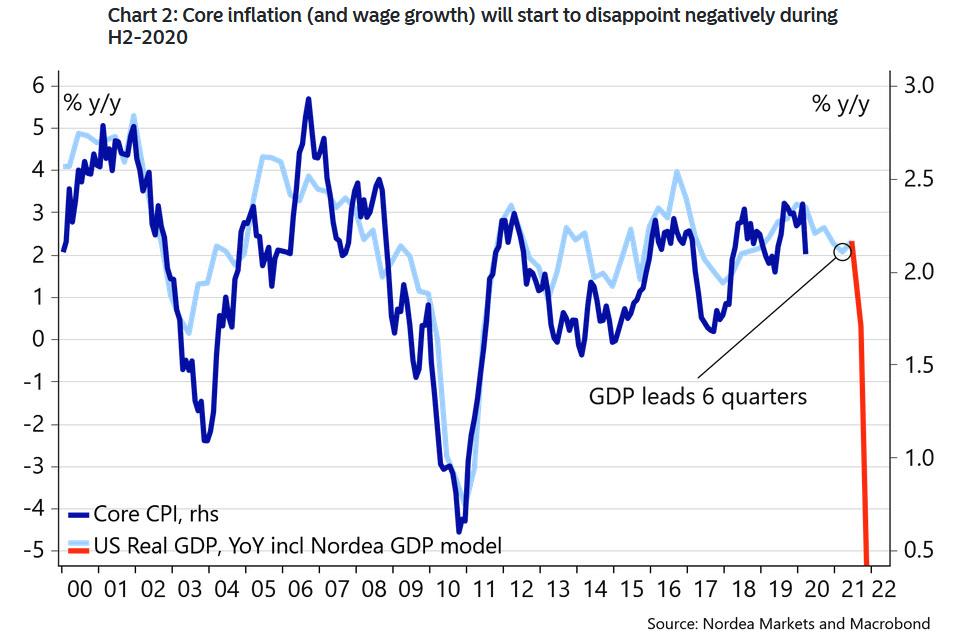
So faced with record unemployment coupled with growing labor class anger, Trump’s weapon of choice to win over the workers again, will be an escalation of his China-bashing strategy in combination with renewed isolationism.

According to Nordea Trump deeming Chinese equities a “national security risk” is not really newsworthy since the EU has been talking about the same thing for a while – though, mostly with a focus on blocking potential hostile Chinese take-overs of Euro area companies, but it suddenly seemed to revive the focus on geopolitical risks on the other side of the Corona mess.

And while the US/China trade deal has been stone-dead for months already (as it was from the outset), so that is in itself not exciting, no-one had an interest in saying so until after the US election. The corona virus – and the coming elections – have offered Trump a chance to “reveal” that the trade deal is 100% off, and to take a renewed China aggressive stance into the election instead.

This inevitable deterioration in diplomatic relations, as Larsen concludes, is bad for Asian FX (versus USD), and risk assets and equities in general, and why Rabobank earlier today said that “There Is One Key Thing To Watch Today: The Yuan.

As Larsen concludes, “Before the March melt-up in markets, USD/CNY was THE global bellwether for risk appetite, and it may very well return as such very soon. You should buy USD/CNY (and sell risk assets) on tariff threats.”


Tyler Durden

Mon, 05/04/2020 – 20:10

via ZeroHedge News https://ift.tt/2W1Bxi7 Tyler Durden

Advanced Russian Radar System Discovered Near Israeli Border: Report

Advanced Russian Radar System Discovered Near Israeli Border: Report

Via AlMasdarNews.com,

A Russian publication reported this week that the Russian Armed Forces have deployed their Resonance radar system in an area near the Israeli border. According to the NZIV publication, the Russian Resonance radar was identified in two locations in the eastern Mediterranean region, including an area along the Israeli-Egyptian border.

Last year, the think tank and reputable military analysis source GlobalSecurity.org wrote: “the Egyptian Resonance-NE radar tracks the movement of all objects in the airspace not only over Egypt, but also Israel and Syria. According to a number of sources, in 2020 Russia will begin regular deliveries of Resonance-NE to the Middle East.”

Russian Resonance radar system, file image via Al Masdar News

“Eli Dekel, a retired military systems researcher, has found the exact location and location of two radar stations that can detect planes and missiles up to 1,100 km away,” the publication said.

“One station was built in Javelin Oved at a distance of about 40 km, east of the Suez Canal,” NZIV reported, adding that a “second post was in the Gulf of Suez on a hill between Jabel al-Galla and Kabir.”

NZIV said the locations of these radar stations will allow early detection of various types of aircraft and missiles at long distances, as well as provide early warnings to the Egyptian Air Force and defense forces about timely preparation for any threat.

“Equipping Egypt with state-of-the-art radars is part of the accelerating process of arming and building military infrastructure, mainly in eastern Egypt and the Sinai. The system also provides data for intercept systems within 350 km. This area includes all of Israel,” they added.

Via aviation analysis site avia-pro.net

According to Global Security:

The Rezonans-NE very high frequency [VHF] counter-stealth early warning phased-array radar is designed to effectively detect a wide range of current and future air targets, including low-observable cruise and ballistic missiles, hypersonic aerial vehicles, as well as stealthy ones, in severe electronic countermeasures (ECM) and clutter environment. It is in service with the Russian Air Force, Iran (since 2009) and Algeria (since 2017).

The radar can operate in circular scan mode or within a specified sector. In addition to peacetime tasks, it can provide early warning of an air attack and information support for air and air defense warfare operations. The Rezonans-NE includes up to four radar modules, each of which provides control in the azimuth sector of 90 degrees and can operate independently.

It was not said when Russia deployed these radar systems near the Israeli border; however, given Israel’s military intelligence capabilities, it is highly likely that they were aware of these movements.


Tyler Durden

Mon, 05/04/2020 – 19:50

via ZeroHedge News https://ift.tt/2SD5RNR Tyler Durden

Supreme Court Cases Go ‘Remote’ Over Fears Of Aging Justices; Already Beset By Audio ‘Hiccups’

Supreme Court Cases Go ‘Remote’ Over Fears Of Aging Justices; Already Beset By Audio ‘Hiccups’

How long before all branches of government and federal agencies stop meeting in person? Is it perhaps an overly hasty, drastic and dangerous precedent Constitutionally speaking? This rush to move all proceedings to online ‘remote’ interaction – even the highest levels of government – at the very least heightens the possibility of our democracy being hacked, as many prior media reports have acknowledged in the case of Congressional remote voting procedures.

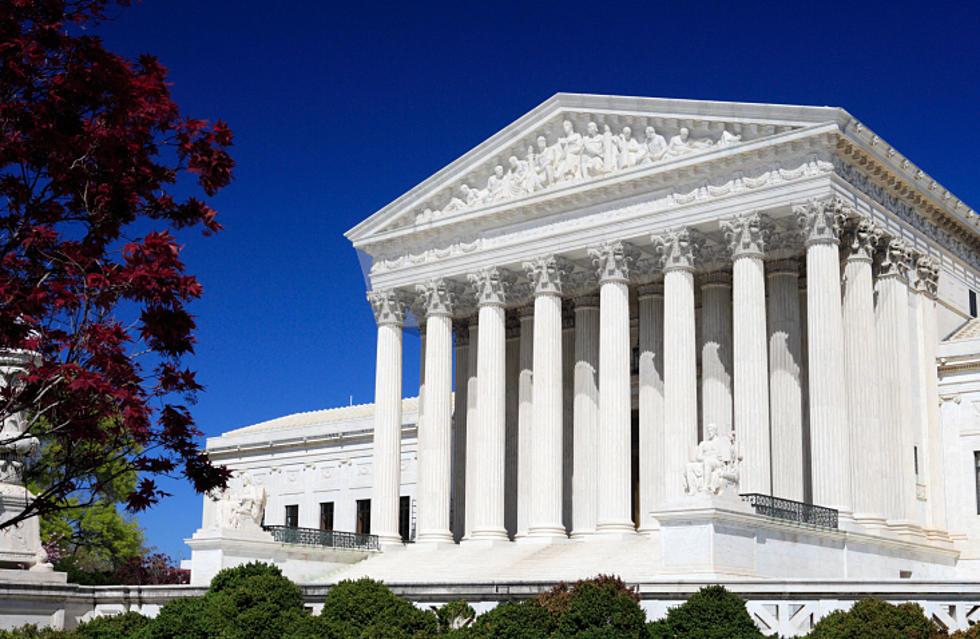
And now another unprecedented and historical first: the Supreme Court will now go to hearing cases remotely via telephone, the AP reports Monday.

“The changes are a result of the coronavirus pandemic, which has made holding courtroom sessions unsafe, especially with six justices aged 65 or older and at risk of getting seriously sick from the virus,” AP reports.

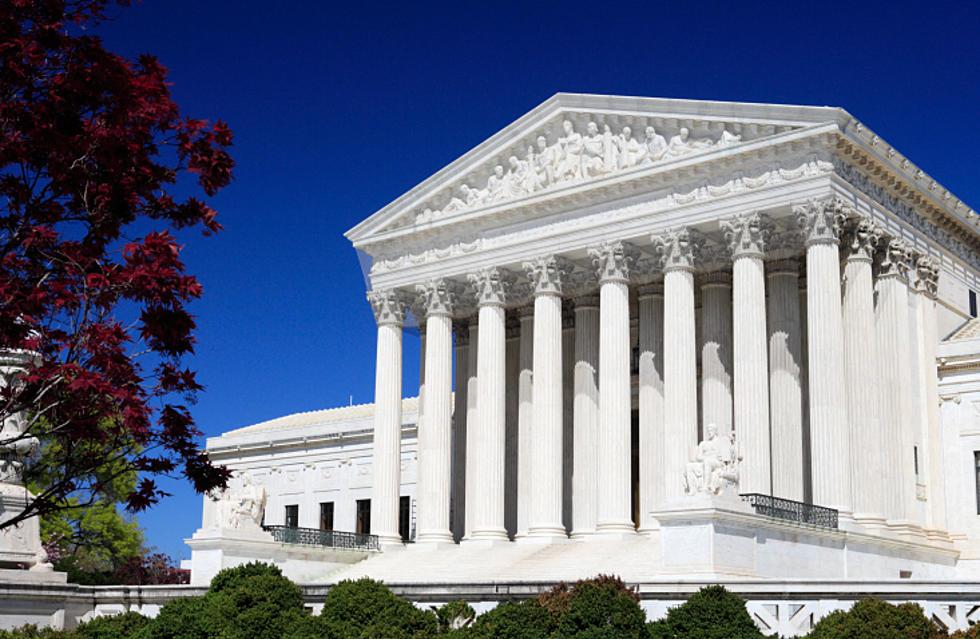
US Supreme Court, file image.

The court has ten cases to hear over the next week, and it’s as yet unclear whether the “experiment” will work. One advantage is that livestream proceedings will reportedly be able to be heard by the public, while at the same time shielding elderly justices from the possibility of infection. 

The new livestreamed sessions began Monday mid-morning. The AP details some of the high profile cases as follows: “Cases that will be heard over the next two weeks include President Donald Trump’s effort to shield tax and other financial records and whether presidential electors have to cast their Electoral College ballots for the candidate who wins the popular vote in their state.”

And lo and behold, there are already problems

The session, being held by phone because of the coronavirus outbreak, included a few minor hiccups. Roberts had to call on Justice Sonia Sotomayor twice when it was her turn to question Ross. Sotomayor said, “I’m sorry, chief,” before asking her questions.

Later, Justice Stephen Breyer’s audio was distorted when he had questions for Blatt. The audio improved after a few seconds and Blatt was able to answer the question.

The case being argued Monday will determine whether businesses can get federal trademark protection for website names such as Booking.com that center on a commonly used word. Booking.com, owned by Booking Holdings Inc., is seeking to be put on a government registry that provides nationwide benefits.

The ‘remote’ sessions will to some extent alter procedural elements and order of arguments. “The court sometimes issues opinions at the start of argument sessions, with the justice who wrote for the majority reading a summary of the opinion and, more rarely, a second justice summarizing a dissent,” AP continues. 

“But in another change wrought by the virus outbreak, opinions are being posted online without any statements from justices. The court will next issue opinions on Thursday.”

It’s as yet unclear as to when the court would meet in person again, in yet another pandemic-driven alteration which the American founding fathers likely never envisioned would possibly have happened. 


Tyler Durden

Mon, 05/04/2020 – 19:30

via ZeroHedge News https://ift.tt/3aYPDFa Tyler Durden

The Demise of the Short-Lived Government Edits Doctrine

Prof. Lior Silberman (UBC) points out this government edit by the Supreme Court to the syllabus its decision last week in Georgia v. Public.Resource.Org, Inc.—a reference to the enigmatic “government edits doctrine” has been corrected to the more banal “government edicts doctrine.”

from Latest – Reason.com https://ift.tt/3foo9MO
via IFTTT

A Message From The Ministry Of COVID-Compliance

A Message From The Ministry Of COVID-Compliance

Authored by ‘Sundance’ via The Burning Platform blog,

The Ministry of Covid Compliance is reminding us this week how the virus has a genetic targeting mechanism able to differentiate between essential cans of vegetables, bottles of liquor, lottery tickets and non-essential products like sneakers and paint. 

Thus the Ministry is able to help us better understand the lock-down policy.

We’ve been piling into crowded supermarkets for seven weeks buying food, and we are allowed to purchase liquor and lottery tickets. Those purchases are deemed safe by the state; however, it is critical for viral control that we not purchase sneakers or other hazardous items which pose a greater threat of proximity transmission.

Similarly the COVID-19 virus seems incapable of keeping up with the speed of passenger vehicles, buses, airplanes and trains.  However, once you exit your COVID compliant transportation, the virus can swoop down and attack you if you are in the proximity of a open-space park or beach.

The Ministry appreciates our compliance in avoiding the dangerous virus freedom zones; and is thankful for compliant citizens who do not question the complex data analysis that goes into regional scientific tracking systems.

To avoid an increased infection rate it is critical for American citizens to only visit Home Depot, Lowes, Costco, WalMart & other large institutional retail systems with influential lobbying offices near the Covid Mitigation Ministry.

Effective compliance and mitigation requires that everyone must avoid the small business operations where the virus is more prone to hide out and attack consumers. 

The scientific data-hubs in/around K-Street in Washington DC must lead our careful decision-making.

Remember, the Ministry is working closely with regional governors to outline the greatest threat.  Walking on a golf course in Massachusetts is safe-behavior; however, if you carry a particularly shaped stick and swing it at a ball, the virus will immediately target you.

These granular distinctions are very important to understand.

In the Ministry of Delaware food trucks are now permitted to operate; however, if you attempt to purchase a dress for Mothers Day, you are putting society at risk.

Currently in most regions the virus is allowing dogs and cats to have their fur trimmed; however, if a human attempts to commercially reduce the length of you sideburns it will create a viral hot-spot potentially putting the health of our planet at risk.

The rebel alliance has noted that specifically random viral targeting appears much more prevalent in the regions where people formerly wore genitalia on their heads.  There is a possibility this could be propaganda because there is not enough conclusive scientific data assembled to quantify the merit of this claim.  Confirmation efforts remain ongoing.

In almost all regions of ministry control, furniture purchasing seems like one of the most potentially dangerous activities.  Out of an abundance of caution these consumer hubs of activity have been shut-down; however, the Ministry is evaluating how the virus would respond if cans of vegetables were placed within the building.

According to the most extensive study conducted so far, commercial buildings with cans of vegetables appear to be the safest venue allowing congregation and proximity.  It is unknown if moving canned foods and sandwiches into the furniture stores, or other less traveled venues, would transfer the benefits of virus mitigation.  The Ministry has a teleconference with scientists and industry experts scheduled later this week to analyze this question.

In the interim, the Ministry would like to remind you the greatest danger is the type of purchasing you make.  Large box retailers with dense populations are safe-spaces.  Smaller business with less density are hazards; and houses of religious worship are death traps due to their propensity to promote the most critically dangerous activity of all, fellowship.

Because the literal health of our nations’ citizens are at risk, we must remain steadfast and resolved to keep all hospitals and patient facilities closed and at precipice of financial ruin.

Remember, we are all in this together; and to prove how critical this is to our society we must all stay apart.


Tyler Durden

Mon, 05/04/2020 – 19:10

via ZeroHedge News https://ift.tt/2YwLK7I Tyler Durden

Despite China’s “Reopening”, Global Smartphone Market Suffers Record Crash In Shipments

Despite China’s “Reopening”, Global Smartphone Market Suffers Record Crash In Shipments

For months China has tried to convince the world through official economic data that it has successfully achieved a V-shaped recovery, though alternative data has shown otherwise. In the latest confirmation, China’s economy has not stabilized but instead continues to drown in economic turmoil are signs that consumers are not so confident about future economic prospects due to their inability to purchase smartphones. 

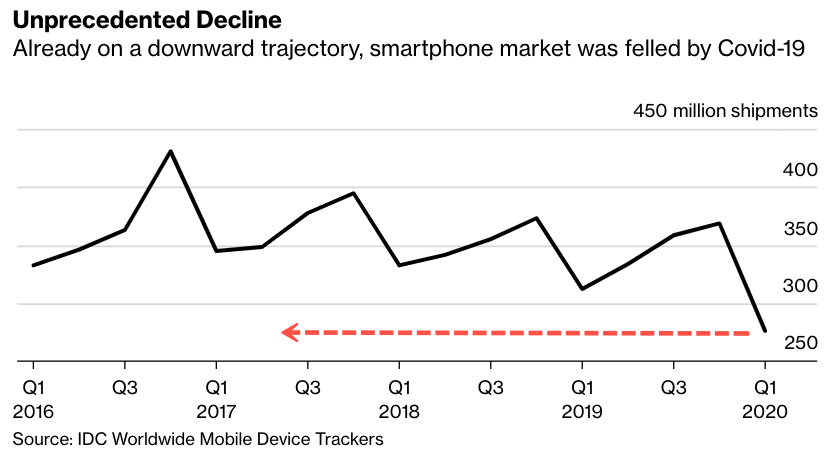
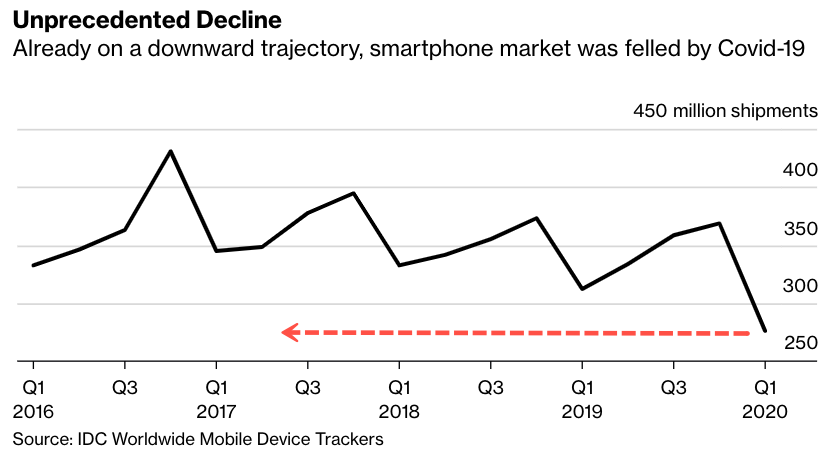
Years ago, China eclipsed the US as the largest smartphone market. If Chinese consumers are unwilling to purchase smartphones, the impact is felt globally. This is precisely what the International Data Corporation (IDC) is reporting, as global smartphone shipments have plunged the fastest on record in 1Q20, due to the coronavirus pandemic forcing governments across Asia and the world to unleash devastating lockdowns that resulted in a global economic crash.

IDC reports worldwide smartphone shipments dropped 11.7% YoY over the quarter, with companies shipping around 276 million smartphones. 

h/t Bloomberg

“What started as primarily a supply-side problem initially limited to China has grown into a global economic crisis with the demand-side impact starting to show by the end of the quarter,” said IDC research director Nabila Popal.

“While the supply chain in China started to recover at end of the quarter, as IDC expected, major economies around the world went into complete lockdown causing consumer demand to flatline,” Popal said. We noted in late March this setup was dubbed a “twin shock,” as China attempted to reopen manufacturing plants, only to realize that demand for products from Western countries collapsed as the fast-spreading virus led to global lockdowns. 

He said consumers in China and elsewhere have dialed back purchases of smartphones as the virus has devastated aggregate demand:  

 “This drop in demand, combined with the lockdowns and closures of retail shops across the globe, strongly impacted all consumer device markets, including mobile phones,” Popal said.

“As the uncertainties of the lockdowns and total economic impact linger, vendors are reconsidering their outlook for 2020,” he said. 

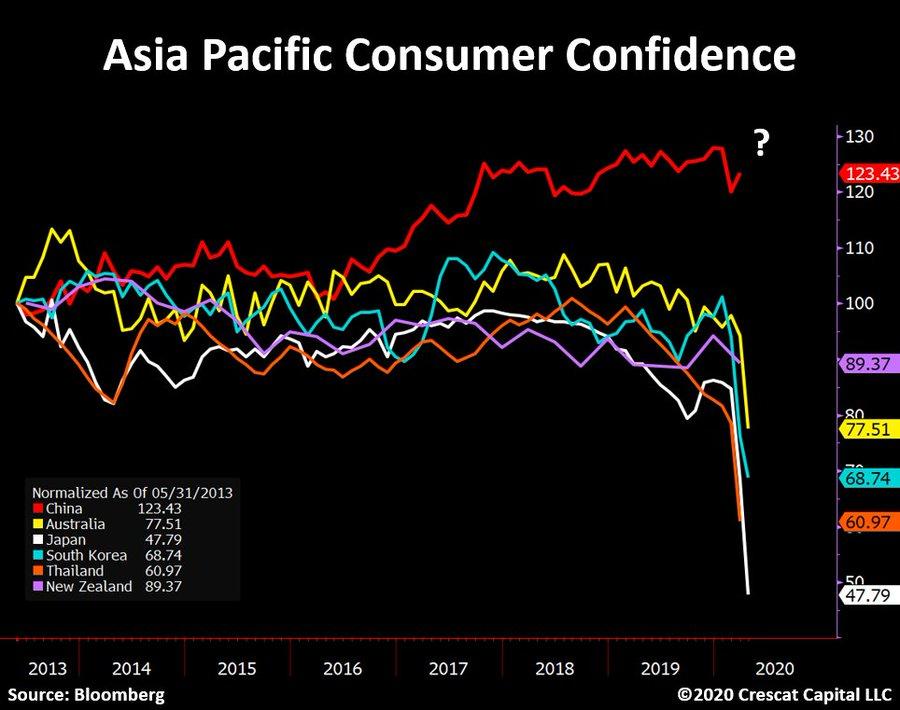
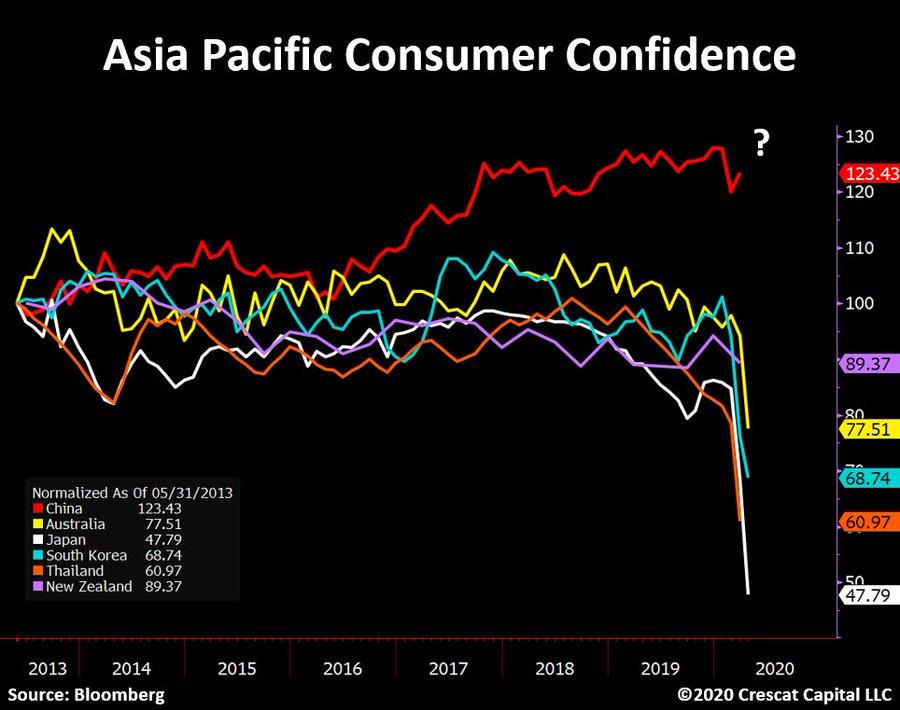
Crescat Capital’s Otavio Costa sums this up pretty well in a past tweet where he notes how consumer confidence has crashed among the Asia Pacific community but somehow not in China? He notes, “Fabricated data.…. CCP at its finest.” 

h/t Otavio Costa

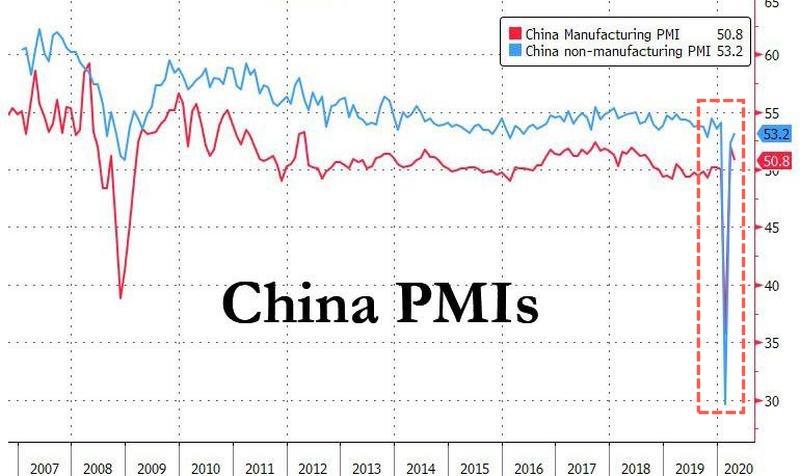
This is just more evidence that China has not only lied about a  V-shaped recovery in its economy but also severely underreported cases and deaths of the virus. We noted last week that China’s February swoon is a forgotten memory as Beijing reported a massive rebound in March PMIs from the February crash. And to make things even more comical, both PMIs continued a slight expansion in April. 

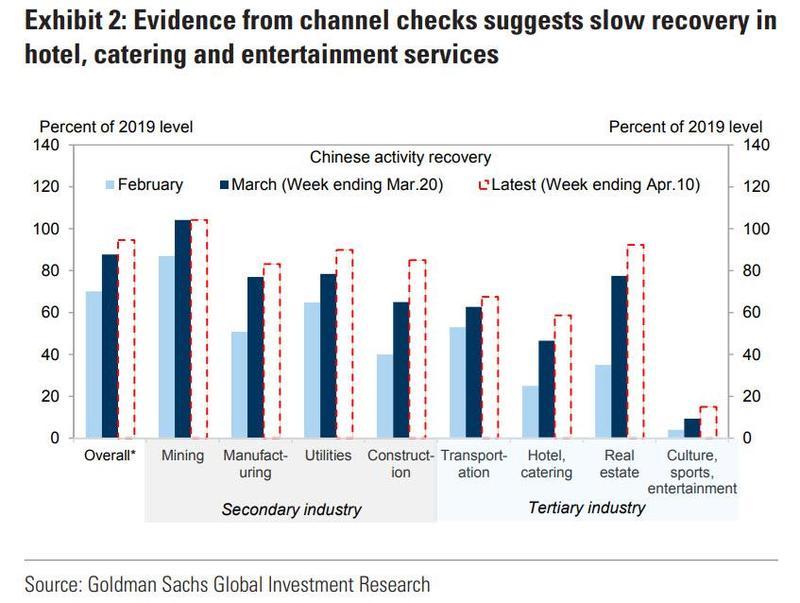
Meanwhile, an entirely different economic growth story is playing out with real-time activity trackers that shows anything but economic expansion in China and is probably why consumers aren’t purchasing smartphones. The latest activity in such sectors are hotels, catering and entertanment is running far below indicative 2019 levels, with just mining and real estate roughly comparable to year ago levels.

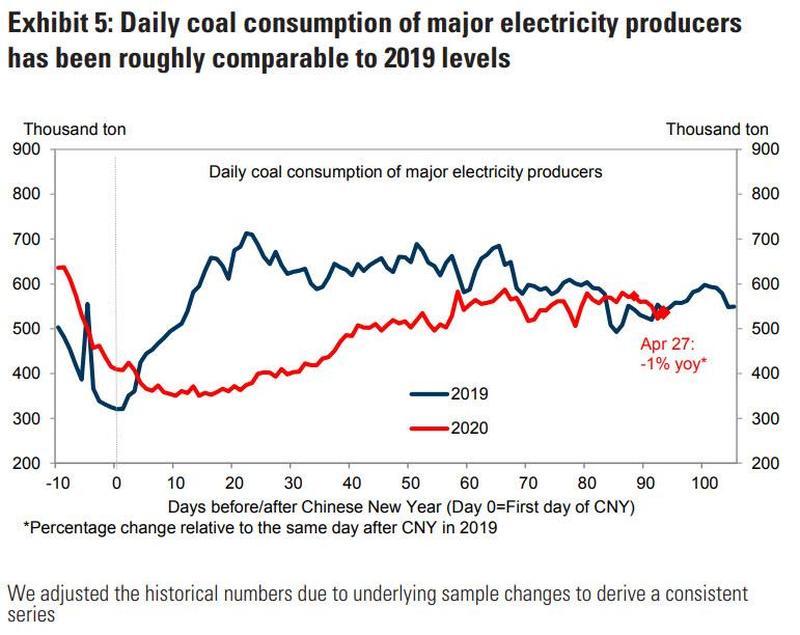
Coal consumption of major power plants is nothing spectacular, on par with 2019 figures. Doesn’t suggest a robust recovery. 

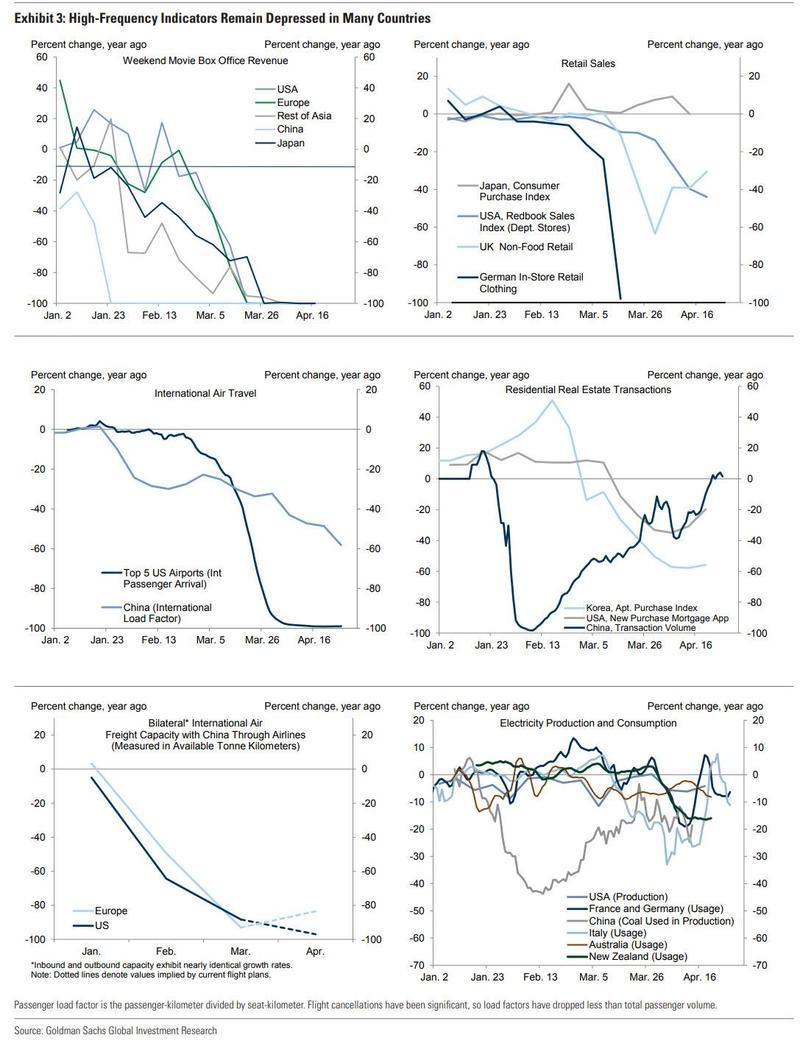
Domestic travel actvivty remains well under 2019 levels. 

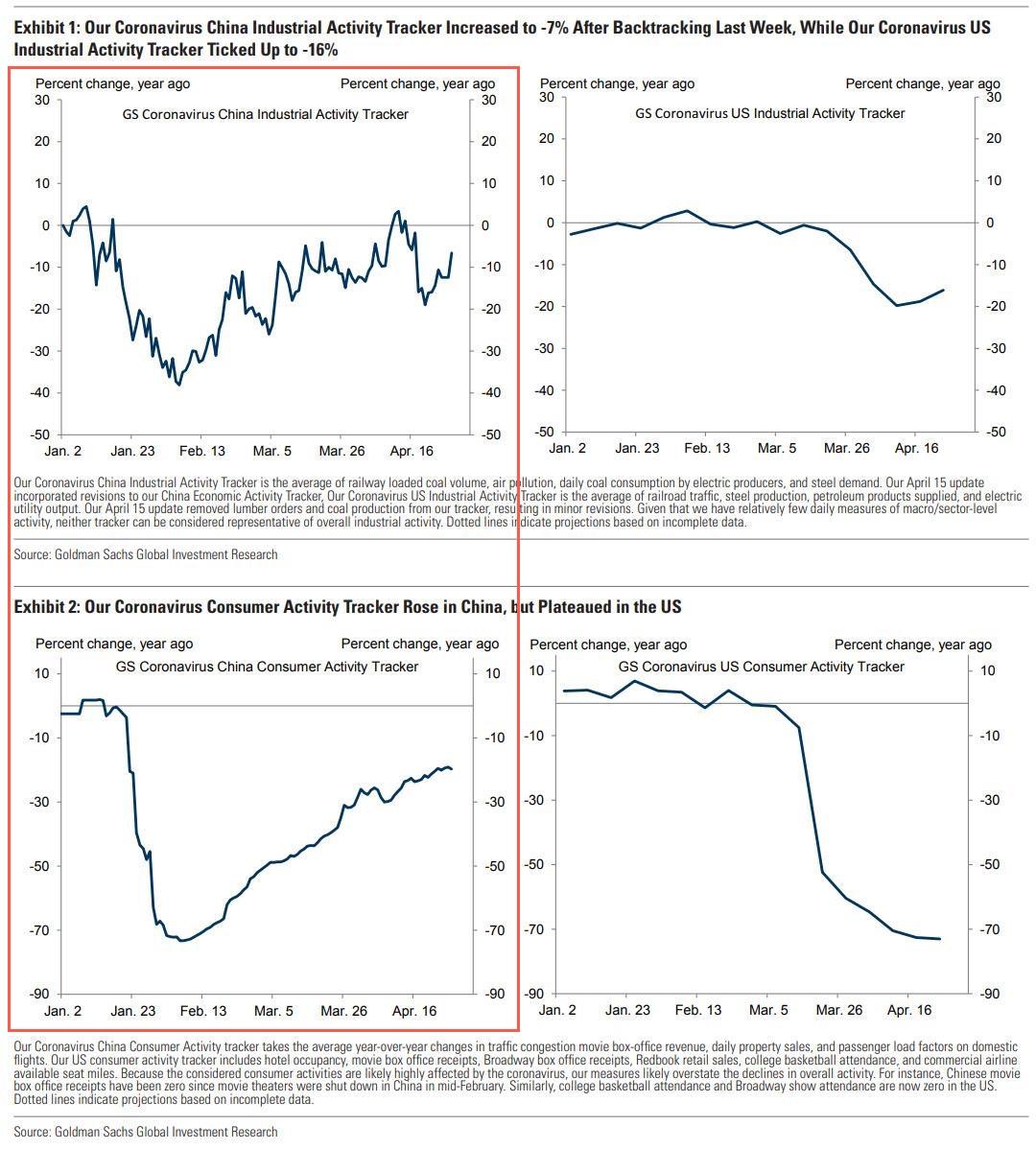
Industrial and consumer activity suggest anything but recovery in China. 

Here’s more proof that China lied about its recovery. 

Alternative data has allowed us to get a more clear picture of the economic turmoil that persists throughout China. It now also makes sense why consumers aren’t buying smartphones because that would take a recovery to do so.


Tyler Durden

Mon, 05/04/2020 – 18:50

via ZeroHedge News https://ift.tt/2YCZJcf Tyler Durden

The Crisis Experts Are Themselves The Crisis

The Crisis Experts Are Themselves The Crisis

Authored by John Tamny via RealClearMarkets.com,

Assuming there’s a 2020 NFL season and Anthony Fauci attends a Washington Redskins game, it’s not unreasonable to suggest that Fauci will be the smartest individual at the stadium. Some say his intelligence is formidable.

At the same time, Fauci’s mental capacity will be very small relative to the combined intelligence of every fan cheering (one can hope!) at FedEx Field. Whether 50,000 are in attendance or there’s a full-house of 82,000 (maybe the Dallas Cowboys are in town), one brilliant mind is no match for the collective wisdom of the masses. Their combined knowledge puts them at a major advantage against one, or for that matter, many.

All of the above very neatly explains why free, unfettered markets correlate so well with positive economic outcomes. Market signals are arrived at through the combined genius of tens of thousands, millions, and billions of human beings.

At the same time, it hopefully also explains why central planning always fails in miserable fashion. It’s not that there weren’t intelligent people running some of the Iron Curtain countries of the late 20thcentury, and it’s not that those in power didn’t avail themselves of expert opinion at times. The problem then was that individual genius, no matter how substantial, couldn’t come close to measuring up to the combined knowledge of the masses of people who make up what we call a market.

This rates mention at the moment in consideration of how much members of the political class are relying on experts in pursuing an effective response to the new coronavirus. In empowering individual genius, it’s not unreasonable to suggest that politicians are creating a crisis where there otherwise wouldn’t be one.

Consider Fauci. In a recent press conference, he said it would be necessary for coronavirus testing to double so that the lockdowns asphyxiating economic activity could be lifted. Is Fauci correct? It’s fairly easy to say he’s not correct, and not because he supports the lockdowns.

It’s likely Fauci’s incorrect simply because just as central planners routinely failed when it came to planning economic outcomes in the 20th century, so does that same central planning fail now. Fauci once again may be brilliant, but he’s no match for a U.S. economy comprised of hundreds of millions of individuals making infinite informed decisions every second of every day.

The same applies to Bill Gates. Some believe that his undeniable genius as a businessman positions him to knowledgeably opine on how we the U.S. and the world can come back from the virus. Gates has observed that businesses would be troubled with or without the lockdowns, unemployment would be higher with or without them, so the plan should be to continue them until we’re better situated in terms of a vaccine.

Is Gates right? It’s once again difficult to know. For one, his analysis ignores the “unseen”; as in what would individuals and businesses have done had the response of politicians to the virus been something like “You’re all adults. Be careful.”

If so, it’s not unreasonable to suggest that Fauci, Gates and other intelligent individuals would have strongly called for Americans to shelter-in-place, and tens of millions would have done just that. At the same time, Elon Musk and investors like Michael Burry might have responded in more intrepid fashion; calling for individuals and businesses to work around a virus of unknown lethality.

And with the truth about the virus more than vague, some businesses would have shut down in total, wholly fearful of brand risk related to “hot zones” emerging on their property. Others, perhaps staring bankruptcy in the face, would have risked the reputational pitfalls related to the new virus spreading on their property. Other businesses might have tried something in between. The main thing is that the varied responses, which could only have emerged from a less muscular response from experts and politicians, would have produced essential information about what the best economic solution(s) to the virus might be.

It should be added that “venture buyers” would have helped guide the decisions of businesses. We all know some individuals who, upon being made aware of the virus, bought weeks’ worth of groceries, hand sanitizers, books and hand soap with an eye on quarantining for weeks. At the same time, others continued to live as they did before; patronizing any business, park, public or private place that would have them. Crucial about the actions of free people is that their surely varied reactions in response to “You’re all adults” would have amounted to highly valuable market intelligence for businesses.

Which is the problem with expert-driven, government solutions no matter how locally they’re made. What’s one-size-fits all amounts to politicians and those close to politicians substituting their highly limited knowledge for that of a marketplace that incorporates the knowledge of everyone. In other words, reliance on experts for decisions about how we should live and protect our health in an all-new era leads to blindness.

Just as centralized decision-making by the very few led to immense desperation during the 20thcentury, so logically does it lead to sub-optimal outcomes in the 21st.  Some have said that expert-informed political responses to the new coronavirus have resulted in cures worse than the disease, which is really a blinding glimpse of the obvious. Anytime the possible brilliance of the few is substituted for the decentralized knowledge of the marketplace, odds are high that something resembling “crisis” will reveal itself. Experts are routinely called on as the answer to “crises,” when it’s more realistic to assert that the experts are the crisis.

So are Fauci and Gates wrong, or are Musk and Burry incorrect? Should local, state and national politicians seek economic re-opening, or is this virus so lethal that we must remain locked down for weeks? No one really knows.

Since no one does, better for governments and experts to do nothing so that well-informed markets can bring clarity to that which is opaque. 


Tyler Durden

Mon, 05/04/2020 – 18:30

via ZeroHedge News https://ift.tt/35vnvZf Tyler Durden

Daily Briefing – May 4, 2020

Daily Briefing – May 4, 2020


Ash Bennington hosts Real Vision’s Managing Editor Ed Harrison to discuss recent developments in markets, macro, and the coronavirus crisis. Today, Bennington and Harrison discuss Warren Buffett and his statements at the Berkshire Hathaway Annual Shareholders Meeting, the state of the airline industry, and the risks and limitations of reopening the global economy.


Tyler Durden

Mon, 05/04/2020 – 18:14

via ZeroHedge News https://ift.tt/3fkr9cP sacrilege

Watch: What It’s Like To Be Stung By An Asian “Murder Hornet”

Watch: What It’s Like To Be Stung By An Asian “Murder Hornet”

Seemingly overnight, another horror has emerged from the deep jungle recesses of Asia to invade the nightmares of squeamish North Americans: the Asian (or Japanese) Giant Hornet – better known as the “Murder Hornet”.

The hornet’s nicknamed is derived from three qualities, the first being that the ‘Murder Hornet’ is massive – more than 2 inches in diameter with the queens even bigger. The second is that their stings, which carry a powerful venom containing a pheromone attracting other hornets, have the potential to be lethal.

Oh, and third: these friggen hornets are meat-eaters. They eat other bees and insects, and have even been known to feast on rodents and small birds.

In Japan, about 50 people are killed each year by “Murder Hornet” swarms. Now that the bug has been found in the Pacific Northwest, some beekeepers fear it’s only a matter of time before they land in NYC.

A viral NYT story published in Sunday’s edition went viral overnight (we shared our thoughts on it here).

We noticed that one of the most popular videos on YouTube overnight was this demonstration of what it’s like to be stung by the deadly insect.

The clip is pretty intense – this is not recommended viewing for the easily disturbed.


Tyler Durden

Mon, 05/04/2020 – 18:10

via ZeroHedge News https://ift.tt/3dkTwG9 Tyler Durden

WeWork Founder & Ex-Billionaire Adam Neumann Sues SoftBank For Renegging On $3 Billion Buyout

WeWork Founder & Ex-Billionaire Adam Neumann Sues SoftBank For Renegging On $3 Billion Buyout

As was widely expected, WeWork co-founder and ex-billionaire Adam Neumann has sued SoftBank – the one-time biggest backer of Neumann’s former firm – over its decision to reneg on a $3 billion payment, setting the stage for a “The Social Network”-style dramatization pitting the Israeli entrepreneur and Paltrow-cousin-by-marriage against his former chief enabler.

As we’ve reported, SoftBank recently took advantage of an “out” clause in its agreement with WeWork to get out of forking over the $3 billion. SoftBank had promised to make the payment to WeWork’s other shareholders (ie Neumann & a few VCs) as part of a rescue package that also saw $5 billion of capital injected directly into the business.

Fortunately for SoftBank, legal analaysts seem to think it has a strong case. Unfortunately for Neumann, who recently lost his billionaire status and may or may not owe millions of dollars to a consortium of banks, his defense will almost certainly elicit zero sympathy from a jury.

A WeWork committee of two independent directors expressed “disappointment” at SoftBank’s decision, and hinted that the angry investors would respond with lawsuits.

The Special Committee is surprised and disappointed at this development, and remains committed to reaching a resolution that is in the best interest of WeWork and its minority shareholders, including WeWork’s employees and former employees. The Special Committee will evaluate all of its legal options, including litigation,” the committee, made up of Benchmark’s Bruce Dunlevie and another director, Lew Frankfort, said in an emailed statement.

When the news initially broke, a SoftBank spokesman insisted that the decision didn’t mean SoftBank was “walking away” from WeWork. And while that may be true (almost none of the $3 billion), the inescapable reality is that the coronavirus outbreak effectively sealed WeWork’s fate. The chances of the firm escaping bankruptcy have fallen to near-zero. It’s one of the world’s great melting ice cubes, except next time around, when the money runs out, the lights are going off, and there won’t be anybody coming back the next to brew that fancy “not-corporate” coffee.

But as badly as Neumann wants to rejoin the ‘Tres Commas’ club, hope – as a wise man once told us – isn’t a legal strategy.


Tyler Durden

Mon, 05/04/2020 – 18:00

via ZeroHedge News https://ift.tt/3fjqXuh Tyler Durden