900 Lockdown-“Snitches” Fear Violent Reprisals After Names, Addresses Published Online
People across the US have been using quarantine lockdown violations to snitch on others. Sometimes, it’s a stranger, but more often than not, people are snitching on others they know – sometimes all too well.
Arguably the best single piece of reporting ever published by the now-defunct Splinter News was a piece resulting from a FOIA request on immigration ‘snitches’ – people who report the undocumented to ICE or other federal immigration authorities. Splinter found a surprising pattern of people trying to have family members – more often than not their in-laws – deported.
Now, the Independent reports that hundreds of Missouri residents have had their personal details shared online after the publication of a document that recorded reports made by people tattling on lockdown violators.
Some individuals – who asked to remain anonymous despite being named in a public Facebook group as lockdown snitches – reportedly told the Independent that they are seriously concerned about facing consequences for ‘snitching’ on coronavirus rulebreakers in St Louis County. The people who were ratted on included mostly small business owners who were reported for flouting lockdown laws – ie (in many cases) simply trying to survive – by patrons, competitors and, of course, the haters.
The names and addresses of the 900 ‘snitches’ were released totally legally – via an FOIA request (any jailhouse snitch will tell you to beware the fact that there will always be a record of cooperation for constitutional reasons). They were then rounded up and posted in the Facebook group with the explicit intent of ‘naming and shaming’ them.
“I’m not only worried about COVID, I’m worried about someone showing up at my door, showing up at my workplace or me getting fired for doing what is right,” said a woman named Patricia, who was named as one of the ‘snitches’.
“When there is something that happens next time, I’m not going to feel safe or protected enough to call the local authorities.”
[…]
“We’re in a society where doing what’s right doesn’t always get rewarded,” added Patricia. “We have to be extra careful because we don’t have the strength to fight this.”
The complaints resulted in 29 businesses receiving court summons in April. Some of the snitches said they snitched on their employers for abusing them or other workers. This might be the only incidence where snitching on your small-business tyrant boss might be acceptable, though it’s important to take into consideration the fact that sometimes good, reliable and fair people will do desperate shit to save their livelihoods.
Missouri’s St Louis County has confirmed the most cases and deaths from COVID-19 than any other part of the state. Doug Moore, the head of communications for the county executive, said the names and details of the complainants simply couldn’t be legally redacted.
Moore added that “withholding information goes against what journalists push us to be – as transparent as possible.”
Like the old saying goes: “Snitches get stitches”.
In Judge B. Lynn Winmill’s opinion in Endobiogenics, Inc. v. Chahine (D. Idaho Mar. 30, 2020), Endobiogenics alleged (among other things) that Chahine, a physician, was libeling Endobiogenics to other physicians. Chahine didn’t appear, and therefore a default judgment was entered against him. Endobiogenics sought $75,000 in damages on the defamation claim, but the court concluded that it hadn’t sufficiently shown damages: “Endobiogenics includes no evidentiary support, beyond bare allegations in the Complaint, to support the damages allegation.” Endobiogenics also sought an injunction, and here’s how the court analyzed the matter:
First, Endobiogenics asks the Court to enjoin Chahine from “making any further defamatory statements to any past, current, or potential customer of Endobiogenics concerning the EMA System.” Endobiogenic alleges that, Chahine falsely told its customers and professional licensing boards that Endobiogenics’ enforcement of its contract is “perfectly illegal,” “endanger[s] the health or worse the lives of patients…,” puts “the health of my patients at risk,” and is “not only ethically but also criminally reprehensible.” Future like statements, could, if not enjoined, cause Endobiogenics to suffer irreparable injury. In addition, the remedies available at law are insufficient to compensate for the harm. For these reasons, and the reasons previously stated in the Court’s order granting default judgment, the Court will issue an injunction as to this effect.
Second, Endobiogenics asks the Court to enjoin Chahine “from making any defamatory statement concerning any Endobiogenics employee, manager, or founders, including but not limited to Dr. Lapraz, to any person or organization.” For the reasons stated immediately above, the Court will issue an injunction to this effect but will limit the scope of the injunction to any past, current, or potential customer of Endobiogenics concerning the EMA System.
Third, Endobiogenics asks the Court to direct Chahine to “remove all references to Endobiogenics and its employees, managers, or founders, and the EMA System, from any publication or media source over which Chahine has control, including but not limited to, websites, social media, printed materials, and any submissions currently on file with the Paris Board of Medicine.” The Court declines to issue an injunction to this broad effect.
Chahine has a right to speech that is critical of Endobiogenics. The Court may only curtail or enjoin speech that is defamatory or libelous, and thus, unlawful. Endobiogenics has not provided the Court with any specific quoted examples of the references at issue. In the default judgment setting, without findings of fact or the support of a developed evidentiary record, the Court declines to issue any injunctive relief to this preclusive effect….
This result is clearly correct to refuse to order Chahine to remove even nonlibelous speech about Endobiogenics. But as to the injunction against libelous statements (even just libelous statements to “past, current, or potentical customer[s] of Endobiogenics concerning the EMA system”), the decision just highlights how uncertain Ninth Circuit caselaw is on this point:
[A.] San Antonio Cmty. Hosp. v. S. Cal. Dist. Council of Carpenters, 125 F.3d 1230, 1239 (9th Cir. 1997), upheld an anti-libel injunction, as did the unpublished Ferguson v. Waid Decision last year.
[B.] On the other hand, In re Dan Farr Prods., 874 F.3d 590, 596 n.8 (9th Cir. 2017), noted that “‘[s]ubsequent civil or criminal proceedings, rather than prior restraints, ordinarily are the appropriate sanction for calculated defamation or other misdeeds in the First Amendment context'” (quoting CBS, Inc. v. Davis, 510 U.S. 1315, 1318 (1994) (Blackmun, J., in chambers)), but without discussing San Antonio Community Hospital, which seemed to take the opposite view.
[C.] District Courts in the Ninth Circuit are divided on the subject, e.g. (just from my research on 2016 and 2017 cases):
Andreas Carlsson Prod. AB v. Barnes, No. CV 15-6049 DMG (AJWx), 2016 WL 11499656, *5 (C.D. Cal. Oct. 11, 2016), concludes that “‘Injunctions against any speech, even libel, constitute prior restraints’ and are therefore ‘presumptively unconstitutional.’;
New Show Studios LLC v. Needle, No. 2:14-cv-01250-CAS (MRWx), 2016 WL 7017214, *9 (C.D. Cal. Dec. 1, 2016), concludes that”injunction[s] against defamatory statements” are only allowed in “exceptional circumstances.”
Vachani v. Yakovlev, No. 15-cv-04296-LB, 2016 WL 7406434, *7 (N.D. Cal. Dec. 22, 2016), concludes that “an injunction [to remove defamatory allegations and not to repeat them] is permissible.”
List Industries, Inc. v. List, No. 2:17-CV-2159 JCM (CWH), 2017 WL 3749593, *3 n.1 (D. Nev. Aug. 30, 2017), cites various opinions but “takes no position” on the dispute.
aPriori Technologies, Inc. v. Broquard, No. 2:16-cv-09561, 2017 WL 11319740 (C.D. Cal. Nov. 22, 2017), enjoins defendant from “Making any statement that refers to both aPriori or its officers, customers, investors, or affiliates, and Mr. Frank Iacovelli with respect to his alleged acts of child endangerment, child abuse or child molestation.”
This can be pretty confusing, as aPriori shows. Broquard’s Informal Brief argued that the injunction violated his “First Amendment Right to Freedom of Speech,” and Broquard and his codefendant had made the argument below. But, given Broquard’s lack of legal expertise, the Informal Brief did not offer any real legal analysis. The Ninth Circuit’s disposition therefore said only that, “Broquard’s contentions that the injunction violates his First Amendment rights [and other rights] are unpersuasive. We do not consider matters not specifically and distinctly raised and argued in the opening brief, or arguments and allegations raised for the first time on appeal.” Perhaps the District Court in aPriori was right in issuing the injunction—but it did so without sufficient guidance from the Ninth Court, and Broquard likewise lacked a clear statement of the legal rule around which he could have structured his argument.
Finally, note that the Endobiogenics injunction categorically banned “any defamatory statement” rather than just specific statements that had already been found to be defamatory. Most courts that have expressly considered the validity of such catchall injunctions have rejected them, as too “broad and general.” 50 Hill v. Stubson, 420 P.3d 732, 744 n.7 (Wyo. 2018); see Metro. Opera Ass’n. v. Local 100, 239 F.3d 172, 176-78 (2d Cir. 2001); Karnaby v. McKenzie, 54 Conn. L. Rptr. 71 (Conn. Super. Ct. 2012); Royal Oaks Holding Co. v. Ready, No. C4-02-267, 2002 WL 31302015, at *4 (Minn. Ct. App. Oct. 7, 2002); D’Ambrosio v. D’Ambrosio, 610 S.E.2d 876, 886 (Va. Ct. App. 2005); see also Gold & Diamond Buyers, LLC v. Friedlich, No. 11-21843, 2011 WL 13322791, at *3 (S.D. Fla. Sept. 26, 2011); cf. Hill v. Petrotech Res. Corp., 325 S.W.3d 302, 311 n.5 (Ky. 2010) (condemning “wide-sweeping language” in anti-libel injunctions, apparently including the prohibition of “publishing … [any defamatory] public comments pertaining in any way to the Plaintifs” (alteration in original)). But see In re Marriage of Olson, 850 P.2d 527, 532 (Wash. Ct. App. 1993) (upholding such a catchall injunction, apparently because of the special interest in protecting the parties’ children—the injunction had been entered as a result of a contentious divorce, and barred the ex-husband from defaming his ex-wife). Yet many other courts, like the Endobiogenics court, have issued such injunctions, especially as parts of default judgments, without any real discussion of the matter.
I have much more about all this in my Anti-Libel Injunctions article, which just came out in the University of Pennsylvania Law Review a few months ago.
from Latest – Reason.com https://ift.tt/3b2IaVq
via IFTTT
Predictions of the future of policing are usually a mix of glossy tech wizardry and ideology. Warnings of pervasive surveillance compete with calls for eased access to private data. Prescriptions for community policing fight for attention against marketing pitches for software intended to predict the danger posed by suspects. Most of this crystal ball-gazing assumes that law enforcement agencies will have unlimited resources to do what they want. But the post-pandemic world is likely to be poorer than what came before, and to feature changed habits and priorities. Law enforcement under such conditions may well have a reduced role by necessity—yet still be incredibly intrusive in some areas of life.
Writing for RAND Corporation, retired police chief Bob Harrison describes a hypothetical 2030, roughly a decade after multiple waves of COVID-19 gave rise to a world of reduced public interactions, devastated economies, and changed ways of life.
“The virus left in its wake entire industries destroyed or crippled,” writes Harrison. People stopped going to the movies as everyone began streaming almost everything into the home. Small colleges shuttered their buildings; community colleges transitioned to almost all online courses… Retail never quite made it back, either.”
It’s a grim forecast, but one that squares with the International Monetary Fund’s description of the global toll of lockdown measures intended to slow the spread of the novel coronavirus as the “worst economic downturn since the great depression.” U.S. unemployment is now above 20 percent and federal debt soars above already frightening heights.
The collapse may well cast a shadow over the next decade, resulting in reduced prosperity, less travel, and a greater share of work and trade moving online. Along with plummeting traffic fines because of the adoption of self-driving vehicles, Harrison suggests, that means reduced revenue for governments to spend on services including law enforcement.
His world of 2030 is one in which domestic disputes are rife among people spending more time at home. He also foresees a boom in online threats such as identity theft—an area in which most police departments have limited skill or jurisdiction. And “since the police had so little expertise in these types of crimes, people looked elsewhere to resolve their tech crimes and online issues,” Harrison forecasts. He doesn’t specify what “elsewhere” means, but private cybersecurity and identity-protection services might have a rosy future of expanded demand.
Harrison’s imagined 2030 features mass consolidation of police departments and shared resources along regional lines. And, like most futurists, Harrison sees greater use of technology, though he leans more to cost-saving measures than full RoboCop fantasies. That’s especially true when it comes to automating crime reporting and police dispatch to reduce expense. “By 2030, virtual call-takers screened public queries so effectively that people didn’t notice the difference from talking with a human,” he writes. “Dispatch had been virtualized in the early 20s, so now they were tracking to replace humans altogether to facilitate a police response to crime.”
Harrison’s vision is interesting, but it’s not comprehensive. Other intriguing hints at the future of policing can be found from sources that peered into their crystal balls before the novel coronavirus elicited its first cough.
“Nearly every person carries around with them a device that can log and transmit amounts of data that would have been unthinkable a little over a decade ago,” Michael Gelles, Alex Mirkow, and Joe Mariani noted last year for Deloitte Insights. “Simply looking through the call history of a phone at a crime scene can be a huge source of data that can break open even large investigations.”
Now, governments around the world are leaning on their populations to install contact-tracing apps on their cellphones. For the moment, the apps are voluntary in most places and intended only to fight the pandemic. But it’s easy to envision governments finding new uses for technology that tracks people’s movements and is paid for by the end user and not from public coffers.
Already, Hawaii requires visitors to the state to carry working cellphones, on pain of arrest, “to help ensure people are abiding by the traveler quarantine order.” Travelers must also check in daily using a Safe Travels System web app that records their location. It’s a crude system that seems designed more to deter tourists than to track them. But the approach is only a step away from a relatively inexpensive means of continuously monitoring people’s locations. That’s tempting for governments and dangerous for the public.
“GPS monitoring—by making available at a relatively low cost such a substantial quantum of intimate information about any person whom the Government, in its unfettered discretion, chooses to track—may ‘alter the relationship between citizen and government in a way that is inimical to democratic society’,” Supreme Court Justice Sonia Sotomayor warned in her concurring opinion in United States v. Jones (2012).
Technological solutions—at least lower-cost ones—are likely go-tos for cash-strapped police departments with narrowed missions. Tight budgets may preclude the “swarms of police drones” and “autonomous police vehicles” of some of the more gee-whiz predictions, especially in Harrison’s scenario of limited in-person crime—why spends lots of money to monitor spaces where people no longer congregate? But cameras and facial recognition software are cheaper than personnel, especially if police can convince (or force) private businesses to contribute their own systems.
“With an estimated 30 million security cameras in the United States, tapping into privately owned devices could allow the government to build a CCTV network on the scale of China (at least in terms of population ratio) at a fraction of the cost,” The Constitution Project pointed out last year.
Some policing philosophies may make less sense, or take on different meanings, if more of daily life moves online. Street-level, relationship-based community policing is championed by criminal justice reformers such as those at the Charles Koch Institute as a means of building trust and reducing conflict between police officers and the people they serve. But even before the pandemic, Deloitte’s Gelles, Mirkow, and Mariani discussed how “the instant availability of information on social media, for example, is reshaping the nature of some social ties.” That’s precisely what RAND’s Harrison envisions for the agoraphobic world of 2030, but more so. If Facebook, Twitter, and their successors become the main form of community for people fearful of contagion, community policing might mean little more than cops trawling through online posts and leaving the occasional comments.
Or maybe strapped police departments will cut costs further and just scrape the internet using predictive technology intended to rate people’s potential for engaging in crime. Existing software does just that based on posts, pictures, and other online information. Officers are then apprised of the supposed risks they face from members of the public. The technology is certain to be refined, and its use (and abuse) seems inevitable as a cost-effective means for targeting scarce law enforcement resources.
It’s a fair bet that the post-pandemic world will look different in many ways than what came before. There may be fewer police officers performing more constrained roles in the months and years to come, with less direct interpersonal contact with the people they supposedly serve. That might be good news when it comes to minimizing conflicts between police and members of the public. But it could also mean we’ll be subject to a cut-rate surveillance state.
from Latest – Reason.com https://ift.tt/2WtEJ4Y
via IFTTT
In Judge B. Lynn Winmill’s opinion in Endobiogenics, Inc. v. Chahine (D. Idaho Mar. 30, 2020), Endobiogenics alleged (among other things) that Chahine, a physician, was libeling Endobiogenics to other physicians. Chahine didn’t appear, and therefore a default judgment was entered against him. Endobiogenics sought $75,000 in damages on the defamation claim, but the court concluded that it hadn’t sufficiently shown damages: “Endobiogenics includes no evidentiary support, beyond bare allegations in the Complaint, to support the damages allegation.” Endobiogenics also sought an injunction, and here’s how the court analyzed the matter:
First, Endobiogenics asks the Court to enjoin Chahine from “making any further defamatory statements to any past, current, or potential customer of Endobiogenics concerning the EMA System.” Endobiogenic alleges that, Chahine falsely told its customers and professional licensing boards that Endobiogenics’ enforcement of its contract is “perfectly illegal,” “endanger[s] the health or worse the lives of patients…,” puts “the health of my patients at risk,” and is “not only ethically but also criminally reprehensible.” Future like statements, could, if not enjoined, cause Endobiogenics to suffer irreparable injury. In addition, the remedies available at law are insufficient to compensate for the harm. For these reasons, and the reasons previously stated in the Court’s order granting default judgment, the Court will issue an injunction as to this effect.
Second, Endobiogenics asks the Court to enjoin Chahine “from making any defamatory statement concerning any Endobiogenics employee, manager, or founders, including but not limited to Dr. Lapraz, to any person or organization.” For the reasons stated immediately above, the Court will issue an injunction to this effect but will limit the scope of the injunction to any past, current, or potential customer of Endobiogenics concerning the EMA System.
Third, Endobiogenics asks the Court to direct Chahine to “remove all references to Endobiogenics and its employees, managers, or founders, and the EMA System, from any publication or media source over which Chahine has control, including but not limited to, websites, social media, printed materials, and any submissions currently on file with the Paris Board of Medicine.” The Court declines to issue an injunction to this broad effect.
Chahine has a right to speech that is critical of Endobiogenics. The Court may only curtail or enjoin speech that is defamatory or libelous, and thus, unlawful. Endobiogenics has not provided the Court with any specific quoted examples of the references at issue. In the default judgment setting, without findings of fact or the support of a developed evidentiary record, the Court declines to issue any injunctive relief to this preclusive effect….
This result is clearly correct to refuse to order Chahine to remove even nonlibelous speech about Endobiogenics. But as to the injunction against libelous statements (even just libelous statements to “past, current, or potentical customer[s] of Endobiogenics concerning the EMA system”), the decision just highlights how uncertain Ninth Circuit caselaw is on this point:
[A.] San Antonio Cmty. Hosp. v. S. Cal. Dist. Council of Carpenters, 125 F.3d 1230, 1239 (9th Cir. 1997), upheld an anti-libel injunction, as did the unpublished Ferguson v. Waid Decision last year.
[B.] On the other hand, In re Dan Farr Prods., 874 F.3d 590, 596 n.8 (9th Cir. 2017), noted that “‘[s]ubsequent civil or criminal proceedings, rather than prior restraints, ordinarily are the appropriate sanction for calculated defamation or other misdeeds in the First Amendment context'” (quoting CBS, Inc. v. Davis, 510 U.S. 1315, 1318 (1994) (Blackmun, J., in chambers)), but without discussing San Antonio Community Hospital, which seemed to take the opposite view.
[C.] District Courts in the Ninth Circuit are divided on the subject, e.g. (just from my research on 2016 and 2017 cases):
Andreas Carlsson Prod. AB v. Barnes, No. CV 15-6049 DMG (AJWx), 2016 WL 11499656, *5 (C.D. Cal. Oct. 11, 2016), concludes that “‘Injunctions against any speech, even libel, constitute prior restraints’ and are therefore ‘presumptively unconstitutional.’;
New Show Studios LLC v. Needle, No. 2:14-cv-01250-CAS (MRWx), 2016 WL 7017214, *9 (C.D. Cal. Dec. 1, 2016), concludes that”injunction[s] against defamatory statements” are only allowed in “exceptional circumstances.”
Vachani v. Yakovlev, No. 15-cv-04296-LB, 2016 WL 7406434, *7 (N.D. Cal. Dec. 22, 2016), concludes that “an injunction [to remove defamatory allegations and not to repeat them] is permissible.”
List Industries, Inc. v. List, No. 2:17-CV-2159 JCM (CWH), 2017 WL 3749593, *3 n.1 (D. Nev. Aug. 30, 2017), cites various opinions but “takes no position” on the dispute.
aPriori Technologies, Inc. v. Broquard, No. 2:16-cv-09561, 2017 WL 11319740 (C.D. Cal. Nov. 22, 2017), enjoins defendant from “Making any statement that refers to both aPriori or its officers, customers, investors, or affiliates, and Mr. Frank Iacovelli with respect to his alleged acts of child endangerment, child abuse or child molestation.”
This can be pretty confusing, as aPriori shows. Broquard’s Informal Brief argued that the injunction violated his “First Amendment Right to Freedom of Speech,” and Broquard and his codefendant had made the argument below. But, given Broquard’s lack of legal expertise, the Informal Brief did not offer any real legal analysis. The Ninth Circuit’s disposition therefore said only that, “Broquard’s contentions that the injunction violates his First Amendment rights [and other rights] are unpersuasive. We do not consider matters not specifically and distinctly raised and argued in the opening brief, or arguments and allegations raised for the first time on appeal.” Perhaps the District Court in aPriori was right in issuing the injunction—but it did so without sufficient guidance from the Ninth Court, and Broquard likewise lacked a clear statement of the legal rule around which he could have structured his argument.
Finally, note that the Endobiogenics injunction categorically banned “any defamatory statement” rather than just specific statements that had already been found to be defamatory. Most courts that have expressly considered the validity of such catchall injunctions have rejected them, as too “broad and general.” 50 Hill v. Stubson, 420 P.3d 732, 744 n.7 (Wyo. 2018); see Metro. Opera Ass’n. v. Local 100, 239 F.3d 172, 176-78 (2d Cir. 2001); Karnaby v. McKenzie, 54 Conn. L. Rptr. 71 (Conn. Super. Ct. 2012); Royal Oaks Holding Co. v. Ready, No. C4-02-267, 2002 WL 31302015, at *4 (Minn. Ct. App. Oct. 7, 2002); D’Ambrosio v. D’Ambrosio, 610 S.E.2d 876, 886 (Va. Ct. App. 2005); see also Gold & Diamond Buyers, LLC v. Friedlich, No. 11-21843, 2011 WL 13322791, at *3 (S.D. Fla. Sept. 26, 2011); cf. Hill v. Petrotech Res. Corp., 325 S.W.3d 302, 311 n.5 (Ky. 2010) (condemning “wide-sweeping language” in anti-libel injunctions, apparently including the prohibition of “publishing … [any defamatory] public comments pertaining in any way to the Plaintifs” (alteration in original)). But see In re Marriage of Olson, 850 P.2d 527, 532 (Wash. Ct. App. 1993) (upholding such a catchall injunction, apparently because of the special interest in protecting the parties’ children—the injunction had been entered as a result of a contentious divorce, and barred the ex-husband from defaming his ex-wife). Yet many other courts, like the Endobiogenics court, have issued such injunctions, especially as parts of default judgments, without any real discussion of the matter.
I have much more about all this in my Anti-Libel Injunctions article, which just came out in the University of Pennsylvania Law Review a few months ago.
from Latest – Reason.com https://ift.tt/3b2IaVq
via IFTTT
As the Covid-19 crisis progresses, censorship programs advance, amid calls for China-style control of the Internet…
Earlier this week, Atlantic magazine – fast becoming the favored media outlet for self-styled intellectual elites of the Aspen Institute type – ran an in-depth article of the problems free speech poses to American society in the coronavirus era. The headline:
Internet Speech Will Never Go Back to Normal
In the debate over freedom versus control of the global network, China was largely correct, and the U.S. was wrong.
Authored by a pair of law professors from Harvard and the University of Arizona, Jack Goldsmith and Andrew Keane Woods, the piece argued that the American and Chinese approaches to monitoring the Internet were already not that dissimilar:
Constitutional and cultural differences mean that the private sector, rather than the federal and state governments, currently takes the lead in these practices… But the trend toward greater surveillance and speech control here, and toward the growing involvement of government, is undeniable and likely inexorable.
They went on to list all the reasons that, given that we’re already on an “inexorable” path to censorship, a Chinese-style system of speech control may not be such a bad thing. In fact, they argued, a benefit of the coronavirus was that it was waking us up to “how technical wizardry, data centralization, and private-public collaboration can do enormous public good.”
Perhaps, they posited, Americans could be moved to reconsider their “understanding” of the First and Fourth Amendments, as “the harms from digital speech” continue to grow, and “the social costs of a relatively open Internet multiply.”
This interesting take on the First Amendment was the latest in a line of “Let’s rethink that whole democracy thing” pieces that began sprouting up in earnest four years ago. Articles with headlines like “Democracies end when they become too democratic” and “Too much of a good thing: why we need less democracy” became common after two events in particular: Donald Trump’s victory in the the Republican primary race, and the decision by British voters to opt out of the EU, i.e. “Brexit.”
A consistent lament in these pieces was the widespread decline in respect for “experts” among the ignorant masses, better known as the people Trump was talking about when he gushed in February 2016, “I love the poorly educated!”
The Atlantic was at the forefront of the argument that The People is a Great Beast, that cannot be trusted to play responsibly with the toys of freedom. A 2016 piece called “American politics has gone insane” pushed a return of the “smoke-filled room” to help save voters from themselves. Author Jonathan Rauch employed a metaphor that is striking in retrospect, describing America’s oft-vilified intellectual and political elite as society’s immune system:
Americans have been busy demonizing and disempowering political professionals and parties, which is like spending decades abusing and attacking your own immune system. Eventually, you will get sick.
The new piece by Goldsmith and Woods says we’re there, made literally sick by our refusal to accept the wisdom of experts. The time for asking the (again, literally) unwashed to listen harder to their betters is over. The Chinese system offers a way out. When it comes to speech, don’t ask: tell.
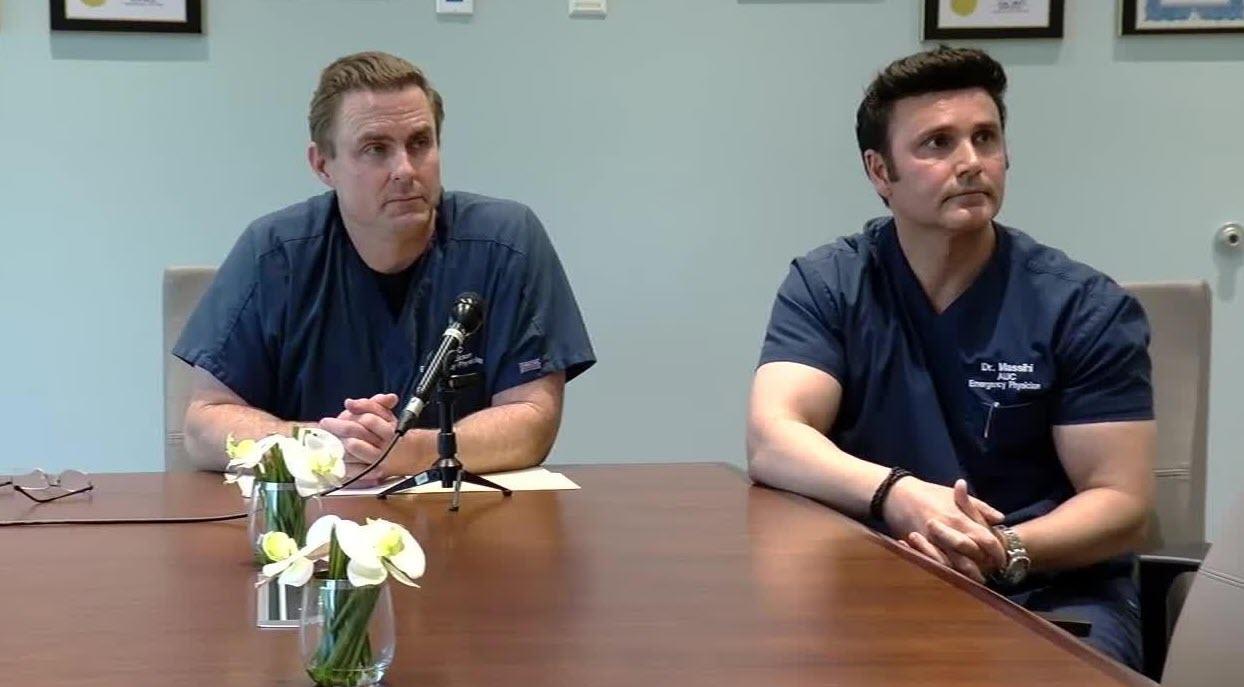
The offenders were Drs. Dan Erickson and Artin Massahi, co-owners of an “Urgent Care” clinic in Bakersfield, California. They’d held a presentation in which they argued that widespread lockdowns were perhaps not necessary, according to data they were collecting and analyzing.
“Millions of cases, small amounts of deaths,” said Erickson, a vigorous, cheery-looking Norwegian-American who argued the numbers showed Covid-19 was similar to flu in mortality rate.
“Does [that] necessitate shutdown, loss of jobs, destruction of oil companies, furloughing doctors…? I think the answer is going to be increasingly clear.”
The reaction of the medical community was severe. It was pointed out that the two men owned a clinic that was losing business thanks to the lockdown. The message boards of real E.R. doctors lit up with angry comments, scoffing at the doctors’ dubious data collection methods and even their somewhat dramatic choice to dress in scrubs for their video presentation.
The American Academy of Emergency Medicine (AAEM) and American College of Emergency Physicians (ACEP) scrambled to issue a joint statement to “emphatically condemn” the two doctors, who “do not speak for medical society” and had released “biased, non-peer reviewed data to advance their personal financial interests.”
As is now almost automatically the case in the media treatment of any controversy, the story was immediately packaged for “left” and “right” audiences by TV networks. Tucker Carlson on Fox backed up the doctors’ claims, saying “these are serious people who’ve done this for a living for decades,” and YouTube and Google have “officially banned dissent.”
Meanwhile, over on Carlson’s opposite-number channel, MSNBC, anchor Chris Hayes of the All In program reacted with fury to Carlson’s monologue:
There’s a concerted effort on the part of influential people at the network that we at All In call Trump TV right now to peddle dangerous misinformation about the coronavirus… Call it coronavirus trutherism.
Hayes, an old acquaintance of mine, seethed at what he characterized as the gross indifference of Trump Republicans to the dangers of coronavirus.
“At the beginning of this horrible period, the president, along with his lackeys, and propagandists, they all minimized what was coming,” he said, sneering. “They said it was just like a cold or the flu.”
He angrily demanded that if Fox acolytes like Carlson believed so strongly that society should be reopened, they should go work in a meat processing plant.
“Get in there if you think it’s that bad. Go chop up some pork.”
The tone of the many media reactions to Erickson, Carlson, Trump, Georgia governor Brian Kemp, and others who’ve suggested lockdowns and strict shelter-in-place laws are either unnecessary or do more harm than good, fits with what writer Thomas Frank describes as a new “Utopia of Scolding”:
Who needs to win elections when you can personally reestablish the social order every day on Twitter and Facebook? When you can scold, and scold, and scold. That’s their future, and it’s a satisfying one: a finger wagging in some vulgar proletarian’s face, forever.
In the Trump years the sector of society we used to describe as liberal America became a giant finger-wagging machine. The news media, academia, the Democratic Party, show-business celebrities and masses of blue-checked Twitter virtuosos became a kind of umbrella agreement society, united by loathing of Trump and fury toward anyone who dissented with their preoccupations.
Because this Conventional Wisdom viewed itself as being solely concerned with the Only Important Thing, i.e. removing Trump, there was no longer any legitimate excuse for disagreeing with its takes on Russia, Julian Assange, Jill Stein, Joe Rogan, the 25th amendment, Ukraine, the use of the word “treason,” the removal of Alex Jones, the movie Joker, or whatever else happened to be the #Resistance fixation of the day.
When the Covid-19 crisis struck, the scolding utopia was no longer abstraction. The dream was reality! Pure communism had arrived! Failure to take elite advice was no longer just a deplorable faux pas. Not heeding experts was now murder. It could not be tolerated. Media coverage quickly became a single, floridly-written tirade against “expertise-deniers.” For instance, the Atlantic headline on Kemp’s decision to end some shutdowns was, “Georgia’s Experiment in Human Sacrifice.”
At the outset of the crisis, America’s biggest internet platforms – Facebook, Twitter, Google, LinkedIn, and Reddit – took an unprecedented step to combat “fraud and misinformation” by promising extensive cooperation in elevating “authoritative” news over less reputable sources.
H.L. Mencken once said that in America, “the general average of intelligence, of knowledge, of competence, of integrity, of self-respect, of honor is so low that any man who knows his trade, does not fear ghosts, has read fifty good books, and practices the common decencies stands out as brilliantly as a wart on a bald head.”
We have a lot of dumb people in this country. But the difference between the stupidities cherished by the Idiocracy set ingesting fish cleaner, and the ones pushed in places like the Atlantic, is that the jackasses among the “expert” class compound their wrongness by being so sure of themselves that they force others to go along. In other words, to combat “ignorance,” the scolders create a new and more virulent species of it: exclusive ignorance, forced ignorance, ignorance with staying power.
The people who want to add a censorship regime to a health crisis are more dangerous and more stupid by leaps and bounds than a president who tells people to inject disinfectant. It’s astonishing that they don’t see this.
Journalists are professional test-crammers. Our job is to get an assignment on Monday morning and by Tuesday evening act like we’re authorities on intellectual piracy, the civil war in Yemen, Iowa caucus procedure, the coronavirus, whatever. We actually know jack: we speed-read, make a few phone calls, and in a snap people are inviting us on television to tell millions of people what to think about the complex issues of the world.
When we come to a subject cold, the job is about consulting as many people who really know their stuff as quickly as possible and sussing out – often based on nothing more than hunches or impressions of the personalities involved – which set of explanations is most believable. Sportswriters who covered the Deflategate football scandal had to do this in order to explain the Ideal Gas Law, I had to do it to cover the subprime mortgage scandal, and reporters this past January and February had to do it when assigned to assess the coming coronavirus threat.
It does not take that much work to go back and find that a significant portion of the medical and epidemiological establishment called this disaster wrong when they were polled by reporters back in the beginning of the year. Right-wingers are having a blast collecting the headlines, and they should, given the chest-pounding at places like MSNBC about others who “minimized the risk.” Here’s a brief sample:
There are dozens of these stories and they nearly all contain the same elements, including an inevitable quote or series of quotes from experts telling us to calm the hell down. This is from the Time piece:
“Good hand-washing helps. Staying healthy and eating healthy will also help,” says Dr. Sharon Nachman, a pediatric infectious disease specialist at New York’s Stony Brook Children’s Hospital. “The things we take for granted actually do work. It doesn’t matter what the virus is. The routine things work.”
There’s a reason why journalists should always keep their distance from priesthoods in any field. It’s particularly in the nature of insular communities of subject matter experts to coalesce around orthodoxies that blind the very people in the loop who should be the most knowledgeable.
“Experts” get things wrong for reasons that are innocent (they’ve all been taught the same incorrect thing in school) and less so (they have a financial or professional interest in denying the truth).
On the less nefarious side, the entire community of pollsters in 2016 denounced as infamous the idea that Donald Trump could win the Republican nomination, let alone the general election. They believed that because they weren’t paying attention to voters (their ostensible jobs), but also because they’d never seen anything similar. In a more suspicious example, if you asked a hundred Wall Street analysts in September 2008 what caused the financial crisis, probably no more than a handful would have mentioned fraud or malfeasance.
Both of the above examples point out a central problem with trying to automate the fact-checking process the way the Internet platforms have of late, with their emphasis on “authoritative” opinions.
“Authorities” by their nature are untrustworthy. Sometimes they have an interest in denying truths, and sometimes they actually try to define truth as being whatever they say it is. “Elevating authoritative content” over independent or less well-known sources is an algorithmic take on the journalistic obsession with credentialing that has been slowly destroying our business for decades.
The WMD fiasco happened because journalists listened to people with military ranks and titles instead of demanding evidence and listening to their own instincts. The same thing happened with Russiagate, a story fueled by intelligence “experts” with grand titles who are now proven to have been wrong to a spectaculardegree, if not actually criminally liable in pushing a fraud.
We’ve become incapable of talking calmly about possible solutions because we’ve lost the ability to decouple scientific or policy discussions, or simple issues of fact, from a political argument. Reporting on the Covid-19 crisis has become the latest in a line of moral manias with Donald Trump in the middle.
Instead of asking calmly if hydroxychloroquine works, or if the less restrictive Swedish crisis response has merit, or questioning why certain statistical assumptions about the seriousness of the crisis might have been off, we’re denouncing the questions themselves as infamous. Or we’re politicizing the framing of stories in a way that signals to readers what their take should be before they even digest the material. “Conservative Americans see coronavirus hope in Progressive Sweden,” reads a Politico headline, as if only conservatives should feel optimism in the possibility that a non-lockdown approach might have merit! Are we rooting for such an approach to not work?
From everything I’ve heard, talking to doctors and reading the background material, the Bakersfield doctors are probably not the best sources. But the functional impact of removing their videos (in addition to giving them press they wouldn’t otherwise have had) is to stamp out discussion of things that do actually need to be discussed, like when the damage to the economy and the effects of other crisis-related problems – domestic abuse, substance abuse, suicide, stroke, abuse of children, etc. – become as significant a threat to the public as the pandemic. We do actually have to talk about this. We can’t not talk about it out of fear of being censored, or because we’re confusing real harm with political harm.
Turning ourselves into China for any reason is the definition of a cure being worse than the disease. The scolders who are being seduced by such thinking have to wake up, before we end up adding another disaster on top of the terrible one we’re already facing.
US Manufacturers New Orders Crash BY Most Ever (And April Will Be Worse)
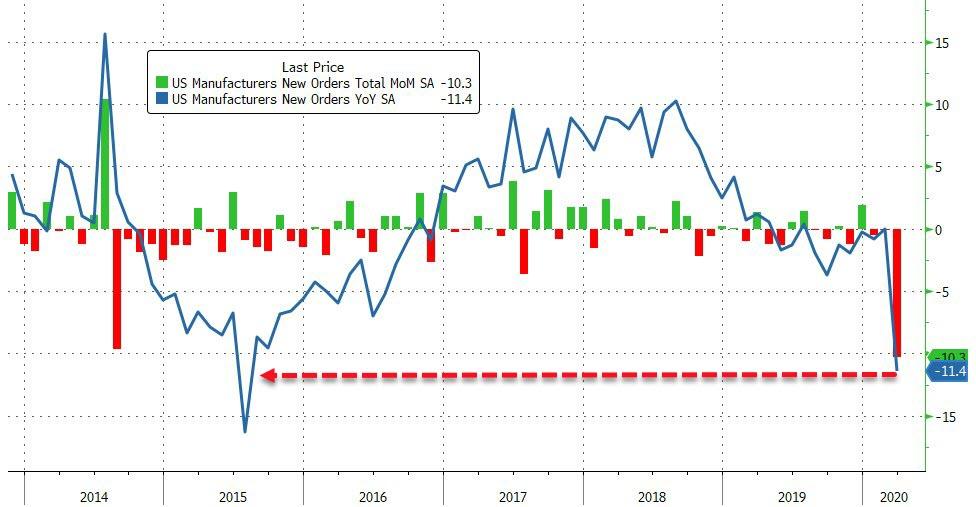
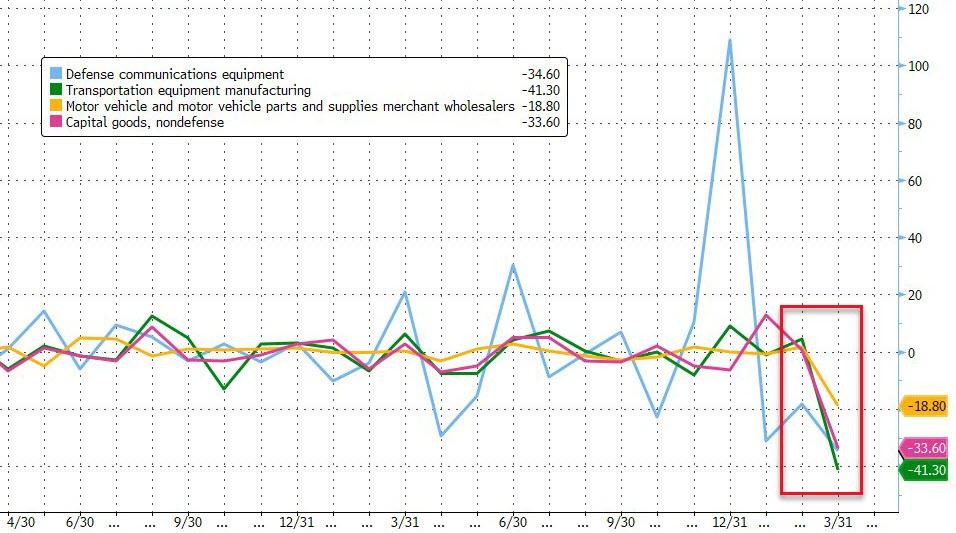
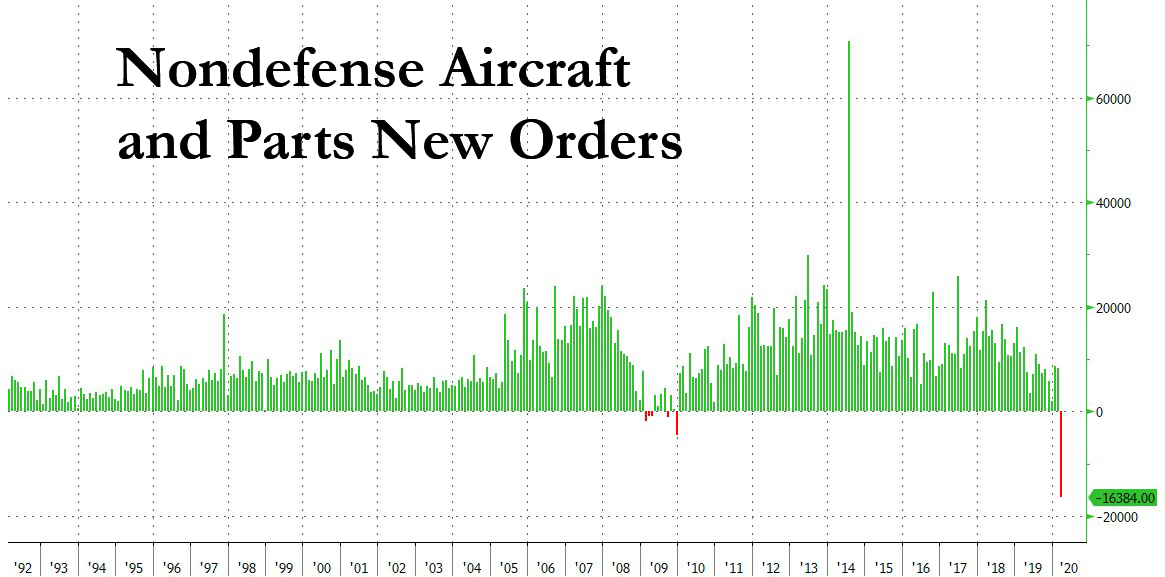
Amid collapsing employment, crashing sentiment signals, and carnage in any hard data signals around the world, it is no surprise that analysts expected a 9.7% MoM plunge in factory orders in March (still before the major lockdowns in April).
But the actual print, down 10.3% MoM, was notably worse and sent Factory orders down 11.4% YoY – the worst since the great financial crisis (ignoring the 2014/5 aberration)
“They’re So Lucky I’m Their President”: Trump Gloats As Californians Try To Block Immigration From Mexico
Stocks are plunging Monday with airlines posting some of the biggest losses, yet for whatever reason, markets reporters at the FT and WSJ appear content to attribute the selloff to renewed ‘tensions’ between the US and China – and not the fact that the media-proclaimed ‘Oracle of Omaha’ pretty much said ‘sell everything’.
But we digress.
With markets deep in the red, President Trump has been active on Twitter on Monday, and his deflection of choice appears to be ‘blame Mexico’, and a situation whereby California has tried to slow immigration from Mexico now that the outbreak south of the border has had time to fester.
Trump tried this approach a few times in the past – like when he said he might close the border – but back then, the US outbreak was incontestably worse than Mexico’s.
Now, after months of mismanagement by AMLO, whereby Mexico has consistently reported some of the lowest testing rates in Latin America, experts agree that Mexico’s outbreak is likely much, much worse than official figures reflect.
So after reminding the world how much rich people and corporations loved his tax cuts…
Republicans love the biggest Tax Cuts, Rebuilt Military, Choice for Vets, saving 2nd Amendment and many other things my Administration has done, but what they love beyond all else is 252 (so far!) Federal Judges, not including two great Supreme Court Justices. A Big Record!
…Trump reminded Californians who are now pushing to close the border that they’re “so lucky” that the president whose chants of “build the wall” will echo through the annals of history is in charge right now.
Mexico is sadly experiencing very big CoronaVirus problems, and now California, get this, doesn’t want people coming over the Southern Border. A Classic! They are sooo lucky that I am their President. Border is very tight and the Wall is rapidly being built!
We’ve touched on Mexico’s coronavirus failings in greater depth here. The country is presently reporting 23,471 cases and just 2,514 deaths, despite evidence that the number of deaths is probably being deliberately under-counted.
States experiment with varying levels of lifting lockdown orders, amid aggression, civil disobedience, and social unrest. It seems no matter which way governors and mayors are taking their jurisdictions, backlash keeps mounting and COVID-19 cases keep on rising.
In Texas, which started reopening on May 1, the number of coronavirus cases continues to climb, reaching more than 1,000 new cases per day for each of the past three days. “Texas reported 1,293 new coronavirus cases on Saturday, the third consecutive day that metric topped 1,000—a level not seen in three weeks,” notesThe Daily Beast. “In the same three-day period, at least 115 coronavirus-related deaths were reported.”
Texas is one of many areas where many residents are rejecting rules meant to protect workers at reopened businesses and ignoring social-distancing guidelines in outdoor areas.
“A Texas park ranger was pushed into a lake while trying to enforcing social distancing regulations in Austin,” reports the New York Post:
The plunge was caught on camera at Lake Austin on Thursday, with the clip beginning as the ranger seemingly politely asks a group of parkgoers to disperse and keep six feet apart to help stop the spread of the coronavirus. But then a shirtless man, identified by police as Brandon Hicks, 25, can be seen running up and shoving the ranger, sending both into the water.
In the Oklahoma city of Stillwater, an order requiring people wear face masks while shopping was rescinded by Mayor Will Joyce after too many store employees were threatened.
A statement from Stillwater City Manager Norman McNickle said “in the short time beginning on May 1, 2020, that face coverings have been required for entry into stores/restaurants, store employees have been threatened with physical violence and showered with verbal abuse. In addition, there has been one threat of violence using a firearm. This has occurred in three short hours.”
In New York—where stay-at-home restrictions have not been lifted—cops were called to a New Rochelle Costco on Saturday after what one employee described as “chaos” broke out when the store was late to open.
New York and many other states saw weekend protests over business shutdown and stay-at-home orders. From Augusta, Maine, to Denver, Colorado, from Wichita, Kansas, to Wilmington, Delaware, in state capitals and small towns across the country, citizens gathered with signs demanding businesses be reopened and blasting local leaders for delays.
In California, “hundreds of people—likely more than 1,000—crowded around the California State Capitol on Friday to protest Gov. Gavin Newsom’s social distancing orders amid a pandemic that has now killed more than 2,000 Californians,” reports the Los Angeles Times.
In Salem, Oregon, “more than a thousand people gathered for the ‘Reopen Oregon’ rally,” according to Fox 12.
“See the power of peaceful persuasion is all they ever had, they did not have the right to suspend our right to peaceful assembly,” Ted Neil, one of a few hundred protesters in Carson City, Nevada, told KOLO-TV. “I have a right to hang out with people I want, get as close to them as I want and if they want to be close to me. It’s called freedom, it’s a very groovy thing.”
Some anti-lockdown events featured physically distanced protesters wearing personal protective gear. Others…not so much:
In Hawaii, three people were arrested at a rally at the statehouse last Friday. Four people were arrested at a Reopen North Carolina rally last week. And “dozens of people were cited and at least one person was jailed Friday afternoon after hundreds of demonstrators stormed California’s Capitol to protest the state’s stay-at-home orders,” reports California’s ABC 10. (Jails, it should be noted, have been hotspots for spreading the virus.)
In some states, local governments are joining the resistance.
“Three counties in California have announced they’re reopening segments of their economy in defiance of Gov. Gavin Newsom’s statewide restrictions on nonessential business,” reportsVox‘s Zeeshan Aleem. “The announcements, which came as anti-lockdown protests sprang up across the state this week, raise questions of how much Newsom can expect voluntary compliance with social distancing restrictions as unemployment skyrockets, cabin fever sets in for people stuck at home, and quarantine measures become increasingly politicized.”
Today and in the upcoming week, a slew of new reopening plans take effect, with different ways of phasing things in. In Missouri, for instance, all “businesses and social events will be allowed to reopen Monday as long as residents and business owners continue to practice proper social distancing requirements,” according to KYTV.
In Florida, restaurants and retail businesses in many parts of the state can open at 25 percent indoor capacity starting today, but bars, gyms, and salon businesses must stay closed. In Kansas, elective medical procedures are allowed again this week and many retail businesses may open, but beauty salons, spas, gyms, and tattoo parlors are still closed until at least May 18.
“Starting Monday, Arkansas will allow gyms to reopen but all staff and patrons must be screened for COVID-19. Masks must be worn as much as possible and people must maintain a 12-foot distance while working out,” reports WREG. “On Wednesday, close-contact personal services like hair salons will be allowed to reopen but only 10 people can be inside the business and clients should wait outside until it is their turn. Arkansas restaurants will not be allowed to open until next Monday.”
As of Friday, in-person shopping is permitted in Colorado and barbershops, salons, personal trainers, and tattoo parlors are allowed back in business, so long as social-distancing guidelines are followed. Today, “offices will be allowed to reopen with up to 50 percent of their workforces,” notes NBC News.
“Restaurants, salons, spas, tattoo parlors, shopping malls and gyms will all be open to residents of Yuba and Sutter Counties in Northern California,” points out CNN, which has a database of where each state is on lockdown orders. “Groups of up to 25 people can once again gather in Indiana, and Kansas is lifting its stay at home order—and beginning the first phase of reopening.”
FREE MINDS
A federal court has ruled against Kentucky’s ban on drive-in church services. In the case (Maryville Baptist Church v. Beshear), the U.S. Court of Appeals for the 6th Circuit held that “allowance for drive-in services this Sunday mitigates some harm to the congregants and the Church.” And while judges would not weigh in on in-person church services, they wrote that “the breadth of the ban on religious services, together with a haven for numerous secular exceptions, should give pause to anyone who prizes religious freedom. But it’s not always easy to decide what is Caesar’s and what is God’s—and that’s assuredly true in the context of a pandemic.” More on the case from The Volokh Conspiracyhere and here.
FREE MARKETS
A drug with the potential to fight COVID-19 has received emergency authorization from the U.S. Food and Drug Administration (FDA). The drug—remdesivir, made by Gilead Sciences—has been shown to have a “clear-cut, significant, positive effect in diminishing the time to recovery” in patients with severe cases of COVID-19, White House disease expert Anthony Fauci said last week.
Meanwhile…
An emergency-room doctor reports that a low blood oxygen level could be an early symptom of #COVIDー19. The Apple Watch actually contains hardware to measure blood-oxygen level, but under current FDA regulation, the function is disabled. https://t.co/c1BRffQGs1 via @JamesRCopland
Justin Amash’s Libertarian presidential candidacy “could make a big difference,” reports The Guardian. “The parlour game of the week for Washington pundits, therefore, involved trying to weigh whether Amash’s candidacy would hurt Biden or Trump more.”
An update on the Libertarian Party nominating convention.
In the early days of the COVID-19 pandemic, Singapore seemed like it had the virus under control and was heralded around the world as a model of coronavirus containment. But now, NPR reports, cases have surpassed 17,000 and “not only is all of Singapore now under a strict lockdown, but it has the most coronavirus cases in Southeast Asia.”
from Latest – Reason.com https://ift.tt/2YwwYy0
via IFTTT
States experiment with varying levels of lifting lockdown orders, amid aggression, civil disobedience, and social unrest. It seems no matter which way governors and mayors are taking their jurisdictions, backlash keeps mounting and COVID-19 cases keep on rising.
In Texas, which started reopening on May 1, the number of coronavirus cases continues to climb, reaching more than 1,000 new cases per day for each of the past three days. “Texas reported 1,293 new coronavirus cases on Saturday, the third consecutive day that metric topped 1,000—a level not seen in three weeks,” notesThe Daily Beast. “In the same three-day period, at least 115 coronavirus-related deaths were reported.”
Texas is one of many areas where many residents are rejecting rules meant to protect workers at reopened businesses and ignoring social-distancing guidelines in outdoor areas.
“A Texas park ranger was pushed into a lake while trying to enforcing social distancing regulations in Austin,” reports the New York Post:
The plunge was caught on camera at Lake Austin on Thursday, with the clip beginning as the ranger seemingly politely asks a group of parkgoers to disperse and keep six feet apart to help stop the spread of the coronavirus. But then a shirtless man, identified by police as Brandon Hicks, 25, can be seen running up and shoving the ranger, sending both into the water.
In the Oklahoma city of Stillwater, an order requiring people wear face masks while shopping was rescinded by Mayor Will Joyce after too many store employees were threatened.
A statement from Stillwater City Manager Norman McNickle said “in the short time beginning on May 1, 2020, that face coverings have been required for entry into stores/restaurants, store employees have been threatened with physical violence and showered with verbal abuse. In addition, there has been one threat of violence using a firearm. This has occurred in three short hours.”
In New York—where stay-at-home restrictions have not been lifted—cops were called to a New Rochelle Costco on Saturday after what one employee described as “chaos” broke out when the store was late to open.
New York and many other states saw weekend protests over business shutdown and stay-at-home orders. From Augusta, Maine, to Denver, Colorado, from Wichita, Kansas, to Wilmington, Delaware, in state capitals and small towns across the country, citizens gathered with signs demanding businesses be reopened and blasting local leaders for delays.
In California, “hundreds of people—likely more than 1,000—crowded around the California State Capitol on Friday to protest Gov. Gavin Newsom’s social distancing orders amid a pandemic that has now killed more than 2,000 Californians,” reports the Los Angeles Times.
In Salem, Oregon, “more than a thousand people gathered for the ‘Reopen Oregon’ rally,” according to Fox 12.
“See the power of peaceful persuasion is all they ever had, they did not have the right to suspend our right to peaceful assembly,” Ted Neil, one of a few hundred protesters in Carson City, Nevada, told KOLO-TV. “I have a right to hang out with people I want, get as close to them as I want and if they want to be close to me. It’s called freedom, it’s a very groovy thing.”
Some anti-lockdown events featured physically distanced protesters wearing personal protective gear. Others…not so much:
In Hawaii, three people were arrested at a rally at the statehouse last Friday. Four people were arrested at a Reopen North Carolina rally last week. And “dozens of people were cited and at least one person was jailed Friday afternoon after hundreds of demonstrators stormed California’s Capitol to protest the state’s stay-at-home orders,” reports California’s ABC 10. (Jails, it should be noted, have been hotspots for spreading the virus.)
In some states, local governments are joining the resistance.
“Three counties in California have announced they’re reopening segments of their economy in defiance of Gov. Gavin Newsom’s statewide restrictions on nonessential business,” reportsVox‘s Zeeshan Aleem. “The announcements, which came as anti-lockdown protests sprang up across the state this week, raise questions of how much Newsom can expect voluntary compliance with social distancing restrictions as unemployment skyrockets, cabin fever sets in for people stuck at home, and quarantine measures become increasingly politicized.”
Today and in the upcoming week, a slew of new reopening plans take effect, with different ways of phasing things in. In Missouri, for instance, all “businesses and social events will be allowed to reopen Monday as long as residents and business owners continue to practice proper social distancing requirements,” according to KYTV.
In Florida, restaurants and retail businesses in many parts of the state can open at 25 percent indoor capacity starting today, but bars, gyms, and salon businesses must stay closed. In Kansas, elective medical procedures are allowed again this week and many retail businesses may open, but beauty salons, spas, gyms, and tattoo parlors are still closed until at least May 18.
“Starting Monday, Arkansas will allow gyms to reopen but all staff and patrons must be screened for COVID-19. Masks must be worn as much as possible and people must maintain a 12-foot distance while working out,” reports WREG. “On Wednesday, close-contact personal services like hair salons will be allowed to reopen but only 10 people can be inside the business and clients should wait outside until it is their turn. Arkansas restaurants will not be allowed to open until next Monday.”
As of Friday, in-person shopping is permitted in Colorado and barbershops, salons, personal trainers, and tattoo parlors are allowed back in business, so long as social-distancing guidelines are followed. Today, “offices will be allowed to reopen with up to 50 percent of their workforces,” notes NBC News.
“Restaurants, salons, spas, tattoo parlors, shopping malls and gyms will all be open to residents of Yuba and Sutter Counties in Northern California,” points out CNN, which has a database of where each state is on lockdown orders. “Groups of up to 25 people can once again gather in Indiana, and Kansas is lifting its stay at home order—and beginning the first phase of reopening.”
FREE MINDS
A federal court has ruled against Kentucky’s ban on drive-in church services. In the case (Maryville Baptist Church v. Beshear), the U.S. Court of Appeals for the 6th Circuit held that “allowance for drive-in services this Sunday mitigates some harm to the congregants and the Church.” And while judges would not weigh in on in-person church services, they wrote that “the breadth of the ban on religious services, together with a haven for numerous secular exceptions, should give pause to anyone who prizes religious freedom. But it’s not always easy to decide what is Caesar’s and what is God’s—and that’s assuredly true in the context of a pandemic.” More on the case from The Volokh Conspiracyhere and here.
FREE MARKETS
A drug with the potential to fight COVID-19 has received emergency authorization from the U.S. Food and Drug Administration (FDA). The drug—remdesivir, made by Gilead Sciences—has been shown to have a “clear-cut, significant, positive effect in diminishing the time to recovery” in patients with severe cases of COVID-19, White House disease expert Anthony Fauci said last week.
Meanwhile…
An emergency-room doctor reports that a low blood oxygen level could be an early symptom of #COVIDー19. The Apple Watch actually contains hardware to measure blood-oxygen level, but under current FDA regulation, the function is disabled. https://t.co/c1BRffQGs1 via @JamesRCopland
Justin Amash’s Libertarian presidential candidacy “could make a big difference,” reports The Guardian. “The parlour game of the week for Washington pundits, therefore, involved trying to weigh whether Amash’s candidacy would hurt Biden or Trump more.”
An update on the Libertarian Party nominating convention.
In the early days of the COVID-19 pandemic, Singapore seemed like it had the virus under control and was heralded around the world as a model of coronavirus containment. But now, NPR reports, cases have surpassed 17,000 and “not only is all of Singapore now under a strict lockdown, but it has the most coronavirus cases in Southeast Asia.”
from Latest – Reason.com https://ift.tt/2YwwYy0
via IFTTT
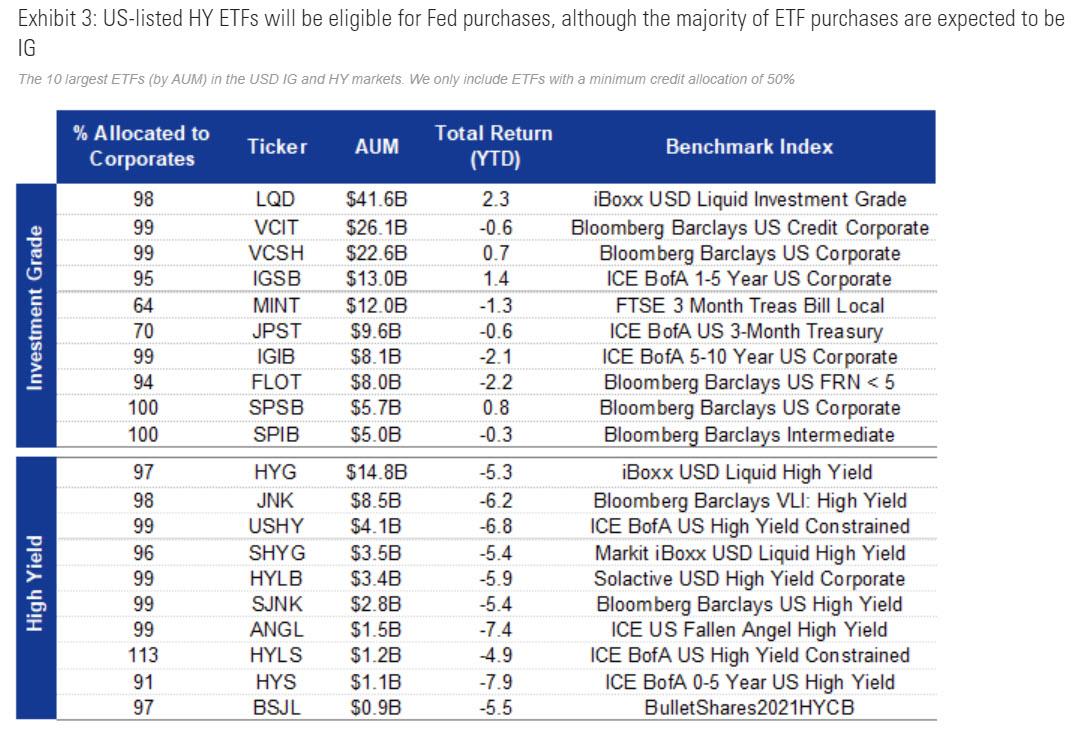
New York Fed Responds To Gundlach, Reveals It Will Start Buying ETFs In “Early May”
Responding indirectly to Jeff Gunlach’s late Friday tweet, in which the bond king observed something we had noted previously, namely that “the Fed has not actually bought any Corporate Bonds via the shell company set up to circumvent the restrictions of the Federal Reserve Act of 1913” adding that this “must be the most effective jawboning success in Fed history if that is true”…
I am told the Fed has not actually bought any Corporate Bonds via the shell company set up to circumvent the restrictions of the Federal Reserve Act of 1913. Must be the most effective jawboning success in Fed history if that is true.
… as part of its emergency lending programs in “early May.”
The SMCCF is expected to begin purchasing eligible ETFs in early May. The PMCCF is expected to become operational and the SMCCF is expected to begin purchasing eligible corporate bonds soon thereafter. Additional details on timing will be made available as those dates approach.
In addition to Gundlach, the NY Fed was likely also addressing BofA’s Friday lament, which published a “A Note To Fed” which was meant to precipitate the Fed’s decision to get off the fence and to start waving it in as “a lot of investors (including non-credit ones) have bought IG corporate bonds the past two months on the expectation they can sell to you. So would be helpful if you soon began buying broadly and in size.”
The problem, if the Fed does not start “buying broadly and in size” is that the bond market may soon suffer from a very painful indigestion of the record IG bond issuance that has taken place in the past two months, first profiled here.
And so the Fed responded, adding that the Fed’s “secondary market corporate credit facility” and “primary market corporate credit facility” will then begin lending via purchases of corporate bonds soon thereafter.
“Additional details on timing will be made available as those dates approach,” the Fed said, which is odd since “early May” is – well – now, so it wasn’t clear just how much longer the Fed plans on waiting.
And with that any risk of a selloff following Gundlach’s announcement that so far “the Fed had been all hat and no cattle”, i.e., only jawboning, has been alleviated as bond investors can now look forward to the Fed buying their trash from them instead of having to just flip it among each other. As for what “early May” means, we will just have to wait and see.