Get Ready For Slaughterhouse Robots To Ease America’s Meat Processing Crisis 

Get Ready For Slaughterhouse Robots To Ease America’s Meat Processing Crisis 

America’s meat processing crisis, mainly triggered by labor shortages and plant closings due to coronavirus spread, is set to unleash a new wave of automation across plants to ease labor and health woes.  

Bloomberg Law reports JBS SA, the world’s largest meat producer, is preparing to install robots in slaughterhouses to mitigate the spread of COVID-19 among human employees working on the production line. 

JBS SA CFO Guilherme Cavalcanti recently said the Brazilian processing company expects to expand automation at its facilities across the world.  

Cavalcanti said the adoption of automation started before the pandemic as labor tightened at US plants due to a decline in immigration sparked by the Trump administration. He said labor shortages have developed in the US as the virus infects workers and shutters plants. 

Watch this video of meatpacking robots already in a JBS SA plant:

The fast-spreading virus has so far infected 4,900 workers (across the entire industry) and left 20 dead at 115 meatpacking plants across 19 states, according to CDC data from April 9-27.

In a JBS SA webinar on how it has handled its pandemic response, Cavalcanti said automation is more important than ever considering labor and health issues. 

JBS SA has closed two US meatpacking plants due to the virus outbreak. There have been at least 22 plant closings in the US. We’ve noted, the closures have resulted in a 25% reduction in pork-processing capacity and beef by 10%. This has crushed farmers with overcapacity as they have limited options in selling livestock, resulting in mass cullings and plunging livestock spot prices. As for the consumer, soaring food inflation and shortages have been the result of plants reducing output or closing. 

And at Zero Hedge, we have not been shy at telling you how things might pan out when it comes to a nation that is becoming automated, which means millions of jobs will be eliminated entirely by 2030. And, for some more uncomfortable truths, corporate America will speed up their adoption of automation and artificial intelligence, because robots can’t be infected by coronavirus.  


Tyler Durden

Sat, 05/02/2020 – 22:35

via ZeroHedge News https://ift.tt/2Ytzm8M Tyler Durden

“Go Buy Guns First” – John McAfee Warns Governments “Are Deceiving You” About Virus

“Go Buy Guns First” – John McAfee Warns Governments “Are Deceiving You” About Virus

Authored by Amy Castor via DeCrypt.co,

The government is deceiving you. The pandemic is a ploy spread by the fake-news media, and if you care about your lives, go out and buy guns now. 

That was the message of John McAfee. Between evil laughs and dark chucklings, the tech guru, tax fugitive, and general wild man shared his suspect views on the “state of the world” during COVID-19 last night at Virtual Blockchain Week.

“We are living in a paradigm the world has never seen before,” the 74-year-old crypto advocate and antivirus-software pioneer said, speaking from God knows where.

(He’s kept his whereabouts a secret since fleeing Belize in 2012 after suspicions grew that he killed his neighbor.)

“One-third of the planet is in lockdown,” he said, adding that most of those people are sitting at home, watching TV, and not doing much of anything, while the US government “pulls money out of thin air.” The situation is not sustainable, he argued.

He was especially disturbed by a recent $2 trillion stimulus package in the US, which appears to be backed by nothing other than the good graces of the US government.

“You can’t pull money out of the air and expect everything to be okay. Money is based on something called industry, production, service. We haven’t increased any of that,” he said, with a deep, unsettling chuckle. He predicted the money-printing will lead to a collapse of the US dollar. 

It’s too late for crypto

Bitcoin and blockchain were meant to “save us from financial slavery, and from the overburdened government that creates the fiat currency that we are forced to use,” McAfee said.

But he doesn’t think crypto will save us this time. 

“We are not going to jump into crypto,” he said, because it’s not easy enough to use.

“It is not like opening a bank account. You have to spend days understanding what it is and how it works.” 

But as far as the markets go, he predicts that the price of Bitcoin will spike ahead of the halving event on May 12. He recalled that in 2016, the last halving event, there was a huge rise in the price of Bitcoin, and then a huge drop. And he believes history will repeat because the same people populate the cryptosphere, and they’re just as greedy as they were four years ago. 

More people die of diarrhea

As far as the threat of COVID19, McAfee thinks the number of deaths are skewed because they are presented out of context. It is certainly not worth shutting down entire economies, he believes.  

Repeatedly, he said more people die of diarrhea and of the flu. But both comparisons, common attempts to downplay the severity of the virus, have been widely dismissed as reckless by leading epidemiologists. 

But the way McAfee, who is known for his drug use and paranoia, sees it—just before opening his talk, he jokingly commented he was getting ready to shoot up with heroin—we are being lied to by the government and stirred up by the media.

“If you use your head and common sense, you can see you are being deceived,” he said.

Due to the global shut down and the money printing, he believes dark times ahead for our species.

The solution? 

“Go buy guns, and guns first,” he said.

“Because if you just have the food and you don’t have the guns, your neighbors are going to take it because your neighbors have the guns.”

And then McAfee, who appears to enjoy it when people think he is on edge, pulled out an AK-47 assault rifle and began praising its sturdiness.

“This sucker will always fire,” he said. 


Tyler Durden

Sat, 05/02/2020 – 22:10

via ZeroHedge News https://ift.tt/2VX4hsl Tyler Durden

“The US Doesn’t Own The UN” – Furious Beijing Blasts UN Mission’s Taiwan Tweets As “Political Manipulation”

“The US Doesn’t Own The UN” – Furious Beijing Blasts UN Mission’s Taiwan Tweets As “Political Manipulation”

President Trump is going all-in on antagonizing China as a crux of his 2020 campaign strategy (since clearly a large segment of his base, and many undecided voters, blame China for unleashing the virus on the world whether it came from a lab or not). And in keeping with the stepped-up antagonisms – since President Trump’s agreement to “cooperate” with President Xi to fight the virus is 100% meaningless – the US late Friday tweeted its support for Taiwan’s participation in the UN.

Kelly Craft

The tweet, sent by the US Mission to the UN, said the 193-member organization should allow space for “all voices” and welcome “a diversity of views and perspectives” to promote human rights. “Barring #Taiwan from setting foot on UN grounds is an affront not just to the proud Taïwanese people, but to UN principles,” it continued. It was retweeted by US Ambassador Kelly Craft, who succeeded Nikki Haley as US ambassador to the UN.

Sympathy for Taiwan has been running high since the country masterfully handled the coronavirus outbreak. Another boost came when eporters exposed the WHO’s bias toward Taiwan and refusal to even acknowledge the de facto independent state (legally viewed in China as an errant province).

Never one to mince words, President Xi has threatened retaliatory violence against any nation state that dares assist Taiwan on the road to sovereignty, a role that the US under President Trump has consistently flirted with. Trump’s overall hawkishness toward China – a huge component of his political appeal – is why there’s little doubt that China is actively trying to hurt Trump’s election chances (we suspect their intelligence indicates Joe Biden’s level of cognitive decline is more serious than most Americans realize).

Unsurprisingly, China’s Mission to the UN – a body where China enjoys tremendous clout as a permanent voting member of the UN Security Council – responded that the US Mission was way out of line and should probably calm the fuck down before these twitter fingers turn to trigger fingers.

The spokesperson for China’s U.N. Mission called the U.S. Mission tweet “a serious violation” of the General Assembly resolution that gave China the U.N. seat, three U.S.-China joint communiques and China’s sovereignty and territorial integrity.

“It gravely interferes with China’s internal affairs and deeply hurts the feelings of the 1.4 billion Chinese people,” said the spokesperon, who was not named. “There is only one China in the world. The government of the People’s Republic China is the sole legal government representing the whole of China, and Taiwan is an inalienable part of China.”

China’s mission accused the United States of ”hypocrisy” for citing the U.N.’s welcome of diverse views while repeatedly using its power to issue visas to block or delay U.N. member states and civil society organizations from attending activities at the United Nations.

China strongly urged the United States to abide by the one-China principle, the three joint communiques between the two countries and the General Assembly resolution “and immediately stop backing the Taiwan region, politicizing, and undermining international response to the pandemic.”

“While the coronavirus is raging across the world, people of all countries are calling for international solidarity in fighting the pandemic,” the Chinese spokesperson said. “Political manipulation by the United States on an issue concerning China’s core interests will poison the atmosphere for cooperation of member states at a time when unity and solidarity is needed the most.”

And the icing on the cake: Global Times editor Hu Xijin whining that the US “doesn’t own” the UN.

Now get ready to do this all again tomorrow when the Pentagon sends a US carrier strike force through the Strait of Taiwan (we’re joking of course…but on a more serious note…it wouldn’t be so far-fetched).


Tyler Durden

Sat, 05/02/2020 – 21:45

via ZeroHedge News https://ift.tt/2VVLPQI Tyler Durden

Brace For A Monday Massacre: Buffett Liquidates All Airline Holdings As Berkshire Sees Another Leg Lower

Brace For A Monday Massacre: Buffett Liquidates All Airline Holdings As Berkshire Sees Another Leg Lower

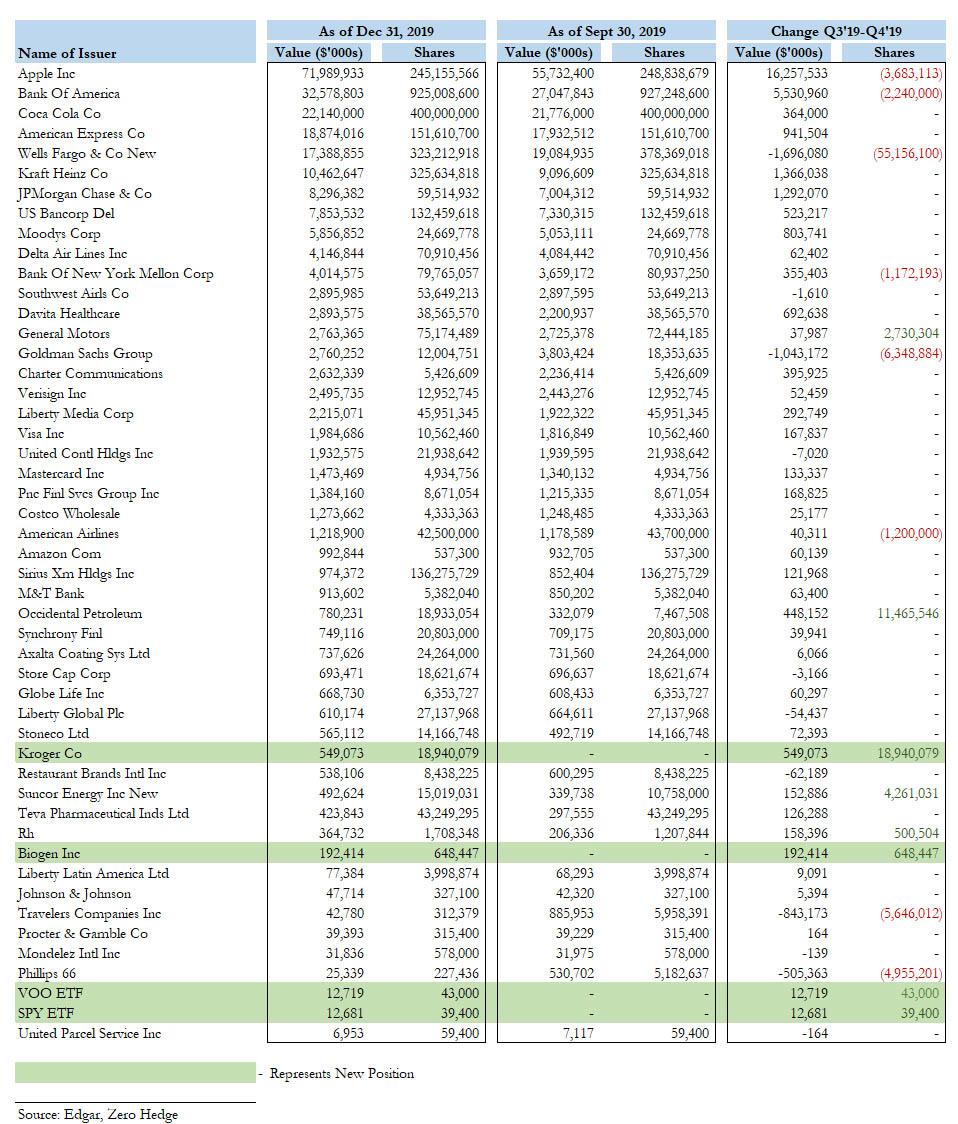
Warren Buffett, who turns 90 in 4 months, had an unpleasant surprise for the permabullish Berkshire faithful during their annual pilgrimage to Omaha live-stream of Berkshire’s annual meeting: one month after Berkshire surprised investors by selling parts of its Delta and Southwest Airlines stakes – both of which had previously been above a 10% ownership level and speculation was rife that Berkshire could purchase an airline outright in the near future – the Oracle of Omaha said that, 4 years after Berkshire took major stakes in the four largest US airlines, he had liquidated the sold the entirety of its equity position in the U.S. airline industry which included $6.5 billion worth of stock in United, American, Southwest and Delta Airlines.

Assuring that Monday will be a bloodbath for Trannies (that would be the transportation stocks you perverts), Buffett justified his decision as follows: “The world has changed for the airlines. And I don’t know how it’s changed and I hope it corrects itself in a reasonably prompt way,” he said. “I don’t know if Americans have now changed their habits or will change their habits because of the extended period.”

But “I think there are certain industries, and unfortunately, I think that the airline industry, among others, that are really hurt by a forced shutdown by events that are far beyond our control.”

“When we bought [airlines], we were getting an attractive amount for our money when investing across the airlines,” he said. “It turned out I was wrong about that business because of something that was not in any way the fault of four excellent CEOs. Believe me. No joy of being a CEO of an airline.”

““I don’t know that 3-4 years from now people will fly as many passenger miles as they did last year …. you’ve got too many planes.”

Realizing that he won’t be alive by the time a turnaround eventually happens, he clarified that he made the decision and that he lost money on his investments. “That was my mistake.”

Asked by CNBC’s Becky Quick to clarify if Berkshire had sold all of its airline holdings, Buffett answered “yes” and explained: “When we sell something, very often it’s going to be our entire stake: We don’t trim positions. That’s just not the way we approach it any more than if we buy 100% of a business. We’re going to sell it down to 90% or 80%.”

“The airline business — and I may be wrong and I hope I’m wrong — but I think it’s changed in a very major way,” Buffett said. “The future is much less clear to me.”

As Bloomberg reminds us, Buffett has had a complicated relationship with the airline industry over the years. After a troublesome investment in USAir, Buffett joked that he would call an 800 number to declare he was an “air-o-holic” if he ever got the urge to invest in airlines again. Then in 2016, Berkshire dove into the industry again, amassing stakes in the four largest airlines. His renewed faith in the industry prompted speculation that he might one day own one of the carriers.

There is a more simplistic explanation of Buffett’s style of investing at least in recent years: he will buy the stock of companies that engage in massive buybacks, such as Apple, even though his annual letter bashes companies that buybacks stocks, and he will dump all companies that halt buybacks, of which IBM is the most famous example. And since the quasi-bailed out airlines won’t be repurchasing stock for years and years to come, it was only a matter of time before Buffett dumped them.

It also means that Buffett may soon liquidate many more sector holdings, starting with the banks which have also suspended buybacks for the near future and may be forced to extend said suspension indefinitely unless there is a V-shaped recovery in the global economy. The banks will then be followed by consumer discretionary, railroads, and many more. In fact, it would explain why unlike 2008, Buffett has not only not been buying any stocks despite major “bargains” but has actually been aggressive in liquidating his holdings, hardly an endorsement of the broader market.

Amusingly, after wasting much digital ink bashing buybacks in his annual letters, Buffett went off on a rant defending buybacks during the annual videocast: “It’s very politically correct to be against buybacks now,” he said. “There’s a lot of crazy things being said about buybacks. Buybacks are so simple. It’s a way of distributing cash to shareholders,” especially when that shareholders is Warren Buffett. The “oracle” then noted that share repurchase programs should be executed in a price and need-sensitive manner, but “when the conditions are right, it should also be obvious to repurchase shares and there shouldn’t be the slightest taint to it anymore than there is to dividends.” Yes, well, good luck with all that Warren because for the next 2 years, you can kiss buybacks goodbye from all companies except perhaps the FAAMGs.

For those curious what Buffett will sell next, here is a full summary of Berkshire’s most recent equity holdings:

“If we like a business, we’re going to buy as much of it as we can and keep it as long as we can,” he added. “And when we change our mind we don’t take half measures.”

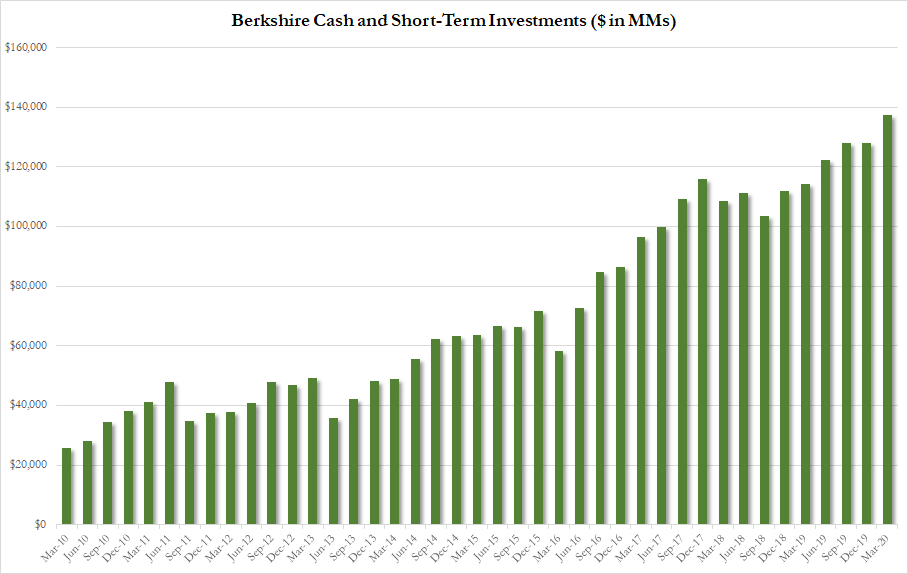
His comments Saturday afternoon came after Berkshire reported a $50 billion Q1 loss and only nibbled at equities during the violent stock market rout in March, mostly on his investment portfolio, even as the conglomerate’s cash stockpile rose to a record $137BN (more net cash than AAPL has) and up $10 billion from the $127 billion it reported at the end of 2019.

As we reported earlier, the company spent just $1.8 billion buying stocks and just $1.7 billion repurchasing Berkshire Hathaway shares during the first quarter of 2020, suggesting not only that Buffett could not find any of his hallmark bargain, value opportunities in the market sell-off, which took the S&P 500 down more than 30%, but that Buffett sees the current market rebound as nothing more than a dead cat bounce as he prepares to snap up the real bargains after the next crash.

Explaining why he didn’t repurchase more Berkshire Hathaway shares during the sell-off in the first quarter, Buffett said “the price has not been at a level where it really feels way better to us than other things, including the option value of money, to step up in a big way.” Which is a long way of saying it remains too expensive.

Worse, explaining why he still hasn’t made a major acquisition despite the recent 35% drop in the market, the billionaire investor said “we have not done anything because we haven’t seen anything that attractive,” adding that “we are not doing anything big obviously. We are willing to do something very big. I mean you could come to me on Monday morning with something that involved $30, or $40 billion or $50 billion. And if we really like what we are seeing, we would do it.”

The fact that he hasn’t done it yet means one thing: Buffett, or rather the banks that advise the soon-to-be-90 year old investor are convinced that a next leg lower in stocks is coming, and he should conserve his ‘dry powder’ for when it comes.

And what may be scariest for the bulls, is that in justifying his lack of buying, Buffett practically blamed the Fed, saying that “the Fed acted too quickly and too strongly for Berkshire to may any big deals right now.”

Translation: according to none other than the most admired investor in the world, the Fed’s unprecedented bailout of capital markets has not only disconnected prices from fundamentals but has led to a market so overvalued that there are still no bargains despite the recent crash (and subsequent dead cat bounce).

And now we prepare for the Monday bloodbath in the trannies, and perhaps across the entire market, as investors – notorious for being unable to think for themselves and always blindly following the actions of a 90-year-old man – furiously imitate what Berkshire has already done. And, if the bulls are unlucky, the selling could be the catalyst for the next major market drop… which would of course be delightfully ironic if Buffett’s own actions catalyze the crash that he hopes to benefit from and finally put his record cash hoard to use.


Tyler Durden

Sat, 05/02/2020 – 21:25

via ZeroHedge News https://ift.tt/2yl5y3n Tyler Durden

“Remdesivir Is Probably Worthless” – A Trauma Surgeon Exposes “Drug Company’s Shenanigans”

“Remdesivir Is Probably Worthless” – A Trauma Surgeon Exposes “Drug Company’s Shenanigans”

Markets got very excited (briefly) this week about a study finding a Gilead Sciences drug helped coronavirus patients heal a little more quickly.

But that was all the trial found: remdesivir isn’t the miracle cure that will get us all out of lockdowns tomorrow, unfortunately.

Worse, as Bloomberg’s Faye Flam writes, the trial was rushed to get quick FDA approval, without getting helpful information on what kinds of patients it helps or hurts the most; and now that the study is over, we’ve forever lost a chance to help doctors treat virus patients better.

All of which raises a significant number of questions and Acute Care Surgeon (and Asst Professor of Surgery at Wash U.) Mark Hoofnagle warns “I am truly sorry to say, Remdesivir is probably worthless…”

In an excellent Twitter thread, Hoofnagle details what he calls “some fascinating drug company shenanigans.”

First, the pre-test probability that an infused, small-molecule inhibitor of a virus would improve mortality in symptomatic patients was already pretty low. Unfortunately, antivirals work poorly in acute disease. This has to do with their mechanism of action, and host response. 

Antivirals usually target some aspect of viral replication/assembly/transmission. Remdesivir is a clever pharmacologic prodrug that inhibits a key piece of RNA viruses that mammals don’t have – the RNA-dependent RNA polymerase, and inhibits viral replication. 

Unfortunately, by the time you are symptomatic with a virus, you are usually already high/peak viral load. So, when you give an antiviral to someone who is already ill, the damage from the virus is largely done.

It’s there in big numbers and in the cells. 

Consistent with this, the Lancet paper on the remdesivir trial in China shows no impact on viral load clinically.

Pick your metaphor. The cat is out of the bag. The damage is done. At this point the host response to virus is activated, and your body is suppressing replication through a variety of mechanisms (which also make you feel terrible). 

So how could inhibiting RDRP after the fact help? The answer is, it probably doesnt. It certainly didn’t in this trial – no difference, not even a trend in mortality, but in subgroup analysis maybe shortened disease duration in early/mild disease.

Now, critics of stupid drugs that should never have been stockpiled by govts say, “sounds like Tamiflu!”

Yes. This is the same as Tamiflu, which also maybe shortens flu by a day, but otherwise is a largely useless antiviral (and actually harmful with bad side effect profile). 

Fortunately, side effects of remdesivir did not seem severe in this trial with only about 3x as many patients stopping than placebo, some rashes, nothing life threatening.

Where do the Shenanigans come in?

Well, remember how maybe this Chinese trial showed a shortened course in a subset of patients? Like tamiflu? But didn’t change mortality?

Well a month ago the NIAID trial changed their endpoints to remove death and instead look at dz duration.

No really.

They changed the destination half way through the race to match the only positive outcome of another trial, that they (or Gilead at least) certainly had a copy of the paper once it was submitted to Lancet.

Shenanigans! Get a broom!

This is like declaring a race and then when you realize you’re not going to win, declaring the destination was actually wherever you are standing at the moment. 

Then, even more fishy, *the same day* as this Lancet trial is release, Gilead and NIAID claim a “positive trial” and they’ve “shortened the course of the disease significantly”. Notably, the mortality benefit did not reach significance.

By the end of the day, reports that FDA is going to emergently approve remdesivir for treatment of COVID.

Gilead gets what they want. No one will want to be in a control arm in further trials and they will argue all future trials must be non-inferiority. 

Before we have the answer whether this drug actually changes anyone’s destiny, it’s going to become the gold standard therapy. We will likely now never know if (the unlikely possibility) it changes mortality. 

Absolute genius. You have to salute them. On the day a negative trial of their drug is reported, based on a press release they took over the news cycle, and with some midstream edits to their endpoints their now “positive” trial wins them FDA approval and a halted trial. 

It’s an infusion, once symptomatic, you need an admission, a test, etc., really even symptoms are probably too late a goal for such a therapy to work. Prophylaxis (like Gilead’s Truvada/PreP) would be better – but unworkable in its current form. 

Either way, a big win for Gilead, but I’m unimpressed with any if the evidence presented so far that this is a game changer.

*  *  *

How long before Hoofnagle is banned from Twitter?

Hoofnagle is not alone in his skepticism.

Naked Capitalism’s Yves Smith exclaimsit is disturbing to watch the push to con the public into seeing remdesivir as the only promising treatment for coronavirus, and points to a new study that found and tested 47 old drugs that might treat the coronavirus: Results show promising leads and a whole new way to fight COVID-19


Tyler Durden

Sat, 05/02/2020 – 20:55

via ZeroHedge News https://ift.tt/3dg9YHL Tyler Durden

6 Reasons Why This Is (Or Isn’t) The Worst Economy Since The Great Depression

6 Reasons Why This Is (Or Isn’t) The Worst Economy Since The Great Depression

Authored by Daniel Nevins via Nevins Research,

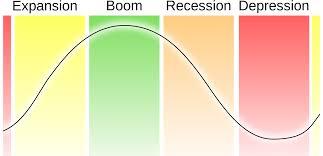
When the NBER’s Business Cycle Dating Committee draws the boundaries on the current recession, it’s unlikely to stand out as an especially long one. In fact, by the time the committee publishes the official start date, it could be past its end date.

Why?

Because it’s front-loaded. Spending has dropped so sharply in such a large portion of the economy that many types of activity have nowhere to go but up. And once activity starts increasing, even from nothing, that’s expansion, not recession.

But the eventual business-cycle dates tell us little about our current situation. We could hit bottom in 2020 but then expand so weakly that we don’t restore vitality for several years. So let’s consider how the economy might unfold over a fixed horizon—say, three years from 2020 to 2022—rather than fixating on business-cycle dates.

First, I’ll look at the reasons why our situation is really, really bad, and then I’ll consider why it might not be that bad, after all. I’ll benchmark my calculations against the post–World War II period, but especially against the economic destruction from 2008 to 2010.

Why this is the worst economy since the Great Depression

I have six reasons.

Reason #1: This is a “double-recession.”

Consider that our last ten recessions were shaped mostly by four categories of spending: business equipment, commercial real estate, home building and consumer durables. If you isolate only the ups and downs of those four categories (but throw in changes in inventories to account for milder, inventory recessions), your partial business-cycle history would be almost indistinguishable from the actual history.

Moreover, those four categories typically amount to less than a quarter of the economy. In 2019, they composed 19.5% of GDP, as shown below:

  • Business equipment:  5.8%

  • Commercial real estate:  2.9%

  • Home building:  3.7%

  • Consumer durables:  7.1%

So a 19.5% chunk of the economy explains the first part of the double-recession, and we know it’s currently recessionary because the usual precursors are back—collapsing business profits, tightening loan standards, widespread job losses and rising delinquencies. With the usual precursors in place, we can expect a sharp contraction in all four categories noted above.

But the second part of the double-recession is separate. Consider the 2019 GDP weights for the additional spending categories below, totaling 11.3%:

  • Transportation services:  2.2%

  • Recreation services:  2.7%

  • Food services and accommodations:  4.8%

  • Gasoline and other energy goods:  1.6%

Now we’ve reached the piece that’s completely new—it has no precedent in past business cycles. Each of the four categories shown above has contracted far more than ever before. In each case, activity is only a fraction of what it was just three months ago—probably less than half, and maybe even less than a quarter. Considering the severity of the contraction, together with the GDP weights, the destruction in these items alone is enough to establish a recession, even without the usual fixed investment and consumer durables categories discussed earlier.

So that’s what I mean by a double-recession. The first part includes the fixed investment and consumer durables categories (totaling 19.5% of GDP). The second part includes the additional categories (totaling 11.3% of GDP) that imploded during the last two months, even as they’re normally only bit players in the business cycle.

Reason #2: Pandemic-related business costs could last for years.

Businesses will have to manage through some combination of the following:

  • Migration to more secure but higher cost suppliers (in response to supply chain fragilities exposed by the pandemic)

  • Measures to facilitate social distancing, including larger business premises in some cases

  • More frequent and thorough cleaning of business premises

  • Personal protection equipment for employees and, in some cases, customers

  • COVID-19 testing costs

  • Potentially greater contributions to employee health insurance (when insurance companies build COVID-19 into their cost structures, premiums can only go up)

  • Potentially greater absenteeism (employees being told to stay home with even mild illnesses, employees relying on public transportation facing greater challenges getting to work safely)

  • Potential work stoppages when employees test positive

  • Potential hazard pay

We can only guess how widespread and persistent these costs will be. But across the whole economy, they’ll surely add to a significant, positive number. They’re bad news for business profits, inflation and probably both (more on inflation in a moment).

Reason #3: The Fed only had two bullets in the interest-rate chamber (the two March rate cuts).

After cutting the fed funds rate in March from 1.6% to just above zero, the Fed can’t reduce it further without entering the Twilight Zone of negative rates. (Sure, other countries have tried negative rates, but it’s still the Twilight Zone.) By comparison, here are the fed funds rate changes during the last five recessions, from business-cycle peak to business-cycle trough: –4.8%, –9.8%, –2.0%, –3.2% and –4.1%. So this year’s change of –1.5% is only a fraction of the interest rate stimulus we normally see in recessions.

Reason #4: Bankruptcies could be more severe than in any other post-WW2 recession.

I wrote “could be” because we don’t know for sure, but record bankruptcies seem consistent with three things we do know.

  • First, business shutdowns within the 11.3% of GDP noted above (the second part of the double-recession) will surely result in record destruction in that particular portion of the economy.

  • Second, activity has already contracted more sharply than at any time since the 1933 national bank holiday, and in that instance, widespread business stoppages only lasted a week.

  • Third, nonfinancial businesses are loaded up with record amounts of debt. As of Q4 2019 and relative to GDP, nonfinancial businesses were more indebted than ever before on a gross basis (74% of GDP), and they also carried more debt than in any prior expansion after netting out interest-earning assets and cash (55% of GDP). In short, nonfinancial businesses could hardly have entered this crisis with a riskier aggregate balance sheet.

Reason #5: Meet the zombies—next generation.

Stimulus programs are helping forestall economic destruction, but they’re also propping up companies that wouldn’t be viable without cheap financing backed by the Federal Reserve and Treasury Department. Some of those companies will still go bust, despite public support. Others will become zombies, dependent on loans that can only be paid back by obtaining more loans. To those who pointed to the zombie companies of the last decade as one reason for a less-than-vibrant global expansion, you haven’t seen anything yet.

Reason #6: Inflation risks are unusually high for a recession.

As noted above, the pandemic has lifted business costs by adding procedures and complexities that didn’t exist before. Rising business costs damage profitability, at first, but should eventually have some effect on inflation. And that’s not all. Inflation is normally a policy choice (either intentional or inadvertent), and policy makers are more inclined to risk it than at any time in the last four decades. Notably, current policies include direct injections of Fed-financed spending power into the Main Street economy. Moreover, those injections appear to be augmenting rather than just supplanting spending power supplied by commercial banks. (I’ve shown several times that past QE programs merely substituted Fed financing for commercial bank financing, without having a significant effect on the total.)

Note that I’m not using the flawed logic of monetarist economists who predicted rising inflation during the Fed’s earlier QE programs, nor did I join those predictions (just the opposite, as shown here, for example). Also, the inflation outlook is hardly one-directional, since certain items, such as housing costs, are now less likely to inflate than they are to deflate or remain stable.

But the factors discussed above should threaten the benign inflation of recent decades. After remaining below 3% for the last 24 years, an increase in core inflation to just 4% would be a major event. And if we get there, fiscal and monetary policies would become more challenging, to say the least. After many years of disinflation, policy makers would again be forced to choose between snuffing out inflation and sustaining growth.

Why this isn’t the worst economy since the Great Depression

I have six reasons, once again, the first three of which compare 2020 to 2008.

Reason #1: The big-4 “home” risks—home prices, home mortgage debt, home building and home equity extraction—are relatively nonthreatening.

The mid-2000s housing bubble brought unsustainable prices alongside unsustainable growth in mortgage debt, home building and home equity extraction. Just before the pandemic, by comparison, house prices and housing activity appeared sustainable. Here’s a rundown of 2019 data versus “peak” housing boom data:

  • Home prices:  Grew 3% in 2019 versus –19% in 2008 (after peaking in mid-2006)

  • Home mortgage debt:  49% of GDP in 2019 versus 72% in 2007

  • Home building:  3.7% of GDP in 2019 versus 6.6% in 2005

  • Home equity extraction:  1% of DPI in 2019 versus 8% in early 2006 (according to Bill McBride’s calculations)

We can link each of the items above to a significant drop in household spending power or housing activity in the 2008-9 recession and the years that followed, whereas the data show much lower risks today. Clearly, the big-4 home risks are unlikely to wreak as much destruction in the current recession as the destruction caused by the housing bubble.

Reason #2: Sterilization? What’s that?

In 2008, the FOMC fretted for months before dropping long-established central banking orthodoxies. But such lengthy deliberations have long since gone out of style. The committee now crams money without hesitation into every financial-sector crevice that appears to be leaking. The new policy “normal” invites both moral hazard and zombification of wide swathes of the economy, as noted above. But the immediate upside is significant—the Fed’s interventions short-circuited the financial crisis that appeared to be unfolding in March.

Reason #3: Banks have more capital than they did in 2008.

We’ve all heard the story about the better capitalized banking system, and it’s true. But higher capital ratios won’t stop banks from slowing or even shuttering their lending operations. (They’ve already done that.) So the capital cushion is larger, and that’s nice to have, but it won’t save the economy. The main benefit is that measures to bail out the banks won’t need to be as large as they would otherwise be.

Reason #4: Some areas of the economy are seeing stellar demand.

I noted above that spending has evaporated like never before in portions of the economy that total 11.3% of GDP. Now consider three other types of spending:

  • Food and beverages purchased for off-premises consumption (4.8% of GDP)

  • Other consumer nondurables (5.6% of GDP)

  • Health care (11.5% of GDP)

Solid spending in these areas, which total 22% of GDP, doesn’t negate the destruction in the transportation, recreation, restaurant, hotel and energy sectors. But it’s important to recognize that some of the spending lost through health fears and business shutdowns is being redirected, not extinguished. It’s flowing strongly into other parts of the economy. And the jobs market demonstrates that point—many recently jobless workers are finding new positions at Amazon, Instacart, CVS or one of a smattering of other companies whose outlook has brightened. So the double-recession I noted above might net out to more like a recession-and-a-half.

Reason #5: Furloughs, not layoffs.

Of the newly jobless workers who don’t find jobs elsewhere, many remain on their employers’ payrolls, retaining certain benefits but not working or receiving wages. One survey shows that 78% of employees who lost their wages due to the coronavirus expect to return to their former jobs. That might prove more hopeful than realistic, but it’s a less bearish recession story than the more typical story of companies slashing labor unconditionally.

Reason #6: Helicopter money!

Now for the elephant in the room. Fiscal policy makers are intent on providing “what it takes” to overcome the crisis. For that, they’re tapping into the Fed’s unlimited capacity to finance government spending with newly created money. They’re tapping it like never before. To highlight just two data points:

  • Roughly half of unemployment claimants will have more income than they had while working (through July, at least), thanks to an extra $600 weekly of CARES Act benefits on top of their normal state benefits.

  • Millions of working Americans will also make more than they would have without COVID-19, thanks to CARES Act stimulus payments.

It shouldn’t be surprising that the survey linked above shows people feeling better about their finances than they did a month ago, despite weekly unemployment claims averaging over five million between the two survey dates.

So helicopter money gives us yet another surreal and unprecedented development to ponder. In the short-term, it’s certain to blunt the pandemic’s economic impact. In the long-term, we’ll face consequences, but I won’t delve into that in this article. I’ll only suggest tuning out pundits who claim that “advanced” nations with their own currencies can drop helicopter money without repercussions. In fact, the advanced nations of today reached their advanced status long ago after enduring tumultuous periods of fiscal profligacy, learning from those experiences, and then maintaining relatively sound finances thereafter. And if they didn’t learn from experience? Well, that’s one of the biggest reasons that many countries fail to advance.

(My book supports that argument with an examination of every recorded instance of governments accumulating a higher debt-to-GDP ratio than America’s debt-to-GDP as of 2018. For anyone interested in the general idea without the historical detail, I published an excerpt here.)

Conclusions

The eventual COVID-19 wreckage pivots on many unknowns, and future policies are among them. But the biggest unanswered question—at least when it comes to the economy—is this:

For how much longer will the pandemic prevent vulnerable businesses from operating profitably (or operating at all)?

Optimistically, new COVID-19 cases will descend downward until they hit bottom in a few months, allowing businesses to restore profitability. That’s the scenario the President’s task force includes in its slideshows—it shows virtually no new cases by July. And the more political voices on the task force have reinforced that message, playing up the idea that we’ll be back to normal by this summer. If their prediction proves accurate, the economy should perform better in 2020–22 than it did in 2008–10, for these reasons:

  • With a COVID-19 resolution in the summer, the housing market would be in far better shape than it was in 2008.

  • The financial sector would recover relatively quickly—banks would still be cautious but not as cautious as they were during and after the Global Financial Crisis.

  • Many depressed businesses would bounce back at least partially and rehire furloughed employees.

  • Some businesses boosted by the pandemic would continue to thrive.

  • Exiting the recession, household spending power would be unusually strong, thanks to the recession’s short duration as well as generous government handouts.

So that’s the outcome we’re hoping to see, but it has an obvious weakness. That is, it presumes the coronavirus remains dormant after the economy restarts. A different theory says the virus revives whenever it finds an opening. Evidently, that’s a common feature. Epidemics tend to attack in waves. Until vaccines become available, the challenge in snuffing out this epidemic is that it only takes a handful of infected people going about their normal lives to reseed it.

In other words, a future resurgence of COVID-19 seems the most likely outcome. It’s the scenario many experts warn us to expect, and not just any experts but the ones who’ve been most accurate to date.

Where does that leave the economy?

The worst case combines a historically deep recession with a disappointing recovery that feels more like continued recession. If future COVID-19 waves prove as dangerous as the first wave, the recession could be an early 1980s–style double-dip. But other possibilities are less severe. For example, medical discoveries could make the virus less risky, restoring confidence in normal business activities. (Note that Dr. Fauci was citing “quite good news” on remdesivir trials as I write this.)

So the possibilities run from one extreme to the other. We need to be ready for anything, unfortunately, from a mid-2020 rebound to a prolonged crisis more severe than any since the Great Depression.


Tyler Durden

Sat, 05/02/2020 – 20:30

via ZeroHedge News https://ift.tt/3bZ2M2o Tyler Durden

US Embassy: Israeli West Bank Annexation Can Move Forward Without A Palestinian State

US Embassy: Israeli West Bank Annexation Can Move Forward Without A Palestinian State

The recently established US Embassy in Jerusalem (moved from Tel Aviv last year as part of Trump’s plan) has confirmed that the world will soon see the most controversial element of Trump’s peace plan put into effect: Israeli annexation over broad swathes of the West Bank, particularly the Jordan Valley.

“As we have made consistently clear, we are prepared to recognize Israeli actions to extend Israeli sovereignty and the application of Israeli law to areas of the West Bank that the [Trump peace plan] foresees as being part of the State of Israel,” a top US Embassy official told the Times of Israel on Friday.

Prime Minister Benjamin Netanyahu with US Ambassador to Israel David Friedman (center). Image source: US Embassy/Times of Israel.

The statement made clear that “Israeli actions” will be validated with or without recognition of a Palestinian state, something which on paper at least Trump’s ‘deal of the century’ offered. 

Though the deal offers statehood, the Palestinians have rejected the US-Israeli brokered Trump peace plan from the start, given they simply had no involvement or were not fundamentally consulted. 

Ultimately such a brazen annexation, which as we noted before PM Netanyahu said will take place as early as within two months, or likely early summer, will essentially end the path to statehood.

But maybe this was the whole point to begin with: design and orchestrate a ‘peace plan’ which ultimately preempts any real path to statehood all while charging the Palestinian side with not being on board, or as has been heard many times before: the Israelis can claim “we don’t have a partner for peace”. 

Should Israeli annexation indeed move forward by this summer, as Netanyahu envisions, it could potentially unleash protests and violence on the level of a third Intifiada. Palestinian Authority leaders as well as Hamas have vowed that such an extensive new Israeli land grab will be resisted by call costs. 


Tyler Durden

Sat, 05/02/2020 – 20:05

via ZeroHedge News https://ift.tt/3daXL7a Tyler Durden

SpaceX: Camel’s Nose Under The Tent Of Rapid Space Militarization

SpaceX: Camel’s Nose Under The Tent Of Rapid Space Militarization

Via Southfront.org,

In the last several decades, and certainly in the post-9/11 environment in which the previous restrictions on the militarization of the American society largely disappeared, the US national security establishment has expand not only by creating new programs and agencies, but also by co-opting non-state actors. Many a US think-tank is now little more than an extension of some US government agency, conducting research to validate previously arrived-at conclusions in furtherance of a specific institutional agenda. Likewise many corporations have gone beyond being mere defense or intelligence contractors. Rather, their business activities are from the outset designed to be readily weaponizable, meshing seamlessly with the armed services and intelligence agencies.

It is not entirely clear how the process works, for there does not appear to be a system of contract awards for specific deliverables. Rather, it seems these capabilities are developed on the initiative of specific businesses which speculate their efforts will be utilized by the US national security establishment ever on the lookout for technological “game-changers”. Moreover, given the unchecked growth of the US national security budget, these entrepreneurs can operate in high confidence their efforts will also be financially rewarded by the intelligence and defense establishments, even if they are not commercially viable.

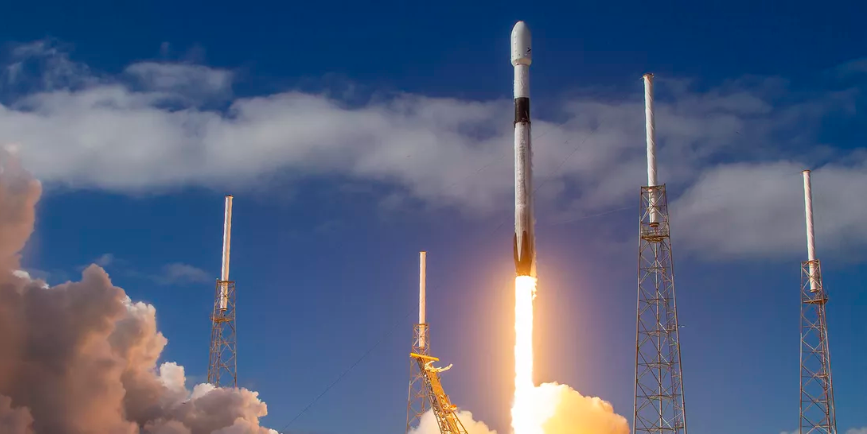
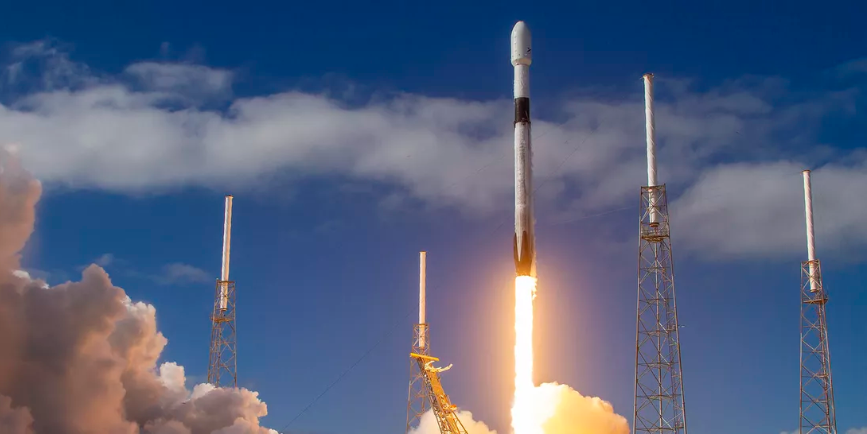
Falcon 9 launch in November 2019, which carried 60 Starlink satellites, via SpaceX.

There have been numerous examples of initially civilian applications being put to use for the benefit of US national security institutions. Facebook has made its databases available to various agencies to test facial recognition technologies, for example. Google and Amazon make their cloud capabilities available to the Pentagon and the intelligence communities. The opposition to China’s Huawei 5G networks and cell phones appears to be motivated by the concern these systems do not have backdoors installed for the benefit of US national security state.

Elon Musk’s business empire has benefited from its proximity to the US national security state. Musk, an immigrant from the Republic of South Africa, has made his initial fortune by creating PayPal. While Musk has sold his remaining interest in PayPal in 2002, that entity has since then engaged in furthering US national security agendas by blocking payments to organizations which were critical of US policies. This, however, is probably more of a reflection of the subservience of US tech firms to the US government than of Musk’s original intent.

Nevertheless, the timing of Musk’s departure from PayPal and the entry into the space business is noteworthy. Already in the late 1990s, there were rumblings in the United States about the desirability of militarizing space and building up anti-ballistic missile defenses, ostensibly against the so-called “rogue states” of North Korea and Iran. These initiatives gained considerable impetus in 2001, following the election of the Bush-Cheney administration which promptly moved to end the ABM Treaty as the first step toward the future of weaponization of space.

Space-X’s establishment in 2002, the same year the ABM Treaty collapsed due to the Bush Administration abrogation, seems entirely too convenient to be a mere coincidence, even though the stated aims of the company are mainly commercial. Still, it is easy to imagine why a firm focused on the development of low-cost, possibly reusable, space launch vehicles would be useful to the Pentagon. Creating a government program with the same objective would have attracted unnecessary attention. There would be budget appropriations battles, congressional testimony, various forms of oversight, and the inevitable domestic and international opposition to such destabilizing and provocative initiatives.

Providing Space-X with technological assistance, allowing it to hire government specialists, then giving it access to lucrative government space launch orders, is a far more attractive proposition. Moreover, the bypassing of the normal defense contracting system actually meant considerable cost savings, thanks to Musk’s red tape-cutting techniques. It’s design bureau functioned in a fashion akin to Lockheed’s famous “skunk works” which developed extremely ambitious projects such as the U-2 and SR-71 in large part thanks to being able to fly “under the radar” (no pun intended). However, since that time Lockheed ballooned into a massive “too big to fail” defense contractor which delivers costly and poorly performing aircraft.

Musk’s fantasies about colonizing Mars and selling seats on orbital space flights proved a very effective cover for the corporation’s core military applications. Moreover, Space-X’s status as a private corporation allows it to defray some of the research and development costs through genuine commercial activities. Yet one has to wonder whether SpaceX success would have been as spectacular if it weren’t for privileged access to government facilities. SpaceX has been able to piggy-back on the massive US government investment in space launch facilities. It is able to operate out of not only Cape Canaveral and the Kennedy Space Center, but even from the Vandenberg Air Force Base. The speed with which SpaceX was able to develop, test, and deploy several different new rocket engine design of the Kestrel, Merlin, Raptor, and Draco families also may be due to privileged access to technologies developed for NASA and military space programs.

Even though SpaceX was founded in 2002, it won a $100 million USAF space launch contract in 2005 and the NASA Commercial Orbital Transportation Services (COTS) contract in 2006, even though the first orbital mission of the Falcon I rocket would not take place until 2008. USAF awarded another $1 billion contract to SpaceX in early 2008, even before the first Falcon I flight. SpaceX has become the de-facto research and development branch of NASA when it comes to manned spaceflight. The 2014 NASA contract for the Crew Dragon has so far resulted in one successful docking with the International Space Station, though without a crew on board, and was followed by a successful splashdown. The larger Starship reusable heavy manned spacecraft is expected to start flying in the 2020s.

Competition from United Launch Services and even Boeing notwithstanding, there is little doubt SpaceX is to US manned spaceflight what Boeing is to heavy commercial aircraft and Lockheed-Martin to “fifth-generation” fighters. It has become the primary go-to contractor of such systems for both commercial and military US government applications, with the competitors being maintained in existence with occasional contracts largely as insurance against spectacular failure of SpaceX.

SpaceX portfolio of reusable space launch vehicles, manned spacecraft, and most recently also satellites means that the company is well positioned to serve as a one-stop shopping center for the newly created branch of the US armed forces. Given the United States’ desire to weaponize space as part of its effort to undermine strategic nuclear deterrence of rival powers, namely the Russian Federation and the People’s Republic of China, there is every reason to expect SpaceX will be a recipient of considerable financial largesse from the USSF.

Arguably the most intriguing project SpaceX is pursuing is Starlink, a proposed network of over four thousand miniature satellites whose ostensible aim is to provide broadband internet service to the entire planet. However, the interest in Starlink demonstrated by the US military suggests that, once again, this is at the very least a dual-use project. Articles discussing the military’s interest in Starlink cite the possibility of it becoming the replacement for the aging J-STARS airborne ground target acquisition radars, suggesting these satellites’ emissions can be used to track moving land objects.. If that is indeed the case, they could also serve the role of anti-ballistic missile warning satellites, and even be used to track stealth aircraft, since the constellation of satellites would function as a massive distributed multi-static radar array.

The mad pace of SpaceX has not been without mishaps. The Crew Dragon, in particular, suffered a number of embarrassing failures, and it may yet be that the corner-cutting hell-for-leather approach the corporation may yet lead to disaster when applied to the considerably more demanding problem of manned spaceflight. Other private entrepreneurs, such as Burt Rutan’s Scaled Composites and Richard Branson’s Virgin Galactic, either suffered fatal accidents that greatly delayed their respective programs or prompted their shut-down. G_7 SpaceX, however, differs from them in that its main customer is the US government that is greatly interested in having the USSF dominate the Earth’s orbit in the same way as the USN dominates the global ocean by establishing large-scale permanent presence of US military personnel in space. The US government has gambled SpaceX will deliver products necessary for such domination. Whether it can do that still remains to be seen.


Tyler Durden

Sat, 05/02/2020 – 19:40

via ZeroHedge News https://ift.tt/3faHpwV Tyler Durden

Is the Takings Clause a “self-executing” waiver of sovereign immunity?

Last week I posed a question: “can a plaintiff seek compensation for an unconstitutional taking, without relying on the Tucker Act’s jurisdiction–if not under the Takings Clause, perhaps under some theory of tort.” This post will shed some light on this question, though I still have not yet reached a firm conclusion. And the fifth post in my bump stock series will, alas, have to await further consideration (See Parts IIIIII, and IV).

As a general matter, the federal government cannot be sued for damages without its consent. Congress has waived its immunity through several statutes. For example, the Federal Torts Claims Act provides a limited waiver of sovereign immunity for certain types of torts. And the Supreme Court has also implied certain waivers of sovereign immunity. Through so-called Bivens claims, plaintiffs can seek monetary damages for violations of the Fourth and Fifth Amendment. But the Supreme Court has held that there is no waiver of sovereign immunity for suits based on other provisions of the Bill of Rights, such as the Eighth Amendment. And in recent years, the Supreme Court has put the brakes on future Bivens claims. This much is straightforward doctrine.

But what about the Takings Clause? It is the only provision of the Bill of Rights that clearly states landowners are entitled to monetary damages: “nor shall private property be taken for public use, without just compensation.” Is the Takings Clause a self-executing waiver of sovereign immunity?

In traditional eminent domain questions, the issue of sovereign immunity is irrelevant. Why? The government initiates a condemnation proceeding against a landowner. In other words, a private landowner does not need to sue the federal government. But there is another common type of takings case, known as an inverse condemnation suit. Here, the government regulates a person’s property, but insists there is no taking. Then, the landowner sues the federal government, alleges a violation of the Takings Clause, and seeks “just compensation.”

Congress has enacted two relevant statutes that purport to waive sovereign immunity for inverse condemnation suits. First, the Tucker Act gives the Court of Federal Claims jurisdiction to hear takings claims against the federal government where the property is worth more $10,000. It provides, in part:

The United States Court of Federal Claims shall have jurisdiction to render judgment upon any claim against the United States founded either upon the Constitution, or any Act of Congress or any regulation of an executive department, or upon any express or implied contract with the United States, or for liquidated or unliquidated damages in cases not sounding in tort

The Tucker Act does not expressly mention takings, but claims under the Fifth Amendment are “founded . . . upon the Constitution.” (They also “arise under the Constitution.”) The Court of Federal Claims is an Article I court: the judges serve for fifteen year terms, and there are no jury trials. Second, the Little Tucker Act gives all federal district courts jurisdiction to hear takings claims against the federal government where the property is worth less than $10,000. It provides, in part:

The district courts shall have original jurisdiction, concurrent with the United States Court of Federal Claims . . .

Any other civil action or claim against the United States, not exceeding $10,000 in amount, founded either upon the Constitution, or any Act of Congress, or any regulation of an executive department, or upon any express or implied contract with the United States, or for liquidated or unliquidated damages in cases not sounding in tort, except that the district courts shall not have jurisdiction of any civil action or claim against the United States founded upon any express or implied contract with the United States or for liquidated or unliquidated damages in cases not sounding in tort which are subject to sections 7104(b)(1) and 7107(a)(1) of title 41

These cases are heard by Article III judges, but jury trials are not permitted. Under both statutes, appeals are heard by the U.S. Court of Appeals for the Federal Circuit, an Article III court. (Fun fact: John Randolph Tucker, the namesake of the Tucker Act, was the grandson of St. George Tucker.)

Can a plaintiff seek compensation for an unconstitutional taking, without relying on the Tucker Act’s jurisdiction? I think this question has not been squarely resolved by the Supreme Court. The Supreme Court denied certiorari on a closely-related question in 2018. Brott v. U.S. presented this question: “Can the federal government take private property and deny the owner the ability to vindicate his constitutional right to be justly compensated in an Article III Court with trial by jury?”

In Brott, the Plaintiffs filed an inverse condemnation suit against the government in federal district court, but requested more than $10,000. They also requested a jury trial. The complaint cited Section 1331 federal question jurisdiction. They acknowledged the Little Tucker Act did not support their claim, because the amount in controversy was more than $10,000. Therefore, they argued that the “action is founded upon the Constitution” itself. That is, “arising under” jurisdiction through 28 U.S.C. § 1331. It provides:

The district courts shall have original jurisdiction of all civil actions arising under the Constitution, laws, or treaties of the United States.

And the Plaintiffs claimed that the Little Tucker Act itself was unconstitutional:

In the Tucker Act and Little Tucker Act, 28 U.S.C. §§1346 and 1491, Congress vested the Court of Federal Claims with exclusive jurisdiction to hear all claims against the United States “founded upon the Constitution” where the amount in controversy exceeds $10,000. To the extent Congress created the Court of Federal Claims as an Article I legislative court free of Article III’s requirements and vested the Court of Federal Claims with jurisdiction to hear claims “founded upon the Constitution” these provisions are unconstitutional.

The District Court rejected their claims, as did the Sixth Circuit. The Court found that it lacked subject matter jurisdiction over takings claims, even though takings claims “arise under the Constitution.”

28 U.S.C. § 1331 (1976), the general federal question provision, does not provide a jurisdictional basis on these facts. The Fifth Amendment “taking” claim “arises under the Constitution,” and a remedy for a violation of this provision arguably does not require a waiver of sovereign immunity. However, a number of cases indicate that Congress has made the Court of Claims the exclusive and an adequate forum for the Fifth Amendment claims, at least those over $10,000. We conclude that 28 U.S.C. § 1346(a)(2) [the Little Tucker Act] expressly limits the district court’s jurisdiction over these types of claims against the government to those not exceeding $10,000 in amount and that to utilize the court’s federal question or pendent jurisdiction as to the Fifth Amendment claim would override the express policy of Congress embodied in the Tucker Act. Lenoir v. Porters Creek Watershed Dist., 586 F.2d 1081, 1088 (6th Cir. 1978).

The Circuit Court also held that the general grant of jurisdiction in Section 1331 does not trump “the Little Tucker Act’s specific and limited grant of jurisdiction.” As best as I can tell, the Supreme Court has never addressed this question concerning Section 1331. I will address it at the end of this post.

Next, the Circuit Court found that “Congress may also decline to waive sovereign immunity, or it may withdraw or modify its consent to suit, even if the right at issue is drawn from the Constitution.” In other words, Congress needs to waive its sovereign immunity, even where the federal government “takes” private property. The Fifth Amendment, therefore, is not a self-executing waiver of sovereign immunity. The Court explained, “Sovereign immunity, however, does not distinguish between congressionally created entitlements and constitutionally created rights.”

The landowners countered that an explicit waiver is not necessary for the Takings Clause:

Nevertheless, the landowners argue that an explicit waiver is unnecessary here because the Fifth Amendment right to just compensation is a “self-executing” right and the right to compensation itself contains a waiver of sovereign immunity. The Supreme Court has indeed referred to the Fifth Amendment right to just compensation as “self-executing.” First English Evangelical Lutheran Church of Glendale v. County of Los Angeles, 482 U.S. 304, 315 (1987). The Supreme Court has explained that a Fifth Amendment takings claim is self-executing and grounded in the Constitution, such that additional “[s]tatutory recognition was not necessary.” Id. (quoting Jacobs v. United States, 290 U.S. 13, 16 (1933)); see United States v. Dickinson, 331 U.S. 745, 748 (1947).

But the Sixth Circuit rejects this argument:

However, the fact that the Fifth Amendment creates a “right to recover just compensation,” First English, 482 U.S. at 315 (quoting Jacobs, 290 U.S. at 16), does not mean that the United States has waived sovereign immunity such that the right may be enforced by suit for money damages. See Minnesota v. United States, 305 U.S. 382, 388 (1939) (“[I]t rests with Congress to determine not only whether the United States may be sued, but in what courts the suit may be brought.”).

Here is the full quote from First English:

[A] landowner is entitled to bring an action in inverse condemnation as a result of the “self–executing character of the constitutional provision with respect to compensation” ***. As noted in Justice Brennan’s dissent in San Diego Gas, it has been established at least since Jacobs [v. United States, 290 U.S. 13 (1933)] that claims for just compensation are grounded in the Constitution itself *** Jacobs *** does not stand alone, for the Court has frequently repeated the view that, in the event of a taking, the compensation remedy is required by the Constitution.

in his Webster v. Doe dissent (1988), Justice Scalia also seemed to reject the self-executing argument the landowners advanced:

The doctrine of sovereign immunity—not repealed by the Constitution, but to the contrary at least partly reaffirmed as to the States by the Eleventh Amendment— is a monument to the principle that some constitutional claims can go unheard. No one would suggest that, if Congress had not passed the Tucker Act, 28 U.S.C. § 1491(a)(1), the courts would be able to order disbursements from the Treasury to pay for property taken under lawful authority (and subsequently destroyed) without just compensation.

The Circuit Court then explained there are two requirements for a waiver of sovereign immunity:

The United States argues that a waiver of sovereign immunity typically requires two things: [1] the existence of a right and [2] provision of a judicial remedy. The Fifth Amendment details a broad right to compensation, but it does not provide a means to enforce that right. Courts must look to other sources (such as the Tucker Act and the Little Tucker Act) to determine how the right to compensation is to be enforced. . . . The Tucker Act’s waiver of sovereign immunity, therefore, is a necessary ingredient for just-compensation claims brought against the United States.

The Sixth Circuit also relied on history:

First, the landowners have cited no case in which the Fifth Amendment has been found to provide litigants with the right to sue the government for money damages in federal district court.

(I’ll address this historical argument later in the post).

The Sixth Circuit also held that “The landowners’ compensation claims are public-right claims. These are claims made by private individuals against the government in connection with the performance of a historical and constitutional function of the legislative branch, namely, the control and payment of money from the treasury.” (The public rights doctrine is very, very messy, and I will table it here).

Brott and the other landowners filed a cert petition. The petitioners argued that there is no need for a statutory waiver of sovereign immunity:

While a statutory waiver of sovereign immunity may be necessary to enforce a congressionally-created entitlement, this does not apply when the right being enforced is founded upon the Constitution itself. . . .

Because the right to just compensation arises directly from the Constitution, Congress cannot abrogate this right by statute. See Jacobs, 290 U.S. at 17 (“the right to just compensation could not be taken away by statute or be qualified by the omission of a provision for interest”) (citing Seaboard Air Line Ry. Co. v. United States, 261 U.S. 299, 306 (1923), and Phelps, 274 U.S. at 343-44).

The Solicitor General opposed certiorari. The government stated that Congress is under no obligation to give the courts jurisdiction to hear takings cases:

In 1855, Congress established the Court of Claims “to relieve the pressure created by the volume of private bills.” Mitchell, 463 U.S. at 212-213. The court’s jurisdiction did not, however, extend to constitutional claims. “Most property owners” seeking compensation for asserted takings were thus “left to petition Congress for private relief, but Congress was neither compelled to act, nor to act favorably.” 2 Wilson Cowen et al., The United States Court of Claims: A History 45 (1978) (Cowen). As a result, “many owners had suffered the misfortune of holding a legal right for which there was no enforceable legal remedy.” Ibid. That situation led this Court to observe that “[i]t is to be regretted that Congress has made no provision by any general law for ascertaining and paying th[e] just compensation” owed for takings of private property by the United States. Langford v. United States, 101 U.S. 341, 343 (1880).

I am not sure Langford is directly on point. The Court’s discussion of “just compensation” is more limited than the government suggests. Here is the full passage:

The other point is one which requires more delicate handling. We are not prepared to deny that when the government of the United States, by such formal proceedings as are necessary to bind it, takes for public use, as for an arsenal, custom-house, or fort, land to which it asserts no claim of title, but admits the ownership to be private or individual, there arises an implied obligation to pay the owner its just value. It is to be regretted that Congress has made no provision by any general law for ascertaining and paying this just compensation. And we are not called on to decide that when the *344 government, acting by the forms which are sufficient to bind it, recognizes that fact that it is taking private property for public use, the compensation may not be recovered in the Court of Claims. On this point we decide nothing.

The SG cites Langford to describe the state of the law before the Tucker Act was enacted. But Langford was decided after the Tucker Act was enacted. Indeed, the appeal arose from the Court of Claims. I don’t think this nuanced statement concerned sovereign immunity and the Takings Clause more broadly. I think this statement concerned the very precise fact pattern at issue in Langford. Here, property owners sued the federal government in the Court of Claims”to recover for the use and occupation of certain lands and buildings.” And they advanced an implied contract theory that is referenced in the text of the Tucker Act. In any event, the Court doesn’t resolve this issue. “On this point we decide nothing.”

The SG also looked to history:

It was not until 1887 that Congress enacted the Tucker Act, waiving sovereign immunity and conferring on the Court of Claims jurisdiction to hear cases “founded upon the Constitution.” Act of Mar. 3, 1887, ch. 359, 24 Stat. 505; see Mitchell, 463 U.S. at 214; Cowen 45-46. Thus, for the first century of our Nation’s history, claims seeking compensation for asserted takings by the United States were resolved by Congress— not by the courts.

The Sixth Circuit made a similar point. I’m not sure this history helps as much as the government suggests. Until 1875, there was no federal question jurisdiction. (It existed for a brief period after the Federalists enact the Judiciary Act of 1801, also known as the Midnight Judges Bill.) The only way to get into federal court was through diversity jurisdiction. The Tucker Act was enacted in 1887. And federal question jurisdiction (what became Section 1331) was created two years prior in 1875. It is unsurprising that there were no claims for takings based on federal question for the first nine decades after ratification.

I see here a parallel to Hans v. Louisiana. The Eleventh Amendment made it impossible for a citizen of one state to sue another state in federal court. The text, at least, left open the question of whether a citizen could sue his own state in federal court. But until Congress created federal question jurisdiction, it was impossible for a citizen of one state to sue his own state in federal court. The only path to federal court was diversity jurisdiction. In 1875, Congress creates the federal question statute. Fast-forward to 1890. The Supreme Court decides Hans v. Louisiana. It holds that a citizen of Louisiana cannot sue the state of Louisiana. Here, the Supreme Court finally had an opportunity to address a question that was not resolved by the text of the Eleventh Amendment. (Or was it?) Indeed, it took nearly 15 years for the Supreme Court to address this question after the federal question jurisdiction was restored.

By way of comparison, two years after federal question jurisdiction was reimposed, Congress enacts the Tucker Act, which expressly waived sovereign immunity for takings claims. It is unsurprising during this two year gap, the Supreme Court did not have occasion to decide if the Takings Clause, by itself, effects a waiver of sovereign immunity.

Perhaps the most relevant case is U.S. v. Lee (1882). In this famous case, Robert E. Lee’s son challenged the federal governments seizure of the land in Virginia that would become Arlington National Cemetery. The Solicitor General argued that Lee, as well as Larson v. Domestic & Foreign Commerce Corp, precludes Brott’s claims.

Petitioners’ “celebrated example” (Pet. 36) vividly illustrates their error. Petitioners correctly note (ibid.) that, in United States v. Lee, 106 U.S. 196 (1882), Robert E. Lee’s son brought a suit challenging the United States’ seizure of the land that became Arlington National Cemetery. But it was neither a suit seeking just compensation nor one brought against the United States. Instead, it was an “ejectment” action brought against individual federal officers under state law and seeking “to recover possession” of the land. Id. at 197- 198; see id. at 210 (“The case before us is a suit against Strong and Kaufman as individuals, to recover possession of property.”). The Court in Lee recognized that Lee’s son could not have sought compensation from the United States. Id. at 222. And this Court has since reaffirmed that, when “[t]he Lee case was decided in 1882,” “there clearly was no remedy available by which he could have obtained compensation for the taking of his land.” Larson v. Domestic & Foreign Commerce Corp., 337 U.S. 682, 697 n.17 (1949).

Here is the relevant passage from Lee. It doesn’t say exactly what the SG argued:

Another consideration is, that since the United States cannot be made a defendant to a suit concerning its property, and no judgment in any suit against an individual who has possession or control of such property can bind or conclude the government, as is decided by this court in the case of Carr v. United States, already referred to, the government is always at liberty, notwithstanding any such judgment, to avail itself of all the remedies which the law allows to every person, natural or artificial, for the vindication and assertion of its rights.

Here, I think “its” modifies “United States.” This passage does not concern a landowner suing the federal government for regulating the landowners property. The facts of Lee are tortured, but it did not begin as a suit against the federal government; it originated as a state court action in ejectment against federal officials. I need to study the posture more closely.

And here is the passage from Larson:

The Court thus assumed that if title had been in the plaintiff the taking of the property by the defendants would be a taking without just compensation and, therefore, an unconstitutional action. FN17

FN17: The Lee case was decided in 1882. At that time there clearly was no remedy available by which he could have obtained compensation for the taking of his land. Whether compensation could be obtained today in such a case is, of course, not the issue here.

Later, the government cited this passage again, in an inaccurate way:

The Court thus recognized that, before the Tucker Act, “there clearly was no remedy available” for a property owner seeking compensation for a taking. Larson, 337 U.S. at 697 n.17

Lee was not talking about the world before the Tucker Act. By 1882, the Tucker Act was created, and the Court of Claims existed. That court had jurisdiction over takings claims against the federal government. I think the Larson Court was describing the fairly intricate facts of Lee’s case, for which there was no remedy. I don’t take that footnote to be saying anything at all about the Takings Clause, in general. I welcome corrections. Lee and Larson are somewhat enigmatic decisions. But the SG’s argument is not the best reading of those cases.

The Solicitor General offered a very different reading of First English.

First English thus concluded that the Fifth Amendment is self-executing in that it creates a right to compensation for a taking. But “the fact that the Fifth Amendment creates a ‘right to recover just compensation,’ does not mean that the United States has waived sovereign immunity such that the right may be enforced by suit for money damages.” Pet. App. 13a (quoting First English, 482 U.S. at 315) (citation omitted). To recover money damages against the United States, a plaintiff must identify both a waiver of sovereign immunity and a “substantive right enforceable against the United States for money damages.” Mitchell, 463 U.S. at 216 (citations omitted); see Pet. App. 14a. The Tucker Act waives sovereign immunity, but does not create any substantive rights. Mitchell, 463 U.S. at 216. Instead, “[a] substantive right must be found in some other source of law, such as ‘the Constitution, or any Act of Congress.’ ” Ibid. (quoting 28 U.S.C. 1491).

First English makes clear that the Fifth Amendment creates a substantive “right to recover just compensation for property taken by the United States” that may be enforced under the Tucker Act without further congressional action. 482 U.S. at 315 (citation omitted) cf. Mitchell, 463 U.S. at 216 (“Not every claim invoking the Constitution * * * is cognizable under the Tucker Act.”). But First English did not involve a suit against the United States, and the Court did not discuss—much less overrule—the century’s worth of precedent establishing that the Tucker Act’s waiver of sovereign immunity is a necessary precondition to suits seeking just compensation from the United States.

In other words, the Fifth Amendment does not, by itself, get you into federal court to sue.

Let’s revisit the discussion from Maine Maine Community Health Options v. United States. that occasioned my original post. Justice Sotomayor wrote in a footnote:

By the dissent’s contrary suggestion, not only is a mandatory statutory obligation to pay meaningless, so too is a constitutional one. After all, the Constitution did not “expressly create . . . a right of action,” post, at 3, when it mandated “just compensation” for Government takings of private property for public use, Amdt. 5; see also First English Evangelical Lutheran Church of Glendale v. County of Los Angeles, 482 U. S. 304, 315–316 (1987). Although there is no express cause of action under the Takings Clause, aggrieved owners can sue through the Tucker Act under our case law. E.g., Ruckelshaus v. Monsanto Co., 467 U. S. 986, 1016– 1017 (1984) (citing United States v. Causby, 328 U. S. 256, 267 (1946)).

The emphasized sentence purports to resolve the issue that was not resolved in Lee and Larson. This sentence also conflicts with language in First English. But it does conform with Justice Scalia’s dissent in Webster. How should we treat this sentence? First, this issue was not at all relevant to Maine. It was not briefed. The plaintiffs in that case brought suit under the Tucker Act. They did not assert a claim under the Fifth Amendment. I tend to think the Supreme Court does not resolve important constitutional questions in passing, without any consideration. I am not even sure what “express cause of action” means. The Court here didn’t discuss Section 1331 federal question jurisdiction or sovereign immunity. I am loathe to ever label a sentence in a SCOTUS decision as dicta, but this is it. The Court does not quietly resolve longstanding constitutional questions, on which cert petitions were previously denied, in such a slapdash fashion.

Going forward, I think there are two important questions that remain unresolved. First, can plaintiffs bring a takings suit against the federal government under Section 1331, without relying on the Little Tucker Act? That is, can Section 1331’s grant of general jurisdiction co-exist with the Little Tucker Act’s grant of specific jurisdiction. Second, assuming the federal district court has jurisdiction under Section 1331, is the Takings Clause a “self-executing” waiver of sovereign immunity?

Professor James W. Ely and the Mountain States Legal Foundation submitted an amicus brief in Brott. They framed these two questions precisely:

This Court has repeatedly emphasized the principle that the Just Compensation Clause is self-executing. E.g., First English Evangelical Lutheran Church v. Cnty. of Los Angeles, 482 U.S. 304, 314 (1987); San Diego Gas & Elec. Co. v. City of San Diego, 450 U.S. 621, 654 (1981) (Brennan, J., dissenting); United States v. Clarke, 445 U.S. 253, 257 (1980); Jacobs v. United States, 290 U.S. 13, 15 (1933). Thus, contrary to the judgment below, the district court had jurisdiction over this case under 28 U.S.C. § 1331. In fact, a waiver of sovereign immunity for just compensation claims is not only unnecessary, but duplicitous.

The Supreme Court addressed the first question, albeit indirectly in Duke Power Co. v. Carolina Environmental Study Group, Inc. (1978). The question presented was whether “whether Congress may, consistent with the Constitution, impose a limitation on liability for nuclear accidents resulting from the operation of private nuclear power plants licensed by the Federal Government.” This case did not squarely present the question of whether the federal courts have jurisdiction to hear Takings Claims under Section 1331. But the Court addressed this issue.

The majority, per Chief Justice Burger, stated that a takings claim can be brought under Section 1331 federal question jurisdiction:

In light of prior decisions, for example, Bivens v. Six Unknown Fed. Narcotics Agents, 403 U. S. 388 (1971) and Hagans v. Lavine, supra, as well as the general admonition that “where federally protected rights have been invaded . . . courts will be alert to adjust their remedies so as to grant the necessary relief,” Bell v. Hood, supra, at 684, we conclude that appellees’ allegations are sufficient to sustain jurisdiction under § 1331 (a).

(The citation to Bivens is a bit of a throwback. The better answer is that the text of the Fifth Amendment itself speaks of monetary damages. There is no reason to rely on implied remedies.)

In dissent, then-Justice Rehnquist disagrees. He states that federal district courts lack jurisdiction under Section 1331 for takings claims. They could only rely on the Little Tucker Act, which imposes a jurisdictional limit of $10,000.

The District Court does have jurisdiction to consider claims of taking under the [Little] Tucker Act, 28 U. S. C. § 1346 (a) (2) (1976 ed.), where the amount in controversy does not exceed $10,000.

The majority responds to Rehnquist in a footnote:

MR. JUSTICE REHNQUIST suggests that appellees’ “taking” claim will not support jurisdiction under § 1331 (a), but instead that such a claim can be adjudicated only in the Court of Claims under the Tucker Act, 28 U. S. C. § 1491 (1976 ed.). We disagree.

But the Court doesn’t actually say that all takings claims can be brought under 1331 jurisdiction. The Court hedges a bit:

Appellees are not seeking compensation for a taking, a claim properly brought in the Court of Claims, but are now requesting a declaratory judgment that since the Price-Anderson Act does not provide advance assurance of adequate compensation in the event of a taking, it is unconstitutional….While the Declaratory Judgment Act does not expand our jurisdiction, it expands the scope of available remedies. Here it allows individuals threatened with a taking to seek a declaration of the constitutionality of the disputed governmental action before potentially uncompensable damages are sustained.

(This point confused me; jurisdiction for a declaratory judgment can be sought under 28 U.S.C. 2201. The Court really doesn’t explain the interaction of 1331 and 2201.

Rehnquist raises this point in his dissent:

Nor does the fact that appellees seek only declaratory relief under the Declaratory Judgment Act, 28 U. S. C. § 2201 (1976 ed.), support a different result. This Court has held that the well-pleaded complaint rule applied in Mottley is fully applicable in cases seeking only declaratory relief, because the Declaratory Judgment Act merely expands the remedies available in the district courts without expanding their jurisdiction.

In any event, Rehnquist reads the majority’s opinion quite broadly:

The Court concludes, ante, at 71 n. 15, although appellees do not so contend, that their taking claim is cognizable under 28 U. S. C. § 1331 (a) (1976 ed.), which grants jurisdiction to the district courts where the suit “arises under the Constitution.”

Then, Rehnquist draws the natural implication from the majority’s opinion:

To conclude that § 1331 embraces a “taking” claim makes the Tucker Act largely superfluous, cf. United States v. Testan, 424 U. S. 392, 404 (1976), and will permit the district courts to consider claims of over $10,000 which previously could only be litigated in the Court of Claims. Richardson v. Morris, 409 U. S. 464 (1973). Such a significant expansion of the jurisdiction of the district courts should not be accomplished without the benefit of arguments and briefing.

Rehnquist here presages Scalia’s dissent from Webster v. Doe. I read the Duke majority the same way Rehnquist did. Federal Courts can exercise Section 1331 jurisdiction over takings claims, irrespective of the Declaratory Judgment Act wrinkles.

One last point. The Little Tucker Act and Section 1331 can be read harmoniously. The former waives sovereign immunity for a wide range claims against the federal government; for example, disputes over of governmental contracts. There is no express constitutional provision that waives sovereign immunity for contract disputes with the federal government. (The Contracts Clause only applies to states.) The Tucker Act was not needed to waive sovereign immunity for Takings Claim; that waiver was self-executed by the 5th Amendment itself. A dispute over a government contracts would “arise under” federal law for purposes of Section 1331. But there is no waiver of sovereign immunity for that claim, absent the Tucker Act. The Tucker Act no doubt created a convenient and specialized forum to litigate takings cases, but Section 1331 provides the requisite jurisdiction for takings claims.

I’ll address this issue further in a future writing.

from Latest – Reason.com https://ift.tt/2Wj76TA
via IFTTT
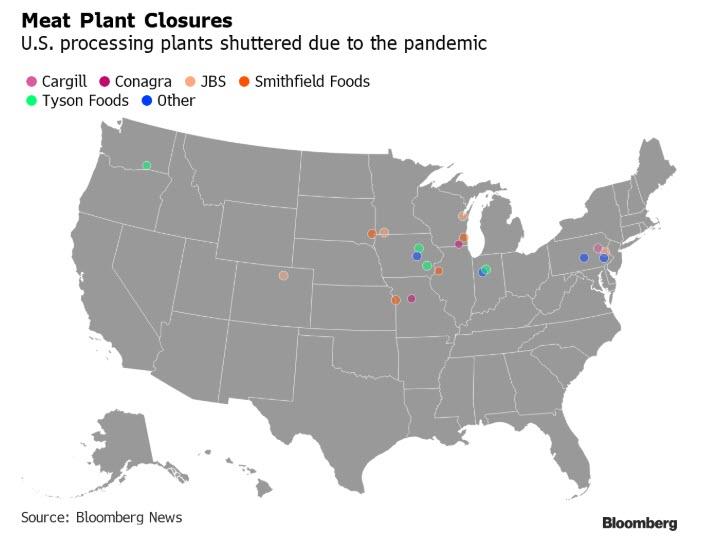

Ex-Green Beret Was Behind Failed Attempt At ‘Armed Invasion’ Of Venezuela Funded By US Billionaires

Ex-Green Beret Was Behind Failed Attempt At ‘Armed Invasion’ Of Venezuela Funded By US Billionaires

As we’ve recently observed, Washington’s push to oust Maduro is by no means over, even if seemingly less intensified as well and central to media coverage. Currently for example, there’s some level of build-up of US naval ships in the Caribbean ordered by the administration off Venezuela’s coast for what the White House had described early last month as “counter-narcotics operations”.

And now the Associated Press has unearthed the stunning details of a prior failed coup attempt that seem straight out of a Hollywood script, given it involved a plot centered on about 300 “heavily armed volunteers” who unsuccessfully tried to topple Nicolas Maduro in a “private coup” allegedly funded by US billionaires.

Former Green Beret Jordan Goudreau (center). Image via Silvercorp USA/Instagram/Daily Mail.

The American overseer of the whole operation was a former Green Beret who ran secret training camps in neighboring Colombia, with the aim to infiltrate the group into Venezuela in order to fuel momentum for a broader ‘armed popular uprising’ à la covert CIA-style Syria regime change ops. 

The details are as follows according to the AP:

The plan was simple, but perilous. Some 300 heavily armed volunteers would sneak into Venezuela from the northern tip of South America. Along the way, they would raid military bases in the socialist country and ignite a popular rebellion that would end in President Nicolás Maduro’s arrest.

What could go wrong? As it turns out, pretty much everything.

The ringleader of the plot is now jailed in the U.S. on narcotics charges. Authorities in the U.S. and Colombia are asking questions about the role of his muscular American adviser, a former Green Beret. And dozens of desperate combatants who flocked to secret training camps in Colombia said they have been left to fend for themselves amid the coronavirus pandemic.

And like other more recent disastrous failed plots to oust the socialist strongman in Caracas, such as last year’s short-lived rebellion a small group of Juan Guaido loyal officers, AP reports the “The failed attempt to start an uprising collapsed under the collective weight of skimpy planning, feuding among opposition politicians and a poorly trained force that stood little chance of beating the Venezuelan military.”

After leaving the Army in 2016, Goudreau worked as a private security contractor in Puerto Rico and set up Silvercorp USA in 2018. Image via SilvercorpsUSA/Daily Mail.

It’s unclear the extent to which it had the official backing or coordination with US intelligence, or the degree to which it was an entirely private, ‘rogue’ undertaking, though Venezuelan state media has slammed the newly emerged plot as another failed CIA coup attempt.

Though at times while pitching and discussing his plan, ex-Green Beret Goudrea  who in 2018 established his private security firm Silvercorp USA — had contact with individuals linked to President Trump (such as a veteran personal bodyguard of Trump’s) as well as a who’s who of shady defected Venezuelan military officers, the AP report claims that any Washington officials or people of influence who caught a whiff of his bizarre plan rejected it and distanced themselves from it.

lt all began, according to the AP, after April 2019 with what’s colorfully described as a “Star Wars summit of anti-Maduro goofballs”. The report details:

Planning for the incursion began after an April 30, 2019, barracks revolt by a cadre of soldiers who swore loyalty to Maduro’s would-be replacement, Juan Guaidó, the opposition leader recognized by the U.S. and some 60 other nations as Venezuela’s rightful leader. Contrary to U.S. expectations at the time, key Maduro aides never joined with the opposition and the government quickly quashed the uprising.

A few weeks later, some soldiers and politicians involved in the failed rebellion retreated to the JW Marriott in Bogota, Colombia. The hotel was a center of intrigue among Venezuelan exiles. For this occasion, conference rooms were reserved for what one participant described as the “Star Wars summit of anti-Maduro goofballs” — military deserters accused of drug trafficking, shady financiers and former Maduro officials seeking redemption.

Among those angling in the open lobby was Jordan Goudreau, an American citizen and three-time Bronze Star recipient for bravery in Iraq and Afghanistan, where he served as a medic in U.S. Army special forces, according to five people who met with the former soldier.

Those he interacted with in the U.S. and Colombia described him in interviews alternately as a freedom-loving patriot, a mercenary and a gifted warrior scarred by battle and in way over his head.

The 43-year old Goudreau soon landed a spot helping to organize security for the February 2019 controversial ‘Live Aid freedom-type’ opposition supporting concert put on by British billionaire Richard Branson, held on the Venezuelan-Colombian border.

British billionaire Richard Branson on the Venezuelan-Colombian border at his concern in support of opposition leader Juan Guaido, via Getty Images/Daily Mail.

Goudreau had later written of the event: “Controlling chaos on the Venezuela border where a dictator looks on with apprehension,” according to an Instagram post showing him working the concert, which attempted to gem up popular support for ousting Maduro.

The invasion plans involving 300 trained and armed rebel soldiers hinged on Goudreau working closely with a ringleader of the Venezuelan military deserters, Cliver Alcalá, previously a retired major general in Venezuela’s army, as AP continues:

Goudreau told Alcalá his company could prepare the men for battle, according to the three sources. The two sides discussed weapons and equipment for the volunteer army, with Goudreau estimating a budget of around $1.5 million for a rapid strike operation.

Goudreau told participants at the meeting that he had high-level contacts in the Trump administration who could assist the effort, although he offered few details, the three people said. Over time, many of the people involved in the plan to overthrow Maduro would come to doubt his word.

From the outset, the audacious plan split an opposition coalition already sharply divided by egos and strategy. There were concerns that Alcalá, with a murky past and ties to the regime through a brother who was Maduro’s ambassador to Iran, couldn’t be trusted. Others worried about going behind the backs of their Colombian allies and the U.S. government.

However, training camps along the border appeared spartan and ill-prepared, with recruits sleeping in barren conditions with lack of enough food and weaponry.

Goudreau marketing himself as a slick head of a multi-national contractor firm, via SilvercorpUSA/Daily Mail.

But documented evidence shows plans for major weapons shipments, some of which reportedly did arrive and were later recovered inside Venezuela’s borders by Maduro’s military: 

The volunteers also shared with Mattos a three-page document listing supplies needed for a three-week operation, which he provided to AP. Items included 320 M4 assault rifles, an anti-tank rocket launcher, Zodiac boats, $1 million in cash and state-of-the-art night vision goggles. The document’s metadata indicates it was created by Goudreau on June 16.

“Unfortunately, there’s a lot of cowboys in this business who try to peddle their military credentials into a big pay day,” said Mattos.

The CIA among other US agencies would deny ever having anything to do with Goudreau and the ultimately failed plan. 

However, the report emphasizes it had the support of particular American billionaire businessmen. AP describes

When the Colombians checked with their CIA counterparts in Bogota, they were told that the former Green Beret was never an agent. Alcalá was then told by his hosts to stop talking about an invasion or face expulsion, the former Colombian official said.

It’s unclear where Alcalá and Goudreau got their backing, and whatever money was collected for the initiative appears to have been meager. One person who allegedly promised support was Roen Kraft, an eccentric descendant of the cheese-making family who — along with former Trump bodyguard Schiller — was among those meeting with opposition envoys in Miami and Washington.

At some point, Kraft started raising money among his own circle of fellow trust-fund friends for what he described as a “private coup” to be carried out by Silvercorp, according to two businessmen whom he asked for money.

Getty images

The ragtag poorly planned ‘invasion’ was thwarted by the Venezuelan military essentially at the border from the start:

The plot quickly crumbled in early March when one of the volunteer combatants was arrested after sneaking across the border into Venezuela from Colombia.

Shortly after, Colombian police stopped a truck transporting a cache of brand new weapons and tactical equipment worth around $150,000, including spotting scopes, night vision goggles, two-way radios and 26 American-made assault rifles with the serial numbers rubbed off. Fifteen brown-colored helmets were manufactured by High-End Defense Solutions, a Miami-based military equipment vendor owned by a Venezuelan immigrant family.

Currently, the main organizers, including Alcalá and Goudreau himself, are in prison. The ex-Green Beret is now in US federal custody reportedly on narcotic charges, but the details remain unclear. 


Tyler Durden

Sat, 05/02/2020 – 19:15

via ZeroHedge News https://ift.tt/3bWesTC Tyler Durden