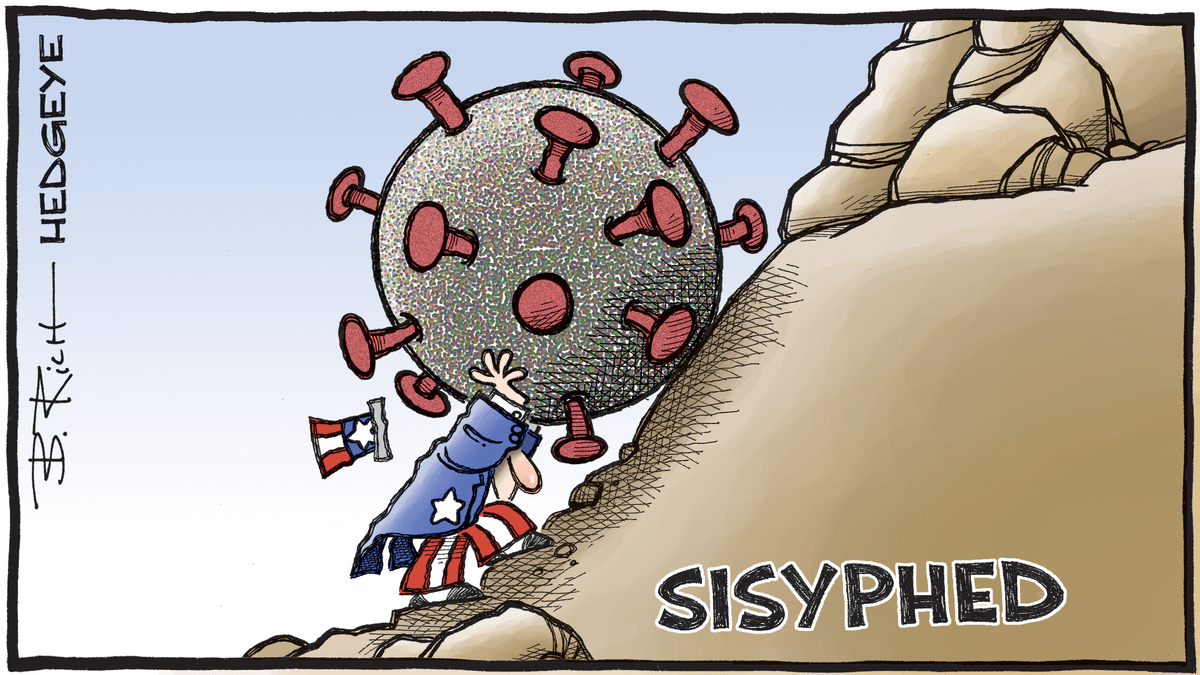
So it’s early 2021 and we’ve bought back most of the extant Treasuries, a big chunk of investment-grade corporates and agency bonds, even a significant part of the junk market. And the damn economy is still flat on its back. Guess ten trillion dollars isn’t what it used to be!
But giving up isn’t an option unless you like the idea of falling into a deflationary abyss, so we need to keep going. And it’s not like currency is hard to create, haha. Looks like we’ll have to revisit the trial balloons we launched last year:
(CNBC April 6, 2020) – Former Federal Reserve Chair Janet Yellen thinks the central bank is not in a position where it needs to buy equities but thinks lawmakers should give it more leeway for the future.
“It would be a substantial change to give the Federal Reserve the ability to buy stock,” Yellen told CNBC’s Sara Eisen on “Squawk on the Street.” “I frankly don’t think it’s necessary at this point. I think intervention to support the credit markets is more important, but longer term it wouldn’t be a bad thing for Congress to reconsider the powers that the Fed has with respect to assets it can own.”
Normally, the Fed is only allowed to own government debt and agency debt with government backing, Yellen said. The central bank has also received special powers during the coronavirus outbreak to buy other assets such as corporate debt through exchange-traded funds. The Fed has also cut rates to zero and launched an unlimited quantitative easing program to help stabilize markets. Still, the Fed would need additional authority to buy exchange-traded funds holding stocks.
Other central banks — including the Bank of Japan — have been purchasing some of their countries’ stocks to mitigate the recent carnage sparked by the coronavirus outbreak.
“The Fed … is far more restricted than most other central banks,” Yellen said. “Even with respect to owning corporate debt, the Fed is not allowed to directly own corporate debt and most other central banks are.”
(Reuters, April 24, 2020) – The U.S. government is considering taking equity stakes in U.S. energy companies as it seeks to help the nation’s oil and gas sector amid the coronavirus outbreak, Treasury Secretary Steven Mnuchin said on Friday.
President Donald Trump, speaking at a White House event with Mnuchin, said he wants to help industry and suggested the federal government could buy fuel for the country in advance as well as purchase airline tickets in advance.
“We’re looking at a whole bunch of alternatives,” Mnuchin said.
“You can assume that’s one of the alternatives, but there’s many of them,” Mnuchin said, referring to possible equity stakes.
Now back to the present, where we can discuss this next stage of monetary experimentation as a future possibility rather than a fait accompli.
Governments buying equities is a sort of Twilight Zone version of the greater fool theory, in which you buy something that is admittedly overpriced in the expectation that someone even more exuberant will come along to pay even more for it. This is a vote of no confidence in both the asset in question and the intelligence of the broader public. But it’s frequently profitable in markets dominated by speculators (and idiots) rather than investors.
In today’s case, a rational investor might look at the value of US equities and conclude that they’re overpriced, given the utter chaos of a hyper-leveraged, virus-ridden world. But then he might notice the Fed, which has both an unlimited monetary printing press and (soon) a mandate to buy equities, not in order to turn a profit by buying low and selling high but to artificially inflate prices, causing gullible consumers to borrow more money and buy more stuff.
Viewed through that lens, stocks become a screaming buy because the ultimate greater fool is now prowling the market with unimaginable amounts of money.
This is exactly what the government is trying to accomplish in the short run.
But it’s also a death knell for capitalist wealth creation since the leveraged buyout (LBO) of the private sector by the government will cripple the capital markets’ price signaling mechanism and bring innovation to a screeching halt.
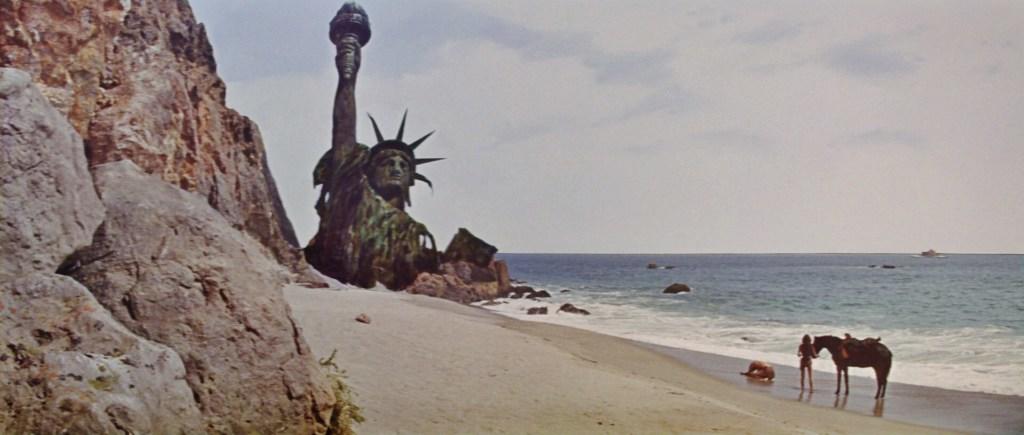
This second point is lost on the desperate folks at the Fed and Treasury. Which means the ultimate fiery end of this system will come as a complete surprise to them, though maybe not to the people on the other side of the LBO trade.
Here Are The Key Findings From The Bombshell Government Dossier On China’s Bat Virus Program
A leaked dossier compiled by Western intelligence agencies concludes that China lied and deliberately suppressed or destroyed evidence during the crucial early days of the COVID-19 outbreak, and notes that Chinese researchers have been experimenting with – and creating – deadly bat coronaviruses.
Here are key findings from the 15-page report compiled by Western governments known as the ‘Five Eyes,’ according to Australia’s Daily Telegraph.
The great coverup
A key theme of the dossier is that China’s negligence and lies resulted in the “endangerment of other countries,” as the CCP silenced or ‘disappeared’ doctors who spoke out.
Doctors who bravely spoke out about the new virus were detained and condemned. Their detentions were splashed across the Chinese-state media with a call from Wuhan Police for “all citizens to not fabricate rumours, not spread rumours, not believe rumours.”
A tweet from the Global Times on January 2 states: “Police in Central China’s Wuhan arrested 8 people spreading rumours about local outbreak of unidentifiable #pneumonia. Previous online posts said it was SARS.” This had the intended effect of silencing other doctors who may have been inclined to speak out. –Daily Telegraph
Furthermore, evidence was destroyed, and China refused to provide live samples to international scientists working on a vaccine.
The paper obtained by The Saturday Telegraph speaks about “the suppression and destruction of evidence” and points to “virus samples ordered destroyed at genomics labs, wildlife market stalls bleached, the genome sequence not shared publicly, the Shanghai lab closure for ‘rectification’,academic articles subjected to prior review by the Ministry of Science and Technology and data on asymptomatic ‘silent carriers’ kept secret”. –Daily Telegraph
China’s deadly denials
The dossier slams China’s constant lies about the virus, noting that “Despite evidence of human-human transmission from early December, PRC authorities deny it until January 20,” adding “The World Health Organisation does the same. Yet officials in Taiwan raised concerns as early as December 31, as did experts in Hong Kong on January 4.”
China also imposed internal travel bans while condemning the rest of the world for wanting to do the same.
“Millions of people leave Wuhan after the outbreak and before Beijing locks down the city on January 23,” reads the dossier. “Thousands fly overseas. Throughout February, Beijing presses the US, Italy, India, Australia, Southeast Asian neighbours and others not to protect themselves via travel restrictions, even as the PRC imposes severe restrictions at home.”
The dossier also notes that China successfully pressured the EU to strike languageabout PRC disinformation, and has threatened Australia for continuing to investigate.
“As Australia calls for an independent inquiry into the pandemic, PRC threatens to cut off trade with Australia. PRC has likewise responded furiously to US calls for transparency.”
Engineered?
While the leaked dossier does not reach a conclusion whether COVID-19 is of natural origin or engineered, it includes a February 6 study from the South China University of Technology which suggested “the killer coronavirus probably originated from a laboratory in Wuhan.
The paper was withdrawn due to what its lead author said was a lack of direct evidence, however the dossier notes that scholar Yanzhong Huang said on March 5 “No scientists have confirmed or refuted the paper’s findings.”
That said, the Telegraph notes that the official US position is that the virus was not engineered, but that it escaped from either the Wuhan Institute of Virology or the Chinese CDC, which is located roughly 900 feet from the Wuhan wet market from which a cluster of early cases emerged.
A Senior Intelligence Source tells me there is agreement among most of the 17 Intelligence agencies that COVID-19 originated in the Wuhan lab. The source stressed that the release is believed to be a MISTAKE, and was not intentional.
“The Intelligence Community also concurs with the wide scientific consensus that the COVID-19 virus was not man-made or genetically modified,” said acting Director of National Intelligence, Richard Grenell, adding “The IC will continue to rigorously examine emerging information and intelligence to determine whether the outbreak began through contact with infected animals or if it was the result of an accident at a laboratory in Wuhan.”
China’s ‘risky bat research’ and creation of deadly viruses
While the international scientific consensus is that COVID-19 wasn’t manmade, the Western intelligence dossier highlights research by scientists Shi Zhengli and her protégé Peng Zhou, whose work on bat coronavirus Zero Hedge highlighted in January, and who were modifying bat coronavirus to test its transmissibility to other species.
Shi Zhengli, director of the Centre for Emerging Infectious Diseases at the Chinese Academy of Sciences’ Wuhan Institute of Virology, who working in Australia in 2006.
It notes a 2013 study conducted by a team of researchers, including Dr Shi, who collected a sample of horseshoe bat faeces from a cave in Yunnan province, China, which was later found to contain a virus 96.2 per cent identical to SARS-CoV-2, the virus that caused COVID-19.
The research dossier also references work done by the team to synthesise SARS-like coronaviruses, to analyse whether they could be transmissible from bats to mammals. This means they were altering parts of the virus to test whether it was transmissible to different species. –Daily Telegraph
A November 2015 study from Zhengli and her team in conjunction with the University of North Carolina concluded that the SARS-like coronavirus could jump directly from bats to humans, and there is currently no cure or treatment.
The Western dossier notes from the study: “To examine the emergence potential (that is, the potential to infect humans) of circulating bat CoVs, we built a chimeric virus encoding a novel, zoonotic CoV spike protein — from the RsSHCO14-CoV sequence that was isolated from Chinese horseshoe bats — in the context of the SARS-CoV mouse-adapted backbone.”
“This virus is highly pathogenic and treatments developed against the original SARS virus in 2002 and the ZMapp drugs used to fight ebola fail to neutralise and control this particular virus,” said North Carolina University Professor Ralph Baric, a co-author on the 2015 paper.
A few years later, in March 2019, Dr Shi and her team, including Peng Zhou, who worked in Australia for five years, published a review titled Bat Coronaviruses in China in the medical journal Viruses, where they wrote that they “aim to predict virus hot spots and their cross-species transmission potential”, describing it as a matter of “urgency to study bat coronaviruses in China to understand their potential of causing another outbreak. Their review stated: “It is highly likely that future SARS or MERS like coronavirus outbreaks will originate from bats, and there is an increased probability that this will occur in China.”
The report notes that Dr. Shi’s research continues to this day, telling Scientific American “Bat-borne coronaviruses will cause more outbreaks … We must find them before they find us.”
Zhengli and Zhou’s Australian researchh
Both Shi and Zhou spent three years at Australia’s Animal Health Laboratory – operated by the country’s national science agency CSIRO. Between 2011 and 2014, Zhou arranged for wild bats to be caught and transported alive from Queensland to the lab in Victoria, where they were euthanized, dissected and studied for deadly viruses.
While the United States has since cut all funding to the Wuhan Institute of Virology, CSIRO refused to acknowledge questions over whether it was still collaborating with lab.
Wuhan lab worker who disappeared…
The Telegraph notes the case of Huang Yan Ling, a researcher at the Wuhan Institute of Virology who is rumored to be “patient zero” after having been the first to be diagnosed with the disease.
Then came her reported disappearance, with her biography and image deleted from the Wuhan Institute of Virology’s website.
On February 16 the institute denied she was patient zero and said she was alive and well, but there has been no proof of life since then, fanning speculation. –Daily Telegraph
Key dates in the coverup:
November 9, 2015: Wuhan Institute of Virology publish a study revealing they created a new virus in the lab from SARS-CoV.
December 6, 2019: Five days after a man linked to Wuhan’s seafood market presented pneumonia-like symptoms, his wife contracts it, suggesting human to human transmission.
December 27: China’s health authorities told a novel disease, then affecting some 180 patients, was caused by a new coronavirus.
December 26-30: Evidence of new virus emerges from Wuhan patient data.
December 31: Chinese internet authorities begin censoring terms from social media such as Wuhan Unknown Pneumonia.
January 1, 2020: Eight Wuhan doctors who warned about new virus are detained and condemned.
January 3: China’s top health authority issues a gag order.
January 5: Wuhan Municipal Health Commission stops releasing daily updates on new cases. Continues until January 18.
January 10: PRC official Wang Guangfa says outbreak “under control” and mostly a “mild condition”.
January 12: Professor Zhang Yongzhen’s lab in Shanghai is closed by authorities for “rectification”, one day after it shares genomic sequence data with the world for the first time.
January 14: PRC National Health Commission chief Ma Xiaowei privately warns colleagues the virus is likely to develop into a major public health event.
January 24: Officials in Beijing prevent the Wuhan Institute of Virology from sharing sample isolates with the University of Texas.
February 6: China’s internet watchdog tightens controls on social media platforms.
February 9: Citizen-journalist and local businessman Fang Bin disappears.
April 17: Wuhan belatedly raises its official fatalities by 1290.
While it looks like the worm is turning against the draconian economic shutdowns decreed by governments, so much damage has already been done it likely won’t matter now.
I began the week hopeful that my home state of Florida would lead the way towards challenging the anti-human and thoroughly intolerable lock down mentality imposed on us by officials at the WHO, NAIAD, Johns Hopkins and the IHME.
That hope continued earlier this week while watching Governor Ron DeSantis give a half-hour presentation of why Florida not only outperformed all of the grossly negligent predictive models but nearly every other state in the union in nearly every metric relevant to COVID-19.
It, however, vanished completely when he finally unveiled his new plan, which was to graciously allow the private economy to get back to 25% capacity, following the same tyrannical guidelines of those now discredited members of President Trump’s Task Force.
“Phase One is a baby step,” DeSantis said during a news conference at Tampa General Hospital. “We are deliberately going to be very methodical, slow and data-driven on this because I think people want to have confidence things are going in a good direction.” He said a slow approach would also give the state an opportunity to step in to handle any spikes in the disease that might occur.
But this is typical political double-speak. Because the political pressure on DeSantis, Trump and other ‘Red State’ Governors to not open things back up has been enormous. If it wasn’t he would have shown more spine.
But, the numbers don’t support DeSantis’ decision at all.
Here’s the data from today. We have an 8.8% infection rate in Florida. 383,592 tests done, 33,690 positives. 1187 deaths. Having tested 1.78% of the population of the state that’s is more than enough to extrapolate a death rate from this disease.
5.52 per 100,000.
Sure, some areas, like Broward and Dade counties are worse than others, but even then, does it truly matter? It’s higher there and none existent where I live.
DeSantis painted a picture of 65 to 70% medical over-capacity this week. I think we can handle any surge in cases due to us daring to shake hands in public.
I know the hospitals would sure like the business. So would the restaurants, printing shops, hobby stores, dry cleaners, coffee shops and mattress stores, but screw them, they aren’t essential.
And yet government workers are? Tax producers losing their jobs by the millions, tax consumers still getting checks.
But I digress. Back to the numbers.
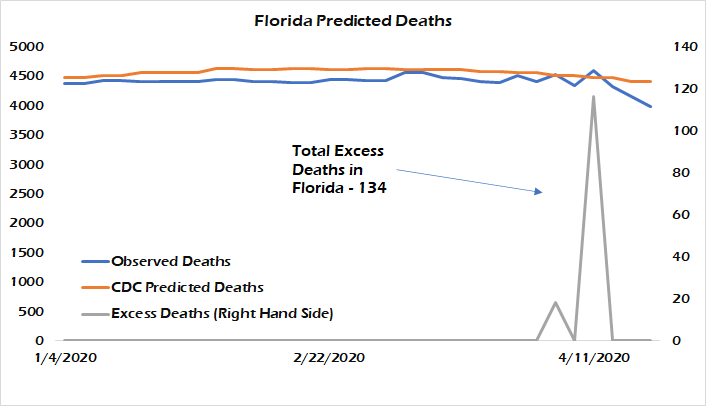
How many of those deaths are in excess of what is normal for the State of Florida in a given year? Because that, in the end, is the only thing that really matters. That’s your best proxy for medical services breakdown.
From the CDC’s statistics, which admittedly, are a couple of days behind the latest data, that number is 134 based on the predicted models, based on the last full week of data.
The actual, observed, unweighted data from the CDC is zero excess deaths.
Zero.
But, let’s be generous and go with the CDC’s model data, 134 deaths. Because that’s the worst case scenario.
This is the data DeSantis had when he made his decision. By the way his Red State compatriot, Greg Abbott, opened up Texas with similar restrictions and double-speak.
Were these 134 deaths worth this? Did we shut down the economy of Florida in 2018 when excess flu deaths were 1142 between the week of January 3rd and February 17th?
Was there even much, if any, media coverage? Did we declare a state of medical emergency? Did we all run around screaming with our hair on fire about how Orange Man Bad wants us all to die from the Wu Flu?
No we didn’t. In fact, I don’t remember anything like that, but feel free to call me a “Virus Denialist” or some other such epithet in your copious spare time since you no longer have a job thanks to the recommendations of Dr. “Death Dealer” Fauci who should be the one sent the bill for this tragedy, not China.
These were decisions made as a consequence of having to walk back their insane over-reaction to this disease as promulgated by all of these incredibly smart people who are supposed to be the top men in their field.
134 deaths in Florida.
Thousands of businesses destroyed, economic demand destruction of an unprecedented nature. Meanwhile, how many people died from not receiving medical care as the fear of going to the hospital kept them at home.?
I guess that doesn’t matter since the excess deaths were so small, they were offset by the people who died of COVID-19.
This political decision is emblematic of what is functionally wrong with our society today. To quote then Senator Palpatine, “There is no civility, there is only politics.”
Decisions aren’t made by even the best and well-intentioned of our leaders for any other reason then trying to minimize the political backlash from one voting block or another.
It is truly not their job to coddle our fears and expectations. It is their job to lead and show competence. And if some people can’t handle the responsibility of living a fruitful, productive life in psychological balance with the risks of a hostile Universe then so be it.
DeSantis was better than most governors, I give him credit for this, certainly. But this was his opportunity to command the heights, truly lead and call the bluff of the death-dealers and medical-industrial mafiosi surrounding the President, dominating the conversation surrounding COVID-19.
He and Abbott, taking their cues from Trump, have failed as leaders. These were the states with the most to gain from separating themselves from the rest of the herd immune to the facts, caring only about gaining an edge in the polls.
This approach to politics is no different than the approach to medicine of a doctor ordering unnecessary tests or not recommending a change in diet precisely because he fears a malpractice suit.
Judgment has been taken away from the people whose lives are most affected by this policy and the people closest to the problem itself.
We have effective treatments. We have more than enough excess medical capacity. What we need now is leadership willing to trust us to make good decisions. This, more than their measured and careful steps, will disempower the busybodies and the fearful.
This will reverse the insanity. Courage, Ron. You had the chance to show some.
You cucked out.
And because of it we are still held captive byKaren Nation. Remember:
A Karen is a person, usually a woman, who is never satisfied with the service she’s receiving and demands to talk to the manager. It doesn’t matter if Karen’s complaints are valid or not.
This is because Karen has been incentivized by cowardly corporate officers and government officials (but, I repeat myself) to get something she doesn’t deserve simply because they want her to shut up and not disturb everyone else.
It was one thing to indulge Karen her entitled behavior when she was getting a free order of fries or month of cable. It’s quite another when Karens become the State’s target audience for public policy.
And we haven’t really begun to feel the effects of what this lock down has done to the fabric of our society. We’re still in the halo effect of all the Fed’s monetary easing and Washington’s ridiculous stimulus spending.
As I’ve said before these people are just pathetic Boomer grandparents trying to buy our love one last time before the whole system collapses in on itself.
But we can’t blame them, they tried to do something! That’s the problem, though, we don’t need them to do anything other than get the hell out of our way.
The guys like Trump, DeSantis and Abbott are supposed to understand this. They are supposed to understand that the real fight for our civilization is here at home not against China,Iran, Russia or Venezuela.
And that’s a fight we cannot win locked in our homes cowering in fear of a bug that is slightly more dangerous than the annual flu. It’s pathetic.
Crisis In Processing – Thousands Of Meatpacking Workers Infected, Deaths Hit 20
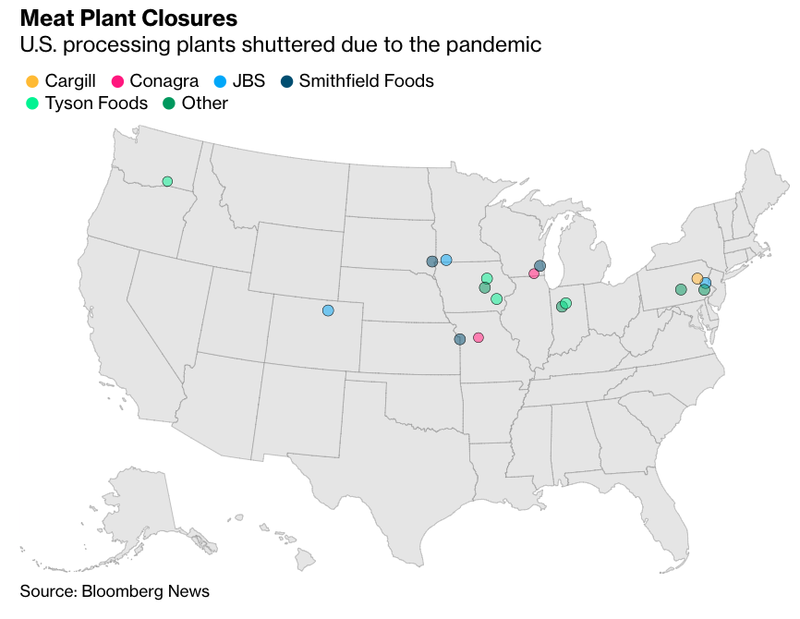
As a crisis in processing unfolds across America’s meatpacking facilities, President Trump earlier this week invoked the Defense Production Act to ensure plants remain open. Last week, we noted how a “rash of coronavirus outbreaks at dozens of meatpacking plants across the nation is far more extensive than previously thought,” which led us to believe the next big issue was the breakdown of complex food supply chain networks. That is precisely what Tyson Foods warned in a full-page ad in the New York Times on Sunday that said, the “food supply chain is breaking.” Now the Centers for Disease Control and Prevention (CDC) has released a new report detailing virus infections and deaths at plants, the conclusion: thousands sick and nearly two dozen dead, reported Bloomberg.
The fast-spreading virus infected 4,900 workers and left 20 dead at 115 meatpacking plants across 19 states, according to CDC data from April 9-27.
As we have previously warned, at least 12 major plants have been forced to shut down after outbreaks were reported. The CDC said there had been many challenges in mitigating the spread at processing plants.
With President Trump’s executive order, meat processing plants will have to remain open. There are already some reports indicating that a plant or two could come back online in the first week of May. Keeping plants open during a worsening of the pandemic could be a recipe for disaster, as it appears this is the sacrifice that corporate America and the government are willing to make to prevent food shortages. Already, meat shortages are expected to hit grocery stores in the first half of May.
“The president’s executive order will only ensure that more workers get sick, jeopardizing lives, family income, communities, and, of course, the country’s food supply chain,” said Kim Cordova, leader of the local United Food and Commercial Workers International Union chapter, which represents 3,000 workers at the JBS SA beef plant in Greeley, Colorado. She said the president’s executive order is no solution to the current supply issues developing.
In “American Farms Cull Millions Of Chickens Amid Virus-Related Staff Shortages At Processing Plants,” we noted how workers at chicken processing plants in Maryland, Delaware, and Virginia were staying home because of illness or they were too afraid to go into work because of the virus, this resulted in labor shortages, and decreased output at plants. The ripple effect of declining output or shuttering of plants crushes farmers who cannot sell their chickens. This leads to overcapacity at farms and the now culling of millions of chickens. And it’s not just farmers that are crushed, because plants are producing less, food shortages develop. Just look at what has happened to beef prices this week because of plant closures:
To sum up, it’s only a matter of time before processing plants automate their lines where robots cannot contract a virus, well, not an infection from humans, maybe ones from hackers…
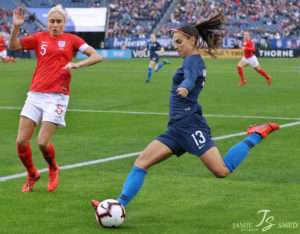
Alex Morgan of the U.S. Women’s National Soccer team in action during last summer’s Women’s World Cup.
Yesterday a federal district court judge granted summary judgment on the most significant parts of the Equal Pay Act and Title VII claims of players on the U.S. Women’s National Soccer Team (WNT), who had alleged they were paid less than players on the men’s team (MNT) for equal work. The judge concluded that the undisputed facts established that the WNT had been paid more on both a cumulative and an average per-game basis than the MNT over the last several years–and thus had no chance of prevailing at a trial. In my view, the ruling is dubious and will likely be overturned on appeal.
I blogged about this case back in March, when lawyers for the employer in this case–the U.S. Soccer Federation–argued that men and women’s soccer players do not perform substantially equal work. Fallout quickly followed from the lawyers’ perverse position that America’s reigning world champion women’s team was not as good as the men’s team, which failed to even qualify for the World Cup. The President of U.S. Soccer, Carlos Cordeiro, apologized for the filing and promptly resigned. But while U.S. Soccer brought in new lawyers on the case, they never withdrew their offensive argument.
And yesterday, the U.S. Soccer succeeded in dismissing the most significant claims of the WNT. The district judge handling the case agreed with U.S. Soccer that the undisputed facts demonstrated that no reasonable juror could conclude that the women were paid less than the men. While news articles have briefly described the outcome, no analysis that I have seen has drilled down into the legal merits of the ruling. Nor are the legal filing associated with the ruling readily available on the web. As someone who has experience with summary judgment issues, I thought a more detailed analysis (with links to some of the actual court documents) might be of interest. My reading of the case is that the judge’s ruling will quite likely be overturned on the inevitable appeal.
Here’s the linchpin of the district judge’s ruling against the women:
It is undisputed that, during the class period, the WNT played 111 total games and made $24.5 million overall, averaging $220,747 per game. By contrast, the MNT played 87 total games and made $18.5 million overall, averaging $212,639 per game. Based on this evidence, it appears that the WNT did not make more money than the MNT solely because they played more games. Rather, the WNT both played more games and made more money than the MNT per game. (S.J. Order at p. 18).
But while the judge’s math is accurate, the numbers miss the forest for the trees. While the WNT ended up earning about the same amount of money as the MNT over the relevant time period, the women were far more successful than the men’s team. The pay structures for both the women’s and men’s teams provided bonuses for winning games. Because the WNT won more games (and particularly more high-profile games), the women players ended up receiving about the same total compensation as the men. But the women’s rate of pay–the decisive factor in an Equal Pay Act case–was lower than that for the men. (WNT Mot. for S.J. at pp. 5-6.) If anything, the judge should have granted summary judgment for the women (although that might have been stretch, as some disputed facts would have remained for the jury to consider).
To work around this rate-of-pay issue, the district judge concluded that the WNT had bargained for a different pay structure than the men. As the judge saw things, the history of the negotiations for two Collective Bargaining Agreements (CBAs) demonstrates that
the WNT rejected an offer to be paid under the same pay-to-play structure as the MNT, and that the WNT was willing to forgo higher bonuses for other benefits, such as greater base compensation and the guarantee of a higher number of contracted players. Accordingly, [the WNT players] cannot now retroactively deem their CBA worse than the MNT CBA by reference to what they would have made had they been paid under the MNT’s pay-to play stmcture when they themselves rejected such a structure. This method of comparison not only fails to account for the choices made during collective bargaining, it also ignores the economic value of the “insurance” that WNT players receive under their CBA. (S.J. Order at p. 19)
But here again, to reach this conclusion, the district judge had to assume many factual questions would be resolved against the women and in favor of U.S. Soccer. In particular, as the women carefully detailed in their own summary judgment papers, U.S. soccer’s own witnesses
testified that despite the WNTPA’s equal pay demand, USSF never offered to pay the WNT at the same bonus rate as the MNT for friendlies, tournaments and the World Cup. It is thus impossible for the USSF to obtain summary judgment in its favor on the ground that the [women] never asked for equal pay to the MNT during collective bargaining. USSF’s own witnesses admit just the opposite: USSF would not have agreed to equal pay “no matter what the [women’s players’ association] had offered as a compromise.” Indeed, at his deposition, USSF former president, Sunil Gulati, admitted that he told the WNT players during negotiations that USSF’s terms were the most he would give financially, and while he was willing to move money around to different forms of compensation, the WNT had to accept the overall value of the deal or there would be no deal at all. (WNT Opp. to S.J. at pp. 17-18)
Moreover, a step back to look at the big picture reveals the absurdity of concluding that the women somehow were “willing” to forego the kinds of bonuses the men had. Accordingly to a seemingly straightforward calculation, the the women would have made $66 million more if paid on the same structure as the men! The women had no reason to be “willing” to forego that staggering amount of additional compensation–even if they did receive some modest “insurance” at far lower levels of compensation. The WNT was the defending world champion during the negotiations–and were expected to be very strong contenders to win the 2019 Women’s World Cup. They would have loved to have contracted for the same kinds of bonuses that the men were promised if they had achieved at that high international level.
Of course, to grant summary judgment, the district judge had to conclude that no reasonable jury could find that the women had gathered facts showing unequal pay. But the women clearly did have at least some facts showing unequal pay–specifically statements admitting unequal pay from U.S. Soccer itself! For example, the President of U.S. Soccer, Carlos Cordeiro, had admitted that the women were not paid equally and that changes needed to made to eliminate the discrimination:
Our women’s teams should be respected and valued as much as our men’s teams, but our female players have not been treated equally.… I’m a strong supporter of greater equality, diversity and inclusion throughout U.S. Soccer, and we clearly need to work toward equal pay for the national teams. I believe that where existing agreements are unfair, adjustments should be made immediately. To ensure equal pay going forward, we need to be open to new paradigms while recognizing the specific needs and desires of the WNT and MNT…. [W]e don’t need to wait for [collective bargaining agreement] negotiations to make these changes; we can start now. It’s the right thing to do. (WNT Statement of Undisputed Facts at p. 5).
The district judge recognized this damning admission, but refused to accept it at face value. Instead, the judge concluded that the fact that U.S. Soccer’s President said “WNT players are paid less does not make it true ….” But surely an admission from the employer that it paying unequal pay is some evidence of … well … unequal pay. A jury could quite reasonably rely on such a statement in finding for the women. Perhaps recognizing the difficulty with this position, the judge also pointed out that Cordeiro had later stated that, when he referenced working toward “equal pay,” he meant “creating more opportunity for our women so they can play more competitive events that would drive more revenue and compensation” because “there was a lack of opportunity for the women where the men play four/five times as many competitive [i.e., non-friendly] matches as our women do … and [that] is at the heart of the issue.” (S.J. Order at p. 20). But this spin on Cordeiro’s admission is precisely the sort of thing that juries have to work through in an Equal Pay Act case. Deciding precisely what Cordeiro may or may not have meant is not what a district judge is entitled to do in ruling on a summary judgment motion.
The women had not only an admission from U.S. Soccer’s President but also a statement from U.S. Soccer’s outside counsel, who (according to the women) stated during the collective bargaining negotiations that “market realities are such that the women do not deserve equal pay.” (WNT Statement of Undisputed Facts at p. 12.) This statement, too, would seem to preclude summary judgment on an equal pay case. But the district judge quickly pointed out that it was “disputed” whether U.S. Soccer’s counsel had actually made this comment. Precisely what the women were arguing! It is disputed fact–and disputed facts are the very reason why a jury trial was necessary in this case.
At a jury trial on the “market realities” and other issues swirling around the case, the WNT would have fully presented its case. By its calculation, the WNT–the world champions–generated more revenue and earned a larger profit for U.S. Soccer than the MTN. (WNT Mot. for S.J. at 3). Perhaps these calculations are skewed. Perhaps they are unfair to the MNT, which suffered an unexpected downturn in revenues when it unexpectedly failed to qualify for the World Cup. But perhaps not. Questions such as these are precisely why juries decide these kinds of cases. The factual complexities have to be evaluated by twelve neutral observers, who hear all the witnesses and see all the evidence.
When I was a federal district court judge, I saw some equal pay and similar gender discrimination claims come before me. These cases inevitably presented complicated fact patterns that rarely lent themselves to resolution on a summary judgment motion. So too in this case. The facts are complex and disputed–and must be decided by a jury.
The district judge here did allow several of the WNT’s claims to proceed to a jury trial, specifically some narrow claims about charter flights and hotel accommodations and medical and training support. But the main claims—i.e., the big dollar claims–are now out.
The WNT has already vowed to appeal, and they should. This ruling has a very high likelihood of being overturned on appeal. If one thing is clear about this case, it is that the WNT players have made reasonable claims of being paid unequally that a jury must decide.
from Latest – Reason.com https://ift.tt/3bZeutF
via IFTTT
Alex Morgan of the U.S. Women’s National Soccer team in action during last summer’s Women’s World Cup.
Yesterday a federal district court judge granted summary judgment on the most significant parts of the Equal Pay Act and Title VII claims of players on the U.S. Women’s National Soccer Team (WNT), who had alleged they were paid less than players on the men’s team (MNT) for equal work. The judge concluded that the undisputed facts established that the WNT had been paid more on both a cumulative and an average per-game basis than the MNT over the last several years–and thus had no chance of prevailing at a trial. In my view, the ruling is dubious and will likely be overturned on appeal.
I blogged about this case back in March, when lawyers for the employer in this case–the U.S. Soccer Federation–argued that men and women’s soccer players do not perform substantially equal work. Fallout quickly followed from the lawyers’ perverse position that America’s reigning world champion women’s team was not as good as the men’s team, which failed to even qualify for the World Cup. The President of U.S. Soccer, Carlos Cordeiro, apologized for the filing and promptly resigned. But while U.S. Soccer brought in new lawyers on the case, they never withdrew their offensive argument.
And yesterday, the U.S. Soccer succeeded in dismissing the most significant claims of the WNT. The district judge handling the case agreed with U.S. Soccer that the undisputed facts demonstrated that no reasonable juror could conclude that the women were paid less than the men. While news articles have briefly described the outcome, no analysis that I have seen has drilled down into the legal merits of the ruling. Nor are the legal filing associated with the ruling readily available on the web. As someone who has experience with summary judgment issues, I thought a more detailed analysis (with links to some of the actual court documents) might be of interest. My reading of the case is that the judge’s ruling will quite likely be overturned on the inevitable appeal.
Here’s the linchpin of the district judge’s ruling against the women:
It is undisputed that, during the class period, the WNT played 111 total games and made $24.5 million overall, averaging $220,747 per game. By contrast, the MNT played 87 total games and made $18.5 million overall, averaging $212,639 per game. Based on this evidence, it appears that the WNT did not make more money than the MNT solely because they played more games. Rather, the WNT both played more games and made more money than the MNT per game. (S.J. Order at p. 18).
But while the judge’s math is accurate, the numbers miss the forest for the trees. While the WNT ended up earning about the same amount of money as the MNT over the relevant time period, the women were far more successful than the men’s team. The pay structures for both the women’s and men’s teams provided bonuses for winning games. Because the WNT won more games (and particularly more high-profile games), the women players ended up receiving about the same total compensation as the men. But the women’s rate of pay–the decisive factor in an Equal Pay Act case–was lower than that for the men. (WNT Mot. for S.J. at pp. 5-6.) If anything, the judge should have granted summary judgment for the women (although that might have been stretch, as some disputed facts would have remained for the jury to consider).
To work around this rate-of-pay issue, the district judge concluded that the WNT had bargained for a different pay structure than the men. As the judge saw things, the history of the negotiations for two Collective Bargaining Agreements (CBAs) demonstrates that
the WNT rejected an offer to be paid under the same pay-to-play structure as the MNT, and that the WNT was willing to forgo higher bonuses for other benefits, such as greater base compensation and the guarantee of a higher number of contracted players. Accordingly, [the WNT players] cannot now retroactively deem their CBA worse than the MNT CBA by reference to what they would have made had they been paid under the MNT’s pay-to play stmcture when they themselves rejected such a structure. This method of comparison not only fails to account for the choices made during collective bargaining, it also ignores the economic value of the “insurance” that WNT players receive under their CBA. (S.J. Order at p. 19)
But here again, to reach this conclusion, the district judge had to assume many factual questions would be resolved against the women and in favor of U.S. Soccer. In particular, as the women carefully detailed in their own summary judgment papers, U.S. soccer’s own witnesses
testified that despite the WNTPA’s equal pay demand, USSF never offered to pay the WNT at the same bonus rate as the MNT for friendlies, tournaments and the World Cup. It is thus impossible for the USSF to obtain summary judgment in its favor on the ground that the [women] never asked for equal pay to the MNT during collective bargaining. USSF’s own witnesses admit just the opposite: USSF would not have agreed to equal pay “no matter what the [women’s players’ association] had offered as a compromise.” Indeed, at his deposition, USSF former president, Sunil Gulati, admitted that he told the WNT players during negotiations that USSF’s terms were the most he would give financially, and while he was willing to move money around to different forms of compensation, the WNT had to accept the overall value of the deal or there would be no deal at all. (WNT Opp. to S.J. at pp. 17-18)
Moreover, a step back to look at the big picture reveals the absurdity of concluding that the women somehow were “willing” to forego the kinds of bonuses the men had. Accordingly to a seemingly straightforward calculation, the the women would have made $66 million more if paid on the same structure as the men! The women had no reason to be “willing” to forego that staggering amount of additional compensation–even if they did receive some modest “insurance” at far lower levels of compensation. The WNT was the defending world champion during the negotiations–and were expected to be very strong contenders to win the 2019 Women’s World Cup. They would have loved to have contracted for the same kinds of bonuses that the men were promised if they had achieved at that high international level.
Of course, to grant summary judgment, the district judge had to conclude that no reasonable jury could find that the women had gathered facts showing unequal pay. But the women clearly did have at least some facts showing unequal pay–specifically statements admitting unequal pay from U.S. Soccer itself! For example, the President of U.S. Soccer, Carlos Cordeiro, had admitted that the women were not paid equally and that changes needed to made to eliminate the discrimination:
Our women’s teams should be respected and valued as much as our men’s teams, but our female players have not been treated equally.… I’m a strong supporter of greater equality, diversity and inclusion throughout U.S. Soccer, and we clearly need to work toward equal pay for the national teams. I believe that where existing agreements are unfair, adjustments should be made immediately. To ensure equal pay going forward, we need to be open to new paradigms while recognizing the specific needs and desires of the WNT and MNT…. [W]e don’t need to wait for [collective bargaining agreement] negotiations to make these changes; we can start now. It’s the right thing to do. (WNT Statement of Undisputed Facts at p. 5).
The district judge recognized this damning admission, but refused to accept it at face value. Instead, the judge concluded that the fact that U.S. Soccer’s President said “WNT players are paid less does not make it true ….” But surely an admission from the employer that it paying unequal pay is some evidence of … well … unequal pay. A jury could quite reasonably rely on such a statement in finding for the women. Perhaps recognizing the difficulty with this position, the judge also pointed out that Cordeiro had later stated that, when he referenced working toward “equal pay,” he meant “creating more opportunity for our women so they can play more competitive events that would drive more revenue and compensation” because “there was a lack of opportunity for the women where the men play four/five times as many competitive [i.e., non-friendly] matches as our women do … and [that] is at the heart of the issue.” (S.J. Order at p. 20). But this spin on Cordeiro’s admission is precisely the sort of thing that juries have to work through in an Equal Pay Act case. Deciding precisely what Cordeiro may or may not have meant is not what a district judge is entitled to do in ruling on a summary judgment motion.
The women had not only an admission from U.S. Soccer’s President but also a statement from U.S. Soccer’s outside counsel, who (according to the women) stated during the collective bargaining negotiations that “market realities are such that the women do not deserve equal pay.” (WNT Statement of Undisputed Facts at p. 12.) This statement, too, would seem to preclude summary judgment on an equal pay case. But the district judge quickly pointed out that it was “disputed” whether U.S. Soccer’s counsel had actually made this comment. Precisely what the women were arguing! It is disputed fact–and disputed facts are the very reason why a jury trial was necessary in this case.
At a jury trial on the “market realities” and other issues swirling around the case, the WNT would have fully presented its case. By its calculation, the WNT–the world champions–generated more revenue and earned a larger profit for U.S. Soccer than the MTN. (WNT Mot. for S.J. at 3). Perhaps these calculations are skewed. Perhaps they are unfair to the MNT, which suffered an unexpected downturn in revenues when it unexpectedly failed to qualify for the World Cup. But perhaps not. Questions such as these are precisely why juries decide these kinds of cases. The factual complexities have to be evaluated by twelve neutral observers, who hear all the witnesses and see all the evidence.
When I was a federal district court judge, I saw some equal pay and similar gender discrimination claims come before me. These cases inevitably presented complicated fact patterns that rarely lent themselves to resolution on a summary judgment motion. So too in this case. The facts are complex and disputed–and must be decided by a jury.
The district judge here did allow several of the WNT’s claims to proceed to a jury trial, specifically some narrow claims about charter flights and hotel accommodations and medical and training support. But the main claims—i.e., the big dollar claims–are now out.
The WNT has already vowed to appeal, and they should. This ruling has a very high likelihood of being overturned on appeal. If one thing is clear about this case, it is that the WNT players have made reasonable claims of being paid unequally that a jury must decide.
from Latest – Reason.com https://ift.tt/3bZeutF
via IFTTT
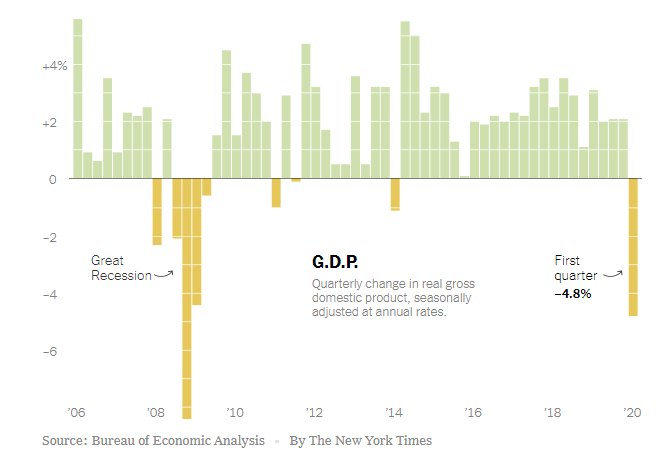
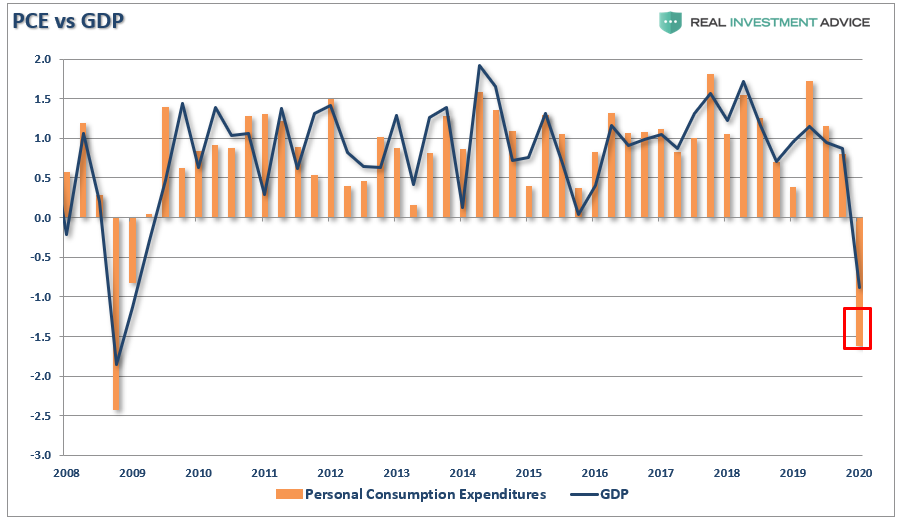
The negative 4.8% decline in GDP in the first quarter was stunning. Importantly, that reading only encapsulated the impact of the economic “shutdown” in that last two weeks of the quarter. This suggests, considering the entire month of April (1/3rd of the quarter) was a wash, the numbers will worse next quarter.
“U.S. gross domestic product fell at a 4.8 percent annual rate in the first quarter of the year, the Commerce Department said Wednesday. That is the first decline since 2014, and the worst contraction since 2008, the last deep recession.
There is much worse to come. Widespread layoffs and business closings didn’t hit until late March in most of the country. Economists expect figures from the current quarter, which will capture the shutdown’s impact more fully. GDP likely contracted in the second quarter at an annual rate of 30 percent or more, a scale not seen since the Great Depression.”
The Choices We Make
Last week, Treasury Secretary, Steve Mnuchin, stated his optimism for economic recovery on Fox News:
“I think as we begin to reopen the economy in May and June, you’re going to see the economy bounce back in July, August, September.
And we are putting in an unprecedented amount of fiscal relief into the economy. You see trillions of dollars that’s making its way into the economy. I think this is going to have a significant impact.”
While it is certain the economy will eventually bounce back, it may take longer than the White House, and many investors expect.
There are several reasons for this assumption.
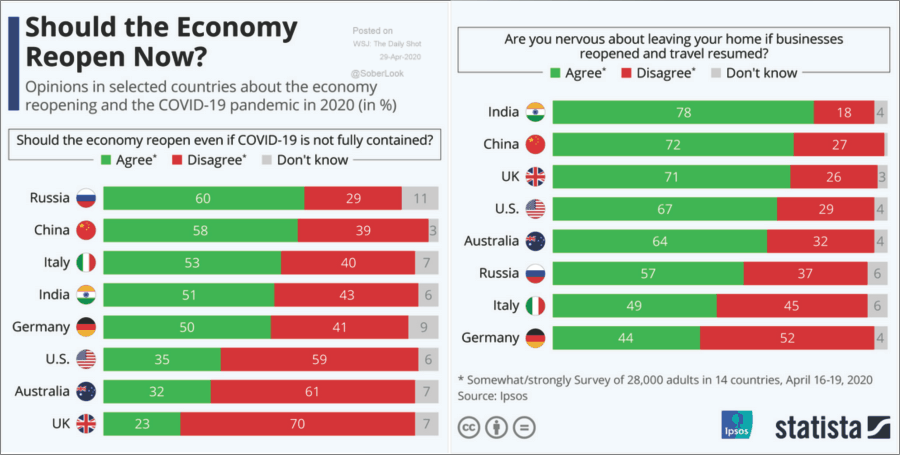
Initially, even with the economy open, it is unlikely, even without job losses, individuals will immediately return to old routines. A survey by Statista encapsulated this view.
It is even harder to expect such activities to immediately occur when there is no decline in virus cases currently. While the rate of increase may be slowing, the concerns of infection will likely slow activity.
Even if Steve Mnuchin is correct and activity does come back, a likely second wave of the virus in the fall could be worse than the first. While I doubt a “re-shuttering” of the economy will occur, the psychological impact would likely cripple the recovery further.
It Just Takes Money
The fundamental side of the equation becomes more difficult to justify.
The economy is comprised of 70% consumption. To consume, an individual must have employment in which they produce, and receive compensation for, first. Over the next couple of quarters, we are likely to see unemployment rates rise to between 15 and 20%.
According to the Economic Policy Institute (EPI), while initial jobless claims have surged to over 28 million since March 15th, unemloyment could be substantially higher.
The survey by EPI found that for every 10-people who successfully filed for claims, 3 to 4 were unable to register. A full 20% said they didn’t file due to difficulty, and long lines were another impediment.
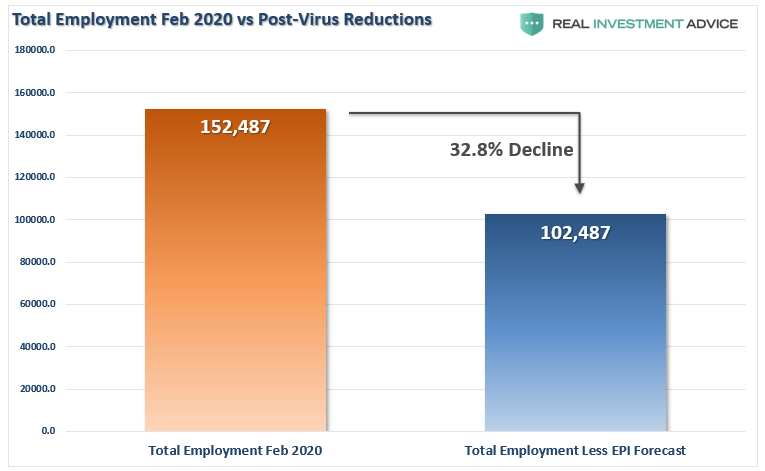
If these numbers are close to accurate, it suggests as many as 50-million Americans have lost their jobs in recent weeks. The chart below shows the number of individuals in the “workforce” as of the end of February and assuming EPI’s forecast.
That, as they say, ain’t pretty.
More importantly, let’s make some basic assumptions about the impact to the overall economy.
Total inflation-adjusted GDP = $18.987 Trillion
Median real incomes: $63,179
50 Million job losses x 50,000 = $3.16 Trillion
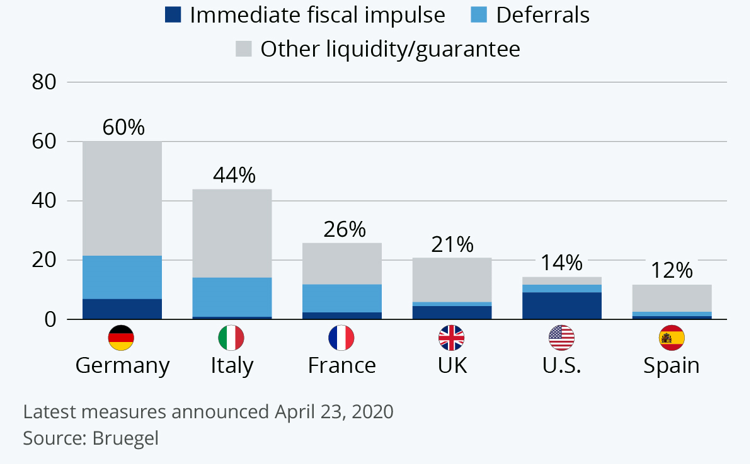
Current bailouts at 14% of GDP = $2.6 Trillion
Effectively, the current fiscal stimulus is a wash relative to the impact on the economy. The more prolonged unemployment remains, the more likely consumption will constrict.
No Economic Swoosh
What this suggests is that hopes for a “V-shaped” recovery could be misguided. If our expectations of a slow re-engagement with the economy play out, the employment recovery will be slow also. As fiscal stimulus plays out, economic growth will struggle to gain traction.
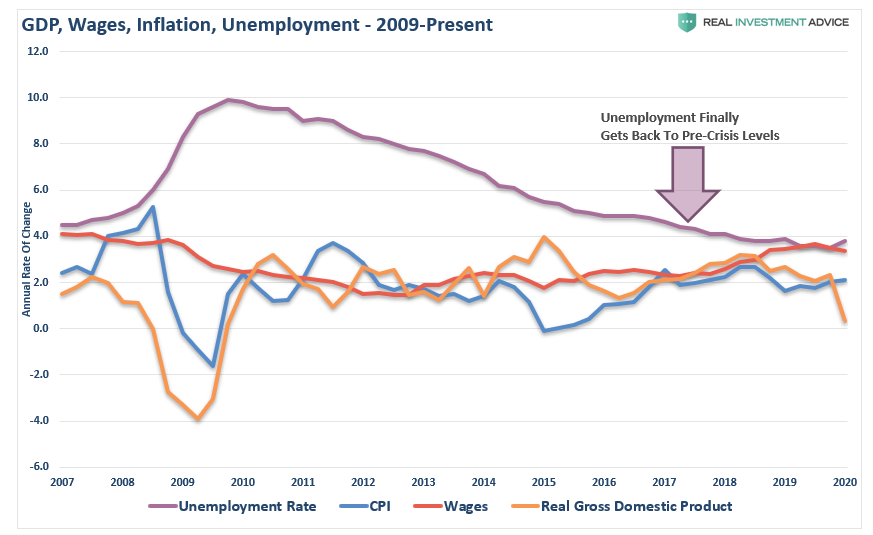
Ironically, this is precisely what we witnessed post the “Financial Crisis” in 2008. The chart below shows the recovery of GDP, employment, wages, and inflation.
While employment took nearly a decade to recover to pre-crisis lows, wages, GDP, and inflation failed to gain traction.
Such was despite a decade of zero-interest-rate policy by the Fed, unprecedented monetary interventions, and a massive surge in consumer debt.
No Money, More Problems
The problem with a sharp loss of employment is that it creates a negative feedback loop into the economy. As job losses mount, incomes fall, which reduces personal consumption expenditures (PCE).
This past week PCE plunged as job losses surged. Importantly, this decline occurred in just the last two weeks of March. Given the entire month of April was shutdown, next quarter’s PCE report will be markedly worse.
PCE also tells us there will be a slow recovery in the economy.
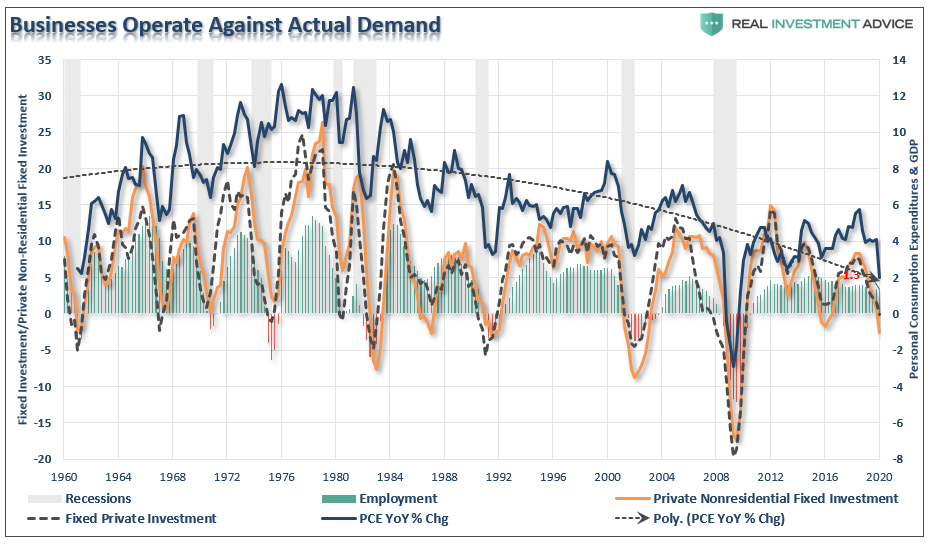
There is a negative feedback loop between employment and consumption. As unemployment rises, consumption falls due to a lack of income. Since businesses operate based on demand for goods and services, the correlation between PCE, fixed investment, and employment are high.
Despite the reopening of the economy, businesses will not immediately return to full operational activity, until consumption returns to more normal levels. Such a recovery is likely going to frustrate policy-makers and the Fed.
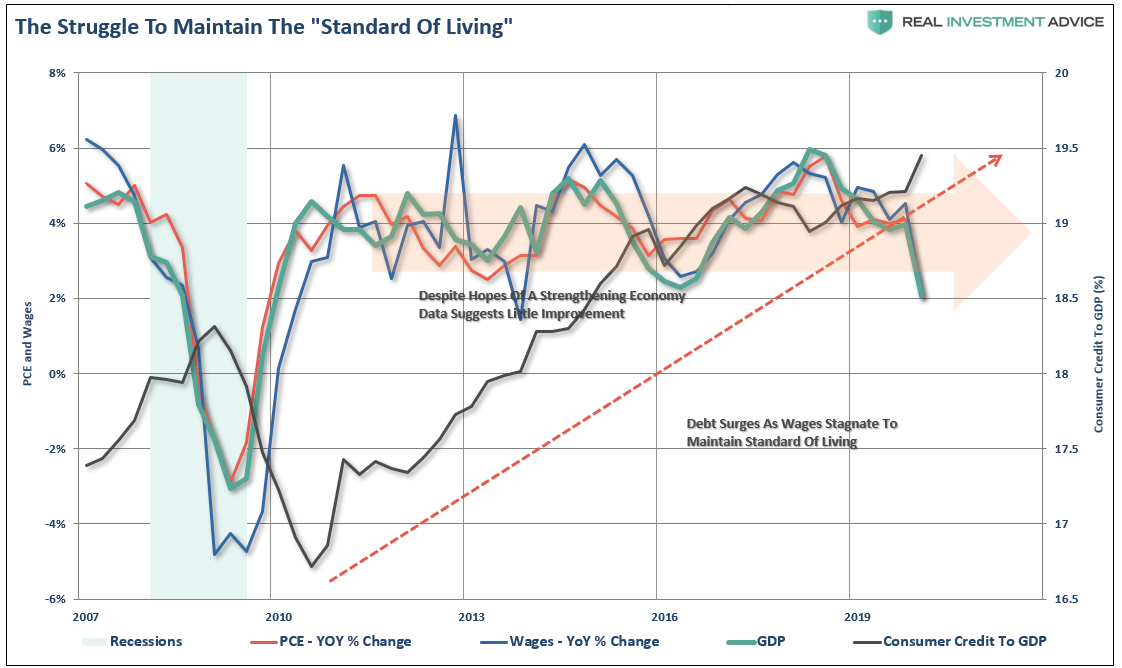
Since the “Financial Crisis,” massive levels of monetary accommodation, near zero-interest rates, and loose lending policies did not increase rates of economic prosperity. As shown below, what kept the economy growing at 2% were massive increases in debt to sustain the “standard of living,” not improve it.
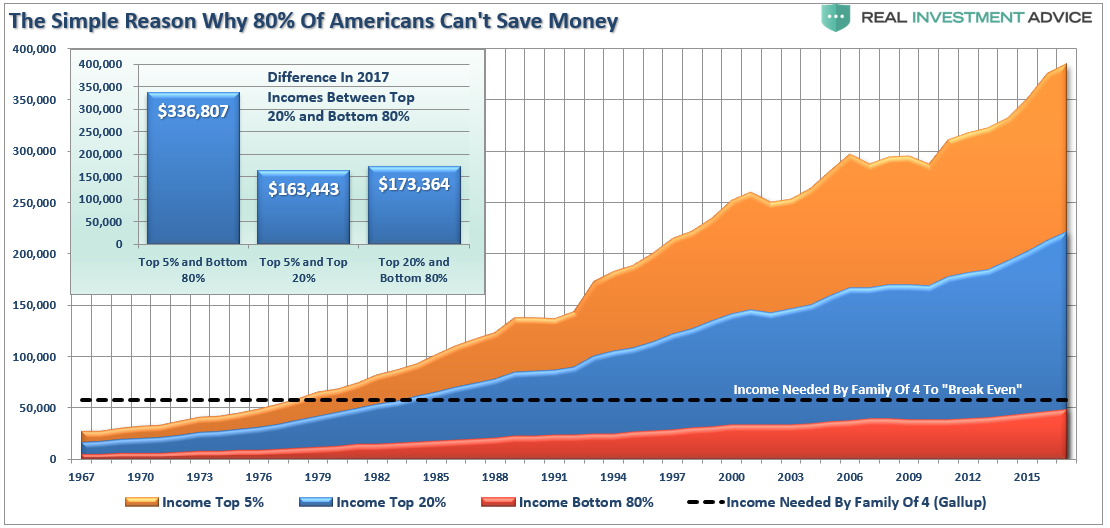
For roughly 80% of Americans, there is a monthly struggle to make ends meet. It isn’t just the raw data which supports that claim, but a multitude of studies.
Cost Of Happiness
“The [2019] survey found that 58 percent of respondents had less than $1,000 saved.” –Gobankingrates.com
Cars, college, houses, and medical care have become steadily more costly, but incomes have been largely stagnant for two decades, despite a recent uptick. Filling the gap between earning and spending is an explosion of finance into nearly every corner of the consumer economy.
Consumer debt, not counting mortgages, has climbed to $4 trillion—higher than it has ever been even after adjusting for inflation.”
When looking at the data, it is hard to suggest that Americans are saving 8% or more of their income.
The differential between incomes and the actual “cost of living” is quite substantial. Researchers at Purdue University found in their study of data culled from across the globe, inthe U.S., $132,000 is the optimal income for “feeling” happy when raising a family of four. (I can attest to this personally as a father of a family of six)
A Gallup survey found it required $58,000 to support a family of four in the U.S. (Forget about being happy, we are talking about “just getting by.”)
If you are in the “Top 20%” of income earners, congratulations, you are probably “happy.” For everyone else, it is likely a very different story.
Living On Debt
The Fed’s problem is shown in the chart below. Beginning in 1990, the “gap” between the “standard of living” and real disposable incomes inverted. It was at this moment that wages alone were no longer able to meet the required standard of living. To make up the difference, consumers turned to debt.
However, following the “financial crisis,” even the combined levels of income and debt no longer fill the gap. Currently, there is a –-$3401.99 annual deficit that cannot be filled.
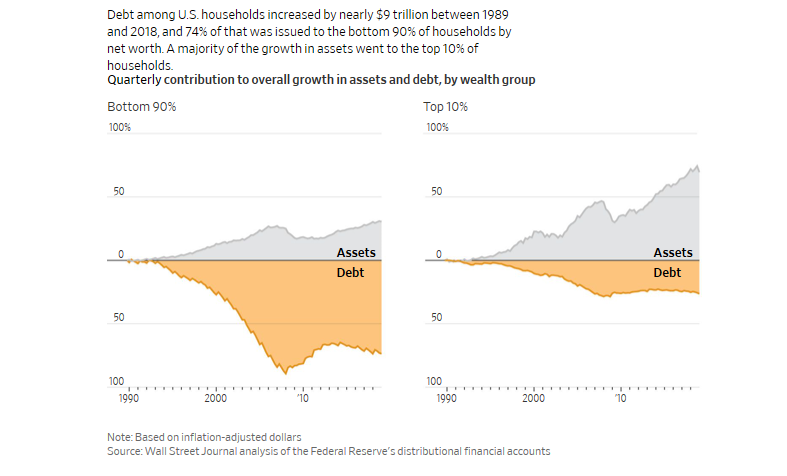
“The median net worth of households in the middle 20% of income rose 4% in inflation-adjusted terms to $81,900 between 1989 and 2016, the latest available data. For households in the top 20%, median net worth more than doubled to $811,860. And for the top 1%, the increase was 178% to $11,206,000.
Put differently, the value of assets for all U.S. households increased from 1989 through 2016 by an inflation-adjusted $58 trillion. A third of the gain—$19 trillion—went to the wealthiest 1%, according to a Journal analysis of Fed data.
‘On the surface, things look pretty good, but if you dig a little deeper, you see different subpopulations are not performing as well,’ said Cris deRitis, deputy chief economist at Moody’s Analytics.” – WSJ
The Fed’s Trapped At Zero
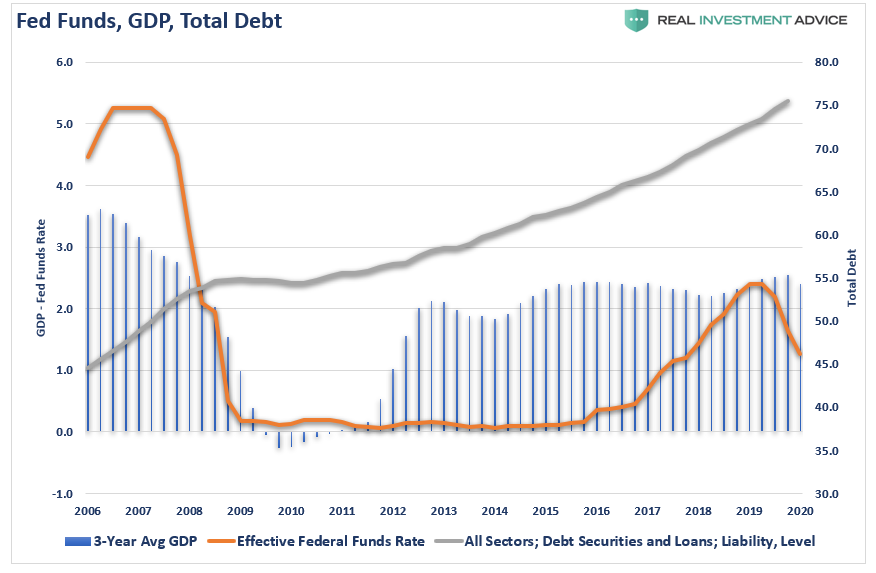
The debt problem exposes the risk posed to the Fed and why they are now forever trapped at the zero-bound.
With an economy now $20 Trillion more in debt than it was before the financial crisis, any small increases in interest rates have almost immediate and catastrophic results on a debt-dependent economy.
As the Fed’s balance sheet heads toward $10 Trillion, the Fed has stated that interest rates will remain low until “such time as the dual mandates of full employment and price stability achieved.” Given economic stability was not achieved in the last decade, it is highly unlikely a more than doubling of the Fed’s balance sheet will improve future outcomes.
Unfortunately, given we now have a decade of experience of watching the “wealth gap” grow under the Federal Reserve’s policies, the next decade will only see the “gap” worsen.
While many are hoping for a “V-shaped” recovery following the “restart” of the economy, the reality is recovery may take much longer than expected.
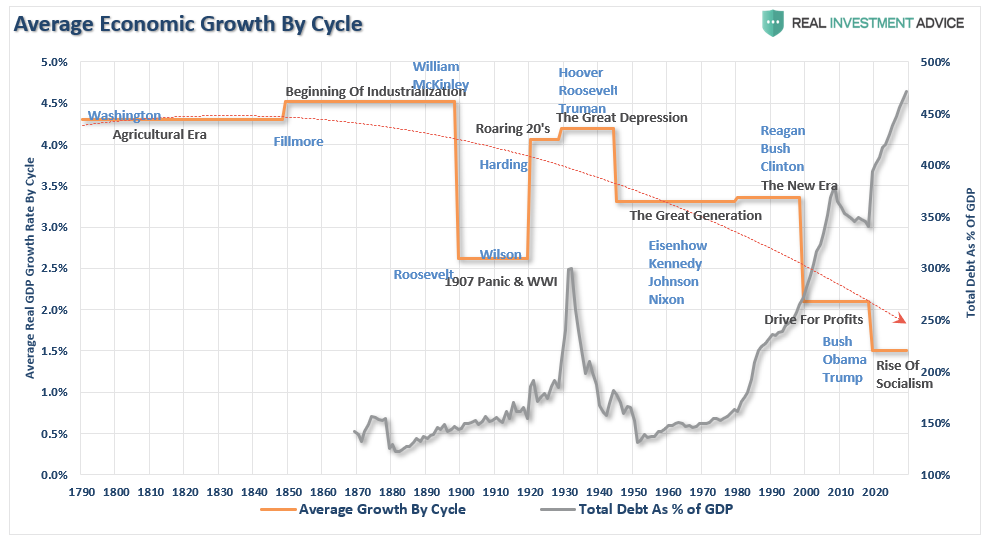
We now know that surging debt and deficits inhibit organic growth. The massive debt levels added to the backs of taxpayers will only ensure the Fed remains trapped at the zero-bound. The chart below shows the 10-year annualized run rates of economic growth throughout history with projected debt and growth levels over the next decade.
End Game
History is pretty clear about future outcomes from the Fed’s current actions. More importantly, these actions are coming at a time where there were already tremendous headwinds plaguing future economic growth.
An aging demographic
A heavily indebted economy
A decline in exports
Slowing domestic economic growth rates.
An underemployed younger demographic.
An inelastic supply-demand curve
Weak industrial production
Dependence on productivity increases
The lynchpin, like Japan, remains demographics and interest rates. As the aging population grows becoming a net drag on “savings,” the dependency on the “social welfare net” will continue to expand.
The problem is that after a decade of pulling forward future consumption to stimulate economic activity, a further expansion of the wealth gap, increased indebtedness, and low rates of economic growth, will weigh on future economic opportunity for the masses.
Supporting economic growth through increasing levels of debt only makes sense if “growth at all cost” uniformly benefits all citizens. Unfortunately, there is a big difference between growth and prosperity.
Spain Allows Outdoor Exercise For First Time In 7 Weeks: Live Updates
Summary:
Spain allows outdoor exercise
Russia reports another record jump in cases
Video shows Mexican hospitals hiding bodies of COVID-19 patients as hallways packed with the sick
Singapore eases some lockdown measures as domestic cases decline
US case total tops 1.1 million
Japan joins US in fast-tracking remdesivir
* * *
For the first time in seven weeks, adult Spaniards are enjoying a jog or a bike ride outdoors as PM Pedro Sanchez lifted restrictions on outdoor exercise.
Spain’s death toll and case count have been trending lower (interspersed with a handful of one-day spikes) for more than two weeks. A week ago, the government lifted restrictions requiring children to remain indoors, allowing young children to leave their homes (accompanied by an adult) for the first time in a month and a half.
Spain’s lockdown has been among the most strict in the world (in some ways, it approximated the lockdown faced by the tens of millions of Chinese residents of Hubei).
Of course, that remains to be seen: One of the biggest stories of the past week has been the uptick in Germany’s ‘infection rate’ – known as “R” – which approximates the average number of people infected by an infected patient. So long as the ratio stays below 1, then the outbreak is slowing. But mid-week, Germany revealed that its ‘R’ rate had jumped from 0.70 to 0.96 in the week since some more shops were allowed to reopen.
However, now that people are back out and about, Spain is imposing a new restriction: the government is requiring masks to be work on all public transport as of Monday, the prime minister said earlier this week as he outlined plans to relax the lockdown.
To ensure that nobody is unable to comply, the government will hand out millions of masks to reduce the risk of contagion, Pedro Sánchez said in an address to the nation on Saturday afternoon. He pleaded with Spaniards to exercise responsibility when the next phase towards ending the lockdown begins on Monday.
Sánchez said Saturday that 6 million masks would be handed out at transport hubs, while 7 million would be handed out by local councils, and 1.5 million would be distributed by the Red Cross and other NGOs. He added that the success of Spain’s phased emergence from lockdown would depend on “social and personal responsibility,” adding, “the key to the de-escalation isn’t just about personal decisions. The key will be tens of thousands of decisions taken at home, on public transport, at work, and in free time.”
Spain’s Health Ministry said Saturday there have been 216,582 confirmed cases of the virus in the country, and 25,100 deaths.
In Italy, concerns about the reopening are intensifying have led to deep political divisions about how the process should be conducted, as millions worry about another devastating spike in deaths.
As Spain and Italy prepare to lift all remaining restrictions, Russia is finding that its national lockdown, which was extended to mid-March last month by President Putin, might not be long, or strict, enough.
It’s becoming increasingly clear that the virus has already deeply penetrated Moscow society, and spread far and wide enough to create a serious problem in the massive country of 144 million. New daily nfections in Russia have risen by 20% as officials worry that hospitals across the country – but particularly in Moscow – might be overrun.
More than 9,000 new infections were reported on Saturday, another daily record. Once again, they were mostly in Moscow, where the mayor said earlier this week that the government might establish temporary hospitals in sporting arenas or shopping centers to help manage the flow of seriously ill patients, following several other European countries, including Spain and the UK.
Russia has 124,054 confirmed cases, including Prime Minister Mikhail Mishustin, who had been charged with leading the country’s response. Russia’s death toll stood at 1,222.
Its death toll stood at 1,222 as of Saturday morning, although many suspect that the true number of cases is likely much larger, as is the number of deaths.
Over in North America, the government of AMLO, the far-left anti-establishment leader who has been skeptical of the virus from the beginning, has just been exposed for actively trying to cover up the extent of the crisis.
In the US, the number of confirmed cases climbed to 1,104,345 as of Saturday morning, while the number of deaths hit 239,236.
And here’s a rundown of where every country stands re: ‘the virus curve’.
Relatives of patients burst into a Mexican hospital on Friday night and discovered bodies in bags on stretchers crammed into a room. Several of the families discovered the bodies of their loved ones, deaths that hadn’t officially been reported in Mexico’s numbers.
Watch the video below:
En Hospital General de Ecatepec Las Américas , familiares de paciente, entran a buscarlo, y descubren que falleció y encuentran los restos de otros fallecidos
Esto es un cuadro dantesco digno de un Apocalipsis, que tienen que decir @HLGatell y @lopezobrador_ ?
⚠️ Fuertes imágenes pic.twitter.com/ctA6X3n5R4
— Aprendiz de Brujo 💎(No Soy Periodista) (@JoseAntonioLo06) May 2, 2020
Finally, Singapore said it will start easing some of its distancing measures after reporting a drop in locally transmitted coronavirus cases. The average daily number, excluding migrant workers living in dormitories, of locally transmitted cases has dropped to 12 in the past week from 25 the week before, as the country’s outbreak has been almost entirely confined to impoverished migrant workers who represent a kind of second-class caste in Singaporean society.
As more scientists question the wisdom of the US going all in on remdesivir, Japan said Saturday that it woud fasttrack a review of the antiviral drug remdesivir so that it can hopefully be approved for domestic COVID-19 patients. We suspect US investors will be watching for results of that study.
China Issues Odd Animated Lego Video Attacking Trump’s COVID-19 Response
In the growing war of words month-long coronavirus blame game between Beijing and Washington, China has gone on a media blitz, now responding with a state media produced animatedLEGO video.
Yes that’s right… Legos. And it’s titled “Once Upon a Virus”:
The short animation state propaganda video is focused on mocking Trump Administration claims of an initial Chinese COVID-19 coverup, and features dialogue between a Chinese warrior or soldier and doctors on one side, and a Statue of Liberty Lego figurine on the other.
“It will magically go away in April,” said the Statue of Liberty character, in a clear echo and mockery of a prior statement by Trump.
The video has gone viral this week, and was featured through multiple Chinese embassy social media accounts, including the Chinese embassy in France among others.
— Ambassade de Chine en France (@AmbassadeChine) April 30, 2020
The American side is presented as naive, reckless, and blindly accusatory: “It’s only a flu …Don’t wear a mask,” the Statue of Liberty said while blasting China on human rights while it tried to battle the disease.
It also took the US to task over withdrawing funding for the World Health Organization (WHO).
China: We discovered a new virus.
America: So what?
Trump previously stated of the WHO’s failures to adequately warn about the pandemic: “The WHO failed to investigate credible reports from sources in Wuhan that conflicted directly with the Chinese government’s official accounts,” he had said at the time.
Adding to the bizarre saga, it prompted a statement out of The Lego Group distancing the company from the production: “We weren’t involved in making the animation in any way. As a toy company, we’re focusing on bringing play to children and families,” the Lego company said.
Critics fired back at the animation propaganda, noting that while many of the quotes are real, they’re presented out of context and not according to a proper timeline.
Conveniently absent from the state media ‘narrative’ is the glaring and scandalous fact that China arrested the very doctor who was the earliest to try and warn his country as the severity. We’d like to see a Lego cartoon about that one.
In most countries in Europe and North America, governments have imposed lockdowns of their populations and economies. At first glance, this strategy would seem to strike a reasonable, if painful, bargain: pay the price of (hopefully temporary) limits on civil liberties and economic recession (if not depression) to slow virus spread. The price has been very high. In the U.S. alone, the bill has already reached trillions of dollars of lost economic activity and tens of millions out of work. The material pain may go beyond economic insecurity. Many Americans face the real prospect of food shortages.
Sweden, however, has forged its own path. The government is emphasizing voluntary action over government mandates. Elementary schools and businesses, including bars, cafés, restaurants and gyms, are open. The government has urged people to act responsibly and follow social distancing guidelines.
Stockholm has reasoned that COVID-19 will require sustained interventions, even under optimistic timelines for the development of a vaccine. If true, the economic hardship and sacrifices to civil liberties involved in long-term societal shutdowns would become unjustifiable. So, the Swedish Public Health Authority has elected to pursue what it regards as a feasible goal of slowing the spread to prevent the overwhelming of its health care system while protecting the most vulnerable populations.
These commentaries seem to extrapolate too much from a narrow view of the data coming out of Sweden or are under the false impression that Sweden is not socially distancing and simply allowing the disease to spread. In fact, recent reports claiming an acceleration in COVID deaths in Sweden appear to be based on misconstruing the data at hand and narrow comparisons to other countries.
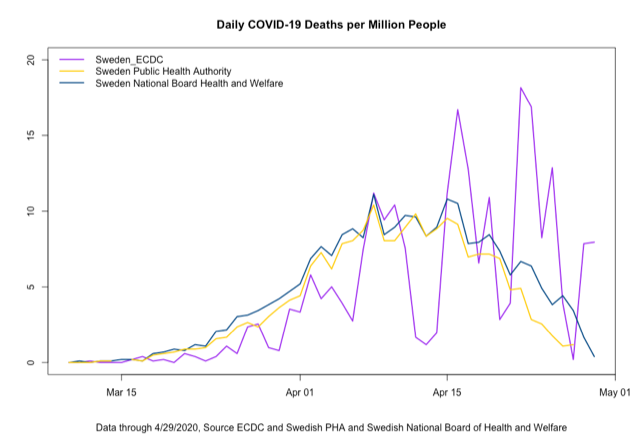
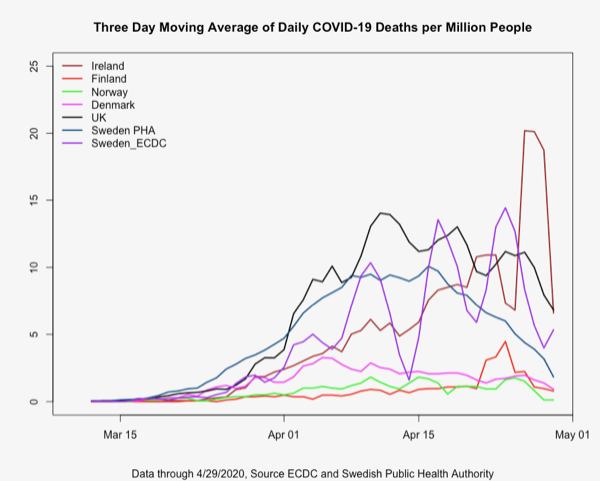
The Swedish Public Health Agency (SPHA) and the European Centre for Disease Prevention and Control (ECDC) have been reporting different daily COVID-19 death counts in Sweden. The Swedish National Board of Health and Welfare also releases COVID-19 death statistics. Although the cases reported by the SPHA and SNBHW show daily deaths on a decreasing trend, the data from the ECDC shows large swings in the death rate (Figure 1).
To understand these discrepancies, one must look into the nature of the data. The ECDC uses the day that deaths are reported. The SPHA reports the actual date of death. Using their national identification system, they report the day of death for every confirmed COVID-19 death. These numbers, unlike those in many other countries, include deaths that occur at home, nursing homes and long-term care facilities and not just those occurring at hospitals. The National Board of Health and Welfare examines the death certificates and looks for deaths that are attributable to COVID-19 and reports the date of death. Thus, they report the day of COVID-related death regardless of whether the person was tested for COVID-19 or not. It is interesting to note that roughly 4.5% of the COVID-19 deaths in the SPHA count are cases where COVID-19 was not listed as a cause of death; in other words, people died with COVID-19, not from it. Further, there are reporting delays, with weekends having lower counts and larger counts occurring later in the week. Taken together, these distinctions can paint different pictures.
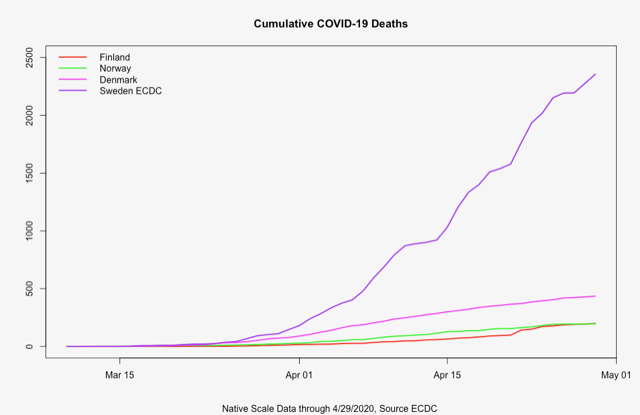
Cross-country comparisons may suffer similar problems. Data cited in the press and on Twitter comparing Sweden to its Scandinavian neighbors are sometimes reported in cumulative numbers of deaths without adjusting for population size. The population of Sweden is roughly double the size of that of each of its Nordic neighbors. Such comparisons of death counts can misrepresent Sweden as a massive outlier (Figure 2).
A fuller picture should bring into the comparison nearby Ireland and the United Kingdom. As daily counts can suffer from a great deal of random variability, plotting the data using a three-day rolling average of deaths per million (to account for population size differences) smooths out some of this noise and resolves the trajectory of the mortality rate into sharper focus. Appraised with this improved vision, Sweden does not appear to be such an extreme outlier (Figure 3).
Sweden represents a unique alternative as a national approach to bending the COVID-19 death curve. Perhaps as nations are contemplating relaxing their lockdowns, we should step back and take an objective, thoughtful look at what could prove to be an invaluable case study.
Stockholm trusts that people will act in their own self-interest to reduce the viral spread and, therefore, in the interest of society. This voluntary approach, however, does not exclude selective interventions and closures. While primary schools remain open to assist parents who may be health care workers and to prevent infections of elderly neighbors or grandparents who otherwise would be pressed into service as child caregivers, secondary schools and universities are closed. Visits to nursing homes are banned, and people aged over 70 have been instructed to self-isolate. Distancing is required at restaurants and gatherings larger than 50 are banned.
Judging by several indicia, Swedes are heeding the recommendations. Ridership on public transportation has dropped, working from home has increased, restaurants remain open but operate at lower capacity, and travel over the Easter holiday declined dramatically.
Sooner or later the lockdowns must end, as people become more afraid of losing their livelihood than losing their life, or as other overlooked mental and physical costs pile up to the breaking point. In the absence of effective and widespread vaccination, the viral spread can be slowed but not stopped. Singapore, for example, initially did well at containment, but now new cases are appearing. It is possible that Sweden’s larger initial wave of infection pulled forward infections that other countries are likely to encounter in subsequent waves as those nations’ lockdowns are inevitably relaxed. Indeed, Dr. Michael Ryan, executive director of the health emergencies program of the World Health Organization, suggested that perhaps Sweden “represents a future model” of what a post-lockdown society might look like .
It is too early to make definitive judgments on the relative merits and risks of the different national approaches to the COVID-19 pandemic. Furthermore, given differences in population composition, culture, health care infrastructure and other factors, successful approaches in one country or even one region might not enjoy equal effectiveness elsewhere.
But in the uncharted world of COVID-19, we must learn from all available data, including that of systems and approaches that differ from convention. Sweden has embarked upon a promising, but unproven, departure from the orthodoxy of government-ordered lockdowns. To date, Stockholm’s reliance on individual responsibility has succeeded in holding caseloads within the country’s capacity to care for the stricken. As we prepare to slowly come out of lockdown and embark for the “new normal” of tomorrow, we have lessons to learn from Sweden today.
* * *
Christina Ramirez, Ph.D., is a professor of biostatistics at the Fielding School of Public Health, University of California, Los Angeles.