A Tale Of Two Bull Markets

A Tale Of Two Bull Markets

Tyler Durden

Fri, 08/28/2020 – 12:55

Authored by Lance Roberts via RealInvestmentAdvice.com,

It’s a tale of two bull markets. One part of the market is trading as you would expect with near depressionary economic numbers. The only description for the other part is “insane.”

In last week’s #Macroview, we discussed that “March Was Only A Correction” and not a bear market. To wit:

“The distinction is essential.

  • ‘Corrections’ generally occur over short time frames, do not break the prevailing trend in prices, and are quickly resolved by markets reversing to new highs.

  • ‘Bear Markets’ tend to be long-term affairs where prices grind sideways or lower over several months as valuations are reverted.

Using monthly closing data, the “correction” in March was unusually swift but did not break the long-term bullish trend. Such suggests the bull market that began in 2009 is still intact as long as the monthly trend line holds.

As we concluded last week:

There is a sizable contingent of investors, and advisors, today who have never been through a real bear market. (No, March was not it) After a decade long bull-market cycle, fueled by Central Bank liquidity, it is understandable why mainstream analysis believed the markets could only go higher. What was always a concern to us was the rather cavalier attitude they took about the risk.

What gets lost during bull cycles, and is always found in the most brutal of fashions, is the devastation caused to financial wealth during a ‘mean reversion’ process.”

It is the issue of a “mean reversion” that we want to delve into this week.

Kyōki

Kyōki is the Japanese word for “insanity.” That was the word that came to mind when my co-portfolio manager, Michael Lebowitz, emailed me the following chart.
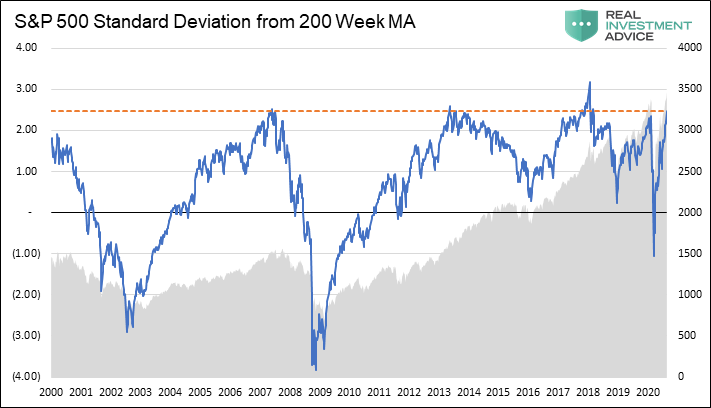
The chart is WEEKLY data, which smooths out some of the short-term volatility. What is displayed is the standard deviation of the market from its 200-WEEK (4-year) moving average.

Another reason March was only a “correction” within the bull trend, is the reversion did not violate the negative 1-standard deviation level during the retracement. Such was the same as during 2015-2016, and 2018 corrections.

Notably, each time of the 5-times previously, going back to 1999, where the market traded at 2-standard deviations or higher from the 4-year moving average, a reversion occurred. Those periods were 2000, 2007, 2014, 2018, February 2020, and now.

The critical definition is that of a “mean reversion:”

“Mean reversion is a theory used in finance that suggests that asset prices and historical returns eventually will revert to the long-run mean or average level of the entire dataset.” 

An average price can only exist if the market trades both above and below the average price during the period. As shown, “reversions to the mean,” have occurred with regularity from extremes and tend to be more destructive events from deep corrections to bear markets.

Before we go much further, let’s get a better understanding of the importance of “standard deviation.”

What Is Standard Deviation

As I discussed in “Revisiting Bob Farrell’s 10 Investing Rules”:

“Like a rubber band that has been stretched too far – it must be relaxed in order to be stretched again. This is exactly the same for stock prices that are anchored to their moving averages. Trends that get overextended in one direction, or another, always return to their long-term average. Even during a strong uptrend or strong downtrend, prices often move back (revert) to a long-term moving average.”

The idea of “stretching the rubber band” can be measured in several ways, but I will limit our discussion this week to Standard Deviation and measuring deviation with “Bollinger Bands.”

“Standard Deviation” is defined as:

“A measure of the dispersion of a set of data from its mean. The more spread apart the data, the higher the deviation. Standard deviation is calculated as the square root of the variance.”

In plain English, and as shown in the chart below, the further away from the average an event occurs, the more unlikely it becomes. As shown below, out of 1000 occurrences, only three will fall outside of the area of 3 standard deviations. 95.4% of the time, events will occur within two standard deviations.
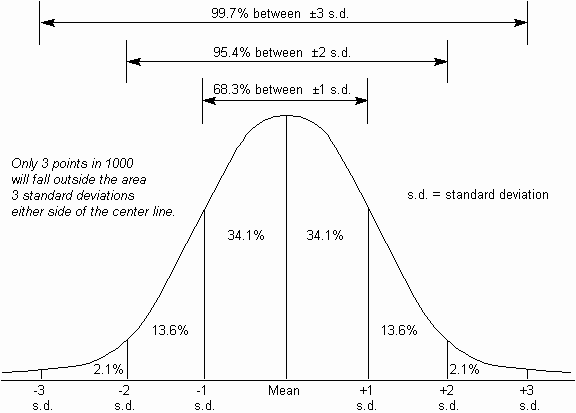
For the stock market, and as shown in Michael’s chart above, the standard deviation is currently outside of 2-standard deviations.

In other words, the “rubber band is extremely stretched.” 

Bollinger Bands

Another way to measure deviation is by using “Bollinger bands,” which we will use in the charts below. John Bollinger, a famous technical trader, applied the theory of standard deviation to the financial markets.

Because standard deviation is a measure of volatility, Bollinger created a set of bands that would adjust themselves to the current market conditions. When the markets become more volatile, the bands widen (move further away from the average), and during less volatile periods, the band’s contract (move closer to the average).

The math, courtesy of Stockcharts.com is pretty straight-forward, as shown in the table below. (The only difference between 2, 3 or 4 standard deviations from the mean is the multiplication factor at the end of the formula)
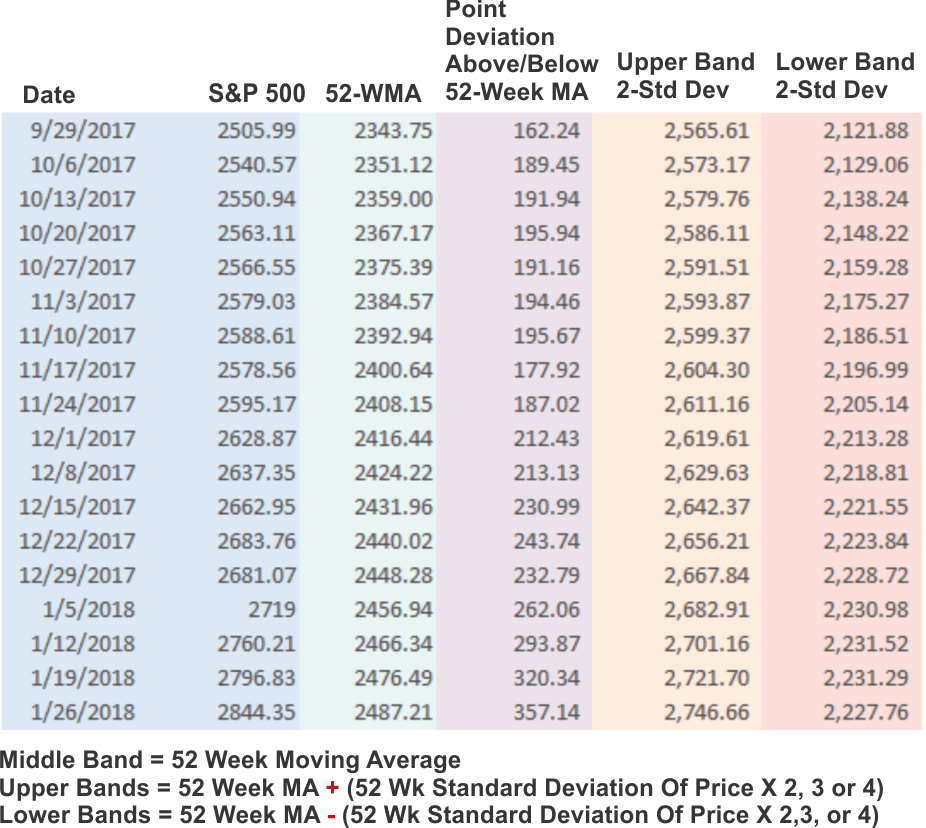
Note: For you excel geeks like me, you can calculate using the STDEVPA formula as follows:

=Current 52-Week MA level +/- (STDEVPA(52-week range of S&P 500 prices) * 2, 3 or 4)

Measuring Markets

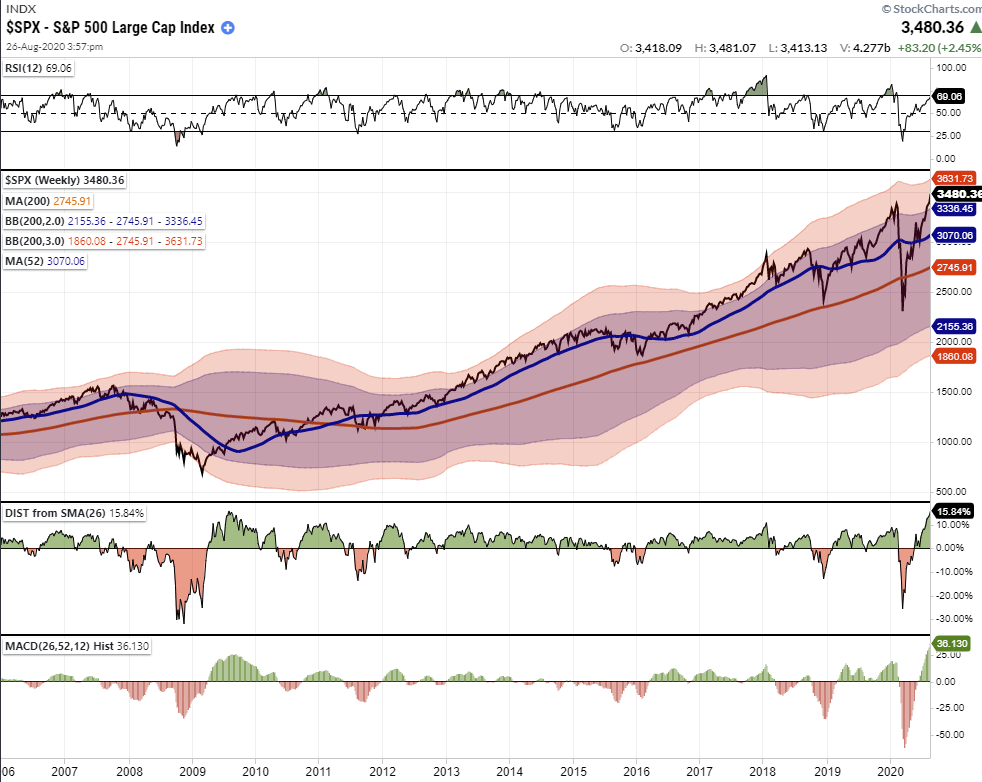
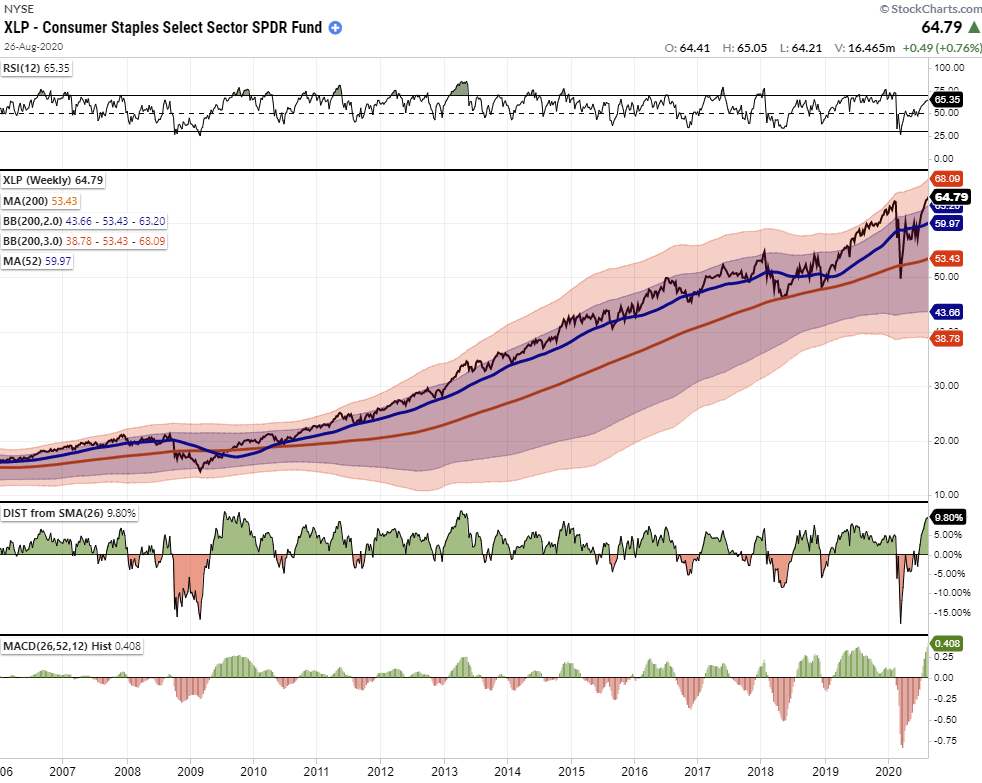
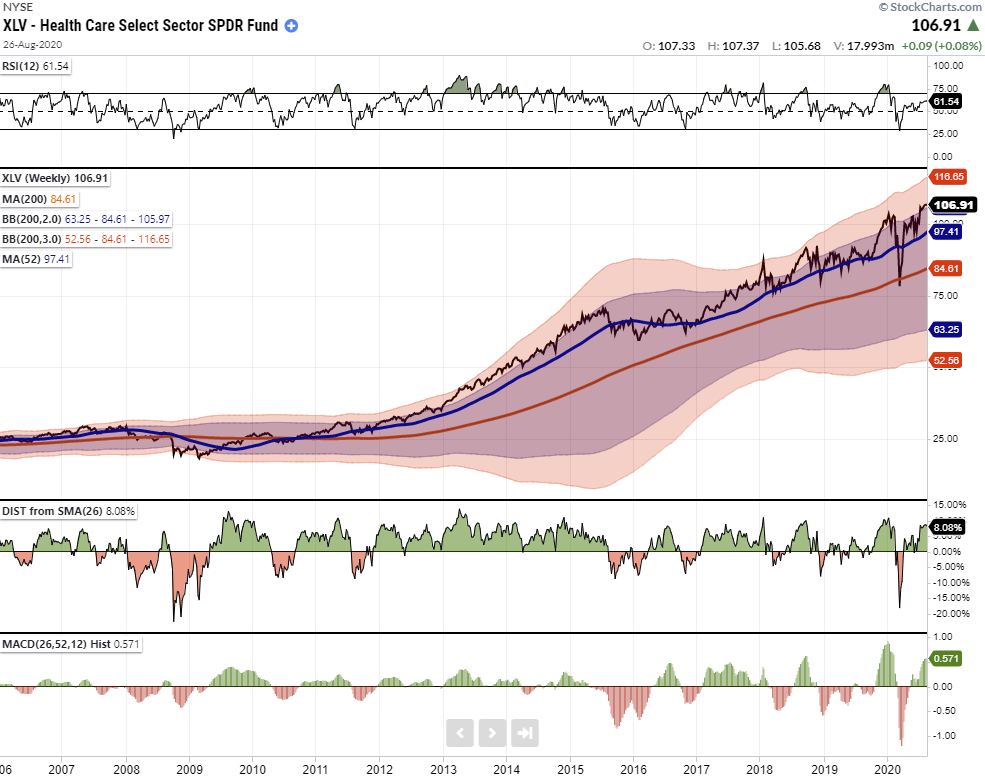
All of the following charts are WEEKLY and use the same measures for consistency in the analysis.

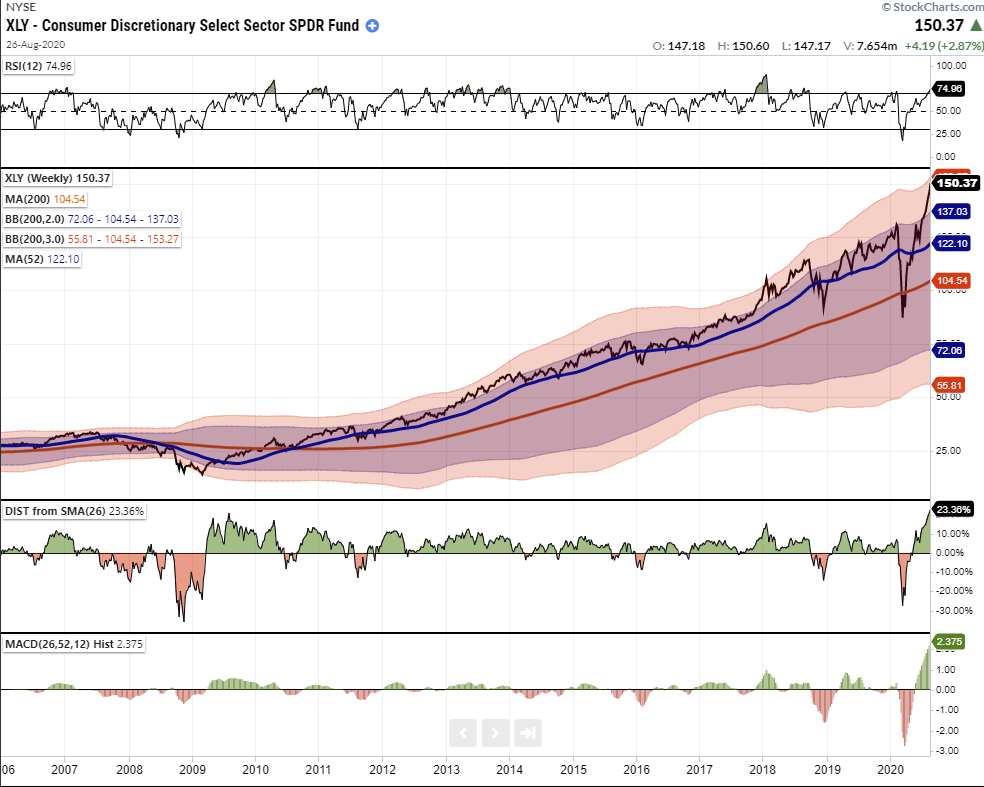
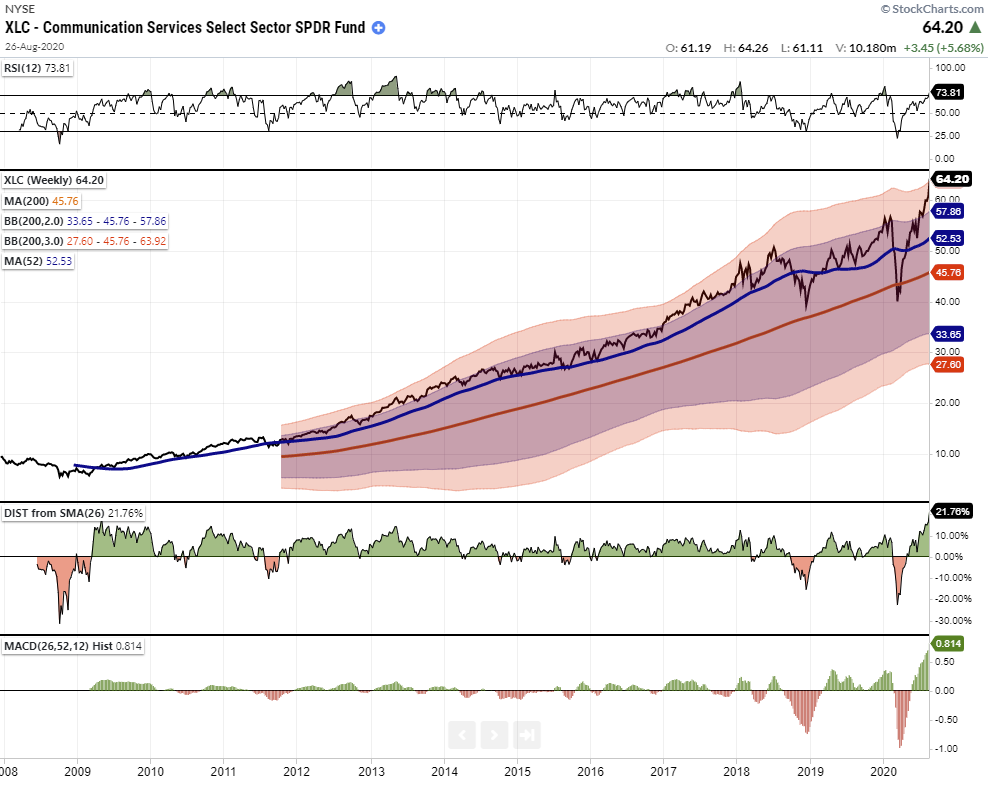
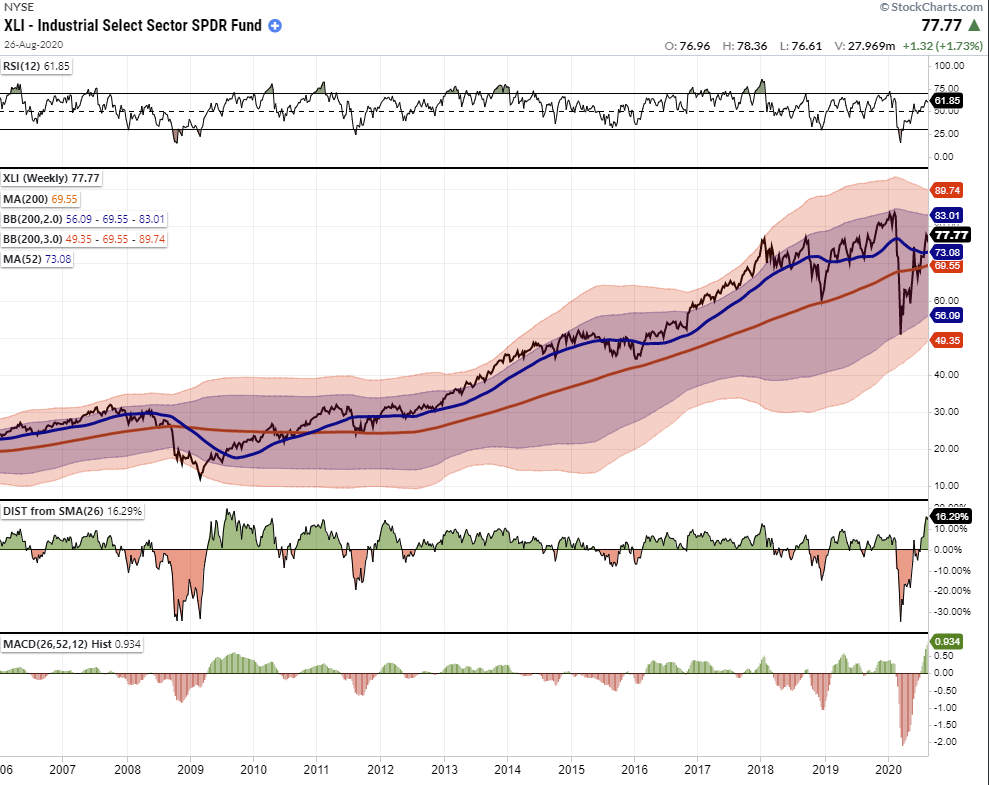
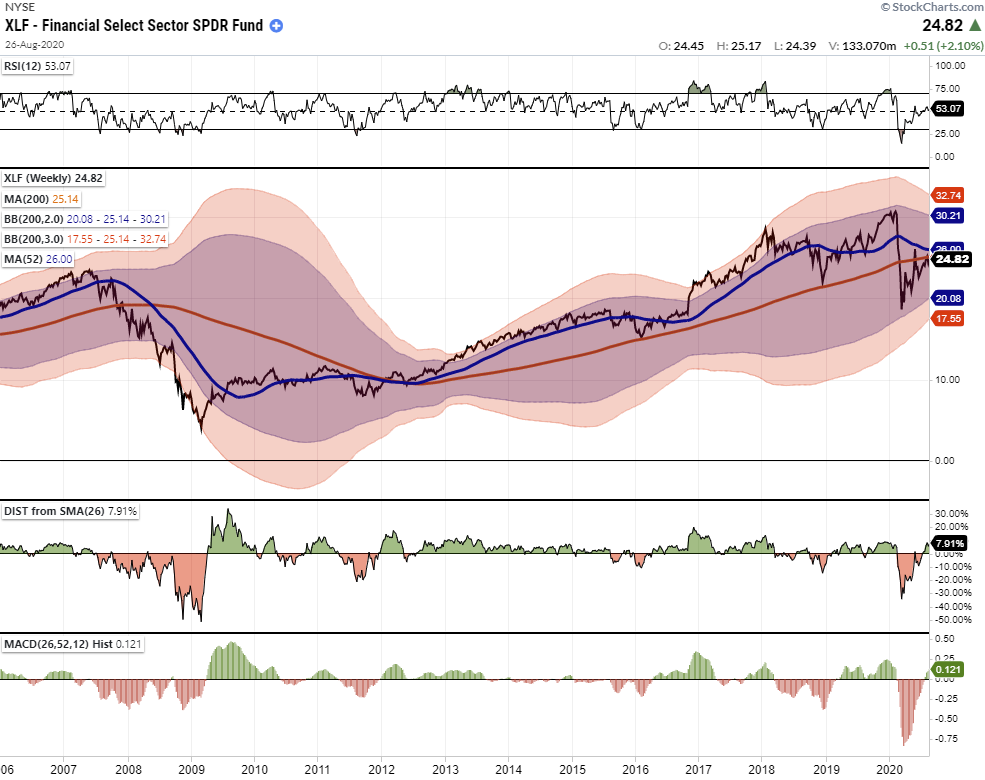
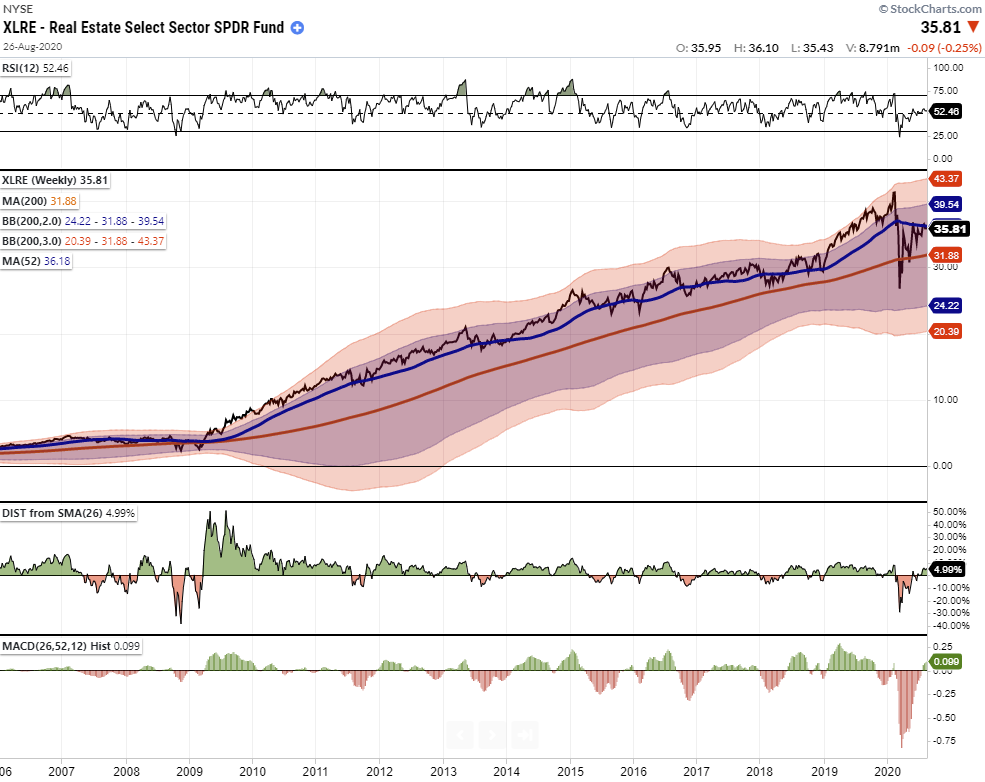
  1. Top Panel: 12-week RSI (Relative Strength Index) (One quarter)

  2. Main Panel: Index 52-week (1-year) and 200-week (4-year) moving averages AND 2- and 3-standard deviation measures of the 200-week moving average.

  3. Lower Panel: Distance of the index from its respective 200-week moving average.

  4. Bottom Panel: Moving Average Convergence Divergence (MACD) histogram using 26-weeks (6-months) and 52-weeks (1-year) for the short and long-term moving averages.

Because we are using weekly data, these charts are longer-term in nature and will take time to develop. Therefore, it does NOT mean that a “reversion” process will begin tomorrow. However, the message these charts provide is essential over longer holding periods.

In the charts below here are the critical items to note:

  1. The current level of RSI is above 70

  2. Index is ABOVE 2-standard deviations (pushing into the “red zone.”)

  3. The distance from the 26-week moving average (6-months) is above 12%

  4. The MACD histogram is above 20

These are all levels that have typically represented extremes and have preceded short-term correction. The MORE EXTREME readings generally have resulted in deeper corrections and outright bear markets.

With that explanation, let’s explore the two different bull markets which currently exist.

Major Markets At Extremes

It is quite remarkable that given the economic devastation, the S&P 500 is trading at not only at record highs, but at near-record deviations of the 200-dma and MACD readings. Historically, such deviations have either been resolved by a correction back to the 4-year moving average or a full-fledged bear market.
The technology-heavy Nasdaq is hitting massive extremes with the one-year RSI above 70, and trading at 4-standard deviations above the 4-year moving average. (Note: 4-standard deviations suggests the Nasdaq has accounted for roughly 99.99% of all potential price gains.) With the deviation from the 6-month moving average and the MACD extension at record levels, there is an increased risk of a significant correction.
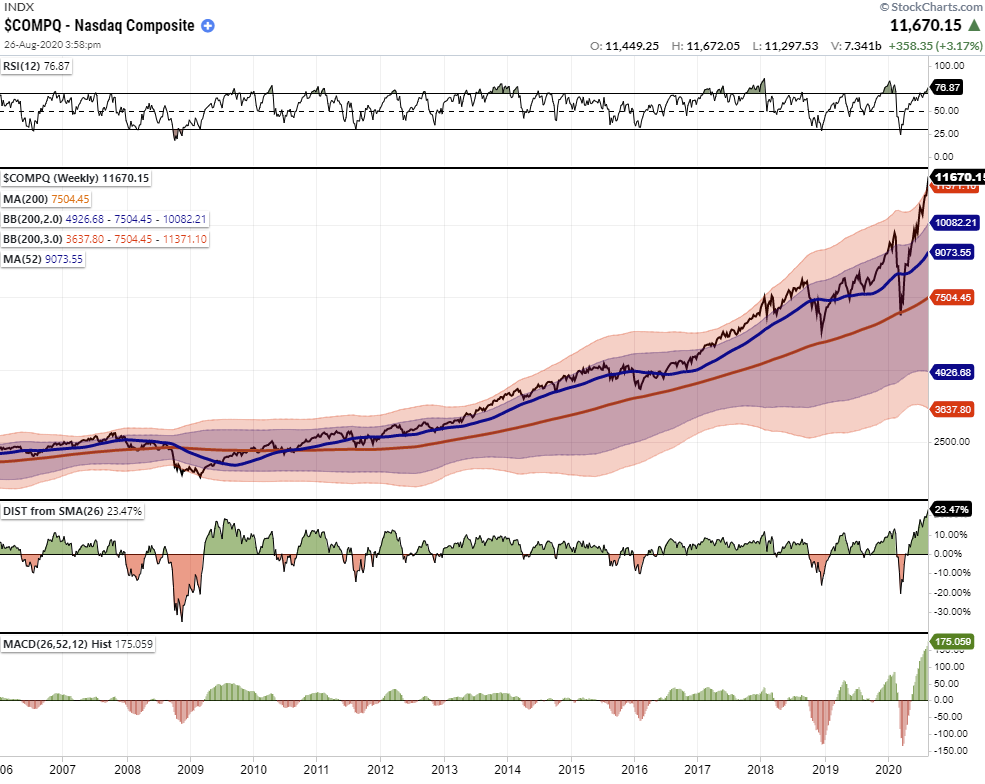
It is hard to make a technical case at this juncture for significant price gains from current levels. While it is possible prices could push higher in the very short-term, it is only increasing the amount of “fuel” to feed the next correction.

Looking at the major markets, however, is akin to viewing the ocean. What you see on the surface may hide what lurks beneath.

When we look at individual sectors, this is where we see two very different bull markets.

Sectors At Extremes

As shown in the series of charts below, Staples, Healthcare, Communications, Technology, and Discretionary have been the drivers of the “raging” bull market. Such is because these sectors also make up roughly 75% of the S&P 500 index. Importantly, Technology (MSFT), Discretionary (AAPL, AMZN), and Communications (FB, NFLX, GOOG), comprise 51% of the index total.

Given the extreme extensions in the underlying stocks which comprise these sectors, the record extensions of the sectors should be no surprise.

Each of the sectors shown below is pushing 3-standard deviations of the 4-year moving average. Furthermore, each has significantly deviated from their respective 6-month moving averages. Their respective MACD’s and RSI’s are also pushing levels which have previously coincided with corrections and bear markets.\

Staples
Health Care
Discretionary
Communications
Technology

Not surprisingly, given the Top-5 mega-capitalization companies are found in Technology, Discretionary, and Communications, these are the most egregiously overbought and extended sectors.

When these sectors correct, and they will, it will drag the entire market lower.

So, is there a place to potentially shield yourself within the stock market itself? Maybe.

Sectors In A Struggling Bull Market

As I stated, however, there is another bull market, which is not so “bullish.” These sectors also contain companies that exhibit real value and high dividend yields.

Energy, Real Estate, Utilities, and Finance are in a much different position than the rest of the market. Each of these sectors just recently triggered MACD “buy signals” (the 6-month moving average crossed above the 1-year moving average), which suggests there may be opportunities in these sectors.

Energy

Industrials
Financials
Real Estate
Utilities
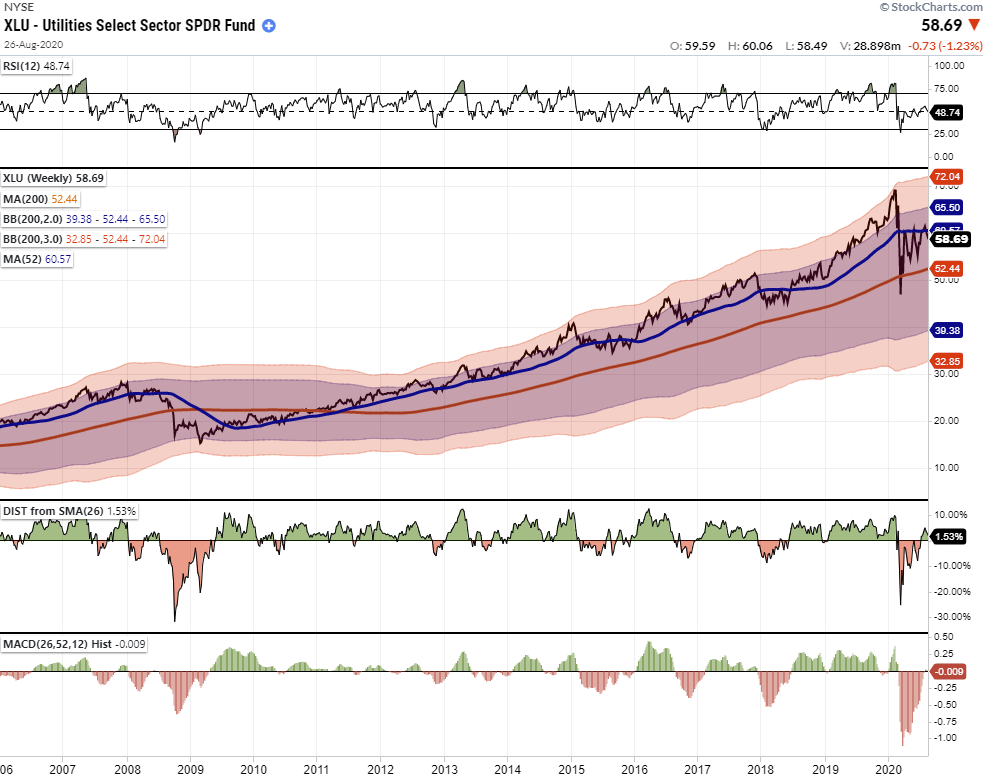
In theory, these sectors, which have been weak in terms of relative performance to the S&P 500, may well provide some “safety” during a market correction. Given Utilities, Real Estate, Financials, and Energy specifically have a substantially higher “dividend yield” relative to the S&P 500, money tends to hide in these sectors during “risk-off” market rotations.

Understanding The Risk

Over the next several weeks, or even months, the markets can certainly extend the current deviations from the long-term mean even further. But that is the nature of every bull market peak, and bubble, throughout history as the seeming impervious advance lures the last of the stock market “holdouts” back into the markets.

As Vitaliy Katsenelson once wrote:

Our goal is to win a war, and to do that we may need to lose a few battles in the interim. Yes, we want to make money, but it is even more important not to lose it.”

I wholeheartedly agree with that statement which is why we remain invested, but hedged, within our portfolios currently.

Unfortunately, most investors have very little understanding of the dynamics of markets and how prices are “ultimately bound by the laws of physics.” While prices can certainly seem to defy the law of gravity in the short-term, the subsequent reversion from extremes has repeatedly led to catastrophic losses for investors who disregard the risk.

Just remember, in the market, there is no such thing as “bulls” or “bears.” 

There are only those that “succeed” in reaching their investing goals and those that “fail.” 

via ZeroHedge News https://ift.tt/32wLJ4h Tyler Durden
Hawaii’s COVID-19 Outbreak Spirals Out Of Control As Gov Revives Lockdown

Hawaii’s COVID-19 Outbreak Spirals Out Of Control As Gov Revives Lockdown

Tyler Durden

Fri, 08/28/2020 – 12:35

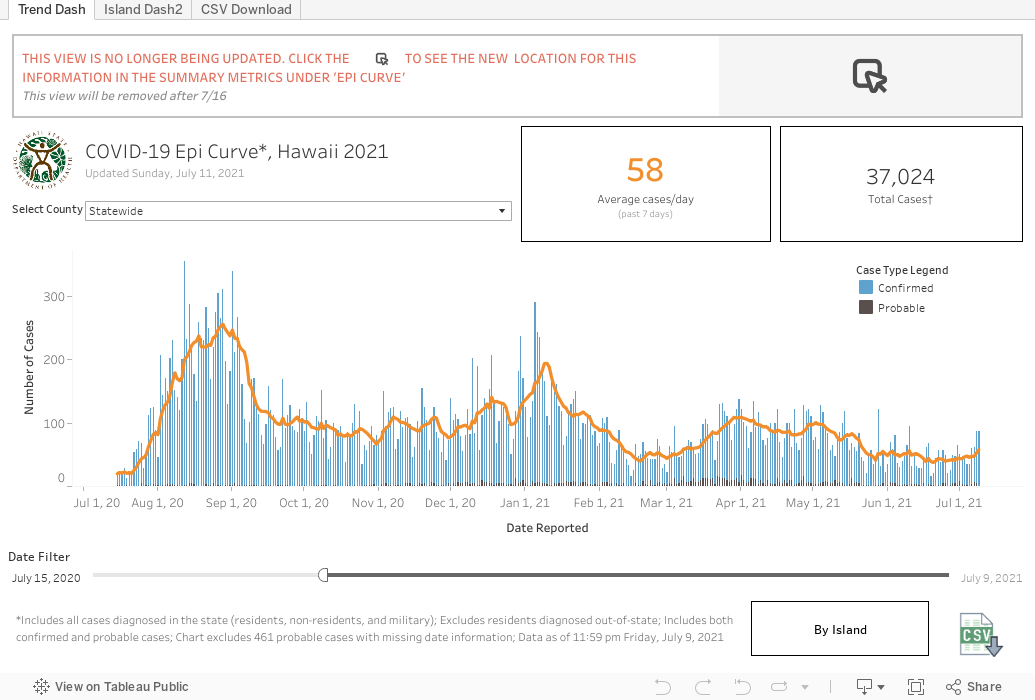
After initially defying fears that its proximity to Japan and popularity with tourists might lead to a massive outbreak, Hawaii is finally facing its very own COVID-19 reckoning.

The state is now struggling with a genuine surge in the month of August after remaining at or near the bottom of the US league tables for the first four months of the pandemic.

For a small state with just 1.4 million residents, Hawaii has a total of 7,260 confirmed cases, 5,549 of which were confirmed within the last month, according to Johns Hopkins data. The state has gone from last or near last to No. 19 in terms of new cases reported daily over the past few weeks.

From mid-March to mid-June, the state saw an average of just 7.9 new cases reported per day. Last week, that average number climbed to 219.

This is terrible news for a state that, at the end of July, had the highest unemployment rate in the US (more than 13%) due to its reliance on tourism.

Ground zero for the virus is on Oahu, the most populous of the Hawaiian islands and home to the state’s capital and largest city, Honolulu. While 70% of the state’s population lives there, but since the beginning of the outbreak, 91% of its cases have been reported there.

Throughout the spring and early summer, Hawaii ranked nearly last among US states in cases per 100,000 people. Through Tuesday, Hawaii ranked 19th in cases per 100,000 people. More than 70% of Hawaii’s total cases were reported in August and about half of its 51 deaths, the highest in the country on both counts.

One infectious disease specialist says the surge is surprising given Hawaii’s geography, and the plunge in tourism-related traffic.

“As a public health professional, I expect this to look like New Zealand,” he said, referring to the Pacific island nation that isolated itself and had few Covid-19 cases.

Most of Hawaii’s retailers started reopening in May (at least, those that could reopen), and whatever is driving the outbreak isn’t entirely clear. Some speculate that Hawaii’s large multigenerational families who often live together have been holding more public gatherings, creating more opportunities for the virus to spread.

Additionally, the state’s scant resources have apparently worn thin as Hawaii worked to enforce its mandatory quarantine restrictions (one of the few states to do so) and poured resources into contact tracing. Right now, the state can only handle roughly 3 new tracing cases per day, which barely dents the current caseload.

On Tuesday, Hawaii Gov. David Ige ordered all non-essential workers on Oahu to stay home for two weeks; he also prohibited all public gatherings.

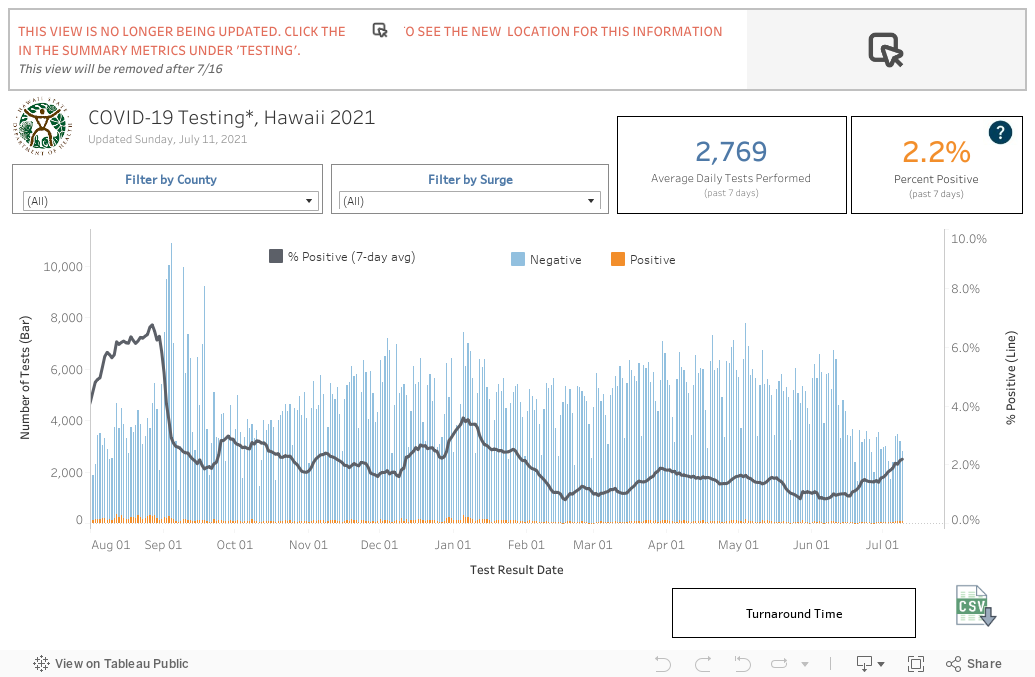
To be sure, testing has continued to expand. But the rising positivity rate in the state suggests that it’s facing a genuine outbreak.

It’s just the latest example of a state that supposedly did everything right, from strict lockdowns, to contact tracing to enforcement – and is still struggling with a new wave of cases.

via ZeroHedge News https://ift.tt/2QBVlF2 Tyler Durden

Subprime Mortgages Fall Massively Delinquent Leaving Taxpayers On Hook As Housing Market Splits In Two

Subprime Mortgages Fall Massively Delinquent Leaving Taxpayers On Hook As Housing Market Splits In Two

Tyler Durden

Fri, 08/28/2020 – 12:15

Authored by Wolf Richter via WolfStreet.com,

On one side: land rush by a few hundred thousand home buyers.

On the other: millions of homeowners with delinquent mortgages.

The Federal Housing Administration (FHA) prides itself in insuring subprime mortgages with, as it says, “low down payments,” “low closing costs,” and “easy credit qualifying” – all true. Of its active portfolio of 8 million mortgages that it insures, 17% were delinquent in July, the highest rate in FHA history. In many metros, the delinquency rates of FHA mortgages are above 20%; and in two metros, the delinquency rates exceed 27%.

The delinquency rates include mortgages that were delinquent and then entered a forbearance agreement with the lender, where the lender agreed to not pursue its rights due to nonpayment of the mortgage. During the term of forbearance – six months, under the CARES Act, extendable by another six months – the borrower isn’t making payments, but the missed interest and principal payments are added to the mortgage balance and will need to be paid somehow.

A FICO credit score below 620 is considered “subprime.” The FHA insures mortgages of borrowers with credit scores well below that.

  • If the borrower has a credit score of at least 580, the FHA will accept down payments of only 3.5%.

  • If the FICO score is below 580, no problem, but then down payment is 10%.

Many of the people whose mortgages the FHA insures have lost their jobs or had had their hours or work reduced.

In terms of the lenders, the good thing is that they don’t carry the risk. The FHA and thereby the taxpayer carry the risk.

In terms of the taxpayer, the good thing is that home prices have risen in many markets in recent years, and are rising there right now, and that many fallen-behind homeowners can sell their home and pay off the defaulted mortgage with the proceeds from the sale, and maybe have a little cash left over. And if the home goes into foreclosure because the proceeds wouldn’t have been enough to pay off the mortgage, the losses would be relatively small.

The widespread home price declines that occurred during the subprime crisis of Housing Bust have not happened yet. And that’s why at the moment no one is panicking about these sky-high delinquency rates.

But when millions of homeowners cannot make the mortgage payments and have to put these millions of homes on the market – forced sellers – they trigger a sudden surge of supply of homes for sale, and the entire supply-and-demand equation, and thereby the pricing environment, are going to change.

During the last Housing Bust, this phase happened, but it didn’t happen up front. Home prices started falling for other reasons, and then forced sellers and then their lenders tried to sell their homes, which put enormous downward pressure on prices.

This time around, the housing market has split in two:

On one side of the population, there is some sort of land rush going on at the moment, with people trying to buy everything in sight. On the other side are people who’re delinquent on their mortgages.

But the numbers are skewed: There are on average 460,000 people buying a home every month. But there are now millions of people behind on their mortgages, including 1.4 million whose mortgages are insured by the FHA.

American Enterprise Institute’s Housing Center, which collected the delinquency data from FHA Neighborhood Watch, sees the eventual impact of the FHA delinquencies in this way:

It would be expected that these delinquency percentages will increase over time. At some point, a significant percentage of the then delinquent loans would be expected to be placed on the market by owners under distressed conditions or become foreclosures, and then enter the market.

It is at that point we would expect buyer’s markets to develop in zip codes with heavy exposure to FHA and other high-risk lending combined with high levels of delinquency.

So there is a boom on one side of the housing market, and there is already a bust forming on the other side of the housing market.

FHA mortgages are far from the only delinquent mortgages, and Fannie Mae, Freddie Mac, the VA, Ginnie Mae, and others are also experiencing surging delinquency rates – just not to this extent. So the FHA delinquencies are just a segment of the show.

Click here for a complete table of the 167 Metropolitan Statistical Areas (MSA) and their FHA loans, in order of the delinquency rate of those FHA loans (4th column). It also shows the number (not dollars) of active FHA mortgages in that MSA (3rd column) and the share of FHA mortgages in that market as a percent of total mortgages (by number of mortgages, not dollars). In some markets, FHA mortgages have a share of over 20%, and in other markets a share in the low single digits. The problems will be larger where the FHA share is higher.

Find the full table here – You can use your browser’s search box to find your MSA.

*  *  *

Enjoy reading WOLF STREET and want to support it? Using ad blockers – I totally get why – but want to support the site? You can donate. I appreciate it immensely.

via ZeroHedge News https://ift.tt/3llEbK6 Tyler Durden

Hedge Funds Start Piling Into “The Big Short 3.0”

Hedge Funds Start Piling Into “The Big Short 3.0”

Tyler Durden

Fri, 08/28/2020 – 11:56

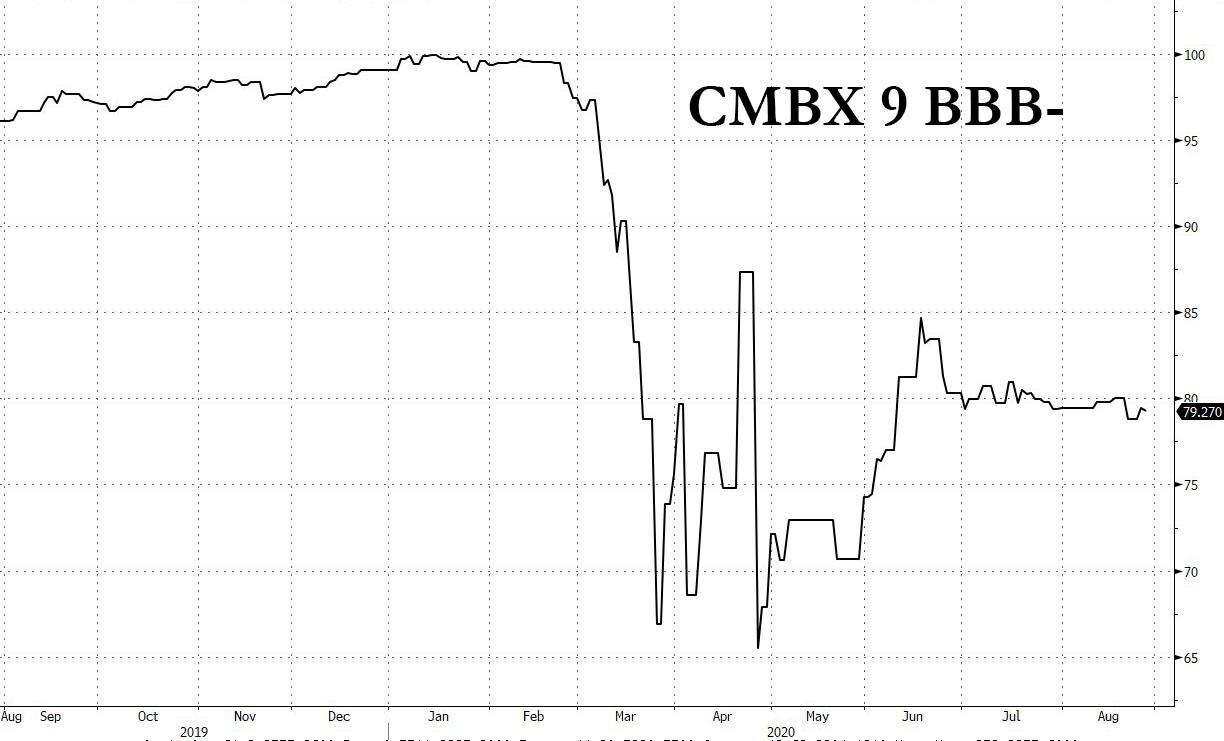
Back in June we said that as we had reported previously, with commercial real estate failing to benefit from the record rebound in overall risk since the March lows as a result of a tidal wave of retail bankruptcies, CMBX Series 6 which back in March 2017 was dubbed the “Big Short 2.0” trade due to its substantial exposure to malls which were hurting long before the arrival of the pandemic…

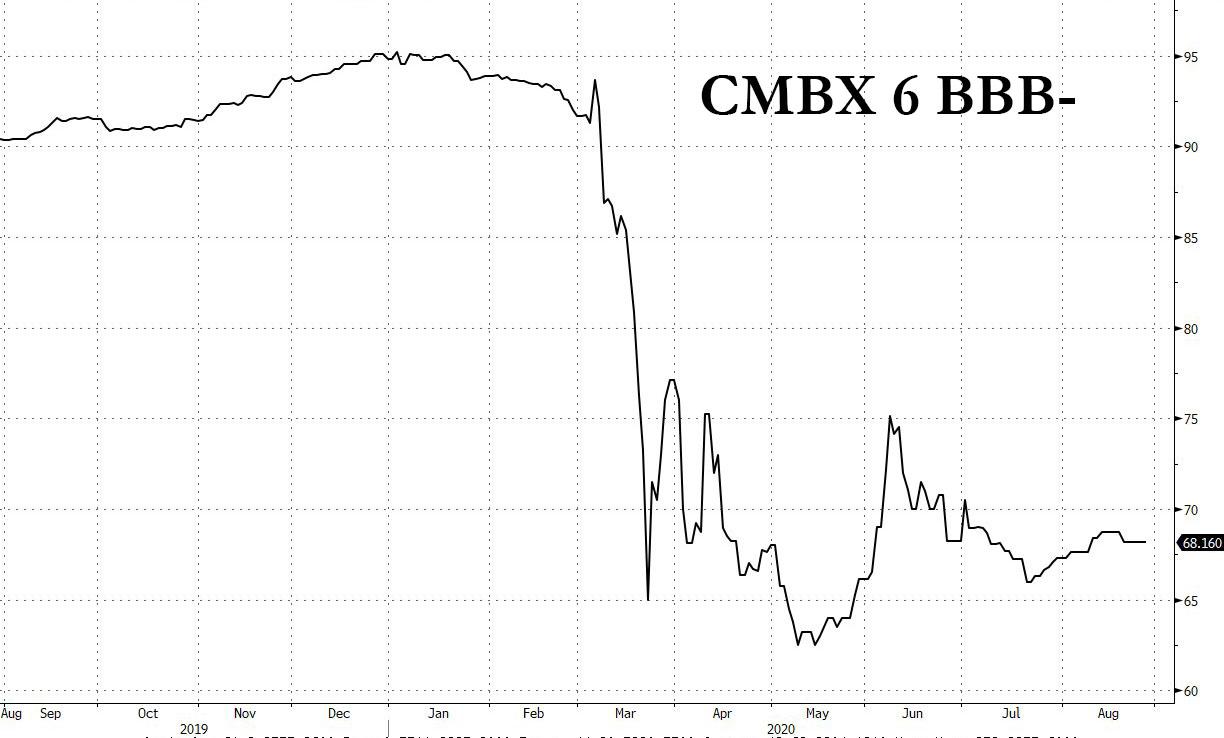
… and especially the BBB- tranche, has been stuck in purgatory, and after surging to 75, is back to where it was in mid-April as investors signal that the worst is yet to come for commercial real estate.

Of course, all of this is well-known by now, and it is safe to say that the riskier tranches of CMBX S6 are now fairly priced for even a downside scenario among retail outlets. But what about other CMBX issues, and is there another “Big Short” lurking among the various tranches, especially in the aftermath of the coronavirus shutdowns which will cripple not just retail outlets but everything from restaurants, to multi-family housing (as city renters flee for the suburbs), to offices and hotels.

As we said all the way back in May, the answer to all those seeking the next Big Short, or Big Short 3.0, is CMBX 9. This is what we wrote:

… with CMBX 6 now done, keep a close eye on CMBX 9. With its outlier exposure to hotels which have quickly emerged as the most impacted sector from the pandemic, this may well be the next big short.

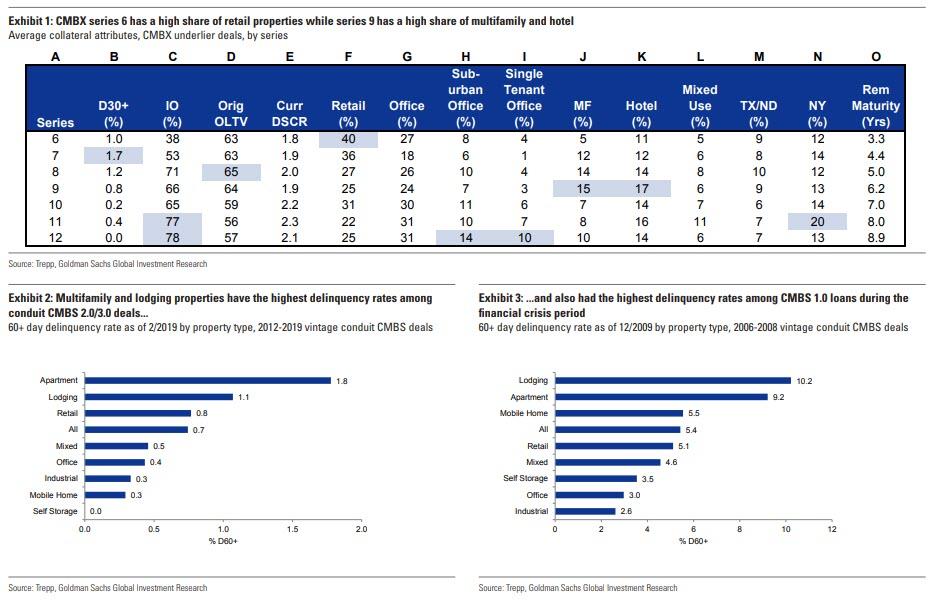
A few weeks later commercial real estate analytics specialist Treppagreed with us. As Trepp’s Manus Clancy wrote in a blog post, “the COVID-related volatility over the last three months has resulted in growing interest over CMBX as a way to take positions on US commercial real estate. This week we are back to hone in on CMBX 9.

Below are some of the reasons why CMBX 9 – which so far is off-limits to the Fed’s blatant bailouts of most, but not all, asset classes – may be the cleanest and safest way to bet on the devastation resulting from the coronavirus pandemic. Courtesy of Trepp:

What Makes CMBX 9 Unique?

For one, it’s the only CMBX index backed by 2015 deals. Before the COVID-19 crisis began, the last meaningful hiccup in CMBS lending came in early 2016. In late 2015, volatility in the US equity markets picked up considerably and oil prices fell to under $30 a barrel. The sharp price decline in black gold led investors to fear a wave of forthcoming bankruptcies from energy companies.

That fear led to a sharp repricing of credit in the leveraged loan market and that widening had a gravitational pull on CMBS, dragging spreads wider over the course of two months. That widening in CMBS led to an abrupt pause to CMBS lending leading to a standstill in issuance in Q1 2016.

The 2015 CMBX 9 reference obligations consist of deals issued before any of that drama emerged. (The 2016 oil downturn in CMBS also led to several defaults of hotel and multifamily loans backed by “man-camps” in the shale regions of North Dakota and elsewhere.)

Other Attributes of CMBX 9?

It has the highest concentration of multifamily loans of any CMBX series with 14.7%. (The only other series that is close is CMBX 13 with 14.1%.)

CMBX 9 also has the highest concentration of hotel loans with 16.7%. (CMBX 11 is next with 13.8%.) In terms of protection premiums, CMBX 9 BBB- costs about 725 basis points to insure. That’s well inside of the 925 basis points for CMBX 8 BBB- but wider than the 675 for CMBX 10 BBB-. (Those spread levels are from IHS Markit).

For comparison purposes, CMBX 9 BBB- ended 2019 with a spread of 310 basis points. So there has been about 400 basis points of widening since the beginning of the year.

Furthermore, as we most recently showed in late June, there was a lot of potential downside for CMBX Series 9 BBB-. In fact, if the hotel world suffers a perfect storm of pent up defaults coupled with waves of covid-related shutdowns which send the hotel industry into another tailspin, the potential downside here could be even greater than for Series 6.

Today, Bloomberg has caught up and writes – three months after us – that hedge funds are “beginning to set their sights on a U.S. credit-derivatives index with outsized exposure to hotel debt as the pandemic sinks the hospitality industry into distress.” Actually, they “began” to set their sights in May but who’s counting.

The funds, the report goes on, are starting to build up wagers against the synthetic index, known as CMBX 9, “shifting attention from a high-profile bet against America’s challenged malls” i.e., the popular CMBX 6 short first profiled here in 2017 as “The Big Short 2.0” and which made traders such as Carl Icahn $1.3 billion in profit.

The shift, which market participants say is beginning to show up in some trading flows, comes as delinquencies on hospitality property loans surge and even begin to exceed those in retail.

Bloomberg quoted Dan McNamara, a principal at MP Securitized Credit Partners, a hedge fund focused on shorting commercial mortgage bonds and which also made a killing on shorting CMBX 6 (unlike his nemesis Brian Phillips of AllianceBernstein, a famous CMBX 6 bull, who in June lost his job) who said that “in the last month there has been more selling pressure on the CMBX 9 than any of the other CMBS indices. That’s because some hedge funds are actively looking to play the short side on the Series 9 index due to its significant hotel exposure.”

Well, seek and ye shall find, as we reported first in May in then and again in June in “Is This The Next Big Short?”

Meanwhile, “funds have been coming out of the CMBX 6 and moving onto the CMBX 9,” said Christopher Sullivan, chief investment officer of United Nations Federal Credit Union. “The CMBX 6 trade has gone a bit long in the tooth and is now more fairly priced given the likely pandemic effects. We can see this series becoming the favorite option now.” This is precisely what we said in June

The question now is how long before CMBX 9 BBB-, which has shown remarkable resilience in recent months, snaps lower. Something tells us it won’t be too long: nearly 25% of hotel loans in CMBS are now delinquent, according to Cantor Fitzgerald, compared to about 20% for anchored retail loans. Across the broader CMBS universe, about 10% of hotel loans securitized in bonds are now more than 90 days overdue, compared to only 3.7% for retail loans, Darrell Wheeler, head of research at the New York-based firm, told Bloomberg.

As shown in the chart above above, the fulcrum BBB- tranche of the CMBX 9 series fell to 65.5 cents on the dollar by late April from almost par in early March. It’s since gradually fallen in price to 79 cents on the dollar Thursday from its mid-June peak of about 85 cents.

UNFCU’s Sullivan said CMBX 9 trading volume has been increasing for well over a month, and was among the most actively traded across CMBS indexes for several days in July and August, according to aggregated swap depository data compiled by Bloomberg. Total cumulative trading volume for all tranches of the CMBX 9 increased to $258.5 million on Aug. 26 from $30.2 million on July 28, the data show.

To be sure, the shorts are quietly piling in: for the week ending Aug. 21, the BB tranche of CMBX 9 had $95 million of CDS contracts trading in the market, the highest of any series’ BB tier, according to JPMorgan Chase & Co. data. CMBX 6 had the next greatest amount trading, at $35 million, but that number is declining.

That said, there is always the risk of holding on to a negative carry position for too long before the target “catalyst” – i.e., a price crash – occurs. That’s what happened to some of the earliest proponents of the CMBX 6 short trade such as hedge fund Alder Hill Management, which had been short the CMBX 6 since at least early 2017, and was forced to shutter last year as losses on the wager piled up.

One final note which Bloomberg points out: the CMBX 9 trade doesn’t mature until 2025, while CMBX 6 shorts can get their payouts in 2022. And for short sellers, “CMBX 9 is not as clear cut as CMBX 6, where we expected several BBB- bond classes to take full losses,” Cantor’s Wheeler said.

Liquidity could also be a concern: “It’s not clear whether there will be enough two-way volume in the CMBX 9 index to sustain large bets, said Matt Weinstein, a partner at Axonic Capital, a hedge fund specializing in structured products and commercial real estate. But the thesis makes sense, he said. With one in four hotels in CMBS already in default and revenue per available room still down nearly 50% year-over-year, defaults are likely to pile up as forbearance agreements with lenders roll off.”

“From a thematic viewpoint, it makes sense to short hotels,” he said.

via ZeroHedge News https://ift.tt/3b4yj3f Tyler Durden

Is Biden Ceding The Law-And-Order Issue?

Is Biden Ceding The Law-And-Order Issue?

Tyler Durden

Fri, 08/28/2020 – 11:42

Authored by Patrick Buchanan via Buchanan.org,

Is Joe Biden forfeiting the law-and-order issue to Donald Trump?

So it would seem.

“Republicans Use Law and Order As Rallying Cry” was the top headline on The New York Times’ front-page story on Vice President Mike Pence’s acceptance speech at Fort McHenry Wednesday night.

The Wall Street Journal Page One headline echoed the Times: “Pence Accepts Nomination as GOP Puts Focus on Police.”

In his address, Pence charged Biden with sinning by silence in failing to denounce the rioters, looters and arsonists who have for months attacked police and pillaged Portland, Seattle, Minneapolis, Kenosha and other cities.

Said Pence:

“Last week, Joe Biden did not say one word about the violence and chaos engulfing cities across this country.

“Joe Biden says that America is systemically racist, and that law enforcement in America has… ‘implicit bias against minorities.’ When asked whether he’d support cutting funding to law enforcement, Joe Biden replied, ‘Yes, absolutely.’

“Joe Biden would double down on the very policies that are leading to unsafe streets and violence in American cities. … You will not be safe in Joe Biden’s America.”

Now, it is inexact to say Biden would “defund” the police. When the big agenda item of Black Lives Matter was first raised, Biden rushed to say he would reform the police and increase spending.

And, late Wednesday afternoon, probably after seeing an advance of Pence’s speech, Biden tweeted from Delaware about the chaos that has engulfed Kenosha since Sunday night’s police shooting of Jacob Blake:

“Needless violence won’t heal us. We need to end the violence.”

Biden’s belated and tepid condemnations of the riots and pillaging of America’s cities by “peaceful protesters” gone rogue night after night testifies to the dilemma in which he finds himself.

It is three months since George Floyd ceased to breathe under the knee of that Minneapolis cop. But it is also three months to the election. And the political tide is turning, visibly and hard, against the arsonists and anarchists conducting the nightly rampages against cops across America.

The weariness of the public with the riots is palpable. The claim that these are but the understandable excesses of “peaceful protests” is getting stale. And the reaction against the riots and ruin in the Black communities, for whom they are allegedly being conducted, is growing.

Black leaders in urban areas are saying we want good cops, but we also want more cops to protect our people from gun-toting gangbangers who are running up rising weekly kill rates.

Tuesday, video surfaced of a mob of radicals surrounding, berating, cursing and threatening a woman at a D.C. diner. Her crime? She had refused to submit to demands she raise her fist in a Black Power salute and proclaim, “Black Lives Matter!”

“White silence is violence!” screamed the mob.

It looked like a training exercise for aspiring Nazi Brown Shirts.

We are beginning to see how this all unfolds.

And from here, it looks like the Democratic left is going to be the loser on all counts.

First, the big mandate – “Defund the police!” – has backfired.

The Biden media daily testify to its unpopularity by insisting Biden never endorsed it. Where police department budgets have been cut, shooting and homicide rates have soared. And Biden’s refusal to endorse the mandate tells you what Democrats’ polls are telling them.

The police bill passed by Nancy Pelosi’s House featuring restrictions on chokeholds has been ignored by the Senate, and Republicans do not appear to be suffering for having ignored it.

The smashing of statues, which has escalated from Columbus to Catholic missionaries and saints, to Confederate generals and statesmen like Lee, Jackson and Jefferson Davis, to the four presidents on Mount Rushmore — Washington, Jefferson, Lincoln, TR — is now seen even by liberal elites as excessive.

Eventually, the country is going to go with law and order, for, no matter how the liberals’ recoil from the phrase and its associations with Barry Goldwater and Richard Nixon, without law and order there is no justice and there is no peace. What Nixon said in ’68 remains true: “The first civil right of every American is to be free from domestic violence.”

The mega-demand of BLM and its collaborators — reparations for slavery and segregation — is not wildly popular. Yet, reparations, which ultimately involves trillions in wealth transfers, is an issue on which Biden will have to choose between the Bernie-BLM-AOC wing of his party and the Scranton Democrats among whom he was raised.

The decisive question:

Are the nation’s police forces shot through with systemic racism and overpopulated by white cops who relish using violence on Black folks? Or are our police the first of the first responders, the thin blue line standing between America and anarchy?

The Republicans have chosen. They stand with the cops.

And if and when Biden comes out of the basement again, he is going to have to take a stand. Declaring evenhanded neutrality won’t cut it.

via ZeroHedge News https://ift.tt/2YI2KHw Tyler Durden

Former Fed Official Warns of ‘Double Dip’ 

Former Fed Official Warns of ‘Double Dip’ 

Tyler Durden

Fri, 08/28/2020 – 11:31

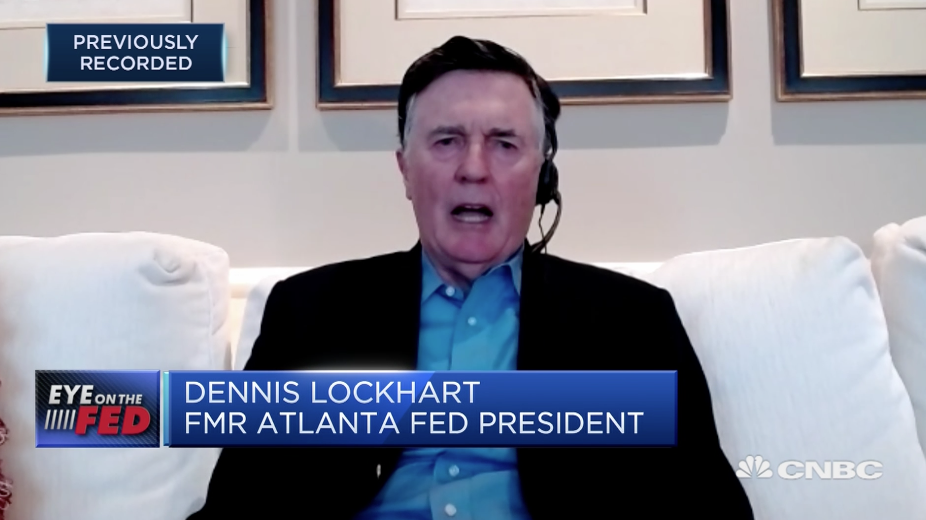
Former Federal Reserve Bank of Atlanta President Dennis Lockhart was interviewed on CNBC Friday, giving his view of what could be a “double-dip” recession, in the making, if the latest coronavirus outbreak is not contained. 

“I continue to believe that looking forward you have to consider a range of scenarios and among those scenarios would be, obviously, a pessimistic one and that could be a double-dip,” Lockhart told CNBC’s “Squawk Box Asia.” 

“If things go badly with the management of the virus and there’s more cascading — which (Thursday’s) numbers of initial claims might suggest — then yes, it’s possible we have a double-dip. I don’t think that’s probably the base case, but I think it’s still possible,” he said.

Lockhart, along with other policymakers and economists, has warned about the increasing risks of another downturn or at least an incoming growth scare. 

He said the economy is in dire need of more significant fiscal support because monetary policy has become widely exhausted, noting there isn’t much room for “dramatic increases” in its asset purchase program.

“If there’s going to be an effective effort to really ward off a worst-case scenario, particularly for portions of the American public that are most vulnerable, then it’s going to come from the fiscal side,” he said.

“That theme has been repeated several times by Jay Powell and I completely agree that fiscal action is the most appropriate economic action at this time and we need it.”

With the US remaining in the grips of the virus pandemic, a classic double-dip after this summer’s bounce in economic growth is becoming more and more likely, especially after the latest 28-day lapse of emergency unemployment benefits and business grants will be the driver for waning consumption in August. 

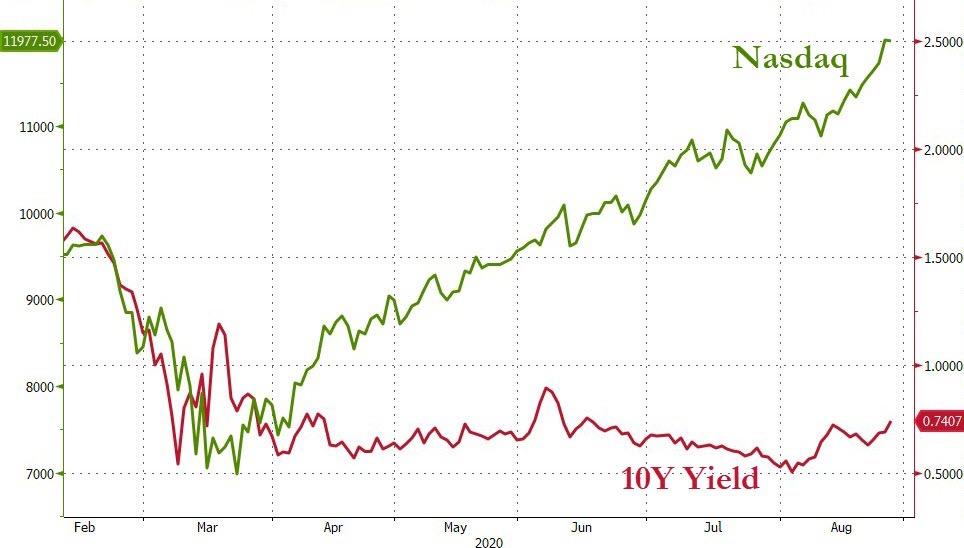
Financial markets aren’t the least bit worried about the prospects of another downturn, mainly because of monetary easing has boosted asset prices sky-high, providing investors with a false sense of a robust recovery. 

But what happens when investors misread the shape of the recovery?

Well, Morgan Stanley’s Michael Wilson has that answer, warns of an imminent “growth scare” could cause a correction in markets. 

The countdown for a growth scare has stared – it could be in the coming weeks, or coming months… 

via ZeroHedge News https://ift.tt/2YIBqcc Tyler Durden

MGM Resorts To Fire 18,000 Employees, A Quarter Of Its Workforce

MGM Resorts To Fire 18,000 Employees, A Quarter Of Its Workforce

Tyler Durden

Fri, 08/28/2020 – 11:21

While stocks soar to recorder highs by the day, no prosperity is “trickling down” to the leisure and hospitality industry – the sector most hit by the covid shutdowns – and things just went from bad to worse for the US gambling mecca where as CNBC and the WSJ reported, MGM Resorts International intends to send separation letters to 18,000 previously furloughed employees throughout the US. The job cuts start next week, and represent about a quarter of all the company’s pre-pandemic US workforce of 68,000.

“Nothing pains me more than delivering news like this,” MGM’s CEO Bill Hornbuckle wrote in a tear-stained note to accompany the thousands of pinks lips. “The heart of this company is our employees and the world-class service you provide. Please know that your leadership team is working around the clock to find ways to grow our business and welcome back more of our colleagues,” Hornbuckle said. 

“While the immediate future remains uncertain, I truly believe that the challenges we face today are not permanent.” Hornbuckle added “The fundamentals of our industry, our company and our communities will not change. Concerts, sports and awe-inspiring entertainment remain on our horizon.”

The company promised to extend health benefits for furloughed employees until September 30.

The “good news” is that MGM said it still plans to rehire those workers as business demand returns, and will maintain a recall list of former employees, and workers who return before the end of 2021 will retain seniority and immediately resume benefits, the company said. Health benefits for cut workers are being extended through Sept. 30.

“Federal law requires workers to be given a separation date if they’re furloughed for longer than six months. Aug. 31 marks six months of administrative separation for the furloughed MGM employees,” said CNBC.

MGM’s Empire City in New York state and Park MGM in Las Vegas remain closed, as casinos in Las Vegas are all operating at limited capacity with large declines in tourism and travel to the Las Vegas Strip. In June, Nevada casinos were allowed to reopen at half occupancy and MGM Resorts phased in casino reopenings over the following weeks. Two of MGM’s 13 Strip resorts, Park MGM and the NoMad, are still closed, and MGM’s Mirage casino reopened this week. MGM Resorts reported a 91% drop in revenue for the three-month period that ended June 30, a similar decrease to other operators on the Strip.

via ZeroHedge News https://ift.tt/32DJ9JA Tyler Durden

Protesters Tell Rand Paul, Who Wrote the Justice for Breonna Taylor Act, To Say Breonna Taylor’s Name

Screen Shot 2020-08-28 at 10.55.26 AM

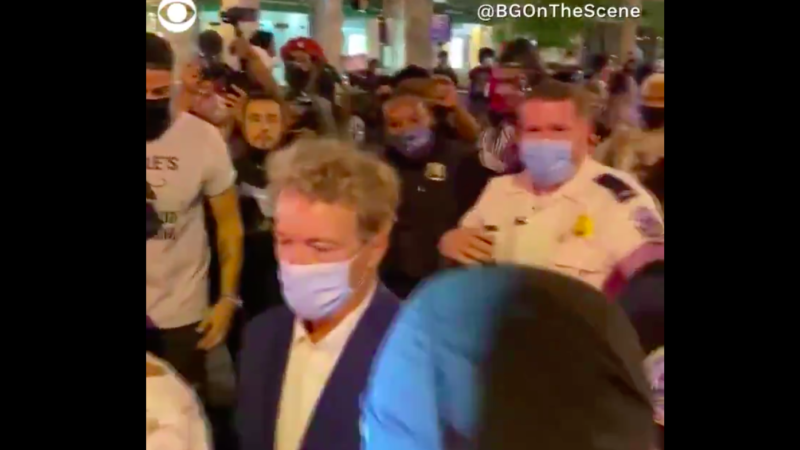
As President Donald Trump concluded his Republican National Convention acceptance speech Thursday night, the largely peaceful demonstrations outside the White House grew more tense and confrontational. Speech attendees leaving the area were heckled, and a crowd of protesters surrounded Sen. Rand Paul (R–Ky.) and his wife, Kelley Paul.

The police prevented the protesters from getting close to the Pauls, but there was a great deal of shoving. Someone attempted to throw a bike at them, and the officer escorting the Pauls was briefly knocked off balance. Sen. Paul later told Fox News that he feared for their safety.

“I truly believe this with every fiber of my being, had they gotten at us they would have gotten us to the ground, we might not have been killed, might just have been injured by being kicked in the head, or kicked in the stomach until we were senseless,” he said.

Recall that Paul is no stranger to physical violence: He was brutally attacked by his next-door-neighbor in 2017, suffering injuries to his ribs and lungs. He was also present at the 2017 Congressional baseball game shooting.

Here is footage of last night’s encounter:

It’s notable that the protesters repeatedly shouted at Paul to “say her name.” The her in question is Breonna Taylor, a woman who police killed during a no-knock raid on her home in the middle of the night on March 13. Taylor is an unambiguous victim of police violence and of unnecessary Drug War tactics, and protesters are right to demand justice for her.

Paul, though, has done much more than just saying Taylor’s name: He sponsored the Justice for Breonna Taylor Act, which would prohibit no-knock raids.

“After talking with Breonna Taylor’s family, I’ve come to the conclusion that it’s long past time to get rid of no-knock warrants,” said Paul back in June. “This bill will effectively end no-knock raids in the United States.”

It would be wrong to physically intimidate the Pauls in any case. But the crowd also failed to recognize that their alleged foe is one of the most consistent voices for criminal justice reform in the U.S. Senate. To borrow a favorite phrase of the woke activist crowd: Educate yourself, street protesters.

from Latest – Reason.com https://ift.tt/3hDHj1O
via IFTTT

Protesters Tell Rand Paul, Who Wrote the Justice for Breonna Taylor Act, To Say Breonna Taylor’s Name

Screen Shot 2020-08-28 at 10.55.26 AM

As President Donald Trump concluded his Republican National Convention acceptance speech Thursday night, the largely peaceful demonstrations outside the White House grew more tense and confrontational. Speech attendees leaving the area were heckled, and a crowd of protesters surrounded Sen. Rand Paul (R–Ky.) and his wife, Kelley Paul.

The police prevented the protesters from getting close to the Pauls, but there was a great deal of shoving. Someone attempted to throw a bike at them, and the officer escorting the Pauls was briefly knocked off balance. Sen. Paul later told Fox News that he feared for their safety.

“I truly believe this with every fiber of my being, had they gotten at us they would have gotten us to the ground, we might not have been killed, might just have been injured by being kicked in the head, or kicked in the stomach until we were senseless,” he said.

Recall that Paul is no stranger to physical violence: He was brutally attacked by his next-door-neighbor in 2017, suffering injuries to his ribs and lungs. He was also present at the 2017 Congressional baseball game shooting.

Here is footage of last night’s encounter:

It’s notable that the protesters repeatedly shouted at Paul to “say her name.” The her in question is Breonna Taylor, a woman who police killed during a no-knock raid on her home in the middle of the night on March 13. Taylor is an unambiguous victim of police violence and of unnecessary Drug War tactics, and protesters are right to demand justice for her.

Paul, though, has done much more than just saying Taylor’s name: He sponsored the Justice for Breonna Taylor Act, which would prohibit no-knock raids.

“After talking with Breonna Taylor’s family, I’ve come to the conclusion that it’s long past time to get rid of no-knock warrants,” said Paul back in June. “This bill will effectively end no-knock raids in the United States.”

It would be wrong to physically intimidate the Pauls in any case. But the crowd also failed to recognize that their alleged foe is one of the most consistent voices for criminal justice reform in the U.S. Senate. To borrow a favorite phrase of the woke activist crowd: Educate yourself, street protesters.

from Latest – Reason.com https://ift.tt/3hDHj1O
via IFTTT

FBI And Tesla Thwart $4 Million Bitcoin Ransomware Plot

FBI And Tesla Thwart $4 Million Bitcoin Ransomware Plot

Tyler Durden

Fri, 08/28/2020 – 11:00

Authored by Marie Huillet via CoinTelegraph.com,

The FBI have arrested one of the conspirators in a planned ransomware attack against electric car maker Tesla.

image courtesy of CoinTelegraph

A young Russian citizen and his co-conspirators came within an inch of carrying out a major ransomware attack against Tesla – unaware that their target had already turned them in.

Last week, the United States Federal Bureau Investigation (FBI) unsealed a criminal complaint against a conspirator in a thwarted ransomware plot against the electric car maker Tesla.

On Aug. 22, the Bureau arrested 27 year-old Russian citizen Pavel Kriuchkov in Los Angeles, who had allegedly spent much of his month in the U.S. attempting to recruit a Tesla staffer at the firm’s Gigafactory Nevada site to collude on a nefarious “special project.”

That “special project” came with a lucrative incentive — a bribe of $500,000, later upped to $1 million. A small advance payment was to have been paid into the staffer’s Bitcoin (BTC) wallet, installed using a Tor browser to evade detection.

In return for the bribe, the staffer was asked to assist in the installation of a targeted malware attack against Tesla — a two-stage plot involving a distributed denial of service attack, followed by an exfiltration of sensitive company data. 

The plan was to hold Tesla to ransom under threat of dumping the information publicly. Kriuchkov’s conspirators had their eye on a $4 million ransom.

The hitch was that, soon after Kriuchkov’s first meeting with the staffer, who remains anonymous, the staffer had already alerted Tesla, which, in turn, tipped off the FBI. 

A series of August meetings between Kriuchov and the staffer were physically surveilled and wire-tapped by FBI agents. They collected intelligence about the operation and other prior exploits while preparations for the cyberattack were being hatched.

One of the conspirators was, according to Kriuchkov’s communications with the staffer, a hacker specializing in encryption, who allegedly works as a high level employee of a government bank in Russia. 

Kriuchkov himself was self-avowedly hazy on the technical aspects of the planned attack, and was ostensibly being paid $250,000 for his recruitment efforts. 

In one early meeting, Kriuchkov, the staffer and two of the latter’s friends made an excursion to Lake Tahoe in California. Kriuchkov insisted on footing the bill for the group’s expenses, but shied away from posing in group photos, insisting he could “remember the beauty of the sunset” without a memento.

On Aug. 21, Kriuchov informed the staffer that the attack was being delayed until a later date, and that he would be leaving Nevada the following day. Following his arrest in Los Angeles on Aug. 22, he is now in detention pending trial.

While Tesla is not explicitly named in the FBI’s criminal complaint, Tesla news site Teslarati has confirmed the company was the target. CEO Elon Musk acknowledged the scheme in a tweet:

via ZeroHedge News https://ift.tt/2EFpmkW Tyler Durden