America’s Coming Double Dip

America’s Coming Double Dip

Tyler Durden

Thu, 08/27/2020 – 12:40

Authored by Stephen Roach via Project Syndicate,

Soaring financial markets are blithely indifferent to lingering vulnerabilities in the US economy. But the impact of consumers’ fear of COVID-19 on pandemic-sensitive services are unlikely to subside, undermining the case for the uninterrupted recovery that investors seem to expect.
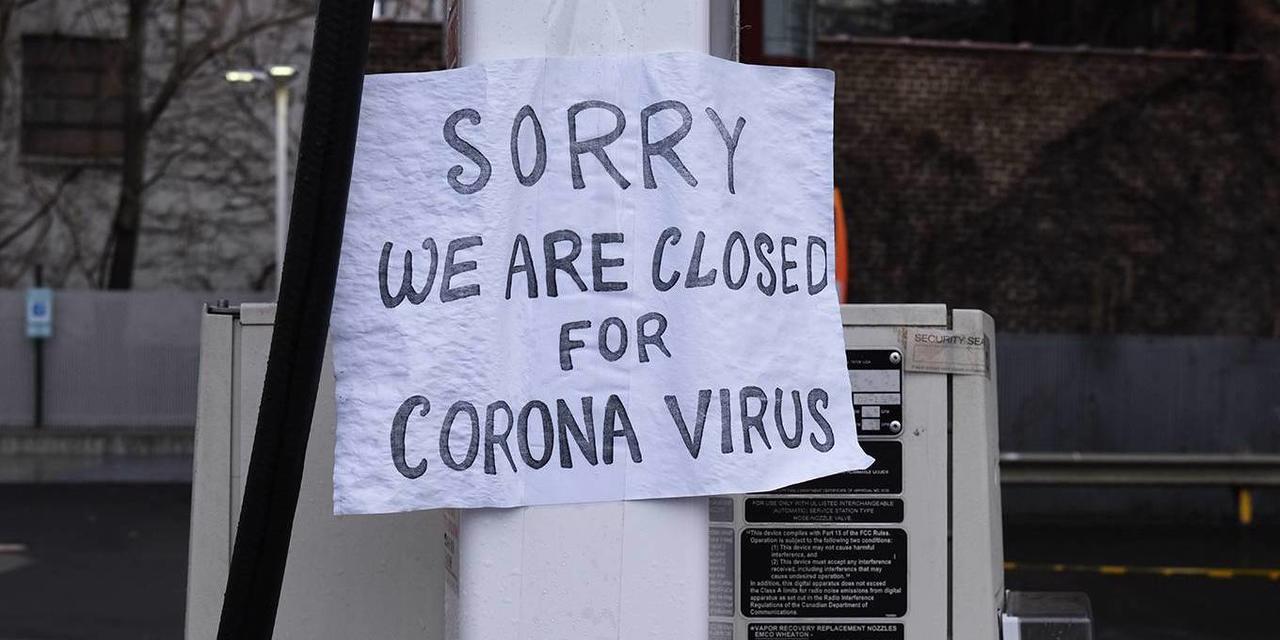
The double dip is not a dance. It is the time-honored tendency of the US economy to relapse into recession after a temporary recovery. Over the years, it has happened far more often than not. Notwithstanding frothy financial markets, which currently are discounting the nirvana of an uninterrupted V-shaped recovery, there is a compelling case for another double dip in the aftermath of America’s devastating COVID-19 shock.

The daunting history of the US business cycle warns against complacency. Double dips – defined simply as a decline in quarterly real GDP following a temporary rebound – have occurred in eight of the 11 recessions since the end of World War II. The only exceptions were the recessions of 1953-54, the brief contraction of 1980, and the mild downturn of 1990-91. All the others contained double dips, and two featured triple dips – two false starts followed by relapses.

The double-dip does not, of course, come out of thin air. It reflects the combination of lingering vulnerability in the underlying economy and aftershocks from the initial recessionary blow. As a general rule, the more severe the downturn, the greater the damage, the longer the healing, and the higher the likelihood of a double dip. That was the case in the sharp recessions of 1957-58, 1973-75, and 1981-82, as well as in the major contraction that accompanied the 2008-09 global financial crisis.

The current recession is a classic set-up for a double dip. Lingering vulnerability is hardly a question in the aftermath of the 32.9% annualized plunge in the second quarter of 2020 – by far the sharpest quarterly decline on record. Damaged as never before by the unprecedented lockdown to combat the initial outbreak of COVID-19, the economy has barely begun to heal. A sharp rebound in the current quarter is simple arithmetic –and virtually guaranteed by the partial re-opening of shuttered businesses. But will it stick, or will there be a relapse?

Financial markets aren’t the least bit worried about a relapse, owing largely to unprecedented monetary easing, which has evoked the time-honored maxim: “don’t fight the Fed.” Added comfort comes from equally unprecedented fiscal relief aimed at mitigating the pandemic-related shock to businesses and households.

This could be wishful thinking. The basic problem is the virus, not the need for Fed-induced liquidity injections or the temporary support of a fiscal package. Monetary and fiscal measures can temper financial markets’ distress, but they can do little, if anything, to resolve the underlying health security issues weighing on the real economy.

With the US remaining in the grips of the pandemic, the case for sustainable recovery looks tenuous. While rebounds in production and employment underscore significant progress on the supply side of the economy, these gains are far from complete. Through July, nonfarm employment has recouped only 42% of what was lost in February and March, and the unemployment rate, at 10.2%, is still nearly triple the pre-COVID level of 3.5%. Similarly, industrial production in July remained 8% below its February high.

Healing has been even more tentative on the demand side. That is especially the case for key components of discretionary consumption – notably, retail shopping, as well as spending on restaurants, travel, and leisure. Full participation in these activities – all of which entail face-to-face human contact – implies health risks that most of the population is unwilling to take, especially given elevated infections, the lack of robust therapeutics, and the absence of a vaccine.

To put the pandemic’s impact in perspective, consider that transportation, recreation, restaurants, and accommodations – the most COVID-sensitive segments of consumer demand – accounted for 21% of total household expenditures on services in the first quarter of 2020, before the pandemic hit full force. Combined spending on these categories plunged at an 86% annual rate in real (inflation-adjusted) terms in the second quarter.

The monthly data through June underscore the lingering headwinds from these important segments of discretionary consumption. While combined consumer spending on durables and nondurables bounced back to 4.6% above pre-pandemic levels (in real terms), household spending on total services – by far, the largest component of total consumption – has recouped only 43% of its lockdown-induced losses.

On balance, this points to what can be called an asynchronous normalization – a partial recovery that is drawing greater support from the supply side than from the demand side. The US is hardly unique in this respect. Similar outcomes are evident in other economies – even China, whose state-directed system is much more effective at command and control of the supply side than it is in influencing the behavioral norms shaping pandemic-sensitive household consumption on the demand side.

But the asynchronous normalization of the US economy is very different in one key respect: America’s abysmal failure at containing the virus not only underscores the lingering fears of infection, but also raises the distinct possibility of a new wave of COVID-19 itself. While there has been a reduction in the incidence of new cases over the past month, the daily infection count of nearly 48,000 in the week ending August 20 is more than double the pace recorded in May and June.

Together with a death rate that has averaged a little more than 1,000 per day since late July – and projected to remain at that level for the rest of the year – this elevated pace of infection takes on even greater importance as a predictor of what lies ahead. Consumer fears – and their impact on pandemic-sensitive services – are unlikely to subside in such a climate and could well intensify if a new wave hits.

Therein lies the case for a double dip. Partial and asynchronous normalization in the aftermath of the worst economic shock on record signals lingering vulnerability in the US economy. And failure to contain the virus underscores the distinct possibility of aftershocks. This is precisely the combination that has led to previous double dips. Yet frothy financial markets are wedded to the narrative of a classic V-shaped recovery. The rhymes of history suggest a very different outcome.

via ZeroHedge News https://ift.tt/3gtnbOw Tyler Durden

Chicago Police Sued Again For Botched Raid, Pointing Guns At Grandma and Child

Leyalina Lazar-1

Chicago police ransacked a woman’s house and held a grandmother and 4-year-old at gunpoint based on a sloppy search warrant, a federal civil rights lawsuit filed today alleges.

According to the suit, 15 plainclothes Chicago police officers broke through the front door of the apartment of Jasmine Vale, her 4-year-old daughter, Leyalina Lazar, and Leyalina’s grandmother, Khamme Lazar, 70, as they were preparing for bed on February 27.

The lawsuit says officers trained their guns on the grandmother, who was saying her nighttime prayers, and the child. They then allegedly screamed obscenities at Vale and made her lie face down on the floor with a gun pointed at her head. After the officers herded the trio onto a couch, still at gunpoint, police allegedly ransacked the house.

“They cut couch pillows open, dumped clothes, damaged dressers and tables,” the lawsuit says. “They threw Jasmine’s nail products all over the floor and destroyed her technician’s table, costing her thousands of dollars. They even destroyed Khamme’s Christmas decorations and ripping or cutting open Leyalina’s prized stuffed animals, ‘bunny Sarah’ and ‘monkey.'”

The lawsuit claims the use of an invalid search warrant, excessive force, and unwarranted property destruction violating Vale and her family’s Fourth Amendment rights. The allegations are the latest in a string of lawsuits and investigations by local news outlets that describe Chicago police busting into the wrong houses and terrorizing innocent families.

Vale’s lawsuit says the search warrant was based on a tip from an anonymous informant that Khamme’s son possessed an unlicensed handgun. Chicago police never bothered to learn that Khamme’s son had moved to California several years ago. No gun was found, and no arrests were made.

Local news outlet CBS 2 found that Chicago SWAT teams were frequently relying on sloppy, unverified search warrants to ransack houses; hold families, including children, at gunpoint; and in one case handcuff an 8-year-old child. In another case, 17 Chicago police officers burst into a family’s house with their guns drawn during a 4-year-old’s birthday party.

Last year, two Chicago police officers were convicted on federal charges that they paid off informants, lied to judges to secure search warrants, and stole cash and drugs from places they raided. Two women have subsequently filed civil suits against the dirty cops, claiming they used bogus search warrants to ransack their houses, point guns at their children, and frame them for drug possession. 

Vale’s attorney, Al Hofeld, has represented nine other families with similar stories. In another lawsuit filed last year, a Chicago family claims police officers raided their house three times in four months looking for someone they say they don’t even know.

In 2018, The Chicago City Council approved a $2.5 million settlement to a family who claimed CPD officers stormed their house and pointed a gun at a three-year-old girl.

These horror stories led Chicago’s Inspector General to launch an investigation last year into how Chicago police vet information and execute search warrants. That investigation is still ongoing, according to the office’s website.

The Chicago Police Department also revised its policies for search warrant executions in January, requiring officers to “maintain a sensitive approach and use due care to safeguard the physical and emotional well-being” of any children present “to minimize trauma following the execution of a search warrant.”

However, Vale’s lawsuit says those requirements, vague as they are, were not followed during the search warrant execution on her house. The officers were rude, vulgar, and left without apologizing, slamming the door behind them.

Reason reported last year on public records showing that Chicago police executed more than 11,000 search warrants over a five-year period, predominantly in the city’s low-income and minority neighborhoods, and nearly half of them did not result in an arrest.

The Chicago Police Department declined to comment, citing the pending litigation.

from Latest – Reason.com https://ift.tt/3liZCM1
via IFTTT

More Than a Year Before Breonna Taylor’s Death, Some of the Same Cops Were Involved in Another Home Invasion Based on Dubious Evidence

Louisville-pot-raid-10-26-18

Brett Hankison, the Louisville, Kentucky, detective who was fired because of his role in the fruitless drug raid that killed Breonna Taylor last March, was also involved in a botched 2018 home invasion that terrified a family wrongly suspected of growing marijuana. So were at least four other Louisville police officers who participated in the case that led to Taylor’s death, which has figured prominently in nationwide protests against police brutality. The overlap suggests a pattern of shoddy investigation and reckless paramilitary tactics that could have been detected before it killed an innocent woman.

In both cases, police broke into people’s homes based on dubious evidence, and the residents initially thought they were being robbed. In Taylor’s case, her boyfriend, Kenneth Walker, grabbed a gun and fired at the intruders, injuring one of them in the leg. Police responded with a hail of more than 20 bullets, at least eight of which struck Taylor, who was unarmed. According to the acting police chief, Hankison “displayed an extreme indifference to the value of human life” when he “wantonly and blindly fired 10 rounds” into Taylor’s apartment. So far no criminal charges have been filed against Hankison or the other officers. While no one died during the 2018 marijuana raid, things easily could have turned out differently.

Detective Joshua Jaynes obtained the no-knock warrant to search Taylor’s apartment, which Hankison and two other plainclothes officers, Jonathan Mattingly and Myles Cosgrove, executed in the middle of the night on March 13, based entirely on guilt by association. Because Taylor, a 26-year-old EMT and aspiring nurse, remained friendly with a former boyfriend suspected of drug dealing, who sometimes received packages at her apartment, Jaynes suggested that she was involved in the illegal activity. But a local postal inspector later said there was nothing suspicious about those packages, which reportedly contained clothing and shoes.

The warrant to search the house where Mario Daugherty and Ashlea Burr lived, which police executed on the morning of October 26, 2018, was based on a tip about a prior tenant, who allegedly was growing marijuana there. According to a lawsuit that Daugherty and Burr filed a year later, 14 SWAT officers stormed into their home without warning, breaking the front door, tossing flash-bang grenades, and shouting commands while threatening them and their three teenaged children with “assault rifles.”

Although the warrant ostensibly required the cops to knock and announce themselves, body camera footage shows they shouted “Police! Search warrant!” at the same moment they used a battering ram to force the door open. As that detail suggests, there is often little practical difference between a no-knock search and a knock-and-announce search. In Taylor’s case, police had a no-knock warrant, but they nevertheless banged on the door for 30 seconds or so, and they claim they announced themselves—a point disputed by her boyfriend and her neighbors. Even if the cops did say something as they broke down the door, that announcement could easily have been missed by Taylor and her boyfriend, who were sleeping at the time of the raid.

During the 2018 raid, the residents clearly did not realize the people invading their home were police officers. According to the lawsuit, one of the couple’s daughters, Zariyah, who was 14 at the time, “ran through the back door and into the yard in an effort to reach her grandmother’s house next door.” The cops pursued her.

“Officers drew their assault rifles on her, yelling commands at her to get on the ground,” the complaint says. “[Zariyah] was extremely frightened, began crying and submitted [by kneeling on] the ground. It was cold and rainy, and [Zariyah] was not wearing any socks, shoes or a jacket. She repeatedly requested to be taken to her grandmother’s next door, but the Officers refused the requests, kept her in the cold, wet conditions, and kept their rifles on her.”

Zariyah can be heard sobbing in a video of the raid’s aftermath. “Hold on, hon, we’re almost done, OK?” says one of the officers. “We’ll get you back inside. You’re not hurt, right? You’re just scared? I’m sorry.”

The police should be sorry, especially given the lack of probable cause for the search.

In his application for a warrant to search the house, Detective Joseph Tapp said police received a tip from someone who reported that “a black male named Anthony McClain is growing marijuana and has multiple bags of marijuana packaged for sale in the front bed room.” According to Tapp, the tipster “also stated a white female named Holly was [McClain’s] girlfriend and owned the house.”

If Tapp had bothered to look up the property records, he would have seen that the house is in fact owned by a man named Kevin Hyde, who was renting it to Daugherty and Burr. The lawsuit also notes that “nobody named Anthony McClain or Holly lived at the house at or near the time of the raid,” that “Ashlea is not white,” and that “nobody in the house was growing marijuana or had multiple bags of marijuana packaged for sale.”

Aside from this obviously erroneous or outdated tip, the search warrant was based on three brief visits to the house. During his first “surveillance,” on October 5, Tapp saw “a Black male” enter the house and leave 10 minutes later. Tapp then “approached the house to conduct a knock and talk.” When he “stepped on the open porch,” he said, “the smell of fresh marijuana could be smelled.” He knocked on the door, but no one answered, so he left.

During his second “surveillance,” on October 22, Tapp saw “a black male” arrive in a “gray Jaguar” with an Indiana license plate and enter the house. The car was registered to Daugherty, whom WDRB, the Fox TV station in Louisville, describes as “a local artist whose work has been featured at the Kentucky Derby Museum and on local news.” The car was not registered to “a black male named Anthony McClain” or to a woman named Holly, which really should have given Tapp pause. The next day, three days before the raid, Tapp “approached the house and again was hit with a strong smell of fresh marijuana coming from within the house.”

Tapp argued that the tip, “the witness of the short stay,” and “the strong fresh smell of marijuana on separate occasions,” combined with his “training and experience,” provided probable cause for a search. Yet the tip was demonstrably false, visiting a house for 10 minutes is not inherently suspicious, and apparently there is something wrong with Tapp’s nose, since police found no evidence of marijuana cultivation or drug dealing at the house, just a small amount of cannabis. No charges were filed against Daugherty or Burr.

Vice News reports that “at least five of the officers involved in the raid”—Hankison, Jaynes, Cosgrove, Mike Campbell, and Mike Nobles—also took part in the case that resulted in Taylor’s death. “Daugherty and Burr didn’t realize the overlap in officers until recently, when they were watching the news,” Vice says. “They recognized Hankison, looked back at some of the paperwork LMPD had left behind, and noticed two familiar names: Hankison and Cosgrove.”

Daugherty and Burr’s lawsuit, which they filed in Jefferson County Circuit Court, alleges that the Louisville Metro Police Department “fails to adequately train its officers regarding obtaining search warrants in order to protect citizens’ Fourth Amendment rights.” While they asked for compensatory damages, punitive damages, and legal fees, Daugherty says their main aim was to publicize this sort of abuse in the hope of protecting other potential victims.

“We just wanted to get our story out there because we didn’t want this to happen to anybody innocent and anybody innocent’s life to get lost,” he told Vice. “I feel like after it happened to us, if the leaders would have stepped out and tried to assist us, I feel like we could have gotten a change way before Breonna’s death. I feel like her death could have been avoided.”

from Latest – Reason.com https://ift.tt/3gD3qnA
via IFTTT

Remember When a Democratic Polling Firm Fired the Guy Who Thought Violent Protests Could Backfire Politically?

sipaphotosten990620

Back in June, the sudden firing of data scientist David Shor from the progressive consulting firm Civis Analytics raised eyebrows.

Shor had publicized research from the social scientist Omar Wasow showing that violent protests tend to backfire on progressive goals—tipping the 1968 election in favor of the law-and-order candidate, Richard Nixon, for instance—whereas peaceful protests often succeed. In response, Shor was widely derided by the left. On Twitter, the progressive activist Ari Trujillo Wesler accused him of using his “anxiety and ‘intellect’ as a vehicle for anti-blackness.” Employees and clients of Civis Analytics said Shor’s statement—which, to be clear, was merely an endorsement of well-grounded social science research that says nonviolent protest is strategically superior—had threatened their very safety, according to New York magazine’s Jonathan Chait.

As a result, Shor was terminated. The exact reason for the firing was never specified, but it spoke to concerns among many liberal thinkers—Chait, Vox‘s Matt Yglesias, and others—that certain sects of the left are unwilling to have difficult conversations about tactics. This is a concern shared by many libertarians, and supporters of free speech culture more broadly.

On Wednesday, polling by Marquette Law School showed that support for Black Lives Matter has plummeted among white Wisconsinites. (The poll was conducted before the recent police shooting in Kenosha, and thus does not reflect attitudes toward that event.)

“A substantial majority approved of protests in June, but this fell to an even split, 48-48 in August,” wrote polling director Charles Franklin. Black and Hispanic attitudes toward Black Lives Matter changed little over the summer, but white approval had fallen and “become net negative.”

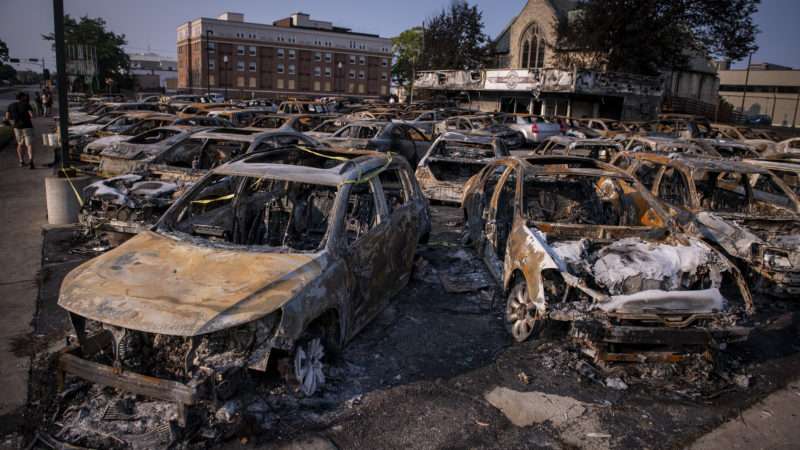
A related piece in Politico surveyed residents of Kenosha—where peaceful protests but also violence, rioting, fires, and looting have consumed the streets at night—and perhaps unsurprisingly discovered plenty of wariness, even among people who are not exactly the law-and-order type:

“There’s no doubt it’s playing into Trump’s hands,” said Paul Soglin, who served as mayor of Madison, on and off, for more than two decades. “There’s a significant number of undecided voters who are not ideological, and they can move very easily from Republican to the Democratic column and back again.They are, in effect, the people who decide elections. And they are very distraught about both the horrendous carnage created by police officers in murdering African Americans, and … for the safety of their communities.” …

Billy Stevens, an African American man who was helping paint the murals, agreed that the violence and destruction on display in the city give Trump more to point to in his reelection campaign.

“He tries to paint a picture of Democratic leaders being weak. Personally, I think it’s divisive in times like these,” Stevens said. At the same time, Stevens said Kenosha is desperate for order. “Now we’re sending in more troops for a large show of force immediately. I do think it’s needed right now.” ..

Soglin said he’s concerned some Democrats aren’t paying close enough attention to the business owners and residents in communities coming under attack who want protection. The situation is likely having the biggest effect on swing voters, he said.

John “Sly” Sylvester, a longtime Democrat and radio personality who has been active in the labor movement, said he feared Democrats have a “blind spot” to rioters and looters.

Meanwhile, Joe Biden’s lead in Minnesota—whose governor has dispatched the National Guard to quell continuing protest-related violence in Minneapolis—continues to shrink. He was up more than 10 points on July 1, but his lead is now just five points, according to the latest polls.

This is not to say that Biden’s campaign is imperiled: He’s still clearly ahead. Nor is it the case that Biden is the avatar of violent protests and Trump the avatar of a return to normalcy. Biden has condemned needless violence and failed to fall in line with the more militant left wing of the Democratic Party. Meanwhile, the lawlessness has actually occurred on Trump’s watch, and the president has done very little to effectively counter it: Trump’s main contributions thus far have been to sweep peaceful protesters from Lafayette Park in Washington D.C. so that he could pose for a photo; deploy federal law enforcement officers to Portland, where the unrest only worsened; and tweet the words “LAW AND ORDER.”

But there’s plenty of reason to think that Shor’s concerns, and Wasow’s research, have even more relevance today than they did at the start of the summer. It would be wise for progressives to consider the well-supported idea that what’s happening in Kenosha and Minneapolis—and Portland, and even Washington, D.C.—is a net negative for the causes they support.

from Latest – Reason.com https://ift.tt/3jiTSju
via IFTTT

America’s Coming Double Dip

America’s Coming Double Dip

Tyler Durden

Thu, 08/27/2020 – 12:40

Authored by Stephen Roach via Project Syndicate,

Soaring financial markets are blithely indifferent to lingering vulnerabilities in the US economy. But the impact of consumers’ fear of COVID-19 on pandemic-sensitive services are unlikely to subside, undermining the case for the uninterrupted recovery that investors seem to expect.

The double dip is not a dance. It is the time-honored tendency of the US economy to relapse into recession after a temporary recovery. Over the years, it has happened far more often than not. Notwithstanding frothy financial markets, which currently are discounting the nirvana of an uninterrupted V-shaped recovery, there is a compelling case for another double dip in the aftermath of America’s devastating COVID-19 shock.

The daunting history of the US business cycle warns against complacency. Double dips – defined simply as a decline in quarterly real GDP following a temporary rebound – have occurred in eight of the 11 recessions since the end of World War II. The only exceptions were the recessions of 1953-54, the brief contraction of 1980, and the mild downturn of 1990-91. All the others contained double dips, and two featured triple dips – two false starts followed by relapses.

The double-dip does not, of course, come out of thin air. It reflects the combination of lingering vulnerability in the underlying economy and aftershocks from the initial recessionary blow. As a general rule, the more severe the downturn, the greater the damage, the longer the healing, and the higher the likelihood of a double dip. That was the case in the sharp recessions of 1957-58, 1973-75, and 1981-82, as well as in the major contraction that accompanied the 2008-09 global financial crisis.

The current recession is a classic set-up for a double dip. Lingering vulnerability is hardly a question in the aftermath of the 32.9% annualized plunge in the second quarter of 2020 – by far the sharpest quarterly decline on record. Damaged as never before by the unprecedented lockdown to combat the initial outbreak of COVID-19, the economy has barely begun to heal. A sharp rebound in the current quarter is simple arithmetic –and virtually guaranteed by the partial re-opening of shuttered businesses. But will it stick, or will there be a relapse?

Financial markets aren’t the least bit worried about a relapse, owing largely to unprecedented monetary easing, which has evoked the time-honored maxim: “don’t fight the Fed.” Added comfort comes from equally unprecedented fiscal relief aimed at mitigating the pandemic-related shock to businesses and households.

This could be wishful thinking. The basic problem is the virus, not the need for Fed-induced liquidity injections or the temporary support of a fiscal package. Monetary and fiscal measures can temper financial markets’ distress, but they can do little, if anything, to resolve the underlying health security issues weighing on the real economy.

With the US remaining in the grips of the pandemic, the case for sustainable recovery looks tenuous. While rebounds in production and employment underscore significant progress on the supply side of the economy, these gains are far from complete. Through July, nonfarm employment has recouped only 42% of what was lost in February and March, and the unemployment rate, at 10.2%, is still nearly triple the pre-COVID level of 3.5%. Similarly, industrial production in July remained 8% below its February high.

Healing has been even more tentative on the demand side. That is especially the case for key components of discretionary consumption – notably, retail shopping, as well as spending on restaurants, travel, and leisure. Full participation in these activities – all of which entail face-to-face human contact – implies health risks that most of the population is unwilling to take, especially given elevated infections, the lack of robust therapeutics, and the absence of a vaccine.

To put the pandemic’s impact in perspective, consider that transportation, recreation, restaurants, and accommodations – the most COVID-sensitive segments of consumer demand – accounted for 21% of total household expenditures on services in the first quarter of 2020, before the pandemic hit full force. Combined spending on these categories plunged at an 86% annual rate in real (inflation-adjusted) terms in the second quarter.

The monthly data through June underscore the lingering headwinds from these important segments of discretionary consumption. While combined consumer spending on durables and nondurables bounced back to 4.6% above pre-pandemic levels (in real terms), household spending on total services – by far, the largest component of total consumption – has recouped only 43% of its lockdown-induced losses.

On balance, this points to what can be called an asynchronous normalization – a partial recovery that is drawing greater support from the supply side than from the demand side. The US is hardly unique in this respect. Similar outcomes are evident in other economies – even China, whose state-directed system is much more effective at command and control of the supply side than it is in influencing the behavioral norms shaping pandemic-sensitive household consumption on the demand side.

But the asynchronous normalization of the US economy is very different in one key respect: America’s abysmal failure at containing the virus not only underscores the lingering fears of infection, but also raises the distinct possibility of a new wave of COVID-19 itself. While there has been a reduction in the incidence of new cases over the past month, the daily infection count of nearly 48,000 in the week ending August 20 is more than double the pace recorded in May and June.

Together with a death rate that has averaged a little more than 1,000 per day since late July – and projected to remain at that level for the rest of the year – this elevated pace of infection takes on even greater importance as a predictor of what lies ahead. Consumer fears – and their impact on pandemic-sensitive services – are unlikely to subside in such a climate and could well intensify if a new wave hits.

Therein lies the case for a double dip. Partial and asynchronous normalization in the aftermath of the worst economic shock on record signals lingering vulnerability in the US economy. And failure to contain the virus underscores the distinct possibility of aftershocks. This is precisely the combination that has led to previous double dips. Yet frothy financial markets are wedded to the narrative of a classic V-shaped recovery. The rhymes of history suggest a very different outcome.

via ZeroHedge News https://ift.tt/3gtnbOw Tyler Durden
Sadly, Christopher Nolan never called

[Editor’s note: This letter was written by our Sovereign Woman—Viktorija.]

I grew up in a small village in Lithuania, raised by a single mother. So you can probably imagine my childhood was not one of wealth and luxury.

Just like when Simon was growing up, money was always tight and a constant source of stress in my home. But I’m grateful for that struggle because it taught me some very important lessons.

I realized at a young age that I’d have to make something of myself. No one would give me anything for free, I’d have to earn it.

And most importantly, I couldn’t allow myself to be defined by my environment. If circumstances were beyond my control, I learned that I would have to change my circumstances.

As I got older I always found some ways to make money. I worked all sorts of jobs, from cleaning houses to working as a forklift driver.

But my favorite jobs where when I would be cast as an extra in some locally produced movies and TV shows.

Being an extra was never glamorous. I never had any speaking lines. Basically I’d just loiter around set and occasionally stand in a crowd of people when they were filming a scene.

Sadly, Christopher Nolan never called to offer me a starring role. But I got plenty of free food and decent pay for the experience.

And some people actually make a career of this, even in Hollywood

Simon and I have several friends in Hollywood, and recently I was talking with one of them—a very sharp, talented actor who attended our entrepreneurship camp a few years ago.

It was an interesting conversation because he told me all about the ways the industry is changing.

Our friend was recently cast in a prominent role in a US TV series that stars a major A-list celebrity. And after signing the contract, he was immediately sent a 42-page guidebook explaining all the rules and regulations for Covid-19.

You can probably imagine already, the entertainment industry’s Covid requirements are mind-numbing.

The show is being filmed in another state, so before he leaves LA, he has to be tested for Covid. Then he gets on a plane and is immediately tested again. Then he picks up a rental car and drives himself to a quarantine facility where he spends at least a week and a half in total isolation, regardless of the test results.

Then he’s tested again… and finally allowed to leave quarantine.

Everyone is obviously in masks while on set. The actors take them off when filming, but as soon as the directors says, “CUT!” the masks go back on.

And of course there are plenty of people on set whose sole job is to enforce the countless other Covid regulations in that 42 page guidebook.

Now, my point here isn’t to say that this is extreme overkill. The larger point is that these Covid requirements are incredibly EXPENSIVE.

Major studios will probably be able to afford the extra costs—all the additional employees, the travel costs, the extra quarantine time, etc.

But some small, independent production company will never be able to handle those costs.

And that’s the same effect across many industries—big companies may survive, but a lot of small businesses can’t cope with the new costs of doing business due to circumstances beyond their control.

This reminds me of that critical lesson I learned when I was younger: when circumstances are beyond my control, change the circumstances.

And a lot of businesses are already doing this.

I touched on this briefly last week when I was telling you about my travels.

While some places in the world are totally locked down, others (like Dubai, where I was traveling last week) have recognized that they need to reinvent themselves and figure out a new way forward.

They’re changing their circumstances.

And frankly the movie industry is another great example.

A lot of smaller production companies are picking up and leaving highly unionized Hollywood. The costs of production were already spiraling out of control. And now with the union’s Covid rules, they’re even harsher.

So now people are looking at filming in new locations that have different rules… including in different countries overseas that have more business-friendly Covid protocols… not to mention tax credits, grants, and a much easier regulatory environment.

The same thinking applies to individuals as well.

If you’re able to work remotely and you don’t feel like dealing with various restrictions or chaos at the moment, why not pick up and (at least temporarily) relocate to a place that will roll out a red carpet for you?

Bermuda might be just one of many places for you to consider, which recently launched a “Work from home” program which authorizes foreigners to live in Bermuda for up to 12 months while working remotely.

Barbados has a similar program.

Mexico is another great example where it’s easy to work remotely. And for those who want to be closer to Europe, the small Republic of Georgia is a beautiful, culturally vibrant, remarkably inexpensive place to consider.

There are plenty of ways to change your circumstances if you keep a global perspective. You just need the right information, and the willingness to make a change.

Source

from Sovereign Man https://ift.tt/32A6iww
via IFTTT

Trump’s Staged Naturalization Ceremony Does Not Make Him a Friend of Immigrants

sipaphotosten988638

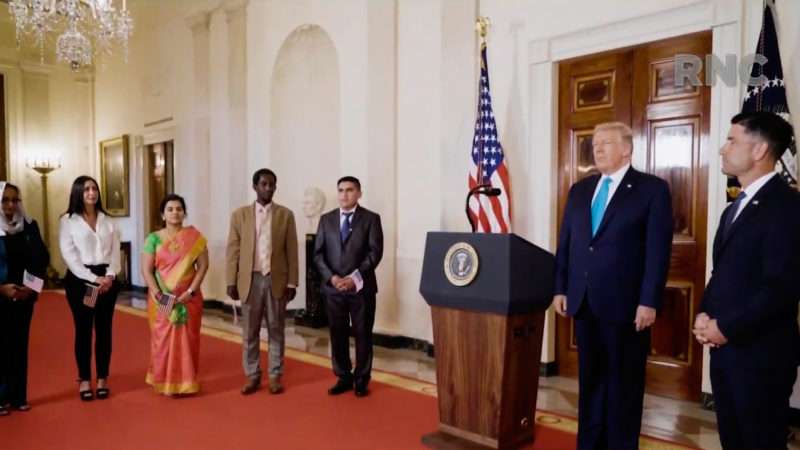
This year’s carefully staged, semi-virtual Republican National Convention (RNC) featured footage of President Donald Trump performing a naturalization ceremony in the White House, politicizing what is a sacred right of passage for immigrants. But even as he inducted five hand-picked immigrants into full citizenship and showered them with praise, he has gone out of his way to dismantle the citizenship program for hundreds of thousands of others.

Two of the immigrants did not know until minutes before the ceremony that Trump would attend much less that it would be later aired at the RNC. They subsequently said they didn’t mind, but it would have been nice to at least give them the option of exercising their newfound political freedom and letting them have a say in whether they wanted to be used as props for the president’s re-election campaign. In his remarks, Trump himself pointed out that the immigrants had “followed the rules” and “obeyed the laws” and earned the right to become citizens. But what he didn’t mention was just how hard he was working to prevent others from getting to the same place—including doubling the naturalization fee (from $640 to $1,160) and the processing time. That, however, is the least of it.

To date, Trump has not only cracked down on unauthorized immigration—ratcheting up enforcement both at the border and the interior—he has also placed nearly insurmountable boulders on every path to legal immigration. He has slashed the refugee quota from 85,000 to 18,000 and is not even filling that. He has turned the asylum program into a cruel joke, separating migrant moms from babies as a deterrence measure. New reporting by finds that even considered “extreme action” against Central American migrants such as shooting “heat-rays” to make their skin feel like it is burning when they came close to the border—not to mention spikes on the wall, a moat filled with snakes, and shooting migrants in the legs . He has slowed family-based immigration to a crawl. Not even the H-1B program for high-skilled foreign professionals, which literally no one except for the most extreme restrictionists doubts is an unmitigated boon for the country, has been spared.

And that was before the pandemic. In April, Trump first hit a two-month pause on every category of legal immigration except for spouses and minor children of American citizens. Then he extended the pause to the end of this year.

But the most chilling aspect of Trump’s anti-immigration agenda might be its assaults on the naturalization program. Between 2016 and 2019, according to an analysis by the National Foundation for American Policy, the administration’s denial rate for military naturalizations had increased 143 percent (from 7 percent to 17 percent). And the number of immigrants in the military who naturalized dropped by more than half between the same time period. Why? Because the administration made active duty immigrants—people willing to die for this country—ineligible for an expedited path to citizenship. Since then, a court has asked the administration to reinstate that path.

And then there is Operation Second Look, his effort to strip immigrants of their citizenship. Before Trump launched this program last year, the only people who faced denaturalization were Nazis and war criminals who had lied about their past on their citizenship applications. But the Trump administration has created a task force that would make denaturalization a priority. This means that potentially 17 million naturalization petitions approved between 1990 and 2016 might be reviewed for omissions or misrepresentations. One naturalized citizen that the U.S. Citizenship and Immigration Services (USCIS) has targeted is a Pakistani man who has lived in America for three decades, is married to an American woman and has three American kids. His crime? He failed to reveal on his naturalization application that he had been ordered deported in absentia for an asylum hearing. (He claims he didn’t show up because he didn’t receive notification.) Acting Director of USCIS Ken Cuccinelli has already referred over 1,600 naturalized citizens for possible prosecution. The last time America went down anything resembling this path was during the McCarthy era when it tried to take away the citizenship of communists and subversives. However, even that effort didn’t have a reach as broad as this one where almost every naturalized citizen can be targeted, basically reducing him or her to a less secure, second-class status.

Where will the administration obtain funds for Operation Second Look given that Congress is refusing to appropriate money for it? By reallocating them from the immigration application fee account. This account was already running low because it covers 95 percent of its funding through visa fees and last year, thanks to Trump’s anti-immigration slams, the agency received 1 million fewer applications, Los Angeles Times Molly O’ Toole reported. The upshot was that even before the pandemic hit, the agency was facing a $1.3 billion budgetary shortfall.

But given the post-COVID immigration pause, these visa fees have dried up completely and things have gotten much worse for those wishing to get naturalized.

At first, the USCIS completely shut down the naturalization program because it claimed that it could not conduct in-person interviews or hold naturalization ceremonies safely. It’s unclear why officials didn’t turn to virtual means to administer citizenship oaths. Although it has reinstated the program partially now, it still insists that it cannot restart it fully because it does not have the necessary funds to bring back all the naturalization officers and other personnel it has furloughed.

The result is that at this point over 100,000 immigrants whose applications have already been approved are waiting to take the oath and become U.S. citizens. Boundless Immigration, a technology company that helps immigrants obtain green cards and citizenship, estimated that about 2,100 immigrants run out of time to vote each day USCIS offices remain closed, one reason why some Pennsylvania immigrants have sued the agency. Even some Republicans are getting alarmed that the administration is deliberately dragging its feet to prevent these immigrants from getting the right to vote in November. A bipartisan group of lawmakers including Sens. Marco Rubio (R–Fla.) and Martin Heinrich (D–N.M.), both sons of naturalized citizens, sent a letter in May to Cuccinelli asking him to “take all necessary measures” to enable naturalizations to proceed, including holding virtual ceremonies. Many are also urging the administration to stop diverting funding to detect alleged fraud among naturalized citizens and focus instead on expediting their naturalization applications. So far, however, there is little sign that the administration is listening.

All of this adds up to a president who is no friend of immigrants. For the president to serenade newly naturalized immigrants at the staged White House ceremony and then use the footage as a campaign prop was nothing less than sheer chutzpah.


from Latest – Reason.com https://ift.tt/3lnnnSV
via IFTTT

One Day After Mass Boycott, NBA Players Agree To Resume Playoffs

One Day After Mass Boycott, NBA Players Agree To Resume Playoffs

Tyler Durden

Thu, 08/27/2020 – 12:25

One day after the NBA put the playoffs on hold in an apparent boycott in solidarity with the BLM movement after the shooting of Jacob Blake in Kenosha, Wisconsin, moments ago ESPN reported that in a meeting within the National Basketball Association’s so-called bubble at Disney World in Florida, players voted to continue the remainder of the playoffs, ESPN reported, even though tonight’s three games will still be postponed Thursday night.

On Wednesday night, the Milwaukee Bucks unexpectedly skipped Game Five of their playoff series against the Orlando Magic, sparking what Bloomberg called a “night never before seen in U.S. sports” and prompting LeBron James to lead a charge to end the season, according reports from the LA Times. James first sent an expletive filled tweet that ended with “We demand change. Sick of it,” following the news that the Milwaukee Bucks wouldn’t play the game Wednesday night.

That sudden boycott by NBA teams spread throughout the entire US sports world, with teams in MLB, the WNBA and Major League Soccer all joining NBA players in solidarity, prompting a spate of cancellations.

via ZeroHedge News https://ift.tt/3hCXaNW Tyler Durden

After Inflation Targeting, Here’s What The Fed Will Do Next

After Inflation Targeting, Here’s What The Fed Will Do Next

Tyler Durden

Thu, 08/27/2020 – 12:10

For those who missed the day’s main event, in a speech whose content was widely anticipated, this morning Fed Chair Jerome Powell announced that the FOMC has adopted a flexible form of average inflation targeting as the key outcome of its monetary policy framework review. The FOMC simultaneously released an updated Statement on Longer-Run Goals and Monetary Policy Strategy. The new statement includes dovish revisions to the FOMC’s approach to both its employment and inflation objectives.

Here are the biggest changes:

  • On the inflation side, the statement notes that the FOMC “seeks to achieve inflation that averages 2 percent over time,” and that “following periods when inflation has been running persistently below 2 percent, appropriate monetary policy will likely aim to achieve inflation moderately above 2 percent for some time.” Powell did not reveal the timeframe in question, noting that the Fed is not tying itself to a particular mathematical formula (which led to an initial market disappointment), and that the approach could be viewed “as a flexible form of average inflation targeting.” Powell noted that the change comes in response to concerns about inflation persistently falling below the Fed’s 2 percent longer-run objective, but also noted that if inflationary pressures were to build, the Fed “would not hesitate to act.”

  • On the employment side, the statement now says that policy will be informed by its assessment of “shortfalls of employment from its maximum level” rather than “deviations,” the language previously used. This change represents a shift toward an asymmetric response to the employment gap under which an unemployment rate below the estimated natural rate of unemployment is not a sufficient reason on its own to tighten policy. In other words, if unemployment hits a new all time low in the coming years, that will no longer be a sufficient condition to tighten. The new statement also now describes the maximum level of employment as a “broadbased and inclusive goal.”

As Goldman’s Jan Hatzius writes in a his post-mortem, today’s developments are “a significant dovish long-term shift for the Fed, but one roughly in line with expectations” even though the markets were first disappointed and then acted as if they were surprised, with the S&P hitting 3,500 for the first time.

In Goldman’s assessment, “the new policy introduces an element of make-up inflation, but characterizes the approach as flexible, stops short of a hard formulaic commitment, and expresses the intention softly as “likely” to imply inflation “moderately” above 2% “for some time.” More importantly, the statement continues to note that the FOMC will respond to “risks to the financial system that could impede the attainment of the Committee’s goals.” In short, the Fed’s true mandate remains keeping markets elevated.

Of note, neither Powell’s speech nor the revised statement noted meaningful changes arising from the tools or communication practices sections of the review. According to Goldman, this means that there are no major official changes in those areas: “this was a surprise relative to our expectation that the FOMC would add yield caps and targets to the toolkit in principle, but without expressing an intention to use them anytime soon.

So with the Fed’s framework review wrapped up in line with expectations, Goldman now expects changes to the forward guidance and asset purchase program will come at the September FOMC meeting, versus its previous November expectations. That said, a delay until November remains possible in light of the “at some point” language in the minutes to the July FOMC meeting.

via ZeroHedge News https://ift.tt/3gCKx4a Tyler Durden

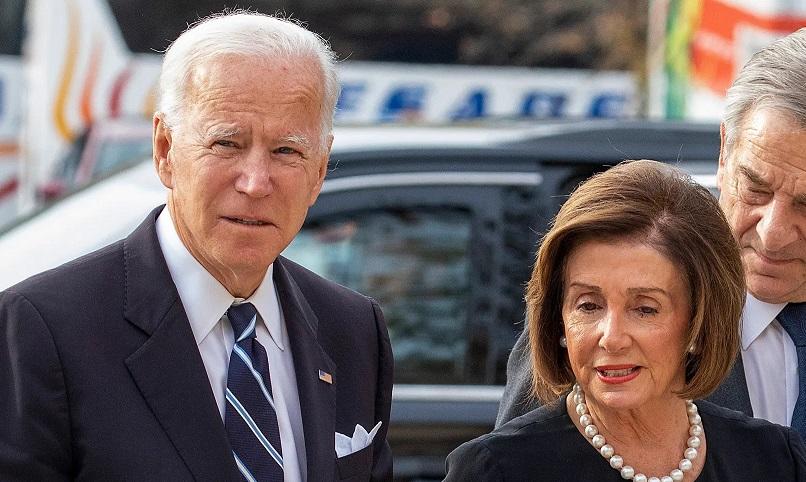
“I Don’t Think There Should Be Any Debates” Says Pelosi, Calling Them An “Exercise In Skullduggery”

“I Don’t Think There Should Be Any Debates” Says Pelosi, Calling Them An “Exercise In Skullduggery”

Tyler Durden

Thu, 08/27/2020 – 11:55

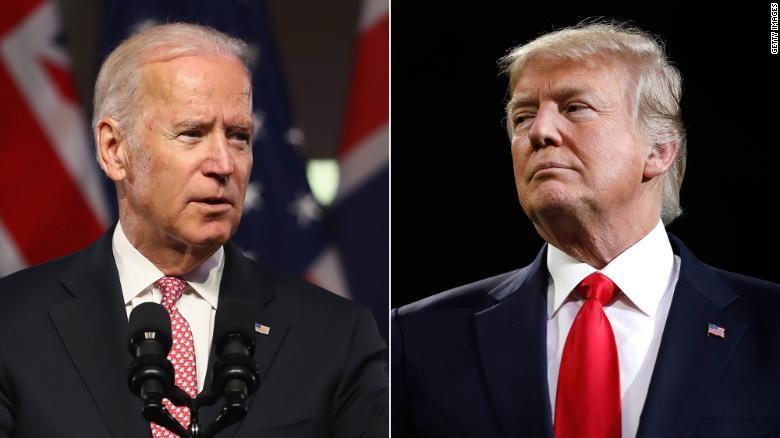
Nancy Pelosi has just joined the chorus of prominent Democrats trying desperately to avoid placing Joe Biden in front of the proverbial firing squad in a debate with President Trump.

“I don’t think that there should be any debates,” Pelosi said on Thursday, one day after President Trump demanded Biden take a drug test before the two square off.

I wouldn’t legitimize a conversation with him – nor a debate in terms of the presidency of the United States,” she added.

Pelosi said that Trump was “disgraceful” when he ‘stalked’ Hillary Clinton during the 2016 debate by walking near her, and that he will probably “act in a way that is beneath the dignity of the presidency.”

“I think he will also belittle what the debates are supposed to be about. And they’re not to be about skulduggery on the part of somebody who has no respect for the office he holds, much less the democratic process.

“I don’t think that he should dignify that conversation with Donald Trump.”

Pelosi then suggested that each candidate could hold separate ‘conversations’ with voters, saying: “Let that be a conversation with the American people, not an exercise in skulduggery.”

Watch:

Pelosi is far from the first Democrat trying to avoid a Trump-Biden debate. As Rick Moran wrote via PJMedia earlier this month:

*  *  *

Democrats around the country have begun to pressure the Biden campaign to call off all debates with Donald Trump due to the coronavirus pandemic, they say.

In truth, the reason they don’t want Biden to debate Trump is that they don’t think Trump will play by their rules. The president would take over the debate and make it about what he wants, not what Biden wants.

Democrats are also worried about Biden’s mental stamina and his ability to remain engaged for an hour and a half during a debate.

Newsweek:

Democratic strategists and supporters of Vice President Joe Biden are urging him not to debate President Donald Trump in the lead-up to Election Day, citing Trump’s publicity stunts and disregard for the rules in 2016. Meanwhile Biden backers, including some conservatives, applauded the University of Notre Dame and the University of Michigan for cancelling their scheduled debates over COVID-19 concerns.

Former White House Press Secretary Joe Lockhart joined several Democratic Party strategists in bluntly advising Biden, “whatever you do, don’t debate Trump.” Speaking on CNN Saturday, Lockhart said Trump shouldn’t be given another platform which will enable him to “repeat lies,” which he said occurred in the 2016 debates against Hillary Clinton.

Trump has a knack for exaggeration and hyperbole that Democrats don’t like. It’s very effective in debates and Biden would spend most of his time on the defensive.

via ZeroHedge News https://ift.tt/34HM9Y7 Tyler Durden