The shooting of Jacob Blake, a black man, by a white police officer in Kenosha, Wisconsin, on Sunday was excessive, unnecessary use of deadly force.
Video of the incident is graphic and infuriating. After responding to what the police described as a “domestic incident,” one of the cops grabs Blake’s shirt from behind and proceeds to fire into him seven times at point-blank range. Blake somehow managed to survive the attempted murder, but his father has told media outlets that Blake has been paralyzed from the waist down. At least two of the cops involved in the incident—including the officer who emptied his clip into the back of an unarmed and nonviolent suspect—have been placed on leave.
The officers involved should lose their jobs. The cop who pulled the trigger—then pulled it again, and again, and again—should be charged with the same offenses that any other civilian who fired a weapon that many times into someone else’s back would face, and should be prosecuted to the fullest extent of the law. That is what justice demands.
But for many who see the video of Blake’s shooting, that kind of justice is insufficient. The public outrage has evolved past seeking individual remedies for these not-so-isolated incidents. The use of unnecessary and life-altering force against Jacob Blake reminds us of the equally unnecessary and violent deaths of Eric Garner, George Floyd, Philando Castile, Breonna Taylor, and many others. Discrete justice does not address the systemic problems that plague policing in America. And thanks to qualified immunity—the court-created legal doctrine that often shields police officers from accountability when they hurt, maim, or kill—even discrete justice is often denied.
We should all be angry that this keeps happening, and that anger should be directed towards the police officers who perpetrate these crimes, towards the police departments that produce and protect bad cops, and towards the justice system that fails to hold murderers accountable because they were wearing a badge when they pulled the trigger.
That anger should not, must not be directed towards other innocent parties. Unfortunately, that keeps happening too.
“It’s emotionally hurtful, but we didn’t do anything to anybody. Why did we deserve it?”
Near tears, a store owner explains how his family business of 40 years was destroyed by #BLM & Antifa arsonists last night
That’s Scott Carpenter, one of the owners of what was B&L Office Furniture in downtown Kenosha. Carpenter’s business was torched on Monday night by protestors angered by the Blake shooting. And his property wasn’t alone. Rioters set fire to stores, cars, garbage trucks, and more in a wanton display of destruction and violence that serves no purpose.
From earlier in the night: One of the many buildings that was set on fire in Kenosha. pic.twitter.com/P6btJ2M01x
The destruction of private property is, of course, counterproductive to the goals of criminal justice reformers who want to see justice for Blake’s would-be murderer and systemic changes to prevent future such police violence. These riots take attention away from where it should be—on the police officers who tried to kill a seemingly innocent man on Sunday—and provide an opportunity for politicians and police apologists to call for even more aggressive state action.
But these incidents are also appalling and wrong on their own. If the root of the injustice in Kenosha, Wisconsin, was the use of violence against an innocent person, more violence perpetrated against more innocent people will increase the sum total of misery and unnecessary suffering.
It was the same in Minneapolis, where protesters rightfully angered over Floyd’s unjustified killing at the hands of a white police officer torched a police station and then moved on to burning liquor stores, restaurants, book stores, and more. The destruction is senseless in every way.
“The straight line between Floyd’s death and the burning of the Third Precinct is easily discerned: The building, a menacing freestanding structure on East Lake Street, is now ringed in temporary fencing; boulder-like concrete blocks wall up its former entrance and metal screens cover its windows,” writes Armin Rosen, a former Reason intern, wrote in a deeply reported feature published this week at Tablet. “The potential social justice value of the destruction of the Mama Safia Somali café across the street is hard to tease out.”
The destruction of Scott Carpenter’s furniture store is similarly difficult to comprehend. The same is true for every business, large and small, that’s been damaged or destroyed during a summer of unrest in cities across the country.
Despite efforts to redefine the term, violence against property is still violence. It is not justice—nor is it an adequate substitute for it or a path towards it. Burning private property won’t bring George Floyd back to life or save Jacob Blake from the hell he is now enduring. Looting won’t hold their murderers and attempted murderers to account.
Demand justice for those hurt and killed by police. Stop creating more victims.
from Latest – Reason.com https://ift.tt/3aUK9g8
via IFTTT
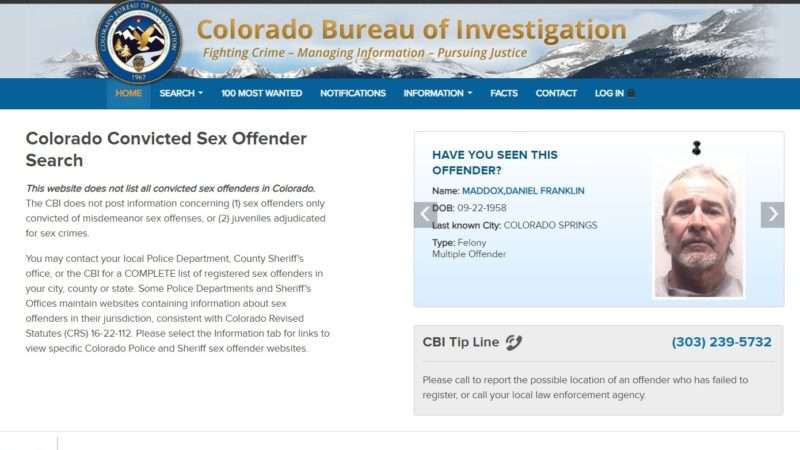
Online sex offender registries, which all 50 states maintain as a condition of federal funding, stigmatize the people listed in them long after they have completed their sentences, creating obstacles to housing and employment while exposing registrants to public humiliation, ostracism, threats, and violence. Three years ago, a federal judge ruled that such consequences amounted to cruel and unusual punishment of three men who challenged their treatment under Colorado’s Sex Offender Registration Act. Last week a federal appeals court overturned that decision, saying the burdens imposed by registration do not even qualify as punishment, making the Eighth Amendment irrelevant.
While that conclusion might seem counterintuitive, it comports with the U.S. Supreme Court’s understanding of sex offender registration, which it views as civil rather than punitive. Even though there is no evidence that publishing information about people convicted of sex offenses protects public safety, that is what legislators claim they are trying to do. And since their goal is prevention rather than retribution, the U.S. Court of Appeals for the 10th Circuit ruled, any harm inflicted by this policy is incidental.
That is not how it looks from the registrant’s perspective. In Colorado, anyone convicted of a listed offense must register with local police either annually or quarterly for the rest of his life, although some sex offenders can eventually petition for relief from that requirement. The names, offenses, photographs, addresses, and birth dates of people with felony convictions are readily available online to the general public, which means their records follow them wherever they go, no matter when they committed their crimes or how long they stay out of trouble.
The lead plaintiff in this case, David Millard, pleaded guilty to second-degree sexual assault on a minor in 1999. He served 90 days in jail and eight years of probation, but that was not the end of his punishment.
Millard was forced to move repeatedly after his status as a registered sex offender was revealed, once by police and once by a local TV station. The second time, he had to fill out about 200 rental applications before finding an apartment he could rent. He nearly lost his job at a grocery store after a customer saw his name and photo on a sex offender website.
Millard later bought a house in Denver, which is periodically visited by police officers seeking to verify his address. “If he is not home when they visit,” U.S. District Judge Richard Matsch noted in the 2017 decision that the 10th Circuit overturned, “they leave prominent, brightly colored ‘registered sex offender’ tags on his front door notifying him that he must contact the DPD.”
As you might imagine, this public shaming makes things more than a little awkward with the neighbors. Millard has been a target of verbal abuse and vandalism, and he worries that worse may be coming. “Because of the fear and anxiety about his safety in public,” Matsch wrote, “Mr. Millard does little more than go to work, isolating himself at his home.”
Another plaintiff, Eugene Knight, was convicted of attempted sexual assault on a child in 2006 based on a crime he committed when he was 18. Like Millard, he served 90 days in jail and eight years of probation. Now a “full-time father” because he has been unable to find work that pays well enough to cover the cost of child care, Knight is not allowed on school grounds to drop off his kids or attend school events.
The third plaintiff, Arturo Vega, pleaded guilty to third-degree sexual assault, a crime he committed when he was 13. Although juvenile offenders generally are not included in Colorado’s public database, Vega is listed there because he failed to comply with registration requirements he did not understand. He has tried twice to get off the registry. Both times his petitions were rejected by magistrates who insisted he prove a negative: that he was not likely to commit another sexual offense.
While acknowledging the price these men continue to pay years after completing their official sentences, the 10th Circuit said the relevant question is what Colorado legislators were trying to accomplish: “The statutory text itself explains that ‘it [was] not the general assembly’s intent that the information [contained in the Registry] be used to inflict retribution or additional punishment on any person,’ but rather [the law] was intended to address ‘the public’s need to adequately protect themselves and their children’ from those with prior sexual convictions.” Even looking beyond that avowed intent, the appeals court added, registration does not have the hallmarks of a criminal penalty recognized by the Supreme Court.
Does registration “resemble traditional forms of punishment”? Matsch likened it to public shaming, banishment, and parole. The 10th Circuit rejected those analogies.
Does registration “impose an affirmative disability or restraint”? The 10th Circuit concluded that the policy’s impact on the plaintiffs’ “abilities to live, work, accompany their children to school, and otherwise freely live their lives” did not meet that test.
Does registration “promote the traditional aims of punishment”? Matsch noted that Colorado’s registration requirements are based purely on the statutory classification of the offender’s crime, rather than an individualized assessment of the danger he poses, which to his mind suggested retribution was one aim of the law. The 10th Circuit rejected that inference. Matsch also noted testimony in which the director of the state agency that maintains the sex offender database cited deterrence as one goal of registration. “Deterrent purpose alone is not enough to render a regulatory scheme criminal in nature,” the 10th Circuit said.
Does registration have “a rational connection to a nonpunitive purpose”? Matsch conceded that point, and the appeals court thought it was enough to note that Colorado’s law “requires more serious offenders to register more often than others,” which gives you a sense of what rational means in this context.
Is registration “excessive with respect to [its] purpose”? Matsch thought the law’s “very long registration requirements and substantial disclosure of personal information, without any individual risk assessment or opportunity to soften [its] requirements based on evidence of rehabilitation, were excessive in relation to [the law’s] supposed public safety objective.” The 10th Circuit said that conclusion was inconsistent with its precedents.
Other courts have been more receptive to the argument that registration is punishment by another name. In 2016, for example, the U.S. Court of Appeals for the 6th Circuit concluded that Michigan’s sex offender registration scheme was punitive, meaning its requirements cannot be imposed retroactively. The supreme courts of several states, including Alaska, New Hampshire, and Pennsylvania, have reached similar conclusions.
But in the 10th Circuit, registration does not count as punishment, notwithstanding its onerous costs and dubious benefits. In practice, that analysis hinges on what legislators say they want to do, not what their law actually accomplishes.
from Latest – Reason.com https://ift.tt/34yC93i
via IFTTT
Following yet another horrific and unjust police shooting of a black man—this time the victim is 29-year-old Jacob Blake in Kenosha, Wisconsin—protesters have again taken to the streets.
In D.C., these protests took the form of bands of Black Lives Matter (BLM) activists roaming the streets and harassing random white people seated outdoors at restaurants. Videos of several of the encounters appeared all over social media on Tuesday. These are short clips, and it’s not possible to say for certain what happened immediately before and after the recordings. Context often matters in viral videos.
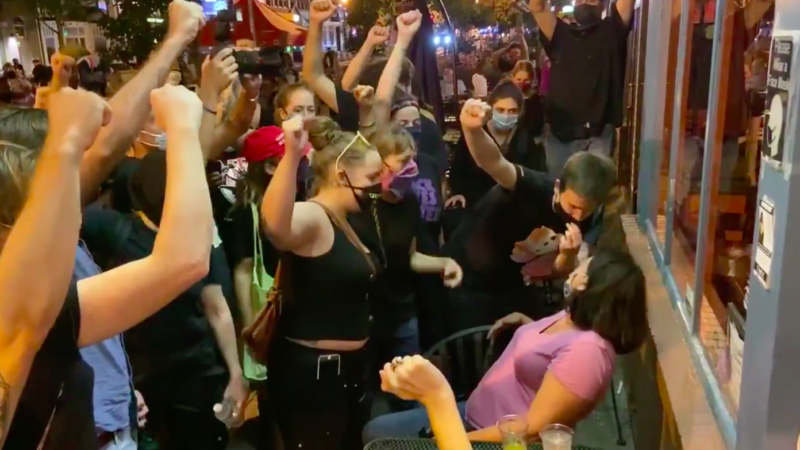
But by reviewing all the videos, and eyewitness testimony, it’s possible to arrive at a general understanding of what was going on, and it’s not good. Chanting “silence is violence,” the protesters demanded that people they encountered in the street, as well as the patrons of various restaurants, raise their hands to indicate solidarity with the goals of BLM. Many complied, but some did not. One white woman who declined to raise her hand became surrounded by protesters, most of whom were also white. These protesters hovered over her and even got in her face, as evidenced by the video:
Other videos also show direct, face-to-face confrontations between protesters and random white people.
This is the Evergreen College model of social justice deployed off-campus. Readers may recall the infamous 2017 episode involving a progressive professor who was forced to leave campus after drawing the ire of activist students. These students then essentially physically cornered the president of the college and refused to let him leave a meeting until he accepted their demands. In 2020, these theatrics are by no means confined to a college campus: Last night, activists walked the streets trying to bully people into submission. It’s a poorly considered tactic almost perfectly calibrated to breed resentment toward the very cause it purports to serve: racial justice.
It’s also wrong on its own terms. The U.S. is still in the throes of a deadly pandemic that has claimed the lives of more than 170,000 people. In situations where a lot of people are shouting in each other’s faces, the virus is likely to spread more easily. Policymakers, health officials, and the media are keen to remind everyone of this when the topic of discussion is school re-openings, social gatherings, and even funerals. The protesters, though, have often enjoyed an exemption from social distance shaming.
Two years ago, there was a debate about whether restaurants were morally justified in asking Trump administration officials to leave their establishments. It’s a distressing sign of the times that such an act of public confrontation looks positively tame compared with what D.C. BLM activists did yesterday. A movement that deploys large crowds to confront, intimidate, and provoke random small businesses and their customers will quickly and rightly find itself demonized by the public.
from Latest – Reason.com https://ift.tt/2G0NUFL
via IFTTT
The shooting of Jacob Blake, a black man, by a white police officer in Kenosha, Wisconsin, on Sunday was excessive, unnecessary use of deadly force.
Video of the incident is graphic and infuriating. After responding to what the police described as a “domestic incident,” one of the cops grabs Blake’s shirt from behind and proceeds to fire into him seven times at point-blank range. Blake somehow managed to survive the attempted murder, but his father has told media outlets that Blake has been paralyzed from the waist down. At least two of the cops involved in the incident—including the officer who emptied his clip into the back of an unarmed and nonviolent suspect—have been placed on leave.
The officers involved should lose their jobs. The cop who pulled the trigger—then pulled it again, and again, and again—should be charged with the same offenses that any other civilian who fired a weapon that many times into someone else’s back would face, and should be prosecuted to the fullest extent of the law. That is what justice demands.
But for many who see the video of Blake’s shooting, that kind of justice is insufficient. The public outrage has evolved past seeking individual remedies for these not-so-isolated incidents. The use of unnecessary and life-altering force against Jacob Blake reminds us of the equally unnecessary and violent deaths of Eric Garner, George Floyd, Philando Castile, Breonna Taylor, and many others. Discrete justice does not address the systemic problems that plague policing in America. And thanks to qualified immunity—the court-created legal doctrine that often shields police officers from accountability when they hurt, maim, or kill—even discrete justice is often denied.
We should all be angry that this keeps happening, and that anger should be directed towards the police officers who perpetrate these crimes, towards the police departments that produce and protect bad cops, and towards the justice system that fails to hold murderers accountable because they were wearing a badge when they pulled the trigger.
That anger should not, must not be directed towards other innocent parties. Unfortunately, that keeps happening too.
“It’s emotionally hurtful, but we didn’t do anything to anybody. Why did we deserve it?”
Near tears, a store owner explains how his family business of 40 years was destroyed by #BLM & Antifa arsonists last night
That’s Scott Carpenter, one of the owners of what was B&L Office Furniture in downtown Kenosha. Carpenter’s business was torched on Monday night by protestors angered by the Blake shooting. And his property wasn’t alone. Rioters set fire to stores, cars, garbage trucks, and more in a wanton display of destruction and violence that serves no purpose.
From earlier in the night: One of the many buildings that was set on fire in Kenosha. pic.twitter.com/P6btJ2M01x
The destruction of private property is, of course, counterproductive to the goals of criminal justice reformers who want to see justice for Blake’s would-be murderer and systemic changes to prevent future such police violence. These riots take attention away from where it should be—on the police officers who tried to kill a seemingly innocent man on Sunday—and provide an opportunity for politicians and police apologists to call for even more aggressive state action.
But these incidents are also appalling and wrong on their own. If the root of the injustice in Kenosha, Wisconsin, was the use of violence against an innocent person, more violence perpetrated against more innocent people will increase the sum total of misery and unnecessary suffering.
It was the same in Minneapolis, where protesters rightfully angered over Floyd’s unjustified killing at the hands of a white police officer torched a police station and then moved on to burning liquor stores, restaurants, book stores, and more. The destruction is senseless in every way.
“The straight line between Floyd’s death and the burning of the Third Precinct is easily discerned: The building, a menacing freestanding structure on East Lake Street, is now ringed in temporary fencing; boulder-like concrete blocks wall up its former entrance and metal screens cover its windows,” writes Armin Rosen, a former Reason intern, wrote in a deeply reported feature published this week at Tablet. “The potential social justice value of the destruction of the Mama Safia Somali café across the street is hard to tease out.”
The destruction of Scott Carpenter’s furniture store is similarly difficult to comprehend. The same is true for every business, large and small, that’s been damaged or destroyed during a summer of unrest in cities across the country.
Despite efforts to redefine the term, violence against property is still violence. It is not justice—nor is it an adequate substitute for it or a path towards it. Burning private property won’t bring George Floyd back to life or save Jacob Blake from the hell he is now enduring. Looting won’t hold their murderers and attempted murderers to account.
Demand justice for those hurt and killed by police. Stop creating more victims.
from Latest – Reason.com https://ift.tt/3aUK9g8
via IFTTT
Online sex offender registries, which all 50 states maintain as a condition of federal funding, stigmatize the people listed in them long after they have completed their sentences, creating obstacles to housing and employment while exposing registrants to public humiliation, ostracism, threats, and violence. Three years ago, a federal judge ruled that such consequences amounted to cruel and unusual punishment of three men who challenged their treatment under Colorado’s Sex Offender Registration Act. Last week a federal appeals court overturned that decision, saying the burdens imposed by registration do not even qualify as punishment, making the Eighth Amendment irrelevant.
While that conclusion might seem counterintuitive, it comports with the U.S. Supreme Court’s understanding of sex offender registration, which it views as civil rather than punitive. Even though there is no evidence that publishing information about people convicted of sex offenses protects public safety, that is what legislators claim they are trying to do. And since their goal is prevention rather than retribution, the U.S. Court of Appeals for the 10th Circuit ruled, any harm inflicted by this policy is incidental.
That is not how it looks from the registrant’s perspective. In Colorado, anyone convicted of a listed offense must register with local police either annually or quarterly for the rest of his life, although some sex offenders can eventually petition for relief from that requirement. The names, offenses, photographs, addresses, and birth dates of people with felony convictions are readily available online to the general public, which means their records follow them wherever they go, no matter when they committed their crimes or how long they stay out of trouble.
The lead plaintiff in this case, David Millard, pleaded guilty to second-degree sexual assault on a minor in 1999. He served 90 days in jail and eight years of probation, but that was not the end of his punishment.
Millard was forced to move repeatedly after his status as a registered sex offender was revealed, once by police and once by a local TV station. The second time, he had to fill out about 200 rental applications before finding an apartment he could rent. He nearly lost his job at a grocery store after a customer saw his name and photo on a sex offender website.
Millard later bought a house in Denver, which is periodically visited by police officers seeking to verify his address. “If he is not home when they visit,” U.S. District Judge Richard Matsch noted in the 2017 decision that the 10th Circuit overturned, “they leave prominent, brightly colored ‘registered sex offender’ tags on his front door notifying him that he must contact the DPD.”
As you might imagine, this public shaming makes things more than a little awkward with the neighbors. Millard has been a target of verbal abuse and vandalism, and he worries that worse may be coming. “Because of the fear and anxiety about his safety in public,” Matsch wrote, “Mr. Millard does little more than go to work, isolating himself at his home.”
Another plaintiff, Eugene Knight, was convicted of attempted sexual assault on a child in 2006 based on a crime he committed when he was 18. Like Millard, he served 90 days in jail and eight years of probation. Now a “full-time father” because he has been unable to find work that pays well enough to cover the cost of child care, Knight is not allowed on school grounds to drop off his kids or attend school events.
The third plaintiff, Arturo Vega, pleaded guilty to third-degree sexual assault, a crime he committed when he was 13. Although juvenile offenders generally are not included in Colorado’s public database, Vega is listed there because he failed to comply with registration requirements he did not understand. He has tried twice to get off the registry. Both times his petitions were rejected by magistrates who insisted he prove a negative: that he was not likely to commit another sexual offense.
While acknowledging the price these men continue to pay years after completing their official sentences, the 10th Circuit said the relevant question is what Colorado legislators were trying to accomplish: “The statutory text itself explains that ‘it [was] not the general assembly’s intent that the information [contained in the Registry] be used to inflict retribution or additional punishment on any person,’ but rather [the law] was intended to address ‘the public’s need to adequately protect themselves and their children’ from those with prior sexual convictions.” Even looking beyond that avowed intent, the appeals court added, registration does not have the hallmarks of a criminal penalty recognized by the Supreme Court.
Does registration “resemble traditional forms of punishment”? Matsch likened it to public shaming, banishment, and parole. The 10th Circuit rejected those analogies.
Does registration “impose an affirmative disability or restraint”? The 10th Circuit concluded that the policy’s impact on the plaintiffs’ “abilities to live, work, accompany their children to school, and otherwise freely live their lives” did not meet that test.
Does registration “promote the traditional aims of punishment”? Matsch noted that Colorado’s registration requirements are based purely on the statutory classification of the offender’s crime, rather than an individualized assessment of the danger he poses, which to his mind suggested retribution was one aim of the law. The 10th Circuit rejected that inference. Matsch also noted testimony in which the director of the state agency that maintains the sex offender database cited deterrence as one goal of registration. “Deterrent purpose alone is not enough to render a regulatory scheme criminal in nature,” the 10th Circuit said.
Does registration have “a rational connection to a nonpunitive purpose”? Matsch conceded that point, and the appeals court thought it was enough to note that Colorado’s law “requires more serious offenders to register more often than others,” which gives you a sense of what rational means in this context.
Is registration “excessive with respect to [its] purpose”? Matsch thought the law’s “very long registration requirements and substantial disclosure of personal information, without any individual risk assessment or opportunity to soften [its] requirements based on evidence of rehabilitation, were excessive in relation to [the law’s] supposed public safety objective.” The 10th Circuit said that conclusion was inconsistent with its precedents.
Other courts have been more receptive to the argument that registration is punishment by another name. In 2016, for example, the U.S. Court of Appeals for the 6th Circuit concluded that Michigan’s sex offender registration scheme was punitive, meaning its requirements cannot be imposed retroactively. The supreme courts of several states, including Alaska, New Hampshire, and Pennsylvania, have reached similar conclusions.
But in the 10th Circuit, registration does not count as punishment, notwithstanding its onerous costs and dubious benefits. In practice, that analysis hinges on what legislators say they want to do, not what their law actually accomplishes.
from Latest – Reason.com https://ift.tt/34yC93i
via IFTTT
Following yet another horrific and unjust police shooting of a black man—this time the victim is 29-year-old Jacob Blake in Kenosha, Wisconsin—protesters have again taken to the streets.
In D.C., these protests took the form of bands of Black Lives Matter (BLM) activists roaming the streets and harassing random white people seated outdoors at restaurants. Videos of several of the encounters appeared all over social media on Tuesday. These are short clips, and it’s not possible to say for certain what happened immediately before and after the recordings. Context often matters in viral videos.
But by reviewing all the videos, and eyewitness testimony, it’s possible to arrive at a general understanding of what was going on, and it’s not good. Chanting “silence is violence,” the protesters demanded that people they encountered in the street, as well as the patrons of various restaurants, raise their hands to indicate solidarity with the goals of BLM. Many complied, but some did not. One white woman who declined to raise her hand became surrounded by protesters, most of whom were also white. These protesters hovered over her and even got in her face, as evidenced by the video:
Other videos also show direct, face-to-face confrontations between protesters and random white people.
This is the Evergreen College model of social justice deployed off-campus. Readers may recall the infamous 2017 episode involving a progressive professor who was forced to leave campus after drawing the ire of activist students. These students then essentially physically cornered the president of the college and refused to let him leave a meeting until he accepted their demands. In 2020, these theatrics are by no means confined to a college campus: Last night, activists walked the streets trying to bully people into submission. It’s a poorly considered tactic almost perfectly calibrated to breed resentment toward the very cause it purports to serve: racial justice.
It’s also wrong on its own terms. The U.S. is still in the throes of a deadly pandemic that has claimed the lives of more than 170,000 people. In situations where a lot of people are shouting in each other’s faces, the virus is likely to spread more easily. Policymakers, health officials, and the media are keen to remind everyone of this when the topic of discussion is school re-openings, social gatherings, and even funerals. The protesters, though, have often enjoyed an exemption from social distance shaming.
Two years ago, there was a debate about whether restaurants were morally justified in asking Trump administration officials to leave their establishments. It’s a distressing sign of the times that such an act of public confrontation looks positively tame compared with what D.C. BLM activists did yesterday. A movement that deploys large crowds to confront, intimidate, and provoke random small businesses and their customers will quickly and rightly find itself demonized by the public.
from Latest – Reason.com https://ift.tt/2G0NUFL
via IFTTT
Senior editor, Ash Bennington, hosts Tony Greer, editor of The Morning Navigator, to continue their discussion of the wild inflation trade. They first look at ExxonMobil getting the boot from the Dow Jones and how it reflects a weak energy sector and the rotation of tech upward, describing how the boom across tech subsectors is correlated to Fed policies. Tony also notes how the baton has been passed over to commodities as well as they continue exploding and how a sell-off in bonds will sustain the commodities’ rally while denoting a rise in inflation. He closes off by providing an update on his thoughts on the DXY, why dollar weakness is a part of the commodities bull case, and what might be driving the rallies in the yen, euro, and Aussie dollar. In the intro, Nick Correa talks about tech’s ongoing dominance in the market by looking at Dow Jones’ makeover and how tech companies are lining up to file their IPOs.
via ZeroHedge News https://ift.tt/3lcvhyF Tyler Durden
Police Requests To Access Your Smart Speaker Are Up 72% Since 2016 Tyler Durden
Tue, 08/25/2020 – 18:25
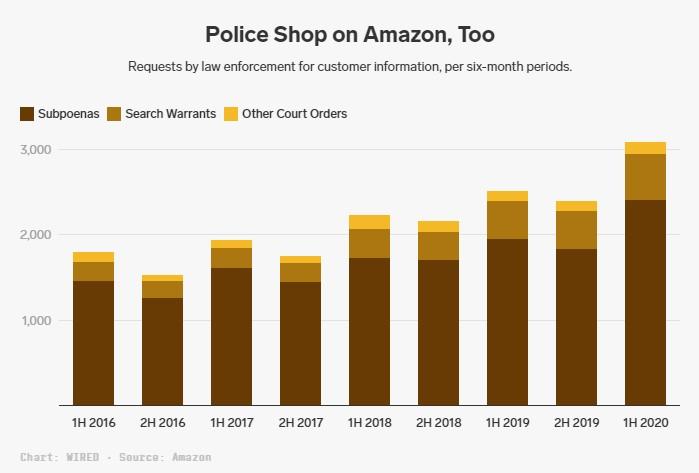
Amazon said it had received more than 3,000 requests for smart speaker user data from police earlier this year, according to a new article from Wired. Even more stunning, Amazon complied with the police’s requests on more than 2,000 occasions, forking over recordings and data that give law enforcement an ear into someone’s household.
This number marks a 72% increase in these types of requests from the same period in 2016 – the first time Amazon disclosed the data. The number of requests are up 24% year over year.
Douglas Orr, head of the criminal justice department at the University of North Georgia, told Wired that police look for this smart home data “as routinely as data from smartphones”. Police can continue to collect data if one electronic device (like a phone) leads them to another (like a smart home speaker) simply by amending search warrants, he said.
Google’s Nest unit has also seen a similar spike in police demands for data from its smart speakers. The company’s annual transparency report shows consistently rising numbers for police requests for data.
Meanwhile, Amazon said that “any number of entities” can request the data, but that they prioritize it based on urgency. Lee Whitfield, a forensic analyst, said: “Things like Homeland Security, they’re going to take high priority. Other law enforcement requests will come in under that. And then things like divorce cases or civil cases, they have a lower ranking.”
Officials value the data on smart speakers because it “can offer a timeline of a person’s activities, their location, if they’re alone, and can verify statements made during questioning.”
Orr said: “Usually the alibi you get is, ‘I was at home.’ Nobody can confirm that. So you ask, ‘Do you have a speaker?’”
He has looked at the types of data that police can get from smart speakers – like the Amazon Echo you may have at your house right now. Voice clips are “only the beginning,” he said. Police can also ascertain time-stamped logs of user activity.
Police are also relying on wearables and smart devides to verify claims people make during an investigation, Orr says. Wired offers this example:
Heather Mahalik, a forensics instructor, recalls a Florida case in which a man killed his wife, then tried to impersonate her. The husband sent texts and Facebook messages from his wife’s phone in an attempt to blur the timeline of her disappearance.
While the woman’s phone activity continued, her Apple Watch showed a sudden drop in heart rate activity that the husband claimed was due to a dead battery. Activity on the man’s phone synced perfectly with when he used the wife’s phone to post to Facebook.
Her phone showed no activity except for when the husband picked it up to post, with timestamps matching his activity to the use of the wife’s phone.
“We were able to tell from his device that he would pick up the phone, take 18 steps, and it corresponded with the time he posted a Facebook post,” Mahalik said.
This connecting of data from multiple devices is now becoming “common practice”, Whitfield said.
“I just don’t see this going away. I think this is going to be more and more prolific as time goes on,” he concluded.
via ZeroHedge News https://ift.tt/2EA34B3 Tyler Durden
I’m sure we all remember that fateful month of March. One after another states began to issue lockdown orders, closing businesses, restricting travel, and ordering people to stay home.
That was the month when the United States went from viewing COVID-19 as a minimal threat to issuing some of the most draconian lockdown measures in the entire world.
Life changed almost immediately. The stock market plummets, the unemployment rate skyrockets, the masks get tighter, the social fabric frays. The government goes on an unprecedented power grab exerting more control over society more viciously and more arbitrarily than ever before.
That’s what many Americans may recall when we think back to late March and early April. What many of us probably don’t recall is what Dr. Anthony Fauci recommended around that same time. During the first week of April, Dr. Fauci made it clear that he believed that every state should issue a stay at home order.
The Hill reported on April 2nd that in an interview with CNN’s Anderson Cooper regarding stay at home orders he stated
“I don’t understand why that’s not happening. If you look at what’s going on in this country, I just don’t understand why we’re not doing that. We really should be.”
This sentiment was stated a bit more clearly when
“Surgeon General Jerome Adams said Wednesday that the White House coronavirus guidelines should be interpreted as a national stay-at-home order.”
Dr. Fauci and those aligned with him endorsed the use of stay at home orders in all 50 states. Such policies generally aim to
“Restrict people from leaving their homes for anything other than essential activities. They’re intended to limit people’s contact with each other in order to slow the spread of the disease.”
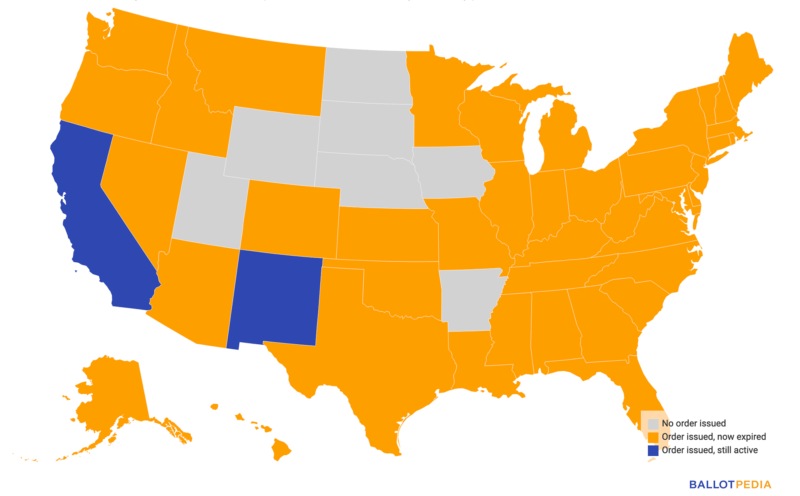
According to Dr. Fauci all states should have issued a stay at home order. Today there are seven states that have yet to enact such a policy.
Counterfactuals to Dr. Fauci’s Stay At Home Order
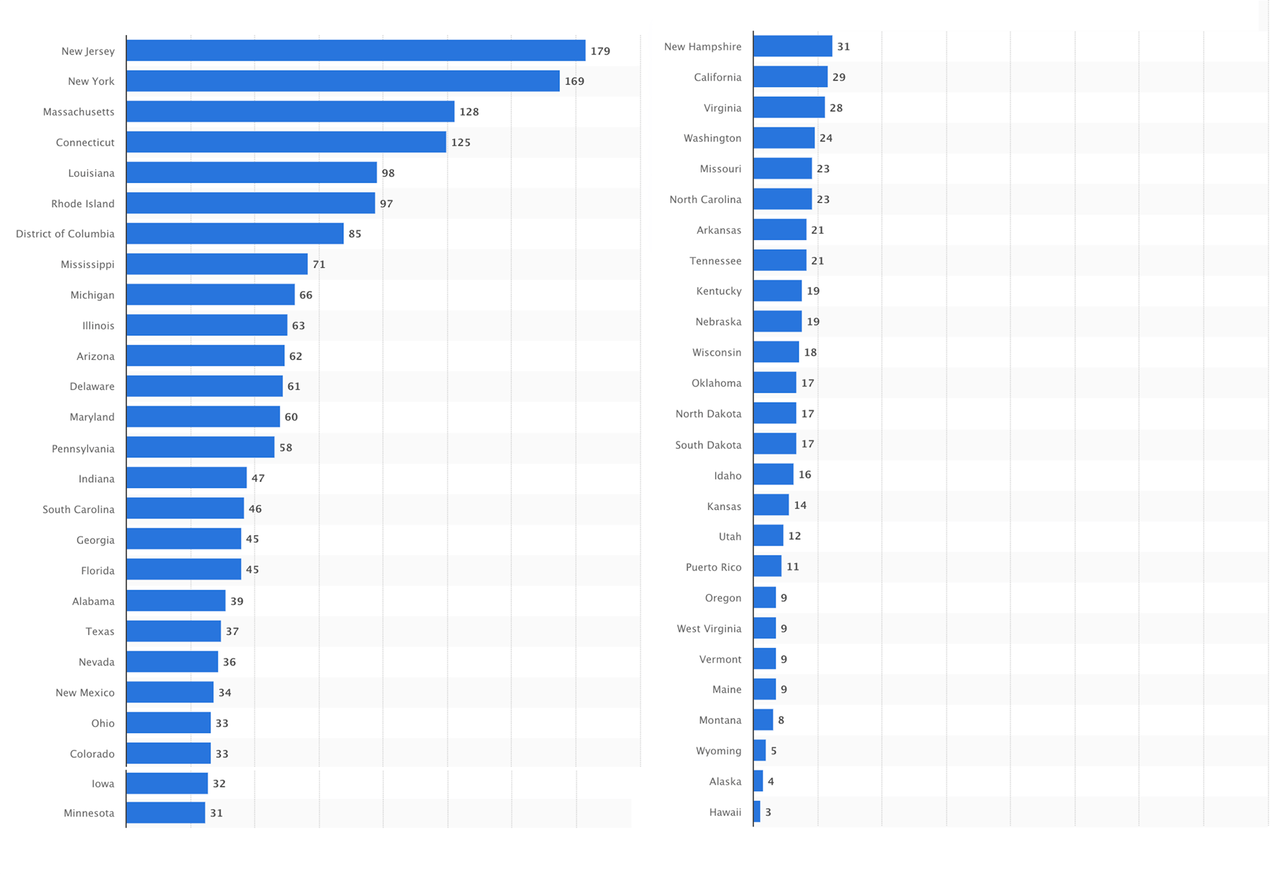
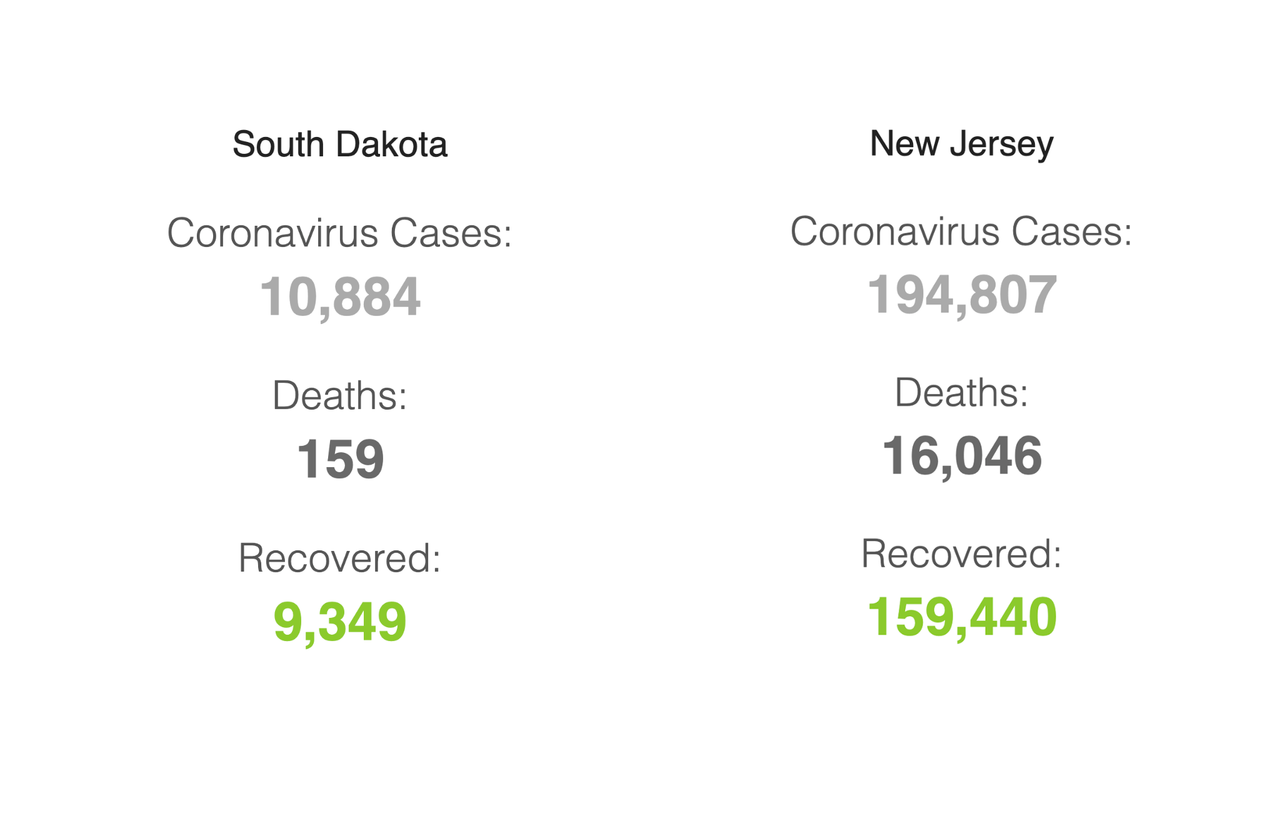
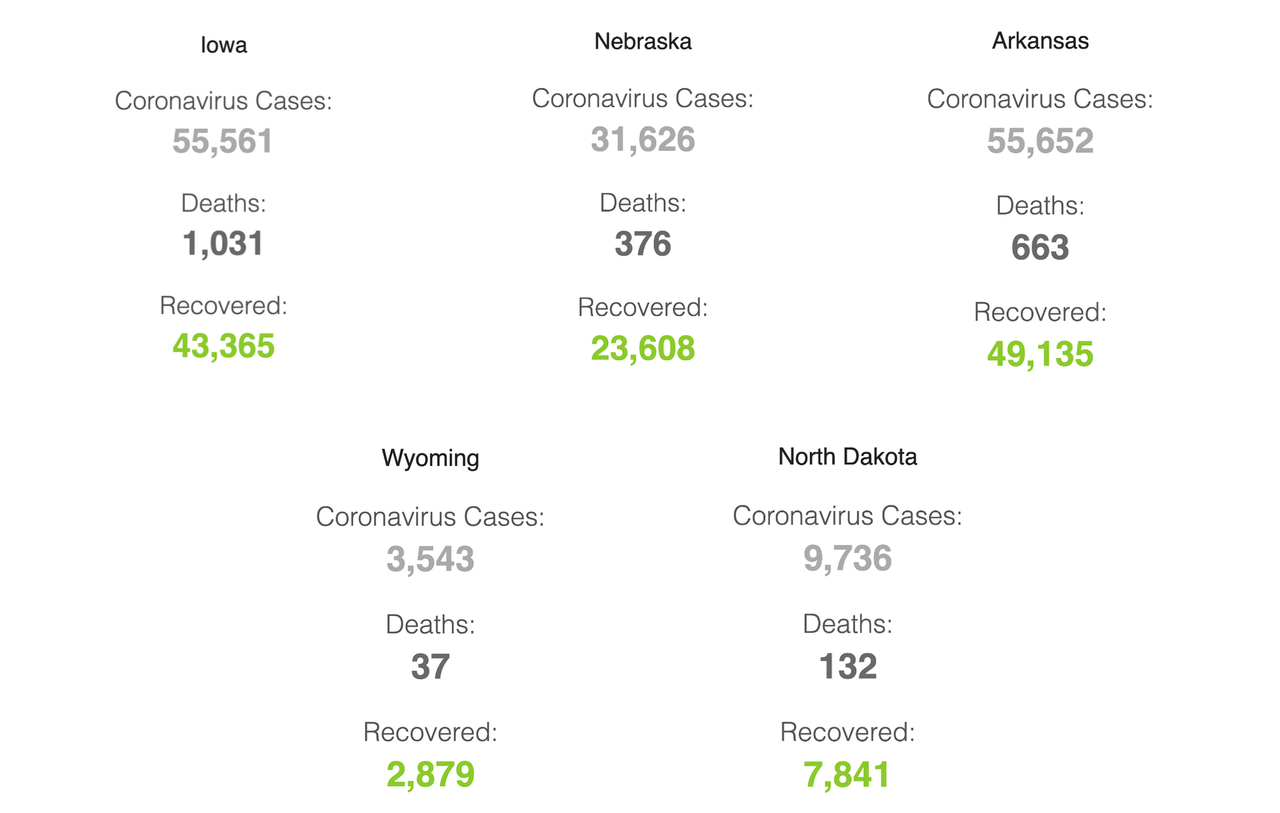
To assess Fauci’s claims that stay at home orders, in particular, are a model policy that every state should have adopted, we can look to Utah, South Dakota, North Dakota, Nebraska, Iowa, Wyoming, and Arkansas. These are the only seven states to never issue stay at home orders and the results are telling, but not necessarily in Dr. Fauci’s favor.
Death rates from coronavirus (COVID-19) in the United States as of August 19, 2020, by state (per 100,000 people) Source: Statista
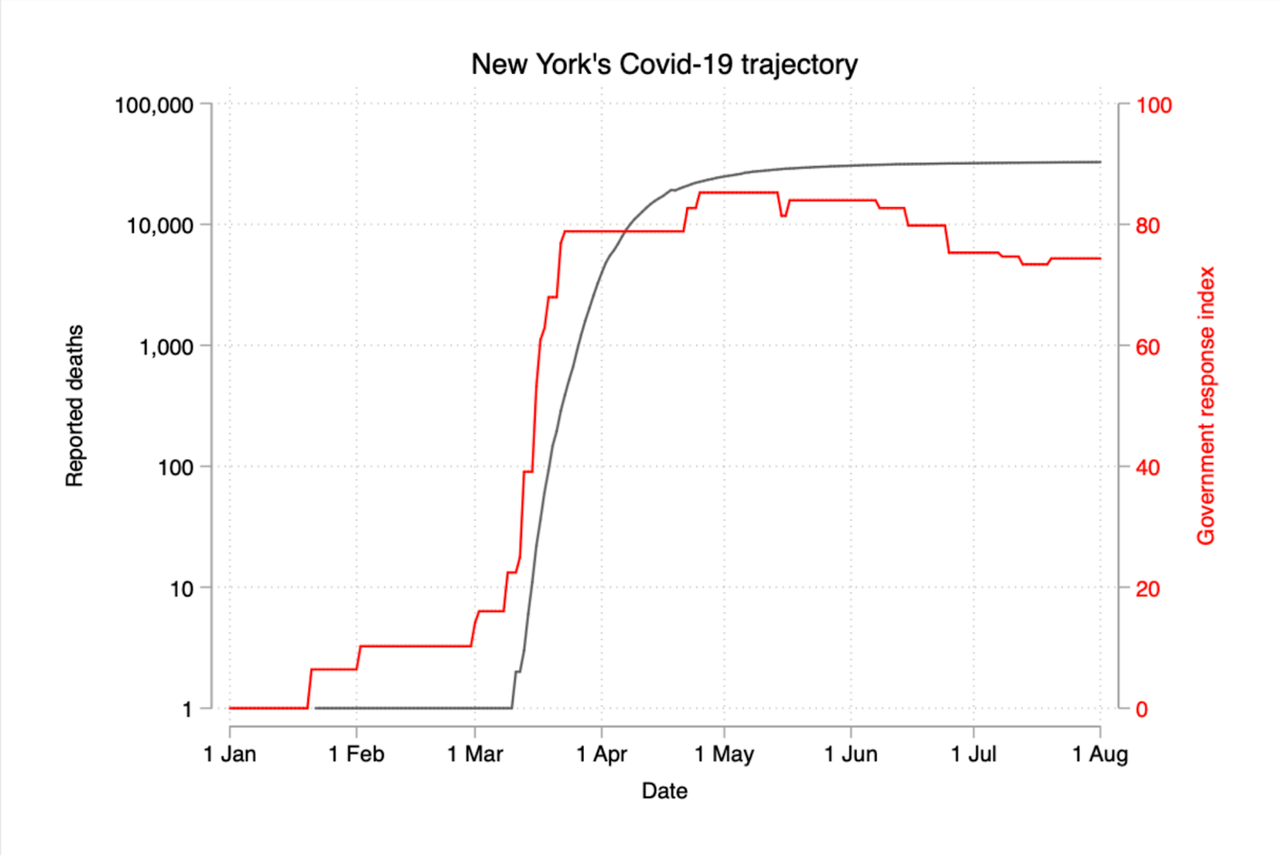
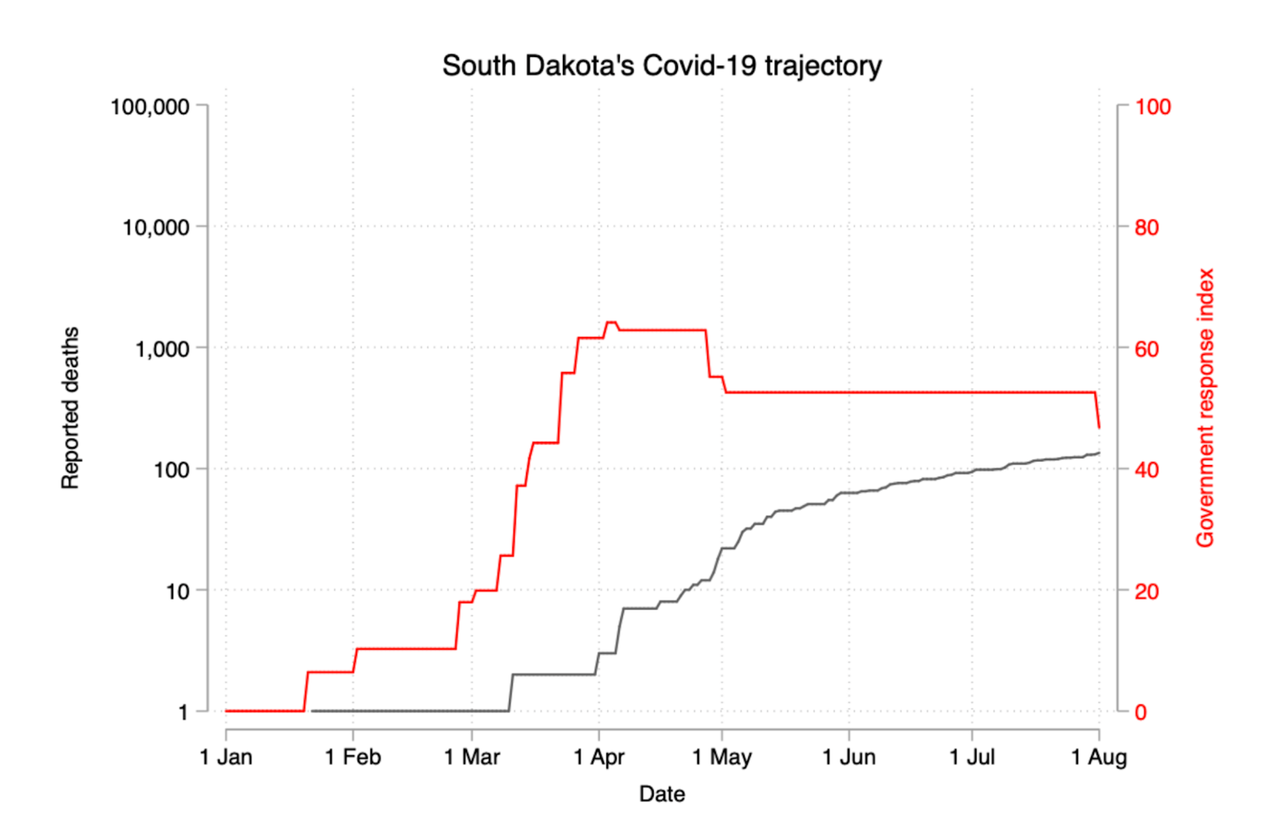
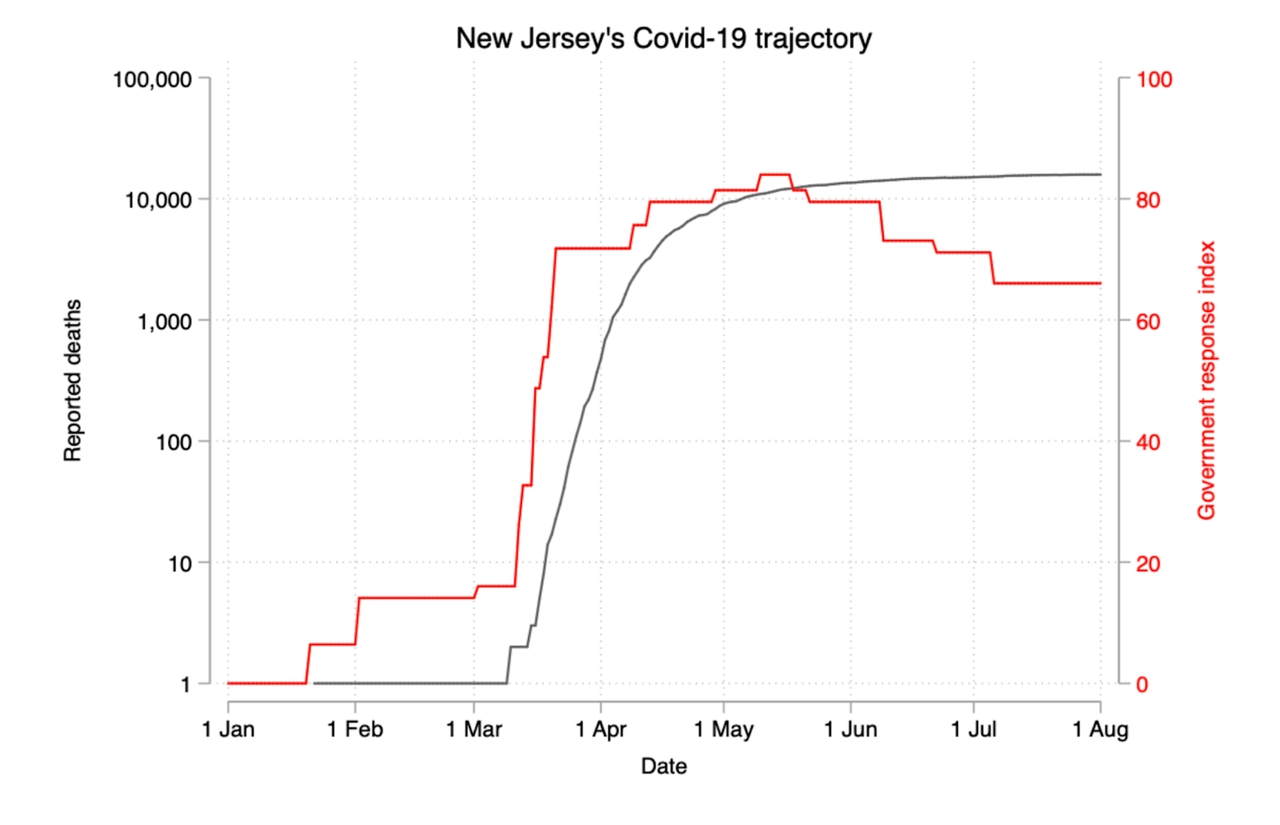
One of the first things that jump out is that all seven of these states are amongst the top performers in terms of minimizing deaths per capita. In fact, the most draconian states such as New York, New Jersey, Massachusetts, and Michigan, where the governor even banned the selling of seeds, are the worst performing states. Whereas states like Wyoming, Utah, South Dakota, and North Dakota, which did not lock down are amongst the best overall in terms of deaths per capita.
Although these graphs are an imperfect and imprecise representation of the specific circumstances and policies enacted in each state, it is still clear that harsh or forceful government action seems to have no correlation with containing COVID-19 deaths. In many cases, highly disruptive and overly involved governments can worsen the pandemic. For example, in states like New York, over 4,500 COVID-19 patients were forced into nursing homes in an ill-planned attempt to alleviate hospital capacity.
Such a policy was implemented in other pro-lockdown states such as California and Michigan, killing thousands of nursing home residents. Closing down the economy and confining residents to their homes is also incredibly detrimental to mental health leading to increased rates of domestic violence and suicide.
Alongside having a poor correlation with any sort of desirable health outcomes, states that avoided stay at home orders also fared far better economically than those that embraced them. Provided below are unemployment numbers from July 2019 and July 2020 from the Bureau of Labor Statistics. Despite COVID-19’s role in the decline of the fossil fuel industry which is a key component in states like North Dakota and Wyoming that didn’t issue stay at home orders, they still managed to maintain better employment rates than many states that did lock down.
The rest of the states that didn’t issue stay at home orders (Utah, South Dakota, Nebraska, Iowa, and Arkansas) fared just as well if not better than other states. In particular, Utah and Nebraska did extraordinarily well maintaining a 4.5% and 4.8% unemployment rate, respectively while keeping death rates low.
In contrast, pro-lockdown states like New York, California, and Massachusetts saw catastrophic unemployment numbers, 15.9%, 13.3%, and 16.1% respectively, alongside high COVID-19 death rates.
Perhaps the most disheartening cases are states like Maine, which issued stay at home orders and overall maintained a high amount of government involvement. The state saw very little cases and deaths much like its neighbors Vermont and New Hampshire.
All three of these states maintained relatively strict lockdowns even as cases as well as deaths remained low. Instead of being able to live out the pandemic in relative peace, the lockdown policies brought about economic devastation as seen by the 9.9%, 8.3%, 8.1% unemployment rates, respectively. The Maine Policy Institute released a report detailing the unnecessary damage such policies brought on the state in their report.
South Dakota: A Closer Look at an Outbreak That Never Happened
Much like Sweden, South Dakota has maintained a famously lax response to COVID-19, relying more so on the responsibility of its citizens as well as implementing lighthanded policies. Much like Sweden it has also attracted a number of skeptics and doomsday prophets who continue to predict an unprecedented wave of death that never seems to arrive.
One writer from Forbes points out skepticism about South Dakota’s response when she writes
“South Dakota, one of five remaining states yet to issue a statewide stay-at-home order, now has one of the largest coronavirus outbreaks in the United States—with 300-plus cases at the world’s biggest pork processor, Smithfield Foods, raising concern about coronavirus spreading through processed meat and how South Dakota’s meager rural healthcare facilities will fare with the disease.”
While states with stay-at-home orders begin to discuss economic reopening and flattening of the new coronavirus case curve, South Dakota’s Department of Health says, “The climb is just starting,” with a case peak predicted to occur from May to mid-June, according to Brookings Register.”
Despite the outbreak at the meatpacking plants, which much like nursing homes and prisons are hotspots for COVID-19, the state ended up doing incredibly well as we can see today. The Forbes article was written in mid-April and today South Dakota still maintains some of the lowest death rates despite the meatpacking plant cases and its rural healthcare facilities.
AIER Senior Fellow Robert Wright talks about his experience living in South Dakota during the height of the lockdowns back in March and April when he says:
“What was imposed was no restaurant sit down service for like March and April but we all just ordered delivered or pickup. The biggest loss was no more buffets. Signs and screens went up quickly and most people seemed to follow them. There was no sense of panic, even after the news hit about the meatpacking plant fiasco. The governor was very assuring and the state was very transparent about numbers and there was no sign of padding or downplaying.”
Policies such as ensuring proper and transparent information as well as moving forward in a calm and methodical way is part of a proven pandemic response. Inciting fear and confusion by drastically shutting down society is a recipe for panic as well as disaster.
The Case of Utah: A Spike in Cases But Minimal Disruption
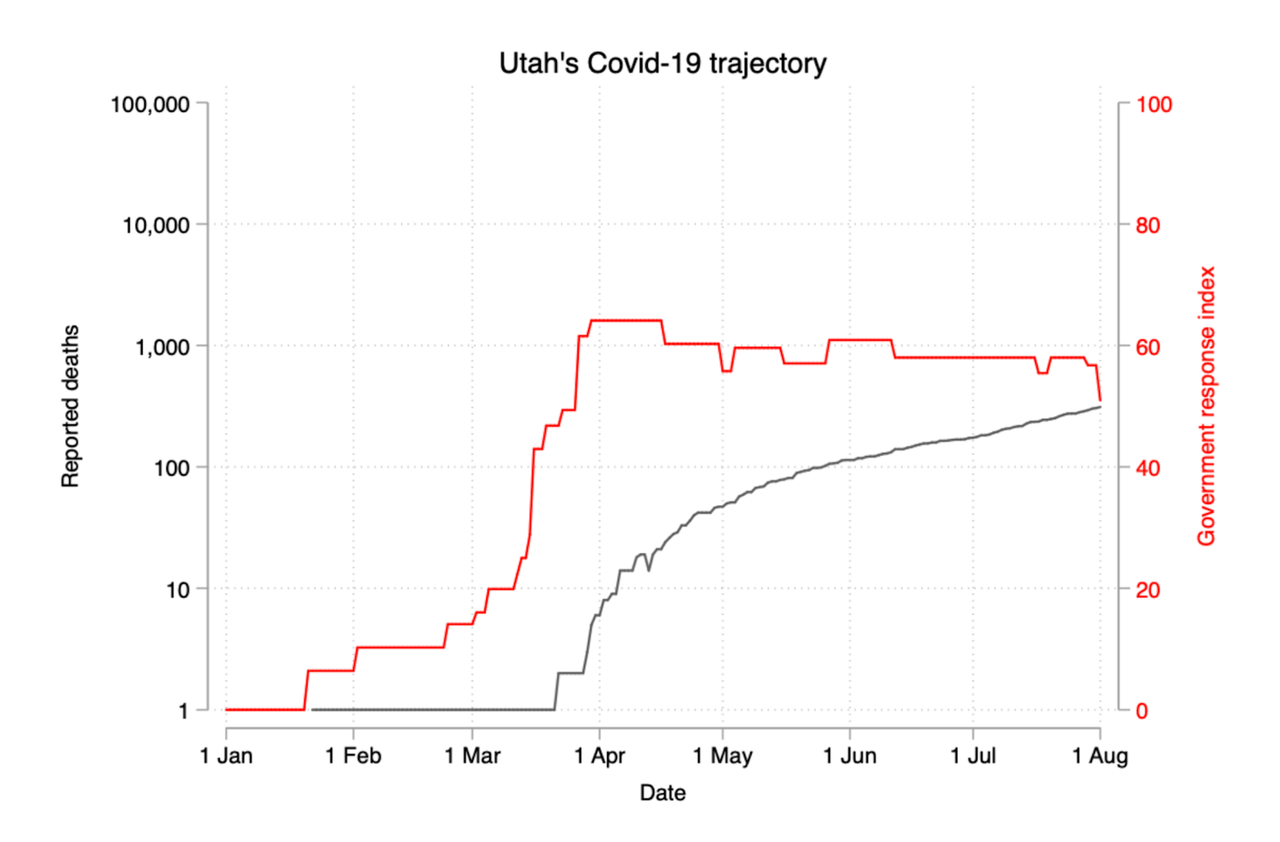
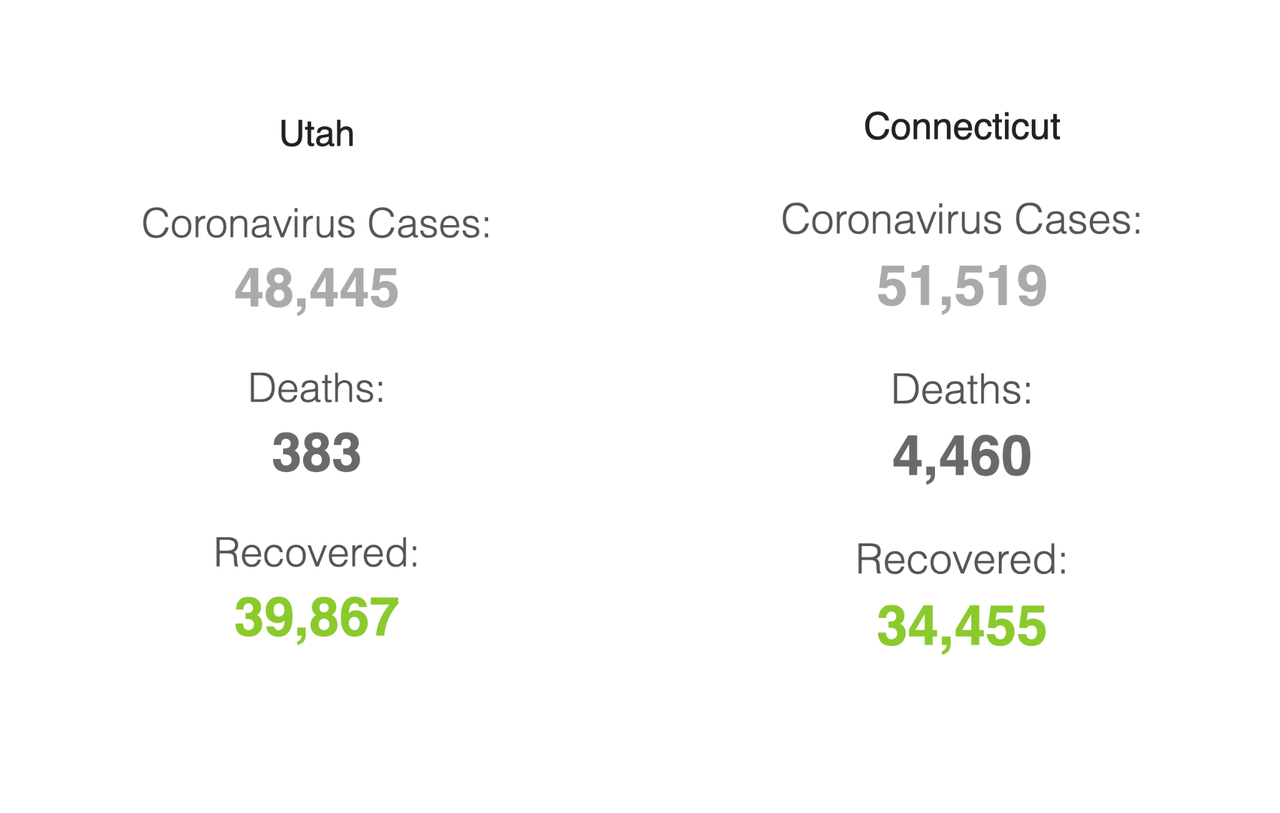
Utah is a state that much like South Dakota, did not issue stay at home orders and despite a spike in COVID-19 cases managed to keep its death rate one of the lowest in the nation. Utah also did a stellar job at protecting its economy with an unemployment rate at only 4.5%. Pro-lockdown states like Maine also maintained low case numbers and death rates but suffered from a more than double the unemployment rate at 9.9%. States like Connecticut also employed a harsh lockdown but got slammed with high death rates as well as a catastrophic drop in employment.
Last month Utah was on a list of “Redzone” states that showed a concerning rise in COVID-19 cases. The list was composed of a variety of states from freer states like Utah to lockdown states like California which further discredits the idea that strong-armed policies have any relationship to mitigating COVID-19 cases and death.
However, a striking difference is most apparent when compared to a state like Connecticut, which had a similar number of cases but harsh lockdown policies. The numbers are provided above with both states having around 50,000 cases but very different death rates. Utah, which did not embrace stay at home orders and kept its response relatively light-handed, emerges with a far better death rate and economy by an order of magnitude.
“Utah has the lowest COVID-19 case fatality rate and has the second-lowest unemployment rate in the nation — dropping from 8.6% in May to 5.1% in June,” the response from the budget office states. “Our goal throughout the entire COVID-19 response has been a balanced approach between protecting lives and livelihoods, and it will continue to be so. A strong economy and a healthy public are inextricably linked. Those hit hardest by the economic fallout of the pandemic are also those hit hardest by this public health crisis.”
Utah shows that spikes in COVID-19 cases are unpredictable. It affects states regardless of their lockdown policies. Stay at home orders seem to have no effect in stopping the virus either. The evidence seems to suggest that the virus is unpredictable in its spread but what states can do is make sure that society emerges as healthy as possible both physically, socially, and economically.
Summing Up Arkansas, Iowa, Nebraska, North Dakota, and Wyoming
The five other states that did not issue stay at home orders also did far better than the rest of the country, especially the states with the harshest lockdowns. Iowa in this case performed the worst but even then its per capita death rate still sits in the middle of overall state death rates between Minnesota and Colorado.
Despite the unanimous request from the Iowa Board of Medicine to issue a stay at home order, Governor Reynolds of Iowa refused to do so and in the end her state outperformed most of the country. Although Reynolds did enact a series of restrictive and potentially unnecessary regulations, she refrained from going as far as to issue a stay at home order because
“Reynolds also estimated about 80 percent of Iowa’s workforce would be considered essential under any mandatory order because of sectors in the state such as food production, manufacturing, finance and insurance.
“That’s some of the issues that you have to deal with when you’re making this decision,” she said.
Reynolds also said the negative effects of such an order would affect mental well-being and she indicated it could increase domestic violence: “We know that this has a significant impact on Iowans.”
Although the governor of Iowa was more than willing to issue a number of highly restrictive policies, she stopped short of a stay at home order as she felt that among all the policies, that would be the most extreme.
North Dakota remained relatively open much like its neighbor South Dakota. Both states did exceptionally well compared to the rest of the country, despite factors such as poorly equipped rural areas as well as the presence of Native American tribes which are viewed to be more vulnerable to pandemics. In particular North Dakota’s government stated in a report that
“The vast majority of North Dakota’s economy remained open through this crisis. Our success hinged on a low-mandate, high-compliance approach, and North Dakotans have done their part.”
The state, much like all those that did not issue stay at home orders, will be emerging comparatively unscathed by either the virus or economic disruption.
The Verdict
An optimal response to COVID-19 would be one that balances public health and the economy. Minimizing death while keeping the economy alive which at the end of the day affects people’s overall well-being. Stay at home orders are the most extreme of all policies, completely blind to the economic as well as social tradeoffs and only focused on a theoretical application of public health. There are seven states to serve as counterfactuals to Dr. Fauci’s suggestion that there should be a nationwide implementation of stay at home orders.
All seven states outperformed the majority of the country in both minimizing death as well as protecting their economies. Some of these states even experienced spikes in cases and still managed the disease far better than states with similar caseloads that issued a stay at home order.
There is no definitive evidence to suggest that stay at home orders are effective at addressing COVID-19. Furthermore, the United States experiment with the policy has yielded results that are not favorable to Dr. Fauci’s suggestion regarding the nationwide implementation of stay at home orders.
via ZeroHedge News https://ift.tt/3lhi2fT Tyler Durden
Trump Reportedly Considers Accusing China Of “Genocide” Over Treatment Of Uighurs Tyler Durden
Tue, 08/25/2020 – 17:45
As the Trump Administration works to keep the flow of aggressive China-related headlines flowing across social media, Politico reported on Tuesday that the administration is weighing the possibility of labeling Beijing’s treatment of Muslim minority Uighurs a “genocide”.
Of course, for this label to have any real power or affect, it would have to be backed by the UN Security Council. And seeing as China has a permanent seat and veto power, the odds of this ever flying at the UN are virtual impossible.
Yet, the story – which will almost certainly elicit a rebuke from Beijing, and/or in the state-controlled press – also traces other more likely alternatives which highlight the fact that the Trump Administration is taking the issue of the Uighurs human rights’ violations at the hands of an unaccountable regime extremely seriously.
The contrast is clear: Trump is fighting to preserve America’s status as a bastion of liberty in the eyes of the world, while white educated college students work with criminals and other misguided ‘radicals’ to undermine order and confidence in the US, arguing that Trump’s election was such an “affront to Democracy”, that nothing he says or does makes any difference.
The United States is weighing formally labeling China’s brutal repression of ethnic Muslim minority Uighurs a “genocide,” two Trump administration officials said.
Activists and lawmakers have been pushing for the genocide designation in recent months, but mere consideration of the possibility by the U.S. government could further damage badly frayed ties between Beijing and Washington. It also comes in the heat of the 2020 presidential campaign, in which the two sides have jousted over which candidate would be tougher on China. A spokesperson for Joe Biden noted that the former vice president supports the label — a factor that could influence President Donald Trump’s calculations.
The discussion, which reportedly involves several executive branch departments along with the NSC and White House, is still reportedly in its “early stages”.
The internal administration discussions are still at the early stages, involving working level officials at the State Department, the National Security Council and the Department of Homeland Security, according to the administration officials who spoke to POLITICO on condition of anonymity. If there’s not enough consensus to use the term genocide, the administration could instead accuse the Chinese leadership of other atrocities, such as “crimes against humanity” or “ethnic cleansing.”
White House national security adviser Robert O’Brien has accused China’s communist leaders of running “concentration camps” for Uighurs in Xinjiang, a northwestern province home to millions of Uighurs. A member of a United Nations human rights panel said in 2018 that China had “turned the Uighur autonomous region into something that resembles a massive internment camp,” where people are held without charge and little recourse to get legal representation to be released. More than a million Uighurs are believed to be held in such facilities.
Uighur rights groups have accused the Chinese government of torturing many Uighurs, forcing Uighur women to get abortions and be sterilized, feeding some detainees poorly and trying to wipe away their distinct ethnic culture, including forcing many to denounce Islam and chant Communist Party slogans. Beijing also uses extensive surveillance technology to track Uighurs.
Genocide declarations are rare, legally tricky and highly politically sensitive. U.S. officials have at times tried to avoid such declarations in the past, not least because, in theory, international law would compel some sort of American intervention — though not necessarily the military kind.
Given that Politico isn’t a frequent venue for insider scoops from the administration, it’s possible that whoever leaked this story might have an axe to grind against Sec of State Mike Pompeo. Perhaps it’s a crusading bureaucrat frustrated with the secretary’s realpolitik approach.
NSC spokesman John Ullyot also didn’t address the genocide discussion but did say in a statement: “The Chinese Communist Party’s atrocities also include the largest incarceration of an ethnic minority since World War II. Where the previous administration and many other world leaders delivered speeches and empty rhetoric, President Trump has taken bold action.” A DHS spokesman declined to comment.
The term “ethnic cleansing” isn’t found in international law, so it’s effectively meaningless. But the US has used it to denounce ethnic violence in the past. For example, the Trump White House has already used it to denounce the persecution of Rohingya Muslims in Myanmar by the government run by Nobel Peace Prize Laureate Aung San Suu Kyi. Apparently, Sec of State Mike Pompeo has pushed back on labeling the persecution of Rohingya a genocide for fear that it would drive Myanmar closer to Beijing.
But even Politico has a hard time reconciling Trump’s unwavering support for Uighers, a Muslim minority group in a region that is no stranger to terror, with the allegations of “Islamophobia” frequently lobbed at Trump and his administration.
Unsurprisingly, we haven’t seen this story picked up by CNN, or any other mainstream media orgs.
via ZeroHedge News https://ift.tt/2EgXbZN Tyler Durden