Following an outcry by students and parents, the San Diego Unified School District said that some, but not all, of the honors classes at Patrick Henry High School that had been cut will be restored. Principal Michelle Irwin said she was cutting the classes for equity reasons, saying she wanted to remove the stigma from non-honors courses and citing racial differences in honors course enrollment. Irwin also claimed it is redundant to have both regular and honors courses in the same subjects.
Chinese Stocks Surge After Beijing Vows New Tools, Policies To Spur Growth
Another day, another solemn promise by China to prop up its careening economy and crashing markets.
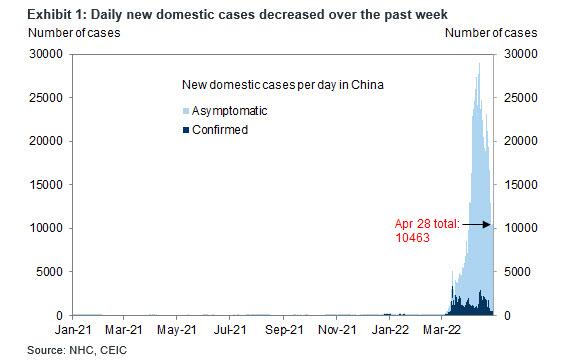
On Friday, China’s top leaders – after pushing a doomed deleveraging campaign for the past two years, one which crippled the country’s housing sector and nuked Chinese stocks – promised (again) a series of new policy promises to boost economic stimulus to spur growth and vowed to contain the country’s worst Covid outbreak since 2020, which is threatening official targets for this year, yet one whose intensity is already fading as the chart below shows.
“We should waste no time in planning more policy tools and enhance the strength of adjustment in due course,” the Communist Party’s Politburo said this morning, according to a meeting readout by state broadcaster China Central Television.
Authorities should efforts be made to ensure economy grows in reasonable range and i) strengthen macro adjustments, ii) support healthy growth of platform companies, iii) plan for incremental policy tools, iv) make efforts to boost domestic consumption and v) boost healthy development of the property market. While officials repeated the phrase that “houses are for living in not for speculation,” the government said it would also work to meet the demand for better quality housing and “optimize” the supervision on developers’ income from project pre-sales.
Leaders also vowed to guarantee “supply chains in key sectors” and smooth transport logistics, pledging to “positively respond” to demands from foreign-invested companies for a smoother business operating environment.
The latest stimulus promise comes just days after China’s president Xi highlighted infrastructure as a big focus for the government as growth comes under pressure, a pledge reiterated by the leadership meeting today.
Top leaders also nodded to the recent rout in financial markets. The Politburo said the government would steadily facilitate the reform of registration-based initial public offerings, actively introduce long-term investors and maintain the stable operation of capital markets.
The midday timing of the announcement was unusual – Bloomberg notes that Politburo readouts are typically made public late in the afternoon or during the CCTV’s flagship evening news program – but this one clearly was meant to impact the market. This is how Bloomberg’ April Ma explained it:
The statement came during the market mid-day break, just as rumors of more support for tech and the economy started to brew. This was an exception to the norm of the release after market hours, closer to 6pm or 7pm. It wouldn’t have taken much for authorities to hold the statement for the evening. But then that would be missing the opportunity to spur afternoon gains just ahead of a five-day break from trading.
Triggering a pop with a subtle turn in the official line, mentioning support for economic goals and drawing a conclusion to crackdowns, would do sentiment a fair amount of good. Letting the craziness of the past week end on a slightly more positive note, and then making sure that confidence sinks in and spreads during the break, might be just what the market needs. This is far more efficient than a release at the traditional hour that would then get buried or forgotten after a holiday.
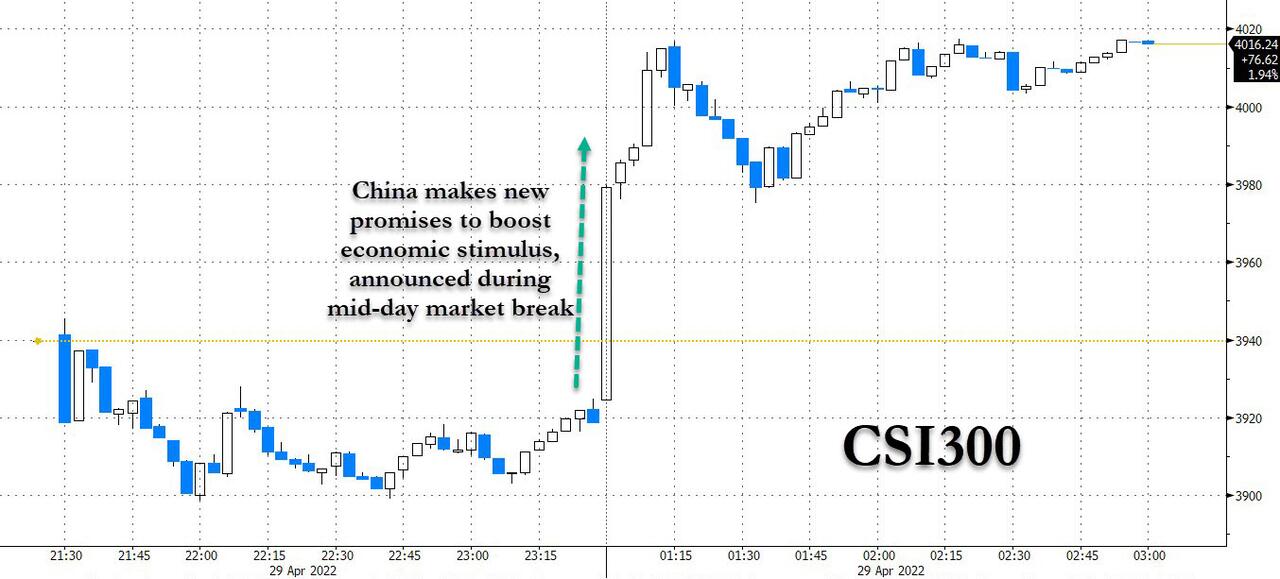
Sure enough, a lunchtime announcement gave markets an opportunity to react: The benchmark CSI 300 Index rose to its session high after trading resumed in the afternoon, gaining as much as 2.5%.
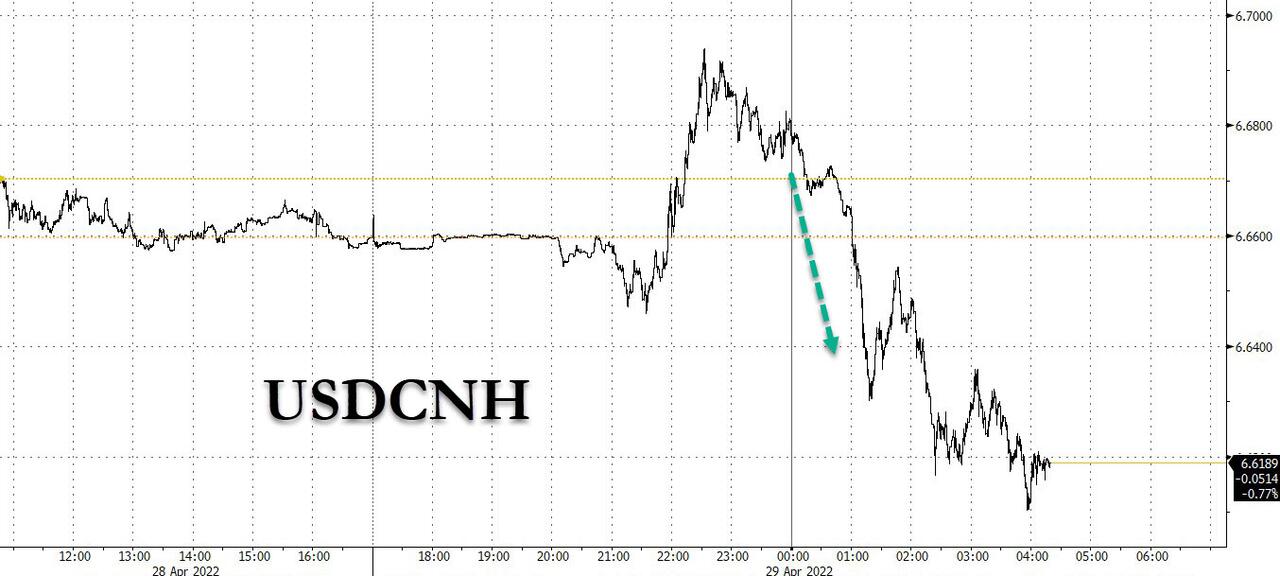
The offshore yuan reversed its earlier weakness to strengthen as much as 0.65% at 6.6166 per dollar.
The bullish wave quickly spread across Asia, where stocks climbed for a second day with the MSCI Asia Pacific Index advancing as much as 1.7%, with Tencent and Alibaba among the biggest gainers.
As Bloomberg notes, there was also a small shift in language on internet platform businesses, a sign of possible easing of a regulatory crackdown on the industry. China’s top economic official Liu He in March called on regulators to “steadily advance and complete as soon as possible the rectification of large platform companies”. The Politburo vowed to “complete the special rectification of the platform economy,” without giving a timeline but dropping the phrases “steadily advance” and “as soon as possible.”
Separately, China was also said to discuss allowing on-site audit checks of New York-listed Chinese companies to comply with U.S. law. As a result, the Hang Seng Tech Index soared more than 10%, rebounding from earlier losses…
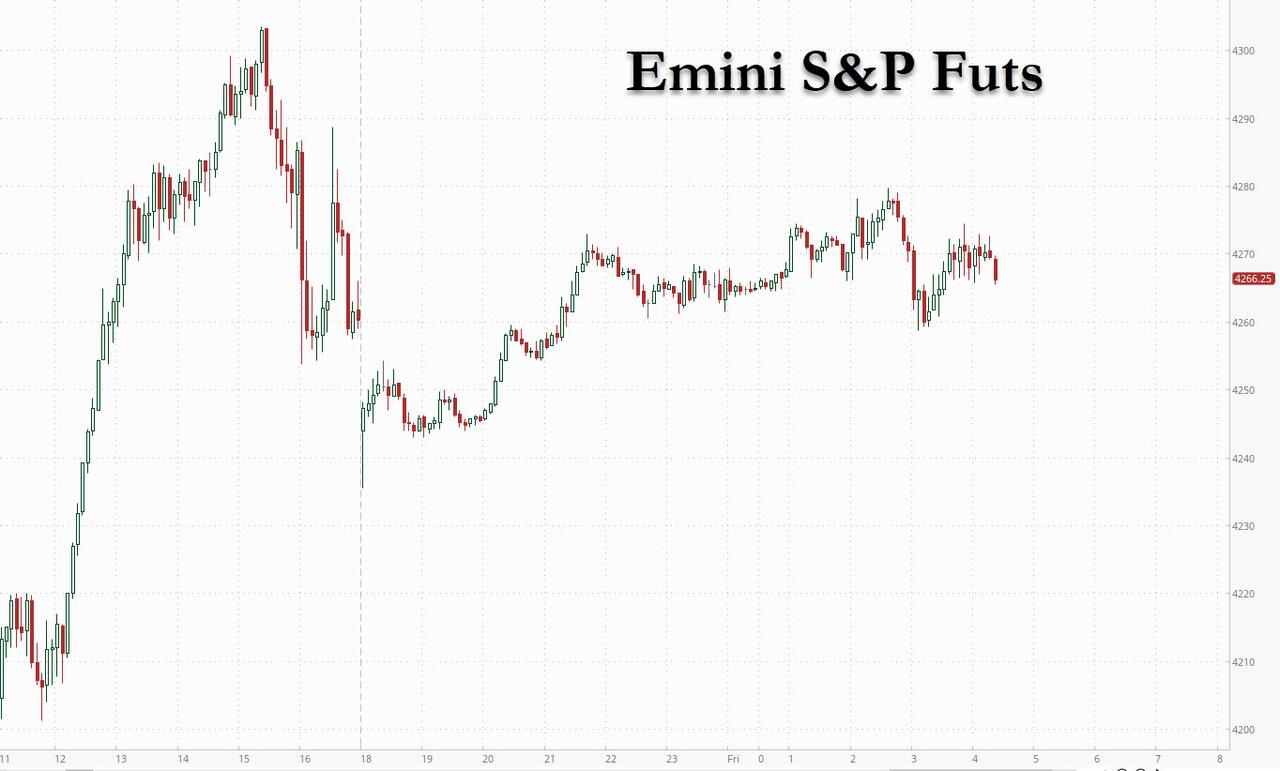
… and helped push US equity futures near session highs after slumping earlier following disappointing earnings from Amazon.
While the statement didn’t hold any “big surprise on the upside,” it wasn’t disappointing either, according to UBS economist Tao Wang said.
“It made clear on where policy support are needed,” she said. “Property, infrastructure and platform economy are highly concerned by the market, and they are also sectors that can have an multiplier effect to drive economic growth.”
Beijing has set a growth target of about 5.5% for the year, a goal that’s becoming difficult to reach amid a wave of coronavirus infections and Beijing’s strict adherence to its Covid Zero strategy. Economists forecast gross domestic product to grow just 4.9% this year. The Politburo gave no sign, though, that the country would back down from Covid Zero.
“The contradiction now is they will stick to Zero Covid policy. That’s a big constraint,” said Chen Long, an economist at Beijing-based consultancy Plenum. Home sales, for example, did not rebound despite property restrictions being relaxed in many cities, he added.
Of course, this is not the first time Beijing has made promises only to disappoint in deeds. Chinese officials have promised greater support for the economy in recent weeks. Before the Politburo statement, those pledges culminated in a call from Xi on Tuesday for an “all out” infrastructure commitment to bolster growth, including construction in fields such as transport, energy and water conservation.
“These are good words, the question is how they will deliver,” Chen said of the Politburo statement, but added that“we need to see action in the next few weeks.” Markets, which for the time being have again given Beijing’s jawboning the benefit of the doubt surely agree.
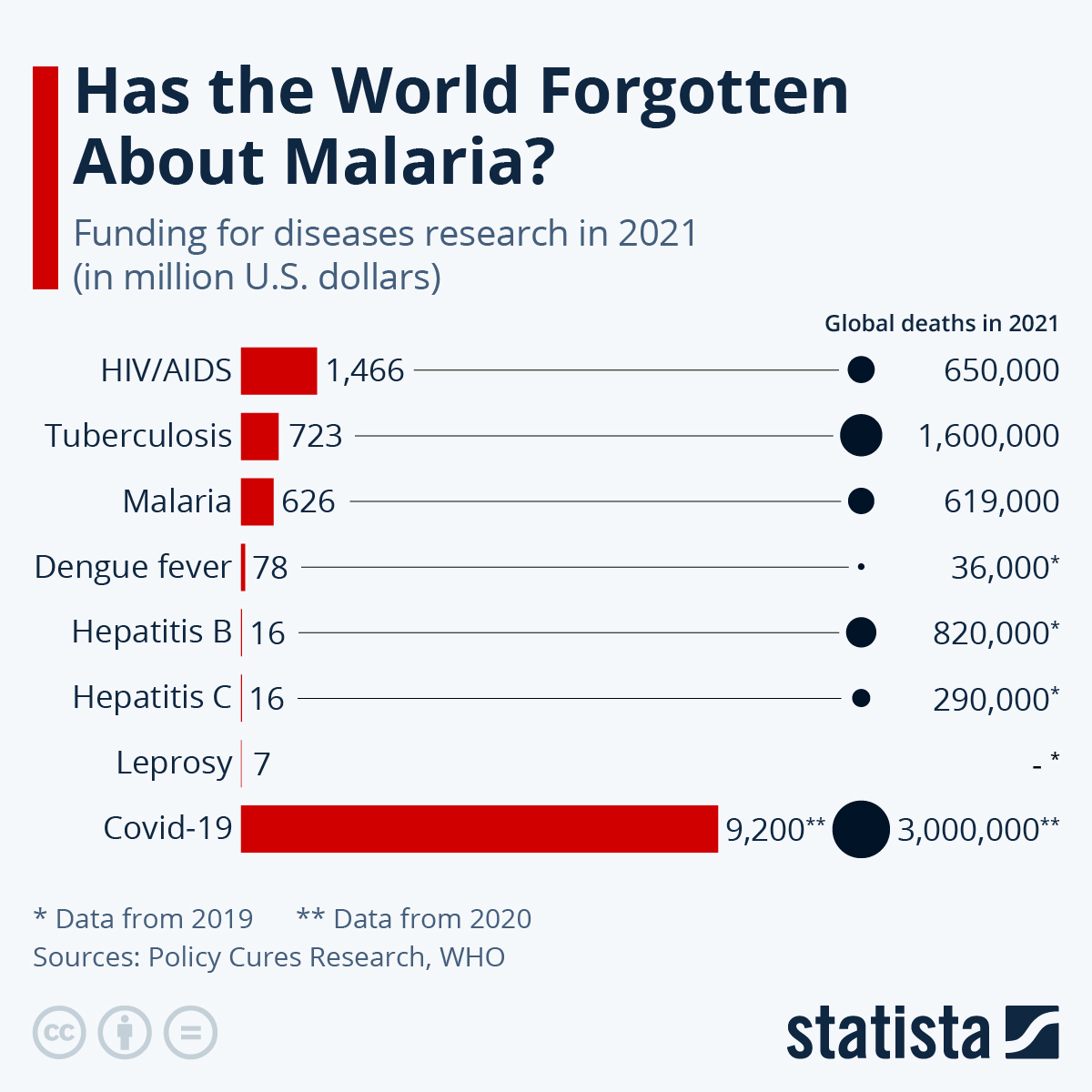
More than $9 billion was pumped into the research and development of Covid-19 vaccines in 2020 – the biggest injection of cash ever raised for a disease’s R&D in such a short space of time.
But what of the other infectious diseases that existed – and killed – long before?
In the chart below, Statista’s Anna Fleck takes a look at what the R&D landscape looked like for the “big three” killers, HIV/AIDS, tuberculosis, and malaria, versus the comparatively ‘neglected diseases’, in the first year of the pandemic.
According to research by Policy Cures, malaria was responsible for 627,000 deaths worldwide in 2020, marking a 12 percent increase from the year before.
While that’s only a fraction of the 3.3 million people killed by Covid that year, the R&D funding was still comparatively low, at only $619 million in contrast to Corona’s $9 billion.
Research for hepatitis B fared worse still, with only $18 million in funding, despite killing some 900,000 people. Those disparities can at least in part be explained by the scale of its perceived “burden on society”, and whether or not the disease has been “politicized” in the eye of the public through media coverage, according to Vox.
Calls have been made for more funding to fight diseases such as HIV/AIDS, tuberculosis, and malaria, as efforts to eliminate them were hampered through the Covid period.
According to the UN, between 2019 and 2020, “moderate disruptions in the delivery of malaria services contributed to 14 million malaria cases and 69,000 deaths.” This included disruptions in the distribution of insecticide-treated mosquito nets, with only 58 percent of countries completing their planned campaigns in 2020, as well as in diagnosis and treatment during the pandemic.
Following an outcry by students and parents, the San Diego Unified School District said that some, but not all, of the honors classes at Patrick Henry High School that had been cut will be restored. Principal Michelle Irwin said she was cutting the classes for equity reasons, saying she wanted to remove the stigma from non-honors courses and citing racial differences in honors course enrollment. Irwin also claimed it is redundant to have both regular and honors courses in the same subjects.
A new study published in the Royal Society Open Science journal found that lockdowns in the UK caused around 60,000 children to suffer clinical depression.
Researchers detected a 27.1 per cent prevalence of depression amongst their sample, a number significantly higher than would have occurred without lockdowns.
According to a report by the Telegraph, the percentage equates to about 60,000 extra kids who suffered clinical depression thanks to COVID-19 restrictions.
“After controlling for baseline scores and several school and pupil-level characteristics, depressive symptoms were higher in the COVID-19 group,” the study found.
“These findings demonstrate that the COVID-19 pandemic increased adolescent depressive symptoms beyond what would have likely occurred under non-pandemic circumstances.”
Figures show that 400,000 British children were referred to mental health specialists last year for things like eating disorders and self-harm.
Once again, the study underscores how those who vehemently promoted lockdowns, while demanding voices of dissent be silenced, were on the wrong side of history.
As we previously highlighted, a shocking outbreak of hepatitis cases in children was likely caused by lockdowns and social distancing, which served to weaken immune systems, according to health experts.
Many infants are also suffering from cognitive developmental and speech disorders due to adults wearing face coverings during the pandemic.
According to speech therapists, mask wearing has caused a 364% increase in patient referrals of babies and toddlers.
A major study by Johns Hopkins University concluded that global lockdowns have had a much more detrimental impact on society than they have produced any benefit, with researchers urging that they “are ill-founded and should be rejected as a pandemic policy instrument.”
A speech therapist says her clinic has seen a “364% increase in patient referrals of babies and toddlers”.
“It’s very important kids do see your face to learn, so they’re watching your mouth.”
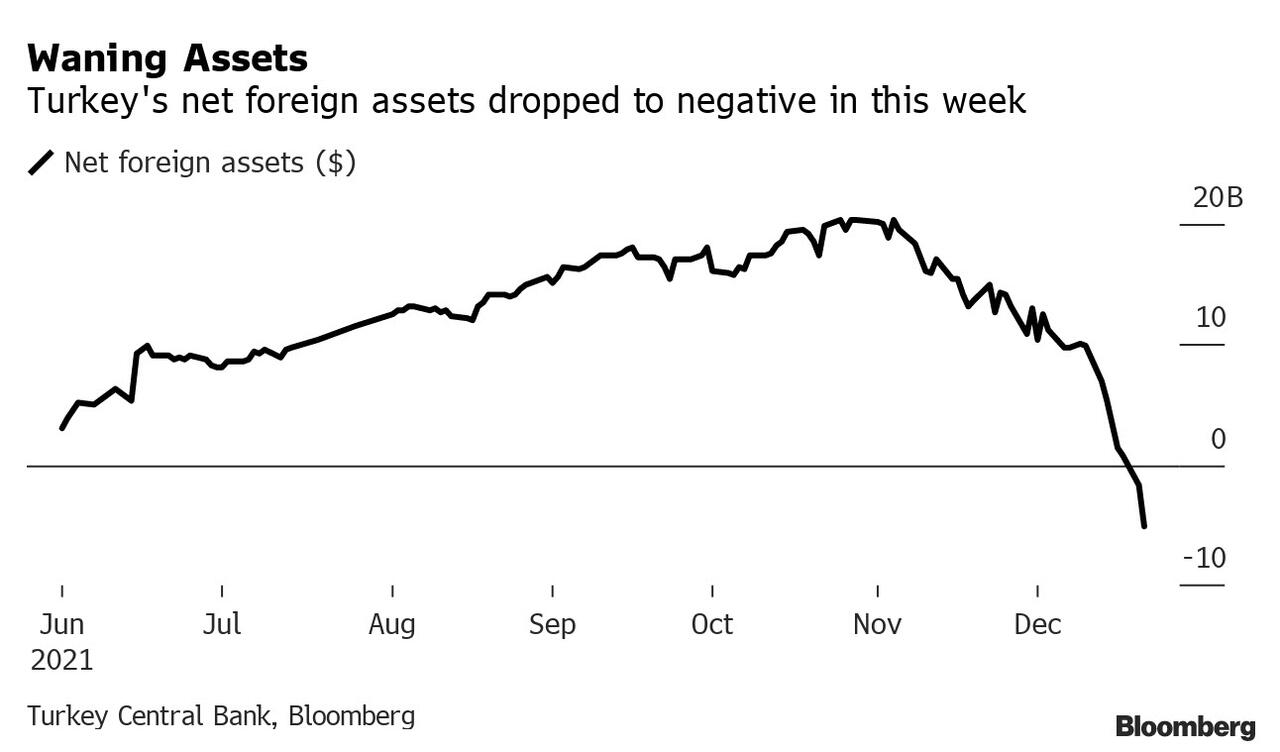
Confirming what many have dreaded for a while – that Erdogan is literally making up healthy economic numbers for international consumption while pillaging the country out of the back door without reporting it, Bloomberg reported that while the government has said it didn’t intervene in the currency market, it lied and the fall of $5.9 billion probably signals a backdoor intervention similar to operations carried out over two years from October 2018, when state lenders sold dollars – typically those belonging to local private savers – to support the local currency.
What was even more alarming is that Erdogan actually thinks the international community is so stupid, nobody will notice what is going on. As Bloomberg showed, net foreign assets dropped by $5.9 billion to minus $5.1 billion on in just days.
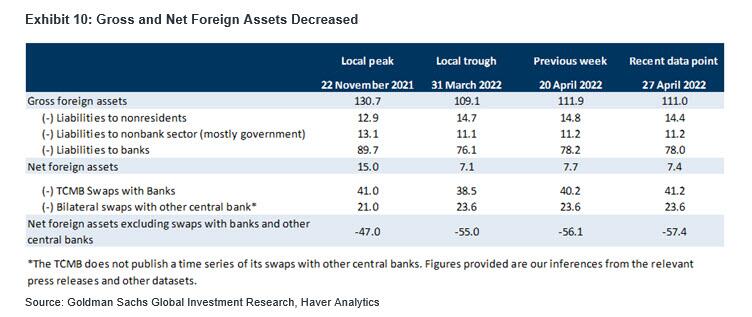
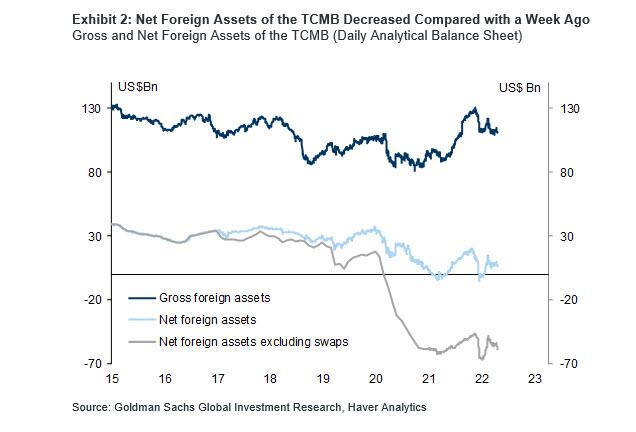
Alas since, then Turkey’s reserve position has only deteriorated and gone from bad to worse, and according to Goldman, as of April 27, the TCMB’s net foreign assets were US$7.4bn, down by US$0.33bn from a week ago. TCMB bank swaps and the stock of the FX deposit facility increased by US$1bn to US$41.8bn compared with a week ago due entirely to a rise in swaps, which picked up to US$41.2bn. The stock of the FX deposit facility has again remained flat at around only US$0.6bn.
According to Goldman’s estimates, net foreign assets excluding swaps with banks and other central banks continued to decrease to negative $57.4bn, down by US$1.3bn since a week ago.
Of course, if and when Turkey runs out of domestic FX – read dollars – which it can confiscate and buy lira with, the domestic currency, which ended 2021 as one of the world’ performers and has gone nowhere since then thanks to non stop government intervention, will crater and resume its freefall.
So what sis Erdogan to do? Simple: having confiscated most domestic gold and hard currencies, the Turkish president is now hoping to confiscate foreigners’ dollars.
But how? Doesn’t he have to make it desirable and attractive to put one’s hard currencies into the kleptocrat nation?
Bingo… and that’s precisely why Bloomberg reports that Turkey is working on a plan to attract inflows of hard currency by offering lira funding, free of interest and with a “guaranteed” 4% return in dollars, to foreign investors willing to park their money for at least two years. Needless to say, but any time Turkey “guarantees” anything, run.
Under the plan, the central bank would provide lira liquidity to foreigners for investment in local bonds with a maturity of at least two years, according to a person with direct knowledge of the deliberations. Besides extending zero-yield swaps, the monetary authority would also guarantee a 4% return in dollar terms when the securities mature, the person said.
Translation: please give us your dollars and we promise to take good care of them and even give you a much higher yield than you can earn (for now) in the US.
Remarkably, nobody has dared to speak up and point out that the Turkish dictator (and currency) is naked. Instead, investors are actually buying the worthless Turkish lira, which was headed for its first gain in over two weeks, trading 0.2% stronger against the dollar.
Bloomberg came the closest to pointing out the sheer audacity of the plan, writing that “the outreach to investors marks a new tack for Turkey and would represent a major U-turn by the central bank, a reflection of pressure on authorities to reverse capital outflows. It’s used similar measures to shore up the currency at home by rolling out state-backed deposit accounts that shield savers from lira weakness.“
Indeed, after a currency crisis in 2018, Turkey introduced numerous restrictions on foreign transactions to defend the lira, placing limits on swaps with local banks to deter short sellers. But as a side effect, foreign holdings of Turkish stocks and bonds have fallen to a historic low… and in the case of net assets ex swaps, are actually negative to the tune of $57 billion!
Meanwhile, deepening trade imbalances and the world’s most negative interest rates when adjusted for prices have made the $800 billion economy increasingly vulnerable at a time of intensifying global tightening led by the U.S. Federal Reserve.
Furthermore, courtesy of the lunacy that is Erdogonmics, where the central bank “fights” near record inflation by cutting rates, instead of using higher rates to make lira assets more appealing, Turkey has introduced a series of unconventional policies to attract hard currency and boost the central bank’s reserves.
TURKISH CENTRAL BANK GOVERNOR SAYS DEVELOPMENTS SHOW RATE CUTS WERE CORRECT DECISION pic.twitter.com/7PzWmUw6Gv
Deposits in so-called FX-protected accounts reached 782 billion liras ($52 billion) as of April 22, according to data compiled by the banking regulator. This month, the central bank revised some reserve requirement rules for banks in an effort to encourage conversion of foreign exchange into the local currency.
Expect some gullible and extremely naive investors, those who are unaware what depth Erdogan can plumb to preserve his authoritarian status quo for just one more day, to hand over a few billion in USD assets which will promptly be “repossessed” and used by Turkey to prop up the lira for as long as possible. Then when everything crashes, and when Erodgan finally disappears into some non-extradition country, good luck to all trying to recoup their money.
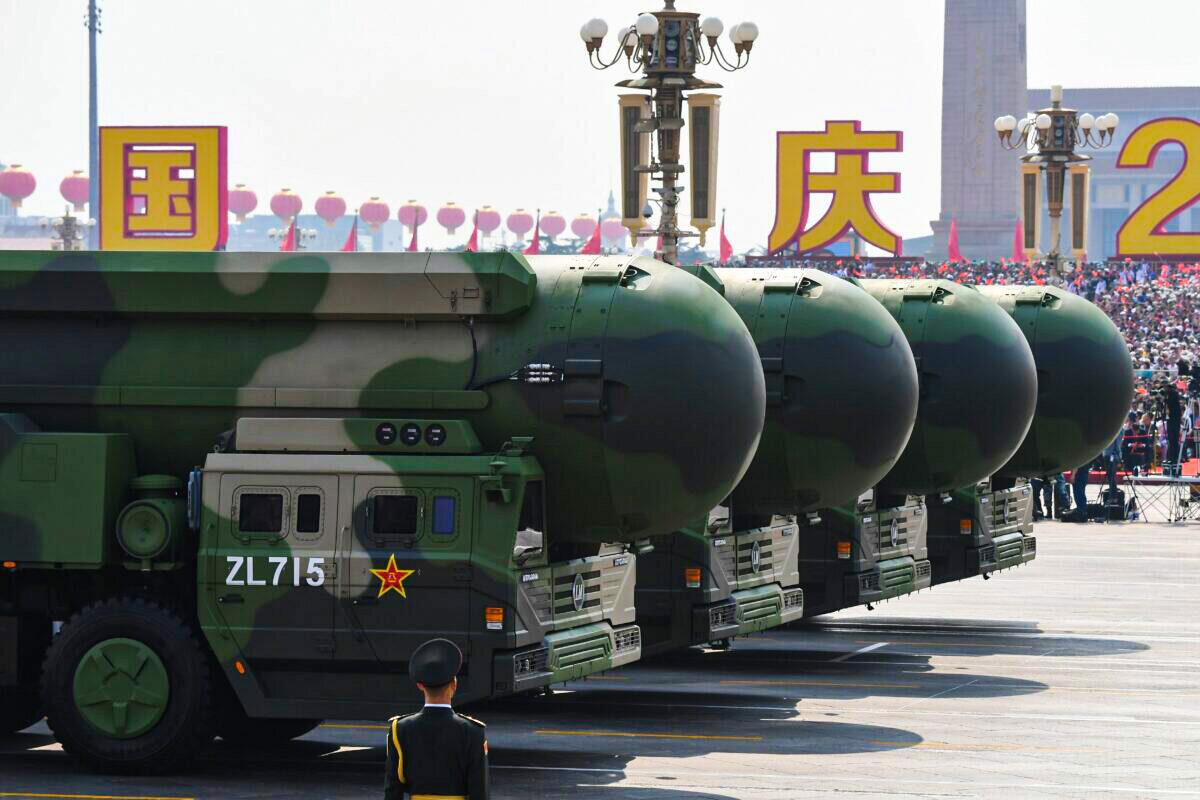
The Chinese Communist Party’s (CCP) efforts to align with Russia and to build up its nuclear arsenal present a unique strategic threat to the United States, according to one expert.
“China is actually building up its arsenal in ways that it wasn’t doing before,” said David Santoro, President of the Pacific Forum, a foreign policy think tank. “So, it’s becoming a much more capable nuclear-armed state.”
Santoro made the comments during a recent interview with EpochTV’s “China Insider” program, in which he said that there was no historical precedent for how the United States should proceed strategically against two near-peer nuclear adversaries.
“We don’t necessarily need to have a symmetric arsenal to the Russians and the Chinese,” Santoro said, “In fact, we’ve really never had that. Even during the Cold War, we did not have the exact same arsenal as the Soviets did. But what I will say is that this is the very first time that the United States is facing two very capable nuclear-armed states.”
“The other piece that we shouldn’t forget is that Russia and China seem to be increasingly cooperating at all levels, including at the strategic level. I don’t think they are engaging in any nuclear cooperation, but we’ll have to see what happens over the next few years and decades.”
Santoro’s comments echoed warnings made by political and military officials earlier in the year, who said that the Sino-Russian partnership presented an unprecedented strategic situation, and that the United States now faced an “epic” nuclear threat.
Despite the rising threat, Santoro said that there was very little happening in the way of positive diplomatic developments, and that no meaningful arms control discussions were taking place between the Unites States, China, and Russia.
“Unfortunately, right now, there is not much diplomacy going on,” Santoro said. “We had strategic stability dialogues with the Russians, and we managed to renew the so-called ‘New START’ agreement, which is the only arms control agreement that’s left between the EU and the United States and Russia. But now in the context of the Ukraine war, we don’t have those dialogues.”
“The United States has really left the door open to to nuclear diplomacy,” Santoro added. “It’s never closed it. It’s always said, we’re ready to engage just, you know, let us know when you’re ready.”
The strategists dominating the conversation in Beijing right now, however, did not believe in managing escalations through mediums like crisis hotlines, Santoro said. Instead, they were more focused on attributing blame for international tensions to the United States and its allies as a means of solidifying China’s own power.
The observation followed comments made by former assistant secretary for defense Graham Allison, who said that the CCP would likely continue its support for Vladimir Putin’s regime in Russia even in the event it deployed a tactical nuclear weapon in Ukraine, as well as other warnings that China was pursuing nuclear modernization for global domination.
Fears of CCP aggression in Japan, Korea, and Taiwan, meanwhile, have spurred regional leaders to inquire after the possibility of either developing their own nuclear weapons or hosting nuclear weapons from the United States, to protect themselves from the regime.
“We always had our so-called ‘US nuclear umbrella’ protecting Japan and Korea from North Korea, but also, for that matter, other threats including, to some extent, China,” Santoro said. “So we’ve always offered those guarantees to Tokyo and to Seoul.”
“Our Japanese and Korean friends want to know more and have a greater sense of nuclear enfranchisement given the fact that the environment is changing and not for the better.”
To that end, Santoro said that the United States would likely need to increase its information and technology sharing with partners in the Indo-Pacific in order to adequately curb CCP aggression.
“We are now at a point where we’ll we’ll need to share a lot more of our nuclear planning and nuclear operations and how we would resort to nuclear weapons, not just conventional deterrence, but the roles that U.S. nuclear weapons would play in a crisis,” Santoro said.
“Unfortunately, you know, we sometimes talk about strategic stability as the organizing principle between U.S.-Russia and U.S.-China relations,” Santoro added. “I don’t think that we are able to reach stability right now. We’re in a very, very bad place with both of them.”
“In the foreseeable future, I see a lot more competition than stability. The best we can get to is what what I call stabilization, which is [where] we are still in a very competitive mode with both of them, but we’re able to do a number of things, possibly by engaging in crisis management work, assuming we can, to reduce the most dangerous aspects of that competition.”
Musk Sold $4 Billion Of Tesla Stock Following Twitter Deal
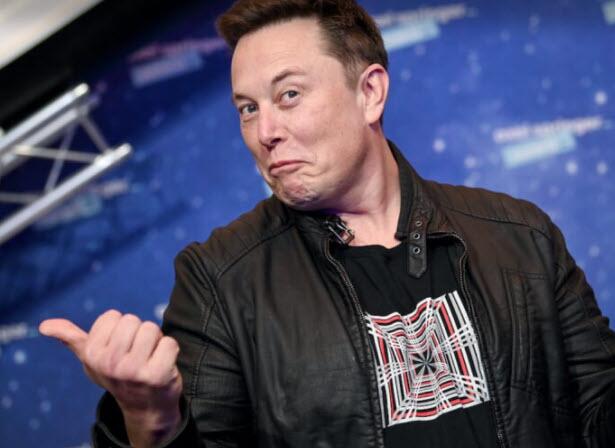
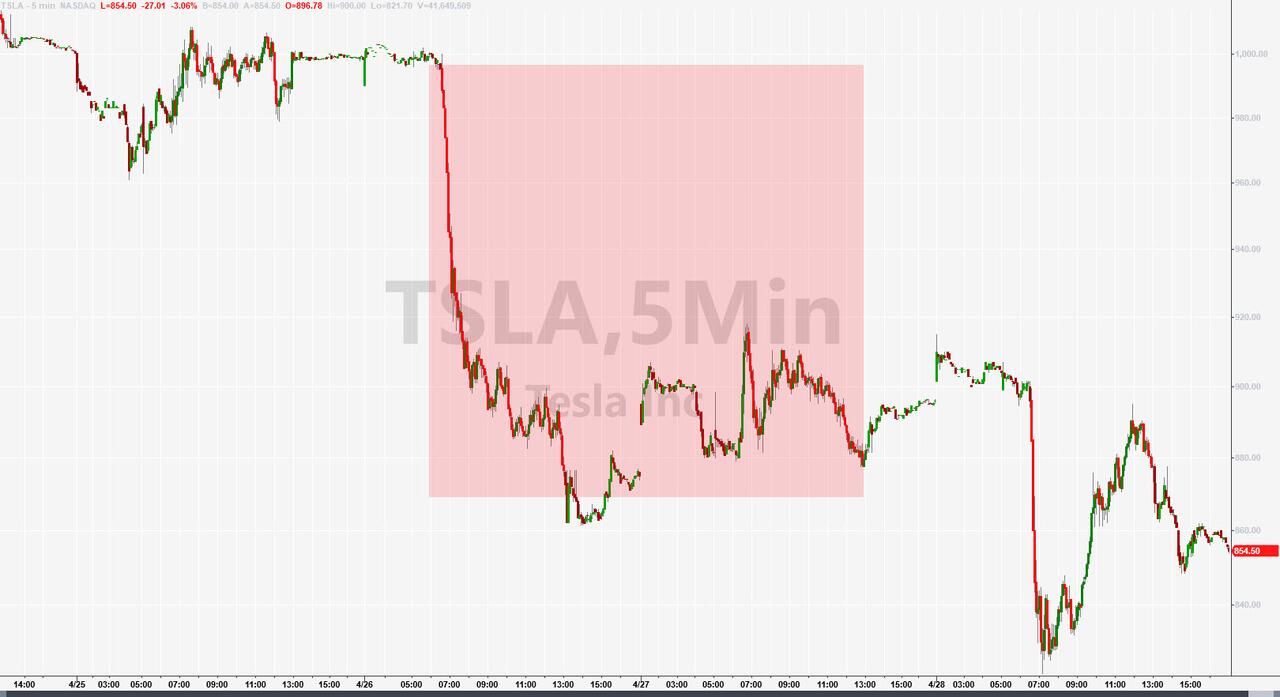
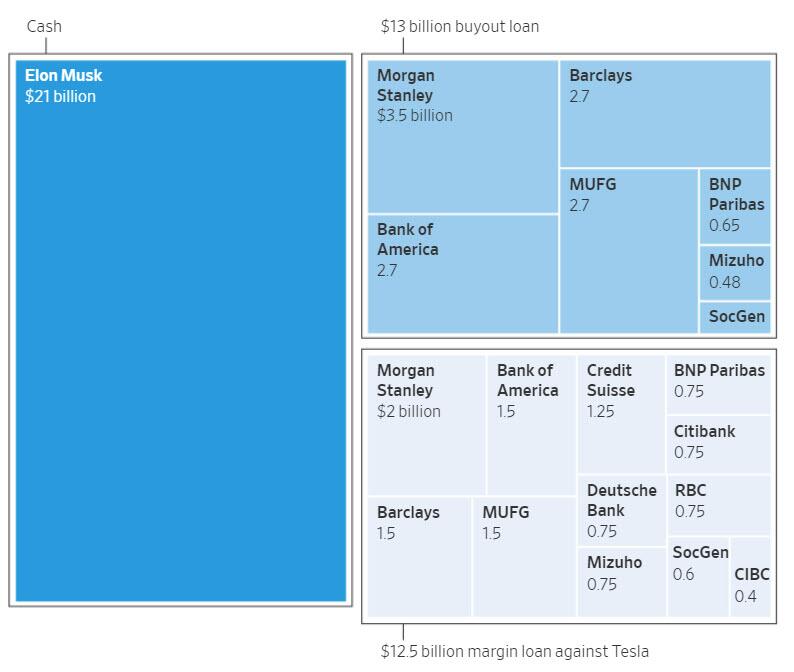
In the days following the Twitter board’s decision to accept his $44bn all-cash takeover bid, Elon Musk has sold 4.4 million shares of Tesla stock (worth roughly $4 billion).
Musk reported the sale in a filing with the Securities and Exchange Commission on Thursday.
The shares were sold over the past few days, at prices ranging from $872.02 to $999.13, were the first by the Tesla chief since a burst of selling late last year that raised more than $16bn (which were offsetting tax payments on vesting options).
Amid lots of chatter around force Tesla sales and margin calls, it appears Musk’s sales were aimed at silencing fears that the deal would not go through – and would spark a spate of ‘fire-sales’ – as he tweeted late Thursday that: “No further TSLA sales planned after today.”
NASA Slams Chinese Opacity As Beijing And Russia Plan To “Undercut” US Space Dominance
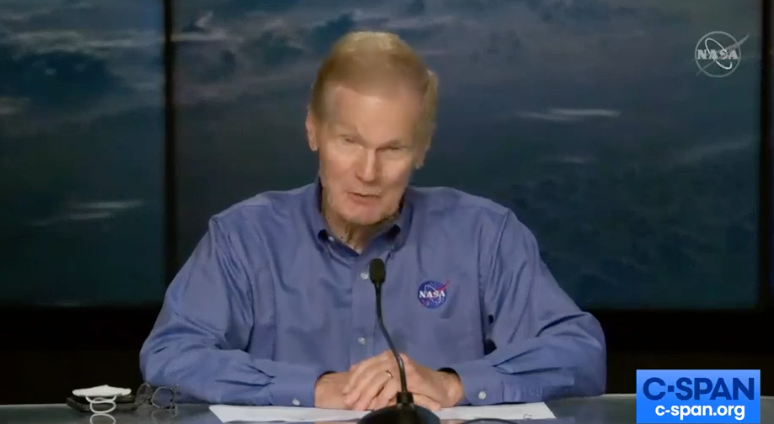
NASA Administrator Bill Nelson criticized China for lacking transparency and willingness to cooperate with the US. Beijing has pushed for closer ties with Russia to displace US’ global leadership in space.
“We want cooperation that has not been forthcoming from the Chinese government (but) it takes two to tango,” Nelson told reporters. “We simply haven’t had any transparency from the Chinese.”
Nelson’s said after China launched its space station in 2021, one of the boosters careened back toward Earth. He said Chinese space officials shared no tracking data of where the booster was projected to land.
“When they put up their space station they did not reserve enough fuel to control where it came down and thank the Good Lord it came down in the Indian Ocean. (But) it could have come down in Europe, it could have come down in Saudi Arabia. It could have come down in Greece,” he said.
Nelson added there’s a lack of transparency regarding Chinese activity in space. He noted NASA is restricted from working with the Chinese government or any China-affiliated organizations unless approved by Congress.
There’s been hostility and shadiness between both countries in space. NASA banned China from being a member of the International Space Station (ISS) program.
Nelson then pivoted to Russia and said NASA had “the Good Housekeeping seal of approval from the White House” to extend a space partnership with Russia “despite the horrors that we are seeing with our eyes daily on television of what’s happening in Ukraine.” The good news, he said:
“I see that professional relationship with astronauts and cosmonauts and the ground teams in the two respective mission controls, I see that continuing.”
Meanwhile, a new Defense Intelligence Agency report indicated that China and Russia are aligning forces and plan to “undercut the US and allied global leadership in the space domain.”
So China ignores NASA, and Moscow and Beijing move closer together in an emerging space race against the West. It’s a sign the world’s old economic order is fracturing as a new bipolar world appears from the ashes.
A boy in China has contracted the H3N8 strain of bird flu, which appears to be the first known human case in the world, said the Chinese regime’s health authorities.
The case involved is a 4-year-old boy who had been hospitalized on April 10 in Zhumadian city in the central province of Henan, China’s health commission said in an April 26 statement.
No human (to human) infection of this strain has been reported, the agency added.
H3N8 is known to infect horses, seals, and dogs. It is one of the two strains that cause dog flu in the United States, according to the U.S. Centers for Disease Control and Prevention (CDC). It has been detected in dogs across much of the United States, CDC said on its website, adding it hasn’t infected a human.
The commission said that the chances of it spreading among people were low.
“This infection is an accidental cross-species transmission,” read the statement. “There is a low risk of large-scale transmission.”
Though rare, infections in humans can lead to adaptive mutations that potentially allow these viruses to more easily spread in mammals, said Erik Karlsson, deputy head of the virology unit at the Institut Pasteur in Cambodia.
Karlsson said the virus warranted expanded surveillance. He added its implication in the 1889 influenza pandemic, known as the Russian flu, was “a major concern for the risk of the virus.”
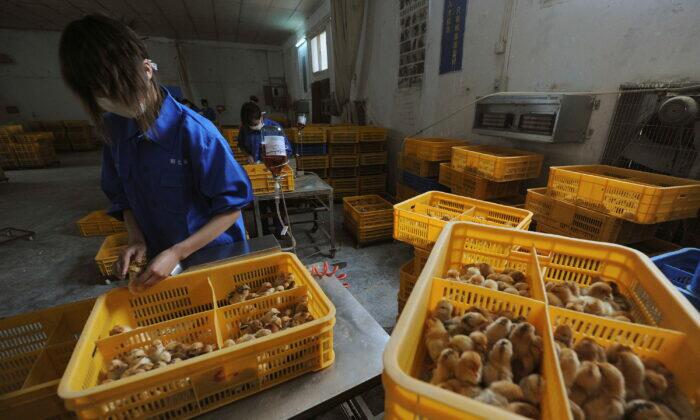
China’s commission said an initial assessment determined the variant is of avian origin. It noted there were chickens and crows raised in the boy’s home and that wild ducks were populated in the area.
His close contacts did not show any abnormalities during the medical surveillance period, it added.
The boy developed symptoms including a fever on April 5 and was diagnosed with H3N8 about two weeks later on April 24, according to the statement.
He is in critical condition, according to Hong Kong’s health department, citing a notification from Beijing. The National Health Commission did not mention this detail in the statement.
Last year, China reported a 41-year-old man contracted H10N3, which is also believed to be the first human infection of the type of avian influenza.
In 2021, China has reported 21 human infections with the H5N6 subtype of avian influenza to the World Health Organization (WHO). Though the numbers are much lower than the hundreds infected with H7N9 in 2017, infections leave many critically ill and have resulted in at least six deaths, raising concerns among experts.
“We need to be concerned about all spillover events,” Karlsson said.