Review: Dual and Hatching


HATCHING - Still 1

Dual

Somewhere in the future a woman named Sarah is informed that she has a terminal disease. “What are my chances?” she asks a doctor, poking around for an ember of hope. “Zero,” the doctor says. “Life has thrown you a curve ball.”

But there turns out to be an upside to Sarah’s predicament. In this world, those condemned by fate to die can have a clone made, a head-to-toe replica designed to stick around as a consolation for any loved ones being left behind. (In some cases, bereaved families have been known to prefer the replacement to the soon-to-be-barely remembered original.) This is kind of sad, but the departed never know about it, of course. And best of all, while clones are expensive, there’s no need for the original humans to pay full price for one—the clone itself will be billed for any still-pending debt. Welcome to the world!

Writer-director Riley Stearns (The Art of Self-Defense) has taken this not-entirely-novel premise and spiffed it up with unexpected humor. The picture also benefits from a quietly uncanny performance by its star, Karen Gillan (Guardians of the Galaxy), who plays Sarah and her eventual clone as two identical women who are nevertheless very slightly different.

Sarah’s life isn’t especially vibrant. Her hobbies are drinking whiskey from the bottle and masturbating on a sofa to laptop porn. Her amiable boyfriend, Peter (TV’s Hawaii Five-O), travels for business, and while her whiny mother (Maija Paunio) is ever-present, Sarah is skilled at ignoring her.

After receiving her diagnosis of doom and ordering a clone (it takes about an hour to create one), Sarah quickly realizes that this new facsimile is going to be a pain in the neck. The first thing Sarah 2 wants to do upon arrival is go clothes shopping. (“I may be a size smaller than you,” she observes.) She’d also like to know more about this boyfriend. (“What’s his favorite sex position?”)

Sarah’s biggest problem crops up after she is suddenly informed that her disease is in remission: She’s not going to die after all. Good—she’s ready to terminate the catty interloper. But there’s a complication: Clones can legally be “decommissioned,” but if they’ve been kept around long enough to establish an independent presence they must be allowed to stay—and to fight a duel to the death with their creator for existential preeminence. This forces Sarah to seek out a combat trainer, Trent (Aaron Paul), to instruct her in the uses of hatchets, crossbows, guns, and other weapons provided for these contests (which have naturally been turned into a popular TV series).

Sarah and her clone have one year to prepare for their big battle. As the date draws near, Sarah, in a forgiving mood one day, gets in touch with her synthetic nemesis, who has a few complaints. There’s Sarah’s mother, for instance: She calls S2 all the time and just wants to hang on the phone and talk. “She acts like I owe her my life,” the frustrated clone says. “They already have a day for mothers. Isn’t that enough?” Sarah sympathizes—something of which her Doppelgänger is incapable. Sarah thinks she’s been inconvenienced by this situation? Really? “It’s my life, too,” says Sarah 2.

Hatching

Puberty, as a new movie from Finland emphatically reminds us, is a bitch. Especially for those averse to giant wet-feathered birds popping up out of their unconscious and ripping their faces off.

You say you don’t remember it that way? Well, it happened to a 12-year-old girl named Tinja (Siiri Solalinna), and it’s her story that first-time feature director Hanna Bergholm tells in Hatching.

Tinja lives in a tidy little suburban house with a picture-perfect family: gregarious Mom (Sophia Heikkilä), gamma-male Dad (Jani Volanen), and proto-bratty little brother Matias (Oiva Ollila). One day a blackbird flies into their home through a living-room window. Tinja gently apprehends it and takes it to Mom, who smiles and snaps its neck. The bird survives, though. Tinja comes across it again out in the woods, and after beating its head to a bloody pulp with a rock, she lifts up its now definitely lifeless body to reveal a speckled egg. She unwisely takes it home.

We’re in a feverish dreamtime here, of course. Half the things we see actually are happening—like catching Mom with her hand on the leg of a hunky handyman (“What about we keep this between us?” she suggests)—and half aren’t, like the scene in which we see a huge mutant creature drooling all over someone’s face. The egg, which Tinja keeps in her bedroom, swells up to the size of a really big beach ball, and ultimately disgorges a most unattractive inhabitant. (The effects crew that worked on this movie has credits that reach back to Aliens, Star Wars, and Game of Thrones.) The story may be short on surprises, but the drool will stay with you.

The post Review: <em>Dual</em> and <em>Hatching</em> appeared first on Reason.com.

from Latest https://ift.tt/SbZteUD
via IFTTT
Europe Escalates the Threat to Online Free Speech


dpaphotosfive693816

It’s easy to overstate, but attitudes towards freedom of action differ in the United States and the European Union. Americans tend to believe that people have a right to make their own decisions and are better trusted to do so than coercive governments; Europeans place more faith in the state, allowing room for personal choice only after officialdom installs guardrails and files away sharp edges. Yes, that exaggerates the case and there are plenty of dissenters under both systems, but it captures the treatment of speech and online conduct in the EU’s new Digital Services Act.

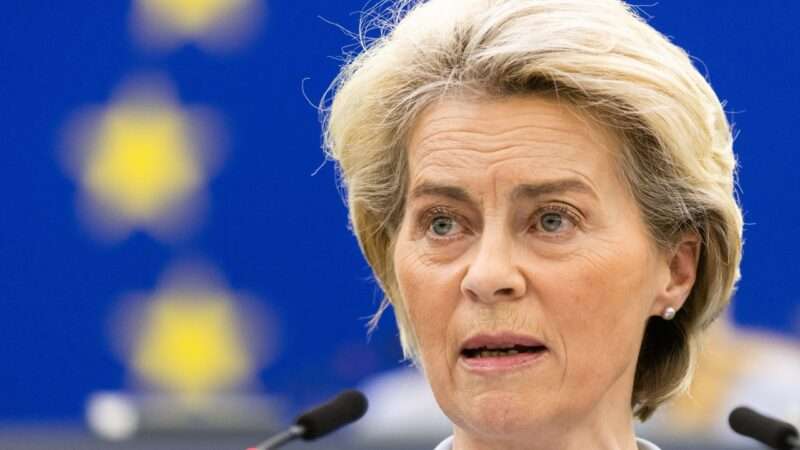
“Today’s agreement on the Digital Services Act is historic, both in terms of speed and of substance,” European Commission President Ursula von der Leyen commented on April 23. “The DSA will upgrade the ground-rules for all online services in the EU. It will ensure that the online environment remains a safe space, safeguarding freedom of expression and opportunities for digital businesses. It gives practical effect to the principle that what is illegal offline, should be illegal online. The greater the size, the greater the responsibilities of online platforms.”

There’s a lot in the proposed law, as you would expect of wide-ranging legislation paired with a companion bill addressing digital markets. The overall tone is of micromanagement of online spaces with dire consequences for platforms that fail to protect users from “illegal and harmful content” as defined by the government. Those who violate the rules by, for example, repeatedly failing to scrub forbidden material in timely fashion, face massive fines or expulsion from the EU market. Of course, no matter official assurances, speech hemmed in by red tape and subject to official oversight in monitored spaces isn’t especially “free” at all, which is a contradiction recognized by critics.

“The DSA does not strike the right balance between countering genuine online harms and safeguarding free speech,” Jacob Mchangama, the executive director of Copenhagen-based human-rights think tank Justitia, warns in Foreign Policy. “It will most likely result in a shrinking space for online expression, as social media companies are incentivized to delete massive amounts of perfectly legal content.”

Mchangama is the author of the recently published Free Speech: A History From Socrates to Social Media, which Katrina Gulliver reviewed for the May issue of Reason. He’s familiar with differing attitudes towards speech around the world. In particular, he understands that the American approach leaves speakers more room, while the European approach favors those who impose constraints.

“While free speech is protected by both the EU Charter of Fundamental Rights and the European Convention on Human Rights, these legal instruments offer governments much greater leeway than the First Amendment of the U.S. Constitution when it comes to defining categories, such as hate speech, that can be regulated,” he adds in the Foreign Policy piece. “Nor does European law provide as robust protection against intermediary liability as Section 230 of the Communications Decency Act, which shields U.S. online platforms from liability for most user-generated content.”

But the danger isn’t just to Europeans who voice edgy opinions or manage online forums; it’s to the whole world through the “Brussels Effect.” That is, it’s easier for large platforms like Facebook to apply Europe’s tight rules to everybody than it is for them to vary rules by country, which is complicated and risks the wrath of EU regulators when speech inevitably bleeds across digital borders.

Of course, some people hope that the Digital Services Act becomes a global standard. Just as Mchangama is a European who sees free speech as a right that favors the powerless over those in authority, there are American fans of the EU approach who want officialdom to exercise more control.

Reacting to the announced sale of Twitter to Elon Musk, The New Yorker‘s John Cassidy objects that “Musk seems intent on taking Twitter back to the not at all distant era when social media was a free-for-all.” He sniffily dismisses that prospect as unacceptable. For proper regulation of speech, he suggests “the E.U. has just provided a road map for how it could be done: by putting the onus on social-media companies to monitor and remove harmful content, and hit them with big fines if they don’t.” 

“Musk would surely object to the U.S. adopting a regulatory system like the one that the Europeans are drawing up, but that’s too bad. The health of the Internet—and, most important, democracy—is too significant to leave to one man, no matter how rich he is.”

But, as the Competitive Enterprise Institute’s Clyde Wayne Crews Jr. warned in 2019, “the dangers of social media company, legislative and ‘watchdog’-backed mandates to censor speech and otherwise regulate ‘harmful content’ are themselves the harms facing the Internet of today and the splinternet of tomorrow. Some authoritarian-minded interventionists seek a pre-ordained deplatforming of unpopular ideas and controversial debate and even pretend they protect democracy.”

Such restrictions put the definition of “harmful” in the hands of self-serving political operatives and favor large established and, yes, rich companies, for whom compliance is easier, over smaller firms.

“Social media giants and international governments engaging in censorious consultative alliances and frameworks incorporating politically derived norms threaten free expression even in the U.S.,” Crews added.

Justitia made a similar point about Germany’s censorious 2017 NetzDG law. “In under a year, the number of countries copy-pasting the NetzDG matrix to provide cover and legitimacy for digital censorship and repression has almost doubled to a total of 25,” the think tank noted. The German law inspired copycat “measures to combat vaguely defined categories of hate speech and fake news by placing responsibility on the social media platforms for user content.”

Beyond the framework of individual rights, the practical argument for free speech is that the powers-that-be can’t be trusted to distinguish “good” speech from “bad speech” and to ban only that which is harmful. As Justitia emphasizes, that has already happened with NetzDG. There’s no reason to expect a less authoritarian outcome from the Digital Services Act which borrows much from the German law.

Mchangama proposes using human-rights law as a benchmark for speech regulation, though he concedes that it’s “not a panacea.” More promising is his suggestion for “distributed content moderation” including “voluntary filters that individual users could apply at will.” People could decide for themselves what is “harmful” and block or engage as they pleased. That might satisfy everybody except those most invested in controlling others.

Fans of regulated speech always seem to envision the regulators as sharing their own sensibilities in the exercise of censorship powers; they never imagine themselves being muzzled. But the “free for all” to which they object means freedom for them as much as for everybody else, and if they get what they want they may come to miss it as much as the rest of us.

The post Europe Escalates the Threat to Online Free Speech appeared first on Reason.com.

from Latest https://ift.tt/ATQzFNB
via IFTTT

Europe Escalates the Threat to Online Free Speech


dpaphotosfive693816

It’s easy to overstate, but attitudes towards freedom of action differ in the United States and the European Union. Americans tend to believe that people have a right to make their own decisions and are better trusted to do so than coercive governments; Europeans place more faith in the state, allowing room for personal choice only after officialdom installs guardrails and files away sharp edges. Yes, that exaggerates the case and there are plenty of dissenters under both systems, but it captures the treatment of speech and online conduct in the EU’s new Digital Services Act.

“Today’s agreement on the Digital Services Act is historic, both in terms of speed and of substance,” European Commission President Ursula von der Leyen commented on April 23. “The DSA will upgrade the ground-rules for all online services in the EU. It will ensure that the online environment remains a safe space, safeguarding freedom of expression and opportunities for digital businesses. It gives practical effect to the principle that what is illegal offline, should be illegal online. The greater the size, the greater the responsibilities of online platforms.”

There’s a lot in the proposed law, as you would expect of wide-ranging legislation paired with a companion bill addressing digital markets. The overall tone is of micromanagement of online spaces with dire consequences for platforms that fail to protect users from “illegal and harmful content” as defined by the government. Those who violate the rules by, for example, repeatedly failing to scrub forbidden material in timely fashion, face massive fines or expulsion from the EU market. Of course, no matter official assurances, speech hemmed in by red tape and subject to official oversight in monitored spaces isn’t especially “free” at all, which is a contradiction recognized by critics.

“The DSA does not strike the right balance between countering genuine online harms and safeguarding free speech,” Jacob Mchangama, the executive director of Copenhagen-based human-rights think tank Justitia, warns in Foreign Policy. “It will most likely result in a shrinking space for online expression, as social media companies are incentivized to delete massive amounts of perfectly legal content.”

Mchangama is the author of the recently published Free Speech: A History From Socrates to Social Media, which Katrina Gulliver reviewed for the May issue of Reason. He’s familiar with differing attitudes towards speech around the world. In particular, he understands that the American approach leaves speakers more room, while the European approach favors those who impose constraints.

“While free speech is protected by both the EU Charter of Fundamental Rights and the European Convention on Human Rights, these legal instruments offer governments much greater leeway than the First Amendment of the U.S. Constitution when it comes to defining categories, such as hate speech, that can be regulated,” he adds in the Foreign Policy piece. “Nor does European law provide as robust protection against intermediary liability as Section 230 of the Communications Decency Act, which shields U.S. online platforms from liability for most user-generated content.”

But the danger isn’t just to Europeans who voice edgy opinions or manage online forums; it’s to the whole world through the “Brussels Effect.” That is, it’s easier for large platforms like Facebook to apply Europe’s tight rules to everybody than it is for them to vary rules by country, which is complicated and risks the wrath of EU regulators when speech inevitably bleeds across digital borders.

Of course, some people hope that the Digital Services Act becomes a global standard. Just as Mchangama is a European who sees free speech as a right that favors the powerless over those in authority, there are American fans of the EU approach who want officialdom to exercise more control.

Reacting to the announced sale of Twitter to Elon Musk, The New Yorker‘s John Cassidy objects that “Musk seems intent on taking Twitter back to the not at all distant era when social media was a free-for-all.” He sniffily dismisses that prospect as unacceptable. For proper regulation of speech, he suggests “the E.U. has just provided a road map for how it could be done: by putting the onus on social-media companies to monitor and remove harmful content, and hit them with big fines if they don’t.” 

“Musk would surely object to the U.S. adopting a regulatory system like the one that the Europeans are drawing up, but that’s too bad. The health of the Internet—and, most important, democracy—is too significant to leave to one man, no matter how rich he is.”

But, as the Competitive Enterprise Institute’s Clyde Wayne Crews Jr. warned in 2019, “the dangers of social media company, legislative and ‘watchdog’-backed mandates to censor speech and otherwise regulate ‘harmful content’ are themselves the harms facing the Internet of today and the splinternet of tomorrow. Some authoritarian-minded interventionists seek a pre-ordained deplatforming of unpopular ideas and controversial debate and even pretend they protect democracy.”

Such restrictions put the definition of “harmful” in the hands of self-serving political operatives and favor large established and, yes, rich companies, for whom compliance is easier, over smaller firms.

“Social media giants and international governments engaging in censorious consultative alliances and frameworks incorporating politically derived norms threaten free expression even in the U.S.,” Crews added.

Justitia made a similar point about Germany’s censorious 2017 NetzDG law. “In under a year, the number of countries copy-pasting the NetzDG matrix to provide cover and legitimacy for digital censorship and repression has almost doubled to a total of 25,” the think tank noted. The German law inspired copycat “measures to combat vaguely defined categories of hate speech and fake news by placing responsibility on the social media platforms for user content.”

Beyond the framework of individual rights, the practical argument for free speech is that the powers-that-be can’t be trusted to distinguish “good” speech from “bad speech” and to ban only that which is harmful. As Justitia emphasizes, that has already happened with NetzDG. There’s no reason to expect a less authoritarian outcome from the Digital Services Act which borrows much from the German law.

Mchangama proposes using human-rights law as a benchmark for speech regulation, though he concedes that it’s “not a panacea.” More promising is his suggestion for “distributed content moderation” including “voluntary filters that individual users could apply at will.” People could decide for themselves what is “harmful” and block or engage as they pleased. That might satisfy everybody except those most invested in controlling others.

Fans of regulated speech always seem to envision the regulators as sharing their own sensibilities in the exercise of censorship powers; they never imagine themselves being muzzled. But the “free for all” to which they object means freedom for them as much as for everybody else, and if they get what they want they may come to miss it as much as the rest of us.

The post Europe Escalates the Threat to Online Free Speech appeared first on Reason.com.

from Latest https://ift.tt/ATQzFNB
via IFTTT

22 Countries Drop Mask Mandates As Experts Debate Consequences

22 Countries Drop Mask Mandates As Experts Debate Consequences

Authored by Autumn Spredemann via The Epoch Times,

A total of 22 countries around the world have dropped mask mandates since January this year.

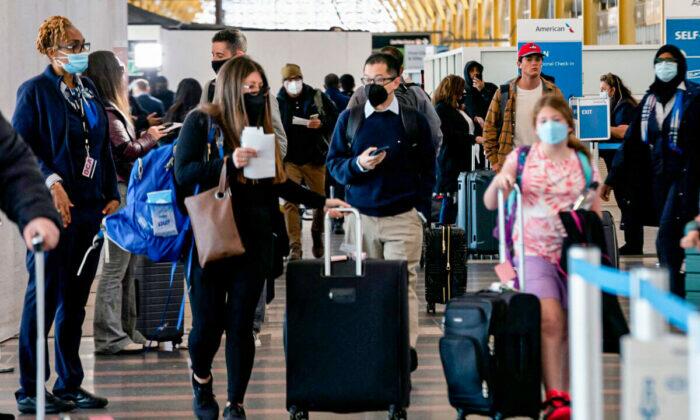
As debates over masks have returned to the United States after a judge struck down a federal mask mandate for interstate travel, the nation joined nearly to dozen countries which have ended broad mask and pandemic measures this year.

UK Prime Minister Boris Johnson announced the withdrawal of mask mandates in public places on Jan. 19, citing information from government researchers suggesting that the worst of the Omicron variant cases had already peaked.

Additionally, face coverings are no longer legally required on public transportation in England.

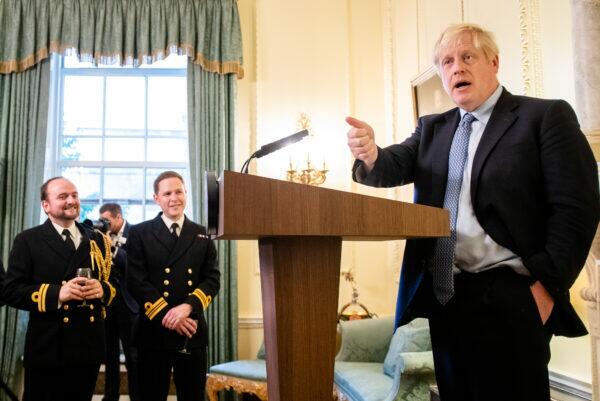
UK Prime Minister Boris Johnson hosts various members of the armed services at a military reception at 10 Downing Street on Sept. 18, 2019, in London. (John Nguyen/WPA Pool/Getty Images)

On April 18, Scotland implemented its previously discussed changes on masks and dropped the legal requirement for most indoor locations and public transportation.

The same goes for the rest of the UK, including Northern Ireland and Ireland: Masks are no longer required, but encouraged in some indoor venues.

However, health care facilities are an exception, and wearing a protective face covering is still enforced.

Latin America, Brazil, Uruguay, Paraguay, Chile, and the Dominican Republic have all ended government-regulated mask requirements.

Mexico also relinquished the demand for face coverings in most states.

The Dominican Republic, a popular Caribbean tourist destination, ditched its mask mandates in February after the government canceled its COVID-19 state of emergency in October 2021.

“It’s time to recover all our freedoms and way of life,” Dominican Republic President Luis Abinader said.

Several countries announced the end of their national health emergencies in April, including Paraguay, Brazil, Italy, and South Africa.

Italy, one of the worst-hit countries for severe COVID-19 cases and deaths in the early months of the pandemic, isn’t being cavalier in its approach to ending the mandates.

Face coverings will no longer be compulsory outdoors, but are still required indoors until April 30, after Italian Prime Minister Mario Draghi promised a gradual return to normal.

“Our goal is to reopen fully, as soon as possible,” Draghi said during a February speech delivered from Florence, Italy.

Health experts aren’t unanimous on the possible consequences of dropping mask mandates and scaling back COVID-19 preventative measures.

Dr. Shruti Gohil, associate medical director of epidemiology and infection prevention at the University of California–Irvine Medical Center said about mask mandates, “You’ve got to end it sometime.”

With the arrival of the BA.2 subvariant of Omicron, some experts feel governments have been hasty in abolishing mask mandates.

Dr. Deepti Gurdasani, an epidemiologist at the Queen Mary University of London, says that while the link between COVID-19 cases and severe outcomes has decoupled, the new variants shouldn’t be taken lightly.

“Although some [deaths after a positive test] are incidental, there is a very large proportion that are deaths due to COVID-19. It’s a very concerning situation,” Gurdasani said.

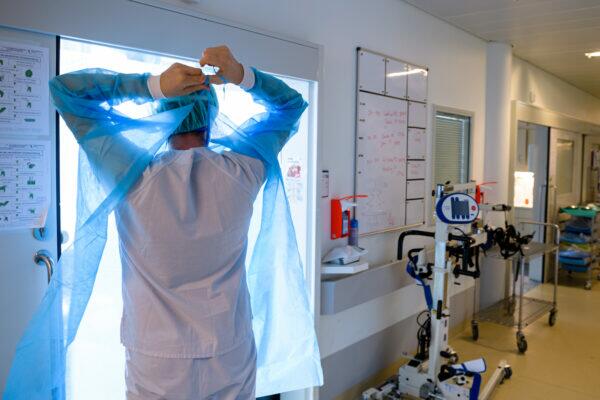
A doctor works in the COVID-19 intensive care unit at a hospital in Leipzig, Germany, on Nov. 18, 2021. (Jens Schlueter/Getty Images)

Nevertheless, that hasn’t stopped a domino effect of countries releasing their people from mask mandates. Switzerland, Norway, Denmark, Sweden, Iceland, and The Netherlands have all rolled back such requirements.

Health care facilities remain the baseline exception across the board.

International tourist hubs that took an economic blow from pandemic lockdowns, such as Maldives and Aruba, followed suit by ending mask mandates and appealing to a broader network of travelers.

Other European countries jumping on the bandwagon include Poland, Latvia, Croatia, and the Czech Republic. Even France has relaxed its strict approach to the compulsory use of face masks, except for public transit and in health care facilities.

The United States is a battleground over President Joe Biden’s mask mandate after a federal judge suspended the enforcement of the measure on April 18.

U.S. District Judge Kathryn Kimball Mizelle ruled that the U.S. Centers for Disease Control and Prevention (CDC), which initially issued the mandate, had exceeded its authority and failed to seek public comment before issuing the mandate.

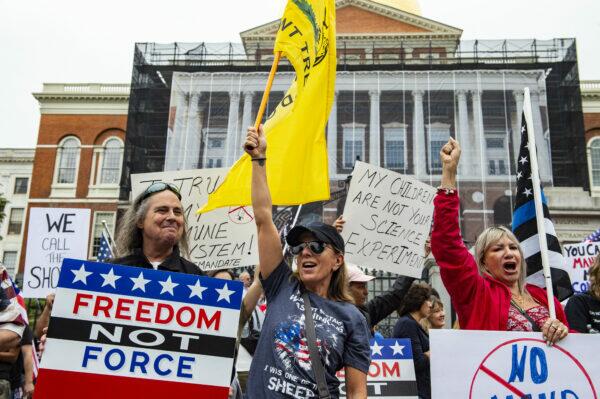
Demonstrators gather outside the Massachusetts State House to protest COVID-19 vaccination and mask mandates in Boston on Sept. 17, 2021. (Joseph Prezioso/AFP via Getty Images)

When it comes to ending mask mandates, health experts say the primary concern is preventing the transmission of COVID-19. And Gohil doesn’t think ending mandates means the world is done with masks forever.

“When rates go up, we should get those masks back on, and when rates go back down, we might be able to be more liberal,” she said.

With the new BA.2 subvariant, data aren’t showing deaths rising at the same rate as recent cases in most countries, which is consistent with the original strain of Omicron discovered in November 2021.

The CDC has identified the Omicron variant and its subvariants as more transmissible, but said they cause less severe illness in patients than earlier strains of COVID-19.

Tyler Durden
Fri, 04/29/2022 – 06:30

via ZeroHedge News https://ift.tt/XDP6LrT Tyler Durden

Labor Econ Versus the World


minisLabor-Econ-Versus-the-World_Brian-Caplan

You may know George Mason University economist Bryan Caplan from such contrarian classics as The Case Against EducationThe Myth of the Rational VoterSelfish Reasons To Have More Kids, and the polemical comic book Open Borders. His new book is a little different. Labor Econ Versus the World is not an extended argument but a collection of tidbits loosely grouped around the idea that if you truly understand labor economics, you understand economics, period.

The chapters are blog-post short, and blog posts are what most of them started out as. But each displays Caplan’s characteristic ruthless data-driven cheer. Particularly pleasing are his short chapters on the hypocrisy of unpaid collegiate internships, his comparison between men regularly mentoring women and habitually refusing to wear a seatbelt, and a defense of the professoriate against the charges of laziness.

The post Labor Econ Versus the World appeared first on Reason.com.

from Latest https://ift.tt/9Brm6xE
via IFTTT

Labor Econ Versus the World


minisLabor-Econ-Versus-the-World_Brian-Caplan

You may know George Mason University economist Bryan Caplan from such contrarian classics as The Case Against EducationThe Myth of the Rational VoterSelfish Reasons To Have More Kids, and the polemical comic book Open Borders. His new book is a little different. Labor Econ Versus the World is not an extended argument but a collection of tidbits loosely grouped around the idea that if you truly understand labor economics, you understand economics, period.

The chapters are blog-post short, and blog posts are what most of them started out as. But each displays Caplan’s characteristic ruthless data-driven cheer. Particularly pleasing are his short chapters on the hypocrisy of unpaid collegiate internships, his comparison between men regularly mentoring women and habitually refusing to wear a seatbelt, and a defense of the professoriate against the charges of laziness.

The post Labor Econ Versus the World appeared first on Reason.com.

from Latest https://ift.tt/9Brm6xE
via IFTTT

Norway Expands Military Drills In North, Increases Emergency Preparedness, Citing Ukraine War

Norway Expands Military Drills In North, Increases Emergency Preparedness, Citing Ukraine War

The commander of the Norwegian armed forces has announced his country will step up military exercises in the far north in response to Russia’s ongoing attack of Ukraine.

Major General Lars Lervik told national broadcaster NRK that “Based on what has happened in Ukraine, we have reported a need to increase activity here at home. In addition, we have reported a need to strengthen preparedness and make that work a little faster than originally planned.”

Source: The Independent Barents Observer

The boosted military presence and drills will center on northern Norway in the area of Finnmark County, according to national media, and the Kirkenes area bordering Russia’s Murmansk Oblast.

The northernmost NATO country of Norway, while having both Sweden and Finland as the Nordic non-NATO buffer states between it and Russia, does share a sliver of a far northern border with Russia. The Norway-Russia land border is a mere 121 miles of harsh arctic terrain.

Gen. Lervik described that in addition to general military preparedness drills, the army is seeking to boost its emergency supplies as well as ammunition. 

“This is what we are trying to do a little faster than planned, to have a better preparedness,” Lervik said. The NRK reads: “In addition to increased exercise activity, the Armed Forces is working to build up its emergency stocks. This means all they need of food and fuel, but also spare parts and ammunition.”

Additionally the country’s defense minister has said the ramped up drills on Norwegian soil in the north are not expected to provoke the Russian side:

Minister of Defense Bjørn Arild Gram (Sp) believes it is natural to be more active in the north. He has no particular expectations of reactions to this from the Russian side. 

He said, “We now have a war in Europe for which Russia is responsible. It is very serious and it changes the security policy situation, but Russia must take responsibility and ensure that it is now stopped and stopped.”

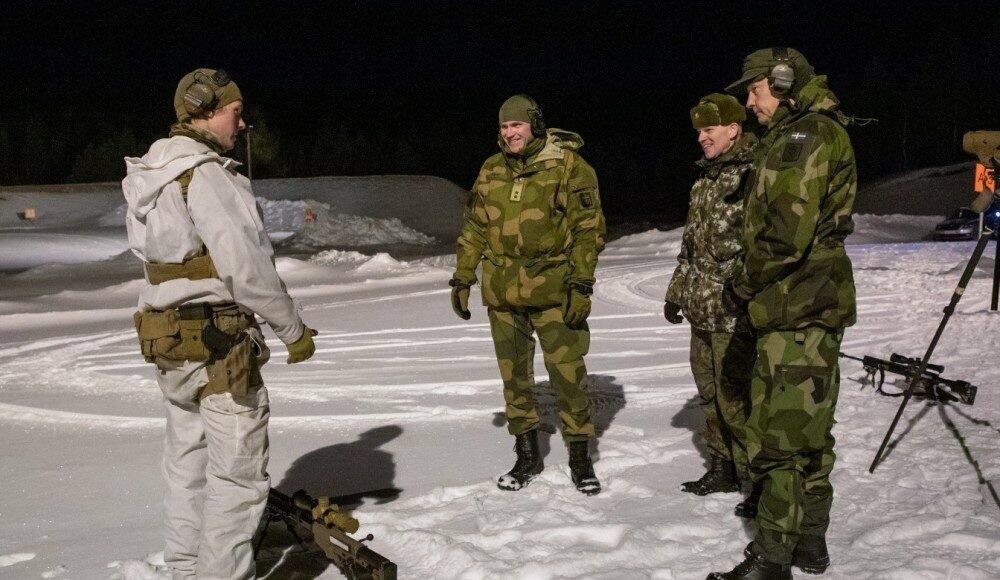
Minister of Defense inspecting a Garrison in Sør-Varanger. Source: Norway’s NRK

Scandinavian countries have of late expressed growing alarm over a future clash with an ‘aggressive’ Russia – as their officials have been saying – rhetoric which has been on display as Sweden and Finland have been strongly signaling steps toward NATO membership. This likely looms large in Norway’s decision for a force build-up in the north, where it sits closest with Russia.

Sweden and Finland – the latter which shares an over 800-mile border with Russia – have indicated a common decision will be made likely in mid-May. Russia has in turn issued dire warnings over such a move, saying it would lead to nuclear arms being stationed in the Baltic region.

Tyler Durden
Fri, 04/29/2022 – 05:45

via ZeroHedge News https://ift.tt/iDopdTa Tyler Durden

The Central African Republic Adopts Bitcoin As Legal Tender

The Central African Republic Adopts Bitcoin As Legal Tender

Authored by ‘NAMCIOS’ via BitcoinMagazine.com,

The African country has become the second nation in the world to adopt bitcoin as legal currency…

The Central African Republic (CAR) has adopted bitcoin as legal tender, the president’s office said on Wednesday.

The move makes the African country the second nation in the world to officially adopt BTC as a lawful currency, enabling its citizens to use it in regular commerce as well as to pay taxes.

CAR lawmakers unanimously approved a bill legalizing the use of cryptocurrencies in the country and making bitcoin and the CFA franc legal tender.

President Faustin Archange Touadera then signed the measure into law, his chief of staff Obed Namsio said in a statement.

The CAR “is the first country in Africa to adopt bitcoin as legal tender,” Namsio said.

“This move places the Central African Republic on the map of the world’s boldest and most visionary countries.”

The statement was posted on the President’s Facebook account. AFP first reported the news early on Wednesday.

The news contradicts a statement reportedly made by CAR Finance Minister Herve Ndoba on Tuesday stating that the legislation being passed did not mirror the Salvadoran foray into bitcoin adoption.

El Salvador became the first country in the world to bring bitcoin under its umbrella of legal currencies last year. The Central American country’s Bitcoin Law came into force on September 7, 2021, as citizens and businesses were given the green light to transact in the peer-to-peer digital currency.

While the majority of El Salvador’s population did not have access to the banking system when the country’s bitcoin adoption began, internet access was widespread. However, the same can’t be said for CAR.

Internet penetration in the African country was estimated to be only 11.4% of the population in January 2021, which could hinder a widespread usage of BTC as the digital currency leverages internet connectivity for peer communication in the network and for sending payments.

Tyler Durden
Fri, 04/29/2022 – 05:00

via ZeroHedge News https://ift.tt/zqHO9S0 Tyler Durden