Blame Regulations, Not Foreign Buyers, for High Housing Costs


TOPICSWORLD

There’s a specter supposedly haunting the globe’s expensive housing markets: the absentee foreign owner. Critics claim international interlopers are buying properties that should go to hardworking native homeowners instead of rootless global elites merely looking for investment opportunities.

That’s the story people are telling themselves, and it’s why politicians from Wellington to Winnipeg have banned home purchases by foreigners, as the Canadian government did in January 2023. That solution misconstrues the causes of high housing prices, which are largely due to regulations that restrict the supply.

Foreign buyers accounted for just 5 percent or so of the Canadian housing market before the ban. But Liberal Party Prime Minister Justin Trudeau’s government hopes that excluding them will bring down prices.

These foreigners, the government complains, are not using their homes the right way. “We will make sure that houses are being used as homes, rather than as commodities to be traded,” Finance Minister Chrystia Freeland said when the ban was announced.

In 2018, New Zealand began enforcing a ban on foreign home purchases. In 2016, the Canadian province of British Columbia imposed a 15 percent tax on foreigners buying homes in the Vancouver metropolitan area. Two years later, the tax was raised to 20 percent and expanded to more areas in the province.

These policies had a dramatic impact on the nationalities of homebuyers. In New Zealand, where Singaporeans and Australians were exempt from the ban, the share of homes bought by foreigners fell from a little more than 3 percent to just 0.3 percent. In British Columbia, “foreign-involved purchases” fell from about 10 percent of all property transfers to less than 2 percent. But contrary to expectations, housing did not become substantially more affordable in either place.

One study of the British Columbia tax found that it reduced home price growth by 1 percent for roughly seven months. British Columbia is still the most expensive province in Canada to buy a home.

Annual growth in Kiwi home prices, meanwhile, remained in the double digits after the ban on most foreign buyers. Summarizing the views of several real estate economists in 2020, the New Zealand news site Stuff reported that “the ban has reduced a marginal part of the demand but has done little to solve the fundamental undersupply that has driven up prices.”

We can expect similar results from Canada’s nationwide ban. The issue is not that some would-be purchasers have too much money but that Canada’s desirable locations have too little housing. Tamping down prices requires increasing housing stock, which requires eliminating voluminous government restrictions on new housing.

Lifting those restrictions would force politicians to stand up to voters who already own homes and want the state to protect their views, their property values, their neighborhood character, or even their national character. Politically, it’s easier to punish foreigners and hope constituents don’t notice that the problem persists.

That is why politicians search for scapegoats: fat-cat speculators, out-of-town gentrifiers, and local landlords who supposedly profit from keeping units empty. The absentee foreign buyer combines all these archetypes into one rich bad guy.

The cross-ideological nature of the NIMBY (“not in my backyard”) coalition compounds the problem. Conservatives don’t like foreigners, and progressives don’t like capital, so punishing foreign capital pleases people of every political bent. In Canada, all three major national political parties supported either a ban or a tax on foreign home purchases.

Canadians priced out of desirable towns or provinces by local restrictions on housing supply are at a disadvantage when it comes to changing those rules, since they can’t vote in places where they don’t live. That’s especially true for noncitizens, who will serve as a scapegoat until Canadians build more housing or find a new specter to blame.

The post Blame Regulations, Not Foreign Buyers, for High Housing Costs appeared first on Reason.com.

from Latest https://ift.tt/L89jHQM
via IFTTT

Amsterdam Urges Rowdy Brits To “Stay Away”

Amsterdam Urges Rowdy Brits To “Stay Away”

This week, Amsterdam will launch a digital campaign to discourage young British men from organizing parties centered around excessive alcohol and drug consumption.

The new campaign, called “Stay Away,” will target British men between the ages of 18 and 35 searching “stag party Amsterdam,” “cheap hotel Amsterdam” or “pub crawl Amsterdam” online, with advertisements dissuading them of the consequences of drinking too much, taking drugs or causing mayhem in Netherlands’ capital. 

“These advertisements will show the risks and consequences of anti-social behaviour and excessive drug and alcohol (ab)use, such as being fined, being arrested by the police, getting a criminal record, hospitalization and health damage.

“The warnings about the risks and possible consequences will discourage some of the visitors to come. The campaign will be evaluated and possibly further developed during the coming months,” the municipality said in a statement.

The campaign is expected to expand to “potential nuisance-causing visitors from the Netherlands and other EU countries,” the municipality continued. 

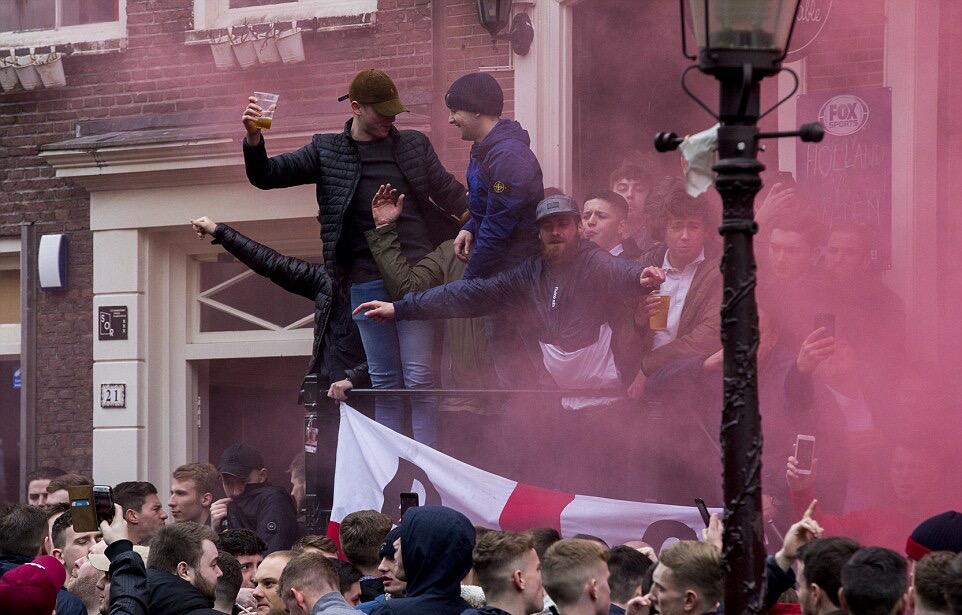
Drunk Brits stumbling around the red light district, some throwing up in canals, urinating in public, and even engaging in drunken brawls isn’t a new phenomenon. 

Deputy Mayor Sofyan Mbarki (Economic Affairs and Inner City Approach) stated, “Visitors will remain welcome, but not if they misbehave and cause a nuisance.”

Amsterdam is one of the world’s most visited cities. Around 20 million visitors – including a million Brits – visit the city annually. However, BBC pointed out, “the targeted ad campaigns are discriminatory and based on unfair stereotypes.”

Tyler Durden
Thu, 03/30/2023 – 04:15

via ZeroHedge News https://ift.tt/zmtSOGv Tyler Durden

Brickbat: Prudish Policing


A blonde woman is accosted on the street by an unseen man.

The British government has proposed a bill that would make it illegal for men to whistle or make a pass at women on the street. The Protection from Sex-Based Harassment in Public Bill will make it illegal to cause “intentional harassment, alarm or distress” to a person in public based on their sex. Those found guilty of violating the law face up to two years in prison.

The post Brickbat: Prudish Policing appeared first on Reason.com.

from Latest https://ift.tt/oDwPKLj
via IFTTT

France’s Bull Case Challenged By Social Unrest

France’s Bull Case Challenged By Social Unrest

By Michael Msika, Bloomberg Markets Live reporter and analyst

Growing worries over a recession and the cumulative effect of months of interest rate hikes mean equity investors have plenty on their minds. Violent protests in France have added an extra layer of concern in one of Europe’s top-performing markets.

The CAC 40 is up 9.5% this year, trailing only Italy’s FTSE MIB among the major European benchmarks, with a stellar lineup of luxury names boosted by bets on China’s economic reopening. Now, the case for French stocks is being challenged by days of confrontations on the streets over pension reform that could damage investor sentiment.

“Surveys suggest the economy is holding up well so far and may even manage to expand slightly in the first quarter,” says Bloomberg economist Maeva Cousin. “But as social tensions persist, adding to the tightening of monetary conditions and heightened financial uncertainty, risks for the rest of 2023 appear increasingly tilted to the downside.”

Anger over the plan to raise the retirement age to 64 from 62 — which has won support from the OECD — boiled over when the government said March 16 it would push the bill through parliament without a vote. Judging by past episodes of national protest, like the Yellow Vest movement which started in 2018, the hospitality and transport industries will be worst affected, while the overall result representing a loss of roughly than 0.1% of GDP in the first quarter, according to

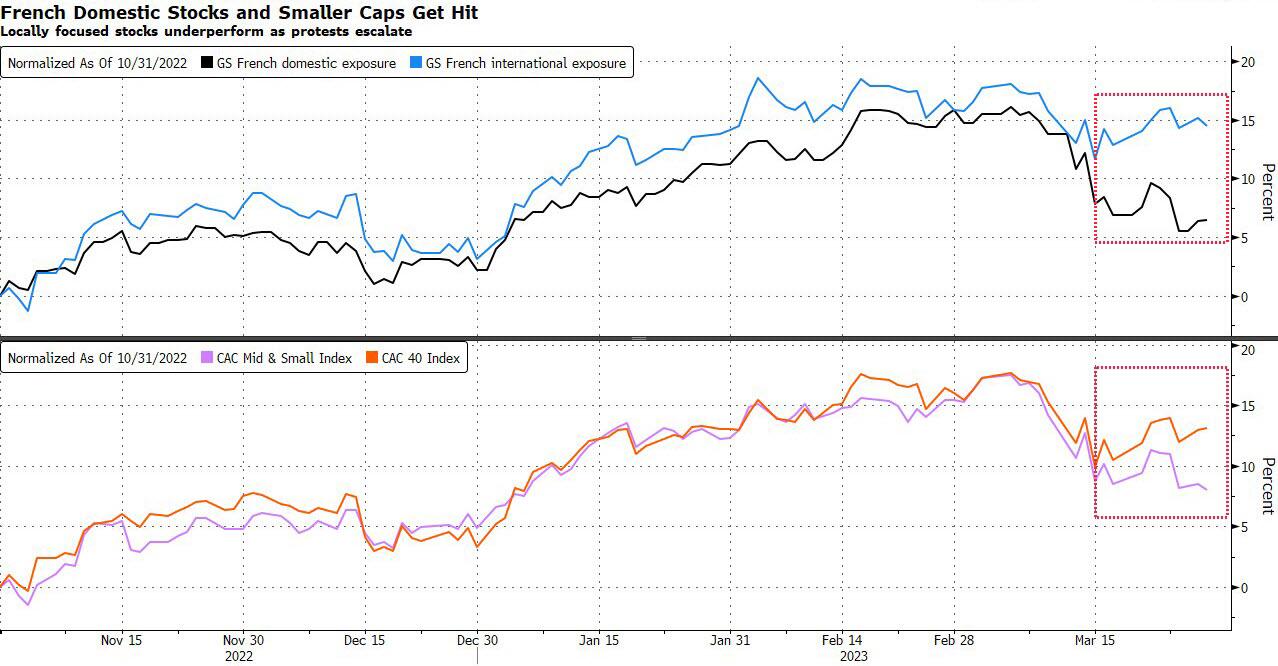
Domestic stocks are likely to feel the most pain. A Goldman Sachs basket of French companies with a high reliance on the local economy has underperformed internationally exposed peers by more than five percentage points since March 13. This group includes the likes of Carrefour, Vinci, Bouygues, Gecina, Getlink and Orange.

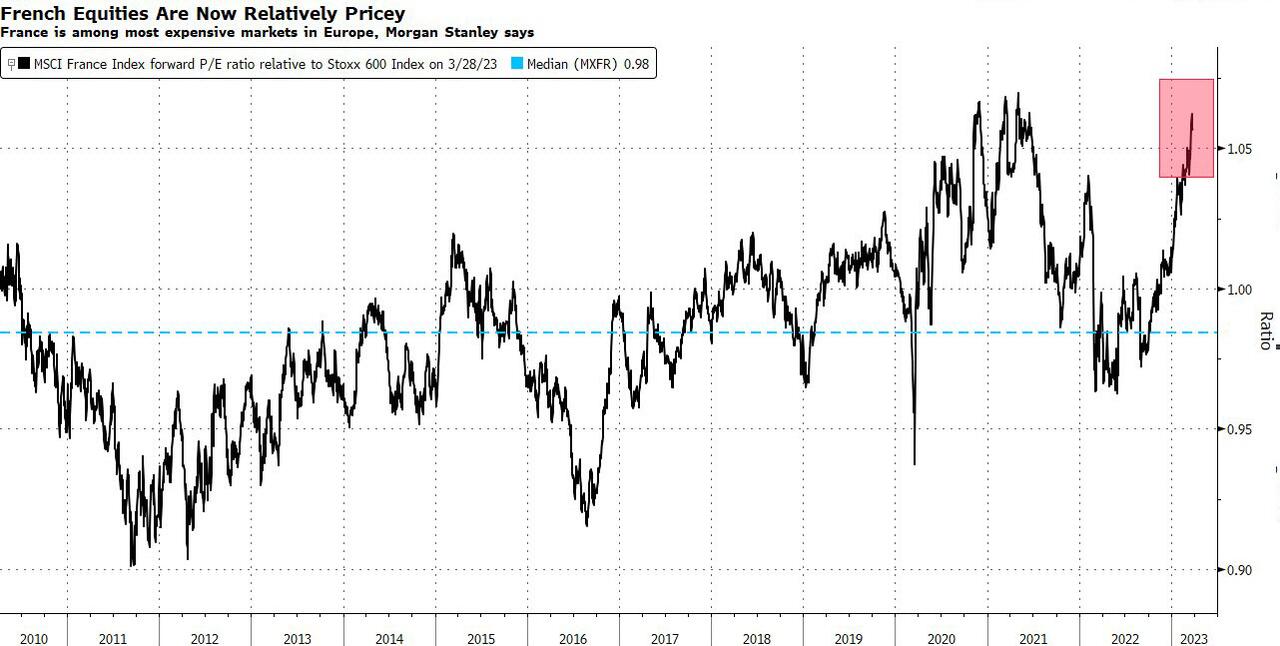
The other problem for the French equity market is that it has become among the most expensive in Europe, based on relative valuations compared with 10-year averages and measured against several metrics, according to Morgan Stanley strategists.

French blue chips have little exposure to their home country. CAC 40 members generate only 16% of their sales domestically, according to Goldman strategists. The index has a high weighting in companies with a global reach, like luxury, commodities and health care stocks. Locally focused utilities, telecoms, real estate and financials make up just 13% of the benchmark. Still, while luxury stocks get a modest 10% of their sales in France, tourists account for a healthy slice of that.

“Disruption to the economy is so far limited but could rise as we are now seeing more strikes,” says Bloomberg Intelligence strategist Laurent Douillet, adding that April’s readings on economic activity will be revealing. “Given that a large portion of merchandise transport is done by road, protests by truck drivers and road/refineries blockades are important to watch.”

Tourism has started to be affected, Douillet says, with hotels reporting cancellations running as high as 25% over the past two weeks as television images of clashes in Paris and piles of rubbish on the streets prompt foreigners to postpone trips. While a strike by refuse collection workers is due to be suspended Wednesday, France has asked airlines to cancel 20% to 25% of flights on Thursday and Friday. 

In February, France’s national statistic agency published a note in which it said past social movements such as in 1995 and 2019 had little impact on economic output with activity catching up during the quarter following the disruption. It added that home working introduced during the Covid lockdown was also likely to mitigate the effect of disruptions.

“It is too early to fully assess the impact of French strikes on economic dynamics, but we can already assume that the government will come out weaker from this episode, making other key reforms or budget deficit reduction difficult to pass in the next year or so,” says Stephanie de Torquat, chief economist at SILEX. “Anyhow, the context of high inflation and rapid monetary policy tightening by the ECB will likely remain the most important driver of slower growth in the quarters to come.”

Tyler Durden
Thu, 03/30/2023 – 03:30

via ZeroHedge News https://ift.tt/MdLQS3w Tyler Durden

China Gloats After Honduras Tells Taiwan To “Pack Up & Leave” Embassy

China Gloats After Honduras Tells Taiwan To “Pack Up & Leave” Embassy

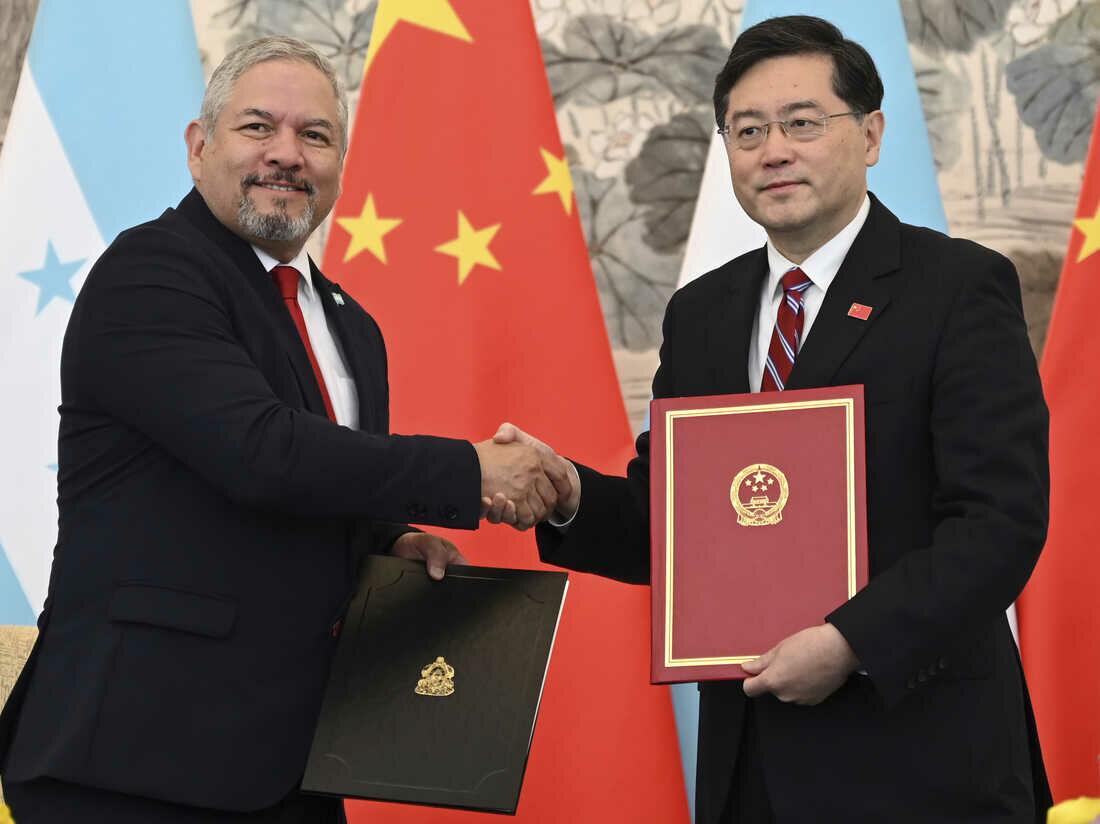
This week Honduras delivered a shock to Taiwan and its powerful backer Washington, as the Honduran government ordered Taiwan to vacate its embassy in the country within 30 days. As Reuters underscored in its biting headline Tuesday, Taiwan was told to ‘pack up and leave’ Honduras after ties severed. Adding insult to injury, driving President Xiomara Castro’s decision are efforts to gain more Chinese investment and jobs, at a moment diplomatic ties have been formally established with Beijing.

The vacate order was first announced deputy foreign minister Antonio Garcia on national broadcast TV. Taiwan was forced to then recall its ambassador. Garcia explained that 30 days “is more than enough time to pack up and leave.”

Via AP: Honduras FM Eduardo Enrique Reina Garcia, left, and Chinese FM Qin Gang shake hands following the establishment of diplomatic relations between the two countries.

Now Taiwan is left with a mere 13 diplomatic allies left in the world which recognize it as a “country” in some sense. But these are mostly tiny island nations in Central America and the Pacific, many of which are Washington allies and often bow to US pressure.

China is feeling emboldened after a streak of recent “wins” going back to 2017, when Panama severed ties with Taipei in favor of Beijing. Then the following year, the Dominican Republic did the same, along with El Salvador, and then there was Solomon Islands which voted in 2019 to switch relations and Nicaragua in 2021 (for the second time switching).

Taiwan has accused Honduras of diplomatic “bribery” while facing mounting debt:

Honduras’s decision to break its relationship with Taiwan came after weeks of diplomatic back-and-forth over Honduras’s mounting debt problems. Honduran Foreign Minister Eduardo Enrique Reina this month said the country was “up to its neck” in debt, including $600 million owed to Taiwan.

Honduras demanded Taiwan provide $2.5 billion in aid before the Central American nation announced it would seek open ties with China, according to Reuters.

Meanwhile, Chinese state media celebrated the ‘victory’ and promised it won’t be last. For example Global Times put out the gloating headline, “Honduras not to be the last to ‘sever diplomatic ties’ with Taiwan island”.

The below are words from the state-run editorial shaking a fist at Taiwan and its backers in the West:

No matter how anxious the DPP authorities are, and no matter how many times Washington sends officials to coerce and lure, it always ends up with Taiwan’s “diplomats” packing up and leaving, often in a very embarrassing manner. This is not only a shame for the DPP authorities, but also a manifestation of the increasing loss of support and popularity of Taiwan secessionist forces in the international community. It’s also an ironclad proof that “Taiwan independence” is a dead end and cannot have a way out

The Chinese Foreign Ministry hailed Honduras’ move to established diplomatic ties with China and sever relations with Taiwan as “the right choice”.

Foreign Minister Qin Gang declared: “We inform sternly the Taiwan authorities that engaging in separatist activities for Taiwan independence is against the will and interests of the Chinese nation and against the trend of history, and is doomed to a dead end.”

Tyler Durden
Thu, 03/30/2023 – 02:45

via ZeroHedge News https://ift.tt/KTDkZRY Tyler Durden

Hungary, Poland Reject “Extremely Dangerous” EU NatGas Cutback Extension

Hungary, Poland Reject “Extremely Dangerous” EU NatGas Cutback Extension

Authored by Magyar Hírlap via Remix News,

“Brussels is once again stealthily taking powers away from member states,” said Hungary’s top diplomat…

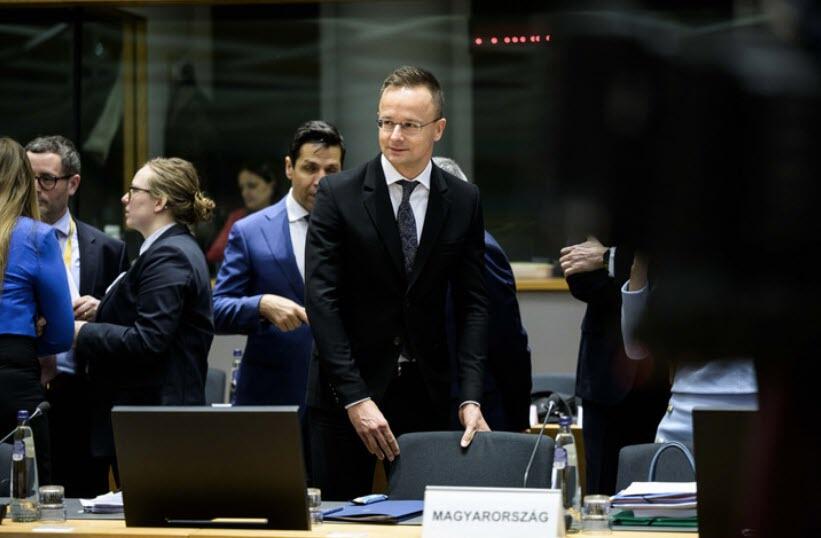
Minister of Foreign Affairs Péter Szijjártó in Brussels. (Facebook)

Hungary and Poland have both voted against the European Commission’s new proposal to extend a regulation that requires a 15 percent reduction in the use of natural gas from member states, said Hungarian Minister of Foreign Affairs and Trade Péter Szijjártó at the EU Energy Council in Brussels on Tuesday.

According to a statement by the Ministry of Foreign Affairs and Trade, Szijjártó said at a press conference at the summit that the European Commission has come up with a proposal that would again require a reduction in natural gas consumption instead of pursuing more worthwhile goals like investing in infrastructure.

Such a regulation was already adopted last year despite Hungarian and Polish opposition, but this one poses a greater threat to Europe’s economy. The previous reduction was during the winter period, when it is actually easier to reduce gas consumption. Although this may seem counterintuitive, gas usage during the winter includes residential and commercial building heating, and it is easier to cut gas usage for heating. In the summer, industrial consumption dominates gas consumption, and cutting gas during this period is far more difficult, even if overall consumption is lower.

Hungary is warning that extended gas cuts into the summer period will directly impact industry.

“If the use of natural gas by industry has to be artificially reduced, it means that there is a risk of a downturn in the economy,” Szijjártó underlined, while warning of security of supply problems.

“In addition, Brussels is once again stealthily taking powers away from member states, as energy use, the national energy mix and the structure of the economy are explicitly national competencies, and by imposing a reduction in gas use, they are effectively infringing on this sovereign right of member states,” Szijjártó stated.

Hungary’s top diplomat pointed out that after the first ruling, Poland had taken the case to the European Court of Justice, arguing that a unanimous vote was needed for adoption, and Hungary had joined the case on Poland’s side.

“This time we also voted against this proposal, which unfortunately was supported by everyone except the Poles and us. So, they imposed another 15 percent gas cut as an extension of the previous regulation. This, I repeat, is extremely dangerous, unreasonable and does not solve the problem,” Szijjártó warned.

“For all these reasons, Hungary did not vote in favor of this proposal, and we continue to clearly take the position that the supply of natural gas is not a political issue, that it is extremely harmful to discriminate against gas sources on political grounds, and that we should help to ensure that as much gas as possible can come to Europe from as many sources as possible,” Szijjártó said.

Tyler Durden
Thu, 03/30/2023 – 02:00

via ZeroHedge News https://ift.tt/YSasT6K Tyler Durden

Progressive Politicians Are Regulating Their Own Projects Into Oblivion


A group of plants are seen between yellow lines

George McGovern, the Democratic Party’s 1972 presidential nominee, was a liberal icon. During many years in political office, including as a U.S. senator from South Dakota, McGovern successfully championed loads of regulations, taxes, and mandates in the name of the public good. But as a businessman, he was held back to the point of failure by the same sorts of burdens he had once earnestly promoted to achieve lofty goals.

For today’s most overzealous politicians, McGovern’s story is worth retelling.

In 1988, seven years after leaving the Senate, McGovern took over the lease of the Stratford Inn in Connecticut. For the first time, this former politician experienced what it meant to operate a business while obeying government dictates and shouldering business taxes designed by people with little firsthand experience in the marketplace. In the end, the inn failed, leaving McGovern with many observations about the disconnect between politicians’ dreams and business owners’ realities.

In a 1992 Wall Street Journal op-ed titled “A Politician’s Dream Is a Businessman’s Nightmare,” McGovern recounted how, as a senator, he didn’t realize just how costly regulatory compliance is. He was unaware of how well-intentioned regulations often produce bad outcomes, how taxes dampen investment, and how mandates make it harder to innovate or survive, especially during recessions.

As McGovern wrote, “the concept that most often eludes legislators is: ‘Can we make consumers pay the higher prices for the increased operating costs that accompany public regulation and government reporting requirements with reams of red tape.'” He added: “In short, ‘one-size-fits-all’ rules for business ignore the reality of the marketplace.”

Indeed. A well-functioning marketplace requires rules—institutions such as property rights, an unhindered system of profit and loss, and a fair and stable law of contract. It also requires an abundant level of freedom within the confines of these institutions. Fundamentally, most government interventions into the market tinker with these institutions and hamper that freedom.

One example is requiring that companies provide their employees with child care benefits. Sounds great, but this requirement interferes with the contractual negotiation between employees and employers about what the right mix of wages and benefits should be. Because employers cannot dispense benefits for free, and because every firm and individual is different, mandating higher benefits means mandating lower wages. It’s that simple.

Mandating that companies always use U.S.-made materials in their infrastructure projects is another example. It subjects factories to burdensome permitting processes that raise costs and increase the time required to complete construction plans. At some points, even when companies have the necessary financial and physical capital, the extra costs dissuade them from pursuing their original goals. Other businesses—as McGovern learned the hard way—are brought to their knees by the costs.

Excessive government interferences in the market also get in the way of politicians’ dreams financed through spending. The higher cost of building infrastructure, for example, means that each dollar spent on a new school or clean energy project doesn’t go as far as it otherwise would. Sometimes promised projects don’t even get built.

This government-created inefficiency, unsurprisingly, affects things like the Inflation Reduction Act, a $400 billion statute meant to build green energy. Now, some people are worrying that this plethora of regulations could get in the way of building anything. This worry is justified.

As the Journal reported, government spending is flowing at a time when “new wind installations plunged 77.5% in the third quarter of 2022 versus the same period the year before, according to S&P Global Market Intelligence. New utility-scale solar installations likely fell 40% in 2022 compared with 2021.” The culprits? Overregulation, tariffs meant to ban sourcing from China, and opposition by NIMBYs to building.

The same will be true of any industrial policy objectives that politicians pursue, such as the CHIPS Act with its $52 billion in subsidies to build microchips. Factories will have to be built in an already overregulated environment, and President Joe Biden’s administration just added mandates that subsidy beneficiaries provide child care, buy American, cease stock buybacks, and more.

The administration claims it’s doing this for workers, but it’s not considering ramifications like, for example, how subsidizing companies’ child care centers could exacerbate provider shortages in nearby centers, which, due to state regulations, cannot hire capable workers without college degrees.

Politicians today could learn from McGovern’s epiphany and honesty. An excessive amount of government will only stifle entrepreneurs and prevent long-term policy goals from ever playing out. It will also get in the way of the government itself.

COPYRIGHT 2023 CREATORS.COM.

The post Progressive Politicians Are Regulating Their Own Projects Into Oblivion appeared first on Reason.com.

from Latest https://ift.tt/fPZCbyg
via IFTTT

A State Of Never-Ending Crisis: The Government Is Fomenting Mass Hysteria

A State Of Never-Ending Crisis: The Government Is Fomenting Mass Hysteria

Authored by John and Nisha Whitehead via The Rutherford Institute,

This country has been having a nationwide nervous breakdown since 9/11. A nation of people suddenly broke, the market economy goes to shit, and they’re threatened on every side by an unknown, sinister enemy. But I don’t think fear is a very effective way of dealing with things—of responding to reality. Fear is just another word for ignorance.”

– Hunter S. Thompson, gonzo journalist

We have become guinea pigs in a ruthlessly calculated, carefully orchestrated, chillingly cold-blooded experiment in how to control a population and advance a political agenda without much opposition from the citizenry.
This is mind-control in its most sinister form.

With alarming regularity, the nation is being subjected to a spate of violence that terrorizes the public, destabilizes the country, and gives the government greater justifications to crack down, lock down, and institute even more authoritarian policies for the so-called sake of national security without many objections from the citizenry.

Take this latest shooting in Nashville, Tenn.

The 28-year-old shooter (a clearly troubled transgender individual in possession of several military-style weapons) opened fire in a Christian elementary school, killing three children and three adults.

Already, fingers are being pointed and battle lines are being drawn.

Those who want safety at all costs are clamoring for more gun control measures (if not at an outright ban on assault weapons for non-military, non-police personnel), widespread mental health screening of the general population, more threat assessments and behavioral sensing warnings, more CCTV cameras with facial recognition capabilities, more “See Something, Say Something” programs aimed at turning Americans into snitches and spies, more metal detectors and whole-body imaging devices at soft targets, more roaming squads of militarized police empowered to do random bag searches, more fusion centers to centralize and disseminate information to law enforcement agencies, and more surveillance of what Americans say and do, where they go, what they buy and how they spend their time.

This is all part of the Deep State’s master plan.

Ask yourselves: why are we being bombarded with crises, distractions, fake news and reality TV politics? We’re being conditioned like lab mice to subsist on a steady diet of bread-and-circus politics and an endless spate of crises.

Caught up in this “crisis of the now,” the average person has a hard time keeping up with and remembering all of the “events,” manufactured or otherwise, which occur like clockwork in order to keep us distracted, deluded, amused, and insulated from reality.

As investigative journalist Mike Adams points out:

“This psychological bombardment is waged primarily via the mainstream media which assaults the viewer by the hour with images of violence, war, emotions and conflict. Because the human nervous system is hard wired to focus on immediate threats accompanied by depictions of violence, mainstream media viewers have their attention and mental resources funneled into the never-ending ‘crisis of the NOW’ from which they can never have the mental breathing room to apply logic, reason or historical context.”

Professor Jacques Ellul studied this phenomenon of overwhelming news, short memories and the use of propaganda to advance hidden agendas. “One thought drives away another; old facts are chased by new ones,” wrote Ellul.

All the while, the government continues to amass more power and authority over the citizenry.

When we’re being bombarded with wall-to-wall news coverage and news cycles that change every few days, it’s difficult to stay focused on one thing—namely, holding the government accountable to abiding by the rule of law—and the powers-that-be understand this.

Yet as John Lennon reminds us, “nothing is real,” especially not in the world of politics.

In other words, it’s all fake, i.e., manufactured, i.e., manipulated to distort reality.

Much like the fabricated universe in Peter Weir’s 1998 film The Truman Show, in which a man’s life is the basis for an elaborately staged television show aimed at selling products and procuring ratings, the political scene in the United States has devolved over the years into a carefully calibrated exercise in how to manipulate, polarize, propagandize and control a population.

This is the magic of the reality TV programming that passes for politics today.

As long as we are distracted, entertained, occasionally outraged, always polarized but largely uninvolved and content to remain in the viewer’s seat, we’ll never manage to present a unified front against tyranny (or government corruption and ineptitude) in any form.

The more that is beamed at us, the more inclined we are to settle back in our comfy recliners and become passive viewers rather than active participants as unsettling, frightening events unfold.

Reality and fiction merge as everything around us becomes entertainment fodder.

We don’t even have to change the channel when the subject matter becomes too monotonous. That’s taken care of for us by the programmers (the corporate media).

“Living is easy with eyes closed,” says Lennon, and that’s exactly what reality TV that masquerades as American politics programs the citizenry to do: navigate the world with their eyes shut.

As long as we’re viewers, we’ll never be doers.

Studies suggest that the more reality TV people watch—and I would posit that it’s all reality TV, entertainment news included—the more difficult it becomes to distinguish between what is real and what is carefully crafted farce.

“We the people” are watching a lot of TV.

On average, Americans spend five hours a day watching television. By the time we reach age 65, we’re watching more than 50 hours of television a week, and that number increases as we get older. And reality TV programming consistently captures the largest percentage of TV watchers every season by an almost 2-1 ratio.

This doesn’t bode well for a citizenry able to sift through masterfully-produced propaganda in order to think critically about the issues of the day, whether it’s fake news peddled by government agencies or foreign entities.

Those who watch reality shows tend to view what they see as the “norm.” Thus, those who watch shows characterized by lying, aggression and meanness not only come to see such behavior as acceptable and entertaining but also mimic the medium.

This holds true whether the reality programming is about the antics of celebrities in the White House, in the board room, or in the bedroom.

It’s a phenomenon called “humilitainment.”

A term coined by media scholars Brad Waite and Sara Booker, “humilitainment” refers to the tendency for viewers to take pleasure in someone else’s humiliation, suffering and pain.

Humilitainment” largely explains not only why American TV watchers are so fixated on reality TV programming but how American citizens, largely insulated from what is really happening in the world around them by layers of technology, entertainment, and other distractions, are being programmed to accept the brutality, surveillance and dehumanizing treatment of the American police state as things happening to other people.

The ramifications for the future of civic engagement, political discourse and self-government are incredibly depressing and demoralizing.

This is what happens when an entire nation—bombarded by reality TV programming, government propaganda and entertainment news—becomes systematically desensitized and acclimated to the trappings of a government that operates by fiat and speaks in a language of force.

Ultimately, the reality shows, the entertainment news, the surveillance society, the militarized police, and the political spectacles have one common objective: to keep us divided, distracted, imprisoned, and incapable of taking an active role in the business of self-government.

Look behind the political spectacles, the reality TV theatrics, the sleight-of-hand distractions and diversions, and the stomach-churning, nail-biting drama, and you will find there is a method to the madness.

How do you change the way people think? You start by changing the words they use.

In totalitarian regimes—a.k.a. police states—where conformity and compliance are enforced at the end of a loaded gun, the government dictates what words can and cannot be used.

In countries where the police state hides behind a benevolent mask and disguises itself as tolerance, the citizens censor themselves, policing their words and thoughts to conform to the dictates of the mass mind.

Even when the motives behind this rigidly calibrated reorientation of societal language appear well-intentioned—discouraging racism, condemning violence, denouncing discrimination and hatred—inevitably, the end result is the same: intolerance, indoctrination, infantilism, the chilling of free speech and the demonizing of viewpoints that run counter to the cultural elite.

Labelling something as “fake news” is a masterful way of dismissing truth that may run counter to the ruling power’s own narrative.

As George Orwell recognized, “In times of universal deceit, telling the truth is a revolutionary act.”

Orwell understood only too well the power of language to manipulate the masses. In Orwell’s 1984, Big Brother does away with all undesirable and unnecessary words and meanings, even going so far as to routinely rewrite history and punish “thoughtcrimes.”

In this dystopian vision of the future, the Thought Police serve as the eyes and ears of Big Brother, while the Ministry of Peace deals with war and defense, the Ministry of Plenty deals with economic affairs (rationing and starvation), the Ministry of Love deals with law and order (torture and brainwashing), and the Ministry of Truth deals with news, entertainment, education and art (propaganda). The mottos of Oceania: WAR IS PEACE, FREEDOM IS SLAVERY, and IGNORANCE IS STRENGTH.

Orwell’s Big Brother relied on Newspeak to eliminate undesirable words, strip such words as remained of unorthodox meanings and make independent, non-government-approved thought altogether unnecessary.

Where we stand now is at the juncture of Oldspeak (where words have meanings, and ideas can be dangerous) and Newspeak (where only that which is “safe” and “accepted” by the majority is permitted).

Truth is often lost when we fail to distinguish between opinion and fact, and that is the danger we now face as a society. Anyone who relies exclusively on television/cable news hosts and political commentators for actual knowledge of the world is making a serious mistake.

Unfortunately, since Americans have by and large become non-readers, television has become their prime source of so-called “news.” This reliance on TV news has given rise to such popular news personalities who draw in vast audiences that virtually hang on their every word.

In our media age, these are the new powers-that-be.

Yet while these personalities often dispense the news like preachers used to dispense religion, with power and certainty, they are little more than conduits for propaganda and advertisements delivered in the guise of entertainment and news.

Given the preponderance of news-as-entertainment programming, it’s no wonder that viewers have largely lost the ability to think critically and analytically and differentiate between truth and propaganda, especially when delivered by way of fake news criers and politicians.

The bottom line is simply this: Americans should beware of letting others—whether they be television news hosts, political commentators or media corporations—do their thinking for them.

A populace that cannot think for themselves is a populace with its backs to the walls: mute in the face of elected officials who refuse to represent us, helpless in the face of police brutality, powerless in the face of militarized tactics and technology that treat us like enemy combatants on a battlefield, and naked in the face of government surveillance that sees and hears all.

As I make clear in my book Battlefield America: The War on the American People and in its fictional counterpart The Erik Blair Diaries, it’s time to change the channel, tune out the reality TV show, and push back against the real menace of the police state.

If not, if we continue to sit back and lose ourselves in political programming, we will remain a captive audience to a farce that grows more absurd by the minute.

Tyler Durden
Wed, 03/29/2023 – 23:40

via ZeroHedge News https://ift.tt/9GQpTFm Tyler Durden

Levi’s To Use AI-Generated Models To Promote ‘Diversity And Sustainability’

Levi’s To Use AI-Generated Models To Promote ‘Diversity And Sustainability’

Levi’s is undergoing a word salad of what they characterized as a “digital transformation journey” of diversity, equity, inclusion and sustainability, by partnering with an AI company to use computer-generated fashion models which they will use to “supplement human models,” Engadget reports.

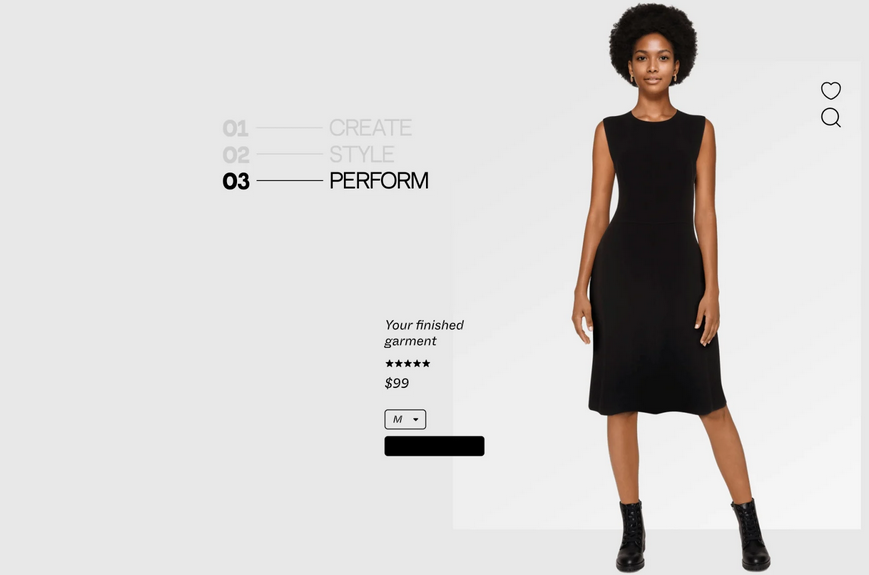
This person does not exist. Levi’s / Lalaland.ai via Engadget

Engadget‘s Will Shanklin also nails what’s going on – writing: “Although that sounds noble on the surface, Levi’s is essentially hiring a robot to generate the appearance of diversity while ridding itself of the burden of paying human beings who represent the qualities it wants to be associated with its brand.”

Levi Strauss is partnering with Amsterdam-based digital model studio Lalaland.ai for the initiative. Founded in 2019, the company’s mission is “to see more representation in the fashion industry” and “create an inclusive, sustainable, and diverse design chain.” It aims to let customers see what various fashion items would look like on a person who looks like them via “hyper-realistic” models “of every body type, age, size and skin tone.

The branding is just as woke, with the clothing designer claiming that the partnership is about “increasing the number and diversity of our models for our products in a sustainable way,” adding “We see fashion and technology as both an art and a science, and we’re thrilled to be partnering with Lalaland.ai, a company with such high-quality technology that can help us continue on our journey for a more diverse and inclusive customer experience.”

According to the company, “AI will likely never fully replace human models for us.”

As Shanklin opines in closing;

I can’t help but see this as the first step in a dystopian slow walk toward automating the industry. As AI-generated “photography,” art and writing grow ever more convincing, we would be naive to take corporations at face value when they insist moves like this are about PR-friendly principles like celebrating diversity and looking out for the environment. At the very least, it’s awfully convenient that those high-minded motives also let them mass-produce something that previously required hiring people.

Meanwhile, Levi Strauss is reportedly cutting nearly 20% of its workforce in a process which began last year as part of a restructuring plan to save $75 to $100 million per year.

Tyler Durden
Wed, 03/29/2023 – 23:20

via ZeroHedge News https://ift.tt/li52Ba7 Tyler Durden