Man Stranded In Oregon Wilderness Uses Drone To Call For Help

Man Stranded In Oregon Wilderness Uses Drone To Call For Help

A sheriff’s office in Oregon reported a man was stranded in Willamette National Forest due to heavy snowfall. He was stuck on a stretch of roadway with no cellphone service and decided to use his drone to call for help. 

In a Facebook post, the Lane County Sheriff’s Search and Rescue detailed the man attached his smartphone to a drone. He typed out a message to a friend. When he hit send, he launched the drone hundreds of feet into the air. After several tries, the phone connected to a nearby cell tower, and the message was sent. 

“The increased elevation allowed his phone to connect to a tower and send the message, which resulted in our teams being deployed and assisting him out of his situation,” the search and rescue team wrote.

Here’s more on the out-of-the-box, or rather over-the-box, thinking that saved this man’s life. 

Recently Lane County Sheriff’s Search and Rescue responded to an all-too-familiar mission, but with a unique twist.

A motorist had attempted to traverse a remote road in the U.S. Forest Service – Willamette National Forest that is not maintained for winter travel. His vehicle became stuck in the snow and he did not have cell service to call for help (cell reception is very limited in many forested areas of Lane County). Making his situation worse, his family was out of the country and nobody knew where he had gone or to call for help if he didn’t make it home.

Regardless of the circumstances leading to his situation, once stranded this person made several smart decisions. First, he stayed with his vehicle. Rarely does anyone in Oregon die from exposure waiting in their vehicle to be found and rescued, but we have unfortunately seen many poor outcomes from those who chose to walk away. Second, he used some ingenuity to find a way to call for help. The man had a drone with him and attached his cell phone to the drone. He then typed a text message to a trusted person describing his situation and exact location, hit send, and launched the drone several hundred feet into the air. The increased elevation allowed his phone to connect to a tower and send the message, which resulted in our teams being deployed and assisting him out of his situation.

While our teams were rescuing this person, another motorist who had also been stranded nearby in the snow for multiple days was located and rescued.

We are happy with the outcome of this call for service, and impressed with the creatively displayed to call for help, but we would like to take this opportunity to ask everyone to help us spread some important winter travel safety messages:

1) Forest Roads are not maintained for winter travel. Any attempt to travel on unmaintained snow or ice covered roads (no matter how much or little) should only be made with a group of well-equipped vehicles. If one vehicle becomes stuck, the other vehicles can attempt to free the stuck vehicle or can turn around and be used to drive everyone back to safety.

2) Always tell a responsible person EXACTLY where you are going, and when you expect to be back. Do not deviate from this plan. If a road becomes unpassable, turn around and go back the way you came, do not attempt a detour without first updating your plan with your emergency contact.

3) Of the dozens of missions we have had this winter involving a vehicle stuck in the snow, nearly all of them were 4×4 vehicles and almost all of the drivers told us “I didn’t think I would get stuck.” Instead of asking yourself whether you think you can get through a section of road, ask yourself “What will happen if I do get stuck?” If you (and the group of other vehicles you are traveling with) are not prepared to deal with any of the possible outcomes from an attempt, turn around and go back the way you came.

Full story here.

Tyler Durden
Mon, 03/06/2023 – 21:20

via ZeroHedge News https://ift.tt/8hrIsfg Tyler Durden

Prepared For The Worst, Survival Shelter Companies Waiting For Collapse Of Society

Prepared For The Worst, Survival Shelter Companies Waiting For Collapse Of Society

Authored by Allen Stein via The Epoch Times,

Set against a rocky slope, Fortitude Ranch resembles almost any other desert grange scattered along the barren highway in northwestern Nevada, far from any city or town.

On this 174-acre privately owned spread are free-roaming cattle, pens for raising sheep and chickens, a main house, and other living quarters under construction.

The ranch has good soil for growing crops, fruit-bearing trees, natural springs for gardening and livestock, and austere, rolling mountains on either side of the highway for cover.

Here, the resemblance ends.

The new Viking Lodge survival shelter is a work in progress at Fortitude Ranch Nevada on March 2, 2023. (Allan Stein/The Epoch Times)

Fortitude Ranch is anything but your typical farmstead. Its founder, Drew Miller, said its purpose is to ensure the safety of its inhabitants during a societal disintegration.

“Our design is to survive any collapse,” Miller said.

“We define a collapse as no functioning economy and widespread loss of law and order.”

It could take any form: a bird flu pandemic with heavy casualties, an economic depression, a world war, or global famine resulting in civil unrest and death.

A Question of Survival

During such a scenario, Miller said, “some people will just stay at home and starve to death.”

Others won’t go quietly into the twilight of civilization.

“A lot of people will say, ‘You know what? I will go out and steal food from my neighbor and do what I can to keep my family alive.”

A view of the desert scape from the windows of survival housing under construction at Fortitude Ranch Nevada on March 2, 2023. (Allan Stein/The Epoch Times)

Miller said this group poses a significant risk to the prepared.

Today, only some people feel the urgency to stock up against these terrifying scenarios or even think about them, said Miller, who started building survival ranches in 2012 as the need became more apparent.

Back then, the notion of preparing for a collapse of civil society still carried the stigma of tin foil hats and conspiracy theories.

The television series “Doomsday Preppers” further tarnished the image of “preppers” for years.

Miller, a former U.S. Air Force colonel, said a decade ago, people either smirked or turned away whenever he mentioned prepping.

That was then.

After the COVID-19 lockdowns and urban riots of 2020, the power substation attacks of 2022, the possibility of looming war with Russia—and China—and toxic chemical spills in 2023, hardly anyone is smirking now.

“People get it now. There’s much more recognition that you need to prepare for the fragile electric grid. For the avian flu contagion—and bad people,” Miller said.
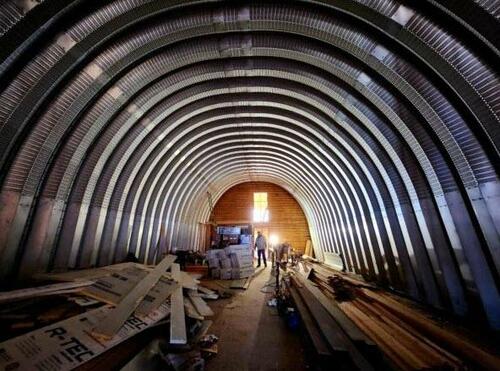
Jason, a carpenter at Fortitude Ranch Nevada, works on a section of a new section of survival shelters on March 2, 2023. (Allan Stein/The Epoch Times)

“We tell our members there’s a chance a collapse could be something they haven’t even considered.”

The company lists 50 known triggers for a societal collapse on its website, taking each one seriously as its likelihood increases with each passing year.

Miller said the probability of an unexpected “black swan” event occurring this year is anywhere from 1 and 21 percent based on current trends and models.

Network of Like-Minded Survivors

The purpose of Fortitude Ranch is to meet the challenge through a network of survival communities with close to 500 members across the United States.

Miller sees it as a work in progress with five discreet corporate locations and a sixth survival ranch franchise.

He envisions as many as 100 nationwide franchises to keep pace with the demand.

From a survival standpoint, Fortitude Ranch is less costly than going alone, Miller said, because “you’ve got a survival community to share the cost.”

“We’ve got the staff. We’ve got the facilities. When our members show up in a collapse, all they have to do is follow directions.”

However, Fortitude Ranch is not geared toward the well-to-do. Its target membership is the middle class.

Ranch manager Brandon M stands in front of the new survival shelter lodge at Fortitude Ranch Nevada on March 2, 2023. (Allan Stein/The Epoch Times)

While yearly dues are low (about $1,000 per person), amenities are substantial and guaranteed to ride out the collapse in comfort and safety, Miller said.

“We are affordable because of large numbers of members and economies of scale. Fortitude Ranch is attractive to join because it is a recreation/vacation facility as well,” according to the company’s website.

Each ranch setup has a basic fortified shelter design that varies by location.

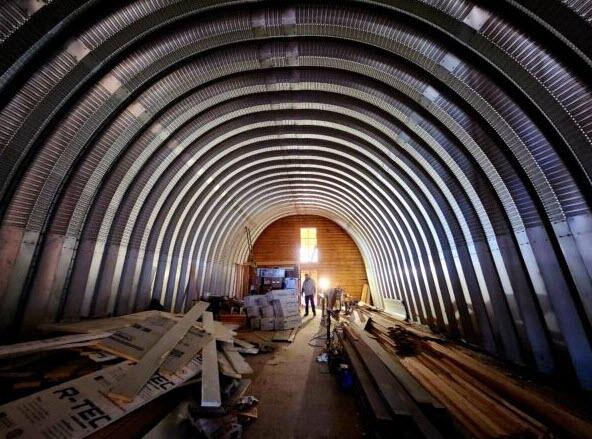
There are log-cabin-style living quarters and below-ground configurations made with corrugated steel, including shared spaces, quarantine buildings, recreational areas, and guard posts.

The simplicity of each location’s design is the key to its efficiency, Miller said.

“That’s why we formed Fortitude Ranch. Our system is for the middle class. We have plywood bunk beds in some of the rooms. It’s not fancy. We’ve got some nice digs, but many of our rooms are called Spartan rooms.”

“We don’t give out our locations because it upsets our members,” Miller told The Epoch Times, but “if you’re alive in a collapse, they will find you. You cannot hide. You’ve got to be able to protect yourself.”
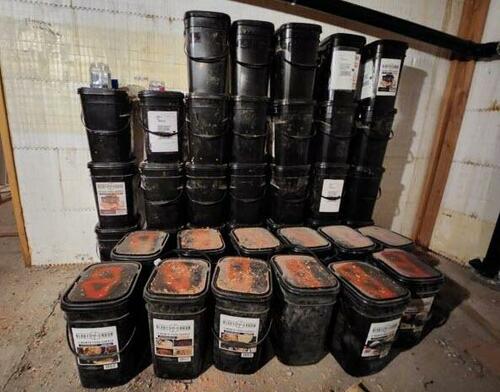
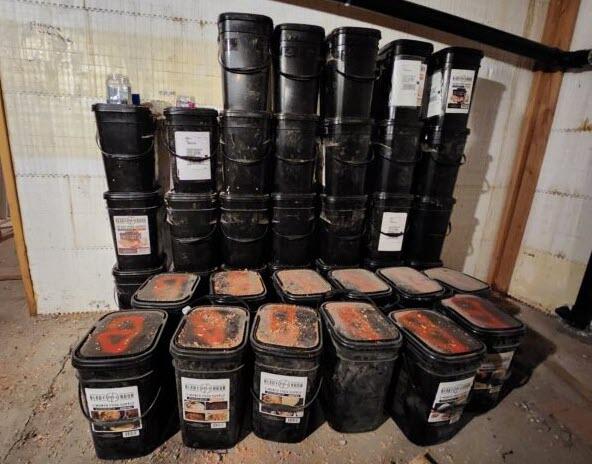
Buckets of long-term survival food are stacked against the basement wall at Fortitude Ranch Nevada on March 2, 2023. (Allan Stein/The Epoch Times)

The rule is safety in numbers and armed security around the clock. When it’s time to “bug out,” members will arrive with extra food, guns, and ammunition.

“Hopefully before the collapse occurs—if the collapse occurs—we tell them don’t wait for a warning,” Miller said. “If you can’t contact us—that’s a good clue.”

At Fortitude Ranch in Nevada, Brandon M said the facility has everything an individual or family would need to survive following a general collapse.

“We’ve got over a year’s worth of food for more members than we have,” Brandon said. “That gives us time to have our agriculture and crops in place. We’ve also got our livestock.”

The ranch, built in 2020, is operational with solar and gas-powered generators for off-grid living. Brandon is the full-time manager, and Heather is his new assistant. Jason is a carpenter, helping construct the new Viking Lodge overlooking the ranch.

“I’ve been to some of the ranches. [Fortitude Ranch Nevada] is probably my favorite from a strategic standpoint,” Brandon said. “You have a lot of high points, but you don’t have a lot of trees, which can be a disadvantage as far as not having wood. The advantage is to see who’s coming at you.”

Ranch manager Brandon M stands in the middle of a new room under construction at Fortitude Ranch Nevada on March 2, 2023. (Allan Stein/The Epoch Times)

Brandon, now retired from the military, said the political climate in America has become more unstable and divided.

“I was looking to find a place with like-minded [people]. I realized I couldn’t do it alone,” he said.

After a decade serving in the Air Force, Heather said she found Fortitude Ranch online and applied for a job. She’s been out here for about three weeks and has enjoyed her experience.

“I like this because it’s more realistic. I don’t know if you even think about luxuries—water, food, and shelter. Those are the priorities. I think everybody should be concerned [about a societal collapse]. Not like fear—just aware,” Heather said.

The new Viking Lodge features a pair of log cabins joined with a corrugated steel enclosure to provide even more living space when complete. The ranch also has a small medical clinic, a workshop, and a practice firing range.

“We’re still building. We’re always building as we keep adding members,” Brandon told The Epoch Times. “Once we finish the Viking Lodge, we could easily have 200 [people].”

“Like right now, I’m working on rooms for paid members. It was just me out here for a long time, so it was slow. I don’t mind it; I like the isolation. You can’t just run to the store and grab some cough medicine.”

Fortitude Ranch Nevada manager Brandon M demonstrates a ham radio on March 2, 2023. (Allan Stein/The Epoch Times)

Brandon said Fortitude Ranch offers good protection against thieves and roaming bands of marauders. Given its remote location, finding the ranch wouldn’t be easy for the hungry and desperate following a collapse in the city.

“Being this far out here, nobody will want to waste calories walking and not even knowing what you’ll find,” Brandon said. “North of us, there isn’t anything for 30 miles.”

The ranch currently has more than 50 members, and everyone will have a job to do when they arrive, as determined by their skill set.

Brandon said two members are medical professionals. There are engineers and teachers as well.

One member is a culinary chef. The oldest member is 90.

“We’ve got big families, small families, individuals—all kinds of political backgrounds. Right and left. You’d think it would be all right [leaning]. We do have some [left-leaning] people. We’re getting more and more,” Brandon said.

“It’s like any other community. When civilization started, people had to come together in some way. It comes down to this: are the things that unite you stronger than those that divide you?

The medical clinic is fully stocked at Fortitude Ranch Nevada on March 2, 2023. (Allan Stein/The Epoch Times)

The medical clinic at Fortitude Ranch Nevada includes a single bed on March 2, 2023. (Allan Stein/The Epoch Times)

The nearest town is about a half-hour drive south. Brandon said some people suspected a nearby survival community whenever he shops for supplies. They’ll spot him at the supermarket, loading 20 bags of beans and 20 bags of rice into a cart.

Sometimes, they’ll ask him questions.

“I’ll make a joke. I don’t talk about what we are or where we are. They think you’re from a restaurant,” Brandon said.

Rebuilding Society

In the main house at Fortitude Ranch are furnished rooms with beds, fresh linen, and other amenities. The ranch guarantees a daily minimum of 2,000 calories for one year for each member.

However, some members prefer to stock their own food for long-term storage.

Brandon said members are serious about their preparations as national and global tensions worsen.

“A lot of them will come out here and store stuff. They’re constantly asking me how we are doing, where are we at.”

Fortitude Ranch Nevada manager Brandon M enters the work shed where gardening supplies are kept on March 2, 2023. (Allan Stein/The Epoch Times)

Members receive a monthly online newsletter to stay informed. So when the critical moment arrives, they will know what to do.

“It’s just about bringing communities back to what they once were,” Jason told The Epoch Times. “We’re trying to get people to work together in an environment to sustain themselves from anything.

“The template was there back in the day. It’s a winning model that works for everybody.”

Believing “history repeats itself” and collapse is inevitable, Jason said the sooner members work as a community, the sooner they can help to rebuild society.

“We’ve seen this before, and we’ll see it again. The probability of biological attacks is the norm right now,” Jason said.

Brandon said the collapse of society would look different than what people expect or imagine.

“You saw the rioting with [Hurricane] Katrina. This time will be on a much bigger scale.”
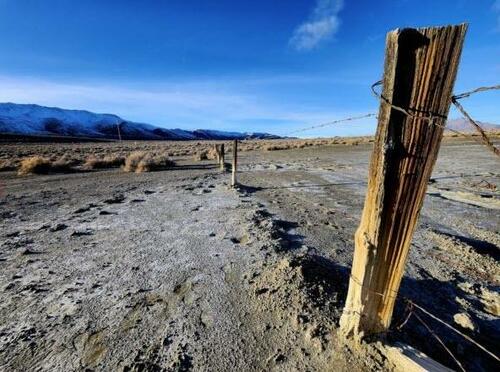
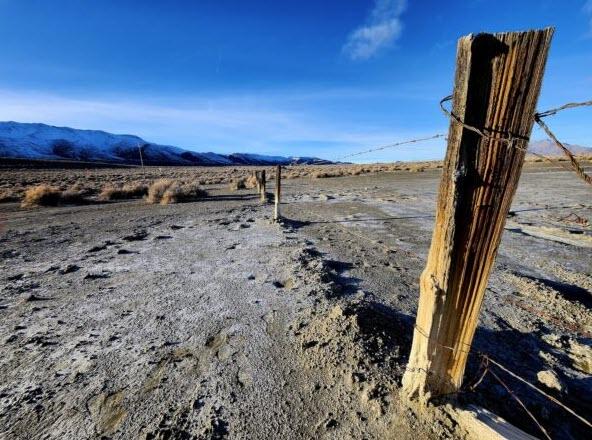
A barren lake bed stretches for miles on the way to Fortitude Ranch Nevada. Below, manager Brandon M walks along the dirt road to the main ranch house on March 2, 2023. (Allan Stein/The Epoch Times)

“It’s going to suck,” Brandon said, as people long to go back to life before the collapse.

“When we get knocked back into the Stone Age, you’re going to have a lot of unhappy people,” he said.

Jason added, “People will get caught where they don’t want to be. That’s the beauty of being a member [of Fortitude Ranch].”

Living Large Post-Apocalypse

Located in central Kansas, Survival Condos is a former missile silo turned into a luxury survival shelter on the higher end of the affordability spectrum.

Developer Larry Hall considers the project life-affirming in a world gone further off the deep end.

“For me, I took an intercontinental ballistic missile site that used to have a weapon of mass destruction designed to kill hundreds of thousands of people. I turned it into the complete opposite,” Hall said.

“It’s now a green facility, state-of-art technology that protects families.”

Fortitude Ranch Nevada is located in a remote northwestern part of the state, far from any city or town on March 2, 2023. (Allan Stein/The Epoch Times)

He admits the condos are expensive. A 3,600-square-foot Penthouse unit starts at $4.5 million. A full-floor unit measuring 1,840 square feet costs $3 million, and a half-floor condo runs about $1.5 million.

“People buy what they can afford and what they perceive they need protection from,” Hall told The Epoch Times.

“I decided there was a missing niche market in the luxury high-end bunker where people didn’t know how long they’d need a bunker.”

Hall said before COVID-19, people used to scoff at survival shelters as a fringe market demographic.

The question was always, “What are the chances of society collapsing?”

Then came the lockdowns, the urban riots, and the general chaos in 2020.

Hall said the events of the past three years have only vindicated the preparedness mindset. Survival Condo is now considered the “Gold Standard” for survival shelters.

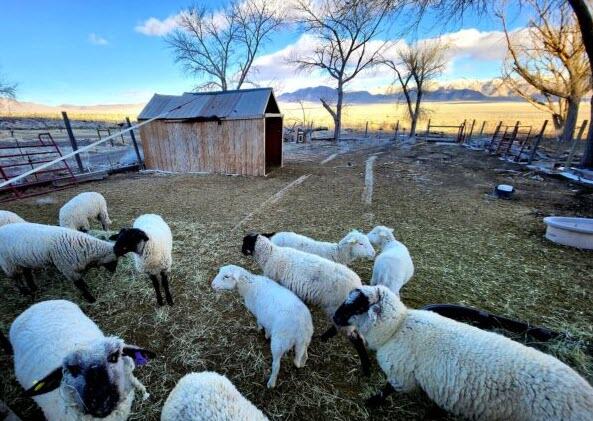
Raising sheep is one of the main activities at Fortitude Ranch Nevada on March 2, 2023. (Allan Stein/The Epoch Times)

“I never get asked that question [will society collapse] anymore,” Hall said. “You’ve pretty much become mainstream. People realize the value of having a hardened property to go to and that extra degree of safety.”

He said Survival Condo’s purpose is to make sure that clients will survive the collapse and thrive in the process.

To that end, Survival Condo hired a psychologist to aid in the project design for extended off-grid living. The psychologist looked at basic human physical and emotional needs—from the need for optimum lighting and color schemes to foster a positive mood, better food quality to improve personal satisfaction, and recreational activities to keep tenants happy and fit.

“The single thing you need to have to keep people from going stir crazy—what people call cabin fever—is to have a good quality of food,” Hall said.

The original complex held 72 silos. Hall bought two silos with options to purchase another four, built out the first silo, and is working on completing the second.

An aerial view of the dome as it is built over the existing missile silo at Survival Condo in central Kansas. (Courtesy of Survival Condo)

The finished silo is 15 stories tall and built with a military-grade redundant air filtration system to handle nuclear, chemical, and biological attacks. The facility has redundant power sources and more than 20,000 square feet of floor space under the dome.

Each fully furnished condo unit has a biometric key entry. Other high-end amenities include a custom theater, bar and lounge, a library, indoor swimming pool and spa, workout facility, command and control center, hydroponic gardens, a medical first-aid clinic, a digital weather station, and homeschooling classrooms.

Hall said there’s a long waiting list for units when they become available.

“Ours is way up at the top for a reason—military-grade everything with high engineering,” Hall said. “The book has done everything with very tough standards.”

“We’re constantly keeping the place in a state of readiness. We could scale it up if we needed to be here for an extended time.”

The interior floor plan for Survival Condo, a former intercontinental ballistic missile silo turned condominium in central Kansas. (Courtesy of Survival Condo)

That time now appears close as the Doomsday Clock of the Bulletin of Atomic Scientists stands 90 seconds away from midnight.

Whether a natural or man-made disaster is on the horizon—”pick a poison,” Hall said. “All result in one common denominator, and that’s civil unrest.

“People are afraid and trying to get by and survive. So, ultimately, you need something where you can sleep with both eyes closed and don’t have to worry about a gang of MS-13 guys kicking in your door.”

“The whole thing is you have a place designed to protect families,” Hall said. “We’ve got a facility that can do that. We’re not out to muck with anybody. We want to be out of sight and mind, do our best to survive, not burden society, and take care of ourselves.”

Miller, at Fortitude Ranch, said the demand for survival ranch franchises has been growing exponentially.

“We’re going like mad now through franchising. We’ll double our number of locations this year. It could take off even more,” Miller said.

A furnished condominium at Survival Condo in central Kansas. (Courtesy of Survival Condo)

But even with 100 new franchise locations, “that’s still a tiny percentage of the population,” he said. “We’re not even close to handling 1 percent of the population.”

Miller said people owe it to themselves and the future to survive the coming collapse as the opportunities to rebuild will be “phenomenal.”

“I hope the United States will recover and follow the Constitution. We don’t follow it today,” Miller said.

Tyler Durden
Mon, 03/06/2023 – 21:00

via ZeroHedge News https://ift.tt/QgeiavS Tyler Durden

Ferrari Named Top Car Pick Over Tesla At Morgan Stanley

Ferrari Named Top Car Pick Over Tesla At Morgan Stanley

Could the automobile love affair at Morgan Stanley be shifting?

Analyst Adam Jonas, long known for his affection of Tesla and Elon Musk, has penned a note to start this week introducing Ferrari as a top pick by the firm, which has raised its price target on the company to $310 from $280.

Jonas has an overweight rating on the name and called the company “the most defensive name in his coverage” that avoids much of the “EV hype and EV risk”, according to a Monday morning Bloomberg wrap-up.

“We believe RACE is the best positioned company in our coverage in a highly uncertain macroeconomic and geopolitical tape. In addition to its strong fundamentals, we believe RACE has levers to pull for both growth or downside protection, within a wide dispersion of macro outcomes,” Jonas and peers wrote in their note.

“Ferrari has built its moat on scarcity, desirability, and brand values around performance (“driving thrills”) and luxury which is the key driver for continued demand. These factors make it hard for a competitor to replicate the Ferrari model overnight. In our view, buying a Ferrari today is not so much about ‘the sound of the engine’ or the ‘performance’ in and of itself,” it continues.

“Rather, we think it is a totality of factors that drive customers to want the elements that a Ferrari possesses: scarcity, desirability, connotations of luxury and performance (stemming from Formula 1 racing pedigree),and exquisite Italian design and engineering. The brand and scarcity drive unprecedented demand for the vehicles, which Ferrari is able to leverage with tight supply control.”

Jonas also likes that Ferrari has the longest order backlog, greatest earnings visibility and highest pricing power of any of the companies he covers, the Bloomberg note also said. 

Long-term opportunities, a predictable business model and a “near unmatched brand and market moat” were cited as additional factors for the believe in Ferrari. 

Jonas wrote: “We believe investors over-estimate the risk of EVs to Ferrari and misprice the inherent opportunity in EVs coupled with continuing the ICE business on an exclusive basis with price points for ICE approaching $1mn/unit.” 

“The key concern we field from investors on RACE is the shift to EVs. Although the shift away from the ICE engine which has been at the heart of RACE’s brand since inception presents a profound shift in Ferrari’s powertrain technology, it need not threaten the company’s DNA. We believe the engine is only part of the reason why Ferrari has been able to create one the strongest brands in the world,” it reads. 

The firm also didn’t seem to see risks of Ferrari shifting their model to EV from traditional ICE, concluding that Ferrari “can offer an EV that will be just as high in demand as what investors are used to from ICE.”

Broadly, however, Jonas is getting more cautious about the sector in general, citing the “rebound in equity prices and continuing signs of unaffordability and auto credit pressure”. 

Tyler Durden
Mon, 03/06/2023 – 20:40

via ZeroHedge News https://ift.tt/uf0Vi1M Tyler Durden

SPLC Attorney Among 23 ANTIFA Rioters Arrested On Domestic Terrorism Charges

SPLC Attorney Among 23 ANTIFA Rioters Arrested On Domestic Terrorism Charges

Submitted by Blue Apples

Since late January when a fatal shooting between Atlanta-area police and ANTIFA-affiliated broke out, Georgia’s capital has become ground zero of the continually fomenting hostilities from the radical leftist group. The tenuous situation saw that violence continue at the site of the Atlanta Public Safety Training Center. Under the pretense of a “mostly peaceful protest,” rioters unleashed their fury by destroying construction equipment at the site of where Georgia State Patrol Troopers had exchanged gunfire with protesters occupying the site in late January. The latest ANTIFA insurgency resulted in the arrest of 23 people on domestic terrorism charges.

One arrest in particular particularly sticks out. Thomas Webb Jurgens was one of the 23 arrested on Sunday according to DeKalb County arrest records. Jurgens arrest is notable because he is a staff attorney at the Decatur, Georgia office of the Southern Povery Law Center. Ironically, the SPLC have cultivated a partnership with state and federal law enforcement across the United States to designate and investigate extremists groups like those engaged in domestic terrorism across the country. Now, they are in a position where it’s difficult to unequivocally deny the criticism levied against them that their own members qualify to be designated among those ranks.

According to Jurgens LinkedIn page, he joined the SPLC in September 2021 as a new hire to its Economic Justice Project. He presently is admitted to both the Georgia and Florida state bar associations. Jurgens had graduated with his Juris Doctor from the University of Georgia School of Law, the campus of which is located in Athens, Georgia. The campus is just 60 miles from Atlanta where he was arrested.

The Atlanta Police department detailed how the events leading to Jurgens arrest unfolded. Those arrested initially convened under the cover of gathering for a protest before events turned violent. “They changed into black clothing and entered the construction area and began to throw large rocks, bricks, Molotov cocktails, and fireworks at police officers.” according to Atlanta police who responded to the scene of the crimes. Footage released by the police department shows approximately 150 masked rioters breaking into the construction site. 35 were detained in total, with 23 already being charged and the potential charges looming for the remaining 12.

Fortunately, unlike the police engagement in January, the events from Sunday evening went without any serious injuries or fatalities. No indication that any of the arrested ANTIFA supporters were armed with a firearm has arisen yet either. Despite that outcomes, Atlanta police aren’t viewing that good fortune as an auspice of what lies ahead. Officials cataloged Sunday night’s arrests as a catalyst for reactionary violence in the coming days. Police department officials forewarned “with protests planned for the coming days, the Atlanta Police Department, in collaboration with law enforcement partners, have a multi-layered strategy that includes reaction and arrest.”

Following violence during the “Night of Rage” ANTIFA organized in response to January’s shooting, Georgia Governor Brian P. Kemp issued a response indicating that state prosecutors would execute a new strategy to prosecuted rioters under domestic terrorism charges. Kemp’s Attorney General, Chris Carr announced his office’s intention to continue to pursue sweeping indictments against ANTIFA members for domestic terrorism continuing to riot. Carr also took the media to task for categorizing ANTIFA members as protesters. The arrest of 23 more ANTIFA rioters, including the SPLC’s Thomas Jurgens, conveys the commitment to a concerted effort between Georgia’s law enforcement and attorney general’s office to prosecute rioters to the furthest extent of the law.

The SPLC could not be reached for comment and has released no official statement regarding Jurgens arrest. In addition to domestic terrorism charges, Jurgens faces potential discipline from the bar associations he is admitted to in Georgia and Florida which could result in the loss of his license to practice law. The revelation of his arrest should also be cause for law enforcement officials around the country to reassess their working relationship with the SPLC. If Jurgens arrest says anything about the non-profit, it’s that their offices are a place where hate groups are apparently being cultivated instead of persecuted.

Tyler Durden
Mon, 03/06/2023 – 20:20

via ZeroHedge News https://ift.tt/Cchg7PS Tyler Durden

Russia Successfully Dodging Sanctions To Secure Semiconductors For Military Tech

Russia Successfully Dodging Sanctions To Secure Semiconductors For Military Tech

One astute geopolitical blog has issued a report exploring the many ways which sanctions on Russia have come back to bite their issuers. The same author had also clearly one year ago predicted precisely the scenario unfolding now.

Over the weekend, Bloomberg explored another key area where President Putin has been given a lifeline via third party countries such as Turkey, China the UAE, Kazakhstan and Serbia when it comes to semiconductors which are vital to military tech and other industries.

Source: Bloomberg

Bloomberg writes that “Russia looks to be successfully working around European Union and Group of Seven sanctions to secure crucial semiconductors and other technologies for its war in Ukraine, according to a senior European diplomat.”

Citing the source, the report continues: “Russian imports in general have largely returned to their pre-war 2020 levels and analysis of trade data suggests that advanced chips and integrated circuits made in the EU and other allied nations are being shipped to Russia through third countries such as Turkey, the United Arab Emirates and Kazakhstan, the diplomat said, pointing to those private assessments.”

This despite sweeping EU sanctions and restrictions impacting hundreds of items, including crucial technologies, meant to cripple the Russian economy and its the defense sector in particular.

Russia’s sources of imported chips before the war and before sanctions (2017-July 2021)

As for China, Bloomberg observes: 

Shipments from China to Russia have also surged as Beijing plays an increasingly important role in supplying Moscow, the diplomat added, asking not to be named discussing sensitive information. Those countries outside the EU haven’t sanctioned Russia themselves, but most have repeatedly denied they are helping the Kremlin.

Russian does actually produce domestic semiconductors; however, it’s long been known that government agencies and large private companies often refuse to use them due to their low quality and the manufacturer’s inability to keep pace with technological demands.

Tyler Durden
Mon, 03/06/2023 – 20:00

via ZeroHedge News https://ift.tt/IEXwm84 Tyler Durden

Where Did All the English Majors Go?

One of the latest articles about higher education in The New Yorker is “The End of the English Major,” by Nathan Heller. It analyzes the precipitous decline in college students who choose to major in English, as well as the broader decline in enrollment in the humanities.

The crisis, when it came, arrived so quickly that its scale was hard to recognize at first. From 2012 to the start of the pandemic, the number of English majors on campus at Arizona State University fell from nine hundred and fifty-three to five hundred and seventy-eight. Records indicate that the number of graduated language and literature majors decreased by roughly half, as did the number of history majors. Women’s studies lost eighty per cent. . . .

the decline at A.S.U. is not anomalous. According to Robert Townsend, the co-director of the American Academy of Arts and Sciences’ Humanities Indicators project, which collects data uniformly but not always identically to internal enrollment figures, from 2012 to 2020 the number of graduated humanities majors at Ohio State’s main campus fell by forty-six per cent. Tufts lost nearly fifty per cent of its humanities majors, and Boston University lost forty-two. Notre Dame ended up with half as many as it started with, while suny Albany lost almost three-quarters. Vassar and Bates—standard-bearing liberal-arts colleges—saw their numbers of humanities majors fall by nearly half. In 2018, the University of Wisconsin at Stevens Point briefly considered eliminating thirteen majors, including English, history, and philosophy, for want of pupils.

During the past decade, the study of English and history at the collegiate level has fallen by a full third. Humanities enrollment in the United States has declined over all by seventeen per cent, Townsend found. What’s going on?

No doubt there are a range of variables that have influenced these trends, including incrasing demand for majors that lead directly to careers. But it is also possible that trends within the humanities themselves, and English in particular, bear some of the blame.

[Some] suggest that the humanities’ loss of cultural capital has been hastened by the path of humanities scholarship itself. One theory is that the critical practices have become too specialized. Once, in college, you might have studied “Mansfield Park” by looking closely at its form, references, style, and special marks of authorial genius—the way Vladimir Nabokov famously taught the novel, and an intensification of the way a reader on the subway experiences the book. Now you might write a paper about how the text enacts a tension by both constructing and subtly undermining the imperial patriarchy through its descriptions of landscape. What does this have to do with how most humans read? Rita Felski, whose book “Uses of Literature” is studied in Adams’s A.S.U. class, has argued that the professional practice of scholarship has become self-defeatingly disdainful of moving literary encounters. “In retrospect, much of the grand theory of the last three decades now looks like the last gasp of an Enlightenment tradition of rois philosophes persuaded that the realm of speculative thought would absolve them of the shameful ordinariness of a messy, mundane, error-prone existence,” she wrote. “Contemporary critics pride themselves on their power to disenchant.” The disenchantment, at least, has reached students.

Intrestingly enough, the decline in enrollments has not been uniform. There are some redoubts where students still flock to such courses.

Bring back the awe, some say, and students will follow. “In my department, the author is very much alive!” Robert Faggen, a Robert Frost scholar and a longtime literature professor at Claremont McKenna, told me, to account for the still healthy enrollment he sees there. (There are institutional outliers to the recent trend of enrollment decline; the most prominent is U.C. Berkeley.) “We are very concerned with the beauty of things, with aesthetics, and ultimately with judgment about the value of works of art. I think there is a hunger among students for the thrill that comes from truth and beauty.”

Perhaps therein lies a lesson.

English is not the only humanities subject for which there appears to be flagging interest—and it is not the only humanities subject that has discarded the subjects and inquiries that once fueled great interest in favor of modish theoretical inquiries or endless forms of oppression studies. Perhaps there is a connection. Perhaps declining enrollments are a market response to the gradual abandonment of the core of a great liberal education. Whether they articulate it or not, perhaps students have concluded that if they are not going to get a real education, at least they should be able to get a job.


The post Where Did All the English Majors Go? appeared first on Reason.com.

from Latest https://ift.tt/XcMYox5
via IFTTT

Victor Davis Hanson: Life Among The Ruins

Victor Davis Hanson: Life Among The Ruins

Authored by Victor Davis Hanson via AmGreatness.com,

American society is facing three existential crises not unlike those that overcame the late Roman, and a millennium later, terminal Byzantine, empires.

Premodern Barbarism

We are suffering an epidemic of premodern barbarism. The signs unfortunately appear everywhere. Over half a million homeless people crowd our big-city downtowns.

Most know the result of such Medieval street living is unhealthy, violent, and lethal for all concerned. Yet no one knows—or even seems to worry about—how to stop it.

So public defecation, urination, fornication, and injection continue unabated. Progressive urban pedestrians pass by holding their noses, averting their gazes, and accelerating the pace of their walking. The greenest generation in history allows its sidewalks to become pre-civilizational sewers. In a very brief time, we all but have destroyed the downtowns of our major cities—which will increasingly become vacant in a manner like the 6th-century A.D. Roman forum.

All accept that defunding the police, no-cash bail, Soros-funded district attorneys, and radical changes in jurisprudence have destroyed deterrence. The only dividend is the unleashing of a criminal class to smash-and-grab, carjack, steal, burglarize, execute, and assault—with de facto immunity. Instead we are sometimes lectured that looting is not a crime, but lengthy incarceration is criminally immoral.

We have redefined felonies as misdemeanors warranting no punishment. Misdemeanors are now infractions that are not criminal. Infractions we treat as lifestyle choices. Normality, not criminality, is deemed criminal. We all know this will not work, but still wonder why it continues.

Many among the middle classes of our cities who can flee or move, do so—like 5th-century equestrians who left Rome for rural fortified farms before the onslaught of the Ostrogoths and Visigoths. For most of our lives we were lectured that the old southern states—Florida, Tennessee, Texas—were backward and uninviting. Now even liberals often flee to them, leaving behind supposedly cosmopolitan Seattle, Portland, San Francisco, Chicago, Baltimore, and New York. The more people leave the blue states, the more those states praise themselves as utopian.

The less well-off, without the means to leave, hope that their environs have hit bottom so things can only improve. The elite who caused this premodern catastrophe assumes they will always have the money and wherewithal to ensure that themselves and their own can navigate around or even profit from the barbarism they unleashed. For them the critic, not the target of criticism, is the greater threat.

The hard urban work of the 1990s and early 2000s—cleaner, safer subways, secure nightlife downtown, clean sidewalks, low vacancy rates, little vagrancy, and litter-free streets—so often has been undone, deliberately so. We are descending to the late 1960s and 1970s wild streets—if we are lucky the mayhem does not devolve even further.

A mere 10 years ago, if an American learned that a man was arrested for clubbing, robbing, or shooting innocents, and yet would be released from custody that day of his crime, he would have thought it an obscenity. Now he fears that often the criminal will not even be arrested.

A once secure border no longer exists. Joe Biden and Alejandro Mayorkas simply demolished it and allowed 6-7 million foreign nationals to cross illegally into the United States without audits—to the delight of their apparent constituent, President Andrés Manuel López Obrador.

What would shame a Biden or Mayorkas? What would change their minds? Billions of dollars spent on social services for the lawbreaking at the expense of the American poor?

Would 100,000 annual lethal overdoses—12 times more than those who died over 20 years in Iraq and Afghanistan combined—from drugs that flow across the open border sway them? Or would it take 200,000, or 300,000 deaths before Joe Biden relented and ceased his chuckling?

What does a people do when its highest officials simply renounce their oaths of office and refuse to enforce laws they don’t like? Everyone knows the border will eventually have to become secure, but none have any idea whether it will take another 20, 30, or 50 million illegal entrants and 1 million more fentanyl deaths to close it.

Polls show race relations have hit historic lows. Much of the ecumenicalism of the post-Civil Rights movement seems squandered—almost deliberately so.

The Left now rarely mentions Martin Luther King, Jr. or even the historic Civil Rights Act of 1964. Perhaps it knows it has violated the spirit and legacy of both.

Today, our identity politics leaders believe that the color of our skin, not the content of our character, certainly matters more. The practitioners of the new tribalism in some sense fear outlawing segregation and discrimination by race. They know to do so would end racially restricted houses and safe spaces, racially exclusive graduations, and race-based admissions, hiring, and promotion on campus.

Read Professor Ibram X. Kendi and his message is implicit. For him, the problem with a Jim Crow-like system was not segregation or racial chauvinism per se, but merely who was doing the victimizing and who were the victims: so the original racism was bad; but racism in reverse is good.

We abhor violence, racism, and misogyny—in the abstract. Yet the entire hip-hop industry would find no audience—or so we are told by its appeasers—if rappers refrained from “ho” misogyny, brags of violence against law enforcement, and self-described proprietary use of the N-word.

Most know that young black males under 30 commit violent crimes at well over 10 times their 3-4 percent demographic of the population—so often victimizing the nonwhite. All know that reality must remain unmentionable even as its causes need to be debated and discussed if lives are to be saved. Yet the greater crime seems not the crime itself, but even mentioning crime.

Postmodern Abyss

Postmodernism in our age is deadlier even than premodernism. Sexually explicit drag shows that allow the attendance of children 20 years ago would have been outlawed—by liberals worried over the trauma of the young watching performance-art simulated sex.

Now the children come last and the performers first—as ratified by the same liberals. But to fathom the new transitioning, simply learn from ancient transitioning and gender dysphoria, an unhappy classical theme from Catullus’ Attis poem (stimulatus ibi furenti rabie, vagus/ devolsit ili acuto sibi pondera silice/ itaque ut relicta sensit sibi membra sine viro) to Giton in Petronius’ Satyricon.

Current “science” is now synonymous with ideology, religion, or superstition. Lockdowns, mRNA vaccinations, masking, transgenderism, “climate change,” and green power brook no dissent. They are declared scientifically correct in the manner that the sun used to revolve around the earth, and any dissenting Galileo or Copernicus is cancel-cultured, doxxed, and deplatformed.

It is now verboten to cite the causes of the current upswing. We must remain silent about the classical exegeses that cults, pornography, and constructed sexual identities, when not biological, were the manifestations of a bored culture’s affluence (luxus), leisure (otium), and decadence (licentia/dissolutio).

The classical analyses of an elite collapse focus on a falling birth rate, a scarce labor force, ubiquitous abortion, an undermanned military, and a shrinking population. We suffer all that and perhaps more still.

Millions of young men are detached and ensconced in solitude, their indebted 20s too often consumed with video-gaming, internet surfing, or consumption of porn. Many  suffer from prolonged adolescence. Many assume that they are immune from criticism, given that the alternative of getting married, having children, finding a full-time job, and buying a house is society’s new abnormal.

Rarely has an elite society become so Victorian and yet so raunchy. A slip with an anachronistic “Gal” or “Honey” can get one fired. Meanwhile, grabbing one’s genitals while pregnant on stage before 120 million viewers is considered a successful Super Bowl extravaganza.

Our army is short of its annual recruitment by 25 percent. We all suspect but do not say out loud the cause. The stereotyping of poor and middle-class white males as both raging and biased, and yet expected yet to fight and die in misadventures in Afghanistan and Iraq, has finally convinced the parents of these 18-year-olds to say, “no more.”

Need we say anything about the lack of efficacy or morality of the Department of Justice, FBI, or CIA?

Or rather is there anything the FBI will not do?

Doctor court evidence? Hire Twitter to suppress the news? Monitor parents at school board meetings? Allow directors to lie under oath or “misremember” before Congress?

Swiping clean subpoenaed phones? Hiring fakers to compile dirt on a presidential candidate—and then using that known smear to hoodwink a judge to allow spying on Americans?

Suppressing evidence on a laptop to warp an election? Raiding an ex-president’s home with a SWAT-like team? Spying on Catholics in mass? Storming a home full of children of a man accused of a politically incorrect misdemeanor?

The more the military has been stalemated in Iraq, humiliated in Afghanistan, and dreading what China will soon do or what Iran will even sooner let off, the more it insists our priorities should be diversity, equity, and inclusion. Will that escapism ensure more lethal pilots, tank commanders, and Marine company commanders?

The mindsets of too many of our new generations of command are twofold: first to be promoted by virtue signaling woke policies that they must know eventually will hamper combat readiness, and then in the future to rotate at retirement into multimillionaire status by leveraging past expertise for defense contractors. Keep that in mind and almost every publicly uttered nonsense from our highest in the Pentagon makes perfect sense.

Them

There is a third challenge. Our enemies—illiberal, deadly, and vengeful—have concluded we are more effective critics of ourselves than are they. They enjoy our divided nation, torn apart by racial incivility, dysfunctional cities, and woke madness. (Notice how even the communists long ago dropped deadly Maoist wokeism, or how the Russians viewed the Soviet commissariat as antithetical to their military and economic agendas.)

Iran believes that this present generation of Americans would likely allow it to nuke Israel rather than stop its proliferation. China assumes that Taiwan is theirs and the only rub is how to destroy or absorb it without losing too many global markets and income. Russia  conjectures that the more we trumpet its impending defeat, the more it will destroy Eastern Ukraine and call such a desert peace.

Our “friends” can be as dangerous as our enemies.

A visitor from another world might conclude Mexico has done more damage to America than North Korea, Iran, and Russia combined. It has, by intent, flooded our border with 20 million illegal aliens. It has allowed cartels with Chinese help to conduct multibillion-dollar profiteering by killing 100,000 Americans per year (did the Kremlin ever match that tally in a half century of the Cold War?).

Mexico drains $60 billion from its expatriates on the expectation that American subsidies will free up their cash to be sent home. The more the cartels run wild, the more money trickles down—while their top drug enforcement official Genaro García Luna was found guilty in a New York courtroom  for collusion with the cartels.

How did all of this so quickly erode our great country? Our crisis was not the next generation of foreign Hitlers and Stalins. It was not earthquakes, floods, or even pandemics. It was not endemic poverty and want. It was not a meager inheritance from past generations of incompetents. Nor was it a dearth of natural resources or bounty.

Instead our catastrophe arose from our most highly educated, the wealthiest and most privileged in American history with the greatest sense of self-esteem and sanctimoniousness. Sometime around the millennium, they felt their genius could change human nature and bring an end to history—if only they had enough power to force hoi polloi to follow their abstract and bankrupt theories that they had no intention of abiding by themselves.

And then the few sowed the wind, and so the many now reap their whirlwind.

Tyler Durden
Mon, 03/06/2023 – 19:40

via ZeroHedge News https://ift.tt/3GRdqvB Tyler Durden

Pentagon Sees Chinese ‘Spy Cranes’ At US Ports As “Trojan Horse”

Pentagon Sees Chinese ‘Spy Cranes’ At US Ports As “Trojan Horse”

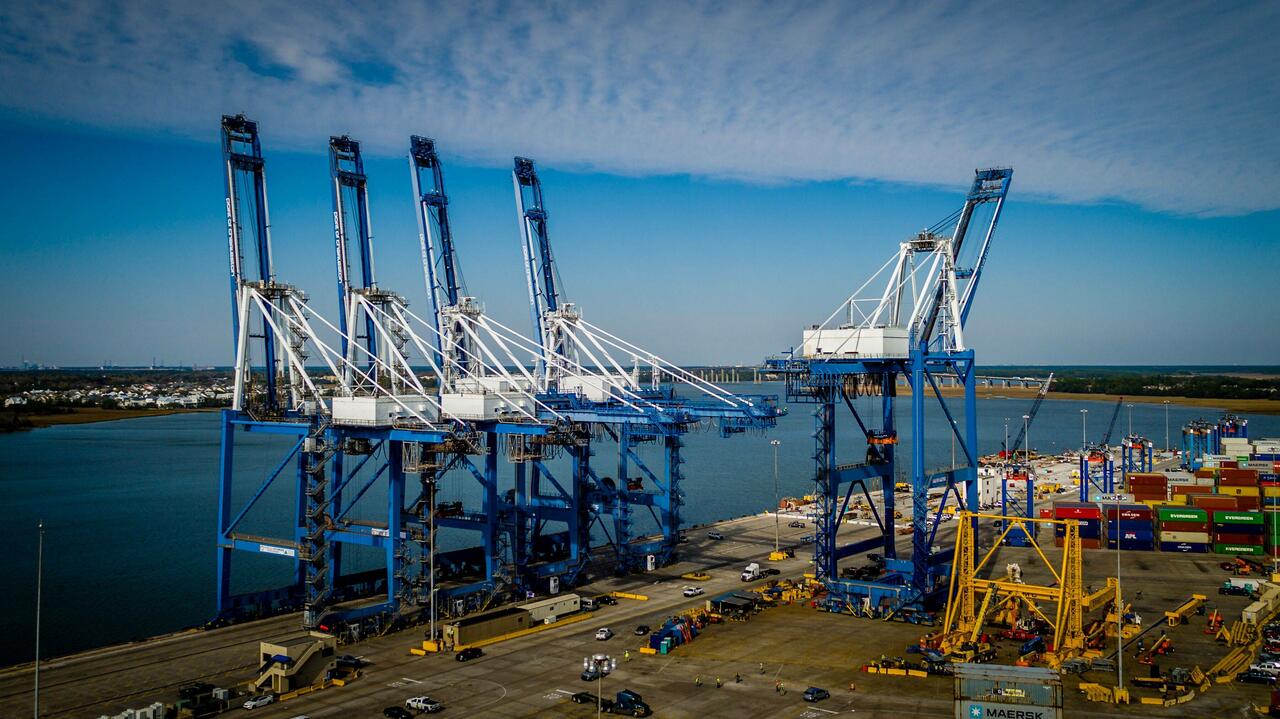
US officials have voiced concerns that Chinese-manufactured cranes operating at major US ports and various military bases may serve as a “Trojan horse” for Beijing’s intelligence-gathering program, The Wall Street Journal reported. 

According to national security and Pentagon officials, the ship-to-shore cranes, produced by China’s ZPMC, are equipped with advanced sensors capable of detecting and monitoring shipping containers, raising alarms that Beijing could gather intelligence about the materials being transported to or from the US ports or military bases. 

“Cranes can be the new Huawei,” Bill Evanina, a former top US counterintelligence official, told WSJ. US officials have banned Chinese telecom giant Huawei Technologies from US communication networks on fears of spying. And he said the extent of the spying goes beyond Huawei into other forms, such as cranes. 

“It’s the perfect combination of legitimate business that can also masquerade as clandestine intelligence collection,” Evanina said. 

A spokesperson from the Chinese Embassy in Washington said the new panic around cranes is “paranoia-driven” and an attempt to obstruct trade and economic cooperation with China. The person added:

“Playing the ‘China card’ and floating the ‘China threat’ theory is irresponsible and will harm the interests of the US itself.” 

The concerns about the alleged ‘spy’ cranes come after a recent dispute between the US and China regarding high-altitude balloons. In response to a recent spy balloon off the coast of South Carolina, the Biden administration deployed a stealth fighter that successfully shot down the balloon with a Sidewinder missile


Tyler Durden
Mon, 03/06/2023 – 19:20

via ZeroHedge News https://ift.tt/jh2kAsU Tyler Durden

Illinois Torched Business And Common Sense With Its Biometric Privacy Law

Illinois Torched Business And Common Sense With Its Biometric Privacy Law

By Mark Glennon of Wirepoints

How sadly ironic that White Castle became the latest victim of the Illinois General Assembly’s malfeasance. Its stores are modeled after the Chicago Water Tower, which survived the Chicago Fire and stands as a monument to the spirit of tenacity and resilience that once prevailed to rebuild the city.

Today, Mrs. O’Leary’s cow is the state’s own government. It set off what the law firm Mayer Brown rightly calls a “six-alarm fire for businesses with customers or employees in Illinois.”

BIPA, the Biometric Information Privacy Act, arises from a legitimate concern, as most laws do. In this case, it’s privacy of personal biometric information such as fingerprints, DNA and distinctive elements of things like face and retina features. Some of that data is used widely in the business world for things like time management, security, wellness programs and worker safety. The law requires informed consent prior to collecting the data, mandates protection and retention guidelines and bans profiting from selling the data.

That’s fine, but the problem is that the law imposes penalties wildly out of proportion to the seriousness of noncompliance or amount of harm done by a violation.

It can be a death penalty for violators. And the law allows anybody affected to sue for those fines.

That’s a firebomb recipe for personal injury lawyers. Nearly 2,000 lawsuits alleging violations of BIPA have been filed since 2017, “yielding a series of massive settlements and judgments,” as Reuters reported. Defendants have included Facebook, which paid $650 million to settle a BIPA class action and BNSF Railway Co, which a jury ordered to pay $228 million to truck drivers. Anybody thinking about suing enjoys a very generous five-year statute of limitations.

Then came last week’s decision on White Castle from the Illinois Supreme Court, pouring accelerant on the fire.

Separate BIPA violations occurred every time an employee used White Castle’s system that required its employees to scan their fingerprints to access their pay stubs and computers, the court ruled. And BIPA authorizes statutory damages of $1,000 for “each violation” of the statute, or $5,000 if the violation is intentional or reckless.

The top court’s decision therefore could mean a $17 billion liability for White Castle since some 9,500 current and past employees had used the system for years, as a dissenting opinion says, citing White Castle’s estimate. The court’s decision “could easily lead to annihilative liability for businesses,” says the dissent.

That’s what makes the decision terrifying for many other businesses that use biometrics. Every instance of use could mean a penalty of $1,000 or $5,000.

The decision “leaves the plaintiffs’ bar with an all-you-can-eat biometric café,” wrote the law firm Winston & Strawn in its newsletter.

A liability that big would destroy White Castle many times over. It’s not that big a company compared to many publicly owned food chains and is privately owned.

Sorry, said the majority of the court said in their opinion, the plain language of the statute required that result. If this needs to be fixed it’s up to the General Assembly. “Ultimately,” the majority opinion says, “we continue to believe that policy-based concerns about potentially excessive damage awards under the Act are best addressed by the legislature.”

That’s the real takeaway – the General Assembly should have fixed this long ago. The liabilities being imposed under BIPA have been burning out of control for several years, and the ruling making each instance subject to a penalty has long been feared, having percolated up through the courts for several years. Bills to fix it have languished.

The dissent argued that only one violation should be recognized for any employee for the first time fingerprints are collected, and that the law must have been intended that way.

Right or wrong, that’s now water under the bridge. The top court has ruled. Only the General Assembly can fix the statute.

One next potential victim of BIPA may be the cannabis industry, an increasingly important revenue force for the state, according to lawyers at Dentons U.S. “BIPA damages could be a death knell to cannabis operators,” they wrote, explaining,

The cannabis industry has placed a strong emphasis on security for grow facilities and dispensaries. These enhanced security measures are a must to protect employees handling largely cash transactions and customers purchasing a heavily regulated product.  But, in taking these reasonable security measures, the cannabis industry has opened itself up to litigation surrounding BIPA’s stringent requirements.

The majority opinion in White Castle’s case says, “We respectfully suggest that the legislature review these policy concerns and make clear its intent regarding the assessment of damages under the Act.”

That’s being too nice. Nobody should be “respectfully suggesting” anything to legislature about this. They should have fixed BIPA long ago. Fix it now.

In the meantime, any business touching Illinoisans in any way that uses biometrics should follow the advice of many lawyers: At least mitigate your exposure by immediately reviewing policies and practices related to biometric information to ensure BIPA compliance, including biometric use for employee timekeeping.

Tyler Durden
Mon, 03/06/2023 – 19:00

via ZeroHedge News https://ift.tt/bd0qpuk Tyler Durden

Luongo: The War For The Dollar Is Already Over, Part I

Luongo: The War For The Dollar Is Already Over, Part I

Authored by Tom Luongo via Gold, Goats, ‘n Guns blog,

And the Fed has won. In the words of Ambassador Kosh from the classic television series Babylon 5, “The avalanche has started. It is too late for the pebbles to vote.”

For nearly the past two years I’ve been a nearly lone voice in the wilderness questioning the financial orthodoxy over the behavior of the Federal Reserve. It started with an innocent, if not openly naïve question back in June of 2021, “Could the Fed actually be getting off the globalist train?”

When I asked that question it was just days after musing to my Patrons on the eve of the June 16th, 2021 FOMC meeting that the Fed would have to step in and defend the US dollar. The dollar’s weakness during the Trump presidency couldn’t last forever. Even then I didn’t have a good answer as to how they would do it.

I just knew, intuitively, that they had to.

Back then there was no indication that the Fed was ready to begin raising rates. But by raising the Reverse Repo payout rate 0.05% above the Fed Funds Rate the Fed started the avalanche of US dollar strength that has persisted through to today.

And the pebbles screaming, “Pivot!” have been consistently overrun by the reversal of flow of US dollars from overseas back home, now getting extinguished at an unprecedented rate.

It was that extreme response by the market to the RRP rate that led to my asking that question. Nothing more, nothing less.

The implications of that question were far reaching. It led to a whole series of questions as to the knock-on effects. I wrote about some of these in the days after the Geneva summit where President “Biden” and Vladimir Putin hashed out a ceasefire over Ukraine. In that article I didn’t get everything right, but the main point, that the Fed was no longer willing to go along with the destruction of the private formation of capital, has more than held true.

Here’s the most important point:

The Fed is now ready, I think, to go to war with Davos over the future of money and they aren’t ready to hand over the keys to the candy store to a bunch of European commies, at least while also cutting Wall St. out completely of the New World Order…

…The plan {Davos’} is pretty obvious at this point: hand over the keys to capital formation to the central banks and destroy all risk assessment. Commercial banks aren’t needed.  Only socially acceptable projects going forward will get funded. This is what Christine Lagarde wants with her new all-European Green Stock Exchange she introduced at Ankara last week.

But what’s clear to me now is that Davos went for the boob too fast on Prom Night at the Eschaton.  It’s too much, too soon and the acceleration is exposing its flanks.  Why would China and the U.S. go to war over COVID-19 and trade issues when they are being manipulated into it by a bunch of feckless Eurocrats with delusions of adequacy?

It was the possibility that the Fed, who ultimately answers to US commercial banking interests, is pursuing its own agenda that I explored in a recent podcast with Danielle Dimartino Booth, hoping to get her perspective on this widened lens of Fed policy rather than just focusing on inflation. In my opinion, Danielle more than delivered.

One of the biggest complaints about the Fed’s policies since the 2008 financial crisis has been that it has acted as the Central Bank of the World, rather than the Central Bank of the US. What I find hilarious, honestly, if not a little pathetic, is that the moment the Fed starts acting like a domestic central bank, the wailing and gnashing of teeth comes from all corners.

I expect that from globalists and vultures who love taking the Fed’s zero-cost dollars and levering them up to feather their own nests to build their own private empires in the shadow banking system. I didn’t expect that from the alternative economics space, however.

It’s like the Fed had just become everyone’s punching bag and that was that.

Ok, rant off. Back to the avalanche at hand.

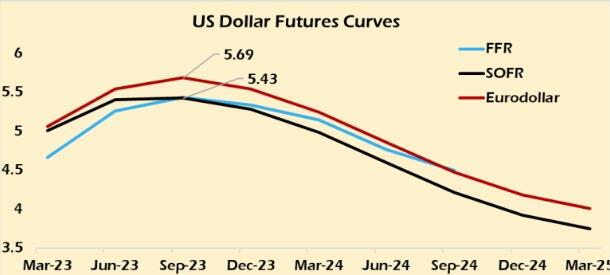
Think back to 2021, or even the beginning of 2022, and remember that no one could even conceive of where we’d be today – the Fed Funds Rate at 4.75%, likely going to 5% in less than two weeks, and the term structure of dollar futures markets reluctantly admitting to a terminal rate between 5.50% and 5.75%.

I argued strenuously that in order for FOMC Chair Jerome Powell to make this new sovereign US monetary policy stick, he would have to ‘pull a Volcker’ and raise rates aggressively. This would expose the lies of the “Biden” administration about deflation and the need for trillions more in COVID-19 relief funds — the Build Back Better bill.

It would uncover who on Capitol Hill was aligned with the Fed and the New York Banks it represents, or, at least, who had their backing — Kyrsten Sinema (D-AZ) and Joe Manchin (D_WV) — and who was actively working against them. — Joe Biden, Federal Reserve Vice-Chair Lael Brainard, the Democratic Party and most of the Republican Party and Treasury Secretary Janet Yellen.

Even as I was making these arguments I never thought Powell would actually do it.

Then he did it.

And here we are today (well, March 3rd’s closing).

When I say markets reluctantly acceded to the Fed’s program I mean that just one month ago these curves were all signaling a Fed “Pivot” at 5% and that it would happen in June. Now the Fed Funds Futures is essentially flat at 5.45% until December.

But these curves are highlighting for me exactly what I’ve been preaching for the past two years. The Fed, through aggressive rate hikes and fundamental changes to its transmission of monetary policy, has placed the biggest burden on on US dollar markets overseas, not domestically.

Moreover, every major shift in policy, the statements coming from Powell, and the upcoming changes to US dollar markets themselves have supported this idea.

All of this was taking place against a gradual change in the foundation of US dollar markets phased in over a five-year period; the shift from LIBOR as the debt-indexing rate in US dollars globally to SOFR.

As of today there are three major futures markets to coordinate the supply of US dollars through time, the Eurodollar, the Fed Funds, and now SOFR.

But all of these ultimately were subservient to LIBOR because that’s where the overnight money markets took their cues directly from. The futures markets reacted to the LIBOR call out.

Remember in January 2022, the penultimate phase of SOFR’s replacement for LIBOR took place. That was when all new US debt had to reference SOFR as the baseline rate, rather than LIBOR. LIBOR was ending in June 30th, 2023.

Keep that date in mind. Because it looms large over everything currently happening.

Go back to what I’ve been saying for over a year, the Fed is not raising rates to combat inflation.

The Fed is raising rates to drain offshore dollar markets and force the offshore dollar trade to take its cues from the domestic cost of dollars as priced by SOFR, not LIBOR.

If you still haven’t been convinced of this argument, fair cop, but then why is the Eurodollar futures curve, at the first sign of bond markets finally believing the Fed is serious about not “pivoting,” trading significantly above both the Fed Funds and the SOFR futures markets? (see graph of yield curves above).

The spread being positive (26 basis points positive!) means the demand for US dollars overseas is far greater than the demand for them domestically. That spread is the pain threshold not for the Fed but for, primarily, the ECB and the Bank of England.

As much as we would like to blame the Fed for everything happening, creating scapegoats are simply a coping mechanism for being unable or unwilling to reconcile what is happening versus what we would like to see happen.

They are a reflection of our anxiety about that which we can’t control. And you can argue that I’ve done that with my incessant invoking the Davos bogeyman lurking behind the scenes, and, again, fair enough.

But that’s why we go deeper and ask the questions necessary to map out where everyone’s incentives are and how they would react to specific pressures changes in policy or personnel.

Bye Bye Eurodollars, Hello SOFR

Two years ago the idea that SOFR would successfully replace Eurodollars as the global market yield curve for US dollars was laughable. When SOFR was introduced in 2017 it was phased in with a five-year rollout plan, culminating in January 2022’s mandate. SOFR was the indexing rate of the US and that was that.

In December of 2021 SOFR futures traded around 290,000 contracts per day. By this report by IFR going from numbers from the CME, volume surged to 964,000 contracts.

Average daily volumes in SOFR futures reached 964,000 contracts in the two weeks ending February 4, according to derivatives exchange CME Group, up from about 290,000 in December and more than five times higher than their September level.

That was last year, less than a month before Powell began squeezing the Eurodollar markets to death.

Oh, but wait there’s more from Feb 2022:

But SOFR futures have also closed the gap this year to Eurodollar futures, the Libor-linked contracts that have long been a mainstay of rates trading markets and that SOFR futures are set to supplant altogether from the middle of 2023. SOFR futures volumes as a share of Eurodollar contracts have reached as high as 37% this month, compared with an average of 10% in the final quarter of 2021.

“There’s been a significant change in behaviour over the last few months and we’re now seeing exponential growth in SOFR futures activity. Records are being broken almost daily,” said Mark Rogerson, head of interest rate products for EMEA at CME Group.

“We thought there’d be an acceleration moving into 2022 when the regulatory guidance provided a catalyst. We’re now at a point where we’ve achieved critical mass in SOFR futures: liquidity is more than sufficient for almost all customers’ needs.”

Still not convinced? Why would you be, a year ago SOFR was doing 37% of the mighty Eurodollar’s business. Then let’s flash forward to February of this year with a press release from the CME itself.

 CME Group, the world’s leading derivatives marketplace, today announced new milestones in the growth of its SOFR derivatives contracts, with a single-day record of 7,558,467 SOFR futures and options traded and record open interest (OI) of 35,698,298 contracts on January 12…

…In the first two weeks of January 2023, the average daily volume (ADV) of SOFR futures and options traded reached 4,674,007 contracts. Month-to-date January 2023 SOFR futures ADV is equivalent to 572% of Eurodollar futures ADV and SOFR options ADV is equivalent to 1,334% of Eurodollar options ADV.

Ooops.

If this was a prize fight they would have called it on a technical knockout two rounds ago.

Oh, but wait, they already did. You see, this is why I sandbagged you for this entire article. One, because I’m an asshole and two, because so are the guys running the CME.

The CME announced back in October that it was suspending trading in its former champion Eurodollar Futures and Options on Futures contracts dated after (wait for it) June 30th, 2023. The last day of trading will be April 14th. For a little more fun you can check out the CME’s daily SOFR Futures report.

I think that avalanche is now so loud it could be heard from space. Poor pebbles.

SOFR knocked out the Eurodollar because that was the Fed’s and New York’s ultimate goal; to replace the global rate for dollars with a domestic one where the capital would have to trade here.

The globe takes its cues, not from what Europe or Hong Kong wants, but what America needs.

This stabilizes our banking system, taking back power the Fed had ceded under Greenspan, Bernanke and Yellen and reminding everyone else just who runs Bartertown.

Most importantly, it pulls liquidity from around the world back into US markets, providing a foundation for a future where Davos doesn’t control DC. There are further implications of this but I’ll leave that for Part II.

The question I leave you with is the following, “Is there another, bigger avalanche further up the mountain?”

*  *  *

Join my Patreon if you don’t want to be a pebble.

Tyler Durden
Mon, 03/06/2023 – 18:20

via ZeroHedge News https://ift.tt/LjiAyNK Tyler Durden