‘The Government Is Trying To Kill Us Now’: Low-Income Americans Fume In Mile-Long Food Lines After Pandemic Benefits End

‘The Government Is Trying To Kill Us Now’: Low-Income Americans Fume In Mile-Long Food Lines After Pandemic Benefits End

Over the past year, 18 US states have officially ended pandemic-era states of emergency – including the covid food benefit, while a December mandate from Congress will end aid in March for the other 32 states, along with the District of Columbia, the US Virgin Islands and Guam.

The collective return to pre-pandemic policies includes enhanced unemployment benefits and child tax credits, as well as a rollback adjustment to Medicaid that boosted enrollment.

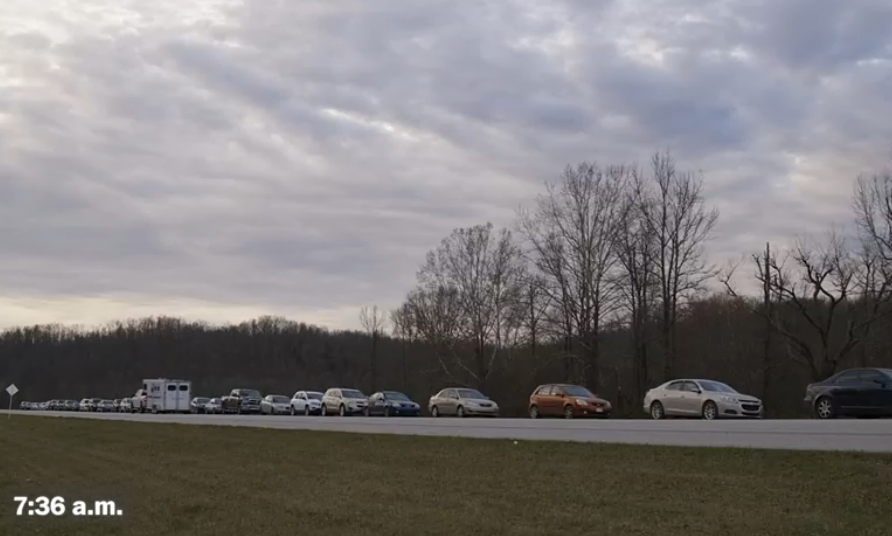
Now, people are waiting up to nine hours in mile-long lines for free food – some of whom say they can only afford to eat once per day, while others say they limit expensive food items such as meat for specific family members, such as growing teenage boys.

I thought, ‘Wow, the government is trying to kill us now,” said 63-year-old Danny Blair of Kentucky. Blair, who lives in a mobile home with his wife, survives on his Social Security disability check, the Washington Post reports.

“They are going to starve us out,” Blair continued, apparently unaware that government assistance provided during the pandemic wasn’t permanent.

Blair and his wife hop into their truck twice a month at 4 a.m. to ensure they get a few staples at the Hazel Green Food Project’s giveaway. On a recent Friday, they waited nine hours until local prisoners on work duty started loading bags of meat and vegetables, potato chips and cookies into vehicles in one of the nation’s most impoverished communities.

From the front to the back of the line, the sea of despair and hardship along this desolate Kentucky highway foreshadowed what may be in store for millions of Americans as the federal government ended the remaining pandemic increase in monthly food stamp benefits this week. -WaPo

As the Post frames it, the pullback of pandemic-related aid could pose a setback to the Biden administration’s efforts to ‘slash poverty’ while building a ‘healthier and more sustainable middle class’ – none of which were the stated goals of the temporary aid.

“We saw positive benefits from this and less hardship, including for families with children,” said Dottie Rosenbaum, a senior fellow at the nonpartisan Center on Budget and Policy Priorities, who points out that all the free money helped reduce childhood poverty rates in 2021. “We can expect that to reverse now.”

Following the reduction in benefits, the average SNAP recipient’s benefits are expected to drop by around $90 per month, according to the Center on Budget and Policy Priorities. That said, an even greater reduction is in store for seniors and the working poor who receive assistance from other government programs, and will likely qualify for less.

In Kentucky, many seniors on food stamps saw their monthly benefit drop from $281 to $22 last year after the state ended the pandemic emergency in May, according to local food bank network, Feeding Kentucky.

Other states are preparing for the same

“We are bracing, and our agencies, member food banks, food pantries and soup kitchens are not prepared for what is about to hit them,” Said Ohio Association of Foodbanks executive director, Lisa Hamler-Fugitt. “This reduction, and end of the public health emergency, could not be coming at a worse time.”

Even before the benefits retired this month in Ohio, Hamler-Fugitt said demand at food banks soared last year as retail food prices rose by 11.4 percent nationwide, more than five times the historical annual average. She said Ohio charities and foodbanks served 3.1 million people in the last quarter of 2022, which she called a record and about 600,000 more than were served during the same period in 2021.

Now, Hamler-Fugitt expects many of the state’s 1.5 million recipients will also be scrambling to find food assistance, adding she projects the benefit reductions will remove $120 million from Ohio’s retail economy each month. -WaPo

“We estimate we would have to increase our distribution by 15 times to even begin to address this, and we don’t have the resources to do that,” said Hamler-Fugitt. “So hunger rates are going to increase among our seniors, and families, and our children are going to fall behind academically because they are not going to be able to concentrate on empty stomachs.”

Is this practical?

In Kentucky, GOP lawmaker Sen. Donald Douglas said during debates that it wasn’t practical to live “under a constant state of emergency.”

“Let’s ask yourself, should SNAP benefits be a way of life?” he asked. “Now we know it is for some. Should it be a way of life for adults?

Tyler Durden
Mon, 03/06/2023 – 18:00

via ZeroHedge News https://ift.tt/NPOV3cQ Tyler Durden

Netanyahu Slams IAEA Chief For Saying Attacks On Iran Nuclear Facilities ‘Outlawed’

Netanyahu Slams IAEA Chief For Saying Attacks On Iran Nuclear Facilities ‘Outlawed’

Authored by Dave DeCamp via AntiWar.com,

Israeli Prime Minister Benjamin Netanyahu on Sunday slammed International Atomic Energy Association (IAEA) chief Rafael Grossi for saying attacks on nuclear facilities are “outlawed.”

Israel has a history of launching covert attacks against Iranian nuclear facilities, and Netanyahu has been threatening to take more overt action. US officials have also said President Biden will keep a military option on the table to prevent Iran from acquiring a nuclear weapon even though the Pentagon and CIA recently acknowledged Tehran is not seeking a bomb.

Via AF 

Grossi just returned from a visit to Iran, where he secured a pledge for the IAEA to receive more access to Iranian nuclear facilities. When asked about the US and Israeli threats, Grossi said that “any military attack on a nuclear facility is outlawed, is out of the normative structures that we all abide by.”

Netanyahu called the remarks “unworthy” in comments at a cabinet meeting. “Rafael Grossi is a worthy person who made an unworthy remark,” Netanyahu said, and questioned:

Outlawed by what law? Is Iran, which publicly calls for our extermination, allowed to protect its weapons of destruction that will slaughter us?”

Often missing from the conversation about Iran’s nuclear program is the fact that Israel has a secret nuclear arsenal that is not subject to any inspections. The US doesn’t acknowledge the existence of Israel’s arsenal and doesn’t pressure Israel to sign the Non-Proliferation Treaty.

Netanyahu’s threats against Iran have increased in recent weeks, and the US has made clear it has Israel’s back. Tom Nides, the US ambassador to Israel, said in February that Israel “can and should do whatever they need” against Iran and that the US has “got their back.”

The comments came a few weeks after an Israeli drone attack hit a facility in the Iranian city of Isfahan.

Tyler Durden
Mon, 03/06/2023 – 17:40

via ZeroHedge News https://ift.tt/pixUsjf Tyler Durden

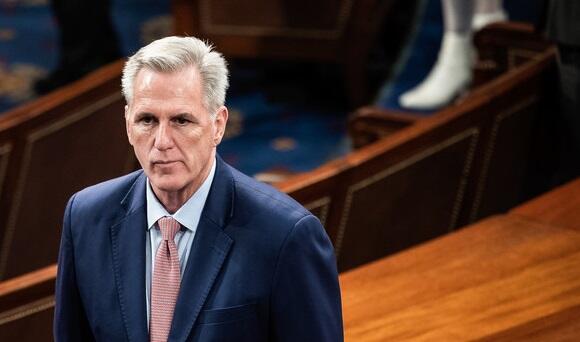
Taiwan Convinces Kevin McCarthy To Downgrade Taipei Trip To Avoid Angering China

Taiwan Convinces Kevin McCarthy To Downgrade Taipei Trip To Avoid Angering China

Taiwan’s president Tsai Ing-wen has convinced House Speaker Kevin McCarthy (R-CA) to downgrade a planned trip to Taipei, and instead meet in California in order to avoid an ‘aggressive Chinese military response,’ the Financial Times reports.

According to several people familiar with the situation, Tsai and McCarthy agreed to downgrade the visit because of Taiwanese security concerns, as tensions run high between Beijing and Washington. The move is a backtrack for McCarthy, who said last summer that he would visit Taiwan if elected Speaker of the House.

The venue change comes as the US steps up contingency planning for the region — one of the world’s most dangerous flashpoints — and highlights the impact of China’s military posturing to constrain Taiwan and undermine its de facto independence.

Washington has been rife with speculation about whether McCarthy would visit Taipei. Advocates of a trip say senior US lawmakers should show support for the country in the face of rising Chinese aggression, while critics argue that high-profile visits provoke China without helping Taiwan. -FT

According to a senior Taiwanese official, McCarthy’s team was provided with “some intelligence about what the Chinese Communist party is recently up to and the kinds of threats they pose,” adding that China is “not in a good situation.”

In August, former House Speaker Nancy Pelosi (D-CA) sparked China’s fury after visiting Taiwan – the first such trip by a US Speaker in 25 years. In response, the CCP held giant military exercises which included the firing of ballistic missiles over the country for the first time in history.

“There might be policies even more irrational than in the past emanating from Beijing,” said the Taiwanese official to FT. “If we can try to control this together, the risks it brings for everybody can be contained better.”

US officials have recently played down suggestions of an imminent Chinese attack on Taiwan, but the Biden administration is stepping up contingency planning with allies.

President Joe Biden has on four occasions over the past four years said the US would intervene if China launched an unprovoked attack on Taiwan. -FT

According to McCarthy, Taiwan’s concerns over a provocation were “reasonable.”

“This will accomplish McCarthy’s objective of elevating the issue and demonstrating he is willing to meet her, but the nature of the meeting physically happening in the US instead of Taiwan will also make it more difficult for Beijing to respond in the same provocative way like they did after the Pelosi visit,” said Eric Sayers, an Asia expert at the American Enterprise Institute.

On Monday, Taiwanese defense minister Chiu Kuo-cheng warned that the PLA was “looking for pretexts like foreign senior officials visiting or us conducting military exchanges with other countries” in order to take more aggressive action.

Tyler Durden
Mon, 03/06/2023 – 17:22

via ZeroHedge News https://ift.tt/V0rc6QX Tyler Durden

$160K Libel Verdict for Accusing Stepmother of Poisoning Father Upheld

From Osowski v. Harer, decided today by the Minnesota Court of Appeals, in an opinion by Judge Randall Slieter, joined by Presiding Judge Jennifer Frish and Judge John Smith:

This defamation case, commenced by respondent Karen K. Osowski, arises from statements appellant Edie Harer made to law enforcement several months after the death of Harer’s father (decedent). Harer made statements which suggested that Osowski—Harer’s stepmother and decedent’s second wife—had killed decedent.

Osowski married decedent in July 2006. Harer did not attend the wedding. In 2013, decedent discovered a cloud on the title to his property and sought signatures on a corrective deed to remedy the problem. Harer and her siblings refused to execute the corrective deed and, as a result, decedent cleared title to his home through a quiet-title action. This led decedent to “cut off all communications with his children” and sign a will that disinherited his children.

Despite their disinheritance, Osowski maintained contact with decedent’s children. This included an email in early September 2018 informing Harer that decedent’s health was “getting worse by the day” and she was scheduling him for cancer testing. In mid-October, Osowski informed Harer that decedent “had been tested head to toe and all is good.”

On January 18, 2019, Osowski called 911 to report finding decedent dead in their home. A Cook County Sheriff’s deputy responded to the call and investigated the death. Based on the deputy’s description, the medical examiner declined to complete an autopsy because the death appeared to be from natural causes, and the deputy agreed that nothing “looked suspicious.” Six days after her father’s death, Harer called the medical examiner, asked why an autopsy had not been performed, and asked for one to be completed. It was explained to her that an autopsy would be difficult and likely uninformative at that point because the body had been embalmed.

In February 2019, Osowski’s daughter informed Harer that decedent had updated his will in 2014. The updated will left decedent’s estate to Osowski. Approximately two weeks later, an attorney Osowski retained to represent her in an anticipated probate proceeding informed Harer that he was in the process of preparing a petition to probate the 2014 will. The next day, Harer petitioned to probate decedent’s 1994 will, which included Harer and her siblings as devisees. Osowski objected to probate of the 1994 will and counterpetitioned for probate of the 2014 will.

On June 4, 2019, one week before a scheduled probate hearing and after the probate court denied her request for a continuance, Harer contacted the Cook County Sheriff’s Office asking it to reopen the investigation into her father’s death. The same deputy who initially investigated the death was assigned to the case. Harer also asked the sheriff to seek a delay in the probate proceeding “due to an investigation into my father’s death.” The sheriff declined.

Harer obtained a transcript of the 911 call Osowski placed after discovering decedent’s body. In the call, the 911 operator asked if the death was “expected,” and Osowski replied that she “contemplated it because of his health.”

On June 6, 2019, the deputy called Harer and conducted a recorded interview. In this conversation, the deputy asked Harer to explain “why you think that [Osowski] murdered your dad.” Harer responded, “because … she said that he had an expected death” in the 911 call, but Harer believed decedent had been in good health. Harer further stated that Osowski “makes her own pills, so she has … ways that she could have easily put something in something” and suggested that someone could “put anti-freeze in something somebody drinks … and somebody … won’t even know you put it in.”

During the summer of 2019, Harer objected to Osowski’s counterpetition to probate the 2014 will and moved multiple times to continue hearings, citing the reopened investigation. In September 2019, Harer voluntarily dismissed her petition for probate of the 1994 will and objection to probate of the 2014 will. The district court subsequently probated the 2014 will.

In October 2019, the deputy issued a supplement to his initial investigation into decedent’s death. He concluded that there was no “foul play or [anything] suspicious in the death of [decedent].”

Osowski sued Harer for libel, based on, among other things, Harer’s statements to the police, and got “compensatory damages of $20,000 for reputational harm, $100,000 for mental distress, $20,000 for past embarrassment, $20,000 for past humiliation, and $1,000 for stipulated health-care expenses.” The appellate court upheld the verdict, notwithstanding the qualified privilege for defamation in good-faith statements to law enforcement:

“One who makes a defamatory statement will not be held liable if the statement is published under circumstances that make it qualifiedly privileged and if the privilege is not abused.” To qualify for the privilege, a statement “must be made upon a proper occasion, from a proper motive, and must be based upon reasonable or probable cause.” One of the proper occasions covered by qualified privilege is “a good faith report of suspected criminal activity to law enforcement officials.” “A qualified privilege is abused and therefore lost if the plaintiff demonstrates that the defendant acted with [common-law] actual malice.” …

Common-law actual malice requires the plaintiff to prove “that the defendant made the statement from ill will and improper motives, or causelessly and wantonly for the purpose of injuring the plaintiff.”

The jury was presented evidence that Harer had been estranged from her father for several years, partly due to her refusal to execute the corrective deed as he requested. Harer inquired about an autopsy a few days after her father’s death, but she proceeded with his burial and did not express any suspicions about his death until over four months later, when she contacted the sheriff’s office. When she spoke with the deputy, she was in the midst of a probate dispute with Osowski, whom she suggested may have killed decedent. Harer cited the reopened investigation in her objection to probate of decedent’s 2014 will and in multiple requests to continue hearings, suggesting that Osowski might be barred from benefiting from decedent’s estate “pending the conclusion of the criminal investigation.”

These facts, viewed in the light most favorable to Osowski, present a legally sufficient evidentiary basis for the jury to conclude that Harer made her statements with ill will or an improper motive. Therefore, the district court did not err in denying judgment as a matter of law on qualified immunity….

The court also concluded that the statements were treated as being on matters of purely private concern for First Amendment purposes, so the First Amendment rule that “a private plaintiff may not recover presumed damages for defamatory statements involving a matter of public concern unless the plaintiff can establish actual malice [in the constitutional sense]” doesn’t apply:

[The] statements were made during a private telephone interview, which the record indicates Harer intended to be private because she asked the sheriff if she should inform the probate court “that there has been a criminal investigation started” for fear that it would “tip off” Osowski. Furthermore, Osowski and Harer’s prior relationship and the disputed probate proceeding, which Harer attempted to stall based on the investigation her own statements reopened, suggest that the statements were “intended to mask an attack … over a private matter.”

Based on the totality of the circumstances, Harer’s statements dealt not with a matter of public concern, but with a private conflict between her and Osowski. Thus, Osowski is entitled to presumed reputation damages, and it was not error for the jury to award her reputation damages….

Congratulations to Tyson Smith & Richard T. Furlong, III (Smith Law, PLLC), who represent Osowski.

The post $160K Libel Verdict for Accusing Stepmother of Poisoning Father Upheld appeared first on Reason.com.

from Latest https://ift.tt/8uHD2tr
via IFTTT

A Different View of the “Public Intellectual Arc”

I have a different take, after reading the recent post of my friend and colleague Josh Blackman, about the Arc of the Public Intellectual.  It seems to me that the real dynamic is about tradeoffs. Upon getting tenure, professors who write in law and related subjects are fortunate to encounter a “choose your own adventure novel” situation. You can continue to focus on scholarship above all else.  Or you can focus on any number of other things, ranging from gaining experience in academic administration (for those who want to be Deans someday) to building a social media brand.  It all depends on the goals you set for your career.

Tradeoffs are inevitable, however, as all of these options tend to be time-consuming. The more you focus on one thing, the less you focus on another.  So I don’t see the publiic intellectual role as an “arc,” or some kind of inherent pattern, as much as a continuing choice for how professors want their career to run. In my own case, for what it’s worth, I have tended to do less media over time. I concluded that, unless a news story happened to be directly about my area or academic expertise, media appearances weren’t likely to make a difference and were largely a waste of my time.  But different people will answer that differently, and the answers can vary over time.

The post A Different View of the "Public Intellectual Arc" appeared first on Reason.com.

from Latest https://ift.tt/42pZNHV
via IFTTT

Conservatives Who Want To Weaken Defamation Standards May Regret Opening That Can of Worms


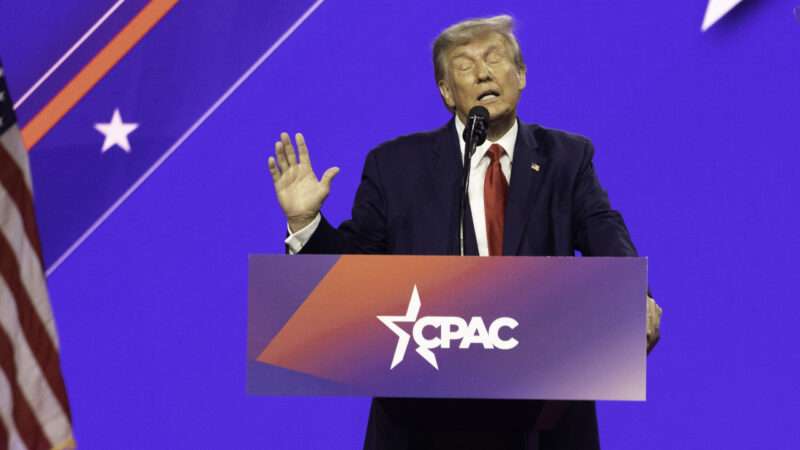
Donald Trump speaking at CPAC

Last October, former President Donald Trump sued CNN (again) for defamation. Among other things, Trump argues that the news channel defamed him by describing his claim that Joe Biden stole the 2020 presidential election as “the ‘Big Lie,’ a concept tied to Adolf Hitler.” Trump thinks his lawsuit is the “perfect vehicle” for reconsidering Supreme Court precedents that make it difficult for public figures to win compensation for injury to their reputations.

Fox News, meanwhile, is counting on those precedents to protect it from liability for promoting the “Big Lie,” which implicated Dominion Voting Systems in a “massive fraud” that supposedly denied Trump a second term. Fox argues that Dominion cannot meet the “actual malice” test that the Supreme Court established in the 1964 case New York Times v. Sullivan, which requires proof that Fox either knowingly or recklessly aired false allegations against the company.

As that contrast vividly illustrates, the standard established by Sullivan and extended by subsequent cases cuts both ways even as applied to a very specific category of speech. It is an obstacle for Dominion, which objected to Fox’s amplification of Trump’s claim that the company helped Biden steal the election, and it is an obstacle for Trump, who objected to CNN’s characterization of that claim.

To put it another way, Fox and CNN both have reason to be thankful for the protection provided by Sullivan and its progeny, which applies regardless of which way a news source leans. Revisiting those precedents therefore poses a threat to speakers across the political spectrum. It is a can of worms that conservatives may regret opening.

Sullivan involved a full-page New York Times ad titled “Heed Their Rising Voices” that condemned “an unprecedented wave of terror” against civil rights activists in the South. That “wave of terror,” it said, included conduct by police, school officials, and private actors such as the would-be assassins who had bombed Martin Luther King Jr.’s home in Montgomery, Alabama. “Again and again,” the ad complained, “the Southern violators have answered Dr. King’s peaceful protests with intimidation and violence.”

While the gist of that complaint was undoubtedly valid, the ad included several inaccuracies and exaggerations. Montgomery Police Commissioner L.B. Sullivan, who was not mentioned in the ad but argued that he had been impugned by implication, sued the signatories and the Times for defamation and won a damage award of $500,000 (about $4.8 million in current dollars), a verdict that was upheld by the Alabama Supreme Court. The U.S. Supreme Court unanimously overturned that judgment, concluding that Alabama’s defamation rules were inconsistent with the First and 14th amendments.

The majority held that the First Amendment requires “a federal rule that prohibits a public official from recovering damages for a defamatory falsehood relating to his official conduct unless he proves that the statement was made with ‘actual malice’— that is, with knowledge that it was false or with reckless disregard of whether it was false or not.” That rule was necessary, the Court said, to protect freedom of speech and the press from the “chilling effect” of a less demanding standard.

“Debate on public issues should be uninhibited, robust, and wide-open,” the Court said, and “it may well include vehement, caustic, and sometimes unpleasantly sharp attacks on government and public officials.” It may also include errors. “Erroneous statement is inevitable in free debate,” the majority said, and “it must be protected if the freedoms of expression are to have the ‘breathing space’ that they ‘need…to survive.'” When people criticize government officials, the justices said, “a defense for erroneous statements honestly made” is “essential.”

Three concurring justices thought that defense did not go far enough. As Justice Hugo Black saw it, the First and 14th amendments “completely prohibit” a state from awarding damages to “public officials against critics of their official conduct.” Justice Arthur Goldberg agreed that “the Constitution affords greater protection than that provided by the Court’s standard to citizen and press in exercising the right of public criticism.” Justice William O. Douglas joined both of those concurring opinions.

The Court later extended the actual malice standard to defamation cases involving “public figures,” including people who “thrust themselves to the forefront of particular public controversies in order to influence the resolution of the issues involved.” It also said a plaintiff must show that the defendant “entertained serious doubts” about the truth of his statement.

Trump, a promiscuous plaintiff, does not like the implications of these decisions. While running for president in 2016, he famously promised to “open up those libel laws” so that aggrieved public figures like him could sue irksome critics and “win money instead of having no chance.” After Trump took office, he downgraded his vow to a suggestion, possibly because someone informed him that presidents have no power to change the state laws and judicial precedents that govern defamation claims. It might be time, he tweeted, to “change libel laws” in light of his perception that journalists had “gotten me wrong.”

Another Republican politician, Florida Gov. Ron DeSantis, is more specific about the changes he’d like to see. As Reason‘s Emma Camp noted last month, DeSantis supports a Florida bill that would “narrow the definition of a public figure by excluding persons whose notoriety arises solely from ‘defending himself or herself publicly against an accusation,’ giving an interview on a subject, public employment (other than elected or appointed office), or ‘a video, an image, or a statement uploaded on the Internet that has reached a broad audience.'”

Even in cases involving a government official, the bill says, the “actual malice” standard does not apply “when the allegation does not relate to the reason for his or her public status.” It adds that “an allegation that the plaintiff has discriminated against another person or group because of their race, sex, sexual orientation, or gender identity constitutes defamation per se.” When journalists use anonymous sources, the bill says, the information is “presumptively false” and “plaintiffs need only prove that the defendant acted negligently,” rather than recklessly, in relying on it.

DeSantis presumably hopes that bill will ultimately give the Supreme Court an opportunity to reconsider what it has said about the limits that the First Amendment imposes on defamation law. Several justices, to varying degrees, might be open to that. Justice Clarence Thomas has questioned the legitimacy of Sullivan itself, while Justice Neil Gorsuch worries that the current rules are ill-suited to a situation where, thanks to the internet, “virtually anyone in this country can publish virtually anything for immediate consumption virtually anywhere in the world,” without the benefit of editors or fact checkers.

“In 1964, the Court may have seen the actual malice standard as necessary ‘to ensure that dissenting or critical voices are not crowded out of public debate,'” Gorsuch wrote in 2021 when the Court declined to hear a defamation case. “But if that justification had force in a world with comparatively few platforms for speech, it’s less obvious what force it has in a world in which everyone carries a soapbox in their hands.”

Even before that world had fully materialized, Justice Elena Kagan had qualms about the obstacles that the Supreme Court had erected for defamation plaintiffs. “Not all such suits look like Sullivan, and the use of the actual malice standard in
even this limited category of cases often imposes serious costs: to reputation, of course, but also, at least potentially, to the nature and quality of public discourse,” Kagan, then a University of Chicago law professor, wrote in a 1993 review of Anthony Lewis’ book Make No Law: The Sullivan Case and the First Amendment. “The adverse consequences of the actual malice rule do not prove Sullivan itself wrong, but they do force consideration of the question whether the Court, in subsequent decisions, has extended the Sullivan principle too far.”

University of Tennessee law professor Glenn Harlan Reynolds seems to agree that the post-Sullivan extensions are the real problem with current defamation law. “A precedent designed to protect coverage of political wrongdoing suddenly made it hard for celebrities to sue over falsehoods about their personal lives,” he writes in a 2021 Wall Street Journal essay. “Anyone, however obscure, who spoke out would lose traditional protection against libel and slander. The term ‘thrust’ suggests it is vaguely inappropriate for ordinary citizens to take part in public affairs; at any rate, the price for doing so was to make your reputation fair game, a tax of sorts on speech.”

Reynolds also suggests that it was mistake to require evidence that the defendant actually “entertained serious doubts” about the truth of his statements, as opposed to asking whether a “reasonably prudent” person would have had such doubts. And he notes that more recent Supreme Court decisions “allow a case to be dismissed before the plaintiff can engage in discovery unless the plaintiff can demonstrate—not merely allege—actual malice.” That means “the plaintiff has to prove the defendant’s state of mind before being authorized to gather evidence.”

The upshot of those extensions, Reynolds says, is that “if a news organization defames you, it’s almost impossible to find redress in an American court.” At the same time, he acknowledges the seriousness of the concerns underlying Sullivan. “Sullivan’s was just one of many such lawsuits filed against national news outlets, and the strategy was, until the Sullivan decision, a highly successful one,” Reynolds notes in a 2020 research paper. “These lawsuits were intended to chill or banish negative coverage.”

Reynolds suggests “remedies that fall short of overturning Sullivan, but that would still represent a significant change in current law.” One possibility, he says, “would involve simply eliminating the ‘public figure’ concept and returning to the ‘public official’ language of the Sullivan opinion. This approach would undo most of the harm to plaintiffs, while retaining the rationale for the original decision, which was inspired by a cabal of state officials trying to avoid media scrutiny.”

If the Supreme Court had done that prior to 2020, and if New York had taken advantage of the new leeway by changing its defamation rules, Fox News would be in even more trouble than it is now. In trying to meet the current standard, Dominion has marshaled compelling evidence that Fox executives, producers, and hosts knew the stolen-election narrative was false.

“One of the defenses is that even false speech about public figures is protected so long as it is believed by the speaker,” the illustrious First Amendment attorney Floyd Abrams told the Associated Press. “But no one at Fox appears ready to say that he or she did believe the assertions…and there now appears to be substantial evidence that no one there at Fox did so. It’s a major blow.”

If Dominion’s status as a “public figure” did not matter, the company would have to prove negligence rather than “reckless disregard” for the truth. Based on the evidence we have seen so far, it seems to me, satisfying that weaker test would be pretty easy.

By contrast, ditching the “public figure” extension would not have helped Trump win his lawsuit against CNN. Most of the allegedly defamatory statements he cites were made when he was president, so they would qualify as criticism of a public official. And while some of those statements (e.g., likening Trump to “Hitler, Stalin, and Mao”) were undeniably hyperbolic, they were expressions of opinion rather than assertions of fact. Other labels that CNN personnel or guests applied to Trump (e.g., “demagogue,” “racist,” “insurrectionist,” and “Russian lackey”) likewise fall squarely into the category of the “vehement, caustic, and sometimes unpleasantly sharp attacks on government and public officials” that the Supreme Court was keen to protect in Sullivan.

It is therefore not surprising that Trump, even while insisting that he can meet the actual malice standard, argues that he and similarly situated plaintiffs should not have to do so. “In circumstances like these,” his complaint says, “the judicially-created policy of the ‘actual malice’ standard should not apply because ‘ideological homogeneity in the media—or in the channels of information distribution—risks repressing certain ideas from the public consciousness just as surely as if access were restricted by the government.'”

Trump is quoting from a 2021 dissent by the late D.C. Circuit Judge Laurence Silberman, who conceded that “there are a few notable exceptions to Democratic Party ideological control.” He mentioned Fox News, the New York Post, and The Wall Street Journal‘s editorial page, adding that “it should be sobering for those concerned about news bias that these institutions are controlled by a single man and his son.”

Trump’s argument, which is based on the purported dominance of large, left-leaning news outlets, is strikingly different from Gorsuch’s concern about “a world in which everyone carries a soapbox in their hands.” Where Trump sees too much gatekeeping, Gorsuch sees too little. And it seems unlikely that Gorsuch, notwithstanding his concerns about the ease with which people can be defamed and the difficulty of recovering damages when that happens, would go along with Trump’s vision of a First Amendment that allows civil liability for harsh criticism of the president.

“Suits like these do not throttle the First Amendment,” Trump claims. “They vindicate the First Amendment’s marketplace of ideas.” He says that while arguing that it should be a tort to call the president a demagogue.

That peculiar understanding of free speech should trouble Americans of every political and ideological flavor. Republicans (especially Trump and his supporters) are no less prone to rhetorical overkill than Democrats, and conservatives have as much reason as progressives to worry about the consequences of the weakened defamation standards that Trump favors.

The post Conservatives Who Want To Weaken Defamation Standards May Regret Opening That Can of Worms appeared first on Reason.com.

from Latest https://ift.tt/rdcCMb5
via IFTTT
TikTok and How Congress Treats Americans Like ‘Unruly Children’


TikTok logo

In this week’s The Reason Roundtable, editors Matt Welch, Katherine Mangu-Ward, Nick Gillespie, and Peter Suderman scrutinize recurrent attacks on the social media app TikTok from the federal government and reiterate the delusional nature of government subsidies on goods and services across the economy.

0:56: TikTok under attack

21:55: Government subsidies don’t create affordability.

33:09: Weekly Listener Question

47:46: Former President and presidential candidate Donald Trump lists his vision for America

52:07: This week’s cultural recommendations

Mentioned in this podcast:

TikTok Is Not a National Security Threat,” by Milton Mueller and Karim Farhat

TikTok Admits It’s as Clueless on Teens as the Rest of Us,” by Bonnie Kristian

Indiana Lawsuit Accuses TikTok of Fraud, Calls the App a ‘Chinese Trojan Horse’,” by Joe Lancaster

Decades of Subsidies Have Made the Essentials of Middle-Class Life Increasingly Difficult To Afford,” by Peter Suderman

Don’t Cancel Student Debt,” by Emma Camp and Danielle Thompson

Marc Andreessen: What the World Needs Most Is More Elon Musks,” by Katherine Mangu-Ward and Nick Gillespie

View Masters,” by Nick Gillespie

The Political Orphanage podcast

Send your questions to roundtable@reason.com. Be sure to include your social media handle and the correct pronunciation of your name.

Today’s sponsor:

  • Self-reliance…planning ahead…using our heads. These are just a few of the things we believe in here at Reason Roundtable. That’s why we’d like to tell you about AirMedCare Network membership and how it can take a financial worry off your plate. AirMedCare Network is America’s largest emergency air ambulance membership network. AirMedCare Network providers operate state-of-the-art helicopters. And their specially-trained medical personnel provide the highest level of pre-hospital medical care in emergency situations. Even with insurance, these flights can be VERY expensive. But when you’re an AirMedCare Network member, you won’t see a bill for your flight only when flown by one of their providers. This is a financial safety net you should have. Membership is amazingly affordable: only $99 per year and just $79 for seniors. And your entire household is covered. Right now, our listeners get up to an $80 Mastercard or Amazon e-gift card when they join AMCN and use offer code: REASON. Simply visit AirMedCareNetwork.com/reason today.

Audio production by Ian Keyser

Assistant production by Hunt Beaty

Music: “Angeline,” by The Brothers Steve

The post TikTok and How Congress Treats Americans Like 'Unruly Children' appeared first on Reason.com.

from Latest https://ift.tt/hsEgarn
via IFTTT

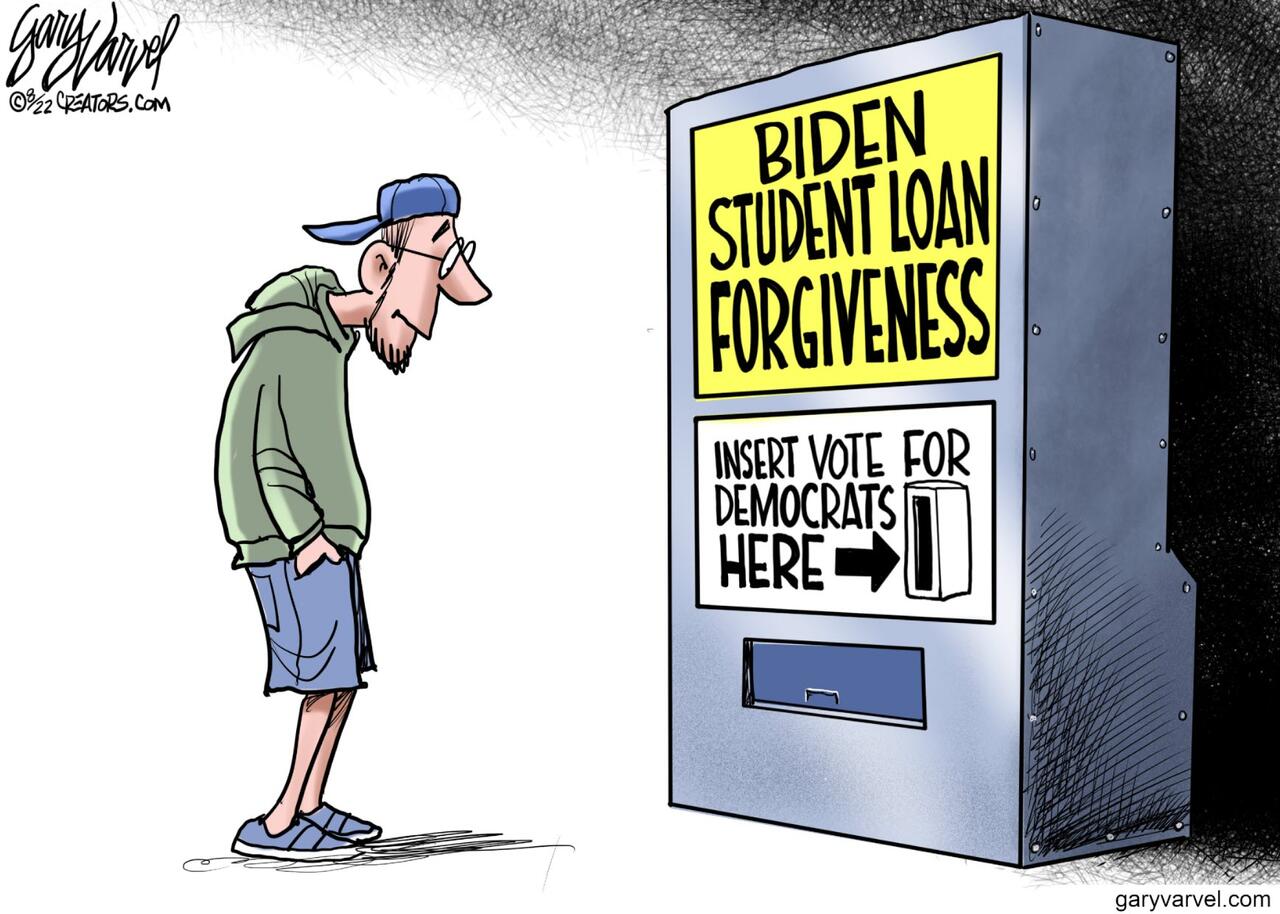
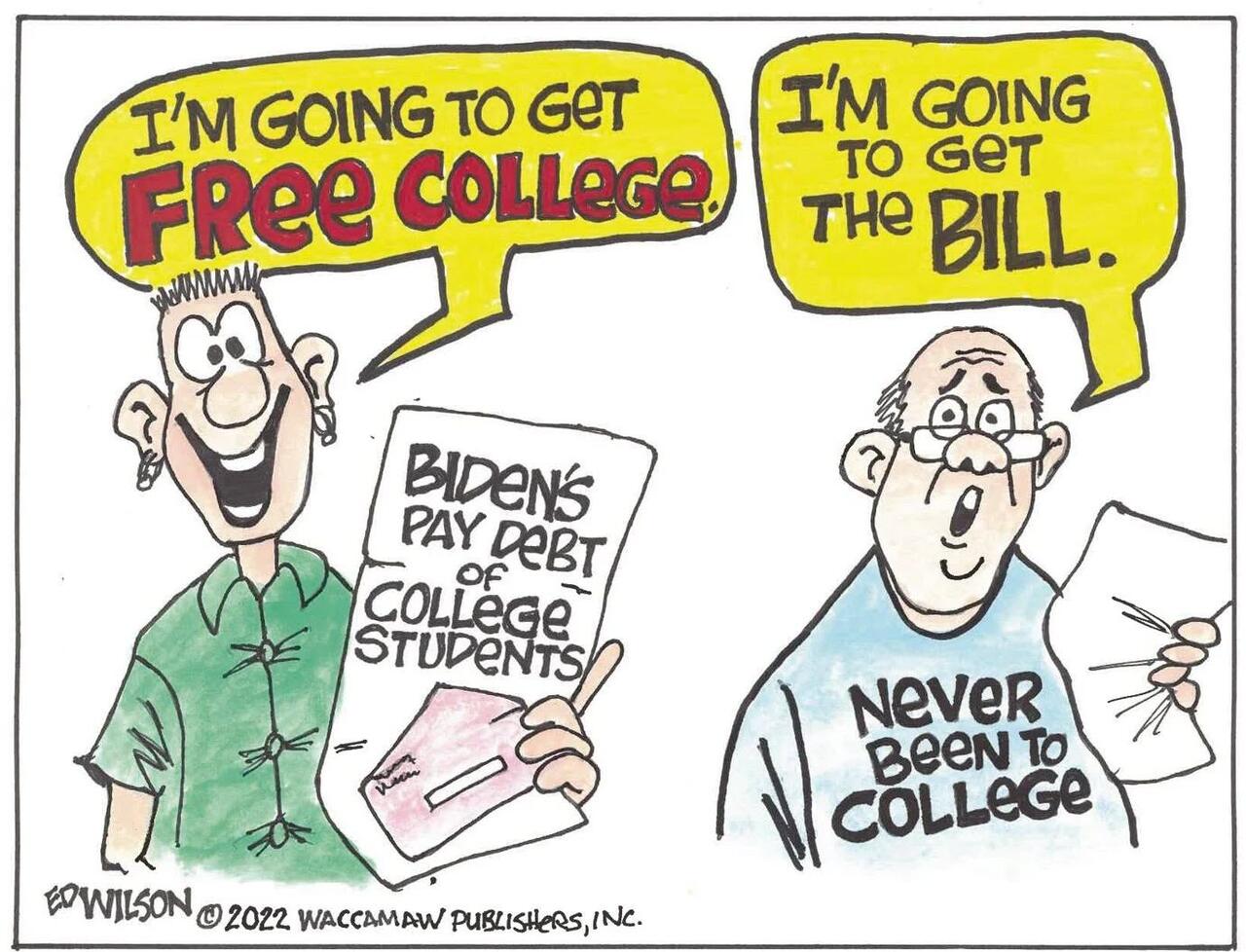
Why Student Loan Debt Relief Is A Worse Idea Than You Think

Why Student Loan Debt Relief Is A Worse Idea Than You Think

Authored by Daniel Lacalle,

The U.S. Supreme Court has heard different arguments from supporters and opponents of President Joe Biden’s student debt forgiveness program. It is probable that the justices will rule before June. However, it is important to remember a few challenges.

Student loans are an essential tool to help maximize the number of citizens that have access to the best and most exclusive tuition. American universities are among the top in the world and high-quality tuition comes with an elevated cost. To help the disadvantaged access top universities it is important to have a thriving and affordable loan system, a solid grant program and an open market that supports the majority, including those who are not in university yet.

We must aim to make the current system better, not maintain it disguising the problem with a deficit-financed subsidy.

A student loan debt relief program does nothing to solve the cost of tuition. It justifies it and will likely make fees rise again as universities see that the government subsidizes those that may take a difficult-to-pay loan. Furthermore, by providing a subsidy to the already indebted, banks may have an incentive to give loans to students with less probability to repay them. It is likely to create a wave of non-performing loans predicated on the view that this scheme will be prolonged and even increased. The reader may say that I am exaggerating, which I find interesting when we are living every day the result of debt accumulation excess.

A student loan debt relief program is a subsidy to take risky debt. It penalizes those that paid their loans and those that access new tuition, and it incentivizes others who did not take student loans and worked their way through college to take a risky loan. It may sound like a clever idea on paper, but it helps an exceedingly small proportion of citizens while hurting everyone else. Why? Because the loan relief program is paid with higher deficit, which means higher taxes and more inflation now and in the future. There is no revenue measure that finances this scheme because the government already runs a massive deficit. One cannot think of this measure without considering that the Federal budget runs an unsustainable deficit and that there has been no discussion of any budget cuts to finance this program, let alone the structural deficit.

Providing a subsidy to students that cannot pay their loans does not help them consume more. First, even if that were the case, the impact on total consumption of those that receive the relief compared to the negative effect for those that suffer higher taxes and persistent inflation does not even move the needle. However, I believe that the impact on consumption even for those benefitted by the program will be limited. It is unlikely that a partial bailout of the debt of a citizen is going to make a complete reversal of that person’s credit score. A partial debt release will make a small impact on one family or citizen, but extraordinarily little to consider this a stimulus for the economy.

If the debt relief of students is considered a stimulus for the economy that will boost consumption, why do the same proponents ask for constant increases in taxes for those that can consume and invest?

Would it not be easier to provide a tax deduction scheme that allows all those who take student loans to benefit from lower personal income burdens? Furthermore, would it not be better to agree with the financial system on support to help re-finance and re-structure non-performing loans in order to provide a market-oriented relief instead of a subsidy to excess debt?

The problem of the debt relief program is that it needs to be a subsidy so that the ones that receive it think that it was the government who helped them, not the taxpayers and consumers, who are the ones that pay for it in higher inflation and taxes. Any other, and more reasonable, alternatives do not create votes. If we looked for better alternatives, we would be thinking of providing support through a market-based re-structuring of debt and avoid the negative consequences of perpetuating and increasing tuition fees and elevated inflation as well as penalizing those that paid their debt. This student loan relief helps a few thousand to hurt millions.

There are numerous ways to facilitate a re-structuring of high debt burdens and the financial system can help to make it quickly and efficiently.

Of course, there must be ways of support to those students that took loans they cannot repay today. It must be a tailored, ad-hoc re-structuring that does not create negative perverse incentives for everyone else to take credit they cannot afford. It can include tax deductions for talented students.

The same students that think it is a promising idea to receive this relief will also pay for it in high inflation and higher taxes for longer.

Tyler Durden
Mon, 03/06/2023 – 17:03

via ZeroHedge News https://ift.tt/YPhLDA3 Tyler Durden

West Ready To Give Security Guarantees To Ukraine After Conflict: Germany’s Scholz

West Ready To Give Security Guarantees To Ukraine After Conflict: Germany’s Scholz

German Chancellor Olaf Scholz has told CNN’s Fareed Zakaria in a Sunday interview that the West stands ready and willing to provide security guarantees for Ukraine following Russia’s war

He also stressed during the interview Vladimir Putin must understand “that he will not succeed with his invasion and his imperialist aggression” – statements which came just after the German leader met with his US counterpart, President Joe Biden.

Image source: Twitter/POTUS

“To my view, it is necessary that Putin understands that he will not succeed with his invasion and his imperialistic aggression and that he has to withdraw troops. This is the basis for talks,” he said.

While touting future security guarantees for Ukraine, Scholz suggested that realistic peace talks are out of the question so long as Russian forces remain occupying Ukrainian territory. He said the Kremlin’s full withdrawal must serve as the basis for peace talks.

“We will continue to support Ukraine with financial and humanitarian aid but also with weapons,” he said.

His signaling a future defense pact with Ukraine, but which would fall short of bestowing formal NATO membership, follows a February report in The Wall Street Journal which said United Kingdom, Germany, and France were mulling such a defense agreement as the basis for a future and lasting peace.

Watch the full Sunday CNN interview with Scholz below:

Among the more incredible and dubious statements advanced by Scholz during the segment was the following description of President Biden…

“He is very informed about international relations,” Scholz said. “I think he’s one of the most skilled presidents knowing how things are running in the world, which is important in times that are becoming more dangerous.”

Tyler Durden
Mon, 03/06/2023 – 16:40

via ZeroHedge News https://ift.tt/HX7ocOq Tyler Durden

The Real American Conspiracy: Stupidity & Greed, A True Idiocracy

The Real American Conspiracy: Stupidity & Greed, A True Idiocracy

Authored by Mike “Dr Doom” Hobart via BombThrower.com,

The True ‘Invisible Hand’ Is Not Borne of Evil, Not The WEF, Or Some Grand Malthusian Conspiracy

The current economic, geopolitical, locally political, and technological environment has resulted in many individuals having taken to a way of thought where they believe in an unknown & shadowy hand guiding our world toward ruin. I am here to provide a counter argument to this position. Bear in mind, I will not be using the c-word that gets so flippantly thrown around, as I am most interested in this being a thought exercise. This argument will be based on a few points-of-view that I have already written about previously as well as those that I personally have not written. I will provide links to those individual arguments as they arise in relevance, so that you—the reader—may visit them independently of your own volition.

What is this position that I speak of that seems to be gaining in popularity? That is that the developments in local and national government decision-making are rooted in nefarious intent. That the reason for these developments is a shadowy intent to sacrifice the many for the sake of the few, and particularly with the intent of weakening or destroying individual states, or America as a whole. That a significant, meaningful number of the participants are acting in a manner that represents intent for self-destruction—or in the very least achieving a greater state of weakness. The justifications used tend to be the headline events that have occurred over recent years; the responses to a particular infectious virus, the actions of a broader pharmaceutical industry, the nature of the symptom management industry (aka “healthcare), the precarious events around food, meat and poultry processing plants, the list can go on and on.

I aggressively disagree with this view.

Without further ado… let’s get into it.

Can It All Really Be Mere Coincidence?

The question: “How long before so many of these failings in deduction and reasoning can occur until they become a statistical impossibility to be mere coincidence? How is what is occurring not a ‘controlled demolition’?”

First, before we get started on my elaborations here, to make sense the reader (you) must have an understanding of what a complex adaptive system (CAS) is. If you do not, I will have multiple writings on this topic, the first of which is here. For those that do understand what a CAS is, we must acknowledge that such a system represents what looks like intelligence as more and more variables are accounted for and inputs (resources) are consumed to maintain its operations (life). Now, when it comes to a CAS, we are dealing with any number of independently motivated actors that are all acting as nodes of the broader system (the CAS)—yes like a neural network or blockchain network. Think of these “nodes” as cells, or individual people; being a part of a large operating system like an economy or a country. Then we must also acknowledge that these individual actors are not going to be of the highest intelligence or capability, simply for the fact that they will not be required to have such standards to maintain a life cycle of relative comfort while abiding by the rules governed by the CAS in which they occupy. Most individuals simply want to be comfortable and capable of reproducing and seeking their own happiness, whatever that may mean.

This is important to understand as this effectively establishes the standard of quality of the average participant (node) of said CAS, as well as the incentives that drive those individual actors. Both of which are very, very important for consideration when judging the actions of individuals and the systems & mechanisms that are made up of actions by those individuals. Like… businesses… and governments. Essentially every human being as a part of this world is independently motivated to seek out their own success, and the success of their kin first (discard ideologues here, as they are outliers), over the success(es) of an other. Meaning: these individuals are not incentivized to engage in activities that necessarily benefit the system, but themselves—survival comes first. Furthermore, this also means that the individual is not incentivized to consider the consequences or ramifications of their movements for success as they would affect other participants within the broader system. A drug dealer is not incentivized to consider how negatively impacting his product is as that would deter him from seeking his own success, no differently than say… a large pharmaceutical corporation would be.

So, what’s the point of all of this? My belief is that we are dealing with a complex adaptive system that represents an intelligence, due to the amount of variables accounted for, that is on a trajectory towards negative outcomes that appears to have malignant intent (because it produces a negative feedback loop) but it is actually powered by incompetence in the individual actors due to the incentives acting upon their lives. Not that there is some master plan to bring about the mass death of large portions of the population, nor an active strategy to bring about the downfall of their own country.

For example, I do not believe that our food quality was destroyed in order to feed the big pharma industry—that’s nonsense. I believe that big pharma, and the symptom management industry (calling it a “healthcare industry” is a joke and an insult to the average citizen), have benefited as a downstream effect. I believe that we learned how to produce highly potent, easily replicable, and very efficient mechanisms to produce processed foods due to a natural inclination for businesses to seek profits, and at the hands of a modernized industrial country. I believe that individual actors bought these foods hand-over-fist because they are delicious (due to their high carbohydrate, fat, and salt content) and cheap. I believe that the ramifications of such foods takes YEARS to observe and identify, all the while their negative effects on public health gain momentum as bodies, like economies, exhibit compounding results (as discussed in this essay). And that’s without any actual nefarious activities by corporations; liiike taking advantage of the bureaucratic system on the side of corporate lobbying and funding “scientific” research that makes their products look healthy and safe—I placed scientific in quotes because when the studies are not allowed to report the actual science due to the relationship of their funding, then it’s simply *marketing* and not actual science.

To put a bow on this one; I do not believe there is some grand cabal steering America towards ruin—in my opinion that would be giving these implicated groups, organizations and individuals far too much credit. To pull something like that off requires far more intelligence than I believe they are capable of. And yes, this includes an organization that was unelected and incorporates the letters W-E-F in their acronym. I believe that we are witnessing a cascade of failures brought-on by a system driven by high time-preference incentives, stupidity, and greed.

The Sociopathic Magnet

Then there’s the issue of this system “attracting sociopaths.”

This argument does not hold water in any sense. Human beings as a species are natural gamers. We are literally built to poke, prod, and produce strategies that not only allows us to seek out success within a ruleset, but the more clever members of our species devise strategies to use the ruleset of the system in which they abide by to work for them, catapulting them towards success at a rate faster than their peers, as we are also naturally competitive. If you would like an example of this, all you need to do is simply watch children at play with each other. You will witness many instances of the most clever children using the rules of their games to their advantage so they may seek out victory faster than their peers.

Simply possessing the desire to succeed does not automatically make one a sociopath. Sociopaths hold no stock in empathy or valuing of human life, let alone working to avoid the suffering of others. Any system that provides a capability to achieve greater levels of power over their peers will attract sociopaths of every make and model. The greater the honeypot of power; the greater the sociopathic magnet. There is no getting around this reality.

Power Dynamics and Sociopaths

The issue of the temptations that a fiat currency brings.

Through my studies and observations I have adopted a philosophy: a society or civilization takes on the philosophies incentivized by the currency with which the average individual transacts on a regular basis.

What this means is that I believe that a fiat currency, that is capable of being produced flippantly at whatever fleeting whim of whatever individual or group that claims authority over it, will eventually cause the character traits that such a whimsical authority system promotes to bleed into the incentives of the average citizen. For example, following the 2008 GFC bailouts of American banks and industry, the average American (as well as citizens across the world) learned quite a few lessons all at once: (1) from that point on, the name of the game was to become “too big to fail,” doing so meant you could f*ck up at nearly any level and the US government would protect you to avoid mass job loss, (2) the average American would always get sacrificed before anybody in the upper socioeconomic rungs would ever see a day of prison time, regardless of how much loss had occurred across society-broader, and (3) in the race to become “too big to fail,” do whatever it takes to win over your peers; make as much money as fast as possible, rules and consequences be damned.

What these result in is an incentive structure that rewards frauds, cheaters, liars and thugs. This also results in, yes, attracting sociopaths. So, with this in consideration, it does make the broader system an ample magnet for sociopaths (as discussed previously). *It was very important that we distinguish that a hierarchical or success-rewarding system is not enough to place blame for attracting sociopaths.

As this CAS continues chugging along for longer and longer periods of time, that is driven by incompetence and short-sightedness of individual actors, and is perpetuated by this tainted fiat currency system as laid-out following the GFC, it accumulates higher and higher saturation levels of sociopaths and incompetent short-sighted thinkers. What results is an ever increasing number of negative effects, negative events, and a continuously worsening macro picture… ultimately leading toward a climax—but this is not a fun climax. At which point the system fractures, and cascades of corrections begin to wash back across the system like waves.

Do you think we’re beginning to witness those cascades? I believe we could be, as I have also described how I believe that this very economic system has been a leading contributor to the cascades in human fertility and public health, which I wrote briefly about with—a specific focus on male health in particular—here.

More Regulations Only Create More Opportunities To Take Advantage

The next question is, “Well shouldn’t we be able to regulate this kind of activity out of our society to prevent these kinds of outcomes?”

The short answer is No. You’re ultimately asking to regulate-away the human condition. We are gamers, we are schemers, and we are greedy. You cannot regulate-out human characteristics with manmade rules or regulations. All that establishing new rules, or more rules, does is allow for fewer and fewer individuals to be capable of taking advantage of the ruleset and the system itself. Resulting in an inevitably ever-increasing wealth inequality gap. This wealth gap doesn’t just include monetary wealth, but educational wealth (real education, not indoctrination), wealth in time, wealth in mental & physical health, and wealth in family & loved ones.

In my opinion, the only effective regulation of CASs is that of natural selection and free markets. In these systems, as in nature, what survives and thrives works. There’s no coddling, or holding back of those experiencing outsized gains over their peers, and there’s certainly no manipulation of the rules to allow one individual or party to survive against the odds outside of shear tenacity & capability.

This also does not mean I am a Libertarian, or some purist Austrian economist. I am simply stating the reality of our situation.

The Reality Of The Human Condition

Now bears the question, “Is this just a reality of the human condition, is humanity doomed to always reach this failing point?”

The short answer here is Yes. However, it doesn’t have to be quite so doomish. We have to look back into history to understand why these failing CASs develop and then charge headlong into the ground like flight MU5375 in the first place. For examples we can look at the long history of The Church, or my personal favorites would be looking at how society at the time reacted to individuals like Galileo or Copernicus. These men pushed forth very revelatory ways of thought, and these new ways of thought challenged the established power of the “elites” of their time. Those elites were incentivized to defend their positions of power, as are all who attain it, and therefore chose to discount the new ways of thought in order to facilitate an ignorance within the populace and their subordinates so that their positions of authority and value could be maintained. Our species is no more evolved now than it was then.

In honest reflection humanity is doomed to repeat this sigmoid progression of success and failure, yes. History doesn’t repeat, but it does rhyme. However, what doesn’t have to be continued is the potent ignorances that allow these systems to get to such aggressive, widespread, catastrophic failures.

In Conclusion

I believe that what we are witnessing is a complex adaptive system that is made up of independently motivated actors, acting on short-sightedness and incompetence, that is producing negative outcomes, in which other aspects of the adaptive system benefit from (thereby entrenching the effects), and is rewarding further short-sightedness and incompetence, that is also driven by a fraudulent & broken economic system, which attracts greater and greater numbers of sociopaths and fools, which further entrenches the negative effects as well as further attracts more fools and crazies.

Then, to make matters worse, those that hold positions of power within this parasitic and flailing system are incentivized & motivated to build moats around their hills of success—preventing the march of disruptors that approach with new & innovative ways of thought. Which could provide solutions to the problems & inefficiencies that these individuals’ own success may have created, let alone enabled. Giving it a guise of malfeasance, or willful malignant intent and design, when in reality it is simply a mechanism of incompetence, greed, and high time preference that gets labeled with some great Malthusian Cabal.

That viewpoint is much easier to conceptualize and grab hold of as it requires less consideration & contemplation than my theory laid bare for you here. Not to mention that very theory is also represented over and over again in Hollywood films, like 007’s Spectre or the Jason Bourne story arch. Making it more “fun” to believe in, if that’s the proper word to describe such a thing. I personally believe it is, as the individuals that detail such theories often approach the concept with excitement as if they are getting the “opportunity” to partake in some videogame or film storyline or plot, wrought with excitement and where they get the chance to position themselves as the hero for identifying a secret plot.

This system continues until it breaks under its own weight of stupidity and greed, as intelligence and honor are not rewarded by this system whatsoever. When it does come time to break, the individuals of a high intelligence and honor are ultimately the ones that end up acting as support, as they bear the weight of the cascading society in an attempt to prevent a total loss.

*  *  *

This post was contributed by Mike “Dr. Doom” Hobart – check out his Substack here. Sign up for the Bombthrower Mafia mailing list here.

Tyler Durden
Mon, 03/06/2023 – 16:20

via ZeroHedge News https://ift.tt/aRgIJbN Tyler Durden