BoE Governor Admits UK Banking System Faces “Very Heightened Tension”

BoE Governor Admits UK Banking System Faces “Very Heightened Tension”

Authored by Alexander Zhang via The Epoch Times,

The UK financial system is in a period of “very heightened tension and alertness” for further turmoil in the banking sector, Bank of England Governor Andrew Bailey has said.
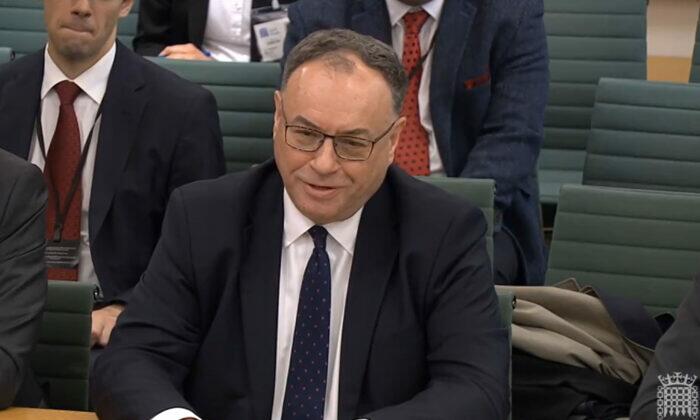
The UK banking system remains in “a strong position” but the central bank has to be “very vigilant,” Bailey told the Treasury Committee in the House of Commons on Tuesday.

The central bank chief faced questioned from MPs amid global jitters following the collapse of Silicon Valley Bank (SVB) in the United States and the emergency rescue of Credit Suisse by Swiss authorities.
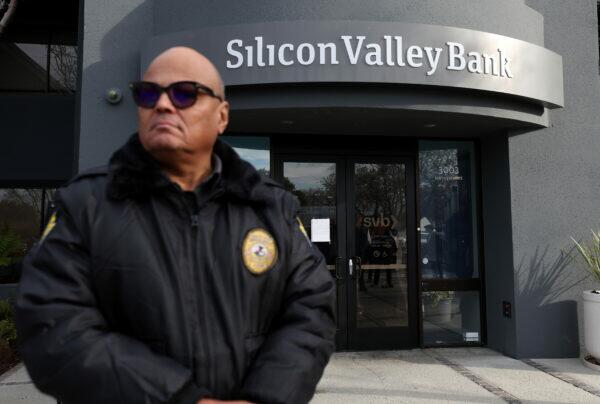
A security guard at the failed Silicon Valley Bank monitors a line of people outside the office in Santa Clara, Calif., on March 13, 2023. (Justin Sullivan/Getty Images)

There have been concerns that higher interest rates—following 11 consecutive rate hikes by the Bank of England—could be heaping pressure on lenders.

Bailey said the central bank is “very vigilant” but stressed that the UK banking system is in a different situation from the global financial crisis 15 years ago.

He told MPs: “I don’t think we are at all in the place we were in in 2007/8, a very different place, but we have to be very vigilant.

“We are in a period of very heightened tension and alertness and we will go on.”

‘Strong Position’

The collapse of SVB, the 16th biggest bank in the United States, is the largest bank failure since Washington Mutual in 2008, during the last financial crisis.

The group’s UK arm was sold to HSBC in a rescue deal, as shockwaves from the failure shook global financial markets.

Following the collapse, Chancellor of the Exchequer Jeremy Hunt said it posed “no systemic risk” to Britain’s financial system, but there was “a serious risk” to the UK’s technology and life sciences sectors.
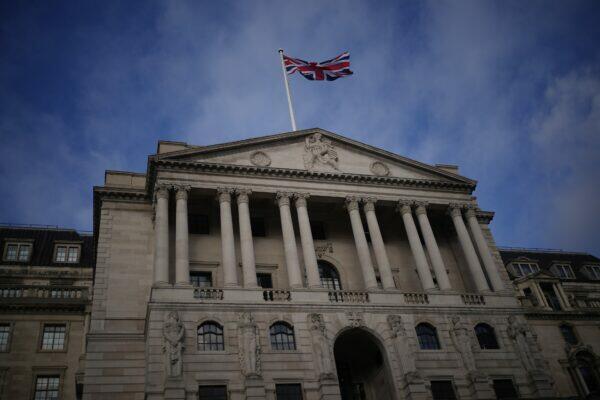
A view of the Bank of England in London, on Feb. 2, 2023. (Yui Mok/PA Media)

Bailey told MPs that SVB’s collapse was the fastest failure since the collapse of Barings Bank, a British merchant bank that failed in 1995 after trader Nick Leeson concealed as much as £827 million in authorised trades, causing the business to run up massive losses.

The governor said: “The U.S. authorities are still dealing with some of the consequences of the issues and the issues with regional banks which we saw with SVB.

“My very strong view about the UK banking system is that it is in a strong position both capital and liquidity-wise. It is not showing signs of problems in that respect and we have tested very extensively.”

Bailey added in his evidence to MPs that the UK is experiencing tightening credit conditions, hinting that this could impact future decisions on rates.

“We see some evidence of some tightening credit conditions but we do not see a critical development in that respect. We always take into account credit conditions when setting monetary policy,” he said.

Protecting Deposits

U.S. Treasury Secretary Janet Yellen suggested that the U.S. government would safeguard people’s savings in the event another smaller lender like SVB collapsed.

In a speech at the American Bankers Association on March 21, Yellen said further steps would be made to protect bank depositors if smaller institutions suffer additional bank runs that threaten the country’s financial stability.

Commenting on the move, the Bank of England governor said:

“I perfectly understand what the U.S. has done because we faced the same challenge in 2008. It’s a very difficult decision, but in the heat of the moment there are times where you have to make that judgement.

“I agree with what I think Janet Yellen has said in that this is not a state of affairs that should be the norm, that all deposits are guaranteed.”

He added that it can be difficult to strike a balance between stopping “bank runs” happening by offering to protect savings, and ensuring deposit guarantees do not become the norm.

“I don’t for one moment want to criticise the U.S. authorities, as I think they have been dealing with a very hard situation,” he said.

No Appealing Options

MPs at the Treasury Committee also questioned bosses at the bank over the £2.6 billion sale of Credit Suisse.

Credit Suisse has had problems for years but was pushed over the edge a week ago because of market jitters sparked by the failure of SVB.

Swiss investment banking company UBS subsequently announced it would purchase Credit Suisse in a deal worth more than $3 billion.

Talking to MPs on Tuesday, Sam Woods, deputy governor at the Bank of England and chief executive of the Prudential Regulation Authority, said the central bank had been talking with other authorities over instability at Credit Suisse since last autumn.

“From October there were discussions involving the Fed, the Swiss authorities, and us, thinking about the live situation,” he said.

“We had discussed, ‘What are we going to do if it came to the crunch?’ It was very useful when it came to that weekend.

“In the end, a bit like Silicon Valley, none of the options were that appealing but you still had options.”

Tyler Durden
Wed, 03/29/2023 – 06:30

via ZeroHedge News https://ift.tt/cs0Hfix Tyler Durden

This Year’s Farm Bill Threatens To Be a Bigger Monster Than Ever


Tractor irrigates a field.

In many ways, the farm bill up for consideration this year in Congress embodies all that is wrong with American lawmaking. It’s a massive piece of legislation, combining unrelated matters to commit the U.S. government to spending mind-bending amounts of money at a single go. Passed roughly every five years, farm bills are less about legislating in any deliberative sense than they are about lawmakers packaging a trillion-plus dollars of goodies and committing taxpayers to fund them for years to come—and then doing it over and over again.

“Every five years, Congress passes legislation that sets national agriculture, nutrition, conservation, and forestry policy, commonly referred to as the ‘Farm Bill’,” the U.S. Senate Committee on Agriculture, Nutrition and Forestry blandly notes. “The Committee formally kicked off its process for the 2023 Farm Bill with field hearings in both Michigan and Arkansas in 2022. Hearings continued in November and December of 2022, and will continue throughout the early parts of 2023.”

Worse Than You Think

In the popular imagination, to the limited extent most people think about the issue, “farm bill” is largely synonymous with lingering New Deal-derived subsidies to farmers, and those are certainly in there. But there is also so much more.

“The farm bill funds a safety net for farmers through crop insurance and support for those growing key commodities, as well as nutrition programs run by the Agriculture Department, primarily food stamps,” The Wall Street Journal‘s Kristina Peterson noted in November. That weird blend of programs is a result of the horse-trading “which since the 1970s has yoked support for farmers, including crop insurance, to funding for food stamps,” she added.

That combination of food stamps and farming subsidies is the sort of unholy political deal that makes cutting government spending so challenging. That’s not an accident.

A Match Made in Legislative Hell

“By 1973, the number of congressional districts dependent on farming were shrinking, but farm bills had grown in cost and frequency,” Ryan Alexander, then-president of Taxpayers for Common Sense, pointed out in 2018 as the debate raged over the last farm bill. “How to maintain support for the shrinking farm constituency? By adding food assistance – at the time, food stamps – to the package. The shotgun marriage of farm aid and food stamps meant rural and urban members of Congress came together to get the farm bill over the finish line.”

That not only means that the farm bill is an unhappy blend of unrelated matters jammed into a single compromise piece of legislation, but that its spending emphasis is not what you might expect.

“Although we think of the farm bill as a subsidy bill, it’s actually heavily tilted toward nutrition—in the last (2018) farm bill, for example, more than 75 percent of federal outlays were actually for SNAP and related programs,” the Cato Institute’s Scott Lincicome observed in 2020.

SNAP is the Supplemental Nutrition Assistance Program, better known as “food stamps,” that subsidizes the food budgets of lower-income families (monthly benefits averaged $239 in 2018 and were temporarily increased during the pandemic). It now consumes the lion’s share of spending in the so-called farm bill. But that doesn’t mean that farmers are getting shortchanged in their take of other people’s money. Oh, no, they do quite well themselves.

“This year, farmers (on net) will derive almost 40 percent of their income directly from the U.S. government,” added Lincicome. “Given the duration and magnitude of federal support, there’s perhaps no U.S. industry that has attracted more taxpayer subsidies—more consistently—than agribusiness.”

This unhappy merger of interests means a lot of tax money being spread around.

A Trillion Here, a Trillion There…

“The 10-year baseline (FY2024-2033) for the Farm Bill is projected to be over $1.4 trillion, or roughly $140 billion each fiscal year,” estimates Jonathan Coppess of the University of Illinois’s farmdoc daily. “Food assistance through the Supplemental Nutrition Assistance Program (SNAP) accounts for 85% of the projected Farm Bill spending. For farmers, the largest share is for crop insurance (7%).”

That’s only an estimate since members of Congress are hashing out the details of the legislation. The House and Senate Agriculture committees are still holding hearings on the farm bill as are individual members of Congress. But those hearings are more likely to shift money around among various subsidy programs than to seriously curtail giveaways or reduce the overall cost of the final bill. After all, as Rep. Glenn “GT” Thompson (R-Pa.), chairman of the House Committee on Agriculture, commented this week: “The Farm Bill is one of few remaining pieces of legislation steeped in consensus.”

That’s probably true. If Congress still agrees on anything, it’s that money milked from taxpayers should be used to pay off supporters and purchase votes. And everything costs more these days, votes included.

“Increases in the Nutrition title since 2018 reflect consequences of the Coronavirus Disease 2019 (COVID-19) pandemic, inflation, and administrative adjustments pursuant to the 2018 farm bill. For the non-nutrition agriculture programs in the farm bill, current economic projections are that program outlays would be $221 billion over the next 10 years, 5% greater than at enactment in 2018,” the Congressional Research Service projected last month.

The nonpartisan agency added that “since FY2020, Congress and the White House have provided supplemental pandemic assistance of over $30 billion to farms and over $60 billion for nutrition assistance.” Future supplemental spending may further increase the final farm bill price tag.

Monster Subsidies That Are Unnecessary, But Seemingly Unstoppable

Cato’s Lincicome pointed out that Australia and New Zealand both largely eliminated agricultural supports years ago and remain major producers. Their farmers learned to adapt and innovate in response to the market.

“In the midst of a financial crisis in the mid-1980s, New Zealand decided to swallow a bitter pill and scrap all farm subsidies,” The Times of London reported in 2017. “There were nationwide protests, more than 50 suicides as land values plummeted and interest rates soared for indebted farmers no longer eligible for cheap finance. Yet today the country’s farm sector is thriving and much more diversified.”

But the legislative Frankenstein monsters that are modern U.S. farm bills create mutually reinforcing lobbies for raiding taxpayers and spending their money. That makes New Zealand-style agricultural reform enormously difficult, with SNAP rolled into the deal.

This isn’t just about the seemingly unstoppable beast that is federal agricultural spending. This is also a cautionary tale about government meddling and subsidies in markets. At a time when the Biden administration is actively promoting industrial policy as a means of promoting American jobs and manufacturers (and making them dependent on government largesse), the farm bill demonstrates the dangers in unleashing policy monsters on the world.

The post This Year's Farm Bill Threatens To Be a Bigger Monster Than Ever appeared first on Reason.com.

from Latest https://ift.tt/jqpgL38
via IFTTT

World Bank Warns Of ‘Lost Economic Decade’ As Turmoil Spreads

World Bank Warns Of ‘Lost Economic Decade’ As Turmoil Spreads

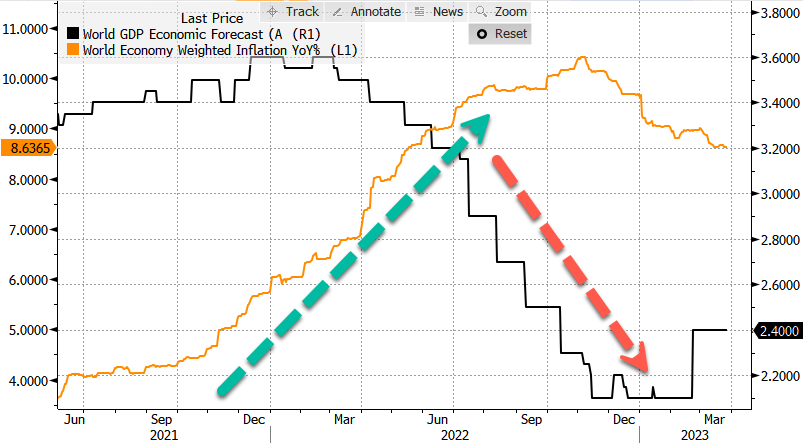
The world is in a precarious situation, with the potential for nuclear conflict. Central banks are taking aggressive measures to address decades-high inflation by raising interest rates, which in turn is causing a banking crisis in the Western world. As recession risks surge worldwide and international trade fractures, the future of the global economy appears to be heading down a dark path. 

“A lost decade could be in the making for the global economy,” Indermit Gill, the World Bank’s Chief Economist and Senior Vice President for Development Economics, warned in a new report

The report “Falling Long-Term Growth Prospects: Trends, Expectations, and Policies” reveals new forecasts that show global long-term potential output in growth rates are expected to slide: 

Nearly all the economic forces that powered progress and prosperity over the last three decades are fading. As a result, between 2022 and 2030, average global potential GDP growth is expected to decline by roughly a third from the rate that prevailed in the first decade of this century—to 2.2% a year.

For developing economies, the decline will be equally steep: from 6% a year between 2000 and 2010 to 4% a year over the remainder of this decade. These declines would be much steeper in the event of a global financial crisis or a recession.

World Bank’s chief economist continued: 

“The ongoing decline in potential growth has serious implications for the world’s ability to tackle the expanding array of challenges unique to our times—stubborn poverty, diverging incomes, and climate change.”

However, he said: 

“But this decline is reversible. The global economy’s speed limit can be raised—through policies that incentivize work, increase productivity, and accelerate investment.”

Ayhan Kose, director of the World Bank’s forecasting group, said the fracturing of the global economy implies “the golden era of development appears to be coming to an end.”

Earlier this year, the World Bank cautioned global central banks to stay alert to the economic risks related to aggressive monetary policy tightening aimed at combating inflation, as these risks may have widespread consequences. Just weeks ago, the emergence of a regional bank crisis in the US and problems with Credit Suisse in Europe demonstrated the validity of these concerns.

Besides a banking crisis, central bankers are also facing their nemesis… Stagflation…

While the global economy appears to be on a crash course with a ‘hard landing,’ no thanks to wreckless central banks, the World Bank said, “It will take a herculean collective policy effort to restore growth in the next decade to the average of the previous one.” 

Tyler Durden
Wed, 03/29/2023 – 05:45

via ZeroHedge News https://ift.tt/P5Aao4T Tyler Durden

EU To End Sales Of New Gasoline And Diesel Cars In 2035

EU To End Sales Of New Gasoline And Diesel Cars In 2035

By Charles Kennedy of OilPrice.com,

The European Union member states on Tuesday approved an emissions regulation under which the bloc will end sales of new carbon dioxide-emitting cars and vans in 2035.

The new rules target 55% CO2 emission reductions for new cars and 50% for new vans from 2030 to 2034 compared to 2021 levels, as well as 100% CO2 emission reductions for both new cars and vans from 2035, the EU said today.   

The landmark deal was made possible after Germany – the biggest economy, the biggest car market, and the biggest car manufacturer – sought and won an exemption for e-fuels. Germany wanted sales of new cars with internal combustion engines if they run on e-fuels to continue beyond 2035, and it got it late last week. 

So the EU countries agreed today to end the sale of new ICE cars after 2035 if they do not run on e-fuels.

“The regulation contains a reference to e-fuels, whereby following a consultation with stakeholders, the Commission will make a proposal for registering vehicles running exclusively on CO2-neutral fuels, after 2035, in conformity with EU law, outside the scope of the fleet standards, and in conformity with the EU’s climate neutrality objective,” the EU said in a statement.

Under the new regulation, the European Commission will assess in 2026 the progress the EU has made in achieving the target. The Commission will decide whether the targets need to be reviewed.

“The review will take into account technological developments, including with regard to plug-in hybrid technologies and the importance of a viable and socially equitable transition towards zero emissions,” the Council of the EU said.

Commenting on the formal approval of the 2035 end to new gasoline and diesel car sales, Frans Timmermans, Executive Vice-President for the European Green Deal, said, “the EU has taken an important step towards zero-emission mobility.”

“The direction is clear: in 2035 new cars and vans must have zero emissions. It brings a big contribution to climate neutrality by 2050 and is a key part of the #EUGreenDeal,” Timmermans added.

Tyler Durden
Wed, 03/29/2023 – 05:00

via ZeroHedge News https://ift.tt/gAuJjRI Tyler Durden

European Ammo Maker’s Growth Stymied By TikTok Data Center Sucking Up Electricity

European Ammo Maker’s Growth Stymied By TikTok Data Center Sucking Up Electricity

President Zelensky’s complaints over slowed and stalled rates of ammunition supplies coming into Ukraine from the West have perhaps been “answered” – in a story almost too absurd to be made up.

The “problem” has been uncovered, apparently

One of Europe’s largest ammunition manufacturers has said efforts to meet surging demand from the war in Ukraine have been stymied by a new TikTok data center that is monopolizing electricity in the region close to its biggest factory.

AFP/Getty Images

The data center in question is located in Norway, but chief executive of Nammo – short for Nordic Ammunition Company – has complained in statements given to FT that his company’s expansion (which is co-owned by the Norwegian government), is currently being prevented by the construction of a new TikTok data center which is going to suck up the area’s electricity. Nammo is among Europe’s biggest ammunition makers.

“We are concerned because we see our future growth is challenged by the storage of cat videos,” CEO Morten Brandtzæg told the Financial Times.

Given the statement sounds like it could be mere hyperbole, FT sought a statement from the local Norwegian energy company: 

Elvia, the local energy company, confirmed that the electricity network had no spare capacity after promising it to the data center as it allocates it on a first come, first served basis.

“If Nammo orders capacity, depending on how much it needs, it will take time before there is available capacity as the transmission network needs to be strengthened,” Elvia said.

The other irony is that Norway is a NATO-member. The emerging frustration and tensions between the state-linked Norwegian ammo maker and TikTok, owned by Beijing-based parent company ByteDance, is already leading to questions of whether this is some kind of intentional scheme linked to China’s geopolitical interests.

Interestingly, Brandtzæg sees its lack of access to surplus electricity needed for a plant expansion as directly impacting his company’s ability to keep up with demand based on Ukraine’s continuous needs:

Brandtzæg said demand for artillery rounds was more than 15 times higher than normal. The European ammunition industry needs to invest €2bn in new factories just to keep up with the demand from Ukraine, let alone other European countries, according to the Nammo chief executive.

He stressed: “We see an extraordinary demand for our products which we have never seen before in our history.” And more details from FT:

TikTok is building three data centers this year with the option of adding two more by 2025 in Hamar, 25km to the east of Raufoss, Norwegian data centre provider Green Mountain said this month.

Brandtzæg was asked whether be believes this is all purely coincidental, to which he responded: “I will not rule out that it’s not by pure coincidence that this activity is close to a defense company. I can’t rule it out.” This naturally leads to the question of where else is this happening in Europe?

Tyler Durden
Wed, 03/29/2023 – 04:15

via ZeroHedge News https://ift.tt/lfHFKpS Tyler Durden

Strikes Cripple France’s Fuel Supply

Strikes Cripple France’s Fuel Supply

By Tsvetana Paraskova of OilPrice.com

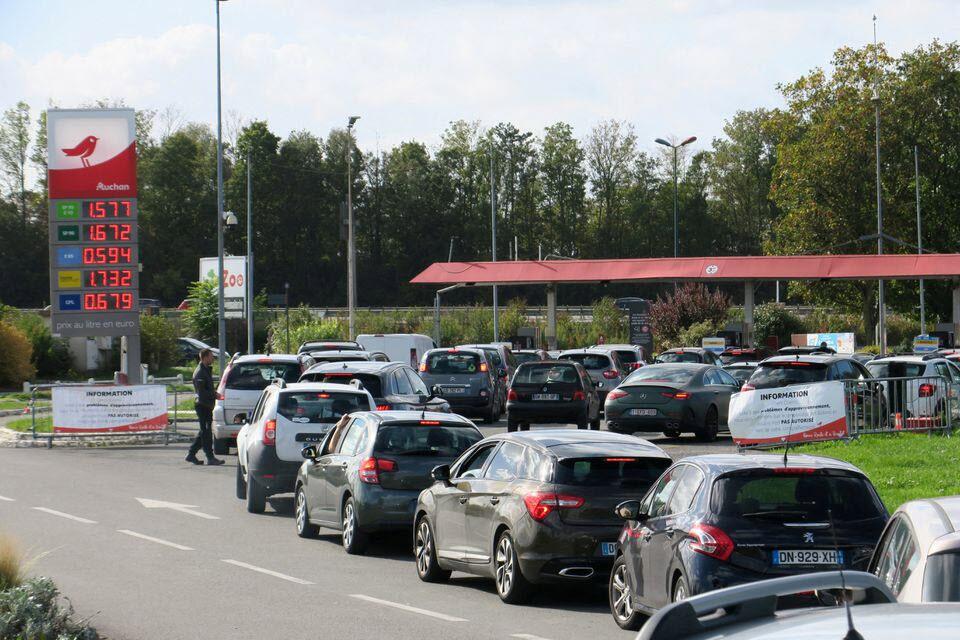
Four weeks of protests against the pension reform in France have crippled supply to French refineries and refinery operations as workers join the nationwide industrial action, while prices for European crude grades are depressed due to low French demand.

Earlier this month, French President Emmanuel Macron pushed through with a controversial pension reform without a vote in Parliament under a parliamentary clause known as 49:3. The pension reform proposes to raise the retirement age in France by two years to 64.

The strikes in France against the reform began in February and escalated this month, with workers in many sectors, including refinery and port workers, joining the industrial action.

Macron’s move without a parliamentary vote sparked even more protests and street blockades in Paris and other cities in the country.

The strikes have disrupted power supply, refining operations, and fuel deliveries for four weeks. Now, most of France’s refineries are either shut down by strikes or working at heavily reduced capacity, also because of a lack of crude deliveries due to strikes among port workers, which prevent the discharging of crude cargoes.  

Apart from refining operations, the strikes have disrupted LNG imports into France as LNG import terminals have been shut down. France has four LNG receiving terminals, Dunkirk, Montoir, Fos Cavaou, and Fos Tonkin.  

The four weeks of strikes have crippled refined product supply in France, where 17% of fuel stations were missing at least one fuel product as of Monday, according to French petroleum association UFIP, cited by Reuters.

At the same time, gasoline refining margins in Europe have jumped to $23 per barrel, the highest since October.

But the lack of French crude demand is weighing down on the prices of the crude oil grades from the North Sea, the Caspian region, and West Africa, traders told Reuters.   

Tyler Durden
Wed, 03/29/2023 – 03:30

via ZeroHedge News https://ift.tt/V53yEfP Tyler Durden

Brickbat: Choosing Sides


A U.S. Air Force F-16 jet flying as part of a Thunderbirds show.

The U.S. Air Force has admitted that it released military records of at least seven Republican Party congressional candidates to a Democratic Party-aligned research group without proper authorization during the 2022 campaign cycle. Among those candidates was Jennifer-Ruth Green, an Indiana congressional candidate whose files contained details of her sexual assault while serving in Iraq.

The post Brickbat: Choosing Sides appeared first on Reason.com.

from Latest https://ift.tt/qVGpOkA
via IFTTT

Terror Threat In Northern Ireland Raised To ‘Severe’ – Meaning Attack Highly Likely

Terror Threat In Northern Ireland Raised To ‘Severe’ – Meaning Attack Highly Likely

The United Kingdom’s domestic counter-intelligence and security agency MI5 on Tuesday announced a heightened terror threat level for Northern Ireland, moving it from “substantial” to “severe”.

This means that according to the British government an attack is highly likely, according to UK media reports, with Northern Ireland Secretary Chris Heaton-Harris informing the House of Commons that the decision was MI5’s alone and was independent of ministers based on the threat evidence before authorities.

Via Sky News: Masked members of the Real IRA at a Republican Easter commemoration ceremony at Creggan cemetery in Londonderry.

He briefed members of parliament via written statement, which reads: “MI5 has increased the threat to Northern Ireland from Northern Ireland Related Terrorism from ‘SUBSTANTIAL’ (an attack is likely) to ‘SEVERE’ (an attack is highly likely).

“The public should remain vigilant, but not be alarmed, and continue to report any concerns they have to the Police Service of Northern Ireland (PSNI).”

The last suspected terror-related violence in the region occurred on February 22 of this year with the murder of a senior police officer, Det Ch Insp John Caldwell, shot outside a soccer complex in Omagh, County Tyrone:

He was off duty and was putting footballs into the boot of his car after coaching young people when two gunmen approached him and shot him several times.

…Police said the primary focus of their investigation was on violent dissident republicans, including the New IRA.

The New IRA later claimed responsibility in a typed statement which appeared in Londonderry on Sunday 26 February.

While the UK government views Northern Ireland as largely peaceful compared to the height of violence in the 20th century, “a small number of people remain determined to cause harm to our communities through acts of politically motivated violence,” according to Secretary Heaton-Harris.

He cited “increase in levels of activity relating to Northern Ireland Related Terrorism, which has targeted police officers.”

In November of last year, there was a bombing attempt, according to BBC:

An attempted murder investigation was launched after a police patrol vehicle was damaged in a bomb attack in Strabane, County Tyrone, on 17 November.

Police said a strong line of inquiry was that the New IRA was behind the attack. Four men who were arrested were later released.

Heaton-Harris’ briefing additionally said, “The political future of Northern Ireland rests with the democratic will of the people and not the violent actions of the few.” He added: “Together we will ensure there is no return to the violence of the past.”

The five official terror threat levels in the UK are as follows:

• Low – an attack is highly unlikely

• Moderate – an attack is possible, but not likely

• Substantial – an attack is likely – this is the UK’s national threat level

• Severe – an attack is highly likely

• Critical – an attack is highly likely in the near future

At the moment the threat level over the whole of the United Kingdom is “substantial”. 

Tyler Durden
Wed, 03/29/2023 – 02:45

via ZeroHedge News https://ift.tt/XpRB8QK Tyler Durden

Jeffrey Sachs: What Ukraine Needs To Learn From Afghanistan

Jeffrey Sachs: What Ukraine Needs To Learn From Afghanistan

Authored by Jeffrey Sachs via KoreaHerald.com,

The greatest enemy of economic development is war. If the world slips further into global conflict, our economic hopes and our very survival could go up in flames. The Bulletin of Atomic Scientists just moved the hands of the Doomsday Clock to a mere 90 seconds to midnight.

The world’s biggest economic loser in 2022 was Ukraine, where the economy collapsed by 35 percent according to the International Monetary Fund. The war in Ukraine could end soon, and economic recovery could begin, but this depends on Ukraine understanding its predicament as victim of a US-Russia proxy war that broke out in 2014.

The US has been heavily arming and funding Ukraine since 2014 with the goal of expanding NATO and weakening Russia. America’s proxy wars typically rage for years and even decades, leaving battleground countries like Ukraine in rubble.

Unless the proxy war ends soon, Ukraine faces a dire future. Ukraine needs to learn from the horrible experience of Afghanistan to avoid becoming a long-term disaster. It could also look to the US proxy wars in Vietnam, Cambodia, Laos, Iraq, Syria, and Libya.

Starting in 1979, the US armed the mujahadeen (Islamist fighters) to harass the Soviet-backed government in Afghanistan. As President Jimmy Carter’s national security advisor Zbigniew Brzezinski later explained, the US objective was to provoke the Soviet Union to intervene, in order to trap the Soviet Union in a costly war. The fact that Afghanistan would be collateral damage was of no concern to US leaders.

The Soviet military entered Afghanistan in 1979 as the US hoped, and fought through the 1980s. Meanwhile, the US-backed fighters established al-Qaeda in the 1980s, and the Taliban in the early 1990s. The US “trick” on the Soviet Union had boomeranged. In 2001, the US invaded Afghanistan to fight al-Qaeda and the Taliban. The US war continued for another 20 years, until the US finally left in 2021. Sporadic US military operations in Afghanistan continue.

Afghanistan lies in ruins. While the US wasted more than $2 trillion of US military outlays, Afghanistan is impoverished, with a 2021 gross domestic product below $400 per person! As a parting “gift” to Afghanistan in 2021, the US Government seized Afghanistan’s tiny foreign exchange holdings, paralyzing the banking system.

The proxy war in Ukraine began nine years ago when the US Government backed the overthrow of Ukraine’s President Viktor Yanukovych. Yanukovych’s sin from the US viewpoint was his attempt to maintain Ukraine’s neutrality despite the US desire to expand NATO to include Ukraine (and Georgia). America’s objective was for NATO countries to encircle Russia in the Black Sea region. To achieve this goal, the US has been massively arming and funding Ukraine since 2014.

The American protagonists then and now are the same. The US Government’s point person on Ukraine in 2014 was Assistant Secretary of State Victoria Nuland, who today is undersecretary of state. Back in 2014, Nuland worked closely with Jake Sullivan, President Joe Biden’s national security advisor, who played the same role for Vice President Biden in 2014.

The US overlooked to two harsh political realities in Ukraine. The first is that Ukraine is deeply divided ethnically and politically between Russia-hating nationalists in Western Ukraine and ethnic Russians in eastern Ukraine and Crimea. The second is that NATO enlargement to Ukraine crosses a Russian redline. Russia will fight to the end, and escalate as necessary, to prevent the US from incorporating Ukraine into NATO.

The US repeatedly asserts that NATO is a defensive alliance. Yet NATO bombed Russia’s ally Serbia for 78 days in 1999 in order to break Kosovo away from Serbia, after which the US established a giant military base in Kosovo. NATO forces similarly toppled Russian ally Moammar Gadhafi in 2011, setting off a decade of chaos in Libya. Russia certainly will never accept NATO in Ukraine.

At the end of 2021, Russian President Vladimir Putin put forward three demands to the US: Ukraine should remain neutral and out of NATO; Crimea should remain part of Russia; and the Donbas should become autonomous in accord with the Minsk II Agreement. The Biden-Sullivan-Nuland team rejected negotiations over NATO enlargement, eight years after the same group backed Yanukovych’s overthrow. With Putin’s negotiating demands flatly rejected by the US, Russia invaded Ukraine in February 2022.

In March 2022, Ukraine’s President Volodymyr Zelenskyy seemed to understand Ukraine’s dire predicament as victim of a US-Russia proxy war. He declared publicly that Ukraine would become a neutral country, and asked for security guarantees. He also publicly recognized that Crimea and Donbas would need some kind of special treatment.

Israel’s Prime Minister at that time, Naftali Bennett, became involved as a mediator, along with Turkey. Russia and Ukraine came close to reaching an agreement. Yet, as Bennett has recently explained, the US “blocked” the peace process.

Since then, the war has escalated.

According to US investigative reporter Seymour Hersh, US agents blew up the Nord Stream pipelines in September. More recently, the US and allies have committed to sending tanks, longer-range missiles, and possibly fighter jets to Ukraine.

The basis for peace is clear. Ukraine would be a neutral non-NATO country. Crimea would remain home to Russia’s Black Sea naval fleet, as it has been since 1783. A practical solution would be found for the Donbas, such as a territorial division, autonomy, or an armistice line. Most importantly, the fighting would stop, Russian troops would leave Ukraine, and Ukraine’s sovereignty would be guaranteed by the UN Security Council and other nations. Such an agreement could have been reached in December 2021 or in March 2022.

Above all, the Government and people of Ukraine would tell Russia and the US that Ukraine refuses any longer to be the battleground of a proxy war. In the face of deep internal divisions, Ukrainians on both sides of the ethnic divide would strive for peace, rather than believing that an outside power will spare them the need to compromise.

*  *  *

Jeffrey D. Sachs is a world-renowned economics professor, best­selling author, innovative educator and global leader in sustainable development.

Tyler Durden
Wed, 03/29/2023 – 02:00

via ZeroHedge News https://ift.tt/GvqlChd Tyler Durden