Do Court-Appointed Prosecutors Violate The Separation of Powers?

Contempt is a curious creature of the courts. This inherent authority empowers judges to take all manner of actions against parties, including incarceration. Indeed, this power is so broad that a federal judge can order the prosecution of a party, even if the Department of Justice declines to bring the case. Consider Federal Rule of Criminal Procedure 42:

The court must request that the contempt be prosecuted by an attorney for the government, unless the interest of justice requires the appointment of another attorney. If the government declines the request, the court must appoint another attorney to prosecute the contempt.

This language is not optional, it is mandatory. The Court “must” make this request of DOJ, or in the alternative, “must” appoint another prosecutor. I suspect it is fairly rare that the government declines to bring a contempt prosecution. One such recent case arose in South Dakota. A district court judge held a United States Marshal in contempt of court, and, unsurprisingly, DOJ declined to prosecute another member of the federal government. As a result, the court appointed its own prosecutor, then promptly recused from the case. That recusal at least eliminated an inherent conflict of interest. I don’t think a judge can remain a neutral arbiter if he appointed the prosecutor. Ultimately, the newly-appointed judge dismissed the contempt case. But in another, far-more-high-profile case, a federal judge in Manhattan chose a different path.

Readers of this blog will likely be familiar with Steven Donziger. During the 1990s, Donziger represented various Indian tribes from Ecuador who sued Texaco/Chevron for polluting the Amazon rainforest. An Ecuadorian court entered a $8.6 billion judgment against Chevron. But, it turns out, Donziger procured that judgment through fraud and bribery. The federal courts found that Donziger was liable for racketeering, and the judgment was deemed unenforceable. Donziger was later disbarred. I had actually forgotten about Donziger until I recently visited the University of Texas Law School. I noticed a flyer for some organization named GRITS (Getting Radical in the South). Donziger was apparently a keynote speaker at this conference. Go figure. He probably got a better reception than Judge Duncan did.

Anyway, that background brings us to Monday’s order list. The Supreme Court denied certiorari in Donzinger v. United States. Justice Gorsuch dissented, joined by Justice Kavanaugh. This case was not a direct appeal of Donziger’s RICO judgment. Rather, it was an appeal from Donziger’s contempt proceeding. Gorsuch describes the unusual posture:

[Chevron] also won a constructive trust on all assets Mr. Donziger received in this or any country as a result of the Ecuadorian judgment. Ibid. To enforce that trust, the district court granted Chevron discovery into Mr. Donziger’s holdings and ordered him to surrender all of his electronic devices for forensic imaging. When Mr. Donziger failed to comply fully with the court’s orders, it held him in criminal contempt and referred the matter to the U. S. Attorney’s Office for prosecution. After some deliberation, however, the U. S. Attorney “‘respectfully declined'” to take up the case. Ibid. (alteration omitted).

What happened next? The District Court, relying on Rule 42, appointed its own prosecutors:

Apparently displeased with this decision, the district court responded by setting up and staffing its own prosecutor’s office. Ibid. In the bench trial that followed, that office secured a conviction and the court sentenced Mr. Donziger to six months in prison.

Putting aside the separation of powers for a moment, there is something of an ethical problem. How can a trial judge remain neutral in a prosecution where he personally appointed the very prosecutors who are bringing the charges. This regime blurs the boundaries between the bench and bar. Throughout the proceeding, Donziger objected, and argued that the court’s appointment of the prosecutors was unconstitutional:

Throughout these proceedings and on appeal, Mr. Donziger objected. He argued that the district court had no lawful authority to override the Executive Branch’s non prosecution decision and that our Constitution’s separation of powers exists in no small measure to keep courts from becoming partisans in the cases before them.

The Second Circuit affirmed, over Judge Menashi’s dissent. The Supreme Court has sort-of approved of this practice. Gorsuch, in dissent, contended that these precedents are inconsistent with recent separation of powers decisions, including Collins v. YellenArthrexSeila Law, and Lucia:

In Young v. United States ex rel. Vuitton et Fils S. A. (1987), this Court approved the use of court-appointed prosecutors as a “last resort” in certain criminal contempt cases. But that decision has met with considerable criticism. As Members of this Court have put it, the Constitution gives courts the power to “serve as a neutral adjudicator in a criminal case,” not “the power to prosecute crimes.” Id. (Scalia, J., concurring in judgment).The Second Circuit acknowledged, too, that Young stands in considerable “tension” with this Court’s subsequent separation-of-powers decisions.

Here, Gorsuch explains, the prosecutor did not exercise the judicial power. Rather, the prosecutor exercised executive power:

By contrast, “[e]very court and every party” has acknowledged that the court-appointed prosecutors in this case did not exercise judicial power. 38 F. 4th, at 306 (Menashi, J., dissenting). Instead, all agree, the court-appointed prosecutors here exercised “executive power” and were accountable through the Executive Branch’s chain of command running ultimately to the President. Id., at 306– 307 (emphasis added). By its own terms, then, Young simply does not speak to Mr. Donziger’s situation.

And as a result of this conflict, there were two briefs filed on behalf of the “United States.” The real United States, and the pseudo United States, as appointed by the special prosecutor:

Highlighting the confused (but surely executive) nature of the prosecution in this case, the “United States” supplied the Second Circuit with two different briefs offering different theories. One brief came from the court-appointed prosecutors, another from lawyers within the Department of Justice.

And the trial court favored the view of the pseudo United States.

Next, Gorsuch turned to the Appointments Clause. The Second Circuit found that the prosecutor was an “inferior officer” of the United States. But such officers can only be appointed by the courts of law when Congress “vests” courts with that authority.

but the Congress may by Law vest the Appointment of such inferior Officers, as they think proper, in the President alone, in the Courts of Law, or in the Heads of Departments.

Has Congress vested such authority in the courts? Well Rule 42 was adopted by the Supreme Court, so that is not a direct delegation by Congress. But the Federal Rules of Criminal Procedure were adopted pursuant to the Rules Enabling Act. Gorsuch writes that the REA doesn’t cut it.

Second, courts have adopted Rule 42 under the Rules Enabling Act. That statute provides that any rules of court promulgated under its terms “shall not abridge . . . or modify any substantive right.” 28 U. S. C. §2072(b). Yet, the manner in which the Second Circuit applied Rule 42 had just that impermissible effect. The “decision of a prosecutor . . . not to indict” is one that belongs squarely within “the special province of the Executive Branch.” Heckler v. Chaney (1985) (emphasis added). This “structural principl[e]” serves to “protect the individual” just as much as the Executive Branch. Bond v. United States (2011). By interpreting Rule 42 as authorizing courts to make their own decision to initiate a prosecution—and even to override a contrary decision by the Executive Branch—the Second Circuit’s opinion not only arrogated a power to the Judiciary that belongs elsewhere. It allowed the district court to assume the “dual position as accuser and decisionmaker“—a combination that “violat[es the] due process” rights of the accused. Williams v. Pennsylvania (2016).

I’ve long thought that the Rules Enabling Act violated the non-delegation doctrine. If, in fact, this statute actually vested the courts of law with the power to appoint inferior officers that exercise executive power, then yes, the REA is unconstitutional. Ethan Lieb recently contended that the Federal Rules of Evidence may be unconstitutional on non-delegation grounds. Chad Squitieri raised similar issues with regard to the major question doctrine.

In Donziger’s case, the Department of Justice offered another argument: the prosecutors are not “inferior officers” at all, but are “nonofficer employees in the Executive Branch.” Gorsuch argues this position is inconsistent with Morrison v. Olson:

It is hard to square with our own precedent. See Morrison v. Olson (1988) (holding an independent counsel to be an inferior officer). And even overlooking all that, the notion that the Constitution allows one branch to install non officer employees in another branch would come as a surprise to many. Who really thinks that the President may choose law clerks for my colleagues, that we can pick White House staff for him, or that either he or we are entitled to select aides for the Speaker of the House?

In Morrison, Chief Justice Rehnquist wrote, “It is clear that [the independent counsel] is an ‘officer’ of the United States, not an ’employee.'” But the court-appointed prosecutors hold far less power than did Alexia Morrison. Seth Barrett Tillman and I discussed the concept of “employee of the United States” in the context of Robert Mueller. This issue is complicated.

Donziger’s cert petition was initially distributed for the January 13 conference. It was rescheduled, and then was distributed for six conferences before the denial. Presumably, Justice Gorsuch tried to get two more votes for certiorari. In a normal case, Justices Sotomayor and Jackson could be expected to go along with a grant on a matter of such concern to criminal justice. Even counsel had cross-ideological appeal: Steve Vladeck was counsel of record, and he was joined by lawyers from Schaerr/Jaffe. But alas, this case involved the separation of powers, and potentially the non-delegation doctrine.  Indeed, it is commendable that two of the Court’s more conservative members were willing to stand up for Donziger–a celebrity on the left, but a scourge on the right. The liberal justices, not so much. Justices on the right routinely pivot to the left. But the Justices on the left are seldom ambidextrous. Mr. Donziger’s contempt citation will stand.

The post Do Court-Appointed Prosecutors Violate The Separation of Powers? appeared first on Reason.com.

from Latest https://ift.tt/Y6zw4Kd
via IFTTT
Disqualifying Apex Officials Due To Perceived Conflicts Of Interest

During the Trump administration, critics argued at almost every step that the president faced some conflict of interest. Critics claimed that virtually every action that Trump took was not really in the public interest, but was designed to pursue some improper purpose.

  • Consider the “abuse of power” claim in the first impeachment trial. The article of impeachment claimed that Trump threatened to withhold aid from Ukraine as a way to pressure Ukraine to harm Hunter Biden, and by extension, Joe Biden. Trump countered that he was exercising his foreign policy to promote the public interest as he saw it. (I expressed these sentiments in the New York Times.)
  • When Trump made appointments to the Supreme Court and lower courts, critics charged that the President was in fact installing activists who would rubber stamp Trump’s abuses of power. Trump argued that he was exercising his constitutional authority to nominate judges. In hindsight, the Trump judges consistently ruled against Trump.
  • When Trump fired Comey, and threatened to remove Mueller, critics argued that he was trying to obstruct investigations of Trump. Trump countered that these officials were engaging in abusive practices, and he was trying to promote the fair administration of justice.
  • When Trump issued pardons to his acolytes, some critics argued that the pardons were a way to obstruct investigations into Trump. Trump, on the other hand, claimed that he used these pardons to redress an abuse of prosecutorial discretion. And so on.

In our system of of government, the president is an apex official. No other government official presides over him, and can control his actions. No one can force the president to veto a bill, negotiate a treaty, or appoint a cabinet member.  Rather this elected official is accountable only to the people.

Israel, however, is a very different story. At least under the current rules, the position known as the Attorney General does not actually represent the views of the incumbent government. Indeed, the Prime Minister does not have the power to appoint or remove the Attorney General. Rather, the Attorney General serves a six-year term that can stretch across multiple governments. (And in recent times, governments are averaging about two years.) Moreover, the Attorney General can assert the position of the “Israeli government” in court, even where the elected “Israeli government” disagrees. During the Trump years, many critics argued that the Attorney General should be truly independent from the president. Israel is perhaps a shining example of what such independence looks like.

Unless you’ve been living under a rock, you are aware of the current debates in Israel over judicial reform. I won’t go through the specifics here, but you can read my broad thoughts in the Wall Street Journal. Here, I want to focus on one aspect of this debate that has been given little attention.

At present, Benjamin Netanyahu is the Prime Minister, and the leader of the majority party. The most significant issue facing Israel is judicial reform. Indeed, his fragile coalition formed, in large part, around the judicial reform issue. Given these facts, one would think that Netanyahu’s leadership on the matter would be essential. But Netanyahu, unfortunately, was disqualified from taking any action on judicial reform.

How could that be? The Attorney General ruled that Netanyahu was disqualified from participating in the judicial reform debate. Why? Netanyahu is facing a long-standing court battle over alleged corruption. And, the argument went, Netanyahu may pursue rule changes that could affect his personal court case. Thus, the Attorney General argued, and the Israeli Supreme Court agreed, that Netanyahu had to recuse from the most important political issue of the day. Again, in Israel, the Supreme Court can halt any action it deems “unreasonable,” including the Prime Minister exercising the powers as Prime Minister, and as political leader. Immediately after the coalition formed, the “independent” attorney general and the Supreme Court decapitated the apex official in Israel.

So the parliament pushed back. Last week, the Israeli parliament passed a law that prohibited the courts from declaring the prime minister unfit for office. The law somewhat-resembles the 25th Amendment.

Under the law, which amends the Basic Law on Government, there are only two ways to declare a prime minister unfit. The first is the prime minister declaring himself physically or mentally unfit to fulfill his role, and the second is a cabinet declaration of his unfitness due to health issues backed by three-quarters of the ministers.

The courts would no longer have a role in disqualifying the prime minister due to some perceived conflict of interest. I’m sure the Israeli Supreme Court will declare this law unconstitutional.

Anyway, after that law passed, Netanyahu stepped into the judicial reform debate. His speech reflects his new powers:

“Until today my hands were tied. No more. I enter the event, for the sake of the people and the country, I will do everything in my power to reach a solution and calm the spirits in the nation,”

How did the Attorney General respond? By asserting her own supremacy over the duly-elected party leader:

“Last night you publicly announced that you intend to violate the ruling of the Supreme Court and act contrary to the opinion of the legal advisor to the government,” she wrote. That statement, she said, “is illegal and contaminated by a conflict of interest.”

“As a Prime Minister indicted with crimes, you must refrain from actions that arouse a reasonable fear of a conflict of interest between your personal interests in the criminal proceedings and your role as Prime Minister,” she wrote to him.

This statement could have been copied from the various attacks on Trump. Always, the elites know what is really in the public interest, versus what is in the parochial personal interests of an elected apex official.

When you see the chaos emerging in the streets, and blame Netanyahu, remember that until recently, he was recused from the issue. And why was he recused? Because of the very judicial supremacy that the government was trying to reform. What a mess.

The post Disqualifying Apex Officials Due To Perceived Conflicts Of Interest appeared first on Reason.com.

from Latest https://ift.tt/IBZL9Jn
via IFTTT

The Real Insurrection, And The Dirty Politics Of Jan. 6

The Real Insurrection, And The Dirty Politics Of Jan. 6

Authored by Franke Miele via RealClear Wire,

The Democrats say that Jan. 6 was the worst attack on American democracy since the Civil War. They call it an insurrection, but if it was indeed the worst since 1865, no one but a fool would dare claim it even remotely approached the scale of the bloody war between the states.

And if you weren’t a fool, you might conclude that Jan. 6 was nothing like an insurrection. It wasn’t violent in the sense of an armed rebellion. It wasn’t organized. And it didn’t seek to overthrow the government, but to protect the Constitution. In more ways than not, it was a defense of American democracy, not an attack on it.

In every particular, Jan. 6 was a pale shadow compared to the Civil War. To start with, it lasted less than six hours, whereas the Civil War lasted four long years. The war between the North and South cost the lives of 620,000 soldiers and another 50,000 civilians. The Jan. 6 incursion at the U.S. Capitol, on the other hand, claimed the lives of just two women protesters, Ashli Babbitt and Roseanne Boyland. Among the defenders of the Capitol, police officer Brian Sicknick died after suffering two strokes the next day, but without a direct known connection to the riot. Two other protesters died of natural causes during the siege, and four law officers died by suicide in the months following the attack. If you count all of those as legitimate casualties of Jan. 6, then the total comes to nine compared to a minimum of 670,000 in the Civil War.

It would be impossible to exaggerate the stark differences between Jan. 6 and the Civil War.

Yet somehow, the Democrats (yes, members of the same Democratic Party that instigated the Civil War) were able to use the Jan. 6 incursion of the Capitol as a means to terrorize their political enemies and to punish those who used their rights of free speech and free thought to question the legitimacy of the Biden presidency.

As of March 6, 2023, more than 1,000 people have been charged with crimes stemming from the Jan. 6 riot at the Capitol. But the Biden administration is not done seeking its pound of flesh from Trump supporters. Last week, we learned that the Department of Justice (hereinafter the Department of Retaliation) had sent a letter to the chief judge of the D.C. federal court warning that between 700 and 1,200 more people will be charged with Jan. 6 crimes. More than two years after the fact! That brings the total of citizens likely to be charged to approximately 2,000, and according to the White House these are all domestic terrorists.

Now, to be clear, there was at least one instance of terrorism on Jan. 6, 2021, when pipe bombs were planted at the national headquarters of both the Republican and Democratic parties. But the perpetrator of that failed attack has never been identified, let alone charged. Instead, the FBI, the Department of Justice, the House Jan. 6 select committee and the White House have focused on making examples out of American citizens who believed that a corrupt election had been held in 2020.

By insisting that U.S. elections are always beyond reproach, the Democrats and their allies in the media have de facto criminalized the formerly protected speech of millions of Americans who have lost confidence in the electoral system. And the Justice Department, on behalf of President Biden, has decided to make an example of the Jan. 6 protesters in order to quell dissent among Republicans who might otherwise be tempted to carry a Trump flag to the Capitol.

If you don’t think that the prosecution, and accompanying lengthy jail sentences, of 2,000 protesters for entering the Capitol on Jan. 6 is excessive, consider this:

Following the real insurrection, the Civil War, hardly any of the 1 million men who fought on behalf of the Confederacy were charged with any crimes, let alone treason. That’s because President Abraham Lincoln, and President Andrew Johnson after him, recognized the importance of binding the nation together following the tumultuous war years. Instead of seeking retaliation, and humiliation of former enemies, they (and most Northerners) sought reconciliation and understanding. Forgiveness, not punishment, was the watchword.

In a Christmas Day proclamation in 1868, Johnson granted “a full pardon and amnesty to all persons engaged in the late rebellion.” He wrote, in part:

[A] universal amnesty and pardon for participation in said rebellion extended to all who have borne any part therein will tend to secure permanent peace, order, and prosperity throughout the land, and to renew and fully restore confidence and fraternal feeling among the whole people, and their respect for and attachment to the National Government, designed by its patriotic founders for the general good.

Further, Johnson declared:

 …unconditionally, and without reservation, to all and to every person who directly or indirectly participated in the late insurrection or rebellion, a full pardon and amnesty for the offence of treason against the United States, or of adhering to their enemies during the late civil war, with restoration of all rights, privileges, and immunities under the Constitution and the laws which have been made in pursuance thereof.

Now compare that to the zealous and unyielding pursuit by Merrick Garland’s Department of Justice of the Jan. 6 protesters, the vast majority of whom neither waged war, nor committed treason, but only trespassed in an effort to assure that their grievances were heard. Unbelievably, many of those protesters remain in jail 26 months after the riot without ever having received the speedy trial they are promised by the Constitution, and others – once convicted – face lengthy prison terms in unfathomable conditions.

What does the DOJ say about its mission? Here’s an excerpt from the department’s March 6 update:

[T]he investigation and prosecution of those responsible for the attack continues to move forward at an unprecedented speed and scale. The Department of Justice’s resolve to hold accountable those who committed crimes on January 6, 2021, has not, and will not, wane.

As I said before, it’s the Department of Retaliation, and there’s no reason to think it will end there. The special counsel appointed to investigate Donald Trump’s possession of classified documents and his actions and words on Jan. 6 represents a new low in American politics. No matter how Merrick Garland or Joe Biden spin it, this is not about justice, but about eliminating the biggest threat to Biden’s reelection.

Where is James Comey when you need him? Remember when the former FBI director recited the not insubstantial case against Hillary Clinton for possession of classified information on an illegal server, and then declared “no reasonable prosecutor would bring such a case”? That is exactly how most nonpartisan people feel about the case against Trump, who, unlike Hillary, was president and actually had the power to declassify any documents in his possession.

Even more outrageous is claiming that Trump was guilty of treason or inciting a riot because he asked his supporters to walk from the Ellipse to the Capitol on Jan. 6 “to peacefully and patriotically make your voices heard.” That’s not incitement; it’s First Amendment-protected political speech. And when Trump said, “We fight. We fight like hell. And if you don’t fight like hell, you’re not going to have a country anymore,” he wasn’t talking about invading the Capitol; he was specifically talking about fighting against election fraud. Any other interpretation is disingenuous.

Yet the Department of Retaliation continues its relentless assault on Trump supporters like a bureaucratic version of Inspector Javert from “Les Miserables.” Instead of showing the magnanimity of President Johnson following the Civil War, the Democratic administration of Joe Biden insists on fracturing our society even more than it was at the end of the Trump administration.

Remember Andrew Johnson’s words? He said that a pardon “will tend to secure permanent peace, order, and prosperity throughout the land, and to renew and fully restore confidence and fraternal feeling among the whole people.” Why can’t the Democrats and their sympathizers like Liz Cheney and Adam Kinzinger see that their obdurate persecution of Trump voters will have the opposite effect? Instead of bringing their opponents to heel, they will just foment greater hatred and distrust among those who already feel abandoned and rejected by their government.

Or maybe the Democrats do know exactly what they are doing. Spanish-born and American-educated philosopher George Santayana said,  “Those who cannot remember the past are condemned to repeat it,” but maybe even more dangerous are those who distort the past. They condemn the rest of us to a legacy of permanent chaos, lies, and animosity, and of course they expect us to shut up and take it. There was no insurrection on Jan. 6, but that doesn’t mean the people will be patient forever.

Frank Miele, the retired editor of the Daily Inter Lake in Kalispell, Mont., is a columnist for RealClearPolitics. His newest book, “What Matters Most: God, Country, Family and Friends,” is available from his Amazon author page. Visit him at HeartlandDiaryUSA.com or follow him on Facebook @HeartlandDiaryUSA or on Twitter or Gettr @HeartlandDiary.

Tyler Durden
Mon, 03/27/2023 – 23:40

via ZeroHedge News https://ift.tt/pDLrdxU Tyler Durden

Over 3,000lbs Of Beef Recalled Over Possible E. Coli Contamination

Over 3,000lbs Of Beef Recalled Over Possible E. Coli Contamination

A Kansas meat packing company has recalled approximately 3,436 lbs of boneless beef chuck product due to potential contamination with E. coli, according to the US Department of Agriculture’s Food Safety and Inspection Service (FSIS).

A routine FSIS inspection of a sample of ground beef made from the boneless beef chuck tested positive for this strain of E. coli, also known as STEC O103, after which the the Harper, Kansas-based outfit issued the recall.

The affected beef products were packaged on Feb. 16, 2023. The recall applies to all corrugated boxes of various weights containing “Elkhorn Valley Pride Angus Beef 61226 BEEF CHUCK 2PC BNLS; Packed on 2/16/23.”

The FSIS has provided a list of serial numbers and box count numbers on their website, according to the Epoch Times, which notes that the affected products were shipped to distributors, federal establishments, retail locations and wholesale locations – including hotels, restaurants, and institutions, in Connecticut, Illinois, Indiana, Maryland, Massachusetts, Michigan, New Jersey, New York, and Pennsylvania.

Consumers are advised not to use or distribute the affected products, and throw them out or return them to where they were purchased.

0103

As the Epoch Times notes;

STEC O103 infection can cause bloody diarrhea and vomiting, and some illnesses can last longer and be more severe.

Most people recover within a week, but some can develop a more severe infection, including hemolytic uremic syndrome (HUS), which is a type of kidney failure. HUS can occur in people of any age but is most common in children under five years old, older adults, and those with weakened immune systems.

It is marked by easy bruising, pallor, and decreased urine output. Persons who experience these symptoms should seek emergency medical care immediately,” FSIS said.

FSIS says that it routinely conducts recall effectiveness checks to ensure that recalling firms notify their customers of the recall and that steps are taken to ensure the product is no longer available to consumers.

To prevent foodborne illnesses, the FSIS recommends that all consumers prepare their raw meat products safely, including fresh and frozen, and only consume ground beef products that have been cooked to a temperature of 160° Fahrenheit.

According to the FSIS, using a food thermometer that measures internal temperature is the only way to confirm that ground beef has been cooked to a high enough temperature to kill harmful bacteria.

Tyler Durden
Mon, 03/27/2023 – 23:20

via ZeroHedge News https://ift.tt/cGAWOXy Tyler Durden

Contract Confirms US Government Received $400 Million From Major COVID-19 Vaccine Manufacturer

Contract Confirms US Government Received $400 Million From Major COVID-19 Vaccine Manufacturer

Authored by Zachary Stieber via The Epoch Times (emphasis ours),

The U.S. government has released the licensing agreement it hammered out with vaccine manufacturer Moderna but has refused to confirm many payment details.

A nurse fills up a syringe with the Moderna COVID-19 vaccine in a file image. (Sergio Flores/Getty Images)

Moderna agreed to pay the U.S. National Institutes of Health (NIH) to license spike protein technology the company included in its COVID-19 vaccine, the contract confirms.

Moderna resisted for years acknowledging the work by government researchers on the spike protein but relented in late 2021 and announced the contract during an earnings call on Feb. 23.

Moderna said it provided a “catch-up payment” of $400 million to the National Institute of Allergy and Infectious Diseases (NIAID), which is part of the NIH, under the agreement.

The newly disclosed contract says that Moderna would pay the NIH a “noncreditable, nonrefundable royalty in the amount of Four Hundred Million dollars.”

Portions that would confirm Moderna’s statement that the company would pay “low single digit royalties” on future sales of its COVID-19 vaccines are redacted.

The contract, running 34 pages, has key sections redacted as to future royalties.

One section, for instance, says, “The licensee agrees to pay to the NIAID earned royalties on net sales … as follows.” But the rest of the section is redacted.

The Epoch Times obtained the contract through the Freedom of Information Act.

The NIH cited for the redactions an exemption to the act that enables agencies to withhold “trade secrets and commercial or financial information obtained from a person and privileged or confidential.”

They redacted the royalties, even though there have been press releases about the royalties,” James Love, director of the nonprofit Knowledge Ecology International, told The Epoch Times via email. “It’s common but [expletive] to redact royalties on a negotiated license on a government patent.”

Unredacted information in the contract confirmed that Moderna had agreed to pay the NIH royalties before the agreement took effect in late 2022: a “minimum annual royalty,” “earned royalties,” and “benchmark royalties.”

The contract was signed on Dec. 14, 2022, by Michael Mowatt, director of the Technology Transfer and Intellectual Property Office at the National Institute of Allergy and Infectious Diseases, and Shannon Klinger, chief legal officer at Moderna.

The payments would include a royalty within 60 days after government officials provided a “reasonable detailed written statement and request” for an amount “equivalent to a pro rata share of the unreimbursed patent expenses previously paid by the NIAID.”

Moderna has made nearly $37 billion from its COVID-19 vaccines during the pandemic. It has forecast $5 billion in revenue from the vaccines in 2023. Moderna and Pfizer both received enormous government contracts for their vaccines, which helped in development and manufacturing.

Shares Ownership

The NIH shares ownership of the spike protein technology that Moderna utilized with researchers at Scripps Research Institute and Dartmouth University’s Geisel School of Medicine. Both are named as partners in the contract.

While it’s unclear from the contract what specific revenue the partners will receive from Moderna, Dartmouth said previously it would make money through the agreement.

Read more here…

Tyler Durden
Mon, 03/27/2023 – 23:00

via ZeroHedge News https://ift.tt/fpl0uTR Tyler Durden

Jim Jordan Demands Docs After IRS “Attempt To Intimidate” Journalist Matt Taibbi During Govt Weaponization Hearing

Jim Jordan Demands Docs After IRS “Attempt To Intimidate” Journalist Matt Taibbi During Govt Weaponization Hearing

“Lois Lerner ain’t got shit on me…”

Sometimes the hubris and self-delusion just goes too far…

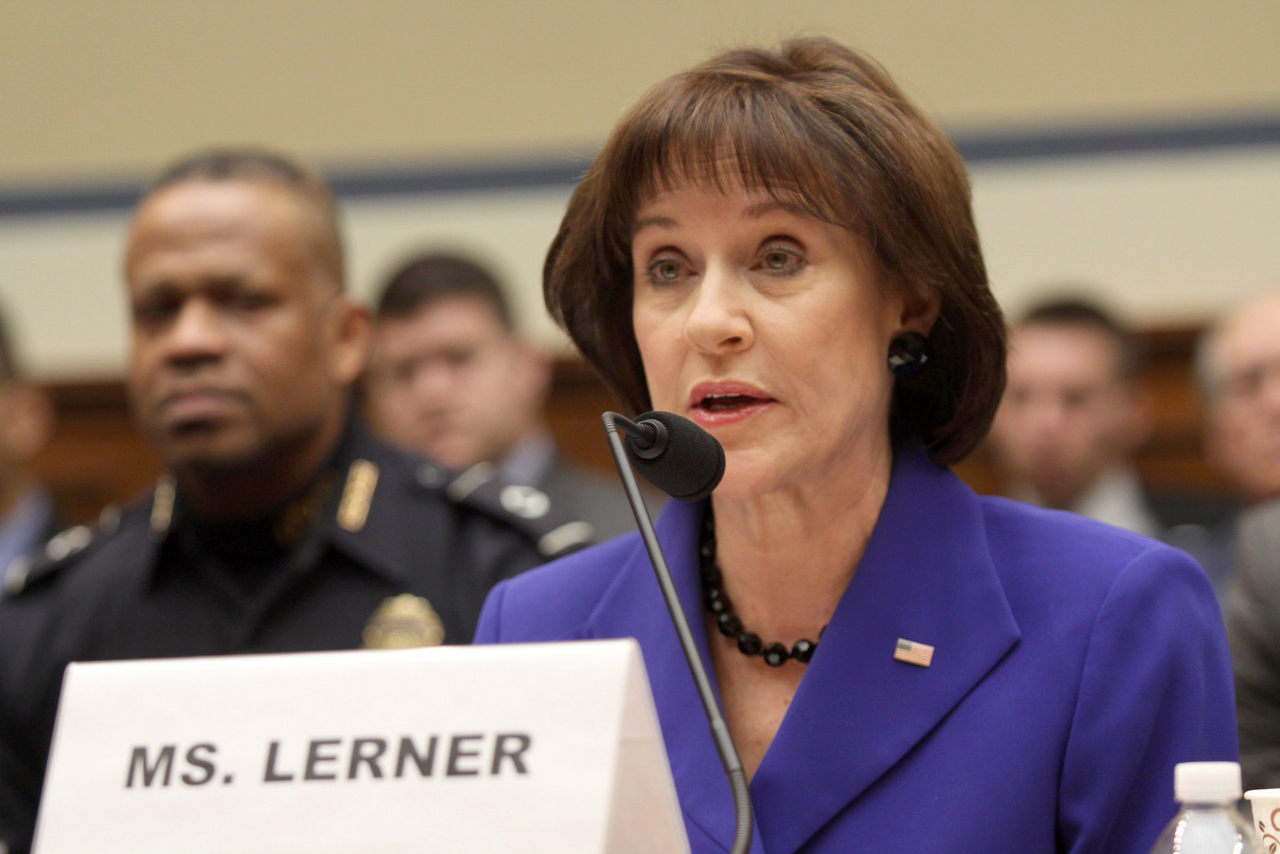
It has been eleven years since Lois Lerner presided over (and then apologized for) the IRS targeting of conservatives during the 2012 election.

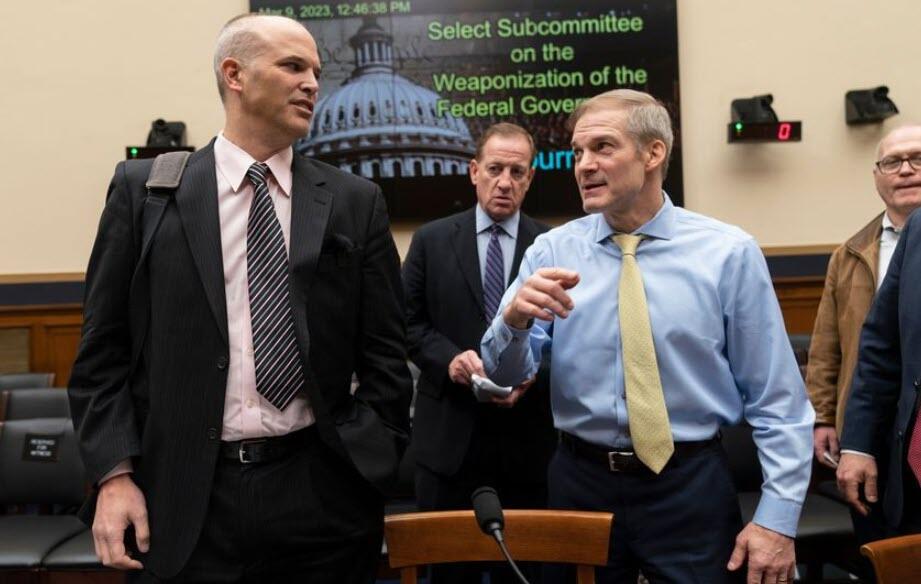
But her “inappropriate… error of judgment” may just have been turned up to ’11’ as during the day when independent journalist Matt Taibbi was in Washington DC delivering testimony to the Select Subcommittee on the Weaponization of the Federal Government on March 9, an IRS agent visited his home in New Jersey, leaving a note demanding he contact the agency within four days.

“Odd” indeed, Mr. Musk.

As The Wall Street Journal reports, Mr. Taibbi was told in a call with the agent that both his 2018 and 2021 tax returns had been rejected owing to concerns over identity theft.

The journalist has provided House Judiciary Committee Chairman Jim Jordan’s committee with documentation showing his 2018 return had been electronically accepted, and he says the IRS never notified him or his accountants of a problem after he filed that 2018 return more than four-and-a-half years ago.

He says the IRS initially rejected his 2021 return, which he later refiled, and it was rejected again – even though Mr. Taibbi says his accountants refiled it with an IRS-provided pin number.

Mr. Taibbi notes that in neither case was the issue “monetary,” and that the IRS owes him a “considerable” sum.

The bigger question on everyone’s minds (most of all Rep. Jordan) is simple –  since when did the IRS dispatch agents for surprise house calls? Is this the new $80 billion budget being well spent to ‘send a message’ to a reporter telling the truth?

The coincidental timing of this unannounced IRS agent visit prompted Rep. Jordan to write to IRS Commissioner Daniel Werfel and Treasury Secretary Janet Yellen, demanding answers:

“In light of the hostile reaction to Mr. Taibbi’s reporting among left-wing activists, and the IRS’s history as a tool of government abuse, the IRS’s action could be interpreted as an attempt to intimidate a witness before Congress. We expect your full cooperation with our inquiry.”

Jordan added that “the circumstances… are incredible,” and “demand a careful examination by the Committee to determine whether the visit was a thinly-veiled attempt to influence or intimidate a witness before Congress.”

And the committee Chair demanded that the IRS and Treasury provide the following documents and information:

1. All documents and communications referring or relating to the IRS’s field visit to the residence of Matthew Taibbi on March 9, 2023;

2. All documents and communications between or among the IRS, Treasury Department, and any other Executive Branch entity referring or relating to Matthew Taibbi; and

3. All documents and communications sent or received by Revenue Officer [James Nelson] referring or relating to Matthew Taibbi.

Yellen and Werfel were given until April 10th to comply with the request.

Will this arrogant show of disdain for democracy – this clear and present danger exposed of government agency ‘weaponization’ at its very apex – be the Alonzo Harris’ undoing of ‘untouchable’ Democratic Party’s grip on power?

We will have to wait and see if Rep. Jordan’s demands for documents are met?

*  *  *

Read Rep. Jordan’s full letter to The IRS and Treasury below:

Tyler Durden
Mon, 03/27/2023 – 22:40

via ZeroHedge News https://ift.tt/5B6hNKS Tyler Durden

Study Confirms Physical Exercise Should Be First Choice For Mental Health Treatment

Study Confirms Physical Exercise Should Be First Choice For Mental Health Treatment

Authored by Jennifer Marguilis via The Epoch Times (emphasis ours),

In a funk? Do you: a) reach for a bag of potato chips, b) call a friend, c) pop an extra anti-depressant, or d) head for the gym to sweat out the sadness?

(Maridav/Shutterstock)

For years, studies have shown that exercise is one of the best ways to treat a range of mental health issues. A new analysis of that whole body of research makes this clearer than ever.

This new study, which was conducted by a team of 13 Australian scientists, was published in February in the British Medical Journal’s British Journal of Sports Medicine.

As the researchers explored, pharmaceuticals are usually the first response to mental health issues worldwide, with lifestyle adjustments like exercise, sleep hygiene, and a healthy diet considered merely as complementary choices, at best.

Even when lifestyle changes are recommended, they are seldom prescribed to patients in treatment by medical doctors.

A Vast Evidence Base

In order to synthesize the evidence on the positive and negative effects of physical activity on depression, anxiety, and psychological distress in adults, the Australian researchers performed an “umbrella overview,” a comprehensive analysis of all the work that has been done on the subject to date.

The idea behind an umbrella review of this type is to try to quantify the strength of the signal.

One scientific study provides some direct evidence that a treatment is useful; but when hundreds of studies confirm each other, taken together, these studies more strongly suggest that a treatment or intervention may be widely effective and applicable.

Since so much research has been done in the field of exercise and mental health, the Australian team sought to examine the totality of the evidence.

To that end, they looked at nearly a hundred reviews, comprising over a thousand studies done, on over 100,000 participants. In other words, they conducted a “systematic [review] of systematic reviews, synthesizing a vast evidence base.”

Exercise Best Treatment for Depression

Mental health is often pushed to the fringe of health care, but half of all people experience some mental health distress at some point in their lives, and more than 10 percent of people worldwide are currently struggling with mental health.

Anxiety is the most common problem—and seems to be becoming more pronounced among children and younger adults—while depression poses the greatest burden to normal life function.

The Australian researchers discovered that exercise provided the best results when used for treating depression. More specifically, exercise was 150 percent more effective than pharmaceuticals or Cognitive-Behavioral Therapy (CBT).

It was also better than psychological consultation or “talk therapy.” In fact, exercise was shown to reduce depressive symptoms by 42 to 60 percent, whereas talk therapy and pharmaceuticals only reduced symptoms between 22 percent and 37 percent.

Exercise was shown to be the best treatment for both anxiety and depression, even though pharmaceuticals are the most commonly recommended treatment for both.

Any Kind of Exercise Works

Every kind of exercise worked. The numerous studies looked at many types and schedules of exercise, and they all worked—doing any movement regularly (including dancing, walking, and yoga) was a big improvement over doing nothing.

Read more here…

Tyler Durden
Mon, 03/27/2023 – 22:20

via ZeroHedge News https://ift.tt/W5gjZIB Tyler Durden

Victor Davis Hanson: Who Owns The University?

Victor Davis Hanson: Who Owns The University?

Authored by Victor Davis Hanson via AmGreatness.com,

The megalomania of the current crop of students, faculty, and administrators at our radical universities blinds them to the claims of their generations of benefactors…

The most recent shout-down debacle at Stanford’s law school, one of many such recent sordid episodes, prompts the question: “Who owns our universities?” 

The law students who are in residence for three years apparently assume they embody the university. And so, they believe they represent and speak for a score of diverse Stanford interests when they shout down federal Judge Kyle Duncan, as if he were an intruder into their own woke private domain. 

After all, Stanford, like most of the Ivy League universities, is a private institution. Are then its board of trustees, its faculty, its students, and its administration de facto overseers and owners? 

Not really. 

In the case of public institutions of higher learning, there is no controversy: The people own the university and, through their elected representatives, pay for and approve its entire budget.

Again, through their selected regents and overseers, the taxpayers adjudicate the laws of these universities.  

But private universities, while different, are not really so different.  

Take again Stanford as a typical example.

It receives about $1.5 billion per year in federal taxpayer grants alone to its various faculty, labs, research centers, and programs. 

Its annual budget exceeds $8 billion. If Stanford accepts such huge federal and state direct largess, do the taxpayers who provide it have some say about how and under what conditions their recipients use their money? 

Second, the university also has accumulated a $36 billion endowment. At normal annual investment returns, such an enormous fund may earn well over $2 billion a year.  That income is almost all tax-free, based on the principle that Stanford is a nonprofit, apolitical institution. 

But is it

One could imagine what would have happened had, say, a radical abortion proponent been shouted down at Stanford Law School. Further, conceive that conservative law students had called her scum and wished for her daughters to be raped. Envision obscene placards flashing in her face—before she was stopped speaking entirely by a conservative Stanford dean who hijacked her talk and informed the pro-abortion speaker that she more or less asked for such a mob reception. The perpetrators, we know, would have been expelled from the law school within 24 hours, and the dean fired in 12. And, alternately, had the architects of this real, vile demonstration faced an open hearing, where evidence of the event was presented, and had been found guilty of violating university policy and then had been expelled and ostracized from the law school, even after much chest-thumping and performance-art braggadocio, it is unlikely the debacle would be repeated. 

Third, the federal government through subsidies and guarantees is liable for over $1.6 trillion in aggregate student loans. Thousands of Stanford undergraduate and graduates are among those indebted and could not attend the university without such taxpayer largess. 

To take a hypothetical, if some 16,000 undergraduate and Stanford graduate students carried on average $20,000 in federally backed student loans, the Stanford student community could be carrying a third of a billion dollars in federal loan guarantees.  

In other words, the private universities of the United States are really not so private at all. They rely on billions of dollars in federal and state research subsidies and grants; billions of dollars in tax-exempt annual income from their endowments; and hundreds of billions of dollars in federally backed student loans that allow them to charge exorbitant tuition at above the annual inflation rate from leveraged and indebted students.  

Given those huge public investments, should not the public have some say in how these universities are run? 

After all, Stanford, and thousands of private universities like it, are not Hillsdale College. Hillsdale long ago lost trust in federal and state government due to their efforts to use their partial funding as a means of politically leveraging the college. And therefore, it has refused all public monies ever since. 

Left-wing major colleges or universities have not done the same because they rightly assume the federal government shares their commitment to radical progressive change. And thus, Washington gives them free rein to discriminate in admission, housing, and hiring, as well as to suspend constitutional protections for faculty and staff—if in service to progressive-regressive agendas. 

But that was then, and this is now. If Stanford’s sordid law school psychodrama taught us anything, it was that the law school mob felt they could threaten, smear, scream, disrupt and shut down a public speaker and do so with complete impunity. And they were right on all counts. 

But if the public “owns” much of private universities given the colossal amount of money it provides them, could the public at last insist that all colleges, public and private, simply abide by the laws of the land? 

That adherence would mean universities, to continue their taxpayer revenue streams, would pledge not to discriminate in their hiring and admissions on the basis of race, gender, or sexual orientation. That public insistence would prompt revolutionary changes on campus. 

Stanford, for example, laudably recently deplored its past antisemitic admissions practices of the 1950s that deliberately restricted the number of Jews who qualified for admission. The university had institutionalized discrimination on the logic it did not want too many Jews on campus, as part of its social engineering to achieve the “correct” student body. Amid its current apologies, Stanford added that in the 1950s it had not been transparent in its warped discriminatory admissions but had either denied or sought to hide its bias.  

Amid its apologies for past discrimination, the university has announced that its incoming class of 2026 includes 22 percent described as “white.” Yet that percentage (remember the university, not us, the public, is obsessed with  categorizing people by race), is less than a third of the percentage of so-called whites in the general public. 

Has this particular group suddenly suffered collectively an epidemic of low grades, poor test scores (on now optional tests for admission) or poor community service and extracurricular activities? 

Would that decline explain why it is so suddenly and vastly “underrepresented”? 

Surely a university currently and loudly apologizing for its past ethnic, racial, and religious discrimination against Jews would not simultaneously, but quietly, begin doing nearly the exact thing some 70 years later

For that matter, since when do universities, public or private, deliberately warp the spirit of the 1964 Civil Rights Act by institutionalizing racially separate graduation ceremonies, racially segregated dorms (“theme houses”), and safe spaces? 

All the legalese universities employ to skirt both state law and federal statutes prohibiting segregation and discrimination—and it is a multibillion industry—cannot hide the fact that in many ways campuses are emulating the spirit and practice of the Old Confederacy and postbellum Jim Crow South, according to the infamous “1/16” or  the “one-drop” rule, to adjudicate hiring and admission, and the apartheid practice of directing particular races to “separate but equal” housing.

Should not private universities also pledge to follow the Bill of Rights and provide constitutional protections for its university community? 

That would mean if a university could not guarantee the right for invited speakers to finish their lectures without being shouted down, physically intimidated, or met with obscene and pornographic slurs and placards, the university then would be liable to suspension of its federal funds. 

Recently, Stanford admitted that it allowed a Stasi-like “snitch” program on campus in which anonymous complainers can lodge complaints against allegedly biased remarks by faculty, staff, or administrators. But is not a hallmark of the U.S. legal system that the accused has a constitutional right to face his accuser? 

In fact, most private universities suspend a great number of constitutional protections when its constituents are accused either of sexual harassment or insensitive speech. Students, especially, in campus hearings are not always allowed to meet their accusers, to cross examine accusations and evidence, or to have legal counsel at all times. 

Should the taxpayers not insist that campuses ensure their communities the same rights of due process, of protection from double jeopardy, of rules of evidence and cross examination as enjoyed by the general public who funds them?  

It is not just the American taxpayer who funds public and even private universities, but alumni and donors as well. The students who shouted down Judge Duncan as “scum” and hoped his daughters were raped are likely at Stanford with at least partial financial support. Many of those endowments are sustained by generous donors. And they too remain a part of the university community, along with faculty, administrators, and various boards of trustees. 

The present radicalization of the campus is based on the egotistical assumption that transitory students own colleges. They believe, by their snobbery (one law student yelled at Judge Duncan that the judge couldn’t get into Stanford Law School) and ephemeral presence on a current campus, that they are the one and only “Yale,” or they are the real “Stanford.” Therefore, they believe they have the right to dictate to—or follow the whims of—their equally transitory radical administrators. 

But for such a claim of ownership to be true, universities would have to self-fund, to raise all their own research dollars, to provide their own loans to their own students—and then to announce that they have no need of all the generous donors who supplied their wherewithal, and all the vast majority of students who do not disrupt, slur, slander, smear, and resort to violence, but do pay their tuition bills and thereby also help ensure viable universities. 

So, who owns American higher education? 

Almost everyone who pays for this now peculiar institution – a fact that the current ungracious woke activists who are passing through colleges are too dense in their megalomania to grasp.

Tyler Durden
Mon, 03/27/2023 – 20:20

via ZeroHedge News https://ift.tt/Z3bMxUG Tyler Durden

Journal of Free Speech Law: “Diversity! Mandating Adherence to a Secular Creed,” by Prof. Matthew Finkin (Illinois)

Just published in volume 2, issue 2 of the Journal of Free Speech Law, and available here; here’s the Introduction:

The academy is rife with contention over the conditioning of faculty ap­pointments on an attestation to or a record of support for a secular trinity: “Di­ver­si­ty, Equity, Inclusion.” These DEI policies seem to be grounded in a syllogism the major premise of which is this: The student population served by the institution includes members of historically marginalized minority groups, long ignored, slighted, or discriminated against societally and, possibly, by the institution itself. The minor premise: It should be part of the university’s mission significantly to address these groups’ needs and aspirations. The conclusion: Every faculty mem­ber, as a condition of appointment, must further that aspect of the in­stitu­tion’s mission in their teaching, research, and service—in one or more. The policy’s emphasis is on the imperative.

What follows will present for study a case in point, the policy adopted at the University of Illinois, the grounding and function of which would seem to be concordant with the rationale undergirding DEI policies elsewhere. The DEI policy requires faculty to satisfy those reviewing their dossiers for tenure and promotion that in research, teaching, and service to the university and to the larger community the faculty member has compiled a satisfactory record of activity in support of diversity, equity, and inclusion. This would seem to resonate sym­path­etically with Justice Powell’s influential opinion in the Bakke case con­cerning the cognizance of race in the admissions process of a public sector law school. Powell opined that the university could take account of race when part of a process that took applicants whole, as individuals who present themselves in near infinite variety in capacities, experience, and interests. But that is not what DEI is about. The policy’s notion of diversity requires that the persons subject to its concern must be fit into categories identified by a group attribute and by goals attributed to the group.

As the ensuing unpacking of the policy makes no small demand on the reader, it would be well at the outset to anticipate the result. As will become clear, the wrongs wrought by the policy are three: First, by folding socio-political goals into the process for tenure and promotion the policy conflates those ends with professional qualifications. This conflation infringes academic freedom. Further, were it to become acceptable for a university to commandeer its faculty toward socio-political ends, made part of the faculty’s professorial obligations, there would be no principled reason why those who fund the institution—the legislatures—should not impose those socio-political ends that they hold dear.

Second, for the DEI rules to withstand constitutional muster, the faculty member being evaluated, who is required to make a record of DEI activity, and those evaluating that record must be able to discern with clarity what sorts of activities in support of what groups with what goals and to what extent will satisfy the mandate. The clarity of guidance on the former, what groups with what goals, is questionable; on the latter, the extent of engagement, is nonexistent.

Third, and paradoxically, were clarity to be addressed what would be made even more clear is that continuance on the faculty is conditioned on support of groups to further favored political or social ends. This infringes on the scholar’s political and private life; it is illegitimate from an institutional perspective and un­law­ful from a constitutional one.

The University of Illinois’ DEI policy will be explored. The academic freedom and constitutional implications will then be examined. Because much of the public debate on both accounts has turned on an analogy to the loyalty oath controversy of sixty years ago, out of which the Supreme Court’s reflections on the relationship between academic freedom and the first amendment grew, the oath will be taken up as a useful lens through which DEI can be considered.

The post Journal of Free Speech Law: "Diversity! Mandating Adherence to a Secular Creed," by Prof. Matthew Finkin (Illinois) appeared first on Reason.com.

from Latest https://ift.tt/SOwHVzQ
via IFTTT

Millennials Dominate Insolvencies In Canada As Credit Card, Student Loan And Other Debts Pile Up

Millennials Dominate Insolvencies In Canada As Credit Card, Student Loan And Other Debts Pile Up

As US millennials distinguish themselves as the ‘buy now, pay later‘ generation, their Canadian counterparts are leading the way when it comes to insolvencies, according to Ontario-based insolvency trustee firm, Hoyes Michalos, which performs an annual “Joe Debtor” analysis.

According to Doug Hoyes, millennial Canadians have been dealt a generational losing hand, as debts from credit cards, high-interest loans and tax debt, and debt owed from the country’s taxable financial support during the pandemic known as the Canada Emergency Response Benefit (CERB).

“I think there’s a whole bunch of whammies that have hit millennials,” said Hoyes. “The CERB was the final straw that broke the camel’s back.”

The 2022 Joe Debtor study examined 2,700 personal insolvencies filed in Ontario. Hoyes Michalos says 49 per cent were filed by millennials aged 26 to 41, even though they make up 27 per cent of adult Canadians.

The study found that on a per−population basis, millennials were 1.4 times more likely to file for insolvency than people in generation X aged 42 to 56, and 1.7 times more likely than baby boomers aged 57 to 76.

Insolvent millennials were on average 33 years old and owed an average of $47,283 in unsecured debt. –Canadian Press

According to Hoyes, many people didn’t set aside taxes when they received CERB and other pandemic-related relief funds. Now, a flood of young Canadians have found themselves insolvent and unable to continue paying down their various debts. 

Hoyes says the millennials have been given a bum rap, and didn’t enjoy the same societal benefits as older generations – whose wages kept up (better) with inflation, and went to college when tuition didn’t require student loans – allowing graduates the ability to enter the workforce and start saving and investing right away, as opposed to having to service large debts in addition to pulling off a house.

He also says there’s no ‘safety valve’ like there use to be.

“Anything goes wrong like a pandemic, or you lose your job or you get sick or you get divorced and boom, there is no safety valve there,” said Hoyes, who added that filing for bankruptcy is an option to eliminate debts, however most people end up working with insolvency trustees to file proposals to manage their debt.

“It becomes an affordable way to eliminate the debt, and that’s why we’re seeing more and more millennials resorting to consumer proposals,” he said. “They really have no other choice.”

According to Winnipeg-based credit counselor Sandra Fry, many young people are looking for ways to manage debt without declaring bankruptcy.

“Unfortunately, a lot of people out there are living on the edge of their affordability,” she said, adding that inflation is “really squeezing Canadians in general from all sides.”

Millennial clients she’s dealt with lately have often had variable interest rate mortgages, and rate hikes “caused huge strain on their budget because their payments just went up like crazy.”

Dave Locke, 31, lives with his wife in Coquitlam, B.C., east of Vancouver, and the couple sought Fry’s help when their mortgage payments jumped dramatically in the middle of a costly renovation.

Locke, who works for a real estate brokerage, got into the housing market at a young age having worked in the oil and gas industry after high school.

He ended up buying a home in Coquitlam with his wife Tara, who works in labour relations, and the Bank of Canada’s rate hikes eventually saw their monthly mortgage payments jump 40 per cent.

The couple had a construction loan with their bank to fund the renovations, and as interest rates climbed and the price of construction materials ballooned, Locke realized something had to give, even with their relatively high combined incomes. -Canadian Press

“I’m still paying the full balance,” said Locke. “I’m just not paying any additional interest.”

He says that while it’s embarrassing to be in so much debt, “it’s just the way it goes.”

You have to kind of swallow your pride.

Tyler Durden
Mon, 03/27/2023 – 19:20

via ZeroHedge News https://ift.tt/ExJ7q2v Tyler Durden