It’s Getting Ugly Out There

It’s Getting Ugly Out There

Authored by Brendan O’Neill via The Spectator,

The shameful persecution of Posie Parker in New Zealand

This is what it must have been like when women were marched to the stake.
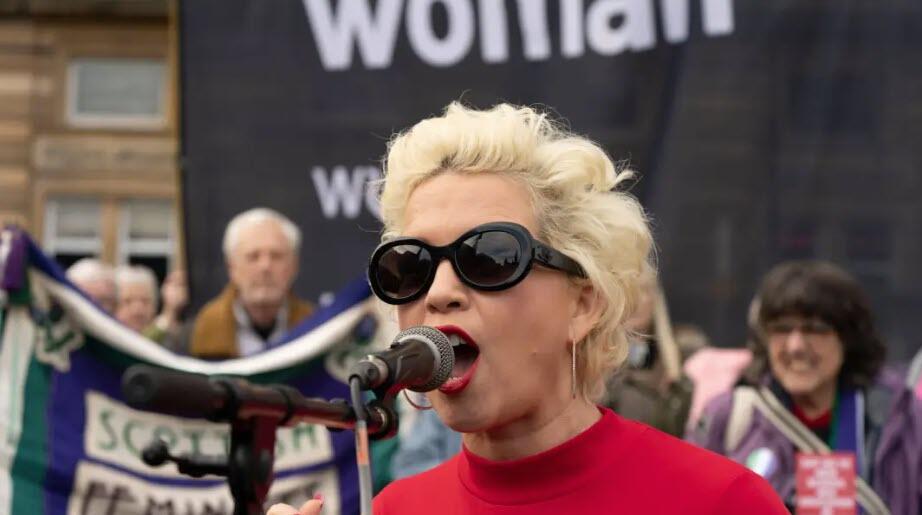
Yesterday in Auckland the British women’s rights campaigner Posie Parker found herself surrounded by a deranged, heaving mob.

She had tomato soup and placards thrown in her face. She was doused with water. Huge men screamed insults and expletives in her face. The shoving of the crowd became so intense that Parker feared for her life. ‘I genuinely thought that if I fell to the floor I would never get up again’, she said. ‘My children would lose their mother and my husband would lose his wife.’

It was a truly chilling spectacle. The mobs’ faces were twisted into masks of feral hatred. They ranted in frenzy as the diminutive Parker, her bottle-blonde hair stained orange from the soup that had been dumped on her, desperately tried to make her way to the safety of a police car. It was a ritualistic shaming of a witch, a violent purging of a heretic.

Next time you’re reading a history book and find yourself wondering how Salem came to be consumed by such swirling hysteria, watch the clips of Posie’s persecution in New Zealand. This is how it happens. This is how the fear of witches can overrule reason and unleash the darkest, most punitive passions of the mob.

And what is Parker’s crime?

What did this witch do?

She said, ‘A woman is an adult human female’.

That’s it.

Parker, whose real name is Kellie-Jay Keen-Minshull, is well known for her criticism of the ideology of transgenderism. She thinks a man never becomes a woman, no matter how many hormones he takes or surgeries he undergoes. She thinks if you were born male, you will die male, and in the time in between you have no right whatsoever to enter any women-only space.

This is heresy.

Dissenting from the gospel of gender ideology is to the 21st century what dissenting from the actual gospels was to the 15th. And so Parker must be punished. It was a modern-day stoning, so mercifully they only threw soup and water and planks of cardboard at the blasphemer.

Parker organises public events called ‘Let Women Speak’. She has done it across the UK, in parts of the US, and for the past couple of weeks she’s been doing it in Australia and New Zealand.

It’s a genius initiative. She knows these gatherings of women who merely want to give voice to their profane belief that sex can never be changed will draw out crowds of intolerant trans activists and their allies. She knows the ‘Be Kind’ mob will do everything in its power to stop women from speaking. And she knows it will all brilliantly illustrate her core belief: that trans activism is misogyny in disguise, misogyny in drag, if you like, and that it has devoted itself to silencing women who believe in biology.

Australia and New Zealand played their parts brilliantly in Parker’s clever scheme. From Melbourne to Canberra, Hobart to Auckland, huge crowds of the right-on turned up to drown out the voices of the pesky women who dare to call men ‘men’. ‘Let women speak’, Parker says. ‘No’, says the mob. She incites them to confess their misogyny and intolerance in full public view. And they do. 

Auckland was the worst. At Albert park in the centre of the city yesterday, the mob could not hide its vengeful loathing of the uppity women who disagree with its ideologies. Parker is a new kind of witch, one who willingly submits herself to a witch-trial, so that the rest of us might see just how dogmatic and unforgiving the new witch-hunters are. I am full of admiration for her. Her courage is shining a light on the visceral intolerance that advances under the banner of identity politics.

The events in Auckland should be a wake-up call for liberals everywhere. We glimpsed the iron fist of authoritarianism that lurks in the velvet glove of ‘Be Kind’. The misogynistic streak in trans extremism is undeniable now. Watch enraged men kicking down metal barriers so that they might get closer to the witch Posie and tell me this isn’t sexism masquerading as radicalism. Witness the crowing of men who are delighted that the mob made the ‘coward TERF’ run away and tell me this isn’t chauvinism on steroids. Behold the use of megaphones and expletive-laden chants and physical menace to silence a woman and tell me this isn’t a sexist, censorious crusade against women’s freedom of speech.

That mob in Auckland did not emerge out of thin air. No, it was a brutish manifestation of a regressive idea that has been taking hold for some years. Namely, that it should be forbidden to dissent from gender ideology. That it is bigotry to state biological facts. That it ought to be a punishable offence – whether that punishment is being No Platformed or sacked or having objects thrown in your face – to say men are men and women are women.

To see where censorship ends up, just look at those grimacing agitators in Auckland, hatred spreading like a current through their number, as they fight with every fibre of their being to prevent the expression of a critical idea. Censorship begets bigotry. It begets violence itself. For the more we tell people that certain words will hurt them, the more we witlessly incite people to hurt those who dare to utter certain words.

That mob was drunk on sanctimony. This is what happens when we tell people their identity is the most important thing in the world and that anything that so much as grazes their self-esteem is an outrage that must be crushed.

We nurture a generation of navel-gazing Torquemadas.

Posie has exposed them, yet again, and for that she deserves our thanks. This time round, the witches might just win. 

Tyler Durden
Sun, 03/26/2023 – 23:30

via ZeroHedge News https://ift.tt/SmOTN41 Tyler Durden

How Much Does A Bottle Of Water Cost?

How Much Does A Bottle Of Water Cost?

Buying bottled water is a luxury that not everyone in the world can afford.

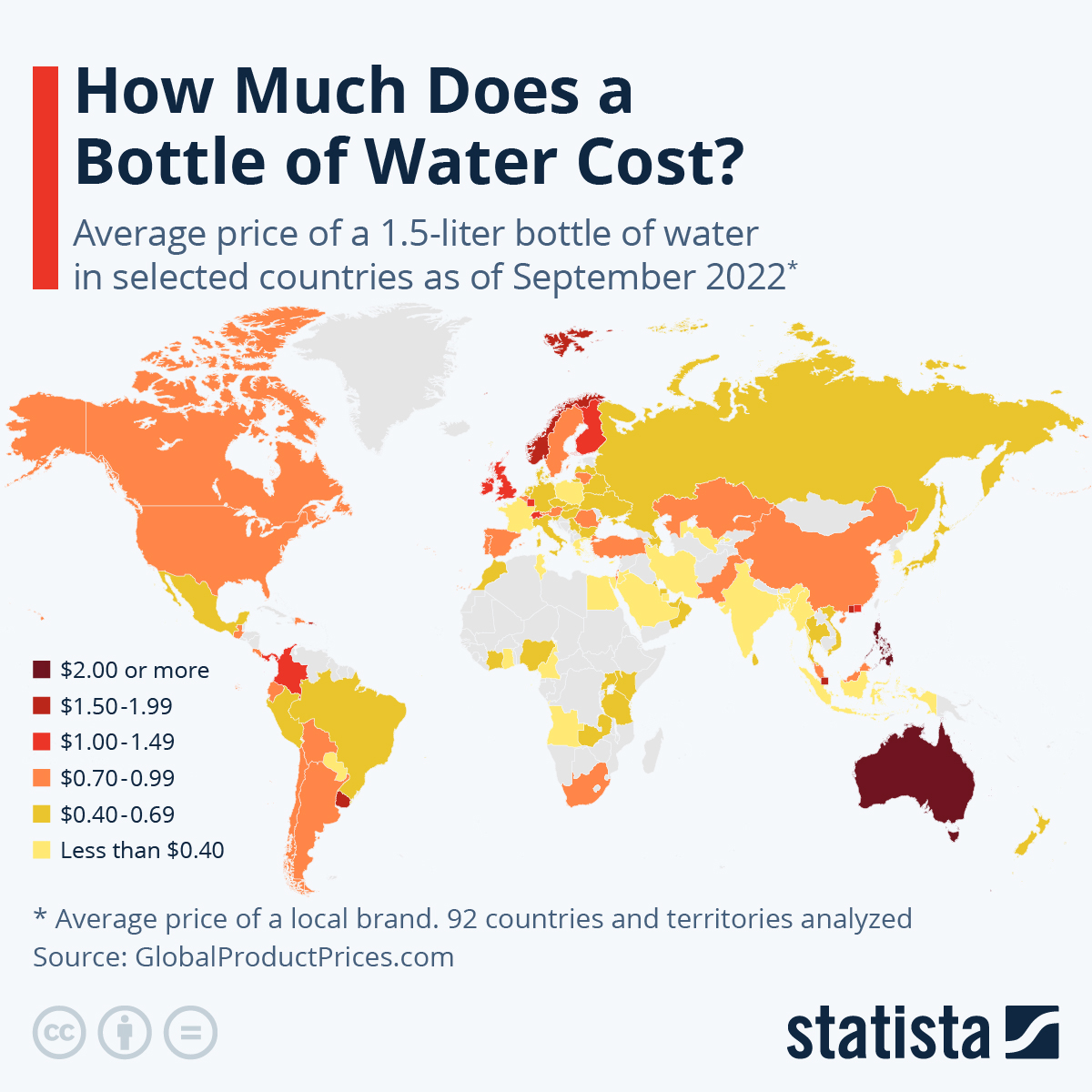
Statista’s Anna Fleck reports that a 1.5-liter bottle of water from a local brand costs an average of $0.70 globally, according to 92 countries analyzed in September 2022 by the website GlobalProductPrices.com.

Infographic: How Much Does a Bottle of Water Cost? | Statista

You will find more infographics at Statista

Australia and the Philippines are the markets where bottled water is the most expensive, at US$2.02 per bottle.

Singapore, Uruguay, Puerto Rico and Norway also have some of the highest prices, with between US$1.59 and US$1.74 per 1.5 liters of bottled water.

On the other hand, countries such as Egypt and Tunisia have the lowest prices, at $0.14 and $0.20, respectively.

In Iran and Bangladesh, a bottle of water is also available for less than $0.25.

Tyler Durden
Sun, 03/26/2023 – 23:00

via ZeroHedge News https://ift.tt/IuECJqS Tyler Durden

Prosecutor Admits DC Police Officers Acted As Provocateurs At US Capitol On Jan. 6

Prosecutor Admits DC Police Officers Acted As Provocateurs At US Capitol On Jan. 6

Authored by Joseph M. Hanneman via The Epoch Times (emphasis ours),

A federal prosecutor admitted in court papers that three D.C. Metropolitan Police Department undercover officers acted as provocateurs at the northwest steps of the U.S. Capitol on Jan. 6, 2021.

Two members of the Metropolitan Police Department’s Electronic Surveillance Unit approach the northwest side of the Capitol on Jan. 6, 2021. (Metropolitan Police Department/Screenshot via The Epoch Times)

The admission came in a March 24 filing before U.S. District Judge Rudolph Contreras that seeks to keep video footage shot by the officers under court seal.

Prosecutors accused the case defendant—William Pope of Topeka, Kansas—of an “illegitimate” attempt to unmask the video as part of his alleged strategy to try the case in the news media. Pope filed a motion to remove the court seal on Feb. 21.

The defendant is not entitled to ‘undesignate’ these videos to share them with unlimited third parties,” said Assistant U.S. Attorney Kelly Moran. “His desire to try his case in the media rather than in a court of law is illegitimate, and the government has met its burden to show the necessity of the protective order.”

Videos long hidden under court seal have become a major topic, especially with prosecutors disclosing in a number of high-profile Jan. 6 cases the involvement of multiple FBI informants.

Pope is seeking to lift the court seal on the undercover video as part of his drive to obtain full access to video evidence held by the government. Pope is representing himself in the criminal case being prosecuted against him. At a hearing on March 3, Judge Contreras seemed sympathetic to Pope’s motion to unmask the videos.

“Officer 1,” a member of the D.C. Metropolitan Police Department’s Electronic Surveillance Unit, shot video while he shouted at protesters to climb the northwest steps to the Capitol on Jan. 6, 2021. (Metropolitan Police Department/Screenshot via The Epoch Times)

“The officer clearly incited that area, and we still don’t have video from all other undercover MPD,” Pope told The Epoch Times. “And as the numerous informants in the Proud Boys trial demonstrates, we are only just beginning to scratch the surface on FBI involvement.”

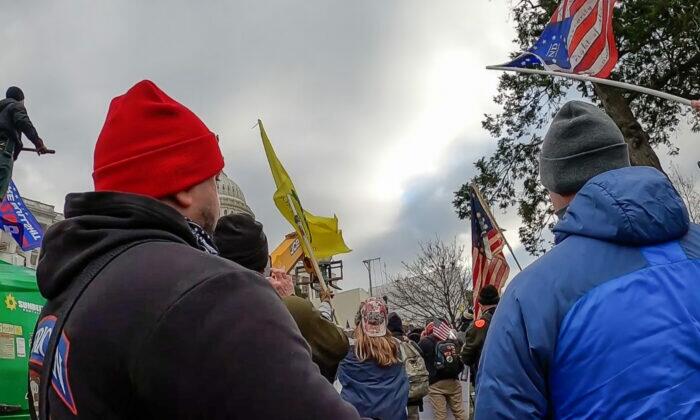
The undercover video—a portion of which posted on Rumble on March 24—shows three members of the MPD’s Electronic Surveillance Unit approach the Capitol’s northwest steps. One of the men, while surveying the crowd, stated, “Someone’s going to get shot.”

Officer 2 replied, “They’re not going to shoot anybody.”

Along the edge of the Capitol property, Officer 2 encouraged one protester to go up to the building. “Go join ‘em then,” he said. The man replied, “No, I’ve got my bike to guard.”

The men engaged in banter on the walk across the west Capitol lawn.

‘Never Seen Anything Like This’

“This is amazing,” Officer 2 said. Officer 1, who was shooting the GoPro video, replied, “Yeah, I’ve never seen anything like this.”

Nearly 30 members of the Electronic Surveillance Unit were assigned to duty on Jan. 6, some of whom were gathering evidence on crowd activity. Members wore special bands on their left wrists to identify themselves as part of the Electronic Surveillance Unit, according to the MPD’s 96-page Jan. 6 action plan.

Officer 1 repeatedly joined in chants of “Drain the swamp!” and “Our house! Our house! Our house!”

A little closer to the Capitol, the video captures a protester shouting, “Joe Biden! We wanna hear you speak, you [expletive] pedophile satanist [expletive]!”

A short time later, Officer 1 joined the crowd in a “USA!” chant, repeating the phrase five times.

At the foot of the northwest stairs, someone leaned part of a bicycle rack against the balustrade. As a protester climbed up the makeshift ladder, Officer 1 shouted, “C’mon, man, let’s go! Leave that sh*t.”

Read more here…

Tyler Durden
Sun, 03/26/2023 – 22:30

via ZeroHedge News https://ift.tt/CPAhe9O Tyler Durden

“This Is What Armageddon Would Look Like For The US”

“This Is What Armageddon Would Look Like For The US”

Biggie:

“We get guaranteed bank deposits when there’s a bank run,” Barked Biggie Too.

“We get energy rebates when there’s a war,” continued the Chief Global Strategist for one of Wall Street’s Too-Big-To-Fail affairs.

“And we got stimmy checks when we had Covid,” bellowed Biggie.

“What are we gonna get when unemployment starts heading higher?”

And of course, you never interrupt Biggie when he’s on a roll, so I just nodded.

Bank activity, commercial real estate, it’s all contracting. Why couldn’t we have a big, nasty recession in the 2nd half?” asked Biggie.

“If investors start losing faith in US gov’t credibility over the debt ceiling and the poor handling of this banking crisis, and we get the progressives screaming for stimmy checks at the first hint of rising unemployment, then we got a real problem,” said Biggie.

“They start talking about UBI and it’s over,” he said, dropping to a whisper.

“And let me tell you what Armageddon is. It’s a -200k non-farm payrolls report that leads to a 50bp rise in long-term bond yields. And that’s where the people running policy are leading us. To be an emerging market.”


Tyler Durden
Sun, 03/26/2023 – 22:00

via ZeroHedge News https://ift.tt/fKP3ar4 Tyler Durden

Higher education faces an inflection point with DEI

Universities have long had strong commitments to diversity. This fixation was necessitated by Justice Powell’s concurrence in Bakke, and later Justice O’Connor’s majority opinion in Grutter. Admissions offices and hiring committees were trained to recruit the “right” under-represented candidates, while assigning low personality ratings to the “wrong” under-represented candidates. In any other context, such pretext would immediately be smoked out. But when you’re on the right side of the justice-arc, the tails are ignored. These practices likely violate federal law, but we will have to wait for the Supreme Court to weigh in. Still, the work of admissions offices and hiring committees was front-loaded. These organizations did not have any impact on the curriculum, and what was actually taught in the classroom. Nor should they have. These matters were traditionally left to faculty governance, and academic freedom.

In the last decade however, there has been a change. Universities began to establish offices of diversity, equity, and inclusion (DEI). The exact role of these entities was always amorphous, but it soon became clear their role would extend beyond admissions and hiring. Rather, DEI sought to inject itself into every facet of academic institutions where DEI could be at issue–that is, everywhere. Following the final year of the Trump presidency–which included George Floyd, the pandemic, and the Capitol riot–this aggrandizement accelerated. At many institutions, DEI has some oversight over the curriculum, student organizations, and even the faculty themselves. Of course, this design inverts the usual hierarchy of academia. DEI should be an administrative department with no more power than finance or IT. But armed with the cause of moral justice, and backed by aggrieved students, DEI can steamroll over pliant faculty who are afraid to push back and be called racists.

Judge Duncan’s protest is a perfect illustration of that dynamic. Much has been said about what Dean Tirien Steinbach said. But a better question is why was she the one to speak? SLS has many associate deans who could have represented the administration. Indeed, there were several deans present in the room, including Jeanne Merino, the acting associate dean of students. Why did the DEI Dean speak at the podium? Steinbach claimed in the WSJ that she “was asked to attend the event by the Federalist Society.” I am skeptical of this claim–and I am 100% confident that FedSoc would not have invited Steinbach if they knew she would not enforce the policy, but would instead berate Judge Duncan. But let’s assume FedSoc invited her as the mediator. And let’s assume that Steinbach’s fellow associate deans, and even Dean Martinez, designated her as the representative of the administration. Why?

On today’s campus, DEI administrators are among the most powerful positions. When every single conflict is refracted through the lens of race, it is of course obvious that DEI should be the sole arbiter of those disputes. (I’m sure many critics will dismiss this post as a byproduct of racism.) Consider the actual words that Steinbach used. She spoke on behalf of the administration:

And there is always an intention from this administration to make sure you all can be in a place where you feel fully you can be here, learn, grow into the amazing advocates and leaders and lawyers that you’re going to be.

Because me and many people in this administration do absolutely believe in free speech.

Steinbach obviously thought she could speak on behalf of the Stanford Law School. And why would she think that? For some time, these roving bureaucrats have assumed a limitless jurisdiction to touch every facet of an academic institution that could fall within the chasm of diversity, equity, and inclusion–roughly the emptiness of the Grand Canyon.

But Steinbach was wrong. Dean Jenny Martinez did not give Steinbach “snaps,” but did place her on leave. Steinbach likes to decorate her office with “ampersands” to signify the word “and” over “or.” However, Steinbach should become intimately familiar with another punctuation mark: a period. Because her tenure will soon come to an end.

There is much to praise about Dean Martinez’s letter. In many regards, she performed better under pressure than did Dean Gerken last year. Perhaps the comparison is unfair, since the “traphouse” situation happened first, at a school not bound by the First Amendment. Martinez had the benefit of more preparation time, as well as the Leonard Law. Still, both Deans were forced to confront these problems caused by DEI Deans. Last year, Gerken gently chastised Associate Dean Ellen Cosgrove and Diversity Director Yaseen Eldik. They were allowed to leave, quietly. In June 2022, Cosgrove retired, and Eldik was reassigned to a non-student facing position. Martinez, however, dropped the hammer right away.

How can it be, that at two elite institutions, DEI deans acted in a manner contrary to free speech, and placed their deans in intractable crises? Eldik and Steinbach apparently thought they were following university policy. They were so, so wrong.  Still, this perspective certainly cannot be limited to Yale and Stanford. I suspect DEI deans across the country were quietly snapping along with Steinbach.

Thus, a foundational question: is DEI, as understood by Steinbach and Eldik, consistent with the mission of higher education. I think the answer has to be no. Michael McConnell, the only right-of-center scholar at Stanford, made this point sharply in WSJ:

Nor is it possible to ignore the damage that university diversity bureaucracies can do to the scholarly values of liberal education. Diversity and inclusion are of course good things, but neither value is advanced by partisanship and censorship.

Dean Martinez hinted at this problem:

The university’s commitment to diversity, equity, and inclusion can and should be implemented in ways that are consistent with its commitment to academic freedom and free speech. See Marc Tessier-Lavigne and Persis Drell, Advancing free speech and inclusion, (Nov. 11, 2017), https://ift.tt/lKYFV5d. Indeed, for the reasons explained below, I believe that the commitment to diversity, equity, and inclusion actually means that we must protect free expression of all views.

Again, how could it be that well-trained DEI Deans at elite institutions can have such a fundamentally flawed vision of the purpose of an academic institution? And what are these DEI staff teaching law students? Indeed, Steinbach doubled-down on her position in the WSJ:

Diversity, equity and inclusion plans must have clear goals that lead to greater inclusion and belonging for all community members. How we strike a balance between free speech and diversity, equity and inclusion is worthy of serious, thoughtful and civil discussion. Free speech and diversity, equity and inclusion are means to an end, and one that I think many people can actually agree on: to live in a country with liberty and justice for all its people.

Compare what Martinez said with what Steinbach said. Martinez wrote from a classical liberal perspective:  DEI “actually means that we must protect free expression of all views.” Free expression is the ends, and DEI is one of many means of getting there. Steinbach wrote from a utilitarian perspective: free speech and DEI are both “means to an end” to achieve “liberty and justice.” For Martinez, free speech prevails over DEI. For Steinbach, free speech and DEI are both mere tools that are subordinate to some amorphous concept of “liberty and justice” (presumably defined by progressives like Steinbach). And when free speech does not lead to DEI, then the free speech must be subordinated. Steinbach made this point explicitly. She questioned whether the harm from Duncan’s speech justified his presence. In other words, where the juice is not worth the squeeze, you don’t squeeze. Steinbach is unrepentant, and preaching from the DEI gospel. Again, I presume many DEI deans who read the Wall Street Journal were quietly snapping along.

Martinez, thankfully, rejects the notion that the University can even agree on what “liberty and justice” means. The University should avoid taking any institutional positions:

At the same time, I want to set expectations clearly going forward: our commitment to diversity, equity, and inclusion is not going to take the form of having the school administration announce institutional positions on a wide range of current social and political issues, make frequent institutional statements about current news events, or exclude or condemn speakers who hold views on social and political issues with whom some or even many in our community disagree. I believe that focus on these types of actions as the hallmark of an “inclusive” environment can lead to creating and enforcing an institutional orthodoxy that is not only at odds with our core commitment to academic freedom, but also that would create an echo chamber that ill prepares students to go out into and act as effective advocates in a society that disagrees about many important issues.

I could not agree more. Universities do not pursue any orthodoxies like “liberty and justice,” however defined. Universities provide a place in which ideas can flourish. Moreover, most of these statements are, at best virtue signaling, and at worst, embrace a substantive position on a matter of public debate. The university must remain neutral in the battle of ideas. All juice is worth the squeeze.

Higher education faces an inflection point. Stanford is just the cardinal in the coal mine. Deans must choose whether to allow DEI to erect their own fiefdoms that will tower over a school’s academic mission. Or Deans, like Martinez, can restore the proper balance of powers between academic departments.

In a future writing, I will offer some suggestions of how universities can confine the jurisdiction of DEI officers to prevent a repeat of what happened at Stanford. A preview: faculty who care about academic inquiry will have to get their hands dirty. This juice will be worth the squeeze.

The post Higher education faces an inflection point with DEI appeared first on Reason.com.

from Latest https://ift.tt/s8jDGWT
via IFTTT

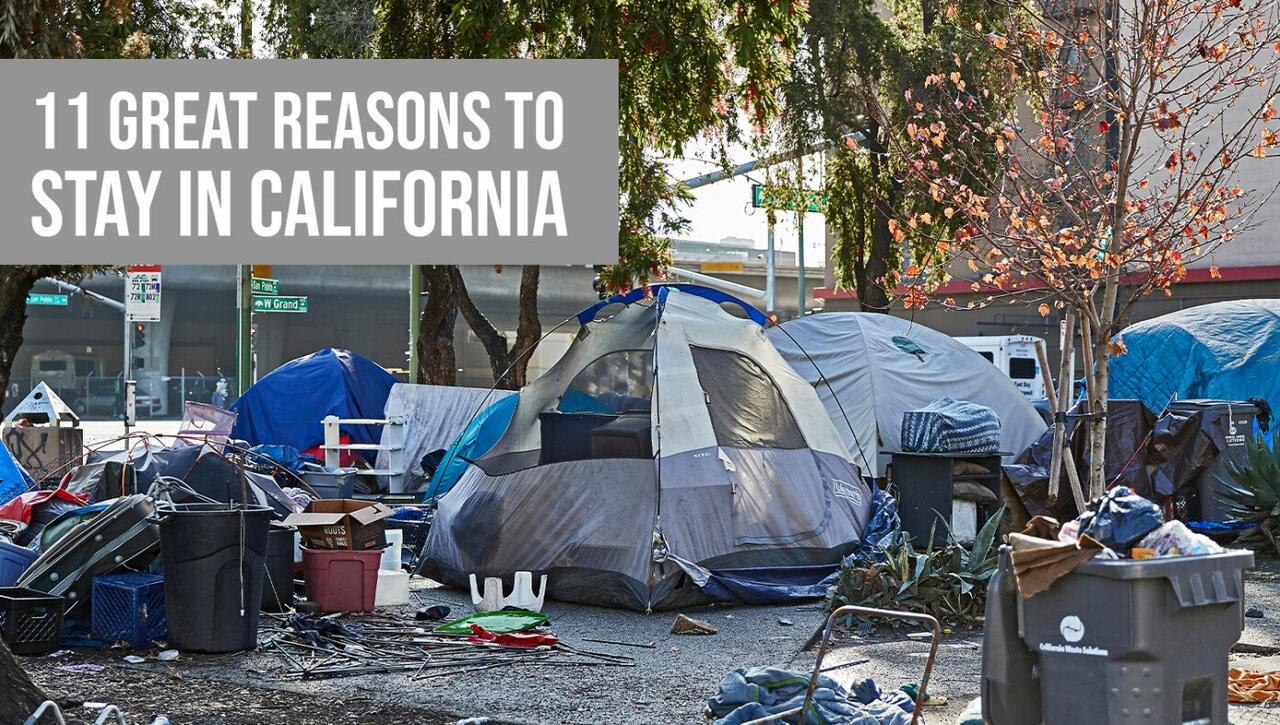
Sunday Satire: 11 Great Reasons To Stay In California

Sunday Satire: 11 Great Reasons To Stay In California

Via Babylon Bee,

According to reports, hundreds of thousands of people have fled California in recent years, citing minor annoyances like aggressive homeless people, increased violent crime, and crippling taxes.

Some experts believe that by 2030, the only person left in California will be Gavin Newsom – and he’ll spend half his time on his ranch in Montana.

But all these concerns citizens have may be overblown.

There’s still a lot to love about the Golden State.

Here are 11 great reasons to stick around:

  1. Zillow estimates your cardboard box house will be worth $3 million in just a few years – Hoooold – HOOOOOLD!!!

  2. If you identify as black you have a decent chance of scoring millions in reparations soon – Pull a Rachel Dolezal and you can be cashing in big time any day now.

  3. There are beautiful natural sights like the warm glow of forest fires lighting up the skies – We call them “the golden lights,” and they’re magnificent.

  4. Everyone will be gone soon and then there will be no lines at Disneyland – You’ll have to push the button to start up the tea cups yourself, but no more waiting!

  5. Everything at CVS is free – Even better than no waiting – no paying for anything!

  6. When you pay your massive state tax bill, you get a sense of satisfaction that you’re supporting some hobo’s fentanyl addiction – No amount of money saved can make up for that feeling.

  7. Law-abiding citizens don’t have guns, so there is never any crime – It’s science.

  8. There’s great weather outside of fire season, drought season, and deadly mudslide season – There are three days in April without fires, droughts, or mudslides. Enjoy them.

  9. You can ski and surf on the same day, even though you haven’t done either in years – But you can be smug in the knowledge that you could if you really wanted to. (But you don’t). (But you could).

  10. You can go camping right on the sidewalk – No permit required.

  11. Best of all, the government will make all your decisions for you – This is maybe the best reason to stick around: you won’t be burdened with pesky concepts like “liberty” and “personal responsibility.” Good ol’ Gavin will take care of ya.

Well, that’s all we can think of.

If these didn’t convince you, then move to Texas and enjoy your lame “freedom” and “guns.”

Tyler Durden
Sun, 03/26/2023 – 21:00

via ZeroHedge News https://ift.tt/UNytrui Tyler Durden

Morgan Stanley Asks When Will Central Banks Worry More About Financial Stability Than Inflation

Morgan Stanley Asks When Will Central Banks Worry More About Financial Stability Than Inflation

By Seth Carpenter, Morgan Stanley chief global economist

It Ain’t Over ‘Til It’s Over

Major central banks have hiked rates despite volatility in markets. They collectively said that inflation clearly means it is too soon to conclude that the hiking cycle is over. The banking sector developments haven’t stopped the hiking, and indeed, I have noted that the idea of focusing on financial stability at the expense of inflation is a false dichotomy. Central banks are deliberately tightening financial conditions in order to slow their respective economies and thereby bring inflation down…while hopefully avoiding an unnecessarily painful recession. What the banks disruption does, however, is make it harder to
calibrate the correct degree of tightening.

Inflation is clearly the priority for central banks. On March 16, the ECB noted that it projects inflation to stay “too high for too long.” Chair Powell was similarly blunt, saying that “inflation remains too high.” And even though the BoE expects inflation to fall significantly in 2Q23, it worried that a strong labor market and an improving growth outlook could reinforce the persistence of inflation. So, what’s a poor central bank to do?

Central banks’ main tool is the policy rate. Higher rates tighten financial conditions, which slows economic growth. That chain of causality becomes more important in the current circumstances, because while policy has tightened financial conditions, so too have disruptions in the banking sector. Ideally, central banks would separate the issues, using different tools to deal with macroeconomic issues versus financial stability, but they know an interaction exists. So, they are watching developments in the banking sector to see if continued rate hikes have an outsized or nonlinear effect on financial conditions. To date, their conclusion has been “no.”

The ECB did not see volatility in financial markets as a reason to pause or to do a smaller hike. Nevertheless, the ECB did not provide particularly strong guidance about what the next policy move would be. It wants more tightening of financial conditions, but it also wants to understand what is in train. Similarly, the Fed followed through on its rate hike as we anticipated, and Chair Powell was explicit that credit market tightening works in the same direction as policy tightening. According to Powell, the banking sector disruption provides restraint akin to one or two more rate hikes. Thus, the dot plot did not show more hikes than in December, despite stronger incoming economic data. Instead of focusing on one objective versus another, central banks are keeping their eyes on inflation while trying to adjust to changing financial conditions.

When would central banks worry more about financial stability than inflation? When inflation is no longer an issue, because in response to instability, the financial markets would deal such a blow to the real economy that we would experience a severe recession. If anything, the Fed told us that it was willing to absorb even more economic pain to reduce inflation than it had in the past. Not only is the Fed projecting three years of below-potential growth (2022, 2023, and 2024) to bring inflation down (almost) to target at the end of 2025, it also reduced its forecast for growth this year and next, along with a slightly higher path for policy.

So how does it end?

If disruption in the banking sector delays an extension of policy tightening, then a soft landing is still possible. Our banking analysts see higher funding costs and rising deposit betas combined with tighter lending standards restricting loan growth. This view is consonant with Powell’s. But the downside risks have gotten bigger. A broader, more persistent contraction in credit would cause a recession given that growth will be near zero in the best version of the world. And central banks will be ruling out the upper tail of possible outcomes. The ECB is clearly focused on inflation, so growth can be sacrificed, and upside surprises like last week’s PMIs will add to its resolve.

January’s strong data in the US initially led Powell to re-open the door to 50bp rate hikes. The other lesson from the past two weeks is that the “no landing” notion never made any sense.

Central banks were always going to force a landing, one way or another; the banking sector may hold the key to which kind.

Tyler Durden
Sun, 03/26/2023 – 20:30

via ZeroHedge News https://ift.tt/C2Wz8YK Tyler Durden

Autism On The Rise: CDC Data

Autism On The Rise: CDC Data

Autism rates in US children have jumped from one in 150 in 2002 to one in 36 in 2020, or 2.8%, according to a new study published by the Centers for Disease Control and Prevention (CDC).

Photo via Kimberly Paynter/WHYY.org

The findings come from the CDC-funded ‘Autism and Developmental Disabilities Monitoring Network,’ launched in 2000 “to collect data to better understand the number and characteristics of children with autism spectrum disorder and other developmental disabilities living in different areas of the United States.”

The program spans 11 states, including Arkansas, Maryland and Tennessee.

Autism, also known as autism spectrum disorder, is a wide-ranging developmental disability that manifests in various ways – but which typically includes trouble with communication and social interactions.

The study also found that boys were far more likely to have autism than girls.

That said, the report also notes that the communities included in the program “are not representative of the entire United States,” while other federal autism programs are meant to be nationally representative. As the Epoch Times notes, the last nationwide autism estimate for children aged 3 through 17 was 2.9%, in-line with the latest figures from this study.

Another new paper published by the CDC’s Morbidity and Mortality Weekly Report found that more 4-year-olds were being diagnosed with autism from 2016 through early 2020 vs. the previous four years.

One explanation: “Our best guess, consistent with the general rise in autism prevalence rates, is that it is more equitable access to evaluations and diagnoses,” according to Kelly Shaw, a CDC epidemiologist and one of the researchers, in a comment to Today.

Tyler Durden
Sun, 03/26/2023 – 20:00

via ZeroHedge News https://ift.tt/j1sO6c9 Tyler Durden

‘The Real Question Is How Many’: James O’Keefe Suggests He Has Multiple Insiders In Manhattan DA Case Against Trump

‘The Real Question Is How Many’: James O’Keefe Suggests He Has Multiple Insiders In Manhattan DA Case Against Trump

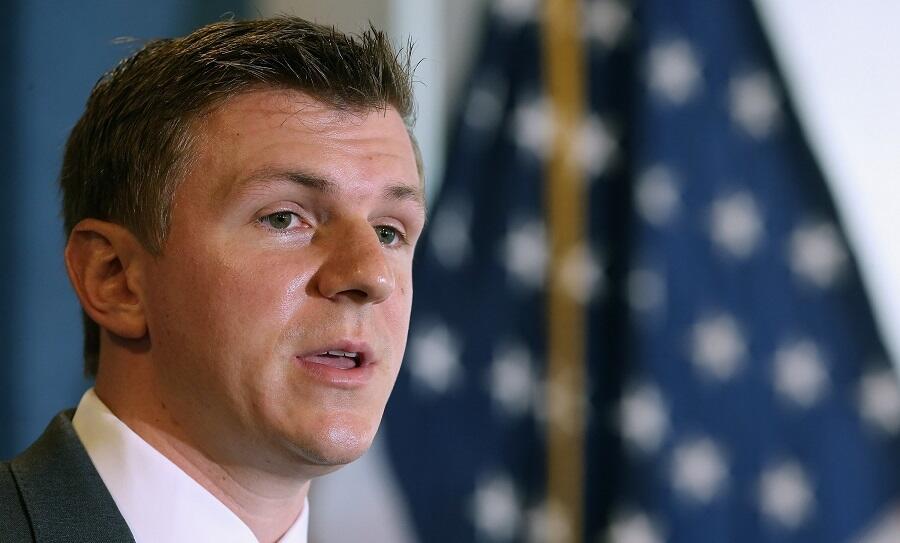
James O’Keefe, the founder and former head of undercover reporting and whistleblower organization Project Veritas, has suggested that he has multiple insiders in the Manhattan DA’s case against former President Donald Trump – either on the grand jury, or otherwise familiar with (or involved in) the case.

“NY DA Bragg likely hid exculpatory evidence from the Trump Grand Jury as their meetings have been postponed,” said political influencer Ryan Cunningham, adding “The real question is has @JamesOKeefeIII got to someone on the inside?

To which O’Keefe replied “The real question is how many do we have on the inside? Stay tuned.”

Trump is being investigated by the Manhattan DA over a payment made to former adult film star Stormy Daniels (real name Stephanie Clifford).

More on O’Keefe’s new venture via The Epoch Times;

O’Keefe founded Project Veritas in 2010. He departed the group in February after the board of directors suspended him amid an investigation into alleged financial malfeasance. His new project is called O’Keefe Media Group, or OMG.

O’Keefe said that the new group has been sending cameras out, “which means the OMG army of exposers will soon be holding those in power accountable.”

O’Keefe warned people who are planning wrongdoing, adding: “You’re being watched. We’re coming after you. The next time you try and take advantage of honest Americans, the person sitting next to you might have a microphone or a camera. You see, the world is watching. And if you’re lying, cheating, stealing, or scamming, you might be the next unwilling star of the internet.”

OMG’s first story will be released on March 27, O’Keefe said.

At least one Project Veritas staffer has followed O’Keefe to the new project. R.C. Maxwell, a former Project Veritas employee, was in O’Keefe’s new video.

O’Keefe said in another Twitter post he’d just spent one day this week in three states.

“Just wrapped a 20 hour day. Three states, multiple investigations fueled by so many citizens,” he wrote.

New Model

OMG is based on the concept of collecting funds from supporters, buying cameras, and sending them to “citizen journalists” who will capture newsworthy moments.

News outlets “can’t hire everybody,” O’Keefe told The Epoch Times on March 16. “But what if there was a way to empower and mobilize journalists, citizen journalists, and decentralized journalism? In the same way that Uber did that for the taxi, if there was a way to do that for thousands and thousands of people? And you might say, well, that’s impossible, that’s too difficult. Well, that’s the mission that I’m embarking on.”

People have already approached OMG, asking for cameras to record school meetings and other events, O’Keefe said.

Asked whether the citizen journalists would be paid, O’Keefe said he wasn’t sure.

Most people want to do this for free,” he said.

I don’t know exactly how it’s going to work, we’re going to figure it out,” he added later.

O’Keefe said being ousted from Project Veritas has turned out to be a “blessing in disguise” because it let him start the new group.

Tyler Durden
Sun, 03/26/2023 – 19:00

via ZeroHedge News https://ift.tt/GYP3xi0 Tyler Durden

Will You Play It Fast And Loose?

Will You Play It Fast And Loose?

Authored by MN Gordon via EconomicPrism.com,

“How should I play that one, Bert?  Play it safe?  That’s the way you always told me to play it: safe… play the percentage.  Well, here we go: fast and loose.  One ball, corner pocket.  Yeah, percentage players die broke, too, don’t they, Bert?”

– Fast Eddie Felson, The Hustler

QT2 Master Plan

Stopping the excess is always much harder than starting it.  But sometimes it must be done.  And done all the way.  Half measures avail nothing.

On June 1, 2022, Fed Chair Jay Powell commenced Quantitative Tightening (QT) Part 2.  “Brace yourself,” was the advice of JPMorgan Chase CEO, Jamie Dimon.  Were his banker cohorts listening?

The master plan for QT2 was for the Fed to reduce its holdings of Treasury notes and mortgage-backed securities by a combined $47.5 billion per month for the first three months (July thru August 2022).  Then, by September 2022, the Fed would start reducing its balance sheet by a total amount of $95 billion a month (i.e., $60 billion in Treasuries notes and $35 billion in mortgage-backed securities).

Wells Fargo Investment Institute took the Fed at its word and even projected that its balance sheet could shrink by almost $1.5 trillion by the end of 2023.  Taking it down to around $7.5 trillion.

To anyone with a memory that extends back longer than two years, it was obvious that there wasn’t a snowball’s chance in hell the Fed would contract its balance sheet to $7.5 trillion by the end of 2023.  At the time, we remarked“We’ll bet dollars to doughnuts this never happens.”

Our certainty was not based on any special insight about the future.  It was merely the recognition that QT1 flamed out early.

Specifically, it took 24 months for the Fed to reduce its balance sheet by $800 billion between October 2017 and September 2019 (in the wake of a $3.5 trillion expansion).  That was before QT1 abruptly ended in repo-madness.

QT2 Fail

Like all plans of central planners, the QT2 plan laid out by the Fed to extinguish nearly double the ‘assets’ in 19 months that were terminated in 24 months during QT1 was nothing but a pipe dream.  Clearly, something was bound to break well in advance of the Fed hitting a balance sheet of $7.5 trillion.

By now we all know what broke.  Silicon Valley Bank broke.  As did Signature Bank, First Republic Bank, and Credit Suisse.  More banks could fail too, even in the face of mega bailouts being engineered by activist central banks.

With respect to the Fed’s balance sheet, after peaking at over $8.9 trillion in April 2022, it fell roughly $626 billion through the end of February 2023.  As of March 15, 2023, the Fed’s balance sheet had jumped $300 billion.  And by the time you’re reading this, or shortly after, we’ll know how many more hundreds of billions in credit the Fed has created out of thin air to liquify the financial system.

In short, QT2 was a complete and utter failure.  Of the $626 billion reduction that occurred, $300 billion was added back – in a matter of days.  This massive increase marks the return of Quantitative Easing (QE).  It also surfaces an important question.

How much Fed credit creation – out of thin air – will be needed to stem the banking crisis?

One trillion dollars, $5 trillion, $10 trillion?

Your guess is as good as ours.  In matters like this, however, it is always best to think in big, round numbers.  So, don’t be surprised when the Fed’s balance sheet eclipses $20 trillion over the next several years.

Inflation Deflation

Inflation of the money supply is inflation in the truest sense.  It’s what comes first.  Asset price inflation and consumer price inflation then follow in wild and unpredictable ways.

Are these massive new additions to the Fed’s balance sheet inflationary?

By definition, yes.  As the inflation of the Fed’s balance sheet supplies additional credit to the financial system.  But how will this inflation impact asset and consumer prices?

This is to be determined.

The immediate concern is credit contraction and debt deflation.  The forces causing banks to go belly up are relentless.  As TradeSmith recently noted, the money supply (M2) is contracting for the first time in the modern era.  Liquidity has disappeared from the marketplace.

For example, for investors holding the $17 billion of Credit Suisse’s additional tier 1 (AT1) bonds, the banking crisis is deflationary.  This includes retail investors in Asia, PIMCO, Invesco, and Legg Mason, among others.  Their investment – principal, interest, the whole nine yards – has been written down to diddly-squat.

But what about for SVB depositors, including those with accounts above and beyond FDIC insurance limits?  Is the BTFP bailout inflationary when depositors are merely being made whole?

Make of it what you will.  The moral hazard of it all, which rewards bankers for going hog-wild speculating with customer deposits, is a disaster.

What is clearly inflationary, and what is explicitly driving consumer prices higher, is the massive amount of deficit spending being racked up by Washington.  The federal government has already spent $723 billion more than it collected in revenue in fiscal year 2023.  Yet the fiscal year hasn’t even reached the mid-point.

According to the Congressional Budget Office, the FY 2023 deficit is projected to hit $1.4 trillion.  This is on top of the $1.38 trillion deficit accumulated in FY 2022.  Thus, as the credit market contracts, and banks fail, consumer prices will remain elevated.

Will You Play It Fast And Loose?

With consumer price inflation just off its highest levels in over 40 years, we suppose the massive deficit spending combined with the broadening scope of the bank bailouts will be a tailwind for rising consumer prices.  This is especially true as shameful opportunists like Senator Elizabeth Warren use the politics of the bank crisis to justify creative ways to inject printing press money into the economy.

But at the moment, we expect the real action will be in asset prices.  And there’s great uncertainty in how it will all play out.

Those expecting Fed liquidity to pump up the stock market should moderate their enthusiasm.  That time will come.  But first, there’s plenty of wreckage in the debt market that needs to reconciled, written off, or bailed out.

This week Fed Chair Powell, following the federal open market committee meeting, hiked the federal funds rate 25 basis points to a range of 4.75 to 5 percent.  This, no doubt, is deflationary for the debt market.  It furthers the negative carry problem that banks foolishly got themselves in.

Still, what could Powell do?  Inflation is out of control.  It must be restrained.  Shortsighted decisions made during the COVID Panic must be corrected.  Moreover, with Washington spending like drunken sailors, Powell must hold the line as long as politically feasible.

Ultimately, it’s a losing cause.  Interest payments on the national debt during the current fiscal year are up 29 percent year over year.  Soon enough, the Fed will have to cut rates to bail out Washington – inflation be damned.

In the interim, a hardcore stock market panic is in store.  We expect this will be one for the history books.  We also expect it will provide buying opportunities of a lifetime, which most people will miss out on.  Are you psychologically prepared to buy when the time is right?

At the point of maximum fear, when the sky is falling, the world is ending, and shares of Bank of America trade below $8, what will you do?

Will you play it safe?  Or will you play it fast and loose?

*  *  *

As the financial system falls apart and the economy slips into a recession, a great distraction will be needed to control the masses.  In this regard, is Washington secretly provoking China to attack Taiwan?  Are your finances prepared for such madness?  Answers to these important questions can be found in a unique Special Report.  It’s called, “War in the Strait of Taiwan?  How to Exploit the Trend of Escalating Conflict.”  You can access a copy for less than a penny.

Tyler Durden
Sun, 03/26/2023 – 18:30

via ZeroHedge News https://ift.tt/jImpFWH Tyler Durden