North Korea Touts ‘Radioactive Tsunami’ Weapon Test At Sea
North Korea claimed Friday to have tested a nuclear-capable underwater drone designed to generate a gigantic “radioactive tsunami” that would destroy naval strike groups and entire ports. Analysts were skeptical that the device presents a major new threat, but the test underlines the North’s commitment to raising nuclear threats.
But according to The Associated Press, analysts in the West are deeply skeptical of the claims or that the weapon presents a major new threat, at a moment the Pentagon has expanded its activity on the Korean peninsula.
State-run Korean Central News Agency (KCNA) described that the drone is designed to “stealthily infiltrate into operational waters and make a super-scale radioactive tsunami through an underwater explosion” – and that it can either be deployed directly from the coast or towed by ships.
KCNA said that North Korea is responding to this month’s joint US-South Korea drills, which it considers a huge provocation. The state media report described an ongoing “nuclear crisis” due to Washington’s “intentional, persistent and provocative war drills.”
Kim Jong Un has also promised to make his rivals “plunge into despair” if North Korea continues to be threatened. This week the North Korean government launched a major new recruiting drive, hosting events across the country while conducting near daily test launches of projectiles – including a test last Sunday which included a ‘mock nuclear warhead’ as a warning to Seoul and Washington.
State media described that “youth college students from universities in various places as well as high-end middle school students from all over the country” expressed their determination “to join forces in the fight…”
The KCNA report additionally cited citizens’ willingness “mercilessly wipe out the war maniacs” – in what’s also clearly a propaganda blitz and bit of signaling aimed at the south and at the west. At the same time, Pyongyang is apparently seeking to impress its enemies and the world by rolling out new high-tech weapons.
Earlier today Susan Schmidt and I published an article about a series of changes at the Cybersecurity and Infrastructure Security Agency (CISA), a creepy sub-division of the Department of Homleand Security. It turns out that CISA, which just a week or so ago was busted for scrubbing embarrasing text from its website by the Foundation for Freedom Online, quietly eliminated its so-called “MDM” or “Misinformation, Disinformation, and Malinformation” subcommittee.
Just a year ago, the Department of Homeland Security was going all-in on the fight against “MDM.” The notion that America is fatally infected with “Misinformation, Disinformation, and Malinformation” was in fact the animating idea begind the asinine plan the Biden administration announced last April to institute a “Disinformation Governance Board,” which was to be headed by Nina Jankowicz, a self-styled Mary Poppins of digital rectitude:
America took one look at Jankowicz and at most a few fleeting moments considering the “Disinformation Governance Board” plan before concluding, correctly, that it was a beyond-loathsome expression of aristocratic arrogance that needed shutting down before the first Jankowicz presser. Characteristically, the press lied about the public reaction, claiming that the only displeasure was heard from the “GOP.” In fact, all sane people across the spectrum were instantly nauseated, their distress loud enough that the DHS hit “pause” on Jankowicz and the batty MinTruth plan after just three weeks.
Even that might not have been fast enough, as was discovered by my co-author Sue Schmidt, who’s formerly of the Washington Post but joined Racket this month for a special report a team of us are preparing on what fellow #TwitterFiles reporter Michael Shellenberger calls the “Censorship-Industrial Complex.” (More on that later). Looking through the minutes of CISA’s subcommittee meetings last year, Sue found that the DHS’s little team of self-appointed information guardians was deeply worried about the “rollout” of their war against MDM, worrying repeatedly about how to “socialize” or “pre-socialize” various parties to the idea of a federal truth squad, realizing that just presenting the actual plan to a sentient person without lots of sweeteners wouldn’t go well.
One subcommittee member, whose name in the spirit of our times is of course redacted, seemed to realize the concept was too hot to discuss in public. She “suggested removing mention of MDM” — this, from a member of the “MDM subcommittee”! — and “framing” the subcommitee’s efforts more in terms of “directing people to clear information about elections procedures.” Another member recommended CISA “point more to state officials and state laws to make the authoritative source of information less controversial. In other words: “Let’s make it sound like someone other than the hated us is running this thing!”
Even two years ago, nobody was paying attention to this world and the public, if it cared at all, was probably inclined to welcome more “election procedures” (as CISA would later call them), not fewer. So the DHS, sensibly one must conclude, dissolved its incorrectly named “Countering Foreign Influence Task Force” — the group spent most of 2020 zapping domestic election posts — renamed it the MDM subcommittee, and began meeting and posting about the need to build “national resistance” to “domestic threat actors.” As Sue just reported, these folks saw “MDM” everywhere here at home, insisting “CISA should consider MD across the information ecosystem,” which included talk radio, cable news, mainstream media, and “hyper-partisan media.”
The architects of this plan not only genuinely believed themselves above such temptations, but saw nothing wrong with asking for massive sums of money — Joe Biden’s first economic proposal sought $690 million for CISA — to captain an open-ended war on American badthink, as defined by [names redacted]. Here again, take note of Jankowicz’s lyrics:
It’s like when Rudy Giuliani shared bad intel from Ukraine
Or when TikTok influencers said COVID can’t cause pain
They’re laundering disinfo and we really should take note
And not support their lies, with our wallet, voice or vote!
This was a group of self-described experts in an utterly fictitious “anti-disinformation” discipline who were so sure it was okay for them to tell you whom not to vote for, one of them sang about it. This, despite the fact that of the ones whose names we know, like Jankowicz, many were open swallowers of the dumbest Russiagate hokum, like the Alfa-Server story.
I spent a long time covering the 2008 Wall Street crash, which meant devoting large amounts of energy to some of the world’s most unredeeming people. These were swindlers who sold snake-oil mortgage products that put millions out of their homes and wiped out retirement funds of people who spent decades working as toll operators, firefighters, teachers. Such predators were awful, amoral people, but all the same, I occasionally found myself writing with something like admiration. These crooks were creators of truly ingenious schemes who did what they did out of lust, greed, jealousy, and other (at least identifiably human) forms of depravity.
These [name redacted] would-be censors are different. They have no sense of humor, no imagination, and exactly one distinguishing characteristic: they know what’s best for you. Anti-disinfo work suits them because they all have a Poppins streak that quietly gets off on binning your digital dirty bits (after the voyeuristic thrill of logging on to watch them in secret, with special credentials, which they rub with pleasure in evenings). They’re the vilest kind of snobs, and when they finally were forced to show their real selves to the public — and here I feel safe in thanking Elon Musk for making that possible, via the #TwitterFiles — the public rightfully recoiled from these arrogant power-worshipping mediocrities.
The Governance Board was already dead, and now the whole MDM mission is being wound down, which feels like a win. Perhaps they’re just publicly retreating from the concept for now, but at this point, I’ll take that. Moreover there are signs everywhere that people are losing their fear of departing from the orthodoxy such types would like to impose, and pushing for a return to normalcy, which for the first time in ages feels within reach.
There was a ridiculous scene at Stanford law school recently, in which a conservative judge was muffled by a gaggle of future lawyers who’d been led by an assistant Dean in a characteristically moronic shouting-down exercise. The current strain of Junior Anti-Sex League-type protesters who fill campuses from coast to coast now sure do love their “heckler’s veto…”
The Stanford Law School Dean Jenny Martinez was brilliant in response. Instead of doing what the heads of organizations have been doing for years in such situations, instead of doing, frankly, what I did during my own cancelation episode — frantically over-apologizing to people who have no use for or interest in apologies — Martinez sternly called the students out as clowns, reminding them in a long, serious, punishing letter that if they ever become officers of the court, they will be held to a higher standard than “lay people,” swearing to conduct themselves “at all times with dignity, courtesy and integrity.”
Martinez went further, saying that on her watch, the school would not be doing the usual and committing itself to starter slates of political positions out of fear of reproach. “Our commitment to diversity, equity, and inclusion is not going to take the form of having the school administration announce institutional positions on a wide range of current social and political issues,” she wrote. The age of just giving in to mobs instead of insisting on our right to have different opinions and beliefs seems to be receding. It is beginning to dawn on sane, tolerant people everywhere that there are more of us than there are of them, and this still matters in a democracy.
There’s a reason why these people are so focused on technocratic solutions, from magic AI schemes to control information to deploying packs of Boston Dynamics robot-dogs, who’ll patrol suburban neighborhoods and peer in windows for visual confirmation of Alexa-overheard transgressions. General Mark Milley just said on a podcast that armies may be fully robotic in 15 years, arousing general neoliberal giddiness (Milley quoted Dylan). These people need tech, because you know what they don’t have? Friends. Organic support. Or, ways to win them, like art, music, literature, or comedy.
I have a theory about what happened to America in this regard. After 9/11, people were scared, and they fell for a succession of propaganda campaigns convincing them that the hole in Fortress America, the chink in our national armor, was our system of democratic rights.
The “MDM subcommittee” members think the same way: there’s a section in one of last year’s meetings in which a former Secretary of Washington State notes that the bad countries, “such as Russia, use the First Amendment effectively.” Moreover, in general, “our adversaries… use our Constitution effectively.” They’ve been telling us this stuff ever since the Towers came down. We were told our enemies will use even our open system of justice against us, so forget the admirable streak of America never having had an in-camera criminal trial. Let’s clear the court even for deportation hearings of suspected terrorists, they said. Let’s not even tell the public the names of the deported!
“The era that dawned on September 11th, and the war against terrorism that has pervaded the sinews of our national life since that day, are reflected in thousands of ways” the Third Circuit Court wrote in 2002, adding: “Since the primary national policy must be self-preservation,it seems elementary that, to the extent open deportation hearings might impair national security, that security is implicated.”
It was the same with torture, rendition, watch lists, drones, whatever. To respond to terrorism, we were told, we needed to be more “nimble” than old-school democracy allowed. We couldn’t wait for congress to declare wars, or build probable cause, or afford the right to face one’s accusers. The stakes were too high for such luxuries. Even giving “enemy combatants” Geneva convention rights would confer legitimacy to the opposition it didn’t deserve, and we couldn’t afford to give that legitimacy. Our grip on safety was that tenunous.
No: the new era of a West infected with a borderless evil returned from the 8th century needed a bureaucracy of super-empowered minders, who’d do torturing if it needed doing, and quietly make lists of who gets to fly or open a bank account. Most of all, these minders would make those terrible decisions about who gets to live and die in a drone-patrolled world. The Imitation Game from 2014, starring Benedict Cumberbatch and telling the awful tale of Alan Turing’s quest to crack the Enigma code, was a great movie, but perhaps also the ultimate portrait of the Obama-era political class, whose members all saw themselves as misunderstood geniuses quietly saving civilization through endless mathematical murder, committed from afar, by remote control, without fanfare or appreciation.
America balked some at George W. Bush as “The Decider,” but was more than happy to let the Community Organizer head up those secret decisions. With the genial and patient-sounding Obama in office, the deciders assumed a new brand of business-casual cruelty. I vividly remember going to a ballgame with a longtime Justice source in those years, someone I liked, who casually told me in between bites of a hot dog that of course we should just drone Julian Assange, because he was a “terrorist,” and the “reality is, you just have to kill them.”
Each year, more and more of government became classified, and we had less and less access to information about where tax dollars were being spent, or what was going on at places like the Federal Reserve. We let it happen, abandoning the democratic responsibility to govern ourselves, in the process willing the world’s smuggest aristocracy into existence. It wasn’t the worst time — a lot of good TV was made in those years — but while we were napping, these people were turning America into a secret administrative state committed to endless war, mass surveillance, social credit scoring, censorship, and other horrors, a system that’s only just now beginning to show itself.
The managerial state was held in place for over a decade by a kind of magic spell, which works thanks to the public’s faith in the competence of our minders. That spell held by default for an extra four years while Trump was in office, but it’s been broken now, in part thanks to refuseniks like Musk (who caused all kinds of havoc by opting out of an airtight information-control cartel), but mainly because we’ve now had enough opportunities to examine up close the loathsome nanny-staters to whom we surrendered all those years ago. Whatever hold these people had on us, and it was real — I spent years worrying about regaining the favor of people who were denouncing me as a Russian asset even as they demanded my vote — it’s gone now, and we can start thinking about moving on to something better.
This is what I choose to think, this weekend evening. We don’t have to concede to a future of always being at war somewhere abroad, and with each other at home. We don’t have to put up with a government that doesn’t tell us anything. Most of all, we can go back to enjoying life, on our own terms, without stressing over an endless succession of panics invented by politically insecure losers. We can do so much better, and we will, because this place is ours to run, a fact the singing censors should never have let us remember.
Denver Suburb Caps Number Of Gas Stations To ‘Promote Electric Vehicles’
A suburb of Denver, Colorado has voted to ban the construction of new gas stations in order to address ‘environmental concerns with the continued use of gasoline powered vehicles and equipment.’
The Louisville City Council voted unanimously on Tuesday in support of a 2022 ordinance limiting the number of gas stations to six – with an exception carved out for one more (for a total of seven) if big box stores such as Costco or Sam’s Club build a store that’s 80,000 feet or larger and includes a gas station.
The limitation includes existing gas stations.
A 79-page report of the ordinance issued by the City Council on the day of the vote in part states such caps on gas stations “is a growing trend for local municipalities due to health and environmental concerns with the continued use of gasoline powered vehicles and equipment.”
The reports also states gas station “bans may also be seen as promoting the use of electric vehicles.” –Just the News
The report acknowledges that gasoline is still required for non-electric vehicles.
“The proposal for a cap but not a full ban on new gasoline and automobile service stations is in recognition that there will continue to be some demand for gasoline and automobile service stations as more EVs enter the market and gasoline vehicles are transitioned out of the market over time,” it reads.
The proposal included letters from the community in support of the ordinance.
“I strongly support and encourage you to not allow the further construction of fossil fuel refueling stations (gas) in our community. All of us, not just the citizens of our community, need to move quickly away from fossil fuelconsumption,” reads one letter from resident Channah Horst.
“If you are a climate denier then my plea falls on deaf ears. If you acknowledge the peril our planet is in then it is your responsibility to do what you can to help us make changes in the way we live. In other words–do not make it easier for me and my fellow residents to keep using gasoline.“
Eric Lund, Executive Director of the Louisville Chamber of Commerce opposed the move, writing “If you limit the number of gas stations then competition could become an issue as our local residents will likely have to pay higher prices if open market competition is blocked by an ordinance of this type,” adding “I am not sure that there is a benefit by limiting the number of gas stations which typically also include retail stores and would be interested to understand the thought behind how this ordinance helps to support local businesses and our residents in the area.
US State Department Lifts ‘Assignment Restrictions’ Used To Discourage Foreign Recruiting
The US State Department has lifted so-called ‘assignment restrictions’ which prevented employees – some of whom would hold top-secret clearances – from serving in countries they had immigrated from, or have family or financial relationship with, after Democratic lawmakers said it was discriminatory – particularly against Chinese and Pacific Islander employees.
The move follows a 2021 bill introduced by Reps. Ted Lieu (D-CA), Joaquin Castro (D-TX), Andy Kim (D-NJ) and Chrissy Houlahan (D-PA), who have discarded national security concerns to end a practice that “disproportionately impacts federal employees who can’t trace their heritage to the Mayflower and directly undermines the department’s goal of promoting diversity and inclusion,” Politicoreports.
State Department data reveals that around 1,800 employees are subject to assignment restrictions – with the top four countries being China (196), Russia (184), Taiwan (84) and Israel (70).
According to Secretary of State Antony Blinken, the change came after he lifted more than half of the restrictions during his first year in office, which opened “new possible assignments” for hundreds of US diplomats.
“Today, I’m pleased to share that after a rigorous review, I have decided that, moving forward, the Department will end its practice of issuing new assignment restrictions as a condition placed on a security clearance.”
Those currently subject to assignment restrictions will be allowed to go through a new review and appeal process. That said, some restrictions will remain in place, such as those related to a situation “in which a foreign country may consider an employee to be one of their own nationals,” or when there are “assignments to posts rated critical for human intelligence threats.”
Perhaps all those millions of dollars which flowed from CCP-linked individuals to the Biden family are once again paying off?
One of Biden’s answers to combating higher gas prices has been to tap into America’s oil reserves. While I was never a fan of the U.S. Strategic Petroleum Reserve (SPR) program, it does have a place in our toolbox of weapons. We can use the reserve to keep the country running if outside oil supplies are cut off. Still, considering how out of touch with reality Washington has become, we can only imagine the insane types of services it would deem essential next time an oil shortage occurs.
Sadly, some of these reserves found their way into the export market and ended up in China. We now have proof that the President’s son Hunter had a Chinese Communist Party member as his assistant while dealing with the Chinese. Apparently, he played a role in the shipping of American natural gas to China in 2017. It seems the Biden family was promising business associates that they would be rewarded once Biden became president. Biden’s actions could be viewed as those of a traitor or at least disqualify him from being President.
The following information was contained in a letter from House Oversight Committee ranking member James Comer, R-Ky. to Treasury Secretary Janet Yellen dated Sept. 20.
“The President has not only misled the American public about his past foreign business transactions, but he also failed to disclose that he played a critical role in arranging a business deal to sell American natural resources to the Chinese while planning to run for President.”
Joe Biden, Comer said, was a business partner in the arrangement and had office space to work on the deal, and a firm he managed received millions from his Chinese partners ahead of the anticipated venture. While part of what Comer stated had previously been reported in the news, the letter, cited whistleblower testimonies, as well as emails, a corporate PowerPoint presentation, and a screenshot of encrypted messages. These as well as bank documents that committee Republicans obtained suggest Biden’s knowledge and involvement in the plan dated back to at least 2017.
The big point here is;
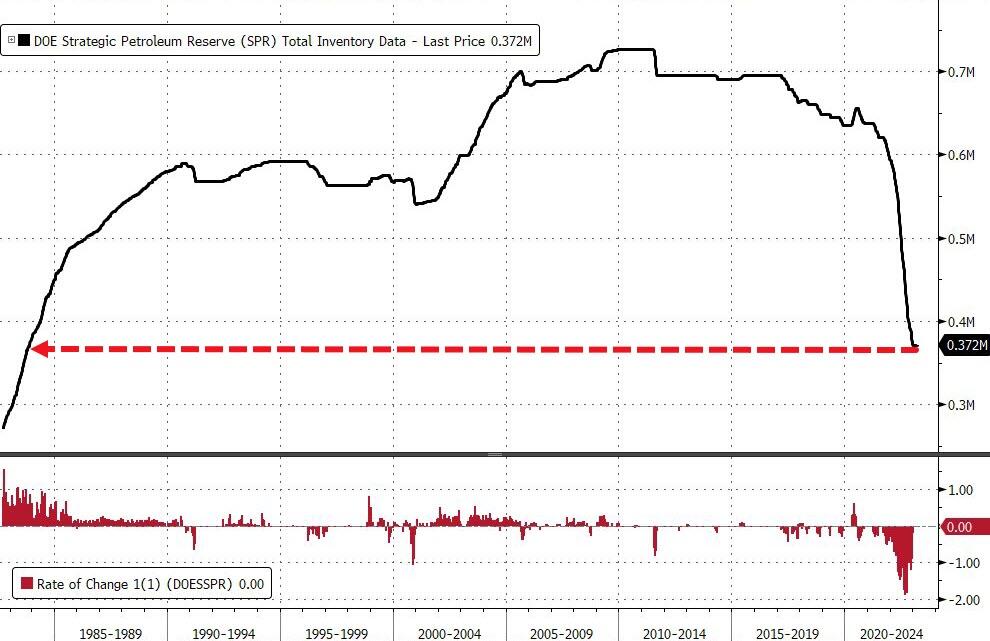
The Strategic Petroleum Reserve, which was established in 1975 due to the 1973 oil embargo, is now at its lowest level since December 1983.
In December 1975, with memories of gas lines fresh on the minds of Americans following the 1973 OPEC oil embargo, Congress established the Strategic Petroleum Reserve (SPR). It was designed “to reduce the impact of severe energy supply interruptions.” What are the implications of depleting the SPR and is it still important?
The U.S. government began to fill the reserve and it hit its high point in 2010 at around 726.6 million barrels. Since December 1984, this is the first time the level has been lower than 450 million barrels. Draining the SPR has been a powerful tool for the administration in its effort to tame the price of gasoline. It also signaled a “new era” of intervention on the part of the White House.
This brings front-and-center questions concerning the motivation of those behind this action. One of the implications of Biden’s war on high oil prices is that it has short-circuited the fossil investment/supply development process.Capital expenditures among the five largest oil and gas companies have fallen as the price of oil has come under fire.The current under-investment in this sector is one of the reasons oil prices are likely to take a big jump in a few years. Production from existing wells is expected to rapidly fall.
The Supply Of Oil Is Far More Constant And Inelastic Than Demand
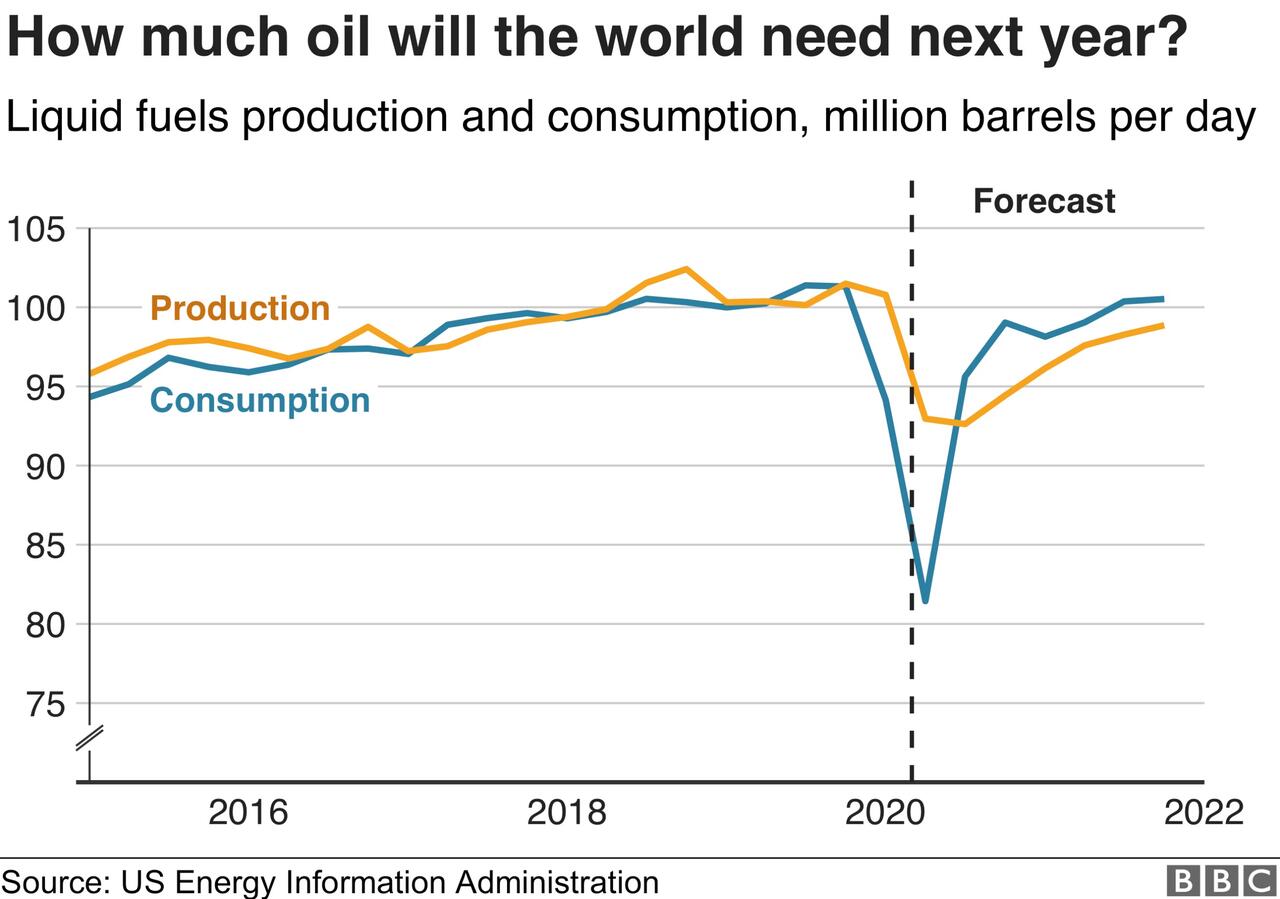
It is important to remember when it comes to oil, the supply is far more constant and inelastic than the demand. This means that it takes time and investment to bring new wells online while demand can rapidly change. This happened during the pandemic when countries locked down and told their populations and told them to stay at home. This resulted in the price of oil temporarily going negative because there was nowhere to store it.
Draining oil from the strategic reserve is a short-sighted and dangerous choice that will impact America’s energy security at times of global uncertainty. In an effort to halt inflationary forces, Biden released a huge amount of crude oil from the SPR to artificially suppress fuel prices ahead of the midterm elections.
To date, Biden has dumped more SPR on the market than all previous presidents combined reducing the reserves to levels not seen since the early 1980s. In spite of how I feel about the inefficiencies of this program, it does serve a vital role. It is difficult to underestimate the importance of a country’s ability to rapidly increase its domestic flow of oil. This defensive action protects its economy and adds to its resilience.
Biden’s actions have put the whole country at risk. Critics of his policy pointed out the Strategic Petroleum Reserve was designed for use in an emergency not as a tool to manipulate elections.Another one of Biden’s goals may be tobring about higher oil prices to reduce its use and accelerate the use of high-cost green energy.
Either way, Biden’s war on oil has not made America’s energy policies more efficient or the country stronger.
US Weighs Expanding Fed’s Emergency Liquidity Program To Stabilize First Republic, Other Regional Banks
One day after a lengthy meeting on the growing bank crisis by the Financial Stability Oversight Council (chaired by Janet Yellen who five years ago vowed there would be “no financial crises in her lifetime“) on the last day of a week which started with the collapse of Credit Suisse and culminated with US regional banks nursing historic losses amid speculation that First Republic Bank could keel over any moment and drag down countless other names with it, even though the FSOC assured Americans that “while some institutions have come under stress, the U.S. banking system remains sound and resilient”, Bloomberg reports that in their attempt to rescue the most trouble of regionals, authorities are considering expanding the recently introduced emergency lending facility for banks – the BTFP – in order to give First Republic Bank more time to shore up its balance sheet.
Or they may not: after all this has been a crisis has been marked by at times puzzling second-guessing, miscommunication and lack of conviction on the part of regulators, whose actions not only precipitated the contagion from the collapse of Silicon Valley Bank when they blocked potential buyers from acquiring the bank and avoiding a complete wipeout of shareholders, but where Janet Yellen has actively sought to destabilize the regional banks by explicitly refuting what Fed chair Powell was stating, the most vivid example being last Wednesday’s market crunch when stocks stabilized after the dovish FOMC only to puke after Yellen inexplicably said that US regulators were not even contemplating uniform deposit insurance.
And sure enough, the BBG report adds that “officials have yet to decide on what support they could provide First Republic, if any, and an expansion of the Federal Reserve’s offering is one of several options being weighed at this early stage.” Meanwhile, regulators continue to grapple with two other failed lenders — Silicon Valley Bank and Signature Bank — that require more immediate attention… attention they wouldn’t need if regulators had intervened more competently in the beginning and not waited until almost a trillion in deposits had been pulled from small banks as confidence cratered.
Bizarrely, even without of a step, watchdogs see First Republic as stable enough to operate without any immediate intervention as the company and its advisers try to work out a deal to shore up its balance sheet, the people said, asking not to be named discussing confidential talks.
Officials have yet to decide on what support they could provide First Republic, if any, and an expansion of the Federal Reserve’s offering is one of several options being weighed at this early stage. Regulators continue to grapple with two other failed lenders — Silicon Valley Bank and Signature Bank — that require more immediate attention.
Even short of expanding the BTFP, regulators reportedly “see First Republic as stable enough to operate without any immediate intervention as the company and its advisers try to work out a deal to shore up its balance sheet”; maybe those regulators should also see the stock price of FRC which has lost more than 90% of its value, and which is far less confident about the bank’s ability to evade the same forces that recently caused a trio of US banks to collapse. But while those banks toppled when rapid customer withdrawals forced them to lock in losses on depreciated assets, First Republic has remained open and independent.
And while the BBG reporting suggests that regulators are once again indecisive at best, and may either help the bank… or not, the only actionable news here is that US officials “have concluded the bank’s deposits are stabilizing and that it isn’t susceptible to the kind of sudden, severe run that prompted regulators to seize Silicon Valley Bank within just a few days, the people said.” This confirms what we first reported on Friday in “Finally Some Good News On The Bank Crisis.”
One way First Republic is different from other banks is that it managed to obtain enough cash to meet client needs while it explores solutions, courtesy of $30 billion in cash deposited by the nation’s largest banks this month… which of course is merely cash that was recycled after it was pulled from banks such as First Republic in the first place.
Bloomberg also notes that a potential adjustment to the Fed’s emergency lending program is among options authorities have weighed in recent days. Of course, such an expansion of the Fed’s liquidity offerings would merely be another incremental step to institutionalizing moral hazard as it would apply to all eligible users, in keeping with banking law that says remedies must be broadly based, rather than aimed at helping a particular bank. But the change could be made in a way to ensure that First Republic benefits.
I have a very rough draft of this article; I’d love to hear comments on it, of course, but I’d also like to workshop it by Zoom, in case some people are interested. So if you want to set this up for some law people, or computer science people (academics, students, practitioners, or a mix), or others who can give useful feedback on it, please just e-mail me at volokh at law.ucla.edu.
I’d like to get it out the door by mid-May, so sooner is better, if at all possible. I’ll also post some more excerpts from it here next week.
In its important decision in Knick v. Township of Scott(2019), the the Supreme Court reversed Williamson County Regional Planning Commission v. Hamilton Bank, a 1985 decision that made it almost impossible to bring takings cases against state and local governments in federal courts. Under Williamson County, a property owner who claimed the government has taken his property and therefore owed “just compensation” under the Fifth Amendment, could not file a case in federal court until he or she first secured a “final decision” from the relevant state regulatory agency and “exhausted” all possible state court remedies in state court. At that point, it was still usually impossible to bring a federal claim, because procedural rules preclude federal courts from reviewing most final decisions by state courts. In a forceful opinion for the Court, Chief Justice John Roberts denounced this “Catch-22” and emphasized that “[a] property owner has an actionable Fifth Amendment takings claim when the government takes his property without paying for it.” The owner does not have to first go to state court.
Access to federal court is crucial to protecting constitutional rights against violation by state and local governments. In some situations, state courts will not adequately protect those rights, and may even be part of the same political coalition as the state or local officials who violated those rights in the first place (a problem particularly likely to arise in the many states where judges are elected).
Unfortunately, a recent decision by the US Court of Appeals for the Fifth Circuit (which covers the states of Texas, Louisiana, and Mississippi) goes against the principles outlined in Knick and threatens to create a new Catch-22 keeping takings claims out of federal court.
In Devillier v. Texas, decided in November, a Fifth Circuit panel ruled that federal courts have no jurisdiction to hear takings claims against state governments because the Fifth Amendment doesn’t create such jurisdiction, and there is no federal statute establishing it either. Here is the entirety of the opinion (minus footnotes):
The State of Texas appeals the district court’s decision that Plaintiffs’ federal Taking Clause claims against the State may proceed in federal court. Because we hold that the Fifth Amendment Takings Clause as applied to the [S]tates through the Fourteenth Amendment does not provide a right of action for takings claims against a [S]tate, we VACATE the district court’s decision and REMAND for further proceedings. The Supreme Court of Texas recognizes takings claims under the federal and state constitutions, with differing remedies and constraints turning on the character and nature of the taking; nothing in this description of Texas law is intended to replace its role as the sole determinant of Texas state law. As such, this Court lacks jurisdiction to review these claims.
[the text above is slightly modified from the court’s original decision, as explained here (pg. 25)].
What the court says is simply false. The Fifth Amendment does indeed create a “direct cause of action” against state governments, no less than other provisions of the Bill of Rights do. Nothing in the text or original meaning of the Constitution suggests otherwise. In the footnotes, the panel cites Azul–Pacifico, Inc. v. City of Los Angeles,a 1992 Ninth Circuit reaching a similar conclusion. But Azul-Pacifico, a very short opinion that offers almost no analysis supporting its position, was decided prior to Knick, at a time when Williamson County was still in force and it was therefore permissible for courts to disfavor takings claims relative to other constitutional rights claims. Knick decisively rejected such theories, and the Fifth Circuit erred egregiously in failing even to cite Knick in its opinion.
Even worse, the Fifth Circuit ruling creates precisely the kind of Catch-22 that Knick forbids. Indeed, ir may be even worse! This case ended up in federal court in the first place, because—after the plaintiffs initially filed in state court—the state of Texas removed the case to federal court under 28 U.S. Code Section 1441, which allows defendants to remove to federal court “any civil action brought in a State court of which the district courts of the United States have original jurisdiction.”
Under the approach adopted here by the Fifth Circuit, takings claims against state governments cannot be brought in federal court. And if they are instead brought in state court, the defendant state can remove them to federal court and then force their dismissal! As Judge Andrew Oldham puts it in his dissent from the Fifth Circuit’s March 23 denial of the plaintiffs’ petition for an en banc rehearing (which, if granted, would have had the entire Fifth Circuit reconsider the panel decision), “[t]he panel decision renders federal takings claims non-cognizable in state or federal court.”
This is actually even worse than the Williamson County regime, under which takings claims could at least be litigated in state court (though some lower courts did permit the kinds of removal shenanigans the Fifth Circuit blessed here). The federal district court ruling that the Fifth Circuit reversed effectively highlighted this dangerous implication of ruling in favor of the state, and specifically cited Knick, as well:
In considering the State’s argument, it is important to think for a moment about the dramatic implications of such a rule. Under the State’s view, it can take property from a private citizen without paying just compensation and the private citizen would be left without a remedy. Take an example. Person A owns a 20-acre vacant parcel. While Person A is on a five-year trip around the world, the State commandeers the property, constructs a state office building on the property, and utilizes the building on the property—all without the permission of the property owner. When Person A returns home, the State tears down the building and returns the property to its original vacant state. This is a classic taking for which Person A is clearly entitled to be compensated. See Knick v. Township of Scott, 139 S.Ct. 2162, 2167 (2019) (“A property owner has an actionable Fifth Amendment takings claim when the government takes his property without paying for it.”)…. But not so fast. Amazingly, the State maintains that Person A would have no federal constitutional remedy against the State because a Fifth Amendment takings claim can never be brought against a State under [42 USC] § 1983. This thinking eviscerates hundreds of years of Constitutional law in one fell swoop, and flies in the face of commonsense. It is pretzel logic.
There is not, as the State suggests, some sort of “state exception” that excludes state governments from the reach of the Fifth Amendment’s Takings Clause. The complete opposite is true. “Historically, the United States Supreme Court has consistently applied the Takings Clause to the states, and in so doing recognized, at least tacitly, the right of a citizen to sue the state under the Takings Clause for just compensation.” Manning v. Mining & Minerals Div. of the Energy, Minerals & Nat. Res. Dep’t, 144 P.3d 87, 90 (N.M. 2006) (citing Tahoe-Sierra Pres. Council, Inc. v. Tahoe Reg’l Plan. Agency, 535 U.S. 302, 306-09 (2002); Palazzolo v. Rhode Island, 533 U.S. 606, 614-15 (2001); Lucas v. South Carolina Coastal Council, 505 U.S. 1003, 1027-30 (1992)).
The plaintiffs have petitioned the Supreme Court to take the case. The Court should do exactly that. The justices need not even do much work, if they don’t want to. They can just summarily reverse the Fifth Circuit, and endorse, by reference, the reasoning of the district court (technically, a magistrate judge’s recommendation, which the district judge then adopted). If the Supreme Court lets this egregious decision stand, three state governments ruling over a total of some 36 million people, will be free to seize private property and then refuse to pay compensation, without fear of having their actions challenged in either state or federal court.
Two of the judges on the panel, Higginbotham and Higginson, filed concurring opinions to the Fifth Circuit’s denial of rehearing en banc, in which they defend the panel decision in much more detail than the ruling itself did. Judge Higginbotham argues that the reasoning of Knick only applies to cases brought under 42 U.S.C. Section 1983, which applies to cases brought against “persons” who deprive the plaintiffs of their constitutional rights (previous precedent holds, wrongly in my view, that local governments qualify as “persons” under Section 1983, but states do not). But Knick clearly makes the more general point that takings claims deserve access to federal court on par with other constitutional rights (“A property owner has an actionable Fifth Amendment takings claim when the government takes his property without paying for it”) and bars the creation of “Catch-22” rules that block such access. A Catch-22 rule that blocks access to both state and federal courts, as the Fifth Circuit decision does, is even more egregious, and even more obviously at odds with Knick.
Judge Higginbotham also advances various arguments to the effect that it is desirable to confine most takings cases to state courts, because of the latter’s special expertise in property law issues. These types of arguments were rejected by the Supreme Court in Knick, and for good reason. I criticize them in some detail in my article on Knick (also available here).
Judge Higginson argues that the special circumstances of the incorporation of the Takings Clause against state governments justify the kind of double standard created by the panel ruling. He argues that, even if the Takings Clause, generally, was incorporated against state governments, the right to a damages remedy for “compensation” was not, and therefore can only exist if Congress enacts a specific statute requiring it. But this makes no sense. The right to “just compensation” is right there in the Takings Clause, and there is zero evidence that the Fourteenth Amendment somehow incorporates the rest of the Fifth Amendment against the states, but excluded this part.
Judge Oldham’s dissent offers additional (mostly well-taken) criticisms of Judge Higginbotham’s and Judge Higginson’s opinions. He also outlines various procedural flaws of the original panel opinion. Among other things, the latter was surely wrong to dispense with so an important issue in such a cursory way.
The Oldham dissent does have a few flaws of its own. For example, Judge Oldham endorses the common, but fallacious, view that the Supreme Court incorporated the Takings Clause against the states in Chicago, Burlington & Quincy Railroad Company v. Chicago (1897). For reasons discussed in Chapter 2 of my book The Grasping Hand, this isn’t true. In reality, this was just one of a number of late-19th century cases where the Supreme Court allowed property owners to bring takings cases against states and localities under the Due Process Clause of the Fourteenth Amendment.
Regardless, Judge Oldham and the district court are surely right about the bottom line, and the Supreme Court would do well to adopt the main elements of their reasoning.
NOTE: The plaintiffs in this case are now represented by the Institute for Justice, a public interest law firm with which I have longstanding ties, and for which I have written pro-bono amicus briefs in other property rights cases. But I do not have any involvement in this case. Back in 2001-2002, I clerked for Judge Jerry E. Smith, who is one of four Fifth Circuit judges who joined Judge Oldham’s dissent from the denial of rehearing en banc. The litigation of this case began long after my clerkship ended.
The federal Office of Management and Budget has requested comments on several proposals to change the official federal racial and ethnic classifications. One proposal is to merge the ethnic question (are you Hispanic/Latino or not?) with the racial one (are you black/African American, white, Asian American, or Native Hawaiian/Pacific Islander?), so individiuals would now be asked whether they are Hispanic, black, whites, etc. in one question. The underlying problem is that many Americans check the Hispanic box, but then find that as “mestizos” (people of mixed European/Indigenous heritage) there is no appropriate race box for them to check.
So here’s what I wrote:
In this comment, I argue that the race and ethnicity classifications should not be combined into a single question. There is only one “ethnic” classification recognized by OMB, and that is “Hispanic/Latino.” Hispanic/Latino is much too diverse to be considered a true ethnicity to begin with, and, as a classification that includes people of any combination of Indigenous, European, African, and Asian origin, with classification members whose appearances reflect the broad range of human appearances, it’s absurd to treat it as akin to a race by placing it in the same category as “white,” “black,” etc.
Rather, to the address the problems of the inappropriate “race” choices for Latinos, which creates confusion among those of partial or full Indigenous origin, the government should abolish the Hispanic/Latino ethnic classification, and instead add a racial “Indigenous Latino/Mestizo” classification. White Hispanics would check the white box. Black Hispanics would check the black box. And Hispanics of Indigenous origin would check the Indigenous Latino/Mestizo box. People of mixed background could check whichever combination of boxes applied to their background.
In my book, Classified: The Untold Story of Racial Classification in America (Bombardier Press 2022), chapters 1 and 2 tell the story of how “Hispanic/Latino” became an official American minority classification. In brief, identification for federal statistical purposes, which started in the 1950s for federal contract compliance, was originally not self-identified, but instead relied on employers and others to identify members of minority groups by sight. Many Puerto Rican and Mexican Americans have dark complexions, revealing full or partial non-European ancestry. As a result, these individuals were both subject to racial discrimination, which meant that they were seen as needing federal protection, but also they could be identified as “nonwhite” by those in charge of classifying them.
Over the next two decades, various political forces, including Richard Nixon’s White House and certain activist groups, thought it useful to create an umbrella designation for all American with origins in Spanish-speaking countries. At the same time, in the early 1970s classification began a dramatic shift to self-identification.
Suddenly, millions of people who had always been considered, and considered themselves, to be white based on full or dominant European heritage, were now deemed to be members of a “Hispanic” minority. But recognizing the absurdity of considering the multi-racial Hispanic classification to be a separate race, Statistical Directive 15 instead dictated that “Hispanic” was an ethnic classification, the only official ethnic classification the federal government recognizes.
[Comment then continues with material on the history of the Hispanic classification from my book Classified, discussing the arbitrariness of the classification….]
That said, some Hispanics face discrimination based on being of the perception that they are members of a nonwhite race, because they have a substantial percentage of Asian, African, or (most often) Indigenous heritage. Hispanics who are of full or partial Asian or African descent currently can check off the “Hispanic” box, and then Asian or African. However, many Hispanics, likely including the vast majority of those who check off the other “some other race” box on forms when available, are of mixed European and Indigenous origin (known in much of Latin America as “Mestizos”), or fully of Indigenous origin.
Thanks to strong opposition from American Indian groups, the Directive 15 definition of American Indian excludes Indigenous Americans who do not descend from North American (excluding Mexico) tribes.
The solution to that problem is not to treat “Hispanicness” as a race, or the equivalent of a race. There is no logical reason why a self-identified white person of European descent from Argentina or Spain should be in a different “racial” classification than a white person from Greece, Italy, or France.
Rather, to give Hispanics an opportunity to self-identify by their racial background, the Hispanic/Latino category should be abolished entirely. White Hispanics would check the white box. Black Hispanics would check the black box. And Hispanics of Indigenous origin would check the box for a new category called something like Indigenous Latino/Mestizo. People of mixed background could check whichever combination of boxes applied to their background.
Like the barrier to including Indigenous-origin Latinos in the Native American classification, the barrier to creating an Indigenous Latino/Mestizo classification is primarily political; Latino groups and activists oppose such a classification because it would substantially reduce their constituent numbers.
If OMB chooses not to replace the Hispanic/Latino ethnic classification with a narrower Indigenous Latino racial classification, it should modify the current classification so that it is more akin to a true ethnic classification. Currently, the classification requires only that a person be of “Spanish origin or culture.” Instead, the classification should require “Spanish origin with significant ties to Spanish or Latino culture.” Currently, everyone from Sephardic Jews whose ancestors left Spain around 1492 to people with one distant Mexican American ancestor, with the rest European, may qualify as Hispanic, regardless of their lack of ties to Hispanic or Latino culture. An individual with distant Spanish-speaking ancestry and no ties to the Hispanic and Latino culture can hardly be said to belong to the same “ethnic group” as a recent immigrant from Guatemala, and including them in the same group drastically reduces any usefulness the classification may have.
Combating disinformation has been elevated to a national security imperative under the Biden administration, as codified in its first-of-its-kind National Strategy for Countering Domestic Terrorism, published in June 2021.
That document calls for confronting long-term contributors to domestic terrorism.
In connection therewith, it cites as a key priority “addressing the extreme polarization, fueled by a crisis of disinformation and misinformation often channeled through social media platforms, which can tear Americans apart and lead some to violence.”
Media literacy specifically is seen as integral to this effort. The strategy adds that: “the Department of Homeland Security and others are either currently funding and implementing or planning evidence–based digital programming, including enhancing media literacy and critical thinking skills, as a mechanism for strengthening user resilience to disinformation and misinformation online for domestic audiences.”
Previously, the Senate Intelligence Committee suggested, in its report on “Russian Active Measures Campaigns and Interference in the 2016 Election” that a “public initiative—propelled by Federal funding but led in large part by state and local education institutions—focused on building media literacy from an early age would help build long-term resilience to foreign manipulation of our democracy.”
In June 2022, Democrat Senator Amy Klobuchar introduced the Digital Citizenship and Media Literacy Act, which – citing the Senate Intelligence Committee’s report – would fund a media literacy grant program for state and local education agencies, among other entities.
NAMLE and Media Literacy Now, both recipients of State Department largesse, endorsed the bill.
Acknowledging explicitly the link between this federal counter-disinformation push, and the media literacy education push, Media Literacy Now wrote in its latest annual report that …
… the federal government is paying greater attention to the national security consequences of media illiteracy.
The Department of Homeland Security is offering grants to organizations to improve media literacy education in communities across the country. Meanwhile, the Department of Defense is incorporating media literacy into standard troop training, and the State Department is funding media literacy efforts abroad.
These trends are important for advocates to be aware of as potential sources of funding as well as for supporting arguments around integrating media literacy into K-12 classrooms.
When presented with notable examples of narratives corporate media promoted around Trump-Russia collusion, and COVID-19, to justify this counter-disinformation campaign, Media Literacy Now president Erin McNeill said: “These examples are disappointing.”
The antidote, in her view is, “media literacy education because it helps people not only recognize the bias in their news sources and seek out other sources, but also to demand and support better-quality journalism.” (Emphasis McNeill’s)