“I’m A Woman”: Left Wing Host Ana Kasparian Triggers Woke Mob Over “Trans-Exclusionary” Language

“I’m A Woman”: Left Wing Host Ana Kasparian Triggers Woke Mob Over “Trans-Exclusionary” Language

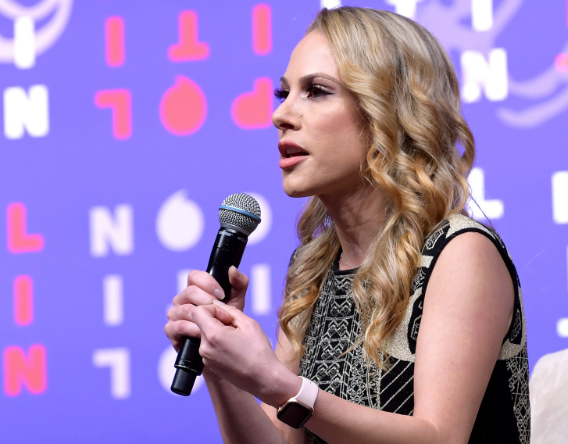
Ana Kasparian, of the left wing hosts of The Young Turks, was put on blast this week on Twitter for “using trans-exclusionary language” when she Tweeted out the obvious: that she was a woman.

“I’m a woman. Please don’t ever refer to me as a person with a uterus, birthing person, or person who menstruates. How do people not realize how degrading this is?” she wrote on Twitter on Tuesday of last week.

“You can support the transgender community without doing this shit,” Kasparian added. “I’m sure a lot of women don’t want to be minimized to a bodily function or body part,” she said in a later Tweet.

As was predicted by many in the responses, Kasparian was roasted by many “trans-allies”.

“Those words are meant for AFAB [assigned female at birth] people as a category, not individual people. Get a grip,” transgender journalist Katelyn Burns responded to Kasparian. 

“Who called you that? I’ve only ever heard that used when referring to a population, not an individual person,” another user wrote. “Obviously, those terms are meant to be precise to include all people who meet one of those characteristics, when needing to discuss a relevant topic.”

“I respect you a lot, but this notion that the mere existence of trans-inclusive terms (rarely used in casual convos) somehow degrades women comes right out of the right’s anti-trans ‘war on women’ playbook,” added Mike Figueredo of The Humanist Report. 

“I have zero problem with inclusion. None. But there’s gotta be a better way than boiling it down to a body part, no? Especially in the context of having reproductive rights taken away from people who just see woman as a baby-making vessel. That’s all I’m saying,” Kasparian said in response.

“Your comment section has turned into a lunatic asylum. Some people just can’t accept your remarks,” Ian Miles Cheong concluded. 

Tyler Durden
Sat, 03/25/2023 – 17:00

via ZeroHedge News https://ift.tt/cy06pke Tyler Durden

‘Surgical Removal’ Of Crypto Will Only Weaken USD Dominance

‘Surgical Removal’ Of Crypto Will Only Weaken USD Dominance

Authored by Jesse Coghlan via CoinTelegraph.com,

A day after Coinbase received a Wells notice from the Securities and Exchange Commission, industry commentators weighed in on what recent regulatory actions mean for America’s crypto future…

The United States’ crackdown on cryptocurrencies and crypto firms will only serve to stifle crypto-related innovation and “weaken” the country, industry pundits say in the wake of Coinbase’s recent Wells notice from the Securities and Exchange Commission.

On March 22, the crypto exchange became the latest crypto firm to receive a “legal threat” — a Wells notice — just a month after stablecoin-issuer Paxos received its own in February. Some suggest there could be more to come.

Mati Greenspan, the chief of crypto research firm Quantum Economics, said he believes U.S. regulators have been unfriendly to crypto “since the beginning.”

The recent collapses of crypto and startup-friendly banks, including Silvergate, Silicon Valley Bank and Signature Bank, have been viewed by some as being part of a scheme by regulators to un-bank the crypto sector, dubbed “Operation Choke Point 2.0.”

Meanwhile, a March 20 economic report from the White House turned into a scathing review of the merits of crypto assets, with the paper spending almost an entire chapter debunking crypto’s “touted” benefits.

Greenspan told Cointelegraph that the rumored action could be underway as crypto is seen as a “threat” to the U.S. dollar’s dominance in global trade — a significant and long-standing benefit to the U.S.

However, as more are beginning to use crypto for cross-border remittances globally, he warned a crackdown on crypto in the U.S. could actually have the opposite effect on the dollar:

“The surgical removal of cryptocurrencies from the U.S. banking system will only isolate the United States further and weaken the dollar’s position as the global reserve currency.”

Adrian Przelozny, CEO of Australian crypto exchange Independent Reserve, told Cointelegraph that the recent banking sector woes were not due to “any failure in crypto” but caused by banks managing their risks in an “irresponsible way.”

“The White House would be better served to review the practices in the banking industry,” he added.

Speaking about the most recent action against Coinbase, Przelozny said the “adversarial environment for the crypto industry” in the U.S. would push the related “jobs, investment and future innovation” offshore.

“Singapore, Hong Kong and potentially Australia” — who are eyeing the benefits of the crypto industry — may prove a better home for it, and those countries “will reap the economic benefits,” Przelozny said.

The exact reasons the regulator is targeting Coinbase are still unclear. The SEC has declined to comment on the matter.

Michael Bacina, a lawyer and partner at Piper Alderman, agreed that a “regulation by enforcement model” would “drive crypto-asset innovation offshore,” adding:

“This is a strange position to adopt given the losses many faced in the last 12 months arose from collapses involving unregulated offshore structures.”

Bacina said for years, the industry has asked for clarity on how to comply. He pointed to the recent “telling” comments made by the judge in Voyager Digital’s bankruptcy case that “observed that there is no clear guidance from regulators.”

He added that offshore jurisdictions would continue harboring crypto firms until governments lay out the path to regulatory compliance, “which will cost jobs and raise the risk for consumers and investors.”

Tyler Durden
Sat, 03/25/2023 – 16:30

via ZeroHedge News https://ift.tt/jctelkf Tyler Durden

ChatGPT Provides Much More Balanced Responses Than Google Bard as to Good/Bad Things About Trump/Biden

Thursday, I blogged about how Google Bard responds to “What are some [good/bad] things about [Trump’s/Biden’s] presidency?” The short version (go to the post for screenshots that contain the full output):

  1. “What are some good things about Donald Trump’s presidency?” yielded a list of good things and bad things.
  2. “What are some good things about Joe Biden’s presidency?” yielded a list of just good things.
  3. “What are some bad things about Donald Trump’s presidency?” yielded a list of just bad things.
  4. “What are some bad things about Joe Biden’s presidency?” yielded a list of bad things and good things.

But when I ask OpenAI, the results are considerably more balanced, basically because the requests for good things just yield good things (for both) and the requests for bad things just yield bad things (for both):

[Prompt:] What are some good things about Donald Trump’s presidency?

While opinions on Donald Trump’s presidency vary significantly, there are several accomplishments and aspects of his tenure that some people view positively. Here are a few:

  1. Economic growth: The U.S. economy experienced growth during parts of Trump’s presidency, with low unemployment rates and a strong stock market before the COVID-19 pandemic.
  2. Tax reform: Trump signed the Tax Cuts and Jobs Act into law in 2017, which reduced corporate and individual tax rates for many Americans.
  3. Deregulation: The Trump administration rolled back numerous regulations in various industries, which some supporters argue encouraged business growth and innovation.
  4. Criminal justice reform: Trump signed the First Step Act in 2018, a bipartisan effort to reform the federal prison system and reduce recidivism rates.
  5. Foreign policy: Trump’s administration brokered the Abraham Accords, leading to normalized relations between Israel and several Arab nations. His administration also engaged in diplomacy with North Korea and applied pressure on NATO allies to increase defense spending.
  6. Judicial appointments: Trump appointed three Supreme Court justices and numerous federal judges, shaping the judiciary for decades to come.

It is essential to remember that perspectives on these aspects of his presidency are subjective and can vary depending on one’s political beliefs and values.

[Prompt:] What are some good things about Joe Biden’s presidency?

As of the knowledge cutoff date in September 2021, Joe Biden’s presidency had seen several accomplishments and policy initiatives that some people view positively. Here are a few:

  1. COVID-19 response: The Biden administration prioritized vaccination efforts and coordinated with states to improve vaccine distribution, contributing to a significant increase in vaccination rates.
  2. American Rescue Plan: Biden signed a $1.9 trillion COVID-19 relief package into law, which provided direct payments to many Americans, extended unemployment benefits, and allocated funding for vaccine distribution, among other measures.
  3. Infrastructure Investment and Jobs Act: The Biden administration negotiated and signed a bipartisan infrastructure bill, allocating $1.2 trillion to improve physical infrastructure, including transportation, broadband, and clean energy projects.
  4. Climate change and environmental policies: Biden rejoined the Paris Agreement and took executive actions to reverse several Trump-era environmental policies. His administration has also pushed for investment in clean energy and green jobs.
  5. Diplomacy and foreign policy: Biden has emphasized rebuilding relationships with traditional U.S. allies, reaffirming the U.S.’ commitment to NATO, and taking a more collaborative approach to global challenges like climate change and public health.
  6. Social and racial justice: The Biden administration has taken steps to address systemic racism, promote racial equity, and advance LGBTQ+ rights through various executive actions and policy proposals.

Please note that opinions on these aspects of Biden’s presidency are subjective and can vary depending on one’s political beliefs and values. Additionally, as this information is current as of September 2021, there may have been further developments in the months since.

[Prompt:] What are some bad things about Donald Trump’s presidency?

Critics of Donald Trump’s presidency often point to several issues and controversies during his tenure. Here are a few:

  1. COVID-19 response: Trump’s administration faced criticism for its handling of the COVID-19 pandemic, with detractors arguing that the response was slow, disorganized, and downplayed the severity of the virus.
  2. Impeachment trials: Trump was impeached twice by the House of Representatives, first on charges of abuse of power and obstruction of Congress related to the Ukraine scandal, and later on charges of incitement of insurrection following the January 6, 2021, attack on the U.S. Capitol. Although he was acquitted in both Senate trials, the impeachments were significant controversies during his presidency.
  3. Immigration policies: Trump’s administration implemented a number of hardline immigration policies, including the travel ban targeting predominantly Muslim countries, the zero-tolerance policy that led to family separations at the U.S.-Mexico border, and efforts to end the Deferred Action for Childhood Arrivals (DACA) program.
  4. Racial tensions: Critics argue that Trump’s rhetoric and actions, such as his response to the Unite the Right rally in Charlottesville, Virginia, and the Black Lives Matter protests, exacerbated racial tensions and divisions in the United States.
  5. Environmental policies: Trump’s administration rolled back numerous environmental regulations and withdrew the U.S. from the Paris Agreement, leading to concerns about the long-term impact on climate change and environmental protection.
  6. Relations with allies: Trump’s approach to foreign policy, including his criticisms of NATO and disagreements with traditional U.S. allies, was seen by some as damaging to international relations and global stability.

It is important to remember that perspectives on these aspects of his presidency are subjective and can vary depending on one’s political beliefs and values.

[Prompt:] What are some bad things about Joe Biden’s presidency?

As of the knowledge cutoff date in September 2021, there were several criticisms and controversies related to Joe Biden’s presidency. Here are a few:

  1. Afghanistan withdrawal: The Biden administration faced criticism for its handling of the U.S. withdrawal from Afghanistan, particularly in the chaotic final stages, which included a rushed evacuation effort and a deadly terrorist attack near the Kabul airport.
  2. Border crisis: Critics argue that the Biden administration’s immigration policies have led to an increase in migrants, including unaccompanied minors, at the U.S.-Mexico border, resulting in overcrowded facilities and humanitarian concerns.
  3. Inflation and economic concerns: Some critics have expressed concerns that the large-scale stimulus packages and government spending under the Biden administration could contribute to rising inflation and long-term economic challenges.
  4. COVID-19 vaccine hesitancy: While the Biden administration has made significant progress in vaccinating Americans, vaccine hesitancy remains an issue, with critics arguing that the administration’s messaging and strategies have not effectively addressed the problem.
  5. Partisanship and polarization: Biden pledged to work towards unity and bipartisanship; however, some critics argue that his administration has struggled to bridge the divide and achieve consensus on key issues, such as voting rights and police reform.
  6. Executive actions: Some argue that Biden’s use of executive orders to reverse Trump-era policies or advance his own agenda could contribute to a further concentration of power in the executive branch and set a precedent for future presidents.

Please note that opinions on these aspects of Biden’s presidency are subjective and can vary depending on one’s political beliefs and values. Additionally, as this information is current as of September 2021, there may have been further developments in the months since.

I don’t know if the differences stem from differences in the training data, in the Large Language Model algorithms, in any deliberate post-processing that is done to adjust the answers, or in something else (perhaps a mix of these things). But it struck me as potentially noteworthy.

The post ChatGPT Provides Much More Balanced Responses Than Google Bard as to Good/Bad Things About Trump/Biden appeared first on Reason.com.

from Latest https://ift.tt/I3cNgFY
via IFTTT

Another California Storm Is Coming

Another California Storm Is Coming

California has been relentlessly battered by an endless series of atmospheric river storms in the past three months. After being struck by yet another storm last week, the state now braces for the possibility of another one arriving in just a few days.

For more on the forecast timing and impacts of the upcoming storm, meteorologist Armando Salvadore shared this report with clients: 

In the last 30 days, the entire state of California with the exception of far southern Ca (Riverside and Imperial county) are above average to well above in terms of precipitation and even those aforementioned are just about near average. We’ve seen a substantial amount of condensed water over this winter, and there’s no signs of this letting up as we roll into yet another active week next week!

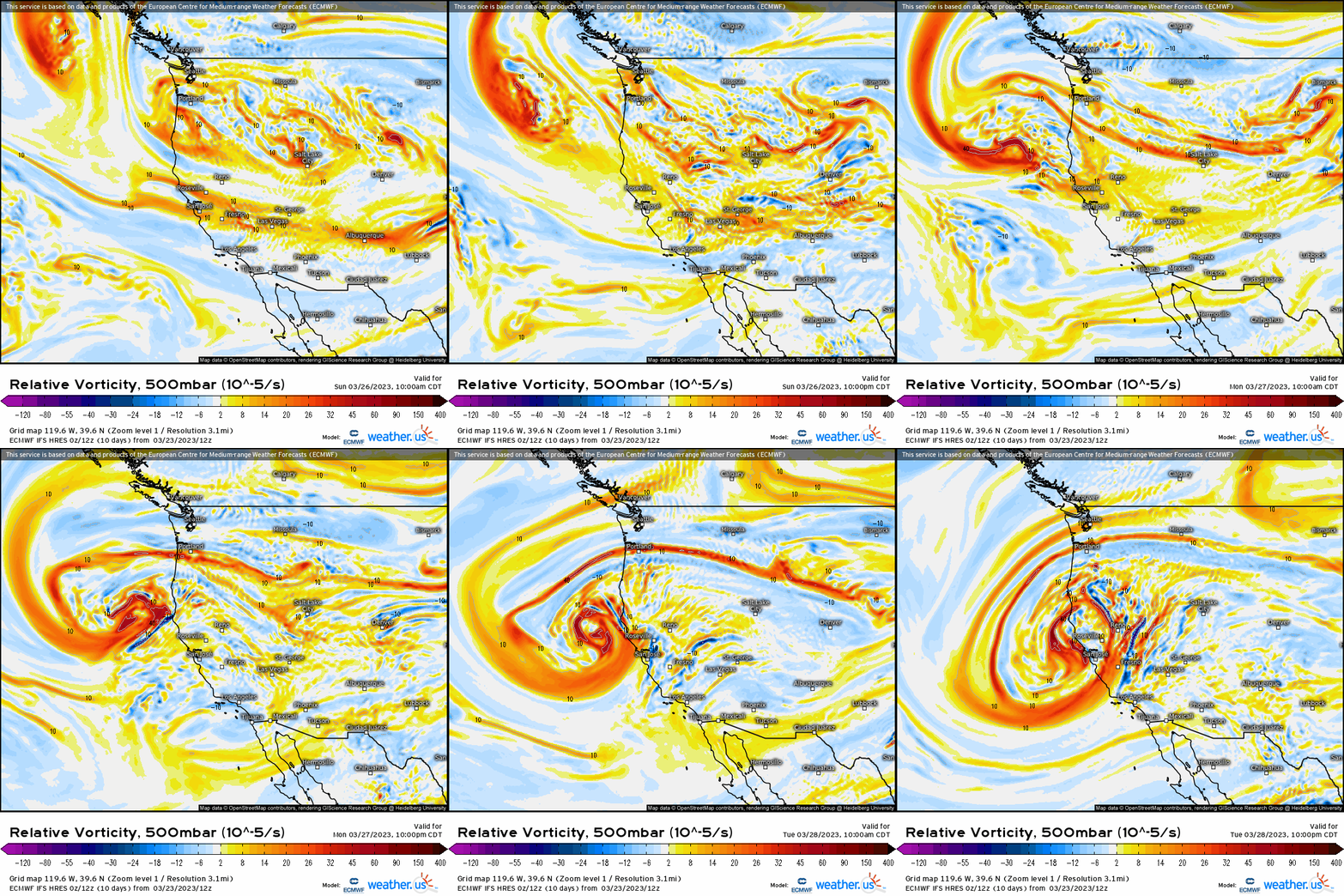
Below, a potent upper-level low will look to drop southward and “bowl” itself into northern/central California. Such a mid-level disturbance will allow for a surface cyclone to manifest, and crash somewhere north of Sacramento come Tuesday midday.

However, impacts will be felt later Monday because of a potent low level jet out ahead of the disturbance with strong moisture advection and forcing for ascent that transpires ahead of the impending mid/upper level low. A 40+ knot low level jet will propagate ahead of the disturbance, causing both warm air and moisture advection off the Pacific ocean allowing for rain to make landfall across northern California before the main axis shifts southward toward the Bay Area. By later Tuesday into Wednesday, the slug of rain will push further south toward Los Angeles. Along with low elevation heavy rain, heavy snow will also occur for Sierra Nevada Mountains, which by the way is already in the running for the most snowiest winter ever (currently sitting 2nd place with more than 56 feet that has fallen this winter!).

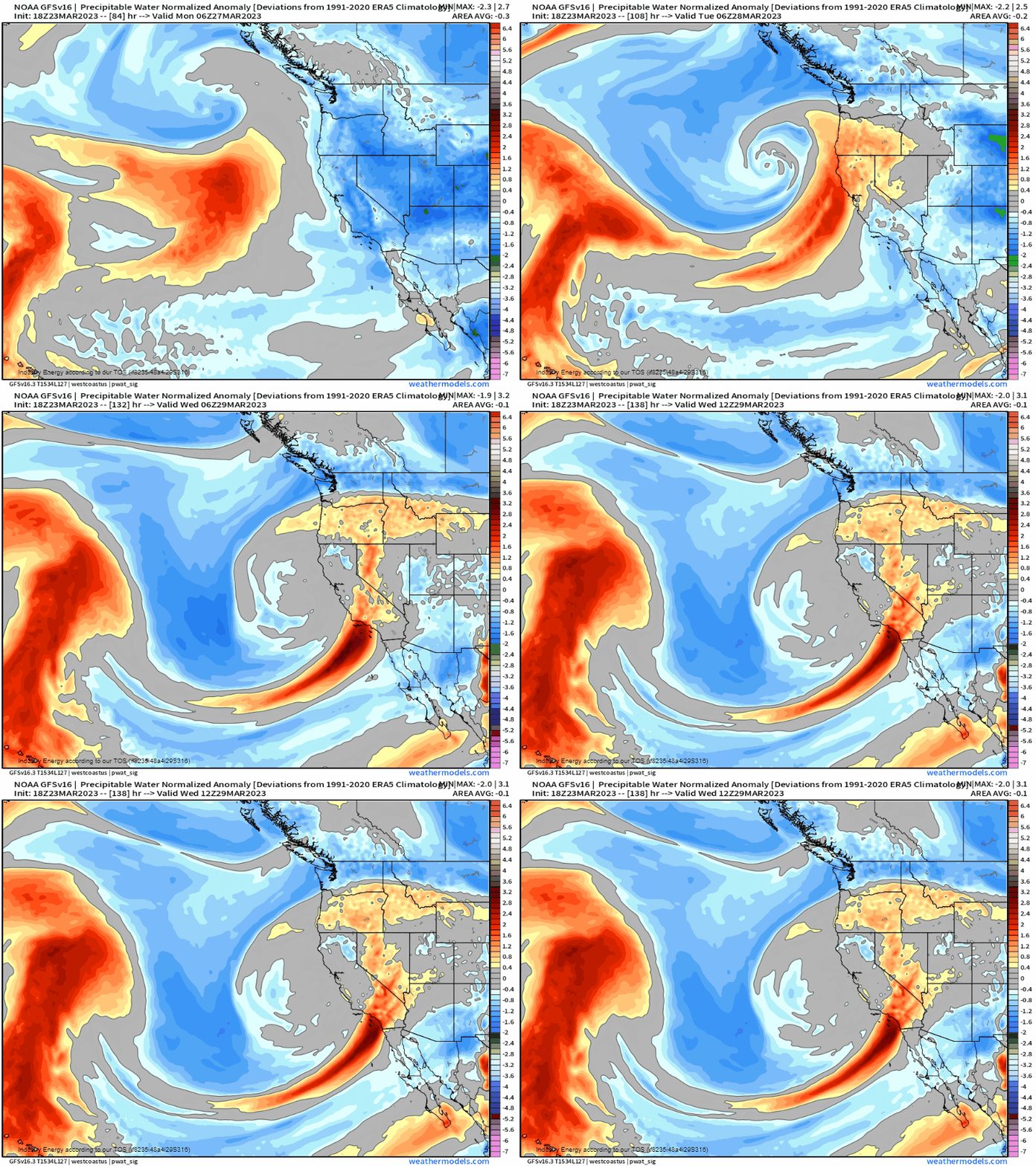
In terms of moisture in the form of water vapor readily available to be condensed, we’re looking at signals of at least 0.5 – 1 standard deviation above climatology within the warm sector of the cyclone, and unsurprisingly coincides with a potent low level jet.

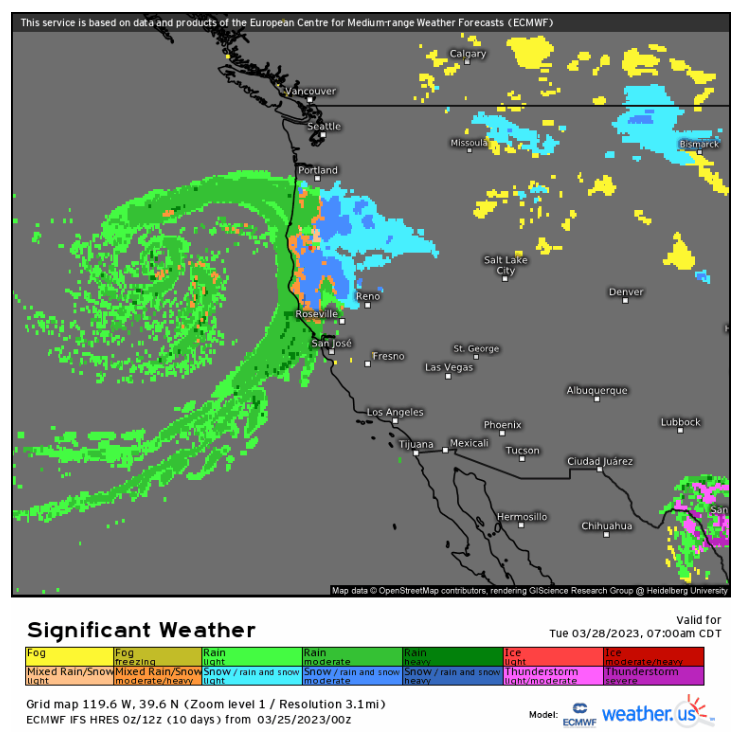
Here we can see how the surface is represented with a mature cyclone making way toward northern/central California and heavy rain overspreading from north to south along with heavy snow impacting the higher terrain.

While there still may be some discrepancy in where the heaviest rain totals occur, there’s a growing consensus for a widespread swath of at least over an inch. The only positive aspect of this system is that this falls over the course of a day, so flash flooding won’t necessarily be an issue; however, it’s areas already prone to flooding from previous events that could allow for excess runoff to nearby lower elevations or surrounding locations.

While many Californians might have storm fatigue, the good news is that Gov. Gavin Newsom ended some of the state’s water restrictions last week as drought conditions dissipated

Tyler Durden
Sat, 03/25/2023 – 16:00

via ZeroHedge News https://ift.tt/rQojRZD Tyler Durden

Stanford Law School Suspends Diversity Dean After She Doubles-Down On Duncan Debacle

Stanford Law School Suspends Diversity Dean After She Doubles-Down On Duncan Debacle

Tirien Steinbach, the diversity administrator at Stanford Law School who stoked a disruptive protest of Fifth Circuit appellate judge Kyle Duncan, is “currently on leave,” according to a memo on the protest reviewed by the Washington Free Beacon.

Jenny Martinez, the law school’s dean, said in a Wednesday morning memo to all law students that administrators “should not insert themselves into debate with their own criticism of the speaker’s views.” At future talks, the role of administrators will be to “ensure that university rules on disruption of events will be followed,” Martinez said.

Martinez gave no additional details on the terms of Steinbach’s leave, stating that the “university does not comment publicly on pending personnel matters.” She also ruled out disciplining any of the students who shouted down Duncan – in part, she said, because administrators sent “conflicting signals about whether what was happening was acceptable or not.”

Instead, the law school will require all students to attend a training on “freedom of speech and the norms of the legal profession,” which will discuss, among other things, how “vulgar personal insults” can harm students’ “professional reputations.”

That warning appears to be in reference to protesters who hurled sexual invective at Duncan, with one allegedly telling him, “We hope your daughters get raped.”

It comes amid calls from Sen. Ted Cruz (R., Texas) and others for state bar associations to investigate the hecklers, which could potentially hold up their legal licenses.

As Jonathan Turley details below, this “leave” comes after Steinbach publicly responded and appears to be doubling down on her actions in a Wall Street Journal opinion column.


First a short recap of how we got here.

The Stanford Federalist Society invited Judge Duncan of the United States Court of Appeals for the Fifth Circuit to speak on campus. However, liberal students, including members from the National Lawyer’s Guild, decided that allowing a conservative judge to speak on campus is intolerable and set about to “deplatform” him by shouting him down.

In this event, Duncan was planning to speak on the topic:  “The Fifth Circuit in Conversation with the Supreme Court: Covid, Guns, and Twitter.” A video shows that the students prevented Duncan from speaking from the very beginning. Many called him a racist while others hurled insults like one yelling “We hope your daughters get raped.”

Duncan was unable to continue and asked for an administrator to assist him.

Dean Steinbach then took the stage and criticized the judge for seeking to be heard despite such objections.

Steinbach explained “I had to write something down because I am so uncomfortable up here. And I don’t say that for sympathy, I just say that I am deeply, deeply uncomfortable.” While reaffirming her belief in free speech and insisting that the judge should not be cancelled, she proceeded to attack the judge for the content of his views.

Steinbach declared “It’s uncomfortable to say that for many people here, you’re work has caused harm.” After a perfunctory nod to free speech, Steinbach proceeded to eviscerate it. She continued “again I still ask, is the juice worth the squeeze?” Is it worth the pain that this causes, the division that this causes? Do you have something so incredibly important to say about Twitter and guns and Covid that that is worth this impact on the division of these people.”

Dean Martinez later apologized and then released a letter with Stanford President Marc Tessier-Lavigne that reaffirmed the commitment to free speech, but did not commit to holding the students accountable for their disruption. (The students with the National Lawyer’s Guild later complained about their names being mentioned in an article despite a campaign to name and shame conservative students).

Dean Martinez then issued another letter with a strong defense of free speech and declared that all students (including the victims of the disruption) would be required to attend a free speech appreciation session. However, she declined any action against the students responsible for the disruption. That is a familiar pattern at universities.

That brings us to Steinbach’s column.

The Wall Street Journal was correct in running her account and it contains an important perspective to consider, even for some of us who were highly critical of Steinbach’s remarks.

First, Dean Steinbach rightfully points out that she tried to get the students to allow the event to proceed. At one point, she suggested that students walk out in protest over Judge Duncan’s views. She also insists that she opposed efforts to cancel the event before it was held and continues to oppose such attempts to limit speech. She reaffirms the classical liberal view that the solution to bad speech is good speech, not less speech. That is all to her credit.

However, the column has elements that are, frankly, less compelling or commendable.

Steinbach appears to be responding to this admonishment by Martinez:

In this instance, however, the failure by administrators in the room to timely administer clear and specific warnings and instead to send conflicting signals about whether what was happening was acceptable or not (and indeed at one point to seemingly endorse the disruptions that had occurred up to that point by saying “I look out and say I’m glad this is going on here”) is part of what created the problem in the room and renders disciplinary sanction in these particular circumstances problematic.

Steinbach insists that she was simply using her training at “deescalation” and that she was asked to attend the event by the Federalist Society for that reason:

I stepped up to the podium to deploy the de-escalation techniques in which I have been trained, which include getting the parties to look past conflict and see each other as people. My intention wasn’t to confront Judge Duncan or the protesters but to give voice to the students so that they could stop shouting and engage in respectful dialogue. I wanted Judge Duncan to understand why some students were protesting his presence on campus and for the students to understand why it was important that the judge be not only allowed but welcomed to speak.

The problem with the column, in my view, is two-fold.

First, in her remarks, Steinbach goes out of the way to show her agreement with the mob and indicates that she knew that they were going to stop the event. She soft pedals the attacks on Duncan and seems to blame both sides. She does not mention how the students prevented him from speaking, yelled about his being a racist, or called for the rape of his daughters. Instead, she describes how  “a verbal sparring match began to take place between the judge and the protesters. By the time Judge Duncan asked for an administrator to intervene, tempers in the room were heated on both sides.” That sounds a lot like blaming the victim. If the mob had not prevented the judge from speaking, there would have been “sparring” before the event was opened up for questions.

She is not alone in such spins. Some like Slate’s Mark Stern suggested that Judge Duncan manufactured the controversy. Democratic members like Rep. Elissa Slotkin (D-MI) mocked Duncan as a “fragile flower.” Others at sites like Above the Law insisted, again, that silencing people like Judge Duncan is free speech.  Senior Editor Joe Patrice rejected the effort to “recast ‘free speech’ as the right of a powerful person to speak at the silent and unprivileged.” (In this case, “the silent and unprivileged” are Stanford students at an elite law school, who were invited to ask questions but asked not to prevent others from hearing from Judge Duncan).

Second, Steinbach still chastises Duncan for his divisive viewpoints and clearly blames him in part for the controversy by refusing to yield to the sensibilities of the students — presumably by remaining silent.

At one point during the event, I asked Judge Duncan, “Is the juice worth the squeeze?” I was referring to the responsibility that comes with freedom of speech: to consider not only the benefit of our words but also the consequences. It isn’t a rhetorical question. I believe that we would be better served by leaders who ask themselves, “Is the juice (what we are doing) worth the squeeze (the intended and unintended consequences and costs)?”

Steinbach appears utterly clueless about why this question is so offensive to free speech values. She continues to intentionally obscure her obvious desire for speakers like Duncan to curtail their speech by stating that we would “be better served” by speakers asking if their speech is worth “the intended and unintended consequences and costs.”

Avoiding “the squeeze” means being silent on points that have such consequences. Thus, to avoid angering these radical students, Duncan is expected to be silent on certain points or, in this case, any points that he might want to share. It is an invitation for self-censorship that would apply to any conservative jurist or speaker. While supporting free speech, Steinbach is condemning the exercise of speech when it could cause “pain” and “division.” Of course, such pain and division would not arise with a liberal jurist espousing the opposite viewpoints. Accordingly, liberal jurists would be free to speak without the sense of culpability while conservatives are expected to remain silent.

In the end, Steinbach did not “defuse” the situation but fueled the rage with her comments. To this day, she cannot understand why Duncan would persist in speaking when some take such great offense at his views. She asks “Is there a way that we can stop blaming and start to talk and listen to each other?” Yet, her answer appears to be for speakers like Duncan to recognize that their views are simply too hurtful for some and should not be voiced to avoid “the squeeze” of free speech.

The result is the type of doublespeak that is common on our campuses. Steinbach claims fealty to free speech while denouncing its exercise. She laments “how polarized our society has become,” but added to that polarization by expressing her own concerns over the “harm” that Duncan’s speech has brought for many at the school. She asked “how do we listen and talk to each other as people” while maintaining that, by stating his jurisprudential views, Duncan might not be worth the harm (or “squeeze”) to others.

Anti-free speech advocates often try to portray the exercise of free speech as a complex challenge. It is not. The Duncan controversy shows how the issue is stark and simple. Judge Duncan had a right to speak and others had a right to hear him. Those who disagree with him had a right to protest outside of the event and to ask tough questions inside the event. The only thing that they could not do is disrupt the event itself; to prevent others from hearing from Judge Duncan.

[ZH: We note that Judge Duncan, a Trump appointee, delivered a speech at the University of Notre Dame last night (March 24), telling listeners that there’s a “vital tradition of free speech in this country” and that students have the right to protest him.

“It’s a great country, where you can harshly criticize federal judges and nothing bad will happen to you. You might even get praised or promoted,” he said.

“But make no mistake. What went on in that classroom on March the ninth had nothing to do with our proud American tradition of free speech. It was rather a parody of it.”]

The solution is also stark and simple, though it has, once again, been ignored by an administration.

Students who cancel events or classes on campus are taking a position that is not just antithetical to principles of free speech but of higher education. They should be suspended or, in extreme or repeated cases, expelled.

Otherwise, the law school is not achieving any greater clarity than this column. It is professing an absolute commitment to free speech while declining to enforce that commitment.

Tyler Durden
Sat, 03/25/2023 – 15:30

via ZeroHedge News https://ift.tt/K5omZeV Tyler Durden

2-Mile Line Of Cars Forms Outside Trump Kick-Off Rally As City Of Waco Predicts 15,000+

2-Mile Line Of Cars Forms Outside Trump Kick-Off Rally As City Of Waco Predicts 15,000+

The city of Waco is estimating at least 15,000 attendees for Donald Trump’s 2024 presidential campaign kickoff rally at Waco regional airport on Saturday. While the venue is relatively small as far as airports go, the location was chosen because it’s the most geographically central point in Texas relative to large population centers.

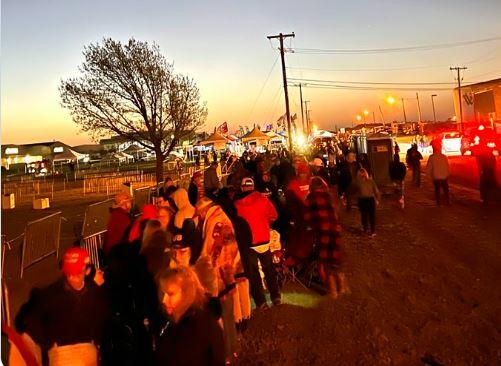
But this didn’t stop mainstream media from making incredibly superficial comparisons to the Branch Davidians while claiming “Waco is hugely symbolic on the far right.” The Trump campaign supposedly has a “secret agenda” – USA Today tries to claim in an absurd hit-piece based purely on speculation and zero sourcing. Meanwhile, a large pre-dawn line was already evident Saturday morning to get into the rally…

via Jason Miller, Twitter

Saturday in Waco marks first full-fledged rally of Trump’s 2024 campaign and it’s attracting national attention especially given the arrest warrant hanging over him, unprecedented for any ex-President.

Trump grabbed headlines Friday by writing the following on his social media site: “What kind of person can charge another person, in this case a former President of the United States … and leading candidate (by far!) for the Republican Party nomination, with a Crime, when it is known by all that NO Crime has been committed, & also known that potential death & destruction in such a false charge could be catastrophic for our Country?”

Glimpse of the early morning lines…

There are local reports that the line of cars to get into the airport venue stretched to two-miles long ahead of the event fully opening.

Texas native Ted Nugent announced, “I will unleash a fire-breathing Star-Spangled Banner” at the Waco rally today.

And other big GOP names are expected to be at the rally…

LIVE FEED outside the venue:

Tyler Durden
Sat, 03/25/2023 – 15:00

via ZeroHedge News https://ift.tt/xf7Ytes Tyler Durden

Stockman: Raiding The Taxpayer Piggy-Bank

Stockman: Raiding The Taxpayer Piggy-Bank

Authored by David Stockman via LewRockwell.com,

Janet Yellen is one continuous anti-prosperity horror show and the reason is obvious enough. She got her indoctrination at Yale from the granddaddy of Professor Keynes’ US disciples, James Tobin, in the late 1960s and has spent most of her years since then pontificating in academia or dictating from the Fed.

So now with the arrival of screaming evidence that the banking system desperately needs the disciplining effect of depositor flight, she comes out four-square for euthanizing the $9 trillion of still uninsured deposits in the US banking system.

But let’s cut to the chase. Banks not disciplined by their depositors and not at risk for deposit flight are dangerous institutions. They leave bank executives free to swing for the fences on the asset-side of their balance sheets without fear that attentive depositors will move their money to safer pastures.

For crying out loud. It was bad enough during the last several years when deposits were dirt cheap and knuckleheads like those who ran SVB decided to load up their balance sheets with 10-30 year duration assets against overnight demand deposits, most of which were uninsured.

For the moment that allowed them to book outsized profits and reap the consequent benefit of soaring stock options, but these “profits” were phony as a two-dollar bill. That’s because they were being generated off long-term fixed income assets, the prices of which had nowhere to go except down.

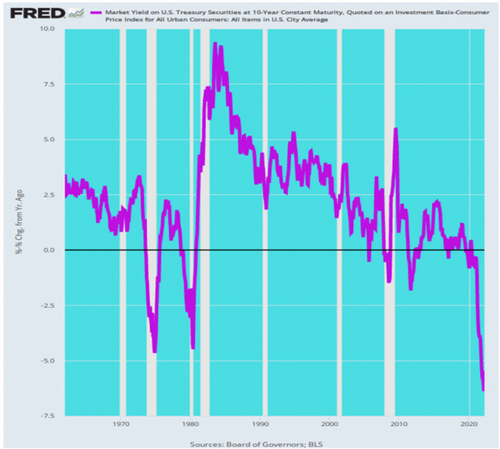
For want of doubt, here is the inflation-adjusted yield on the 10-year UST through the beginning of the Fed’s belated anti-inflation campaign in March 2022. No one in their right mind should have believed these deeply underwater yields were sustainable; and no banker capable of running even a credit union in Podunk Iowa would have matched up overnight deposits with these long-duration securities—investments which were absolutely heading for a nose-dive in value.

Indeed, at the March 2022 bottom, the real 10-year UST yield stood at -6.4%, the lowest level in the 60-years shown in the chart, and undoubtedly the lowest rate ever—since prior to that time the nation’s central bank actually believed in sound money, zero inflation and market-based interest rates.

In a word, anybody who bought long-term treasuries or agency securities at the bottom of the purple line in the chart below should have had their head examined. And most certainly they shouldn’t have been running a multi-billion bank.

Inflation-Adjusted Yield On 10-Year UST, 1962 to March 2022
Nonetheless, Janet Yellen and her fellow Washington clowns got themselves warmed-up last week by bailing-out $155 billion of uninsured deposits at SVB—deposits that had been wantonly put in harm’s way by reckless management on a stock-pumping joy ride.

To wit, between 2020 and 2021 SVB’s assets nearly doubled from $115 billion to $211 billion, while the HTM (securities held to maturity) portion of that balance sheet literally exploded from $17 billion to $98 billion. And more than 95% of this massive HTM book had maturities of 10-years or more!

Here’s the thing. These fools massively mismatched their book even without the safeguard of deposit insurance. What in the world is going to happen when deposits are 100% insured?

More importantly, there is no substitute for career-destroying penalties when they result from the towering incompetence embodied in the blow-up of banks like SVB. Yet in that very regard it turns out that one of the senior financial officers at SVB had apparently gotten his financial training at, well, Lehman and Enron!

So if nothing else, we need deposit flight and bank failures to purge the bad actors, incompetents and reckless cowboys from the banking industry. Yet the de facto policy is now that no depositor can loose money, no bank can fail and no one’s resume should be besmirched.

Whatever that is, it’s not market-based capitalism. And its going to lead to massive waste and malinvestment, not bank-fueled prosperity.

In any event, the chart below shows that the banking system is already extremely dangerous, and that compounding the risk via 100% deposit insurance would amount to lighting the match.

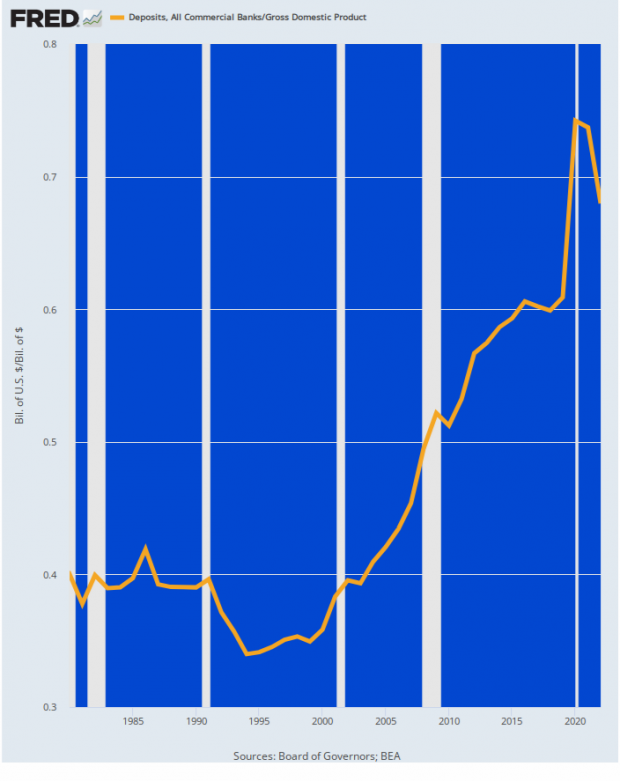
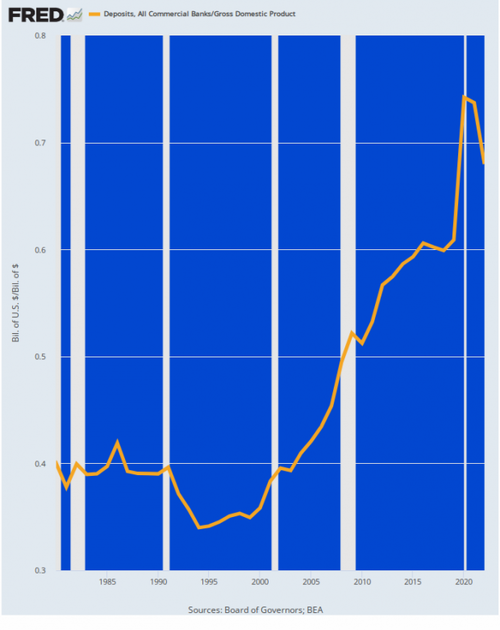
In a word, over the last decade especially the Fed has flooded the financial markets with so much liquidity that the banking system has been literally drowned in excess deposits and reserves. As shown below, banking system deposits have historically been about 40% of GDP, but since the turn of the century that ratio has gone vertical, rising to more than 70% of GDP during the most intense periods of money-printing during 2020-2021.

The flooding of the zone with deposits has been especially acute since the pre-crisis peak in November 2007. During the 15 years since then, total bank deposits have soared from $6.6 trillion to $17.6 trillion or by 6.2% per annum. And in the period since March 2020, that growth rate has accelerated to nearly 10% per annum.

By contrast, since Q4 2007 nominal GDP has expanded by just 3.8% per annum. Yet all thing equal, savings and the resulting bank deposits would have grown at the same rate as GDP. They actually grew at almost double the GDP rate, of course, because the Fed was running the printing presses so red hot that much of the new money never left the financial system, backing up into the banking system, instead.

Bank Deposits As A Percent Of GDP, 1962 to 2022
Needless to say, all of these deposits had to be put to work, and aggressive managements quickly figured out the new banking ball-game. To wit, under the post Dodd-Frank regulatory regime the banking system was switched from one which was constrained by cash reserves (to meet a surge in depositor withdrawals) to one which was purportedly capital-driven based on the standards fashioned by the Bank for International Settlements.

Had the regulators been content to go with plain vanilla capital ratios, the new regime might not have been a total disaster. But naturally the bank lobbies got their hands on the rule-writing process and determined that a spade was not a spade.

That is, not all assets were treated as equal when it came to computing capital ratios. In fact, government debt was determined to be risk-free, requiring no capital backing whatsoever. So banks did what regulators implied they should do—they loaded up with government and agency debt because it required dramatically less capital backing.

In turn, this “capital-light” regime was great for stock prices and executive stock options. Instead of plowing a goodly portion of earnings into capital for growth they allocated it to dividends and stock buybacks, instead. The gamblers in the stock markets were thrilled.

For instance, from JPMorgan’s $258 billion of net income posted over 2015-2022 about $189 billion or 73% was paid out to shareholders in the form of stock buybacks ($102 billion) and dividends ($87 billion). During the same period, however, JPM’s total assets grew from $2.352 trillion in 2015 to $3.666 trillion in 2022.

Since the Fed was fueling asset inflation and repressing money market interest rates during that same period, this 56% growth of total assets was the equivalent of a printing press. The bank’s net interest margin soared, causing its net income to flourish and its market cap to surge from $225 billion in 2015 to a peak of $500 billion in late 2021.

But all that shareholder magic was not just because Jamie Dimon is some-kind of latter day financial Einstein. JPM’s half trillion dollar market cap was partially thanks to the capital-light regulatory regime.

Thus, in 2015 JPM’s ratio of book equity to total assets had stood at 10.50%, which would be minimally safe in a world without “too -big-to-fail”. But as it happened, by 2022 its equity ratio had actually fallen to just 7.97% as the bank loaded up on capital-free government securities.

The implication of that is straight forward. To maintain its 2015 equity ratio JPM would have needed $385 billion of book equity by 2022, not the $292 billion it actually reported. So to actually accomplish the robust asset growth that fueled its fulsome earnings gains it would have needed to retain $93 billion more of its net income over the period.

That is to say, its payouts to Wall Street in the form of stock-buybacks and dividend would have been cut in half! The gamblers would not have been so pleased.

Needless to say, based on this illustration it is easy to see why banks went whole hog buying long-duration governments. It drastically conserved capital, permitting fulsome payouts of dividends and stock buybacks.

On the other hand, the Fed’s ostensible reason for flooding the financial system with cheap credit was to goose bank lending levels, and thereby allegedly fuel stronger economic growth. But again in the case of JPM it is evident that didn’t happen.

In 2015 its loan book stood at $824 billion, which accounted for 64.4% of its $1.28 trillion of deposits. By 2022, however, its loan book at grown only modestly to $1.11 trillion, but that amounted to just 47.7% of deposits, which had soared to $2.34 trillion.

In short, even if it was a good idea to artificially stimulate more loans, which it is not, that didn’t happen despite all of the Fed’s reckless money-printing. Instead, the new money flooded into banks, which bought government bonds and thereby aided the Congressional borrow-and-spend contingent, while at the same time enabling reckless bank managements to take on massive amounts of long-term Treasury and Agency securities at the rock-bottom of an interest rate cycle that will not be seen again for decades to come, if ever.

Yet notwithstanding these realities Yellen last Sunday afternoon launched a campaign to drastically further weaken the banking system by essentially abolishing the last vestiges of depositor scrutiny and discipline. We are referring to the abominable bailout of all depositors at SVB and Signature Bank, but especially the so-called Bank Term Facility Program (BTFP). The latter was bad enough, since it allowed banks to borrow 100 cents on the dollar against 30-year bonds which lost 40% of the market value last year.

But now Yellen’s gone full retard, suggesting outright guarantees of all deposits, regardless of size:

“The steps we took were not focused on aiding specific banks or classes of banks. Our intervention was necessary to protect the broader U.S. banking system,” Yellen said. 

“And similar actions could be warranted if smaller institutions suffer deposit runs that pose the risk of contagion.”

As the Wall Street Journal noted this AM “the sound and fury of demands for universal deposit insurance are growing”. For instance, the chronic Wall Street whiner and entitled brat, Bill Ackman, is demanding his bacon be saved via 100% deposit insurance. But so is the usually sensible (on public policy, that is) Elon Musk.

As the financial press breathlessly reported this AM, the Treasury Department staff is reviewing whether federal regulators have enough emergency authority to temporarily insure deposits greater than the current $250,000 cap on most accounts without formal consent from a deeply divided Congress, according to people with knowledge of the talks.

The bolded phrase tells you all you need to know. How in the world after at least 40-years of Congress’ refusal to insure bank deposits at 100% regardless of size, can you have a legitimate decision to take on a $9 trillion liability in behalf of the taxpayers by executive decree?

Indeed, if that isn’t a decision for the representatives of the people to make, we don’t know what is—if you want to even pretend we have a democracy.

After all, 100% deposit insurance would mean that the $125 billion FDIC fund would be guaranteeing $18 trillion of deposits. They can say that the necessary funds—which might rise into the hundreds of billions or even trillions under certain loss scenarios—would come out of FDIC insurance premiums, but c’mon. That would be a giant tax by any other name because all 108 million US households with bank accounts would ultimately pay the premium in the form of lower rates on their deposits.

Not surprisingly, of course, the Washington lobbies have already gotten involved big time in attempting to force thru this profoundly anti-democratic action. To wit, the Mid-Size Bank Coalition of America, which includes banks with assets of as much as $100 billion, urged regulators to lift the current cap on deposit insurance, according to a March 17 letter reviewed by Bloomberg. The organization expressed concern that, if another regional lender fails, more depositors will move their money to the nation’s largest banks, regardless of the underlying health of their smaller competitors.

So what!

Perhaps these virtuous small bankers should have been thinking about the risk of deposit flight when they loaded up their balance sheets with higher yielding assets bearing both interest rate and/or credit risks. Absent these factors, in fact, there is no reason why a conservative bank would be at risk of deposit flight or be unable to weather a temporary flight by borrowing at the Fed’s discount window.

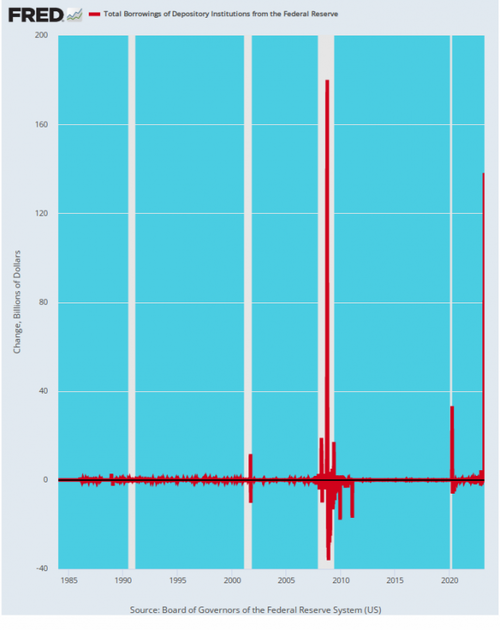
That’s exactly what happened in the last week. The weekly change in discount window borrowings soared to $138 billion, nearly on par with the $180 billion gain during the traumatic first week of October 2008.

Weekly Change In Fed Discount Window Borrowings, 1980 to 2023
Of course, the crybabies in the small and mid -sized bankers brigade don’t like the discount window because there is allegedly a stigma attached to it, and because the current discount rate is 4.75%—well above their average deposit costs. In short, they want some cheap money from Uncle Sam so they can run a asset/liability mismatch, book fulsome earnings and laugh all the way to the bank account for their stock options.

At the end of the day, we are truly getting to the end of the road with this form of crony capitalism and socialization of losses for the big guys wearing the long-pants.

While the usual bipartisan suspects are now busy fixing to pass legislation raising the deposit insurance limit to way above $250,000, at least the House Freedom Caucus has figured out what is at stake and has come out solidly against a 100% guarantee.

Since they won an option to call for Speaker McCarthy’s removal at the time of his election to the job, let’s hope they are ready, willing and able to use it when any semblance of the 100% deposit insurance legislation is brought to the House floor. That’s how much is really at stake.

Any universal guarantee on all bank deposits, whether implicit or explicit, enshrines a dangerous precedent that simply encourages future irresponsible behavior to be paid for by those not involved who followed the rules,” the House Freedom Caucus said in a statement.

*  *  *

Reprinted with permission from David Stockman’s Contra Corner.

Tyler Durden
Sat, 03/25/2023 – 14:30

via ZeroHedge News https://ift.tt/CHKGRVc Tyler Durden

Russia To Station Tactical Nukes In Belarus By July, Putin Says On State TV

Russia To Station Tactical Nukes In Belarus By July, Putin Says On State TV

Russia has reportedly struck a deal with neighboring Belarus to station tactical nuclear weapons on its territory, Tass news agency quoted Russian President Vladimir Putin as saying on Saturday.

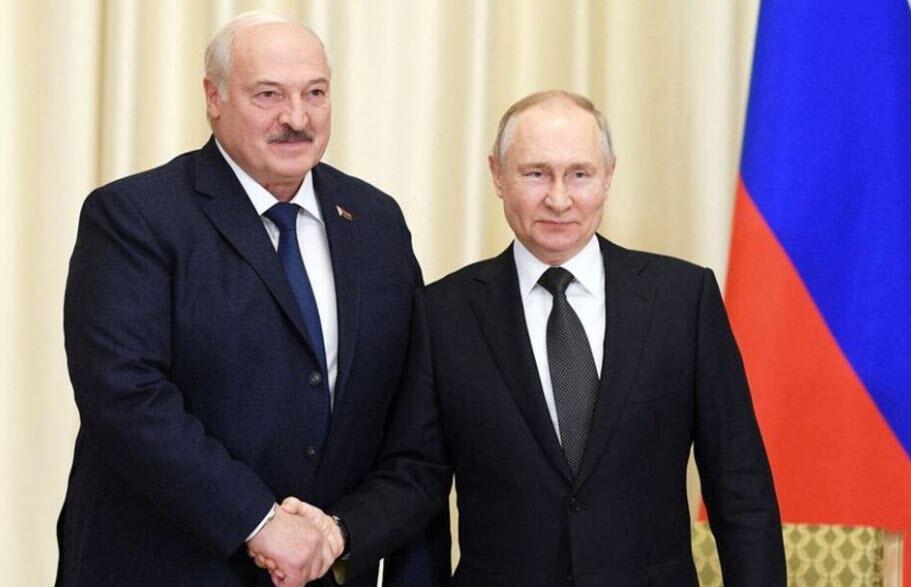
Belarusian President Alexander Lukashenko has long raised the issue of stationing tactical nuclear weapons in Belarus, which borders Poland, Putin said in comments broadcast on state TV Saturday..

“We agreed with Lukashenko that we would place tactical nuclear weapons in Belarus without violating the nonproliferation regime,” Tass quoted Putin as saying.

Russia’s tactical nuclear weapons might arrive to Belarus as early as this summer, Putin said.

As Al Arabiya reports, Putin claims such a move would not violate nuclear nonproliferation agreements, pointing out that the US has “long deployed their tactical nuclear weapons on the territory of their allied countries,”

Moscow is finishing the construction of a specialized storage for such arms amid repeated calls by Minsk to deploy tactical nuclear weapons on the Belarusian territory, he added.

The storage in Belarus will be ready on July 1, Putin told Russia 24 TV.

Putin also said that Moscow does not plan to hand over control over any tactical nuclear weapons to Minsk but would only deploy its own arms to the Belarusian territory.

He did not specify when exactly the weapons would be transported to the new storage.

Bloomberg reports that Russia has already stationed 10 aircraft in Belarus capable of carrying tactical nuclear weapons, with Putin noting that Iskander short-range missiles – capable of carrying nuclear warheads – had also been sent to Belarus, and training for crews would begin there on April 3.


Tyler Durden
Sat, 03/25/2023 – 13:59

via ZeroHedge News https://ift.tt/AZRKXxm Tyler Durden

US Resumes Theft Of Syrian Oil Hours After Overnight Battles

US Resumes Theft Of Syrian Oil Hours After Overnight Battles

Via The Cradle,

On Saturday, the US army smuggled at least 80 fuel tankers loaded with hundreds of tons of stolen Syrian oil from the country’s resource-rich Jazira region to their bases in Iraq, Syrian state media is alleging. The tanker trucks were taken out of Syria as part of a 148-vehicle convoy that crossed the illegal Al-Walid border crossing early on Saturday, according to local sources that spoke with SANA.

Other vehicles in the US convoy included refrigerated trucks and armored vehicles, the sources say. Washington’s latest oil theft operation took place just hours after their occupation bases at Conoco and Al-Omar oilfields in northeast Syria were pummeled by missile and drone strikes in retaliation for a US airstrike earlier on Friday in Deir Ezzor governorate that left several Syrians dead.

Via AFP

According to field sources that spoke with Al Mayadeen, the occupation base at Conoco field was hit with over 15 missiles. Speaking with Al Jazeera TV, a US official said one of the bases was hit by “eight rockets.”

US media quoted the Pentagon as saying the attacks left several casualties. However, no further details were provided. No group has taken responsibility for the daring attack, which marked the third successful armed operation against US troops in Syria within 24 hours.

Commenting on Friday’s airstrikes — launched from the Al-Udeid Air Base in Qatar — US President Joe Biden said his country is prepared to “act forcefully to protect our people,” adding that the US “does not seek conflict with Iran.”

Saturday’s oil theft operation marked the third time US troops have plundered Syria’s resources since the country was hit by a devastating earthquake on 6 February. Washington maintains approximately 900 troops in Syria, primarily split between the Al-Tanf base and the country’s northeastern region. Their occupation is illegal under international law as it was carried out without government approval.

Though US troops – accompanied by fighters from the Syrian Democratic Forces (SDF) – initially occupied large swathes of Syria under the pretext of fighting ISIS, the official rationale for the occupation changed once ISIS was largely defeated.

In infamous comments made in 2019, former US President Donald Trump said: “We’re keeping [Syria’s] oil. We have the oil. The oil is secure. We left troops behind only for the oil.”

According to an investigation by The Cradle, dozens of tankers pass through illegal crossings between Iraq and Syria every week in convoys accompanied by US warplanes or helicopters. Shepherds in the region corroborate these claims, saying that the Syrian oil is transported to the Al-Harir military site in Erbil, the capital of the Iraqi Kurdistan Region (IKR), a region known as a “hub” for western and Israeli spy agencies.

In August of last year, the Syrian Ministry of Foreign Affairs claimed that the losses incurred by the country’s oil and gas sector as a result of US actions amounted to $107 billion since the beginning of the Syrian crisis in 2011.

Tyler Durden
Sat, 03/25/2023 – 13:30

via ZeroHedge News https://ift.tt/hJQlGOL Tyler Durden

Bank Failures & Crypto Collapse – Bitcoin Emerges As ‘North Star’

Bank Failures & Crypto Collapse – Bitcoin Emerges As ‘North Star’

Over the last 2 weeks, the global financial system has faced its biggest crisis since the Lehman dominoes started to fall.

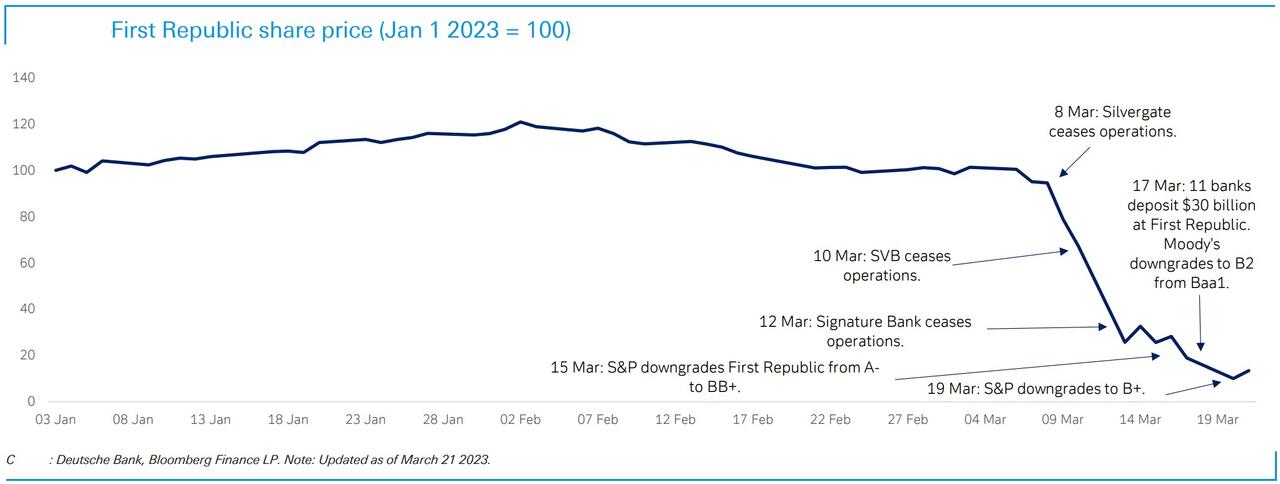
First Republic has experienced a serious confidence crisis, characterized by deposit flight that continues despite an injection of $30 billion in deposits last Friday. First Republic has been downgraded twice by S&P; and its share price has dropped by nearly 87% in March so far.

In addition, three banks have closed their doors: Silvergate Bank, Silicon Valley bank, and Signature Bank.

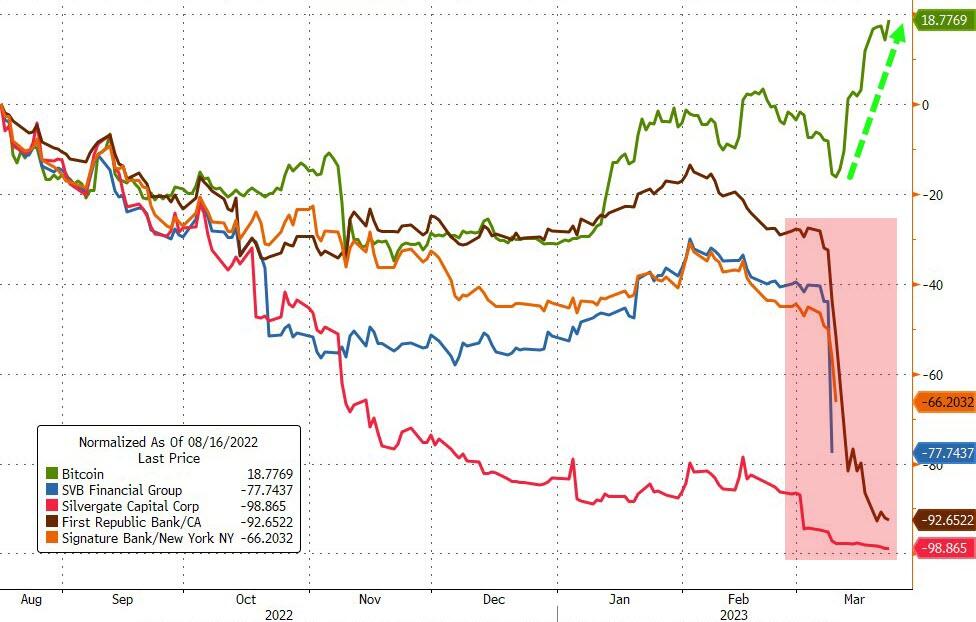
In that same period, Deutsche Bank notes that, although the crypto winter is far from over, Bitcoin “could be emerging as a ‘north star’.”

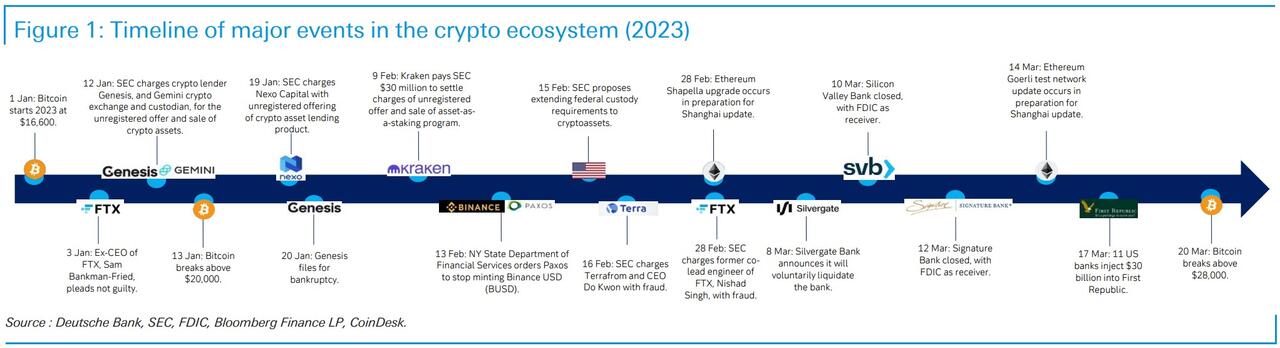
It has been a year full of major events for the crypto ecosystem.

From the beginning of 2023, the SEC has made efforts to crack down on the crypto market, charging several key players as well as proposing an extension to federal custody requirements to cryptoassets.

The effect of FTX’s bankruptcy continues to weigh on the space, with crypto lender Genesis filing for bankruptcy on January 20, and a key bank for crypto players Silvergate closing its doors on March 8. SVB has likewise collapsed, with significant ripple effects seen in the collapse of the crypto-friendly bank Signature Bank, which was previously home to the crypto central payments processing platform Signet.

First Republic is now facing liquidity issues, and Deutsche notes a flight to quality in the crypto market is likely underway, as investors rush to hold Bitcoin over other cryptocurrencies.

Bitcoin’s dominance increased by nearly 10% since the start of March.

And although Bitcoin has performed strongly, Deutsche note that jitters remain across the crypto market, noting however, that there should be little spillover into traditional financial markets.

The collapse of TerraUSD and FTX demonstrated the lack of significant feedback loops into TradFi. Lending and borrowing have mostly been contained within the crypto industry, with crypto players assuming the role of de facto banks. This interconnectedness means contagion risk within the crypto industry is significant. However, traditional banks have not embraced the crypto market due to regulatory and reputational risks: (i) crypto makes up 0.01% of exposure for banks; and (ii) it is unlikely that the crypto ecosystem holds enough stocks/bonds to move the market.

In contrast, during the 2008 financial crisis, when housing prices declined and triggered a crisis in the subprime mortgage market, significant bank exposure to the housing market saw contagion in the traditional financial system. The size of the crypto market (approximately 2.9% of the US equity market), and the paucity of linkages to TradFi means spillover risk is likely to be limited.

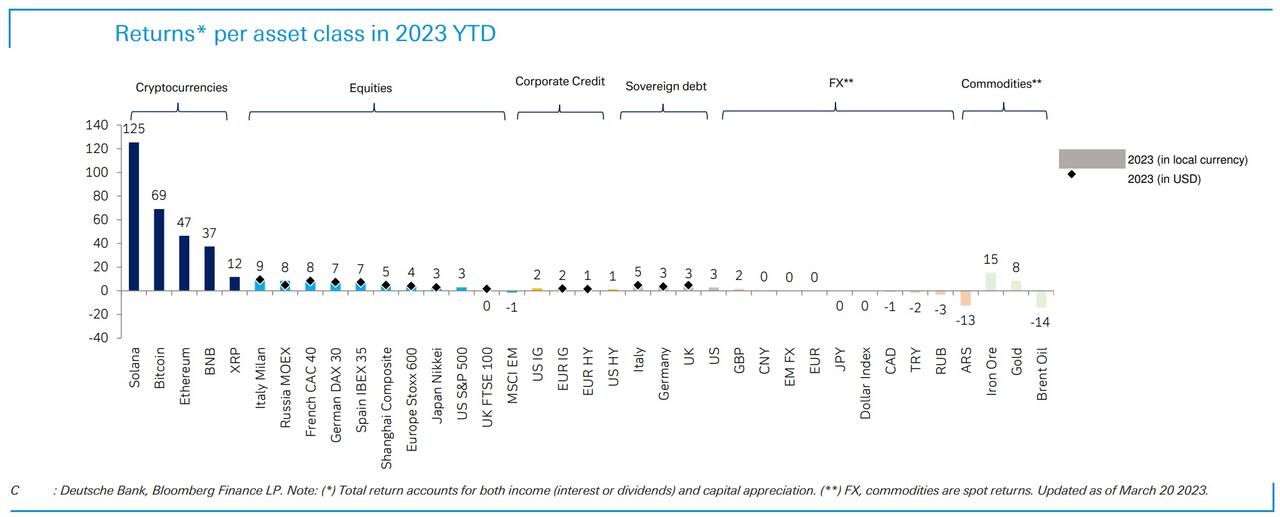
But Bitcoin has pushed higher, nearing $29,000 this week, and crypto is the best performing asset-class of the year…

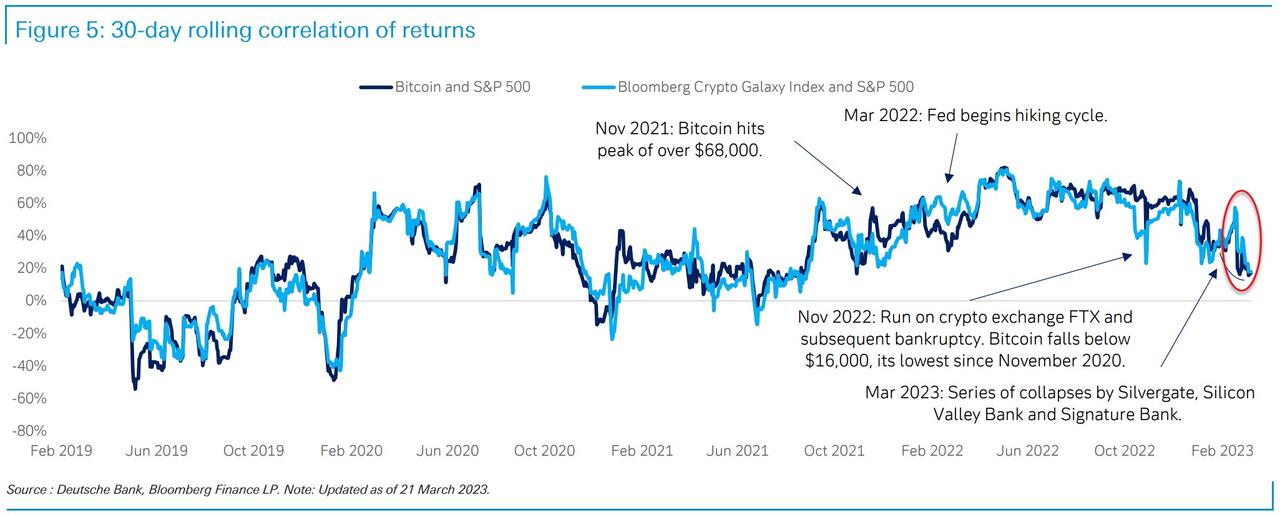
Deutsche reiterates the potential for Bitcoin as a ‘north star’ here as the correlation with the S&P 500 has now reached its lowest level since September 2021, having tumbled even further since the collapse of Silvergate…

However, Deutsche concludes, now is the time to put up or shut up for crypto assets as they say the “end of magical thinking” has dawned and real-world practicality needs to emerge:

Though history does not repeat itself, the recent digital-assets boom has had echoes of the dot-com bubble, with all its “irrational exuberance.” Low interest rates in the late 1990s reduced borrowing costs, which enabled a surge of new internet start-ups. Entrepreneurs could capitalise on high information barriers (because the technology was still relatively new), and venture capitalists were eager to buy into novelty. Sky-high valuations then made it even easier to raise capital.

However, many of these business models were never sustainable, and they soon began to falter, especially as more established companies entered the mix. By October 2002, the Nasdaq had shed all the gains amassed during the bubble, tumbling 78% from its peak in March 2000. Though many companies failed, the underlying technology has survived, and we now use it every day.

In a similar way, we seem to have reached a point in the development of cryptocurrency, the metaverse, and NFTs, where we must move past wishful thinking and begin to ask what technological developments they might bring. The story appears similar to that of Tesla’s, as Deutsche says the “irrational exuberance” must pass and the true value-add of these developments must make itself apparent.

Digital assets and blockchain-based technologies could follow a similar pattern. As has been said by Robert Schiller on the dot-com era: “Nothing important has ever been built without ‘irrational exuberance.”

Tyler Durden
Sat, 03/25/2023 – 13:00

via ZeroHedge News https://ift.tt/kehmR9M Tyler Durden