Block Shares Fall As Hindenburg Accuses Company Of “Fraud Facilitation”, Says Shares Could Fall 65% To 75%

Block Shares Fall As Hindenburg Accuses Company Of “Fraud Facilitation”, Says Shares Could Fall 65% To 75%

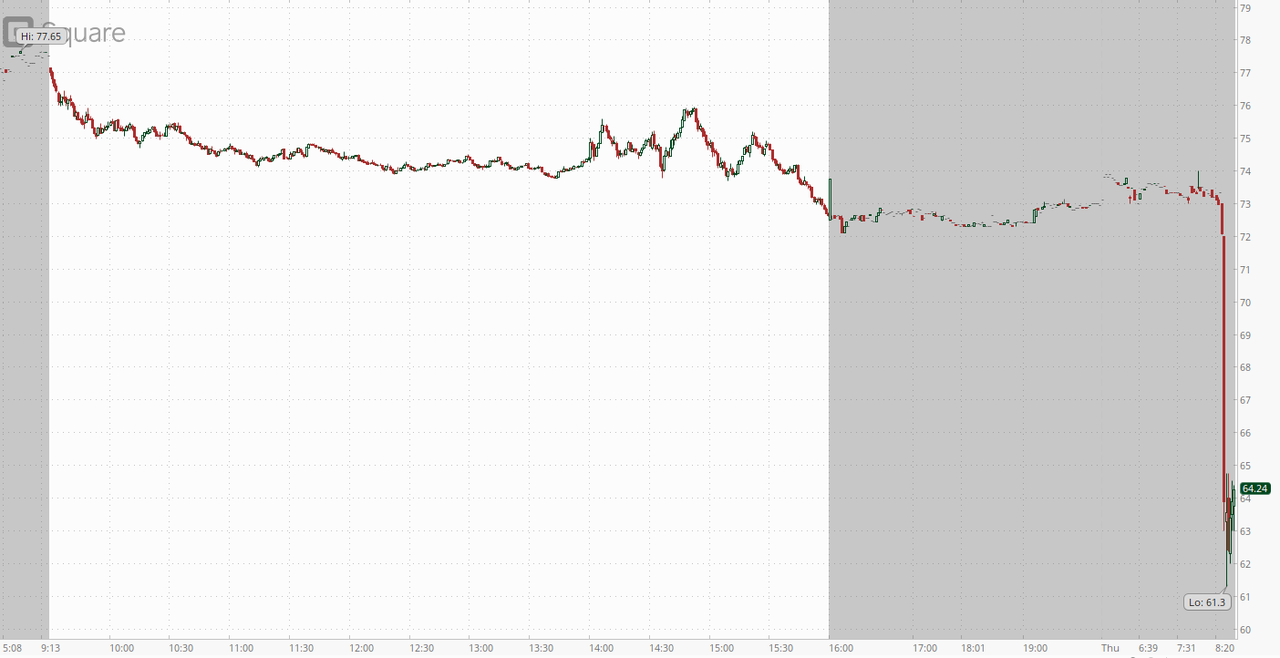
Shares of Jack Dorsey’s Block fell about 10% this morning after short seller Hindenburg Research said it was short the name, accusing the company of “facilitating fraud”. 

“On a purely fundamental basis, even before factoring in the findings of our investigation, we see downside of between 65% to 75% in Block shares,” the short seller wrote.

The short seller, recently most well known for targeting Asia’s richest man Gautam Adani, is now setting its sights on another billionaire in Dorsey, who has a reported net worth near $5 billion.

The outlet, led by Nathan Anderson, published a report called “Block: How Inflated User Metrics and “Frictionless” Fraud Facilitation Enabled Insiders To Cash Out Over $1 Billion”. 

“Most analysts are excited about the post-pandemic surge of Block’s Cash App platform, with expectations that its 51 million monthly transacting active users and low customer acquisition costs will drive high margin growth and serve as a future platform to offer new products,” the short seller wrote.

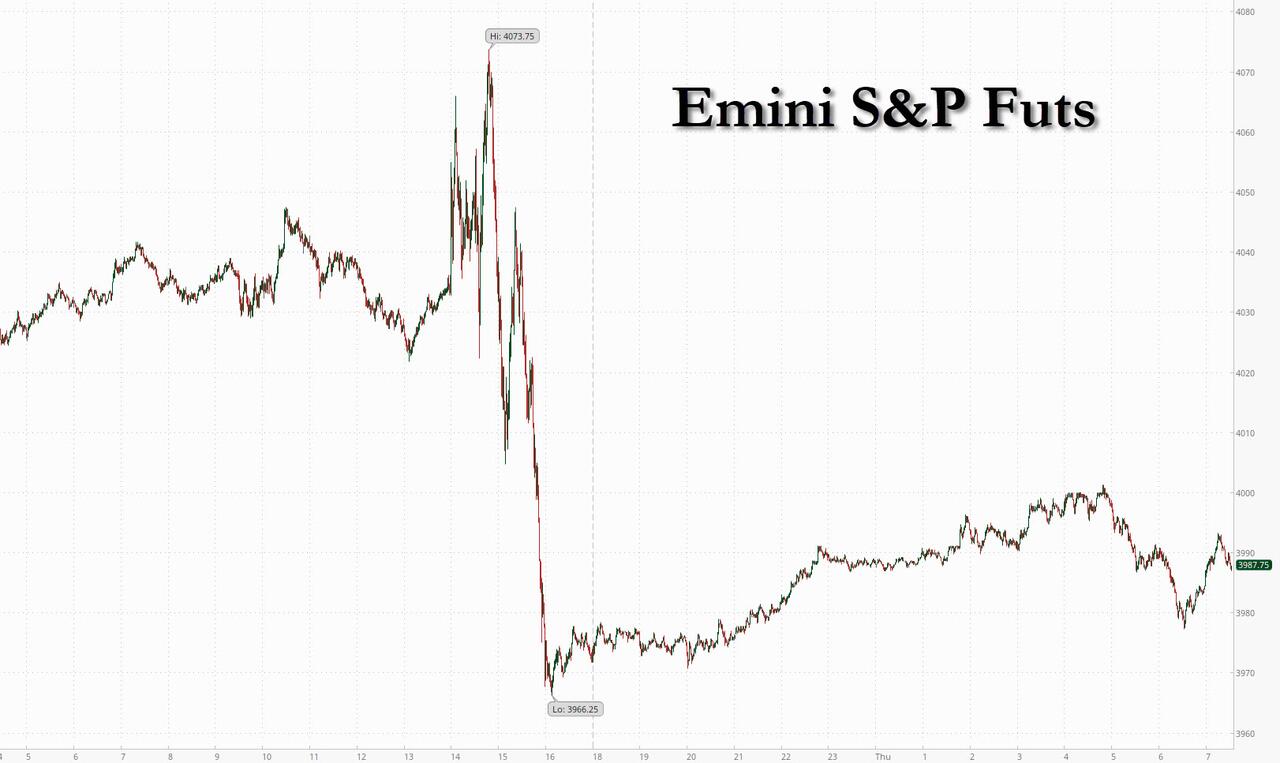
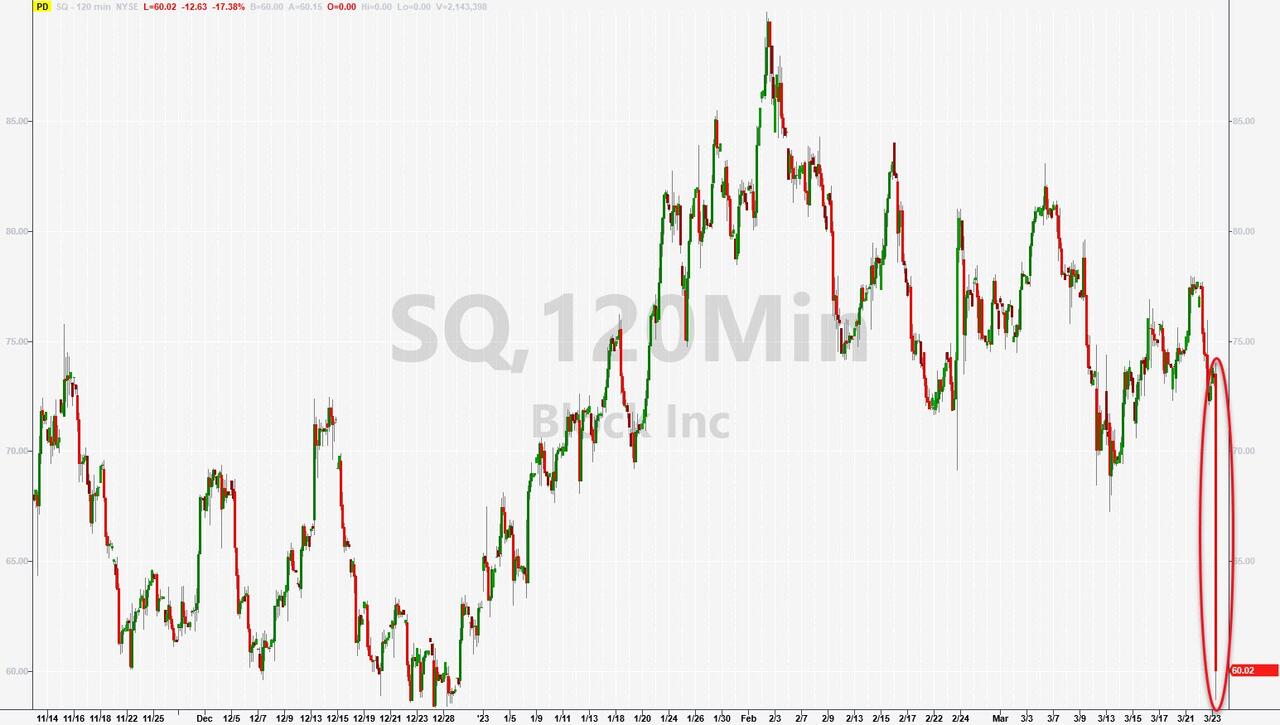
In context, this is the lowest price since the end of last year…

“Our research indicates, however, that Block has wildly overstated its genuine user counts and has understated its customer acquisition costs. Former employees estimated that 40%-75% of accounts they reviewed were fake, involved in fraud, or were additional accounts tied to a single individual.”

“Even when users were caught engaging in fraud or other prohibited activity, Block blacklisted the account without banning the user,” Hindenburg writes. “Block obfuscates how many individuals are on the Cash App platform by reporting misleading “transacting active” metrics filled with fake and duplicate accounts. Block can and should clarify to investors an estimate on how many unique people actually use Cash App.”

The company said it “filed public records requests to learn more about Block’s role in facilitating pandemic relief fraud and received answers from several states,” claiming that “Massachusetts sought to claw back over 69,000 unemployment payments from Cash App accounts just four months into the pandemic. Suspect transactions at Cash App’s partner bank were disproportionate, exceeding major banks like JP Morgan and Wells Fargo, despite the latter banks having 4x-5x as many deposit accounts.”

The report continues: “CEO Jack Dorsey has publicly touted how Cash App is mentioned in hundreds of hip hop songs as evidence of its mainstream appeal. A review of those songs show that the artists are not generally rapping about Cash App’s smooth user interface—many describe using it to scam, traffic drugs or even pay for murder.”

“In an apparent effort to preserve its growth engine, Cash App ignored internal employee concerns, along with warnings from the Secret Service, the U.S. Department of Labor OIG, FinCEN, and State Regulators which all specifically flagged the issue of multiple COVID relief payments going to the same account as an obvious sign of fraud,” Hindenburg writes.

“Block reported a pandemic surge in user counts and revenue, ignoring the contribution of widespread fraudulent accounts and payments. The new business provided a sharp one-time increase to Block’s stock, which rose 639% in 18 months during the pandemic. As Block’s stock soared on the back of its facilitation of fraud, co-founders Jack Dorsey and James McKelvey collectively sold over $1 billion of stock during the pandemic. Other executives, including CFO Amrita Ahuja and the lead manager for Cash App Brian Grassadonia, also dumped millions of dollars in stock.”

The report concludes

  • In sum, we think Block has misled investors on key metrics, and embraced predatory offerings and compliance worst-practices in order to fuel growth and profit from facilitation of fraud against consumers and the government.

  • We also believe Jack Dorsey has built an empire—and amassed a $5 billion personal fortune—professing to care deeply about the demographics he is taking advantage of. With Dorsey and top executives already having sold over $1 billion in equity on Block’s meteoric pandemic run higher, they have ensured they will be fine, regardless of the outcome for everyone else.

You can read the full report here. We will add any response from Block if and when it becomes available. 

Tyler Durden
Thu, 03/23/2023 – 08:46

via ZeroHedge News https://ift.tt/Jqc6zup Tyler Durden

Jobless Claims Data Continues To Ignore The Fed

Jobless Claims Data Continues To Ignore The Fed

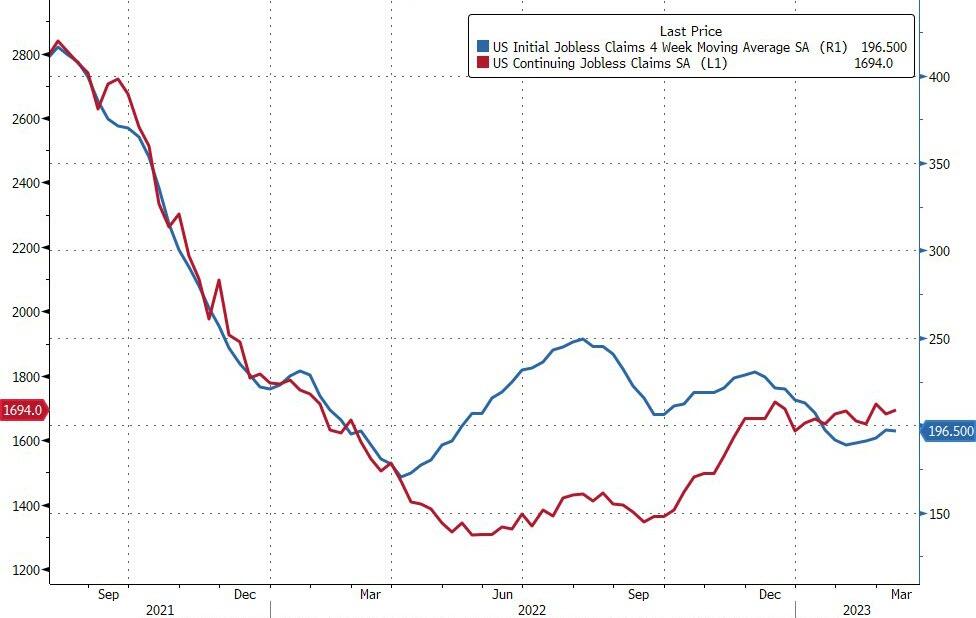
Initial jobless claims dropped (again) last week to 191k (fewer than expected) and once again standing in the face of anecdotal evidence of waves of headlines of mass layoffs.

Source: Bloomberg

Continuing claims remained below 1.7mm.

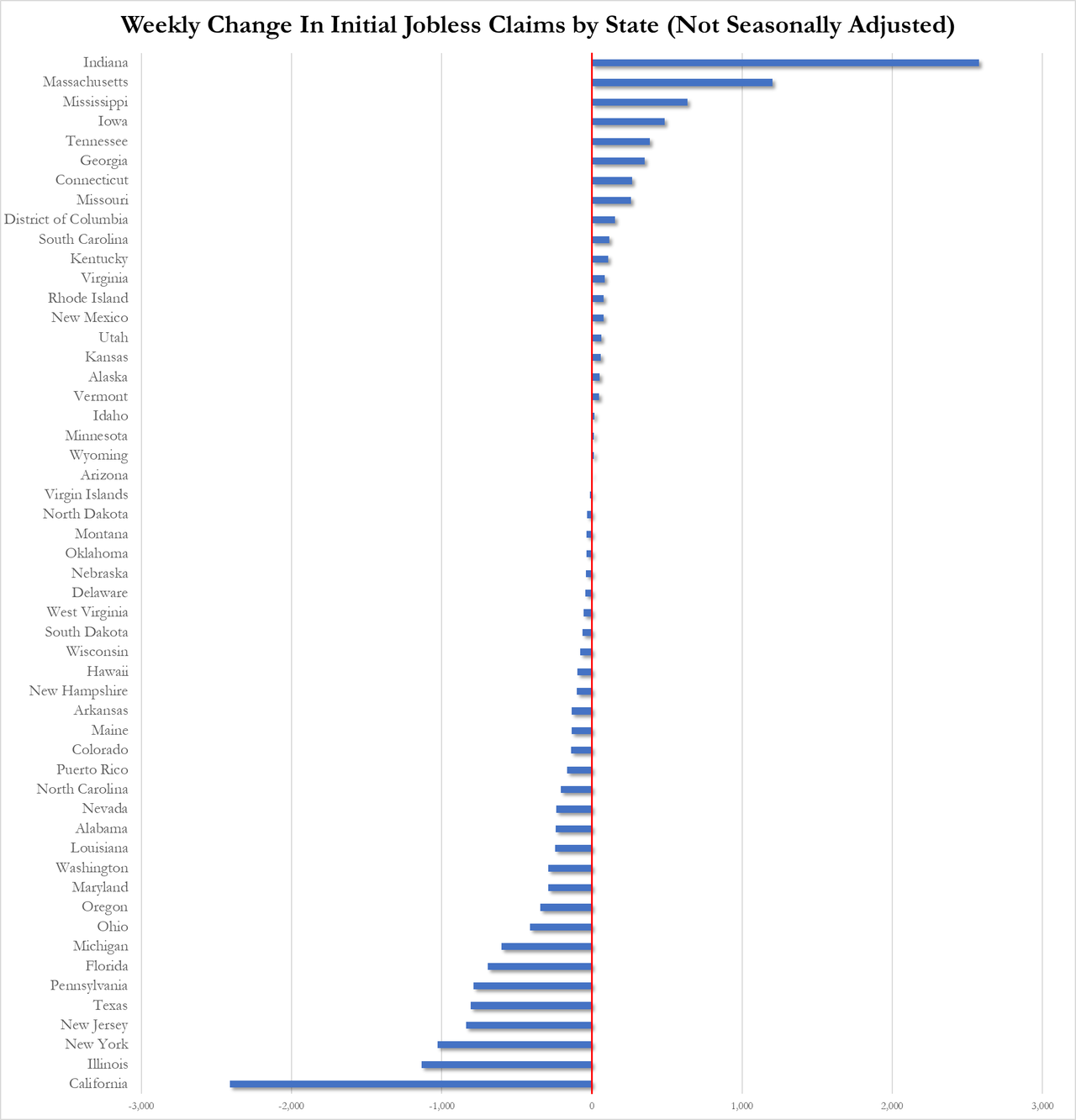
California and Illinois saw the biggest weekly drop in claims while Indiana and Massachusetts saw the largest increase…

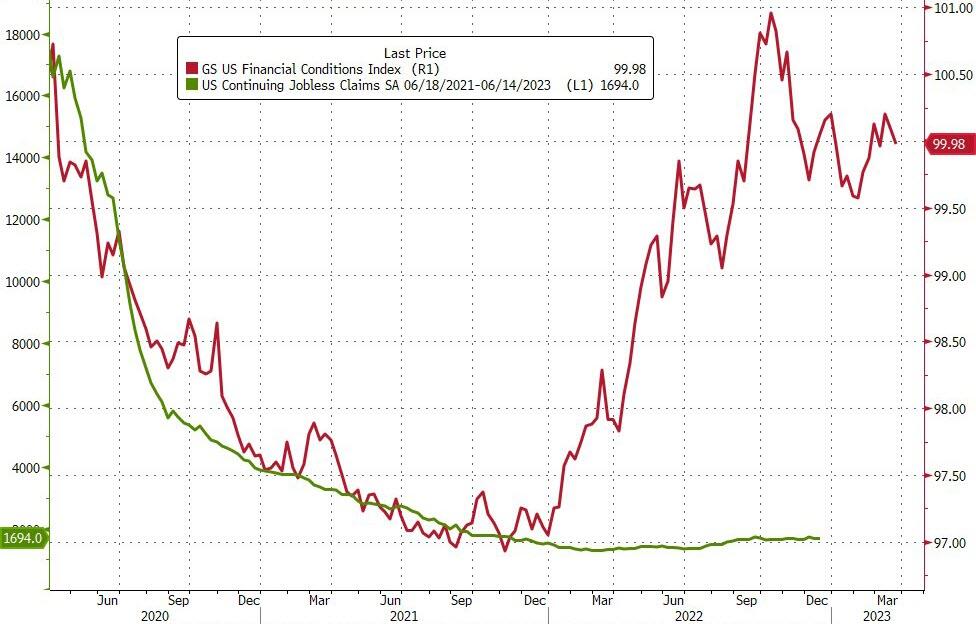
Assuming a 3mo lag between monetary policy and its effect on the economy, we can comfortably claim that something’s broken…

Source: Bloomberg

Maybe what we really need is a banking crisis to collapse credit?

Tyler Durden
Thu, 03/23/2023 – 08:38

via ZeroHedge News https://ift.tt/YpDjyLJ Tyler Durden

TikTok Is Too Popular To Ban


Someone watching a dance video on TikTok on their cellphone

TikTok’s popularity poses a problem for those who wish to ban it. TikTok CEO Shou Zi Chew is scheduled to testify before the House Energy and Commerce Committee today amid intensifying calls in the White House and Congress for the U.S. to ban the video app. TikTok foes say that because it’s owned by a Chinese parent company, ByteDance, it poses a national security threat.

Of course, no one has been able to fully articulate how this alleged threat works. There’s a lot of vague hand waving about consumer data and grave warnings about the Chinese government—though what Chinese authorities would want or do with data on your average TikTok user, or how that would threaten national security, is unclear. (A plausible case may be made for disallowing use by government officials and guardians of state secrets, but that’s about it.) Nor is there any indication that TikTok actually is sharing U.S. user data with the Chinese government—though people who suggest this often act like it’s self-evident and they shouldn’t need to proffer any proof.

Investigative journalists have tried hard to find evidence that TikTok is leaking data to Chinese authorities, but to no avail.

“I haven’t found any evidence” of “the company handing over data to Chinese authorities, or security risks associated with its connection to the Chinese state,” writes Chris Stokel-Walker—who has done ample critical reporting about the company—at Buzzfeed this week:

I’ve been trying for years to find any links to the Chinese state. I’ve spoken to scores of TikTok employees, past and present, in pursuit of such a connection. But I haven’t discovered it….

Trump launched a series of online advertisements in 2020 saying, “TikTok is spying on you.” It’s a sentiment that has been repeated by other politicians, including Missouri Sen. Josh Hawley, who worries about TikTok’s links to China.

None of this is true. At least as far as I can tell. Yet to hear politicians on both sides of the aisle talk about it, it’s verifiable fact. And they want the app banned because of it.

For what it’s worth, TikTok adamantly denies allegations about data sharing with the Chinese government. “TikTok has never shared, or received a request to share, U.S. user data with the Chinese government,” said its CEO in prepared testimony released ahead of today’s House hearing. “Nor would TikTok honor such a request if one were ever made.”

“Let me state this unequivocally: ByteDance is not an agent of China or any other country,” the testimony continues. “Bans are only appropriate when there are no alternatives. But we do have an alternative.”

The company has been cooperating with U.S. regulators to develop protocols around user data that will help mollify security and privacy concerns. “TikTok has formed a special-purpose subsidiary, TikTok U.S. Data Security (USDS), that currently has nearly 1,500 full-time employees and contracted with Oracle to store TikTok’s U.S. user data,” notes Reuters. According to Chew’s testimony, “Oracle has already begun inspecting TikTok’s source code and will have unprecedented access to the related algorithms and data models.”

And it strenuously condemned user data misuse by a small group of TikTok employees who worked on a team concerned with internal misconduct. The team reportedly accessed data on several reporters who had been covering TikTok. “We have taken disciplinary measures and none of the individuals found to have directly participated in or overseen the misguided plan remain employed at ByteDance,” a ByteDance spokesperson told Buzzfeed. A TikTok spokesperson said the company had already “significantly improved and hardened [access protocols] since this incident took place.” The FBI is reportedly now investigating the breach.

Alas, TikTok is far from the first social media company to misuse some user data. But in this case, the snooping—however invasive and ill-conceived—wasn’t related to Chinese government aims but more mundane corporate goals: finding who inside the company was leaking information.

Whether all this will help TikTok avoid a U.S. ban is uncertain. But it has another weapon: its popularity. Not only is the app incredibly popular among Americans, especially younger Americans, but it’s also become a go-to spot for digital advertising.

“In 2019, the NFL signed a multi-year deal with TikTok, and ESPN also works with the company,” notes Katie Harbath in the newsletter Anchor Change. And while members of Congress have been trying to persuade against deals like these, “advertisers go where the eyeballs are.”

“Policymakers are going to be in a tough spot to try to convince all these entities that a ban is going to be in their best interest,” suggests Harbath. “Moreover, if they do ban TikTok, where are most of these folks likely to go? Instagram and YouTube. That doesn’t help much with the anti-trust efforts these same members are pushing.”

In a Washington Post survey, 41 percent of all respondents said the app should be banned, compared to just 25 percent who said it shouldn’t be. But there’s still lots of room for either side here: 34 percent said they weren’t sure.

Politically, banning TikTok could be a very bad move, especially for anyone worried about courting or retaining younger voters.

“TikTok is vastly more popular with younger Americans, with 59 percent of 18-to-34-year-olds using the app, compared with 46 percent of those ages 35 to 49, 29 percent of people ages 50 to 64, and 13 percent of those 65 and older,” notes the Post. “Its users also are more likely to be female, non-White and to have lower incomes, according to The Post’s poll.”

“There is a huge disconnect between lawmakers and many of the new technologies…and with TikTok, it’s easier to just say, ‘Ban it, sell it or let us control it’ because it’s not an American company,” Rep. Jamaal Bowman (D–N.Y.) told the Post.

“For the U.S., the political costs of a TikTok ban will increase the longer there is no resolution,” suggests Aynne Kokas, author of Trafficking Data: How China is Winning the Battle for Digital Sovereignty, at the Los Angeles Times. “More users join the app every day, making it a more essential communication tool. Concerns about TikTok’s security might be bipartisan, but they have yet to overcome the popularity of the social media app.”

Practically, the ban would be hard to enforce. You can stop American companies from offering the app for download and demand that links to TikTok be blocked on U.S. websites and browsers. But there are other ways to download apps and share links.

And conceptually, the ban just doesn’t make a lot of sense. We’re supposedly aghast at censorship and civil liberties abuses in China so…we’re going to suppress more free speech and private enterprise here? It’s logic only a politician could love.


FREE MINDS

Sheriff’s deputies who raided Afroman’s house sue him. Police who raided Afroman’s house and allegedly misplaced some of the cash they took from him are mad that the musician is now using footage and images from the raid to promote his concerts and sell merchandise. Never mind that the footage comes from Afroman’s home security cameras, and doesn’t distort the antics of the Adams County Sheriff’s Office. They argue that he shouldn’t be able to use it for commercial purposes “without the authorization of any of the plaintiffs to do so,” as it’s causing them “humiliation, ridicule, mental distress, embarrassment and loss of reputation.” So…raiding someone’s home for no apparent reason is no big deal, but publicizing, mocking, or criticizing that raid is off-limits? Hopefully a judge won’t agree.


FREE MARKETS

California bill could ban popular junk foods. It could make selling Skittles, M&Ms, Sun Drop soda, and other popular packaged goods—at least as they’re currently formulated—illegal. Assembly Bill 418, sponsored by Democratic Assemblymembers Jesse Gabriel (Woodland Hills) and Buffy Wicks (Oakland), would ban the manufacture, sale, or distribution of any food containing Red Dye No. 3, titanium dioxide, potassium bromate, brominated vegetable oil, or propylparaben.

The bill has been gaining national attention—and Gabriel is pushing back against the idea that it would ban Skittles and other snacks. The bill “would theoretically ban a whole host of foods, from hard candies like Skittles and Hot Tamales, to Nesquik strawberry milk and many baked goods, breads and sodas,” notes USA Today. “But the lawmaker behind the legislation making national headlines says that’s far too simplistic and highly unlikely even if it passes.”

He told the paper that “there’s a 0% chance this is actually going to result in a ban of Skittles.” But Gabriel’s insistence that this won’t happen relies on claiming that food manufacturers would stop using the banned ingredients if A.B. 418 becomes law, rather than simply saying so long to the Golden State.


QUICK HITS

• “The British defense ministry on Monday confirmed it would provide Ukraine with armor-piercing rounds containing depleted uranium,” reports the Associated Press. Russia has been falsely claiming this counts as a weapon with nuclear components and threatening to escalate attacks in Ukraine as a result.

• The Securities and Exchange Commission is charging eight celebrities—including Lindsay Lohan, Jake Paul, and Soulja Boy—with failing to disclose that they were paid to tout cryptocurrencies.

• House Republicans introduce a new energy bill.

• A Wyoming law that makes abortion a felony has been temporarily halted by a state district court.

• Oregon has licensed the state’s first legal grower of psychedelic mushrooms:

• “Republicans have been railing about the ‘weaponization of government’ for quite some time now,” writes Daniel Drezner. “And yet today, the hard-working staff here at Drezner’s World couldn’t help but notice two small news items suggesting that the weaponization was coming from inside the GOP’s house.”

• State “parental rights” proposals would require schools to out transgender students to their parents. “While some parents and teachers argue they have a right to know, others warn it could jeopardize the mental health and physical safety of gender-nonconforming children and place educators in the crosshairs,” notes the A.P.

The post TikTok Is Too Popular To Ban appeared first on Reason.com.

from Latest https://ift.tt/dHEa7c0
via IFTTT

The End Of Moral Hazard And The Dollar’s Debasement

The End Of Moral Hazard And The Dollar’s Debasement

Authored by Simon White, Bloomberg macro strategist,

A full guarantee of all bank deposits would spell the end of moral hazard and mark the final chapter of the dollar’s multi-decade debasement.

It’s said the cover-up is worse than the crime. With the latest banking crisis in the US, it’s the clean-up that could end up doing far more lasting damage. The failure of SVB et al prompted the FDIC to guarantee that all depositors will be made whole, whether insured or not.

The precedent is being set, with Treasury Secretary Janet Yellen commenting on Tuesday that the US could repeat its actions if other banks became imperiled. She was referring to smaller lenders, and denied the next day that insurance would be “blanket”, but given the regulatory direction of travel over the last forty years, this will inevitability apply to any lender when push comes to shove.

This marks the end of moral hazard and, ultimately, the final desecration of the Fed’s balance sheet.

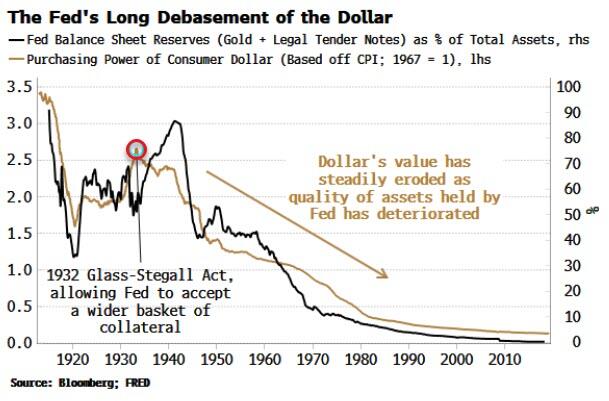
The dollar is a liability of the central bank; therefore, this would mean further erosion of its real value, compounding the decimation of its purchasing power seen over the last century.

The 1932 Glass-Stegall Act was the beginning of the end, allowing the Fed to accept a wider basket of collateral it could lend against: riskier assets such as longer-term Treasury securities. The falling quality of collateral has continued, with the Fed lending against corporate debt in recent years.

The end result is the Fed’s balance sheet has steadily deteriorated, and with it the real value of the dollar.

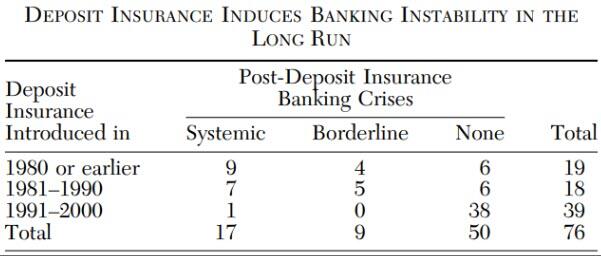
A de facto expansion of insurance to all deposits will lead to a further erosion in the Fed’s balance sheet. Why? Firstly, note that deposit-insurance schemes typically lead to less, not more, bank stability.

Several studies have shown that countries with deposit-insurance schemes tend to see more bank failures. The more generous the scheme, the greater the instability.

Source: Columbia University

Moral hazard instills discipline in depositors as they pay attention to the bank’s credit risk (something many depositors in SVB signally failed to do.) It also imposes discipline on banks, incentivizing them to structure their cash flows so that they match through all time, thus mitigating the risk of bank runs (cue SVB again).

Why, then, would greater banking instability lead to a further deterioration in the Fed’s balance sheet? It comes down to how US banking has evolved over the last century.

Banks must manage cash flows from assets and liabilities, and their preference is to minimize their cash position each night in order to maximize the productive use of their capital. There is always a “position making” instrument, a liquid asset that banks can use to park excess cash or make up for shortfalls each day.

In the early days of the Federal Reserve system it was commercial loans and USTs; now it is principally the repo market. A bank can “make position” if it can repo in or repo out securities for funds. But if the market for that collateral freezes up, they’re dead.

This is where the Fed steps in – but as the “dealer of last resort” rather than the lender of last resort.

To ensure market liquidity, the Fed must underwrite funding liquidity. And to do that it must be willing to accept as collateral whatever the banking sector’s position-making instruments are. If it doesn’t, the game’s up.

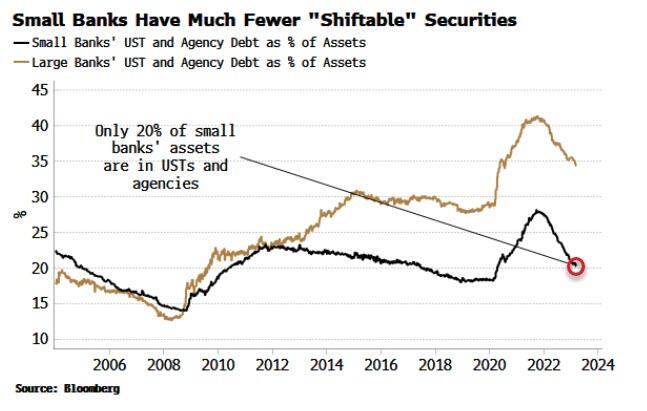
SVB happened to have a high proportion of USTs and mortgage-backed securities on its balance sheet, making the Fed’s life easy in creating the BTFP (Bank Term Funding Program), which accepts government and government-backed collateral. But this does not get to the heart of the problem. Only a fifth of small banks’ assets are currently shiftable on to the Fed’s balance – less than for larger lenders — leaving them considerably exposed.

Deposit insurance only mitigates banks’ vulnerability to bank runs; it does not insulate them from liquidity or insolvency risk. SVB et al are very likely not the only fragile US banks, and as the economy slows, asset prices fall and delinquencies and bankruptcies rise, we are likely to see more banks needing support.

The logical outcome is that the Fed will have to increasingly accept poorer quality collateral — especially from smaller banks, with their large exposure to residential and commercial real estate. We have been here before, when during the pandemic the Fed began to accept the corporate debt of even junk-rated companies.

Minsky himself stressed the centrality of banking to financial stability, noting that imprudent banks (read: operating without moral hazard) are more likely to finance unproductive projects, which then leads to inflation.

So there we have it. Inflation and a further debasement of the Fed’s balance sheet.

With an abnegation of moral hazard, the long-term value of the dollar doesn’t stand a chance.

Tyler Durden
Thu, 03/23/2023 – 08:20

via ZeroHedge News https://ift.tt/s7vYmtU Tyler Durden

BoE Hikes Rates 25bps As Expected, Re-Opens Door For Further Hikes

BoE Hikes Rates 25bps As Expected, Re-Opens Door For Further Hikes

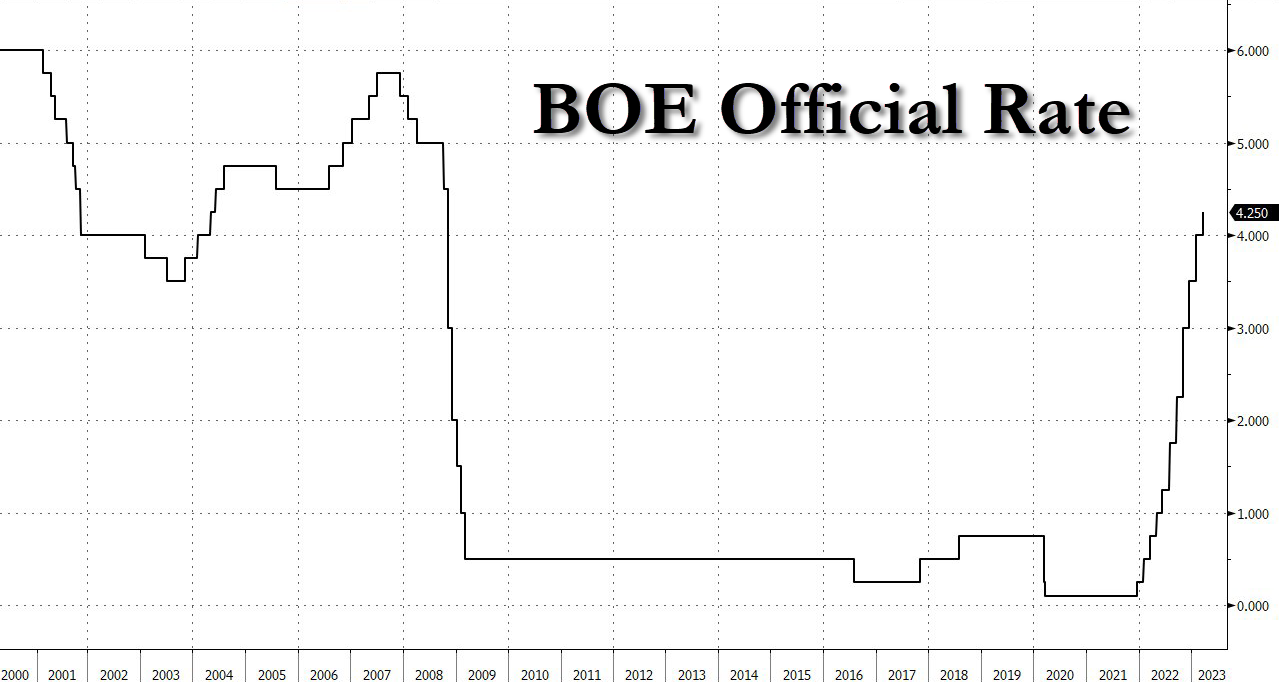
Following yesterday’s disappointingly hot inflation prints, it was not a big surprise to markets that The Bank of England (BoE) hiked rates by 25bps this morning to 4.25%, the highest since 2008, and left the door open to further increases if inflation persists.

The 25bps hike is the smallest increase in rates since June.

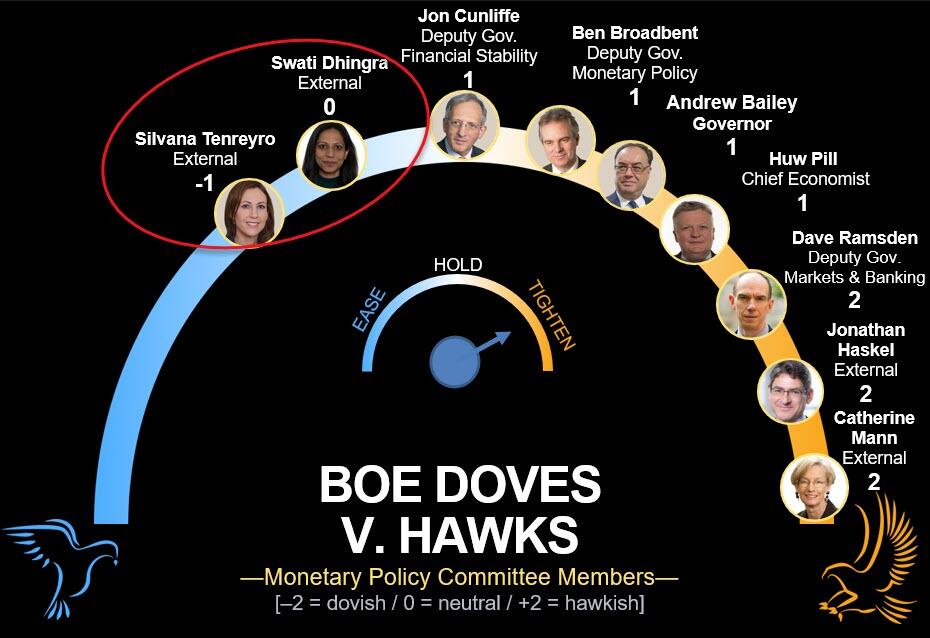
Policy makers voted 7-2 for the hike – Tenreyro and Dhingra voted to keep rates unchanged.

Key remarks in the statement suggest a shift the market’s perspective that BoE was ready to ‘pause’.

“If there were to be evidence of more persistent pressures, then further tightening in monetary policy would be required,” minutes of the meeting released Thursday said, a guidance that’s in step with what the BOE said in February.

However, while inflation has “surprised significantly on the upside,” it still expects price growth to cool sharply in the coming months.

“The stronger domestic and global outlook for demand was also being driven by factors over and above the weaker path of energy prices,” minutes of the meeting said.

Cable is very modestly higher on the day with little to no reaction post-statement, Gilt yields are drifting modestly lower.

Tyler Durden
Thu, 03/23/2023 – 08:11

via ZeroHedge News https://ift.tt/Ipe5goU Tyler Durden

Futures Rebound After Yellen Torches Markets

Futures Rebound After Yellen Torches Markets

After 76 year old treasury secretary Janet Yellen blew up the market yesterday with her post-FOMC comments that regulators aren’t looking to provide “blanket” deposit insurance to stabilize the US banking system, stock futures have rebounded modestly on Thursday, while paring some earlier gains. S&P 500 futures were up 0.5% at 3990 at 7:45 a.m. ET while Nasdaq 100 futures rose 0.9%. Both underlying indexes fell the most in two weeks yesterday. The tech-heavy Nasdaq index flirted with a bull market yesterday after briefly rising 20% from its December low. US government bond yields have edged up after falling sharply on Wednesday when the Fed raised rates 25bps but also opened the door to a pause, while WTI crude futures are down 0.6% in early US session. The Stoxx Europe 600 Index slid 0.8%, falling for the first time this week before a rates decision from the Bank of England.
In premarket trading, banking stocks were again the biggest laggards, following weakness in their US peers and as Citigroup Inc. slashed its outlook for the sector. Coinbase slumped after the largest US crypto exchange said it received a notice from the SEC formally declaring the securities regulator’s plans to bring an enforcement action against it. Analysts say the notice might be a precursor to the agency ultimately suing the company. Here are some other notable premarket movers:

  • First Republic Bank shares rose on Thursday along with banking peers, set for a tentative rebound from yesterday’s losses following disappointment over comments from Treasury Secretary Janet Yellen over bank deposits.
  • Cryptocurrency-exposed stocks rise as Bitcoin rebounds after snapping a six-session gaining streak on Wednesday. US equity futures also climbed, signaling a recovery following a tumultuous day of losses on Wall Street. Marathon Digital (MARA US) +5.1%, Riot Platforms (RIOT US) +4.7%.
  • Chewy falls as much as 6.6% in US premarket trade after the online pet supplies retailer issued softer-than-expected FY23 guidance, with plans for international expansion likely to pressure margins. The company’s 4Q results also showed declining customer numbers, which Barclays says raises questions given that headwinds should have been abating.
  • Phreesia Inc. shares dropped 3.3% in postmarket trading, after the application software company reported fourth-quarter results that beat expectations but gave a revenue outlook that KeyBanc sees as light.

Caution reigned in markets on Thursday following the Fed’s decision to proceed with a quarter-point rate hike, combined with Treasury Secretary Janet Yellen’s remarks on the health of the banking sector. While Fed Chair Jerome Powell assured that regulators’ actions demonstrated “all depositors’ savings are safe” as he raised rates by an expected quarter point,  Yellen effectively contradicted him and sent stocks whipsawing, when she said regulators aren’t looking to provide “blanket” deposit insurance.

Yellen’s comments were clearly the more important factor yesterday,” said Manish Kabra, US equity strategist at Société Générale. “Not securing all deposits risks more deposit runs, which means large banks’ outperformance versus regional banks is likely to continue. Overall, the US banks rally will continue to fade, at least until the yield curve is firmly positive.”

“It is well possible that the post-FOMC equity selloff quickly reverses, as falling yields are supportive of equity valuations — if financial stress is contained and economic data is not too bad,” said Ipek Ozkardeskaya, senior analyst at Swissquote Bank.  

UBS strategists led by Mark Haefele believe that any rally would be unlikely to endure just yet however, noting that turning points usually rely on investors anticipating interest-rate cuts alongside a trough in economic activity and corporate earnings. “The Fed’s actions and analysis of the economy suggest these conditions are not yet fully in place,” they said in a note.

Separately, Goldman Sachs Group Inc. strategists say they expect US households to be net sellers of $750 billion worth of stocks in 2023 amid rising bond yields and declining personal savings. The team led by Cormac Conners says higher 10-year yields and lower savings rates tend to be associated with decreased net equity demand from households.

As a result of the ongoing bank crisis, the swap market shows investors are split on the chances that Fed officials will add another 25 basis points to their benchmark in May. Despite Powell’s guidance, expectations for cuts have deepened, with the market suggesting that the effective fed funds rate will drop to around 4.1% in December.  “I would not expect the market to take these rate cuts out in the near term and could very well price in more cuts if the data deteriorates from here,” Matthew Hornbach, global head of macro strategy at Morgan Stanley, told Bloomberg Television. Powell himself, though, said in response to questioning that officials “just don’t” see cuts this year and that they will raise higher than expected if that is needed. “Rate cuts are not in our base case,” he said. He also didn’t see the bank crisis as recently as three weeks ago when he swore to Congress he would hike rates 50bps only to trigger the worst banking crisis since Lehman.

European stocks are on course to snap a three-day winning streak as banks underperform after US Treasury Secretary Janet Yellen warned they aren’t considering widespread insurance for bank deposits. The Stoxx 600 is down 1.0% while the Stoxx 600 Banks Index falls 2.5%.  Here are some of the biggest European movers:

  • HSBC shares drop as much as 3.3%, ING slides as much as 2.5% and ABN Amro tumbles as much as 3.7% after US peers fell on remarks that US lawmakers aren’t planning on widespread insurance for bank deposits
  • Jeronimo Martins falls as much as 4.1%, curbing the stock’s rally since the start of the month, after 4Q earnings showed a further drop in the Portuguese retailer’s margins
  • Rallye SA slumps as much as 10% after the company said the latest earnings from its French supermarket business make it difficult to finish debt restructuring
  • Gym Group drops as much as 5.1% after Barclays downgrades the fitness operator to equal-weight from overweight, citing a “bleak” profit outlook
  • Sanofi gains as much as 5.3%, the most since December, after releasing positive data from a phase 3 trial for its key drug Dupixent
  • Scout24 climbs as much as 4.4%, reaching highest since mid-November, after the online classified advertising company announced a buyback
  • Inwit rises as much as 4.8% to a record after Reuters reported that private equity firm Ardian is in the early stage of exploring a bid for the Italian tower operator
  • Domino’s Pizza Group jumps as much as 4.3% after Barclays upgrades the pizza delivery chain to overweight from equal-weight, highlighting the increase in app usage
  • Meyer Burger gains as much as 15% after the Swiss solar equipment manufacturer’s Ebitda and profitability beat expectations
  • Nemetschek shares rise as much as 13% to their highest level since September. The German firm’s outlook for 2024 and 2025 was seen as solid

The BOE is likely to continue the quickest series of interest-rate increases in three decades, with its focus on combating inflation outweighing calls for a pause given recent turmoil in the banking system. The Swiss and Norwegian central banks both raised rates Thursday, as forecast, and flagged more hikes to come in their campaigns to tame rising consumer prices.

For the BOE, February UK CPI data have “removed any flexibility they may have thought they had and now markets are pricing in a higher terminal rate of around 4.5% as a result,” said Craig Erlam, a senior market analyst at Oanda Ltd. “This makes the language that accompanies the decision key,” he said, expecting policymakers to highlight an uncertain outlook and the need to be data-dependent.

Earlier in the session, Asian stocks rose as the region’s currencies strengthened against the dollar despite the Federal Reserve’s decision to raise US interest rates on Wednesday.  The MSCI Asia Pacific Index climbed as much as 1.5%, rising for a third day, as most Asian currencies, including South Korea’s won and Thailand’s baht, gained. Hong Kong’s equity benchmarks were among the top performers, boosted by gains in Tencent after the firm reported better-than-expected revenue. Stock gauges in Japan and India underperformed. “Dollar reaction to the Fed hike looks to be muted, which can ease pressure on Asian currencies and fund flows,” said Marvin Chen, an analyst at Bloomberg Intelligence. “Focus should be on the dollar impact as peak Fed rates near.” The dollar slid as market expectations for rate cuts by the Fed deepened despite the central bank hiking its benchmark rate by a quarter-point and signaling that it expects more tightening after that.

A weaker greenback tends to be beneficial for Asian shares if it signals higher risk appetite and is seen as a positive for growth in the region’s emerging economies, many of which rely on imports priced in dollars. An index of Asian financial stocks headed for a three-day gain as a key technical indicator suggested the sector’s loss of more than 3% this month may have been excessive. US shares slumped Wednesday after comments from Treasury Secretary Janet Yellen rattled US bank shares and Fed Chairman Jerome Powell dashed hopes on rate cuts this year. Given expected slower US growth and the stresses in its banking system, it makes more sense to lean into the stronger growth recovery in China as well as Hong Kong and Thailand, said Sunil Koul, Asia Pacific equity strategist at Goldman Sachs, in a Bloomberg TV interview

Japanese equities fell, following US peers lower, after comments from Treasury Secretary Janet Yellen rattled US bank shares and Federal Reserve chief Jerome Powell said he was prepared to keep raising rates. The Topix Index fell 0.3% to 1,957.32 as of market close Tokyo time, while the Nikkei declined 0.2% to 27,419.61. Sony Group Corp. contributed the most to the Topix Index decline, decreasing 1.3%. Out of 2,159 stocks in the index, 1,256 rose and 781 fell, while 122 were unchanged. Yellen told US lawmakers that the government wasn’t considering “blanket” deposit insurance to stabilize the banking system while Powell said he was ready to keep raising rates until inflation shows signs of cooling. Japanese shares are falling after the comments, said Rina Oshimo, a senior strategist at Okasan Securities.

Australian stocks joined the selloff: the S&P/ASX 200 index fell 0.7% to close at 6,968.60, in a broad decline weighed by losses in mining shares and banks. The drop followed a slump on Wall Street as the Federal Reserve pushed back against bets for interest rate cuts this year. In New Zealand, the S&P/NZX 50 index was little changed at 11,594.94

Lastly, stocks in India were among the worst performers in Asia amid a mixed trend seen across global markets as investors remained concerned over the future course of central banks’ policy actions.  The S&P BSE Sensex fell 0.5% to 57,925.28 in Mumbai, while the NSE Nifty 50 Index declined 0.4%. The gauge is now little changed this week after dropping for two out of the last four sessions. The benchmarks have slipped more than 4.5% each for the year.  The underperformance in local equities compared with Asian and emerging market peers is a result of surging interest rates in the US – the Fed raised its main lending rate by another 25 bps on Wednesday to 5% – impacting flows from overseas investors. Index-heavy software exporters and banks came under pressure on increasing worries over global economic growth.  Foreign investors have sold $2.8b of local shares this year through March 20 following inflows of about $11b over the preceding two quarters. Domestic investors have however remained buyers to the tune of $9b in 2023.  Reliance Industries contributed the most to the Sensex’s decline, decreasing 1.3%. Out of 30 shares in the Sensex index, 13 rose, while 17 fell.

In FX, weakness in the dollar extended to a sixth day, with a gauge of the greenback falling to the lowest in more than a month as traders boosted bets for US interest-rate cuts, even after the Fed said more tightening may be needed.  It has since rebounded fractionally from session lows.

  • The Norwegian krone gained 1% versus the dollar after a hawkish 25bps hike from the Norges Bank. While there were expectations that Norges Bank would stand pat after hiking today, the central bank explicitly signaled another increase in May
  • The pound and euro advanced, with the former climbing on leveraged demand amid expectations for the Bank of England to deliver a hawkish quarter-point rate increase on Thursday, according to a trader “With the banking sector concerns still fresh, the Fed was more dovish than just a while ago and that is dragging down bond yields and the dollar,” said Daisuke Uno, chief strategist at Sumitomo Mitsui Banking Corp. “I still think the Fed will raise the rate to tame inflation, which seems to remain stubborn”
  • The Swiss franc struggled to hold gains after the SNB opted for a 50bps increase. The Dollar Index is little changed.

In rates, treasuries were cheaper across the curve, although futures remain near top of Wednesday’s range, a bull-steepening rally following Fed’s rate decision. US two-year yields are up ~2bps while UK two-year borrowing costs fall 9bps ahead of the Bank of England rate decision later today.  Thursday’s losses are belly-led, cheapening 2s5s30s fly by ~3bp on the day. Bank of England rate decision at 8am New York time is expected to be a quarter-point rate increase. US yields cheaper by 3bp-5bp across the curve with 10-year around 3.48%, near low end of Wednesday’s 3.427%-3.642% range; on the curve, 2s10s spread is wider by ~1.5bp on the day, near Wednesday’s steepest levels, while 5s30s spread tightens ~1.5bp.  Fed-dated OIS contracts price in around 13bp of rate hike premium for the May policy decision and then ~75bp of cuts by year-end.

Crude futures decline with WTI falling 1.2% to trade near $70.05. Spot gold adds 0.5% to around $1,980. Bitcoin rises 1.2%.

Looking to the day ahead now, monetary policy decisions will include the Bank of England, the Swiss National Bank and the Norges Bank. Data releases include the US weekly initial jobless claims, February’s new home sales, the Kansas City Fed manufacturing activity for March, and the Q4 current account balance. Finally, EU leaders will gather in Brussels for a summit.

Market Snapshot

  • S&P 500 futures up 0.5% to 3,989.00
  • MXAP up 1.3% to 160.31
  • MXAPJ up 1.5% to 517.51
  • Nikkei down 0.2% to 27,419.61
  • Topix down 0.3% to 1,957.32
  • Hang Seng Index up 2.3% to 20,049.64
  • Shanghai Composite up 0.6% to 3,286.65
  • Sensex little changed at 58,181.18
  • Australia S&P/ASX 200 down 0.7% to 6,968.61
  • Kospi up 0.3% to 2,424.48
  • STOXX Europe 600 down 0.4% to 445.25
  • German 10Y yield little changed at 2.28%
  • Euro up 0.4% to $1.0897
  • Brent Futures down 0.2% to $76.52/bbl
  • Gold spot up 0.4% to $1,977.01
  • U.S. Dollar Index down 0.18% to 102.16

Top Overnight News from Bloomberg

  • Hong Kong’s CPI for Feb falls short of expectations, coming in at +1.7% (down from +2.4% in Jan and below the St’s +2.4% forecast). Singapore’s inflation also comes in a bit below plan at +6.3% headline for Feb (down from +6.6% in Jan and below the St’s +6.4% forecast). BBG
  • Blinken’s planned trip to China may be in the process of getting back on track after being derailed by the Chinese balloon incident. Blinken said China will be capable of invading Taiwan by 2027. SCMP
  • The ECB will probably need to raise borrowing costs more, though the bulk of tightening is already done, according to Governing Council member Madis Muller. BBG
  • Ukrainian troops, on the defensive for four months, will launch a long-awaited counterassault “very soon” now that Russia’s huge winter offensive is losing steam without taking Bakhmut, Ukraine’s top ground forces commander said on Thursday. RTRS
  • Swiss financial regulator Finma has defended its decision to wipe out a huge swath of risky subordinated bonds as part of the CS rescue deal. In its first statement on the deal since the weekend, Finma said that all the contractual and legal obligations had been met for it to act unilaterally given the urgency of the situation. “On Sunday, a solution was found to protect clients, the financial centr and the markets,” said Finma’s chief executive Urban Angehrn. “In this context, it is important that Credit Suisse’s banking business continues to function smoothly and without interruption.” FT
  • Following the Fed, the BOE will probably continue its quickest series of rate increases in three decades with a 25-bp hike to 4.25%. The SNB raised rates by 50 bps and signaled more to come as it resumed its inflation fight just days after the downfall of Credit Suisse. Norges Bank raised by 25 bps to 3%, as expected, and said it will tighten further in May. BBG
  • Freight companies are dialing back expectations that demand will recover strongly in the second half of the year amid growing economic uncertainty and signs retailers are growing more guarded about placing big orders in 2023. WSJ
  • OPEC+ is unlikely to take action on production despite the recent slump in prices as they attribute most of the volatility to financial speculation, not fundamentals. RTRS
  • The SEC has told Coinbase that it plans to take enforcement action against the company, escalating its crackdown on digital-currency firms by targeting the biggest U.S. crypto exchange, Coinbase said Wednesday. WSJ
  • The Swiss National Bank raised its interest rate by 50 basis points and signaled more to come as it resumed its inflation fight just days after the downfall of the country’s second- biggest bank became the epicenter of global financial turmoil: BBG
  • Norway’s central bank raised its key interest rate to the highest level since 2009 and signaled further tightening after higher price pressure from a weaker-than-forecast krone outweighed concerns about global banking turbulence: BBG
  • Wall Street banks and European rivals are undoing de facto hiring freezes after Credit Suisse’s emergency rescue by UBS, unable to resist the lure of top talent available at a discount: BBG

A more detailed look at global markets courtesy of Newsquawk

Asia-Pac stocks traded mixed with price action choppy as markets digested the FOMC where the Fed delivered a widely expected 25bps rate hike and maintained its terminal rate view but dropped its reference regarding expectations that ‘ongoing’ rate hikes will be appropriate. ASX 200 declined amid the uninspired mood across most industries with underperformance in tech and mining. Nikkei 225 was contained by weakness in financials and after Japan maintained the overall assessment of the economy but cut the assessment on corporate profits and production for the first time since April 2020. Hang Seng and Shanghai Comp. swung between gains and losses with optimism in Hong Kong following earnings releases from Orient Overseas International and Tencent whereby the advances in the latter inspired its tech peers, although participants also digested a rate hike by the HKMA which moved in lockstep with the Fed.

Top Asian News

  • HKMA raised its base rate by 25bps to 5.25%, as expected, which is in lockstep with the Fed.
  • RBNZ Chief Economist Conway said inflation is high and widespread because strong demand outstripped supply, while he added that they are incredibly determined to get inflation and inflation expectations back to the target. Furthermore, Conway expects monetary policy tightening to cause the New Zealand economy to enter a mild recession later this year as demand slows, as well as noted that the OCR is now comfortably above neutral and having the desired contractionary effect, according to Reuters.

European bourses began the session mixed/flat, but have since dipped more convincingly into negative territory with newsflow focused on hawkish Central Bank action post-Fed thus far. Once again, the FTSE 100 is lagging its peers as focus remains firmly on the upcoming BoE announcement, FTSE 100 -1.0%. Stateside, futures are firmer though remain shy of Wednesday’s best levels and have most recently eased off the sessions peak given the above action, ES +0.4%. Citi cuts their Stoxx 600 end-2023 forecast to 445 (prev. 475); FTSE 100 cut to 7600 (prev. 8000); downgrades Banks to Neutral (prev. Overweight).

Top European News

  • ECB’s Muller says inflation is a bigger problem than the increase in borrowing costs. Lions share of hikes are behind us; ECB is likely to increase rates by a little.
  • ECB’s Stournaras says should not commit to any rates in advance.
  • Italy is reportedly preparing a new package of measures worth some EUR 5bln to aid firms and families cope with energy bills, and could be unveiled next week, according to Reuters sources.

Central bank decisions

  • SNB hikes by 50bps to 1.50% vs exp. 1.50% (prev. 1.00%); does not rule out further hikes; reiterates language around price stability and FX intervention. Further increased its inflation forecasts, with CPI now not seen dropping back into the 0-2% target band until Q2-2023 (prev. Q4-2023). Click here for full details, reaction & analysis.
  • Norges Bank hikes by 25bps to 3.00% vs exp. 3.00% (prev. 2.75%); the policy rate will be raised further in May; decision unanimous. Rate path now implies an end-2023 rate of 3.60% (prev. 3.08%). Click here for full details, reaction & analysis.
  • Brazilian Central Bank maintained the Selic rate at 13.75%, as expected, while it will remain vigilant and will assess if the strategy of maintaining the Selic rate for a sufficiently long period of time will be enough to ensure the convergence of inflation. BCB added that inflation expectations have shown additional deterioration, especially at longer horizons and they will not hesitate to resume the tightening cycle if the disinflationary process does not proceed as expected.

FX

  • The USD remains on the back-foot after Wednesday’s FOMC, though the DXY is back towards a 102.44 high after briefly printing a fresh March low of 101.91.
  • Action which supports peers across the board and features antipodeans outperforming after recent pressure, NZD leading and cognisant of RBNZ’s Conway emphasising that inflation remains high and widespread; NZD/USD and AUD/USD testing 0.63 and 0.6750 respectively.
  • GBP is next best ahead of the BoE, Cable at a fresh March peak of 1.2343 with 25bp fully priced and a peak of around 4.45% (current 4.00%) implied.
  • The single currency, EUR, is underpinned by the USD but with EUR/GBP pressure preventing any further appreciation; EUR/USD holding sub-1.09 while EUR/GBP near the 0.8832 low.
  • Finally, CHF benefitted from the SNB’s hawkish-hike while the NOK is back to pre-release levels as expectations for a 50bp hike unwind while the hawkish repo path adjustments are factored in.

Fixed Income

  • EGBs are underpinned with yields softer across the curve post-Fed while Gilts are closer to the unchanged mark pre-BoE, though the morning’s hawkish action has sparked a pullback from best levels.
  • Bunds hold around 136.00 and the 10yr yield now back above 2.25% after dipping to a 2.22% low; modest upside was seen in Bunds following Germany leaving its Q2 issuance calendar unrevised vs the prelim. FY release.
  • Stateside, USTs continue to derive support from Wednesday’s announcements; though, the yield curve has lifted marginally from the mid-week trough, but does remain lower overall with action most pronounced in the belly.
  • German Q2 issuance calendar sees no changes vs the prelim. annual release.

Commodities

  • Commodities are mixed, with the crude benchmarks attempting to pare back some of their overnight losses while metals glean support from the USD’s downside.
  • Specifically, WTI and Brent are towards the lower-end of USD 69.91-70.79/bbl and USD 75.76-76.66/bbl parameters, though the benchmarks are holding above USD 70 and USD 76 respectively.
  • Both precious and base metals are benefitting from the softer dollar; spot gold towards the upper-end of USD 1964-1983/oz parameters, just shy of Wednesday’s USD 1985/oz best with base metals supported but off best given the broader risk tone.
  • Iran’s Finance Minister said Iran achieved its highest level of oil exports for at least two years last month, according to FT.
  • Goldman Sachs said gold remains the best safe-haven asset for financial risks and raised its gold target to USD 2050/oz from 1950/oz, while it added that Chinese demand continues to surge across the commodity complex with oil demand topping 16mln bpd and it remains very positive on commodity prices with 12-month forecasted returns of 27.9% for S&P GSCI.

Geopolitics

  • China’s military said it monitored and drove away a US destroyer which entered the South China Sea Paracel Islands, although the US Navy later said that the Chinese military’s statement is false regarding a US destroyer being expelled from the South China Sea.
  • Taiwan’s Foreign Minister said President Tsai’s meeting with the US House Speaker is still being arranged, according to Reuters.
  • Saudi Arabia and Iran’s Foreign Ministers agreed to meet soon to pave the way for the reopening of embassies, according to the Saudi state news agency.
  • Russian Foreign Ministry Lavrov is to hold discussions with Iran’s top diplomat on March 29th in Moscow, according to Tass.
  • US mulls opening Pacific defense pact with Britain and Australia to more countries, according to Semafor.
  • US reportedly plans to send aging A-10 attack planes to the Middle East while shifting newer jets to Asia and Europe, according to US officials cited by WSJ.

US Event Calendar

  • 08:30: March Initial Jobless Claims, est. 197,000, prior 192,000
    • March Continuing Claims, est. 1.69m, prior 1.68m
  • 08:30: Feb. Chicago Fed Nat Activity Index, est. 0.10, prior 0.23
  • 08:30: 4Q Current Account Balance, est. -$213.7b, prior -$217.1b
  • 10:00: Feb. New Home Sales, est. 650,000, prior 670,000
    • Feb. New Home Sales MoM, est. -3.1%, prior 7.2%
  • 11:00: March Kansas City Fed Manf. Activity, est. -2, prior 0

DB’s Jim Ried concludes the overnight wrap

In an FOMC meeting that went to script but perhaps leaned dovish, Mr Powell’s press conference was overshadowed by his predecessor’s (Yellen) simultaneous comments that a blanket guarantee of deposits had not been discussed or considered. It seems highly unlikely the US would let depositors take losses but maybe such a move won’t be done pre-emptively and would require future stress first. The reaction to her comments also highlighted the nervousness and fragility underpinning a big 2-day rally. The remarks led to a late slump in equities (S&P 500 -1.65% – all post Yellen) and big rally in bonds (2yr -23bps – more than half after Yellen) and distracted from a relative uneventful FOMC, even if there were nuances worth discussing.

Let’s look at the Fed first. They hiked interest rates a further 25bps to put the policy rate in a target range of 4.75-5.00%, while saying in the statement that “additional policy firming may be appropriate”. This replaced “ongoing increases in the target rate will be appropriate”. So a softening in language.

The pace and asset makeup of QT was unchanged as expected. The median dot plot projection showed fed funds ending 2023 at 5.1%, unchanged from December, and up by roughly one hike to 4.3% at the end of 2024. Despite the median remaining unchanged, there was some upward migration in the dot plot for 2023. In terms of economic projections, the Fed had Core PCE inflation up modestly both this year (3.6% from 3.5% in Jan) and next (2.6% from 2.5% in Jan), but saw risks as “broadly balanced” rather than “weighted to the upside” as we had seen last meeting. On the banking stress, the Fed’s statement noted that it is “likely to result in tighter credit conditions for households and businesses and to weigh on economic activity, hiring and inflation.”

At the press conference, Chair Powell opened with a statement on the banking sector first by saying that the US banking system is sound and that the Fed programs are “effectively meeting” liquidity needs while policymakers are closely monitoring the situation. He also noted that the events of the past week are likely to weigh on lending standards and slow the economy, which may in fact necessitate fewer rate hikes than thought before. Chair Powell noted that some officials considered a pause in the days leading up to the meeting, however in the end it was a unanimous vote to hike rates. The “pause” word sparked a front-end rally.

Our US economists have maintained their terminal rate view of 5.1% following another 25bp rate hike in May. They note there is elevated uncertainty around this modal outcome. Financial and credit conditions along with inflation data will be important to watch in the weeks ahead. See their FOMC review note here for more.

The S&P 500 went into the FOMC announcement about flat on the day (-0.04%), having traded in a 0.60% range through much of the US trading session. The initial statement saw a pop in sentiment, before stocks whipsawed through the Chair’s opening statement and peaked up around +0.9% on the day as he noted “disinflation is intact.” However, comments on credit conditions tightening further and rate cuts in 2023 not being the FOMC’s “baseline expectation” saw risk sentiment fall.

Roughly an hour prior to the close Chair Powell also acknowledged that the Fed was still open to further rate hikes if the data proves them necessary. At the same time, his predecessor, Treasury Secretary Yellen said to a Senate subcommittee hearing that, “I have not considered or discussed anything having to do with blanket insurance or guarantees of deposits.” She also noted that it was not yet the time to discuss changing the FDIC insurance cap.

Risk sold off harder after this with the S&P falling over -1.5% over the last hour of trading to finish at the lows of the day at -1.65%. 493 of the index’s constituents were lower yesterday with Banks leading the late move lower. The KBW index closed down -4.70% on the back of significant regional bank losses once again led by First Republic (-15.5%), while the majors held up relatively better with JPM (-2.6%), C (-3.0%), and BAC (-3.3%) outperforming.

Fixed income markets saw more one way traffic with 10yr US Treasury yields -17.53bps lower on the day to 3.43% after being roughly unchanged around the European close and rallying though the FOMC statement and the risk-off move that followed. US 2yr yields were actually higher in the US morning before being unchanged just prior to the meeting and then rallying through the US afternoon to finish the day -23.0bps lower at 3.937% – just off the lows of the day. Following the meeting, fed futures are pricing in a 46% chance of a hike at the next meeting in May, and then roughly 70bps of cut by year-end despite the comments from Chair Powell. This morning in Asia, we are seeing a further steepening in the curve with 2yrs -6bps but 10yrs +1bps. 2s10s is now -44bps after being in the low -60s before the FOMC statement. See our rates strategists’ call and rationale for steepeners here for more on the forces around this trade.

So the mood completely changed in the last hour or so. Ahead of the Fed, European markets had actually continued to normalise following last week’s volatility. For instance, equities put in another steady performance, with the STOXX 600 (+0.15%) posting a third consecutive advance. Sovereign bond yields also moved higher, with those on 10yr bunds (+3.6bps) at a one-week high of 2.328% as investors priced out the chances of an imminent pause in rate hikes from the ECB. In part, that was supported by a Bloomberg article later in the session, which reported that ECB officials were growing in confidence that they had withstood the current turmoil, whilst concern remained that inflation still needed tackling. When it came to banks however, the rally at the start of the week showed signs of petering out, with the STOXX Banks index coming down -0.69%, and UBS falling -3.71%.

Looking forward, central banks will remain in the spotlight today, with the Bank of England’s decision coming up at midday London time. Up until yesterday, market pricing had been more in the balance on whether they’d keep hiking or pause. But just after we went to press yesterday, there was a big upside surprise in the February CPI print. That showed an unexpected increase in the year-on-year measure to +10.4% (vs. +9.9% expected), and core CPI also rose to +6.2% (vs. +5.7% expected). Furthermore, that was faster than the BoE’s own staff projections too, with last month’s Monetary Policy Report predicting a +9.9% reading like the consensus.

On the back of that print, investors ratcheted up the probability of a 25bp hike today, with overnight index swaps currently placing a 91% probability on such a move. That echoes the view of our UK economist, who is also expecting a 25bp increase in the Bank Rate that would take it up to a post-2008 high of 4.25%. In his preview (link here), he sees a 6-3 vote split in favour of the 25bp hike, but the big question now will be what they indicate in the forward guidance, and whether they echo the Bank of Canada’s move in making a “conditional pause” more explicit.

Asian equity markets are mixed this morning despite an overnight slump on Wall Street. US stock futures being notably higher is helping, with contracts tied to the S&P 500 (+0.43%) and NASDAQ 100 (+0.45%) seeing mild gains. As I type, the Nikkei (-0.30%) as well as the KOSPI (-0.11%) are edging lower but the Hang Seng (+0.78%) is trading in the green after technology heavyweight Tencent yesterday reported better than expected quarterly revenues. Meanwhile, the CSI (+0.36%) is trading higher with the Shanghai Composite (-0.01%) swinging between gains and losses. In FX, the US dollar (as measured by the DXY index) remains under pressure, trading near a seven-week low of 102.105 on the prospect of less Fed tightening ahead.

In other news yesterday, UK MPs voted overwhelmingly in favour of the Windsor Framework, which is the recently agreed adjustment to the Brexit deal’s arrangements for Northern Ireland. In the end the vote was 515-29 in favour, although the opponents included former PMs Boris Johnson and Liz Truss.

To the day ahead now, and monetary policy decisions will include the Bank of England, the Swiss National Bank and the Norges Bank. Data releases include the US weekly initial jobless claims, February’s new home sales, the Kansas City Fed manufacturing activity for March, and the Q4 current account balance. In the Euro Area, we’ll also get the preliminary consumer confidence reading for March. Finally, EU leaders will gather in Brussels for a summit.
Tyler Durden
Thu, 03/23/2023 – 07:58

via ZeroHedge News https://ift.tt/8cnYRtJ Tyler Durden

Get Woke, Go Broke: Twitch Streaming Service To Sack 36% Of Employees

Get Woke, Go Broke: Twitch Streaming Service To Sack 36% Of Employees

The collapse of the woke tech industry continues to accelerate this month with numerous companies announcing major layoffs and some of them on the verge of bankruptcy. 

The culture of ESG status, which is rooted in far-left identity politics, climate change hysteria and the World Economic Forum’s concept of “Stakeholder Capitalism” has created a vast network of financial systems built on woke ideology. The recent fallout from the Silicon Valley Bank crash has highlighted the deep flaws involved in ESG based finance, the same flaws that the alternative economic media has been warning about for some time.

Several years ago, venture capital was free flowing in large part due to the Federal Reserve’s near-zero interest rates and stimulus measures, and these conditions fueled the ESG cheap money bonanza.  However, the Fed took away the punch bowl and has been continuously raising rates into economic weakness, making ESG lending untenable.  The model that relied so much on perpetual central bank support began to die.

The latest casualty of the ESG implosion is Amazon, with over 9000 layoffs announced this past week, along with cuts being made to various Amazon subsidiaries including the Twitch video streaming service popular with gamers.  The San Francisco based company has an extensive and ugly history of EDI (Equity, Diversity and Inclusion) measures that have greatly influenced its hiring practices as well as its censorship practices.  The platform is notorious for its crackdown on content that runs contrary to their social justice sensibilities.   

Twitch is most famous for its implementation of an 8 member “Safety Council” which had oversight on TOS rules for the platform.  The leftist saturated council included a trans member (a man identifying as a woman) who also believed he was a deer that often accused gamers of being “white supremacists.”    

With Get Woke, Go Broke becoming a hard fast rule these days, it’s not surprising that Twitch will now be firing 400 members of its 1100 member staff; that’s 36% of it’s employees, in order to cut costs and save the company.  The move comes only days after CEO Emmet Shear resigned (jumped ship), indicating a corporate subsidiary in panic mode.  Amazon appears to be cutting the the fat, and woke projects like Twitch make up a lot of fat.   

Tyler Durden
Thu, 03/23/2023 – 07:50

via ZeroHedge News https://ift.tt/p80cGPF Tyler Durden

Law Restricting Pharmacist Speech About Ivermectin and Hydroxycholoroquine Likely Violates the First Amendment

From yesterday’s opinion by Judge Greg Kays (W.D. Mo.) in Stock v. Gray:

This lawsuit arises from the State of Missouri enacting a law forbidding pharmacists from contacting a prescribing doctor or patient “to dispute the efficacy of ivermectin tablets or hydroxychloroquine sulfate tablets for human use” unless the doctor or patient asks the pharmacist about these drugs’ efficacy first. Mo. Rev. Stat. § 338.055.7 (2022) (emphasis added). Under the law, a pharmacist who violates the statute—for example, by on her own initiative alerting a doctor or patient that the FDA has not approved either drug to treat a particular disease—may face disciplinary action, including the potential loss of her license. On the other hand, a pharmacist who on her own initiative contacts a doctor or patient to tout the efficacy of either drug for a purpose the FDA has not approved faces no such sanction….

Holding the law unconstitutionally restricts Plaintiff and other pharmacists’ speech on the basis of their viewpoint [plaintiff’s motion for a preliminary injunction] is GRANTED….

Plaintiff is likely to succeed on the merits because the second sentence of § 338.055.7 infringes the free speech rights of Plaintiff and other Missouri-licensed pharmacists by threatening to impose liability based on the viewpoint of their speech. The statute prohibits pharmacists from initiating contact to express a particular view, namely, a view disputing the efficacy of the drugs. It does not prohibit pharmacists from initiating contact to tout, endorse, or acclaim the drugs, thus it is taking sides in a politically charged debate about the drugs efficacy. This is viewpoint discrimination, which is fatal to the statute’s constitutionality.

Defendants’ arguments that the statute does not engage in viewpoint discrimination is thoroughly unpersuasive. Defendants suggest … the statute is not viewpoint discrimination because it regulates conduct, not speech. This argument is unavailing because the statute does not prohibit initiating contact with patients or doctors (a regulation of conduct). Nor does it prohibit initiating contact with patients or doctors to speak on any matter at all (a content-neutral regulation of speech). Nor does it prohibit initiating contact with patients or doctors to talk about a particular subject matter, such as any discussion of either drug (a content-based regulation of speech). Rather, the provision bans initiating contact only if the contact is to express the viewpoint that the drugs are not effective for human use. Hence, it is viewpoint discrimination.

Defendants’ other claim—that the statute’s ban on contacting a patient to “dispute the efficacy” of the drugs is not a ban on a viewpoint doubting effectiveness, but rather a ban on pharmacists engaging in arguments about the effectiveness of these drugs generally—is even less persuasive. Defendants argue “[d]isputing the efficacy of these drugs can involve either promoting or discouraging use of these drugs.” Thus, according to Defendants, “the statute says pharmacists cannot initiate an argument with patients and physicians.”

As a threshold matter, this argument defies common sense. A pharmacist calls a patient or prescribing doctor to alert them to a potential problem with a prescription. For example, a pharmacist may call the prescribing doctor to alert him that a widely used drug is no longer recommended because of new information about side effects, or he may call a patient to warn about a potential drug interaction. A pharmacist does not call to applaud a doctor for prescribing a drug or congratulate a patient for taking one. This being the case, Defendants’ claim that the legislature has enacted a law barring a pharmacist from calling a doctor or patient to tout a drug is hard to swallow.

More importantly, Defendants’ argument is inconsistent with the plain meaning of the statute…. The relevant part of the statute at issue here reads: “A pharmacist shall not contact the prescribing physician or the patient to dispute the efficacy of ivermectin tablets or hydroxychloroquine sulfate tablets for human use unless the physician or patient inquires of the pharmacist about the efficacy of ivermectin tablets or hydroxychloroquine sulfate tablets.” The plain and ordinary meaning of this sentence is that a pharmacist cannot initiate contact with a doctor or patient to tell them that ivermectin or hydroxychloroquine does not work in humans unless the doctor or patient first asks the pharmacist whether it works. This interpretation is confirmed by a common definition of “dispute,” which is “to question the truth or validity of; doubt.” It also dovetails with the purpose of the prior sentence (which the legislature enacted at the same time) which prohibits the Board from taking any action against a pharmacist who dispenses ivermectin or hydroxychloroquine. Finally, this reading is consistent with the legislature’s apparent purpose in enacting § 338.055.7 as a whole: to insulate ivermectin or hydroxychloroquine from criticism.

Thus, the Court concludes “to dispute the efficacy” means to question the validity of, or doubt, the drugs’ effectiveness. And because the statute only prohibits criticizing the efficacy of the drugs, it engages in viewpoint restriction.

Since the statute engages in viewpoint discrimination, that is the end of the matter.6 Iancu v. Brunetti (2019) (holding the Lanham Act’s bar on the registration of “immoral” or “scandalous” trademarks discriminates on the basis of viewpoint and so violates the First Amendment, noting “[t]he Court’s finding of viewpoint bias end[s] the matter.”). “The government may not discriminate against speech based on the ideas or opinions it conveys.” “Discrimination against speech because of its message is presumed to be unconstitutional.” Rosenberger v. Rector & Visitors of Univ. of Va. (1995). Government restrictions “based on viewpoint are prohibited.” Minn. Voters All. v. Mansky (2018). {The Court recognizes both parties have raised additional First Amendment arguments, but the Court need not consider them because its holding that the statute engages in viewpoint discrimination is dispositive.}

Congratulations to Adam E. Schulman (Hamilton Lincoln Law Institute) and local counsel Jonathan R. Whitehead, who represent plaintiff. Here’s what I wrote about the law when it was enacted; this seems to me consistent with the court’s opinion, though the court came to the result through a different path:

Seems to me like [the law is] an unconstitutional speech restriction. To be sure, the government may restrict professional-client speech in some situations where it can’t restrict it in other contexts. (Consider the fact that some speaking professions, such as psychotherapy, may require a license in the first place, or that giving negligent professional opinions or predictions to a client may be malpractice even if a newspaper columnist or blogger can’t be sued for such speech.) Nonetheless, courts have recognized that professional-client speech is indeed entitled to considerable constitutional protection, see, e.g., Wollschlaeger v. Governor (11th Cir. 2017) (en banc). To quote the Supreme Court’s opinion in NIFLA v. Becerra (2018),

The dangers associated with content-based regulations of speech are also present in the context of professional speech. As with other kinds of speech, regulating the content of professionals’ speech “pose[s] the inherent risk that the Government seeks not to advance a legitimate regulatory goal, but to suppress unpopular ideas or information.”

Take medicine, for example. “Doctors help patients make deeply personal decisions, and their candor is crucial.” Throughout history, governments have “manipulat[ed] the content of doctor-patient discourse” to increase state power and suppress minorities:

Continue reading “Law Restricting Pharmacist Speech About Ivermectin and Hydroxycholoroquine Likely Violates the First Amendment”

The Fed Proposes A 4th Function Of Money: Means Of Social Control

The Fed Proposes A 4th Function Of Money: Means Of Social Control

Authored by Mike Shedlock via MishTalk.com,

A Federal Reserve white paper has come up with a new function for money. Let’s tune in…

Docket No. OP – 1670

Please consider Docket No. OP – 1670 on Interbank Settlement of Faster Payments. 

The Federal Reserve Board announced that the Federal Reserve Banks will develop a new round-the-clock real-time payment and settlement service, called the FedNow Service, to support faster payments in the United States. 

This is a direct response to the threat posed by digital currencies and blockchain. According to one Fed official, “Last summer, the U.S. Treasury recommended that ‘the Federal Reserve move quickly to facilitate a faster retail payments system, such as through the development of a real-time settlement service, that would also allow for more efficient and ubiquitous access to innovative payment capabilities.”‘ We believe this effort requires a proof-of-authority quantum computing based blockchain system

As we noted in our paper “Blockchain, Cryptocurrency and the Future of Monetary Policy,” confidential, not-for-distribution research sent to select members of the House Financial Services Committee, it is critical to understand that bitcoin was created in direct response to the failure of global regulators to protect the public in the years leading up to the financial crisis of 2007/2008. Thus, the ethical and monetary functionality of cryptocurrency is superior to that of paper money. Eventually, cryptocurrency is going to dominate. 

As also noted in our paper, “The main economic attributes of a technically effective currency rests on three functions: as a unit of account, a store of value and as a medium of exchange.”

But there is a fourth function of money: as a means of social control. The centralized monopoly over the functions of money held by sovereign governments and central banks has generated great income and wealth imbalances. Concerns about a lack of central bank performance with respect to financial inclusion, income inequality, economic system stability and the tendency of central banks to intermediate on behalf of large financial institutions supported the creation of cryptocurrency”

As we noted in a second paper “Is FedCoin Feasible?” another confidential, not-for-distribution research paper sent to select members of the House Financial Services Committee, we suggest the Board focus on using an enhanced Bitcoin blockchain to “support depository institutions’ provision of end-to-end faster payment services and would provide infrastructure to promote ubiquitous, safe, and efficient faster payments in the United States.” 

Confidential Not for Publication

The Fed is sending “confidential, not-for-distribution research” to select members of the House Financial Services Committee espousing money as a means of social control.

The confidential Fed research express concerns over income inequality and fears of Bitcoin.

The link above was published in October of 2019, but it just came my way today. 

The rest is confidential, sent no doubt to select Marxists on the House Financial Services Committee who want to address income inequality by income redistribution.

What we don’t know is how much further progress has been made towards income redistribution and social control. Nor do we know what other ideas regarding money are hidden in the papers.

Seriously, WTF?!

Fed Policy: It’s Not Fractional Reserve Banking, It’s ZERO Reserve Banking

Meanwhile, please note Fed Policy: It’s Not Fractional Reserve Banking, It’s ZERO Reserve Banking

There’s nothing like a Fed-sponsored bank crisis coupled with zero reserves on deposits to help aid the goals of using money as a means of social control.

*  *  *

Please Subscribe to MishTalk Email Alerts.

Tyler Durden
Thu, 03/23/2023 – 07:20

via ZeroHedge News https://ift.tt/YUs0HWZ Tyler Durden

Distressed Debt Soars By 29%, Or $66 Billion, In One Week Amid Surge In Bankruptcies

Distressed Debt Soars By 29%, Or $66 Billion, In One Week Amid Surge In Bankruptcies

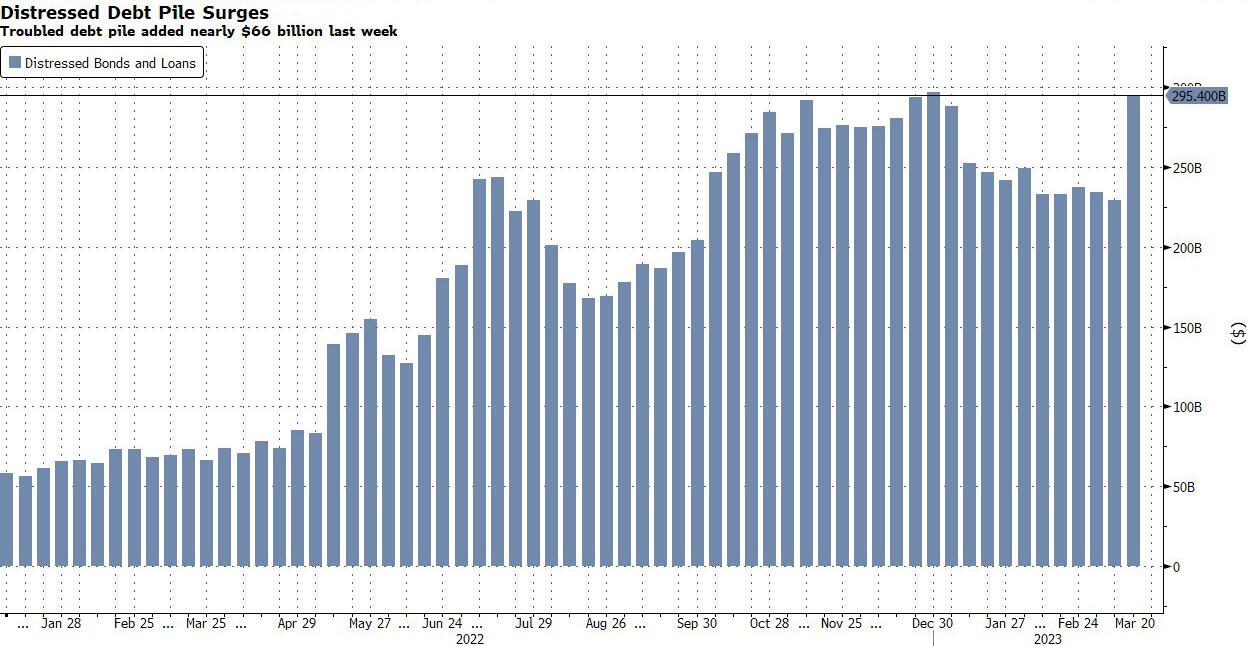
The cascade of defaulted regional US banks is blowing out the circulating inventory of distressed debt which expanded by about $65.9 billion last week as US insolvency courts saw six new, large bankruptcy filings, according to data compiled by Bloomberg.

The heap of dollar-denominated corporate bonds and loans in the Americas trading at distressed levels rose to $295.4 billion in the week ended Friday, a 28.7% increase from $229.5 billion a week earlier, Bloomberg-compiled data show.

Source: Bloomberg

Last week’s bankruptcy filings include the Chapter 11 petitions of sports broadcaster Diamond Sports Group as well as SVB Financial Group, the former parent company of Silicon Valley Bank.

In total, there were 48 large bankruptcy filings – those related to at least $50 million of liabilities – this year through March 20. That’s the highest since 2009, which saw 88 large cases through March 20, per Bloomberg-compiled data.

Tyler Durden
Thu, 03/23/2023 – 06:55

via ZeroHedge News https://ift.tt/IeWXD0J Tyler Durden