Why Mitt Romney’s Call To Tax the Rich Falls Apart


Former Sen. Mitt Romney (R–Utah) | Illustration: Adani Samat. Photo: Graeme Sloan/Sipa USA/Newscom

There is something emotionally satisfying about watching a wealthy person call for higher taxes on people like himself. It feels civic-minded, even noble. A recent commentary by former Utah Sen., Massachusetts Gov., and Republican presidential nominee Mitt Romney fits squarely into this tradition. Faced with a looming fiscal cliff, Romney concludes that entitlement reform is unavoidable and that higher taxes on affluent Americans must be part of the solution.

Don’t be fooled, though. Yes, the status quo is unsustainable, and pretending otherwise is reckless. But taxing the rich can’t meaningfully solve our underlying fiscal problems. Worse, pursuing that illusion risks making those problems harder to fix while foreclosing opportunities for the next generation.

Start with a basic arithmetic problem that never goes away: High-income households already shoulder a disproportionate share of the federal income-tax burden. The top 1 percent pay roughly 40 percent of income-tax revenues; the top 10 percent pay well over two-thirds. And when taxes and other transfers of wealth are factored in, the system has become increasingly progressive over time.

Whatever one thinks about fairness, this fact has huge implications for collecting revenue. There’s simply not enough taxable income at the top to finance a government built around large, universal, middle-class benefits.

Romney proposes raising revenue by removing the cap on payroll taxes, taxing assets more heavily at death, ending like-kind exchanges in real estate, limiting state and local tax deductions, and closing the carried-interest preference. None of these ideas are new. Their revenue effects have been studied repeatedly. Even under optimistic assumptions, their combined yield over a decade amounts to only a fraction of projected deficits. Trillions sound impressive in isolation, but against tens of trillions in red ink, they’re a rounding error.

There’s an even deeper problem with the “tax the rich” impulse. It assumes that those being taxed will pay the full cost without simply reducing their tax exposure. Taxes change behavior. They alter investment decisions, career choices, and the accumulation of human capital. They nudge employers toward retirement rather than toward another round of hiring.

And higher marginal tax rates at the top do not just affect today’s wealthy people; they shape the incentives of tomorrow’s entrepreneurs, engineers, doctors, and business builders.

This is where moral posturing a la Romney becomes especially troubling. It’s easy to say “tax me more” once you’re already rich—with wealth already built, diversified, and largely insulated. But if such a system had been imposed earlier, it would have reduced the likelihood that as many individuals would have become wealthy in the first place.

In other words, the call to tax the rich today makes it harder for young people to become rich tomorrow. Thanks a lot.

That matters not because everyone should be a billionaire but because economic mobility depends on the possibility of outsized success. When the returns on extraordinary or unique effort, risk-taking, and skill acquisition are diminished, fewer people invest in them. The evidence is clear that more progressive tax systems reduce incentives to accumulate human capital and expand businesses over the long run. These costs show up slowly—in lower productivity, slower growth, and fewer opportunities. But they do show up.

We should also not assume that new tax revenue would actually be used to reduce deficits. Especially because history suggests otherwise. When revenue rises, spending tends to rise with it, often by more than the increase in taxes. The promise that “this time is different” is commonplace, but it’s rarely been kept.

The real driver of today’s fiscal imbalance remains largely untouched: spending on entitlement programs whose costs grow automatically and whose benefits flow increasingly to people who are already financially comfortable. Romney is correct that payouts should be means-tested for future retirees. But the notion that we can’t tweak the benefits of the retired or near-retired is nonsense. Many of them don’t depend on Social Security for their retirement income and receive more than they paid in.

If wealthy Americans genuinely believe they should contribute more, they are free to do so today. The Treasury accepts voluntary payments. That’s a much better idea than using their resources to support policies that lock in a tax environment that prevents younger generations from building wealth in the first place.

The temptation to tax the rich is understandable. It feels fair. It feels painless. It allows us to postpone harder conversations. But feelings are not solutions. Such taxation will not stabilize government finances, and it will not restore confidence in the system. Worse, it risks turning a society that once rewarded ambition into one that quietly penalizes it.

COPYRIGHT 2026 CREATORS.COM

The post Why Mitt Romney's Call To Tax the Rich Falls Apart appeared first on Reason.com.

from Latest – Reason.com https://ift.tt/LrfCza5
via IFTTT

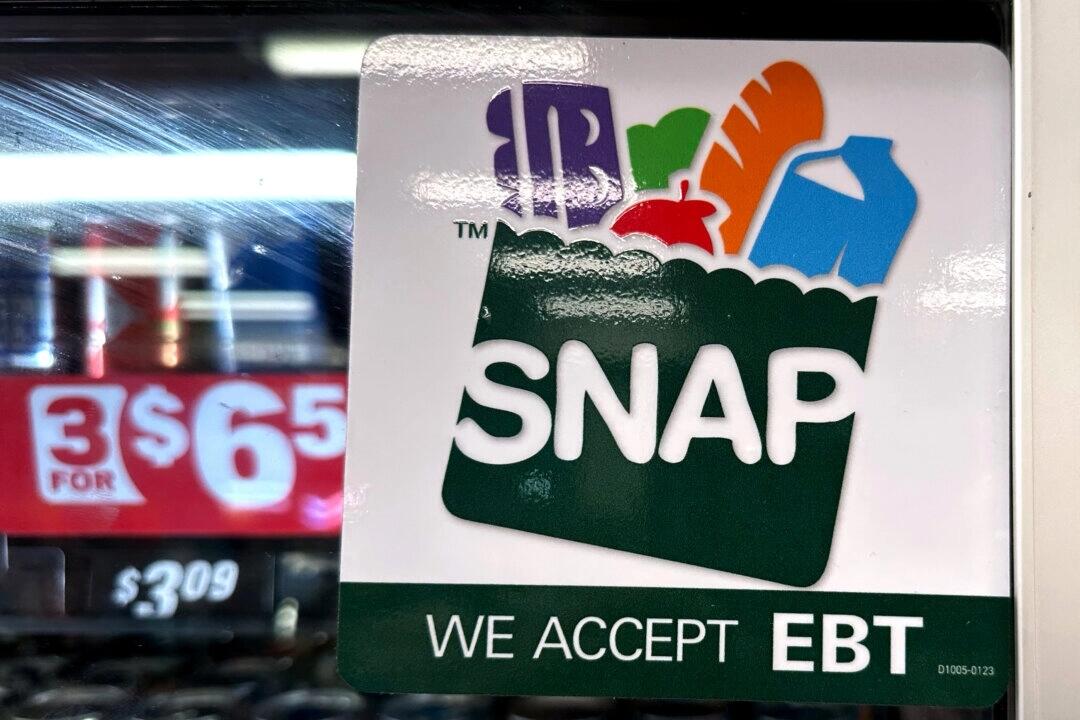
5 States Limit Soda, Candy For SNAP Recipients To Curb Obesity

5 States Limit Soda, Candy For SNAP Recipients To Curb Obesity

Authored by Kimberley Hayek via The Epoch Times,

Residents in five states receiving federal food assistance will face new restrictions on their benefits when it comes to purchasing soda, candy, and other items categorized as unhealthy starting Thursday, marking the first push to overhaul the Supplemental Nutrition Assistance Program (SNAP).

Indiana, Iowa, Nebraska, Utah, and West Virginia are leading the charge on the new restrictions through waivers approved by the U.S. Department of Agriculture (USDA).

The changes affect about 1.4 million SNAP participants under the Trump administration’s Make America Healthy Again initiative, pioneered by Health and Human Services Secretary Robert F. Kennedy Jr. and Agriculture Secretary Brooke Rollins.

The effort targets obesity and diabetes tied to sugary beverages and snacks.

SNAP, which assists 42 million Americans at a cost of $100 billion annually, has long permitted purchases of most foods except alcohol, tobacco, and hot prepared items.

“We cannot continue a system that forces taxpayers to fund programs that make people sick and then pay a second time to treat the illnesses those very programs help create,” Kennedy said in a December statement.

Utah and West Virginia will prohibit soda and soft drinks. Nebraska’s ban covers soda and energy drinks. Indiana will ban soft drinks and candy. Iowa imposes the broadest limits, barring taxable foods such as soda, candy, and some prepared items.

SNAP Obesity Rates

SNAP participants had an almost double obesity rate than eligible non-participants, with 30 percent versus 17 percent, according to a National Institutes of Health study.

The restrictions represent a shift from historical federal policy under the 1964 Food Stamp Act and 2008 Food and Nutrition Act, which stressed broad access. Past proposals to restrict items, including steak or junk food, were shot down due to implementation costs and unclear health benefits, according to USDA studies. In September, the USDA proposed changing SNAP stocking rules for retailers to provide healthier food options in the program.

Under the current administration, states are incentivized to apply for waivers so they can introduce restrictions.

“This isn’t the usual top-down, one-size-fits-all public health agenda,” Indiana Gov. Mike Braun said while announcing his state’s request last spring.

“We’re focused on root causes, transparent information, and real results.”

The Trump administration has approved related restrictions in six other states—Hawaii, Missouri, North Dakota, South Carolina, Tennessee, and Virginia—per the broader Make America Healthy Again initiative.

Oklahoma has also requested exclusions for soda and candy, while Kennedy has urged governors nationwide to remove sugary drinks from SNAP, highlighting health concerns.

The waivers are good for two years and can be extended by an additional three years, with evaluations along the way.

Tyler Durden
Thu, 01/01/2026 – 11:40

via ZeroHedge News https://ift.tt/9GQPSRD Tyler Durden

What Do You Resolve For 2026?

What Do You Resolve For 2026?

Authored by Jeffrey Tucker via The Epoch Times,

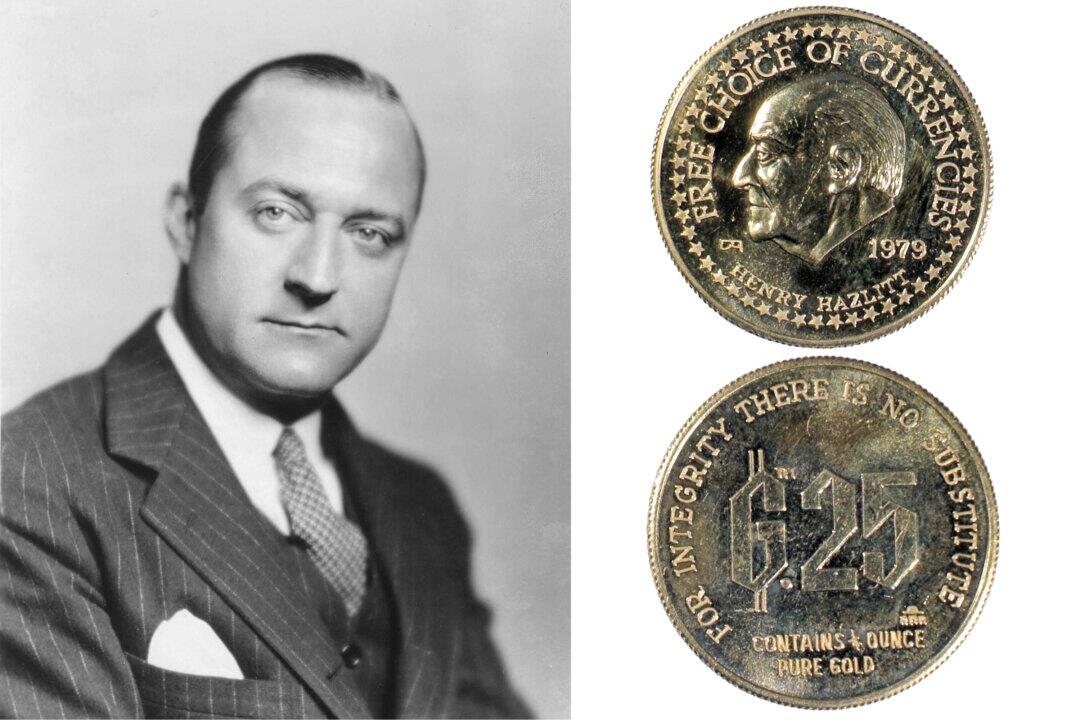
One of the most underrated intellectuals of the 20th century is Henry Hazlitt, author of “Economics in One Lesson” (1946). His career is far more varied than people know. Long before he was writing free-market treatises, he was a working journalist on Wall Street and, later, literary editor of The Nation and then H.L. Mencken’s chosen successor at The American Mercury.

His first published work is a wonderful little book published in 1922 called “The Way to Will Power.” He was only 28 when he wrote it, and spoke about the book none at all later. One suspects that he later found it too rudimentary or immature. Personally, I think it is wonderful.

The book aspires to apply what he learned as a financial reporter to matters of personal decision-making. His points are obvious once you think about them but, then as now, most people do not.

In finance and economics, the key to success is to match long-term ambitions with decisions one makes today. An orientation toward the future is always the key. He begins with the way a single price on the market today incorporates all knowns and expectations for the future. Silver might be $80 today not merely because of existing market conditions but based on the perception that there will be future uses, shortages, and high demand.

This is always a point about prices that confuses people. If there is a plan next year to permanently close a beach, the property values along the coastline will fall not next year but right now. This is because markets by their nature are always forward-looking. This is also why the price system always outwits the central planners. It benefits from its status as the composite wisdom of millions of buyers and sellers, whereas a government bureaucrat only knows what he knows.

Hazlitt wondered if there were ways to make our personal lives behave with as much intelligence.

He offers the example of the man who wants to lose weight, develop muscle tone, and upgrade his health. But night after night, he keeps choosing to go out gambling and drinking with his friends. Every morning he has a sense of regret about this and recommits to living a more healthy life.

Somehow his ambitions are not realized. He deeply desires health. The problem is that at no particular moment is health offered as an immediate alternative to drinking and staying out late. The choice on any particular evening is to go to bed early without fun or go have fun with his friends. He wants both health and fun but at every marginal unit of time, he always chooses fun over health and therefore never obtains his long-term goal.

In economics, this is the equivalent of a person who has high aspirations to build a large pool of personal savings from which he can earn interest, dividends, and increased financial valuations. But the consumption decisions he makes daily not only squander all the money he has but also drive him further into debt. He wants to be financially responsible but gains more personal advantage in the near term by doing what feels best at the moment.

To Hazlitt, the whole key to living a rich and rewarding life really comes down to this insight he gained from economics: match the decisions you make today with your dreams of how you want to live and who you want to be in the future. In other words, he urges not just a long-term orientation but a profound commitment today to making every decision about what it implies for the future.

Simple point? Maybe but it is easily overlooked, especially during the holidays.

We are surrounded by food and drink, invitations to indulge, and enjoy the freedom to sleep late and otherwise languish. The days are short and the weather is cold so the last thing on our minds is getting out, getting healthy, getting sober, and preparing for the future.

This is roughly where people are at the end of these days. And this is precisely why we have New Year’s resolutions. They reflect a sense of disgust over what the previous weeks have revealed about our own personal discipline and reflect a determination to change. Upon making the resolution—read more, get in shape, stop drinking—we are already feeling better as if adopting the ambition is half the battle.

The truth is that having a goal is none of the battle at all unless one’s decisions in the moment perfectly match one’s long-term hopes. Making resolutions stick means more than just imagining a better future. It means giving up right now that thing you want to do in order that the goal you desire is feasible and realized.

Hazlitt’s insight here is all the matching of time preferences. The here and now must embody the ambition of who you want to be in the future. This is particularly difficult when it comes to diet. A poor diet is addictive, and it is easy to swear it off following a huge meal over overindulgence. That’s the moment in which a fast seems like a great idea. That outlook lasts until the next morning when your empty stomach changes your mind.

What Hazlitt wrote here in 1922 contributed to the growing use of the term “willpower” in popular culture. We all just have to say no to the easy and quick thing in order to achieve that harder thing that unfolds over time. The example of the trade-off between consumption and investment is the best economic analogue: there can be no real prosperity for any society without the discipline to defer immediate consumption.

The sociologist Max Weber speculated that it was precisely the Protestant celebration of self-discipline and saving that bred the incredible prosperity of the West in the 19th century. The savings created a gigantic pool of capital for investment and empire building. The riches flowed and came to challenge the core values that gave rise to them in the first place. Frugality is forgotten when the money seems endless. Modest living and prudential management of material matters get sidelined.

In our own financial times, every major business and most smaller ones too have learned to live off leverage, as much as possible. If there is any chance an institution’s profit streams can outpace the cost of borrowing, living off debt can seem like the right thing to do. Of course this is only possible thanks to fiat money and the Federal Reserve system, without which the entire empire of debt would have collapsed long ago. In this way, our central banking institutions and profligate legislatures have undermined the whole basis of long-term prosperity.

There is a more insidious aspect to this pattern. When Hazlitt was writing in 1922, money was still gold and silver, interest rates were high and punishing, and hard work and savings were highly rewarded. There was a match between how government and finance lived and how we should live as individuals. In other words, the world made some sense.

It’s no longer clear that the functioning of finance and government makes much sense. If you and I lived in our private lives the way major corporations and legislatures function, we would live for the day, squander every dime, stay as inebriated as possible, and hope to foist the consequences of our misjudgements on others in the future.

Notice that Hazlitt’s view is all about having ambitions for the future rather than languishing in past trauma, as the culture says we should do today. This a fateful error. You can always use past trauma as an excuse for neglecting future triumphs.

Is it any wonder that the idea of willpower—which entered the vocabulary in the early 20th century—is so unfashionable? It just so happens that this very day, an attack on the notion appears in the nation’s major newspaper. The writer says we should forget about willpower (“overrated”) and adopt instead something she calls “situational agency.”

As best I can tell, she means that we should forget trying to resist temptation and instead structure our lives to eliminate it entirely. Perhaps this is the Ozempic theory of how to get thin. Forget saying no to pie and third helpings. Just take a pill to change your preferences entirely!

I have my doubts that pharmacology can overcome the core problem that Hazlitt identified. Indeed it seems like an excuse to pretend that the problem doesn’t exist at all. Surely there is some artificial means by which we can bypass the need for any self-discipline!

To restate Hazlitt’s core power, we all underestimate the power of the mind. Decide to quit smoking—really decide—and it is done. Same with drinking, overeating, and sloth in general. The difference between now and a better future is a simple change in thinking.

We will all make New Year’s resolutions, and most will be broken.

Once we reflect on why this is, we will be better positioned to match how we live today with the kind of life we want to have in the future. It’s the core human problem from time immemorial, one not easily swept away with fiat money, pills, and assurances that this time it will be different.

Tyler Durden
Thu, 01/01/2026 – 10:30

via ZeroHedge News https://ift.tt/Cs6yjnv Tyler Durden

Why Mitt Romney’s Call To Tax the Rich Falls Apart


Former Sen. Mitt Romney (R–Utah) | Illustration: Adani Samat. Photo: Graeme Sloan/Sipa USA/Newscom

There is something emotionally satisfying about watching a wealthy person call for higher taxes on people like himself. It feels civic-minded, even noble. A recent commentary by former Utah Sen., Massachusetts Gov., and Republican presidential nominee Mitt Romney fits squarely into this tradition. Faced with a looming fiscal cliff, Romney concludes that entitlement reform is unavoidable and that higher taxes on affluent Americans must be part of the solution.

Don’t be fooled, though. Yes, the status quo is unsustainable, and pretending otherwise is reckless. But taxing the rich can’t meaningfully solve our underlying fiscal problems. Worse, pursuing that illusion risks making those problems harder to fix while foreclosing opportunities for the next generation.

Start with a basic arithmetic problem that never goes away: High-income households already shoulder a disproportionate share of the federal income-tax burden. The top 1 percent pay roughly 40 percent of income-tax revenues; the top 10 percent pay well over two-thirds. And when taxes and other transfers of wealth are factored in, the system has become increasingly progressive over time.

Whatever one thinks about fairness, this fact has huge implications for collecting revenue. There’s simply not enough taxable income at the top to finance a government built around large, universal, middle-class benefits.

Romney proposes raising revenue by removing the cap on payroll taxes, taxing assets more heavily at death, ending like-kind exchanges in real estate, limiting state and local tax deductions, and closing the carried-interest preference. None of these ideas are new. Their revenue effects have been studied repeatedly. Even under optimistic assumptions, their combined yield over a decade amounts to only a fraction of projected deficits. Trillions sound impressive in isolation, but against tens of trillions in red ink, they’re a rounding error.

There’s an even deeper problem with the “tax the rich” impulse. It assumes that those being taxed will pay the full cost without simply reducing their tax exposure. Taxes change behavior. They alter investment decisions, career choices, and the accumulation of human capital. They nudge employers toward retirement rather than toward another round of hiring.

And higher marginal tax rates at the top do not just affect today’s wealthy people; they shape the incentives of tomorrow’s entrepreneurs, engineers, doctors, and business builders.

This is where moral posturing a la Romney becomes especially troubling. It’s easy to say “tax me more” once you’re already rich—with wealth already built, diversified, and largely insulated. But if such a system had been imposed earlier, it would have reduced the likelihood that as many individuals would have become wealthy in the first place.

In other words, the call to tax the rich today makes it harder for young people to become rich tomorrow. Thanks a lot.

That matters not because everyone should be a billionaire but because economic mobility depends on the possibility of outsized success. When the returns on extraordinary or unique effort, risk-taking, and skill acquisition are diminished, fewer people invest in them. The evidence is clear that more progressive tax systems reduce incentives to accumulate human capital and expand businesses over the long run. These costs show up slowly—in lower productivity, slower growth, and fewer opportunities. But they do show up.

We should also not assume that new tax revenue would actually be used to reduce deficits. Especially because history suggests otherwise. When revenue rises, spending tends to rise with it, often by more than the increase in taxes. The promise that “this time is different” is commonplace, but it’s rarely been kept.

The real driver of today’s fiscal imbalance remains largely untouched: spending on entitlement programs whose costs grow automatically and whose benefits flow increasingly to people who are already financially comfortable. Romney is correct that payouts should be means-tested for future retirees. But the notion that we can’t tweak the benefits of the retired or near-retired is nonsense. Many of them don’t depend on Social Security for their retirement income and receive more than they paid in.

If wealthy Americans genuinely believe they should contribute more, they are free to do so today. The Treasury accepts voluntary payments. That’s a much better idea than using their resources to support policies that lock in a tax environment that prevents younger generations from building wealth in the first place.

The temptation to tax the rich is understandable. It feels fair. It feels painless. It allows us to postpone harder conversations. But feelings are not solutions. Such taxation will not stabilize government finances, and it will not restore confidence in the system. Worse, it risks turning a society that once rewarded ambition into one that quietly penalizes it.

COPYRIGHT 2026 CREATORS.COM

The post Why Mitt Romney's Call To Tax the Rich Falls Apart appeared first on Reason.com.

from Latest – Reason.com https://ift.tt/LrfCza5
via IFTTT

12 NASA Satellite Images That Tell The Story Of Earth In 2025

12 NASA Satellite Images That Tell The Story Of Earth In 2025

From devastating wildfires to swirling cloud vortices, NASA’s fleet of Earth-observing satellites captured remarkable views of our planet throughout 2025.

As Visual Capitalist’s Nick Routley shows below, these images reveal both the beauty and fragility of Earth’s systems, documenting natural phenomena, climate events, and human impacts visible from space.

All images featured in this article come from NASA’s Earth Observatory, captured by instruments aboard a variety of satellites in orbit around Earth. Together, they tell the story of a dynamic planet in constant flux.

The Palisades Fire’s Footprint

NASA Earth Observatory/Lauren Dauphin, using Landsat data from the U.S. Geological Survey

This false-color Landsat 9 image from January 14, 2025, reveals the burn scar left by the Palisades fire in Los Angeles County.

The fire ignited on the morning of January 7 near the Pacific Palisades neighborhood and spread rapidly, consuming nearly 24,000 acres (97 square kilometers) of wildland and developed areas within one week. In this image, which combines shortwave infrared, near infrared, and visible light, unburned vegetation appears green while recently burned landscape shows as light to dark brown.

The charred areas stretch north and west of Pacific Palisades toward Malibu, where land previously burned by the December 2024 Franklin fire is also visible along the coast.

Desert Dust Streams from Iran
NASA Earth Observatory/Michala Garrison, using MODIS data from NASA EOSDIS LANCE and GIBS/Worldview

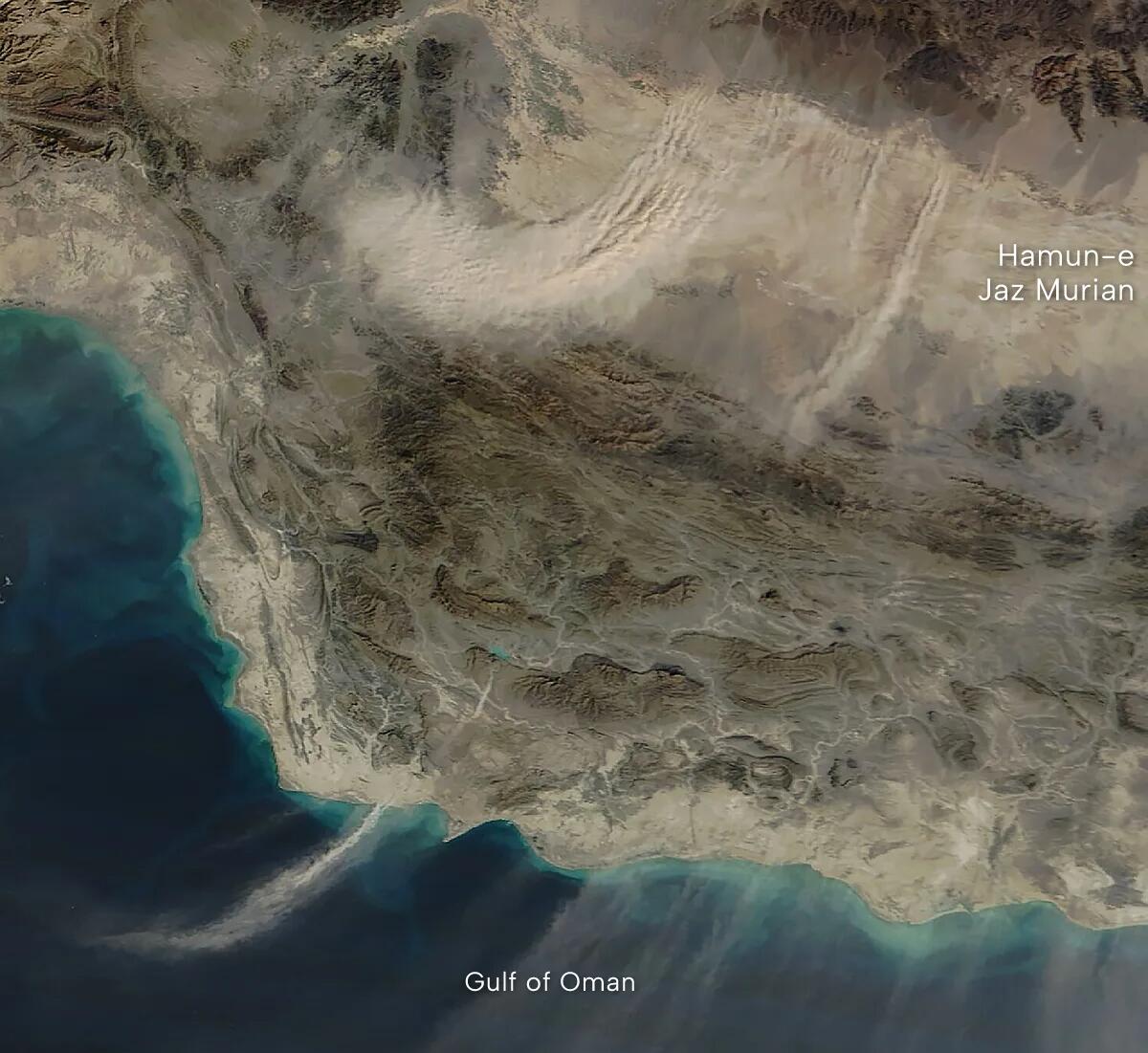
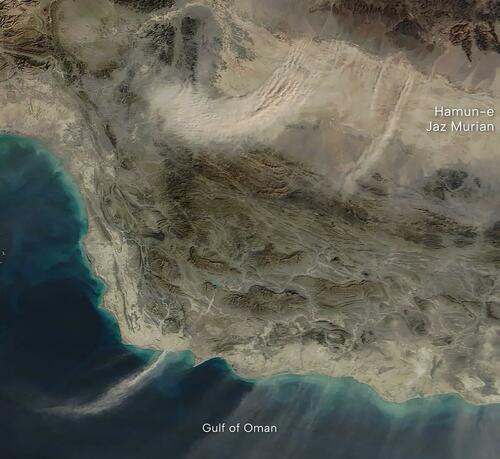
This Terra MODIS image from January 22, 2025, captures dust plumes sweeping across southeastern Iran and streaming over the Gulf of Oman toward the Arabian Peninsula.

The airborne material originates primarily from the dried bed of Hamun-e Jazmurian, an intermittent lake in one of southwest Asia’s major dust source regions. In this arid basin, some areas receive less than 10 centimeters (4 inches) of annual rainfall while evaporation rates remain high.

The dust traveled south-southwest across the water to the coast of the United Arab Emirates, where the haze reduced visibility and prompted weather warnings. Beyond disrupting transportation, such dust events pose health risks: a recent analysis found that material from Jazmurian basin storms contains heavy metals and other substances hazardous to human and ecosystem health.

Floating Solar Farm on India’s Narmada River
NASA Earth Observatory/Lauren Dauphin, using Landsat data from the U.S. Geological Survey

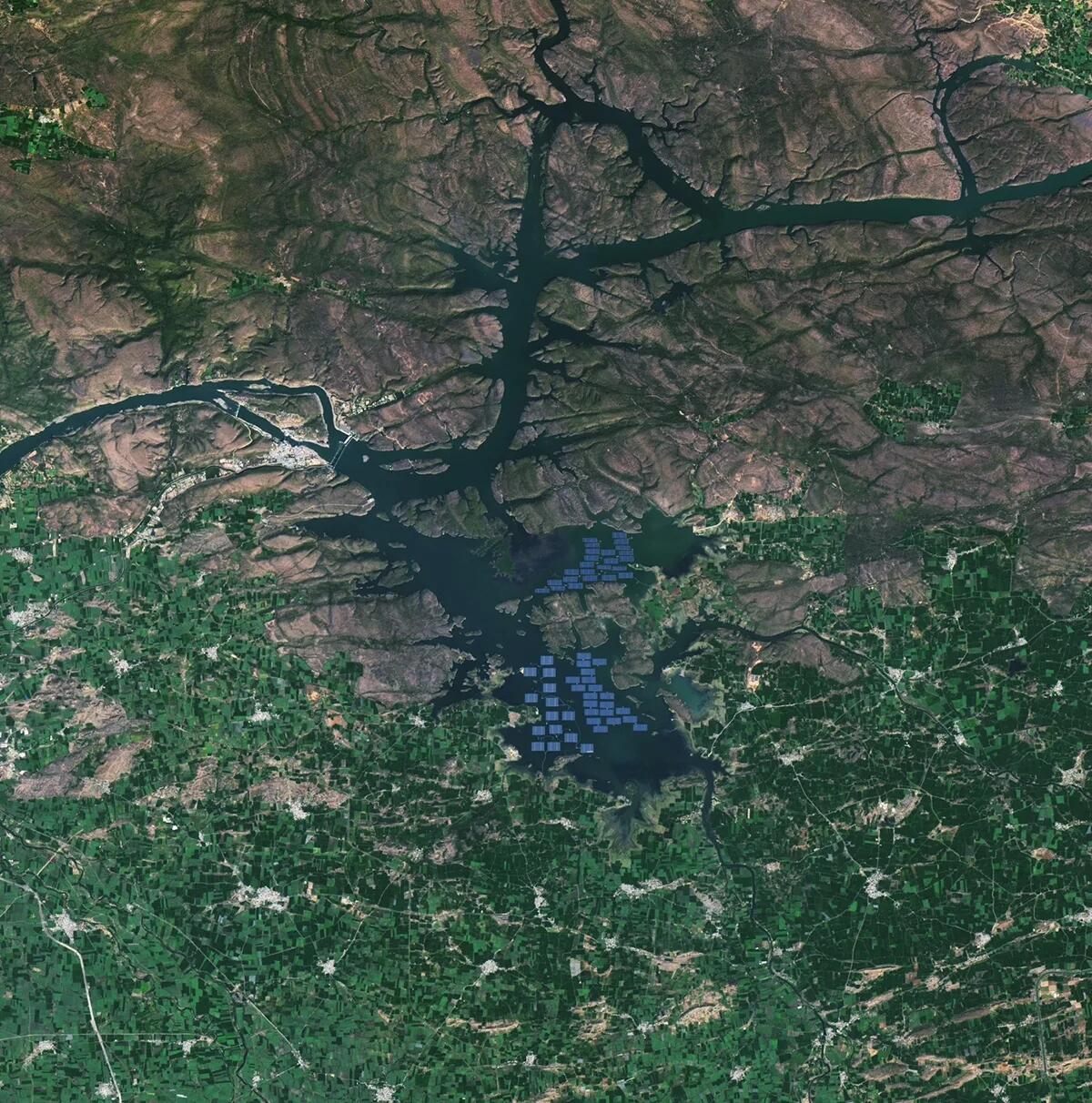
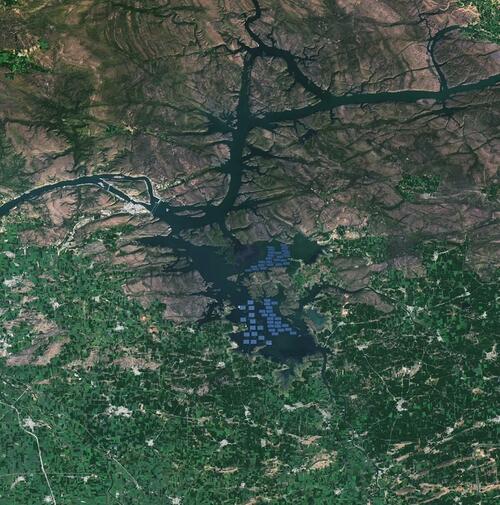
This Landsat 9 image from January 30, 2025, shows arrays of floating solar panels, known as “floatovoltaics,” spread across a reservoir on the Narmada River in Madhya Pradesh, India.

The geometric blue rectangles visible in the reservoir represent two floating solar projects commissioned in 2024, with a combined capacity of 216 megawatts. The reservoir, created by the Omkareshwar Dam completed in 2007, spans more than 90 square kilometers.

Floating solar installations offer an alternative to land-based systems in areas where space is limited. They can also reduce evaporation, impede algal growth, and benefit from the cooling effect of water on panel efficiency.

Swirling Skies and Melting Icebergs
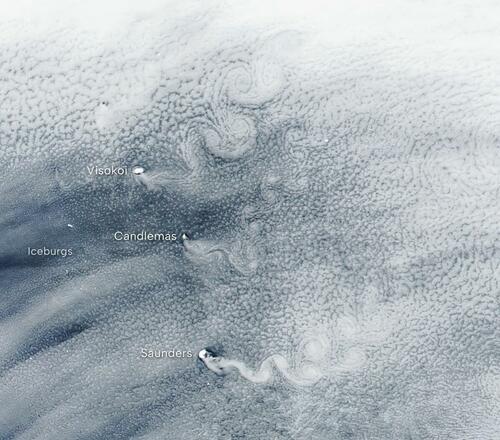
NASA Earth Observatory/Wanmei Liang, using VIIRS data from NASA EOSDIS LANCE, GIBS/Worldview, and the Joint Polar Satellite System (JPSS)

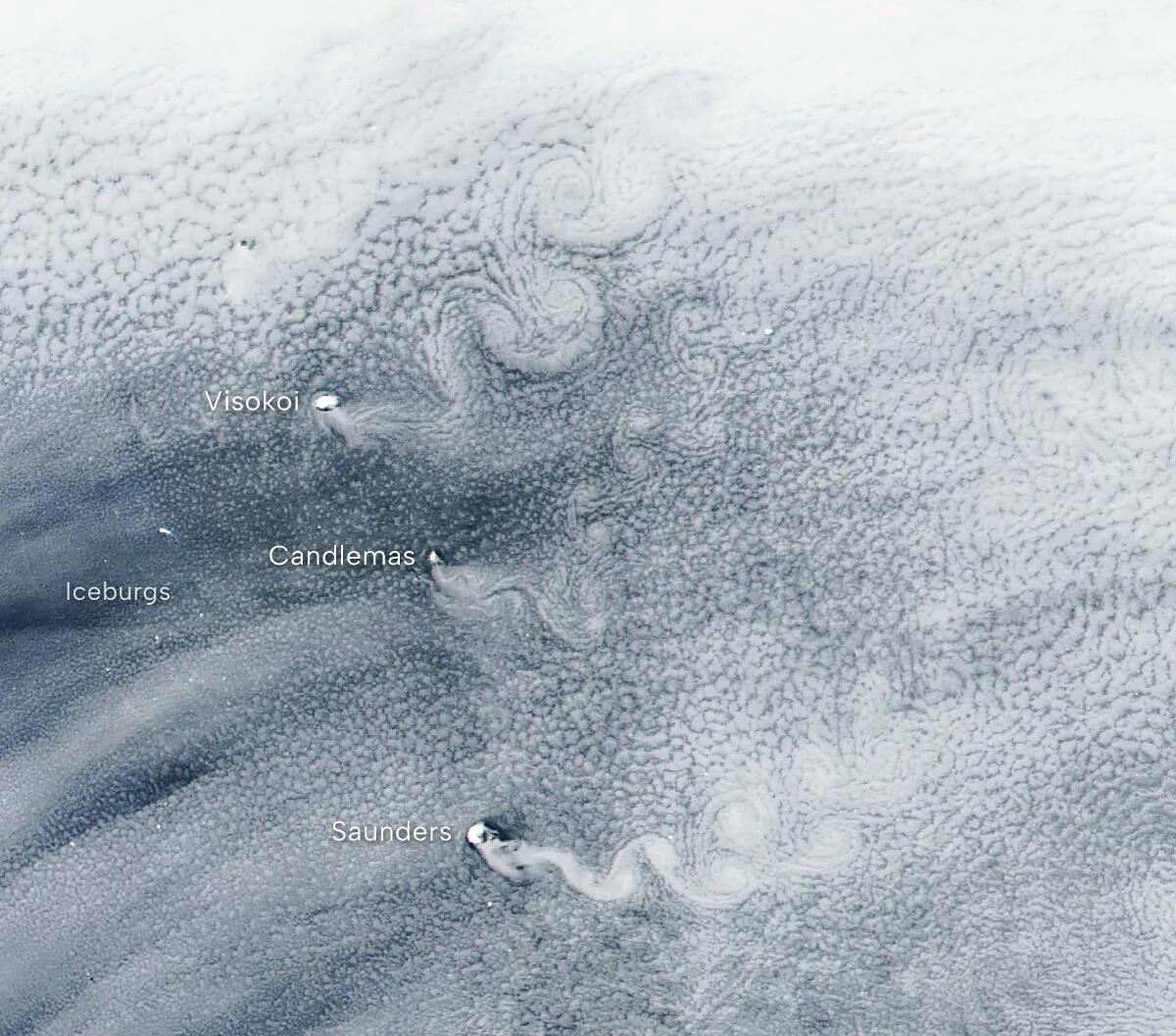
This NOAA-20 VIIRS image from February 24, 2025, captures von Kármán vortex streets forming behind three of the remote South Sandwich Islands in the southern Atlantic Ocean. The swirling cloud patterns appear when persistent westerly winds of moderate strength push marine stratocumulus clouds past the steep volcanic peaks of Visokoi, Candlemas, and Saunders islands.

Named after mathematician and aerospace engineer Theodore von Kármán, who first described these oscillating flow features in 1911, the vortices form alternating spirals that rotate in opposite directions downstream of each obstacle. The cloud trail extending from Saunders Island appears slightly brighter than surrounding clouds due to volcanic emissions from Mount Michael, which has been weakly erupting since 2014. To the west of the island chain, several icebergs drift visibly beneath thin cloud cover.

Haze Sweeps Over the Mediterranean
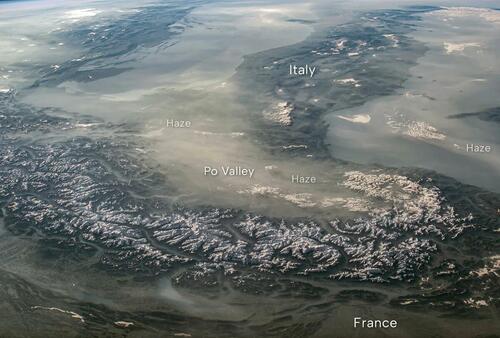
NASA/ISS External Camera

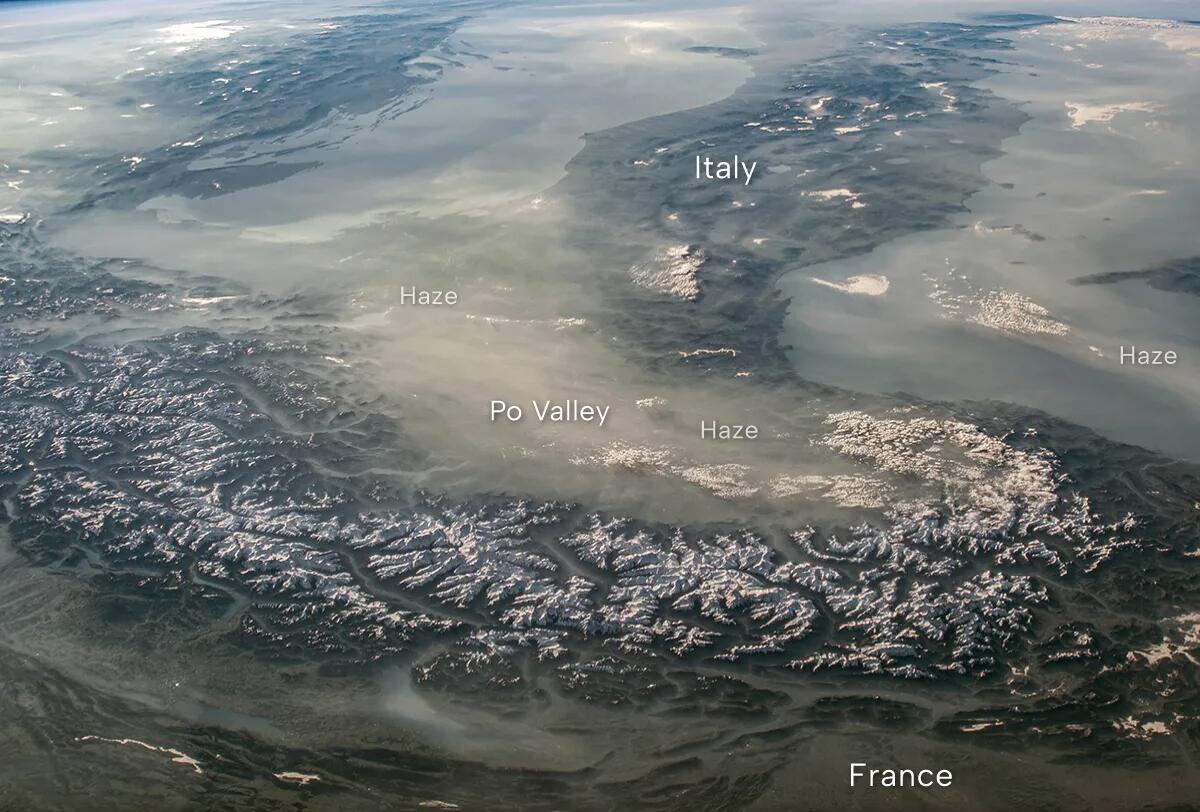
This photograph from the International Space Station’s external camera on April 30, 2025, provides an oblique view stretching from the Alps to Sicily, revealing layers of industrial haze drifting across the Mediterranean basin.

Much of the haze originates from the Po Valley in northern Italy and the Rhône Valley in France, where surrounding mountains trap pollutants. The Po Valley haze drifts hundreds of kilometers over the Adriatic Sea toward Greece. Astronauts have documented this atmospheric phenomenon for decades, providing a unique perspective on how geography shapes air quality across southern Europe.

Glacier Collapse Buries Swiss Village

NASA Earth Observatory/Wanmei Liang, using Landsat data from the U.S. Geological Survey

This Landsat 9 image from May 29, 2025, shows the aftermath of a catastrophic collapse of the Birch Glacier in Switzerland’s Lötschental valley.

The debris buried most of the village of Blatten, traveled 2.5 kilometers down the valley, and climbed 240 meters up the opposite valley wall before damming the Lonza River and causing flooding. Authorities began evacuating residents on May 19 after detecting instability. By May 27, the glacier was moving at 10 meters per day. Scientists believe rockfall accumulation on top of the glacier led to basal melting that reduced friction, triggering the collapse. The event was unusual in magnitude for the Swiss Alps.

Rare Snow Blankets Australia’s Northern Tablelands
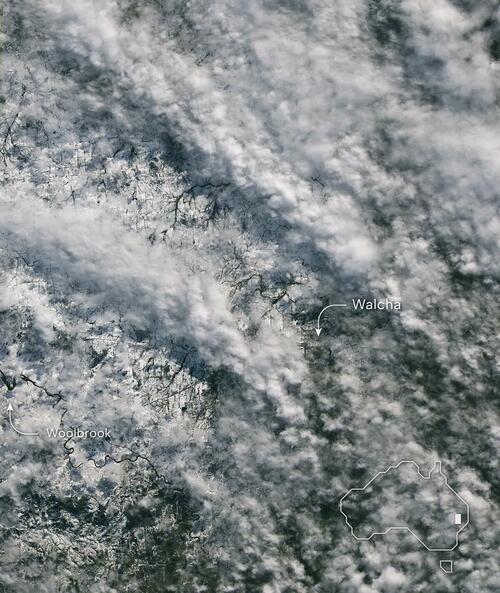
NASA Earth Observatory/Wanmei Liang, using Landsat data from the U.S. Geological Survey

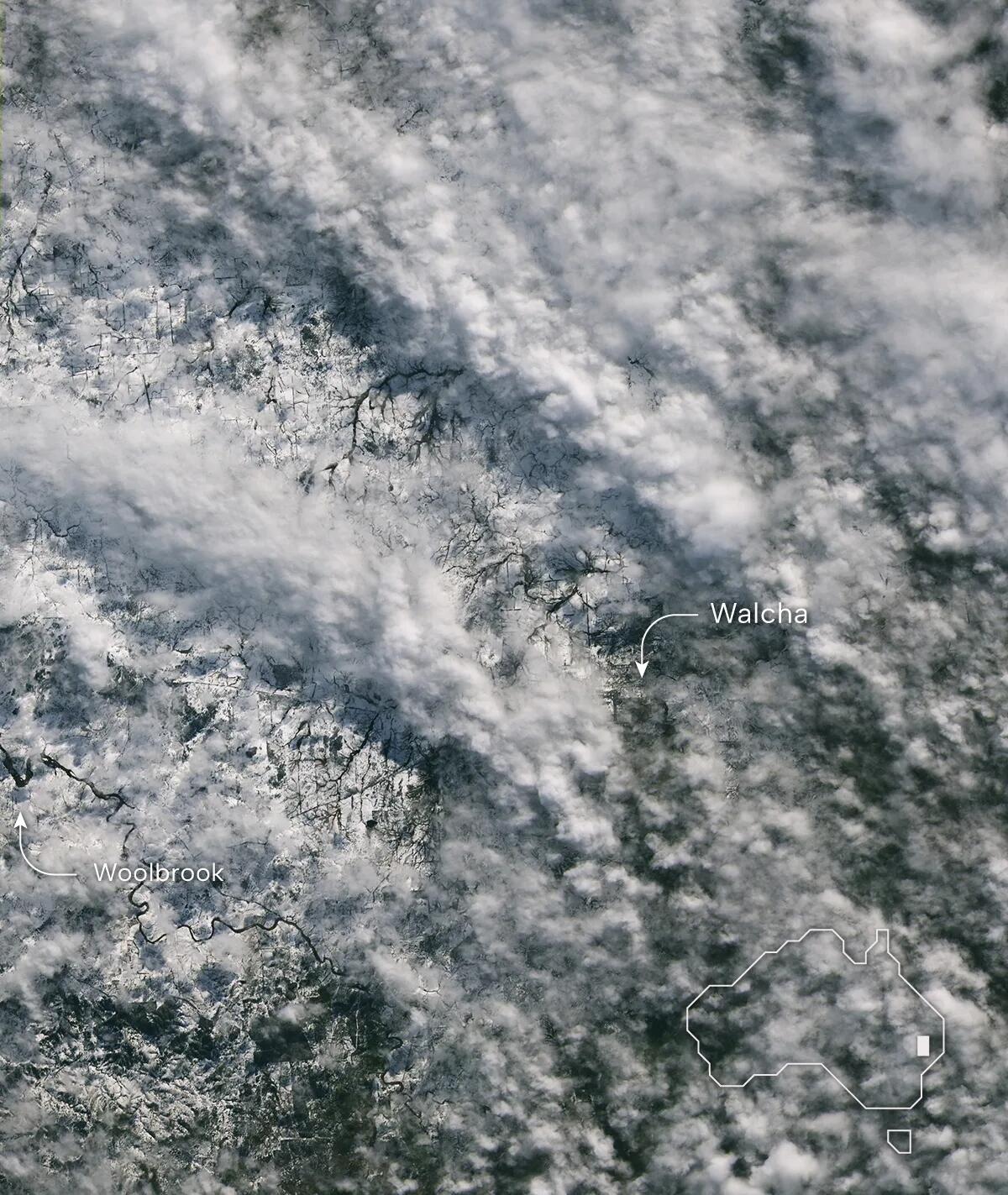
This Landsat 8 image from August 3, 2025, captures a rare blanket of snow across New South Wales’ Northern Tablelands, the heaviest snowfall in the region since the mid-1980s.

A powerful low-pressure system brought up to 40 centimeters (16 inches) of snow to the highlands while dumping more than 100 millimeters of rain at lower elevations. The storm stranded vehicles, closed highways, and left properties without power. Flooding triggered dozens of rescues across the region.

Phytoplankton Bloom in the Barents Sea
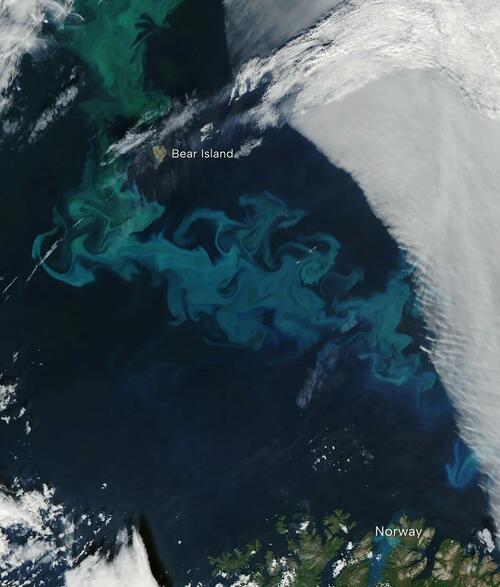
NASA Earth Observatory/Wanmei Liang, using MODIS data from NASA EOSDIS LANCE and GIBS/Worldview

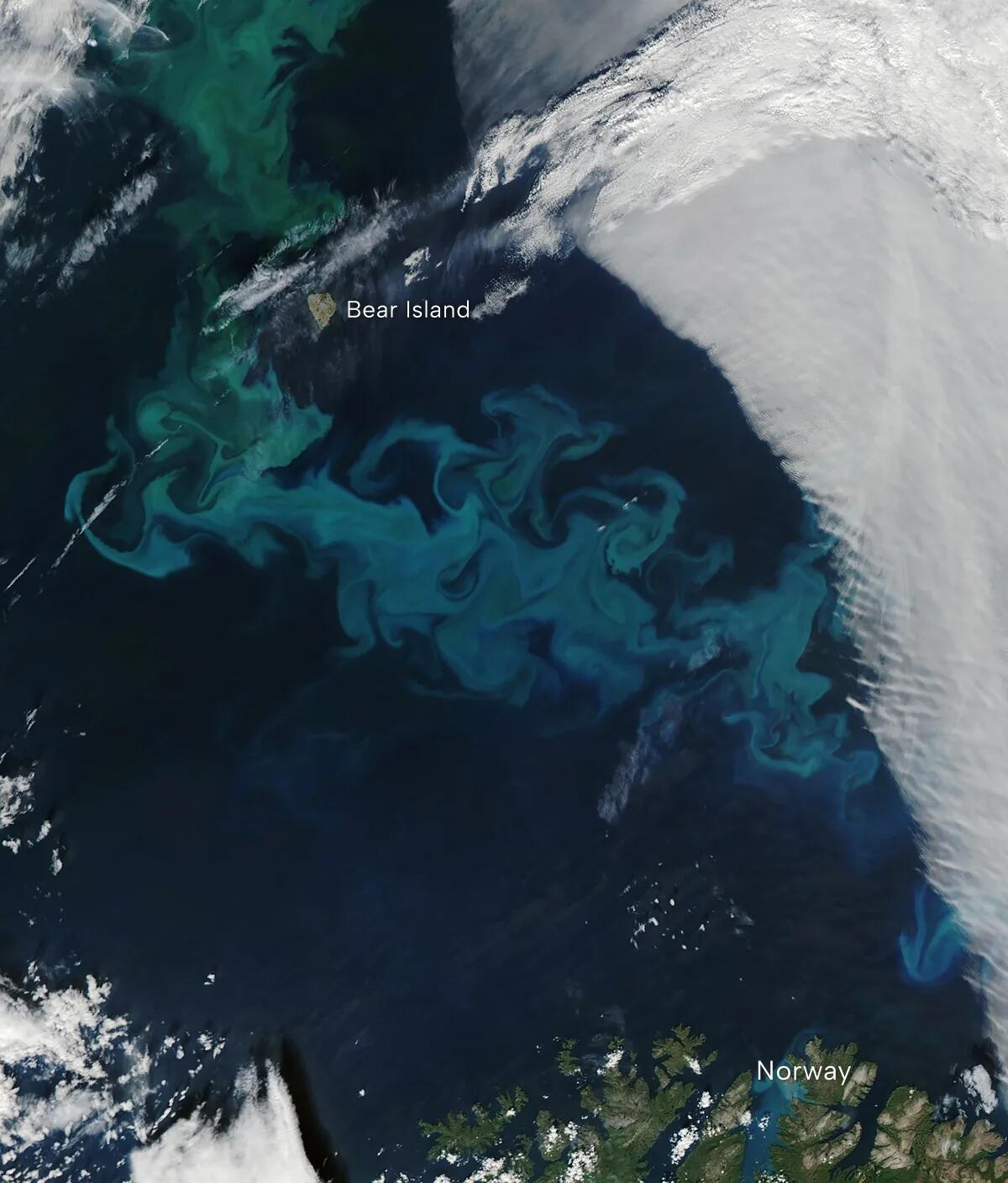
This Aqua MODIS image from August 5, 2025, reveals a massive phytoplankton bloom swirling through the Barents Sea near Norway’s Bear Island.

The milky turquoise-blue colors indicate the presence of coccolithophores, single-celled organisms armored with calcium carbonate plates that scatter light. The green hues come from diatoms, another type of phytoplankton. The Barents Sea typically experiences two bloom seasons: diatoms dominate in May and June, while coccolithophores peak in August.

These microscopic organisms form the base of the Arctic marine food web and play a critical role in the ocean’s carbon cycle and oxygen production. Researchers are closely studying how warming Atlantic currents may be shifting the location and extent of these blooms.

Hurricane Erin Roils in the Atlantic
NASA Earth Observatory/Wanmei Liang, using MODIS data from NASA EOSDIS LANCE and GIBS/Worldview

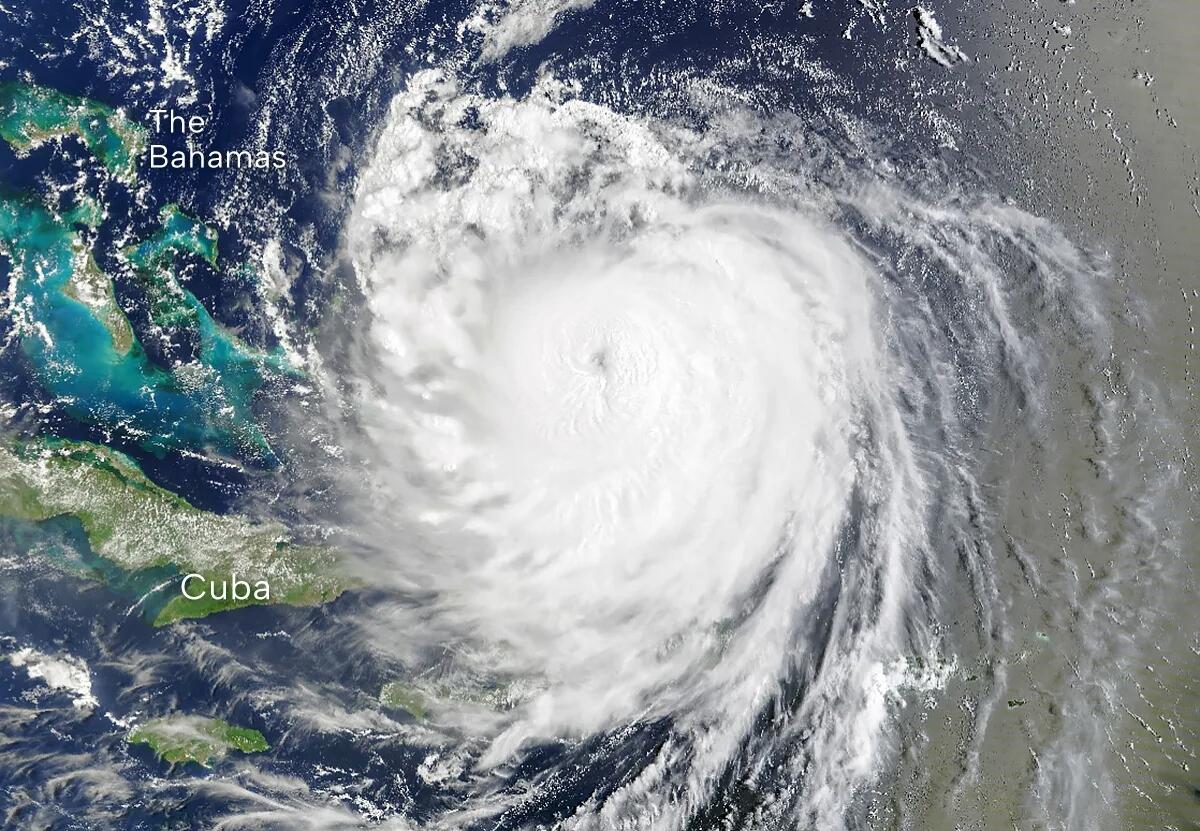
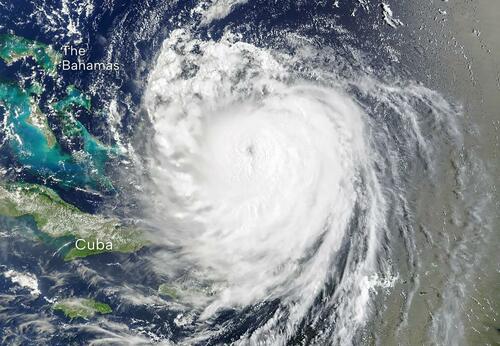
This Terra MODIS image from August 18, 2025, shows Hurricane Erin churning in the Atlantic Ocean as the first hurricane of the 2025 season.

The storm underwent rapid intensification, jumping from Category 1 to Category 5 in just 24 hours between August 15 and 16, reaching peak sustained winds of 160 mph. Erin became only the 43rd Atlantic hurricane to reach Category 5 status since 1851, and the earliest to do so at this location.

Factors contributing to its explosive strengthening included light wind shear, a compact structure, and warm sea surface temperatures. While Erin did not make landfall, it caused more than 147,000 power outages in Puerto Rico and prompted evacuation orders for North Carolina’s Outer Banks.

British Columbia Wildfires Send Smoke Skyward
NASA Earth Observatory/Michala Garrison, using MODIS data from NASA EOSDIS LANCE and GIBS/Worldview

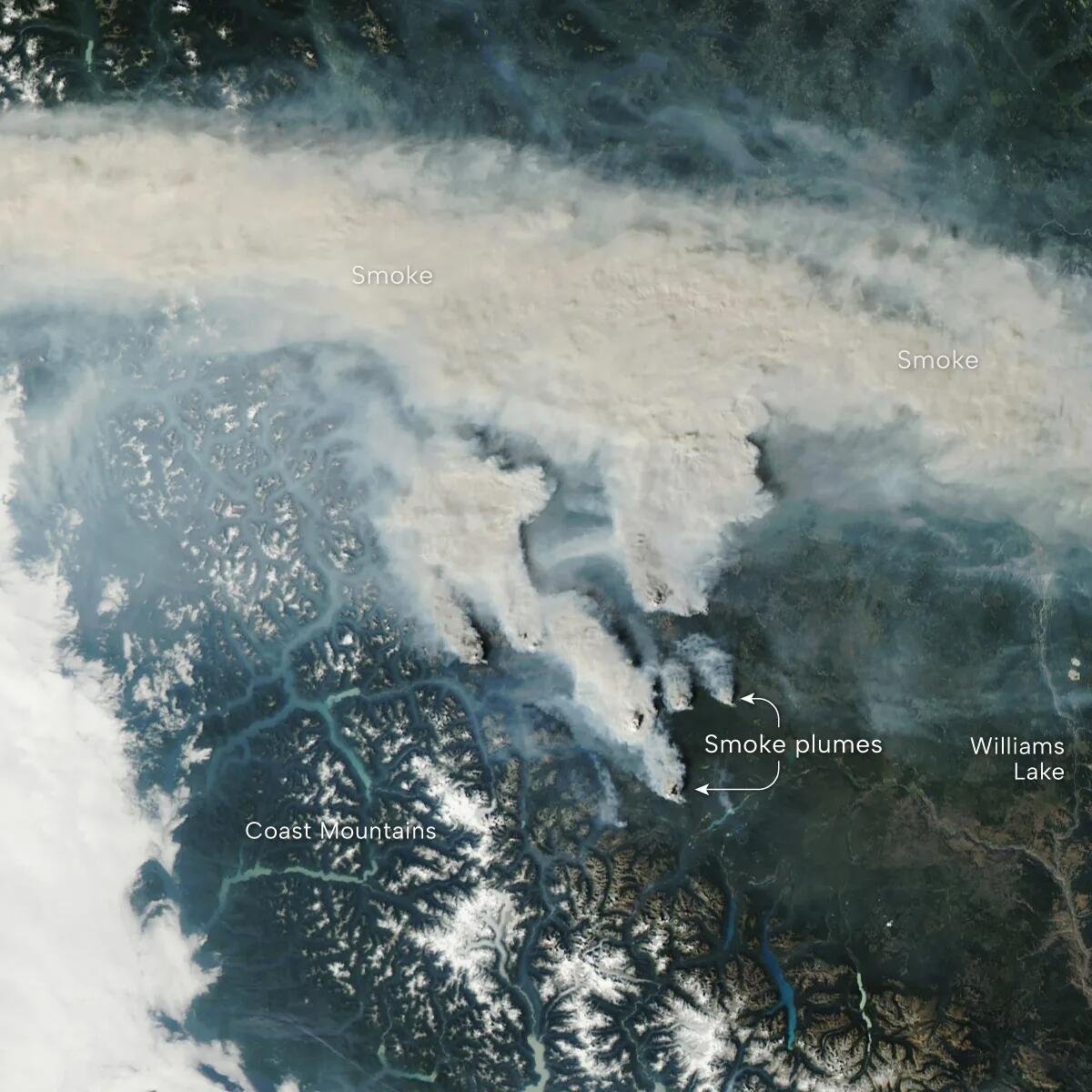
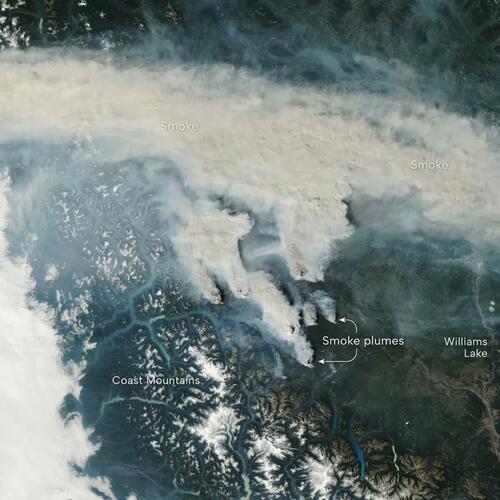
This Aqua MODIS image from September 2, 2025, captures thick smoke plumes rising from multiple lightning-ignited wildfires in British Columbia’s Cariboo region. The Itcha Lake fire had burned approximately 17,000 hectares (170 km²), while the Beef Trail Creek fire consumed around 7,800 hectares (78 km²) and the Dusty Lake fire charred about 2,800 hectares (28 km²). Evacuation orders were issued for surrounding communities.

The towering pyrocumulus clouds generated by these fires can inject smoke and particulate matter high into the atmosphere, where it can travel thousands of kilometers and degrade air quality across distant regions. By the end of the season, British Columbia had burned 732,000 hectares (7,320 km²), slightly above the 10-year average. Overall, Canada experienced one of its worst fire seasons on record, trailing only 2023.

A Desert Intersection
NASA Earth Observatory/Michala Garrison, using Landsat data from the U.S. Geological Survey

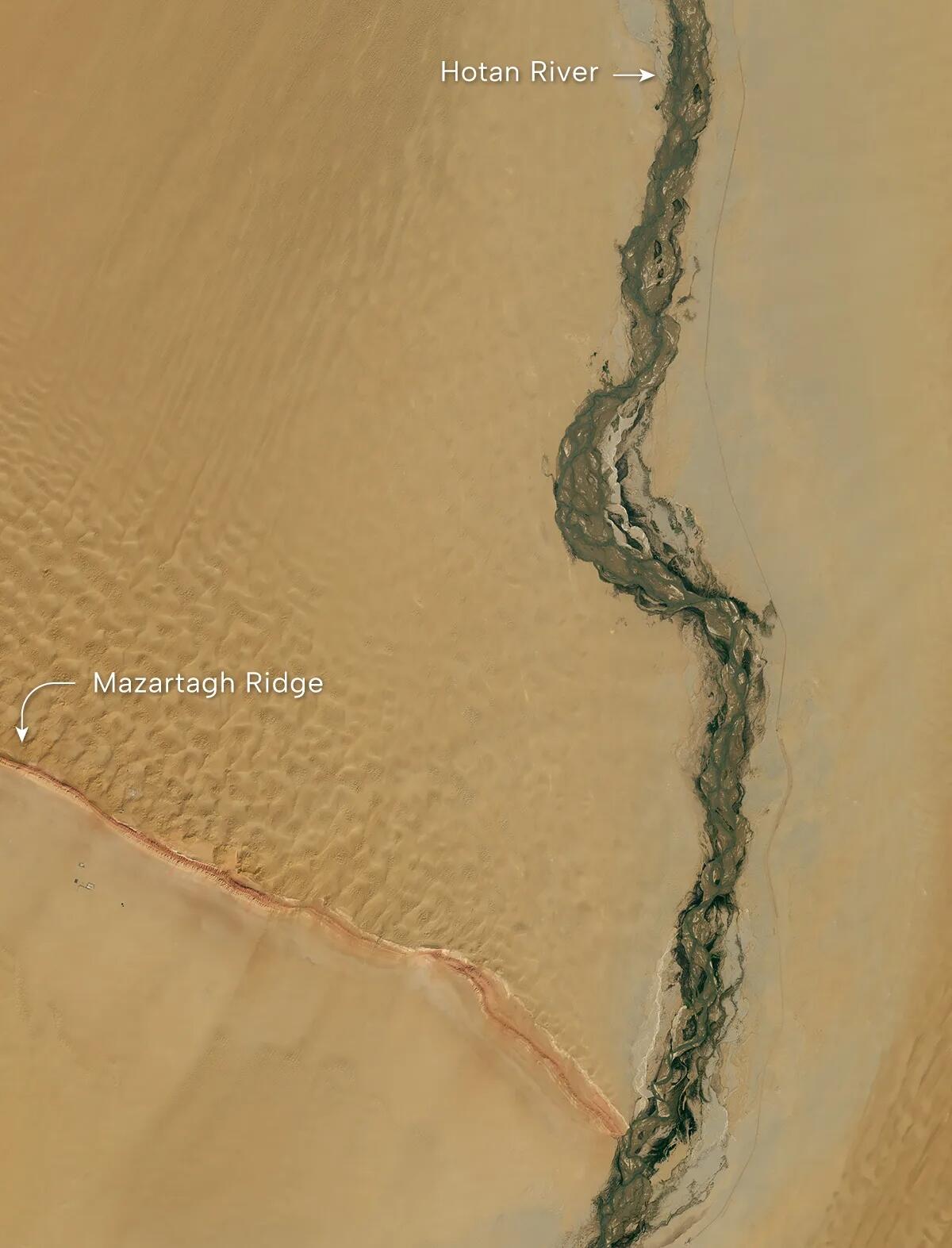
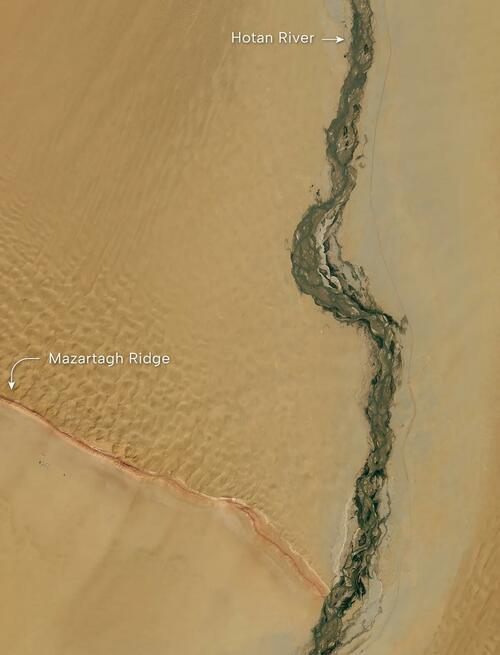
This Landsat 9 image from September 11, 2025, reveals a striking geological boundary in China’s Tarim Basin where the Mazartagh ridge meets the Hotan River. The 145 km (90 mile) ridge acts as a natural barrier, creating distinct dune patterns on either side.

The Hotan is the only river fed by glacial meltwater that maintains enough flow to cross the entire Takla Makan Desert. For centuries, this region served as an important source of nephrite jade collected along the ancient Silk Road.

Stubble Burning Shrouds Northern India in Haze
NASA Earth Observatory/Michala Garrison, using MODIS data from NASA EOSDIS LANCE and GIBS/Worldview

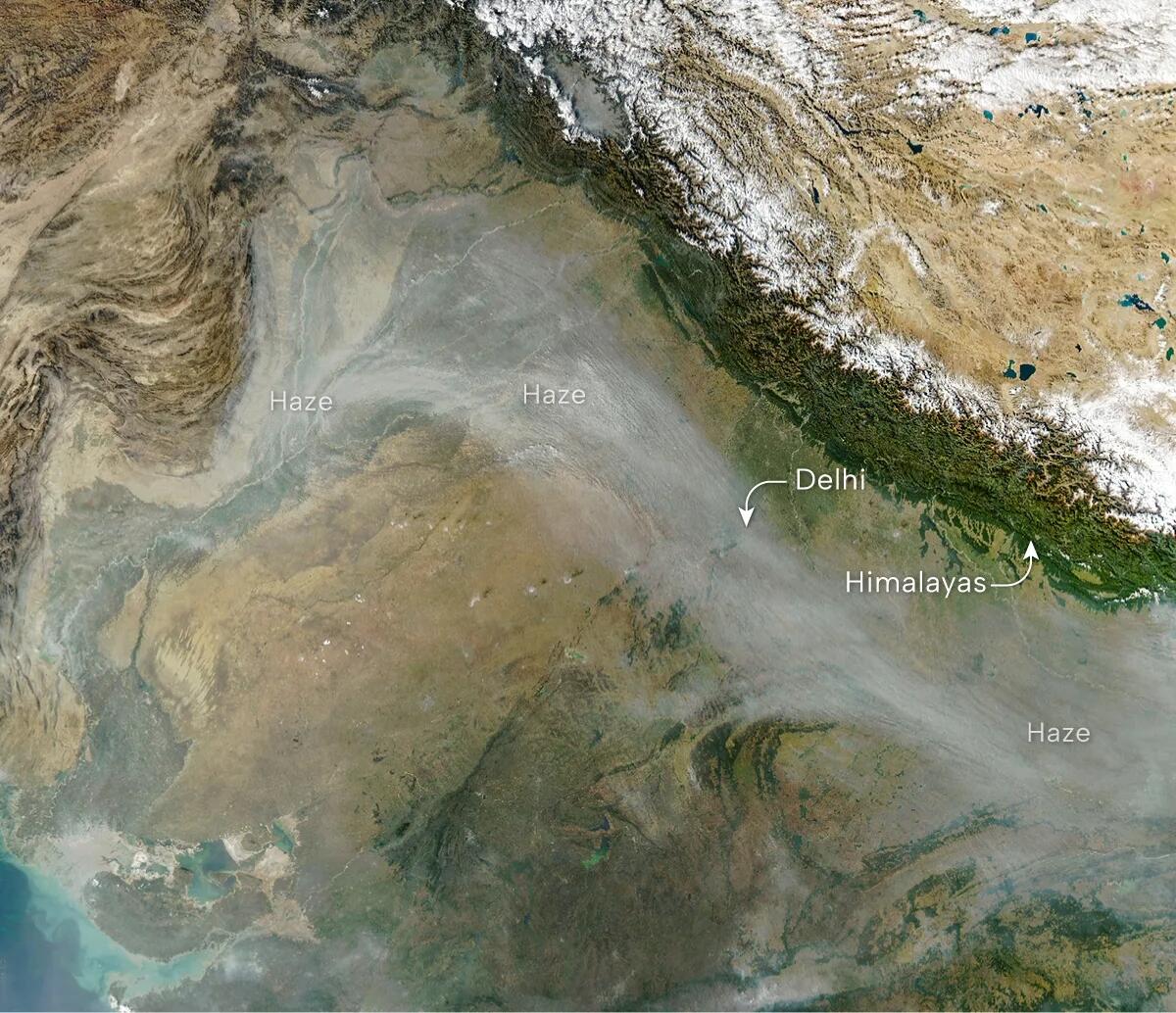
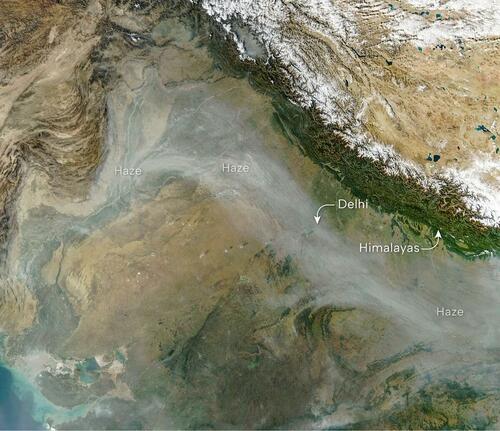
This Aqua MODIS image from November 11, 2025, shows thick haze blanketing northern India during the annual crop residue burning season.

Farmers in Punjab, Haryana, and Uttar Pradesh burn rice stubble between October and December to quickly clear fields before planting wheat.

On this day, air quality exceeded 400 on India’s national index, well into the “severe” category. Scientists have detected a shift in burning patterns: fires now peak from 4-6pm rather than the previous window of 1-2pm, meaning traditional satellite monitoring systems miss many fires. Estimates suggest stubble burning contributes 40-70% of particulate pollution on peak days.

The Tip of the Iceberg

These 12 images represent just a fraction of the thousands of observations NASA’s satellites make each year.

From tracking climate patterns to monitoring natural disasters, this orbital perspective helps scientists understand Earth’s interconnected systems and provides critical data for decision-makers around the world. As our planet continues to change, these eyes in the sky remain essential tools for documenting and responding to the challenges ahead.

Tyler Durden
Thu, 01/01/2026 – 09:55

via ZeroHedge News https://ift.tt/yJzrAil Tyler Durden

American Legal Sovereignty Threatened By Greenpeace’s Retaliatory EU Lawsuit

American Legal Sovereignty Threatened By Greenpeace’s Retaliatory EU Lawsuit

Authored by John Swallow via The Epoch Times,

The strength of the American civil legal system rests on a simple principle: those who break the law on U.S. soil answer to U.S. plaintiffs in U.S. courts. Our constitutional order depends on juries empowered to weigh evidence, judges and plaintiffs entrusted to enforce verdicts, and a system insulated from foreign interference. However, that foundation is now being tested by an activist organization determined to escape domestic accountability for domestic acts, by turning abroad and using a foreign country’s laws and courts to take another bite at the legal apple, so to speak.

In March 2025, a North Dakota jury delivered a decisive $670 million verdict against Greenpeace and its affiliates, finding them liable for extreme torts against Energy Transfer LP in the form of defamation, trespass, and conspiracy. The jurors rejected the claim that the Greenpeace activity—supporting violent demonstrations that disrupted construction of the Dakota Access Pipeline in 2016 and 2017—was protected speech, finding instead that Greenpeace orchestrated a campaign of unlawful disruption and reputational harm against Energy Transfer.

While the award has since been reduced to $345 million, the fact remains: the jury verdict was well founded.

During the trial, Energy Transfer’s lawyers presented compelling evidence showing Greenpeace’s role in orchestrating the protests. The group spent $55,000 training activists in direct action and violent protest tactics, supplied them with power tools, tents, propane, cold-weather gear, and lockboxes to chain themselves to heavy equipment, and encouraged confrontations with law enforcement. Meanwhile, its former executive director was found to have used an official Greenpeace email account to raise another $90,000 to fuel the effort.

On top of that, the jury found that Greenpeace knowingly defamed Energy Transfer by falsely accusing the company of knowingly desecrating Native American burial grounds during pipeline construction. In reality, Energy Transfer took extensive precautions to protect cultural and historical sites. Such fabricated and highly incendiary claims were found to have inflicted serious harm on Energy Transfer’s public reputation and its standing with financial institutions.

But rather than accept the ruling of the court, Greenpeace is attempting an end-run around it. Just weeks before the trial concluded, Greenpeace and Greenpeace International filed a retaliatory lawsuit against Energy Transfer in the Netherlands, invoking the European Union’s new anti-Strategic Litigation Against Public Participation (anti-SLAPP) directive. Importantly, the EU directive allows EU-based entities, such as Greenpeace International, to pursue damages against non-EU actors for cases originally brought outside the EU—expanding its reach far beyond Europe’s borders.

The Dutch lawsuit marks the first test of the new EU directive, and it appears that Greenpeace’s goal is to reframe its adjudicated misconduct as “free speech,” sprinkle in its own claims, which could and should have been raised and litigated in the North Dakota forum, and ask a foreign tribunal to essentially re-litigate, where a North Dakota court had already ruled following a full jury trial. Such tactics are abusive, costly, extra-jurisdictional, and very concerning for any company dealing with EU-based entities as no U.S. company could anticipate being hauled into an EU Court by or through its activities in the United States.

Fortunately, at least for now, Recital 29 of the directive only applies to untruthful allegations, meaning that if the claims in the original suit are proven true, anti-SLAPP protections do not apply. On that basis alone, the Dutch court should dismiss the case.

The directive was meant to protect European journalists, activists, and civic participants from frivolous lawsuits meant to silence dissent for activities on European soil. As determined in court by a jury, under the guidance of an experienced judge, the Energy Transfer/Greenpeace case was not frivolous. Nothing Greenpeace could say in a Dutch court could undermine the “truth” as found by a North Dakota jury, under state law.

However, the danger of allowing Greenpeace to relitigate facts and activities already determined by a lawful proceeding in the United States risks setting a dangerous precedent. If a foreign-based entity can lose in the United States and live to fight the same fight overseas, it creates a real incentive for bad actors to engage in tortious activities in the United States while discouraging what might be perceived as fruitless litigation. What company can afford to pay the price of a never-ending battle overseas?

The Greenpeace tactic of using the EU directive as a counterweight also raises jurisdictional questions concerning liability of a U.S. company under foreign laws when they have done nothing to justify being hauled into a foreign court. Indeed, allowing a foreign tribunal without jurisdiction over a U.S.-based company to require even a response to an EU action would open the floodgates to duplicative litigation and erode the confidence American companies should have in U.S. systems of civil justice.

Energy Transfer recently appealed a decision by the North Dakota Southwest Judicial District Court and Judge James Gion—who is overseeing the proceedings—to not enjoin Greenpeace from moving the EU lawsuit forward. The jury got the case right and the Judge got his denial of an injunction wrong. In America, courts should do all they can to respect and protect jury verdicts and those who pay the price to bring justice to those who violate American laws, even if they are foreign-based.

The stakes of the anti-SLAPP suit are too high to simply hope for the right outcome.

We should not forget that Greenpeace is not simply testing the boundaries of free expression—it is testing whether U.S. legal sovereignty and the rule of law still mean something. The answer must be a firm and resounding yes.

Views expressed in this article are opinions of the author and do not necessarily reflect the views of The Epoch Times or ZeroHedge.

Tyler Durden
Thu, 01/01/2026 – 09:20

via ZeroHedge News https://ift.tt/spgJlOn Tyler Durden

Finnish Police Seize Russia-Linked Ship Accused Of Cutting Undersea Cable

Finnish Police Seize Russia-Linked Ship Accused Of Cutting Undersea Cable

The Europeans have taken yet more ‘counter-Russia’ actions amid widespread allegations that Moscow has sponsored sabotage campaigns targeting EU communications infrastructure.

Finnish authorities have newly detained a cargo ship suspected of damaging an undersea communications cable. The vessel has been identified as the Fitburg, and had departed St. Petersburg, Russia and was traveling toward Israel when it was intercepted by Finnish authorities.

Handout: Anadolu/Getty Images

Security officials have since confirmed, “Finnish authorities have taken control of the vessel as part of a joint operation.”

The cable in question links Helsinki with Tallinn and is operated by the Finnish telecom company Elisa. Like with other similar cable cutting allegations, officials admit there’s no smoking gun proof at this point.

Prior similar instances of Russia’s ‘shadow fleet’ supposedly engaged in cable cutting activity have generated ample headlines but nothing in the way of proof.

Bloomberg and European media have reported that fourteen crew members are currently being held by authorities – which includes nationals of Russia, Georgia, Kazakhstan, and Azerbaijan.

The Finnish police and the Border Guard have accused the vessel dragging its anchor along the seabed, after which it entered Finnish territorial waters at the request of authorities, whereupon it was taken into custody.

“At this stage, the police are investigating the incident as aggravated criminal damage, attempted aggravated criminal damage, and aggravated interference with telecommunications,” the police said.

The Finnish coast guard tracked has charged that “The ship’s anchor chain had been lowered into the water.” This after it was taken into custody.

Finland’s President Alexander Stubb says he’s closely monitoring the situation amid a pending investigation. “Finland is prepared for various security challenges and responds to them in the manner the situation requires,” he said on X.

This kind of thing has occurred in the Baltic Sea region, allegedly many times since the Ukraine war began. CNN writes that “At least 10 undersea cables have been cut or damaged in the Baltic Sea since 2023.

Sometimes the vessels at the center of these controversies were already under Western sanctions, and have been boarded by authorities from various EU and NATO countries.

Tyler Durden
Thu, 01/01/2026 – 08:45

via ZeroHedge News https://ift.tt/UcN5Hsq Tyler Durden

HHS Freezes Childcare Payments Nationwide After Bombshell Somali-Linked Daycare Fraud Allegations In Minnesota

HHS Freezes Childcare Payments Nationwide After Bombshell Somali-Linked Daycare Fraud Allegations In Minnesota

The Department of Health and Human Services is freezing all federal childcare payments to every state following alleged Somali-linked welfare fraud involving Minnesota daycare and autism centers. These revelations shocked the nation earlier this week after being exposed by citizen journalist Nick Shirley.

A growing army of citizen journalists is descending into corrupt, Democratic-run states this week, where additional suspected welfare fraud schemes tied to migrant networks are being uncovered – even as corporate media outlets attempt to downplay the findings and discredit those reporting them. Legacy media has acted as a public relations arm for the Democratic Party in an attempt to discredit anyone investigating suspected fraud.

By Tuesday, Shirley’s viral exposé of suspected Minneapolis daycare fraud had surpassed 100 million views on X and sparked a massive shift in public sentiment, creating broader support for HHS’ efforts to stop fraud, waste, and abuse. That public sentiment enabled HHS to take decisive action. 

The action phase began Tuesday when HHS froze all federal childcare funding for Minnesota, citing rampant fraud allegations attributed to Somali-linked daycare operators. By Wednesday night, the funding suspension had been expanded nationwide.

ABC News was the first to report HHS’ move to cut all federal funding to daycares nationwide until operators can prove their legitimacy.

An HHS official said the funds will be released “only when states prove they are being spent legitimately.” There were no further details or more information about the paperwork proof the agency requires from the states. It is assumed this will be addressed in an upcoming memo.

HHS spokesperson Andrew Nixon told ABC News that recipients of funding who are “not suspected of fraudulent activity” are required to send HHS their “administrative data” for review.

HHS’ approach is very similar to the Small Business Administration’s move last month, when it issued letters to all contractors in the 8(a) Business Development Program, the nation’s largest DEI program, requesting financial records to root out fraud, waste, and abuse. SBA also halted grants to the state-run by what appear to be very corrupt and hinged Democrats.

Nixon said that recipients of federal funding in Minnesota, as well as those “suspected of fraudulent activity,” must provide HHS with additional records, including attendance logs, licensing documents, inspection and monitoring reports, and records of complaints and investigations.

“It’s the onus of the state to make sure that these funds, these federal dollars, taxpayer dollars, are being used for legitimate purposes,” Nixon told the outlet.

What’s shocking is that CNN is more driven to prove Shirley wrong.

Yet the truth slipped …

Related:

Time to revitalize DOGE and stop the looting of the US Treasury.

Tyler Durden
Thu, 01/01/2026 – 08:10

via ZeroHedge News https://ift.tt/7sNtS3g Tyler Durden

Betty Boop Enters the Public Domain, but Only as a Dog


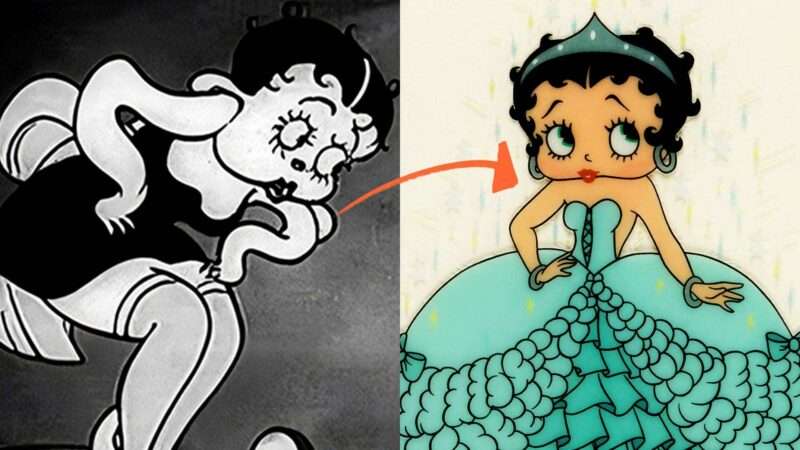
Two different versions of Betty Boop | Illustration: Eddie Marshall | Album | Fine Art Images | Newscom

Betty Boop is one of the most iconic cartoons of the 20th century. A pinup drawn to look like a 1920s flapper, the character debuted nearly a century ago and quickly became a household name: In 1932, just two years after her debut, one newspaper article dubbed Betty Boop “without question…the most popular film personage on the screen today.”

Today, the character enters the public domain, meaning it’s free for anyone to use—but perhaps only as a dog. The bizarre saga illustrates what’s wrong with modern copyright law.

Under the 1998 Sonny Bono Copyright Term Extension Act, creative works are copyrighted until 70 years after the author’s death, and works published between 1924 and 1978 are protected for 95 years. Therefore, anything originally published in 1930 enters the public domain today.

That includes Dizzy Dishes, the six-minute cartoon that featured the first appearance of Betty Boop. The cartoon and the character are now fair game, but the version of the character introduced in Dizzy Dishes was different from the one we know today.

Betty “was dog-like; a singing, dancing hybrid being with huge, droopy Cocker Spaniel-like eyes, a button of a nose and long puppy dog ears that tossed back and forth as she sang and danced,” according to Fleischer Studios, the animation company that created the character. Her appearance changed over time, and she was not fully human until January 1932.

Because of this, the company says it actually still owns the character. In a statement, Fleischer Studios CEO Mark Fleischer said Dizzy Dishes merely featured a “precursor” of Betty Boop, not “the distinctively different and independently protectible expression of the character in use by Fleischer Studios today.”

“While the copyright in the ‘Dizzy Dishes’ cartoon may fall into the public domain in 2026, this does not affect Fleischer Studios’ copyright in the fully developed BETTY BOOP character…[which] will therefore remain in force for some years to come,” Fleischer added.

The estate of Arthur Conan Doyle made a similar argument for over two decades: The majority of Doyle’s works featuring the character of Sherlock Holmes entered the public domain in 1998, but his estate argued the character remained protected until all works were free. Federal courts split the difference, finding the character was in the public domain but specific traits introduced in the later stories were still protected.

As a result, Fleischer Studios likely can’t say it still owns Betty Boop completely, but it can plausibly claim the version with dog ears is the only one now in the public domain, and each subsequent version will only become available when it turns 95 years old.

Of course, when one person or company can hold the exclusive rights to a character for a century or more, what’s another couple of years?

Copyrights lasting multiple generations undermine their entire purpose. Article I, Section 8 of the U.S. Constitution grants Congress the power to set copyright terms “to promote the Progress of Science and useful Arts.” The first U.S. copyright law, passed in 1790, allowed authors to protect their works for up to 28 years.

Congress expanded the length of those terms numerous times since. But it’s hard to argue that such generous protections “promote the Progress of Science and useful Arts.” When Betty Boop debuted in 1930, the longest copyright term was 56 years; her creators clearly found that acceptable, or they wouldn’t have released the cartoon.

It’s difficult to see how protecting a character for 95 years encourages innovation while protecting a nearly identical version for only 93 years does not.

Unlike century-long copyright protections, the public domain actually drives progress and innovation. In 2025, Guillermo del Toro released a well-reviewed adaptation of Mary Shelley’s Frankenstein, and one of the year’s highest-grossing films, Wicked: For Good, was adapted from L. Frank Baum’s The Wizard of Oz series. This year will see new adaptations of King LearThe Odyssey, and Wuthering Heights. Each one is based on a previous work in the public domain, allowing filmmakers free rein to adapt and interpret.

The post Betty Boop Enters the Public Domain, but Only as a Dog appeared first on Reason.com.

from Latest – Reason.com https://ift.tt/Hrk60hR
via IFTTT

Nick Shirley, Tim Walz, and the Minnesota Fraud Story: Did the Media Miss It?


Tim Walz and Nick Surely | ddie Marshall | Edna Leshowitz | ZUMAPRESS | Holden Smith | ZUMAPRESS | Newscom | Nano Banana

The Minnesota fraud story has become one of the biggest trending topics in quite a while. Nick Shirley, the independent conservative YouTuber who published a 42-minute documentary on the subject, has racked up 2.5 million views in just five days. Commentary on the various aspects of this scandal, from Democratic Gov. Tim Walz’s culpability to Somali immigration and where the money went, has gone insanely viral on social media and YouTube, and cable news is now covering the subject relentlessly.

Shirley has received unending acclaim from conservative commentators—Vice President J.D. Vance implied his work was worthy of a Pulitzer Prize—and a neutral-to-hostile reception from the mainstream media. Outlets like CNN are working to poke holes in some of his specific claims, while acknowledging there is plenty of evidence of fraud throughout the state’s welfare system.

I watched Shirley’s video, and I admit that it left me feeling conflicted. I’m perfectly comfortable with the fact that he’s not a professional or credentialed journalist; journalism is not a priesthood, and anyone who seeks to report the truth can engage in the craft. Great works of investigative journalism have been achieved by amateurs. Consider Guan Heng, the former Chinese citizen who took it upon himself to document the communist government’s atrocities in Uyghur detention camps. In visiting state-funded child care facilities to see if they’re actually enrolling children, Shirley was doing something perfectly valid. Moreover, we all know there is a considerable amount of fraud in state services: Prosecutors have charged nearly 100 people, most of them members of the Somali diaspora, in connection with fake charity schemes, Medicare payments, and child care.

Critics have countered that Shirley’s methods lack rigor and have questioned whether he visited the daycares during their actual hours of operation. His video draws attention to the fact that the front doors of the daycares were locked and no one would let him in, but in an era of mass social panic over school shootings (which are thankfully rarer than most people understand), there is no daycare in the country that would permit a stranger to simply walk right in. Some local reporters have suggested that the reason Shirley didn’t see any kids is because the centers in question had already closed down.

On the other hand, it would be a serious mistake to dismiss what Shirley found, and there’s some genuine confusion over the state of the daycares. Tikki Brown, commissioner of the Minnesota Department of Children, Youth, and Families, explained that numerous childcare facilities had been investigated for serious safety issues, though they continued to receive public funding. One daycare that is featured significantly in Shirley’s video, the Quality Learning Center, was permanently closed the week before he visited it, yet local television reporters spotted children still being dropped off at the center. Moreover, the fact that the name of the center is misspelled on the sign hanging above the door does not inspire great confidence. (Anyone want to enroll their child at the Quality Learing Center?)

This school, in particular, seemed beset with problems. One local report contended that the Quality Learning Center had accrued 95 violations over the course of five years for offenses such as failing to keep hazardous materials away from children and improperly keeping records on who was enrolled. Yet the center continued to receive millions in state funding during that time period.

What’s notable about that local news item, however, is that it was published almost a year ago, on January 28, 2025. As Reason‘s Eric Boehm pointed out in his excellent explainer on the welfare fraud story, conservative complaints that no one in the media paid any attention to the story until now are demonstrably false: Local media has been covering Minnesota child care fraud as far back as 2015.

It is true that the story did not become a topic of national news until conservative writer Christopher Rufo began focusing on it. Since then, however, some large media organizations have done commendable work on the story. The New York Times, for instance, published a devastating report on the fraud that laid the blame very squarely on Walz.

Even so, the welfare fraud story has not exactly attracted wall-to-wall coverage from mainstream media, even though it is obvious that these kinds of schemes are hardly isolated to Minnesota or to the Somali community: Taxpayer dollars are misappropriated, lost, or stolen in blue states and in red states alike. Moreover, Walz’s selection as Vice President Kamala Harris’s running mate in the 2024 presidential election was a perfect opportunity for the national media to follow up on the local fraud reports and make this a big story. For whatever reason, they chose not to.

Conservative media is big and powerful too, though. It’s always a bit rich when we hear Republican commentators complaining that the mainstream media has failed to investigate one news story or another, when conservative and independent media journalists are perfectly capable of looking into this as well. To be sure, there are powerful examples of nonmainstream reporters doing incredible work on a wide variety of underscrutinized topics: Gabe Kaminsky, Matt Taibbi, Ken Klippenstein, and others. Sometimes, their work goes unremarked upon by mainstream media, even when it deserves coverage—and then, when it is covered, the mainstream adopts the “Republicans pounce and or/seize” framing.

If mainstream, establishment national media treated the widespread looting of the public coffers as an urgent crisis that deserved at least as much scrutiny as, say, President Donald Trump’s renovation of the East Wing, this would constitute a profound public service. American taxpayers and news consumers deserve a media class that is highly attuned to government corruption at the federal, state, and local levels.

A Walz Around the Welfare State

For what it’s worth, Walz is doing an absolutely terrible job of reassuring the public that he actually cares about identifying and prosecuting fraud. It’s all well and good to push back against attempts to blame the entire Somali community for perpetrating the fraud, but Walz has a weird habit of shifting accountability by highlighting the criminality of “white men.” If you assert that we should ignore crude racial collectivization and then immediately claim that actually white people are the real problem, you are not helping yourself.

Grounded

But the worst take of the week relating to this story comes from Politico‘s Josh Gerstein, who wrote on X: “At some point, the amateur effort to knock on doors of home daycares intersects with robust stand-your-ground laws.”

These two things don’t intersect at all. Stand-your-ground laws establish the right of individuals not to retreat from dangerous situations and instead defend themselves, as long as they have the legal right to be there in the first place. You can’t shoot someone just because they knocked on your door; that’s because knocking on someone’s door isn’t placing them in danger.

And a special shoutout to leftist streamer Hasan Piker—who recently returned from a Jane Fonda-style propaganda tour of China—who opined that it was a crime to barge into a daycare with a camera.

Piker apparently didn’t watch the video, either. Shirley knocked on the door: He did not break into the premises of the Quality Learning Center, or any other center.


This Week on Free Media

No Niall Stanage this week, but I am joined by Amber Duke to break down the welfare fraud story, Trump alienating Joe Rogan, and our top entertainment choices of the year. Please subscribe to the Free Media YouTube channel—we’ve got big plans in 2026!


Worth Watching

We spent Christmas in Detroit with my dad, which means rewatching all my family’s favorite Christmas movies: Jim Carey’s How the Grinch Stole Christmas (which I find delightfully weird despite its mixed reception), the Alastair Sim version of A Christmas Carol (a real gem), and It’s a Wonderful Life. That last one has never been my favorite, but apparently Christian Britschgi has thoughts and we plan to address it on FREED UP this week. (Are you watching FREED UP? You should be!)

We also watched the first of the new Dune movies, which my dad likes less than the 1984 version. Talk about a spice-y take! (Get it?)

The post Nick Shirley, Tim Walz, and the Minnesota Fraud Story: Did the Media Miss It? appeared first on Reason.com.

from Latest – Reason.com https://ift.tt/WdUVrEA
via IFTTT