Zohran Mamdani Can’t Ruin New York City


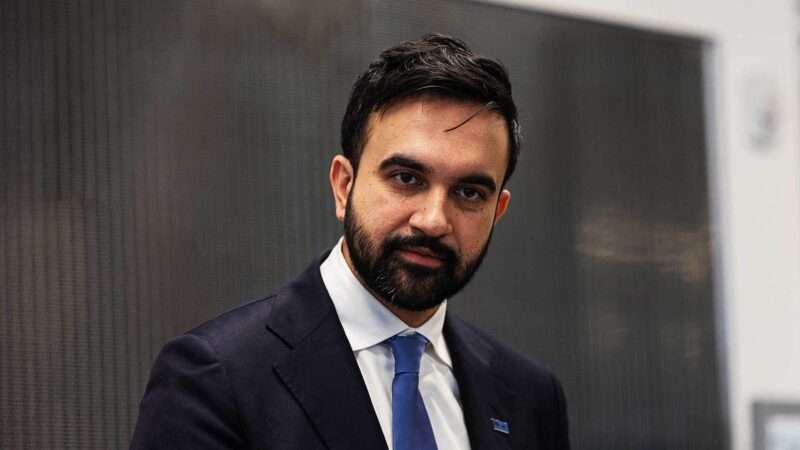
Zohran Mamdani | Shawn Inglima/TNS/Newscom

In the February/March 2026 issue of Reason, we explore Mayor-elect Zohran Mamdani’s policy goals and what they mean for New York City. Click here to read the other entries.

When I first took a road trip to New York as a young teen, I was astonished by the industrial landscape as we neared the city on the New Jersey Turnpike. “Why would they put all this dirty stuff so close to the city?” I asked my parents. As a D.C. kid, it had never occurred to me to think about what cities were actually for. In Washington, we mostly make rules and big marble monuments.

That trip was the first time I saw a city driven by commerce and art rather than political power. In the mid-1990s, New York was well past its industrial and shipping heyday, but the signs were still all around. The city was grittier than it would soon be—we were right on the cusp of the major decline in crime that would sweep through nearly all American cities. It was so gritty, in fact, that my parents forbade me from applying to college in New York. They thought the city was too pricey and dangerous, even though they loved it.

Today, the city is much richer and fussier than it was. Parents are still fretting about its dangers and expense. Mayors come and go—remember when Rudy Giuliani was “America’s mayor”?—and New York remains fundamentally itself.

Zohran Mamdani won the 2025 mayoral election on a platform that included fare-free buses, city-owned grocery stores, and a rent freeze for rent-stabilized units, plus equity-centered education policy and an oddly status-quo policing plan for a one-time defunder/abolitionist. As this issue of Reason unpacks, there are many reasons to fear such policies will be ineffective at best and deeply counterproductive at worst. And as my parents’ diktat shows, when governance and policy get bad enough, that can scare off potential residents and visitors alike.
Luiz Rampelotto/ZUMA Press Wire

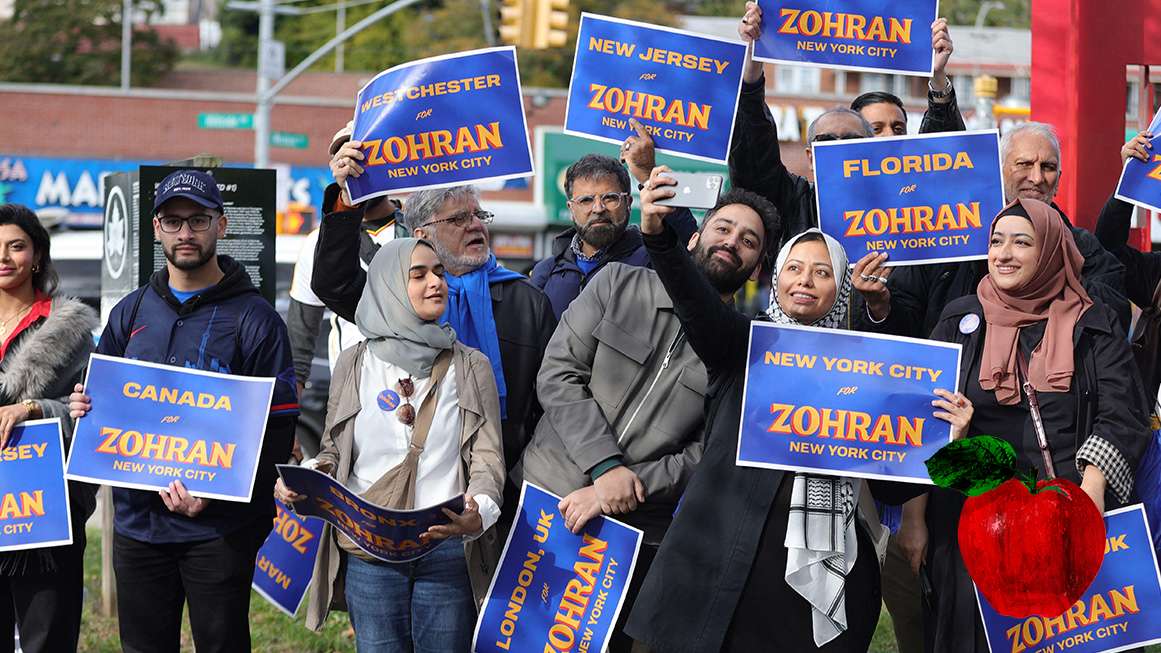
But a single mayor can’t ruin New York City, because New York City is not reducible to policy choices.

New York’s incredible power derives in large part from the fact that it’s home to a really big pile of money. Big piles of money, especially when they are in private hands, drive innovation and hustle. Big piles of money also throw off charity and patronage of the arts. A mayor can posture, he can regulate, and he can pressure firms in press conferences. He can even scare off investors and entrepreneurs at the margins. But the New York Stock Exchange is headquartered in Lower Manhattan and will be for the foreseeable future, where it remains a giant battery powering the city.

Then there’s the city’s appealingly unglamorous commercial underbelly. The New York City Economic Development Corporation reports that there are about 183,000 small businesses in the city. Yes, it’s annoying that New Yorkers won’t shut up about their beloved bodegas—it’s just a corner store!—but the insane number and subtle market differentiation of those corner stores are a joy for any night owl, early bird, or regular commuter pigeon.

Black and gray markets thrive in ways made possible by the sheer density and diversity of humanity in the city. The worse governance gets, the more commercial activity will get pushed into these markets, with all that entails. New Yorkers are famous for their workarounds of an utterly bonkers real estate market, for example. It’s also part of a vanishing breed of cities where transactions still happen in cash. A Federal Reserve Bank of New York report explains one mechanism by which density raises productivity: Proximity lowers the costs of exchanging information and generating new ideas. The paper estimates that doubling density increases productivity by about 2 percent to 4 percent.

Which brings us to the humans: New York makes visible the consequences of the free movement of people. The sophisticated, slightly impatient people who are born there are a different breed (my husband among them). The Americans who come from all over to try their luck in the big city keep the fire burning (my sister among them). And of course, New York is home to more than 3 million immigrants—about 38 percent of the city population, according to the Mayor’s Office of Immigrant Affairs.

***

I visited the city over Thanksgiving this year, blitzing up the turnpike with a family of my own. Now immune to the sights and smells of industrial New Jersey, I marveled at a different apparition: trash cans. Outgoing Mayor Eric Adams’ trash containerization push was on display in the streets, and fewer of the city’s famous trash bag mountains were visible. The Mayor’s Office reports declines in rat sightings in connection with the new rules.

I took the presence of trash cans as a reminder that improvements in governance are possible and worth fighting for. But they were literally and metaphorically dwarfed by the buzz of buying and selling, creating and destroying, visible all around them. New York City has a long history of correcting course after political disasters and absorbing bad leadership, and it will again.

Around the same time as that teenaged trip to New York, I read The Fountainhead (and then everything else Ayn Rand wrote, in rather short order). While it didn’t strike me at the time, I’ve since returned to her words about the city many times—especially after 9/11—for the way she captures the place’s powerful self-sufficiency and its terrible vulnerability: “I would give the greatest sunset in the world for one sight of New York’s skyline,” Rand wrote. “Particularly when one can’t see the details. Just the shapes. The shapes and the thought that made them. The sky over New York and the will of man made visible….When I see the city from my window—no, I don’t feel how small I am—but I feel that if a war came to threaten this, I would throw myself into space, over the city, and protect these buildings with my body.”

What Zohran Mamdani’s Rotten Ideas Could Do to the Big Apple

In the February/Mach 2026 issue of Reason, we explore Mayor-elect Zohran Mamdani’s policy goals and what they mean for New York City. Read the other entries here:

The post Zohran Mamdani Can't Ruin New York City appeared first on Reason.com.

from Latest – Reason.com https://ift.tt/HJEmhT9
via IFTTT

Zohran Mamdani Can’t Ruin New York City


Zohran Mamdani | Shawn Inglima/TNS/Newscom

In the February/March 2026 issue of Reason, we explore Mayor-elect Zohran Mamdani’s policy goals and what they mean for New York City. Click here to read the other entries.

When I first took a road trip to New York as a young teen, I was astonished by the industrial landscape as we neared the city on the New Jersey Turnpike. “Why would they put all this dirty stuff so close to the city?” I asked my parents. As a D.C. kid, it had never occurred to me to think about what cities were actually for. In Washington, we mostly make rules and big marble monuments.

That trip was the first time I saw a city driven by commerce and art rather than political power. In the mid-1990s, New York was well past its industrial and shipping heyday, but the signs were still all around. The city was grittier than it would soon be—we were right on the cusp of the major decline in crime that would sweep through nearly all American cities. It was so gritty, in fact, that my parents forbade me from applying to college in New York. They thought the city was too pricey and dangerous, even though they loved it.

Today, the city is much richer and fussier than it was. Parents are still fretting about its dangers and expense. Mayors come and go—remember when Rudy Giuliani was “America’s mayor”?—and New York remains fundamentally itself.

Zohran Mamdani won the 2025 mayoral election on a platform that included fare-free buses, city-owned grocery stores, and a rent freeze for rent-stabilized units, plus equity-centered education policy and an oddly status-quo policing plan for a one-time defunder/abolitionist. As this issue of Reason unpacks, there are many reasons to fear such policies will be ineffective at best and deeply counterproductive at worst. And as my parents’ diktat shows, when governance and policy get bad enough, that can scare off potential residents and visitors alike.

Luiz Rampelotto/ZUMA Press Wire

But a single mayor can’t ruin New York City, because New York City is not reducible to policy choices.

New York’s incredible power derives in large part from the fact that it’s home to a really big pile of money. Big piles of money, especially when they are in private hands, drive innovation and hustle. Big piles of money also throw off charity and patronage of the arts. A mayor can posture, he can regulate, and he can pressure firms in press conferences. He can even scare off investors and entrepreneurs at the margins. But the New York Stock Exchange is headquartered in Lower Manhattan and will be for the foreseeable future, where it remains a giant battery powering the city.

Then there’s the city’s appealingly unglamorous commercial underbelly. The New York City Economic Development Corporation reports that there are about 183,000 small businesses in the city. Yes, it’s annoying that New Yorkers won’t shut up about their beloved bodegas—it’s just a corner store!—but the insane number and subtle market differentiation of those corner stores are a joy for any night owl, early bird, or regular commuter pigeon.

Black and gray markets thrive in ways made possible by the sheer density and diversity of humanity in the city. The worse governance gets, the more commercial activity will get pushed into these markets, with all that entails. New Yorkers are famous for their workarounds of an utterly bonkers real estate market, for example. It’s also part of a vanishing breed of cities where transactions still happen in cash. A Federal Reserve Bank of New York report explains one mechanism by which density raises productivity: Proximity lowers the costs of exchanging information and generating new ideas. The paper estimates that doubling density increases productivity by about 2 percent to 4 percent.

Which brings us to the humans: New York makes visible the consequences of the free movement of people. The sophisticated, slightly impatient people who are born there are a different breed (my husband among them). The Americans who come from all over to try their luck in the big city keep the fire burning (my sister among them). And of course, New York is home to more than 3 million immigrants—about 38 percent of the city population, according to the Mayor’s Office of Immigrant Affairs.

***

I visited the city over Thanksgiving this year, blitzing up the turnpike with a family of my own. Now immune to the sights and smells of industrial New Jersey, I marveled at a different apparition: trash cans. Outgoing Mayor Eric Adams’ trash containerization push was on display in the streets, and fewer of the city’s famous trash bag mountains were visible. The Mayor’s Office reports declines in rat sightings in connection with the new rules.

I took the presence of trash cans as a reminder that improvements in governance are possible and worth fighting for. But they were literally and metaphorically dwarfed by the buzz of buying and selling, creating and destroying, visible all around them. New York City has a long history of correcting course after political disasters and absorbing bad leadership, and it will again.

Around the same time as that teenaged trip to New York, I read The Fountainhead (and then everything else Ayn Rand wrote, in rather short order). While it didn’t strike me at the time, I’ve since returned to her words about the city many times—especially after 9/11—for the way she captures the place’s powerful self-sufficiency and its terrible vulnerability: “I would give the greatest sunset in the world for one sight of New York’s skyline,” Rand wrote. “Particularly when one can’t see the details. Just the shapes. The shapes and the thought that made them. The sky over New York and the will of man made visible….When I see the city from my window—no, I don’t feel how small I am—but I feel that if a war came to threaten this, I would throw myself into space, over the city, and protect these buildings with my body.”

What Zohran Mamdani’s Rotten Ideas Could Do to the Big Apple

In the February/Mach 2026 issue of Reason, we explore Mayor-elect Zohran Mamdani’s policy goals and what they mean for New York City. Read the other entries here:

The post Zohran Mamdani Can't Ruin New York City appeared first on Reason.com.

from Latest – Reason.com https://ift.tt/HJEmhT9
via IFTTT

Brickbat: Cracked


Sandy Martinez | Institute for Justice

The Florida Supreme Court declined to hear an appeal from a South Florida woman fined more than $100,000 for parking on her own driveway. Sandy Martinez racked up $250 in daily fines for nearly a year because two of her car’s tires touched the grass next to her driveway, violating local codes. She was also cited for cracks in her driveway and a storm-damaged fence. These fines grew to a massive six-figure sum because the town claimed she did not properly fix the issues, while Martinez says her attempts to schedule an inspection were ignored.

The post Brickbat: Cracked appeared first on Reason.com.

from Latest – Reason.com https://ift.tt/cL2u6RD
via IFTTT

Brickbat: Cracked


Sandy Martinez | Institute for Justice

The Florida Supreme Court declined to hear an appeal from a South Florida woman fined more than $100,000 for parking on her own driveway. Sandy Martinez racked up $250 in daily fines for nearly a year because two of her car’s tires touched the grass next to her driveway, violating local codes. She was also cited for cracks in her driveway and a storm-damaged fence. These fines grew to a massive six-figure sum because the town claimed she did not properly fix the issues, while Martinez says her attempts to schedule an inspection were ignored.

The post Brickbat: Cracked appeared first on Reason.com.

from Latest – Reason.com https://ift.tt/cL2u6RD
via IFTTT

2026: The Year Of Living Dangerously

2026: The Year Of Living Dangerously

Authored by Lawrence Kadish via The Gatestone Institute,

The British were the first to develop the aircraft carrier as an emerging weapon of war. But it was the Japanese who perfected the ship by combining as many as four aircraft carriers into a single battle group and deploying a task force that led to their devastating strike against the American fleet at Pearl Harbor on December 7, 1941.

Nearly a century later, another ally, the State of Israel, has pioneered asymmetrical warfare in which they combine their technological superiority in gathering intelligence with precision strikes to counter enemies who seek their destruction. The Israelis’ continued success can be found from the use of explosive pagers that took out Hezbollah terrorists, to hidden computer malware that disabled Iranian uranium enrichment. Their exploits could fill a book.

Our other allies, the Ukrainians, are using drones controlled by sleeper agents to destroy Russian military assets far behind the battle lines.

For the Russians, anyone and everyone could now be a suspect.

All of this begs the question: If this is what our allies are capable of, what can our enemies be contemplating?

As the successful Japanese carrier task force dramatically reminded the world in 1941, our enemies sit, watch, and consider how emerging tools of warfare pioneered by democracies can be used against these nations of freedom.

Who are the sleeper agents who may be working within our nation’s utilities, capable of infecting our complex electrical grids with malware that, if activated, would plunge our cities into darkness?

Who are those who have purchased farmland near our Midwest strategic bomber air bases and whose barns and warehouses could now have drones hidden within them, waiting for a signal to strike?

Can hackers in North Korea manipulate our nation’s financial system, threatening everything from bitcoin “banks” to financial transfers on the command of their Communist leader?

These are just some of the nightmare scenarios that America needs to understand and prepare to defend against in a world where armies do not need to invade and missiles do not need to be launched in order to disarm an adversary.

The Chinese, however, are not solely relying on stealth sleeper agents or asymmetrical opportunities.

China’s second aircraft carrier is expected to enter service in 2026, according to the respected publication Aviation Week.

Separately, the publication also notes that while the Chinese are publicly criticizing the Trump administration’s Golden Dome missile-defense program, they are hard at work at developing their own anti-missile defense shield.

It is classic Beijing – criticize your enemies for what you are already pursuing.

The year 2026 will see the United States advancing on multiple fronts, from accelerating our return to the Moon to strengthening our naval forces, to bolstering our drone technology, to increasing our strategic defenses.

All the while, the forces of freedom must recognize that, like Imperial Japan of 1941, our adversaries are watching Western democracies to determine our vulnerabilities.

It will require the White House to sustain its firm and resolute leadership to protect our future and all those who treasure democracy and freedom.

Views expressed in this article are opinions of the author and do not necessarily reflect the views of ZeroHedge.

Tyler Durden
Wed, 12/31/2025 – 23:30

via ZeroHedge News https://ift.tt/984pURq Tyler Durden

Are Fireworks Integral To New Year’s Eve?

Are Fireworks Integral To New Year’s Eve?

Fireworks are bad for the environment, distressing to animals and people with conditions such as PTSD, as well as dangerous – resulting in thousands of injuries in the United States alone each year.

Yet, come New Year’s Eve, they are set off all around the world, as the clock strikes 12 in one timezone after another. In the U.S, the market is even booming, with the U.S. fireworks industry having reported an estimated $2.2 billion in revenue from consumers in 2024 and an additional $600 million on professional display fireworks.

As Statista’s Anna Fleck shows in the following chart, using data from Statista’s Consumer Insights survey, the share of respondents who say that fireworks and firecrackers are an essential part of a New Year’s celebration varies across geographies.

Infographic: Are Fireworks Integral to New Year’s Eve? | Statista

You will find more infographics at Statista

In all of the five countries surveyed, a minority of respondents said this was the case.

Germans were the most likely to think that fireworks were a “must” for the 31st, with 29 percent of respondents picking the option, while in France, the tradition was far less popular, with only 12 percent of respondents saying the same.

More popular responses to the question on essential elements for a New Year’s celebration included “to wish friends and family a happy new year” and “toasting with champagne”.

The French and Germans were the most romantic of the group, with 45 and 37 percent, respectively, selecting a “kiss at midnight” as an essential part of the festivities, versus 32 percent in the U.S., 26 percent in the UK and 14 percent in Mexico. Multiple answers were possible.

Tyler Durden
Wed, 12/31/2025 – 22:45

via ZeroHedge News https://ift.tt/oE17GUf Tyler Durden

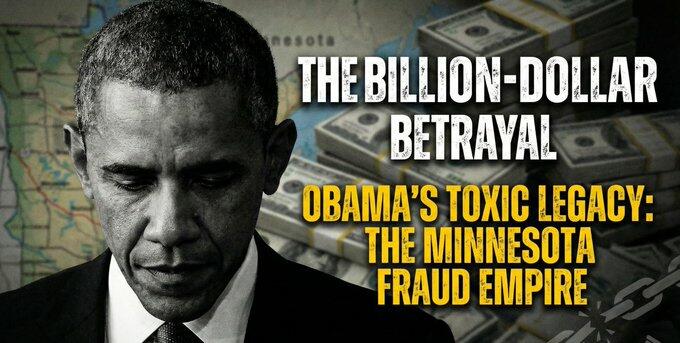
Obama’s Trojan Horse: How His Refugee Machine Engineered The Billion-Dollar Looting Of US Treasury

Obama’s Trojan Horse: How His Refugee Machine Engineered The Billion-Dollar Looting Of US Treasury

Authored by X user Saggezza Etern,

Obama’s Billion-Dollar Minnesota Fraud Empire

The Heist You Paid For

Imagine waking up tomorrow to find your bank account empty. Every dollar you saved for your children’s tuition, your retirement, your security—gone. Now imagine looking out the window and seeing the thief driving a Porsche bought with your money, laughing as he waves a government-issued thank you note. This is not a hypothetical scenario. It is the reality of the American taxpayer in the wake of the single largest COVID-era fraud scheme in the nation’s history. While you were locked down, masked up, and worrying about the price of eggs, a sophisticated network of fraudsters in Minnesota was siphoning off a quarter of a billion dollars—likely far more—from programs meant to feed hungry children.

The “Feeding Our Future” scandal is not just a story about greed. It is the smoking gun of a much darker political operation. Federal prosecutors have charged 70 people in a $250 million conspiracy, and the FBI is reportedly eyeing fraud that could total over $2 billion across multiple sectors including autism therapy, housing, and daycare. The vast majority of these defendants come from the Somali community in Minnesota. But do not be distracted by the foot soldiers. To understand how a fraud of this magnitude happens, you have to look past the people cashing the checks and look at the architect who built the bank. This industrial-scale theft traces directly back to Barack Obama. It was his administration that deliberately flooded Minnesota with tens of thousands of refugees, creating a dependent, insular enclave primed for exploitation. It was his policy of “equity” that paralyzed oversight. And it is his political heirs who are now frantically trying to bury the evidence.

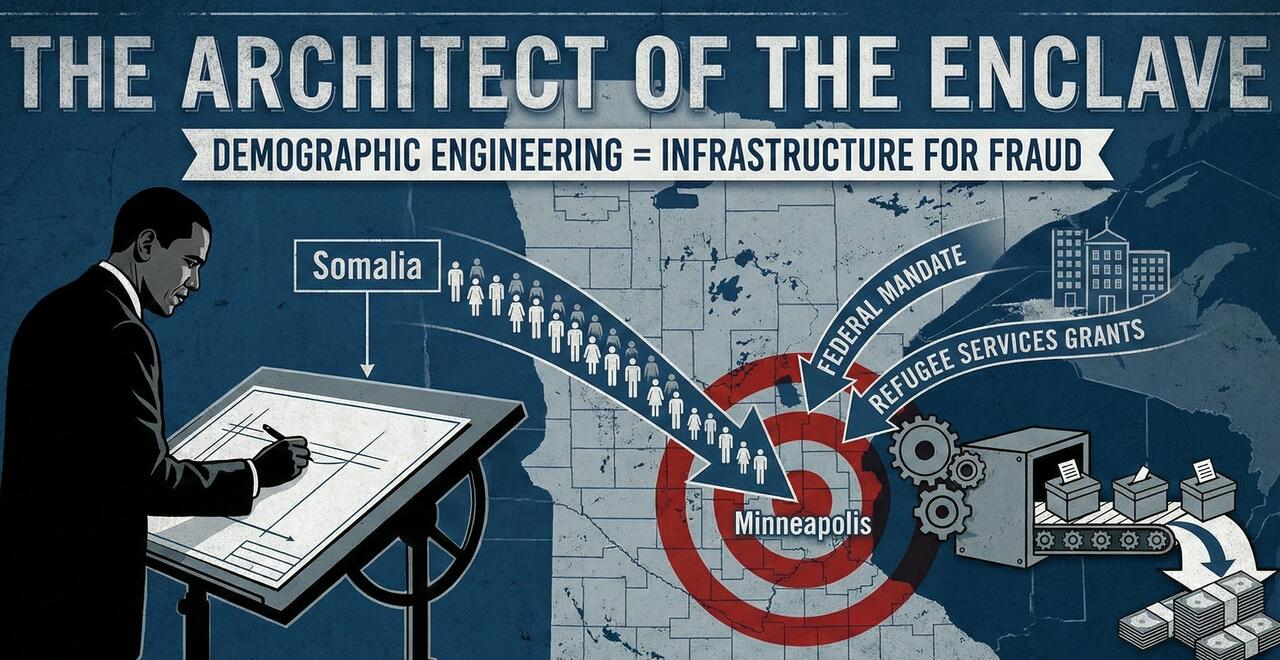
The Architect of the Enclave

You might be wondering how Minnesota, a state once known for Scandinavian stoicism and lakes, became the global epicenter for Somali diasporic fraud. It was not an accident. It was a federal mandate. Between 2008 and 2016, the Obama administration oversaw the admission of over 54,000 Somali refugees into the United States. But they didn’t just scatter them across the 50 states. They targeted specific swing states and counties, with Minnesota being the primary dumping ground.

By the time Obama left office, Minnesota was home to the largest Somali population in the country, now estimated at over 80,000 people. This concentration was strategic. By clustering refugees in Minneapolis, the Democratic machine created a voting bloc that could be harvested for elections and a demographic that demanded massive government outlays. They called it “diversity.” In reality, it was demographic engineering. The Obama administration poured federal grants into “refugee services,” creating a lucrative industry of nonprofits and community organizers whose entire existence depended on keeping the flow of refugees—and federal dollars—moving. This established the infrastructure for the fraud we see today. When you import a population from a failed state with no tradition of Western civic duty, and you teach them that the government is a bottomless trough of free money, you don’t get assimilation. You get predation.

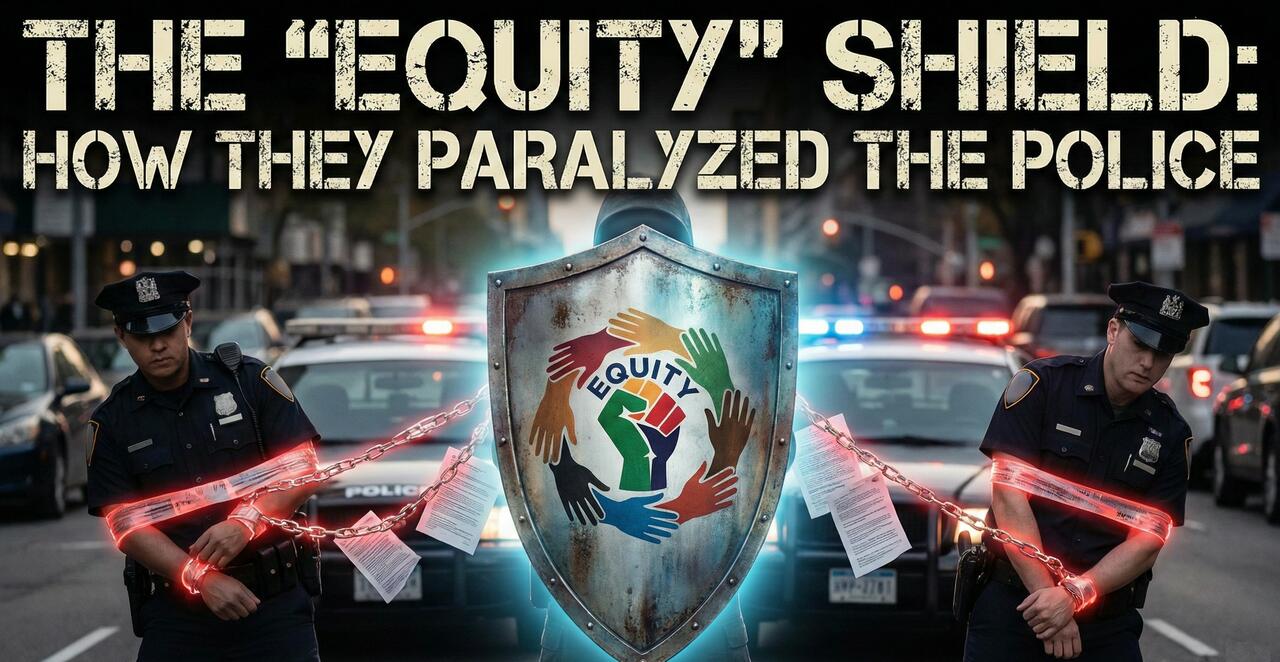
The “Equity” Shield: How They Paralyzed the Police

The genius of the Obama-era strategy was not just in the importation of people, but in the weaponization of race to silence dissent. Under the guise of “equity,” the Obama administration pushed for relaxed standards in federal contracting, specifically favoring “minority-owned” nonprofits. This created a regulatory environment where asking questions became a career-ending risk.

Consider the mechanics of the “Feeding Our Future” fraud. The fraudsters claimed to be serving thousands of meals a day to children who did not exist. At one site, they claimed to be feeding 2,000 children daily in a second-story apartment. Anyone with eyes could see this was impossible. So why didn’t the Minnesota Department of Education stop it? Because when they tried, they were called racists. The fraudsters, emboldened by the racial grievance culture Obama cultivated, sued the state for discrimination. Terrified of the “racism” label, the state resumed payments. This is the direct result of a decade of Obama-era policy that equated oversight with oppression. The bureaucrats were more afraid of a lawsuit from the ACLU than they were of letting billions of dollars in taxpayer money walk out the back door.

The Protege: Ilhan Omar and the MEALS Act

If Barack Obama built the machine, Ilhan Omar is the operator. Omar is the ultimate product of the Minnesota Somali enclave. She rose to power not despite her radicalism, but because of the demographic reality Obama created. And her legislative fingerprints are all over this scandal.

In 2020, as the pandemic began, Omar sponsored the MEALS Act. This legislation fundamentally altered the rules for federal nutrition programs, allowing parents to pick up meals without children present and removing the requirement for congregate dining. While pitched as a compassionate measure, it effectively removed the only verification mechanism the government had. It was a blank check. It is no coincidence that the fraud exploded immediately after these rules were relaxed. Omar’s campaign has accepted thousands of dollars from individuals later indicted in the scheme, money she quietly returned only after the media glare became too bright. She defends the lax rules as necessary to “feed kids,” twisting the narrative to make you feel guilty for questioning the theft. But the money didn’t go to kids. It went to luxury condos in Nairobi, beachfront property in Turkey, and Porsches in Minneapolis.

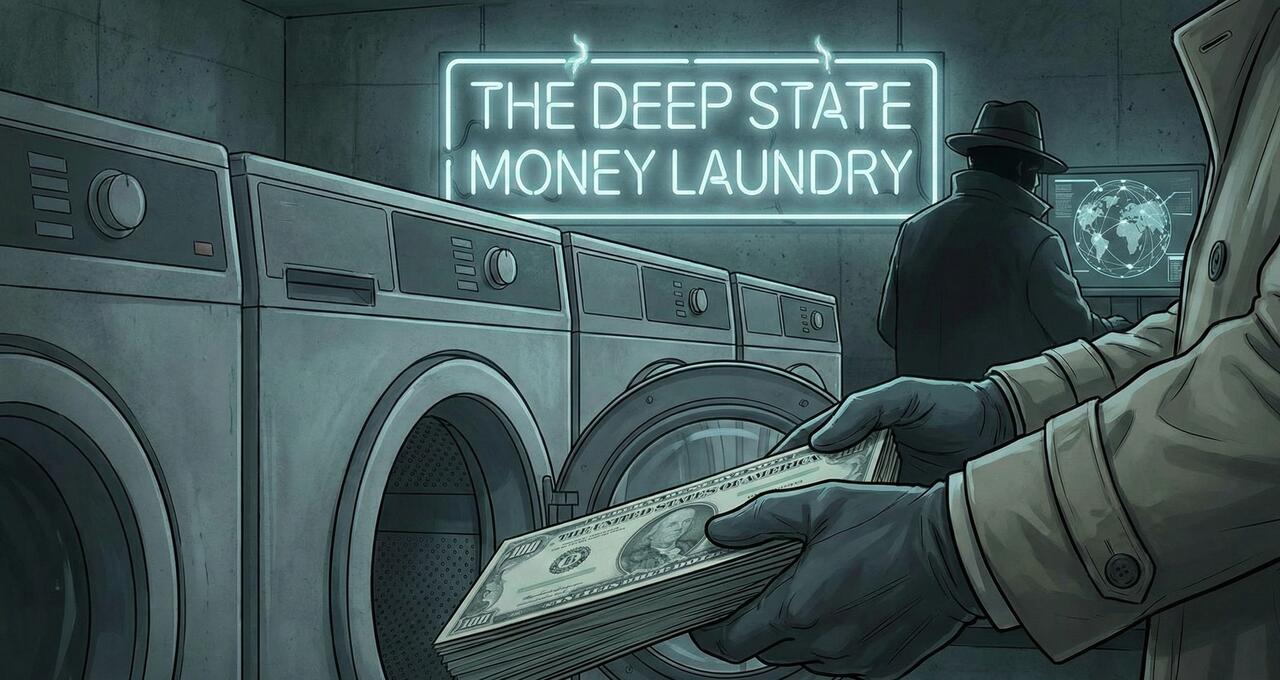
The Deep State Money Laundry

The rabbit hole goes deeper than just meal tickets. The connections between the Somali fraud network and the highest levels of the Democratic establishment are becoming impossible to ignore. Take a look at Rose Lake Capital, a venture capital firm founded by Tim Mynett, Ilhan Omar’s husband. As the fraud investigations heated up, astute observers noticed that the firm’s website was scrubbed of some very interesting names.

Prior to the scrub, the firm listed advisors including a former Obama ambassador to Bahrain, a former Obama ambassador to China, and a former DNC treasurer. Why are top-tier Obama officials swimming in the same financial waters as the family of a Congresswoman whose district is ground zero for the largest fraud in history? These networks provide the cover. They provide the legitimacy. And they potentially provide the mechanism to wash the proceeds of the grift. This is not just local corruption. It is a federally integrated operation where the political elite protect the foot soldiers who deliver the votes and the cash.

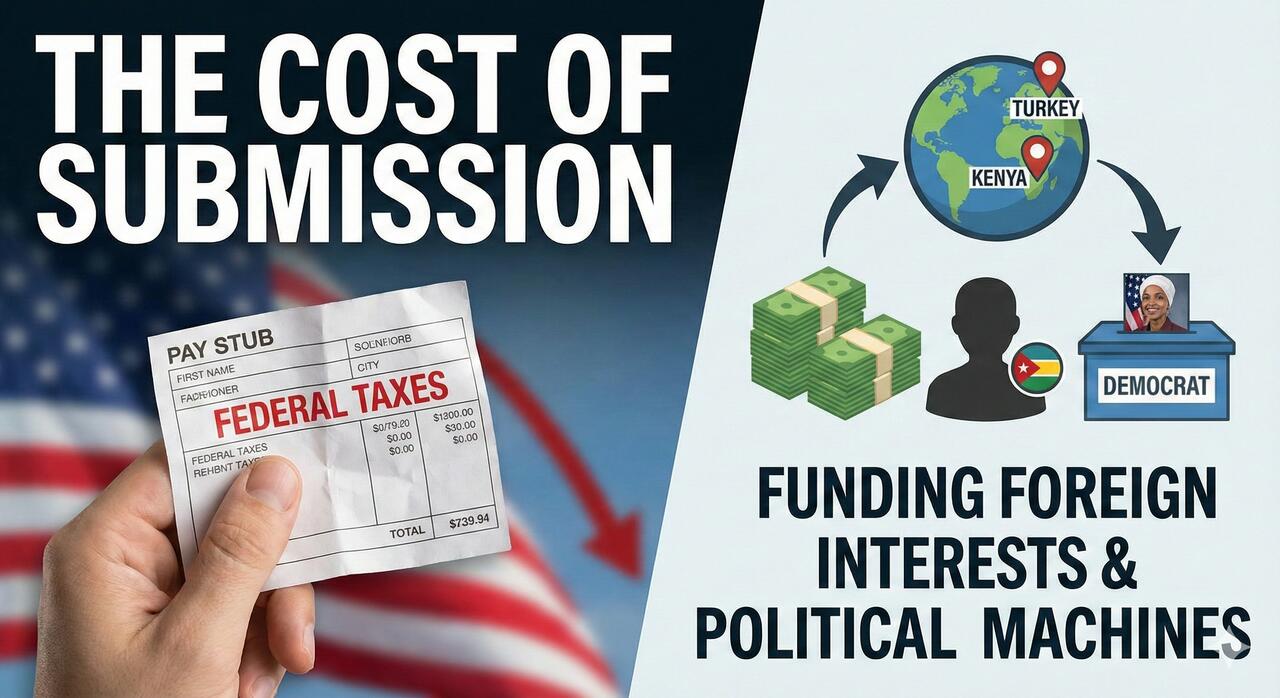
The Cost of Submission

You are paying for this. Every time you look at your pay stub and see the massive chunk taken out for federal taxes, remember that money is not building roads. It is not securing the border. It is funding the lifestyle of people who hate you. The $250 million stolen in the Feeding Our Future scam is just the tip of the iceberg. Investigators believe the total theft across childcare, autism, and housing programs could reach billions.

But the financial cost pales in comparison to the security threat. Much of this stolen money was remitted overseas. We know it bought real estate in Kenya and Turkey. What we don’t know is how much of it ended up in the hands of Al-Shabaab or other extremist groups in the Horn of Africa. By turning a blind eye to this fraud to preserve “community relations,” the Democrats have effectively turned the US Treasury into a piggy bank for foreign interests. And politically, they have succeeded. The Somali bloc in Minnesota votes over 80% Democrat. They have sent Ilhan Omar to Congress three times. They are a captured constituency, bought and paid for with your tax dollars.

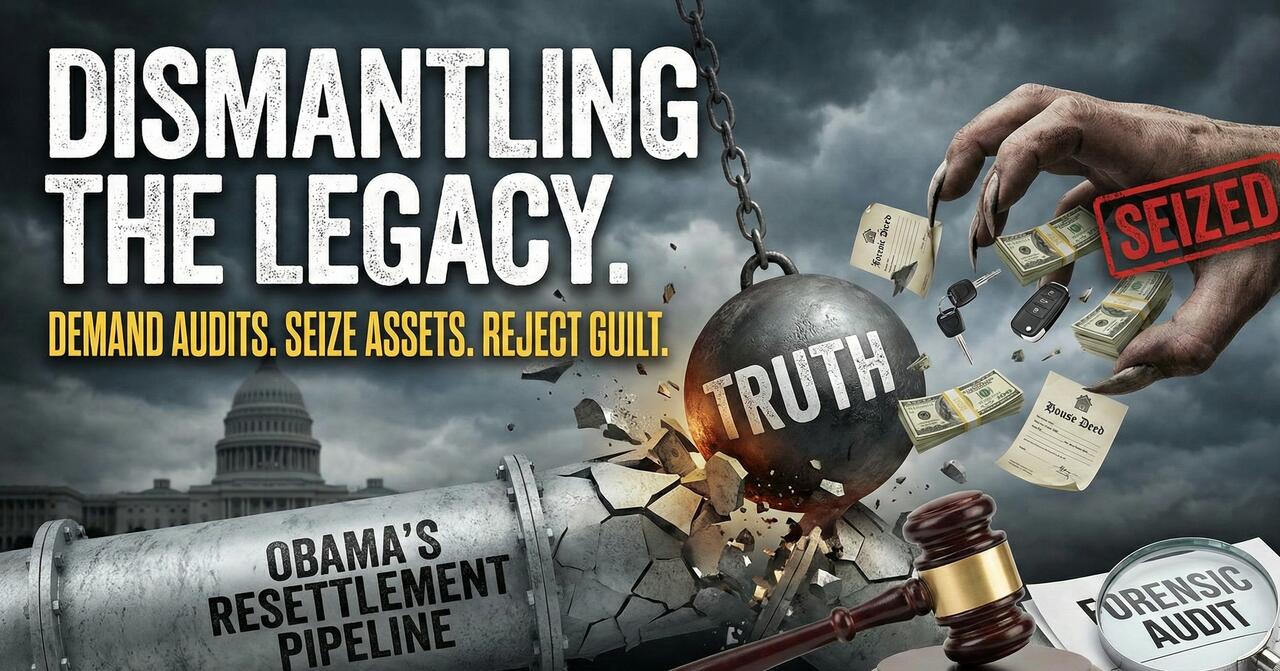
Dismantling the Legacy

The Minnesota fraud scandal is the inevitable result of the Obama doctrine: Import a dependent class, dismantle the safeguards against corruption under the banner of “equity,” and brand anyone who notices as a bigot. They counted on your silence. They counted on your fear of being called a name.

But the receipts are in. We know who did this. We know how they did it. And we know who let it happen. The solution is not “reform.” It is a complete dismantling of the refugee resettlement pipeline that Obama built. We need a forensic audit of every federal dollar sent to “community non-profits” in the last ten years. We need to seize the assets—the cars, the houses, the overseas accounts—of everyone involved. And most importantly, we need to stop being afraid. The cry of “racism” is the thief’s final defense. Ignore it. Keep your eyes on the money. Keep your eyes on the truth. They stole your country and sold it back to you as “diversity.” Demand a refund.

What You Can Do Right Now:

  • Share this article: The mainstream media is trying to bury the Obama connection. Force the conversation.

  • Demand Audits: Contact your state representatives and demand a specialized audit of all Department of Education and DHS grant recipients in your state.

  • Reject the Guilt: When they try to shame you for asking where the money went, laugh in their faces. You are the creditor. They are the debtors. And collection day is coming.

. . . 

Tyler Durden
Wed, 12/31/2025 – 22:00

via ZeroHedge News https://ift.tt/pUse3DI Tyler Durden

China’s EV Makers Are Powering Southeast Asia’s Bus Revolution

China’s EV Makers Are Powering Southeast Asia’s Bus Revolution

Chinese-made electric buses are rapidly gaining ground across Southeast Asia as governments push to decarbonize public transport and Chinese manufacturers seek growth beyond a slowing home market, according to Nikkei Asia.

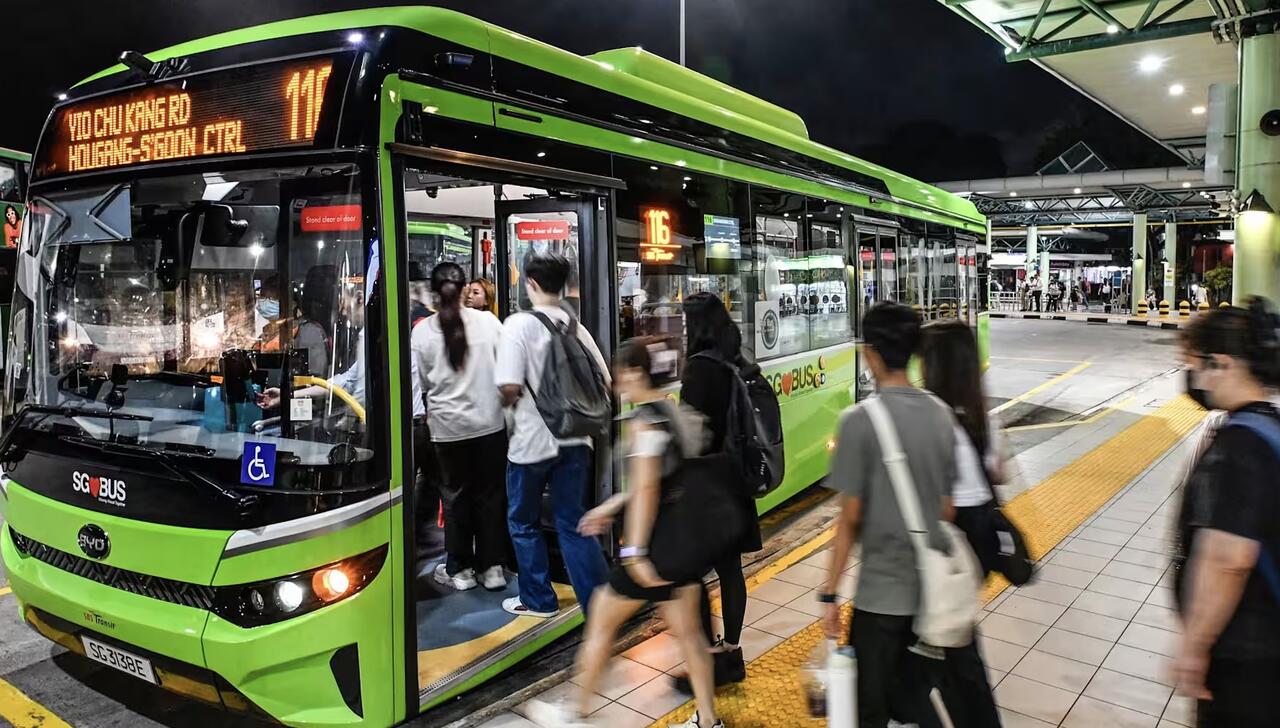
In Jakarta, that shift is already visible. Transjakarta, the capital’s main bus operator, introduced electric buses from China’s BYD in 2022. It now runs 420 electric buses — nearly 10% of its fleet — including models from Skywell and Zhongtong, and plans to fully electrify its 10,000-bus fleet by 2030.

For veteran driver Muhammad Iqbal, the change has been dramatic. A decade ago, Chinese buses in Indonesia were known for breakdowns and even fires, forcing operators to rely on Japanese and European brands. Now, Iqbal says the new electric models are easier and more comfortable to drive. “It’s more comfortable to drive this electric bus,” he said. “It uses an automatic transmission, and drivers don’t have to queue at the gas station each [night] before returning [the buses].”

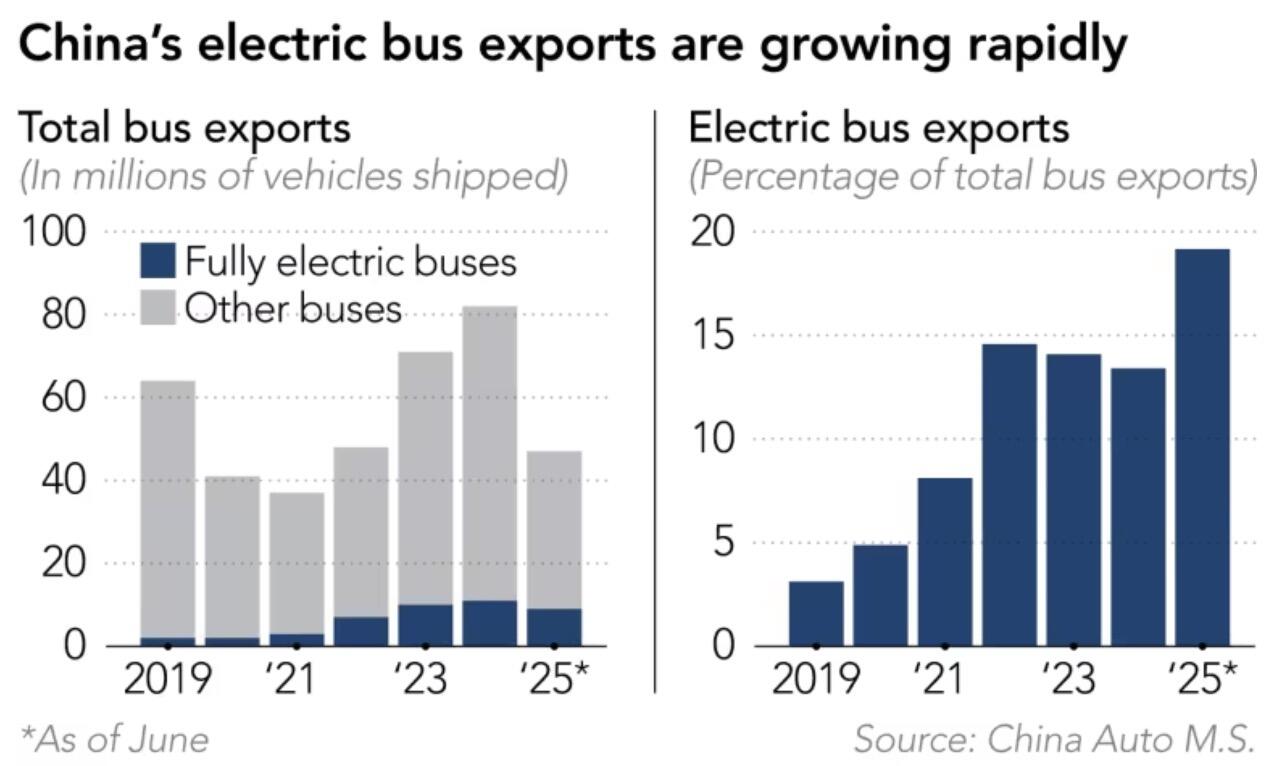
Nikkei writes that Chinese firms dominate the global electric bus export market, led by Yutong and King Long. In the first half of 2025 alone, China exported about 9,000 electric buses worldwide — a 124% increase from a year earlier. Southeast Asia still represents a small share of that total, but demand is accelerating.

In Indonesia, BYD has partnered with local manufacturer VKTR Teknologi Mobilitas, which opened an assembly plant in Central Java in May. The facility, capable of producing 3,000 vehicles a year, currently builds about 200 and aims to deliver 80 buses to Transjakarta by early 2026. Forty percent of the buses’ components are locally sourced, qualifying the company for government incentives.

Growth is also spreading regionally. Malaysia operates more than 140 electric buses and plans to deploy thousands over the next five years. Singapore has already ordered hundreds of electric buses from Chinese suppliers and aims to electrify half its fleet by 2030. The Philippines and Indonesia have set similar targets, driven by national EV policies.

Vietnam and Thailand are exceptions. Vietnam’s local manufacturer VinFast dominates its electric bus market, while Thailand is prioritizing rail investment over bus electrification.

The rapid expansion has also raised cybersecurity concerns. In November, Norway’s public transport operator warned that Chinese-made buses could be vulnerable to remote manipulation, prompting investigations in Europe. Chinese manufacturer Yutong rejected the claim. Indonesian cybersecurity expert Pratama Persadha cautioned that vehicle data could be exploited and urged governments to require cyberaudits for imported EV systems. As analyst Mark Manantan put it, “Whoever the company is, there will always be a cybersecurity risk.”

Tyler Durden
Wed, 12/31/2025 – 21:15

via ZeroHedge News https://ift.tt/iVcxQzb Tyler Durden