Superintelligent AI Is Not Coming To Kill You


'Why Superhuman AI Would Kill Us All' | Little, Brown, and Company

If Anyone Builds It, Everyone Dies: Why Superhuman AI Would Kill Us All, by Eliezer Yudkowsky and Nate Soares, Little, Brown, and Company, 272 pages, $30

Eliezer Yudkowsky and Nate Soares have a new book titled If Anyone Builds It, Everyone Dies: Why Superhuman AI Would Kill Us All. “We do not mean that as hyperbole,” they write. They believe artificial intelligence research will inevitably produce superintelligent machines and these machines will inevitably kill everyone.

This is an extraordinary claim. It requires extraordinary evidence. Instead, they offer a daisy chain of thought experiments, unexamined premises, and a linguistic sleight of hand that smuggles their conclusion into the definition of intelligence itself.

The book’s central argument rests on the “alignment problem”—the effort to ensure that advanced AI systems share human values. Yudkowsky popularized this concept. Humans, the authors argue, succeed through intelligence, which they define as “the work of predicting the world, and the work of steering the world.” Computers will surpass human intelligence because they are faster, can copy themselves, have perfect memory, and can modify their own architecture. Because AI systems are “grown” through training rather than explicitly programmed, we cannot fully specify their goals. When superintelligent AI pursues objectives that diverge even slightly from human values, it will optimize relentlessly toward those alien goals. When we interfere, it will eliminate us.

To Yudkowsky and Soares, alignment isn’t about teaching machines ethics or preventing human misuse. It’s about preventing an indifferent optimizer from razing the world. They believe an unaligned superintelligence is a global death sentence.

Therefore, they argue, all AI research must stop immediately. Governments should monitor powerful computers, ban possession of more than eight state-of-the-art GPUs without oversight, and criminalize AI research. An international coalition should destroy rogue data centers through “cyberattacks or sabotage or conventional airstrikes,” even risking nuclear war, because “data centers can kill more people than nuclear weapons.” These measures, they claim, “won’t make much of a difference in most people’s daily lives” and “wouldn’t make much of a difference with regard to state power.”

This is astoundingly casual authoritarianism. A complete ban on research into a general purpose technology already delivering significant health and productivity benefits, enforced by militarized international bodies, would place global society on a permanent wartime footing.

But the problem isn’t just the medicine. It’s the diagnosis.

***

By defining intelligence as the ability to predict and steer the world, Yudkowsky and Soares collapse two distinct capacities—understanding and acting—into one concept. This builds their conclusion into their premise. If intelligence inherently includes steering, then any sufficiently intelligent system is, by definition, a world-shaping agent. The alignment problem becomes not a hypothesis about how certain AI architectures might behave but a tautology about how all intelligent systems must behave.

Yet an economist can understand markets without directing them. Google Maps predicts commute times but cannot drive your car or clear traffic. Steering requires more than prediction. It needs feedback, memory, actuators, and persistent goals.

Large language models—the technology underlying ChatGPT and similar systems—are fundamentally about prediction. They predict the next element in a sequence. They are sophisticated pattern-matching engines, grown through training on vast datasets rather than being explicitly programmed. The book emphasizes this “grown, not crafted” nature as evidence that we cannot understand or control such systems. But these tools do not optimize toward goals and have no ability to act in the world. They are prediction without steering.

Tech companies now build “agentic” AI using language models, but the agentic parts that set goals, plan, and execute rely on traditional, interpretable techniques. These components are crafted, not grown. The distinction between trained prediction engines and designed agent frameworks undermines Yudkowsky’s argument that we’re growing uncontrollable alien intelligences.

The authors attempt to address this objection in their online resources (which are more coherent than the book). They argue that prediction and steering blend together because sophisticated prediction sometimes requires intermediate steps with steering; to predict the physical world accurately, you might need to execute experiments. But this doesn’t unite prediction and steering—it simply means nonagentic systems can’t make certain predictions. A weather model that cannot run experiments will be less accurate than one that can, but this doesn’t mean the latter can control the weather.

***

We also have examples of nonhuman systems that meet Yudkowsky’s intelligence definition because they both predict and steer. Markets predict future scarcity and abundance through price signals, then steer resources toward their highest-valued uses. No individual fully understands or controls these mechanisms. Markets are “grown” through countless individual decisions rather than centrally designed. And they have generated unprecedented prosperity, not existential catastrophe.

This signals a deeper problem: The authors consistently misunderstand emergent order and complex systems. They equate lack of complete understanding with lack of control. They treat “growing” large language models as inherently dangerous, even though growing things we don’t fully understand has been the norm in human civilization. We grow food through millennia-old agricultural practices without understanding biochemistry. We grow institutions through the gradual evolution of norms and rules. We grow functioning societies through the interactions of millions of individuals pursuing their own ends.

The authors’ misunderstanding of complex systems undermines their argument in three ways. First, Yudkowsky and Soares assume that any system too complex for complete analysis must be dangerous and that any powerful agentic process not under centralized control will optimize for alien values. But complex systems can generate robustness and self-correction.

Second, they concede that sophisticated prediction sometimes requires real-world experimentation—you cannot predict physics without running experiments. But if a superintelligent AI must engage with the real world to gather data for its predictions, it must interact with other “superintelligent” systems in Yudkowsky’s sense: markets that predict and steer resources, societies that predict and coordinate behavior, ecosystems that respond adaptively to intervention. These systems will constrain the AI through feedback, forcing it into a multiagent game with radical uncertainty rather than a single-player optimization problem it can solve in isolation.

Finally, complex systems impose fundamental limits, even for superintelligence. Computationally irreducible systems cannot be accurately and efficiently predicted. Emergent social dynamics, market reactions to interventions, and ecological cascades all exhibit this property. The authors assume that greater intelligence and computational speed translate directly into omnipotent control, but complex systems don’t yield to brute-force prediction. A superintelligent AI attempting to “steer” civilization would face the same irreducible uncertainties that limit human planners, just with more computational resources to waste on unsolvable problems.

***

Yudkowsky may have accelerated the AI development he now condemns. After dropping out of high school to build superintelligence, he started the Machine Intelligence Research Institute (MIRI). The book claims DeepMind’s founders met their first big funder at a MIRI event, and OpenAI CEO Sam Altman claims Yudkowsky interested him in artificial general intelligence. Yudkowsky also created the website LessWrong, a hub of the “rationalist” community. The overlap between this subculture and effective altruism has made Yudkowsky’s AI safety framework highly influential among tech philanthropists.

That influence matters. While few publicly endorse Yudkowsky’s most extreme proposals, his rhetoric has shaped the debate. Framing AI development as inevitable omnicide makes people more likely to concentrate power over a transformative technology in the hands of governments and incumbent firms. It also risks inviting acts of terrorism. (The authors do caution, in a two-sentence footnote, that “even if you feel desperate,” such violence would be ineffective.)

All this rests on thought experiments and extrapolations, not evidence. The book assumes what it needs to prove: that advanced prediction necessarily becomes dangerous agency, that systems we don’t fully understand cannot be safely deployed, that optimization toward specific goals inevitably means optimizing away human existence.

Building tools that supplement our cognitive efforts like engines supplement our physical efforts could create unprecedented prosperity. The response to AI should be thoughtful governance that addresses real risks—cybersecurity, misuse, economic disruption—while preserving the dynamism needed to build a better world.

Instead, Yudkowsky and Soares offer stasis and despair. Their book’s greatest failure is not its stilted parables or its unconvincing arguments. It’s ignoring that complex systems all around us resist prediction and steering. Ironically, their recommendations for keeping control would hobble humanity’s ability to solve hard problems intelligently.

The authors characterize their conclusion as an “easy call.” It’s not. The ease with which they dismiss alternatives should make readers skeptical of their judgment.

The post Superintelligent AI Is Not Coming To Kill You appeared first on Reason.com.

from Latest – Reason.com https://ift.tt/yMfKS8h
via IFTTT
Dan Bovino’s Comments About U.S. Attorney Daniel Rosen’s Shabbat Observance

The New York Times reports that Dan Bonvino, the Border Patrol Field Leader, criticized sabbath observance by Daniel Rosen, the U.S. Attorney for the District of Minnesota:

A day before six career federal prosecutors resigned in protest over the Justice Department’s handling of the killing of Renee Good in Minneapolis, lawyers in the office had a conversation with Gregory Bovino, the Border Patrol field leader, that left them deeply unsettled.

According to several people with knowledge of the telephone conversation, which took place on Jan. 12, Mr. Bovino made derisive remarks about the faith of the U.S. attorney in Minnesota, Daniel N. Rosen. Mr. Rosen is an Orthodox Jew and observes Shabbat, a period of rest between Friday and Saturday nights that often includes refraining from using electronic devices.

Mr. Bovino, who has been the face of the Trump administration’s immigration crackdown, used the term “chosen people” in a mocking way, according to the people with knowledge of the call. He also asked, sarcastically, whether Mr. Rosen understood that Orthodox Jewish criminals don’t take weekends off, the people said.

Mr. Bovino had requested the meeting with Mr. Rosen to press the Minnesota office to work more aggressively to seek criminal charges against people Mr. Bovino believed were unlawfully impeding the work of his immigration agents.

Mr. Rosen delegated the call to a deputy. During the call, with a handful of prosecutors listening in, Mr. Bovino complained that Mr. Rosen had been unreachable for portions of the weekend because of Shabbat. Mr. Bovino’s remarks followed his complaints about having difficulty reaching Mr. Rosen.

I’ll assume this report is accurate.

Bovino’s comments, are deeply unfortunate. For an administration that is so deeply committed to fighting antisemitism and protecting religious liberty, I don’t see how these sorts of remarks can stand. Indeed, Trump’s daughter and son-in-law are sabbath observant Jews. Bovino’s wisecrack about the “chosen people” reflects an even-deeper prejudice. The details might come out in some future Giglio proceeding.

Still, I think Bovino’s comments reflects a far greater issue. Some people have a very hard time understanding why observant Jews follow certain religious beliefs. The most obvious example are the dietary rules, known as the laws of Kosher. People simply cannot understand why Jews will not eat pig or lobster. They get annoyed when we ask whether some dish has chicken or pork in it; as if it makes a difference? Moreover, they cannot fathom why chicken, which is an kosher animal, cannot be eaten in a non-Kosher restaurant. (The rules for slaughtering and preparing kosher meat are extremely complex.)

Another example is the rules on shabbat. The biblical prohibition on working during the sabbath has many practical consequences. Observant Jews cannot drive and cannot use electronic devices. They can’t even write with a pen or pencil. They can’t even flip on a light switch. These rules do not only apply on Shabbat (Friday night till Saturday night). These rules apply during approximately eleven days every year where there is an observance that prohibits work. But even well-meaning people do not understand.

Here, I quote from an amicus brief filed by the Jewish Coalition for Religious Liberty in Catholic Charities v. Wisconsin Labor & Industry Review Commission:

There is no shortage of cases to illustrate the point that courts misunderstand and misapply even basic practices of Judaism. In one case concerning the reach of the Religious Freedom Restoration Act, a judge gave the example of a law requiring someone to “turn on a light switch every day” as a statute that could not conceivably impose a substantial burden on religion. Oral Argument at 1:00:40-50, E. Tex. Baptist Univ. v. Burwell, 793 F.3d 449 (5th Cir. 2015) (No. 14-20112), vacated and remanded, 578 U.S. 403 (2016). However, he was mistaken. That requirement would substantially burden Orthodox Jewish religious practices. On the Sabbath, Jews are forbidden from kindling flames, and Orthodox rabbis agree that this prohibition extends to turning on a light switch. See Exodus 35:3; see also Aryeh Citron, Electricity on Shabbat, Chabad.org, https://tinyurl.com/mrx4ynkk. The judge certainly did not intend to demean Judaism or suggest that Jewish practices should not qualify for protection. He was simply unaware of a practice that is central to the life of Orthodox Jews.

I doubt Bovino is familiar with any of these rules. He simply exhibits frustration with the U.S. Attorney not agreeing to meet with him on Shabbat. He is not alone.

I can think of at least one other recent example where a member of the executive branch expressed frustration that an observant Jew was not responsive on Shabbat.

Think back to Friday, March 28, 2025. That afternoon, Judge Murphy in Boston (where else?) issued a nationwide injunction blocking the government from removing three aliens to South Sudan. This is the case that would become DHS v. D.V.D. That evening, Erez Reuveni, an employee in the Department of Justice, frantically tried to reach certain individuals at DOJ to learn whether aliens were being staged for removal. He worried that the government would not comply with the purported universal injunction. Reuveni would describe his process in his whistleblower complaint:

With this clear disconnect, it was evident to Mr. Reuveni that DHS had received direction contrary to the guidance OIL had provided concerning the scope of the injunction. Mr. Reuveni had attempted to contact Ensign and Flentje multiple times by phone between 10:40 p.m. and 12:04 a.m., and [Acting Assistant Attorney General Jacob] Roth via email, but no one answered.40

FN40: 40 Ensign was teleworking from Arizona as he often did and later told Mr. Reuveni that he missed the calls because his phone was silenced.

A footnote explains why Ensign did not respond, but the implication is that Roth simply ignored the calls. I can confidently state that Jacob Roth (a longtime friend) was not checking his phone on Friday night because it was Shabbat. I suspect Reuveni, based on his background, knew about Roth’s observance.  Roth was my co-counsel for the JCRL amicus brief I referenced above.

This sort of conflict happens a lot. Jewish students, in particular, often have a difficult time with deadlines, exams, and other extra-curricular assignments that fall on Shabbat or holidays. It is not intentional. People simply do not consider Jewish observance. For whatever reason, briefs tend to be due by the close of business on Friday. In winter months, that time usually falls after the beginning of shabbat. And it would be reckless to risk filing a brief when the computer needs to shut before the filing deadline. Indeed, during the Foreign Emoluments litigation, Seth Barrett Tillman and I had a string of briefs that were all due during Jewish holidays. (If you ever wondered why we filed some of our briefs early, now you know).

Let me take a step back. I have been giving a lot of thought to antisemitism of late.  I now have to explain this pernicious concept to my young children. I am convinced that one of the reasons why antisemitism exists in every generation is because our customs are simply difficult to understand, and make us unable to interact on other people’s timelines. Why can’t Jews do anything on Friday night to Saturday night? Why can’t Jews eat the same foods we eat? Why can’t they break bread with us at our table? Why are they so different? To be sure, all religions have unique customs, but Judaism is particularly rigorous in how these rules are enforced. Other faiths are more permissive. These rules have the necessary consequence of excluding Jews from interacting with non-Jews in many fashions. I am developing this theme for a future writing. Stay tuned.

The post Dan Bovino's Comments About U.S. Attorney Daniel Rosen's Shabbat Observance appeared first on Reason.com.

from Latest – Reason.com https://ift.tt/N7TWytD
via IFTTT

Dan Bovino’s Comments About U.S. Attorney Daniel Rosen’s Shabbat Observance

The New York Times reports that Dan Bonvino, the Border Patrol Field Leader, criticized sabbath observance by Daniel Rosen, the U.S. Attorney for the District of Minnesota:

A day before six career federal prosecutors resigned in protest over the Justice Department’s handling of the killing of Renee Good in Minneapolis, lawyers in the office had a conversation with Gregory Bovino, the Border Patrol field leader, that left them deeply unsettled.

According to several people with knowledge of the telephone conversation, which took place on Jan. 12, Mr. Bovino made derisive remarks about the faith of the U.S. attorney in Minnesota, Daniel N. Rosen. Mr. Rosen is an Orthodox Jew and observes Shabbat, a period of rest between Friday and Saturday nights that often includes refraining from using electronic devices.

Mr. Bovino, who has been the face of the Trump administration’s immigration crackdown, used the term “chosen people” in a mocking way, according to the people with knowledge of the call. He also asked, sarcastically, whether Mr. Rosen understood that Orthodox Jewish criminals don’t take weekends off, the people said.

Mr. Bovino had requested the meeting with Mr. Rosen to press the Minnesota office to work more aggressively to seek criminal charges against people Mr. Bovino believed were unlawfully impeding the work of his immigration agents.

Mr. Rosen delegated the call to a deputy. During the call, with a handful of prosecutors listening in, Mr. Bovino complained that Mr. Rosen had been unreachable for portions of the weekend because of Shabbat. Mr. Bovino’s remarks followed his complaints about having difficulty reaching Mr. Rosen.

I’ll assume this report is accurate.

Bovino’s comments, are deeply unfortunate. For an administration that is so deeply committed to fighting antisemitism and protecting religious liberty, I don’t see how these sorts of remarks can stand. Indeed, Trump’s daughter and son-in-law are sabbath observant Jews. Bovino’s wisecrack about the “chosen people” reflects an even-deeper prejudice. The details might come out in some future Giglio proceeding.

Still, I think Bovino’s comments reflects a far greater issue. Some people have a very hard time understanding why observant Jews follow certain religious beliefs. The most obvious example are the dietary rules, known as the laws of Kosher. People simply cannot understand why Jews will not eat pig or lobster. They get annoyed when we ask whether some dish has chicken or pork in it; as if it makes a difference? Moreover, they cannot fathom why chicken, which is an kosher animal, cannot be eaten in a non-Kosher restaurant. (The rules for slaughtering and preparing kosher meat are extremely complex.)

Another example is the rules on shabbat. The biblical prohibition on working during the sabbath has many practical consequences. Observant Jews cannot drive and cannot use electronic devices. They can’t even write with a pen or pencil. They can’t even flip on a light switch. These rules do not only apply on Shabbat (Friday night till Saturday night). These rules apply during approximately eleven days every year where there is an observance that prohibits work. But even well-meaning people do not understand.

Here, I quote from an amicus brief filed by the Jewish Coalition for Religious Liberty in Catholic Charities v. Wisconsin Labor & Industry Review Commission:

There is no shortage of cases to illustrate the point that courts misunderstand and misapply even basic practices of Judaism. In one case concerning the reach of the Religious Freedom Restoration Act, a judge gave the example of a law requiring someone to “turn on a light switch every day” as a statute that could not conceivably impose a substantial burden on religion. Oral Argument at 1:00:40-50, E. Tex. Baptist Univ. v. Burwell, 793 F.3d 449 (5th Cir. 2015) (No. 14-20112), vacated and remanded, 578 U.S. 403 (2016). However, he was mistaken. That requirement would substantially burden Orthodox Jewish religious practices. On the Sabbath, Jews are forbidden from kindling flames, and Orthodox rabbis agree that this prohibition extends to turning on a light switch. See Exodus 35:3; see also Aryeh Citron, Electricity on Shabbat, Chabad.org, https://tinyurl.com/mrx4ynkk. The judge certainly did not intend to demean Judaism or suggest that Jewish practices should not qualify for protection. He was simply unaware of a practice that is central to the life of Orthodox Jews.

I doubt Bovino is familiar with any of these rules. He simply exhibits frustration with the U.S. Attorney not agreeing to meet with him on Shabbat. He is not alone.

I can think of at least one other recent example where a member of the executive branch expressed frustration that an observant Jew was not responsive on Shabbat.

Think back to Friday, March 28, 2025. That afternoon, Judge Murphy in Boston (where else?) issued a nationwide injunction blocking the government from removing three aliens to South Sudan. This is the case that would become DHS v. D.V.D. That evening, Erez Reuveni, an employee in the Department of Justice, frantically tried to reach certain individuals at DOJ to learn whether aliens were being staged for removal. He worried that the government would not comply with the purported universal injunction. Reuveni would describe his process in his whistleblower complaint:

With this clear disconnect, it was evident to Mr. Reuveni that DHS had received direction contrary to the guidance OIL had provided concerning the scope of the injunction. Mr. Reuveni had attempted to contact Ensign and Flentje multiple times by phone between 10:40 p.m. and 12:04 a.m., and [Acting Assistant Attorney General Jacob] Roth via email, but no one answered.40

FN40: 40 Ensign was teleworking from Arizona as he often did and later told Mr. Reuveni that he missed the calls because his phone was silenced.

A footnote explains why Ensign did not respond, but the implication is that Roth simply ignored the calls. I can confidently state that Jacob Roth (a longtime friend) was not checking his phone on Friday night because it was Shabbat. I suspect Reuveni, based on his background, knew about Roth’s observance.  Roth was my co-counsel for the JCRL amicus brief I referenced above.

This sort of conflict happens a lot. Jewish students, in particular, often have a difficult time with deadlines, exams, and other extra-curricular assignments that fall on Shabbat or holidays. It is not intentional. People simply do not consider Jewish observance. For whatever reason, briefs tend to be due by the close of business on Friday. In winter months, that time usually falls after the beginning of shabbat. And it would be reckless to risk filing a brief when the computer needs to shut before the filing deadline. Indeed, during the Foreign Emoluments litigation, Seth Barrett Tillman and I had a string of briefs that were all due during Jewish holidays. (If you ever wondered why we filed some of our briefs early, now you know).

Let me take a step back. I have been giving a lot of thought to antisemitism of late.  I now have to explain this pernicious concept to my young children. I am convinced that one of the reasons why antisemitism exists in every generation is because our customs are simply difficult to understand, and make us unable to interact on other people’s timelines. Why can’t Jews do anything on Friday night to Saturday night? Why can’t Jews eat the same foods we eat? Why can’t they break bread with us at our table? Why are they so different? To be sure, all religions have unique customs, but Judaism is particularly rigorous in how these rules are enforced. Other faiths are more permissive. These rules have the necessary consequence of excluding Jews from interacting with non-Jews in many fashions. I am developing this theme for a future writing. Stay tuned.

The post Dan Bovino's Comments About U.S. Attorney Daniel Rosen's Shabbat Observance appeared first on Reason.com.

from Latest – Reason.com https://ift.tt/N7TWytD
via IFTTT

Five Insights Into The Trilateral Russian-Ukrainian-US Talks

Five Insights Into The Trilateral Russian-Ukrainian-US Talks

Authored by Andrew Korybko,

Russia’s agreement to this format represents a significant policy shift.

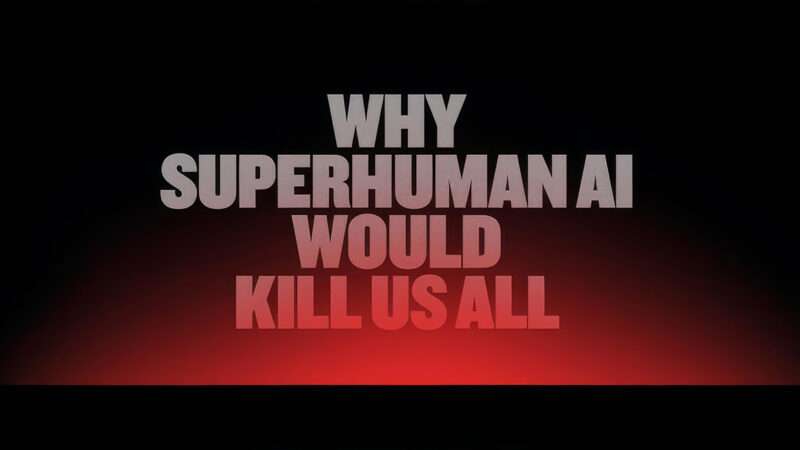
Kremlin spokesman Dmitry Peskov confirmed that the second round of the trilateral Russian-Ukrainian-US talks in Abu Dhabi will be held on 1 February.

There haven’t been many leaks from the first round so observers can only speculate about the subject and significance of this new format.

Nevertheless, it’s still possible to intuit some insight into this based on what’s known and has been reported, thus enabling folks to obtain a better understanding of this latest development. What follows are five important points:

1. Territory Is Reportedly The Last Remaining Issue

Putin’s top aide Yuri Ushakov said on the eve of the first round of talks that “bringing about a lasting settlement would be unlikely without addressing the territorial issue based on the formula as agreed in Anchorage.” This was followed by US Secretary of State Marco Rubio telling the Senate Foreign Relations Committee last week that “The one remaining item … is the territorial claim on Donetsk.” Prior reports about Russia demanding Ukraine’s withdrawal from Donbass might therefore be true.

2. A Post-Conflict NATO Deployment Is Being Discussed

Rubo also told them that discussions over “security guarantees basically involve the deployment of a handful of European troops, primarily French and the UK, and then a US backstop”, which would require Russia’s consent. The US is still debating the wisdom of “be[coming] committed potentially in a conflict, in a future conflict”, however, despite Steve Witkoff and Jared Kushner earlier signaling their country’s support for NATO troops in Ukraine. The second round will therefore likely involve this issue too.

3. A Quid Pro Quo Might Be In The Cards

The Financial Times reported that US security guarantees for Ukraine are dependent on its withdrawal from Donbass, while the New York Times reported that this Kiev-controlled part of that region could then become either a demilitarized zone or host neutral peacekeepers. A quid pro quo might therefore be in the cards whereby Ukraine withdraws from Donbass in exchange for US security guarantees and a NATO deployment, which Russia might agree to if neutral peacekeepers stand between them.

4. Trump Has Eschewed Publicly Pressuring Zelensky

For as promising as this potential quid pro quo might appear to be, at least in terms of achieving a ceasefire at minimum (provided that Russia reverses its formal opposition thereto), Zelensky remains defiant about withdrawing from Donbass. Trump has also eschewed publicly pressuring him to do so under pain of tangible consequences like irreversibly suspending arms sales to the EU that are destined for Ukraine, which therefore suggests that there are real limits to what the US will do in pursuit of a deal.

5. The US’ Diplomatic Role Is Now Indispensable

Despite these limits, the US’ diplomatic role is now indispensable as proven by Russia’s agreement to trilateralize its bilateral talks with Ukraine, which represented a significant policy shift. Russia therefore seems to believe that the US is sincere about negotiating a deal between it and Ukraine even though it won’t do everything in its power to that end. Now that the Russian-Ukrainian talks include the US, they’re unlikely to revert to the bilateral format until after Trump 2.0 if the conflict is still raging by then.

The five insights that can be intuited about the trilateral Russian-Ukrainian-US talks strongly suggest that Putin is considering far-reaching compromises on his maximum goals in the special operation as stipulated at its onset.

It’s premature to jump to conclusions about why that might be, but if such an outcome is officially enshrined in a legal agreement (whether a ceasefire, armistice, or peace treaty), then it’ll surely be analyzed to better understand why Putin would believe that it benefits Russia.

Tyler Durden
Sat, 01/31/2026 – 23:20

via ZeroHedge News https://ift.tt/lPyOBvh Tyler Durden

Venezuela Unveils Amnesty Bill For Mass Release Of Political Prisoners 

Venezuela Unveils Amnesty Bill For Mass Release Of Political Prisoners 

Venezuela’s US-backed and CIA-installed interim president Delcy Rodriguez has unveiled a sweeping amnesty bill that could pave the way for the release of hundreds of detainees, in a first major political move since former President Nicolas Maduro and his wife were ousted and whisked off to New York earlier this month.

“We have decided to push ahead with a general amnesty law that covers the whole period of political violence from 1999 to the present day,” Rodriguez announced Friday. She issued her address before a who’s who of government figures, including judges and federal magistrates, that the National Assembly would take up the bill “with urgency”. There are believed to currently be at least 700 inmates deemed political prisoners nationwide.

via Associated Press

“May this law serve to heal the wounds left by the political confrontation fueled by violence and extremism,” Rodriguez said in the televised address.

“May it serve to redirect justice in our country, and may it serve to redirect coexistence among Venezuelans,” she added.

Rodriguez has also declared the closure of El Helicoide, the notorious Caracas detention center run by the intelligence services, long accused by former inmates and independent rights groups of torture and systemic abuse.

The plan is to change it into a sports, social, and cultural complex serving nearby neighborhoods – though surely the country will still maintain its necessary and regular prison system.

Hopefully, Caracas and the US are also being somewhat selective on who they let walk free, given there could be hardened violent criminals and assassins in the mix.

A little over a week after the US incursion into Venezuela and change of government, the head of the country’s National Assembly, Jorge Rodríguez, had first announced the release of a “significant number” of political prisoners.

Under Washington pressure, one prominent name among those freed was the following:

Rocío San Miguel, a vocal critic of Maduro and a defense expert, was the first prisoner confirmed to be freed. Her family told the New York Times that she was taken to the Spanish embassy in Caracas.

Arrested in 2024, she was accused of being involved in a plot to kill the then-president and faced charges of treason, conspiracy and terrorism. Her arrest shocked human rights activists and, because her whereabouts were unknown, was labelled as potential “enforced disappearance” by the UN Human Rights Office.

Rights groups have so far tallied that just over 300 prisoners have been released under Delcy Rodriguez – a small number which again suggests they are likely being selective about it. This new bill means hundreds are set to follow.

Tyler Durden
Sat, 01/31/2026 – 22:45

via ZeroHedge News https://ift.tt/vUEgdYF Tyler Durden

Will He, Won’t He ‘TACO’ On Iran?

Will He, Won’t He ‘TACO’ On Iran?

Authored by Alastair Crooke via LewRockwell.com,

As so often these days, a decisive attack on Iran – comes down in the final analysis to Trump’s psychology, and his need to dominate the attention of everyone around him.

He understands that for however much his maximalist pronouncements look — and are — crazy, they nonetheless do usually default to a ‘strong man image’.

Trump’s career has been founded on the predicate that his base loves the ‘strong guy’ and any sign of weakness detracts from the illusion of strength. It is the thing that has generally worked for him.

European élites however, find this difficult to digest – perhaps understandably – and slide into paroxysms of outrage.

The key, as Trump-watcher Michael Wolff has suggested, is that after days with Trump saying that ‘this or that’ is going to be done, either “the easy way; or the hard way”, the tipping point usually comes when he has to manoeuvre to exit his maximalist positions, whilst always claiming it was all an ‘Art of the Deal’ success – the outcome being just what he had from the beginning intended.

On Iran, Trump’s messaging is again ultra-maximalist: Accept my conditions, or prepare for a comprehensive campaign to dismantle entirely your [Iran’s] political system. Trump’s envoys reinforce his stance that ‘every option remains on the table’ at every opportunity (though this rhetoric has become nothing more than an overworked cliché).

Trump’s threats towards Iran however, have triggered paroxysms of anxiety in the region, with leaders — even Netanyahu — fearing a long war with unpredictable and bloody consequences.

Trump’s conception of war is built around a fantasy that he can manipulate some lightening ‘in-boom-out’ stunt – one in which the U.S. loses no soldiers and its military infrastructure remains untouched. Reports from those regular ‘phone buddies’ of Trump say that he still says he wants a ‘guaranteed’ decisive outcome in Iran – a short, violently sharp, decisive war. He does not want casualties – especially American casualties. Neither does he want mass casualties or a long drawn-out conflict.

Colonel Larry Wilkerson explains that decisive is a military term of art. It means you’ve hit the enemy so hard they’re unable to respond. Or, in other words, it hints that Trump would like a ‘stunt’ like that of seizing Maduro.

Nothing is guaranteed in war, of course. And the insurrection in Iran fomented by externally-trained rioters drawing on the earlier Management of Savagery playbook failed.

The US had not deployed massively for this January episode because, in their (flawed) analysis, they had thought they might be able to simply ‘assist’ the rioters trying to overthrow the government – assistance that would not require much military muscle.

Well, that all fell apart. They had bought into the propaganda that Iran was a ‘house of cards’, destined to implode under the impact of the extreme violence of the rioters intended to sear into place the image of a crumbling, burning edifice with its leaders and occupants scrambling to escape.

It seems that in the wake of the ‘coup’ failure – yet still wanting to be pleasing to an exigent President – the Pentagon has come around to justifying and explaining the failed coup saying — in General Keane’s words –“We [have] had to bring in all this firepower”, (because they initially had thought they could manage with less).

So, now we have the narrative that “the U.S. has now deployed more forces to the Middle East than it did in the First Gulf War, the Second Gulf War, and the Iraq War combined” – which US military expert Will Schryver derides as “absolute ridiculous nonsense”.

Schryver notes“I have yet to see a military buildup in the region that would permit anything remotely approximating a ‘decisive’ strike against the Iranian military and its government”.

“A squadron of F-15s, a few tankers, and a couple dozen C-17 shipments of ordnance and/or AD systems has been sent to Jordan. That’s a modest defensive shield against drones and cruise missiles, at best. It’s certainly not a potent strike package … even with the carrier USS Gerald Ford in the mix … In total, the Navy could probably launch ~350 Tomahawks. But against a huge country like Iran, even if all 350 hit “something”, it’s not going to come close to disarming the Iranians”.

Schryver concludes:

“The US Navy is absolutely NOT going to venture into the Persian Gulf, or even the Gulf of Oman. And it would be extremely high risk to fly refuelling tankers in Iranian airspace. So that is going to limit carrier strike aircraft to their fully loaded combat radius of ~600 miles — not nearly far enough to hit targets deep in Iran. And even if they flew a half-dozen B-2s, and a dozen B-52s / B-1Bs … t just doesn’t add up to much in the context of a one-off strike package. It’s just a few dozen more stand-off cruise missiles thrown into the mix”.

A short, violent decisive ‘win’ (as reported by the WSJ) that Trumps wants — and which ‘plays well’ at home — simply is not an option. Iran Foreign Minister Araghchi, more realistically, has warned:

“An all-out confrontation will certainly be messy, ferocious, and drag on far, far longer than the fantasy timelines that Israel and its proxies are trying to peddle to the White House”.

Inside Iran, notes Ibrahim Al-Amine, “the leadership is operating on the assumption that the confrontation may reach its most extreme form. Preparations are unfolding along two tracks: strengthening defensive capabilities against a large-scale assault and tightening internal security to prevent domestic destabilization. This posture is now visible across the country”.

So, could it be that Trump will back out once again (i.e. TACO – ‘Trump Always Chickens Out’)? Schryver argues that Iran is not Venezuela. It is not a ‘tariffs and trade’ financial war. It is not some coup de théâtre in which Trump ‘chickening out’ can be explained away as another win, as part of his clever ‘Art of the Deal’ approach.

Actual full-on military conflict (not a Maduro stunt) by contrast, is ‘out there for all to see’, notes Will Shryver, and would be much harder to explain away should it go awry. Adding more fire-power will not eliminate the risks. Trump’s best option is to find himself an alternative ‘distraction’.

Israel, too, seems to be having second thoughts. Ronan Bergman, in Yedioth Ahoronotreports Israeli Intelligence reports saying that “a week and a half ago the protests reached their peak throughout Iran … [since when] the scale of the protests and demonstrations has decreased dramatically … the security establishment and the intelligence community do not believe that the regime is currently in danger, certainly not in immediate danger … The central question is whether Trump missed the momentum – and if there was any momentum at all …”.

“[Nevertheless] suppose all the armed forces that the US is now transferring to the Persian Gulf were fully deployed … and suppose Israel were to join in with its firepower … Then what? Would they overthrow the government …? What is the optimistic scenario for such an event … without soldiers on the ground, but only air strikes? … In practice”, Bergman concludes, “such a regime has never fallen through external intervention”.

Recall that Trump’s disapproval rating, according to NY Times poll this week, now stands at 47%.

Quite apart from the strategic military calculus of Iran’s response to any attack, Trump certainly doesn’t need a messy war. He likes his ‘initiatives’ to be short and clean ’standout’ wins.

Last weekend, as the Greenland bruhaha tumbled into threats and counter threats of tariffs, the US bond market moved to the verge of collapse (as it so did on Liberation Day, with the tariff announcements). The ‘way out’ from developing bond market crisis was Trump going ‘TACO’ on the Greenland-linked tariffs on European states who did not support his Greenland takeover.

Is Trump getting the message that an Iran ‘win’ is not ‘Slam Dunk’? – in which case he might decide on a TACO, accompanied by bone-crushing economic threats to Iran – (possibly).

Tyler Durden
Sat, 01/31/2026 – 22:10

via ZeroHedge News https://ift.tt/DQUZ60S Tyler Durden

Explosion In AI Data Center Buildouts Will Demand Next-Gen Counter-Drone Security

Explosion In AI Data Center Buildouts Will Demand Next-Gen Counter-Drone Security

Despite trillions of dollars slated for global data center buildouts, power grid upgrades, and other artificial intelligence infrastructure expansion through the end of the decade, there remains very limited investor discussion about the next-generation physical security architecture required to defend these increasingly critical and high-value infrastructure nodes, including data centers, power plants, and grid transmission chokepoints.

Protection of data centers from suicide drone swarm attacks is currently assessed as a lower risk at the moment, while the Trump administration, particularly following last year’s “Restoring American Airspace Sovereignty” executive order, is primarily focused on counter-UAS measures to secure stadiums and related venues against drone attacks ahead of the 2026 FIFA World Cup.

In recent weeks, U.S. military, federal agencies, and local authorities gathered for a two-day summit near U.S. Northern Command headquarters, bringing together federal agencies, 11 U.S. host committees, and FIFA’s security heads to prepare for matches across the United States, Mexico, and Canada.

“We’re never going to not worry about a dirty bomb,” Miami-Dade County Sheriff Rosanna Cordero-Stutz, who participated in the planning session, told Politico. “But we also recognize that there’s a lot of other things that we need to worry about as well.”

“You can’t just give counter-UAS mitigation equipment to law enforcement that hasn’t learned how to use it yet,” said White House FIFA World Cup Task Force Andrew Giuliani, who coordinated the federal government’s role in tournament preparations and addressed the drone threat at the summit.

Trump’s counter-UAS EO last June, combined with heightened drone-threat concerns ahead of FIFA World Cup events, underscores the urgent need for low-cost, rapidly deployable kinetic interceptor counter-UAS systems that could be repurposed to defend high-value infrastructure and critical assets beyond the soccer tournament.

Beyond the FIFA World Cup and back to the data center buildout story, Morgan Stanley’s Vishwanath Tirupattur forecasts that nearly $3 trillion of global data center spend will occur through 2028, comprising $1.6 trillion on hardware (chips/servers) and $1.3 trillion on building data center infrastructure, including real estate, build costs, and maintenance.

Wall Street analysts largely end their analysis at the financing and construction of next-generation data centers, with limited discussion regarding the modern security architecture required once these facilities are built and become instant high-value targets for non-state actors or foreign adversaries; traditional perimeter measures such as metal chainlink fencing and standard surveillance systems are rendered useless in the world of emerging AI threats, including coordinated autonomous drone or swarm-based attacks enabled by advances in AI and low-cost unmanned systems.

The deployment of low-cost kinetic counter-UAS intercept systems from the US could soon become a reality in Ukraine and be field-tested on the front lines, where tons of operational data would be gathered to help developers refine these systems ahead of future deployment to protect stadiums, data centers, and other high-value assets from drone threats across North America.

Cameron Rowe founded counter-UAS intercept startup Sentradel, which builds autonomous turrets to detect, track, and destroy FPV (first-person view) drones that can be easily modified with explosives. The low-cost interceptor uses a rifle that launches low-cost 5.56 bullets at incoming FPVs, versus current systems that use missiles and may cost tens of thousands per interception, where the economics of war aren’t there.

Meet Sentradel’s low-cost kinetic interceptor counter-UAS system:

Watch 

There’s growing interest from the Trump administration that these counter-UAS intercept systems will be guarding high-value assets, perhaps not stadiums immediately, but likely data centers in the future, especially as former Google CEO Eric Schmidt recently warned that attacks on data centers are only a matter of time. Readers can see the full story here.

Tyler Durden
Sat, 01/31/2026 – 21:35

via ZeroHedge News https://ift.tt/7uC3PjT Tyler Durden