BuzzFeed Corrects Trump-Cohen Conspiracy Article After Mueller Report Rips To Shreds

While MSM journalists spent much of Thursday suggesting that the Mueller report somehow vindicated two years of irresponsible reporting insisting that President Trump colluded with Russia, BuzzFeed quietly corrected an article that was so wrong the Special Counsel’s office issued a rare statement rebuking the report. 
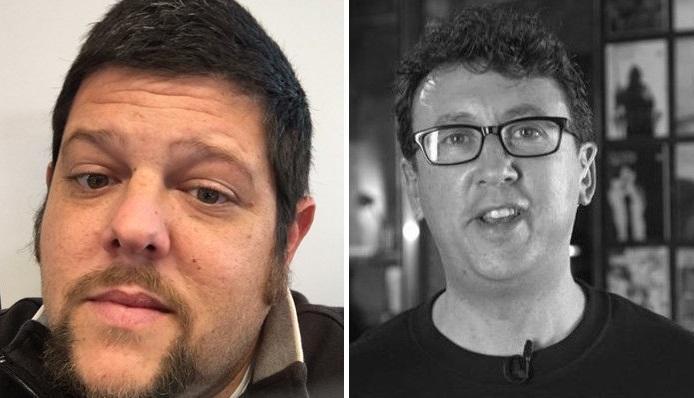
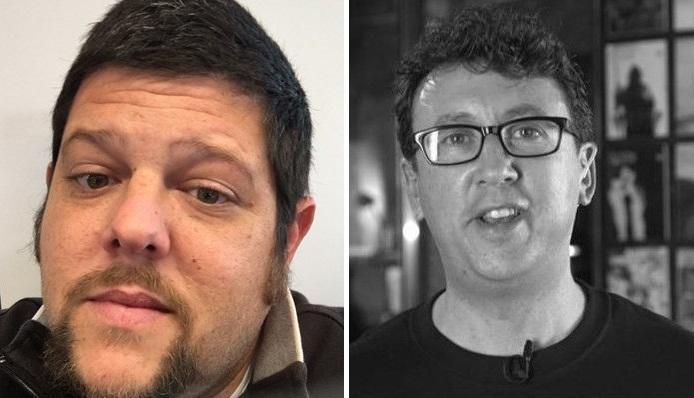
Anthony Cormier, Jason Leopold

On January 17, BuzzFeed‘s Jason Leopold and Anthony Cormier dropped an anonymously sourced “bombshell” boldly proclaiming “President Trump Directed His Attorney Michael Cohen To Lie To Congress About The Moscow Tower Project” (spearheaded by Cohen and longtime FBI informant and convicted fraudster Felix Sater — who gave the same BuzzFeed reporters a comprehensive interview last march).

The article claims that Trump instructed Cohen to tell Congress that discussions over the Moscow project ended in January, 2016 when they in fact ended months later.

In an unprecedented move, Mueller’s office immediately disputed the BuzzFeed report right after it published, writing: “BuzzFeed’s description of specific statements to the Special Counsel’s Office, and characterization of documents and testimony obtained by this office, regarding Michael Cohen’s Congressional testimony are not accurate

BuzzFeed stood by their reporting, saying it “stands by this story 100%.” Leopold and Cormier confidently appeared on CNN that weekend where Cormier insisted “Our reporting is going to be borne out to be accurate.

Except, it wasn’t

Following the Thursday release of the redacted Mueller report which found that Trump did not direct Cohen to lie, BuzzFeed quietly corrected their story

BuzzFeed explains

In a Thursday statement, BuzzFeed’s Editor-In-Chief, Ben Smith, explains how “two senior law enforcement sources” provided leaked documents “specifically, pages of notes that were taken during an interview of Cohen by the FBI.” 

Our story was based on detailed information from senior law enforcement sources. That reporting included documents — specifically, pages of notes that were taken during an interview of Cohen by the FBI. In those notes, one law enforcement source wrote that “DJT personally asked Cohen to say negotiations ended in January and White House counsel office knew Cohen would give false testimony to Congress. Sanctioned by DJT. Joint lawyer team reviewed letter Cohen sent to SSCI about his testimony about Trump Tower moscow, et al, knowing it contained lies.”

The law enforcement source also wrote: “Cohen told OSC” — the Office of Special Counsel — “he was asked to lie by DJT/DJT Jr., lawyers.”

At the time, the sources asked reporters to keep the information confidential, but with the publication of Mueller’s report they have permitted its release. –BuzzFeed

In short – Cohen told the FBI that Trump directed him to lie, which leaked to BuzzFeed, which presented it as fact, and was immediately rebuked by Mueller. 

BuzzFeed isn’t the first outlet to correct an article following the release of the Mueller report. McClatchy issued an editor’s note on anonymously sourced news reports published on April 13 and December 27 of last year claiming that Cohen visited Prague during 2016.

Mueller’s 448-page report debunks this, stating “Cohen had never traveled to Prague and was not concerned about those allegations, which he believed were provably false.”

In response, McClatchy wrote: “EDITOR’S NOTE: Robert Mueller’s report to the attorney general states that Mr. Cohen was not in Prague. It is silent on whether the investigation received evidence that Mr. Cohen’s phone pinged in or near Prague, as McClatchy reported.” 

via ZeroHedge News http://bit.ly/2VWcjPy Tyler Durden

It’s Problematic to Accuse Ancestry’s Interracial Ad of Whitewashing Slavery

To ignore the countless slaves who were victims of rape would be a travesty. To say that Ancestry is doing that very thing with their latest slavery-era ad is reaching.

Ancestry is a popular genealogy website based out of Utah. For years, people of all backgrounds have used the information to learn more about lost family histories. Recently, Ancestry thought to advertise its services with a commercial depicting an interracial couple escaping from the South.

A white man is seen trying to convince a black woman named Abigail, presumably a slave, to run away to the North with him, presumably so they can be married and live the rest of their lives together. Abigail begins to question the idea before he tells her that there’s a place “across the border” where they can be together. After asking her to leave with him, the screen cuts to pictures of the couple and a marriage certificate.

The website was quickly accused of whitewashing history and romanticizing sexual exploitation. The outrage over the commercial was so severe that the ad was removed altogether.

“Ancestry is committed to telling important stories from history. This ad was intended to represent one of those stories. We very much appreciate the feedback we have received and apologize for any offense that the ad may have caused. We are in the process of pulling the ad,” the company tweeted.

Let me start by saying that I share the same sentiments about cutesy depictions of slavery. Far too often, the uncomfortable parts are glossed over in favor of a good Hollywood story. Just watch the slave scenes in The Patriot or Brad Pitt, whose studio produced 12 Years a Slave, grace the screen.

However, the mere existence of past atrocities and bad storytelling does not mean that the Ancestry ad deserved the outrage that it received.

For one thing, there’s no possible way a viewer would assume that the commercial is showing exploitative sexual abuse. At least one user questioned if Abigail belonged to the man trying to get her to run away with him. It’s a safe assumption that the characters are forbidden lovers and nothing further.

Others criticized the commercial for having the white love interest suggest that they run north, either to another state or to Canada, to be together. While it’s true that northern states enjoy a sort of ahistorical absolution for their imposition of segregation on free blacks, it’s also not completely far off to have this couple look for hope in the North. After all, we praise the bravery of Harriet Tubman and other conductors of the Underground Railroad, which was designed to help slaves in the South escape to the North to access better and freer lives.

Most importantly, there is no universe in which a single romance discounts the very real suffering of rape victims. Had the commercial insinuated that many historical rapes were actually just romances, then this point would be legitimate. But it’s also likely that consensual interracial relationships existed in this climate. These are no less worthy of a story. In fact, The New York Times did a profile on the descendant of this very kind of union in 2018.

Social media brigades like this one have led to some pretty big blunders.

Only two years ago, the world was doubled-over in laughter when a young girl waltzed right into her dad’s live interview. The dad giving the live interview was a white professor named Robert E. Kelly. Once the internet was given enough time to whip up some hot takes, social media users criticized Kelly as a father and employer after assuming that the Korean woman who frantically rushed into the room after the young girl was his terrified nanny. As it turns out, the “terrified nanny” was actually Kelly’s mortified wife and mother of the young girl. Critics were soon called out for relying on poor stereotypes to deny even the slightest possibility that this was a legitimate family unit.

When critics went after black British filmmaker Amma Asante’s Where Hands Touch, a fictional love story between a biracial German girl and a member of the Hitler Youth, Asante maintained that the accusations of Nazi romanticization were unfounded. Not only is their violence and bigoted rhetoric quite present in her film, but Asante has also made it known that she is on a professional mission to highlight untold black stories in her work, like the existence of biracial Germans during the Holocaust.

“When stories are hidden, and they haven’t been told, I think that when we hear about them, we have an expectation that they should sit more firmly with experiences that we know and we recognize,” she told IndieWire amid the controversy. “I interviewed people who have experiences, and those experiences weren’t necessarily comfortable ones, but it’s their truth, and it’s not our right to challenge that.”

from Latest – Reason.com http://bit.ly/2XxU6sh
via IFTTT

Short Circuit: A Roundup of Recent Federal Court Decisions

Please enjoy the latest edition of Short Circuit, a weekly feature from the Institute for Justice.

Last month, federal auditors revealed the DEA had secretly spied on Americans who bought money counters. With a reach so expansive it alarmed even the FBI, this sweeping surveillance program helped the DEA seize over $50 million in cash and real estate. Yet auditors found “the vast majority” of those under surveillance “were never shown to be connected to illicit drug-related activities.” Over at Forbes.com, IJ’s Nick Sibilla has more.

  • While presiding over the Department of Justice’s military prosecution of the alleged mastermind of the U.S.S. Cole bombing, this Air Force Colonel was simultaneously gunning for a job as an immigration judge with . . . the Department of Justice. An improper appearance of bias? D.C. Circuit: Indubitably. All 460 of his written orders in the case are vacated. Be more careful next time.
  • Eight voting citizens of Greensboro, N.C. successfully challenged a 2015 law that redrew their City Council district and got an injunction prohibiting the County Board from enforcing the law. Can they recover their attorney’s fees from the Board? District Court: The Board didn’t write the law, it declined to defend the law, and it stipulated to a bunch of facts to streamline the litigation; special circumstances justify denial of fees. Fourth Circuit (over a dissent): Fee awards are about compensating the attorneys, not punishing bad actors. Pay up.
  • Hattiesburg, Miss. doctor might be overprescribing opioids. So the medical board gets an administrative warrant and allegedly sends nine agents to his office to search through medical records. They allegedly detain him for hours, often at gunpoint. One delivers the charming line “[i]f you don’t sit down I will put you down.” Fifth Circuit: That’s unreasonable for an administrative search. And now that we’ve settled that—qualified immunity!
  • Abilene, Tex. prison guards seek to extract from his cell a prisoner who prefers to stay. Guards contend they used the minimum force necessary, which involved spraying a chemical into the cell and restraining the prisoner’s arms and legs. The prisoner contends it was much worse—after guards handcuffed him on the floor, they punched him, squeezed and twisted his genitals, and stuck a finger in his anus. Video fails to allay confusion. Fifth Circuit: Could be excessive force. Need a trial to figure that out.
  • El Paso, Tex. police respond to 911 call at dusk, discover unarmed man in the process of hanging himself from basketball hoop. Police demand he show his hands. When he fails to comply, they tase him, and he immediately goes limp. They remove him from the hoop and begin CPR, but he dies at the hospital. District court: No qualified immunity. Fifth Circuit: If the officer wanted us to address the question of whether he had qualified immunity, he should have briefed it. He didn’t (he addressed other issues in his brief instead), so the case can go on.
  • Hunt County, Tex. sheriff’s dept.: Welcome to our Facebook page; please say only nice things about us or we will ban you. Fifth Circuit: Well, that’s called viewpoint discrimination, and it’s generally frowned upon.
  • In June 2016, Omar Mateen pledged his allegiance to ISIS, entered the Pulse Night Club in Orlando, Fla. and opened fire, killing 49 people and injuring another 53. Can the victims and their family members bring suit under the Anti-Terrorism Act against Twitter, Facebook, and Google for providing the platforms through which Mateen became self-radicalized? Sixth Circuit: “We sympathize with Plaintiffs—they suffered through one of the worst terrorist attacks in American history. ‘But not everything is redressable in a court.'”
  • It’s nearly impossible for out-of-staters to get a concealed-carry permit in Illinois. Only residents of Arkansas, Mississippi, Texas, and Virginia can do it because those are the only states that do the kind of criminal and mental health reporting that Illinois is comfortable with. Is that constitutional? Seventh Circuit (2016, over a dissent): Yup. Gun rights are limited. Seventh Circuit (just now, in the same case, over the same dissent): Still true.
  • Immigrant from Iraq is detained for a year and a half while an immigration judge decides whether to send him back to the Middle East. The man sues to get out of custody. District judge: He’s locked up under a statute that operates only for the time reasonably necessary to get a decision. A year and a half is too long. Let him out. Eighth Circuit: Those words are not in the statute. But the district court should address the man’s constitutional claims. [Ed. note: If there’s time. Because—well—there’s a preliminary order to send him back to Iraq.]
  • A trio of California laws meant to protect immigrants from the feds go into effect, says the Ninth Circuit. No preliminary injunction to stop law that requires employers to notify employees before federal immigration inspections. No preliminary injunction (for the most part) for state-imposed inspection requirements on facilities that house certain federal detainees. And no preliminary injunction for law that limits state and local law enforcement from cooperating with the feds, even though it “may well frustrate the federal government’s immigration enforcement efforts.”
  • Jury rules for defendants. Judge 1 throws out verdict, grants judgment as a matter of law for the plaintiff. Defendants move to change the verdict back. Judge 1 says no. Defendants move to change the verdict back again. Judge 1 retires, and Judge 2 goes back to ruling for the defendants. Tenth Circuit: We’re going with Judge 1 on this. Plaintiff wins.
  • Opa-Locka, Fla. 911 caller reports man trying to get through window of a neighbor’s house. Officers respond, see man matching the caller’s description, point guns at him, handcuff him, pat him down, reach into his pocket, and find a single bullet. Eleventh Circuit (2018): The police were allowed to pat the man down to find a weapon, but they crossed the constitutional line when they reached into his pocket to get the bullet. Eleventh Circuit (en banc, by a 7–5 vote): No, no. His conviction for being a felon in possession of ammunition (and pistols discovered nearby) is affirmed. Judge Jordan, dissenting: The majority fails to adequately grapple with the man’s originalist arguments. (More on that from Josh Blackman.)

Friends, this week IJ’s Center for Judicial Engagement released Episode 5 of the Bound By Oath podcast, which dives tolerably deeply into the history and meaning of the Fourteenth Amendment. This episode: the Equal Protection Clause, featuring African-style hair braiders, Georgetown law prof and IJ alum Evan Bernick, and also space aliens in invisible and undetectable craft. Available on iTunes, Spotify, Stitcher, SoundCloud, Google Podcasts, Google Play, TuneIn, and other fine podcasting apps.

from Latest – Reason.com http://bit.ly/2PjNMSj
via IFTTT

Short Circuit: A Roundup of Recent Federal Court Decisions

Please enjoy the latest edition of Short Circuit, a weekly feature from the Institute for Justice.

Last month, federal auditors revealed the DEA had secretly spied on Americans who bought money counters. With a reach so expansive it alarmed even the FBI, this sweeping surveillance program helped the DEA seize over $50 million in cash and real estate. Yet auditors found “the vast majority” of those under surveillance “were never shown to be connected to illicit drug-related activities.” Over at Forbes.com, IJ’s Nick Sibilla has more.

  • While presiding over the Department of Justice’s military prosecution of the alleged mastermind of the U.S.S. Cole bombing, this Air Force Colonel was simultaneously gunning for a job as an immigration judge with . . . the Department of Justice. An improper appearance of bias? D.C. Circuit: Indubitably. All 460 of his written orders in the case are vacated. Be more careful next time.
  • Eight voting citizens of Greensboro, N.C. successfully challenged a 2015 law that redrew their City Council district and got an injunction prohibiting the County Board from enforcing the law. Can they recover their attorney’s fees from the Board? District Court: The Board didn’t write the law, it declined to defend the law, and it stipulated to a bunch of facts to streamline the litigation; special circumstances justify denial of fees. Fourth Circuit (over a dissent): Fee awards are about compensating the attorneys, not punishing bad actors. Pay up.
  • Hattiesburg, Miss. doctor might be overprescribing opioids. So the medical board gets an administrative warrant and allegedly sends nine agents to his office to search through medical records. They allegedly detain him for hours, often at gunpoint. One delivers the charming line “[i]f you don’t sit down I will put you down.” Fifth Circuit: That’s unreasonable for an administrative search. And now that we’ve settled that—qualified immunity!
  • Abilene, Tex. prison guards seek to extract from his cell a prisoner who prefers to stay. Guards contend they used the minimum force necessary, which involved spraying a chemical into the cell and restraining the prisoner’s arms and legs. The prisoner contends it was much worse—after guards handcuffed him on the floor, they punched him, squeezed and twisted his genitals, and stuck a finger in his anus. Video fails to allay confusion. Fifth Circuit: Could be excessive force. Need a trial to figure that out.
  • El Paso, Tex. police respond to 911 call at dusk, discover unarmed man in the process of hanging himself from basketball hoop. Police demand he show his hands. When he fails to comply, they tase him, and he immediately goes limp. They remove him from the hoop and begin CPR, but he dies at the hospital. District court: No qualified immunity. Fifth Circuit: If the officer wanted us to address the question of whether he had qualified immunity, he should have briefed it. He didn’t (he addressed other issues in his brief instead), so the case can go on.
  • Hunt County, Tex. sheriff’s dept.: Welcome to our Facebook page; please say only nice things about us or we will ban you. Fifth Circuit: Well, that’s called viewpoint discrimination, and it’s generally frowned upon.
  • In June 2016, Omar Mateen pledged his allegiance to ISIS, entered the Pulse Night Club in Orlando, Fla. and opened fire, killing 49 people and injuring another 53. Can the victims and their family members bring suit under the Anti-Terrorism Act against Twitter, Facebook, and Google for providing the platforms through which Mateen became self-radicalized? Sixth Circuit: “We sympathize with Plaintiffs—they suffered through one of the worst terrorist attacks in American history. ‘But not everything is redressable in a court.'”
  • It’s nearly impossible for out-of-staters to get a concealed-carry permit in Illinois. Only residents of Arkansas, Mississippi, Texas, and Virginia can do it because those are the only states that do the kind of criminal and mental health reporting that Illinois is comfortable with. Is that constitutional? Seventh Circuit (2016, over a dissent): Yup. Gun rights are limited. Seventh Circuit (just now, in the same case, over the same dissent): Still true.
  • Immigrant from Iraq is detained for a year and a half while an immigration judge decides whether to send him back to the Middle East. The man sues to get out of custody. District judge: He’s locked up under a statute that operates only for the time reasonably necessary to get a decision. A year and a half is too long. Let him out. Eighth Circuit: Those words are not in the statute. But the district court should address the man’s constitutional claims. [Ed. note: If there’s time. Because—well—there’s a preliminary order to send him back to Iraq.]
  • A trio of California laws meant to protect immigrants from the feds go into effect, says the Ninth Circuit. No preliminary injunction to stop law that requires employers to notify employees before federal immigration inspections. No preliminary injunction (for the most part) for state-imposed inspection requirements on facilities that house certain federal detainees. And no preliminary injunction for law that limits state and local law enforcement from cooperating with the feds, even though it “may well frustrate the federal government’s immigration enforcement efforts.”
  • Jury rules for defendants. Judge 1 throws out verdict, grants judgment as a matter of law for the plaintiff. Defendants move to change the verdict back. Judge 1 says no. Defendants move to change the verdict back again. Judge 1 retires, and Judge 2 goes back to ruling for the defendants. Tenth Circuit: We’re going with Judge 1 on this. Plaintiff wins.
  • Opa-Locka, Fla. 911 caller reports man trying to get through window of a neighbor’s house. Officers respond, see man matching the caller’s description, point guns at him, handcuff him, pat him down, reach into his pocket, and find a single bullet. Eleventh Circuit (2018): The police were allowed to pat the man down to find a weapon, but they crossed the constitutional line when they reached into his pocket to get the bullet. Eleventh Circuit (en banc, by a 7–5 vote): No, no. His conviction for being a felon in possession of ammunition (and pistols discovered nearby) is affirmed. Judge Jordan, dissenting: The majority fails to adequately grapple with the man’s originalist arguments. (More on that from Josh Blackman.)

Friends, this week IJ’s Center for Judicial Engagement released Episode 5 of the Bound By Oath podcast, which dives tolerably deeply into the history and meaning of the Fourteenth Amendment. This episode: the Equal Protection Clause, featuring African-style hair braiders, Georgetown law prof and IJ alum Evan Bernick, and also space aliens in invisible and undetectable craft. Available on iTunes, Spotify, Stitcher, SoundCloud, Google Podcasts, Google Play, TuneIn, and other fine podcasting apps.

from Latest – Reason.com http://bit.ly/2PjNMSj
via IFTTT

Solar Storm Alert: Earth To Be Bombarded By Solar Particles In A Few Days

Authored by Mac Slavo via SHTFplan.com,

There is an upcoming solar storm expected this weekend. Researchers have noticed a sunspot that will bombard the Earth with solar particles on Monday.

Sunspots are patches of darkness on the Sun which are caused by an underlying magnetism beneath the surface. A solar storm occurs when that magnetism bubbles up and is released in the form of solar flares, which spew cosmic particles into space. Earth is in the path of these particles, so we can expect an exceptional aural display at the poles soon!

Auroras are caused when solar particles hit the atmosphere. These include the northern lights, or aurora borealis and southern lights, or aurora australis.  Both are expected to put on incredible shows thanks to this solar storm. The light show will appear when the magnetosphere gets bombarded by solar winds and that layer of the atmosphere deflects the particles.

According to the Express, a cosmic forecasting website called Space Weather said:

“A minor hole in the sun’s atmosphere is turning toward Earth and spewing a stream of solar wind in our direction. The estimated time of arrival is April 22nd. Geomagnetic unrest and polar auroras are possible when the gaseous material arrives.”

Solar particles have been responsible for power grid failures and disruption in communications systems on Earth when they’ve been strong enough. A surge of particles can lead to high currents in the magnetosphere, which can cause a higher than normal level of electricity in power lines.  The results could be devastating, especially considering Earth’s magnetic field is weakening.  Eventually, as a solar storm could cause electrical transformers and power stations blowouts and a loss of power. Solar storms can also affect satellites in orbit, potentially leading to a lack of GPS navigation, mobile phone signals, and satellite TV.

Earth’s magnetic field is getting significantly weaker, the magnetic north pole is shifting at an accelerating pace, and scientists readily admit that a sudden pole shift could potentially cause “trillions of dollars” in damage.  Today, most of us take the protection provided by Earth’s magnetic field completely for granted.  It is essentially a colossal force field which surrounds our planet and makes life possible.  And even with such protection, a giant solar storm could still potentially hit our planet and completely fry our power grid.  But as our magnetic field continues to get weaker and weaker, even much smaller solar storms will have the potential to be cataclysmic.  And once the magnetic field gets weak enough, we will be facing much bigger problems.  As you will see below, if enough solar radiation starts reaching our planet none of us will survive. -Michael Snyder, The Economic Collapse Blog

The weakening magnetic field could have apocalyptic implications for all of us.  Increased cancer rates will occur and there will be increasingly dangerous outcomes of fairly minor solar storms such as the one expected on Monday.

via ZeroHedge News http://bit.ly/2GmWuer Tyler Durden

The Abortion Divide Shows a Fight Growing Ever More Bitter

Frontline: The Abortion Divide. PBS. Tuesday, April 23, 10 p.m.

In 1983, in its first season, Frontline aired The Abortion Clinic, documentarian Mark Obenhaus’ matter-of-fact chronicle of daily life (or, depending on your view, the daily taking of life) at a clinic in Darby, Pennsylvania.

Though the show created a stir by showing (albeit in a non-grisly fashion) two abortion procedures, mostly it was notable for demonstrating the flat disconnect between abortion supporters and opponents.

Thirty-six years later, Obenhaus is back in Darby (this time with co-producer Elizabeth Leiter) to take another look at the clinic and the pro-life demonstrators who cluster outside every day. His conclusion: When it comes to abortion, Darby is “even more bitterly divided than it was 36 years ago.”

The “bitter” part is not so apparent—The Abortion Divide is mostly free of the muzzle-velocity rhetoric that dominates this issue—but the division is plain. The two sides, essentially, don’t hear one another at all.

The pro-choice folks, in measured tones, suggest their opponents represent the eternal white male imperative to be the boss of everything and everybody. The pro-life people, on the other hand, think the places they’re picketing are post-modernist Treblinkas and Auschwitzes.

“It’s barbaric to chop a baby up, put it in a little canister, take it out and count the pieces,” says one of the pro-life chiefs. “What kind of world have we entered into, where we do this to our children?”

There is no compromise between these two positions, and perhaps there shouldn’t be. If you believe a fetus (or “pregnancy tissue,” as some of the clinic personnel call it) is just an undifferentiated appendage like a tonsil or an appendix, then why should anybody else have any say about what you do with or to it?

And if you think it’s a tiny person with a small heart but a full-sized soul—the Darby pro-lifers are virtually all devout Catholics—how could you ever countenance what happens to it inside an abortion clinic?

The Abortion Divide, scrupulously even-handed, makes no attempt to sort out the moral questions here, merely recounting their continued existence. And if the show were nothing more than a heat check on the debate—oh, man, they’re still all mad—there would be little point to it. But Obenhaus and Leiter persuaded some of the women, both at the abortion clinic and a nearby facility for unwed mothers run by the pro-lifers, to talk about their feelings as they work through the question of what to do. Their thoughts are startling, sometimes maddening and nearly always touching.

A homeless woman at the unwed-mother refuge is something of a poster child for unlearned lessons; a recovered-for-the-moment drug addict, she has five children in foster homes, two living with her sisters, and a burbling new one in a crib by her side. “Now we’re trying again,” she says. “He’s pretty special—ain’t nobody taking this one.” It’s hard not to want to shake her and shout, “Grow up!” And harder still, watching mother and baby beam at one another, to not believe, just a little bit, in Carl Sandburg’s axiom that “A baby is God’s opinion that the world should go on.”

Yet bad decisions do not respect socioeconomic boundary lines. Down the street at the abortion clinic, another woman, 30-ish and seemingly well-educated and well-heeled, has just learned she’s carrying twins. With a palpable air of embarrassment, she admits the pregnancy is the result of a single act of unprotected sex and an unexpectedly hard-ass universe: “Surely, one time, I’d get some kind of a grace period on that.”

She’s hoping for better luck with the babies themselves—”a sense of peace … with these two beings I’ve chosen not to bring into the world.” She imagines a chat with them before the abortion in which she tells them, “Thank you, and I’m honored to be given this gift of life. Unfortunately, I can’t do it right now.” The twins, alas, were not available to recount their their side of the conversation.

from Latest – Reason.com http://bit.ly/2Upv38I
via IFTTT

In Defense of Trump Obstructing Justice (When There’s No Underlying Crime)

I haven’t read the Mueller report and I don’t plan to any time soon. I don’t feel like I would gain much by sifting through what’s already been widely acknowledged to be 400-plus pages of Rorschach test. The main point of the “Russia probe” was to figure out whether there was any sort of hanky-panky going on between the former (future?) Soviets and the Trump campaign, and we now know that there was not.

But of course now the story shifts from dark worries about “collusion” to unrestrained outrage over the president’s ham-fisted attempts to “obstruct justice” by unduly influencing the investigation by lying in public and private, firing key players, leaning on witnesses, or otherwise gumming up the works. I trust my Reason colleagues (Scott Shackford, Peter Suderman, Jacob Sullum, and Eric Boehm), each of whom argues to varying degrees that if President Donald Trump isn’t technically guilty of obstruction, it’s not for lack of trying. It’s mostly because his subordinates either refused to follow his orders or screwed things up while trying to do his bidding.

But you know what? I don’t care that much that Trump was trying to obstruct justice in this instance. Certainly, if there is no underlying crime, you shouldn’t get in trouble for lying to the feds, even though it’s technically illegal. Section 1001 of Title 18 of the United States Code makes it a crime to

“knowingly and willfully … make[] any materially false, fictitious, or fraudulent statement or representation” in the course of “any matter within the jurisdiction of the executive, legislative, or judicial branch” of the federal government.

But should it be? We’ll come back to the White House in a moment, but the way this sort of usually plays out for the little people is that, as Jim Talent observed last year in National Review,

The FBI gathers information about a person, finds facts that the person might want to conceal — not because the facts prove a crime but because they are embarrassing for some other reason — then asks about those facts in an interview, on the expectation that the person will lie and thereby incriminate himself.

As Popehat blogger (and Reason contributor) Ken White has detailed extensively, FBI agents are trained to get you to lie, thereby being able to arrest you or squeeze you however they want. As White wrote for Reason a year ago,

In the old westerns, rather than take the trouble of hauling mustachioed miscreants to desultory trials, lawmen would often provoke them into drawing first, thus justifying shooting them down where they stood. A modern federal interview of a subject or target is like that. One purpose, arguably the primary purpose, is to provoke the foolish interviewee into lying, thus committing a new, fresh federal crime that is easily prosecuted, rendering the original investigation irrelevant. Title 18, United States Code, Section 1001, which makes it a felony to lie to the feds, is their shiny quick-draw sidearm. This result not an exception; it is the rule. It happens again and again.

Consider George Papadopoulos. The special counsel secured his guilty plea not for improper contact with the Russians but for lying about that contact to the FBI. Consider Michael Flynn. He too pled guilty not to unlawful contact with Russians but to lying to the FBI about that contact. Consider Scooter Libby, or Martha Stewart, or Dennis Hastert, or James Cartwright, all taken down by the feds not for their alleged original misconduct but for lying about it. Even when catching someone in a lie isn’t enough to force them to plead guilty, it can add charges to a case. Consider Paul Manafort and Richard Gates, charged not just with substantive crimes but with lying to the FBI about them.

There is arguably no person on the planet less sympathetic than Donald Trump. He is a reflexive liar, a blowhard, a bully, and the goddamned president of the United States. He should be a better person on all fronts and there’s no doubt that he should set a better example than he does. But when it comes to obstructing justice, at least when there was no underlying crime, he shouldn’t be in any trouble whatsoever.

Far more important, the rest of us shouldn’t be when we get set up to lie by the FBI or other law enforcement folks who have a tremendous amount of power. At The New York Times, David Brooks suggests that one of the great messages of the Mueller investigation is that it reveals

Trump doesn’t seem to have any notion of loyalty to an office. All power in his eye is personal power, and the government is there to serve his Sun God self. He’ll continue to trample the proper systems of government.

There’s much truth to that formulation, which has been echoed by many of the president’s critics. But there’s a bigger takeaway worth underscoring, one that is vastly more important than Donald Trump who, truth be told, is acting how most presidents have acted in the past and will act in the future.

The bigger takeaway is that the federal government exercises vast and nearly unchecked power over virtually every aspect of our lives. As civil libertarian and Three Felonies a Day author Harvey Silverglate has told Reason, there are literally hundreds of thousands of federal regulations under “each of the federal criminal statutes … [and] you’re just assumed to know [them] and you can be picked up and you can be charged and these are real criminal violations.” And if that doesn’t work, the feds can snag you simply by talking to you. Contempt for Donald Trump shouldn’t obscure that brutal reality, which will outlive the Mueller report and probably most of us, too.

from Latest – Reason.com http://bit.ly/2VTp1ih
via IFTTT

California’s Sanctuary Laws Survive Another Trump Challenge

California can keep all its sanctuary cities and limit local both law enforcement cooperation and private employer cooperation with immigration officials, ruled a panel of federal circuit judges.

The Department of Justice has been challenging three immigration-focused laws passed by California in 2017. One (SB 54) essentially turned the entire state into an immigration “sanctuary,” significantly restricting the ability of law enforcement officers within the state from assisting the Department of Homeland Security in tracking down or detaining illegal immigrants unless they have been convicted of certain crimes. The second (AB 450) prohibits private businesses from voluntarily allowing federal immigration officials to enter non-public areas of their companies, as well as preventing them from accessing their records unless the feds have warrants. The third (AB 103) imposes inspection requirements on federal immigration detention facilities within California.

The Department of Justice argued that all of these laws are pre-empted by federal government immigration law and inappropriately attempted to impose burdens on the feds. Not so for two of those laws, said three judges with the U.S. District Court for the Eastern District of California. It’s federalism!

The judges’ reasoning for rejecting the feds should be familiar to anybody who paid attention to the conflicts as states started legalizing marijuana for medical use. It’s true that the federal government has the authority to round up people in the country illegally or anybody who has committed crimes that allow for deportation. But the federal government lacks the authority to demand state-level assistance in enforcing federal immigration guidelines, much like the federal government cannot force state or local police to arrest people for violating federal drug laws.

“SB 54 may well frustrate the federal government’s immigration enforcement efforts,” the panel ruled. “However, whatever the wisdom of the underlying policy adopted by California, that frustration is permissible, because California has the right, pursuant to the anti-commandeering rule, to refrain from assisting with federal efforts.”

For AB 450, the Justice Department argued that the bill intruded on the relationship between the feds and employers and attempted to impose requirements on federal inspections that weren’t authorized by Congress. Here the judges said that, actually, the imposition is on the relationship between employers and employees. It controls what employers must and must not do, not what the feds can do. The feds can certainly ask an employer to let them inspect a facility without a warrant. But it’s the employer that will get punished if he or she cooperates.

That may sound like a weird dodge, but it does raise the question of what would happen if a business owner challenged the law. By what authority does the state of California tell private citizens when they can cooperate with immigration officials? That’s significantly different from telling government employees when they can work with the feds.

The judges did determine that AB 103 does, unlike AB 450, burden the federal government with demands that are out of the scope of California’s authority in part and that a lower court erred when it concluded this burden was not significant.

So in the end, the court rejected the Department of Justice’s attempts to stop the first two laws from being implemented and sent the third one back down to a lower court for a second look. It’s another loss for the Trump administration, whose legal efforts against sanctuary city practices have been largely unsuccessful.

Read the ruling here.

from Latest – Reason.com http://bit.ly/2PgLhjo
via IFTTT

The Abortion Divide Shows a Fight Growing Ever More Bitter

Frontline: The Abortion Divide. PBS. Tuesday, April 23, 10 p.m.

In 1983, in its first season, Frontline aired The Abortion Clinic, documentarian Mark Obenhaus’ matter-of-fact chronicle of daily life (or, depending on your view, the daily taking of life) at a clinic in Darby, Pennsylvania.

Though the show created a stir by showing (albeit in a non-grisly fashion) two abortion procedures, mostly it was notable for demonstrating the flat disconnect between abortion supporters and opponents.

Thirty-six years later, Obenhaus is back in Darby (this time with co-producer Elizabeth Leiter) to take another look at the clinic and the pro-life demonstrators who cluster outside every day. His conclusion: When it comes to abortion, Darby is “even more bitterly divided than it was 36 years ago.”

The “bitter” part is not so apparent—The Abortion Divide is mostly free of the muzzle-velocity rhetoric that dominates this issue—but the division is plain. The two sides, essentially, don’t hear one another at all.

The pro-choice folks, in measured tones, suggest their opponents represent the eternal white male imperative to be the boss of everything and everybody. The pro-life people, on the other hand, think the places they’re picketing are post-modernist Treblinkas and Auschwitzes.

“It’s barbaric to chop a baby up, put it in a little canister, take it out and count the pieces,” says one of the pro-life chiefs. “What kind of world have we entered into, where we do this to our children?”

There is no compromise between these two positions, and perhaps there shouldn’t be. If you believe a fetus (or “pregnancy tissue,” as some of the clinic personnel call it) is just an undifferentiated appendage like a tonsil or an appendix, then why should anybody else have any say about what you do with or to it?

And if you think it’s a tiny person with a small heart but a full-sized soul—the Darby pro-lifers are virtually all devout Catholics—how could you ever countenance what happens to it inside an abortion clinic?

The Abortion Divide, scrupulously even-handed, makes no attempt to sort out the moral questions here, merely recounting their continued existence. And if the show were nothing more than a heat check on the debate—oh, man, they’re still all mad—there would be little point to it. But Obenhaus and Leiter persuaded some of the women, both at the abortion clinic and a nearby facility for unwed mothers run by the pro-lifers, to talk about their feelings as they work through the question of what to do. Their thoughts are startling, sometimes maddening and nearly always touching.

A homeless woman at the unwed-mother refuge is something of a poster child for unlearned lessons; a recovered-for-the-moment drug addict, she has five children in foster homes, two living with her sisters, and a burbling new one in a crib by her side. “Now we’re trying again,” she says. “He’s pretty special—ain’t nobody taking this one.” It’s hard not to want to shake her and shout, “Grow up!” And harder still, watching mother and baby beam at one another, to not believe, just a little bit, in Carl Sandburg’s axiom that “A baby is God’s opinion that the world should go on.”

Yet bad decisions do not respect socioeconomic boundary lines. Down the street at the abortion clinic, another woman, 30-ish and seemingly well-educated and well-heeled, has just learned she’s carrying twins. With a palpable air of embarrassment, she admits the pregnancy is the result of a single act of unprotected sex and an unexpectedly hard-ass universe: “Surely, one time, I’d get some kind of a grace period on that.”

She’s hoping for better luck with the babies themselves—”a sense of peace … with these two beings I’ve chosen not to bring into the world.” She imagines a chat with them before the abortion in which she tells them, “Thank you, and I’m honored to be given this gift of life. Unfortunately, I can’t do it right now.” The twins, alas, were not available to recount their their side of the conversation.

from Latest – Reason.com http://bit.ly/2Upv38I
via IFTTT

Robert Kraft Sex Tape Leaks

Despite desperate pleas from the madam’s legal team, a sex tape showing billionaire Patriots owner Robert Kraft getting a massage with a happy ending has leaked.

kraft

According to the Daily Mail, attorneys for the manager of the Orchids of Asia Day Spa, Lei Wang, appeared at an emergency court hearing on Wednesday to ask that the judge bar the Jupiter police from leaking the hidden camera footage showing two of its employees performing oral and manual sex acts on Kraft.

However, the tape was leaked anyway, and the attorneys are now requesting that the police be held in contempt of court.


via ZeroHedge News http://bit.ly/2PirHTW Tyler Durden