Annotating President Trump’s Press Conference About The Tariffs Ruling

Much has been written about President Trump’s press conference in the wake of Learning Resources. The Wall Street Journal Editorial Board charged that the “rant in response to his tariff defeat at the Court was arguably the worst moment of his Presidency.” Ed Whelan said the speech was “stupid and vile.”

I quite deliberately waited a bit to watch Trump’s remarks. I wanted to actually read the opinion first, and let the tumult of Friday settle down. It helps that I am not on social media, and completely turn off the internet on shabbat.

Now, with some distance from Friday, I watched the press conference. This might be one of the most important presidential remarks about the Supreme Court since FDR’s Court-Packing address. Of course, it is done in Trump’s inimitable style with dripping vitriol, but as Trump often does, he says the things we all think but are simply unsayable in polite company. People need to focus less on how Trump says things and more on what he actually says.

Rather than trying to summarize it, I will offer a passage-by-passage annotation.

Wow. That’s a lot of people. That’s a new record, we set a record every time.

Well thank you very much for being here.

The Supreme Court’s ruling on tariffs is deeply disappointing, and I’m ashamed of certain members of the court, absolutely ashamed, for not having the courage to do what’s right for our country.

“Courage” is a theme I have developed at some length. My article, Judicial Courage, traces how Justices Thomas and Alito have charged that the three Trump appointees lacked courage. It is telling that Trump sees this case in a similar fashion. Indeed, as I’ll explain in a future post, there are shades of this charge in Justice Kavanaugh’s dissent. Kavanaugh writes this is not an “ordinary statutory interpretation case.” Kavanaugh insists that “Like cases should be treated alike,” but that is not the case here. Kavanaugh asks if “this a ticket good for one day and one train only.” And so on.

I’d like to thank and congratulate Justices Thomas, Alito and Kavanaugh for their strength and wisdom and love of our country, which is right now very proud of those justices.

When you read the dissenting opinions, there’s no way that anyone can argue against them. There’s no way.

I recently wrote that Justice Kavanaugh would be Trump’s most likely selection for Chief Justice in the (unlikely) event that Roberts steps down. The Justice Kavanaugh of today is not the Justice Kavanaugh we saw in 2018-2020.

Foreign countries that have been ripping us off for years are ecstatic. They’re so happy, and they’re dancing in the streets, but they won’t be dancing for long, that I can assure you.

The Democrats on the court are thrilled, but they will automatically vote no. They’re an automatic no, just like in Congress, they’re an automatic no. They’re against anything that makes America, strong, healthy and great again. They also are a, frankly, disgrace to our nation, those justices.

Trump isn’t wrong. I struggle to think of any significant case where the Court’s progressive justices cast a dispositive vote against the progressive side. Sure, in some cases, Justice Kagan has a free vote where there are already five or six votes in the bank. But when has Kagan or Sotomayor or Jackson cast a decisive fifth vote for a serious case? I would not include NFIB v. Sebelius on that list. Justices Breyer and Kagan only joined the Chief’s ruling that states can opt into the Medicaid expansion as part of a compromise to avoid invalidating the entire program.  I think Justice Gorsuch’s dissent ably shows how Justice Kagan has flip-flopped on the issue depending on whose ox is being gored. Cass Sunstein praised both Justices Barrett and Kagan for their lawyerly virtues. He wrote “They are not ideological; you read their opinions and you do not know anything about their politics.” Well, I think this is likely true about Barrett.

Trump isn’t wrong here either.

They’re an automatic no, no matter how good a case you have, it’s a no. You can’t knock their loyalty, one thing you can do with some of our people.

Trump contrasts the progressive Justices from the conservative Justices. The progressive justices never break rank when it counts. But “some of our people,” that is, the conservative Justices, do.

Others think they’re being politically correct, which has happened before far too often with certain members of this court, and it’s happened so often with this court

He think Trump is using “politically correct” as a way of saying the Justices are being swayed by elite interests. It brings to mind Trump’s tweet about Chief Justice Roberts after the Obamacare case: “Wow, the Supreme Court passed @ObamaCare. I guess @JusticeRoberts wanted to be a part of Georgetown society more than anyone knew.”

This is the passage that has gotten the most attention.

What a shame — having to do with voting in particular, when in fact they’re just being fools and lapdogs for the RINOs and the radical left Democrats and, not that this should have anything at all to do with it, they’re very unpatriotic and disloyal to our Constitution. It’s my opinion that the court has been swayed by foreign interests and a political movement that is far smaller than people would ever think. It’s a small movement. I won by millions of votes, we won in a landslide. With all the cheating that went on, there was a lot of it, we still won in a landslide. Too big to rig.

But these people are obnoxious, ignorant and loud. They’re very loud. And I think certain justices are afraid of that. They don’t want to do the right thing. They’re afraid of it.

Trump is simply wrong here. He has a difficult time understanding that Justices can rule in a certain way based on certain legal positions. In his view, the Justices can only reach this result by being under the sway of shadowy interests on the right and the left. I wish he hadn’t used the “fools and lapdogs” line, as he made so many other important points. But trying to get Trump to control his language is a fool’s errand. Solicitor General Sauer, who was standing right next to the President, likely had to hold back any emotion. And as I’ve noted before, Sauer is the most likely pick should a Justice retire. It will certainly not be someone who favors restoring power to Congress. Did any of the President’s lawyers tell him he would be weakened by appointing Justices who wanted to overrule Chevron, enforce the non-delegation doctrine, and weaken agencies? Which branch of government did those lawyers work for?

This might be one of the most important lines in the entire press conference.

I wanted to be very well-behaved because I wanted to do anything, I didn’t want to do anything, that would affect the decision of the court, because I understand the court.

I understand how they are very easily swayed. I want to be a good boy.

Trump, likely on advice of counsel, was told to not say anything bad about the Court while the case was pending lest he sway the decision. The implication here is clear: if Trump criticizes the Court, he is more likely to lose. Trump even acknowledged this point in his roast at the Alfalfa Club.

“I had the nastiest, most vicious joke about John Roberts,” he said of the Supreme Court chief justice. “If you think I’m going to tell that joke you can forget it.”

“I’m going to kiss his ass for a long time,” he added, an apparent reference to the role Roberts could play in deciding current and future cases involving Trump and his administration.

Do you see the problem? Judges are supposed to decide cases without fear or favor. Whatever a litigant says about the Judge should have no bearing, whatsoever, on the outcome of the case. But of course we know this isn’t true.  The clear import of some of the commentary about Trump’s press conference is that he made it less likely that Justices Barrett will rule in his favor in future cases. Do you see the problem? Judges are human. Indeed, judges are even more sensitive than mere mortals. So much of the commentary you read about the Supreme Court involves kissing ass, in an attempt to curry favor. I’ve never followed that approach. I speak my mind, especially for the Justices on the right. Does that make it less likely my petition gets granted or my article get cited? You bet it does. But speaking the truth is always more important than kissing ass. And I’m glad Trump is not trying to be a good boy anymore.

All of those tariffs remain. They all remain. I don’t know if you know that or not. They all remain. We’re still getting them and we will after the decision. I guess there’s nobody left to appeal to.

But again, those three people, such respect. I’ve had a lot of respect for them anyway, but such great respect.

Well, there is always the “Appeal to Heaven.” Maybe Martha Ann Alito could donate a flag to be raised over the new East Wing?

Next, Trump makes an important legal point, which (at least to me) suggests he understands the legal analysis.

To show you how ridiculous the opinion is, however, the court said that I’m not allowed to charge even one dollar. I can’t charge one dollar, can’t charge a dollar. I would have used one penny, but we don’t make the pennies anymore. We save money.

Can’t charge one dollar to any country under IEEPA, not one dollar, I assume to protect other countries. This must have been done to protect those other countries. Certainly not the United States of America, which they should be interested in protecting. That’s what they’re supposed to be protecting.

But I am allowed to cut off any and all trade or business with that same country. In other words, I can destroy the trade, I can destroy the country. I’m even allowed to impose a foreign country-destroying embargo. I can embargo, I can do anything I want, but I can’t charge one dollar because that’s not what it says, and that’s not the way it even reads. I can do anything I want to do to them, but I can’t charge any money. So I’m allowed to destroy the country, but I can’t charge them a little fee. I could give them a little two cent fee, but I cannot charge under any circumstances. I cannot charge them anything.

Think of that. How ridiculous is that? I’m allowed to embargo them, I’m allowed to tell them you can’t do business in the United States anymore, “we want you out of here,” but I want to charge them $10. I can’t do that.

Justice Kavanaugh made this precise point in his dissent, which Trump internalized:

Context and common sense buttress that interpretation of IEEPA. The plaintiffs and the Court acknowledge that IEEPA authorizes the President to impose quotas or embargoes on foreign imports—meaning that a President could completely block some or all imports. But they say that IEEPA does not authorize the President to employ the lesser power of tariffs, which simply condition imports on a payment. As they interpret the statute, the President could, for example, block all imports from China but cannot order even a $1 tariff on goods imported from China.

That approach does not make much sense.

The greater power to embargo should include the lesser power to tariff.

Next, Trump turned to licenses.

It’s incorrect, their decision is incorrect. But it doesn’t matter because we have very powerful alternatives that have been approved by this decision. You know, they’ve been approved by the decision for those that thought they had us.

And they’re saying that I have the absolute right to license, but not the right to charge a license fee. So think of that. I have the right to license. It’s a very powerful word in many ways, licenses more powerful than tariffs. In fact, I was thinking about using it, but they came up with the idea that I can license just like the people that were opposing me told them to do, but not the right to charge a license fee.

Think of that. Who ever heard of such a thing? What licence has ever been issued without the right to charge a fee? You get a licence, you charge a fee. It’s automatic, but not with this court.

But now the court has given me the unquestioned right to ban all sorts of things from coming into our country, to destroy foreign countries, but a much more powerful right than many people ever thought we even had. But not the right to charge a fee. How crazy is that?

During the oral arguments, there was extensive discussion of licensees. Justices Gorsuch and Barrett both pressed Neal Katyal on licenses. But licenses were barely mentioned in the majority or dissent. Something happened here. And it is strange that Trump fixated on this part of the case, even though it was not in the opinion. He must have remembered it from some earlier juncture. Again, underestimate Trump at your own peril.

Indeed, Trump suggests he actually read the opinion. If so, he did something that most pundits did not actually do:

Our country is the hottest country anywhere in the world right now, and it was a dead country one-and-a-half years ago under an incompetent president. But now I’m going to go in a different direction, probably the direction that I should have gone the first time.

But I read the language. I’m very good at reading language, and it read our way 100 per cent. But now I’ll go the way I could have gone originally, which is even stronger than our original choice.

Again, Kavanaugh’s stock has gone way up in the past year or so.

As Justice Kavanaugh — whose stock has gone so up, you have to see, I’m so proud of him — wrote in his dissent, “Although I firmly disagree with the court’s holding today, the decision might not substantially constrain a president’s ability to order tariffs going forward.” So think of that, “the decision might not substantially constrain.” And it doesn’t. He’s right. In fact, I can charge much more than I was charging. So I’m going to just start.

“Although I firmly disagree with the court’s holding today, the decision might not substantially constrain a president’s ability to order tariffs going forward. That’s because numerous other federal statutes” — which is so true” — authorize the president to impose tariffs and might justify most, if not all, of the tariffs issued in this case.” Even more tariffs, actually.

“Those statutes include” — think of that — “those statutes include, for example, the Trade Expansion Act of 1962, Section 232” — all of these things I know so well — “the Trade Act of 1974, Sections 122, 201, 301, and the Tariff Act of 1930, Section 338.”

All clear, but it’s a little bit longer process. I thought I’d make things simple, but they didn’t let us do that.

I would like to thank Justice Kavanaugh for his, frankly, his genius and his great ability. Very proud of that appointment.

Later in the Q&A, he would suggest he is not proud of his appointment of Justice Gorsuch and Barrett. Tariffs are probably Trump’s most important issue. What is #2? Illegal immigration and birthright citizenship. Wait to see if Trump behaves like a “good boy” after Barbara.

Trump seems convinced that the Court blessed his ability to impose fees under other authorities. And, Trump thinks that Chief Justice Roberts didn’t even realize what he was doing. I doubt it, but that is an issue for another day.

In actuality, while I am sure that they did not mean to do so, the Supreme Court’s decision today made a president’s ability to both regulate trade and impose tariffs more powerful and more crystal clear, rather than less. I don’t think they meant that. I’m sure they didn’t. It’s terrible.

The next point is key. Democrats worked so hard to oppose Trump’s three appointees. And when that failed, they favored packing the Court. But why pack the Court when Republican appointees vote the way they do?

And to think that the Democrats who oppose this, only because they want to go the opposite way, they’d like to pack the court. They want to put on 21 people. They want to pack the court, pack the Supreme Court. Maybe they should do it. Maybe they would be better off if they did it. They want to pack the court. They want to do anything to hurt our country.

Trump continues to say the Court blessed his use of different statutes to impose fees. And he returns to the license point, which really seems to be in stuck his craw.

There will no longer be any doubt, and the income coming in and the protection of our companies and country will actually increase because of this decision.

I don’t think the court meant that, but it’s the way it is.

Based on long-standing law and hundreds of victories — and even, as I was pointed out before, even thousands of victories over the years — to the contrary, the Supreme Court did not overrule tariffs. They merely overruled a particularly use of IEEPA tariffs.

And essentially it’s, they used to get a fee. I can do anything I want with IEEPA, anything. I just can’t charge anybody for it. I could licence, I just can’t charge them. It’s ridiculous. But it’s OK because we have other ways, numerous other ways.

The ability to block embargo, restrict, licence or impose any other condition on a foreign country’s ability to conduct trade with the United States under IEEPA has been fully confirmed by this decision.

So now there’s no doubt, because, you know, there were a lot of questions about tariffs, because no president was smart enough to use them to protect our country from those countries and businesses that were ripping us off. You took a look at the deficits that we had with some of these countries, it was disgraceful what they got away with for many, many decades.

But now we know, because this decision affirms all those things that some people weren’t sure about.

In order to protect — and it says so — in order to protect our country, a president can actually charge more tariffs than I was charging in the past period of a year under the various tariff authorities. So we can use other of the statutes, other of the tariff authorities, which have also been confirmed and are fully allowed.

Therefore, effective immediately, all national security tariffs under Section 232 and existing Section 301 tariffs — they’re existing, they’re there — remain in place, fully in place, and in full force and effect.

Today I will sign an order to impose a 10 per cent global tariff under Section 122 over and above our normal tariffs already being charged. And we’re also initiating several Section 301 and other investigations to protect our country from unfair trading practices of other countries and companies.

Thank you for your attention to this matter, and I say quite simply, which I’ve said for a long time, make America great again. And interestingly, we’ve already made it great, so I don’t have to use that. But I don’t think we’ll ever give up on MAGA. MAGA is always going to be with us.

If you have a few questions, you can let us know. But just to end so, we’re going forward, we will be able to take in more money, and there will no longer be doubt — because there was always doubt.

Trump returns by calling the people who brought the lawsuit a “sleazebag.”

I know the people that brought the lawsuit and, you know, they’re sleazebags, major sleazebags. But I know them, and they’re foreign country-centric. They were sending things into our country, and the people representing them knew full well, but they were sending things into our country, and they were beneficial to other countries, but very, very bad for us. And I stopped it. And we’ll just keep it going.

You might recall that in May 2025, after the Court of International Trade halted the tariffs, Trump called Leonard Leo a “sleazebag.”

So we have more of a, we have a totally firm decision now, and I don’t think the court meant it because the court doesn’t show great spirit toward our country, in my opinion. A lot of bad decisions, but there are usually ways around it.

This is something we could have done, as Justice Kavanaugh said, we could have done this originally, but we’re doing it now, and the numbers could be far greater than the hundreds of billions we’ve already taken in.

Trump took nearly 30 minutes of questions. Here are some of the more important exchanges:

Thank you so much, Mr. President. Justice Thomas and Alito, as you know, are the most conservative constitutional justices. Do you think that you’ll get to a point two more justices later this term with similar ideologies? And what type of vetting process will they go through to ensure they uphold the constitution?

I don’t know, but they’re great justices. That’s all I can say and I hope they’re going to be around a long time. I hope they’re going to stay healthy. They’re great people, they’re great — and Justice Alito too, to add to the group. These are great — these are great men with a great love of our country and a great understanding of the law.

I recently observed that Trump has no incentive for Alito or Thomas to step down. Trump’s time horizon ends on January 20, 2029. Why would he push out the two Justices who are most likely to rule in his favor?

Thank you, Mr. President — You said ahead of the decision that if the Supreme Court — Yeah, please. Go ahead. Thank you, Mr. President. What will you say to foreign nations who seek to renegotiate their deals? And what did you mean a moment ago when you said that the Supreme Court has been swayed by foreign interests?

Well, I think that foreign interests are represented by people that I believe have undue influence. They have a lot of influence over the Supreme Court, whether it’s through fear or respect or friendships, I don’t know. But I know some of the people that were involved on the other side and I don’t like them. I think they’re real slimeballs. And, uh, got to do what’s right for the country. You got to do what’s right for the Constitution. That’s why I respect so much, Justice Thomas and Alito, Kavanaugh, because they not only dissented, their dissent is so strong. When you read their dissent, you know, a lot of times you’ll read a dissent and it’s like, well, you don’t know. It could go either way. There’s no other way. The good news is it’s like Justice Kavanaugh said, very strongly said, you have other ways you can go. You don’t have to go that way. You can go other way. There are numerous other ways you can go. And frankly, this should have been done by presidents many years ago.

I really wonder how often Trump reads dissents, and thinks the case can go either way.

Do you regret appointing Amy Coney Barrett —

— I’m not — I’m not talking to you — — I’m talking — I don’t talk — I don’t talk to CNN. It’s fake news. Go ahead.

He did not answer this question. A reporter came back to it later. Trump deflected again:

Mr. President, Justices Gorsuch and Barrett, are you surprised in particular by their decision today?

I am.
And do you regret nominating them?

I don’t want to say whether or not I regret. I think their decision was terrible. Yeah. I think it’s an embarrassment to their families, you want to know the truth, the two of them. Yeah.

It is unfortunate Trump brought in their families. The Justices have faced death threats, and Justice Barrett’s family has also received threats. Leave the family out of it.

Trump did say something we were all thinking. How could the Court take as much time as it did and say absolutely nothing about the remedy. It’s almost like Chief Justice Roberts does not care at all about the practical consequences of his ruling. He just wants to get it off his plate.

Well, thank you for the question. And I will say this, we really are at a very important point. I’ve been waiting for this decision so long. They could have made this decision a long time ago, not complex. They’re wrong on it. It’s a ridiculous decision. But they should have released this a long time ago. We waited months and that gave uncertainty. Now we have certainty and I think you’re going to see the country get much stronger because of it. Look, we were ripped off by almost every country in the world. If you look at the surpluses, almost every country in the world that did business with us, our people were stupid.

Trump returned to the remedial question again.

Thank you, President Trump. So since Liberation Day, there’s about $175 billion in tariff revenue that is now in limbo. Do you have to refund $175 billion?

Think of it. Think of it, Peter. Very fair question. They take months and months to write an opinion and they don’t even discuss that point. We’ve taken in hundreds of billions of dollars, not millions, hundreds of billions of dollars. And so I said, well, what happens to all the money that we took in? It wasn’t discussed. Wouldn’t you think they would have put one sentence in there saying that keep the money or don’t keep the money, right? I guess it has to get litigated for the next two years. So they write this terrible, defective decision, totally defective. It’s almost like not written by smart people. And what they do? They don’t even talk about that. Your question is very basic. That was the first question I asked, also, to make you feel good. I said what about all the money that we’ve taken in? Sir, they don’t discuss that. How crazy is that?

Mr. President — — Mr. President, what you’re saying is, are you saying that you don’t plan to honor refunds for companies that file for them?

I just told you the answer, right? I told you the answer. It’s not discussed. We’ll end up being in court for the next five years.

One sentence would have been helpful. But we didn’t even get that.

If Justice Barrett does not come to the State of the Union, will it be in protest of the “lapdog” comment? And if so, wouldn’t that mean Trump’s broader point was right–that the Justices are swayed by political pressure.

Mr. President, on the tariff check — Supreme court justices who ruled against this — the policy, striking it down, are they still invited to your State of the Union next week? And will you speak with them?

They are invited, barely, barely. Three are happily invited, no, no, they’re barely — they’re barely invited. Honestly, I couldn’t care less if they come. OK?

At least Trump’s grammar is correct.

Thank you for reading this far. I suspect there are many typos here. Sorry. You’ll have to deal with them.

Much more to come soon.

The post Annotating President Trump's Press Conference About The Tariffs Ruling appeared first on Reason.com.

from Latest – Reason.com https://ift.tt/oWr5D60
via IFTTT

Annotating President Trump’s Press Conference About The Tariffs Ruling

Much has been written about President Trump’s press conference in the wake of Learning Resources. The Wall Street Journal Editorial Board charged that the “rant in response to his tariff defeat at the Court was arguably the worst moment of his Presidency.” Ed Whelan said the speech was “stupid and vile.”

I quite deliberately waited a bit to watch Trump’s remarks. I wanted to actually read the opinion first, and let the tumult of Friday settle down. It helps that I am not on social media, and completely turn off the internet on shabbat.

Now, with some distance from Friday, I watched the press conference. This might be one of the most important presidential remarks about the Supreme Court since FDR’s Court-Packing address. Of course, it is done in Trump’s inimitable style with dripping vitriol, but as Trump often does, he says the things we all think but are simply unsayable in polite company. People need to focus less on how Trump says things and more on what he actually says.

Rather than trying to summarize it, I will offer a passage-by-passage annotation.

Wow. That’s a lot of people. That’s a new record, we set a record every time.

Well thank you very much for being here.

The Supreme Court’s ruling on tariffs is deeply disappointing, and I’m ashamed of certain members of the court, absolutely ashamed, for not having the courage to do what’s right for our country.

“Courage” is a theme I have developed at some length. My article, Judicial Courage, traces how Justices Thomas and Alito have charged that the three Trump appointees lacked courage. It is telling that Trump sees this case in a similar fashion. Indeed, as I’ll explain in a future post, there are shades of this charge in Justice Kavanaugh’s dissent. Kavanaugh writes this is not an “ordinary statutory interpretation case.” Kavanaugh insists that “Like cases should be treated alike,” but that is not the case here. Kavanaugh asks if “this a ticket good for one day and one train only.” And so on.

I’d like to thank and congratulate Justices Thomas, Alito and Kavanaugh for their strength and wisdom and love of our country, which is right now very proud of those justices.

When you read the dissenting opinions, there’s no way that anyone can argue against them. There’s no way.

I recently wrote that Justice Kavanaugh would be Trump’s most likely selection for Chief Justice in the (unlikely) event that Roberts steps down. The Justice Kavanaugh of today is not the Justice Kavanaugh we saw in 2018-2020.

Foreign countries that have been ripping us off for years are ecstatic. They’re so happy, and they’re dancing in the streets, but they won’t be dancing for long, that I can assure you.

The Democrats on the court are thrilled, but they will automatically vote no. They’re an automatic no, just like in Congress, they’re an automatic no. They’re against anything that makes America, strong, healthy and great again. They also are a, frankly, disgrace to our nation, those justices.

Trump isn’t wrong. I struggle to think of any significant case where the Court’s progressive justices cast a dispositive vote against the progressive side. Sure, in some cases, Justice Kagan has a free vote where there are already five or six votes in the bank. But when has Kagan or Sotomayor or Jackson cast a decisive fifth vote for a serious case? I would not include NFIB v. Sebelius on that list. Justices Breyer and Kagan only joined the Chief’s ruling that states can opt into the Medicaid expansion as part of a compromise to avoid invalidating the entire program.  I think Justice Gorsuch’s dissent ably shows how Justice Kagan has flip-flopped on the issue depending on whose ox is being gored. Cass Sunstein praised both Justices Barrett and Kagan for their lawyerly virtues. He wrote “They are not ideological; you read their opinions and you do not know anything about their politics.” Well, I think this is likely true about Barrett.

Trump isn’t wrong here either.

They’re an automatic no, no matter how good a case you have, it’s a no. You can’t knock their loyalty, one thing you can do with some of our people.

Trump contrasts the progressive Justices from the conservative Justices. The progressive justices never break rank when it counts. But “some of our people,” that is, the conservative Justices, do.

Others think they’re being politically correct, which has happened before far too often with certain members of this court, and it’s happened so often with this court

He think Trump is using “politically correct” as a way of saying the Justices are being swayed by elite interests. It brings to mind Trump’s tweet about Chief Justice Roberts after the Obamacare case: “Wow, the Supreme Court passed @ObamaCare. I guess @JusticeRoberts wanted to be a part of Georgetown society more than anyone knew.”

This is the passage that has gotten the most attention.

What a shame — having to do with voting in particular, when in fact they’re just being fools and lapdogs for the RINOs and the radical left Democrats and, not that this should have anything at all to do with it, they’re very unpatriotic and disloyal to our Constitution. It’s my opinion that the court has been swayed by foreign interests and a political movement that is far smaller than people would ever think. It’s a small movement. I won by millions of votes, we won in a landslide. With all the cheating that went on, there was a lot of it, we still won in a landslide. Too big to rig.

But these people are obnoxious, ignorant and loud. They’re very loud. And I think certain justices are afraid of that. They don’t want to do the right thing. They’re afraid of it.

Trump is simply wrong here. He has a difficult time understanding that Justices can rule in a certain way based on certain legal positions. In his view, the Justices can only reach this result by being under the sway of shadowy interests on the right and the left. I wish he hadn’t used the “fools and lapdogs” line, as he made so many other important points. But trying to get Trump to control his language is a fool’s errand. Solicitor General Sauer, who was standing right next to the President, likely had to hold back any emotion. And as I’ve noted before, Sauer is the most likely pick should a Justice retire. It will certainly not be someone who favors restoring power to Congress. Did any of the President’s lawyers tell him he would be weakened by appointing Justices who wanted to overrule Chevron, enforce the non-delegation doctrine, and weaken agencies? Which branch of government did those lawyers work for?

This might be one of the most important lines in the entire press conference.

I wanted to be very well-behaved because I wanted to do anything, I didn’t want to do anything, that would affect the decision of the court, because I understand the court.

I understand how they are very easily swayed. I want to be a good boy.

Trump, likely on advice of counsel, was told to not say anything bad about the Court while the case was pending lest he sway the decision. The implication here is clear: if Trump criticizes the Court, he is more likely to lose. Trump even acknowledged this point in his roast at the Alfalfa Club.

“I had the nastiest, most vicious joke about John Roberts,” he said of the Supreme Court chief justice. “If you think I’m going to tell that joke you can forget it.”

“I’m going to kiss his ass for a long time,” he added, an apparent reference to the role Roberts could play in deciding current and future cases involving Trump and his administration.

Do you see the problem? Judges are supposed to decide cases without fear or favor. Whatever a litigant says about the Judge should have no bearing, whatsoever, on the outcome of the case. But of course we know this isn’t true.  The clear import of some of the commentary about Trump’s press conference is that he made it less likely that Justices Barrett will rule in his favor in future cases. Do you see the problem? Judges are human. Indeed, judges are even more sensitive than mere mortals. So much of the commentary you read about the Supreme Court involves kissing ass, in an attempt to curry favor. I’ve never followed that approach. I speak my mind, especially for the Justices on the right. Does that make it less likely my petition gets granted or my article get cited? You bet it does. But speaking the truth is always more important than kissing ass. And I’m glad Trump is not trying to be a good boy anymore.

All of those tariffs remain. They all remain. I don’t know if you know that or not. They all remain. We’re still getting them and we will after the decision. I guess there’s nobody left to appeal to.

But again, those three people, such respect. I’ve had a lot of respect for them anyway, but such great respect.

Well, there is always the “Appeal to Heaven.” Maybe Martha Ann Alito could donate a flag to be raised over the new East Wing?

Next, Trump makes an important legal point, which (at least to me) suggests he understands the legal analysis.

To show you how ridiculous the opinion is, however, the court said that I’m not allowed to charge even one dollar. I can’t charge one dollar, can’t charge a dollar. I would have used one penny, but we don’t make the pennies anymore. We save money.

Can’t charge one dollar to any country under IEEPA, not one dollar, I assume to protect other countries. This must have been done to protect those other countries. Certainly not the United States of America, which they should be interested in protecting. That’s what they’re supposed to be protecting.

But I am allowed to cut off any and all trade or business with that same country. In other words, I can destroy the trade, I can destroy the country. I’m even allowed to impose a foreign country-destroying embargo. I can embargo, I can do anything I want, but I can’t charge one dollar because that’s not what it says, and that’s not the way it even reads. I can do anything I want to do to them, but I can’t charge any money. So I’m allowed to destroy the country, but I can’t charge them a little fee. I could give them a little two cent fee, but I cannot charge under any circumstances. I cannot charge them anything.

Think of that. How ridiculous is that? I’m allowed to embargo them, I’m allowed to tell them you can’t do business in the United States anymore, “we want you out of here,” but I want to charge them $10. I can’t do that.

Justice Kavanaugh made this precise point in his dissent, which Trump internalized:

Context and common sense buttress that interpretation of IEEPA. The plaintiffs and the Court acknowledge that IEEPA authorizes the President to impose quotas or embargoes on foreign imports—meaning that a President could completely block some or all imports. But they say that IEEPA does not authorize the President to employ the lesser power of tariffs, which simply condition imports on a payment. As they interpret the statute, the President could, for example, block all imports from China but cannot order even a $1 tariff on goods imported from China.

That approach does not make much sense.

The greater power to embargo should include the lesser power to tariff.

Next, Trump turned to licenses.

It’s incorrect, their decision is incorrect. But it doesn’t matter because we have very powerful alternatives that have been approved by this decision. You know, they’ve been approved by the decision for those that thought they had us.

And they’re saying that I have the absolute right to license, but not the right to charge a license fee. So think of that. I have the right to license. It’s a very powerful word in many ways, licenses more powerful than tariffs. In fact, I was thinking about using it, but they came up with the idea that I can license just like the people that were opposing me told them to do, but not the right to charge a license fee.

Think of that. Who ever heard of such a thing? What licence has ever been issued without the right to charge a fee? You get a licence, you charge a fee. It’s automatic, but not with this court.

But now the court has given me the unquestioned right to ban all sorts of things from coming into our country, to destroy foreign countries, but a much more powerful right than many people ever thought we even had. But not the right to charge a fee. How crazy is that?

During the oral arguments, there was extensive discussion of licensees. Justices Gorsuch and Barrett both pressed Neal Katyal on licenses. But licenses were barely mentioned in the majority or dissent. Something happened here. And it is strange that Trump fixated on this part of the case, even though it was not in the opinion. He must have remembered it from some earlier juncture. Again, underestimate Trump at your own peril.

Indeed, Trump suggests he actually read the opinion. If so, he did something that most pundits did not actually do:

Our country is the hottest country anywhere in the world right now, and it was a dead country one-and-a-half years ago under an incompetent president. But now I’m going to go in a different direction, probably the direction that I should have gone the first time.

But I read the language. I’m very good at reading language, and it read our way 100 per cent. But now I’ll go the way I could have gone originally, which is even stronger than our original choice.

Again, Kavanaugh’s stock has gone way up in the past year or so.

As Justice Kavanaugh — whose stock has gone so up, you have to see, I’m so proud of him — wrote in his dissent, “Although I firmly disagree with the court’s holding today, the decision might not substantially constrain a president’s ability to order tariffs going forward.” So think of that, “the decision might not substantially constrain.” And it doesn’t. He’s right. In fact, I can charge much more than I was charging. So I’m going to just start.

“Although I firmly disagree with the court’s holding today, the decision might not substantially constrain a president’s ability to order tariffs going forward. That’s because numerous other federal statutes” — which is so true” — authorize the president to impose tariffs and might justify most, if not all, of the tariffs issued in this case.” Even more tariffs, actually.

“Those statutes include” — think of that — “those statutes include, for example, the Trade Expansion Act of 1962, Section 232” — all of these things I know so well — “the Trade Act of 1974, Sections 122, 201, 301, and the Tariff Act of 1930, Section 338.”

All clear, but it’s a little bit longer process. I thought I’d make things simple, but they didn’t let us do that.

I would like to thank Justice Kavanaugh for his, frankly, his genius and his great ability. Very proud of that appointment.

Later in the Q&A, he would suggest he is not proud of his appointment of Justice Gorsuch and Barrett. Tariffs are probably Trump’s most important issue. What is #2? Illegal immigration and birthright citizenship. Wait to see if Trump behaves like a “good boy” after Barbara.

Trump seems convinced that the Court blessed his ability to impose fees under other authorities. And, Trump thinks that Chief Justice Roberts didn’t even realize what he was doing. I doubt it, but that is an issue for another day.

In actuality, while I am sure that they did not mean to do so, the Supreme Court’s decision today made a president’s ability to both regulate trade and impose tariffs more powerful and more crystal clear, rather than less. I don’t think they meant that. I’m sure they didn’t. It’s terrible.

The next point is key. Democrats worked so hard to oppose Trump’s three appointees. And when that failed, they favored packing the Court. But why pack the Court when Republican appointees vote the way they do?

And to think that the Democrats who oppose this, only because they want to go the opposite way, they’d like to pack the court. They want to put on 21 people. They want to pack the court, pack the Supreme Court. Maybe they should do it. Maybe they would be better off if they did it. They want to pack the court. They want to do anything to hurt our country.

Trump continues to say the Court blessed his use of different statutes to impose fees. And he returns to the license point, which really seems to be in stuck his craw.

There will no longer be any doubt, and the income coming in and the protection of our companies and country will actually increase because of this decision.

I don’t think the court meant that, but it’s the way it is.

Based on long-standing law and hundreds of victories — and even, as I was pointed out before, even thousands of victories over the years — to the contrary, the Supreme Court did not overrule tariffs. They merely overruled a particularly use of IEEPA tariffs.

And essentially it’s, they used to get a fee. I can do anything I want with IEEPA, anything. I just can’t charge anybody for it. I could licence, I just can’t charge them. It’s ridiculous. But it’s OK because we have other ways, numerous other ways.

The ability to block embargo, restrict, licence or impose any other condition on a foreign country’s ability to conduct trade with the United States under IEEPA has been fully confirmed by this decision.

So now there’s no doubt, because, you know, there were a lot of questions about tariffs, because no president was smart enough to use them to protect our country from those countries and businesses that were ripping us off. You took a look at the deficits that we had with some of these countries, it was disgraceful what they got away with for many, many decades.

But now we know, because this decision affirms all those things that some people weren’t sure about.

In order to protect — and it says so — in order to protect our country, a president can actually charge more tariffs than I was charging in the past period of a year under the various tariff authorities. So we can use other of the statutes, other of the tariff authorities, which have also been confirmed and are fully allowed.

Therefore, effective immediately, all national security tariffs under Section 232 and existing Section 301 tariffs — they’re existing, they’re there — remain in place, fully in place, and in full force and effect.

Today I will sign an order to impose a 10 per cent global tariff under Section 122 over and above our normal tariffs already being charged. And we’re also initiating several Section 301 and other investigations to protect our country from unfair trading practices of other countries and companies.

Thank you for your attention to this matter, and I say quite simply, which I’ve said for a long time, make America great again. And interestingly, we’ve already made it great, so I don’t have to use that. But I don’t think we’ll ever give up on MAGA. MAGA is always going to be with us.

If you have a few questions, you can let us know. But just to end so, we’re going forward, we will be able to take in more money, and there will no longer be doubt — because there was always doubt.

Trump returns by calling the people who brought the lawsuit a “sleazebag.”

I know the people that brought the lawsuit and, you know, they’re sleazebags, major sleazebags. But I know them, and they’re foreign country-centric. They were sending things into our country, and the people representing them knew full well, but they were sending things into our country, and they were beneficial to other countries, but very, very bad for us. And I stopped it. And we’ll just keep it going.

You might recall that in May 2025, after the Court of International Trade halted the tariffs, Trump called Leonard Leo a “sleazebag.”

So we have more of a, we have a totally firm decision now, and I don’t think the court meant it because the court doesn’t show great spirit toward our country, in my opinion. A lot of bad decisions, but there are usually ways around it.

This is something we could have done, as Justice Kavanaugh said, we could have done this originally, but we’re doing it now, and the numbers could be far greater than the hundreds of billions we’ve already taken in.

Trump took nearly 30 minutes of questions. Here are some of the more important exchanges:

Thank you so much, Mr. President. Justice Thomas and Alito, as you know, are the most conservative constitutional justices. Do you think that you’ll get to a point two more justices later this term with similar ideologies? And what type of vetting process will they go through to ensure they uphold the constitution?

I don’t know, but they’re great justices. That’s all I can say and I hope they’re going to be around a long time. I hope they’re going to stay healthy. They’re great people, they’re great — and Justice Alito too, to add to the group. These are great — these are great men with a great love of our country and a great understanding of the law.

I recently observed that Trump has no incentive for Alito or Thomas to step down. Trump’s time horizon ends on January 20, 2029. Why would he push out the two Justices who are most likely to rule in his favor?

Thank you, Mr. President — You said ahead of the decision that if the Supreme Court — Yeah, please. Go ahead. Thank you, Mr. President. What will you say to foreign nations who seek to renegotiate their deals? And what did you mean a moment ago when you said that the Supreme Court has been swayed by foreign interests?

Well, I think that foreign interests are represented by people that I believe have undue influence. They have a lot of influence over the Supreme Court, whether it’s through fear or respect or friendships, I don’t know. But I know some of the people that were involved on the other side and I don’t like them. I think they’re real slimeballs. And, uh, got to do what’s right for the country. You got to do what’s right for the Constitution. That’s why I respect so much, Justice Thomas and Alito, Kavanaugh, because they not only dissented, their dissent is so strong. When you read their dissent, you know, a lot of times you’ll read a dissent and it’s like, well, you don’t know. It could go either way. There’s no other way. The good news is it’s like Justice Kavanaugh said, very strongly said, you have other ways you can go. You don’t have to go that way. You can go other way. There are numerous other ways you can go. And frankly, this should have been done by presidents many years ago.

I really wonder how often Trump reads dissents, and thinks the case can go either way.

Do you regret appointing Amy Coney Barrett —

— I’m not — I’m not talking to you — — I’m talking — I don’t talk — I don’t talk to CNN. It’s fake news. Go ahead.

He did not answer this question. A reporter came back to it later. Trump deflected again:

Mr. President, Justices Gorsuch and Barrett, are you surprised in particular by their decision today?

I am.
And do you regret nominating them?

I don’t want to say whether or not I regret. I think their decision was terrible. Yeah. I think it’s an embarrassment to their families, you want to know the truth, the two of them. Yeah.

It is unfortunate Trump brought in their families. The Justices have faced death threats, and Justice Barrett’s family has also received threats. Leave the family out of it.

Trump did say something we were all thinking. How could the Court take as much time as it did and say absolutely nothing about the remedy. It’s almost like Chief Justice Roberts does not care at all about the practical consequences of his ruling. He just wants to get it off his plate.

Well, thank you for the question. And I will say this, we really are at a very important point. I’ve been waiting for this decision so long. They could have made this decision a long time ago, not complex. They’re wrong on it. It’s a ridiculous decision. But they should have released this a long time ago. We waited months and that gave uncertainty. Now we have certainty and I think you’re going to see the country get much stronger because of it. Look, we were ripped off by almost every country in the world. If you look at the surpluses, almost every country in the world that did business with us, our people were stupid.

Trump returned to the remedial question again.

Thank you, President Trump. So since Liberation Day, there’s about $175 billion in tariff revenue that is now in limbo. Do you have to refund $175 billion?

Think of it. Think of it, Peter. Very fair question. They take months and months to write an opinion and they don’t even discuss that point. We’ve taken in hundreds of billions of dollars, not millions, hundreds of billions of dollars. And so I said, well, what happens to all the money that we took in? It wasn’t discussed. Wouldn’t you think they would have put one sentence in there saying that keep the money or don’t keep the money, right? I guess it has to get litigated for the next two years. So they write this terrible, defective decision, totally defective. It’s almost like not written by smart people. And what they do? They don’t even talk about that. Your question is very basic. That was the first question I asked, also, to make you feel good. I said what about all the money that we’ve taken in? Sir, they don’t discuss that. How crazy is that?

Mr. President — — Mr. President, what you’re saying is, are you saying that you don’t plan to honor refunds for companies that file for them?

I just told you the answer, right? I told you the answer. It’s not discussed. We’ll end up being in court for the next five years.

One sentence would have been helpful. But we didn’t even get that.

If Justice Barrett does not come to the State of the Union, will it be in protest of the “lapdog” comment? And if so, wouldn’t that mean Trump’s broader point was right–that the Justices are swayed by political pressure.

Mr. President, on the tariff check — Supreme court justices who ruled against this — the policy, striking it down, are they still invited to your State of the Union next week? And will you speak with them?

They are invited, barely, barely. Three are happily invited, no, no, they’re barely — they’re barely invited. Honestly, I couldn’t care less if they come. OK?

At least Trump’s grammar is correct.

Thank you for reading this far. I suspect there are many typos here. Sorry. You’ll have to deal with them.

Much more to come soon.

The post Annotating President Trump's Press Conference About The Tariffs Ruling appeared first on Reason.com.

from Latest – Reason.com https://ift.tt/oWr5D60
via IFTTT

From Blockchain To Ball-And-Chain: Are We Being Borg’d?

From Blockchain To Ball-And-Chain: Are We Being Borg’d?

Authored by Patti Johnson via The Burning Platform blog,

Tokenized Tyranny: How Elites Are Digitizing Our World for Total Control

I’ve followed investigative journalist Whitney Webb’s work for years, and her once-distant warnings now feel eerily prophetic as they unfold in real time. What she has consistently exposed, the systematic digitization and commodification of everything from natural ecosystems to human life itself, is no longer speculative theory. It’s happening before our eyes.

When I first encountered Whitney’s reporting, I found it hard to believe. Could this level of control and financialization truly be underway? It seemed too dystopian, too extreme. Yet after digging deeper the evidence was undeniable. What she described was not exaggeration. It was an accurate and meticulously documented reality.

The tokenization of nature and humanity represents a deliberate strategy by the world’s most powerful financial institutions. Figures like BlackRock’s Chairman and CEO Larry Fink have openly championed turning the planet’s resources, and increasingly aspects of human existence, into fractionalized, tradable digital assets on blockchain-based ledgers. This creates new avenues for elite profit and unprecedented surveillance and control.

With Fink now serving as Interim Co-Chair of the World Economic Forum’s Board of Trustees (alongside André Hoffmann), the technocratic elite have gained an ideal global platform to accelerate this agenda. What better forum than the WEF to mainstream and fast-track “total control” from cradle to grave.

The process begins with assigning unique digital identifiers to virtually everything: land, water, forests, carbon credits, even personal behaviors and biological data. These are then logged on universal ledgers, where ownership is sliced into tradable fractions, much like stocks. But this goes far beyond traditional finance. It encompasses the Earth’s finite resources and, ultimately, the very essence of human life, all reduced to programmable, monetizable units in a centralized system of power.

This is tokenized tyranny in action: a quiet revolution that could redefine ownership, freedom, and existence itself..

Nature on the Chopping Block: From Forests to Fractional Shares

For nature, tokenization means chopping up wild places like the Amazon rainforest into digital securities. Each token represents a piece of land or ecosystem service such as clean air or biodiversity. Companies like O.N.E. Amazon, which is tied to U.S. intelligence and crypto investors, plan to issue these tokens backed by preservation deals. They cap the supply to make them scarce like digital gold. They install massive sensor networks and satellites to monitor every hectare in real time and collect data on everything from tree growth to animal movements. The data feeds into AI systems that manage the assets:

Each initiative will be structured under a transparent, science-based framework ensuring traceability, accountability, and full respect for Panama’s sovereignty. Future projects may also explore nature-backed digital instruments as mechanisms to channel private investment into measurable conservation outcomes.

Juan Carlos Navarro, Minister of Environment of Panama, stated: “As part of the partnership, O.N.E Amazon will pilot its proprietary Internet of Forests (IoF™️), an advanced monitoring system powered by satellites, LiDAR, and ground sensors, to provide real-time ecological intelligence that supports environmental governance and transparency.”

“O.N.E Amazon was created to align global capital with the conservation of our planet’s most valuable ecosystems. Together with Panama, we aim to demonstrate how innovation, transparency, and shared purpose can turn conservation into a true economic opportunity, one that benefits both nature and people. O.N.E Amazon is more than a financial instrument, it is a new contract between humanity, capital markets, and nature. When innovation meets purpose, markets become engines of regeneration,” said Rodrigo Veloso, Founder and CEO of O.N.E Amazon.

Panama and O.N.E Amazon Sign a Letter of Intent to Protect the Darién Region and Pioneer New Models of Conservation Finance

Whitney calls this tokenization of nature “borgifying” the environment (Remember Star Trek and the Borg). It turns planet earth into a controllable grid.

Involved parties include former BlackRock executives, Trump administration figures, and firms linked to stablecoins like Tether. They push this under the banner of sustainability while securing profits through inequitable deals with indigenous groups. Those groups get minimal shares and lose autonomy over their lands.

Greenwashing in Action: Tokenized Nature Happening Now

This is already unfolding through initiatives like Natural Asset Companies (NACs), backed by the Intrinsic Exchange Group and the Rockefeller Foundation. They aim to list ecosystems on stock exchanges as new asset classes. This assigns financial value to untouched nature and creates markets for trading shares in forests or rivers. Clean Air and Water Are Worth Money as ‘Natural Asset’ Companies Attract Cash

The WEF (World Economic Forum) is involved in turning nature into a commodity for investors to profit:

 Finance Solutions for Nature: Pathways to returns and outcomes is out now! This insight report by World Economic Forum and McKinsey & Company provides a practical framework for investors to unlock capital for nature. Key takeaways: A portfolio approach is essential: 10 priority solutions can offer investors and issuers pathways to investable returns and nature outcomes at scale. Model transactions need to be replicated: Over 20 examples of existing transactions show that success in nature finance isn’t just theory — but needs replication. Markets can’t solve nature loss alone: Traditional finance has a central role, but needs enabling policies, robust data, better de-risking mechanisms, and shifting norms to recognize nature’s full value.

Finance Solutions for Nature: Pathways to Returns and Outcomes | World Economic Forum

Another example is Estonia’s Single Earth, which tokenizes forests, swamps, and biodiversity to back its MERIT token. It allows companies to buy fractional ownership for carbon offsets while claiming to make nature the new gold:

“Single.Earth closes the $700 billion nature financing gap by channeling ESG (Environmental Social Governance)-driven company funds to high-impact landowners, while assessing ecological data for maximum impact globally.

Bridging Nature and Finance, Climate and Biodiversity, Corporate Sustainability through Nature Financing Enterprises buy tokens to balance their impact on nature and boost ESG scores, securing a greener financial future.”

In the Central African Republic, the Sango Project is tokenizing land, timber, and diamond reserves to attract investors. It turns national resources into blockchain assets. Even traditional commodities are involved, with platforms tokenizing oil and gas reserves or renewable energy sources:

“The Central African Republic (CAR) has extended its Sango blockchain project to tokenization of its land and natural resources. The country, one of the poorest and most crypto-friendly in the world, is also one of the most active in crypto innovation.”

Central African Republic expands Sango project to land, resource tokenization

In 2023 Australia’s National Australia Bank issued a green stablecoin tied to verified agricultural assets and carbon credits. Their tokenized farms could soon serve as loan collateral. National Australia Bank eyeing a ‘green’ stablecoin – Ledger Insights – blockchain for enterprise

Eco-Dystopia Ahead: When Nature Becomes a Profit Machine

In a future society under this system, nature becomes a Wall Street product where investors buy fractions of forests or rivers without ever setting foot there. Any “conservation” is dictated by profit motives rather than ecological needs. Entire regions could be locked into debt-like swaps where countries trade resource rights for loans. This leads to foreign-owned wind farms or bioenergy plants that displace locals.

Whitney explains that this creates a tokenized world where natural disasters or climate events can spike token values. It encourages exploitation disguised as green finance. Ecosystems are managed by algorithms that prioritize financial returns over life itself.  In the guise of saving ecosystems, they are tokenizing the world and making profit from their exploitation of planet earth.

Humans as Assets: The Financialization of Flesh and Blood

When it comes to human resources, Whitney extends tokenization to the financialization of people themselves. Human potential, data, and behaviors are tokenized into investable assets. This builds on impact investing where elites bet on social outcomes like reducing poverty or improving education through human capital bonds. It turns individuals into data points on a ledger.

Personal information, health records, DNA, and even daily actions get digitized and fractionalized and linked to digital IDs and programmable currencies that track and control spending. It all connects to broader agendas from groups like the World Economic Forum. Humans are seen as resources to be optimized. Blockchain ensures every aspect of life from skills to biometrics becomes a tradeable commodity.

From Blockchain to Ball and Chain

Blockchain is often sold as a liberating technology. It’s sold as a super-secure, shared digital notebook where transactions get recorded in unbreakable blocks that form a chain. These spread across thousands of computers worldwide so no single boss can tamper with it. It promises privacy and freedom from banks or governments. But from my skeptical angle, like the one Whitney Webb takes, it’s actually shaping up to be a high-tech ball and chain designed to track and control every aspect of our lives. This happens despite those privacy boasts. While blockchain claims to be decentralized and anonymous, most versions, like Bitcoin’s, create a permanent, public ledger where every transaction is traceable forever. This makes it easy for powerful entities from governments to corporations to follow your money trail. They link it to your identity through exchanges or data leaks. They can build detailed profiles on your habits, associations, and whereabouts.

Elites are co-opting this tech. They push for things like central bank digital currencies built on blockchain that tie your finances to digital IDs with biometrics. This turns everyday spending into a surveilled activity. In the future non-compliant behavior like buying the “wrong” things or associating with certain people could get you flagged, frozen out, or punished.  This could mean a world where your blockchain-tracked data feeds into AI systems that predict, manipulate, reward or punish your actions.

The ultimate goal is to enforce rules through programmable money. The programmable money can expire, restrict purchases, and track everything you purchase automatically. This is being pushed under the guise of security and efficiency.  Critics on X say that because blockchains are so public and open, it’s easy for others to watch everything you do and even jump ahead of your trades to make quick money off you.

They argue that without true privacy, decentralization just hands control to the most resourced spies. This echoes Webb’s expose on how Bitcoin’s traceability makes it a tool for destroying real financial privacy in favor of elite-controlled systems.

The Blockchain Enabler: Fueling Human Tokenization at Scale

This blockchain backbone is exactly what’s needed to make the tokenization of human resources possible on a massive scale. Without it, you couldn’t reliably slice up and trade fractions of someone’s skills, behaviors, or biometric data. Blockchain provides the immutable ledger that records every tokenized “share” of human capital.

Whether it’s your work output, health metrics, or social compliance, it links them permanently to your digital ID so the elites can monitor, value, and manipulate them in real time. It turns abstract human potential into concrete, programmable assets that can be bought, sold, or penalized without escape.

Human Commodification Unfolding: From Bonds to Biometrics

It seems truly unbelievable and dystopian but real-world implementations are creeping in through programs like social impact bonds.

There investors fund initiatives such as prisoner rehabilitation or early childhood education.

They profit if metrics like reduced recidivism are met. https://socialfinance.org/social-impact-bonds/

Byte by Byte Humans are Being Tokenized

The World Bank’s Human Capital Project measures countries’ human potential as economic assets:

“The Human Capital Project (HCP) is a global initiative launched by the World Bank to inspire and inform investments in human capital”

It paves the way for tokenized investments in workforce development. In refugee aid, organizations use blockchain combined with biometric IDs like iris scans or fingerprints to deliver and track assistance. This is how they implement the plan byte by byte as seen in UN pilots from the World Food Programme’s Building Blocks project in Jordan, where refugees scan their eyes to buy food with aid stored on a blockchain ledger. Or UNHCR’s efforts in Ukraine distributing programmable stablecoin cash directly to digital wallets. These systems make aid traceable and “efficient.” But I see them turning vulnerable people into monitored data commodities under the guise of inclusion and empowerment.

Your Skills as Tradeable Tokens

Companies are experimenting with turning workers’ skills and performance into digital tokens on blockchain platforms. They break down things like work history, credentials, or gig results into small tradable pieces. This mostly targets gig workers: drivers, delivery people, freelancers who do temporary jobs through apps. Platforms verify and tokenize these, letting people buy, sell, or trade tiny fractions of a worker’s “value” (fractionalized trading: like slicing someone’s skills into shares anyone can own and trade, similar to buying a piece of a stock). It turns personal labor into digital assets that can be bought and sold.

I know this sounds wild and hard to believe for most folks. I didn’t buy it either until I dug into the research myself. It’s all part of a larger agenda to digitize and control everything, your job and skills, your land, even nature under a single digital system run by a tiny elite of powerful companies and tech oligarchs. Critics call this endgame a form of fascist dictatorship known as technocracy, where “experts” and algorithms dictate life instead of democratic choice.

For a real-world example happening today, check out platforms like LaborX (part of Chrono.tech), a blockchain-based freelance marketplace where gig workers’ skills and work history are verified on-chain, and payments/rewards can involve tradable tokens tied to performance bringing tokenized labor closer to reality in the gig economy: https://laborx.com/

Another related case is project tokenization ideas for gig workers, as explored here: https://medium.com/@tradefin101/project-tokenization-for-gig-workers-revolutionizing-the-gig-economy-with-blockchain-20359a1ffcfd. These show early steps toward fractionalizing and trading aspects of human capital.

The Ultimate Warning: A Tokenized Hellscape Awaits

In my depiction of a tokenized future, society looks like a giant database where people own nothing tangible, as the WEF slogan suggests. The WEF idea of happiness is enforced through surveillance. Everyone carries a digital ID that opens access to jobs, services, or even basic rights. Tokens represent shares in human capital markets that reward or punish based on compliance.

Governments and corporations use this to engineer behaviors like tying aid to biometric scans or tokenizing refugee programs for “inclusion.” But it really cements a system of digital serfdom. I see this leading to a loss of freedom where the elite overlords hold all the tokens. They manipulate markets to siphon wealth while the masses are reduced to monitored data streams in a hyper-financialized digital prison.

Technocracy Tokenopoly

The world’s billionaire elite, already far beyond any need for more wealth, now crave absolute power and control. They are quietly fulfilling the 1930s vision of the Technocracy movement led by Howard Scott and Technocracy Incorporated which declared that scientists, engineers, and technical experts should replace democratic governments and elected leaders. They viewed traditional republics and ordinary citizens as too irrational and uninformed to govern effectively, insisting only a data-driven, expert-ruled system could rationally manage resources and society for maximum efficiency.

Today this technocratic ideal unfolds through the tokenization of everything: rainforests, rivers, biodiversity, human labor, skills, behaviors, and data all turned into tradable blockchain assets under the guise of sustainability and inclusion. Earth and humanity become pieces in a high-stakes game, satirized in Tokenopoly, where players buy and sell properties like the Amazon Rainforest, Nile River, Niagara Falls, CAR resources, Human Labor, and Biodiversity Credits, with cards commanding “Collect 100 Tokens” or “Go Directly to Digital Wallet.” Using AI, surveillance grids, programmable money, and immutable ledgers, the elite claim dominance and enforce compliance, building the tokenized, borgified system of digital serfdom

To pull off this nightmare, elites and tech oligarchs are racing to build AI data centers at breakneck speed devouring massive amounts of fresh water and energy just to hoard every scrap of our tokenized data. They can’t build them fast enough, but that desperation is our opening. People are waking up to their plan as their electric bills go sky high and their fresh water is drained by the data centers.  People are starting to speak out.

Could their pride be their downfall?

How supremely arrogant of these self-anointed digital overlords to imagine they hold proprietary title over nature itself and over human beings, treating both as resources to be patented, monetized, and managed. How breathtakingly hubristic for them to insist that scientists, engineers, and technocratic elites are better suited to govern than the democratic process, elected representatives, and the will of the people.

Proverbs 16:18 – Pride goes before destruction, a haughty spirit before a fall.

Expose their plan before it’s too late. 

Don’t let them Borgify us and turn free humans into obedient, trackable nodes in their machine. Don’t let them steal nature and turn it into a commodity for the elite. Get active locally. Resist immediately. Slow their rollout to a crawl. The future isn’t theirs yet. We claim it by saying NO!

Resistance is NOT futile.

We will NOT comply.

*  *  *

Views expressed in this article are opinions of the author and do not necessarily reflect the views of ZeroHedge.

Tyler Durden
Sat, 02/21/2026 – 23:20

via ZeroHedge News https://ift.tt/9DuRvhO Tyler Durden

Amb. Huckabee Claims Israel Has ‘Biblical Right’ To Conquer Whole Middle East

Amb. Huckabee Claims Israel Has ‘Biblical Right’ To Conquer Whole Middle East

In a jaw-dropping exchange with Tucker Carlson, US Ambassador to Israel Mike Huckabee openly framed Israel’s territorial claims in biblical terms – suggesting the Jewish state has a divine mandate over virtually the entire region.

Asked whether a passage from the Book of Genesis could be read as granting Israel the right to claim all the land between Egypt’s Nile River and Syria’s Euphrates, Huckabee didn’t hedge. He bluntly and without apology said it would be “fine” if Israel and its military took over the whole Middle East. Full interview can be accessed here:

“It would be fine if they took it all,” Huckabee, a former Southern Baptist Minister and previously the governor of Arkansas made clear. This led to a wide ranging conversation and back and forth over whether the modern nation-state of Israel, officially founded as a sovereign government on May 14, 1948, is synonymous with the Israel written about in the Old Testament, stretching back thousands of years.

Here’s how that contentious segment of the interview unfolded, according to a transcript and commentary

Huckabee was asked in an interview with US conservative commentator Tucker Carlson about his understanding of a biblical verse suggesting that land including parts of Egypt, Syria and Iraq had been divinely promised to the Jewish people.

Carlson said that according to the Old Testament, the boundaries would be “basically the entire Middle East.”

He continued: “Does Israel have the right to that land?”

“Not sure we’d go that far,” Huckabee said in reply. “It would be a big piece of land.”

Carlson then pressed him: “Does Israel have the right to that land?”

“It would be fine if they took it all,” Huckabee responded, before adding, “I don’t think that’s what we’re talking about here today.”

Carlson asked: “You think it would be fine if the state of Israel took over all of Jordan?”

That’s when Amb. Huckabee must have realized he was entering some hot diplomatic water, which would be sure to outrage Washington’s Arab allies in the region.

“They’re not trying to take over Jordan. They’re not trying to take over Syria. They’re not trying to take over Iraq or anywhere else, but they do want to protect their people,” Huckabee responded. We should note here that the Israeli army has indeed invaded southern Syria and is occupying swathes of territory which lie a mere dozen or so miles from Damascus.

“I think you’re missing something because they’re not asking to go back to take all of that, but they are asking to at least take the land that they now occupy, they now live in, they now own legitimately, and it is a safe haven for them,” Huckabee added.

Huckabee on Saturday, the day after the Carlson interview aired, issued a lengthy clarification of his comments, accusing the former Fox show host of twisting his words and engaging in bad faith arguments and attacks.

There are many parts of the rare interview which will be sure to spark lasting debate. Supporters of Huckabee tend to cast any and all criticisms of Israeli policy as ‘anti-Semitic’ – while critics of Tel Aviv point out that being against political Zionism does not equate to being anti-Jewish in any way.

Tyler Durden
Sat, 02/21/2026 – 22:45

via ZeroHedge News https://ift.tt/VMBnxIJ Tyler Durden

Japan’s $36 Billion Bet On US Energy Dominance

Japan’s $36 Billion Bet On US Energy Dominance

Authored by Irina Slav via OilPrice.com,

  • Japan has committed $36 billion as the first tranche of its $550-billion U.S. investment pledge under last year’s trade deal, including plans to build a 9.2 GW natural gas power plant in Ohio.

  • The remaining funds will support a synthetic diamond factory and the Texas GulfLink deepwater oil export terminal.

  • The massive gas plant reflects surging U.S. electricity demand — particularly from AI-driven data centers — with natural gas emerging as the preferred source of reliable baseload power.

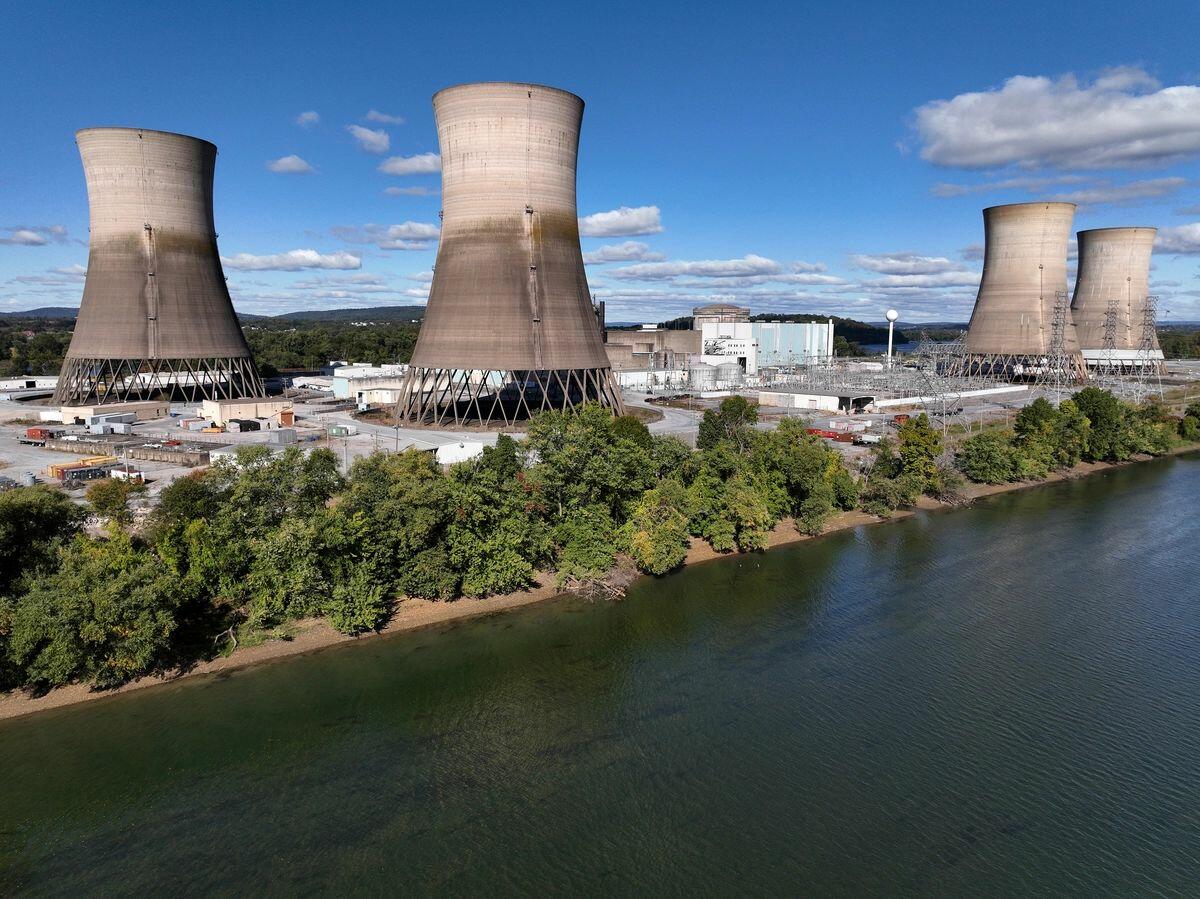
Japan has made the first commitments under a $550-billion investment program that made part of its trade deal with President Trump. Those first commitments are worth $36 billion and include what Commerce Secretary Howard Lutnick has called “the largest natural gas generation facility in history.”

The U.S. and Japan sealed a trade deal last summer, featuring a reduction in proposed tariffs—from 25% to 15%—on Japanese imports and a $550-billion Japanese investment pledge for the U.S. economy. Japan also pledged under the deal to expand market access for American goods, including cars, agricultural products, and energy.

Most of the money from that first investment tranche would be used to build the largest natural gas power plant, with a capacity of 9.2 GW.

“We will strengthen grid reliability, expand baseload power, and support American manufacturing with affordable energy,” Secretary Lutnick said in a statement after the deal. The plant will be built in Ohio. The facility will be operated by a subsidiary of Japan’s SoftBank, SB Energy.

The rest of the money would be split between a synthetic diamond factory and a deepwater oil port in the Gulf.

“This project is expected to generate $20–30 billion annually in U.S. crude exports, secure export capacity for our refineries, and reinforce America’s position as the world’s leading energy supplier,” per Lutnick.

The deepwater oil project was greenlit by the Trump administration earlier this month. Led by Sentinel Midstream, the Texas GulfLink facility would have an export capacity of 1 million barrels of crude daily. The approval was part of the federal government’s efforts to boost the United States’ energy dominance through oil and gas exports.

“The Texas GulfLink project is proof that when we slash unnecessary red tape and unleash our fossil fuel sector, we create jobs at home and stability abroad,” Transport Secretary Sean Duffy said in a statement to Reuters at the time.

“This critical deepwater port will allow the U.S. to export our abundant resources faster than ever before.”

In a factsheet on the Japanese deal, the Commerce Department said the deepwater facility would generate between $400 and $600 billion over 20 years and advance President Trump’s energy dominance agenda.

Most countries that struck trade deals with Trump last year to avoid massive tariffs on their U.S. exports made an energy import commitment specifically, with the tariff threat proving a useful tool for pursuing the energy dominance goal. Perhaps the most notable commitment in that respect was the European Union’s promise to buy $750 billion worth of U.S. oil and gas—a feat considered impossible by analysts due to physical factors such as constraints on the availability of such massive volumes of the respective commodities, constraints on consumption, and price considerations.

The largest natural gas power plant in history is most likely a response to the surge in electricity demand—and more specifically, baseload electricity demand, driven largely by the proliferation of data centers as the AI race among Big Tech majors intensifies. Earlier this week, the International Energy Agency said global electricity demand was growing at the fastest pace in 15 years. In the United States specifically, electricity demand rose by 2.1% in 2025 and is expected to grow by nearly 2% annually through 2030. The rapid expansion of data centers will drive half of the increase, the IEA noted.

Natural gas has emerged as the big winner of the AI race alongside nuclear, both of which provide the kind of electricity that data centers depend on: round-the-clock, uninterrupted electricity. Nuclear, however, takes longer to build and costs more, which is why gas power plants have taken priority.

Tyler Durden
Sat, 02/21/2026 – 22:10

via ZeroHedge News https://ift.tt/5a9rtvO Tyler Durden

An Edited Version Of Learning Resources

I realize I am unorthodox. I avoid commenting on a Supreme Court opinion till I’ve read the entire thing from front to back. I find the experience far more rewarding. I also avoid reading takes by people who almost certainly did not read the entire decision, or perhaps just skimmed the syllabus. Of course, the fact that Learning Resources had seven separate opinions, and stretched more than 170 pages, made the experience a bit unpleasant, but persevere I did.

Here is my first stab at an edited version for the Barnett/Blackman supplement, down to about 50 pages.

The majority opinion is very short, about 6 pages. The Roberts opinion can be stated very simply. As I’ve said before, the shorter a Roberts decision is, the more he is concealing.

The Gorsuch opinion, which stretches nearly 50 pages in the reported version, is cut down to 14 pages. For the most part, Gorsuch is responding to Barrett, Kagan, and Kavanaugh/Thomas. I feel like the only person on planet earth who truly needs to read the entire Justice Gorsuch opinion is Justice Gorsuch. This was for him, not his colleagues, or anyone else for that matter. Depending how much of the other four opinions you assign, you can probably skip around the Gorsuch opinion.

The Barrett concurrence is thankfully short, and I shortened it further to two pages.

I cut most of the Kagan concurrence to a page, only including the parts where she throws shade at Justice Gorsuch.

The Jackson concurrence on legislative history can be eliminated altogether. I kept a really short segment.

The Thomas dissent is about six pages. It reminds me a bit of Zivotofosky. He has very deep views on the President’s powers with regard to foreign policy. In Zivotofsy, Scalia challenged him. Here, Gorsuch doesn’t really try.

The Kavanaugh dissent is 23 pages long, much longer than the majority. This extended excerpt is justified, at least in part, because Kavanaugh goes deep into issues that Roberts glosses over. Justice Kavanaugh also tends to use theme and variation. He will state a point, develop it, then restate the point in a different way, and then restate it again. As Justice Scalia would say, repetition is afoot.

I will probably cut this excerpt down further to about 35 or 40 pages for the supplement, and under 30 pages for the casebook. It still isn’t clear to me exactly how to teach the Major Questions Doctrine in ConLaw, as this is more of a statutory interpretation/admin principle. I had hoped to include it in a section on non-delegation, but the Court assiduously avoided that issue.

Enjoy! I will have a lot of commentary on this case in the coming days.

The post An Edited Version Of <i>Learning Resources</i> appeared first on Reason.com.

from Latest – Reason.com https://ift.tt/uIqjS5m
via IFTTT

An Edited Version Of Learning Resources

I realize I am unorthodox. I avoid commenting on a Supreme Court opinion till I’ve read the entire thing from front to back. I find the experience far more rewarding. I also avoid reading takes by people who almost certainly did not read the entire decision, or perhaps just skimmed the syllabus. Of course, the fact that Learning Resources had seven separate opinions, and stretched more than 170 pages, made the experience a bit unpleasant, but persevere I did.

Here is my first stab at an edited version for the Barnett/Blackman supplement, down to about 50 pages.

The majority opinion is very short, about 6 pages. The Roberts opinion can be stated very simply. As I’ve said before, the shorter a Roberts decision is, the more he is concealing.

The Gorsuch opinion, which stretches nearly 50 pages in the reported version, is cut down to 14 pages. For the most part, Gorsuch is responding to Barrett, Kagan, and Kavanaugh/Thomas. I feel like the only person on planet earth who truly needs to read the entire Justice Gorsuch opinion is Justice Gorsuch. This was for him, not his colleagues, or anyone else for that matter. Depending how much of the other four opinions you assign, you can probably skip around the Gorsuch opinion.

The Barrett concurrence is thankfully short, and I shortened it further to two pages.

I cut most of the Kagan concurrence to a page, only including the parts where she throws shade at Justice Gorsuch.

The Jackson concurrence on legislative history can be eliminated altogether. I kept a really short segment.

The Thomas dissent is about six pages. It reminds me a bit of Zivotofosky. He has very deep views on the President’s powers with regard to foreign policy. In Zivotofsy, Scalia challenged him. Here, Gorsuch doesn’t really try.

The Kavanaugh dissent is 23 pages long, much longer than the majority. This extended excerpt is justified, at least in part, because Kavanaugh goes deep into issues that Roberts glosses over. Justice Kavanaugh also tends to use theme and variation. He will state a point, develop it, then restate the point in a different way, and then restate it again. As Justice Scalia would say, repetition is afoot.

I will probably cut this excerpt down further to about 35 or 40 pages for the supplement, and under 30 pages for the casebook. It still isn’t clear to me exactly how to teach the Major Questions Doctrine in ConLaw, as this is more of a statutory interpretation/admin principle. I had hoped to include it in a section on non-delegation, but the Court assiduously avoided that issue.

Enjoy! I will have a lot of commentary on this case in the coming days.

The post An Edited Version Of <i>Learning Resources</i> appeared first on Reason.com.

from Latest – Reason.com https://ift.tt/uIqjS5m
via IFTTT

Boards Are Replacing CEOs At The Fastest Pace In Over A Decade

Boards Are Replacing CEOs At The Fastest Pace In Over A Decade

A historic wave of leadership change is sweeping corporate America. Across 1,500 of the largest publicly traded companies, roughly one in nine CEOs was replaced last year—the highest churn since the post-financial-crisis years., according to the Wall Street Journal.

The turnover has ushered in the largest cohort of new chief executives in more than a decade, and they’re arriving younger and, in many cases, with thinner résumés than their predecessors.

The shake-up hasn’t slowed in 2026. Companies including Walmart, Procter & Gamble and Lululemon Athletica installed new leaders early in the year. On a single February day, Disney, PayPal and HP each announced CEO changes. Grocery chain Kroger also tapped a new chief. Altogether, firms representing trillions in market value have either replaced or appointed top executives in just a few months.

Boards appear to be responding to a business climate that feels fundamentally altered. Artificial intelligence is reshaping operations, global trade norms are fragmenting and geopolitical tensions are harder to ignore. As executive recruiter James Citrin put it, “We’re in a new environment, and someone who’s going to replay the playbooks of the past is not necessarily right.” He added that if a new chief fails to build momentum quickly with both employees and investors, directors are even less patient than before.

Some transitions were carefully choreographed. Warren Buffett handed leadership of Berkshire Hathaway to Greg Abel at the start of the year, completing a succession plan he had previewed years earlier. Others were abrupt. CarMax pushed out its CEO amid weak sales. At Codexis, the chief executive was replaced suddenly and the workforce reduced at the same time. Interim appointments, including at HP, signaled that not every board had a seamless plan in place.

The WSJ writes that retail illustrates how demanding the moment has become. Michael Fiddelke, newly installed at Target, found himself addressing sensitive political issues within days of stepping in, admitting to employees, “This isn’t the first message I imagined I’d send.” Industry executives say the job now requires reinvention rather than simple growth management, as pandemic aftershocks and cautious consumers create persistent headwinds.

The demographic profile of incoming leaders has shifted as well. New CEOs averaged about 54 years old—roughly two years younger than the prior class—and more than 80% were first-time public-company chiefs. Many have never served on a corporate board. Paul Shoukry, promoted at Raymond James at age 42, is emblematic of the trend. Supporters argue that leaders forged in volatile conditions may be better suited to navigate what one board director called dramatic and permanent change.

Not all diversity trends moved forward. Women accounted for just 9% of new CEO appointments last year, down from the year before, and they remain underrepresented across the broader market. As boards accelerate succession and bet on fresh profiles, the leadership reset underway is reshaping not only who runs America’s largest corporations—but what experience they bring to the job.

Tyler Durden
Sat, 02/21/2026 – 21:35

via ZeroHedge News https://ift.tt/Lun2FDc Tyler Durden