The Political Influence of Zero-Sum Thinking

A new study just published by the prestigious American Economic Review may be the most important recent social science article most nonexperts have never heard of. It’s entitled “Zero-Sum Thinking and the Roots of US Political Differences” and the authors are economists Sahil Chinoy, Nathan Nunn, Sandra Sequeira, and Stefanie Stantcheva. Here is the abstract:

We investigate the origins and implications of zero-sum thinking: the belief that gains for one individual or group tend to come at the cost of others. Using a new survey of 20,400 US residents, we measure zero-sum thinking, political preferences, policy views, and a rich array of ancestral information spanning four generations. We find that a more zero-sum mindset is strongly associated with more support for government redistribution, race- and gender-based affirmative action, and more restrictive immigration policies. Zero-sum thinking can be traced back to the experiences of both the individual and their ancestors, encompassing factors such as the degree of intergenerational upward mobility they experienced, whether they immigrated to the United States or lived in a location with more immigrants, and whether they were enslaved or lived in a location with more enslavement.

I have long argued that zero-sum assumptions are central to the dangerous world views of both right-wing nationalists and many left-wing socialists and “wokists.” I have also long warned against the dangers of widespread political ignorance, which has been a central theme of my work for many years. This study provides extensive evidence that zero-sum thinking is widespread, and that it is at the root of many crucial political attitudes.

As the authors show, zero-sum worldviews cut across party and ideological lines (though slightly more prevalent among Republicans than Democrats), and are strong predictors of political views on issues like redistribution, the use of racial preferences for affirmative actions, and immigration restrictions.

The authors’ analysis of the determinants and correlates of zero-sum worldviews is also groundbreaking. Most notably, they find that experiences of upward mobility and immigration (including having immigrant parents or grandparents) are strongly negatively correlated with zero-sum thinking. On the other hand, zero-sum thinking has a strong positive correlation with having ancestors who experienced slavery and others forms of forced labor or even just living in an area where slavery was historically prevalent.

Among American Blacks, this latter effect is, as the authors recognize, partly caused by a history of segregation and discrimination that persisted after slavery was abolished. The same can be said of the impact of living in an area where slavery was prevalent (which also are almost always areas where there was a high degree of later segregation and other discrimination). But it is notable that the impact of past enslavement is also significant among other groups, such as Jews whose parents or grandparents were forced laborers during the Holocaust.

The impact of immigration is particularly noteworthy in light of current debates over immigration restrictions. Libertarians and free-market conservatives sympathetic to restrictionism often argue that immigration should be curtailed because it might lead to increased welfare state spending. But the Chinoy, et al. study shows that zero-sum thinking is a major determinant of support for redistributive policies, and immigrants and children of immigrants are much less prone to it than other voters, even after controlling for a variety of other variables. This is actually an additional important pathway by which immigration is likely to reduce the burden of the welfare state, rather than increase it. I went over some additional flaws in the welfare state rationale for immigration restrictions in this post, and in Chapter 6 of my book Free to Move: Foot Voting, Migration, and Political Freedom.

The same goes for concerns that immigration might increase “woke” policies like affirmative action racial preferences. Chinoy, et al. also show that support for these policies is heavily driven by zero-sum assumptions, and immigrants and their children are far less likely to hold such views than natives. I outlined some other ways in which immigration reduces support for affirmative action here.

I don’t want to overstate the importance of these points. As also noted in Chapter 6 of my book, recent immigrants tend to vote and otherwise participate in politics at lower rates than natives. That considerably diminishes any effect they have on political outcomes, whether good or bad. But to the extent they do have a marginal impact, it’s likely to reduce political pressure for redistribution and racial preferences rather than increase it.

I would add that, as the authors point out, zero-sum worldviews are likely to be important for a range of issues beyond those they tested. For example, in addition to heavily influencing views on immigration, I would expect them to also influence views on protectionism. Indeed, a measure of zero-sum attitudes towards international trade is (quite properly) one of the authors’ questions gauging zero-sum attitudes.

I would also expect zero-sum views to be crucial determinants of attitudes on such policies as rent control and “NIMBY” restrictions on housing construction. If you think the economy is a zero-sum game generally, you are probably more likely to also believe that housing is a zero-sum game between landlords and tenants, and between long-time residents and developers and potential migrants. Indeed, survey data on housing issues shows that much opposition to zoning reform is driven by false beliefs that new housing construction will not reduce prices, and other kinds of economic ignorance driven in part by zero-sum assumptions.

While most of the authors’ evidence is limited to the United States, they note some data that suggests similar effects in other countries. Testing their hypothesis further in other countries is an important potential topic for future research.

As regular readers know, I am generally hostile to zero-sum thinking and the policies it leads to. I think zero-sum assumptions about immigration, housing, the interests of the poor and minority groups, and most other issues are largely wrong, and lead to pernicious policies. In previous writings, I have extensively critiqued zero-sum assumptions about immigration (e.g. here and here), and housing, among other issues. In most cases, zero-sum games only arise if pernicious government policies (often themselves based on zero-sum assumptions) needlessly create them. For example, housing can be a zero-sum game when exclusionary zoning blocks new construction in response to demand.

However, those more sympathetic to various types of zero-sum thinking than I am can also find value in the Chinoy, et al. article. Effects I view as pernicious, they might actually see as beneficial (and vice versa). Either way, the impact of zero-sum thinking on political views is an incredibly important field of study, and I commend the authors of this article for making a major advance in our understanding.

The above covers only part of what’s in the article. There is much more. Serious students of this subject should make sure to read the whole thing.


The post The Political Influence of Zero-Sum Thinking appeared first on Reason.com.

from Latest – Reason.com https://ift.tt/b4ZQLje
via IFTTT

“Gossip,” “Abusive Language,” and “Soft Beta Males” in Public Comments at School Board Meetings

Blanchard v. Augusta Bd. of Ed., decided yesterday by Judge Stacey Neumann (D. Me.), held that the First Amendment was likely violated by school board public commentary policies forbidding

  1. “gossip,”
  2. “abusive … language.,”
  3. “vulgar language,” and
  4. “complaints or allegations … at Board meetings concerning any person employed by the school system or against particular students,” also described as “[p]ersonal matters or complaints concerning student or staff issues.”

The parties had agreed that the public comment period was a “limited public forum,” a place opened up by the government for speech on particular subjects. In a limited public forum, speech restrictions must be viewpoint-neutral and reasonable. The court then held that the four restrictions noted above violated one or both of these elements:

[1.] Gossip:

By its terms, the gossip prohibition turns on what is being said: “rumors or information about the behavior or personal lives of other people.” See Gossip, Merriam-Webster. Such a category of speech does not exist solely and definitively outside of that which relates to school or education matters. Comments about the conduct or personal behavior of teachers, administrators, or Board members may indeed bear directly on school operations and policy….

[And] Policy BEDH provides no objective standard to distinguish “gossip” related to school and education matters from other such commentary. That lack of clarity leaves speakers guessing at what is allowed and invites arbitrary enforcement by officials presiding over the meetings. Without a workable line, there is no “sensible basis for distinguishing what may come in from what must stay out.” In practice, the rule allows the presiding officer’s own sensibilities to determine what counts as “gossip,” which “openly invites viewpoint discrimination.”

The overbreadth concerns are equally apparent. Defined as “rumors or information about the behavior or personal lives of other people,” the term “gossip” can easily encompass speech at the heart of the Board’s public comment period—for example, a parent repeating information they have heard about a teacher’s behavior in the school that relates to their child’s education or a citizen relaying information about an administrator’s conduct relevant to policy or budgeting decisions. Such speech may be sharply worded but still fully protected and directly tied to school business. A rule that sweeps this speech broadly into the category of “gossip” risks silencing criticism that the First Amendment protects….

[2.] Abusive language:

Merriam Webster defines “abusive” as “harsh and insulting” or “using harsh and insulting language.” At the July 2025 Board meeting, the Chair similarly defined abusive language as “language that is harmful or offensive to a person.” Read this way, the policy singles out speech that offends or insults its target. This is classic viewpoint discrimination. See Matal v. Tam (2017) (“Giving offense is a viewpoint.”). Other courts evaluating comparable school board policies have reached the same conclusion.

To be sure, the Board is not powerless to regulate all manifestations of abusive speech. A policy that targets narrow, viewpoint-neutral characteristics—such as actual disruption, shouting, threats, or true harassment—or that explicitly and tightly defines the covered category may pass constitutional muster. Rule E, however, does not contain that kind of limiting construction. As applied here, “abusive” functions as a broad bar on offensive speech—an “undercover prohibition” on disfavored viewpoints.

Because the government “may not burden the speech of others in order to tilt public debate in a preferred direction,” the Board’s prohibition on “abusive” language is facially unconstitutional in this limited public forum. Mr. Blanchard is therefore likely to succeed on his facial challenge to the “abusive language” portion of Rule E.

[3.] Vulgar language:

Merriam-Webster defines “vulgar” in several ways, including “lacking in cultivation, perception, or taste,” “offensive in language,” and “of or relating to the common people.” In the context of Policy BEDH, which prohibits “abusive or vulgar language” without reference to sexual content or obscenity, the most natural reading is “offensive in language.” That understanding again steers the analysis toward viewpoint discrimination, because the rule targets speech for its perceived offensiveness rather than for its subject or disruptive effect.

The Supreme Court has recognized that schools may regulate certain vulgar student speech in the school setting. See Bethel Sch. Dist. No. 403 v. Fraser (1986). The Court understands the school board’s desire to model respectful public behavior and to encourage civil discourse. Nonetheless, public school board meetings—open to adults and structured as a limited public forum—differ meaningfully from compulsory K–12 classrooms where the First Amendment permits greater regulation. In this setting, courts have instead focused on whether boards may exclude speech that is truly obscene or actually disruptive….

Nor is there a persuasive narrowing construction available on this record that would confine “vulgar” to unprotected obscenity or similar categories. Rule E does not use the word “obscene,” does not tie “vulgar” to any requirement of disruption, and does not otherwise limit the term to a recognized class of unprotected speech. Instead, particularly when read alongside “abusive,” Rule E leaves policing “vulgar” to turn on the presiding officer’s sense of what language is sufficiently “uncultivated” or “offensive in language” to warrant exclusion. Such open-ended discretion raises the same concerns identified in Minnesota Voters Alliance v. Mansky (2018), where the Supreme Court cautioned that standardless rules invite arbitrary enforcement.

For these reasons, the term “vulgar” in Rule E can only be understood as a broad prohibition on offensive language that operates as an additional restriction on offensive viewpoints rather than as a legitimate, viewpoint-neutral decorum rule. In line with the Court’s analysis of “abusive” speech, the “vulgar language” prohibition is facially unconstitutional, and Mr. Blanchard is likely to succeed on his facial challenge to that portion of Rule E.

[4.] Complaints, allegations, and personal matters concerning employees or students:

Defendants contend Rule H “restricts speakers from discussing a named or identifiable District employee regardless of whether the comment associated with that individual employee is criticism, praise, or something in between.” Read that way, Rule H would operate as a ban on “personnel matters.” A content-based restriction that excludes an entire subject—such as personnel matters—may be permissible in a limited public forum if it is viewpoint neutral (for example, barring all personnel-related comments, positive and negative) and reasonable (for example, by providing effective alternative channels for addressing those matters, such as through Policy KE).

Rule H, however, does not use the term “personnel.” Instead, it refers to “personal matters or complaints concerning student or staff issues.” … The ambiguity in Rule H’s actual language drives the constitutional problem. It is not clear what “personal matters” encapsulates. If the phrase is meant to exclude speech related to purely private affairs—thereby removing it from the ambit of speech that relates to education and the school system—that limitation is not evident from the text alone. And in light of the forum’s purpose, some purely “private matters” would already reasonably fall outside the permissible scope of discussion. But the definition of “personal” also relates to an individual’s “conduct,” “character,” or “motives,” and these words are vague in the context of Policy BEDH. Thus, while the Constitution does not require mathematical exactitude in language, the text of Rule H alone makes it unclear what speech it allows and what it prohibits….

The Board’s shifting explanations of Rule H have not cured this uncertainty…. At the April 2025 meeting, the Chair suggested that “negative comments” about Board members were not permitted, even though Defendants later conceded at the hearing that Rule H does not bar speech directed at Board members, only at school employees. At the May 2025 meeting, a Board member stated that “the policy is that we will not speak positively or negatively about any personnel,” and the Chair responded, “our current policy is only to not speak negatively.” …

The vagueness doctrine “guarantees that ordinary people have ‘fair notice’ of the conduct a statute proscribes” and “guards against arbitrary or discriminatory law enforcement by insisting that a statute provide standards to govern the actions” of government officials. Rule H, as written, falls short on both fronts. The phrase “personal matters or complaints concerning student or staff issues” is steeped in subjectivity, and the record shows that Board members and the Chair have articulated different understandings of what the rule covers. Because the text does not clearly delineate its boundaries and the interpretive explanations have been inconsistent, Defendants have not shown that Rule H is capable of “reasoned application.”

{Notably, Rule H, by its terms, applies only to “complaints or allegations” and “complaints concerning student or staff issues.” For the reasons discussed herein, restricting only “complaints” is not viewpoint neutral. However, the Court need not address this issue further because it has enjoined Rule H in its entirety.}

{That is not to say the Board could not draft a public comment policy with a clear definition of “personal matters” that is appropriately prohibitive.}

But the court upheld the prohibition on “defamatory comments,” “which the Court construes as limited to unprotected defamatory speech” of the sort that can lead to civil liability.

Some excerpts from the pretty long factual backstory, though the court’s analysis generally focused more on the terms of the policies than the particular facts of the plaintiff’s comments:

During [Mr. Blanchard’s] public comment, he stated, “here in Maine, it seems we have too many soft beta males that won’t stand up for what is right” and added “it seems that I am looking at a couple of [them] right here.” The Chair interjected, stating “I’m sorry, but … disparaging remarks are not allowed.” …

[At a later meeting,] Mr. Blanchard said, “I think we should all acknowledge the president of the Maine Principal Association that’s going to cause all of our federal funding to go right out the window,” while gesturing toward the Maine Principal Association (“MPA”) President, who was present in the meeting room. The Chair interrupted him, stating “excuse me, excuse me … excuse me, no disparaging remarks.” Mr. Blanchard asked, “how is that disparaging?” and then continued to express concerns about the potential loss of federal funding for Augusta public schools based on MPA’s stance, specifically invoking the MPA President as the reason for the potential funding cuts.

The Chair replied, “those remarks are inappropriate. I’m sorry.” Mr. Blanchard asked, “how are they? How is that inappropriate?” and added, “they’re true.” The Chair asked whether Mr. Blanchard had comments to make that were “not about … personnel,” and Mr. Blanchard again asked, “how is that inappropriate?” This back and forth repeated itself. Mr. Blanchard then continued to speak against the purported loss of federal funding. A Board member moved to go into recess; the Board voted to approve the motion and went into a brief recess, effectively ending Mr. Blanchard’s time at the podium….

[At another meeting,] Mr. Blanchard approached the podium wearing a t-shirt that displayed the words “YOUR FIRED” and a picture of Principal Kimberly Liscomb on the front. He began by thanking six Board members for their prior vote related to Title IX policies and contrasted their votes with that of the one member who had voted the opposite way; he did not identify any Board member by name. The Chair interrupted part of his commentary, stating the correct spelling is YOU’RE and Mr. Blanchard would be going to grammar jail “negative comments” were not permitted.

The exchange intensified when Mr. Blanchard discussed a petition to fire “Miss Kim” (i.e., Principal Liscomb), prompting the Chair to issue multiple warnings regarding “defamatory remarks about school personnel.” Blanchard attempted to continue by referring to Principal Liscomb only by her professional title rather than her name. The Chair ruled it was “close enough” to a violation of Policy BEDH, however, and ordered Mr. Blanchard to leave the podium with approximately three minutes of his allotted speaking time remaining. As he left, Mr. Blanchard remarked, “wow, communist China right here.” …

During the June 2025 meeting, Mr. Blanchard criticized what he viewed as the Board’s selective enforcement of Policy BEDH and alleged the Board prioritized ideology over academic excellence. He stated that parents were “done watching the alphabet cult shove their propaganda down our throat and in our schools,” prompting the Chair to interrupt and ask speakers to refrain from “disparaging remarks.” …

David Robert Gordon and Stephen C. Smith (Steve Smith Trial Lawyers) and Brett Robert Nolan and Nathan John Ristuccia (Institute for Free Speech) represent plaintiff.

The post "Gossip," "Abusive Language," and "Soft Beta Males" in Public Comments at School Board Meetings appeared first on Reason.com.

from Latest – Reason.com https://ift.tt/rvNp29A
via IFTTT

D.C. Circuit Lets Pentagon Require That Journalists Be Escorted While in Pentagon

From N.Y. Times v. U.S. Dep’t of Defense a/k/a Dep’t of War, decided yesterday by Judges Justin Walker and Bradley Garcia:

Last fall, the Pentagon announced a new policy governing Pentagon Facility Alternate Credentials (PFACs), the passes journalists have historically used to access the Pentagon. The new policy restricted this access and implemented rules that would allow the Pentagon to revoke credentials if the holder was determined to be a “security or safety risk to Department personnel or property.” A reporter could be deemed a “security or safety risk” “based on the unauthorized access, attempted unauthorized access, or unauthorized disclosure” of Department information.

The New York Times (NYT) and one of its journalists, Julian E. Barnes, filed suit to enjoin several provisions of the policy as unconstitutional under the First and Fifth Amendments, and as arbitrary and capricious under the APA. On cross-motions for summary judgment, the district court held that the rules governing when a PFAC may be denied for “security” reasons were unconstitutionally vague in violation of the Fifth Amendment because they “fail[ed] to provide fair notice of what routine, lawful journalistic practices” would trigger credential revocation.

Turning to the First Amendment, the court noted there was no dispute that “[t]he regular presence of PFAC holders at the Pentagon … enhanced the ability of journalists and news organizations … to keep Americans informed about the United States military.” Moreover, this arrangement had “pos[ed] no security or safety risk to Department property or personnel.” By contrast, the district court concluded that the record was “replete with undisputed evidence that the Policy” was specifically, and unreasonably, designed to deprive “disfavored” journalists of access to a nonpublic forum. Accordingly, the district court granted summary judgment to the plaintiffs on their constitutional claims, without addressing the APA claim.

The next business day, the government replaced the invalidated policy with a new one that revised provisions the district court had declared unconstitutional and announced new “physical security restrictions” for all PFAC holders. Those restrictions required that PFAC holders be escorted in all areas of the Pentagon “at all times” and limited their opportunities for entry to five approved purposes. At the same time, the Department announced that the previously available workspace in the “Correspondents’ Corridor” was closed and that a new workspace “will be established in an annex facility.”

The plaintiffs promptly moved to compel compliance with the summary judgment order, and the district court granted that motion. In addition to declaring the “adoption and enforcement” of “the escort requirements and access limitations” in violation of its previous order, the district court ordered the Department to reinstate “access” to the Pentagon “commensurate with the access provided to PFAC holders on March 20, 2026, following this Court’s Order vacating certain provisions of the prior PFAC Policy.” The Department responded by asking the district court for a stay pending appeal “to the extent” the district court’s order “vacate[d] and enjoin[ed] the Pentagon’s new physical access restrictions—the escort requirement and the physical access limitations.” The district court denied that motion but granted a fourteen-day administrative stay to allow the Department to seek relief here.

The Department sought an emergency stay pending appeal, limited solely to the order’s “entitl[ing] reporters to access the Pentagon unescorted.” “[The Department represented to the district court that ‘there is no requirement’ under the Interim Policy ‘to make advance requests for an escort’ and there would be ‘no concern that the Department could deny’ a PFAC holder an escort.”

The panel majority agreed:

On the questions of irreparable harm, the balance of equities, and the public interest, both parties identify weighty competing interests. The Pentagon Press Secretary has submitted a declaration explaining that prior to the 2025 PFAC Policy, journalists obtained “sensitive or classified” information “often monthly, and sometimes multiple times per month,” including information concerning “operational plans” and “intelligence assessments.” Unescorted access to the Pentagon was, according to the Department, “a significant contributing factor” to that pattern because it enabled reporters to “observe activity patterns” and identify potential sources of sensitive information. On that basis, the Department argues that unescorted access to the Pentagon will increase the risk that journalists obtain and disseminate sensitive information, jeopardizing national security. The Department has thus supported its claim that this aspect of its policy furthers important national security interests.

For their part, plaintiffs contend that the policy burdens newsgathering by restricting access in ways that impair their ability to “ask questions, confirm information,” and “receive timely updates”—opportunities that once lost, “will be lost forever.” That burden extends beyond the press itself, implicating the public’s interest in the free flow of information about government operations.

Because both sides have established substantial, competing interests, the balance of the equities and the public interest do not strongly favor either party. Our decision therefore turns on the merits.

The Department has shown that it is likely to succeed on the merits of the issue it presents. Under settled law, an agency may respond to an adverse ruling by adopting a revised policy, and it “need not seek modification of [an] injunction before it initiates” those efforts. That principle is implicated here. The escort requirement was not contemplated by the challenged 2025 policy. So the district court’s March 20 summary judgment opinion and order did not address that provision or a similar one.

Moreover, in part because the challenge to the Interim PFAC Policy was presented in a motion to compel compliance, the district court did not hold that the escort requirement independently violates the First or Fifth Amendment. On this record, the Department is likely to succeed in its argument that the escort requirement in particular is a new, generally applicable requirement that is not invalid for violating the district court’s summary judgment order or the constitutional principles underlying it.

And from Judge Michelle Childs’ dissent:

An injunction is not an invitation to circumvention. Once a court has spoken, the party bound by its order may not evade it through creative policymaking. On March 20, the district court ordered the Department of Defense to restore certain New York Times reporters’ Pentagon press credentials. The Department responded by restoring the credentials but stripping away much of what made them matter: regular, unescorted access to the Pentagon and the press workspace inside it.

The district court determined that such conduct was noncompliant with its injunction. My colleagues stay that ruling. Because the Department has not made a strong showing that the district court erred in interpreting its own injunction, I respectfully dissent….

I start with the district court’s authority to interpret its own injunction. As a rule, a district court has both “jurisdiction” and “inherent power to enforce its judgments.” That power reflects the judiciary’s institutional interest “in seeing that an unambiguous mandate is not blatantly disregarded by parties to a court proceeding.” With that in mind, we review a “district court’s interpretation and enforcement of its own orders” for abuse of discretion.

As Justice Scalia put it, “the construction given to the injunction by the issuing judge … is entitled to great weight.” Justice Breyer later described the same principle as “longstanding and well established.” On that understanding, “[t]he court granting the injunction is necessarily invested with large discretion in enforcing obedience to its mandate, and … courts of appellate powers are exceedingly averse to interfering with the exercise of such judgment and discretion.”

That discretion is not exercised by parsing an injunction as though it were a tax code…. [W]e must read an injunction in light of “what the decree was really designed to accomplish.” To identify that purpose, we consider “the relief sought by the moving party, the evidence produced at the hearing on the injunction, and the mischief that the injunction seeks to prevent.” …

Nor may a party exploit uncertainty as a license to disobey an injunction. If an injunction proves “too burdensome in operation,” the party has “a method of relief apart from an appeal.” It may petition the district court “for a modification, clarification or construction of the order.” After all, an appellate court is not the proper forum of first instance for resolving the particulars of an injunction….

These principles decide the point here. The Department was not free to make its own practical construction of the Merits Order, adopt a substitute policy that preserved the very “mischief that the injunction seeks to prevent[,]”and then insist that compliance was complete because the new policy was labeled “interim.” The district court was entitled—indeed required—to measure the Interim PFAC Policy against the Merits Order’s purpose, the record that produced it, and the access it was designed to protect. Viewed through that lens, the district court correctly decided that the Department had not complied….

In light of those principles, the district court’s Merits Order was clear that the Department had to “immediately reinstate the PFACs” of seven New York Times reporters. The Department did not do that. Instead, as the district court found, it “cut off all PFAC holders’ meaningful access to the Pentagon.” That finding matters because the point of the injunction, as the district court interpreted it, “was to restore The Times journalists’ access to the Pentagon, not merely to ensure that they have possession of a physical credential.” The Interim PFAC Policy thus runs headlong into what the injunction “was really designed to accomplish.”

The district court’s factual findings confirm the point. As even the majority notes, the Department announced—on the next business day after the injunction issued—that it was closing the Correspondents’ Corridor. The district court also found that the Department relegated PFAC holders “to work from a space outside the Pentagon building.” And it found more still: the Department announced that journalists could no longer enter the Pentagon “at all without a Department escort,” and that even escorted access would be limited to particular events. The Interim PFAC Policy says just that. PFAC holders may “continue to have access to the Pentagon for scheduled press briefings, press conferences, and interviews arranged through public affairs offices.” Even then, they must be escorted by authorized Department personnel “at all times.”.

That is not the access the Merits Order restored. In explaining why “the remedies available at law [were] inadequate,” the district court expressly relied on the proposition that “the only way to remedy the injury [from the loss of a press credential] is to return the hard pass and the access that comes with it.”

As for the facts it relied upon, the district court explained that the parties did not dispute that the “[t]he regular presence of PFAC holders at the Pentagon has enhanced the ability of journalists and news organizations to keep Americans informed about the U.S. military while posing no security or safety risk.” The district court also found that it was undisputed that from the Pentagon “reporters historically have been able to cover official press briefings, including those called on short notice (or without notice), and to ask questions of Pentagon officials at (and before and after) those briefings.” The district court found next that those reporters “also have engaged in additional semi-formal and informal conversations with senior Department officials and their aides, as well as public affairs staff.” “These in-person interactions,” as the district court determined and the parties did not dispute, “can be crucial to obtaining the context and detail needed to report accurately and effectively about defense policy and military operations.”

That makes sense. Reporters can hardly verify sources, gather information, or speak candidly with Department personnel with an escort looming over their shoulders. Given the district court’s factual findings and the law it applied, the purpose of the injunction was clear: The Department had to give PFAC holders unescorted access. That was the status quo through decades and wars—including after the “terrorist attack on September 11, 2001.” …

Given the foregoing reasons, the Department has not made a “strong showing that [it] is likely to succeed on the merits.” The Department bears the burden of justifying “such an extraordinary remedy,” and its stay application fails on the first stay factor. Since the Department has not shown that the Interim PFAC Policy likely complied with the Merits Order, I would deny the stay without reaching the remaining factors….

The post D.C. Circuit Lets Pentagon Require That Journalists Be Escorted While in Pentagon appeared first on Reason.com.

from Latest – Reason.com https://ift.tt/OJmCjB5
via IFTTT

Taxing the Rich


New York City Mayor Zohran Mamdani on stage at the Brooklyn Paramount Theatre. | Liri Agami/ZUMAPRESS/Newscom

Budget blues. New York City Mayor Zohran Mamdani and City Council Speaker Julie Menin have agreed to push back the May 1 deadline by which the mayor must issue an executive budget proposal, while the two figure out how to cover the city’s $5.4 billion budget gap, reports Politico.

Additionally, they are going to jointly call for more state budget aid and “change” to the state’s pass-through entity tax (PTET) that will allegedly generate an additional $1 billion in revenue, reports The City‘s Katie Honan.

The details are a little complex, but the PTET is essentially a voluntary state tax that certain types of businesses can pay (which is then offset by state income tax credits given to the individual business owners) in order to reduce the business owners’ federal tax liability.

According to a recent Manhattan Institute brief by E.J McMahon, almost everyone who benefits from the PTET is a millionaire income earner, which would explain why it would be a target for Mamdani.

The mayor campaigned on raising taxes on high-income earners and large corporations to pay for a raft of new spending. The city’s fiscal situation has seen him push for those same taxes just to cover the city’s existing spending.

Unfortunately for Mamdani (and fortunately for everyone else), New York City can’t raise income or corporate taxes by itself. The state needs to sign off on those tax increases.

And Gov. Kathy Hochul has thus far opposed permitting the city to hike business and income taxes. She has however proposed a tax on second homes worth over $5 million, which would allegedly pull in $5 million each year.

The proposal to change the PTET in order to raise more revenue appears to be another to “tax the rich” without more general income tax hikes.

More money, more problems. The thing to keep in mind as the budget battles in New York City play out is that this problem is not going away, regardless of what tax increases Mamdani is able to squeeze through this year.

The city has a persistent, growing budget gap driven by the continually rising cost of existing programs. The Citizens Budget Commission, a fiscal watchdog group, estimates that the city’s budget gap could reach $10 billion within the next couple of years.

Fixing today’s shortfall sets up a similar scramble for more revenue next year and the year after. And there are diminishing returns to bilking big business and the very rich. On the margins, they will start to leave the city. New York City’s millionaires account for less than 1 percent of tax filers and pay 37 percent of the city’s income taxes.

Mamdani needs to decide if he’s willing to ask New Yorkers generally to pay for the government they have (let alone the even larger one he campaigned on creating) with broad-based tax increases, or else figure out what city spending his socialist revolution can live without.


Cashing in. Lobbying firm Ballard Partners is using its close relationship to the Trump administration to recruit clients looking for oil contracts in post-Maduro Venezuela, according to a new investigation from the Project on Government Oversight (POGO).

Here’s one example from the report:

Ten days after Maduro’s capture, on January 13, Ballard Partners announced a new dedicated Venezuela Working Group and touted “former high-ranking government Trump administration officials” working at the firm.

That same day, Ballard registered Swedish-based investment company Maha Capital as a new client seeking assistance with “approvals for Venezuelan oil field acquisitions and operations.” Micah Ketchel and Thomas Boodry, former Trump aides who’ve also worked for Rubio, were listed as part of the lobbying team. Maha Capital paid Ballard $120,000 in the first quarter of 2026 to lobby both the State and Treasury departments.

On March 18, the Treasury Department’s Office of Foreign Assets Control (OFAC) authorized “established” U.S. entities to do business with Venezuela’s state-owned oil company Petróleos de Venezuela, S.A. (PDVSA), paving the way for Maha Capital to move forward inside Venezuela. In a press release that same day, Maha Capital’s CEO said he was “pleased” with the decision, and the company announced it would buy a stake in a Venezuelan oil field and would transfer that stake to its U.S.-based subsidiaries to comply with the OFAC decision.

President Donald Trump has been pretty blunt in saying that his priority following the capture of Nicolás Maduro has been getting Venezuelan oil flowing again. The kind of influence operation described in the POGO report isn’t necessarily surprising in that context. It does puncture the idea that our removal of Madruo had all that much to do with furthering American security or Venezuelan freedom.


Scenes from Washington, D.C.: Airports are generally comfortable and clean places, even if they are awash in unrelenting statism. It’s hard to think of another environment where the average citizen is more surveilled, controlled, and propagandized.

The particular signature of Big Brother that caught my eye traveling through Ronald Reagan Washington National Airport yesterday was this poster in the men’s room instructing me to be on the lookout for telltale signs of human trafficking.

Human trafficking poster
Christian Britschgi

These are some odd human trafficking signs to tell the general public to look out for. I’m not sure how anyone would be able to tell by mere observation whether their fellow travelers have a genuine relationship with the child in their care or if they have reasonable travel plans.

Perhaps the intended audience is security personnel or airline employees who would be able to glean more information about travelers while doing their job. If that’s the case, though, why post these announcements in public restrooms?

The best thing one can say about the above PSA is that it’s dumb. At worst, it encourages travelers to be on the lookout for human trafficking activity that is both exceptionally rare and not apparent to the average observer.

Every once in a while, one sees news stories about an airline passenger who’s been falsely accused of trafficking someone who turns out to be their own child or other relative. It’s a terrible thing for the falsely accused to go through. Posters like the above only encourage more erroneous trafficking accusations.


QUICK HITS

  • Analysts predict spiking energy prices.
  • The Supreme Court weighs the constitutionality of “geofence warrants.”
  • Is OpenAI spending too much on data centers?
  • Speaking of, Hakeem Jeffries beats up on data centers.
  • The alleged correspondents’ dinner shooter has been charged with attempting to assassinate President Trump.

The post Taxing the Rich appeared first on Reason.com.

from Latest – Reason.com https://ift.tt/T8XS1ao
via IFTTT

Apparent Surge in Self-Represented Litigation Using AI

From Anand V. Shah & Joshua Y. Levy, Access to Justice in the Age of AI: Evidence from U.S. Federal Courts (in draft):

This paper studies how generative AI has reshaped entry into the federal civil court system. Drawing on administrative records covering more than 4.5 million non-prisoner federal civil court cases from FY2005-FY2026 and 46 million PACER docket entries matched to those cases, we document three sets of findings.

First, the number of pro se cases—or self-represented cases—is increasing dramatically, rising from a long-term steady-state average of 11% to 16.8% in FY2025. This increase is concentrated in case types characterized by formulaic document production and absent from more complex, attorney-intensive categories.

Second, we argue these cases are placing larger burden on federal district courts. Pro se cases are not terminating faster, and this combined with the increased case numbers suggests more cases for judges to process. Moreover, intra-case activity is up, with the total volume of docket entries per court generated by pro se cases in their first 180 days up 158% from pre-AI means to 2025.

Third, we directly validate that AI use is increasing in federal courts. Using a random sample of 1,600 complaints drawn from an 8-year period (2019-2026), we find that a large and growing share of complaints are flagging positive for AI-generated text, from essentially zero in the pre-AI period to more than 18% in 2026.

Don’t know how it’s carrying over to state courts, but one would think that it would.

The post Apparent Surge in Self-Represented Litigation Using AI appeared first on Reason.com.

from Latest – Reason.com https://ift.tt/NbJr4jZ
via IFTTT

Published Article: A Historical Record Of Special Counsels Before Watergate

In 2024, as part of my research on the Jack Smith case, I compiled a corpus of primary sources about special counsels before Watergate. Much of this research was novel and had not been assembled before.

I have now published this article in the South Texas Law Review. It is titled, “A Historical Record Of Special Counsels Before Watergate.”

Here is the abstract:

This Article presents a corpus of primary sources that were written by Presidents, Attorneys General, United States Attorneys, Special Counsels, and others between the 1850s and the 1950s. This corpus reproduces primary sources from more than a dozen archives to present a better legal account showing how Special Counsels were retained by Attorneys General under Presidents Buchanan, Andrew Johnson, Grant, Garfield, Theodore Roosevelt, and Truman.

During these six presidential administrations, Attorneys General retained outside lawyers as Special Counsels either: (1) to assist a U.S. Attorney with prosecutions, or (2) to assist the Attorney General with an investigation. In none of these matters did the Attorney General appoint an outside lawyer as a Special Counsel, and then delegate to him the powers now claimed by modern special counsels: all of the powers of a Senate-confirmed U.S. Attorney.

There was one outlier. In 1924, during the Coolidge Administration, Congress enacted legislation establishing Senate-confirmed special counsels to prosecute Teapot Dome Scandal defendants. These Special Counsels were afforded “total independence.” It is doubtful that these positions would be consistent with the Supreme Court’s modern separation of powers jurisprudence.

This practice shows that the positions of special counsels in the post-Watergate era are not analogous to the positions of special counsels in the pre-Watergate era. Thus pre-Watergate history does not provide support for the modern, post-Watergate special counsel and the vast powers that they are purportedly vested with.

The issue of the special counsel has fallen to the wayside for the moment, but I suspect this article will prove useful at the appropriate time.

The post Published Article: A Historical Record Of Special Counsels Before Watergate appeared first on Reason.com.

from Latest – Reason.com https://ift.tt/JwG8ujz
via IFTTT

No Religious Discrimination in Firing Employee Because of Controversy Caused by Employee’s Removing Israeli Hostage Posters

Ali v. Mindful Care, Inc., decided two weeks ago by the Illinois Human Rights Commission rejected claims by Ali, who had been an employee of a mental health services clinic. (Commissioners Janice M. Glenn and Gregory E. Vaci wrote the opinion, with Commissioner Mony Ruiz-Velasco dissenting.) Ali claimed that:

[O]n January 3, 2024, a video she was in gained popularity on social media… [T]he video was made on December 29, 2023, and showed Petitioner, off duty, taking down a poster that was attached to an outdoor pole. [According to the employer,] {the video showed Petitioner removing posters depicting children that were kidnapped in Israel on October 7, 2022, by the group Hamas and being held hostage} …. [I]n response to the video, she was harassed by hate groups, including one that she called “Stop Antisemitism.” … [T]he poster she was taking down was intended to create fear, justify the genocide in Palestine, and encouraged the killing of Palestinian children….

Petitioner was allegedly fired on the grounds that “the video was not a good look for Employer,” that the employer “was being called antisemitic by online commentators” and was “losing patients as a result of the video” and “the action Petitioner took was misaligned with Employer’s core values and … Petitioner’s conduct showed a lack of empathy toward the events on October 7, 2022.”

Petitioner claimed:

[Petitioner] is Muslim and holds genuine religious beliefs associated with Islam…. [T]he sanctity of human life is included in her religious beliefs and the idea that every life is worthy of equal respect and dignity, regardless of their religion…. Islam teaches that resistance in the face of oppression, expulsion, and persecution of faith is necessary, and that resistance can take many forms and need not be violent…. [T]he need to resist was especially prevalent because, among other reasons, Muslims around the world view solidarity with Palestinians and resistance to Israeli occupation as an act of their Islamic faith….

The panel rejected Ali’s religious harassment claim:

The alleged harassing conduct occurred off Employer’s premises, outside of work hours, and was conducted by third-party persons, none of whom were employed by employer. Therefore, the alleged harassment did not alter Petitioner’s terms and conditions of employment or create a hostile or abusive working environment….

And it rejected Ali’s religious discrimination claim:

Petitioner claims that Employer subjected her to unlawful employment discrimination when it discharged her on January 4, 2024, on account of her religion. Specifically, Petitioner claims that Employer discharged her in response to the December 29, 2023, video of her pulling down a poster while off work. However, … there are no references in Respondent’s record to similarly situated employees outside of Petitioner’s protected class that were treated more favorably under the circumstances….

[And u]nlike in previous Commission cases [such as one] {finding substantial evidence of pregnancy-based unlawful discrimination without a comparator where there was additional evidence, including statements related to the petitioner’s pregnancy and conduct such as interrupting or interfering with her pumping, indicating that the petitioner’s discharge was pregnancy-related}, in this case, there are no references in Respondent’s record to Employer’s statements or conduct directly implicating Petitioner’s religion so as to create an inference of religious-based discrimination….

Note that the decision doesn’t discuss any religious accommodation claim, presumably because Ali didn’t raise it. She had said that her religious beliefs caused her to take down the flyers (as an act of “solidarity with Palestinians and resistance to Israeli occupation as an act of their Islamic faith”). Therefore, in principle, she could have argued that the employer had to accommodate her religious beliefs by not firing her, unless it could show “undue hardship” (see Groff v. DeJoy (2023)); Illinois religious discrimination law includes a duty of reasonable accommodation just like federal law does. It would have been interesting to see what the Commission would have made of the argument.

The post No Religious Discrimination in Firing Employee Because of Controversy Caused by Employee's Removing Israeli Hostage Posters appeared first on Reason.com.

from Latest – Reason.com https://ift.tt/8pnmLNB
via IFTTT

The Evidence Revolution: Why ‘Take Nobody’s Word for It’ Really Matters


Cover of "Beyond Belief" and author Helen Pearson | Helen Pearson

Beyond Belief: How Evidence Shows What Really Works, by Helen Pearson, Princeton University Press, 350 pages, $29.95

Nullius in verba” is the official motto of the world’s oldest national academy of sciences, the Royal Society of London. Usually translated as “Take nobody’s word for it,” the slogan represents a commitment to empirical evidence and experimental proof over reliance on authority, dogma, or tradition.

In Beyond Belief, the award-winning science journalist Helen Pearson writes an engrossing history of the modern “evidence revolution.” That movement aims to draw on rigorous research to figure out what works in fields ranging from medicine to management to education to policing to conservation. As Pearson makes shockingly clear, many decisions in these fields are still based on anecdotes, the opinions of authority figures, and conventional wisdom.

Pearson illustrates the dangerous failures of conventional wisdom with a story about Benjamin Spock’s vastly influential The Common Sense Book of Baby and Child Care. Apparently relying on the authority of the eminent pediatrician Paul Woolley, Jr., Spock revised his book in 1958 to say parents should place their infants face down to sleep to avoid choking on their vomit. Incidents of Sudden Infant Death Syndrome (SIDS) increased, even as evidence accumulated that face-down sleeping correlated with a much higher risk of SIDS. It was not until after a 1990 study showed that SIDS infants were nearly nine times more likely to have been sleeping face-down that a public health campaign advised parents to lay their sleeping infants on their backs. SIDS deaths dropped nearly 70 percent.

“The advocacy of front-sleeping by Spock and others is now understood to have been one of the most lethal pieces of unsubstantiated advice in the history of child health,” Pearson writes. Authoritative conventional wisdom can be deadly.

“That medicine should be based on empirical evidence sounds glaringly obvious now, but few people aside from doctors realise that the term evidence-based medicine is barely 35 years old,” Pearson notes. In that time, she shows, a few medical pioneers slowly began to insist on accumulating and systematizing data.

One central part of the rise of evidence-based medicine is to test treatments’ efficacy by relying on randomized controlled trials (RCTs). In these trials, participants are randomly assigned to either an experimental group (receiving a new treatment) or a control group (receiving a placebo or standard care). This method compares outcomes between groups to determine an intervention’s effectiveness while reducing bias.

Pearson cautions that too many RCTs have flaws, such as having too few participants to reliably detect an intervention’s effect. A Lancet 2009 article argued that 85 percent of medical research is wasted, thanks to poorly designed studies, under-reporting of negative results, and inadequate information on how to implement proposed treatments. This mirrors the biostatistician John Ioannidis’ 2005 investigation into why most published research findings are false.

The Cochrane Collaboration was founded in 1992 to address such shortcomings and to provide clinicians with the best available evidence for effective medical treatments. The nonprofit conducts systematic, standardized reviews of the data from research on various health questions; the goal is to provide clear, objective overviews of all the relevant evidence. Despite greater access to evidence-based medicine, Pearson points out, even now only “around 60% of healthcare in the United States, England, and Australia is in line with evidence-based clinical guidelines.” Still, this is much improved over the situation a generation ago.

Often inspired by pioneers in evidence-based medicine, researchers in other fields are using RCTs and systematic reviews to try to determine the effectiveness of various economic and social policies. The majority of social RCTs, Pearson notes, “do not produce any meaningful effects.” Overall, she notes, “roughly 80% of social programmes don’t work, regardless of whether they aim to improve education, health, poverty, employment or something else.”

Take microcredit programs, which were initially hailed as a successful intervention to lift poor people out of poverty. Follow-up research has knocked the shine off these efforts. “We found no changes in any of the development outcomes that are often believed to be affected by microfinance, including health, education, and women’s empowerment,” reported a team of economists in 2013.

These negative results are still highly valuable, because they can help officials avoid wasting money on useless programs. “The lesson is to beware politicians who produce, with a flourish, a brand-new programme,” she explains. “If there is no evidence to show it’s effective, it’s probably prudent to assume that it won’t work.”

In education policy, Pearson points out, research shows that tutoring and fast, meaningful feedback from teachers boost students’ educational performance. On the other hand, several popular panaceas, such as reducing class sizes and grouping children by attainment level, have little to no discernible effects on education outcomes.

The lack of evidence to support many business management practices is scandalous. Many decisions are still made based on HiPPO: the Highest Paid Person’s Opinion. Supposedly cutting-edge management fads are contradictorily propounded by business gurus: In Search of Excellence vs. The Myth of Excellence, The Peaceable Kingdom vs. Capitalizing on Conflict, and Thinking Inside the Box vs. Out of the Box. Pearson cites studies showing that the hoary human resources practice of annual performance reviews harms morale while simultaneously being ineffective at improving employee performance.

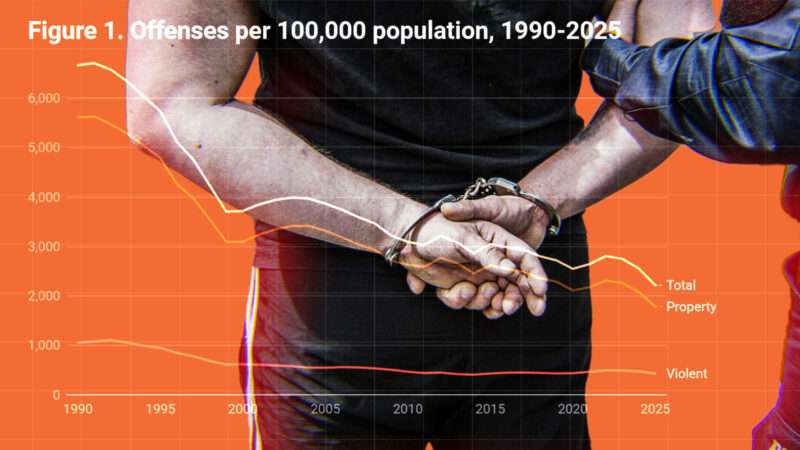
In policing, RCTs have identified more effective strategies than the “three Rs”: random patrol, rapid response, and reactive investigation. The Minneapolis police department conducted a random test doubling police patrols on half of the identified crime hotspots. The result was a cut of crime calls by 13 percent in areas with increased patrols. In another study in England, short-duration police foot patrols in violent crime hotspots caused crime to fall in those areas by 40 percent. Training police to use explanatory, courteous, and friendly procedural justice scripts when interacting with citizens in randomly chosen hotspots reduced both arrests and crimes. On the other hand, despite initial hopes, body-worn cameras do not consistently improve the behavior of either police or citizens.

As Pearson rightly observes, “evidence does not appeal to the emotions in the same way as personal stories do. We have to be trained to accept that it’s more compelling and to think in analytical way.” The development of projects like the Cochrane Collaboration does not guarantee that policymakers or practitioners will consult them.

But evidence-based practices do seem to be slowly taking hold. And that’s a good thing. When trying to determine what’s true or false, you should insist on empirical evidence. Take nobody’s word for it.

The post The Evidence Revolution: Why 'Take Nobody's Word for It' Really Matters appeared first on Reason.com.

from Latest – Reason.com https://ift.tt/fUj7kKB
via IFTTT

Taxing the Rich


New York City Mayor Zohran Mamdani on stage at the Brooklyn Paramount Theatre. | Liri Agami/ZUMAPRESS/Newscom

Budget blues. New York City Mayor Zohran Mamdani and City Council Speaker Julie Menin have agreed to push back the May 1 deadline by which the mayor must issue an executive budget proposal, while the two figure out how to cover the city’s $5.4 billion budget gap, reports Politico.

Additionally, they are going to jointly call for more state budget aid and “change” to the state’s pass-through entity tax (PTET) that will allegedly generate an additional $1 billion in revenue, reports The City‘s Katie Honan.

The details are a little complex, but the PTET is essentially a voluntary state tax that certain types of businesses can pay (which is then offset by state income tax credits given to the individual business owners) in order to reduce the business owners’ federal tax liability.

According to a recent Manhattan Institute brief by E.J McMahon, almost everyone who benefits from the PTET is a millionaire income earner, which would explain why it would be a target for Mamdani.

The mayor campaigned on raising taxes on high-income earners and large corporations to pay for a raft of new spending. The city’s fiscal situation has seen him push for those same taxes just to cover the city’s existing spending.

Unfortunately for Mamdani (and fortunately for everyone else), New York City can’t raise income or corporate taxes by itself. The state needs to sign off on those tax increases.

And Gov. Kathy Hochul has thus far opposed permitting the city to hike business and income taxes. She has however proposed a tax on second homes worth over $5 million, which would allegedly pull in $5 million each year.

The proposal to change the PTET in order to raise more revenue appears to be another to “tax the rich” without more general income tax hikes.

More money, more problems. The thing to keep in mind as the budget battles in New York City play out is that this problem is not going away, regardless of what tax increases Mamdani is able to squeeze through this year.

The city has a persistent, growing budget gap driven by the continually rising cost of existing programs. The Citizens Budget Commission, a fiscal watchdog group, estimates that the city’s budget gap could reach $10 billion within the next couple of years.

Fixing today’s shortfall sets up a similar scramble for more revenue next year and the year after. And there are diminishing returns to bilking big business and the very rich. On the margins, they will start to leave the city. New York City’s millionaires account for less than 1 percent of tax filers and pay 37 percent of the city’s income taxes.

Mamdani needs to decide if he’s willing to ask New Yorkers generally to pay for the government they have (let alone the even larger one he campaigned on creating) with broad-based tax increases, or else figure out what city spending his socialist revolution can live without.


Cashing in. Lobbying firm Ballard Partners is using its close relationship to the Trump administration to recruit clients looking for oil contracts in post-Maduro Venezuela, according to a new investigation from the Project on Government Oversight (POGO).

Here’s one example from the report:

Ten days after Maduro’s capture, on January 13, Ballard Partners announced a new dedicated Venezuela Working Group and touted “former high-ranking government Trump administration officials” working at the firm.

That same day, Ballard registered Swedish-based investment company Maha Capital as a new client seeking assistance with “approvals for Venezuelan oil field acquisitions and operations.” Micah Ketchel and Thomas Boodry, former Trump aides who’ve also worked for Rubio, were listed as part of the lobbying team. Maha Capital paid Ballard $120,000 in the first quarter of 2026 to lobby both the State and Treasury departments.

On March 18, the Treasury Department’s Office of Foreign Assets Control (OFAC) authorized “established” U.S. entities to do business with Venezuela’s state-owned oil company Petróleos de Venezuela, S.A. (PDVSA), paving the way for Maha Capital to move forward inside Venezuela. In a press release that same day, Maha Capital’s CEO said he was “pleased” with the decision, and the company announced it would buy a stake in a Venezuelan oil field and would transfer that stake to its U.S.-based subsidiaries to comply with the OFAC decision.

President Donald Trump has been pretty blunt in saying that his priority following the capture of Nicolás Maduro has been getting Venezuelan oil flowing again. The kind of influence operation described in the POGO report isn’t necessarily surprising in that context. It does puncture the idea that our removal of Madruo had all that much to do with furthering American security or Venezuelan freedom.


Scenes from Washington, D.C.: Airports are generally comfortable and clean places, even if they are awash in unrelenting statism. It’s hard to think of another environment where the average citizen is more surveilled, controlled, and propagandized.

The particular signature of Big Brother that caught my eye traveling through Ronald Reagan Washington National Airport yesterday was this poster in the men’s room instructing me to be on the lookout for telltale signs of human trafficking.

Human trafficking poster
Christian Britschgi

These are some odd human trafficking signs to tell the general public to look out for. I’m not sure how anyone would be able to tell by mere observation whether their fellow travelers have a genuine relationship with the child in their care or if they have reasonable travel plans.

Perhaps the intended audience is security personnel or airline employees who would be able to glean more information about travelers while doing their job. If that’s the case, though, why post these announcements in public restrooms?

The best thing one can say about the above PSA is that it’s dumb. At worst, it encourages travelers to be on the lookout for human trafficking activity that is both exceptionally rare and not apparent to the average observer.

Every once in a while, one sees news stories about an airline passenger who’s been falsely accused of trafficking someone who turns out to be their own child or other relative. It’s a terrible thing for the falsely accused to go through. Posters like the above only encourage more erroneous trafficking accusations.


QUICK HITS

  • Analysts predict spiking energy prices.
  • The Supreme Court weighs the constitutionality of “geofence warrants.”
  • Is OpenAI spending too much on data centers?
  • Speaking of, Hakeem Jeffries beats up on data centers.
  • The alleged correspondents’ dinner shooter has been charged with attempting to assassinate President Trump.

The post Taxing the Rich appeared first on Reason.com.

from Latest – Reason.com https://ift.tt/T8XS1ao
via IFTTT

Apparent Surge in Self-Represented Litigation Using AI

From Anand V. Shah & Joshua Y. Levy, Access to Justice in the Age of AI: Evidence from U.S. Federal Courts (in draft):

This paper studies how generative AI has reshaped entry into the federal civil court system. Drawing on administrative records covering more than 4.5 million non-prisoner federal civil court cases from FY2005-FY2026 and 46 million PACER docket entries matched to those cases, we document three sets of findings.

First, the number of pro se cases—or self-represented cases—is increasing dramatically, rising from a long-term steady-state average of 11% to 16.8% in FY2025. This increase is concentrated in case types characterized by formulaic document production and absent from more complex, attorney-intensive categories.

Second, we argue these cases are placing larger burden on federal district courts. Pro se cases are not terminating faster, and this combined with the increased case numbers suggests more cases for judges to process. Moreover, intra-case activity is up, with the total volume of docket entries per court generated by pro se cases in their first 180 days up 158% from pre-AI means to 2025.

Third, we directly validate that AI use is increasing in federal courts. Using a random sample of 1,600 complaints drawn from an 8-year period (2019-2026), we find that a large and growing share of complaints are flagging positive for AI-generated text, from essentially zero in the pre-AI period to more than 18% in 2026.

Don’t know how it’s carrying over to state courts, but one would think that it would.

The post Apparent Surge in Self-Represented Litigation Using AI appeared first on Reason.com.

from Latest – Reason.com https://ift.tt/NbJr4jZ
via IFTTT