Robot Generals: Will They Make Better Decisions Than Humans Or Worse?

Robot Generals: Will They Make Better Decisions Than Humans Or Worse?

Tyler Durden

Thu, 08/27/2020 – 21:45

Authored by Michael Klare via TomDispatch.com,

With Covid-19 incapacitating startling numbers of U.S. service members and modern weapons proving increasingly lethal, the American military is relying ever more frequently on intelligent robots to conduct hazardous combat operations. Such devices, known in the military as “autonomous weapons systems,” include robotic sentries, battlefield-surveillance drones, and autonomous submarines. So far, in other words, robotic devices are merely replacing standard weaponry on conventional battlefields.

Now, however, in a giant leap of faith, the Pentagon is seeking to take this process to an entirely new level — by replacing not just ordinary soldiers and their weapons, but potentially admirals and generals with robotic systems.

Admittedly, those systems are still in the development stage, but the Pentagon is now rushing their future deployment as a matter of national urgency. Every component of a modern general staff — including battle planning, intelligence-gathering, logistics, communications, and decision-making — is, according to the Pentagon’s latest plans, to be turned over to complex arrangements of sensors, computers, and software. All these will then be integrated into a “system of systems,” now dubbed the Joint All-Domain Command-and-Control, or JADC2 (since acronyms remain the essence of military life). Eventually, that amalgam of systems may indeed assume most of the functions currently performed by American generals and their senior staff officers.

The notion of using machines to make command-level decisions is not, of course, an entirely new one. It has, in truth, been a long time coming. During the Cold War, following the introduction of intercontinental ballistic missiles (ICBMs) with extremely short flight times, both military strategists and science-fiction writers began to imagine mechanical systems that would control such nuclear weaponry in the event of human incapacity.

In Stanley Kubrick’s satiric 1964 movie Dr. Strangelove, for example, the fictional Russian leader Dimitri Kissov reveals that the Soviet Union has installed a “doomsday machine” capable of obliterating all human life that would detonate automatically should the country come under attack by American nuclear forces. Efforts by crazed anti-Soviet U.S. Air Force officers to provoke a war with Moscow then succeed in triggering that machine and so bring about human annihilation. In reality, fearing that they might experience a surprise attack of just this sort, the Soviets later did install a semi-automatic retaliatory system they dubbed “Perimeter,” designed to launch Soviet ICBMs in the event that sensors detected nuclear explosions and all communications from Moscow had been silenced. Some analysts believe that an upgraded version of Perimeter is still in operation, leaving us in an all-too-real version of a Strangelovian world.

In yet another sci-fi version of such automated command systems, the 1983 film War Games, starring Matthew Broderick as a teenage hacker, portrayed a supercomputer called the War Operations Plan Response, or WOPR (pronounced “whopper”) installed at the North American Aerospace Command (NORAD) headquarters in Colorado. When the Broderick character hacks into it and starts playing what he believes is a game called “World War III,” the computer concludes an actual Soviet attack is underway and launches a nuclear retaliatory response. Although fictitious, the movie accurately depicts many aspects of the U.S. nuclear command-control-and-communications (NC3) system, which was then and still remains highly automated.

Such devices, both real and imagined, were relatively primitive by today’s standards, being capable solely of determining that a nuclear attack was under way and ordering a catastrophic response. Now, as a result of vast improvements in artificial intelligence (AI) and machine learning, machines can collect and assess massive amounts of sensor data, swiftly detect key trends and patterns, and potentially issue orders to combat units as to where to attack and when.

Time Compression and Human Fallibility

The substitution of intelligent machines for humans at senior command levels is becoming essential, U.S. strategists argue, because an exponential growth in sensor information combined with the increasing speed of warfare is making it nearly impossible for humans to keep track of crucial battlefield developments. If future scenarios prove accurate, battles that once unfolded over days or weeks could transpire in the space of hours, or even minutes, while battlefield information will be pouring in as multitudinous data points, overwhelming staff officers. Only advanced computers, it is claimed, could process so much information and make informed combat decisions within the necessary timeframe.

Such time compression and the expansion of sensor data may apply to any form of combat, but especially to the most terrifying of them all, nuclear war. When ICBMs were the principal means of such combat, decisionmakers had up to 30 minutes between the time a missile was launched and the moment of detonation in which to determine whether a potential attack was real or merely a false satellite reading (as did sometimes occur during the Cold War). Now, that may not sound like much time, but with the recent introduction of hypersonic missiles, such assessment times could shrink to as little as five minutes. Under such circumstances, it’s a lot to expect even the most alert decision-makers to reach an informed judgment on the nature of a potential attack. Hence the appeal (to some) of automated decision-making systems.

“Attack-time compression has placed America’s senior leadership in a situation where the existing NC3 system may not act rapidly enough,” military analysts Adam Lowther and Curtis McGiffin argued at War on the Rocks, a security-oriented website.

“Thus, it may be necessary to develop a system based on artificial intelligence, with predetermined response decisions, that detects, decides, and directs strategic forces with such speed that the attack-time compression challenge does not place the United States in an impossible position.”

This notion, that an artificial intelligence-powered device — in essence, a more intelligent version of the doomsday machine or the WOPR — should be empowered to assess enemy behavior and then, on the basis of “predetermined response options,” decide humanity’s fate, has naturally produced some unease in the community of military analysts (as it should for the rest of us as well). Nevertheless, American strategists continue to argue that battlefield assessment and decision-making — for both conventional and nuclear warfare — should increasingly be delegated to machines.

“AI-powered intelligence systems may provide the ability to integrate and sort through large troves of data from different sources and geographic locations to identify patterns and highlight useful information,” the Congressional Research Service noted in a November 2019 summary of Pentagon thinking.

“As the complexity of AI systems matures,” it added, “AI algorithms may also be capable of providing commanders with a menu of viable courses of action based on real-time analysis of the battlespace, in turn enabling faster adaptation to complex events.”

The key wording there is “a menu of viable courses of action based on real-time analysis of the battlespace.” This might leave the impression that human generals and admirals (not to speak of their commander-in-chief) will still be making the ultimate life-and-death decisions for both their own forces and the planet. Given such anticipated attack-time compression in future high-intensity combat with China and/or Russia, however, humans may no longer have the time or ability to analyze the battlespace themselves and so will come to rely on AI algorithms for such assessments. As a result, human commanders may simply find themselves endorsing decisions made by machines — and so, in the end, become superfluous.

Creating Robot Generals

Despite whatever misgivings they may have about their future job security, America’s top generals are moving swiftly to develop and deploy that JADC2 automated command mechanism. Overseen by the Air Force, it’s proving to be a computer-driven amalgam of devices for collecting real-time intelligence on enemy forces from vast numbers of sensor devices (satellites, ground radars, electronic listening posts, and so on), processing that data into actionable combat information, and providing precise attack instructions to every combat unit and weapons system engaged in a conflict — whether belonging to the Army, Navy, Air Force, Marine Corps, or the newly formed Space Force and Cyber Command.

What, exactly, the JADC2 will consist of is not widely known, partly because many of its component systems are still shrouded in secrecy and partly because much of the essential technology is still in the development stage. Delegated with responsibility for overseeing the project, the Air Force is working with Lockheed Martin and other large defense contractors to design and develop key elements of the system.

One such building block is its Advanced Battle Management System (ABMS), a data-collection and distribution system intended to provide fighter pilots with up-to-the-minute data on enemy positions and help guide their combat moves. Another key component is the Army’s Integrated Air and Missile Defense Battle Command System (IBCS), designed to connect radar systems to anti-aircraft and missile-defense launchers and provide them with precise firing instructions. Over time, the Air Force and its multiple contractors will seek to integrate ABMS and IBCS into a giant network of systems connecting every sensor, shooter, and commander in the country’s armed forces — a military “internet of things,” as some have put it.

To test this concept and provide an example of how it might operate in the future, the Army conducted a live-fire artillery exercise this August in Germany using components (or facsimiles) of the future JADC2 system. In the first stage of the test, satellite images of (presumed) Russian troop positions were sent to an Army ground terminal, where an AI software program called Prometheus combed through the data to select enemy targets. Next, another AI program called SHOT computed the optimal match of available Army weaponry to those intended targets and sent this information, along with precise firing coordinates, to the Army’s Advanced Field Artillery Tactical Data System (AFATDS) for immediate action, where human commanders could choose to implement it or not. In the exercise, those human commanders had the mental space to give the matter a moment’s thought; in a shooting war, they might just leave everything to the machines, as the system’s designers clearly intend them to do.

In the future, the Army is planning even more ambitious tests of this evolving technology under an initiative called Project Convergence. From what’s been said publicly about it, Convergence will undertake ever more complex exercises involving satellites, Air Force fighters equipped with the ABMS system, Army helicopters, drones, artillery pieces, and tactical vehicles. Eventually, all of this will form the underlying “architecture” of the JADC2, linking every military sensor system to every combat unit and weapons system — leaving the generals with little to do but sit by and watch.

Why Robot Generals Could Get It Wrong

Given the complexity of modern warfare and the challenge of time compression in future combat, the urge of American strategists to replace human commanders with robotic ones is certainly understandable. Robot generals and admirals might theoretically be able to process staggering amounts of information in brief periods of time, while keeping track of both friendly and enemy forces and devising optimal ways to counter enemy moves on a future battlefield. But there are many good reasons to doubt the reliability of robot decision-makers and the wisdom of using them in place of human officers.

To begin with, many of these technologies are still in their infancy, and almost all are prone to malfunctions that can neither be easily anticipated nor understood. And don’t forget that even advanced algorithms can be fooled, or “spoofed,” by skilled professionals.

In addition, unlike humans, AI-enabled decision-making systems will lack an ability to assess intent or context. Does a sudden enemy troop deployment, for example, indicate an imminent attack, a bluff, or just a normal rotation of forces? Human analysts can use their understanding of the current political moment and the actors involved to help guide their assessment of the situation. Machines lack that ability and may assume the worst, initiating military action that could have been avoided.

Such a problem will only be compounded by the “training” such decision-making algorithms will undergo as they are adapted to military situations. Just as facial recognition software has proved to be tainted by an over-reliance on images of white males in the training process — making them less adept at recognizing, say, African-American women — military decision-making algorithms are likely to be distorted by an over-reliance on the combat-oriented scenarios selected by American military professionals for training purposes. “Worst-case thinking” is a natural inclination of such officers — after all, who wants to be caught unprepared for a possible enemy surprise attack? — and such biases will undoubtedly become part of the “menus of viable courses of action” provided by decision-making robots.

Once integrated into decision-making algorithms, such biases could, in turn, prove exceedingly dangerous in any future encounters between U.S. and Russian troops in Europe or American and Chinese forces in Asia. A clash of this sort might, after all, arise at any time, thanks to some misunderstanding or local incident that rapidly gains momentum — a sudden clash between U.S. and Chinese warships off Taiwan, for example, or between American and Russian patrols in one of the Baltic states. Neither side may have intended to ignite a full-scale conflict and leaders on both sides might normally move to negotiate a cease-fire. But remember, these will no longer simply be human conflicts. In the wake of such an incident, the JADC2 could detect some enemy move that it determines poses an imminent risk to allied forces and so immediately launch an all-out attack by American planes, missiles, and artillery, escalating the conflict and foreclosing any chance of an early negotiated settlement.

Such prospects become truly frightening when what’s at stake is the onset of nuclear war. It’s hard to imagine any conflict among the major powers starting out as a nuclear war, but it’s far easier to envision a scenario in which the great powers — after having become embroiled in a conventional conflict — reach a point where one side or the other considers the use of atomic arms to stave off defeat. American military doctrine, in fact, has always held out the possibility of using so-called tactical nuclear weapons in response to a massive Soviet (now Russian) assault in Europe. Russian military doctrine, it is widely assumed, incorporates similar options. Under such circumstances, a future JADC2 could misinterpret enemy moves as signaling preparation for a nuclear launch and order a pre-emptive strike by U.S. nuclear forces, thereby igniting World War III.

War is a nasty, brutal activity and, given almost two decades of failed conflicts that have gone under the label of “the war on terror,” causing thousands of American casualties (both physical and mental), it’s easy to understand why robot enthusiasts are so eager to see another kind of mentality take over American war-making. As a start, they contend, especially in a pandemic world, that it’s only humane to replace human soldiers on the battlefield with robots and so diminish human casualties (at least among combatants). This claim does not, of course, address the argument that robot soldiers and drone aircraft lack the ability to distinguish between combatants and non-combatants on the battlefield and so cannot be trusted to comply with the laws of war or international humanitarian law — which, at least theoretically, protect civilians from unnecessary harm — and so should be banned.

Fraught as all of that may be on future battlefields, replacing generals and admirals with robots is another matter altogether. Not only do legal and moral arguments arise with a vengeance, as the survival of major civilian populations could be put at risk by computer-derived combat decisions, but there’s no guarantee that American GIs would suffer fewer casualties in the battles that ensued. Maybe it’s time, then, for Congress to ask some tough questions about the advisability of automating combat decision-making before this country pours billions of additional taxpayer dollars into an enterprise that could, in fact, lead to the end of the world as we know it.

Maybe it’s time as well for the leaders of China, Russia, and this country to limit or ban the deployment of hypersonic missiles and other weaponry that will compress life-and-death decisions for humanity into just a few minutes, thereby justifying the automation of such fateful judgments.

via ZeroHedge News https://ift.tt/2YXHWvZ Tyler Durden
One Bank Finally Tells The Truth: “The Fed Policies Have Become Part Of The Problem”

One Bank Finally Tells The Truth: “The Fed Policies Have Become Part Of The Problem”

Tyler Durden

Thu, 08/27/2020 – 21:25

In the aftermath of today’s announcement by the Fed of 2% Average Inflation Targeting there were numerous hot takes (such as this one from Goldman) simplifying what the Fed just did: namely a “new” stance of allowing inflation to run high and the unemployment rate to run lower for longer, which according to BMO meant that the “Fed’s dovishness appears to be in perpetuity.” The reason: avoid any market tremors for the next five years arising out of fear that the Fed may unexpectedly tighten financial conditions if inflation suddenly gets hot.

What was not discussed is what the Fed did not say, namely that it is now compounding failure upon failure, and after 10 years of failed policies that were unable to spark higher wages (i.e., good inflation) while promoting a giant asset bubble, it will crush the living standard of the middle class further by running inflation hot even as asset prices scream to new all time highs. What was also not discussed is the Fed’s role in the catastrophic economic situation the world finds itself in.

However, one banker did have to courage to address the elephant in the room, and that would be Rabobank’s Philip Marey who in his Fed post-mortem “The Wrong Kind of Symmetry”, writes that it took the Fed six years to describe symmetry of the inflation target in the Statement on Longer-Run Goals, noting that “while not completely irrelevant, it is the wrong kind of symmetry to focus on.”

In one of the most overt criticism of the Fed we have read to date, Marey writes that “while the Fed’s step to make the inflation target “more” symmetric may benefit the wages of the average American somewhere beyond 2022, it does not really address the deeper problem with the role the Fed is playing in the US economy. It could be argued that the Fed’s policies have become part of the problem, instead of the solution.” And, as the Rabobank strategist suggests, “at least this should be a topic for debate in the FOMC, instead of talking a whole year about whether to use an average or not.”

To this all we would add is that the Fed should take a long, hard look at its prefered metric of core PCE: as we have repeatedly explained in recent years, the Fed continues to purposefully undercount inflation, and on top of that, it now has openly said it will disregard the politically palatable core PCE/CPI number just so it can continue blowing an asset bubble of epic proportions.

It was Marey’s conclusion however that was the piece de resistance:

The much deeper problem for the US economy is the asymmetric impact of Fed policies on households and businesses. The Fed’s monetary and regulatory policies have contributed to a form of capitalism where the rewards are going to the 1% and the risks are borne by the 99%. The current crisis response has made it painfully clear again that the Fed’s policies benefit high income individuals and large corporations, while small businesses and low income individuals bear the burden. While the Fed likes to see itself as part of the solution to America’s economic problems, it should ask itself whether it is also part of these problems.

Alas, as we explained yesterday, this won’t happen until the crowds of angry rioters are finally at their rightful place: in front of the Marriner Eccles building. Until then, it is just more smoke and mirrors.

We republish Marey’s full must read note below:

The Wrong Kind Of Symmetry

  • It has taken the FOMC six years to make the symmetry of its inflation target explicit in its Statement on Longer-Run Goals and Monetary Policy Strategy.
  • The Fed’s framework review will lead to a more dovish reaction function in the long run, but hardly seems relevant in the next few years.
  • What’s more, higher tolerance for inflation in itself does not cause inflation if slack is high or can’t be leveraged when it is low.
  • Unfortunately, the Fed is not taking a critical look at the asymmetric impact of its policies on households and businesses. This is the kind of symmetry that may be more important

Symmetric means on average

Nowadays everything is breaking news, even when it is old news. The Chairman of the Fed is giving a speech at Jackson Hole, so it must be important. “Symmetry means on average” that was about all he had to say.

Let’s take a step back in history. The FOMC formally announced its 2% inflation target on January 25, 2012, in its Longer-Run Goals and Policy Strategy: “The Committee judges that inflation at the rate of 2 percent as measured by the annual change in the price index for personal consumption expenditures, is most consistent over the longer run with the Federal Reserve’s statutory mandate.” While this statement implicitly indicates that the Fed’s inflation target is symmetric, this was explicitly confirmed in the FOMC minutes of the October 2014 meeting: “there was widespread agreement that inflation moderately above the Committee’s 2 percent goal and inflation the same amount below that level were equally costly.” However, the doves were pointing out that inflation had spent more time below target than above target. In particular, Narayana Kocherlakota (Minneapolis Fed) pressed for an explicit recognition of the symmetry of the target. So he finally gets what he asked for. In other words, it took the FOMC 6 (!) years to get an explicit recognition of the symmetry of the inflation target from the minutes to the Statement on Longer-Run Goals and Monetary Policy Strategy. During the Q&A at the Kansas City Fed event Powell said the Fed intends to do this kind of monetary policy review every 5 years. Does this mean that we have to wait 5 more years for the next negligible progress?

Anyway, the Fed released a revised Statement on Longer-Run Goals and Monetary Policy Strategy with the main change reflected in the following sentence: “In order to anchor longer-term inflation expectations at this level, the Committee seeks to achieve inflation that averages 2 percent over time, and therefore judges that, following periods when inflation has been running persistently below 2 percent, appropriate monetary policy will likely aim to achieve inflation moderately above 2 percent for some time.” However, Powell stressed that no exact formula will be used, so it will be ‘a flexible form of average inflation targeting.’

Does it matter?

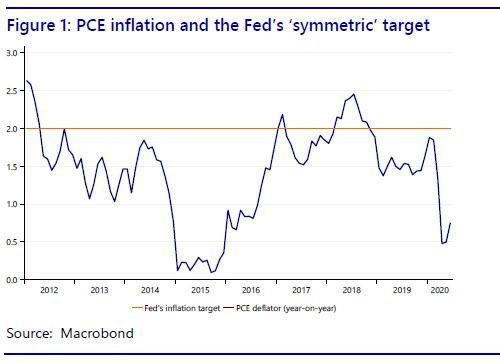
One look at Figure 1 shows that the Fed certainly has not been able to steer PCE inflation symmetrically around the 2% target. In reality, inflation has been mostly below target.

So does the explicit recognition of the symmetry of the inflation target really make a difference? In the short and medium run, definitely not. If we look at the FOMC’s own projections, they do not expect PCE inflation to get near the 2.0% target before 2023. And it may not occur soon after that with unemployment at 5.5% by the final quarter of 2022 well above the NAIRU of 4.1%. So even by their own projections this framework revision will not be relevant before 2023. Or do they expect inflation expectations to rise and cause inflation? This is very unlikely, with unemployment well above the NAIRU. Higher tolerance for inflation in itself does not cause inflation if slack is high or can’t be leveraged when it is low. While a higher inflation tolerance would allow for more wage growth, it will not create it.

In the long run it will allow the FOMC to take more time to start hiking when unemployment gets low and threatens to push up inflation. After all, the undershoot of recent years may be compensated by a moderate overshoot. This will spread employment to low-skilled people. This stands in sharp contrast to the Fed’s mistaken belief in the Phillips curve in recent years, when they accelerated the hiking cycle in 2017 and 2018 despite any evidence of low unemployment leading to wage pressures causing a wage-price spiral. So perhaps the Fed has finally learned something. The Fed’s framework review will lead to a more dovish reaction function in the long run. However, Powell already mentioned this after the June meeting of the FOMC. So nothing new here either

What really matters

It took the Fed six years to describe symmetry of the inflation target in the Statement on Longer-Run Goals. While not completely irrelevant, it is the wrong kind of symmetry to focus on. While the Fed’s step to make the inflation target ‘more’ symmetric may benefit the wages of the average American somewhere beyond 2022, it does not really address the deeper problem with the role the Fed is playing in the US economy. It could be argued that the Fed’s policies have become part of the problem, instead of the solution. At least this should be a topic for debate in the FOMC, instead of talking a whole year about whether to use an average or not.

The much deeper problem for the US economy is the asymmetric impact of Fed policies on households and businesses. The Fed’s monetary and regulatory policies have contributed to a form of capitalism where the rewards are going to the 1% and the risks are borne by the 99%. The current crisis response has made it painfully clear again that the Fed’s policies benefit high income individuals and large corporations, while small businesses and low income individuals bear the burden. While the Fed likes to see itself as part of the solution to America’s economic problems, it should ask itself whether it is also part of these problems.

via ZeroHedge News https://ift.tt/32DEuro Tyler Durden

Science Is Not About Consensus

Science Is Not About Consensus

Tyler Durden

Thu, 08/27/2020 – 21:05

Authored by Jeff Harris via The Ron Paul Institute for Peace & Prosperity,

Newsflash; real science is based on facts not “consensus”.

I’m sick and tired of idiots beating me over the head with pseudoscience instead of sticking to the cold, hard facts.

Show me the hard data that standing six feet from someone is necessary.

Show me the hard data that wearing any old rag on my face is going to materially stop the spread of a virus.

Show me the hard data that enjoying fresh air and sunshine outdoors could be an invitation to an early death.

Please, stick to the facts and don’t dare lecture me about the “consensus” and here’s why.

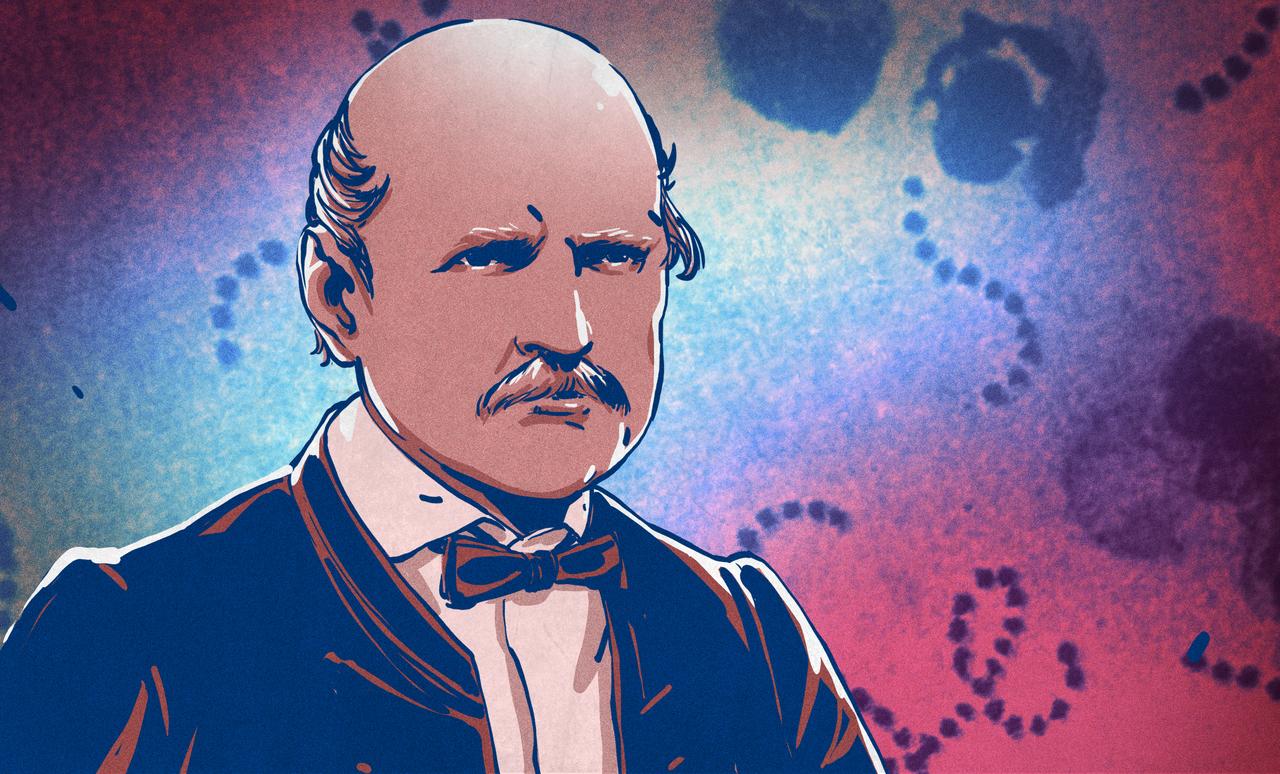
Maybe you’ve heard of Ignaz Semmelweis, an Austrian-Hungarian obstetrician with a prickly personality. If not, you will quickly recognize his contribution to the medical profession with the three words he made famous:

“Wash your hands.”

This was way back in 1847.

Dr. Semmelweis provided hard data clearly demonstrating that once he and his staff began washing their hands and disinfecting equipment between patients the number of infections and deaths dropped dramatically.

Unfortunately, the scientific “consensus” at the time held that there was no benefit to these measures and his advice was almost completely ignored by the learned medical community. In fact, many of his medical peers were incensed with his suggestion that they could be responsible for transmitting illness and disease!

At the time doctors took pride in their soiled gowns as a mark of their industrious work! It was commonplace for doctors who had just completed an autopsy to go to the maternity ward and deliver babies without ever washing up! After all it was the “consensus” and with so many doctors in agreement how could they be wrong?

Dr. Semmelweis died in an insane asylum in 1865 knowing that untold numbers of patients had needlessly suffered and died because the medical community refused to accept his findings and instead chose to follow the “consensus”. Ironically, the same year Dr. Semmelweis died Dr. Joseph Lister, a British surgeon, began building on the work of French microbiologist Louis Pasteur regarding germ theory.

Dr. Lister began experimenting with various means of disinfecting wounds. He instructed surgeons under his responsibility to not only wash their hands with a 5 percent solution of carbolic acid but also wear clean gloves. His work validated Dr. Semmelweis discoveries regarding the value of hygiene and cleanliness in medicine.

Today we all benefit from Dr. Semmelweis groundbreaking work even though he was never recognized for his contribution during his lifetime. The moral to this story is that scientific “consensus” is often wrong. In no way can it justify the hysteria, lockdowns and wealth destruction that is being manufactured by the elites.

The COVID hysteria is emotion based, not fact based. Instead of cold, hard facts backing up the “science” we’re told to shut up and accept the “consensus”. As Dr. Semmelweis discovered the consensus is often wrong.

via ZeroHedge News https://ift.tt/32wdFVZ Tyler Durden

South Korea Extends Short-Selling Ban To 2021 As Volatility ‘Explosion’ Could Be Nearing

South Korea Extends Short-Selling Ban To 2021 As Volatility ‘Explosion’ Could Be Nearing

Tyler Durden

Thu, 08/27/2020 – 20:45

South Korea’s financial regulator on Thursday extended a ban on short-selling of listed shares for another six months, as COVID-19 cases jump to the highest level since the pandemic. 

The current ban on short-selling Korea Composite Stock Price Index, or KOSPI, shares will be extended through March 15, 2021, as “widening of market volatility due to concern over the resurgence of the Covid-19” is expected, the Financial Services Commission (FSC) said in a statement, reported Reuters.

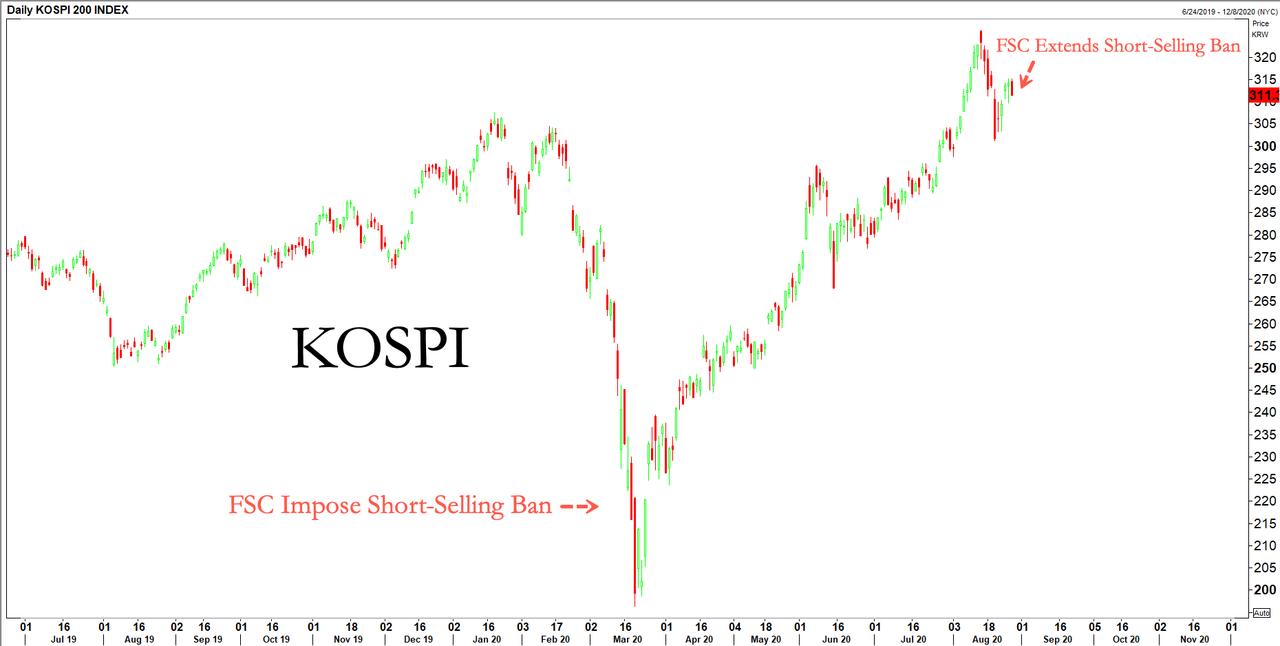
The initial ban was first imposed on March 13 following an extreme surge in equity volatility due to the virus pandemic crashing the global economy.

“Considering the rising volatility in markets with the fresh waves of Covid-19, we decided to extend the six-month short-selling ban imposed since March,” FSC said.

“During the extended ban, we will seek to improve rules to offer retail investors’ better access to short-selling and tighten punishment for illegal practices for short sales on equities.”

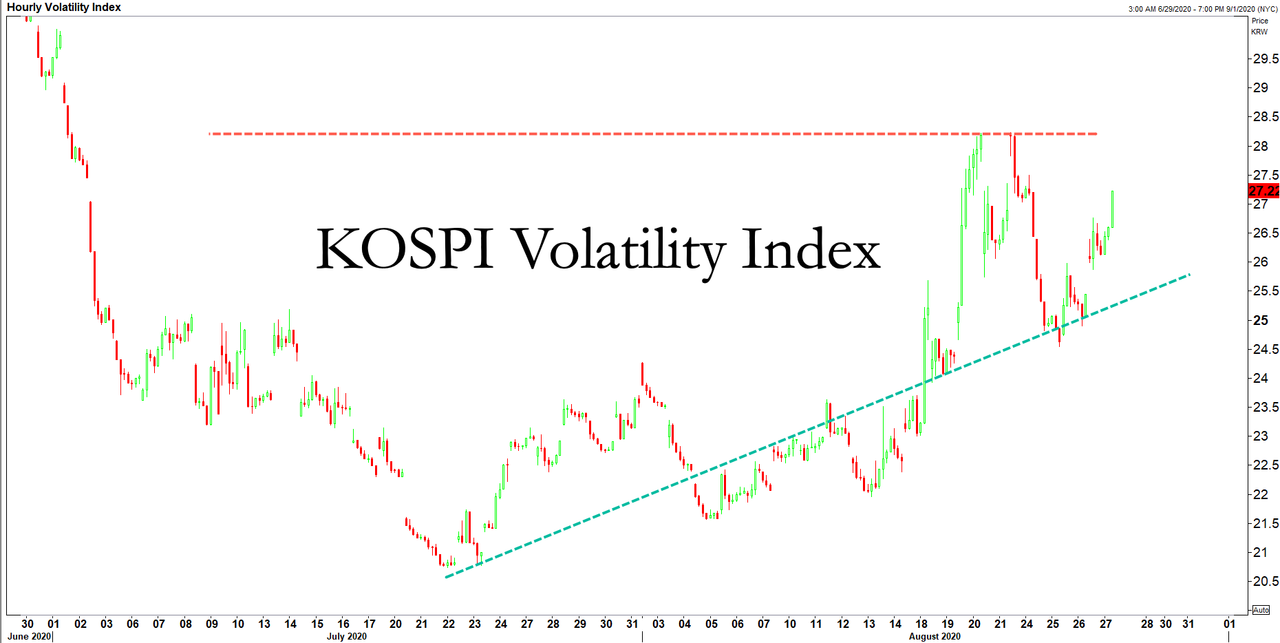
The KOSPI Volatility Index rose 7% to 27.22 on Thursday following a new report from the government of 441 new coronavirus cases, the highest since March. 

In relation to KOSPI price, here’s where FSC has imposed the short-selling ban and extension this year.

The extension of the ban suggests as global equities power to new highs (as measured by the MSCI World Index), effectively clawing back all losses from the February-March crash, that a renewed period of volatility could be ahead. 

Morgan Stanley’s Michael Wilson explained this week why a growth scare could produce another round of volatility (see: “Morgan Stanley Warns “The First Tradable Correction Could Begin Imminently“”). 

via ZeroHedge News https://ift.tt/3jjwG4D Tyler Durden

Trump’s Attacks on Free Trade Have Actually Made It More Popular With Voters

ipurestockxfour325536

Speakers at the Republican Convention this week have routinely praised the success of Trump’s economic policies, even though his record is, at best, mixed even if one discounts the COVID-19 pandemic. When it comes to the public’s perception of Trump’s trade policies, however, he seems to have accomplished something truly impressive, if a bit bizarre: almost the entire public—regardless of party—has now come to support international trade as a concept.

This differs starkly with the wide partisan differences that hold on many other foreign policy issues.

In a poll conducted last summer by the Chicago Council on Global Affairs, for example, 78 percent of Republicans said they considered immigration to be a “critical threat” to the country’s “vital interests,” while only 19 percent of Democrats were similarly alarmed. In contrast, 78 percent of Democrats found climate change to be a “critical threat” while only 23 percent of Republicans agreed. And 54 percent of Republicans, but only 36 percent of Democrats, said they found the development of China as a world power to be such a threat, even as 69 percent of Democrats, but only 37 percent of Republicans, expressed concern about foreign interference in American elections. The gap on whether the United States should share its “leadership role” with other countries was also wide: 75 percent of Democrats agreed, but only 51 percent of Republicans.

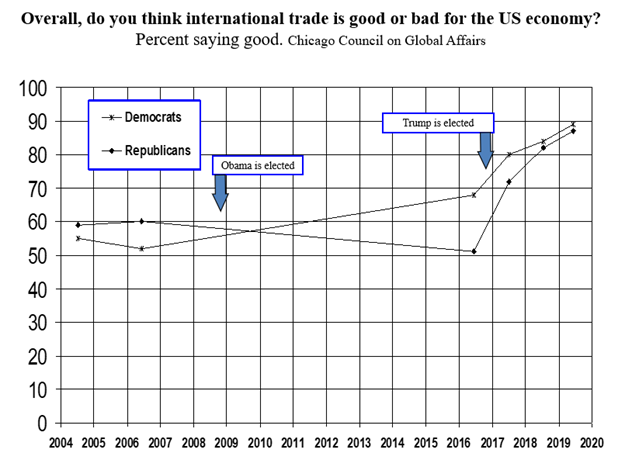
Ask those same people how they feel about international trade, and the picture looks much different. 

Chicago Council on Global Affairs

Until Trump, about 55 or 60 percent of the population supported trade when asked a rather standard and straight-forward question: “Overall, do you think international trade is good or bad for the US economy?” As you might expect, Republicans were a bit more supportive during the presidency of George W. Bush, while Democrats were more in favor of trade when Barack Obama was in the White House. 

However, under Trump, both percentages have abruptly soared to the point of almost complete consensus: nearly 90 percent of both Democrats and Republicans now say they support international trade, and the same holds for independents.

This remarkable phenomenon seems to have arisen from a difference in perception. Republicans conclude that, since Trump appears to support international trade, it must be a good thing. Democrats come to the same conclusion, but from the opposite direction. They look at Trump’s tariffs and other anti-trade behavior and reckon that, since Trump appears to oppose international trade, it must be a good thing.

Some of that confusion is probably due to Trump’s own mixed messages. The president has repeatedly characterized himself as a free trader. But, he says, he needs to engage actively to level the playing field by, for example, slapping tariffs on countries he judges to have broken the rules.

People tend to hear what they want to hear. In this instance, that has paradoxically enhanced support for international trade on both sides of the aisle. In some respects, it is the ultimate con, confirming, perhaps, that you can sometimes fool all the people some of the time—though in this case, the foolery is in a good direction.

But it is unlikely that Trump is doing this consciously. And whether this agreeable, if unintended, bump will outlive his presidency remains to be seen.

from Latest – Reason.com https://ift.tt/3lpbtbl
via IFTTT

Trump’s Attacks on Free Trade Have Actually Made It More Popular With Voters

ipurestockxfour325536

Speakers at the Republican Convention this week have routinely praised the success of Trump’s economic policies, even though his record is, at best, mixed even if one discounts the COVID-19 pandemic. When it comes to the public’s perception of Trump’s trade policies, however, he seems to have accomplished something truly impressive, if a bit bizarre: almost the entire public—regardless of party—has now come to support international trade as a concept.

This differs starkly with the wide partisan differences that hold on many other foreign policy issues.

In a poll conducted last summer by the Chicago Council on Global Affairs, for example, 78 percent of Republicans said they considered immigration to be a “critical threat” to the country’s “vital interests,” while only 19 percent of Democrats were similarly alarmed. In contrast, 78 percent of Democrats found climate change to be a “critical threat” while only 23 percent of Republicans agreed. And 54 percent of Republicans, but only 36 percent of Democrats, said they found the development of China as a world power to be such a threat, even as 69 percent of Democrats, but only 37 percent of Republicans, expressed concern about foreign interference in American elections. The gap on whether the United States should share its “leadership role” with other countries was also wide: 75 percent of Democrats agreed, but only 51 percent of Republicans.

Ask those same people how they feel about international trade, and the picture looks much different. 

Chicago Council on Global Affairs

Until Trump, about 55 or 60 percent of the population supported trade when asked a rather standard and straight-forward question: “Overall, do you think international trade is good or bad for the US economy?” As you might expect, Republicans were a bit more supportive during the presidency of George W. Bush, while Democrats were more in favor of trade when Barack Obama was in the White House. 

However, under Trump, both percentages have abruptly soared to the point of almost complete consensus: nearly 90 percent of both Democrats and Republicans now say they support international trade, and the same holds for independents.

This remarkable phenomenon seems to have arisen from a difference in perception. Republicans conclude that, since Trump appears to support international trade, it must be a good thing. Democrats come to the same conclusion, but from the opposite direction. They look at Trump’s tariffs and other anti-trade behavior and reckon that, since Trump appears to oppose international trade, it must be a good thing.

Some of that confusion is probably due to Trump’s own mixed messages. The president has repeatedly characterized himself as a free trader. But, he says, he needs to engage actively to level the playing field by, for example, slapping tariffs on countries he judges to have broken the rules.

People tend to hear what they want to hear. In this instance, that has paradoxically enhanced support for international trade on both sides of the aisle. In some respects, it is the ultimate con, confirming, perhaps, that you can sometimes fool all the people some of the time—though in this case, the foolery is in a good direction.

But it is unlikely that Trump is doing this consciously. And whether this agreeable, if unintended, bump will outlive his presidency remains to be seen.

from Latest – Reason.com https://ift.tt/3lpbtbl
via IFTTT

Is California Over?

Is California Over?

Tyler Durden

Thu, 08/27/2020 – 20:25

Authored by John Rubino via DollarCollapse.com,

By now it’s painfully obvious that we humans tend to ruin our favorite places by overrunning them. And no place makes this point better than California. An absolute paradise 25 million people ago, parts of it are now a hellscape of Mad Maxian proportions.

Consider:

Rolling blackouts due in part to bad planning and in part to overpopulation are disrupting businesses and making homes unbearable in 100-degree summer heat.

Wildfires, due in part to excess people being shunted into “suburbs” surrounded by brushland, are burning thousands of houses and roasting the unlucky wildlife that used to call those canyons and hillsides home. See Sanctuary for endangered condors burns in California wildfire.

As for California’s cities, well, here’s podcaster Joe Rogan’s brutal discussion of LA’s homeless situation:

And the above is just the physical manifestation of an unsustainable development model.

The financial side of things is even uglier. Public-sector unions now control state politics and have engineered pension plans that are both wildly overgenerous and catastrophically unfunded.

So even in the absence of fires, blackouts and rising homelessness, the state would be careening towards bankruptcy.

What is California’s solution? Retroactive wealth taxes that reach out and pick the pockets of people who have already left.

Now even the New York Times, which generally sympathizes with California’s political model, acknowledges that the left coast is sliding into the abyss. A snippet from NYT columnist Farhad Manjoo:

California, We Can’t Go On Like This

Across much of California in the last two weeks, many of my friends and neighbors have faced a dead-end choice: Is it safer to conduct your life outdoors and avoid the coronavirus, or should you rush inside, the better to escape the choking heat, toxic smoke and raining ash?

Such has been the gagging unwinnability of life in the nation’s most populous state in the sweltering summer of 2020, in what I have been assured is the greatest country ever to have existed. The virus begs you to open a window; the inferno forces you to keep it shut.

When the coronavirus first landed in America, California’s lawmakers responded quickly and effectively, becoming a model for the rest of the nation. But as the early wins faded and the cases spiked, each day this summer has felt like another slide down an inevitable spiral of failure. The virus keeps crashing into California’s many other longstanding dysfunctions, from housing to energy to climate change to disaster planning, and the compounding ruin is piling up like BMWs on the 405.

Consider: To keep the pestilence at bay, many of California’s children began attending school online last week. But to satisfy surging energy demand linked to record-shattering heat (and a host of other mysterious reasons), state utilities had to impose rolling blackouts, forcing schools to come up with energy contingency plans to add to their virus contingency plans, now that millions of students face the threat of intermittent electricity.

For decades, California has relied on conscripted prisoners as a cheap way to fight its raging fires. But to stave off coronavirus outbreaks in our long-overcrowded prisons, authorities released thousands of inmates earlier this year. Now, as climate change has ushered in a new era of “megafires” that includes some of the largest blazes the state has ever faced, the early release of inmates has left the state dangerously short of prisoners to exploit in battling the flames.

What is California’s fundamental trouble? Neither socialism nor Trumpian neglect and incompetence, but something more elemental to life in the Golden State: A refusal by many Californians to live sustainably and inclusively, to give up a little bit of their own convenience for the collective good.

Californian suburbia, the ideal of much of American suburbia, was built and sold on the promise of endless excess — everyone gets a car, a job, a single-family home and enough water and gasoline and electricity to light up the party.

But it is long past obvious that infinitude was a false promise. Traffic, sprawl, homelessness and ballooning housing costs are all consequences of our profligacy with the land and our other resources. In addition to a hotter, drier climate, the fires, too, are fanned by an unsustainable way of life. Many blazes were worsened by Californians moving into areas near forests known as the “urban-wildland interface.” Once people move near forested land, fires tend to follow — either because they deliberately or inadvertently ignite them, or because they need electricity, delivered by electrical wires that can cause sparks that turn into conflagrations.

As the fires blazed around us this time last year, I warned of the “end of California as we know it” — that if we didn’t begin to radically alter how we live, the climate and the high cost of living would make the state uninhabitable for large numbers of people.

The take-away?

Beyond a certain point even a place like California, blessed as it is with both Hollywood and Silicon Valley, can’t support the unsupportable. So either the state, along with most of its nearly-as-badly-managed peers, gets a bailout of historic proportions with all the currency crisis/moral hazard implications that that implies. Or California and its iconic car-centric/suburban lifestyle devolve into chaos.

Here’s hoping for the latter, which will at least provide a cautionary tale for other places now traveling the same road.

via ZeroHedge News https://ift.tt/3jjTotq Tyler Durden

Watch Live: RNC Day 4 “Land Of Greatness” – Dana White, Giuliani, & President Trump

Watch Live: RNC Day 4 “Land Of Greatness” – Dana White, Giuliani, & President Trump

Tyler Durden

Thu, 08/27/2020 – 20:05

From “darker tones” to “drug-driven” enthusiasm and daring to suggest “patriotism” is good, the last three nights of the Republic National Convention have led to this… the big kahuna with President Trump headlining a star-studded field, with the theme “Land of Greatness“:

The Vision for American Greatness

This has been a momentous week as we honored the great American story and formally re-nominated President Donald J. Trump and Vice President Michael R. Pence. We have heard from some of our nation’s greatest trailblazers, leaders and patriots; we have applauded American workers, families, law enforcement officers, veterans and heroes; we have showcased our conservative principles and policies; and we have celebrated the historic success President Trump has achieved for all Americans.

As they say, we have saved the best for last. Tonight, we will hear directly from America’s fiercest advocate, President Donald J. Trump.

He has a lot to be proud of, and I can’t wait to hear his inspiring vision for American greatness. In his first four years, he has done more for our country than any president before him. He achieved the biggest tax cuts in history, dismantled ISIS, renewed the faith of our allies, stood up for the American worker and against the threat of socialism at every turn, and has supported our veterans, troops and police officers unlike those before him. 

While President Trump and the Republican Party continue to champion an America first vision, Joe Biden and the Democrats promise a return to the Obama-Biden Administration’s doctrine: leading from behind. Democrats want to chip away at the foundation of our great country and reverse the return to American values we have seen under President Trump’s leadership. The right choice in this election could not be clearer. President Trump has restored hope, rebuilt opportunity and returned American strength. He has reminded us of what makes America great — our people.

This week, that greatness has been at the forefront. We have witnessed patriots and plans; heard stories and dreams; and shared our hope for an even greater future together. We are one nation under God and one melting pot of greatness. Our enduring love of country is the thread that binds us all together. As Americans, we look to the future and join President Trump in championing the renewed American dream and our shared values of liberty and justice for all. As we embark on the road to November, we remember with renewed hope and optimism that this land of greatness unites us, and together we will continue to write the great American story for four more years.

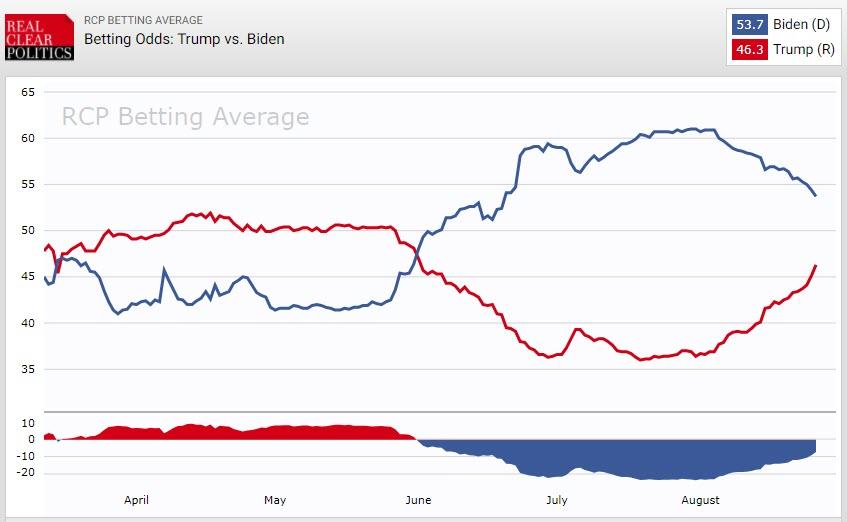
The fall campaign season officially kicks off when President Donald Trump formally accepts the GOP nomination for a second term as president in a speech he will deliver from the White House West Lawn, and the polls and bookies’ odds are coming back Trump’s way…

Senior adviser Ivanka Trump will introduce her father with Housing and Urban Development Secretary Ben Carson, Senate Majority Leader Mitch McConnell of Kentucky, House Republican Leader Kevin McCarthy of California, Arkansas Sen. Tom Cotton and the president’s personal attorney and former New York City Mayor Rudy Giuliani also expected to speak.

Additional speakers include:

  • Ja’Ron Smith, White House assistant

  • Ann Dorn, widow of former police officer killed in St. Louis

  • Debbie Flood

  • Representative Jeff Van Drew

  • Franklin Graham, evangelical leader

  • Alice Johnson, ex-inmate pardoned by Mr. Trump

  • Wade Mayfield

  • Carl and Marsha Mueller, parents of U.S. aid worker killed by ISIS

  • Dana White, president of the Ultimate Fighting Championship

A fireworks display is expected to light up the sky above the Washington Monument at the conclusion of Trump’s remarks.

Watch Live:

via ZeroHedge News https://ift.tt/32wqYWj Tyler Durden

Kenosha Shooter Hit With 6 Charges, Including First-Degree Murder

Kenosha Shooter Hit With 6 Charges, Including First-Degree Murder

Tyler Durden

Thu, 08/27/2020 – 20:02

Now that 17-year-old Kyle Rittenhouse has been taken into custody in Illinois after he “fled across state lines” (drove 20 minutes back to his house in Antioch, Illinois), local prosecutors have unveiled the full boat of charges that the 17-year-old is facing, including first degree reckless homicide.

Kenosha County prosecutors charged the teenager with one count each of first-degree intentional homicide, first-degree reckless homicide and one count of attempted first-degree intentional homicide. He was also charged with two counts of reckless endangerment, and with possessing a dangerous weapon as a minor.

Earlier, the names of Rittenhouse’s victims have been released to the media. They are: Joseph Rosenbaum and Anthony Huber.

The Daily News and other MSM outlets are already trying to portray them as “sweet, loving” innocent victims who were “peaceful protesters” not “rioters”.

Here’s more on the charges from Reuters:

Kyle Rittenhouse, the 17-year-old who was arrested in connection with shootings in Wisconsin that led to the death of two people and injury of another, has been charged with six criminal counts, according to the criminal complaint disclosed on Thursday.

The charges against Rittenhouse in Kenosha County include first degree reckless homicide in the death of Joseph Rosenbaum and first degree intentional homicide in the death of Anthony Huber, according to the complaint.

Fortunately for Rittenhouse and his family, powerhouse Attorney Lin Wood, who also represented Covington Catholic high schools student Nick Sandmann in his battle against the MSM media outlets that slandered him, has agreed to take on his case.

As some may know, Wood shot to fame after the 1996 Atlanta Olympics bombing when he represented Richard Jewel, who was falsely accused, and then slandered, by the mainstream press.

Wood made the following statement on his Twitter account.

The shooting victim who survived, Gaige Grosskreutz, 26, is a volunteer medic for Black Lives Matter protests in Milwaukee over the summer. Rittenhouse is being held at a Lake County juvenile detention facility. He will appear in court Friday morning, where he’ll face extradition to Kenosha.

The violence took place in Kenosha on Tuesday night as the town was racked by a third night of violence following the police shooting of Jacob Blake, a black criminal suspect.

via ZeroHedge News https://ift.tt/31Bvnbf Tyler Durden

The Fed’s Policy Mistake: “Buying” More Inflation Will Lead To Financial Instability

The Fed’s Policy Mistake: “Buying” More Inflation Will Lead To Financial Instability

Tyler Durden

Thu, 08/27/2020 – 19:45

Submitted by Joseph Carson, former chief economist at AllianceBernstein

The Federal Reserve’s new policy of inflation “averaging “ is a mistake. The trade-off nowadays is between inflation and financial stability. Buying more inflation will eventually create, if it has not already, financial imbalances that will trigger an economic crash.

The parallel to this is the misguided policies of the 1970s. Back then policymakers found buying more employment with a little more inflation did not work.

Facts Don’t Support Policy Change

Federal Reserve policymaker’s argument for the policy change is that consumer inflation has been consistently running below its 2% target. Also, sustained low inflation readings can over time depress inflation expectations, which can create “ever lower inflation and inflation expectations”. The evidence does not support these arguments.

The Federal Government statistical branches publish two measures of consumer price inflation. The Bureau of Labor Statistics publishes the consumer price index (CPI) and the Bureau of Economic Analysis (BEA) publishes the personal consumption deflator (PCE).

CPI is the basic measure of consumer price inflation. The PCE measure gets 70% of its price data from the CPI. But the PCE also includes items or services provided to consumers by businesses and government. BEA uses a lot of imputations (non-market prices) to value these items and services since these items are not “sold” to the consumer.

In the 4 of the past 5 years, core CPI has been running above the Fed’s 2% target. The only year of the past 5 when core CPI ran below 2% was 2017 when it ran 1.8%. That small shortfall is not statistically significant and surely does not warrant a fundamental change in policy.

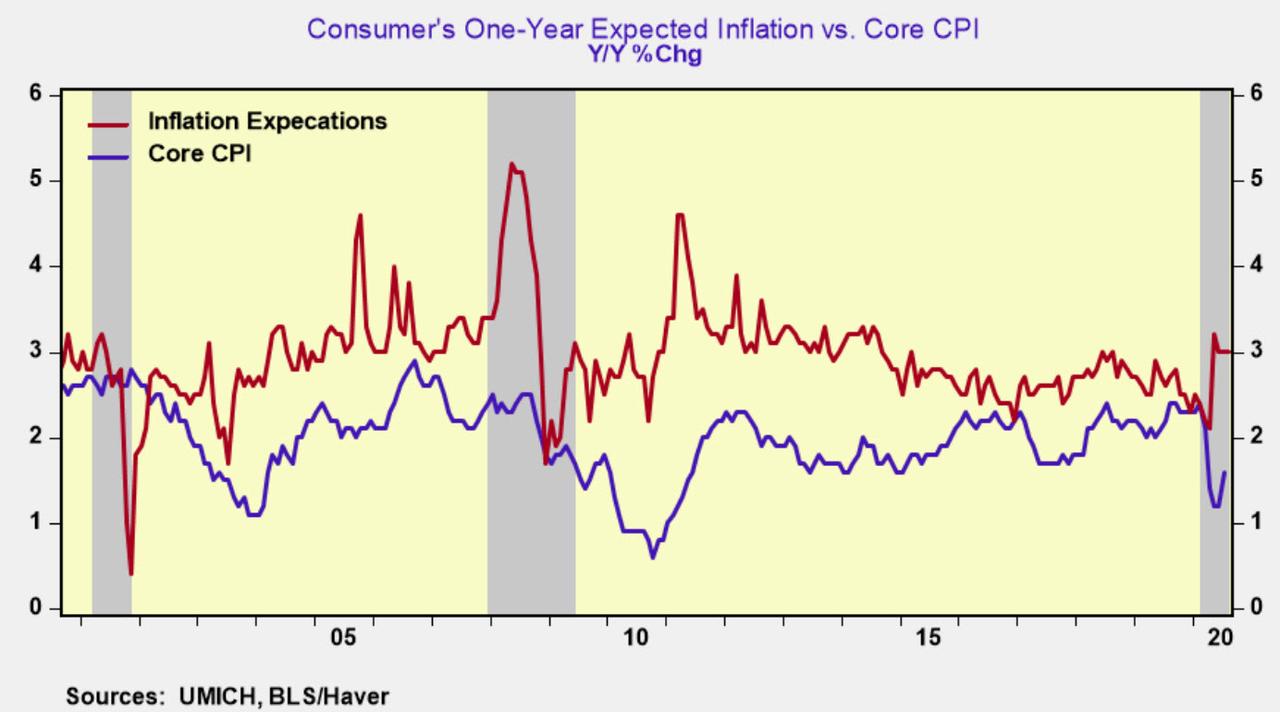
Also, the argument the low reported inflation is undermining consumer inflation expectations are not supported by the facts. Consumer’s one-year inflation expectations from the University of Michigan consumer sentiment survey shows that people’s inflation expectations have consistently run above-reported inflation and the 2% target.

In the past two decades, the only times consumer inflation expectations dropped below 2% was during 9/11 and the Great Financial Crisis. And each drop in expectations was short-lived. Consumer inflation expectations currently stand at 3%.

The Federal Reserve has three mandates, maximum employment, price stability, and financial stability. Financial stability is often overlooked or ignored. The last two recessions were triggered not by inflation running too high or too low, but by real and financial asset prices running too hot. Current macro valuations asset valuations now exceed the high thresholds of the last two asset bubbles.

Changes in monetary policy often have unintended consequences. Trying to buy more inflation is a mistake. It’s a policy mistake because actual inflation has been running above target. But the bigger problem is that the new policy will trigger more speculation and risks in finance at a time when asset values are already at nosebleed levels.

The misguided policies of the 1970s eventually ended with an economic crash. Will this time play out differently? I have my doubts. That’s because over exuberance in finance or in the economy creates imbalances that naturally correct. The big difference today versus the 1970s is that the US does not have the policy defenses —with official rates at zero and budget deficits in the trillions— to cushion the fall.

via ZeroHedge News https://ift.tt/2ELDB7x Tyler Durden