Will Anti-Racist Law Reviews Publish Anti-Anti-Racist Articles by Anti-Anti-Racist Authors?

Legal scholarship is different from scholarship in other disciplines. The vast majority of law professors publish in law reviews run by students. These journals are not peer reviewed. Student editors may, but are not required, to seek out comments from professors in the field. Indeed, for the most part, third-year law students are solely responsible for publication decisions. And these decisions have serious implications. Applicants on the entry level market tend to have at least one law review publication. And applicants for tenure need to have several law review publications. (The precise number will vary by school).

Many critics of the current model contend that it is inherently unfair for scholars to place their careers in the hands of 3L student editors. I am sympathetic to this argument, but I’m not convinced the alternative is necessarily better. I have had good experiences with peer review and I have had terrible experiences with peer review. Professors may have greater expertise in a field, but they may also have stronger biases about what is and is not acceptable scholarship. I find that students tend to be more open-minded because they do not reside within a discipline’s echo chamber. As a result, my suspicion is that student law reviews are more likely to publish a wider range of ideas that are outside the mainstream.

That benefit is especially helpful for right-of-center scholars. It is difficult for conservatives or libertarians to burrow into peer review editorial boards. There are simply fewer right-of-center professors to begin with. But there are far more right-of-center law students. And they are able to join editorial boards with far greater ease. To be sure, there is still viewpoint discrimination. When I applied to be an Articles Editor in 2008, the outgoing board demanded to know if I could fairly review an article by a liberal law professor. Of course, I could. And the vast majority of articles are authored by left-of-center academics. Fortunately, I managed to skate by. I imagine those dynamics have worsened over the past decade, but I know that conservatives can still break through.

Going forward, I worry that law reviews are moving in a direction that will make it difficult, if not impossible for conservative authors to publish.

Consider a recent incident at the Washington University Law Review (in St. Louis). Andy Koppelman offered this brief description:

In one of his classes at Stanford Law School this past May, Prof. Michael McConnell read from a historical quotation that included the N word.  (The quotation’s accuracy is disputed; more on that below.)  When criticized by Stanford students and faculty for it, he explained that he “make[s] it a priority in [his] class to emphasize issues of racism and slavery in the formation of the Constitution, and directly quote many statements by supporters and opponents of slavery.”  He went on to explain: “First, I hope everyone can understand that I made the pedagogical choice with good will — with the intention of teaching the history of our founding honestly.  Second, in light of the pain and upset that this has caused many students, whom I care deeply about, I will not use the word again in the future.”

That should have been that.  But then, at distant Washington University in St. Louis, where he had written an entirely unrelated article for a law review symposium, there was a movement to revoke publication.  The law review ended up instead issuing a statement denouncing his actions.

McConnell’s article was not about race. It was about the free exercise of religion. (Although critics may argue that everything is about race.) The students objected to McConnell, as an author, regardless of what he had written for the journal. Professor John Inazu recounts that the students wanted to rescind the publication altogether, but the University would not allow them to:

Some of the protesters originally wanted the Law Review to withdraw its publication offer to Professor McConnell. Washington University School of Law Dean Nancy Staudt prevented this action after consulting with the university’s general counsel but authorized this protest statement instead.

The statement began with a disclaimer:

These statements do not necessarily reflect the views of Washington University in St. Louis, Washington University School of Law, the Washington University Law Review as an institution, the contributors to the symposium, or anyone other than the undersigned authors.

The statement was signed by some, but not all of the members of the Law Review. Here is an excerpt:

In publishing this statement, we seek to balance our own condemnation of Professor McConnell’s action with the academic freedom that we, as members of a journal committed to publishing a diversity of competing ideas, unequivocally support. Nevertheless, Professor McConnell’s action comes amidst a national reckoning on systemic racism, white supremacy, and police violence in the United States, and his use of the n-word—no matter the setting—cannot be divorced from this larger context. We apologize to our readers, especially the Black members of the Washington University community, whom the Law Review has hurt by publishing Professor McConnell’s work.

This incident was a flash point. It is common enough for a student-run publication to rescind an offer of publication based on the content of the article. But it is far less common for a student-run publication to try to rescind an offer of publication based on the professor’s speech outside the article. I am aware of one other student-run journal that recently considered such a cancellation, but upon advice from faculty advisors, abandoned the move. I fear these sorts of incidents will become more common.

Consider a recent statement from the Emory Law Journal. The Journal is hosting a symposium issue, titled “Systemic Racism in the Law & Anti-Racist Solutions.” Generally, I find that law reviews make some effort to foster ideological diversity. Often this representation is little more than tokenism. I have been on many panels were my views are vastly outnumbered, yet I could still speak. But I can’t imagine that any diversity of thought will be permitted for this symposium. The core of anti-racism is to deny space to those who are not anti-racist. Kendi stated this point quite clearly in his book:

The only remedy to racist discrimination is antiracist discrimination. The only remedy to past discrimination is present discrimination. The only remedy to present discrimination is future discrimination.

In short, a symposium dedicated to anti-racism would be an inherent contradiction if it published articles that were anti-anti-racist. I think this argument extends further. Even if a given article was deemed sufficient anti-racist (whatever that means), the journal could plausibly review the author’s statements elsewhere to determine if he or she was sufficiently anti-racist. Certainly Michael McConnell would flunk such a litmus test. I’m sure that all of us have something in our background that could cross some line.

This sort of anti-racist approach test is not limited to the symposium. The Emory Law Journal offered an additional statement:

ELJ is committed to being an anti-racist organization, both in our ranks and in our scholarship. This is just one part of that mission. We look forward to reading your essays and moving the conversation forward.

Presumably, all submissions to this journal will have to be viewed through the two-fold anti-racist prism. First, determine if an article is anti-anti-racist. Second, determine if the author of the article is anti-anti-racist.

These standards would spell the death-knell for conservatives publishing in law review. Even if a mundane article manages to clear all of the editorial hurdles, it can be spiked at the last minute by a claim of anti-anti-racism–either against the article or the author. And these charges cannot be rebutted, unless an editor is willing to push back, and be deemed anti-anti-racist.

Statements from Deans and Law Reviews about anti-racism may seem innocuous, and indeed necessary for the current motion. But we should recognize that these statements will institutionalize viewpoint discrimination: only one perspective on a given issue is permissible. In the long run, academic freedom and open discourse will suffer.

At the present moment, I have submissions out to law reviews. I’m sure there is a chance that editors may retaliate against me (not that they needed any additional motivation). Let them prove me right. Tenure was designed for exactly these sorts of dynamics.

But make no mistake. This treatment will not be limited to McConnell, or Eugene Volokh, or me. Even well-meaning liberals will be targeted. Andy Koppelman, a card-carrying liberal, sketches his own demise:

I hope it isn’t only a matter of time before I get attacked for compelling students to read racist writings….  The campaign against McConnell shows how it would happen.  It will be acknowledged that I have not advocated racist ideas.  But, it will be said, I’ve been insensitive.  I have shown a shocking lack of respect.  I’m complicit in systemic racism.  My lack of sensitivity has needlessly harmed my students.  I need to be held accountable.  Students should never be required to deal with a professor who has acted this way.  A pledge not to do it again does not undo the continuing harm.  And so forth.

Will journals keep lists of professors they should not publish? (Don’t dare call them “blacklists.”). Or will journals reject submissions from professors who do not sign social justice statements?

You are not safe. You will not be immunized by signing the right statements or staying quiet. No amount of virtue signaling will ever be enough. Eventually, everyone will be subject to cancellation.

from Latest – Reason.com https://ift.tt/3hO8W8x
via IFTTT

Upcoming “Virtual” Speaking Engagements—And I’m Open to Doing More [Reposted]

Zoom

NOTE: I am reposting this, because many additional events have been added since I previously posted it on August 16. I will continue to update the post as new events come online.

Over the last few months, it has been virtually impossible to do in-person speaking engagements. However, I have done quite a few online, and have more scheduled over the next few months. Here are videos of recent online talks I gave about my book Free to Move: Foot Voting, Migration and Political Freedom for the Cato Institute (with commentary by economist Bryan Caplan and immigration law scholar Peter Margulies), and the University of Torcuato Di Tella law faculty Seminar on Law, Economics, and Regulation (Argentina). Below is a list of all currently scheduled talks from now through the end of the year (all of them virtual).

If you are a student, faculty, member or otherwise affiliated with one of the host institutions, you should be able to get information from them on how to sign on to view  these talks. Some may also allow members of the general public to listen and ask questions. In some cases, there will also be video posted online afterwards.

And if you would like to invite me to give a “virtual” talk about any of my areas of expertise (described in more detail at my website here) at your own university, think thank, or other similar organization, please feel free to contact me!

Virtual speaking events have some disadvantages relative to in-person ones. But they do have the benefit of being easier and cheaper to set up. If the talk is about one of my books, the organizer will get a free copy, and it might be possible to provide discount copies for at least some audience members.

Most of the talks below are about my new book Free to Move (the Introduction, which includes an overview of the rest of the book, is available for free download here). But I’m more than happy to speak about other topics within my areas of expertise, as well.

All times in the eastern time zone, unless otherwise noted.

September 14, 4-5:30 PM, Case Western Reserve University School of Law: “Immigration and the Constitution,” Constitution Day Conference.

September 17, 12:00-1:30 PM, Law and Economics Center, George Mason University and Maurer School of Law, University of Indiana, “Crossing Borders, Breaking Borders: New Ideas about Migration, Secession, and Political Freedom,”(co-sponsored virtual event) : “Free to Move: Foot Voting, Migration and Political Freedom.” Event will also include presentation by Univ. of Indiana law Prof. Timothy Waters about his new book Boxing Pandora: Rethinking Borders, States, and Secession in a Democratic World, and commentary by Prof. Sanford Levinson (University of Texas School of Law).

September 24, University of Alberta, Edmonton, Alberta, Time TBD: “Free to Move: Foot Voting Migration, and Political Freedom.”

September 29, noon-1:30 (approximate time), Yale Law School, New Haven, CT: “Free to Move: Foot Voting, Migration and Political Freedom” (with commentary and moderation by Yale Law School Dean Heather Gerken). Sponsored by Yale Federalist Society.

September 29, 5-6 PM, Miller Center of Public Affairs, University of Virginia, Charlottesville, VA: “Free to Move: Foot Voting, Migration, and Political Freedom”

September 30, 3-4:30 PM, Puerto Rico Federalist Society, San Juan, PR: “The Case for ‘Normal’ Judicial Review of Emergency Policies—Covid 19 and Beyond.” Sponsored by the Puerto Rico Federalist Society, Lawyers Division.

October 1, 12:15-1:30 (approximate time), Cornell Law School, Ithaca, NY: “Free to Move: Foot Voting, Migration and Political Freedom”

October 6, noon-1:30 (approximate time), Duke Law School, Durham, NC: “Free to Move: Foot Voting, Migration and Political Freedom” (with commentary by Duke law Prof. Guy Charles). Sponsored by Duke Federalist Society.

October 8, Time TBD, Sandra Day O’Connor College of Law, Arizona State University, Tempe, AZ: “The Free Market Conservative Case for Open Borders Immigration” (tentative title). Sponsored by the Arizona State Federalist Society

October 22, 4-5 PM (tentative date/time), Harvard Kennedy School of Government, Cambridge, MA: “Free to Move: Foot Voting, Migration, and Political Freedom” (moderated by Harvard economics Prof. Edward Glaeser). Co-sponsored by the Taubman Center for State and Local Government and the Rappaport Center for Greater Boston.

October 27, Columbia Law School, New York, NY, 12:45-2 PM: “Free to Move: Foot Voting, Migration and Political Freedom.”  Sponsored by Columbia Federalist Society.

October 30, 12 central/1 PM eastern-1:15 central/2:15 PM eastern, Evansville Federalist Society Lawyers Division Chapter, Evansville, IN: Free to Move: Foot Voting, Migration, and Political Freedom.”

Date TBD, Georgia State University, Atlanta, GA: “The Case for Foot Voting” (tentative title). With commentary by Prof. Michael Evans.

I will update this post regularly, over the next few weeks, as additional information about speaking engagements comes in.

from Latest – Reason.com https://ift.tt/2YQYTIc
via IFTTT

Poll: Americans Worry COVID-19 Vaccine Approval Is Politicized

COVIDShotSiamPukkatoDreamstime

According to new survey by the Harris Poll and the invaluable health news website STAT, a majority of Americans are concerned that the White House might pressure the Food and Drug Administration (FDA) into prematurely approving a COVID-19 vaccine to boost the president’s chances of winning the election.

“Seventy-eight percent of Americans worry the Covid-19 vaccine approval process is being driven more by politics than science,” report the pollsters. “The response was largely bipartisan, with 72% of Republicans and 82% of Democrats expressing such worries.” The poll was conducted August 25–27 and surveyed 2,067 people.

It’s not hard to determine what sorts of background noise were feeding those concerns. On August 22, for example, President Donald Trump tagged FDA chief Stephen Hahn in a not-so-subtle tweet: “The deep state, or whoever, over at the FDA is making it very difficult for drug companies to get people in order to test the vaccines and therapeutics. Obviously, they are hoping to delay the answer until after November 3rd. Must focus on speed, and saving lives!”

Who does the public trust to provide accurate information about the development of a COVID-19 vaccine? Just 46 percent trust the president and the White House. The press is held in similarly low esteem, garnering the trust of only 47 percent of respondents. Confidence in the accuracy of social media is even lower, at only 29 percent.

Despite these misgivings, the poll reports that 68 percent of respondents said that they believe the FDA would only approve a vaccine that is safe. In addition, 67 percent said they would get vaccinated as soon as an inoculation becomes available. Indeed, 62 percent said that they are very or somewhat likely to get a COVID-19 vaccine that becomes available before the election.

from Latest – Reason.com https://ift.tt/2EFqCF4
via IFTTT

Watch Live: Trump Speaks During Discussion On ‘Community Safety’ In Kenosha

Watch Live: Trump Speaks During Discussion On ‘Community Safety’ In Kenosha

Tyler Durden

Tue, 09/01/2020 – 14:25

Despite the objections of Wisconsin Gov Tony Evers and the city’s Democratic mayor, President Trump flew into Wisconsin and is visiting Kenosha on Tuesday afternoon to survey the damage from a week’s worth of street protests, violence and vandalism – a destructive rampage that culminated in the killing of 2 men by a teenager with an AR-15.

* * *

Here’s Trump’s schedule for the roughly two hours he will spend in Kenosha. (remember, all times in CT):

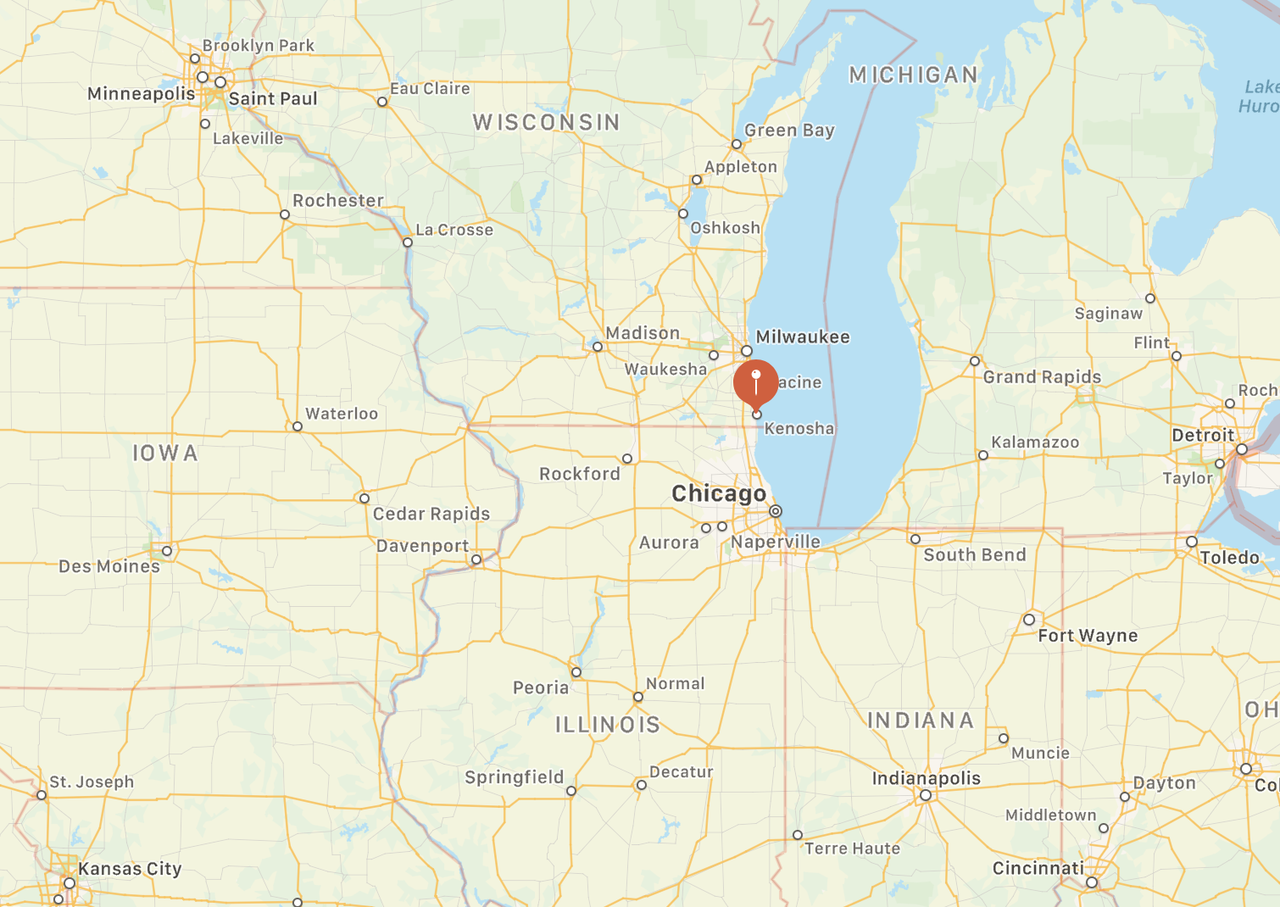
By 11:55 a.m. President Trump arrives at the Waukegan National airport. Ten minutes later, he is scheduled to leave the airport en route to Kenosha.

By 12:35 p.m., Trump is scheduled to arrive in Kenosha prior to surveying property damage as a result of last week’s civil unrest.

From 12:40 p.m. to 1 p.m., Trump is scheduled to survey the damage.

According to Trump’s schedule, he is expected to conclude surveying local damage and appear at Mary D. Bradford High School starting at 1:10 p.m.

According to Trump’s schedule, he is expected to tour the Emergency Operations Center by 1:15 p.m.

At 1:30 p.m., Trump is scheduled to participate in a roundtable discussion on Wisconsin Community Safety, where he is expected to give remarks.

By 2:20 p.m., Trump is scheduled to leave Kenosha on his way back to Waukegan.

And for the geographically challenged among us, here’s a map:

Evers, whom Trump has blasted on twitter and accused of enabling the violence, sent the president a letter last week urging him not to visit.

“I, along with other community leaders who have reached out, are concerned about what your presence will mean for Kenosha and our state,” Evers wrote. “I am concerned your presence will only hinder our healing. I am concerned your presence will only delay our work to overcome division and move forward together.”

Other Dems have accused Trump of endangering lives with his posturing, claiming the president is “filming the commercial” for his reelection campaign.

During his time in the area, Trump will survey the property destruction and damage, before participating in a round-table discussion on community safety, during which he will give brief remarks.

via ZeroHedge News https://ift.tt/3gOoRlT Tyler Durden

House Dems Ambush Mnuchin With Report Alleging Billions In Possible ‘PPP’ Fraud

House Dems Ambush Mnuchin With Report Alleging Billions In Possible ‘PPP’ Fraud

Tyler Durden

Tue, 09/01/2020 – 14:15

Just as Treasury Secretary Steven Mnuchin was sitting down for legally mandatory testimony before the Democrat-controlled House subcommittee investigating the federal response to the coronavirus pandemic, the committee tried to sandbag him by releasing a report alleging billions of dollars of “waste, fraud and abuse” in the $659 billion taxpayer-funded Paycheck Protection Program – or PPP.

According to the report, more than $1 billion of the money – a drop in the bucket, or a fraction of a percentage point – allegedly went to applicants that triggered red flags. These included receiving multiple loans – in violation of the program’s rules – or receiving loans despite having been disciplined for a given transgression. $3 billion went to businesses that had been flagged as potentially problematic by the government.

At the same time, the program only doled out the full requested amount for 12% of black and hispanic-owned businesses.

For some of these “suspicious” cases, there might be perfectly reasonable explanations: perhaps a change of address, or a clerical mixup – it could be any number of things. But the Democrat-controlled panel found more than 600 examples where loans went to companies that had been barred from doing business with the federal government. Another 350 loans went to companies with past ‘performance problems’.

The subcommittee’s researchers found evidence that as few as 12% of Black and Hispanic business owners received the full funding they requested. The analysis examined data for more than 5.2 million ‘PPP’ loans worth some $525 billion that were doled out by banks in cooperation with theSmall Business Administration and the Treasury.

Outside their own research, the subcommittee noted that the SBA’s internal watchdog had also found “strong indicators” of potential PPP fraud.

Then again, even these flaws aren’t especially damning. As one reporter points out, the Dems latest attempt at crying “waste, fraud and abuse” rings hollow once again.

And while the Republican report referenced above may exaggerate the impact of the PPP, quibbling with Trump over exaggerated numbers is so a pretty superficial criticism.

While the Trump Administration talks its book by trying to pass off the 51 million number as credible factoid, the mainstream media has come up with its own set of specious figures.

The Trump administration says the PPP has saved some 51 million jobs at a time when much of the U.S. economy has been shuttered due to the coronavirus. Economists say the actual impact is far lower, likely between 1 million and 14 million jobs.

1 million jobs saved? That sounds like a lowball. Then again, the final tally isn’t really in yet, as we wait for the impact of the most recent fiscal cliff to reverberate across the economy.

At any rate, the Dems ulterior motive was laid bare by Committee Chairman Jim Clyburn during the opening minutes of Treasury Secretary Steve Mnuchin’s testimony Tuesday afternoon…just hours after Mark Meadows affirmed a new GOP plan calling for another $500 billion in spending to revive the enhanced unemployment checks.

So Dems are accusing the administration of “waste, fraud and abuse” to try and pressure them into approving even more wasteful spending…got it.

via ZeroHedge News https://ift.tt/3lHjcBy Tyler Durden

Apple’s Market Cap Surpasses The Entire Russell 2000 Due To “Option Insanity”

Apple’s Market Cap Surpasses The Entire Russell 2000 Due To “Option Insanity”

Tyler Durden

Tue, 09/01/2020 – 13:57

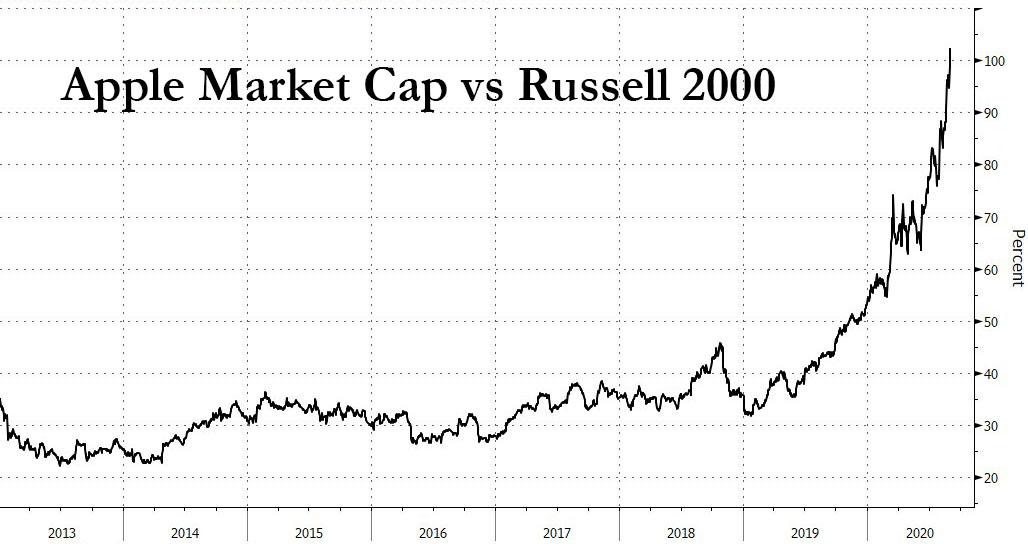
On Monday, in a tweet that went viral, we showed that the market cap of Apple was on the verge of overtaking the entire Russell 2000 index of small-cap companies.

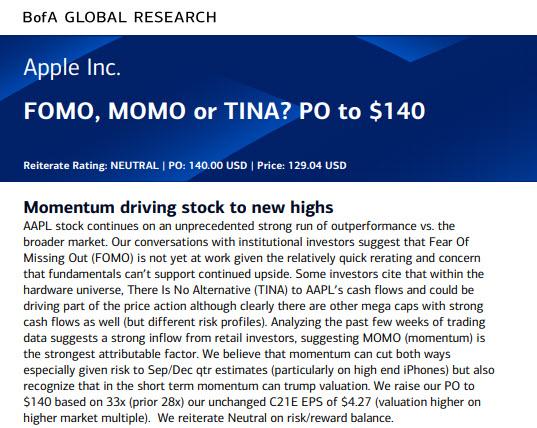
Well it’s now official, and as of Tuesday’s 4.3% jump in AAPL stock price largely on the back of the latest upgrade from Bank of America, which raised its price target to $140 post-split citing an even greater multiple expansion as the catalyst (because there is nothing else really)…

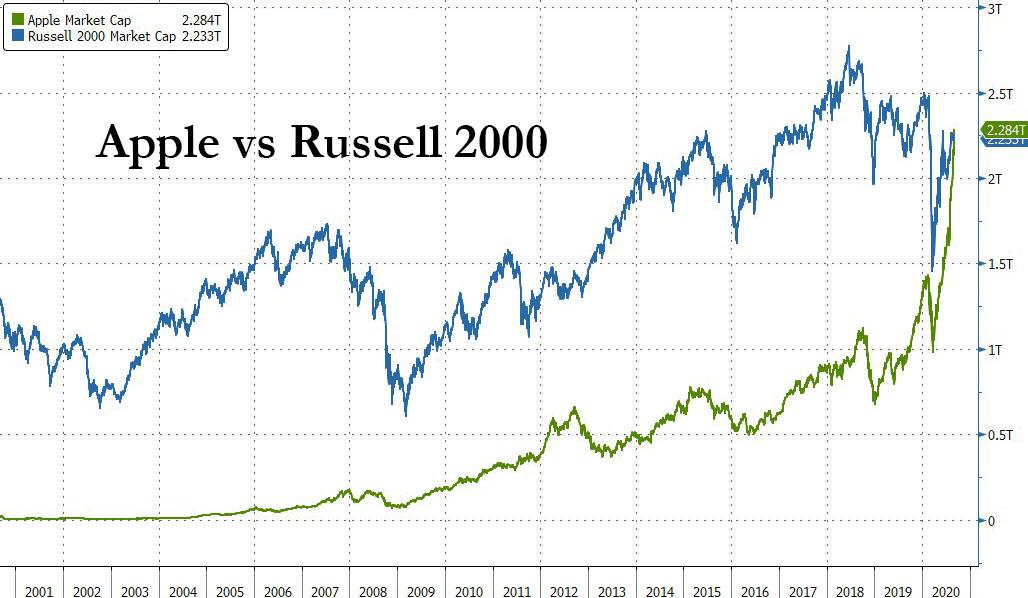
… which helped propel Apple’s market cap to $2.3 trillion, Apple’s market cap is now greater than the entire Russell 2000 for the first time ever.

The next chart shows the historical transformation of Apple as not only the biggest company in the world, but also the one company which now has the biggest impact on pretty much anything market-related.

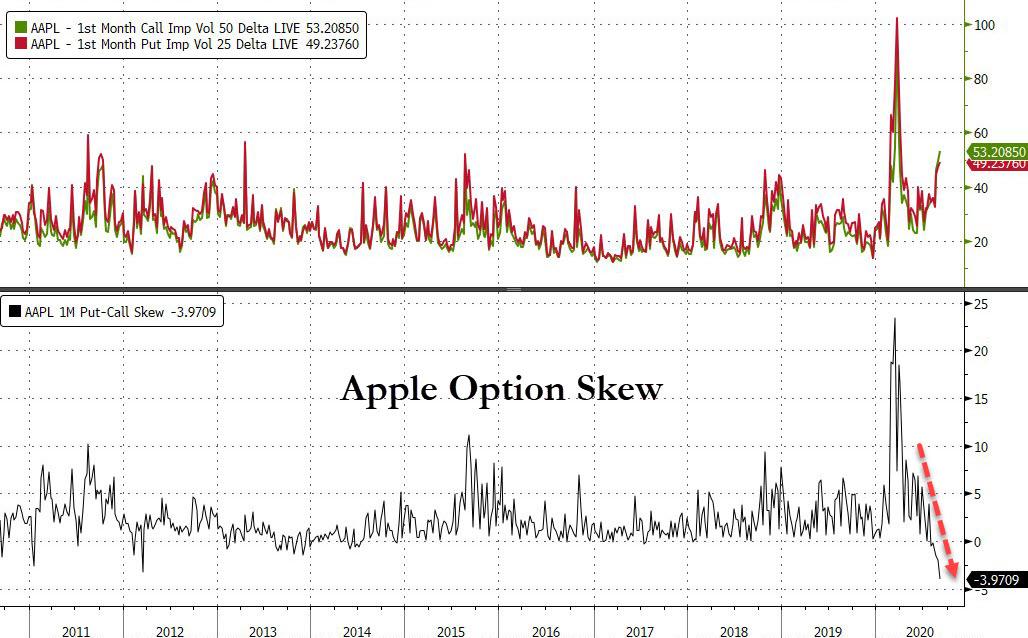
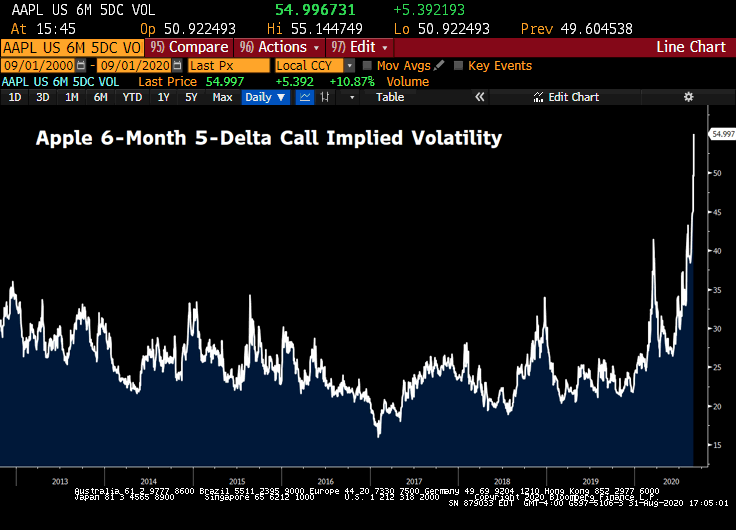
We previously discussed the unprecedented negative put-call skew, which we said will keep pushing AAPL even higher due to the layered gamma which is creating an upward feedback loop, and sure enough this is still the case.

And since nothing else has changed and we already showed what is going on from a delta- and gamma-hedging perspective…

… we will give the last word to the Bear-Traps report which describes the “Insanity” in Apple Options:

The convexity skew picture on big-name equities like Apple $AAPL has gone parabolically stupid. Let’s keep this simple and draw a conclusion.

  • Apple $AAPL Stock near $130
  • Jan $180 Strike Calls costs $4
  • Jan $80 Strike Puts costs $1

*Both options are $50 out of the money, approx data, BUT it is nearly 3x more expensive to buy upside risk in AAPL equity. What does this mean?

Apple closed near $130, while the cost of speculative upside calls is weighted heavily against the buyer. Someone must have reached out to Buffett today because he can make a fortune in selling $AAPL upside calls. Let us explain.

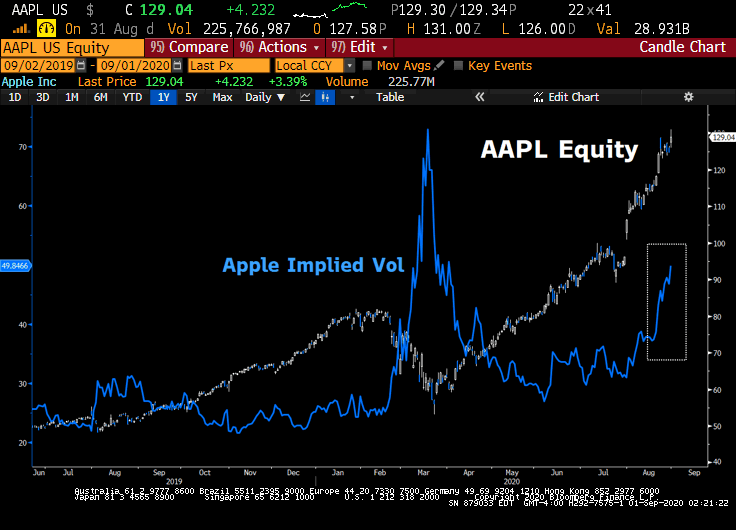
Highly unusual activity, we have a higher stock price in Apple AAPL with a much higher cost of equity upside. Equity vol usually explodes higher in market crashes, NOT bull markets. As you can see above, in normal Apple equity bull markets – see all of 2019 – AAPL implied vol has been CHEAP!

In our institutional client chat on Bloomberg, a hedge fund put on this trade and we are sharing it with permission.

Think of the January 2021 expiration. The client bought the $200 call and sold the $250 call, 1 x 4, and got paid $3.50 to put the trade on.

Apple was worth $1.5T at the end of July and today she stands tall at $2.2T. In order for the client to lose money* at January expiration, the stock has to breach $270 ($129 today), which would put the company’s market capitalization very close to $5T, by January 2021, that is a little over four months away.

*The mark to market in the short run can be extremely painful though – if Apple equity soars another 10-20% (Apple is up 50% since late July), that is indeed the catch. AAPL is trading nearly 65% above its 200-day moving average vs. 42% in February’s great bull run.

There are a handful of quant funds pushing around a few stocks (with high impact on QQQ, NDX, SPY) in the options markets. The dealers are getting very nervous.  Last 15 days – Imaging being a large market maker in Apple and Tesla equity options. You make a market, bid – offer, you get lifted and lifted over and over again by buyers to the point where you have raised the price of calls vs puts to multi-year extremes. How short is the Street gamma? VERY.

When call vs. put skew gets this extreme it can be a solid leading risk indicator. 

via ZeroHedge News https://ift.tt/3gPbKAS Tyler Durden

Flamethrower-Packing Antifa ‘Entered Fetal Position And Began Crying’ After Unsuccessful Escape From Cops

Flamethrower-Packing Antifa ‘Entered Fetal Position And Began Crying’ After Unsuccessful Escape From Cops

Tyler Durden

Tue, 09/01/2020 – 13:46

A 23-year-old Wisconsin man carrying a flamethrower, smoke grenades and fireworks during a Saturday night demonstration in Green Bay ‘dropped into the fetal position and began crying‘ after he was chased down by police.

Matthew Banta of Neenah, WI – who is “known to be a violent Antifa member who incites violence in otherwise relatively peaceful protests,” was one of four individuals walking towards a protest with baseball bats, according to ABC2.

Green Bay police say they were called for “a whole bunch of white people with sticks, baseball bats and helmets headed… towards the police” on Walnut St. near Webster Ave.

A responding officer says he saw four individuals walking towards a protest with baseball bats. One man was wearing a metal helmet with goggles and military-style gear with multiple pouches, and was carrying an Antifa flag. When the officer pulled his squad car in front of the group, they ran away. The officer caught Banta, who was carrying the flag, and says Banta “dropped into the fetal position and began crying.” He accused the officer of lying on him; the officer replied nobody was on him. –ABC2

Banta claims he wasn’t planning to incite a riot (with his flamethrower, smoke grenade and fireworks).

The three other individuals Banta was with were caught trying to break into a house. When officers apprehended them, they dropped what they were carrying, with one of them telling the police that they were simply bringing items for self-defense.

Last month, Banta was charged in Waupaca County with second-degree recklessly endangering safety and four other charges for pointing a loaded gun at a police officer, and biting and kicking another.

via ZeroHedge News https://ift.tt/2GmKCwJ Tyler Durden

Upcoming “Virtual” Speaking Engagements—And I’m Open to Doing More [Reposted]

Zoom

NOTE: I am reposting this, because many additional events have been added since I previously posted it on August 16. I will continue to update the post as new events come online.

Over the last few months, it has been virtually impossible to do in-person speaking engagements. However, I have done quite a few online, and have more scheduled over the next few months. Here are videos of recent online talks I gave about my book Free to Move: Foot Voting, Migration and Political Freedom for the Cato Institute (with commentary by economist Bryan Caplan and immigration law scholar Peter Margulies), and the University of Torcuato Di Tella law faculty Seminar on Law, Economics, and Regulation (Argentina). Below is a list of all currently scheduled talks from now through the end of the year (all of them virtual).

If you are a student, faculty, member or otherwise affiliated with one of the host institutions, you should be able to get information from them on how to sign on to view  these talks. Some may also allow members of the general public to listen and ask questions. In some cases, there will also be video posted online afterwards.

And if you would like to invite me to give a “virtual” talk about any of my areas of expertise (described in more detail at my website here) at your own university, think thank, or other similar organization, please feel free to contact me!

Virtual speaking events have some disadvantages relative to in-person ones. But they do have the benefit of being easier and cheaper to set up. If the talk is about one of my books, the organizer will get a free copy, and it might be possible to provide discount copies for at least some audience members.

Most of the talks below are about my new book Free to Move (the Introduction, which includes an overview of the rest of the book, is available for free download here). But I’m more than happy to speak about other topics within my areas of expertise, as well.

All times in the eastern time zone, unless otherwise noted.

September 14, 4-5:30 PM, Case Western Reserve University School of Law: “Immigration and the Constitution,” Constitution Day Conference.

September 17, 12:00-1:30 PM, Law and Economics Center, George Mason University and Maurer School of Law, University of Indiana, “Crossing Borders, Breaking Borders: New Ideas about Migration, Secession, and Political Freedom,”(co-sponsored virtual event) : “Free to Move: Foot Voting, Migration and Political Freedom.” Event will also include presentation by Univ. of Indiana law Prof. Timothy Waters about his new book Boxing Pandora: Rethinking Borders, States, and Secession in a Democratic World, and commentary by Prof. Sanford Levinson (University of Texas School of Law).

September 24, University of Alberta, Edmonton, Alberta, Time TBD: “Free to Move: Foot Voting Migration, and Political Freedom.”

September 29, noon-1:30 (approximate time), Yale Law School, New Haven, CT: “Free to Move: Foot Voting, Migration and Political Freedom” (with commentary and moderation by Yale Law School Dean Heather Gerken). Sponsored by Yale Federalist Society.

September 29, 5-6 PM, Miller Center of Public Affairs, University of Virginia, Charlottesville, VA: “Free to Move: Foot Voting, Migration, and Political Freedom”

September 30, 3-4:30 PM, Puerto Rico Federalist Society, San Juan, PR: “The Case for ‘Normal’ Judicial Review of Emergency Policies—Covid 19 and Beyond.” Sponsored by the Puerto Rico Federalist Society, Lawyers Division.

October 1, 12:15-1:30 (approximate time), Cornell Law School, Ithaca, NY: “Free to Move: Foot Voting, Migration and Political Freedom”

October 6, noon-1:30 (approximate time), Duke Law School, Durham, NC: “Free to Move: Foot Voting, Migration and Political Freedom” (with commentary by Duke law Prof. Guy Charles). Sponsored by Duke Federalist Society.

October 8, Time TBD, Sandra Day O’Connor College of Law, Arizona State University, Tempe, AZ: “The Free Market Conservative Case for Open Borders Immigration” (tentative title). Sponsored by the Arizona State Federalist Society

October 22, 4-5 PM (tentative date/time), Harvard Kennedy School of Government, Cambridge, MA: “Free to Move: Foot Voting, Migration, and Political Freedom” (moderated by Harvard economics Prof. Edward Glaeser). Co-sponsored by the Taubman Center for State and Local Government and the Rappaport Center for Greater Boston.

October 27, Columbia Law School, New York, NY, 12:45-2 PM: “Free to Move: Foot Voting, Migration and Political Freedom.”  Sponsored by Columbia Federalist Society.

October 30, 12 central/1 PM eastern-1:15 central/2:15 PM eastern, Evansville Federalist Society Lawyers Division Chapter, Evansville, IN: Free to Move: Foot Voting, Migration, and Political Freedom.”

Date TBD, Georgia State University, Atlanta, GA: “The Case for Foot Voting” (tentative title). With commentary by Prof. Michael Evans.

I will update this post regularly, over the next few weeks, as additional information about speaking engagements comes in.

from Latest – Reason.com https://ift.tt/2YQYTIc
via IFTTT

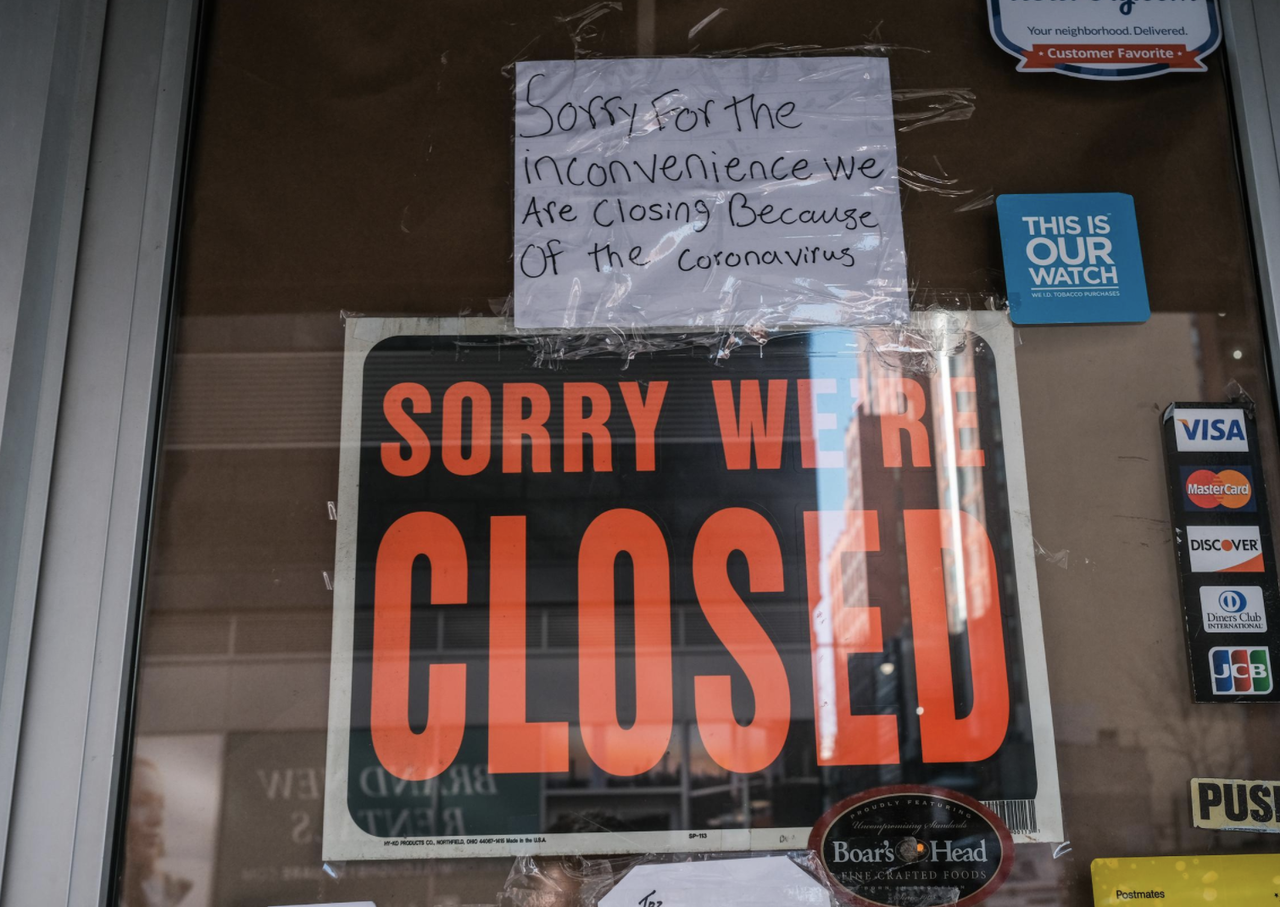
Philadelphia Ordered Restaurants Closed. Then the City’s Mayor Went Out To Eat in Maryland.

sipaphotosten914466

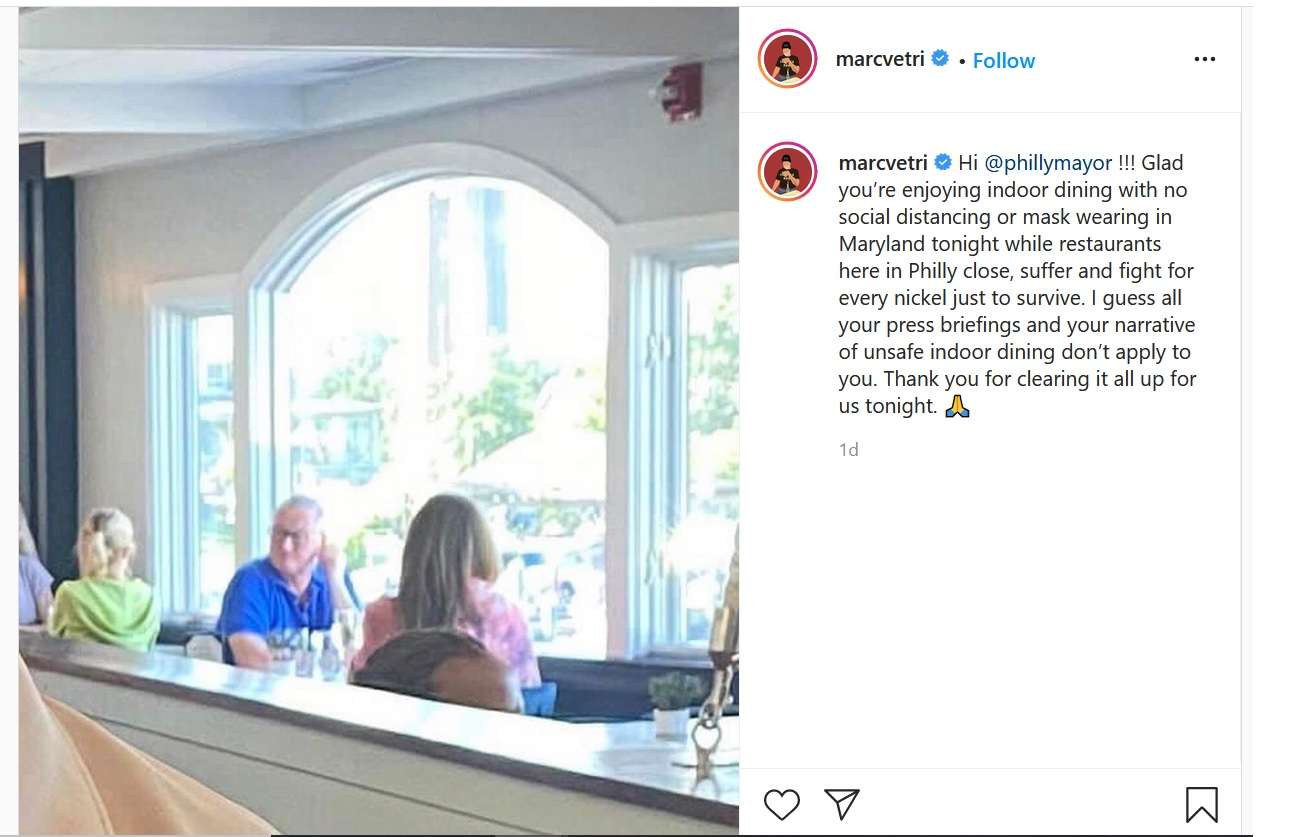
Philadelphia Mayor Jim Kenney publicly apologized on Monday after he was busted for sneaking across the border to enjoy a meal at a Maryland restaurant over the weekend.

Restaurants and bars in Maryland are allowed to offer limited indoor dining—capacity is capped at 25 percent of what would normally be allowed in an attempt to reduce the spread of COVID-19. Establishments elsewhere in Pennsylvania are operating under similar restrictions as well. But in Philadelphia, indoor dining is still fully forbidden under restrictions imposed by the city government—the one that Kenney runs. The city’s ban on indoor dining, which was extended in late July amid fears of a “second wave” of COVID-19 cases in Philadelphia, is scheduled to be lifted on September 8.

But Kenney apparently couldn’t wait that long. A sharp-eyed restaurant-goer caught Kenney dining indoors in Maryland on Sunday. The photo quickly went viral, and Kenney’s office confirmed to a local TV station that the mayor had gone south of the border to visit “a restaurant owned by a friend.”

On Monday, Kenney issued a more substantial apology via his Twitter account. “I felt the risk was low because the county I visited has had fewer than 800 COVID-19 cases, compared to over 33,000 cases in Philadelphia,” he wrote. “Restaurant owners are among the hardest hit by the pandemic. I’m sorry if my decision hurt those who’ve worked to keep their businesses going under difficult circumstances.”

Kenney is right to point out that the coronavirus risk is not the same everywhere at all times, and it certainly makes sense for different jurisdictions to adopt policies that reflect that. But his do-as-I-say-not-as-I-do approach to COVID-19 undermines the legitimacy of the harsh restrictions Philadelphia has imposed on its own restaurant industry and demonstrates a callous disregard for how those policies have impacted the city’s residents and businesses. Kenney can drive across the border to Maryland easily, but a Philly bar can’t pick up and move to Delaware to escape the city’s lockdowns.

If nothing else, Philadelphia’s ban on indoor dining certainly fails what I’d call the Burgermeister Meisterburger Yo-Yo Test—a reference, of course, to a memorable scene in the most libertarian Christmas movie ever made. The test is a simple one: If a public official can’t avoid breaking his or her own laws—even, as in Kenney’s case, the spirit of the law—then they’re probably bad laws.

Unfortunately, the COVID-19 pandemic has created fertile ground for arbitrary and meaningless restrictions on economic activity. Worse, it’s not clear that lockdowns have helped curb the spread of the virus. As Reason‘s Jacob Sullum noted last week, both Arizona and Georgia have seen COVID-19 cases decline by roughly the same degree in recent weeks despite adopting far different strategies in July—Arizona Gov. Doug Ducey ordered gyms, bars, movie theaters, and water parks to close and imposed strict limitations on restaurants, while Georgia mostly allowed people to decide for themselves whether it was safe to go out.

The pandemic has also created an opportunity for public officials to meddle in even sillier ways, like when New York Gov. Andrew Cuomo, a Democrat, told bars they couldn’t serve alcohol without also selling food—and then tried to regulate what types of food actually counted as, well, food. He’s also threatened to ban not only indoor dining but also outdoor dining in New York state, which would likely condemn thousands of restaurants to failure. There is no clear public health benefit to any of that.

Bars and restaurants were always going to have a hard time surviving the pandemic as more people voluntarily socially distanced and cut back on their spending in the wake of an economic downturn; public officials should avoid making the crisis worse with arbitrary rules. And if you can’t resist playing with a yo-yo, maybe don’t make it illegal for your constituents to do the same.

from Latest – Reason.com https://ift.tt/31LciU7
via IFTTT

Poll: Americans Worry COVID-19 Vaccine Approval Is Politicized

COVIDShotSiamPukkatoDreamstime

According to new survey by the Harris Poll and the invaluable health news website STAT, a majority of Americans are concerned that the White House might pressure the Food and Drug Administration (FDA) into prematurely approving a COVID-19 vaccine to boost the president’s chances of winning the election.

“Seventy-eight percent of Americans worry the Covid-19 vaccine approval process is being driven more by politics than science,” report the pollsters. “The response was largely bipartisan, with 72% of Republicans and 82% of Democrats expressing such worries.” The poll was conducted August 25–27 and surveyed 2,067 people.

It’s not hard to determine what sorts of background noise were feeding those concerns. On August 22, for example, President Donald Trump tagged FDA chief Stephen Hahn in a not-so-subtle tweet: “The deep state, or whoever, over at the FDA is making it very difficult for drug companies to get people in order to test the vaccines and therapeutics. Obviously, they are hoping to delay the answer until after November 3rd. Must focus on speed, and saving lives!”

Who does the public trust to provide accurate information about the development of a COVID-19 vaccine? Just 46 percent trust the president and the White House. The press is held in similarly low esteem, garnering the trust of only 47 percent of respondents. Confidence in the accuracy of social media is even lower, at only 29 percent.

Despite these misgivings, the poll reports that 68 percent of respondents said that they believe the FDA would only approve a vaccine that is safe. In addition, 67 percent said they would get vaccinated as soon as an inoculation becomes available. Indeed, 62 percent said that they are very or somewhat likely to get a COVID-19 vaccine that becomes available before the election.

from Latest – Reason.com https://ift.tt/2EFqCF4
via IFTTT