The FDA’s Menthol Cigarette Ban Is a ‘Racial Justice’ Issue, but Not in the Way Its Supporters Mean


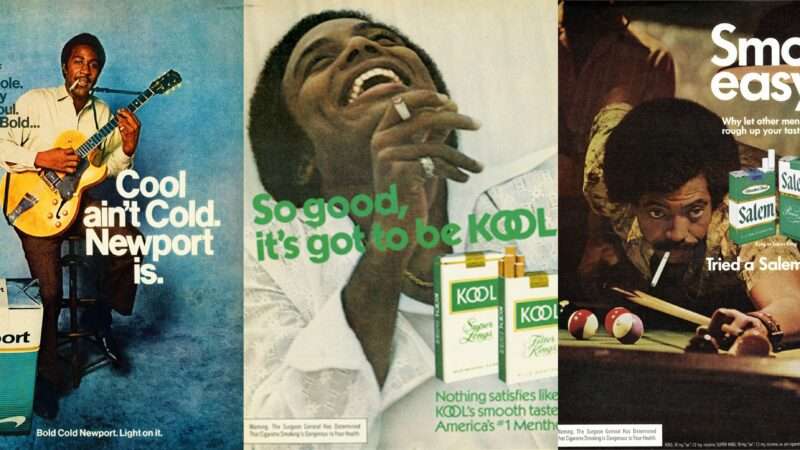
menthol-cigarette-ads

Supporters of the ban on menthol cigarettes that the Food and Drug Administration (FDA) proposed today say it is “a racial justice issue.” They are right about that, but not in the way they mean.

What they mean is that 85 percent of black smokers prefer menthol cigarettes, compared to 30 percent of white smokers. “The number one killer of black folks is tobacco-related diseases,” Phillip Gardiner, a tobacco researcher and activist, told Slate‘s Julia Craven after the FDA announced plans for the ban last year. “The main vector of that is menthol cigarettes and flavored cigars.”

The FDA’s proposed rule would ban both, which the agency says will “address health disparities experienced by communities of color.” Action on Smoking and Health welcomed the FDA’s ban, calling it “a major step forward in Saving Black Lives” and averring that “menthol advertising violates the right to health of Black Americans.”

Although menthol and nonmenthol cigarettes pose similar hazards, the FDA says menthol makes smoking more appealing and harder to quit. As Guy Bentley, director of consumer freedom at Reason Foundation (which publishes this website), noted this week, the evidence on the latter point is mixed. But even if it were clear that menthol smokers are less likely to quit, that would not necessarily mean menthol cigarettes are inherently more “addictive.” That debate tends to obscure the tastes, preferences, personal characteristics, and circumstances that are crucial to understanding why some people never smoke, some start but eventually quit, and others continue smoking.

As the menthol ban’s proponents see it, even the choice to start smoking is not really a choice, because consumers—in this case, black consumers in particular—are no match for Big Tobacco’s persuasive wiles. Gardiner cites the industry’s history of “predatory marketing,” while the anti-smoking Truth Initiative condemns “relentless profiling of Black Americans and vulnerable populations” by brands like Kool, Salem, and Newport.

That’s one way of looking at it. Here is another: The federal government is targeting the kind of cigarettes that black smokers overwhelmingly prefer, precisely because black smokers overwhelmingly prefer them. The FDA also worries that menthol cigarettes appeal to teenagers, another “vulnerable population.” Public health officials are thus treating African Americans like children in the sense that they don’t trust either to make their own decisions.

“The proposed rules would help prevent children from becoming the next generation of smokers and help adult smokers quit,” says Secretary of Health and Human Services Xavier Becerra. “Additionally, the proposed rules represent an important step to advance health equity by significantly reducing tobacco-related health disparities.” The FDA notes “particularly high rates of use by youth, young adults, and African American and other racial and ethnic groups.”

The federal government is implicitly denying the moral agency of black people, suggesting that they, like adolescents, are helpless to resist the allure of “predatory marketing” or the appeal of menthol’s minty coolness. In the FDA’s view, persuasion is not enough to break Big Tobacco’s spell; force is required.

The FDA’s legal license to prohibit menthol as a “characterizing flavor” in cigarettes comes from the Family Smoking Prevention and Tobacco Control Act. That 2009 law, which gave the FDA regulatory authority over tobacco products, banned flavored cigarettes but made an exception for menthol. At the same time, it left the FDA with “authority to take action” against “menthol or any artificial or natural flavor.”

According to the menthol ban’s supporters, the FDA is doing black Americans a favor by limiting their choices: Without the menthol option, black smokers may decide to quit, and fewer black people will take up the habit to begin with. The FDA says the menthol ban has “the potential to significantly reduce disease and death from combusted tobacco product use, the leading cause of preventable death in the U.S., by reducing youth experimentation and addiction, and increasing the number of smokers that quit.” Nothing else matters in a “public health” calculus that attaches no value to individual freedom or consumer choice.

In addition to condescending assumptions, the FDA is displaying remarkable shortsightedness regarding the practical impact of its policy on the community it supposedly is trying to help. “Policies that amount to prohibition for adults will have serious racial justice implications,” the American Civil Liberties Union (ACLU), the Drug Policy Alliance, the Sentencing Project, and 24 other organizations warned in an April 2021 letter to Becerra and Acting FDA Commissioner Janet Woodcock. “Such a ban will trigger criminal penalties, which will disproportionately impact people of color, as well as prioritize criminalization over public health and harm reduction. A ban will also lead to unconstitutional policing and other negative interactions with local law enforcement.”

The ACLU letter noted that “a menthol cigarette ban would disproportionately impact communities of color, result in criminalization of the market, and exacerbate mass incarceration.” The ban “also risks creating large underground, illegal markets.” That “would be a massive law enforcement problem for states, counties, and cities, since all states treat unlicensed sale of tobacco products as a crime—usually as a felony punishable by imprisonment.”

The FDA glides over that point, instead emphasizing that the agency “cannot and will not enforce against individual consumers for possession or use of menthol cigarettes.” But many of those individual consumers will look for ways to continue smoking the kind of cigarettes they like, and that demand will be filled by other individuals, who in turn will be subject to criminal penalties.

The FDA “recognizes concerns related to how state and local law enforcement may enforce their own laws in a manner that may impact equity and community safety, particularly for underserved and underrepresented communities.” Its solution is to request public comment on “policy considerations related to the potential racial and social justice implications of the proposed product standards.”

The case of Eric Garner, who was killed by New York City police in 2014 during an arrest for selling untaxed cigarettes, gives you some idea of what the menthol ban will mean in practice. Garner’s mother, Gwen Carr, is decidedly less enthused than the FDA about the paternalistic potential of banning menthol cigarettes. That policy, she warns, “has consequences for mothers like me,” because it will give “police officers another excuse to harass and harm any black man, woman, or child they choose.” Unlike the tobacco industry’s “relentless profiling of Black Americans,” which was limited to product pitches, this kind of profiling will involve armed agents of the state.

While most members of the Congressional Black Caucus voted for a 2020 bill that would have banned menthol cigarettes, there are dissenters. “A ban would possibly lead to illegal and unlicensed distribution,” Rep. Sanford Bishop (D‒Ga.) told The Hill this week. “The banning of the menthol cigarettes would certainly push those people who prefer that to the illegal and illicit acquisition of those products.”

As the ACLU et al. see it, the FDA is ignoring the lessons of drug prohibition by blithely adding another target to the list of arbitrarily proscribed substances. “Tobacco policy will no longer be the responsibility of regulators regulating, but police policing,” they said. “Our experience with alcohol, opioid, and cannabis prohibition teaches us that that is a policy disaster waiting to happen, with Black and other communities of color bearing the brunt.”

Such concerns explain why the menthol ban is controversial among African-American organizations, which have arrived at diametrically opposed positions based on clashing visions of racial justice. The National Association for the Advancement of Colored People (NAACP) endorsed the FDA’s ban, saying “the tobacco industry has been targeting African Americans,” thereby contributing to “the skyrocketing rates of heart disease, stroke and cancer across our community.” But the ACLU letter attracted support from several African-American groups, including the National Black Justice Coalition, the National Association of Blacks in Criminal Justice, and the National Association of Black Law Enforcement Officers.

Maybe those groups and people like Gwen Carr are seeing something the NAACP doesn’t. Although drug prohibition has racist roots and disproportionately harms black Americans, it attracted the support of black politicians who believed they were helping to save their communities from the scourge of drug abuse. That logic explains why supposedly liberal black Democrats like former Rep. Charlie Rangel, who represented Harlem from 1971 to 2017, joined Republicans and white Democrats like Joe Biden, then a Delaware senator, in backing draconian crack cocaine penalties that predictably fell most heavily on African Americans.

The sentencing scheme that Congress created in the 1980s treated smokable cocaine as if it were 100 times worse than the snorted kind, setting the weight cutoffs for mandatory minimum sentences accordingly. It also prescribed a five-year mandatory minimum for simple possession of as little as five grams. Since blacks accounted for about four-fifths of federal crack defendants but a minority of cocaine powder defendants, the upshot was glaring, racially skewed disparities in punishment for similar conduct.

Black politicians recognized that reality pretty quickly (sooner than Biden did) and began pushing for crack sentencing reform. That effort ultimately led to the Fair Sentencing Act of 2010, which reduced the sentencing disparity between crack and cocaine powder, and the FIRST STEP Act of 2018, which made that change retroactive. By then, members of Congress overwhelmingly agreed that a drug policy supposedly aimed at helping black Americans had done far more harm than good.

The NAACP eventually reached the same conclusion about marijuana prohibition, which it opposes on racial justice grounds. On that issue, unlike the menthol ban, the NAACP and the ACLU are allies.

The insanely punitive response to crack “seemed like a good idea at the time,” Rangel says in the Netflix documentary Crack: Cocaine, Corruption & ConspiracyBut in retrospect, he adds, “it was clearly overkill.” In a few years, black leaders who supported the FDA’s menthol cigarette ban may be saying something similar about that supposedly noble and enlightened policy.

The post The FDA's Menthol Cigarette Ban Is a 'Racial Justice' Issue, but Not in the Way Its Supporters Mean appeared first on Reason.com.

from Latest https://ift.tt/AMKOrEG
via IFTTT
The Defense Production Act Cannot Increase Critical Mineral Production Without Streamlining Project Permitting

The Defense Production Act Cannot Increase Critical Mineral Production Without Streamlining Project Permitting

Authored by Debra W. Struhsacker via RealClear Energy,

President Biden’s recent decision to use the Defense Production Act to increase domestic production of critical minerals is an empty gesture unless his administration removes the permitting roadblocks that delay critical minerals projects. 

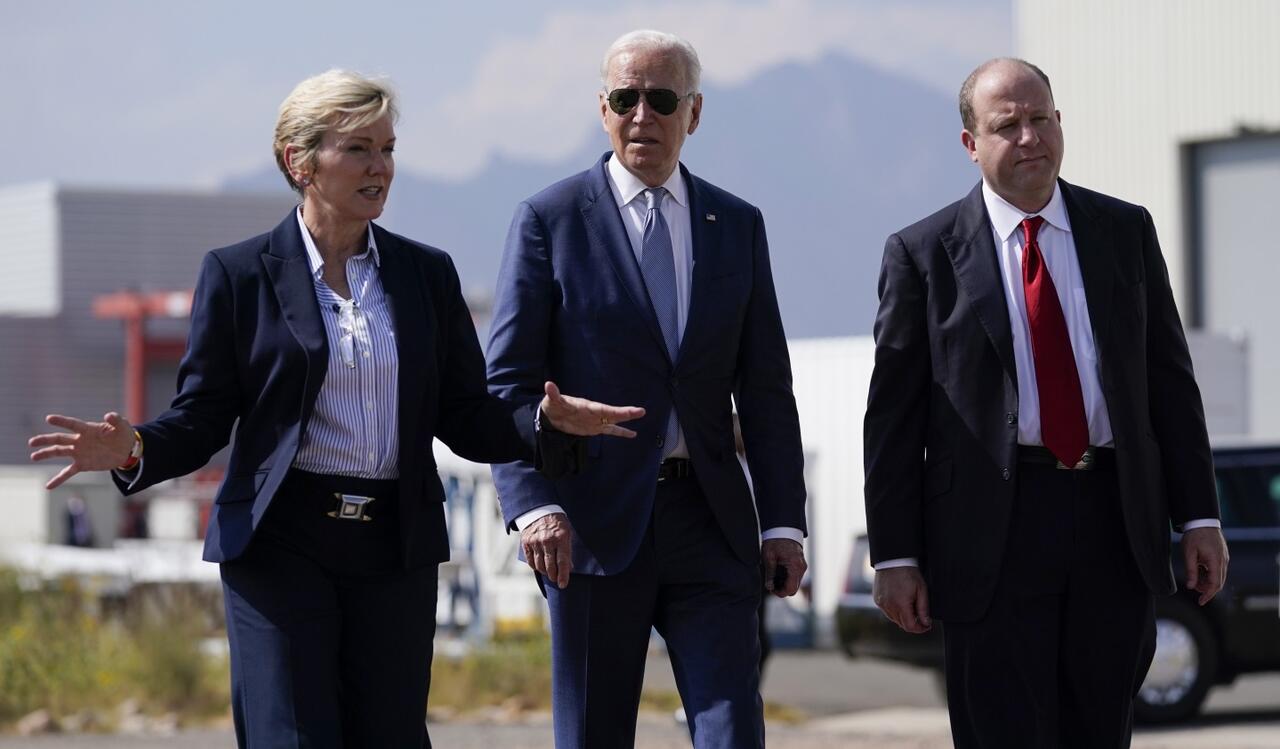
(AP Photo/Evan Vucci)

The administration is sending mixed signals about whether it is really serious about extracting critical minerals from U.S. mines. On the same day that the president made his Defense Production Act announcement, the Department of the Interior published a Federal Register notice to begin a process to change mining laws and regulations in ways that could make it harder and more expensive to develop critical minerals and put lands off-limits to mining.

U.S. Energy Secretary Jennifer Granholm appears to be the only top administration official who understands that permitting is a problem. At a recent energy conference, she linked our foreign mineral dependency to the lengthy permitting process and said that the administration needs to streamline this process with a-whole-of-government effort to collapse bureaucratic and time-consuming permitting timelines. Describing China’s critical minerals hegemony as a threat to national and energy security and American economic wellbeing, Granholm stressed the need to re-shore the entire critical-minerals supply chain – from extraction to processing. 

Deploying the Defense Production Act to increase critical mineral production, or spending the money for the clean-energy initiatives in the Bipartisan Infrastructure Law, can’t happen quickly due to the protracted permitting process. We’ve been down this path before. The “shovel-ready” infrastructure construction projects in the 2009 stimulus bill took years to build – if built at all – due to permitting barriers. 

Permitting hurdles have skyrocketed over the last several decades, causing a precipitous decline in mining. Statistics from the Centers for Disease Control and Prevention show the number of U.S. metal mines has plummeted from almost 1,000 mines in 1983 to fewer than 300 mines today. 

Permitting obstacles are impeding clean-energy mineral projects across the country. Important Nevada lithium projects are facing litigation and regulatory delays. In Idaho, a proposed gold-antimony mine is in its sixth year of permitting, and a cobalt mine has taken more than a decade to permit. A proposed Arizona copper mine is undergoing additional scrutiny to mollify project opponents, and the administration just revoked the federal -leases for a treasure-trove deposit of nickel, cobalt, copper, platinum, and palladium in Minnesota.

The National Environmental Policy Act (NEPA), the law requiring federal agencies to prepare Environmental Assessments and Environmental Impact Statements, is the primary reason permitting takes so long. Project opponents are experts at weaponizing NEPA using appeals and litigation to challenge agencies’ decisions and create lengthy and costly delays.

Though NEPA provides important environmental information about a project’s impacts and seeks valuable public input, it’s a paper tiger that does nothing directly to protect the environment. That protection comes from the Clean Water Act, the Clean Air Act, and other federal environmental laws that require permits with stringent environmental protection standards that make U.S. mines the cleanest and safest in the world. 

Because NEPA has a different purpose than the body of federal and state environmental-protection laws, Secretary Granholm’s call to streamline permitting could be achieved without reducing environmental safeguards. 

Growing concern about our dependency on Russia and China for critical minerals is galvanizing bipartisan action on Capitol Hill. Pointing to Europe’s reliance on Russian oil and gas, Senate Energy and Natural Resources Chairman Joe Manchin of West Virginia recently warned that Russia and China could weaponize critical minerals to threaten U.S. national security and hamper our climate goals. 

President Biden acceded to a bipartisan request from Senators Manchin, Lisa Murkowski (Alaska), James Risch (Idaho), and Bill Cassidy (Louisiana) to use the Defense Production Act to accelerate domestic production of the minerals used to manufacture lithium-ion batteries. Oregon senator Ron Wyden recently introduced a bill to expand domestic critical-mineral production, saying that it would “fuel red, white and blue clean energy while creating good-paying jobs on American soil.”

We cannot achieve energy security, tackle climate change, transition efficiently to clean energy, or reduce our reliance on foreign minerals until we fix the permitting process. The Biden administration needs to speak with one voice about critical minerals, streamline permitting, and stop proposing additional hurdles that impede mining projects.

Tyler Durden
Thu, 04/28/2022 – 15:23

via ZeroHedge News https://ift.tt/3SEsAR9 Tyler Durden

The FDA’s Menthol Cigarette Ban Is a ‘Racial Justice’ Issue, but Not in the Way Its Supporters Mean


menthol-cigarette-ads

Supporters of the ban on menthol cigarettes that the Food and Drug Administration (FDA) proposed today say it is “a racial justice issue.” They are right about that, but not in the way they mean.

What they mean is that 85 percent of black smokers prefer menthol cigarettes, compared to 30 percent of white smokers. “The number one killer of black folks is tobacco-related diseases,” Phillip Gardiner, a tobacco researcher and activist, told Slate‘s Julia Craven after the FDA announced plans for the proposed ban last year. “The main vector of that is menthol cigarettes and flavored cigars.”

The FDA’s proposed rule would ban both, which the agency says will “address health disparities experienced by communities of color.” Action on Smoking and Health welcomed the FDA’s ban, calling it “a major step forward in Saving Black Lives” and averring that “menthol advertising violates the right to health of Black Americans.”

Although menthol and nonmenthol cigarettes pose similar hazards, the FDA says menthol makes smoking more appealing and harder to quit. As Guy Bentley, director of consumer freedom at Reason Foundation (which publishes this website), noted this week, the evidence on the latter point is mixed. But even if it were clear that menthol smokers are less likely to quit, that would not necessarily mean menthol cigarettes are inherently more “addictive.” That debate tends to obscure the tastes, preferences, personal characteristics, and circumstances that are crucial to understanding why some people never smoke, some start but eventually quit, and others continue smoking.

As the menthol ban’s proponents see it, even the choice to start smoking is not really a choice, because consumers—in this case, black consumers in particular—are no match for Big Tobacco’s persuasive wiles. Gardiner cites the industry’s history of “predatory marketing,” while the anti-smoking Truth Initiative condemns “relentless profiling of Black Americans and vulnerable populations” by brands like Kool, Salem, and Newport.

That’s one way of looking at it. Here is another: The federal government is targeting the kind of cigarettes that black smokers overwhelmingly prefer, precisely because black smokers overwhelmingly prefer them. The FDA also worries that menthol cigarettes appeal to teenagers, another “vulnerable population.” Public health officials are thus treating African Americans like children in the sense that they don’t trust either to make their own decisions.

“The proposed rules would help prevent children from becoming the next generation of smokers and help adult smokers quit,” says Secretary of Health and Human Services Xavier Becerra. “Additionally, the proposed rules represent an important step to advance health equity by significantly reducing tobacco-related health disparities.” The FDA notes “particularly high rates of use by youth, young adults, and African American and other racial and ethnic groups.”

The federal government is implicitly denying the moral agency of black people, suggesting that they, like adolescents, are helpless to resist the allure of “predatory marketing” or the appeal of menthol’s minty coolness. As the FDA sees it, persuasion is not enough to break Big Tobacco’s spell; force is required.

The FDA’s legal license to prohibit menthol as a “characterizing flavor” in cigarettes comes from the Family Smoking Prevention and Tobacco Control Act. That 2009 law, which gave the FDA regulatory authority over tobacco products, banned flavored cigarettes but made an exception for menthol. At the same time, it left the FDA with “authority to take action” against “menthol or any artificial or natural flavor.”

According to the menthol ban’s supporters, the FDA is doing black Americans a favor by limiting their choices: Without the menthol option, black smokers may decide to quit, and fewer black people will take up the habit to begin with. The FDA says the menthol ban has “the potential to significantly reduce disease and death from combusted tobacco product use, the leading cause of preventable death in the U.S., by reducing youth experimentation and addiction, and increasing the number of smokers that quit.” That’s all that matters in a “public health” calculus that attaches no value to individual freedom or consumer choice.

In addition to condescending assumptions, the FDA is displaying remarkable shortsightedness about the practical impact of its policy on the community it supposedly is trying to help. “Policies that amount to prohibition for adults will have serious racial justice implications,” the American Civil Liberties Union (ACLU), the Drug Policy Alliance, the Sentencing Project, and 24 other organizations warned in an April 2021 letter to Becerra and Acting FDA Commissioner Janet Woodcock. “Such a ban will trigger criminal penalties, which will disproportionately impact people of color, as well as prioritize criminalization over public health and harm reduction. A ban will also lead to unconstitutional policing and other negative interactions with local law enforcement.”

The ACLU letter noted that “a menthol cigarette ban would disproportionately impact communities of color, result in criminalization of the market, and exacerbate mass incarceration.” The ban “also risks creating large underground, illegal markets.” That “would be a massive law enforcement problem for states, counties, and cities, since all states treat unlicensed sale of tobacco products as a crime—usually as a felony punishable by imprisonment.”

The FDA glides over that point, instead emphasizing that the agency “cannot and will not enforce against individual consumers for possession or use of menthol cigarettes.” But many of those individual consumers will look for ways to continue smoking the kind of cigarettes they like, and that demand will be filled by other individuals, who in turn will be subject to criminal penalties.

The FDA “recognizes concerns related to how state and local law enforcement may enforce their own laws in a manner that may impact equity and community safety, particularly for underserved and underrepresented communities.” Its solution is to request public comment on “policy considerations related to the potential racial and social justice implications of the proposed product standards.”

The case of Eric Garner, who was killed by New York City police in 2014 during an arrest for selling untaxed cigarettes, gives you some idea of what the menthol ban will mean in practice. Garner’s mother, Gwen Carr, is decidedly less enthused than the FDA about the paternalistic potential of banning menthol cigarettes. That policy, she warns, “has consequences for mothers like me,” because it will give “police officers another excuse to harass and harm any black man, woman, or child they choose.” Unlike the tobacco industry’s “relentless profiling of Black Americans,” which was limited to product pitches, this kind of profiling will involve armed agents of the state.

While most members of the Congressional Black Caucus voted for a 2020 bill that would have banned menthol cigarettes, there are dissenters. “A ban would possibly lead to illegal and unlicensed distribution,” Rep. Sanford Bishop (D‒Ga.) told The Hill this week. “The banning of the menthol cigarettes would certainly push those people who prefer that to the illegal and illicit acquisition of those products.”

As the ACLU et al. see it, the FDA is ignoring the lessons of drug prohibition by blithely adding another target to the list of arbitrarily proscribed substances. “Tobacco policy will no longer be the responsibility of regulators regulating, but police policing,” they said. “Our experience with alcohol, opioid, and cannabis prohibition teaches us that that is a policy disaster waiting to happen, with Black and other communities of color bearing the brunt.”

Such concerns explain why the menthol ban is controversial among African-American organizations, which have arrived at diametrically opposed positions based on clashing visions of racial justice. The National Association for the Advancement of Colored People (NAACP) endorsed the FDA’s ban, saying “the tobacco industry has been targeting African Americans,” thereby contributing to “the skyrocketing rates of heart disease, stroke and cancer across our community.” But the ACLU letter attracted support from several African-American groups, including the National Black Justice Coalition, the National Association of Blacks in Criminal Justice, and the National Association of Black Law Enforcement Officers.

Maybe those groups and people like Gwen Carr are seeing something the NAACP doesn’t. Although drug prohibition has racist roots and disproportionately harms black Americans, it attracted the support of black politicians who believed they were helping to save their communities from the scourge of drug abuse. That logic explains why supposedly liberal black Democrats like former Rep. Charlie Rangel, who represented Harlem from 1971 to 2017, joined Republicans and white Democrats like Joe Biden, then a Delaware senator, in backing draconian crack cocaine penalties that predictably fell most heavily on African Americans.

The sentencing scheme that Congress created in the 1980s treated smokable cocaine as if it were 100 times worse than the snorted kind, setting the weight cutoffs for mandatory minimum sentences accordingly. It also prescribed a five-year mandatory minimum for simple possession of as little as 5 grams. Since blacks accounted for about four-fifths of federal crack defendants but a minority of cocaine powder defendants, the upshot was glaring, racially skewed disparities in punishment for similar conduct.

Black politicians recognized that reality pretty quickly (sooner than Biden did) and began pushing for crack sentencing reform. That effort ultimately led to the Fair Sentencing Act of 2010, which reduced the sentencing disparity between crack and cocaine powder, and the FIRST STEP Act of 2018, which made that change retroactive. By then, members of Congress overwhelmingly agreed that a drug policy supposedly aimed at helping black Americans had done far more harm than good.

The NAACP eventually reached the same conclusion about marijuana prohibition, which it opposes on racial justice grounds. On that issue, unlike the menthol ban, the NAACP and the ACLU are allies.

The insanely punitive response to crack “seemed like a good idea at the time,” Rangel says in the Netflix documentary Crack: Cocaine, Corruption & ConspiracyBut in retrospect, he adds, “it was clearly overkill.” In a few years, black leaders who supported the FDA’s menthol ban may be saying something similar about that supposedly noble and enlightened policy.

The post The FDA's Menthol Cigarette Ban Is a 'Racial Justice' Issue, but Not in the Way Its Supporters Mean appeared first on Reason.com.

from Latest https://ift.tt/AMKOrEG
via IFTTT
How Worrying Are Pro-Trump Gubernatorial Candidates Running on Rigged Election Claims?


7

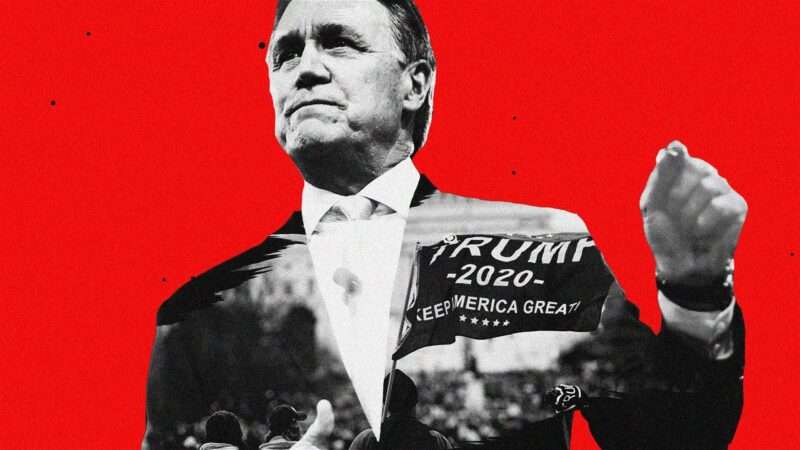
David Perdue cut straight to the chase.

“First off, let me be very clear tonight: The election in 2020 was rigged and stolen,” Perdue said at the beginning of his opening statement during a Republican gubernatorial debate on Sunday night.

It wasn’t just a cheap applause line for the MAGA crowd. It was something more like a thesis statement for Perdue’s campaign. Perdue, a former Republican senator who lost his bid for reelection in 2020, is now running against incumbent Republican Gov. Brian Kemp in the GOP gubernatorial primary in Georgia. And in Perdue’s telling, everything from rising gas prices to illegal immigration and even the U.S. coming “to the brink of war” over Russia’s invasion of Ukraine were the result of Kemp allowing “radical Democrats to steal our election.” Something that he says Kemp was responsible for aiding and abetting.

Kemp, of course, was one of the Republican officials who blocked then-President Donald Trump’s attempt to get state legislatures and governors to overturn the results of the 2020 election. Two weeks after the election, as state officials finalized the results showing that Joe Biden won by about 12,000 votes, Kemp called for tightening voter ID laws in Georgia and making other technical changes in how the state conducts future elections. But he also certified the result of the 2020 election, against Trump’s wishes.

Since then, he’s been a target for Trump, who vowed not long after the 2020 election to boot Kemp from office. Trump has helped Perdue fundraise and has even chipped in $500,000 of his own campaign cash to Perdue’s campaign.

Perdue has put Trump’s election grievances front and center in his campaign. His campaign website splashes a big picture of a smiling Perdue and grinning Trump, reminding voters that Perdue is “the only Trump-endorsed candidate for governor.” The video that plays on the front page isn’t a message from Perdue about his campaign or the issues vital to Georgians—it’s a 73-second tirade by Trump in which he condemns Kemp for “letting us down.”

Two years after Trump became the first Republican to lose Georgia since 1992, Perdue is staking his claim to the governorship on the hope that Republican voters are motivated primarily by the former president’s delusions and rage.

But Georgia is hardly the only swing state where this year’s Republican gubernatorial elections are focused on Trump. In Pennsylvania and Arizona, too, Trump-backed candidates who say they believe the 2020 election was stolen are running at or near the top of the polls. If they’re successful, those governors might create major complications for the next presidential election—as they would be in a position to do some of what Kemp, and others, refused to do in 2020: decertify results that go against the Republican nominee.

For now, though, the best way to view these GOP primaries is as a test case for the staying power of Trump’s election grievances. Is this really how Republican voters want to define their party going forward: as little more than a tool for for Trump’s self-serving lies about the 2020 election? These three races will provide an answer—and it might not be one Trump likes, as his preferred candidates are facing difficult paths to winning in November. Perhaps it’s too simple of an explanation, but the average Republican voter is likely not as motivated by Trump’s grievances as Trump himself.

Still, it’s worth asking how worried the country should be about this wave of Republican candidates centering their candidacy for high office on a message of denying the legitimacy of the 2020 election. There’s no evidence yet that it is a successful strategy in the primaries and it seems likely to be a political liability in the general election. Yet it remains unnerving that so many high-profile Republicans—in Perdue’s case, even a former U.S. senator—have decided that the path to political success on the political right requires rallying around a blatant falsehood constructed to serve the political ambitions of a single man.

And it is a falsehood. Audits and recounts in swing state after swing state failed to turn up evidence of a stolen election—one much-ballyhooed audit conducted by Arizona Republicans actually found that Biden won by a slightly larger margin than originally thought. Dozens of lawsuits filed by the Trump campaign or its supporters alleging voter fraud and anti-Trump conspiracies collapsed in court. The myth of the stolen election lives on as a way to raise money and as a way to snare the endorsement of the most popular man in conservative politics.

The gubernatorial candidate who can claim to have risked the most in support of Trump is probably Pennsylvania state Sen. Doug Mastriano (R–Fayetteville), who attended the January 6, 2021, election protest in Washington, D.C., that devolved into a riot at the U.S. Capitol. Mastriano has claimed that he did not participate in the riot and walked away from the scene once violence started—but photos and videos from the scene show Mastriano beyond police barricades outside the Capitol (no evidence has emerged showing that he entered the building itself). He’s been subpoenaed by the congressional committee investigating the riot.

Back in Pennsylvania, Mastriano has spearheaded a different sort of investigation. He’s running a legislative audit of the 2020 election results that he says will uncover evidence of widespread voter fraud.

By the time the congressional investigation is finished, he might be governor of a crucial swing state. Polls show Mastriano running neck-and-neck with Lou Barletta, the former mayor of Hazleton, Pennsylvania, who rose to prominence via political stunts like making English the town’s official language and trying to ban illegal immigrants from working there.

Fittingly, the race also includes state Senate President Pro Tempore Jake Corman (R–Centre) who played the role of Pennsylvania’s Brian Kemp in 2020. When Trump’s allies were pressuring top Republicans in state governments to overturn results in a handful of close states, including Pennsylvania, Corman backed a legislative audit of the vote tallies but refused to take more radical steps like appointing an alternative slate of electors to represent Pennsylvania at the Electoral College. Corman is trailing badly in the polls.

In Arizona, incumbent Gov. Doug Ducey memorably sent Trump to voicemail and (like Kemp) dutifully certified the election results showing Biden’s win in the state in 2020. But he’s term-limited and can’t run again. Leading the pack to be his replacement is former television news anchor and political neophyte Kari Lake, who has made it very clear where she stands.

Citing “serious irregularities and problems with the election,” Lake told One America News (OAN) last year, “I would not have certified it.”

Lake has gone further than simply second-guessing Ducey. Early on, her campaign loudly proclaimed that she would seek to retroactively decertify the 2020 results if an audit showed that Trump had actually won the state. After that audit was completed and revealed that Biden had, in fact, prevailed in Arizona, she called for decertifying the results anyway.

In a nutshell, this is the worry of liberals, anti-Trump conservatives, and anyone else harboring concerns about rising authoritarianism on the political right: What if this campaign rhetoric translates into official behavior. What happens if elected Republicans begin ignoring their oaths of office and the rule of law to declare illegitimate any election the GOP loses?

As the country learned in 2020, presidential elections aren’t a single national contest. Instead, the race for the White House is 51 separate contests (D.C. gets to cast electoral votes too)in which the winner must be certified by a series of top-ranking officials. Without people like Kemp and Ducey to ensure that legitimate electoral outcomes are certified, the argument goes, the outcome could be rigged long before the official counting of the electoral votes in Congress.

Arizona, Georgia, and Pennsylvania’s gubernatorial races are rated as “toss-ups” right now. That means characters like Lake, Perdue, and Mastriano will have a decent shot at being elected in the fall (and helped by a political environment that’s shaping up to be favorable to Republicans across the board) if they can win their respective GOP primaries during the spring and summer. And this trend goes beyond those three. In Wisconsin, Republican gubernatorial hopeful Rebecca Kleefisch said this week that she believes the 2020 election was “rigged.” According to Politico, some 57 participants in the January 6 protest are running for office this year—though mostly for lower-level posts.

But, there’s an alternative way to read what’s happening here: Maybe it’s just politics. Deeply cynical politics, to be sure, but these are politicians, after all. They’ll say whatever they think gives them the best chance at getting elected—and polls say the majority of Republican voters believe, despite massive amounts of evidence to the contrary, that Biden’s victory was not legitimate. So that’s what the pols are saying.

To be sure, cynically refusing to accept election results for future political gain is not unique to Trump or to Republicans. Hillary Clinton has repeatedly called into question the legitimacy of Trump’s 2016 victory. Stacey Abrams, who lost to Kemp in Georgia’s 2018 gubernatorial election and is the presumptive Democratic nominee for the same post this year, claimed the 2018 result was not “right, true or proper” and famously refused to concede. Biden has gone a step further and declared that future contests should be viewed as illegitimate if Congress does not adopt Democrats’ proposed election reforms—though the White House later walked back that claim.

For Republicans, though, it’s not just about following the polls or playing politics. Trump really wants Kemp gone, remember? Any challenger would be foolish not to try to take advantage of the former president’s animus towards the current governor—which is great for fundraising if nothing else. In Pennsylvania and Arizona, candidates who would probably be well beyond the fringes in a more typical primary season are effectively trying to ride Trump’s coattails (and his grievances), even in a year where Trump’s not actually on the ballot.

In an age when the power of political endorsements has faded significantly, Trump seems to be the exception to the rule. His endorsement isn’t a sure bet—in fact, the track record is far from terrific—but it’s a way to tap into an angry and energized portion of the Republican electorate.

Are Lake, Mastriano, and Perdue true believers or cynical opportunists? There is, unfortunately, no way to know for sure at this stage. Thankfully, that’s not actually the most important question. Whether sincere or not, they have built their campaigns around ideas that are dangerous and anti-democratic.

And it might not pay off. In Georgia, Perdue is trailing badly in the polls. Mastriano, despite being a co-front-runner in Pennsylvania, will likely struggle to get more than 30 percent of the votein a closed Republican primary.

Pennsylvania does not allow independents to participate in primary elections. If Mastriano wins, it will be with the backing of less than a third of the voters in his own party. Perhaps, like Trump, he can parlay that into a general election win. But he seems likely to alienate many moderate Republicans who are crucial to winning statewide elections in Pennsylvania.

Lake seems to have the clearest primary path, but the leading Democratic candidate has pulled even with her in some head-to-head polls. (For the sake of comparison, Ducey won the state by more than 14 points in 2018.)

This Republican primary season will test the limits and staying power of Trump’s election grievances. It’s far from clear whether the strategy of continuing to contest the last election is a winning one in Republican primaries—and it seems more like to be a liability in November.

One thing that is clear: When candidates like Perdue stand on a debate stage and tell outright lies to prospective voters, the only thing they accomplish is demonstrating they’re unfit for office.

The post How Worrying Are Pro-Trump Gubernatorial Candidates Running on Rigged Election Claims? appeared first on Reason.com.

from Latest https://ift.tt/XKwiCbr
via IFTTT

‘Libs Of TikTok’ WaPo-Dox Backfires After Account Gains 500,000 New Followers In One Week

‘Libs Of TikTok’ WaPo-Dox Backfires After Account Gains 500,000 New Followers In One Week

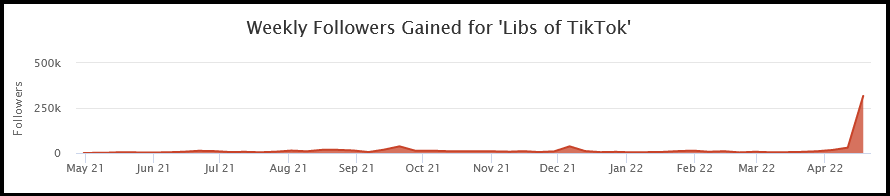
Libs of TikTok – a Twitter account which aggregates videos posted on TikTok by deranged leftists – has gained over 500,000 new followers in the week since the Washington Post published a hit-piece against the owner of the account.

As part of the smear campaign, WaPo ‘journalist’ Taylor Lorenz doxxed the woman who runs it – while innocent people who share the same name as the account owner were harassed for days.

The account first made national headlines on April 14 after Twitter suspended it for 12 hours, citing “hateful conduct.” That alone caused a jump in followers from 602,000 followers that Tuesday, to 630,000 by Saturday.

48 hours later, WaPo put out their hit piece – accusing Libs of TikTok of “spreading anti-LGBTQ+ sentiment.” Lorenz notably posted information on the account owner’s Real Estate license, which revealed personal information. WaPo subsequently removed the link with no explanation.

And of course, Lorenz’s snarky hit-piece completely backfired, as the account has gained over 500,000 new followers since it was published.

via socialblade.com

The jump in followers was also undoubtedly fueled in part by appearances by the account owner on Fox News’ “Tucker Carlson Tonight” to discuss the intimidation campaign.

In short, Twitter and Taylor Lorenz have nearly doubled Libs of TikTok’s reach in their attempts to smear the conservative account ahead of midterms.

Of course, it should also be noted that Twitter has seemingly “unshackled” conservative accounts over the last 72 hours following the news that Elon Musk was acquiring the social media giant. To wit, Libs of TikTok saw a jump of 110,000 followers on Wednesday.

Meanwhile, Journalist Tim Pool paid for a billboard in Times Square calling Lorenz and the Post out for the doxxing.

In the meantime, Libs of TikTok will continue to send videos like this into the stratosphere:

Tyler Durden
Thu, 04/28/2022 – 15:00

via ZeroHedge News https://ift.tt/CtVm6Kk Tyler Durden

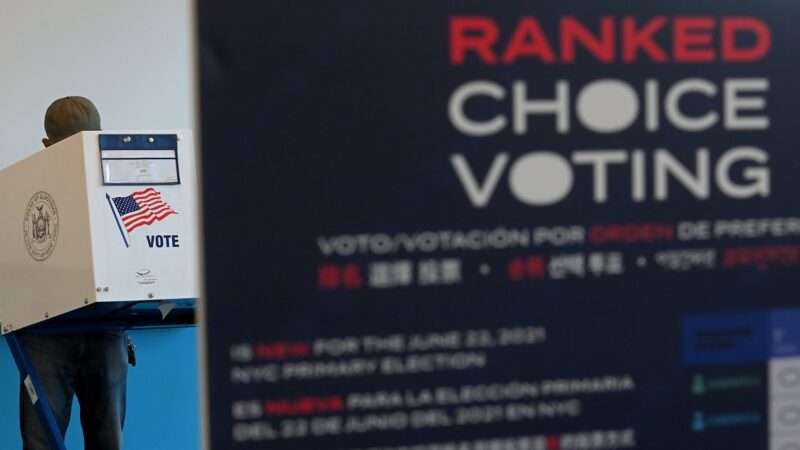
Florida, Tennessee Ban Ranked-Choice Voting Despite Citizen Support


rankedchoice_1161x653

On Monday, Republican Florida Gov. Ron DeSantis signed a massive election bill into law that creates a special squad to investigate election fraud and crimes and increases some criminal penalties for some election-related violations.

But that’s not all. Buried on page 25 of the 47-page bill is a complete ban on the use of ranked-choice voting anywhere in the state, regardless of what voters might want. In this case, it’s the voters of Sarasota, who overwhelmingly decided in 2007 (with 77 percent in favor) to switch to this type of voting for local elections.

A similar ban was passed in February in Tennessee. There the target was the city of Memphis, where voters first decided they wanted ranked-choice voting back in 2008. The City Council itself resisted the change and attempted to get voters to repeal the system in 2018, but voters instead still chose to keep ranked-choice by 62 percent. Nevertheless, S.B. 1820 will stop Memphis (and any other municipality or county in Tennessee) from using ranked-choice voting to determine election results.

In Tennessee, the bill’s sponsor, state Sen. Brian Kelsey (R–Germantown), made a typical claim by ranked-choice opponents—that it’s a “very confusing and complex process that leads to lack of confidence.” This is belied by the fact that voters keep choosing it when given the option to do so.

There’s a lesson here on how some of the resistance to certain election reforms is actually about entrenched political interests protecting themselves from electoral consequences.

Ranked-choice voting is a system where voters don’t just choose a single candidate over the others. Instead, voters are invited to rank candidates by preference. In a slate of five candidates, a voter can choose a favorite, then rank the rest as a second-choice, third-choice, et cetera.

When votes in this system are tabulated, a single candidate must receive a majority of the vote, not just the most votes, in order to win. If a single candidate doesn’t surpass the 50 percent threshold, the candidate receiving the least number of votes is disqualified. Then the votes are retallied. For those who chose that last-place candidate as their first pick, instead their second choice is now their vote. The process repeats until a single candidate gets the most votes.

One of the stated goals for proponents of ranked-choice voting is to avoid a situation where, due to the size of the candidate pool, a person is declared a winner with just 30 percent of the vote or even less. Under the status quo, a candidate with polarizing positions that appeal to a small but committed group of voters can overcome the majority if votes get split among three, four, or more candidates.

Ranked-choice voting therefore also creates a system where third-party and independent candidates can have impact without voters having to worry about allegedly “throwing their vote away” or choosing a so-called “spoiler” who can’t win but can draw votes away from a similar candidate. A voter can select a Libertarian Party or Green Party candidate or an independent candidate as their first choice. Then, the voter can select a more conventional Democrat or Republican candidate as the second choice, knowing that they can have their values reflected in initial results without losing their voice entirely.

FairVote, a nonpartisan organization pushing for election reforms, sees ranked-choice voting as a boon for voter participation and support of election outcomes. It views ranked-choice voting as a way of countering increasing polarization among both Democratic and Republican candidates: “America’s constitutional system of governance is based on compromise. When polarization causes that to break down, policymaking can grind to a halt or swing wildly based on which party has majority control.”

Unsurprisingly, politicians who benefit from a highly polarized environment wouldn’t want an election system that encourages alternatives. Florida’s politics these days can most certainly be described as “polarizing.”

“There are some folks who benefit from divisive elections and the status quo,” Deb Otis, a senior research analyst for FairVote, tells Reason. “Reforms will always have pockets of opposition.”

And just because Republicans are behind the bans in Florida and Tennessee doesn’t mean they’re the only ones against ranked-choice. In New York City, establishment Democrats attempted to halt the implementation of ranked-choice voting in the mayor’s race just last year. They failed, and Eric Adams eventually won with a majority of the vote after several rounds of tallies. Adams himself had spoken out against ranked-choice, claiming it would disenfranchise minority voters, even though the voters themselves (as in Sarasota and Memphis) overwhelmingly approved a referendum on it.

Despite the recent setbacks in Florida and Tennessee, Otis and FairVote are keeping a positive outlook and promoting the growth of adoptions of ranked-choice voting elsewhere. Maine pioneered ranked-choice voting in the U.S. for several state-level races (including governor and lawmakers), and a new bill will allow cities and towns to use the system for local races. In Utah, a Republican-sponsored bill signed into law by a Republican governor provided some technical tweak to its pilot program as ranked-choice voting continues to grow there. And Alaska will be using ranked-choice voting to replace Republican Rep. Don Young, who died in March.

“More and more cities are using ranked-choice voting,” Otis says. “We continue to see voters like ranked-choice voting, understand it, and continue to elect candidates who have broad support.”

The post Florida, Tennessee Ban Ranked-Choice Voting Despite Citizen Support appeared first on Reason.com.

from Latest https://ift.tt/bSBcX3W
via IFTTT

How Worrying Are Pro-Trump Gubernatorial Candidates Running on Rigged Election Claims?


7

David Perdue cut straight to the chase.

“First off, let me be very clear tonight: The election in 2020 was rigged and stolen,” Perdue said at the beginning of his opening statement during a Republican gubernatorial debate on Sunday night.

It wasn’t just a cheap applause line for the MAGA crowd. It was something more like a thesis statement for Perdue’s campaign. Perdue, a former Republican senator who lost his bid for reelection in 2020, is now running against incumbent Republican Gov. Brian Kemp in the GOP gubernatorial primary in Georgia. And in Perdue’s telling, everything from rising gas prices to illegal immigration and even the U.S. coming “to the brink of war” over Russia’s invasion of Ukraine were the result of Kemp allowing “radical Democrats to steal our election.” Something that he says Kemp was responsible for aiding and abetting.

Kemp, of course, was one of the Republican officials who blocked then-President Donald Trump’s attempt to get state legislatures and governors to overturn the results of the 2020 election. Two weeks after the election, as state officials finalized the results showing that Joe Biden won by about 12,000 votes, Kemp called for tightening voter ID laws in Georgia and making other technical changes in how the state conducts future elections. But he also certified the result of the 2020 election, against Trump’s wishes.

Since then, he’s been a target for Trump, who vowed not long after the 2020 election to boot Kemp from office. Trump has helped Perdue fundraise and has even chipped in $500,000 of his own campaign cash to Perdue’s campaign.

Perdue has put Trump’s election grievances front and center in his campaign. His campaign website splashes a big picture of a smiling Perdue and grinning Trump, reminding voters that Perdue is “the only Trump-endorsed candidate for governor.” The video that plays on the front page isn’t a message from Perdue about his campaign or the issues vital to Georgians—it’s a 73-second tirade by Trump in which he condemns Kemp for “letting us down.”

Two years after Trump became the first Republican to lose Georgia since 1992, Perdue is staking his claim to the governorship on the hope that Republican voters are motivated primarily by the former president’s delusions and rage.

But Georgia is hardly the only swing state where this year’s Republican gubernatorial elections are focused on Trump. In Pennsylvania and Arizona, too, Trump-backed candidates who say they believe the 2020 election was stolen are running at or near the top of the polls. If they’re successful, those governors might create major complications for the next presidential election—as they would be in a position to do some of what Kemp, and others, refused to do in 2020: decertify results that go against the Republican nominee.

For now, though, the best way to view these GOP primaries is as a test case for the staying power of Trump’s election grievances. Is this really how Republican voters want to define their party going forward: as little more than a tool for for Trump’s self-serving lies about the 2020 election? These three races will provide an answer—and it might not be one Trump likes, as his preferred candidates are facing difficult paths to winning in November. Perhaps it’s too simple of an explanation, but the average Republican voter is likely not as motivated by Trump’s grievances as Trump himself.

Still, it’s worth asking how worried the country should be about this wave of Republican candidates centering their candidacy for high office on a message of denying the legitimacy of the 2020 election. There’s no evidence yet that it is a successful strategy in the primaries and it seems likely to be a political liability in the general election. Yet it remains unnerving that so many high-profile Republicans—in Perdue’s case, even a former U.S. senator—have decided that the path to political success on the political right requires rallying around a blatant falsehood constructed to serve the political ambitions of a single man.

And it is a falsehood. Audits and recounts in swing state after swing state failed to turn up evidence of a stolen election—one much-ballyhooed audit conducted by Arizona Republicans actually found that Biden won by a slightly larger margin than originally thought. Dozens of lawsuits filed by the Trump campaign or its supporters alleging voter fraud and anti-Trump conspiracies collapsed in court. The myth of the stolen election lives on as a way to raise money and as a way to snare the endorsement of the most popular man in conservative politics.

The gubernatorial candidate who can claim to have risked the most in support of Trump is probably Pennsylvania state Sen. Doug Mastriano (R–Fayetteville), who attended the January 6, 2021, election protest in Washington, D.C., that devolved into a riot at the U.S. Capitol. Mastriano has claimed that he did not participate in the riot and walked away from the scene once violence started—but photos and videos from the scene show Mastriano beyond police barricades outside the Capitol (no evidence has emerged showing that he entered the building itself). He’s been subpoenaed by the congressional committee investigating the riot.

Back in Pennsylvania, Mastriano has spearheaded a different sort of investigation. He’s running a legislative audit of the 2020 election results that he says will uncover evidence of widespread voter fraud.

By the time the congressional investigation is finished, he might be governor of a crucial swing state. Polls show Mastriano running neck-and-neck with Lou Barletta, the former mayor of Hazleton, Pennsylvania, who rose to prominence via political stunts like making English the town’s official language and trying to ban illegal immigrants from working there.

Fittingly, the race also includes state Senate President Pro Tempore Jake Corman (R–Centre) who played the role of Pennsylvania’s Brian Kemp in 2020. When Trump’s allies were pressuring top Republicans in state governments to overturn results in a handful of close states, including Pennsylvania, Corman backed a legislative audit of the vote tallies but refused to take more radical steps like appointing an alternative slate of electors to represent Pennsylvania at the Electoral College. Corman is trailing badly in the polls.

In Arizona, incumbent Gov. Doug Ducey memorably sent Trump to voicemail and (like Kemp) dutifully certified the election results showing Biden’s win in the state in 2020. But he’s term-limited and can’t run again. Leading the pack to be his replacement is former television news anchor and political neophyte Kari Lake, who has made it very clear where she stands.

Citing “serious irregularities and problems with the election,” Lake told One America News (OAN) last year, “I would not have certified it.”

Lake has gone further than simply second-guessing Ducey. Early on, her campaign loudly proclaimed that she would seek to retroactively decertify the 2020 results if an audit showed that Trump had actually won the state. After that audit was completed and revealed that Biden had, in fact, prevailed in Arizona, she called for decertifying the results anyway.

In a nutshell, this is the worry of liberals, anti-Trump conservatives, and anyone else harboring concerns about rising authoritarianism on the political right: What if this campaign rhetoric translates into official behavior. What happens if elected Republicans begin ignoring their oaths of office and the rule of law to declare illegitimate any election the GOP loses?

As the country learned in 2020, presidential elections aren’t a single national contest. Instead, the race for the White House is 51 separate contests (D.C. gets to cast electoral votes too)in which the winner must be certified by a series of top-ranking officials. Without people like Kemp and Ducey to ensure that legitimate electoral outcomes are certified, the argument goes, the outcome could be rigged long before the official counting of the electoral votes in Congress.

Arizona, Georgia, and Pennsylvania’s gubernatorial races are rated as “toss-ups” right now. That means characters like Lake, Perdue, and Mastriano will have a decent shot at being elected in the fall (and helped by a political environment that’s shaping up to be favorable to Republicans across the board) if they can win their respective GOP primaries during the spring and summer. And this trend goes beyond those three. In Wisconsin, Republican gubernatorial hopeful Rebecca Kleefisch said this week that she believes the 2020 election was “rigged.” According to Politico, some 57 participants in the January 6 protest are running for office this year—though mostly for lower-level posts.

But, there’s an alternative way to read what’s happening here: Maybe it’s just politics. Deeply cynical politics, to be sure, but these are politicians, after all. They’ll say whatever they think gives them the best chance at getting elected—and polls say the majority of Republican voters believe, despite massive amounts of evidence to the contrary, that Biden’s victory was not legitimate. So that’s what the pols are saying.

To be sure, cynically refusing to accept election results for future political gain is not unique to Trump or to Republicans. Hillary Clinton has repeatedly called into question the legitimacy of Trump’s 2016 victory. Stacey Abrams, who lost to Kemp in Georgia’s 2018 gubernatorial election and is the presumptive Democratic nominee for the same post this year, claimed the 2018 result was not “right, true or proper” and famously refused to concede. Biden has gone a step further and declared that future contests should be viewed as illegitimate if Congress does not adopt Democrats’ proposed election reforms—though the White House later walked back that claim.

For Republicans, though, it’s not just about following the polls or playing politics. Trump really wants Kemp gone, remember? Any challenger would be foolish not to try to take advantage of the former president’s animus towards the current governor—which is great for fundraising if nothing else. In Pennsylvania and Arizona, candidates who would probably be well beyond the fringes in a more typical primary season are effectively trying to ride Trump’s coattails (and his grievances), even in a year where Trump’s not actually on the ballot.

In an age when the power of political endorsements has faded significantly, Trump seems to be the exception to the rule. His endorsement isn’t a sure bet—in fact, the track record is far from terrific—but it’s a way to tap into an angry and energized portion of the Republican electorate.

Are Lake, Mastriano, and Perdue true believers or cynical opportunists? There is, unfortunately, no way to know for sure at this stage. Thankfully, that’s not actually the most important question. Whether sincere or not, they have built their campaigns around ideas that are dangerous and anti-democratic.

And it might not pay off. In Georgia, Perdue is trailing badly in the polls. Mastriano, despite being a co-front-runner in Pennsylvania, will likely struggle to get more than 30 percent of the votein a closed Republican primary.

Pennsylvania does not allow independents to participate in primary elections. If Mastriano wins, it will be with the backing of less than a third of the voters in his own party. Perhaps, like Trump, he can parlay that into a general election win. But he seems likely to alienate many moderate Republicans who are crucial to winning statewide elections in Pennsylvania.

Lake seems to have the clearest primary path, but the leading Democratic candidate has pulled even with her in some head-to-head polls. (For the sake of comparison, Ducey won the state by more than 14 points in 2018.)

This Republican primary season will test the limits and staying power of Trump’s election grievances. It’s far from clear whether the strategy of continuing to contest the last election is a winning one in Republican primaries—and it seems more like to be a liability in November.

One thing that is clear: When candidates like Perdue stand on a debate stage and tell outright lies to prospective voters, the only thing they accomplish is demonstrating they’re unfit for office.

The post How Worrying Are Pro-Trump Gubernatorial Candidates Running on Rigged Election Claims? appeared first on Reason.com.

from Latest https://ift.tt/XKwiCbr
via IFTTT

Biden Youth Approval Hits Record Low

Biden Youth Approval Hits Record Low

Authored by Paul Joseph Watson via Summit News,

Joe Biden’s approval rating has dropped by 20 per cent in a single year, with his approval amongst 18-29-year-olds sinking to a new record low.

Polling from the Harvard Institute of Politics reveals that only 41 per cent of young Americans in that age bracket approve of Biden’s job performance.

Data released by Harvard CAPS and Harris also found that 63 per cent of voters “did not want Biden to run for a second term.”

Tracking by Morning Consult Political Intelligence also shows that Biden has a net disapproval rating in 40 out 50 states, including every single one of the key battleground states in the 2024 mid-terms.

A CNBC poll released earlier this month also revealed Biden’s approval rating had hit a new rock bottom of 38 per cent as Americans aren’t convinced by the president attempting to blame runaway inflation and soaring living costs on Vladimir Putin.

Remember, this is the president who supposedly received a record amount of votes in 2020.

Biden’s collapsing poll numbers seem to be in correlation with his increasingly sad and bizarre public gaffes and dementia-ridden behavior.

Earlier this month, after another error-strewn, rambling speech in North Carolina, Biden appeared to perform a random ‘air handshake’ while once again appearing confused as to where he was going.

His faculties also deserted him when a White House Easter bunny had to rescue the 79-year old as Biden wandered off confused.

The notion that Biden has 7 more years in him as a coherent public figure, should he win re-election, is laughable.

*  *  *

Brand new merch now available! Get it at https://www.pjwshop.com/

In the age of mass Silicon Valley censorship It is crucial that we stay in touch. I need you to sign up for my free newsletter here. Support my sponsor – Turbo Force – a supercharged boost of clean energy without the comedown. Get early access, exclusive content and behinds the scenes stuff by following me on Locals.

Tyler Durden
Thu, 04/28/2022 – 14:40

via ZeroHedge News https://ift.tt/CM2GrV6 Tyler Durden

Big Banks Nailed Over Woke Agenda During Annual Shareholder Meetings

Big Banks Nailed Over Woke Agenda During Annual Shareholder Meetings

As three of America’s largest banks kicked off the US financial industry’s annual gatherings this week, conservative activist investors are pummeling them over “woke” Marxist agendas, as corporate boards have become swept up in “stakeholder capitalism” – the World Economic Forumendorsed concept that companies shouldn’t just serve their shareholders, but society at large.

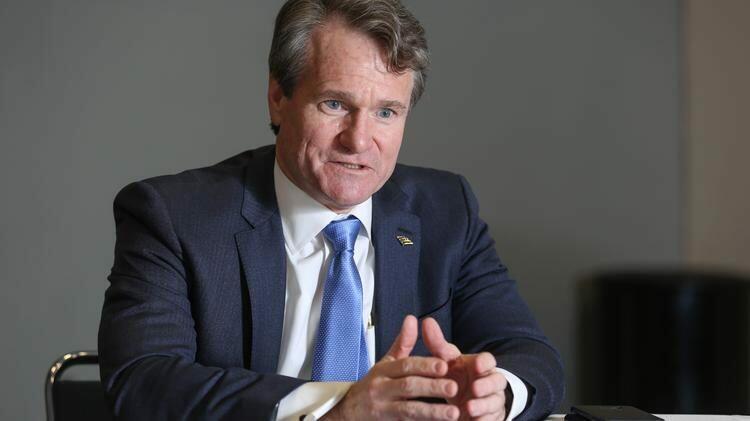
Bank of America CEO Brian Moynihan

Stakeholder capitalism runs contrary to the demands of U.S. corporate law, which holds that directors and executives have a duty to one master: shareholders. Milton Friedman worried that a shift from shareholder primacy would cause companies to operate less efficiently and be less profitable, leaving investors, workers and consumers worse off. -WSJ

Perhaps most notably, BlackRock CEO Larry Fink issued an open letter in January to CEOs explaining that companies they invest with will soon have to abide by sustainability rules governing climate change, labor practices and other issues.

“Stakeholder capitalism is not about politics … It is capitalism,” wrote Fink – who just last year helped elect three ‘climate-focused’ candidates to Exxon Mobil’s 12-member board.

Conservative investors aren’t having it according to Bloomberg, which reported that both Citigroup and Bank of America were nailed at annual shareholder meetings over vows to institute diversity quotas. Of note, BofA encouraged employees to be “woke at work,” and told white employees to “decolonize your mind” and “cede power to people of color,” according to Fox News, citing investigative reporter Christopher Rufo.

One group of activists, the Free Enter Prise Project at the National Center for Public Policy Research, submitted shareholder proposals to Citi and BofA to audit whether their diversity efforts are themselves discriminatory. The Free Enterprise Project’s Sarah Rehberg said during Citigroup’s meeting that a woke agenda means “the company places more value on whether an employee is a woman or a traditionally underrepresented minority than whether that individual has an objective amount of experience or educational qualifications.”

At Wells Fargo – which originated the most loans to the fossil-fuel industry last year, conservative activists called the bank out for donating to groups fighting climate change, “which is just Marxism dressed up as environmentalism.”

“Wells Fargo needs to take a hard look at the fix that Disney finds itself in,” said the activist, Paul Chesser – director of the conservative National Legal and Policy Center’s Corporate Integrity Project.

“Stay out of politics and properly serve all its customers and shareholders.”

Meanwhile, the tide does seem to be turning:

A call for Wells Fargo to examine whether it’s doing enough to support racial equity also fell short, but it garnered 36% support. At Citigroup, more than a third of shareholders supported a proposal that would require the bank to report how it protects Indigenous people.

That said, in response to how Citigroup will avoid Disney’s situation, CEO Jane Fraser doubled down.

“We realize not all stakeholders believe in the positions we take and that there are certain stakeholders who believe it is not the role of a company to make such statements,” she said on Tuesday. “We respectfully take the view that there are times when, as an employer of more than 220,000 people, it is appropriate to engage and support how our colleagues are treated.”

Tyler Durden
Thu, 04/28/2022 – 14:20

via ZeroHedge News https://ift.tt/SVDE93U Tyler Durden

Florida, Tennessee Ban Ranked-Choice Voting Despite Citizen Support


rankedchoice_1161x653

On Monday, Republican Florida Gov. Ron DeSantis signed a massive election bill into law that creates a special squad to investigate election fraud and crimes and increases some criminal penalties for some election-related violations.

But that’s not all. Buried on page 25 of the 47-page bill is a complete ban on the use of ranked-choice voting anywhere in the state, regardless of what voters might want. In this case, it’s the voters of Sarasota, who overwhelmingly decided in 2007 (with 77 percent in favor) to switch to this type of voting for local elections.

A similar ban was passed in February in Tennessee. There the target was the city of Memphis, where voters first decided they wanted ranked-choice voting back in 2008. The City Council itself resisted the change and attempted to get voters to repeal the system in 2018, but voters instead still chose to keep ranked-choice by 62 percent. Nevertheless, S.B. 1820 will stop Memphis (and any other municipality or county in Tennessee) from using ranked-choice voting to determine election results.

In Tennessee, the bill’s sponsor, state Sen. Brian Kelsey (R–Germantown), made a typical claim by ranked-choice opponents—that it’s a “very confusing and complex process that leads to lack of confidence.” This is belied by the fact that voters keep choosing it when given the option to do so.

There’s a lesson here on how some of the resistance to certain election reforms is actually about entrenched political interests protecting themselves from electoral consequences.

Ranked-choice voting is a system where voters don’t just choose a single candidate over the others. Instead, voters are invited to rank candidates by preference. In a slate of five candidates, a voter can choose a favorite, then rank the rest as a second-choice, third-choice, et cetera.

When votes in this system are tabulated, a single candidate must receive a majority of the vote, not just the most votes, in order to win. If a single candidate doesn’t surpass the 50 percent threshold, the candidate receiving the least number of votes is disqualified. Then the votes are retallied. For those who chose that last-place candidate as their first pick, instead their second choice is now their vote. The process repeats until a single candidate gets the most votes.

One of the stated goals for proponents of ranked-choice voting is to avoid a situation where, due to the size of the candidate pool, a person is declared a winner with just 30 percent of the vote or even less. Under the status quo, a candidate with polarizing positions that appeal to a small but committed group of voters can overcome the majority if votes get split among three, four, or more candidates.

Ranked-choice voting therefore also creates a system where third-party and independent candidates can have impact without voters having to worry about allegedly “throwing their vote away” or choosing a so-called “spoiler” who can’t win but can draw votes away from a similar candidate. A voter can select a Libertarian Party or Green Party candidate or an independent candidate as their first choice. Then, the voter can select a more conventional Democrat or Republican candidate as the second choice, knowing that they can have their values reflected in initial results without losing their voice entirely.

FairVote, a nonpartisan organization pushing for election reforms, sees ranked-choice voting as a boon for voter participation and support of election outcomes. It views ranked-choice voting as a way of countering increasing polarization among both Democratic and Republican candidates: “America’s constitutional system of governance is based on compromise. When polarization causes that to break down, policymaking can grind to a halt or swing wildly based on which party has majority control.”

Unsurprisingly, politicians who benefit from a highly polarized environment wouldn’t want an election system that encourages alternatives. Florida’s politics these days can most certainly be described as “polarizing.”

“There are some folks who benefit from divisive elections and the status quo,” Deb Otis, a senior research analyst for FairVote, tells Reason. “Reforms will always have pockets of opposition.”

And just because Republicans are behind the bans in Florida and Tennessee doesn’t mean they’re the only ones against ranked-choice. In New York City, establishment Democrats attempted to halt the implementation of ranked-choice voting in the mayor’s race just last year. They failed, and Eric Adams eventually won with a majority of the vote after several rounds of tallies. Adams himself had spoken out against ranked-choice, claiming it would disenfranchise minority voters, even though the voters themselves (as in Sarasota and Memphis) overwhelmingly approved a referendum on it.

Despite the recent setbacks in Florida and Tennessee, Otis and FairVote are keeping a positive outlook and promoting the growth of adoptions of ranked-choice voting elsewhere. Maine pioneered ranked-choice voting in the U.S. for several state-level races (including governor and lawmakers), and a new bill will allow cities and towns to use the system for local races. In Utah, a Republican-sponsored bill signed into law by a Republican governor provided some technical tweak to its pilot program as ranked-choice voting continues to grow there. And Alaska will be using ranked-choice voting to replace Republican Rep. Don Young, who died in March.

“More and more cities are using ranked-choice voting,” Otis says. “We continue to see voters like ranked-choice voting, understand it, and continue to elect candidates who have broad support.”

The post Florida, Tennessee Ban Ranked-Choice Voting Despite Citizen Support appeared first on Reason.com.

from Latest https://ift.tt/bSBcX3W
via IFTTT