The post Thursday Open Thread appeared first on Reason.com.
from Latest https://ift.tt/dg87OEL
via IFTTT
another site
The post Thursday Open Thread appeared first on Reason.com.
from Latest https://ift.tt/dg87OEL
via IFTTT
Germany Supports ‘Gradual’ EU Ban On Russian Oil As Moscow Rejects Gas Payment From Seized Trading Unit
Update(1130ET): As the EU attempts to impose unity amid the still fast escalating gas for rubles standoff and potential full-blown energy crisis, Germany has said for the first time it is ready to back a ‘gradual ban’ on Russian oil.
As detailed in a breaking Bloomberg report, “Berlin would support a phased approach to targeting oil rather than some of the other options that have been discussed, such as a price cap or payment mechanisms to withhold parts of Moscow’s revenue, according to people familiar with talks among EU ambassadors.”
“The ban would also need to come with a transition period, said the people, who asked not to be identified because the negotiations are private,” the report adds, which is akin to the EU strategy when in banned coal earlier in April.
Meanwhile, after European Commission President Ursula von der Leyen upon the start of Wednesday charged the Kremlin with trying to fracture Europe’s response with “blackmail” – Moscow has rolled out a few more tricks of its own amid Germany’s signaling a change of posture regarding Russian energy it’s population is so heavily dependent on…
“Russia’s major gas bank rejected a payment from a trading firm that Germany seized from Moscow’s control, the first sign of friction following the take-over amid a broader regional energy dispute,” according to Bloomberg.
Gazprombank is indicating it rejected some April and May gas deliveries payment – even though it was made in rubles per Russia’s firm request – on the basis that the German government previously took over Gazprom PJSC’s German subsidiary as part of sanctions enforcement.
Meanwhile at Gazprom headquarter in Berlin, Germany. pic.twitter.com/LaX8z7NLCI
— Anonymous Operations (@AnonOpsSE) April 20, 2022
* * *
Update(0918ET): Is Europe starting to panic amid cracks in a ‘unified European front’? It appears so, based on a press briefing in Brussels by European Commission President Ursula von der Leyen, who said:
“Its’ very clear and the request from the Russian side to pay in rubles is a unilateral decision and not according to the contracts,” and further “Companies with such contracts should not accede to the Russian demands. This would be a breach of the sanctions so a high risk for the companies.”
She also denounced this “as an instrument of blackmail” after the Gazprom suspension of gas to Poland and Bulgaria. “This is unjustified and unacceptable,” she said earlier in the day. “And it shows once again the unreliability of Russia as a gas supplier.”
* * *
It appears that Putin’s gambit is working.
One day after Russia halted natgas supplies to Poland and Bulgaria due to “nonpayment in rubles”, confirming that the country is willing to go ahead with its bluff and shut down supplies to “unfriendly” nations and sending European nat gas prices soaring, Bloomberg reports citing a person close to Russian gas giant Gazprom, that already Europe’s fake united front is cracking as four European gas buyers have already paid for supplies in rubles as Russia demanded even as further cutoffs if others refuse the Kremlin’s requirement aren’t likely until the second half of May, when the next payments are due.
While it was unclear which are the four companies violating EU directives and paying directly in rubles, according to Reuters Germany’ Uniper and Austrian OMV are among the companies that have folded to Kremlin’ demands:
GERMAN UNIPER CO SAYS PAYMENT SCHEME FOR RUSSIAN GAS IN RUBLES DOES NOT CONTRADICT THE SANCTIONS AND IT IS POSSIBLE TO PAY IN RUBLES – OFFICIAL
AUSTRIA AND THE AUSTRIAN OMV HAS ACCEPTED THE TERMS OF PAYMENT FOR RUSSIAN GAS IN RUBLES – AUSTRIAN CHANCELLOR
Pro-Russian EU member Hungary, meanwhile, has struck a deal to pay into a euro-denominated account with Gazprombank, which in turn will deposit the amount in roubles to Gazprom Export, foreign minister Peter Szijjarto said in a video posted to Facebook. Its next payment is due on May 22, he said. Slovakia has reached the same agreement, he added as more of Europe realizes that it is impossible to live without Russian energy sources.
Separately, to facilitate their compliance with Russian demands (and ostensibly in breach of European sanctions), ten European companies have already opened the accounts at Gazprombank needed to meet President Vladimir Putin’s payment demands, the person said, speaking on condition of anonymity to discuss confidential matters.
As we reported yesterday, Russia halted gat supplies to Poland and Bulgaria on Wednesday after they refused Gazprom’s proposed mechanism for ruble payments, which the gas giant says does not violate European Union sanctions. Russia supplies gas via pipelines to 23 European countries. Moscow demanded that it be paid in rubles for nat gas shipments after the EU imposed sanctions on Russia over its invasion of Ukraine. However, the EU told member states that the mechanism the Kremlin proposed, which required opening euro and ruble accounts with state-controlled Gazprombank, would violate the sanctions. It appears that to at least 10 energy companies, complying with Russian demands to keep the gas flowing is more important than potentially pissing off some Eurocrats.
According to the FT, Gazprom Export notified Bulgargaz and PGNiG of the suspension of gas supplies from April 27 until payment is made in accordance with the decreed procedure, the company said. It warned that the unauthorised withdrawal of gas volumes transiting through Poland and Bulgaria to other European countries such as Germany would result in a reduction of transit supplies.
“Bulgaria and Poland are transit states,” Gazprom said. “In the event of unauthorized withdrawal of Russian gas from transit volumes to third countries, supplies for transit will be reduced by this volume.”
In response to the “unexpected” supply halts, which infuriated EU president Ursula von der Leyen, who today tweeted that “Gazprom’s announcement is another attempt by Russia to blackmail us with gas” adding that Europe is “prepared for this scenario” although judging by the scramble by several energy companies to pay in rubles that is not really true…
Gazprom’s announcement is another attempt by Russia to blackmail us with gas.
We are prepared for this scenario. We are mapping out our coordinated EU response.
Europeans can trust that we stand united and in solidarity with the Member States impacted.
— Ursula von der Leyen (@vonderleyen) April 27, 2022
… European gas prices rose by 20% on Wednesday. Futures contracts tracking Europe’s wholesale gas price advanced almost by a fifth at €117 per megawatt hour in early trading. Prices are almost seven times higher than a year ago.
“Gazprom has completely suspended gas supplies to Bulgargaz (Bulgaria) and PGNiG (Poland) due to non-payment in roubles,” Gazprom said in a statement on Wednesday.
While we already know that at least a handful of European energy buyers folded to Russian demands, multiple European buyers have refused to pay in roubles (for now), saying it contradicted contract terms and would be a way to bypass EU sanctions on the Russian central bank.
“Politically, this raises the stakes for the EU Commission’s decision on whether the new payment system would violate sanctions and, hence, will probably keep market volatility elevated,” said Goldman Sachs analyst Samantha Dart in a note to clients. She also added that it is Goldman’s “view that it is in the interest of both the EU and Russia to work out a solution that brings gas payments in compliance with the EU’s legal requirements, consistent with recent comments from Brussels.”
Today’s events can work as an added incentive for the EU, and especially Germany, to find a way to work out a RUB payment mechanism given the significant economic toll a halt in gas flows would have in the region, which would be much greater than that of Poland or Bulgaria.
Well, it appears that in lieu of a political resolution, at least some companies are taking matters into their own hands, a development which will either escalate tensions further and lead to even more draconian measures, as the following Reuters quotes suggests:
… or force Europe to realize that full sanctions of Russian energy are impossible and force politicians to find loopholes, as this next Reuters headline signals:
To be sure, in a worst case scenario, Goldman warns that “a full interruption of Russian flows to Germany would potentially lift European gas prices to over 200 EUR/MWh this summer.”
Given all of this, it appears the Ruble is no longer “rubble” after all, trading at 6-month highs versus the dollar…
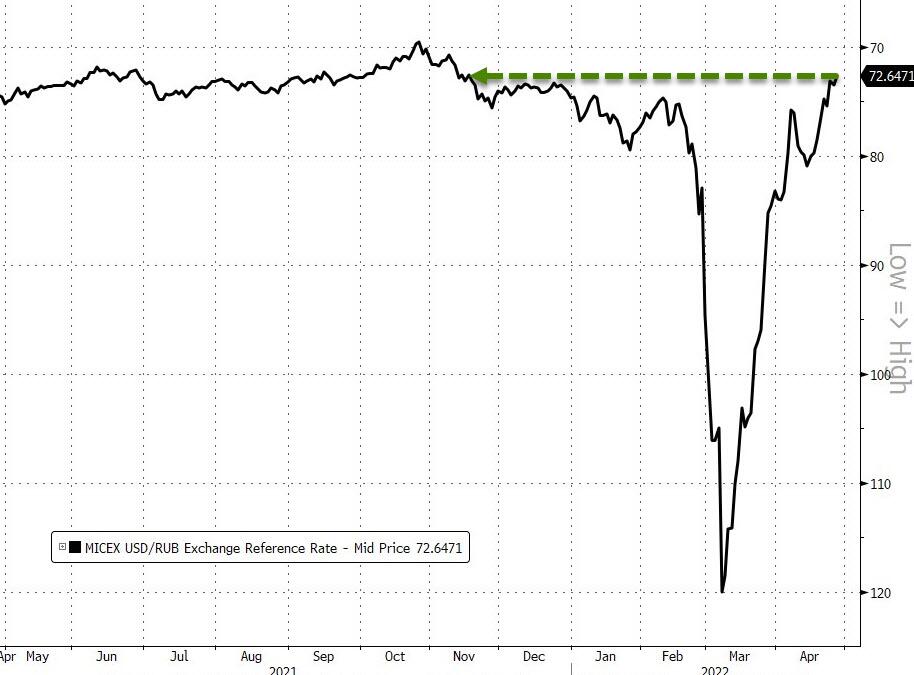
And near two-year highs against the euro…

Just remember, Janet Yellen said this was all manipulation and told you that “you should not infer anything” from the value of the ruble.
Tyler Durden
Thu, 04/28/2022 – 22:31
via ZeroHedge News https://ift.tt/gd40FWR Tyler Durden
Where People Spend The Most (And Least) Time On Social Media
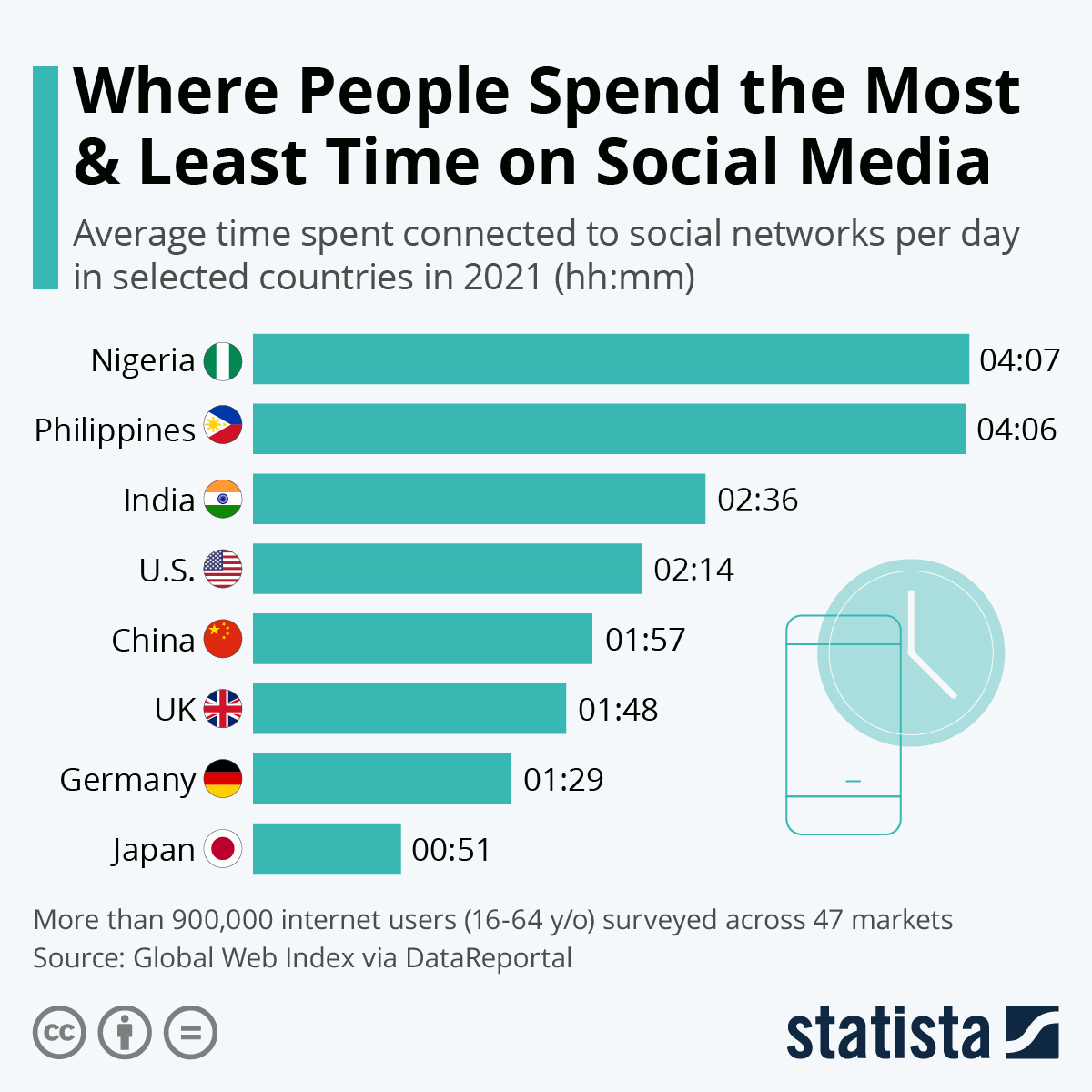
On average, global internet users spend 2 hours and 27 minutes on social media per day, though, as Statista’s Katharina Buchholz details below, trends differ widely by country. In many of the markets that Global Web Index surveyed, social media use had shrunk or plateaued in Q1 2020 when compared with 2019 and 2018 figures, but the coronavirus pandemic reversed this trend in many countries.
You will find more infographics at Statista
Emerging markets continue to spend the most time on social networks during a typical day.
This could be driven by these markets generally having younger populations, with the 16 to 24-year-old segment driving growth globally.
Nigeria spent the most time connected to social networks, devoting more than four hours a day to the digital social sphere.
Filipinos typically spent almost as much time per day on social media sites, while Indians and Chinese clocked in around 2.5 hours and 2 hours, respectively, per day.
Countries with aging populations exhibited shorter social media use. During a typical day in Japan, people spend only three quarters of an hour staying connected on social networks. Germany posts only slightly higher numbers, with users going on social media for one hour and twenty minutes every day, while the UK and the U.S. both spent closer to two hours per day engaging with social media.
Tyler Durden
Thu, 04/28/2022 – 02:45
via ZeroHedge News https://ift.tt/1WvlJsQ Tyler Durden
On Ukraine, Turkey Walks Fine Line Between NATO, Russia
Authored by Adam Murrow via The Epoch Times,.
Turkey has proven adept at maintaining neutrality in regards to the conflict between Russia and Ukraine. While Ankara has condemned Russia’s “special military operation,” it has also declined to follow the lead of its NATO allies in supporting US-led sanctions on Moscow. According to local experts, its reasons for doing so are both economic and political, and reflect Turkey’s varied approach to its relations with Russia.
“Turkey is a neighbor to both countries, with whom it has intense economic relations,” Halil Akinci, who served as Turkey’s ambassador to Russia from 2008 to 2010, told The Epoch Times.
“So it’s in Ankara’s interest to stay on good terms with them both.”
Neutrality, he added, also left Turkey in the perfect position to mediate—thus raising its international profile—“since we’re the only ones acceptable to both sides.”
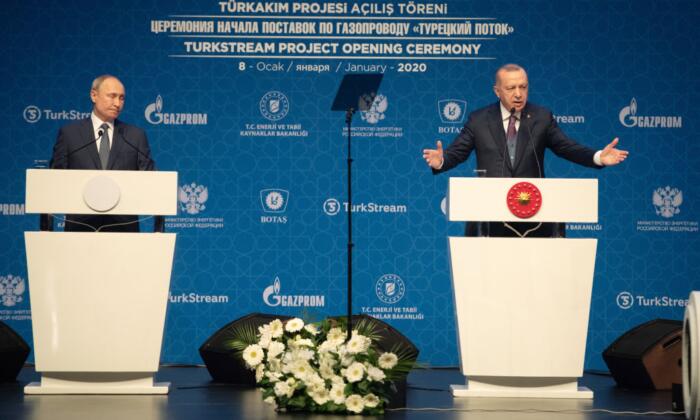
When the Russian operation first began on Feb. 24, Turkish officials condemned it as “unacceptable” and a “violation of international law.” They were also quick to stress, however, that Ankara—unlike its NATO allies—had no intention of enforcing US-led sanctions on Russia.
Prof. Dr. Mehmet Seyfettin Erol, a political analyst and head of the Ankara Center for Crisis and Policy, an independent think-tank, said Turkey had “reasonable grounds” for declining to support sanctions.
“Turkey is positioning itself as a mediator by keeping communication channels open with Russia,” Erol told The Epoch Times. He went on to assert that Ankara and Moscow were closely engaged on a broad range of issues based on principles of “cooperation and competition.”
Akinci, when asked if Turkey was subject to pressure by NATO to adopt a harder line against Russia, said no one could reasonably expect Ankara to enforce sanctions —especially given current economic realities.
“Because of its massive trade dependence on Russia, Turkey isn’t in a position to do this [i.e., enforce sanctions],” he said. “Like the rest of the world, Turkey simply cannot ignore Russia’s vast natural resources.”
Indeed, an estimated 45 percent of Turkey’s natural gas imports currently derive from Russia, along with more than 75 percent of its imported wheat. This represents a dire situation for a country that has seen its currency lose more than 80 percent of its value year-on-year, causing the prices of many staple commodities—including bread—to skyrocket.
At the same time, Turkey has significant trade relations with Ukraine, which supplies it with another 10 to 15 percent of its total wheat imports. Ankara and Kyiv also cooperate in the defense-industries field, including the joint manufacture of aerial drones.
Turkish neutrality may be economically expedient, but it has also served to raise the country’s profile by positing it as the ideal mediator—a role it has assumed with gusto. On March 10, the Russian and Ukrainian foreign ministers met in Turkey’s resort city of Antalya; and on March 29, delegations from both countries held talks in Istanbul. Although hailed by all sides as “constructive,” the talks failed to produce any tangible breakthroughs.
Russia, for its part, which appears to have the upper hand militarily, demands guarantees that Ukraine will never join NATO. It also demands Kyiv’s recognition of Russian sovereignty over Crimea (annexed by Russia in 2014), and recognition of two Russian-speaking territories in Ukraine’s eastern Donbas region (Donetsk and Luhasnk) as independent republics.
Based on recent signals from both camps, Erol believes it is likely that Ukraine will “give up on NATO membership first, and Moscow will accept Ukraine’s European Union membership in return.” The main sticking point, he believes, is the Donbas region. “Russia demands recognition of the so-called republics, but the Kyiv administration and the international community do not seem to accept this,” he said.
Because it involves major power players like Russia and NATO, the conflict could become a long-simmering “proxy war” lasting “months or even years,” Erol warned, citing past Russian entanglements in Afghanistan and Chechnya.
Akinci agreed that reaching a negotiated settlement “could take a long time.” He added, however, that if the military equation were to change significantly on the ground, “[diplomatic] positions could change as well.”
In the meantime, Turkish President Recep Tayyip Erdogan has extended an open invitation to both Russian President Vladimir Putin and his Ukrainian counterpart Volodymyr Zelenskyy to meet in Istanbul for further talks. “I wholeheartedly believe that a peaceful solution can be found through dialogue,” he said on April 18. Three days later, Russian forces reportedly captured the Ukrainian city of Mariupol.
Historical rivals, the Ottoman (i.e., Turkish) and Russian empires fought at least a dozen major conflicts over four centuries, ending with the First World War. But today, Turkey, despite its 70-year-old membership in NATO, is keen to remain on good terms with Russia, with which it shares a substantial maritime border in the Black Sea.
That being said, the two have implacable foreign-policy differences, especially in the post-Arab Spring Middle East. In Syria, for example, Turkey supports anti-Assad armed groups, while Russia backs the government of President Bashar al-Assad. The two countries also support diametrically-opposing forces in war-ravaged Libya.
Turkey-Russia relations bottomed out in late 2015, when a Turkish F-16 shot down a Russian Sukhoi fighter near Turkey’s tense border with Syria. But relations quickly recovered the following year, especially after a failed coup attempt against Erdogan’s government, for which Ankara blamed Fetullah Gulen, a US-based Turkish-Muslim preacher who claims to have an international following.
Washington’s refusal to extradite Gulen to Turkey then led to a rupture in US-Turkey ties and a concurrent improvement in Ankara’s relations with Moscow.
“Because Gulen resides in the US, Turkey implicitly accused Washington of supporting the coup attempt,” Dr. Ilhan Uzgel, a prominent Turkish political analyst, told The Epoch Times.
“This, in turn, led [Erdogan’s] ruling Justice and Development Party to ally itself with nationalist and Eurasianist elements who favor closer ties with Russia, China and Iran,” Uzgel, a former professor of international relations, added.
“This combination of external and domestic factors prompted Ankara’s subsequent ‘tilt’ towards Moscow.”
In 2017, Turkey went so far as to announce the purchase of an advanced S-400 missile-defense system from Russia. The move infuriated Turkey’s NATO allies and eventually resulted in limited US sanctions being imposed on Turkey itself.
In explaining Ankara’s eclectic approach to Moscow, Akinci stressed that, at least with respect to the Middle East, Turkey’s differences with the US “are actually deeper” than those with Russia.
“For example, our American allies have nurtured, and continue to support, an organization opposed to Turkey’s territorial integrity,” he said.
Here he was referring to the militant Kurdistan Workers’ Party (PKK), the Syrian branch of which the US has backed in its war against Assad, but which Ankara views as a terrorist group. “In this case, US policy actually poses a greater danger to Turkey than anything the Russians are doing,” Akinci asserted.
He added: “Every state has its differences with Russia and every state has interests in common with Russia. In some areas, the US and Russia get along quite well; in others, they do not. Geopolitics is never black and white.”
Tyler Durden
Thu, 04/28/2022 – 02:00
via ZeroHedge News https://ift.tt/8BDUAS0 Tyler Durden
The Illusion Of Freedom: We’re Only As Free As The Government Allows
Authored by John W. Whitehead & Nisha Whitehead via The Rutherford Institute,
“Rights aren’t rights if someone can take them away. They’re privileges. That’s all we’ve ever had in this country, is a bill of temporary privileges. And if you read the news even badly, you know that every year the list gets shorter and shorter. Sooner or later, the people in this country are gonna realize the government … doesn’t care about you, or your children, or your rights, or your welfare or your safety… It’s interested in its own power. That’s the only thing. Keeping it and expanding it wherever possible.”
– George Carlin
We’re in a national state of denial.
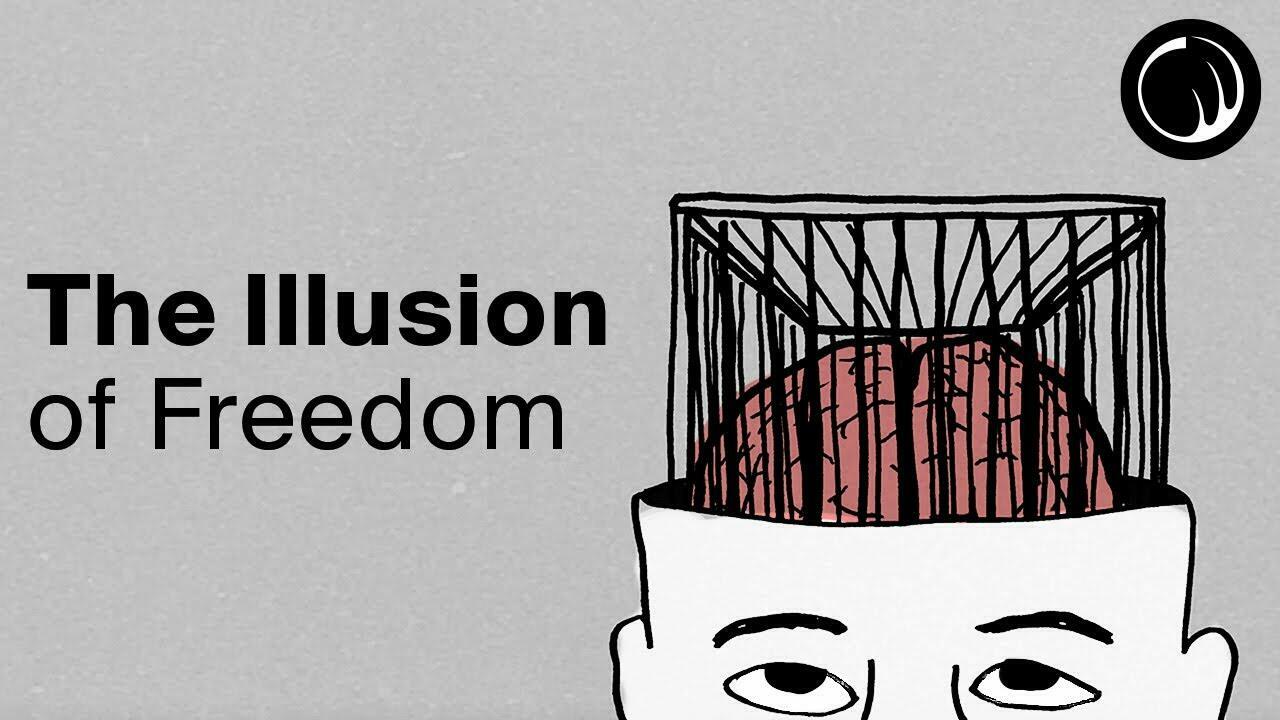
For years now, the government has been playing a cat-and-mouse game with the American people, letting us enjoy just enough freedom to think we are free but not enough to actually allow us to live as a free people.
Case in point: on the same day that the U.S. Supreme Court appeared inclined to favor a high school football coach’s right to pray on the field after a game, the high court let stand a lower court ruling that allows police to warrantlessly track people’s location and movements through their personal cell phones, sweeping Americans up into a massive digital data dragnet that does not distinguish between those who are innocent of wrongdoing, suspects, or criminals.
Likewise, although the Supreme Court gave the go-ahead for a death row inmate to have his pastor audibly pray and lay hands on him in the execution chamber, it refused to stop police from using hidden cameras to secretly and warrantlessly record and monitor a person’s activities outside their home over an extended period of time.
For those who have been paying attention, there’s a curious pattern emerging: the government appears reasonably tolerant of those who want to exercise their First Amendment rights in a manner that doesn’t challenge the police state’s hold on power, for example, by praying on a football field or in an execution chamber.
On the other hand, dare to disagree with the government about its war crimes, COVID-19, election outcomes or police brutality, and you’ll find yourself silenced, cited, shut down and/or branded an extremist.
The U.S. government is particularly intolerant of speech that reveals the government’s corruption, exposes the government’s lies, and encourages the citizenry to push back against the government’s many injustices. For instance, Wikileaks founder Julian Assange, the latest victim of the government’s war on dissidents and whistleblowers, is in the process of being extradited to the U.S. to be tried under the Espionage Act for daring to access and disclose military documents that portray the U.S. government and its endless wars abroad as reckless, irresponsible, immoral and responsible for thousands of civilian deaths.
Even political protests are fair game for prosecution. In Florida, two protesters are being fined $3000 for political signs proclaiming stating “F—k Biden,” “F—k Trump,” and “F—k Policing 4 Profit” that violate a city ban on “indecent” speech on signs, clothing and other graphic displays.
The trade-off is clear: pray all you want, but don’t mess with the U.S. government.
In this way, the government, having appointed itself a Supreme and Sovereign Ruler, allows us to bask in the illusion of religious freedom while stripping us of every other freedom afforded by the Constitution.
We’re in trouble, folks.
Freedom no longer means what it once did.
This holds true whether you’re talking about the right to criticize the government in word or deed, the right to be free from government surveillance, the right to not have your person or your property subjected to warrantless searches by government agents, the right to due process, the right to be safe from militarized police invading your home, the right to be innocent until proven guilty and every other right that once reinforced the founders’ belief that this would be “a government of the people, by the people and for the people.”
Not only do we no longer have dominion over our bodies, our families, our property and our lives, but the government continues to chip away at what few rights we still have to speak freely and think for ourselves.
My friends, we’re being played for fools.
On paper, we may be technically free.
In reality, however, we are only as free as a government official may allow.
We only think we live in a constitutional republic, governed by just laws created for our benefit.
Truth be told, we live in a dictatorship disguised as a democracy where all that we own, all that we earn, all that we say and do—our very lives—depends on the benevolence of government agents and corporate shareholders for whom profit and power will always trump principle. And now the government is litigating and legislating its way into a new framework where the dictates of petty bureaucrats carry greater weight than the inalienable rights of the citizenry.
With every court ruling that allows the government to operate above the rule of law, every piece of legislation that limits our freedoms, and every act of government wrongdoing that goes unpunished, we’re slowly being conditioned to a society in which we have little real control over our lives.
As Rod Serling, creator of the Twilight Zone and an insightful commentator on human nature, once observed, “We’re developing a new citizenry. One that will be very selective about cereals and automobiles, but won’t be able to think.”
Indeed, not only are we developing a new citizenry incapable of thinking for themselves, we’re also instilling in them a complete and utter reliance on the government and its corporate partners to do everything for them—tell them what to eat, what to wear, how to think, what to believe, how long to sleep, who to vote for, whom to associate with, and on and on.
In this way, we have created a welfare state, a nanny state, a police state, a surveillance state, an electronic concentration camp—call it what you will, the meaning is the same: in our quest for less personal responsibility, a greater sense of security, and no burdensome obligations to each other or to future generations, we have created a society in which we have no true freedom.
Government surveillance, police abuse, SWAT team raids, economic instability, asset forfeiture schemes, pork barrel legislation, militarized police, drones, endless wars, private prisons, involuntary detentions, biometrics databases, free speech zones, etc.: these are mile markers on the road to a fascist state where citizens are treated like cattle, to be branded and eventually led to the slaughterhouse.
Freedom, or what’s left of it, is being threatened from every direction. The threats are of many kinds: political, cultural, educational, media, and psychological. However, as history shows us, freedom is not, on the whole, wrested from a citizenry. It is all too often given over voluntarily and for such a cheap price: safety, security, bread, and circuses.
This is part and parcel of the propaganda churned out by the government machine.
That said, what we face today—mind manipulation and systemic violence—is not new. What is different are the techniques used and the large-scale control of mass humanity, coercive police tactics and pervasive surveillance.
We are overdue for a systemic check on the government’s overreaches and power grabs.
By “government,” I’m not referring to the highly partisan, two-party bureaucracy of the Republicans and Democrats. Rather, I’m referring to “government” with a capital “G,” the entrenched Deep State that is unaffected by elections, unaltered by populist movements, and has set itself beyond the reach of the law.
For years now, we have suffered the injustices, cruelties, corruption and abuse of an entrenched government bureaucracy that has no regard for the Constitution or the rights of the citizenry.
We have lingered too long in this strange twilight zone where ego trumps justice, propaganda perverts truth, and imperial presidents—empowered to indulge their authoritarian tendencies by legalistic courts, corrupt legislatures and a disinterested, distracted populace—rule by fiat rather than by the rule of law.
Where we find ourselves now is in the unenviable position of needing to rein in all three branches of government—the Executive, the Judicial, and the Legislative—that have exceeded their authority and grown drunk on power.
We are the unwitting victims of a system so corrupt that those who stand up for the rule of law and aspire to transparency in government are in the minority. This corruption is so vast it spans all branches of government: from the power-hungry agencies under the executive branch and the corporate puppets within the legislative branch to a judiciary that is, more often than not, elitist and biased towards government entities and corporations.
The predators of the police state are wreaking havoc on our freedoms, our communities, and our lives. The government doesn’t listen to the citizenry, it refuses to abide by the Constitution, which is our rule of law, and it treats the citizenry as a source of funding and little else.
The American kleptocracy (a government ruled by thieves) has sucked the American people down a rabbit hole into a parallel universe in which the Constitution is meaningless, the government is all-powerful, and the citizenry is powerless to defend itself against government agents who steal, spy, lie, plunder, kill, abuse and generally inflict mayhem and sow madness on everyone and everything in their sphere.
This dissolution of that sacred covenant between the citizenry and the government—establishing “we the people” as the masters and the government as the servant—didn’t happen overnight. It didn’t happen because of one particular incident or one particular president. It is a process, one that began long ago and continues in the present day, aided and abetted by politicians who have mastered the polarizing art of how to “divide and conquer.”
Unfortunately, there is no magic spell to transport us back to a place and time where “we the people” weren’t merely fodder for a corporate gristmill, operated by government hired hands, whose priorities are money and power.
As I make clear in my book Battlefield America: The War on the American People and in its fictional counterpart The Erik Blair Diaries, our freedoms have become casualties in an all-out war on the American people.
If we continue down this road, there can be no surprise about what awaits us at the end.
Tyler Durden
Wed, 04/27/2022 – 23:25
via ZeroHedge News https://ift.tt/pXKJrdP Tyler Durden
Stinger Missile Production Hit With Delays, Raytheon CEO Warns
Stinger shoulder-fired missiles are in short supply, and increased production might not come online for a few years, Raytheon Technologies Corporation revealed in a conference call with investors on Tuesday.
Robert Spingarn from Melius Research asked Raytheon CEO Greg Hayes: “Will the Army replace the current 1,400 stingers that were sent to Ukraine?”
Hayes replied Raytheon is “currently producing stingers for an international customer, but we have a very limited stock of material for stinger production.”
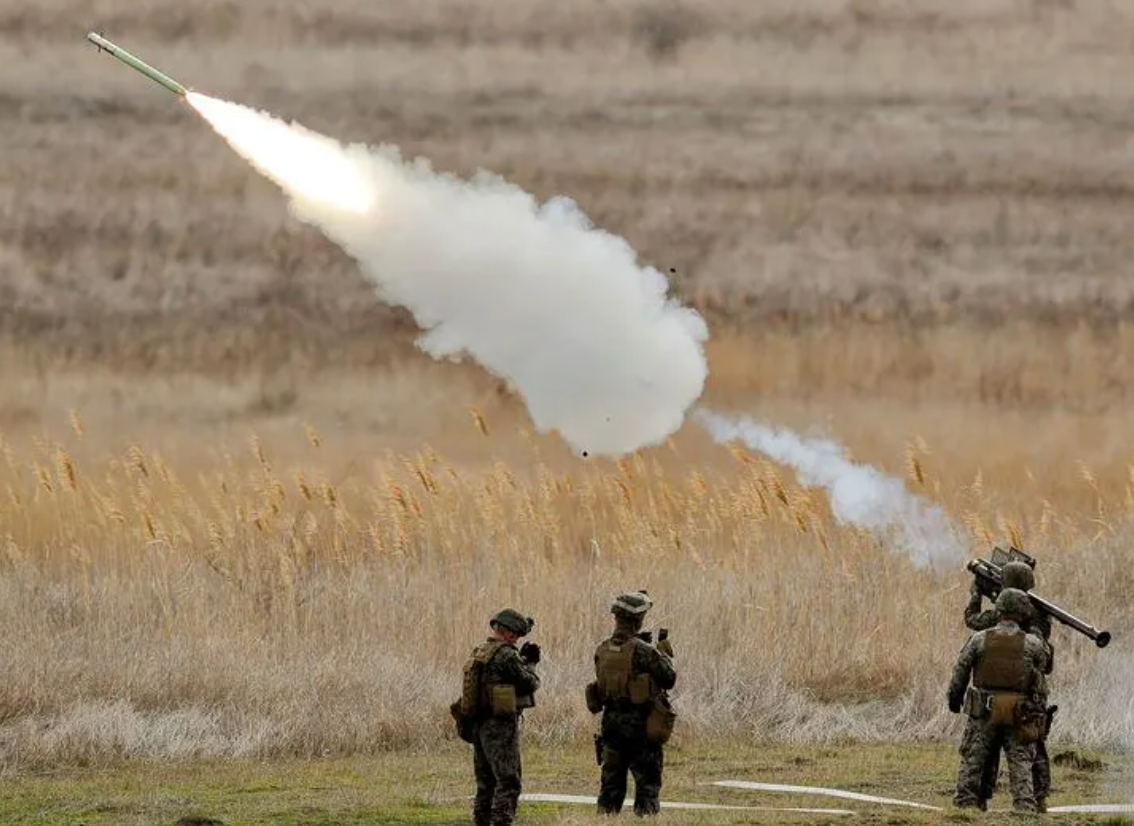
The CEO added, “DoD hasn’t bought a stinger in about 18 years. And some of the components are no longer commercially available, and so we’re going to have to go out and redesign some of the electronics in the missile of the seeker head.”
Hayes said it’s “going to take us a little bit of time” to ramp up production and doesn’t expect DoD to place large replenishment orders for stingers until 2023 or 2024.
BREAKING: Raytheon Technologies says it cannot quickly make new Stinger missiles, which the US has been sending to Ukraine. CEO Greg Hayes says the company must redesign electronics in the missile and seeker. “That’s going to take us a little bit of time.”
— Marcus Weisgerber (@MarcusReports) April 26, 2022
In the past two months, the US has sent more than1,400 Stinger anti-aircraft missiles to Ukraine. With stingers in limited production, this could be problematic for the West if the conflict in Ukraine broadens.
The Army recently sent out a request for a next-generation infrared homing surface-to-air missile with plans to award a contract in the 2Q23, though the new missiles won’t be fielded until 2028.
Tyler Durden
Wed, 04/27/2022 – 23:05
via ZeroHedge News https://ift.tt/pomZ1Av Tyler Durden
Former NATO Commander Disguises War Propaganda As Novel
Authored by by Patrick Macfarlane via The Libertarian Institute,
On March 9, 2021, the former Supreme Allied Commander of NATO, Admiral James Stavridis, co-authored a fiction novel with Elliott Ackerman, another former U.S. military officer. The book, entitled 2034: A Novel of the Next World War, imagines a kinetic war between the United States and China.
Given the pedigree of its authorship, the novel provides a compelling window into the psychology of NATO’s military leadership and, correspondingly, the foreign policy establishment behind it. To those familiar with said psychology, the events of the novel will not be surprising.

It begins with a Chinese ambush of a U.S. vessel in the South China Sea; an Iranian capture of a U.S. pilot; a full scale naval battle between the U.S. and China (resulting in a total U.S. defeat); and a Russian invasion of Poland. The novel concludes with a limited nuclear exchange between the U.S. and China.
Given the last few decades’ hawkish hand wringing about Chinese and Russian cyber capabilities, the tactics employed in the novel are similarly unsurprising. A Chinese cyberattack disables U.S. hardware, allowing the naval rout. The Iranians, as allies of Russia and China, similarly disable U.S. aircraft. For their part, the Russians slice underwater communications cables leading to a complete internet blackout in the West.
To an uncritical reader, the novel appears to be a “cautionary tale” and a “warning” against global conflict. The novel’s dust jacket states:
Everything in 2034 is an imaginative extrapolation from present-day facts on the ground combined with the authors’ years working at the highest and most classified levels of national security. Sometimes it takes a brilliant work of fiction to illuminate the most dire of warnings: 2034 is all too close at hand, and this cautionary tale presents the reader a dark yet possible future that we must do all we can to avoid.
Mainstream outlets were as successful in their attempts to paint 2034 as a “warning” as their reviews were cringeworthy.
Wired, which ran a series of exclusive pre-print excerpts, had this to say:
Wired has always been a publication about the future—about the forces shaping it, and the shape we’d like it to take. Sometimes, for us, that means being wild-eyed optimists, envisioning the scenarios that excite us most. And sometimes that means taking pains to envision futures that we really, really want to avoid.
By giving clarity and definition to those nightmare trajectories, the hope is that we can give people the ability to recognize and divert from them. Almost, say, the way a vaccine teaches an immune system what to ward off. And that’s what this issue of WIRED is trying to do…
Consider this another vaccine against disaster. Fortunately, this dose won’t cause a temporary fever—and it happens to be a rippingly good read. Turns out that even cautionary tales can be exciting, when the future we’re most excited about is the one where they never come true.
The Washington Post’s review was almost worse.
This crisply written and well-paced book reads like an all-caps warning to a world shackled to the machines we carry in our pockets and place in our laps, while only vaguely understanding how the information stored in and shared by those devices can be exploited. We have grown numb to the latest data breach—was it a pollical campaign (Hillary Clinton’s), or one of the country’s biggest credit-rating firms (Equifax), or a hotel behemoth (Marriott), or a casual-sex hookup site (Adult Friend Finder), or government departments updating their networks with the SolarWinds system (U.S. Treasury and Commerce)?
In “2034,” it’s as if Ackerman and Stavridis want to grab us by our lapels, give us a slap or two, and scream: Pay attention! George Orwell’s dystopian masterpiece, “Nineteen Eighty-four: A Novel” was published 35 years before 1984. Ackerman’s and Stavridis’s book takes place in the not-so-distant future when today’s high school military recruits will just be turning 30.
Between Wired’s ham-handed COVID-19 vaccine analogy and the CIA Washington Post’s ironic Orwell reference, the mainstream marketing campaign clearly attempts to portray the novel as a cautionary tale.
It is impossible to gaze into the hearts of men, but we do have some clues. Those clues suggest that the co-authors really do seek to warn against war with China. However, in doing so, they advocate for it. Indeed, their warning is not against the folly of empire, but against a rising China.
Ultimately the co-authors’ MacBethian premonition of conflict necessitates escalatory U.S. policy. On March 18, 2021, the pair were interviewed by NPR. Stavridis had this to say:
…a subtext in all of this [the novel] is to strike a warning bell about the rise of China and the propensity in human history going back 2,500 years almost any time a [sic] established power is challenged by a rising power, it leads to war. It’s a dangerous moment. And 15 years from now, I think, will be a moment of maximum danger because China will have advanced in its military capability and technology. Therefore, our military deterrent will somewhat decline. We’re standing in the danger, as we say in the Navy.
Ackerman embraces this view:
…and we’re not only sounding the alarm bell, but the book is also trying to situate where America is in this moment of 2034.
Further, the pair assert they do not believe in the American decline.
Interviewer (to both): “…do you believe this, that America will be the author of its own destruction?”
Stavridis: “I believe there are many in the world who do believe that. I personally do not…there are many in the world who believe our best days are somehow behind us. They would be miscalculating, in my view, to believe that.”
Ackerman: “I would add I am by no way a believer in the decline of America. And I am very much committed to the idea of the American ideal. That being said, looking back throughout our entire history, the greatest threat is us turning inward and destroying that ideal. Lincoln himself said – I’m paraphrasing, but basically said that if America is going to destroy itself, we will be the author and the finisher. And I think he says, a nation of free men will live forever or die by suicide. And I don’t think that’s Lincoln being a declinist about the United States. But I think it’s him recognizing that our divisiveness can oftentimes be the greatest threat and what leaves us the most unable to respond to challenges from outside the country.”
Indeed, a reader would be hard pressed to find any point where the co-authors suggest any strategy short of increasing military confrontation with China. Instead, they warn that America must be more united against an outside threat. It must, by implication, build up its military force, and, oddly enough, confront Chinese technological advances with less reliance on our own technology.
Stavridis expanded on his China policy prescriptions in a June 2021 interview:
The South China Sea is a vital entry point for the United States today. It’s a massive body of water full of oil and gas as well as fisheries, and about 40 percent of global trade passes through it.
So, there are strong strategic reasons, as the United States values its alliances in Asia, to push back against Chinese claims.
It is not just the South China Sea but also the East China Sea, where the Senkaku Islands lie, that are vital to American interests as long as our allies operate there and trade flows through there.
And above all we simply as an international community cannot acquiesce to China’s preposterous claims, which have been rejected by international law.
Indeed, a number one red line would be an attack against our allies.
For example, if China attacked and tried to forcibly take the Senkaku Islands, that would be a red line for the United States. Or an attack against the Philippines, another treaty ally of the United States. An attack against any treaty allies would be the number one red line.
A second red line would be trying to attack U.S. military personnel operating in the South China Sea.
We conduct what we call “freedom of navigation patrols.” These are our warships sailing through international waters such as the South China Sea.
If China were to attack a U.S. ship to attempt to demonstrate their view that they own the South China Sea, that would be a red line. In fact, the book “2034” opens with an attack involving U.S. military personnel being killed in the South China Sea.
Stavridis believes that the U.S. must continue to devote itself to entangling alliances, against which the founding fathers warned. The U.S. must also continue to press its presence in the South China Sea.
Despite resolutely warning against a war against China, Stavridis commits the U.S. to myriad tripwires that would ignite it. These China policy positions parallel Stavridis’ positions on Ukraine. It’s always more, more, more.
More funding, arming, and training Ukrainians, more U.S. commitment to NATO, more U.S. weaponization of Big Tech, more money to the U.S. State Department, more interagency cooperation, and more silencing dissent. These positions are escalatory. At the very least, they flirt with making Washington a direct party to the War in Ukraine. They may give Russia reason to attack U.S. and NATO forces.
Given Russia’s nuclear footing, these policies pose an existential threat to humanity itself.
Indeed, it will always be a mystery how the hawks convinced the American public that the path to peace leads through war. Perhaps those of us who survive the inevitable result of this mantra can ponder the answer while painting on the cave walls.
Tyler Durden
Wed, 04/27/2022 – 22:45
via ZeroHedge News https://ift.tt/wnP9OQx Tyler Durden
Map Shows Wildfire Outbreak Sweeping Across US Amid Megadrought
New data from NASA’s Fire Information for Resource Management System (FIRMS) shows an outbreak of wildfires sweeping across the country.
FIRMS’ interactive map shows wildfire activity is expanding in the country’s Southeast, Midwest, and Southwest regions amid one of the worst megadroughts in 1,200 years.
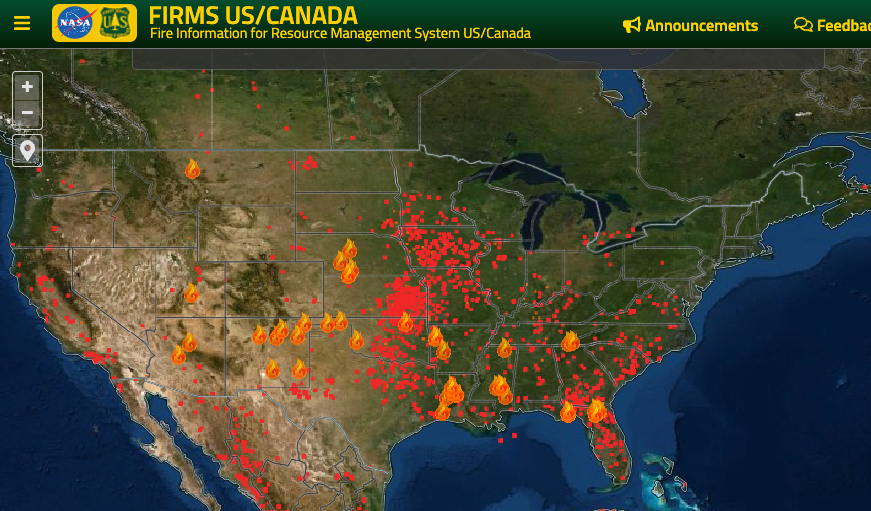
National Interagency Fire Center (NIFC) released an update Wednesday that said more than 3,700 wildland firefighters and personnel are assigned to eleven major fires.
“The Southwest area continues to have the most large fire activity, where five incident management teams are assigned. One complex incident management team is assigned to a large fire in Nebraska,” NIFC said.
The agency said more than 21,181 wildfires had burned 1,080,836 acres in the US since the beginning of the year. That’s above a 10-year average of 14,958 wildfires that burned 727,141 acres. Some of the most devastating wildfires have been in Texas due to “extreme drought” and high winds.
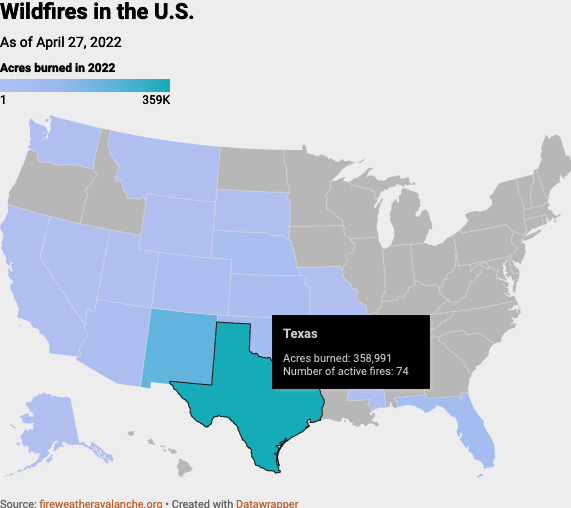
Much of the US West is experiencing severe to extreme drought conditions. The outbreak of fires comes as no surprise.
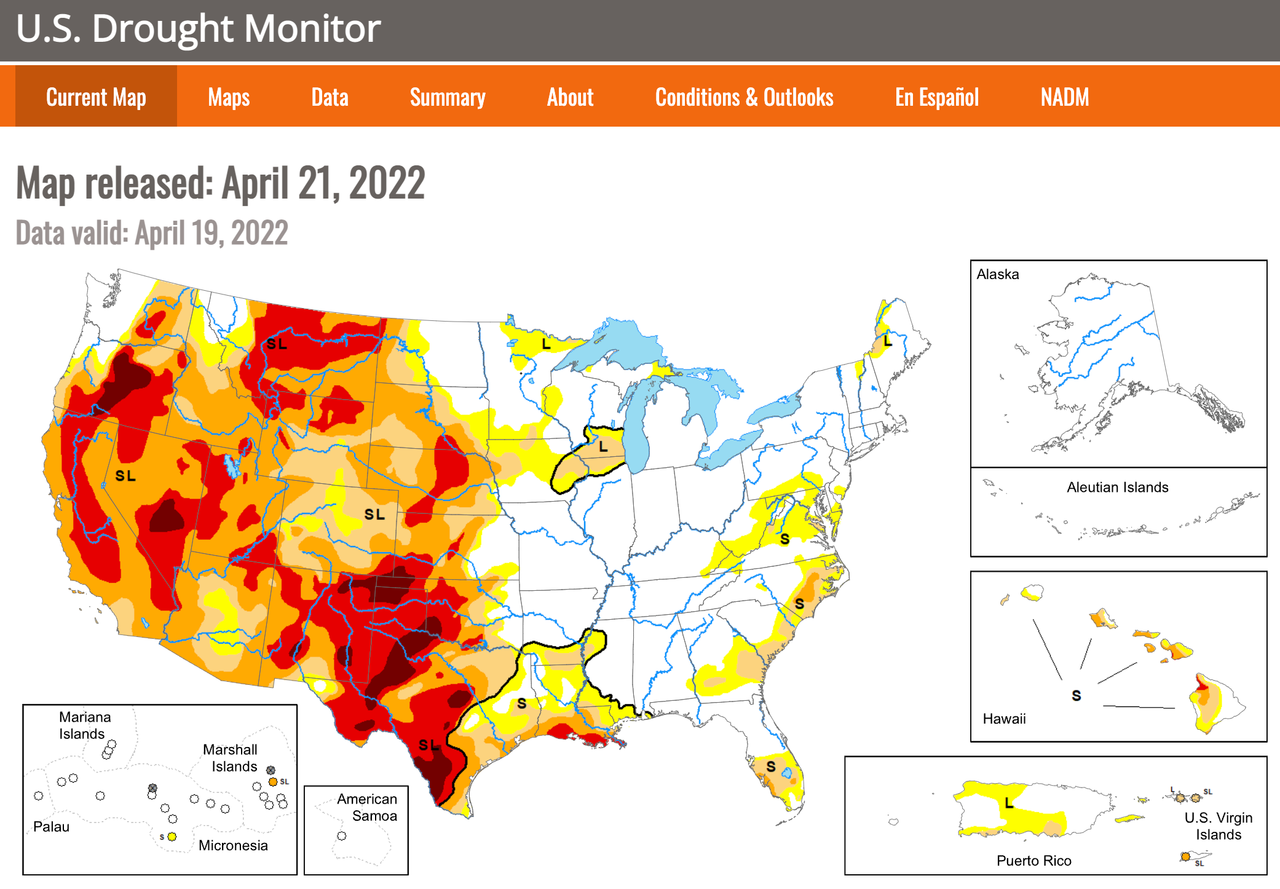
Recent forecasts by federal government meteorologists may suggest drought conditions could worsen as there’s a 59% chance of La Niña for the Northern Hemisphere through summer. What this would mean is drier conditions that could spark even more wildfires.
However, it’s the opposite in the Northern Plains, where historic flooding has wiped out farmlands and delayed plantings that could trigger additional global food supply chain problems.
Megadroughts, wildfires, and historic floods are some of the natural disasters plaguing the US.
Tyler Durden
Wed, 04/27/2022 – 22:25
via ZeroHedge News https://ift.tt/nNb9JfV Tyler Durden
States Join Forces To Tackle Border Crisis And Cartel-Related Crime
Authored by Charlotte Cuthbertson via The Epoch Times (emphasis ours),
Ohio has been beleaguered by the opioid crisis for years. It has one of the highest overdose rates in the country, next to West Virginia, Kentucky, and Delaware.
As with all states, nearly every grain of fentanyl that Arkansas law enforcement seizes has traveled across the U.S.–Mexico border.
In 2021, Arkansas State Police confiscated 10 pounds of fentanyl, enough to kill more than 2 million people, according to Gov. Asa Hutchinson. Two milligrams of fentanyl can be fatal.
In Georgia, fentanyl-involved deaths increased by more than 106 percent during fiscal year 2021, according to Gov. Brian Kemp.
On April 19, the Republican governors of 26 states announced the creation of a new Border Strike Force, which aims to “disrupt and dismantle transnational criminal organizations.”
“The porousness of the Southern Border is an open door to transnational criminal organizations that use it to traffic drugs that feed the addiction epidemic throughout the United States,” the memorandum of understanding states.
The group includes two southern border states—Arizona and Texas—as well as 24 others: Alabama, Alaska, Arkansas, Florida, Georgia, Idaho, Indiana, Iowa, Maryland, Mississippi, Missouri, Montana, Nebraska, New Hampshire, North Dakota, Ohio, Oklahoma, South Carolina, South Dakota, Tennessee, Utah, Virginia, West Virginia, and Wyoming.
“In the absence of federal leadership, states are partnering together to create the American Governors’ Border Strike Force to disrupt and dismantle transnational criminal organizations by increasing collaboration, improving intelligence, investing in analysis, combating human smuggling, and stopping drug flow in our states,” the agreement states.
The amount of drugs being seized at the border has plummeted as illegal alien apprehensions have reached record highs, according to Customs and Border Protection statistics.
“If we seize even 5 percent of what’s coming across the border, we’re lucky,” said Brandon Judd, president of the National Border Patrol Council, referring to a question about fentanyl pills.
“And if there’s nobody there to detect you and apprehend you, the cartels are going to push it through between the ports of entry when they know that there is absolutely no chance that we’re going to apprehend that narcotic.”
In mid-December 2021, law enforcement authorities seized a record 1.7 million fentanyl pills in Scottsdale, Arizona.
More than 100,000 Americans, a record amount, died of drug overdoses in the 12-month period ending in April 2021, according to data from the Centers for Disease Control and Prevention. Fentanyl was involved in almost two-thirds of those deaths.
The group of governors, in their memorandum of understanding, pledged to work together to “serve as a force multiplier to target cartels and criminal networks financially and operationally.”
“Together, governors will improve public safety, protect victims from horrific crimes, reduce the amount of drugs in our communities, and alleviate the humanitarian crisis at the Southern Border,” the agreement states.
States can request help from other participating states and state-specific certifications and licenses will be honored among states. Each state is responsible for its own costs.
Currently, 160 National Guardsmen from Georgia are stationed at the southern border.
“As new and even larger waves of migrants approach the border, I grow increasingly concerned for their safety,” Kemp wrote in a March 31 letter to President Joe Biden. The body of Texas National Guard Specialist Bishop E. Evans was recovered from the Rio Grande on April 25 after he drowned while attempting to rescue illegal immigrants—who were later identified as allegedly being involved in marijuana trafficking.
Last summer, state troopers from Nebraska, Iowa, and Florida augmented troopers in Texas to apprehend human smugglers and illegal aliens who evaded Border Patrol. Florida also sent Fish & Wildlife officers to help patrol areas of the Rio Grande in its boats.
Hutchinson said one of the most important elements of the Border Strike Force is the sharing of intelligence on the operation of criminal organizations.
“Increased coordination with other states will be a benefit to our state and nation, but increased action from the federal government is still needed to help manage this,” he said.
Ohio is prepared to offer other states intelligence analyst support, if asked, the governor’s office said.
Since 2019, Ohio Gov. Mike DeWine has set up four narcotics intelligence centers in his state that help trace drug trafficking organizations back to their ringleaders and suppliers.
“Many times, those investigations reveal that Mexican cartels are behind the drugs being trafficked in Ohio,” DeWine’s office told The Epoch Times via email.
The 26 states also plan to review their state laws regarding human trafficking, drug trafficking, and transnational criminal organizations “to ensure that such crimes are prosecuted to the fullest extent of the law.”
“We’re currently in the process of determining what laws may need strengthening and where we can step up enforcement efforts in drug interdiction, human trafficking, and other crimes stemming from a porous southern border,” Hutchinson told The Epoch Times via email.
Texas just strengthened its anti-smuggling laws last September, while Arizona doesn’t have a state law against human smuggling, and border counties are suffering the impact.
Texas Gov. Greg Abbott has been implementing state border security initiatives since June last year under Operation Lone Star, but has stopped short of testing state Constitutional powers to deport illegal immigrants.
The state has appropriated $3 billion for Operation Lone Star, which includes the arrest and prosecution of illegal alien trespassers, beefed-up law enforcement and National Guard presence along the border, and busing illegal immigrants to Washington.
Abbott recently caused significant delays for commercial trucks at several major Texas–Mexico trade bridges, which forced neighboring Mexican states to sign deals pledging to curb illegal border crossings. To date, there’s no indication that the four Mexican states are reining in illegal immigration.
Governors, Border Patrol agents, and border sheriffs have expressed concern over the revocation of Title 42—a public health provision that allowed for the quick expulsion of illegal immigrants.
The Biden administration announced that Title 42 would end on May 23; however, a federal judge is preparing to block the move. Title 42 was never designed to be central border security or immigration policy, but as the Biden administration removed other border security measures, it became more significant.
The Department of Homeland Security has estimated that the end of Title 42 could mean up to 18,000 illegal alien apprehensions per day. Border agents are currently apprehending more than 6,000 per day.
Title 42 has slowly been whittled down by the Biden administration since February 2021—first to allow in all unaccompanied children, then families with children under the age of 7, then, most families in general, most single females, and then, single adults from non-Spanish-speaking countries.
“We are now processing illegal aliens from Northern Triangle (El Salvador, Honduras, Guatemala) under Expedited Removal rather than T[itle] 42,” Judd wrote on Twitter on April 19.
In February 2021, 73 percent of illegal immigrants were expelled under Title 42. By March 2022, it had been reduced to 49 percent.
“Illegal border crossings lead to more drugs entering the country, more dangerous individuals evading arrest, and more victims of human trafficking,” the 26 governors stated.
Tyler Durden
Wed, 04/27/2022 – 22:05
via ZeroHedge News https://ift.tt/K2OVZIT Tyler Durden
75% Of Young Adults Believe The U.S. Is Suffering From A “Mental Health Crisis”
A new survey released this week has concluded that nearly 75% of young adults across the country agree that “the United States has a mental health crisis.”
The results, released by The Hill this week, were compiled by the Institute for Politics at Harvard Kennedy School. The survey found that only 6% of people who responded to the survey disagreed with “the idea that the U.S. is undergoing a mental health crisis.”
The survey queried “more than 2,000 U.S. adults between the ages of 18 and 29 from March 15-20”.
52% of young adults who responded reported “experiencing feelings of depression and hopelessness”, while about 25% of respondents admitted to thinking about self-harm.

In what may be an allusion to the pandemic and lockdowns starting to wind down (unless you live in China), the latter number is down 4% from a year prior, when 28% of respondents said they thought about self-harm.
More than 25% of respondents said they knew someone who had committed suicide.
Similar studies have shown that almost half of all young adults experienced mental health symptoms in the second year of the pandemic, The Hill wrote. These findings came as the result of a second study, when researchers at UCSF “”used a sample of 2,809 adults ages 18-25 years from the U.S. Census Bureau’s Household Pulse Survey data to evaluate the scope of anxiety and depression symptoms from June through early July 2021”.
48% of those young adults reported mental health symptoms and 39% said they used prescription medications.
Tyler Durden
Wed, 04/27/2022 – 21:45
via ZeroHedge News https://ift.tt/Lvtj2M0 Tyler Durden