May a Judge Host a Football Podcast?

From New Hampshire Judicial Ethics Opinion 2017-ACJE-01, decided in 2017 but just posted on Westlaw:

QUESTION PRESENTED:

Does the Code of Judicial Conduct prohibit judges from hosting podcasts or radio shows devoted to sports or other matters that have little to do with the courts, the law or the legal profession?

FACTS PRESENTED:

The judge has been asked to host a podcast, devoted to professional football, the New England Patriots and predictions for the games ahead. The podcast will be sponsored by a local commercial radio station. Although the podcast will not ordinarily touch on legal issues, there may be some discussion about NFL rulings, calls on the field and disciplinary actions.

The judge would not be compensated for hosting the podcast. The judge would not say or do anything to promote the sponsoring radio station, except for identifying the station during the podcast itself. The judge would not identify him/herself as a judge and, in fact, is not planning on using his/her last name.

As presently envisioned, the podcast would be recorded and later published over the internet. However, in the future the program might also be played on the radio station.

APPLICABLE PROVISIONS OF THE CODE OF JUDICIAL CONDUCT:

The question implicates the following provisions of the Code of Judicial Conduct (listed in the order in which they are discussed below):

Rule 3.1 (extra-judicial activities);

Rule 1.2 (promoting confidence in the judiciary);

Rule 2.10 (judicial statements on pending and impending cases); and

Rule 1.3 (abuse of the prestige of judicial office).

Rule 3.1: The Code of Judicial Conduct encourages judges to be active members of society. Rule 3.1 (A) of the Code provides, “A judge may engage in extrajudicial activities, except as prohibited by law or this Code.” Comment 1 to the Rule states, “To the extent that time permits, and judicial independence and impartiality are not compromised, judges are encouraged to engage in appropriate extrajudicial activities[,]” including activities that do not involve the law. Comment 2 to the Rule notes, “Participation in both law-related and other extrajudicial activities helps integrate judges into their communities, and furthers public understanding of and respect for courts and the judicial system.”

Rule 3.1(A) does, however, contain five express prohibitions:

[W]hen engaging in extrajudicial activities, a judge shall not:

(1) participate in activities that will interfere with the proper performance of the judge’s judicial duties;

(2) participate in activities that will lead to frequent disqualification of the judge;

(3) participate in activities that would appear to a reasonable person to undermine the judge’s independence, integrity, or impartiality;

(4) engage in conduct that would appear to a reasonable person to be coercive; or

(5) make use of court premises, staff, stationery, equipment, or other resources, except for incidental use for activities that concern the law, the legal system, or the administration of justice.

Rule 1.2: Rule 3.1(A)(3) above is a specific illustration of the general obligation under Rule 1.2 that a “judge shall act at all times in a manner that promotes public confidence in the independence, integrity, and impartiality of the judiciary, and shall avoid impropriety and the appearance of impropriety.” Comment 2 to Rule 1.2 reminds judges that their conduct on and off the bench will be scrutinized by the public and restricted by the Rules to a degree that might be burdensome if applied to other citizens. Comment 1 to the Rule makes clear that the “appearance of impropriety” standard applies to “both the professional and personal conduct of a judge.” Comment 3 to the Rule notes that it is impossible to list all of the possible conduct that “compromises or appears to compromise the independence, integrity, and impartiality of a judge….”

Rule 2.10: Rule 2.10(A) prohibits judges from making “public statement[s] that might reasonably be expected to affect the outcome or impair the fairness of a matter pending or impending in any court” (emphasis added). Comment 1 to the Rule notes, “This Rule’s restrictions on judicial speech are essential to the maintenance of the independence, integrity, and impartiality of the judiciary.” See generally, Republican Party of Minnesota v. White. 536 U.S. 765 (2002) (discussing, and to some extent limiting, state restrictions on extra-judicial speech); Williams-Yulee v. Florida Bar. 575 U.S.; 135 S. Ct. 1656 (2015).

Rule 1.3: Finally, Rule 1.3 provides, “A judge shall not abuse the prestige of judicial office to advance the personal or economic interests of the judge or others, or allow others to do so.” Comment 4 to this Rule speaks to a situation that is analogous to this case:

Special considerations arise when judges write or contribute to publications of for-profit entities, whether related or unrelated to the law. A judge should not permit anyone associated with the publication of such materials to exploit the judge’s office in a manner that violates this Rule or other applicable law. In contracts for publication of a judge’s writing, the judge should retain sufficient control over the advertising to avoid such exploitation.

ADVISORY OPINION ON THE QUESTION PRESENTED:

[A.] Rules 3.1 and 1.2

Rules 3.1 and 1.2 do not create a categorical bar to hosting a podcast about professional sports. Making public statements about sports teams and events does not, in and of itself, trigger any of the five exclusionary provisions of Rule 3.1 or the more general exclusionary language in Rule 1.2. This is so because:

– Preparing for and hosting the podcast is not likely to take so much time that it will interfere with the judge’s judicial duties. (However, if the podcast were to balloon into a daily broadcast involving substantial preparation, this aspect of Rule 3.1 could then become implicated.)

– The topics that are likely to be discussed will not lead to the frequent disqualification of the judge. New Hampshire courts hear few cases involving professional sports teams and, subject to the cautions below, it is doubtful that the judge will say anything that will require recusal.

– Also subject to the cautions below, hosting the podcast would not cause a reasonable person to doubt the judge’s independence, integrity, or impartiality. Following professional sports is a wholesome pastime enjoyed by a large portion of society. Commenting on professional sports as an avocation is equally wholesome. Nothing about the topic, in and of itself, is likely to raise a concern about impartiality or independence. (To be sure, it would be unseemly, and therefore detrimental to the appearance of integrity, if the judge identified himself/herself as a judge on the podcast or in any promotion for the podcast. However, the judge indicated that he/she would be identified only by first name.)

– The remaining prohibitions in Rule 3.1 are not applicable or relevant to the analysis.

As noted above, there are some cautions that should be observed:

First, the judge should obtain from the radio station, in writing, the ability to veto (a) any promotion for the podcast or (b) any commercial sponsorship or (c) any advertisement that either identifies the judge as a judge or otherwise calls the judge’s integrity, independence or impartiality into question. (Imagine, for example, the radio station wanting to run advertisements on the podcast for a law firm that frequently appears in the judge’s court.)

Second, although the judge may certainly prognosticate about the outcome of future sporting events, the judge should refrain from giving advice on sports wagering. Cf: RSA Chapter 647:2 (gambling offenses); see generally, In Re Advisory Letter No. 3-11, 215 N.J. 495, 515 (N.J. 2013) (sitting judge could not perform as a comedian and actor under a stage name when the substance of his performances created an appearance of impropriety).

Third, the judge must be mindful that even a moderately successful podcast may lead to the creation of an online community. While the judge did not ask for guidance with respect to such a possibility, it should nonetheless be noted as a matter of concern. Podcasts are typically stored on webpages that allow comments and responses from the hosts. Additionally, podcast listeners often interact with the podcast, its hosts and other listeners via social media. Thus, the judge must have written authority from the radio station to veto and delete any social media content sponsored or within the control of the radio station. A full discussion of the potential pitfalls inherent in a judge’s use of social media is beyond the scope of this advisory opinion.

Fourth, as explained in more detail below, the judge should exercise great care and discernment when making public statements on the podcast that relate to legal issues, such as player/owner contractual disputes, owner/municipality disputes and player entanglements with the criminal law.

[B.] Rule 2.10

Rule 2.10 does not prohibit a judge from making public statements about professional sports. However, media coverage of professional sports often includes discussion of legal disputes. These include not only occasional criminal prosecutions of players for off-field behavior, but also contract disputes and negotiations between players and owners, and financial negotiations between owners and municipalities. A judge’s public statements about these matters would transgress Rule 2.10 if the statements are “reasonably … expected to affect the outcome or impair the fairness of a matter pending or impending in any court.”

Obviously, the judge could not comment on any matter pending or impending in his/her court. However, Rule 2.10’s prohibition applies more broadly to matters that are pending or impending in any court, including courts in distant states. Because podcasts are available to anybody with an internet connection anywhere in the world, a podcast host’s statements may be heard, and indeed amplified, in the jurisdiction where a matter is pending or impending. Therefore, the judge must refrain from making public statements that violate Rule 2.10 regarding matters that are or could become the subject of litigation. See generally In re Inquiry of Broadbelt. 683 A.2d 543 (N.J. 1996) (holding that neither the New Jersey Code of Judicial Conduct nor the First Amendment permitted a sitting judge to appear as guest commentator on Court TV).

If the podcast accepts live listener calls (i.e. calls made to the podcast while it is being recorded or streamed), the judge must be prepared for comments or questions that implicate Rule 2.10.

If the podcast has more than one host, the judge must be careful to avoid a situation in which his/her silence might be construed by listeners as adopting the public statements of a co-host.

If the podcast gives rise to a social media presence, the judge must ensure that nothing attributable to the judge transgresses Rule 2.10.

[C.] Rule 1.3

The podcast does raise some concerns under Rule 1.3, but these concerns can likely be resolved. The podcast will be hosted by a radio station. Although the radio station serves an important public role, and may be a fixture in the community, it is also a for-profit enterprise. Even if the judge is not receiving any compensation for the podcast, the radio station may generate advertising income or may use the podcast to promote itself.

As the commentary to Rule 1.3 suggests, the judge’s participation in the podcast must be conditioned on taking several steps to ensure that the radio station and its advertisers do not presently, or in the future, exploit the judge’s position. Thus:

– The judge should not be identified as a judge on the podcast, in any promotions for the podcast or in any commercial advertisements on the podcast;

– The judge should obtain the radio station’s written agreement that it will not allow advertisements or promotions that identify him/her as a judge.

– Because some listeners might nonetheless learn the judge’s identity, the judge should also obtain the radio station’s written agreement that it will not allow advertisements that the judge believes could exploit his/her judicial office.

The post May a Judge Host a Football Podcast? appeared first on Reason.com.

from Latest https://ift.tt/XmGnkTd
via IFTTT
DHS Creating ‘Disinformation Governance Board’ Ahead Of Midterms

DHS Creating ‘Disinformation Governance Board’ Ahead Of Midterms

The Department of Homeland Security (DHS) is creating a “Disinformation Governance Board” to control narratives combat whatever they deem ‘misinformation’ before the 2022 midterms and beyond.

According to Politico, the new entity will focus on ‘misinformation related to homeland security, focused specifically on irregular migration and Russia.”

It will be headed by Nina Jankowicz, who previously served as a disinformation fellow at the Wilson Center, and advised the Ukrainian Foreign Ministry as part of the Fulbright-Clinton Public Policy Fellowship. She also oversaw the Russia and Belarus programs at the National Democratic Institute.

She also sings erotic Harry Potter songs.

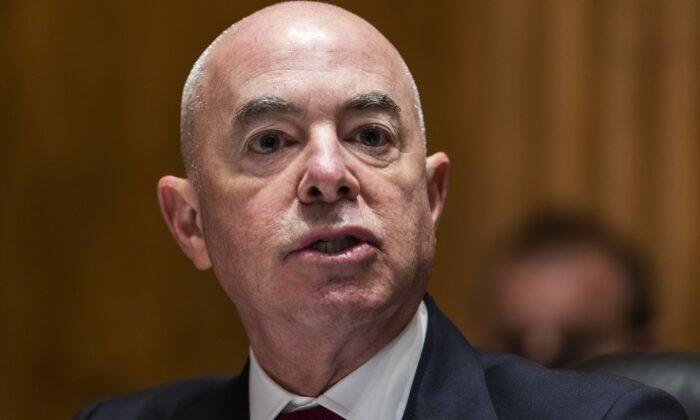
“The goal is to bring the resources of (DHS) together to address this threat,” said DHS Secretary Alejandro Mayorkas during Wednesday testimony.

News of the DHS entity comes just days after Elon Musk secured a $44 billion deal to buy Twitter, which he’s vowed to change into a free speech platform within the bounds of the law.

As PJ Media notes:

Jankowicz has written two books, How to Lose the Information War and How to Be A Woman Online. In a pinned tweet pimping her newly released second book, Jankowiz lets her inner misandry loose and writes, “Men ‘burst violently into your mentions and your life like the Kool-aid man, demanding your attention, hawking opinions that they believe are unarguably, manifestly correct and indispensable.’”

As a thought experiment – what do you think the “Disinformation Governance Board” would have done with the Hunter Biden laptop story before the 2020 US election – which Democratic politicians and dozens of former intelligence officials swore had ‘all the hallmarks’ of a Russian disinformation campaign – a claim which turned out to be misinformation itself?

Tyler Durden
Wed, 04/27/2022 – 18:25

via ZeroHedge News https://ift.tt/JxSyGV4 Tyler Durden

Continuing to Send Unwanted Political Mailings to a Business Isn’t “Harassment” Under Minnesota Law

From Christian Action League of Minn. v. Freeman, decided last week by the Eighth Circuit, in an opinion by Judge Jonathan Kobes, joined by Judge Raymond Gruender:

Minnesota Statute § 609.748(2) allows victims to obtain restraining orders against their harassers…. CAL is a non-profit run by Ann Redding that opposes pornography and sexual exploitation. Its roughly 150 members advocate against sexually oriented publications. One of those publications was City Pages, a Minneapolis newspaper owned by the Star Tribune. Since 2010, CAL has publicly opposed companies that advertise in City Pages. CAL’s members believe that, since City Pages runs advertisements for sexually oriented businesses, companies that advertise in City Pages are tacitly endorsing those businesses. CAL primarily advocates through postcards, letters, and emails directed at City Pages‘ advertisers.

R. Leigh Frost is a lawyer who advertised her firm in City Pages. After Redding noticed one of Frost’s advertisements, she sent Frost a postcard asking her to stop buying ad space. The card said, “Porn tears families apart. City Pages promotes strip clubs and porn. As a woman, are you ok with that?” Not long after, Frost’s firm received an email and another postcard expressing the same sentiment.

Despite Frost asking CAL to stop contacting her, she received yet another postcard about a week later. Fed up with CAL’s messages, Frost filed a petition for a harassment restraining order (HRO) under Minnesota Statute § 609.748(2), which provides that “[a] person who is a victim of harassment … may seek a restraining order.” Among other things, it defines harassment as “repeated incidents of intrusive or unwanted acts, words, or gestures that have a substantial adverse effect or are intended to have a substantial adverse effect on the safety, security, or privacy of another, regardless of the relationship between the actor and the intended target.” The day after Frost filed her petition, a state court judge issued an HRO against CAL. A few months later, the parties settled and the state court vacated the HRO.

CAL sued Mike Freeman, the Hennepin County Attorney, seeking “declaratory relief and a permanent injunction prohibiting Freeman from prosecuting any HRO under the Statute.” The Eighth Circuit concluded that CAL’s speech is clearly protected by the statute—and thus that any future HROs barring repetition of CAL’s speech would be unconstitutional—but also held that this was so clear (despite the state court’s having issued an HRO in the past) that CAL lacked standing and thus no formal declaratory judgment or injunction would be issued:

The plain text of the Statute is ambiguous as to whether it criminalizes CAL’s speech. CAL wants to repeatedly contact, via email and postcards, companies who support sexually oriented businesses. The Statute prohibits “harassment,” which includes “repeated incidents of intrusive or unwanted acts, words, or gestures that have a substantial adverse effect … on the … privacy of another, regardless of the relationship between the actor and the intended target.” CAL argues that this language criminalizes its plan to persuade advertisers to boycott City Pages. If that’s true, then CAL has been injured because the Statute has chilled its arguably constitutionally protected speech.

Freeman, however, argues that postcards and emails to advertisers don’t have a “substantial adverse effect … on the safety, security, or privacy of another.” He claims that “[c]onduct that is only offensive, argumentative, or inappropriate,” like CAL’s, “does not constitute harassment.” If Freeman is correct, then the Statute doesn’t criminalize CAL’s conduct, and CAL doesn’t have standing. Because either interpretation is plausible, the Statute is ambiguous….

[T]he constitutional savings canon, which dictates that “[a] statute must be construed, if fairly possible, so as to avoid not only the conclusion that it is unconstitutional, but also grave doubts upon that score[,]” … strongly supports Freeman’s interpretation that CAL’s speech isn’t criminalized by the Statute. CAL wants to write advertisers to encourage them to stop supporting sexually oriented businesses—what the Supreme Court has dubbed “core political speech.” Accordingly, adopting CAL’s interpretation would require us to cast doubt on the constitutionality of the Statute. This factor weighs heavily in favor of Freeman’s interpretation that the Statute doesn’t prohibit CAL’s speech.

The noscitur a sociis canon also supports Freeman’s interpretation. This canon, often expressed as “a word is known by the company it keeps,” dictates that we should “avoid ascribing to one word a meaning so broad that it is inconsistent with its accompanying words.” This is sometimes also referred to as the “word-association canon.” For instance, a statute covering “motor vehicles, motorcycles, industrial and construction equipment, [and] farm tractors” would not cover electrical wiring, even though that is technically “industrial equipment.”

This canon suggests that we should narrowly interpret the Statute’s definition of “harassment.” Harassment is defined as:

(1) a single incident of physical or sexual assault, a single incident of harassment under [Minnesota’s stalking statute], a single incident of nonconsensual dissemination of private sexual images under [Minnesota’s revenge porn statute], or repeated incidents of intrusive or unwanted acts, words, or gestures that have a substantial adverse effect or are intended to have a substantial adverse effect on the safety, security, or privacy of another, regardless of the relationship between the actor and the intended target;

(2) targeted residential picketing; and

(3) a pattern of attending public events after being notified that the actor’s presence at the event is harassing to another.

The items listed before repeated unwanted words—sexual assault, stalking, and revenge porn—make CAL’s emails and postcards look trivial by comparison. When considering the examples surrounding “repeated … unwanted acts [or] words … that have a substantial adverse effect … [on] privacy,” it’s clear that the Minnesota legislature only meant to capture truly egregious conduct, not the political speech that CAL engages in. In short, stalking and a few political postcards are not birds of a feather.

Finally, … [i]n Dunham v. Roer (2006), the Court of Appeals of Minnesota held that the Statute’s definition of “harassment” does not include constitutionally protected speech. It reasoned that “the language of the statute is directed against constitutionally unprotected ‘fighting words’ … ‘true threats’ … and speech … that … is in violation of one’s right to privacy.” As a result, the court held the Statute to be narrowly tailored and constitutional. Because “state appellate court decisions are highly persuasive and should be followed when they are the best evidence of state law,” this weighs heavily in favor of Freeman’s interpretation.

We are convinced that the Minnesota Supreme Court would not interpret the Statute’s definition of “harassment” to cover CAL’s speech. As a result, nothing CAL wants to do is criminalized by the Statute—it is free to encourage advertisers to oppose sexually oriented businesses….

Chief Judge Lavenski Smith dissented:

I agree with the majority that the Statute is ambiguous. An admittedly ambiguous statute together with solid evidence that the statute has been construed—by a court—to forbid the conduct in question should suffice to show that such conduct is “arguably” proscribed by the Statute. Here, Redding and CAL have demonstrated that the Statute has in fact been construed to proscribe their conduct. Surely, this showing clears the relatively low hurdle needed for standing.

Finally, injury-in-fact in the context of a First Amendment pre-enforcement challenge equates to “[r]easonable chill.” Were Redding and CAL “objectively reasonable” in refraining from their intended course of conduct? As they had recently been restrained by court order imposed under Minnesota Statute § 609.748, their decision to chill their speech would seem to meet that test.

The majority responded to the dissent thus:

The dissent argues that even if CAL’s conduct isn’t prohibited by Minnesota law, CAL still has standing to sue because it was previously subject to an HRO. There’s certainly intuitive appeal to that argument. After all, the fact that a statute has been enforced against someone in the past can give rise to an inference of future enforcement.

Nevertheless, … here there is binding Minnesota caselaw holding that the Statute doesn’t apply to speech like CAL’s. See Dunham (“[T]he harassment statute only regulates speech or conduct that constitutes `fighting words,’ `true threats,’ or substantial invasions of one’s privacy.”).

The only person who has obtained an HRO against CAL is R. Leigh Frost, who is not a party to this litigation…. Because there is no allegation that the Hennepin County Attorney has ever enforced the Statute against CAL’s speech or similarly protected speech—or has any plans to do so in the future—CAL lacks standing.

Here is an excerpt from County Attorney Freeman’s brief that discusses the “privacy” question:

Second, the communications did not have a substantial adverse effect on Frost’s privacy. The communications from CAL and Redding were sent only to the addresses that Frost Law Firm publicly advertised. Frost Law Firm’s City Pages ad included the law firm’s business address, phone number, and public website, and the website contained an email address for the firm. The postcards from CAL and Redding were sent to Frost Law Firm’s business address, and the email was sent to Frost Law Firm’s business email.  CAL and Redding did not send any communications to Frost’s home or to her family, friends, or clients.  Moreover, the communications did not contain personal or sensitive information about Frost or Frost Law Firm.

The post Continuing to Send Unwanted Political Mailings to a Business Isn't "Harassment" Under Minnesota Law appeared first on Reason.com.

from Latest https://ift.tt/HOhDKx0
via IFTTT

May a Judge Host a Football Podcast?

From New Hampshire Judicial Ethics Opinion 2017-ACJE-01, decided in 2017 but just posted on Westlaw:

QUESTION PRESENTED:

Does the Code of Judicial Conduct prohibit judges from hosting podcasts or radio shows devoted to sports or other matters that have little to do with the courts, the law or the legal profession?

FACTS PRESENTED:

The judge has been asked to host a podcast, devoted to professional football, the New England Patriots and predictions for the games ahead. The podcast will be sponsored by a local commercial radio station. Although the podcast will not ordinarily touch on legal issues, there may be some discussion about NFL rulings, calls on the field and disciplinary actions.

The judge would not be compensated for hosting the podcast. The judge would not say or do anything to promote the sponsoring radio station, except for identifying the station during the podcast itself. The judge would not identify him/herself as a judge and, in fact, is not planning on using his/her last name.

As presently envisioned, the podcast would be recorded and later published over the internet. However, in the future the program might also be played on the radio station.

APPLICABLE PROVISIONS OF THE CODE OF JUDICIAL CONDUCT:

The question implicates the following provisions of the Code of Judicial Conduct (listed in the order in which they are discussed below):

Rule 3.1 (extra-judicial activities);

Rule 1.2 (promoting confidence in the judiciary);

Rule 2.10 (judicial statements on pending and impending cases); and

Rule 1.3 (abuse of the prestige of judicial office).

Rule 3.1: The Code of Judicial Conduct encourages judges to be active members of society. Rule 3.1 (A) of the Code provides, “A judge may engage in extrajudicial activities, except as prohibited by law or this Code.” Comment 1 to the Rule states, “To the extent that time permits, and judicial independence and impartiality are not compromised, judges are encouraged to engage in appropriate extrajudicial activities[,]” including activities that do not involve the law. Comment 2 to the Rule notes, “Participation in both law-related and other extrajudicial activities helps integrate judges into their communities, and furthers public understanding of and respect for courts and the judicial system.”

Rule 3.1(A) does, however, contain five express prohibitions:

[W]hen engaging in extrajudicial activities, a judge shall not:

(1) participate in activities that will interfere with the proper performance of the judge’s judicial duties;

(2) participate in activities that will lead to frequent disqualification of the judge;

(3) participate in activities that would appear to a reasonable person to undermine the judge’s independence, integrity, or impartiality;

(4) engage in conduct that would appear to a reasonable person to be coercive; or

(5) make use of court premises, staff, stationery, equipment, or other resources, except for incidental use for activities that concern the law, the legal system, or the administration of justice.

Rule 1.2: Rule 3.1(A)(3) above is a specific illustration of the general obligation under Rule 1.2 that a “judge shall act at all times in a manner that promotes public confidence in the independence, integrity, and impartiality of the judiciary, and shall avoid impropriety and the appearance of impropriety.” Comment 2 to Rule 1.2 reminds judges that their conduct on and off the bench will be scrutinized by the public and restricted by the Rules to a degree that might be burdensome if applied to other citizens. Comment 1 to the Rule makes clear that the “appearance of impropriety” standard applies to “both the professional and personal conduct of a judge.” Comment 3 to the Rule notes that it is impossible to list all of the possible conduct that “compromises or appears to compromise the independence, integrity, and impartiality of a judge….”

Rule 2.10: Rule 2.10(A) prohibits judges from making “public statement[s] that might reasonably be expected to affect the outcome or impair the fairness of a matter pending or impending in any court” (emphasis added). Comment 1 to the Rule notes, “This Rule’s restrictions on judicial speech are essential to the maintenance of the independence, integrity, and impartiality of the judiciary.” See generally, Republican Party of Minnesota v. White. 536 U.S. 765 (2002) (discussing, and to some extent limiting, state restrictions on extra-judicial speech); Williams-Yulee v. Florida Bar. 575 U.S.; 135 S. Ct. 1656 (2015).

Rule 1.3: Finally, Rule 1.3 provides, “A judge shall not abuse the prestige of judicial office to advance the personal or economic interests of the judge or others, or allow others to do so.” Comment 4 to this Rule speaks to a situation that is analogous to this case:

Special considerations arise when judges write or contribute to publications of for-profit entities, whether related or unrelated to the law. A judge should not permit anyone associated with the publication of such materials to exploit the judge’s office in a manner that violates this Rule or other applicable law. In contracts for publication of a judge’s writing, the judge should retain sufficient control over the advertising to avoid such exploitation.

ADVISORY OPINION ON THE QUESTION PRESENTED:

[A.] Rules 3.1 and 1.2

Rules 3.1 and 1.2 do not create a categorical bar to hosting a podcast about professional sports. Making public statements about sports teams and events does not, in and of itself, trigger any of the five exclusionary provisions of Rule 3.1 or the more general exclusionary language in Rule 1.2. This is so because:

– Preparing for and hosting the podcast is not likely to take so much time that it will interfere with the judge’s judicial duties. (However, if the podcast were to balloon into a daily broadcast involving substantial preparation, this aspect of Rule 3.1 could then become implicated.)

– The topics that are likely to be discussed will not lead to the frequent disqualification of the judge. New Hampshire courts hear few cases involving professional sports teams and, subject to the cautions below, it is doubtful that the judge will say anything that will require recusal.

– Also subject to the cautions below, hosting the podcast would not cause a reasonable person to doubt the judge’s independence, integrity, or impartiality. Following professional sports is a wholesome pastime enjoyed by a large portion of society. Commenting on professional sports as an avocation is equally wholesome. Nothing about the topic, in and of itself, is likely to raise a concern about impartiality or independence. (To be sure, it would be unseemly, and therefore detrimental to the appearance of integrity, if the judge identified himself/herself as a judge on the podcast or in any promotion for the podcast. However, the judge indicated that he/she would be identified only by first name.)

– The remaining prohibitions in Rule 3.1 are not applicable or relevant to the analysis.

As noted above, there are some cautions that should be observed:

First, the judge should obtain from the radio station, in writing, the ability to veto (a) any promotion for the podcast or (b) any commercial sponsorship or (c) any advertisement that either identifies the judge as a judge or otherwise calls the judge’s integrity, independence or impartiality into question. (Imagine, for example, the radio station wanting to run advertisements on the podcast for a law firm that frequently appears in the judge’s court.)

Second, although the judge may certainly prognosticate about the outcome of future sporting events, the judge should refrain from giving advice on sports wagering. Cf: RSA Chapter 647:2 (gambling offenses); see generally, In Re Advisory Letter No. 3-11, 215 N.J. 495, 515 (N.J. 2013) (sitting judge could not perform as a comedian and actor under a stage name when the substance of his performances created an appearance of impropriety).

Third, the judge must be mindful that even a moderately successful podcast may lead to the creation of an online community. While the judge did not ask for guidance with respect to such a possibility, it should nonetheless be noted as a matter of concern. Podcasts are typically stored on webpages that allow comments and responses from the hosts. Additionally, podcast listeners often interact with the podcast, its hosts and other listeners via social media. Thus, the judge must have written authority from the radio station to veto and delete any social media content sponsored or within the control of the radio station. A full discussion of the potential pitfalls inherent in a judge’s use of social media is beyond the scope of this advisory opinion.

Fourth, as explained in more detail below, the judge should exercise great care and discernment when making public statements on the podcast that relate to legal issues, such as player/owner contractual disputes, owner/municipality disputes and player entanglements with the criminal law.

[B.] Rule 2.10

Rule 2.10 does not prohibit a judge from making public statements about professional sports. However, media coverage of professional sports often includes discussion of legal disputes. These include not only occasional criminal prosecutions of players for off-field behavior, but also contract disputes and negotiations between players and owners, and financial negotiations between owners and municipalities. A judge’s public statements about these matters would transgress Rule 2.10 if the statements are “reasonably … expected to affect the outcome or impair the fairness of a matter pending or impending in any court.”

Obviously, the judge could not comment on any matter pending or impending in his/her court. However, Rule 2.10’s prohibition applies more broadly to matters that are pending or impending in any court, including courts in distant states. Because podcasts are available to anybody with an internet connection anywhere in the world, a podcast host’s statements may be heard, and indeed amplified, in the jurisdiction where a matter is pending or impending. Therefore, the judge must refrain from making public statements that violate Rule 2.10 regarding matters that are or could become the subject of litigation. See generally In re Inquiry of Broadbelt. 683 A.2d 543 (N.J. 1996) (holding that neither the New Jersey Code of Judicial Conduct nor the First Amendment permitted a sitting judge to appear as guest commentator on Court TV).

If the podcast accepts live listener calls (i.e. calls made to the podcast while it is being recorded or streamed), the judge must be prepared for comments or questions that implicate Rule 2.10.

If the podcast has more than one host, the judge must be careful to avoid a situation in which his/her silence might be construed by listeners as adopting the public statements of a co-host.

If the podcast gives rise to a social media presence, the judge must ensure that nothing attributable to the judge transgresses Rule 2.10.

[C.] Rule 1.3

The podcast does raise some concerns under Rule 1.3, but these concerns can likely be resolved. The podcast will be hosted by a radio station. Although the radio station serves an important public role, and may be a fixture in the community, it is also a for-profit enterprise. Even if the judge is not receiving any compensation for the podcast, the radio station may generate advertising income or may use the podcast to promote itself.

As the commentary to Rule 1.3 suggests, the judge’s participation in the podcast must be conditioned on taking several steps to ensure that the radio station and its advertisers do not presently, or in the future, exploit the judge’s position. Thus:

– The judge should not be identified as a judge on the podcast, in any promotions for the podcast or in any commercial advertisements on the podcast;

– The judge should obtain the radio station’s written agreement that it will not allow advertisements or promotions that identify him/her as a judge.

– Because some listeners might nonetheless learn the judge’s identity, the judge should also obtain the radio station’s written agreement that it will not allow advertisements that the judge believes could exploit his/her judicial office.

The post May a Judge Host a Football Podcast? appeared first on Reason.com.

from Latest https://ift.tt/XmGnkTd
via IFTTT
Continuing to Send Unwanted Political Mailings to a Business Isn’t “Harassment” Under Minnesota Law

From Christian Action League of Minn. v. Freeman, decided last week by the Eighth Circuit, in an opinion by Judge Jonathan Kobes, joined by Judge Raymond Gruender:

Minnesota Statute § 609.748(2) allows victims to obtain restraining orders against their harassers…. CAL is a non-profit run by Ann Redding that opposes pornography and sexual exploitation. Its roughly 150 members advocate against sexually oriented publications. One of those publications was City Pages, a Minneapolis newspaper owned by the Star Tribune. Since 2010, CAL has publicly opposed companies that advertise in City Pages. CAL’s members believe that, since City Pages runs advertisements for sexually oriented businesses, companies that advertise in City Pages are tacitly endorsing those businesses. CAL primarily advocates through postcards, letters, and emails directed at City Pages‘ advertisers.

R. Leigh Frost is a lawyer who advertised her firm in City Pages. After Redding noticed one of Frost’s advertisements, she sent Frost a postcard asking her to stop buying ad space. The card said, “Porn tears families apart. City Pages promotes strip clubs and porn. As a woman, are you ok with that?” Not long after, Frost’s firm received an email and another postcard expressing the same sentiment.

Despite Frost asking CAL to stop contacting her, she received yet another postcard about a week later. Fed up with CAL’s messages, Frost filed a petition for a harassment restraining order (HRO) under Minnesota Statute § 609.748(2), which provides that “[a] person who is a victim of harassment … may seek a restraining order.” Among other things, it defines harassment as “repeated incidents of intrusive or unwanted acts, words, or gestures that have a substantial adverse effect or are intended to have a substantial adverse effect on the safety, security, or privacy of another, regardless of the relationship between the actor and the intended target.” The day after Frost filed her petition, a state court judge issued an HRO against CAL. A few months later, the parties settled and the state court vacated the HRO.

CAL sued Mike Freeman, the Hennepin County Attorney, seeking “declaratory relief and a permanent injunction prohibiting Freeman from prosecuting any HRO under the Statute.” The Eighth Circuit concluded that CAL’s speech is clearly protected by the statute—and thus that any future HROs barring repetition of CAL’s speech would be unconstitutional—but also held that this was so clear (despite the state court’s having issued an HRO in the past) that CAL lacked standing and thus no formal declaratory judgment or injunction would be issued:

The plain text of the Statute is ambiguous as to whether it criminalizes CAL’s speech. CAL wants to repeatedly contact, via email and postcards, companies who support sexually oriented businesses. The Statute prohibits “harassment,” which includes “repeated incidents of intrusive or unwanted acts, words, or gestures that have a substantial adverse effect … on the … privacy of another, regardless of the relationship between the actor and the intended target.” CAL argues that this language criminalizes its plan to persuade advertisers to boycott City Pages. If that’s true, then CAL has been injured because the Statute has chilled its arguably constitutionally protected speech.

Freeman, however, argues that postcards and emails to advertisers don’t have a “substantial adverse effect … on the safety, security, or privacy of another.” He claims that “[c]onduct that is only offensive, argumentative, or inappropriate,” like CAL’s, “does not constitute harassment.” If Freeman is correct, then the Statute doesn’t criminalize CAL’s conduct, and CAL doesn’t have standing. Because either interpretation is plausible, the Statute is ambiguous….

[T]he constitutional savings canon, which dictates that “[a] statute must be construed, if fairly possible, so as to avoid not only the conclusion that it is unconstitutional, but also grave doubts upon that score[,]” … strongly supports Freeman’s interpretation that CAL’s speech isn’t criminalized by the Statute. CAL wants to write advertisers to encourage them to stop supporting sexually oriented businesses—what the Supreme Court has dubbed “core political speech.” Accordingly, adopting CAL’s interpretation would require us to cast doubt on the constitutionality of the Statute. This factor weighs heavily in favor of Freeman’s interpretation that the Statute doesn’t prohibit CAL’s speech.

The noscitur a sociis canon also supports Freeman’s interpretation. This canon, often expressed as “a word is known by the company it keeps,” dictates that we should “avoid ascribing to one word a meaning so broad that it is inconsistent with its accompanying words.” This is sometimes also referred to as the “word-association canon.” For instance, a statute covering “motor vehicles, motorcycles, industrial and construction equipment, [and] farm tractors” would not cover electrical wiring, even though that is technically “industrial equipment.”

This canon suggests that we should narrowly interpret the Statute’s definition of “harassment.” Harassment is defined as:

(1) a single incident of physical or sexual assault, a single incident of harassment under [Minnesota’s stalking statute], a single incident of nonconsensual dissemination of private sexual images under [Minnesota’s revenge porn statute], or repeated incidents of intrusive or unwanted acts, words, or gestures that have a substantial adverse effect or are intended to have a substantial adverse effect on the safety, security, or privacy of another, regardless of the relationship between the actor and the intended target;

(2) targeted residential picketing; and

(3) a pattern of attending public events after being notified that the actor’s presence at the event is harassing to another.

The items listed before repeated unwanted words—sexual assault, stalking, and revenge porn—make CAL’s emails and postcards look trivial by comparison. When considering the examples surrounding “repeated … unwanted acts [or] words … that have a substantial adverse effect … [on] privacy,” it’s clear that the Minnesota legislature only meant to capture truly egregious conduct, not the political speech that CAL engages in. In short, stalking and a few political postcards are not birds of a feather.

Finally, … [i]n Dunham v. Roer (2006), the Court of Appeals of Minnesota held that the Statute’s definition of “harassment” does not include constitutionally protected speech. It reasoned that “the language of the statute is directed against constitutionally unprotected ‘fighting words’ … ‘true threats’ … and speech … that … is in violation of one’s right to privacy.” As a result, the court held the Statute to be narrowly tailored and constitutional. Because “state appellate court decisions are highly persuasive and should be followed when they are the best evidence of state law,” this weighs heavily in favor of Freeman’s interpretation.

We are convinced that the Minnesota Supreme Court would not interpret the Statute’s definition of “harassment” to cover CAL’s speech. As a result, nothing CAL wants to do is criminalized by the Statute—it is free to encourage advertisers to oppose sexually oriented businesses….

Chief Judge Lavenski Smith dissented:

I agree with the majority that the Statute is ambiguous. An admittedly ambiguous statute together with solid evidence that the statute has been construed—by a court—to forbid the conduct in question should suffice to show that such conduct is “arguably” proscribed by the Statute. Here, Redding and CAL have demonstrated that the Statute has in fact been construed to proscribe their conduct. Surely, this showing clears the relatively low hurdle needed for standing.

Finally, injury-in-fact in the context of a First Amendment pre-enforcement challenge equates to “[r]easonable chill.” Were Redding and CAL “objectively reasonable” in refraining from their intended course of conduct? As they had recently been restrained by court order imposed under Minnesota Statute § 609.748, their decision to chill their speech would seem to meet that test.

The majority responded to the dissent thus:

The dissent argues that even if CAL’s conduct isn’t prohibited by Minnesota law, CAL still has standing to sue because it was previously subject to an HRO. There’s certainly intuitive appeal to that argument. After all, the fact that a statute has been enforced against someone in the past can give rise to an inference of future enforcement.

Nevertheless, … here there is binding Minnesota caselaw holding that the Statute doesn’t apply to speech like CAL’s. See Dunham (“[T]he harassment statute only regulates speech or conduct that constitutes `fighting words,’ `true threats,’ or substantial invasions of one’s privacy.”).

The only person who has obtained an HRO against CAL is R. Leigh Frost, who is not a party to this litigation…. Because there is no allegation that the Hennepin County Attorney has ever enforced the Statute against CAL’s speech or similarly protected speech—or has any plans to do so in the future—CAL lacks standing.

Here is an excerpt from County Attorney Freeman’s brief that discusses the “privacy” question:

Second, the communications did not have a substantial adverse effect on Frost’s privacy. The communications from CAL and Redding were sent only to the addresses that Frost Law Firm publicly advertised. Frost Law Firm’s City Pages ad included the law firm’s business address, phone number, and public website, and the website contained an email address for the firm. The postcards from CAL and Redding were sent to Frost Law Firm’s business address, and the email was sent to Frost Law Firm’s business email.  CAL and Redding did not send any communications to Frost’s home or to her family, friends, or clients.  Moreover, the communications did not contain personal or sensitive information about Frost or Frost Law Firm.

The post Continuing to Send Unwanted Political Mailings to a Business Isn't "Harassment" Under Minnesota Law appeared first on Reason.com.

from Latest https://ift.tt/HOhDKx0
via IFTTT

Fort Worth, Texas Becomes First City Government In The US To Mine Bitcoin

Fort Worth, Texas Becomes First City Government In The US To Mine Bitcoin

Authored by Shawn Amick via BitcoinMagazine.com,

  • Fort Worth, Texas has become the first city government in the U.S. to mine bitcoin.

  • The city has accepted a donation of three S9 miners from the Texas Blockchain Council, in partnership with Luxor Technologies and Rhodium Enterprises.

  • Fort Worth will run a trial period of six-months as they learn the industry in hopes to become a leading hub for mining.

Fort Worth, Texas has officially become the first city government in the U.S. to mine bitcoin today. Three S9 bitcoin mining rigs will be deployed to run 24/7 in a closed environment on a private network operated by the Information Technology Solutions Department Data Center located at Fort Worth City Hall.

The S9 bitcoin miners were donated by the bitcoin and blockchain advocacy group, Texas Blockchain Council. The donation has formally been accepted today.

“With blockchain technology and cryptocurrency revolutionizing the financial landscape, we want to transform Fort Worth into a tech-friendly city,” said Mayor of Fort Worth, Mattie Parker.

“Today, with the support and partnership of the Texas Blockchain Council, we’re stepping into that world on a small scale while sending a big message – Fort Worth is where the future begins,” Parker continued.

The program starts with only the three machines so the city of Fort Worth can monitor performance, energy requirements, and familiarize itself with the process of bitcoin mining over a six-month period.

Fort Worth estimates that the individual energy required to mine bitcoin from each of the mining rigs will be equal to that of a household vacuum cleaner, according to the release. This nominal energy-usage is expected to be offset by the profits obtained from mining bitcoin.

Fort Worth is positioning itself to operate from within the bitcoin mining industry as a participant in order to learn the needs of the industry:

“Texas is increasingly being recognized as the global leader in Bitcoin and blockchain, and Fort Worth will have a seat at that table. The pioneering spirit is alive and well in Fort Worth, and with this program we will attract dynamic companies that share in this vision for the future,” said Robert Sturns, Fort Worth’s director of economic development.

Lee Bratcher, president and co-founder of the Texas Blockchain Council, praised the city for its decision to mine bitcoin and gave a favorable outlook to the future of Fort Worth.

“By starting small to learn as they go, Fort Worth is positioning itself to be the bitcoin mining capital of Texas. The state as a whole has already established itself as the bitcoin mining capital of the world,” said Bratcher.

Bratcher also noted the support and advice from Luxor Technologies and Rhodium Enterprises who provided strategic guidance that brought this project to fruition. Alex Brammer, VP of business development at Luxor, discussed Luxor’s excitement to be part of Fort Worth’s initial step into bitcoin mining.

“Luxor is providing pool services and technical consultation to the Fort Worth team, and we’ve been impressed with their thoroughness and the speed with which they have been able to get their initial mining operation up and running,” said Brammer.

Brammer continued to praise the nimbleness of the city and its ability to quickly incorporate the processes needed to operate a mining facility. Brammer closed his thoughts with a colorful caricature of the mayor and her team saying they “have certainly been helping to redefine ‘moving at the speed of government,’ further solidifying Fort Worth as one of the most innovative cities in the country.”

Tyler Durden
Wed, 04/27/2022 – 18:05

via ZeroHedge News https://ift.tt/QzfMmw4 Tyler Durden

Daily Briefing: The Bank of Japan Is Playing a Dangerous Game

Daily Briefing: The Bank of Japan Is Playing a Dangerous Game

Prices for assets of all kinds were up Wednesday, including stocks, commodities, and cryptocurrencies. The U.S. dollar continued to strengthen, and global bond yields marched higher. That’s despite the emergence of still more signs of underlying weakness, including Robinhood laying off 9% of its workforce. And Russia cut off natural gas supplies to Poland and Bulgaria in the latest escalation of the war in Eastern Europe. Meanwhile, the Bank of Japan will meet tomorrow to discuss monetary policy, as Governor Haruhiko Kuroda remains committed to an accommodative stance despite the yen’s historic weakness. China, too, is sticking with accommodation, as President Xi Jinping said the government will support major infrastructure projects in cities impacted by renewed coronavirus lockdowns. Darius Dale, founder and CEO of 42 Macro, joins Weston Nakamura to talk about financial markets, geopolitics, and the odds central banks are able to engineer a soft landing for the global economy. Want to submit questions? Drop them right here on the Exchange: https://rvtv.io/3Lpk36q

Tyler Durden
Wed, 04/27/2022 – 14:22

via ZeroHedge News https://ift.tt/utzc7xk Tyler Durden

“Would Censorship Have Stopped the Rise of the Nazis?”

Greg Lukianoff (President of FIRE) and Prof. Nadine Strossen (former President of the ACLU) have an excellent post on this subject; here’s the beginning, though it’s worth reading in its entirety:

Given the recent panic over what Elon Musk buying Twitter may mean for hate speech regulation on the platform, I thought it would be important to explain that arguments for hate speech codes are deeply flawed. As we have previously argued in this series, hate speech laws have proven to backfire in predictable and unpredictable ways. In this and the next entry, we’ll be addressing oft-cited arguments that hate speech laws would have prevented historical atrocities.

Assertion: The rise of Hitler and Nazism in Germany is an instructive example of why we should censor hateful and extremist speech.

Greg Lukianoff: Richard Delgado, an early champion of speech codes and now more famous as a founding scholar in the field of Critical Race Theory, cites the Rwandan genocide (more on this in the next entry), along with Weimar Germany, as cautionary tales against free-speech purism. The problem is that neither historical precedent supports the idea that speech restraints could have prevented a genocide.

As I explained in my review of Eric Berkowitz’s excellent book, “Dangerous Ideas: A Brief History of Censorship in the West, from the Ancients to Fake News,” Weimar Germany had laws banning hateful speech (particularly hateful speech directed at Jews), and top Nazis including Joseph Goebbels, Theodor Fritsch and Julius Streicher actually were sentenced to prison time for violating them. The efforts of the Weimar Republic to suppress the speech of the Nazis are so well known in academic circles that one professor has described the idea that speech restrictions would have stopped the Nazis as “the Weimar Fallacy.”

A 1922 law passed in response to violent political agitators such as the Nazis permitted Weimar authorities to censor press criticism of the government and advocacy of violence. This was followed by a number of emergency decrees expanding the power to censor newspapers. The Weimar Republic not only shut down hundreds of Nazi newspapers — in a two-year period, they shut down 99 in Prussia alone — but they accelerated that crackdown on speech as the Nazis ascended to power. Hitler himself was banned from speaking in several German states from 1925 until 1927.
Hitler poster Nazi propaganda

In this 1920s cartoon by Philipp Rupprecht, Hitler is depicted as having his mouth sealed with tape that reads “forbidden to speak.” The text beneath this image reads, “He alone of two billion people on Earth may not speak in Germany.”

Far from being an impediment to the spread of National Socialist ideology, Hitler and the Nazis used the attempts to suppress their speech as public relations coups. The party waved the ban like a bloody shirt to claim they were being targeted for exposing the international conspiracy to suppress “true” Germans. As one poster explained:

Why is Adolf Hitler not allowed to speak? Because he is ruthless in uncovering the rulers of the German economy, the international bank Jews and their lackeys, the Democrats, Marxists, Jesuits, and Free Masons! Because he wants to free the workers from the domination of big money!

Considering the Nazi movement’s core ideology, as espoused by Hitler in “Mein Kampf,” rested on an alleged conspiracy between Jews and their sympathizers in government to politically disempower Aryan Germans, it is not surprising that the Nazis were able to spin government censorship into propaganda victories and seeming confirmation of their claims that they were speaking truth to power, and that power was aligned against them.

Indeed, censorship that was employed ineffectively to stop the rise of the Nazis was a boon to the Nazis when it came to consolidating their power. The laws mentioned earlier that allowed Weimar authorities to shut down newspapers, and additional laws intended to limit the spread of Nazi ideology via the radio, had their reins turned over to the Nazi party when Hitler became chancellor. Predictably, the Nazis used these preexisting means of censorship to crush any political speech opposing them, allowing for an absolute grip on the country that would have been much more difficult or impossible with strong legal protections for press and speech….

The post "Would Censorship Have Stopped the Rise of the Nazis?" appeared first on Reason.com.

from Latest https://ift.tt/RmiUqkQ
via IFTTT

“Would Censorship Have Stopped the Rise of the Nazis?”

Greg Lukianoff (President of FIRE) and Prof. Nadine Strossen (former President of the ACLU) have an excellent post on this subject; here’s the beginning, though it’s worth reading in its entirety:

Given the recent panic over what Elon Musk buying Twitter may mean for hate speech regulation on the platform, I thought it would be important to explain that arguments for hate speech codes are deeply flawed. As we have previously argued in this series, hate speech laws have proven to backfire in predictable and unpredictable ways. In this and the next entry, we’ll be addressing oft-cited arguments that hate speech laws would have prevented historical atrocities.

Assertion: The rise of Hitler and Nazism in Germany is an instructive example of why we should censor hateful and extremist speech.

Greg Lukianoff: Richard Delgado, an early champion of speech codes and now more famous as a founding scholar in the field of Critical Race Theory, cites the Rwandan genocide (more on this in the next entry), along with Weimar Germany, as cautionary tales against free-speech purism. The problem is that neither historical precedent supports the idea that speech restraints could have prevented a genocide.

As I explained in my review of Eric Berkowitz’s excellent book, “Dangerous Ideas: A Brief History of Censorship in the West, from the Ancients to Fake News,” Weimar Germany had laws banning hateful speech (particularly hateful speech directed at Jews), and top Nazis including Joseph Goebbels, Theodor Fritsch and Julius Streicher actually were sentenced to prison time for violating them. The efforts of the Weimar Republic to suppress the speech of the Nazis are so well known in academic circles that one professor has described the idea that speech restrictions would have stopped the Nazis as “the Weimar Fallacy.”

A 1922 law passed in response to violent political agitators such as the Nazis permitted Weimar authorities to censor press criticism of the government and advocacy of violence. This was followed by a number of emergency decrees expanding the power to censor newspapers. The Weimar Republic not only shut down hundreds of Nazi newspapers — in a two-year period, they shut down 99 in Prussia alone — but they accelerated that crackdown on speech as the Nazis ascended to power. Hitler himself was banned from speaking in several German states from 1925 until 1927.
Hitler poster Nazi propaganda

In this 1920s cartoon by Philipp Rupprecht, Hitler is depicted as having his mouth sealed with tape that reads “forbidden to speak.” The text beneath this image reads, “He alone of two billion people on Earth may not speak in Germany.”

Far from being an impediment to the spread of National Socialist ideology, Hitler and the Nazis used the attempts to suppress their speech as public relations coups. The party waved the ban like a bloody shirt to claim they were being targeted for exposing the international conspiracy to suppress “true” Germans. As one poster explained:

Why is Adolf Hitler not allowed to speak? Because he is ruthless in uncovering the rulers of the German economy, the international bank Jews and their lackeys, the Democrats, Marxists, Jesuits, and Free Masons! Because he wants to free the workers from the domination of big money!

Considering the Nazi movement’s core ideology, as espoused by Hitler in “Mein Kampf,” rested on an alleged conspiracy between Jews and their sympathizers in government to politically disempower Aryan Germans, it is not surprising that the Nazis were able to spin government censorship into propaganda victories and seeming confirmation of their claims that they were speaking truth to power, and that power was aligned against them.

Indeed, censorship that was employed ineffectively to stop the rise of the Nazis was a boon to the Nazis when it came to consolidating their power. The laws mentioned earlier that allowed Weimar authorities to shut down newspapers, and additional laws intended to limit the spread of Nazi ideology via the radio, had their reins turned over to the Nazi party when Hitler became chancellor. Predictably, the Nazis used these preexisting means of censorship to crush any political speech opposing them, allowing for an absolute grip on the country that would have been much more difficult or impossible with strong legal protections for press and speech….

The post "Would Censorship Have Stopped the Rise of the Nazis?" appeared first on Reason.com.

from Latest https://ift.tt/RmiUqkQ
via IFTTT

US Intel Helped Ukraine Shoot Down Russian Plane Carrying “Hundreds” Of Paratroopers

US Intel Helped Ukraine Shoot Down Russian Plane Carrying “Hundreds” Of Paratroopers

Pentagon and top State Department officials have insisted this week that the US and NATO are not fighting a proxy war against Russia in Ukraine, but then we get bombshell reports like the following out of NBC, with unnamed defense and intelligence officials positively boasting about the damage being done to the invading forces, including shooting “hundreds” of paratroopers out of the sky who were in a Il-76 military transport plane

“As Russia launched its invasion, the U.S. gave Ukrainian forces detailed intelligence about exactly when and where Russian missiles and bombs were intended to strike, prompting Ukraine to move air defenses and aircraft out of harm’s way, current and former U.S. officials told NBC News.”

And then comes this stunning admission: “That near real-time intelligence-sharing also paved the way for Ukraine to shoot down a Russian transport plane carrying hundreds of troops in the early days of the war, the officials say, helping repel a Russian assault on a key airport near Kyiv,” NBC writes.

Russian Il-76, via The Drive

The revelation comes almost two months after in early March Biden administration officials divulged to the press the the United States was sharing real-time intelligence with Ukraine. Apparently these efforts have not only greatly expanded at this point, but are possibly resulting in significant battlefield losses for Russia. 

The NBC report continues, “It was part of what American officials call a massive and unprecedented intelligence-sharing operation with a non-NATO partner that they say has played a crucial role in Ukraine’s success to date against the larger and better-equipped Russian military.”

Within the very opening days of the invasion, Ukrainian forces had claimed a major battlefield victory in shooting down a Russian Il-76 Candid airlifter which was operating outside of Kiev. While it’s unclear whether the US officials quoted in the NBC report are referring to that specific alleged shootdown incident (the Russian Defense Ministry has tended to chalk up such transport plane downings as mechanical failures as its official line) – it may have resulted in the deaths of dozens or even up to a couple hundred Russian paratroopers

On Feb.26 a second transport plane was reportedly downed, with the AP detailing at the time, “A second Russian Ilyushin Il-76 military transport plane was shot down near Bila Tserkva, 50 miles (85 kilometers) south of Kyiv, according to two American officials with direct knowledge of conditions on the ground in Ukraine.”

As for specifics the NBC report only had this to say:

NBC News is withholding some specific details that the network confirmed about the intelligence sharing at the request of U.S. military and intelligence officials, who say reporting on it could help the Russians shut down important sources of information.

“There has been a lot of real-time intelligence shared in terms of things that could be used for specific targeting of Russian forces,” said a former senior intelligence official familiar with the situation. The information includes commercial satellite images “but also a lot of other intelligence about, for example, where certain types of Russian units are active.”

Another anonymous official divulged that US-provided intelligence has indeed made “a major difference” in the war. And Defense Secretary Lloyd Austin said this week the US wants to see a “weakened Russia”.

“It’s been impactful both at a tactical and strategic level. There are examples where you could tell a pretty clear story that this made a major difference,” the official was quoted as saying. But ironically the report came out simultaneous to the Pentagon insisting that no, it’s not a proxy war

“We’re not in a fight with Russia,” Austin told Fox News in an interview that aired on Tuesday. “Ukraine is in a current struggle with Russia.”

Despite the amount of security aide provided to Ukraine, Austin insisted that the conflict is not turning into a proxy war.

“It’s not, this is clearly Ukraine’s fight,” Austin said when asked if the conflict in Ukraine might turn into a proxy war. “Ukraine’s neighbors and allies and partners are stepping up to make sure that they have what they need in order to be successful.”

But obviously there’s a disconnect when this is the official US line, while at the same time anonymous officials are leaking to the press that US intelligence is helping Ukraine shoot down plane-loads of paratroopers. And already Russia is increasingly threatening possible more direct confrontation with the West, warning that any external weapons shipments will be taken out.

Tyler Durden
Wed, 04/27/2022 – 17:45

via ZeroHedge News https://ift.tt/RKLbkU3 Tyler Durden