“The Need to Maintain Objectivity and a Professional Distance from [One’s] Clients” in Court Filings

From Judge Naomi Reice Buchwald (S.D.N.Y.) in today’s opinion in Filsoof v. Cole:

As the Court’s rulings demonstrate, these [discovery] motions would have been unnecessary if counsel had conducted themselves in a more professional manner. The inclusion of any kernel of a meritorious argument in the briefing was in danger of being obscured by the amount of irrelevant invective. Indeed, the constant bombardment of the Court with such irrelevant invective makes defendant’s frequent refrain about the imposition on counsel’s time and his client’s resources ring hollow. P

For an earlier admonition from Judge Buchwald in the same case, see here.

The post "The Need to Maintain Objectivity and a Professional Distance from [One's] Clients" in Court Filings appeared first on Reason.com.

from Latest https://ift.tt/qf2seEp
via IFTTT

“The Need to Maintain Objectivity and a Professional Distance from [One’s] Clients” in Court Filings

From Judge Naomi Reice Buchwald (S.D.N.Y.) in today’s opinion in Filsoof v. Cole:

As the Court’s rulings demonstrate, these [discovery] motions would have been unnecessary if counsel had conducted themselves in a more professional manner. The inclusion of any kernel of a meritorious argument in the briefing was in danger of being obscured by the amount of irrelevant invective. Indeed, the constant bombardment of the Court with such irrelevant invective makes defendant’s frequent refrain about the imposition on counsel’s time and his client’s resources ring hollow. P

For an earlier admonition from Judge Buchwald in the same case, see here.

The post "The Need to Maintain Objectivity and a Professional Distance from [One's] Clients" in Court Filings appeared first on Reason.com.

from Latest https://ift.tt/qf2seEp
via IFTTT

Biden Administration Releases Plan To Deal With Expected Illegal Immigration Surge

Biden Administration Releases Plan To Deal With Expected Illegal Immigration Surge

Authored by Zachary Stieber via The Epoch Times (emphasis ours),

President Joe Biden’s administration has released a plan to deal with the expected surge in illegal immigration across the U.S.–Mexico border once the emergency Title 42 policy is terminated in May.

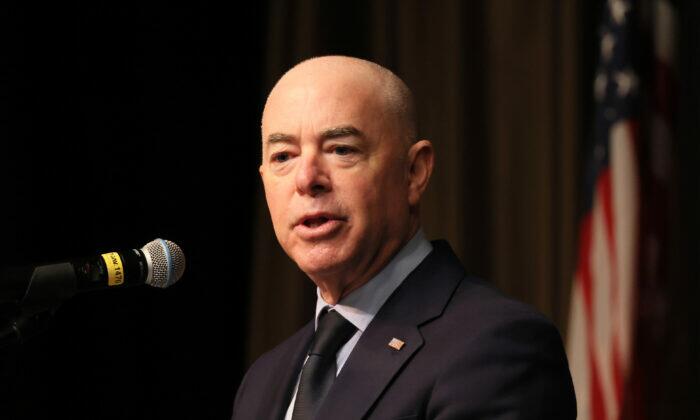
U.S. Secretary of Homeland Security Alejandro Mayorkas speaks during a convention in New York City on April 8, 2022. (Michael M. Santiago/Getty Images)

Homeland Security Secretary Alejandro Mayorkas laid out the plan in a 20-page memorandum, outlining a series of “pillars” that officials are already putting into place.

In addition to deploying more resources such as agents to the border, the Department of Homeland Security is working to process illegal immigrants more quickly and expelling those who are not allowed to stay under federal law, according to the memo.

The government is also “bolstering the capacity” of non-governmental groups (NGOs) to receive illegal immigrants after they’re released by federal agents and disrupting criminal groups and smugglers who seek to smuggle people and/or drugs into the United States.

Mayorkas claimed that, overall, the administration is “sending a clear message” that the end of Title 42, the emergency order that enables quick expulsion of many illegal aliens, “does not mean that the U.S. border is open.”

Still, the Biden appointee repeated a charge he has made before: that the U.S. immigration system is broken and that his department is constrained by the current laws.

“Our outdated immigration system was not built to manage the current levels and types of migratory flows that we are experiencing and is already under strain. However, we have been able to manage increased encounters because of prudent planning and execution, and the talent and unwavering dedication of the DHS workforce and our state, local, and community partners,” Mayorkas said. “Despite these efforts, a significant increase in migrant encounters will substantially strain our system even further. We will address this challenge successfully, but it will take time, and we need the partnership of Congress, state and local officials, NGOs, and communities to do so. We are operating within a fundamentally broken immigration system that only Congress can fix.”

The memo is largely the same as a strategy detailed on March 30 and shows that the administration’s plan is “to facilitate the increased flow of people,” Mark Krikorian, executive director of the Center for Immigration Studies, told The Epoch Times.

“The issue is that there’s a basic disagreement about what the goal at the southwest border should be. The administration does not believe that we shouldn’t be deterring the flow of illegal migrants. They just want to make sure it’s done efficiently, quickly,” Krikorian said.

A separate document from Mayorkas’ agency, dated Feb. 17 and leaked to the press, showed that officials expect major surges along the border once Title 42 ends.

Title 42 is an order imposed by the Centers for Disease Control and Prevention (CDC) early in the pandemic. The order says that, due to illegal immigrants potentially having COVID-19, quick expulsion can be done to protect the health of Americans.

A group of Mexicans walk back into Mexico after being returned halfway along the international bridge from the United States under Title 42, in Piedras Negras, Mexico, on April 21, 2022. (Charlotte Cuthbertson/The Epoch Times)

The CDC, with backing from Mayorkas and the White House, recently announced that it would terminate the order on May 23. Officials said that the plunge in COVID-19 metrics in recent months, coupled with the rise of people vaccinated and the availability of COVID-19 treatments, meant the order was no longer necessary.

Immigration agents have since scaled back utilization of the powers, though they are likely to be blocked from doing so soon. A federal judge said this week he would soon enter a ruling prohibiting the termination of the order, as several lawsuits against the administration wend their way through the courts.

Virtually all Republicans and many Democrats in Congress oppose ending Title 42, and a bill that would bar Biden’s administration from terminating the powers unless the president also ends the COVID-19 national emergency has been drawing bipartisan support.

Some members have accused the administration of not having a plan for when Title 42 ends. Some have argued that COVID-19 still presents a threat, and noted that the administration has sought to keep other pandemic-era rules in place, such as the federal mask mandate.

After Title 42 ends agents can still expel immigrants under Title 8, a federal law, but most immigrants who claim asylum will be freed into the U.S. interior until their claims are adjudicated, even though the bulk of asylum claims are determined to be illegitimate. A number of the immigrants skip the court hearings, staying in America indefinitely.

Smugglers have that all figured out,” Krikorian said. “They coach people on what to say, and this administration thinks that any claim of persecution—no matter how flimsy or improbable—is reason enough to be let go into the United States.”

So far in this fiscal year, which started in October 2021, the administration has expelled more aliens using Title 42 than Title 8. That includes 107,170 expulsions under Title 42 in March, versus 102,851 under Title 8.

The administration presided over the highest illegal immigration totals in history in Biden’s first year in office. Based on the first three months of 2022, another record will be set for Biden’s second year.

Officials are grappling with the ramifications of the high levels of immigration, which have added to the backlog of asylum claims—nearly 1.4 million cases are pending—and are necessitating the expansion of programs called Alternatives to Detention that let illegal immigrants “remain in their communities” while complying with mandated attendance at court hearings and, in certain cases, forced departure from America, homeland security officials said in a recent budget request.

The administration asked for increased funding for multiple prongs of the immigration system, including extra money to expand the alternatives programs, to add judges to asylum courts, and to ramp up the number of agents at the border.

Mayorkas was set to answer questions from Congress in Washington on Wednesday and Thursday.

Tyler Durden
Wed, 04/27/2022 – 17:25

via ZeroHedge News https://ift.tt/e9WPguU Tyler Durden

Fauci Admits “Pandemic Phase” Of COVID Is Over

Fauci Admits “Pandemic Phase” Of COVID Is Over

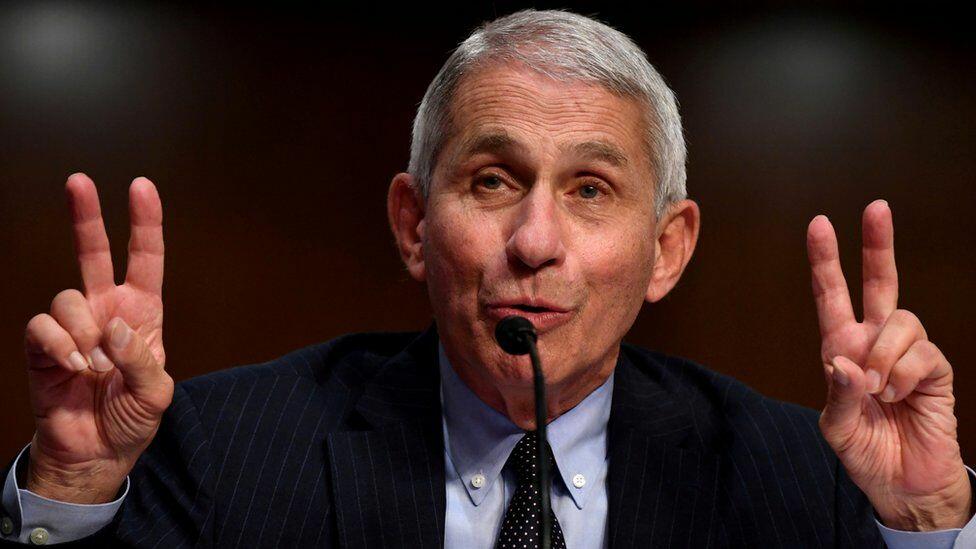
We are certainly right now in this country out of the pandemic phase,” White House Chief Medical Adviser Dr. Anthony Fauci remarked during an interview with PBS Newshour.

“Namely, we don’t have 900,000 new infections a day and tens and tens and tens of thousands of hospitalizations and thousands of deaths. We are at a low level right now.”

“So, if you’re saying, are we out of the pandemic phase in this country, we are,” he added.

Is this Biden-and-Fauci’s “Mission Accomplished” moment?

But it’s not over for the rest of the world…

“Pandemic means a widespread, throughout the world, infection that spreads rapidly among people,” Fauci said.

“So, if you look at the global situation, there’s no doubt this pandemic is still ongoing.”

Earlier this month, Fauci also acknowledged that COVID would never be “eradicated” and that “each individual is going to have to make their calculation of the amount of risk that they want to take.”

The best hope is to maintain the coronavirus at low levels of transmission and pursue intermittent vaccinations, Fauci said.

Fauci’s ‘brave’ call comes just days after The CDC announced that because so many people in the U.S. have now caught omicron and other strains of the coronavirus, nearly 60% of the population – and almost 75% of children 11 and younger – now have antibodies to it in their blood.

There’s just one small problem… no one told The White House…

While Fauci and other technocrats may be loosening the chains in the short term, others have indicated that the push for new restrictions will return before winter, and given the ‘outbreak’ that appears to be ripping through Washington elites, nothing would surprise us less than attempts to reinstate restrictions – because they all worked so well last time and every time – for your own safety!

Tyler Durden
Wed, 04/27/2022 – 17:05

via ZeroHedge News https://ift.tt/YnkxHdW Tyler Durden

Aella: Libertarian Sex Worker Turned Data Scientist


aella7

Meet Aella, the daughter of evangelical Christians from Idaho who were so poor they couldn’t always put food on the table.

A former factory worker who never graduated college, she became one of the most successful performers on the adult subscription site OnlyFans, sometimes taking home over $100,000 a month on the platform. She still does one-on-one appointments but only with clients who can afford to pay her current rate of $3,000 an hour.

These days, Aella is known for her forays into data science, oddball social media polls, sexy and silly personal moments on Twitter, and using her giant platform to spread hot libertarian takes, such as declaring, “I like capitalism.”

“I am not okay with you making laws that prevent me from doing what I feel is good for me,” Aella tells Reason. An outspoken defender of sex worker rights, she compares her current life to what it was like at the age of 19, when she would wake up at 4:30 a.m. to go do repetitive tasks on an assembly line in a windowless factory, often putting in over 50 hours a week.

“Why do people talk about survival sex work but not like…survival factory work or survival burger flipping?” she wonders. Yes, there’s exploitation in sex work, but “decriminalizing sex work would let workers actually go get police help if they needed it.”

Even before she got rich and famous, back when she was “scraping change off the ground to eat,” Aella says she still “had libertarian-leaning economic views.”

Reason‘s Liz Wolfe met up with Aella at her home in Austin, Texas, for a wide-ranging conversation about everything from how sex work made her a better data scientist to why many successful practitioners in her industry are selling not only sex but also the personal connections that so many of us are missing in our lives.

Today’s sponsor:

  • CrowdHealth is an alternative way to pay for your health care with no surprise bills and no doctor networks. Use the promo code REASON and get three months for just $99 a month.

The post Aella: Libertarian Sex Worker Turned Data Scientist appeared first on Reason.com.

from Latest https://ift.tt/xrtoUOJ
via IFTTT

Continuing to Send Unwanted Political Mailings to a Business Isn’t “Harassment” Under Minnesota Law

From Christian Action League of Minn. v. Freeman, decided last week by the Eighth Circuit, in an opinion by Judge Jonathan Kobes, joined by Judge Raymond Gruender:

Minnesota Statute § 609.748(2) allows victims to obtain restraining orders against their harassers…. CAL is a non-profit run by Ann Redding that opposes pornography and sexual exploitation. Its roughly 150 members advocate against sexually oriented publications. One of those publications was City Pages, a Minneapolis newspaper owned by the Star Tribune. Since 2010, CAL has publicly opposed companies that advertise in City Pages. CAL’s members believe that, since City Pages runs advertisements for sexually oriented businesses, companies that advertise in City Pages are tacitly endorsing those businesses. CAL primarily advocates through postcards, letters, and emails directed at City Pages‘ advertisers.

R. Leigh Frost is a lawyer who advertised her firm in City Pages. After Redding noticed one of Frost’s advertisements, she sent Frost a postcard asking her to stop buying ad space. The card said, “Porn tears families apart. City Pages promotes strip clubs and porn. As a woman, are you ok with that?” Not long after, Frost’s firm received an email and another postcard expressing the same sentiment.

Despite Frost asking CAL to stop contacting her, she received yet another postcard about a week later. Fed up with CAL’s messages, Frost filed a petition for a harassment restraining order (HRO) under Minnesota Statute § 609.748(2), which provides that “[a] person who is a victim of harassment … may seek a restraining order.” Among other things, it defines harassment as “repeated incidents of intrusive or unwanted acts, words, or gestures that have a substantial adverse effect or are intended to have a substantial adverse effect on the safety, security, or privacy of another, regardless of the relationship between the actor and the intended target.” The day after Frost filed her petition, a state court judge issued an HRO against CAL. A few months later, the parties settled and the state court vacated the HRO.

CAL sued Mike Freeman, the Hennepin County Attorney, seeking “declaratory relief and a permanent injunction prohibiting Freeman from prosecuting any HRO under the Statute.” The Eighth Circuit concluded that CAL’s speech is clearly protected by the statute—and thus that any future HROs barring repetition of CAL’s speech would be unconstitutional—but also held that this was so clear (despite the state court’s having issued an HRO in the past) that CAL lacked standing and thus no formal declaratory judgment or injunction would be issued:

The plain text of the Statute is ambiguous as to whether it criminalizes CAL’s speech. CAL wants to repeatedly contact, via email and postcards, companies who support sexually oriented businesses. The Statute prohibits “harassment,” which includes “repeated incidents of intrusive or unwanted acts, words, or gestures that have a substantial adverse effect … on the … privacy of another, regardless of the relationship between the actor and the intended target.” CAL argues that this language criminalizes its plan to persuade advertisers to boycott City Pages. If that’s true, then CAL has been injured because the Statute has chilled its arguably constitutionally protected speech.

Freeman, however, argues that postcards and emails to advertisers don’t have a “substantial adverse effect … on the safety, security, or privacy of another.” He claims that “[c]onduct that is only offensive, argumentative, or inappropriate,” like CAL’s, “does not constitute harassment.” If Freeman is correct, then the Statute doesn’t criminalize CAL’s conduct, and CAL doesn’t have standing. Because either interpretation is plausible, the Statute is ambiguous….

[T]he constitutional savings canon, which dictates that “[a] statute must be construed, if fairly possible, so as to avoid not only the conclusion that it is unconstitutional, but also grave doubts upon that score[,]” … strongly supports Freeman’s interpretation that CAL’s speech isn’t criminalized by the Statute. CAL wants to write advertisers to encourage them to stop supporting sexually oriented businesses—what the Supreme Court has dubbed “core political speech.” Accordingly, adopting CAL’s interpretation would require us to cast doubt on the constitutionality of the Statute. This factor weighs heavily in favor of Freeman’s interpretation that the Statute doesn’t prohibit CAL’s speech.

The noscitur a sociis canon also supports Freeman’s interpretation. This canon, often expressed as “a word is known by the company it keeps,” dictates that we should “avoid ascribing to one word a meaning so broad that it is inconsistent with its accompanying words.” This is sometimes also referred to as the “word-association canon.” For instance, a statute covering “motor vehicles, motorcycles, industrial and construction equipment, [and] farm tractors” would not cover electrical wiring, even though that is technically “industrial equipment.”

This canon suggests that we should narrowly interpret the Statute’s definition of “harassment.” Harassment is defined as:

(1) a single incident of physical or sexual assault, a single incident of harassment under [Minnesota’s stalking statute], a single incident of nonconsensual dissemination of private sexual images under [Minnesota’s revenge porn statute], or repeated incidents of intrusive or unwanted acts, words, or gestures that have a substantial adverse effect or are intended to have a substantial adverse effect on the safety, security, or privacy of another, regardless of the relationship between the actor and the intended target;

(2) targeted residential picketing; and

(3) a pattern of attending public events after being notified that the actor’s presence at the event is harassing to another.

The items listed before repeated unwanted words—sexual assault, stalking, and revenge porn—make CAL’s emails and postcards look trivial by comparison. When considering the examples surrounding “repeated … unwanted acts [or] words … that have a substantial adverse effect … [on] privacy,” it’s clear that the Minnesota legislature only meant to capture truly egregious conduct, not the political speech that CAL engages in. In short, stalking and a few political postcards are not birds of a feather.

Finally, … [i]n Dunham v. Roer (2006), the Court of Appeals of Minnesota held that the Statute’s definition of “harassment” does not include constitutionally protected speech. It reasoned that “the language of the statute is directed against constitutionally unprotected ‘fighting words’ … ‘true threats’ … and speech … that … is in violation of one’s right to privacy.” As a result, the court held the Statute to be narrowly tailored and constitutional. Because “state appellate court decisions are highly persuasive and should be followed when they are the best evidence of state law,” this weighs heavily in favor of Freeman’s interpretation.

We are convinced that the Minnesota Supreme Court would not interpret the Statute’s definition of “harassment” to cover CAL’s speech. As a result, nothing CAL wants to do is criminalized by the Statute—it is free to encourage advertisers to oppose sexually oriented businesses….

Chief Judge Lavenski Smith dissented:

I agree with the majority that the Statute is ambiguous. An admittedly ambiguous statute together with solid evidence that the statute has been construed—by a court—to forbid the conduct in question should suffice to show that such conduct is “arguably” proscribed by the Statute. Here, Redding and CAL have demonstrated that the Statute has in fact been construed to proscribe their conduct. Surely, this showing clears the relatively low hurdle needed for standing.

Finally, injury-in-fact in the context of a First Amendment pre-enforcement challenge equates to “[r]easonable chill.” Were Redding and CAL “objectively reasonable” in refraining from their intended course of conduct? As they had recently been restrained by court order imposed under Minnesota Statute § 609.748, their decision to chill their speech would seem to meet that test.

The majority responded to the dissent thus:

The dissent argues that even if CAL’s conduct isn’t prohibited by Minnesota law, CAL still has standing to sue because it was previously subject to an HRO. There’s certainly intuitive appeal to that argument. After all, the fact that a statute has been enforced against someone in the past can give rise to an inference of future enforcement.

Nevertheless, … here there is binding Minnesota caselaw holding that the Statute doesn’t apply to speech like CAL’s. See Dunham (“[T]he harassment statute only regulates speech or conduct that constitutes `fighting words,’ `true threats,’ or substantial invasions of one’s privacy.”).

The only person who has obtained an HRO against CAL is R. Leigh Frost, who is not a party to this litigation…. Because there is no allegation that the Hennepin County Attorney has ever enforced the Statute against CAL’s speech or similarly protected speech—or has any plans to do so in the future—CAL lacks standing.

Here is an excerpt from County Attorney Freeman’s brief that discusses the “privacy” question:

Second, the communications did not have a substantial adverse effect on Frost’s privacy. The communications from CAL and Redding were sent only to the addresses that Frost Law Firm publicly advertised. Frost Law Firm’s City Pages ad included the law firm’s business address, phone number, and public website, and the website contained an email address for the firm. The postcards from CAL and Redding were sent to Frost Law Firm’s business address, and the email was sent to Frost Law Firm’s business email.  CAL and Redding did not send any communications to Frost’s home or to her family, friends, or clients.  Moreover, the communications did not contain personal or sensitive information about Frost or Frost Law Firm.

The post Continuing to Send Unwanted Political Mailings to a Business Isn't "Harassment" Under Minnesota Law appeared first on Reason.com.

from Latest https://ift.tt/eUhIBwy
via IFTTT

Aella: Libertarian Sex Worker Turned Data Scientist


aella7

Meet Aella, the daughter of evangelical Christians from Idaho who were so poor they couldn’t always put food on the table.

A former factory worker who never graduated college, she became one of the most successful performers on the adult subscription site OnlyFans, sometimes taking home over $100,000 a month on the platform. She still does one-on-one appointments but only with clients who can afford to pay her current rate of $3,000 an hour.

These days, Aella is known for her forays into data science, oddball social media polls, sexy and silly personal moments on Twitter, and using her giant platform to spread hot libertarian takes, such as declaring, “I like capitalism.”

“I am not okay with you making laws that prevent me from doing what I feel is good for me,” Aella tells Reason. An outspoken defender of sex worker rights, she compares her current life to what it was like at the age of 19, when she would wake up at 4:30 a.m. to go do repetitive tasks on an assembly line in a windowless factory, often putting in over 50 hours a week.

“Why do people talk about survival sex work but not like…survival factory work or survival burger flipping?” she wonders. Yes, there’s exploitation in sex work, but “decriminalizing sex work would let workers actually go get police help if they needed it.”

Even before she got rich and famous, back when she was “scraping change off the ground to eat,” Aella says she still “had libertarian-leaning economic views.”

Reason‘s Liz Wolfe met up with Aella at her home in Austin, Texas, for a wide-ranging conversation about everything from how sex work made her a better data scientist to why many successful practitioners in her industry are selling not only sex but also the personal connections that so many of us are missing in our lives.

Today’s sponsor:

  • CrowdHealth is an alternative way to pay for your health care with no surprise bills and no doctor networks. Use the promo code REASON and get three months for just $99 a month.

The post Aella: Libertarian Sex Worker Turned Data Scientist appeared first on Reason.com.

from Latest https://ift.tt/xrtoUOJ
via IFTTT

Continuing to Send Unwanted Political Mailings to a Business Isn’t “Harassment” Under Minnesota Law

From Christian Action League of Minn. v. Freeman, decided last week by the Eighth Circuit, in an opinion by Judge Jonathan Kobes, joined by Judge Raymond Gruender:

Minnesota Statute § 609.748(2) allows victims to obtain restraining orders against their harassers…. CAL is a non-profit run by Ann Redding that opposes pornography and sexual exploitation. Its roughly 150 members advocate against sexually oriented publications. One of those publications was City Pages, a Minneapolis newspaper owned by the Star Tribune. Since 2010, CAL has publicly opposed companies that advertise in City Pages. CAL’s members believe that, since City Pages runs advertisements for sexually oriented businesses, companies that advertise in City Pages are tacitly endorsing those businesses. CAL primarily advocates through postcards, letters, and emails directed at City Pages‘ advertisers.

R. Leigh Frost is a lawyer who advertised her firm in City Pages. After Redding noticed one of Frost’s advertisements, she sent Frost a postcard asking her to stop buying ad space. The card said, “Porn tears families apart. City Pages promotes strip clubs and porn. As a woman, are you ok with that?” Not long after, Frost’s firm received an email and another postcard expressing the same sentiment.

Despite Frost asking CAL to stop contacting her, she received yet another postcard about a week later. Fed up with CAL’s messages, Frost filed a petition for a harassment restraining order (HRO) under Minnesota Statute § 609.748(2), which provides that “[a] person who is a victim of harassment … may seek a restraining order.” Among other things, it defines harassment as “repeated incidents of intrusive or unwanted acts, words, or gestures that have a substantial adverse effect or are intended to have a substantial adverse effect on the safety, security, or privacy of another, regardless of the relationship between the actor and the intended target.” The day after Frost filed her petition, a state court judge issued an HRO against CAL. A few months later, the parties settled and the state court vacated the HRO.

CAL sued Mike Freeman, the Hennepin County Attorney, seeking “declaratory relief and a permanent injunction prohibiting Freeman from prosecuting any HRO under the Statute.” The Eighth Circuit concluded that CAL’s speech is clearly protected by the statute—and thus that any future HROs barring repetition of CAL’s speech would be unconstitutional—but also held that this was so clear (despite the state court’s having issued an HRO in the past) that CAL lacked standing and thus no formal declaratory judgment or injunction would be issued:

The plain text of the Statute is ambiguous as to whether it criminalizes CAL’s speech. CAL wants to repeatedly contact, via email and postcards, companies who support sexually oriented businesses. The Statute prohibits “harassment,” which includes “repeated incidents of intrusive or unwanted acts, words, or gestures that have a substantial adverse effect … on the … privacy of another, regardless of the relationship between the actor and the intended target.” CAL argues that this language criminalizes its plan to persuade advertisers to boycott City Pages. If that’s true, then CAL has been injured because the Statute has chilled its arguably constitutionally protected speech.

Freeman, however, argues that postcards and emails to advertisers don’t have a “substantial adverse effect … on the safety, security, or privacy of another.” He claims that “[c]onduct that is only offensive, argumentative, or inappropriate,” like CAL’s, “does not constitute harassment.” If Freeman is correct, then the Statute doesn’t criminalize CAL’s conduct, and CAL doesn’t have standing. Because either interpretation is plausible, the Statute is ambiguous….

[T]he constitutional savings canon, which dictates that “[a] statute must be construed, if fairly possible, so as to avoid not only the conclusion that it is unconstitutional, but also grave doubts upon that score[,]” … strongly supports Freeman’s interpretation that CAL’s speech isn’t criminalized by the Statute. CAL wants to write advertisers to encourage them to stop supporting sexually oriented businesses—what the Supreme Court has dubbed “core political speech.” Accordingly, adopting CAL’s interpretation would require us to cast doubt on the constitutionality of the Statute. This factor weighs heavily in favor of Freeman’s interpretation that the Statute doesn’t prohibit CAL’s speech.

The noscitur a sociis canon also supports Freeman’s interpretation. This canon, often expressed as “a word is known by the company it keeps,” dictates that we should “avoid ascribing to one word a meaning so broad that it is inconsistent with its accompanying words.” This is sometimes also referred to as the “word-association canon.” For instance, a statute covering “motor vehicles, motorcycles, industrial and construction equipment, [and] farm tractors” would not cover electrical wiring, even though that is technically “industrial equipment.”

This canon suggests that we should narrowly interpret the Statute’s definition of “harassment.” Harassment is defined as:

(1) a single incident of physical or sexual assault, a single incident of harassment under [Minnesota’s stalking statute], a single incident of nonconsensual dissemination of private sexual images under [Minnesota’s revenge porn statute], or repeated incidents of intrusive or unwanted acts, words, or gestures that have a substantial adverse effect or are intended to have a substantial adverse effect on the safety, security, or privacy of another, regardless of the relationship between the actor and the intended target;

(2) targeted residential picketing; and

(3) a pattern of attending public events after being notified that the actor’s presence at the event is harassing to another.

The items listed before repeated unwanted words—sexual assault, stalking, and revenge porn—make CAL’s emails and postcards look trivial by comparison. When considering the examples surrounding “repeated … unwanted acts [or] words … that have a substantial adverse effect … [on] privacy,” it’s clear that the Minnesota legislature only meant to capture truly egregious conduct, not the political speech that CAL engages in. In short, stalking and a few political postcards are not birds of a feather.

Finally, … [i]n Dunham v. Roer (2006), the Court of Appeals of Minnesota held that the Statute’s definition of “harassment” does not include constitutionally protected speech. It reasoned that “the language of the statute is directed against constitutionally unprotected ‘fighting words’ … ‘true threats’ … and speech … that … is in violation of one’s right to privacy.” As a result, the court held the Statute to be narrowly tailored and constitutional. Because “state appellate court decisions are highly persuasive and should be followed when they are the best evidence of state law,” this weighs heavily in favor of Freeman’s interpretation.

We are convinced that the Minnesota Supreme Court would not interpret the Statute’s definition of “harassment” to cover CAL’s speech. As a result, nothing CAL wants to do is criminalized by the Statute—it is free to encourage advertisers to oppose sexually oriented businesses….

Chief Judge Lavenski Smith dissented:

I agree with the majority that the Statute is ambiguous. An admittedly ambiguous statute together with solid evidence that the statute has been construed—by a court—to forbid the conduct in question should suffice to show that such conduct is “arguably” proscribed by the Statute. Here, Redding and CAL have demonstrated that the Statute has in fact been construed to proscribe their conduct. Surely, this showing clears the relatively low hurdle needed for standing.

Finally, injury-in-fact in the context of a First Amendment pre-enforcement challenge equates to “[r]easonable chill.” Were Redding and CAL “objectively reasonable” in refraining from their intended course of conduct? As they had recently been restrained by court order imposed under Minnesota Statute § 609.748, their decision to chill their speech would seem to meet that test.

The majority responded to the dissent thus:

The dissent argues that even if CAL’s conduct isn’t prohibited by Minnesota law, CAL still has standing to sue because it was previously subject to an HRO. There’s certainly intuitive appeal to that argument. After all, the fact that a statute has been enforced against someone in the past can give rise to an inference of future enforcement.

Nevertheless, … here there is binding Minnesota caselaw holding that the Statute doesn’t apply to speech like CAL’s. See Dunham (“[T]he harassment statute only regulates speech or conduct that constitutes `fighting words,’ `true threats,’ or substantial invasions of one’s privacy.”).

The only person who has obtained an HRO against CAL is R. Leigh Frost, who is not a party to this litigation…. Because there is no allegation that the Hennepin County Attorney has ever enforced the Statute against CAL’s speech or similarly protected speech—or has any plans to do so in the future—CAL lacks standing.

Here is an excerpt from County Attorney Freeman’s brief that discusses the “privacy” question:

Second, the communications did not have a substantial adverse effect on Frost’s privacy. The communications from CAL and Redding were sent only to the addresses that Frost Law Firm publicly advertised. Frost Law Firm’s City Pages ad included the law firm’s business address, phone number, and public website, and the website contained an email address for the firm. The postcards from CAL and Redding were sent to Frost Law Firm’s business address, and the email was sent to Frost Law Firm’s business email.  CAL and Redding did not send any communications to Frost’s home or to her family, friends, or clients.  Moreover, the communications did not contain personal or sensitive information about Frost or Frost Law Firm.

The post Continuing to Send Unwanted Political Mailings to a Business Isn't "Harassment" Under Minnesota Law appeared first on Reason.com.

from Latest https://ift.tt/eUhIBwy
via IFTTT

Southern California Asks Millions To Cut Outdoor Water Use Amid Drought

Southern California Asks Millions To Cut Outdoor Water Use Amid Drought

Authored by Isabel van Brugen via The Epoch Times,

Southern California’s water supplier on Tuesday asked about 6 million people to limit their outdoor watering to one day a week amid a water shortage emergency owing to the ongoing drought.

The Metropolitan Water District of Southern California (MWD), the largest supplier of treated water in the United States, asked residents in parts of Los Angeles, Ventura, and San Bernardino counties to cut their outdoor watering.

“We don’t have enough water supplies right now to meet normal demand. The water is not there,” MWD spokeswoman Rebecca Kimitch said.

“This is unprecedented territory. We’ve never done anything like this before.”

According to the MWD, the affected regions face an “emergency because of reliance on severely limited” supplies from Northern California.

“The past three years are projected to be the driest in our state’s history, leading to drought conditions unlike anything we’ve experienced before,” it noted.

The MWD uses water from the Colorado River and the State Water Project to supply 26 public water agencies that provide water to 19 million people, or 40 percent of the state’s population.

But record dry conditions have strained the system, lowering reservoir levels, and the State Water Project—which gets its water from the Sacramento-San Joaquin River Delta—has estimated it will only be able to deliver about 5 percent of its usual allocation this year.

January, February, and March of this year were the driest three months in recorded state history in terms of rainfall and snowfall, Kimitch said.

The MWD said that the 2020 and 2021 water years had the least rainfall on record for two consecutive years. In addition, Lake Oroville, the State Water Project’s main reservoir, reached its lowest point last year since being filled in the 1970s.

The measure was approved by the district’s board on Tuesday, but it is expected to take effect on June 1. Officials are expected to elaborate on policy details on Wednesday morning.

The MWD’s client water agencies must implement either the one-day-a-week outdoor use restriction or find other ways of making equivalent reductions in water demand, Kimitch said.

Although the water agencies support the water conservation move, it remains to be seen whether the public will do it, Kimitch said.

The MWD will monitor water use and if the restrictions don’t work, it could order an all-out ban on outdoor watering as soon as September, she said.

Tyler Durden
Wed, 04/27/2022 – 16:45

via ZeroHedge News https://ift.tt/DCs5B4G Tyler Durden

A CDC Study Suggests Three-Fifths of Americans Have Been Infected by the Coronavirus


CoronaYakobchukDreamstime

Nearly three-fifths of Americans had been infected by the COVID-19 virus at least once as of February, according to new estimates from the Centers for Disease Control and Prevention (CDC). The results, which are based on seroprevalence research involving blood samples from all 50 states, indicate that infection prevalence varied widely across age groups: It was about 75 percent for children 11 and younger, 74 percent for 12-to-17-year-olds, 64 percent for 18-to-49-year-olds, 50 percent for 50-to-64-year-olds, and 33 percent for Americans 65 or older.

This study suggests that roughly 192 million Americans had been infected as of February, more than twice the number of cases that had been reported at the time. Based on the number of COVID-19 deaths recorded at the end of February, that estimate implies an overall U.S. infection fatality rate (IFR) of about 0.5 percent, which is substantially lower than the estimates used in early epidemiological models that projected as many as 2.2 million COVID-19 deaths in the United States, more than twice the current total. At the same time, the implied IFR is much higher than the estimates suggested by early seroprevalence studies in California and Florida.

Is 0.5 percent in the right ballpark? That depends on how well the CDC study measured the prevalence of infection. But it is also important to keep in mind that infection fatality rates can vary widely over time as the mix of patients changes, treatment improves, and vaccination becomes increasingly common; across age groups, since the risk for older people is vastly higher than the risk for younger people; and across locations with different demographics, patient characteristics, and health care capacities.

The blood samples for the CDC study were drawn for diagnostic purposes unrelated to COVID-19, and the researchers looked for anti-N antibodies, which are produced in response to infection but not in response to the vaccines approved for use in the United States. The New York Times reports that the study “used a test sensitive enough to identify previously infected people for at least one to two years after exposure.”

The researchers note four limitations: “First, convenience sampling might limit generalizability. Second, lack of race and ethnicity data precluded weighting for these variables. Third, all samples were obtained for clinical testing and might overrepresent persons with greater health care access or who more frequently seek care. Finally, these findings might underestimate the cumulative number of SARS-CoV-2 infections because infections after vaccination might result in lower anti-N titers, and anti-N seroprevalence cannot account for reinfections.”

Those limitations suggest that the total number of infections may be higher than the CDC’s estimate. The Times reports that “some scientists said they had expected the figures to be even higher, given the contagious variants that have marched through the nation over the past two years.” If the gap between reported cases and total infections is bigger than the CDC’s results suggest, that would imply a lower overall IFR.

In any case, a nationwide IFR estimate for a particular period of time obscures factors that have a big impact on the danger posed by COVID-19. In light of those factors, any single IFR estimate is apt to be misleading. Instead of trying to estimate the one “true” IFR, it makes more sense to recognize that there are many IFRs, contingent on time, location, and demographic variables.

In a January 2021 Bulletin of the World Health Organization article, Stanford epidemiologist John Ioannidis reported that the IFRs implied by seroprevalence studies “tended to be much lower than estimates made earlier in the pandemic.” But he also noted that “the infection fatality rate is not a fixed physical constant,” and “it can vary substantially across locations, depending on the population structure, the case-mix of infected and deceased individuals and other, local factors.”

Although it has long been clear that COVID-19 fatality rates are strongly correlated with age, the magnitude of the differences remains astonishing. According to the CDC’s “best estimate,” the IFR for people 65 or older is 9 percent, 4,500 times the IFR for children and teenagers (0.002 percent). A Lancet analysis published this month found that “age-specific IFR estimates form a J shape, with the lowest IFR [0.002 percent] occurring at age 7 years.” The estimated IFR “increas[es] exponentially” with age: from about 0.06 percent for a 30-year-old to 1 percent for a 60-year-old and 20 percent for a 90-year-old.

Parents of children who are not yet eligible for vaccination may be reassured by the CDC’s estimate that 75 percent of kids younger than 12 already had been infected by February. “That so many children are carrying antibodies may offer comfort to parents of those aged 5 and under,” the Times says, “since many may have acquired at least some immunity through infection.” But the most reassuring thing about the risk that COVID-19 poses to children in that age group is that it has always been tiny: According to the Lancet study, the IFR ranges from 0.002 percent for 5-year-olds to 0.005 percent for 1-year-olds.

That same study found that “all-age COVID-19 IFR varied by a factor of more than 30 across countries and territories during the pre-vaccine era.” The countries with the highest rates as of July 15, 2020, were Portugal (2.1 percent), Monaco (1.8 percent), Japan (1.8 percent), Spain (1.7 percent), and Greece (1.6 percent). When the researchers adjusted for age demographics, Portugal and Spain were still in the top five, but the other three countries were replaced by Peru, Oman, and Mexico.

“Because IFR is strongly related to age,” the authors report, “population age structure accounted for nearly three-quarters of variation in IFR estimates for in-sample countries on July 15, 2020.” But even when that factor was taken into account, “many North American and European countries continued to have high IFRs despite having greater access to health-care resources.” The researchers say possible explanations include “high SARS-CoV-2 transmission rates in the care home population of some locations” and “a higher prevalence of comorbidities that increase the severity of COVID-19 disease.”

The IFRs implied by CDC seroprevalence research conducted around the same time likewise varied widely across states, ranging from 0.1 percent in Utah to 1.4 percent in Connecticut. As with the international comparisons, age demographics probably explain much of the variation (the median age in Utah is substantially lower than the median age in Connecticut), but other factors (such as preexisting medical conditions) may also be important.

The Lancet study, which covered 190 countries and territories, also found that IFRs fell over time. Adjusted for age demographics, they ranged from 0.17 percent to 1.16 percent on April 15, 2020, and from 0.12 percent to 0.77 percent on January 1, 2021. The median IFR fell from 0.54 percent to 0.35 percent during that period. The age-standardized IFR for the United States, according to these estimates, fell from 0.73 percent to 0.43 percent.

IFRs were dropping well before vaccines were widely available, which may reflect a combination of shifting patient characteristics, improved treatment, and naturally acquired immunity. “The evidence suggests that a range of improvements in clinical management have contributed to substantive improvements in clinical outcomes that are likely to decrease the IFR over time,” the researchers say.

Vaccination, which dramatically reduces the risk of life-threatening symptoms, can be expected to push IFRs down further, although age still seems to be the most important predictor of infection outcomes. As Reason‘s Elizabeth Nolan Brown noted in September, “a Financial Times analysis found the COVID-19 mortality risk is about equal for vaccinated 80-year-olds and unvaccinated 50-year-olds, while an unvaccinated 30-year-old has less chance of dying than a vaccinated 45-year-old.”

The post A CDC Study Suggests Three-Fifths of Americans Have Been Infected by the Coronavirus appeared first on Reason.com.

from Latest https://ift.tt/iGb6YJI
via IFTTT