South Carolina Gave $1.3 Billion to Scout Motors. It’s Already $150 Million Over Budget.


Scout Motors factory site, under construction, in South Carolina | James D. DeCamp/ZUMAPRESS/Newscom

In March 2023, Scout Motors announced it would spend $2 billion to build an electric vehicle (E.V.) factory in South Carolina. The company, a newly launched subsidiary of Volkswagen, would build electric trucks and SUVs.

CEO Scott Keogh said the company chose South Carolina because “the state was ready to go.” But it likely didn’t hurt that state lawmakers agreed to provide Scout $1.29 billion in incentives, including $400 million for site preparation.

Three years later, Scout has yet to build a single vehicle; it hopes to begin production by 2027. But South Carolina is already $150 million over budget on the project, and officials want state taxpayers to pick up the slack.

“South Carolina has racked up $150 million in cost overruns as it works to fulfill pledges it made to lure electric vehicle maker Scout Motors to the state,” Jessica Holdman of the South Carolina Daily Gazette wrote this week.

Holdman noted that in the original incentive plan, the state and county governments “agreed to contract and pay for all of the mass grading work at no cost to the company” as well as “the costs of all associated environmental requirements.”

The latter provision accounts for about half of the shortfall: In order to receive construction permits, the company had to “mitigate” the land used to build the factory by preserving or restoring certain wetlands.

This week, the South Carolina Department of Commerce announced that $72 million of the $150 million overage stemmed from wetland mitigation costs. “Commerce initially budgeted $50 million for mitigation efforts, and has already spent $55.5 million on those activities,” according to The Herald.

That’s in addition to the state’s actual construction costs, which apparently have also grown. In his fiscal year 2027 budget proposal, Gov. Henry McMaster requested an additional $50 million for “inflationary construction cost” at the Scout Motors site.

“I know that the inflation has gone up so much on all things that Department of Commerce has spent the money that they have, and they need more,” McMaster said earlier this month. “Costs went up. Contracting costs went up. We paid them. We agreed, we will get the site prepared.”

Just like the money for wetland mitigation, the extra funding will have to come from state taxpayers. “We would not have the money to pay [contractors] for several years under our regular funding,” South Carolina Secretary of Commerce Harry Lightsey told reporters this week.

Cost overruns are perfectly routine on large projects. But those costs are for the companies to bear. If circumstances change, that’s part of the gamble. Scout Motors, on the other hand, is benefiting from the largess of South Carolina taxpayers, whom state officials decided should assume a portion of the risk.

And it’s not like Scout doesn’t have the resources available: At the end of 2024, parent company Volkswagen reported over €40 billion ($47.6 billion) in cash on hand.

Scout estimates that at full capacity, its new factory “will be capable of building up to 200,000 vehicles annually, or roughly 40 vehicles every hour.” But it’s worth wondering how long it will take to ramp up to that level of demand, if ever.

The 2022 Inflation Reduction Act codified $7,500 tax credits for the purchase of electric vehicles, but President Donald Trump’s One Big Beautiful Bill Act terminated the program in October 2025. Sales of E.V.s surged in August and September, only to plummet once the credit expired.

“With government-backed sales incentives revoked at the start of October, total EV sales in Q4 plunged to 234,000 units, down 46% compared to Q3 and 36% lower year over year,” Cox Automotive reports.

When it first announced its South Carolina factory, Scout had more reason to be optimistic; given the dip in E.V. sales, it may have to scale back its ambitions. But if that happens, it’s not just Scout and Volkswagen who will be on the hook, but South Carolina taxpayers.

The post South Carolina Gave $1.3 Billion to Scout Motors. It's Already $150 Million Over Budget. appeared first on Reason.com.

from Latest – Reason.com https://ift.tt/RU4NPv3
via IFTTT

Judge Says ICE Violated Court Orders in 74 Cases—See Them All Here


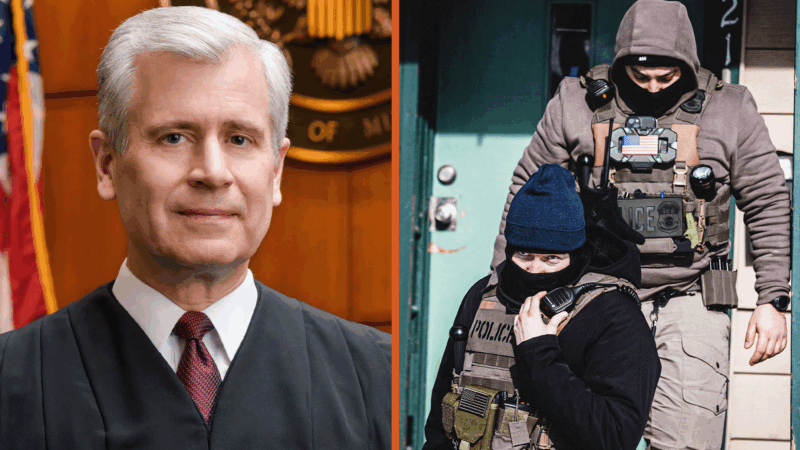
Chief U.S. District Judge Patrick J. Schiltz and ICE agents | Dave Decker/ZUMAPRESS/Newscom/U.S. District Court for the District of Minnesota

An infuriated federal judge in Minnesota on Wednesday published a list of nearly 100 court orders that Immigration and Customs Enforcement (ICE) had violated over the last month, and Reason has collected links to the cases. 

Patrick J. Schiltz, Chief Judge of the U.S. District Court for Minnesota, released the list as an appendix to a court order castigating ICE for repeatedly violating court orders regarding immigrant detention.

Although the appendix listed 74 cases with 96 separate violations, Schiltz wrote that the “extent of ICE’s noncompliance is almost certainly substantially understated. This list is confined to orders issued since January 1, 2026, and the list was hurriedly compiled by extraordinarily busy judges.”

Nevertheless, the extraordinary document offers a glimpse of a national campaign by the federal government to deprive detained immigrants of due process rights that an overwhelming majority of federal judges say they’re entitled to.

In one example from Schiltz’s list, ICE arrested a Venezuelan man living in Eagan, Minnesota, and transferred him to Texas, despite a judge’s order to keep him in-state. 

According to the judge’s order granting the man’s writ of habeas corpus:

He lives with his partner and his six-year-old daughter, and he is employed by a landscaping company. He is not subject to a final order of removal. After Petitioner attended an appointment regarding his pending asylum application on January 20, 2026, he was arrested and detained by ICE without a warrant and without apparent justification. Petitioner filed a petition for a writ of habeas corpus that same day. The next day, January 21, 2026, the Court entered an Order enjoining Respondents from moving Petitioner outside of Minnesota until the Court ruled on the pending habeas petition. Nevertheless, the Court has reason to believe that Petitioner is presently detained in El Paso, Texas.

In another case from the appendix, ICE arrested a Moldovan refugee who had already gone through extensive background checks and vetting. In response to her petition for emergency relief, the government claimed that her detention was based on her “fail[ure] to acquire permanent resident status within one year.” 

But as the judge noted in his order granting the woman’s petition (citation omitted), “Such a basis for detention is illogical given that refugees are not eligible to apply for adjustment of status until they have ‘been physically present in the United States for at least one year.'”

Schiltz’s list, however, is just a PDF with case names and numbers. Let’s bring it up to Web 1.0 standards.

Your friendly neighborhood Reason reporter found the dockets for 71 out of the 74 cases on CourtListener, a free online repository of federal court records. It appears most of the judges’ orders and other docket entries are still only available on PACER, the federal government’s clunky, pay-by-the-page database, but this is at least one more step toward making the information widely available.

25-CV-4722: Hakan K. v. Noem (Judges: JMB/DTS) (Order Violated: January 24, 2026)

25-CV-4741: Luis L.P. v. Brott (Judges: NEB/DJF) (Order Violated: January 9, 2026)

25-CV-4776: Ahmed A. v. Pamela Bondi (Judges: JWB/DJF) (Order Violated: January 6, 2026)

26-CV-080: Francisco E.O. v. Olson (Judges: JRT/DJF) (Order Violated: January 15, 2026)

26-CV-013: Suhaib M. v. Kristi Noem (Judges: JWB/DJF) (Order Violated: January 12, 2026)

26-CV-031: Alex V.Y.L. v. Pamela Bondi (Judges: JWB/DJF) (Order Violated: January 9, 2026)

26-CV-106: Marlon M.M. v. Easterwood (Judges: NEB/ECW) (Order Violated: January 15, 2026)

26-CV-0107: Juan T.R. v. Noem (Judges: PJS/DLM) (Order Violated: January 14, 2026)

26-CV-130: Botir B. v. Bondi (Judges: LMP/DJF) (Order Violated: January 15, 2026)

26-CV-138: Lide E.G.Q. v. Executive Office for Immigration Review (Judges: JWB/JFD) (Order Violated: January 9, 2026)

26-CV-00146: Jhony A. v. Bondi (Judges: JMB/LIB) (Order Violated: January 15, 2026)

26-CV-150: Christopher A.F.E. v. Pamela Bondi (Judges: JWB/ECW) (Order Violated: January 14, 2026)

26-CV-156: Evelin M.A. v. Bondi (Judges: NEB/DLM) (Order Violated: January 23, 2026)

26-CV-160: Jose A. v. Bondi (Judges: NEB/EMB) (Order Violated: January 15, 2026)

26-CV-00161: Pascual G. v. Bondi (Judges: JMB/LIB) (Order Violated: January 12, 2026)

26-CV-164: Santiago A.C.P. v. Todd Lyons (Judges: JWB/DTS) (Order Violated: January 15, 2026; January 19, 2026; January 20, 2026)

26-CV-166: Andrei C. v. Lyons (Judges: SRN/ECW) (Order Violated: January 12, 2026)

26-CV-167: Oscar O.T. v. Pamela Bondi (Judges: JWB/JFD) (Order Violated: January 15, 2026; January 19, 2026; January 20, 2026)

26-CV-00168: Martin R. v. Bondi (Judges: JMB/LIB) (Order Violated: January 12, 2026; January 20, 2026; January 21, 2026)

26-CV-00208: Abdi W. v. Trump (Judges: KMM/SGE) (Order Violated: January 21, 2026)

26-CV-213: Adriana M.Y.M. v. David Easterwood (Judges: JWB/JFD) (Order Violated: January 24, 2026)

26-CV-216: Estefany J.S. v. Pamela Bondi (Judges: JWB/SGE) (Order Violated: January 13, 2026)

26-CV-231: Martha S.S. v. Kristi Noem (Judges: JWB/DLM) (Order Violated: January 16, 2026; January 20, 2016)

26-CV-233: Joaquin Q. L. v. Bondi (Judges: LMP/DTS) (Order Violated: January 14, 2026; January 21, 2026)

26-CV-244: Jose L.C.C. v. Pamela Bondi (Judges: JWB/DTS) (Order Violated: January 15, 2026; January 19, 2026)

26-CV-252: Juan R. v. Bondi (Judges: SRN/DTS) (Order Violated: January 16, 2026)

26-CV-261: Jesus A.P. v. Bondi (Judges: PJS/EMB) (Order Violated: January 15, 2026)

26-CV-272: Abdiqadir A. v. Bondi (Judges: JMB/DTS) (Order Violated: January 16, 2026)

26-CV-276: Bashir Ali K. v. Noem (Judges: LMP/DTS) (Order Violated: January 22, 2026)

26-CV-282: Roman N. v. Donald Trump (Judges: JWB/DLM) (Order Violated: January 3, 2026; January 17, 2026)

26-CV-00283: Sandra C. v. Bondi (Judges: JMB/JFD) (Order Violated: January 16, 2026; January 21, 2026)

26-CV-296: Yeylin C.R. v. Bondi (Judges: NEB/LIB) (Order Violated: January 20, 2026)

26-CV-301: Liban G. v. Noem (Judges: SRN/ECW) (Order Violated: January 15, 2026; January 16, 2026; January 20, 2026; January 22, 2026)

26-CV-0309: Joseph T.M. v. Bondi (Judges: PJS/EMB) (Order Violated: January 22, 2026)

26-CV-312: Obildzhon E. v. Pamela Bondi (Judges: JWB/DTS) (Order Violated: January 17, 2026)

26-CV-313: Corina E. v. Pamela Bondi (Judges: JWB/DTS) (Order Violated: January 17, 2026)

26-CV-314: E.E. v. Pamela Bondi (Judges: JWB/DTS) (Order Violated: January 17, 2026)

26-CV-316: Manolo Z. L. v. Trump (Judges: LMP/DTS) (Order Violated: January 15, 2026)

26-CV-317: C. v. Bondi (Judges: NEB/JFD) (Order Violated: January 18, 2026)

26-CV-319: C. v. Bondi (Judges: NEB/JFD) (Order Violated: January 18, 2026)

26-CV-328: Felix J.C.A. v. Pamela Bondi (Judges: JWB/DLM) (Order Violated: January 24, 2026)

26-CV-00351: Ihor D. v. Noem (Judges: JMB/DTS) (Order Violated: January 20, 2026; January 22, 2026)

26-CV-369: Francisco M. v. Bondi (Judges: JMB/EMB) (Order Violated: January 16, 2026; January 23, 2026)

26-CV-0380: Alberto C.M. v. Noem (Judges: DWF/SGE) (Order Violated: January 23, 2026)

26-CV-396: Josue David P. A. v. Bondi (Judges: LMP/JFD) (Order Violated: January 17, 2026)

26-CV-00404: Nadejda P. v. Lyons (Judges: KMM/DLM) (Order Violated: January 22, 2026)

26-CV-410: Paula G. v. Bondi (Judges: JMB/DLM) (Order Violated: January 17, 2026; January 20, 2026)

26-CV-423: Ronnie C. v. Pamela Bondi (Judges: JWB/JFD) (Order Violated: January 18, 2026; January 21, 2026)

26-CV-0424: J.B.C.O. et al., v. Bondi (Judges: JRT/DJF) (Order Violated: January 19, 2026; January 25, 2026)

26-CV-437: Darvin M. v. Bondi (Judges: SRN/EMB) (Order Violated: January 19, 2026)

26-CV-439: Maria U.C.G. v. Pamela Bondi (Judges: JWB/LIB) (Order Violated: January 24, 2026)

26-CV-00440: Abdirahman S. v. Bondi (Judges: JMB/DJF) (Order Violated: January 22, 2026)

26-CV-00444: Enrique L. v. Bondi (Judges: JMB/SGE) (Order Violated: January 22, 2026)

26-CV-0445: Fernando T. v. Noem (Judges: ECT/EMB) (Order Violated: January 20, 2026)

26-CV-447: Alexis D.A.M. v. Bondi (Judges: JRT/ECW) (Order Violated: January 20, 2026)

26-CV-449: Hector T.G. v. Bondi (Judges: NEB/LIB) (Order Violated: January 23, 2026)

26-CV-454: Luis S. v. Bondi (Judges: ECT/LIB) (Order Violated: January 22, 2026)

26-CV-457: Sonia M.M.C. v. Pamela Bondi (Judges: JWB/LIB) (Order Violated: January 24, 2026)

26-CV-00480: Jose A. v. Noem (Judges: JMB/ECW) (Order Violated: January 26, 2026)

26-CV-485: Ivan R. v. Pamela Bondi (Judges: JWB/EMB) (Order Violated: January 21, 2026; January 24, 2026)

26-CV-489: Yosber I.M.C. v. Bondi (Judges: JRT/DLM) (Order Violated: January 21, 2026)

26-CV-493: Fabian L.C. v. Bondi (Judges: NEB/DLM) (Order Violated: January 24, 2026)

26-CV-00504: Maria P. v. Brott (Judges: JMB/JFD) (Order Violated: January 23, 2026)

26-CV-517: Brayan M.O. v. Bondi (Judges: NEB/JFD) (Order Violated: January 24, 2026)

26-CV-00537: Isidro L. v. Lyons (Judges: JMB/DLM) (Order Violated: January 22, 2026)

26-CV-546: Maria V.H., et al., v. Bondi (Judges: JMG/DLM) (Order Violated: January 24, 2026)

26-CV-00561: Elvis T. E., et al. v. Bondi (Judges: KMM/JFD) (Order Violated: January 22, 2026)

26-CV-0575: Guled O. v. Noem (Judges: ADM/DJF) (Order Violated: January 23, 2026)

26-CV-00580: Carlos A. G. v. Bondi (Judges: SRB-DJF) (Order Violated: January 23, 2026)

26-CV-597: Jose V. v. Easterwood (Judges: DSD/LIB) (Order Violated: January 25, 2026)

26-CV-00663: Marco Q. v. Noem (Judges: SRB-DLM) (Order Violated: January 26, 2026)

The post Judge Says ICE Violated Court Orders in 74 Cases—See Them All Here appeared first on Reason.com.

from Latest – Reason.com https://ift.tt/NgFoq4G
via IFTTT

Why Mamdani’s ‘Free Childcare’ Won’t Work


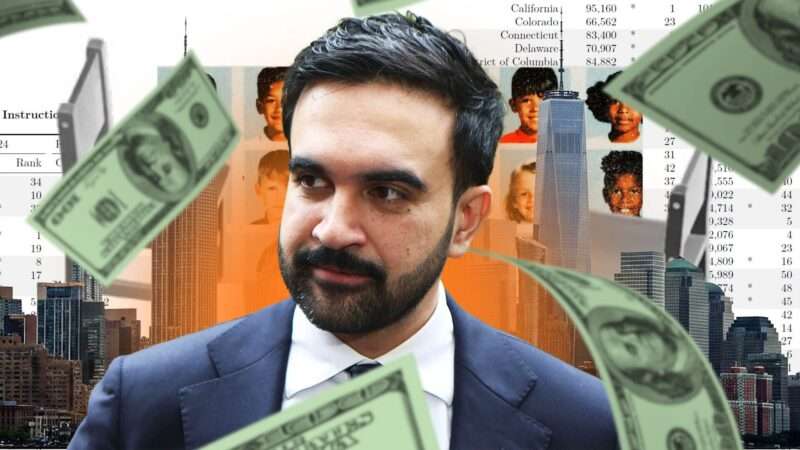
Mamdani offers universal childcare to NYCers | Illustration: Lex Villena

“While families with young children comprise about 14 percent of the city’s population, they comprise about 30 percent of the set of New Yorkers who are leaving the city,” said Mayor-elect Zohran Mamdani at a visit to a day care center in East Flatbush, Brooklyn, where he hyped his plans for those families.

Mamdani ran on the most ambitious universal child care proposal in the country: free day care for all kids ages 6 weeks and above. Apparently, this pitch was compelling to the city’s beleaguered parents: The self-styled socialist won by a hefty margin.

New York City already has universal child care guaranteed to 3- and 4-year-olds. When Bill de Blasio ran for mayor in 2013, he aimed to distinguish himself from then-Mayor Michael Bloomberg, who had created 4,000 new free pre-K seats but allocated them only to poor kids. De Blasio universalized the system in 2014.

Mamdani wants to expand to an even younger age group, which would cost an extra $6 billion a year. Those funds aren’t available in city coffers, so Mamdani would need cooperation from the state government to raise the money, likely by taking another leaf from the de Blasio playbook and trying to hike taxes on the very rich.

Mamdani’s political intuition is sound: The affordability issue is salient. The number of New York City families with three kids or more has dropped by nearly 17 percent over the last decade. Families with young children have been self-exiling in droves since the pandemic. The under-20 population has dropped by almost 200,000 over the last few years. The city’s public school system has 915,000 students enrolled, down from 1.1 million a decade ago. New York’s comptroller reports that the average cost of private child care for babies and toddlers now sits at $18,200 annually for family-based care and $26,000 annually for center-based care, shooting up in recent years. It’s no wonder so many parents are clamoring to turn over their kids to the warm embrace of the state. They feel left out in the cold.

But universal 3-K (for 3-year-olds) hasn’t served families as well as its supporters promised it would. It distorted the private market, driving day cares out of business. Rich families have used nifty hacks to get their kids into the best centers, while the poor are left with the rest. The universal nature of it might be politically valuable when you’re currying favor with the tony Park Slope crowd, but it means that child care for rich people is subsidized by the slightly richer, and that day cares serving the poorest neighborhoods don’t get what they need. Parents who choose to stay home with their kids or employ nannies get shafted, and costs for all forms of child care are driven up the more the government intervenes in the market. More government involvement won’t make that better.

De Blasio’s ‘Tale of Two Cities’

How did we get here? Mostly by de Blasio’s political aspirations colliding with cold, hard reality.

When he ran for mayor in 2013, de Blasio needed a big idea to sell. He bemoaned “the tale of two cities,” the idea that New York is a place where extraordinary wealth is amassed and enjoyed but also a place where many hundreds of thousands barely scrape by. He sold himself as the messiah who could fix it all, and he proposed a way to level the playing field earlier in life: universal pre-K for the city’s young, to help both the struggling and the flush. The high-earners—those making over $500,000 annually—could fund it. It was to be universal both because there’s a specific flavor of Democrat who prefers large, across-the-board entitlement programs and because, as de Blasio later told The Atlantic, “anything that has a broad constituency will also have more sustainability.”

De Blasio won. But then-Gov. Andrew Cuomo thought raising taxes on high-earners would be political suicide; he couldn’t let de Blasio have his way. Instead, Cuomo grabbed $1.5 billion (spread out over the course of five years) from the state budget and sent it the city’s way.

It turned out to be easier for de Blasio to run on those themes than to actually execute on them. Here’s how the program worked in practice: Parents could rank order up to 12 day care programs based on proximity and reputation, but they were not automatically assigned to any specific one. If they had an existing relationship with any specific center, the city would give them priority when assigning them, so parents with strong preferences could use hacks to get into the highest-quality pre-K centers serving 4-year-olds (referred to as 4-K programs). For example, many of these centers also ran summer camps, and many of them had 3-K programs you could just pay for, thus marking your family as having an existing relationship with the high-quality day care provider.

For rich families, it was a great deal: Pay a relatively paltry sum for a summer camp, or a little extra for one year of day care for the 3-year-old, and get it totally funded by the state the next year. But it was a much worse deal for poor families. They couldn’t afford the hacks, so the highest-quality centers stayed out of reach. Day care centers flourished in middle- and upper-middle-class neighborhoods, but were plagued by all sorts of issues in poor neighborhoods.

To be approved by the newly empowered Department of Education to participate in this program and receive funding from the state, “participating schools agree[d] to adhere to a 120-page book of guidelines, with city and state regulations on everything from the amount of juice (4 ounces) and sodium (1,700 milligrams) allowed per child per day to the number of minutes of daily free play (140) and screen time (no more than 15),” reported The Atlantic‘s Dana Goldstein. Sodium levels are very tightly controlled, but the quality of the caregivers has been only semimonitored.

At Bambi, a child care center in Crown Heights that participates in the universal pre-K program, a worker was caught abusing a toddler on camera. The Manhattan District Attorney’s Office is investigating a Bright Horizons location that participates in universal pre-K following reports of children being hit with water bottles, strapped to chairs, and having their mouths taped shut. Those are outlier examples—the vast majority of day cares do not tolerate this sort of behavior and do a better job screening their employees—but these are the sorts of problems that city inspectors are supposed to catch.

Even setting such abuses aside, many parents seem frustrated by the choices presented to them and their lack of control over the process, given how high the stakes are.

“Got an offer from a day care center we’ve never heard of,” wrote one parent on Reddit. “It does not meet our needs so we declined. Waitlisted #101 for our #1 choice.”

“Live in midtown and got an offer in Bushwick,” wrote another parent. (That would be an almost hourlong commute by subway.) “Waitlisted at #18 for our top choice.”

Uptake is low in poor neighborhoods; demand (and uptake) are high in wealthy neighborhoods where the centers in question have better reputations. “Lower-income neighborhoods like Brownsville, Harlem, and the South Bronx still have the highest rates of seat vacancies,” reports Manhattan Institute fellow John Ketcham in City Journal. But “families in wealthier neighborhoods in SoHo, the Upper East Side, northern Queens, and southern Brooklyn scramble to find open spots.” Meanwhile, “the 3-K centers have been paid based on their maximum capacity, not their actual utilization, resulting in untold millions of taxpayer dollars wasted on empty seats.” If New York’s residents thought their tax dollars were going toward helping poor kids get competent child care, they thought wrong. The universal pre-K program functions more like a handout to the already-wealthy who could otherwise afford child care.

This is the program Mamdani wants to expand.

Mamdani’s Magical Thinking

It’s not yet clear if Mamdani’s approach will be to extend the existing 3-K program to 2-year-olds (the way the 4-K program was expanded to the 3-year-olds) or if he hopes to open it to the youngest ages—6 weeks—in one fell swoop. It’s also unclear if he will seek to use publicly run or fully publicly funded day care centers, or to simply build out the existing network of qualifying providers. The latter would be more practical, but we’re talking about a man who thinks city-run grocery stores would be a good idea.

And since he’s talking about expanding to a much younger age group, his team will have to figure out very carefully which criteria to prioritize when certifying centers. For example, what types of staff-to-infant ratios will be required? What about the many child care workers lobbying for their wages to be raised, who have fled from the industry in search of the higher wages granted by other forms of caretaking (like for the elderly)? Where will the new recruits come from to staff the centers? Are the training and degree requirements currently in place for child care workers necessary when they’re taking care of preverbal infants?

Then there’s the money. Mamdani’s plan would cost $6 billion annually. This is both because expanding the number of seats is expensive and because Mamdani has pledged pay parity for child care workers and public school teachers (who are already notoriously well-paid in New York). He says all we need is a tax hike on millionaires and billionaires—something Gov. Kathy Hochul and the state Legislature actually control. (Hochul has already come out against this form of fundraising.) “The city actually doesn’t have money in its budget to do everything for everyone,” Andrew Rein, president of the Citizens Budget Commission, pointed out to The New York Times in August.

But forget about the budget for a second. Mamdani’s plan should give parents pause on principle alone. We’ve already started down the path of letting the state decide which child care arrangements are preferable, worth subsidizing, and which aren’t. Stay-at-home parents who opt out of universal child care (whose arrangements are subsidized by a working spouse) do not get to be beneficiaries of Mamdani’s largesse but must still pay for it with higher taxes. Ditto for those who hire nannies.

The cost of private child care—both day cares and nannies—has continued to rise throughout the universal child care era. There’s no way around the fact that it’s just very expensive to care for young children, because people are expensive. “Child care is a prime example of the Baumol effect,” writes economic policy analyst Jordan McGillis in The Washington Post, “in which prices for labor-intensive services rise even when worker productivity stays flat. What makes this possible is that wages in those sectors have to increase for employers (here, parents) to compete for workers who might otherwise be enticed to sectors further up the wage table.” Worker pay alone tends to be about 60 percent to 80 percent of a standard day care’s operating budget.

New York mandates caregiver-child ratios for day care centers. One adult is required for every four infants under 12 months, with a maximum of eight babies allowed per class; one adult is required for every five toddlers ages 12–24 months; one adult is required for every six toddlers ages 2 to 3 years old. But the best day cares that parents actually trust are not going to accept babies as young as 6 weeks with such ratios—you simply need more adults to help care for newborns.

In other words, Mamdani’s magical thinking about who will pay can’t fix the fact that this is a necessarily expensive proposition—and much more so than for the older age groups to which de Blasio expanded care, for whom 1–10 ratios are allowed.

With child care, as with all other things, “subsidies only change who pays—shifting the burden from families to taxpayers—not the underlying cost,” writes McGillis. “Fundamentally lowering the cost of child care would require altering the supply-demand balance. In a sense, lower birth rates are doing that by reducing demand.” The family exodus from New York is helping matters too, bleak though that may feel for those of us who remain. But we also must increase supply.

Let Markets Work

What would drive private child care prices down?

The lowest-hanging fruit would be to scrap the onerous requirements we place on day care workers. Group teachers in New York entrusted with the under-2 demographic are required to have associate’s degrees (or high school diplomas with nine credits in an early childhood education study plan that will lead to an associate’s degree). Bona fide preschool teachers (for 2-year-olds and above) must have a teaching certification or be enrolled in an approved study plan that leads to the teaching certificate. We could scrap these requirements, since they don’t actually matter.

Expanding the number of J-1 au pair visas—instead of cracking down on them, as President Donald Trump’s administration has aimed to do—and expanding the number of H-2B visas available to nannies (which McGillis suggests) would also help. Both ideas seem less politically likely these days.

Perhaps the best solution to this intractable-seeming problem is the most libertarian one. The rent is too damn high, and fixing that would actually allow more home-based day care centers (which tend to cater to the youngest demographic) to pop up and possibly charge less than they have been. Lowering rents lowers operating costs. And the way to lower rents is to scrap regulations that hinder building. Even more controversially: Scrapping the city’s rent-stabilization regime would free up 28 percent of the total housing stock (and 44 percent of all rentals!), allowing market forces to work once again.

There is a fundamental tension at play in all efforts to make child care cheaper. It is profoundly labor-intensive, requiring great human resources to be expended. The most engaged, most highly qualified people won’t be attracted to these jobs. You can sometimes get highly motivated, highly educated, super-qualified workers to perform the labor of child care—if it’s for their own kids. That those families are penalized in today’s New York, forced to fund the universal child care system with their tax dollars while not availing themselves of it, is wrong and unfair. It’s made even more insulting by the fact that the universal pre-K system essentially functions as a giant network of handouts to the already-wealthy, with very little success in actually improving the offerings for poor kids.

Every family should be free to choose the child care arrangement that works for them, but no family should be required to pay for the child care choices of others.

The post Why Mamdani's 'Free Childcare' Won't Work appeared first on Reason.com.

from Latest – Reason.com https://ift.tt/BSae5DE
via IFTTT

“To Buckley v. Valeo: The Decision that Saved Democracy,” by Bradley A. Smith

The final item in an Institute for Free Speech symposium on the 50th anniversary of Buckley, which I’ve been cross-posting; this is by Bradley A. Smith, the Chairman and Founder of the Institute for Free Speech and the former Chairman of the Federal Election Commission:

Americans hate the combination of money and politics. Of that there can be no doubt. Every public opinion poll taken on the topic reflects that reality, as do the daily conversations I have about politics.

Substantial majorities of Americans see political contributions and spending as a source of corruption, believing that officeholders routinely sell votes or other official action in exchange for campaign contributions. It matters naught that there is near-unanimous agreement among political scientists who have studied the issue that campaign contributions do little or nothing to affect how a politician votes once in office.

Further, when wealthy Americans deploy their financial assets to argue for their preferred policies and candidates, it strikes many Americans as an affront to political equality. Few people can comfortably afford to spend $1,000 in an election campaign, let alone six, seven, or eight figures. Why should being rich give someone more political influence? That a big-spending political donor might empower millions of Americans who share the donor’s views but otherwise would not be heard, is rarely considered.

In recent years, discontent with money and politics has focused on the Supreme Court’s 2010 decision in Citizens United v. Federal Election Commission, which held that U.S. corporations had a First Amendment right to spend money in support of or opposition to candidates. But Citizens United, while a very important decision, was not quite the game-changer many casual observers think it is.

As a practical matter, in the typical election cycle since Citizens United, for-profit corporations account for between 1.5 percent and six percent of total spending—the vast majority of money in elections still comes from individual donors and spenders. And as a legal matter, it is not Citizens United, but the Supreme Court’s 1976 decision, Buckley v. Valeo, that guarantees Americans the right to spend unlimited sums to try to influence how their fellow citizens think about candidates and issues.

If you are not familiar with Buckley, you should be, and I would encourage you to review the insightful perspectives shared in this symposium. It is no exaggeration to say that Buckley, which struck down on First Amendment grounds portions of the Federal Election Campaign Act Amendments of 1974 (FECA), saved American democracy.

In Buckley v. Valeo the Court held, by a 7-1 tally, that Congress could not, under the First Amendment, limit spending in political races. Lawyers who work in elections, scholars studying in the field, and activists who seek to promote (or resist) restrictions on campaign spending and contributions recognize that Buckley is the true target of campaign finance reform, even if most Americans do not. In fact, experts—including the Supreme Court majority that decided Citizens United—generally agree that the outcome in Citizens United flows naturally and even directly from Buckley, and that Citizens United did far less plowing of new ground than it did smoothing out leftover issues that had not been specifically addressed in Buckley.

Former FEC Chairman Ellen Weintraub, a confirmed advocate of more regulation of money in politics, says, “Flipping Citizens United achieves little so long as the Buckley decision stands.” Her comments echo those of legal scholar Ellen April, who calls Buckley v. Valeo “the original sin” in the Supreme Court’s campaign finance jurisprudence. The “original sin” label has been widely picked up by “reform” groups such as Demos, which lobbies for a Constitutional Amendment to overturn Buckley. “Real solutions,” adds Demos, “require the Supreme Court to transform its entire approach … and to revisit Buckley.

Attacks on Buckley, and campaign finance reform generally, have been sold to the public a bit like a 19th-century patent medicine—”it’s good for what ails ya’.” Is there a special interest you don’t like that seems to be getting its way in Congress? Campaign finance reform. Tired of negative ads? Campaign finance reform. Think politicians are corrupt? Feel like you are not being heard? Your preferred candidate lost the last election? Campaigns are too long? Campaign finance reform.

The arguments made for campaign finance reform—by which is meant regulating the ability of Americans to spend their own money to publicize and argue for their political beliefs—resonate precisely because campaigns are messy and often frustrating. The same is true of democratic governance more generally. Our preferred candidates do lose. Policies that seem so obvious to us are rejected by our fellow voters, and, even when they are enacted, collecting the necessary votes to pass often requires some compromise. Politicians and their partisans do exaggerate and even lie to try to sway votes. And while each of us has an equal vote, no, we do not all have “equal political influence,” and will not, regardless of how much or little is spent on campaigns, or by whom.

Pointing to alleged flaws in our current system is easy—it’s like complaining about the weather, which can never satisfy everyone at the same time. But what would a world without Buckley actually look like? Suppose the Supreme Court had agreed with the Court of Appeals, which upheld FECA, saying, “the present situation”—that is, a situation in which Americans were free to spend their money to try to convince others how to vote—”cannot be tolerated by a government that professes to be a democracy.”

Fortunately, we don’t have to guess the answer, because we know what Congress actually passed in the 1974 FECA Amendments.

First, Buckley struck down a FECA-imposed spending cap of $70,000 on candidate campaigns for U.S. House. Today, in a small to mid-sized market such as Peoria (Illinois), Flint (Michigan), or Des Moines (Iowa), a single 30-second spot on Wheel of Fortune costs upwards of $1,000—not including the cost of producing the spot. The idea that a $70,000 campaign could cover the costs of advertising, not to mention travel, staff, office space, and other promotional activity, for a typical congressional district of more than 750,000 people is pure fantasy.

The $70,000 spendng cap included an inflation adjustment provision, which would be about $410,000 today. But the law made no provision for increased population, and a congressional district today contains about 60 percent more people. Furthermore, even in 1976, the median victorious challenger to an incumbent, or winner in an open-seat race, spent far more than $70,000, and today, a challenger needs to spend far more than the inflation-adjusted $410,000 to defeat an incumbent. Indeed, in 2024, the median challenger to unseat an incumbent in the general election spent over $5 million. Extensive research by Gary Jacobson and others has shown that, while incumbent spending matters, challenger spending matters far more—the ability of a challenger to unseat an incumbent is much less dependent on the challenger-to-incumbent spending ratio than simply on the amount spent by the challenger.

This makes perfect sense. An incumbent’s pre-campaign name recognition and the ability to command media attention without paid advertising, coupled with perks of office—such as the performance of constituency services, official government websites, and the franking privilege—not only give incumbents a huge leg up on challengers, but make their spending both less important and less valuable to their re-election prospects. In economic terms, incumbents reach a declining marginal utility in spending much earlier than do challengers, who need to introduce themselves to voters (in most cases) and make the case for change. While victorious challengers in 1976 typically spent well over $70,000, victorious incumbents, on average, spent a bit under $80,000. In other words, FECA set the spending cap right at the level at which challengers became competitive with incumbents.

But even more important for democracy than the limit on candidate spending, FECA also prohibited any individual or group of people from spending more than $1,000 “relative to” a candidate. In other words, unions, small businesses, civic associations, trade associations, and advocacy groups such as the Sierra Club, the U.S. Chamber of Commerce, the ACLU, and the NRA would have been unable to purchase more than a single ad of two column inches in a major U.S. daily newspaper in 2025, in order to discuss their views “relative to” a candidate. Even in 1976, a single, one-quarter-page ad in the Sunday New York Times cost between $25,000 and $80,000.

Absent Buckley, the effect of FECA—and arguably its purpose—would have been to exclude the civic and community organizations that give such life to America, and American democracy, from public discussions of candidates for political office. Only one group—the commercial press—was exempt, as if the Washington Post and New York Times, or the three major television networks of the day (and today Fox News, MSNBC, and others) would never have a political agenda or run opinion segments.

Nor should we think that enforcement of FECA would have been limited to the most direct forms of campaigning. Even before the 1974 FECA Amendments, the very first prosecution under FECA, passed in 1971, was brought by the Nixon administration against an ad hoc group of citizens dubbing themselves the National Committee for Impeachment. On Wednesday, May 31, 1972, the group paid $17,850 to buy an ad in the New York Times, calling for Nixon to be impeached because of his policies on the Vietnam War (note that this was before the Watergate scandal, and while Nixon was a candidate for re-election). The group refused to register as a “political committee” or report its donors to the government—Remember, the Nixon White House kept an “enemies list.”

The U.S. Court of Appeals for the Second Circuit blocked this particular prosecution, but it was only thanks to Buckley that that FECA’s provisions mandating disclosure of donors were finally limited to direct citizen contributions to political campaigns, or to expenditures that “expressly advocated” the election or defeat of a candidate with explicit language such as “vote for,” “vote against,” “support,” or “defeat.” This ruling allowed American citizens—such as the Committee for Impeachment—to criticize their government without fear of retaliation. However far the public’s “right to know” might extend, Buckley has prevented it from becoming authorization for a government-maintained database of its critics’ political activity.

There is much more to Buckley—it’s a massive decision covering 294 pages in the U.S. Reports. It is an important separation-of-powers decision, holding that Congress may not arrogate to itself the right to appoint executive branch officials—an early challenge to the power of the “Administrative State.” Buckley also upheld the right of Congress to place limits on contributions directly to political candidates and parties, but made clear that those limits could be challenged—as they have been on rare occasions—if they were set so low as to stifle competition. But at its core was striking down portions of the law that would have turned the American public into mere bystanders in political debate.

It is not a perfect decision. Its distinction between allowing limits on contributions to candidates but not on candidate expenditures has often been criticized. It was a hurried decision, rushed out to meet a statutory command, and be in place before the 1976 election cycle geared up. Given this, it is not surprising that, at points, it seems disjointed and its reasoning muddled.

But the Buckley court understood, above all else, that communicating political ideas to a nation of hundreds of millions requires spending money. Buckley critics seem to believe that democracy can exist without citizen participation in the political debates of the day. The Buckley court rejected such sophistry.

Specifically, the Court rejected the notion that “government may restrict the speech of some elements of our society in order to enhance the relative voice of others” as “wholly foreign to the First Amendment.” Americans understandably chafe at the ability of the rich to buy a bigger megaphone than anyone else. But the alternative, the Court understood, is not political equality, but rather leaving it to the central government to decide just who had too much influence, and who not enough.

If the First Amendment means anything, surely it means that it is not for the government to pick and choose who gets to speak more in our political debates, and what views should be silenced or cut back, lest too many be convinced of their truth. If you are a Democrat, imagine such power in the hands of the Trump administration; if a Republican, imagine Joe Biden’s government with such unchecked power to “equalize” debate by silencing those it believed had too much influence.

Without Buckley, the effect of FECA’s sweeping spending limits would have been to filter virtually all political discussion, including discussion of issues and policies, through the institutional press. And this filtration would impact not just individuals but unions, trade associations, civic groups, and advocacy groups of all types. From Planned Parenthood to Right to Life, from the Sierra Club to the Chamber of Commerce, and everything in between, FECA would have silenced organizations wishing to engage in political speech.

All such speech would have been filtered through the institutional press except for the slim, inadequate allowances made for candidate campaigns. American citizens? Their job was to watch and vote, and nothing more. If the press didn’t cover your issue, or did so in a biased way? Tough. “Shut up,” was the essential command of FECA.

In the years since Buckley, “reformers” have never surrendered the dream of a world in which they would control political debate, allowing only the “necessary” amount of speech by approved speakers—most notably the press. They have argued for regulating blogs and emails, for limiting broadcast ads that even mention a candidate within 60 days (or even more) of an election, and for considering your use of a personal computer to publish your views online to be deemed a reportable (and limited) campaign expense. But these views are typically confined to arcane regulatory agenda, unwatched congressional hearings, and insider chatter. To the public, campaign finance reform is still presented as a cure-all elixir: “good for what ails ya’.” As we reach the milestone 50th anniversary of Buckley, its critics should not be allowed to argue for its repeal while offering a blank canvas in exchange, let alone while filling that canvas with pictures of puppies and rainbows.

If not Buckley, then what, exactly, is proposed? What will it mean to “equalize” influence? How will government corruption be prevented if those in power can use government to squelch criticism of their performance? How would citizens’ participation and government responsiveness to the wishes of the citizenry be enhanced if the groups that people join to bring about change were essentially barred from communicating their views about candidates and issues?

True democracy isn’t always pretty. It is messy, chaotic, and comes with costs as well as benefits, and disappointments as well as rewards. But without Buckley, our political life would be impoverished. Like most 19th century patent medicines, the “cure” is worse than the disease.

So here’s to the 50th anniversary of Buckley v. Valeo—the decision that saved American democracy.

The post "To <i>Buckley v. Valeo</i>: The Decision that Saved Democracy," by Bradley A. Smith appeared first on Reason.com.

from Latest – Reason.com https://ift.tt/CXK7lEj
via IFTTT

No Death Penalty For Luigi Mangine, Biden Judge Rules

No Death Penalty For Luigi Mangine, Biden Judge Rules

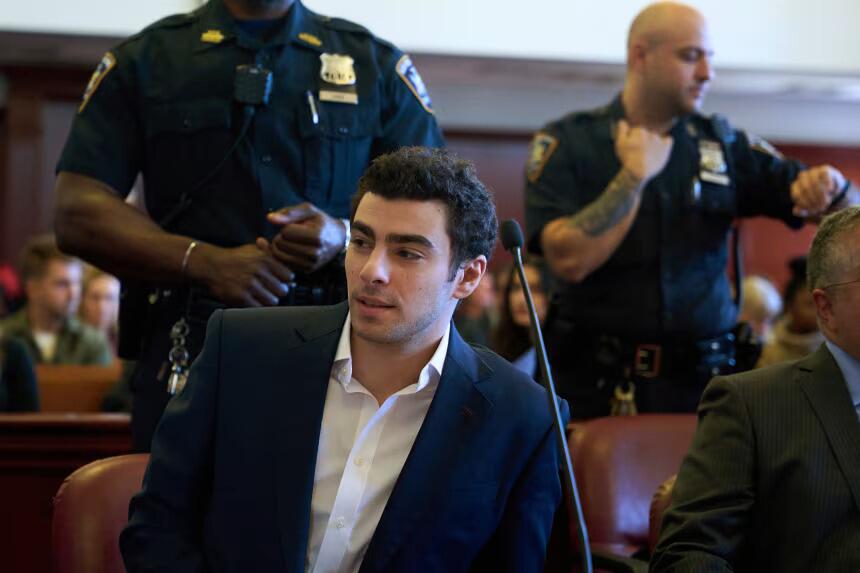
A federal district judge in New York has ruled that Luigi Mangione, 27, will not face the death penalty for allegedly killing UnitedHealthcare CEO Brian Thompson in December 2024. 

Luigi Mangione appears in Manhattan Criminal Court on December 18, 2025 (Curtis Means / Pool / Getty Images)

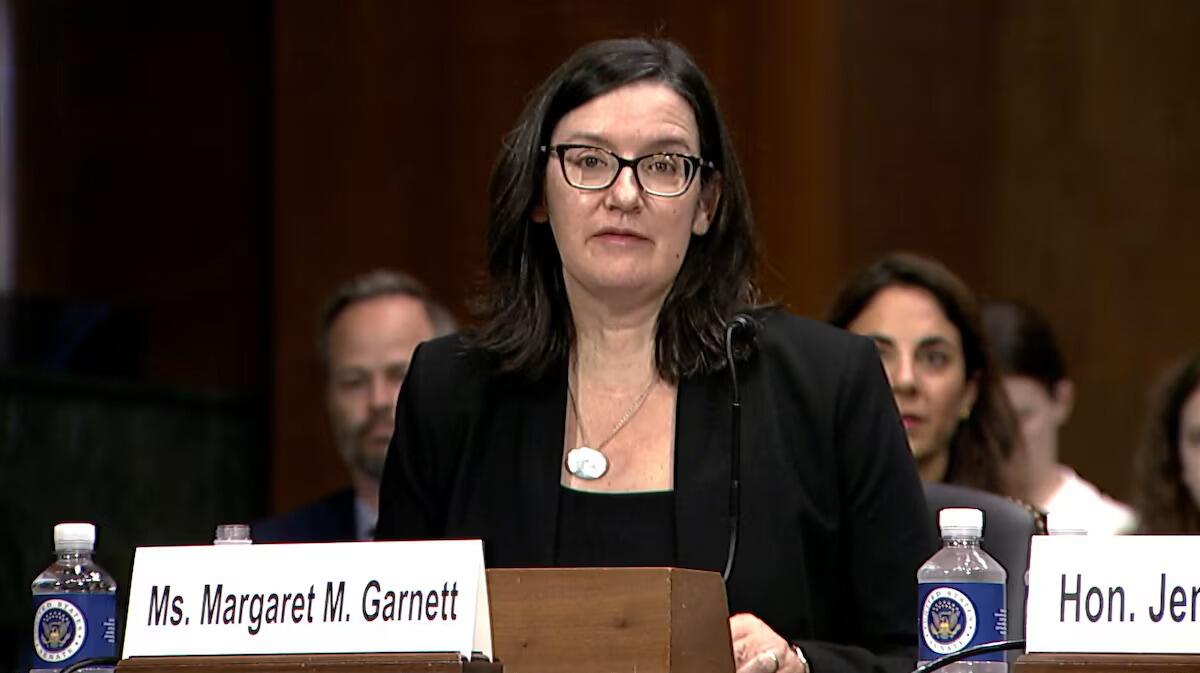
The ruling by Judge Margaret Garnett (Biden) is a loss for federal prosecutors, who were pursuing the death penalty in the case. 

Garnett also ruled that evidence recovered from Mangione’s backpack is admissible as evidence. Law enforcement seized various items from the backpack – including a handgun, a loaded magazine, and a red notebook, which authorities say tie him to the killing.

Mangione’s attorneys had asked that the evidence be barred from trial, arguing that the search of his backpack was illegal because they had not obtained a warrant, and there was no immediate threat that justified a warrantless search. 

Surveillance cameras recorded the slaying, as video shows Thompson walking down the sidewalk outside a hotel when a man approaches from behind and opens fire. Thompson suffered multiple gunshot wounds and collapsed to the ground, after which the gunman fled and was later spotted on a bike making his way uptown. There was at least one eyewitness.

UnitedHealthcare CEO Brian Thompson (AP Photo/ UNH)

Mangione was arrested five days later at a McDonald’s in Atloona, Pennsylvania, after customers and staff recognized him from a wanted poster. 

The defense has aggressively argued that prosecutors have failed to allege an underlying “crime of violence” necessary for the top charge of murder with a firearm. Prosecutors countered, arguing in an opposition filing that the defense is relying on an irrelevant precedent.

“Here, by contrast, no court has interpreted the ‘conduct that places [the victim] in reasonable fear of death or serious bodily injury’ element,” federal prosecutors wrote. 

To charge Mangione with murder through the use of a firearm, prosecutors need to prove an underlying crime of violence. They have alleged this to be stalking, however legal analysts have suggested that stalking can be done without violence. 

“It’s like a series of dominos — the only way that the federal government can get to a death penalty charge in their case is if the murder was committed during the course of a violent felony,” LA criminal defense attorney Joshua Ritter previously told Fox News. “And the reason that they need that is because they need what’s called a federal hook to get them federal jurisdiction.”

Jury selection in the case is scheduled for Sept. 8, and a trial will follow in either October or January. Prosecutors have requested a July 1 start date. 

Tyler Durden
Fri, 01/30/2026 – 11:00

via ZeroHedge News https://ift.tt/gc8EbTO Tyler Durden

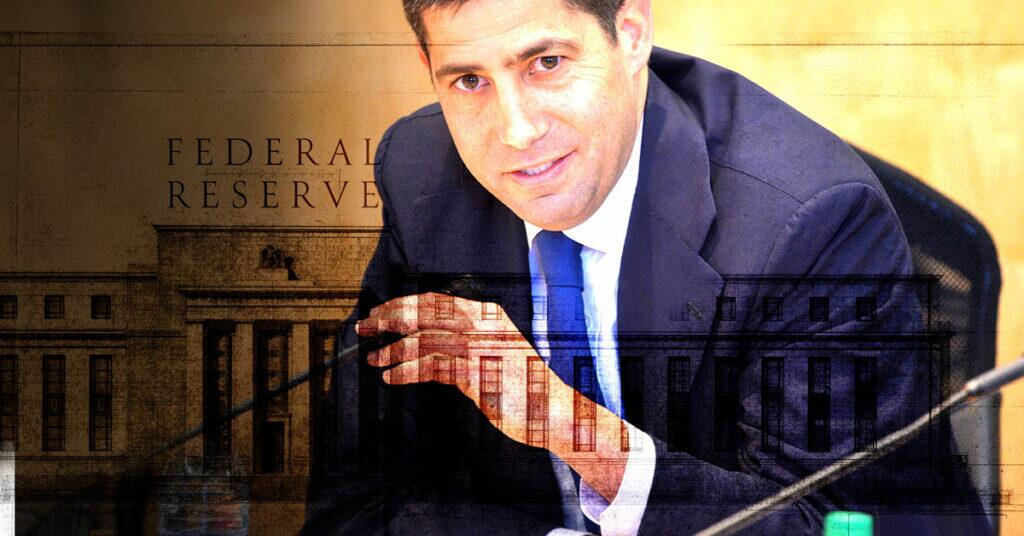
The Market Is Responding To Warsh’s Nomination, But Nothing Has Changed

The Market Is Responding To Warsh’s Nomination, But Nothing Has Changed

By Bas van Geffen, Senior Market Strategist at Rabobank

When the Fed decided to hold rates unchanged last Wednesday, Waller was one of the two dissenters in favour of another rate cut. Waller’s dissenting vote may have kept him on President Trump’s list of potential Fed chairs, but it now seems that it did not get him to the top of that list. Reportedly, Trump is ready to announce Kevin Warsh as his nominee (ZH: Trump officially nominated him this morning)..

The dollar has regained some strength. Perhaps that’s thanks to Warsh’ credentials as a former monetary policy hawk – prioritizing inflation control and favouring a smaller Fed balance sheet. However, let’s not forget that President Trump’s first selection criterion is whether the candidates are willing to pursue lower interest rates. So, if he does nominate Warsh later today, he is unlikely to be as hawkish as he once was – unless he has hidden that very well in his interviews with the president. Indeed, Warsh has recently also called for rate cuts.

Nonetheless, compared to the other candidates, Warsh is certainly more on the hawkish side of the spectrum. And so, most asset classes wavered. Treasury yields opened the day higher, and equities slid, with Chinese markets down 1% on the day. The record-breaking streaks in gold and silver have also ended – at least for now. The precious metals are currently down about 8% and 12% from their peaks, respectively. And that is despite concerns over a potential escalation in the Persian Gulf.

The retracements are notable, but we wouldn’t say that the debasement trade or diversification from the US have now stopped. The market may respond optimistically to the prospect of Warsh’ nomination, but broader US policy uncertainty is still not doing the dollar any favours.

Likewise, the US’ attitude towards other countries, is even starting to drive traditional allies away from the US. The European Union has accelerated trade deals with various other economies, and the signing of an accord with India earlier this week is a key step in the EU’s effort to diversify away its economic and geopolitical dependencies.

With a 99.5% reduction of tariffs on imports from India, it creates significant opportunities for India’s (labor) intensive export sectors. That may also help Europe, as it is facing a major acceleration in ageing in the coming decades. But it will also create more opportunities for European businesses to diversify their operations out of China and into India. That is the strategic value in that deal.

And the United Kingdom is pursuing closer ties with China. This week, Starmer became the first prime minister to visit China in eight years, where he met with president Xi. The visit thawed some of the relations between the two countries. China agreed to waive visa requirements for UK visitors. Amongst the results is a “services partnership” that should give the UK better access to the Chinese market. It’s a first step towards a potential bilateral trade deal on services, which both sides have agreed to explore.

The UK’s rapprochement to China drew criticism from Trump. The US president said it is “very dangerous” that the UK government is trying to get closer to China. The UK could therefore come into Trump’s crosshairs again, just like the US president threatened new tariffs on Canada over its recent trade deal with China. However, as we noted above, its precisely these kinds of threats that have encouraged the UK and Canada to seek alternatives to the US.

Tyler Durden
Fri, 01/30/2026 – 10:25

via ZeroHedge News https://ift.tt/7i4QVnz Tyler Durden

Why Mamdani’s ‘Free Childcare’ Won’t Work


Mamdani offers universal childcare to NYCers | Illustration: Lex Villena

“While families with young children comprise about 14 percent of the city’s population, they comprise about 30 percent of the set of New Yorkers who are leaving the city,” said Mayor-elect Zohran Mamdani at a visit to a day care center in East Flatbush, Brooklyn, where he hyped his plans for those families.

Mamdani ran on the most ambitious universal child care proposal in the country: free day care for all kids ages 6 weeks and above. Apparently, this pitch was compelling to the city’s beleaguered parents: The self-styled socialist won by a hefty margin.

New York City already has universal child care guaranteed to 3- and 4-year-olds. When Bill de Blasio ran for mayor in 2013, he aimed to distinguish himself from then-Mayor Michael Bloomberg, who had created 4,000 new free pre-K seats but allocated them only to poor kids. De Blasio universalized the system in 2014.

Mamdani wants to expand to an even younger age group, which would cost an extra $6 billion a year. Those funds aren’t available in city coffers, so Mamdani would need cooperation from the state government to raise the money, likely by taking another leaf from the de Blasio playbook and trying to hike taxes on the very rich.

Mamdani’s political intuition is sound: The affordability issue is salient. The number of New York City families with three kids or more has dropped by nearly 17 percent over the last decade. Families with young children have been self-exiling in droves since the pandemic. The under-20 population has dropped by almost 200,000 over the last few years. The city’s public school system has 915,000 students enrolled, down from 1.1 million a decade ago. New York’s comptroller reports that the average cost of private child care for babies and toddlers now sits at $18,200 annually for family-based care and $26,000 annually for center-based care, shooting up in recent years. It’s no wonder so many parents are clamoring to turn over their kids to the warm embrace of the state. They feel left out in the cold.

But universal 3-K (for 3-year-olds) hasn’t served families as well as its supporters promised it would. It distorted the private market, driving day cares out of business. Rich families have used nifty hacks to get their kids into the best centers, while the poor are left with the rest. The universal nature of it might be politically valuable when you’re currying favor with the tony Park Slope crowd, but it means that child care for rich people is subsidized by the slightly richer, and that day cares serving the poorest neighborhoods don’t get what they need. Parents who choose to stay home with their kids or employ nannies get shafted, and costs for all forms of child care are driven up the more the government intervenes in the market. More government involvement won’t make that better.

De Blasio’s ‘Tale of Two Cities’

How did we get here? Mostly by de Blasio’s political aspirations colliding with cold, hard reality.

When he ran for mayor in 2013, de Blasio needed a big idea to sell. He bemoaned “the tale of two cities,” the idea that New York is a place where extraordinary wealth is amassed and enjoyed but also a place where many hundreds of thousands barely scrape by. He sold himself as the messiah who could fix it all, and he proposed a way to level the playing field earlier in life: universal pre-K for the city’s young, to help both the struggling and the flush. The high-earners—those making over $500,000 annually—could fund it. It was to be universal both because there’s a specific flavor of Democrat who prefers large, across-the-board entitlement programs and because, as de Blasio later told The Atlantic, “anything that has a broad constituency will also have more sustainability.”

De Blasio won. But then-Gov. Andrew Cuomo thought raising taxes on high-earners would be political suicide; he couldn’t let de Blasio have his way. Instead, Cuomo grabbed $1.5 billion (spread out over the course of five years) from the state budget and sent it the city’s way.

It turned out to be easier for de Blasio to run on those themes than to actually execute on them. Here’s how the program worked in practice: Parents could rank order up to 12 day care programs based on proximity and reputation, but they were not automatically assigned to any specific one. If they had an existing relationship with any specific center, the city would give them priority when assigning them, so parents with strong preferences could use hacks to get into the highest-quality pre-K centers serving 4-year-olds (referred to as 4-K programs). For example, many of these centers also ran summer camps, and many of them had 3-K programs you could just pay for, thus marking your family as having an existing relationship with the high-quality day care provider.

For rich families, it was a great deal: Pay a relatively paltry sum for a summer camp, or a little extra for one year of day care for the 3-year-old, and get it totally funded by the state the next year. But it was a much worse deal for poor families. They couldn’t afford the hacks, so the highest-quality centers stayed out of reach. Day care centers flourished in middle- and upper-middle-class neighborhoods, but were plagued by all sorts of issues in poor neighborhoods.

To be approved by the newly empowered Department of Education to participate in this program and receive funding from the state, “participating schools agree[d] to adhere to a 120-page book of guidelines, with city and state regulations on everything from the amount of juice (4 ounces) and sodium (1,700 milligrams) allowed per child per day to the number of minutes of daily free play (140) and screen time (no more than 15),” reported The Atlantic‘s Dana Goldstein. Sodium levels are very tightly controlled, but the quality of the caregivers has been only semimonitored.

At Bambi, a child care center in Crown Heights that participates in the universal pre-K program, a worker was caught abusing a toddler on camera. The Manhattan District Attorney’s Office is investigating a Bright Horizons location that participates in universal pre-K following reports of children being hit with water bottles, strapped to chairs, and having their mouths taped shut. Those are outlier examples—the vast majority of day cares do not tolerate this sort of behavior and do a better job screening their employees—but these are the sorts of problems that city inspectors are supposed to catch.

Even setting such abuses aside, many parents seem frustrated by the choices presented to them and their lack of control over the process, given how high the stakes are.

“Got an offer from a day care center we’ve never heard of,” wrote one parent on Reddit. “It does not meet our needs so we declined. Waitlisted #101 for our #1 choice.”

“Live in midtown and got an offer in Bushwick,” wrote another parent. (That would be an almost hourlong commute by subway.) “Waitlisted at #18 for our top choice.”

Uptake is low in poor neighborhoods; demand (and uptake) are high in wealthy neighborhoods where the centers in question have better reputations. “Lower-income neighborhoods like Brownsville, Harlem, and the South Bronx still have the highest rates of seat vacancies,” reports Manhattan Institute fellow John Ketcham in City Journal. But “families in wealthier neighborhoods in SoHo, the Upper East Side, northern Queens, and southern Brooklyn scramble to find open spots.” Meanwhile, “the 3-K centers have been paid based on their maximum capacity, not their actual utilization, resulting in untold millions of taxpayer dollars wasted on empty seats.” If New York’s residents thought their tax dollars were going toward helping poor kids get competent child care, they thought wrong. The universal pre-K program functions more like a handout to the already-wealthy who could otherwise afford child care.

This is the program Mamdani wants to expand.

Mamdani’s Magical Thinking

It’s not yet clear if Mamdani’s approach will be to extend the existing 3-K program to 2-year-olds (the way the 4-K program was expanded to the 3-year-olds) or if he hopes to open it to the youngest ages—6 weeks—in one fell swoop. It’s also unclear if he will seek to use publicly run or fully publicly funded day care centers, or to simply build out the existing network of qualifying providers. The latter would be more practical, but we’re talking about a man who thinks city-run grocery stores would be a good idea.

And since he’s talking about expanding to a much younger age group, his team will have to figure out very carefully which criteria to prioritize when certifying centers. For example, what types of staff-to-infant ratios will be required? What about the many child care workers lobbying for their wages to be raised, who have fled from the industry in search of the higher wages granted by other forms of caretaking (like for the elderly)? Where will the new recruits come from to staff the centers? Are the training and degree requirements currently in place for child care workers necessary when they’re taking care of preverbal infants?

Then there’s the money. Mamdani’s plan would cost $6 billion annually. This is both because expanding the number of seats is expensive and because Mamdani has pledged pay parity for child care workers and public school teachers (who are already notoriously well-paid in New York). He says all we need is a tax hike on millionaires and billionaires—something Gov. Kathy Hochul and the state Legislature actually control. (Hochul has already come out against this form of fundraising.) “The city actually doesn’t have money in its budget to do everything for everyone,” Andrew Rein, president of the Citizens Budget Commission, pointed out to The New York Times in August.

But forget about the budget for a second. Mamdani’s plan should give parents pause on principle alone. We’ve already started down the path of letting the state decide which child care arrangements are preferable, worth subsidizing, and which aren’t. Stay-at-home parents who opt out of universal child care (whose arrangements are subsidized by a working spouse) do not get to be beneficiaries of Mamdani’s largesse but must still pay for it with higher taxes. Ditto for those who hire nannies.

The cost of private child care—both day cares and nannies—has continued to rise throughout the universal child care era. There’s no way around the fact that it’s just very expensive to care for young children, because people are expensive. “Child care is a prime example of the Baumol effect,” writes economic policy analyst Jordan McGillis in The Washington Post, “in which prices for labor-intensive services rise even when worker productivity stays flat. What makes this possible is that wages in those sectors have to increase for employers (here, parents) to compete for workers who might otherwise be enticed to sectors further up the wage table.” Worker pay alone tends to be about 60 percent to 80 percent of a standard day care’s operating budget.

New York mandates caregiver-child ratios for day care centers. One adult is required for every four infants under 12 months, with a maximum of eight babies allowed per class; one adult is required for every five toddlers ages 12–24 months; one adult is required for every six toddlers ages 2 to 3 years old. But the best day cares that parents actually trust are not going to accept babies as young as 6 weeks with such ratios—you simply need more adults to help care for newborns.

In other words, Mamdani’s magical thinking about who will pay can’t fix the fact that this is a necessarily expensive proposition—and much more so than for the older age groups to which de Blasio expanded care, for whom 1–10 ratios are allowed.

With child care, as with all other things, “subsidies only change who pays—shifting the burden from families to taxpayers—not the underlying cost,” writes McGillis. “Fundamentally lowering the cost of child care would require altering the supply-demand balance. In a sense, lower birth rates are doing that by reducing demand.” The family exodus from New York is helping matters too, bleak though that may feel for those of us who remain. But we also must increase supply.

Let Markets Work

What would drive private child care prices down?

The lowest-hanging fruit would be to scrap the onerous requirements we place on day care workers. Group teachers in New York entrusted with the under-2 demographic are required to have associate’s degrees (or high school diplomas with nine credits in an early childhood education study plan that will lead to an associate’s degree). Bona fide preschool teachers (for 2-year-olds and above) must have a teaching certification or be enrolled in an approved study plan that leads to the teaching certificate. We could scrap these requirements, since they don’t actually matter.

Expanding the number of J-1 au pair visas—instead of cracking down on them, as President Donald Trump’s administration has aimed to do—and expanding the number of H-2B visas available to nannies (which McGillis suggests) would also help. Both ideas seem less politically likely these days.

Perhaps the best solution to this intractable-seeming problem is the most libertarian one. The rent is too damn high, and fixing that would actually allow more home-based day care centers (which tend to cater to the youngest demographic) to pop up and possibly charge less than they have been. Lowering rents lowers operating costs. And the way to lower rents is to scrap regulations that hinder building. Even more controversially: Scrapping the city’s rent-stabilization regime would free up 28 percent of the total housing stock (and 44 percent of all rentals!), allowing market forces to work once again.

There is a fundamental tension at play in all efforts to make child care cheaper. It is profoundly labor-intensive, requiring great human resources to be expended. The most engaged, most highly qualified people won’t be attracted to these jobs. You can sometimes get highly motivated, highly educated, super-qualified workers to perform the labor of child care—if it’s for their own kids. That those families are penalized in today’s New York, forced to fund the universal child care system with their tax dollars while not availing themselves of it, is wrong and unfair. It’s made even more insulting by the fact that the universal pre-K system essentially functions as a giant network of handouts to the already-wealthy, with very little success in actually improving the offerings for poor kids.

Every family should be free to choose the child care arrangement that works for them, but no family should be required to pay for the child care choices of others.

The post Why Mamdani's 'Free Childcare' Won't Work appeared first on Reason.com.

from Latest – Reason.com https://ift.tt/BSae5DE
via IFTTT

“To Buckley v. Valeo: The Decision that Saved Democracy,” by Bradley A. Smith

The final item in an Institute for Free Speech symposium on the 50th anniversary of Buckley, which I’ve been cross-posting; this is by Bradley A. Smith, the Chairman and Founder of the Institute for Free Speech and the former Chairman of the Federal Election Commission:

Americans hate the combination of money and politics. Of that there can be no doubt. Every public opinion poll taken on the topic reflects that reality, as do the daily conversations I have about politics.

Substantial majorities of Americans see political contributions and spending as a source of corruption, believing that officeholders routinely sell votes or other official action in exchange for campaign contributions. It matters naught that there is near-unanimous agreement among political scientists who have studied the issue that campaign contributions do little or nothing to affect how a politician votes once in office.

Further, when wealthy Americans deploy their financial assets to argue for their preferred policies and candidates, it strikes many Americans as an affront to political equality. Few people can comfortably afford to spend $1,000 in an election campaign, let alone six, seven, or eight figures. Why should being rich give someone more political influence? That a big-spending political donor might empower millions of Americans who share the donor’s views but otherwise would not be heard, is rarely considered.

In recent years, discontent with money and politics has focused on the Supreme Court’s 2010 decision in Citizens United v. Federal Election Commission, which held that U.S. corporations had a First Amendment right to spend money in support of or opposition to candidates. But Citizens United, while a very important decision, was not quite the game-changer many casual observers think it is.

As a practical matter, in the typical election cycle since Citizens United, for-profit corporations account for between 1.5 percent and six percent of total spending—the vast majority of money in elections still comes from individual donors and spenders. And as a legal matter, it is not Citizens United, but the Supreme Court’s 1976 decision, Buckley v. Valeo, that guarantees Americans the right to spend unlimited sums to try to influence how their fellow citizens think about candidates and issues.

If you are not familiar with Buckley, you should be, and I would encourage you to review the insightful perspectives shared in this symposium. It is no exaggeration to say that Buckley, which struck down on First Amendment grounds portions of the Federal Election Campaign Act Amendments of 1974 (FECA), saved American democracy.

In Buckley v. Valeo the Court held, by a 7-1 tally, that Congress could not, under the First Amendment, limit spending in political races. Lawyers who work in elections, scholars studying in the field, and activists who seek to promote (or resist) restrictions on campaign spending and contributions recognize that Buckley is the true target of campaign finance reform, even if most Americans do not. In fact, experts—including the Supreme Court majority that decided Citizens United—generally agree that the outcome in Citizens United flows naturally and even directly from Buckley, and that Citizens United did far less plowing of new ground than it did smoothing out leftover issues that had not been specifically addressed in Buckley.

Former FEC Chairman Ellen Weintraub, a confirmed advocate of more regulation of money in politics, says, “Flipping Citizens United achieves little so long as the Buckley decision stands.” Her comments echo those of legal scholar Ellen April, who calls Buckley v. Valeo “the original sin” in the Supreme Court’s campaign finance jurisprudence. The “original sin” label has been widely picked up by “reform” groups such as Demos, which lobbies for a Constitutional Amendment to overturn Buckley. “Real solutions,” adds Demos, “require the Supreme Court to transform its entire approach … and to revisit Buckley.

Attacks on Buckley, and campaign finance reform generally, have been sold to the public a bit like a 19th-century patent medicine—”it’s good for what ails ya’.” Is there a special interest you don’t like that seems to be getting its way in Congress? Campaign finance reform. Tired of negative ads? Campaign finance reform. Think politicians are corrupt? Feel like you are not being heard? Your preferred candidate lost the last election? Campaigns are too long? Campaign finance reform.

The arguments made for campaign finance reform—by which is meant regulating the ability of Americans to spend their own money to publicize and argue for their political beliefs—resonate precisely because campaigns are messy and often frustrating. The same is true of democratic governance more generally. Our preferred candidates do lose. Policies that seem so obvious to us are rejected by our fellow voters, and, even when they are enacted, collecting the necessary votes to pass often requires some compromise. Politicians and their partisans do exaggerate and even lie to try to sway votes. And while each of us has an equal vote, no, we do not all have “equal political influence,” and will not, regardless of how much or little is spent on campaigns, or by whom.

Pointing to alleged flaws in our current system is easy—it’s like complaining about the weather, which can never satisfy everyone at the same time. But what would a world without Buckley actually look like? Suppose the Supreme Court had agreed with the Court of Appeals, which upheld FECA, saying, “the present situation”—that is, a situation in which Americans were free to spend their money to try to convince others how to vote—”cannot be tolerated by a government that professes to be a democracy.”

Fortunately, we don’t have to guess the answer, because we know what Congress actually passed in the 1974 FECA Amendments.

First, Buckley struck down a FECA-imposed spending cap of $70,000 on candidate campaigns for U.S. House. Today, in a small to mid-sized market such as Peoria (Illinois), Flint (Michigan), or Des Moines (Iowa), a single 30-second spot on Wheel of Fortune costs upwards of $1,000—not including the cost of producing the spot. The idea that a $70,000 campaign could cover the costs of advertising, not to mention travel, staff, office space, and other promotional activity, for a typical congressional district of more than 750,000 people is pure fantasy.

The $70,000 spendng cap included an inflation adjustment provision, which would be about $410,000 today. But the law made no provision for increased population, and a congressional district today contains about 60 percent more people. Furthermore, even in 1976, the median victorious challenger to an incumbent, or winner in an open-seat race, spent far more than $70,000, and today, a challenger needs to spend far more than the inflation-adjusted $410,000 to defeat an incumbent. Indeed, in 2024, the median challenger to unseat an incumbent in the general election spent over $5 million. Extensive research by Gary Jacobson and others has shown that, while incumbent spending matters, challenger spending matters far more—the ability of a challenger to unseat an incumbent is much less dependent on the challenger-to-incumbent spending ratio than simply on the amount spent by the challenger.

This makes perfect sense. An incumbent’s pre-campaign name recognition and the ability to command media attention without paid advertising, coupled with perks of office—such as the performance of constituency services, official government websites, and the franking privilege—not only give incumbents a huge leg up on challengers, but make their spending both less important and less valuable to their re-election prospects. In economic terms, incumbents reach a declining marginal utility in spending much earlier than do challengers, who need to introduce themselves to voters (in most cases) and make the case for change. While victorious challengers in 1976 typically spent well over $70,000, victorious incumbents, on average, spent a bit under $80,000. In other words, FECA set the spending cap right at the level at which challengers became competitive with incumbents.

But even more important for democracy than the limit on candidate spending, FECA also prohibited any individual or group of people from spending more than $1,000 “relative to” a candidate. In other words, unions, small businesses, civic associations, trade associations, and advocacy groups such as the Sierra Club, the U.S. Chamber of Commerce, the ACLU, and the NRA would have been unable to purchase more than a single ad of two column inches in a major U.S. daily newspaper in 2025, in order to discuss their views “relative to” a candidate. Even in 1976, a single, one-quarter-page ad in the Sunday New York Times cost between $25,000 and $80,000.

Absent Buckley, the effect of FECA—and arguably its purpose—would have been to exclude the civic and community organizations that give such life to America, and American democracy, from public discussions of candidates for political office. Only one group—the commercial press—was exempt, as if the Washington Post and New York Times, or the three major television networks of the day (and today Fox News, MSNBC, and others) would never have a political agenda or run opinion segments.

Nor should we think that enforcement of FECA would have been limited to the most direct forms of campaigning. Even before the 1974 FECA Amendments, the very first prosecution under FECA, passed in 1971, was brought by the Nixon administration against an ad hoc group of citizens dubbing themselves the National Committee for Impeachment. On Wednesday, May 31, 1972, the group paid $17,850 to buy an ad in the New York Times, calling for Nixon to be impeached because of his policies on the Vietnam War (note that this was before the Watergate scandal, and while Nixon was a candidate for re-election). The group refused to register as a “political committee” or report its donors to the government—Remember, the Nixon White House kept an “enemies list.”

The U.S. Court of Appeals for the Second Circuit blocked this particular prosecution, but it was only thanks to Buckley that that FECA’s provisions mandating disclosure of donors were finally limited to direct citizen contributions to political campaigns, or to expenditures that “expressly advocated” the election or defeat of a candidate with explicit language such as “vote for,” “vote against,” “support,” or “defeat.” This ruling allowed American citizens—such as the Committee for Impeachment—to criticize their government without fear of retaliation. However far the public’s “right to know” might extend, Buckley has prevented it from becoming authorization for a government-maintained database of its critics’ political activity.

There is much more to Buckley—it’s a massive decision covering 294 pages in the U.S. Reports. It is an important separation-of-powers decision, holding that Congress may not arrogate to itself the right to appoint executive branch officials—an early challenge to the power of the “Administrative State.” Buckley also upheld the right of Congress to place limits on contributions directly to political candidates and parties, but made clear that those limits could be challenged—as they have been on rare occasions—if they were set so low as to stifle competition. But at its core was striking down portions of the law that would have turned the American public into mere bystanders in political debate.

It is not a perfect decision. Its distinction between allowing limits on contributions to candidates but not on candidate expenditures has often been criticized. It was a hurried decision, rushed out to meet a statutory command, and be in place before the 1976 election cycle geared up. Given this, it is not surprising that, at points, it seems disjointed and its reasoning muddled.

But the Buckley court understood, above all else, that communicating political ideas to a nation of hundreds of millions requires spending money. Buckley critics seem to believe that democracy can exist without citizen participation in the political debates of the day. The Buckley court rejected such sophistry.

Specifically, the Court rejected the notion that “government may restrict the speech of some elements of our society in order to enhance the relative voice of others” as “wholly foreign to the First Amendment.” Americans understandably chafe at the ability of the rich to buy a bigger megaphone than anyone else. But the alternative, the Court understood, is not political equality, but rather leaving it to the central government to decide just who had too much influence, and who not enough.

If the First Amendment means anything, surely it means that it is not for the government to pick and choose who gets to speak more in our political debates, and what views should be silenced or cut back, lest too many be convinced of their truth. If you are a Democrat, imagine such power in the hands of the Trump administration; if a Republican, imagine Joe Biden’s government with such unchecked power to “equalize” debate by silencing those it believed had too much influence.

Without Buckley, the effect of FECA’s sweeping spending limits would have been to filter virtually all political discussion, including discussion of issues and policies, through the institutional press. And this filtration would impact not just individuals but unions, trade associations, civic groups, and advocacy groups of all types. From Planned Parenthood to Right to Life, from the Sierra Club to the Chamber of Commerce, and everything in between, FECA would have silenced organizations wishing to engage in political speech.

All such speech would have been filtered through the institutional press except for the slim, inadequate allowances made for candidate campaigns. American citizens? Their job was to watch and vote, and nothing more. If the press didn’t cover your issue, or did so in a biased way? Tough. “Shut up,” was the essential command of FECA.

In the years since Buckley, “reformers” have never surrendered the dream of a world in which they would control political debate, allowing only the “necessary” amount of speech by approved speakers—most notably the press. They have argued for regulating blogs and emails, for limiting broadcast ads that even mention a candidate within 60 days (or even more) of an election, and for considering your use of a personal computer to publish your views online to be deemed a reportable (and limited) campaign expense. But these views are typically confined to arcane regulatory agenda, unwatched congressional hearings, and insider chatter. To the public, campaign finance reform is still presented as a cure-all elixir: “good for what ails ya’.” As we reach the milestone 50th anniversary of Buckley, its critics should not be allowed to argue for its repeal while offering a blank canvas in exchange, let alone while filling that canvas with pictures of puppies and rainbows.

If not Buckley, then what, exactly, is proposed? What will it mean to “equalize” influence? How will government corruption be prevented if those in power can use government to squelch criticism of their performance? How would citizens’ participation and government responsiveness to the wishes of the citizenry be enhanced if the groups that people join to bring about change were essentially barred from communicating their views about candidates and issues?

True democracy isn’t always pretty. It is messy, chaotic, and comes with costs as well as benefits, and disappointments as well as rewards. But without Buckley, our political life would be impoverished. Like most 19th century patent medicines, the “cure” is worse than the disease.

So here’s to the 50th anniversary of Buckley v. Valeo—the decision that saved American democracy.

The post "To <i>Buckley v. Valeo</i>: The Decision that Saved Democracy," by Bradley A. Smith appeared first on Reason.com.

from Latest – Reason.com https://ift.tt/CXK7lEj
via IFTTT

Iran Ready To Resume Nuclear Talks With US, Prepared For ‘War Or Diplomacy’

Iran Ready To Resume Nuclear Talks With US, Prepared For ‘War Or Diplomacy’

At the Thursday night world premier for “Melania,” President Trump told reporters on the red carpet in response to an Iran question: “We have a lot of very big, very powerful ships sailing to Iran right now. And it would be great if we didn’t have to use them. I told them two things; Number one no nuclear. And number two stop killing protesters. … They’re going to have to do something.” 

Iranian Foreign Minister Araghchi has on Friday while in Turkey said that his country is ready to engage in negotiations on the nuclear front, as long as they are fair and good-faith. “The United States has repeatedly requested negotiations with us through various intermediaries and continues to renew these requests. We have no problem with engaging in negotiations,” he said.

He then emphasized, “However, negotiations cannot begin with threats. They must set aside their threats.” He noted too that the “US has never been loyal… it hasn’t shown good intentions, but despite this, Iran remains ready for all diplomatic processes.”

via AFP

This is no doubt a reference to the US unilaterally pulling out of the first JCPOA nuclear deal in 2018; and much more recently the US-Iran dialogue that took place right up to the eve of Washington secretly greenlighting the June Israeli attack on Tehran. Iran thought it was holding good faith talks, but was duped.

A main serious obstacle which stands in the way of potential fresh negotiations is that President Trump has also been talking about Iran reducing or getting rid of its ballistic missile arsenal.

According to the latest on Iran’s expressed position:

  • Araghchi said he discussed with Fidan the possible venue and agenda for talks with the Trump administration. “I hope we can soon reach a clear framework that can guarantee dignified negotiations,” Araghchi said.
  • “We need to see the conditions and the agenda first,” Araghchi said, adding that any negotiations need to be “fair and equitable.”
  • He stressed that Iran will not negotiate over its ballistic missile program and said Iran is ready for both scenarios — war or diplomacy.

Currently, Trump officials are reportedly insisting that Iran be stripped of any missile range capable of striking Israel. Israel, meanwhile, would retain its full missile arsenal – including the undeclared nuclear weapons that everyone in the world knows about – capable of hitting Iran. According to CNN:

The biggest sticking point, sources said, has been the US demand that Iran agree to put limits on the range of its ballistic missiles — an acute concern for Israel, which expended much of its missile interceptor stockpile shooting down Iranian ballistic missiles during last June’s 12-day war. Iran has balked at that and told the US it would only discuss its nuclear program. The US has not replied, leaving both sides at a dead end, the sources said.

Which leaves the so-called “sticking point” glaringly obvious: Washington is demanding that Tehran agree to unilateral disarmament, rendering itself defenseless against Israeli air and missile strikes. In other words, total capitulation – or else.

And about that supposedly “obliterated” Iranian nuclear program?

It’s not clear why Trump has since shifted his focus back to Iran’s nuclear program, which he said last summer had been “obliterated” by US strikes. But Iran has been trying to rebuild its nuclear sites even deeper underground, according to a person familiar with recent US intelligence on the issue, and has long resisted US pressure to halt its uranium enrichment. The regime has also barred the UN’s nuclear watchdog from inspecting its nuclear sites.

Like with Venezuela before – or even hearkening all the way back to Bush’s Iraq invasion – the justifications for war will keep on shifting, until something sticks in a thinly veiled effort to manufacture consent.

On these negotiation demands, offers, and counter-offers – we’ve all seen this movie before. It’s been a rinse and repeat kind of thing, and Iranian leaders know this better than anyone.

Tyler Durden
Fri, 01/30/2026 – 10:05

via ZeroHedge News https://ift.tt/rbG7YVq Tyler Durden

Ilhan Omar Brutally Mocked For Response When Asked About ‘Staged’ Skirmish

Ilhan Omar Brutally Mocked For Response When Asked About ‘Staged’ Skirmish

Authored by Steve Watson via Modernity.news,

Extremist Somali Democrat Ilhan Omar faced relentless mockery Thursday after being asked why she reacted so oddly when she was sprayed with an unknown substance by a weirdo at a town hall event earlier this week.

Omar was spewing her usual anti-American nonsense when she glanced up at a fidgety creepy guy sitting in the front row, who then proceeded to stand up and start yelling at her before spraying what turned out to be apple cider vinegar at her from a water bottle.

The entire world immediately declared the incident a badly staged hoax designed to illicit sympathy for Omar and distract from investigations into her sudden vast wealth that seems to have come from nowhere.

One factor that convinced many the incident was manufactured was Omar’s odd response, choosing to approach the guy as he was being detained, and then just return to her podium, seemingly unconcerned about the liquid he just projected at her.

The post continues:

… skin and eyes with running water for 15 minutes

• Wash with soap and water
• Seek medical attention right away
• Call Poison Control for guidance: 1-800-222-1222

You didn’t do anything on this list because it was staged.

Omar responded in her usual venomous fashion:

Dignity? What dignity?

Brutal!

And who exactly is she calling “coward losers”?

This is who she is.

Your support is crucial in helping us defeat mass censorship. Please consider donating via Locals or check out our unique merch. Follow us on X @ModernityNews.

Tyler Durden
Fri, 01/30/2026 – 09:45

via ZeroHedge News https://ift.tt/zX9OUk1 Tyler Durden