It’s ‘Access’ to Birth Control Versus Employer Beliefs Again at the Supreme Court

Contraception, conscience rights, and the Affordable Care Act (ACA) are at the center of another case before the U.S. Supreme Court. On Wednesday, the court will hear oral arguments (via teleconference) in a case concerning whether health insurance coverage must include birth control at no up-front cost to employees.

In 2014, the Court ruled in Burwell v. Hobby Lobby that the ACA’s requirement that all closely-held private companies offer contraception-covering insurance plans violated the 1993 Religious Freedom Restoration Act. In 2016, the Court sent seven consolidated cases concerning Obamacare and birth control back to lower courts.

This week, justices will consider Trump v. Pennsylvania, in which Pennsylvania’s attorney general is challenging the Trump administration’s 2017 declaration on the subject. That order expanded the range of companies that could object to providing such insurance and removed a mandate that insurance companies pick up the tab when employers wouldn’t.

Trump v. Pennsylvania is also consolidated with a similar case, Little Sisters of the Poor Saints Peter and Paul Home v. Pennsylvania.

At issue at this week’s hearing: Did the administration have the authority to expand the contraception mandate’s conscience exemption in the first place—and, if so, did its decision not to allow public comments on an initial draft of the rules render the final rules invalid? The Court will also consider whether the U.S. Court of Appeals for the 3rd Circuit was right to affirm a lower court’s ruling blocking implementation of the administration’s rule.

For more on the particular legal questions involved, see this argument preview from SCOTUSBlog‘s Amy Howe.

Those in opposition to the conscience rights expansion are once again framing this as a matter of denying women access to birth control. But we shouldn’t define access to mean covered-under-an-employer-sponsored-health-care-plan. There are much better ways to expand access—like freeing the pill from prescription-only status, getting rid of restrictions on mail-order pills, and backing community-based health solutions—than forcing the minority of companies that object to covering contraception to do so. Over-the-counter contraception sales and other solutions centered on free markets, technological advances, or localized needs have the ability to expand access to birth control for all who need it, not just those who already have a job and health care benefits.

from Latest – Reason.com https://ift.tt/2KYhLh5
via IFTTT

A New York Cop Beat Someone Up Over Social Distancing. Will NYPD Policing Finally Change Now?

The COVID-19 pandemic presents a unique threat to overcrowded jails, which has led many police departments to reevaluate how they enforce low-level crimes. But the outbreak hasn’t stopped the New York Police Department (NYPD) from going after low-level offenses or from using force in the process.

For evidence, examine a viral video of a Saturday social-distancing arrest.

The video begins with several NYPD officers tackling someone to the ground. A small crowd gathers, protesting the officers’ actions. Plainclothes officer Francisco Garcia, who had his knee on the suspect’s back, gets up and points his taser toward members of the small crowd. He deploys the taser while commanding: “Move the fuck back.”

Garcia walks toward a man, later identified as Donni Wright, and the two are heard having a verbal disagreement. Garcia asks Wright why he’s “flexing,” and Wright’s fist appears to be clenched when his body enters the frame.

The situation escalates when Garcia—not wearing a mask—grabs Wright and punches him to the ground. Garcia drags Wright and continues to punch him while another officer rushes to his side to help make an arrest.

More bystanders are heard in the background telling Garcia that they’ve captured the events on camera. Garcia, whose body is pressed against Wright’s on the ground, pulls out his taser once again and continues to argue with the witnesses.

The Associated Press has reported that the initial arrest was for a social distancing violation. Police spokeswoman Sgt. Mary Frances O’Donnell told the AP that Wright was charged with assaulting a police officer and resisting arrest because he “took a fighting stance against the officer” after Garcia ordered him to disperse.

After the video made its rounds, a “disturbed” Mayor Bill de Blasio tweeted on Sunday that the officer was placed on modified duty and that an investigation was underway. The Manhattan District Attorney’s Office has since deferred the charges against Wright pending investigation.

This is not the first time the NYPD’s enforcement of a low-level offense has escalated without cause during the pandemic. Officials and advocates have asked the department to modify its policing of low-level offenses, in hopes of reducing the threat the virus presents to overcrowded jails. But NYPD Police Commissioner Dermot Shea assured everyone that the department has no such plans.

Well, sometimes it doesn’t have such plans. Another viral image shows what appears to be an NYPD officer interacting with a group that wasn’t abiding by social-distancing protocols. And the same weekend that Garcia brandished his taser at that crows, New York cops elsewhere in the city responded to the pandemic another way: by peacefully passing out masks to people who weren’t wearing them.

from Latest – Reason.com https://ift.tt/2L1FHQS
via IFTTT

Five More Reflections on Oral Arguments in PTO v. Booking.com

This post will offer a few more reflections on today’s unprecedented oral arguments in PTO v. Booking.com. (Here is the transcript.)

First, I was quite surprised when I heard Justice Thomas speak ask questions arguments today. Carrie Severino, who clerked for Justice Thomas, speculates why he chose to speak up today.

Here is her thread:

Justice Thomas asking a question at oral argument now that it’s a more civilized questioning process—called it!

My speculation that he would ask questions is because he has frequently complained about how chaotic oral arguments are and how the regular system is disrespectful to the advocates who are interrupted so often.

He says that the justices should spend more time actually listening to the advocates than trying to score rhetorical points.

The current system allows for an organized, civilized method of questioning without any one justice dominating the discussion and while (for the most part) allowing the advocates to answer in full.

Many have described the quarantine as an introvert’s dream. Apparently that applies to the Supreme Court as well. Justice Thomas, its most famous introvert, seems to be thriving under the new argument system.

Makes sense. Recently, my co-counsel argued a case in the 5th Circuit. The judges there also took turns asking questions by seniority. It was, for the most part, quite orderly. I don’t know if the Justices will keep this approach after social distancing concludes, but it has some virtue that is worth studying.

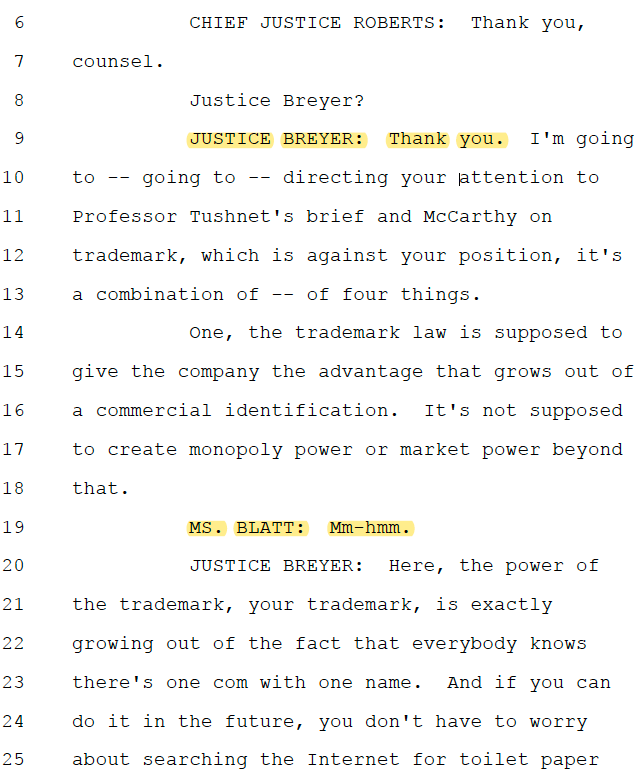
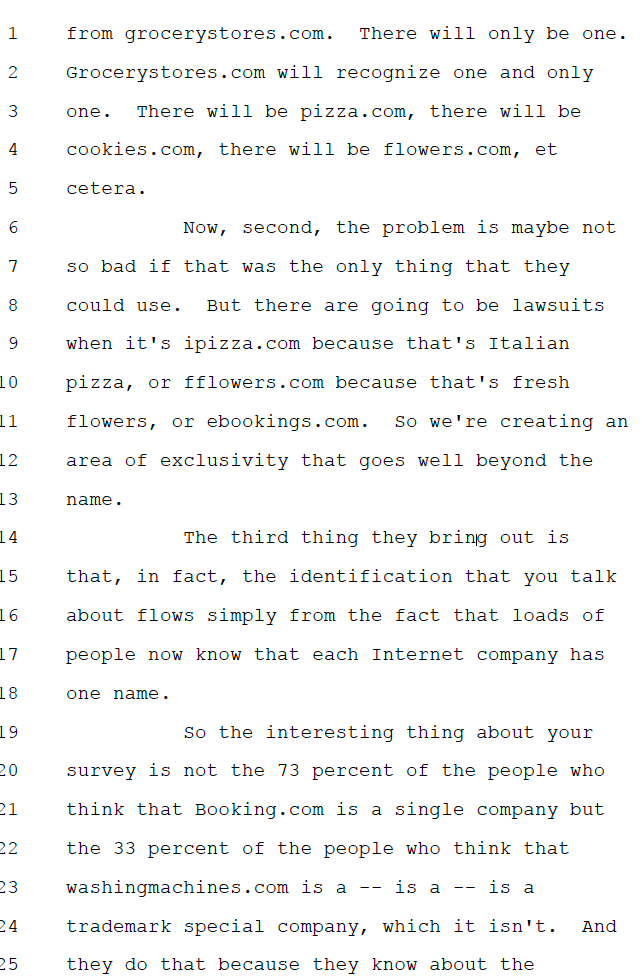
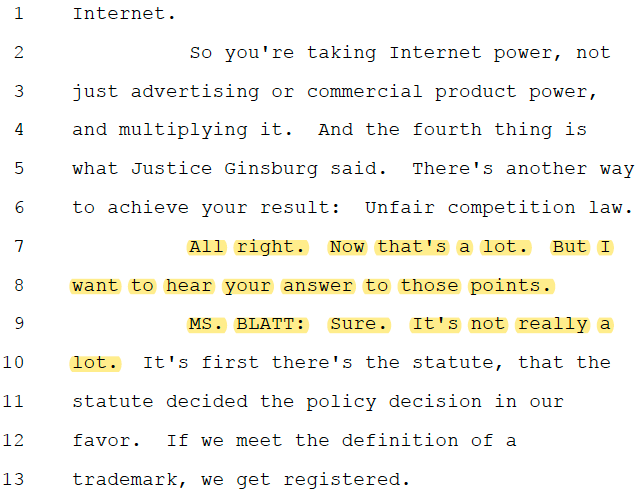
Second, Justice Breyer had another #BreyerPage about “a combination of four things.” (This prediction came true.) He spoke for two-pages, interrupted only by Blatt’s “Mm-hmm.” At the end, he concluded, “All right. Now that’s a lot. But I want to hear your answer to those points.” Lisa Blatt replied, “Sure. It’s not really a lot.” Yes, it was. Remarkably, Lisa managed to address all four points. Then her time was up.

Here is the exchange:

Never change, Justice Breyer.

Third, here is Lisa Blatt’s testy exchange with Justice Gorsuch.

MS. BLATT: Okay. So you’ve read the Tushnet brief and the government’s brief. You have not obviously read our expert –

JUSTICE GORSUCH: Well, now –

MS. BLATT: — that explains how –

JUSTICE GORSUCH: — that’s not fair. Now, come on.

Not many advocates could pull this off. Lisa is lucky she didn’t get rebuked by Gorsuch for a lack of civility. He recently chided Paul Clement during arguments in Seila Law v. CFPB for far less. In any event, I found her arguments extremely persuasive. She may have even moved a few justices. She will likely notch another victory here. I still regret she didn’t get to argue the Washington Redskins case. Her amicus brief in Matal v. Tam was pitch perfect.

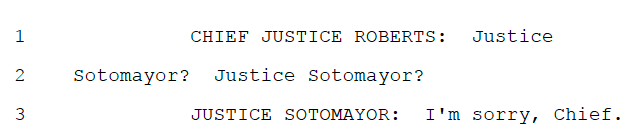
Fourth, this is the closest we’ll get to visualizing Justice Sotomayor on mute:

And the Assistat SG:

I had an immediate flashback to Ben Stein: Bueller. Bueller. Bueller.

Finally, it is surreal reading the transcript after having listened to the arguments. Usually, I listen to the arguments after reading the transcript. I could get used to this new normal!

from Latest – Reason.com https://ift.tt/35uh9co
via IFTTT

It’s ‘Access’ to Birth Control Versus Employer Beliefs Again at the Supreme Court

Contraception, conscience rights, and the Affordable Care Act (ACA) are at the center of another case before the U.S. Supreme Court. On Wednesday, the court will hear oral arguments (via teleconference) in a case concerning whether health insurance coverage must include birth control at no up-front cost to employees.

In 2014, the Court ruled in Burwell v. Hobby Lobby that the ACA’s requirement that all closely-held private companies offer contraception-covering insurance plans violated the 1993 Religious Freedom Restoration Act. In 2016, the Court sent seven consolidated cases concerning Obamacare and birth control back to lower courts.

This week, justices will consider Trump v. Pennsylvania, in which Pennsylvania’s attorney general is challenging the Trump administration’s 2017 declaration on the subject. That order expanded the range of companies that could object to providing such insurance and removed a mandate that insurance companies pick up the tab when employers wouldn’t.

Trump v. Pennsylvania is also consolidated with a similar case, Little Sisters of the Poor Saints Peter and Paul Home v. Pennsylvania.

At issue at this week’s hearing: Did the administration have the authority to expand the contraception mandate’s conscience exemption in the first place—and, if so, did its decision not to allow public comments on an initial draft of the rules render the final rules invalid? The Court will also consider whether the U.S. Court of Appeals for the 3rd Circuit was right to affirm a lower court’s ruling blocking implementation of the administration’s rule.

For more on the particular legal questions involved, see this argument preview from SCOTUSBlog‘s Amy Howe.

Those in opposition to the conscience rights expansion are once again framing this as a matter of denying women access to birth control. But we shouldn’t define access to mean covered-under-an-employer-sponsored-health-care-plan. There are much better ways to expand access—like freeing the pill from prescription-only status, getting rid of restrictions on mail-order pills, and backing community-based health solutions—than forcing the minority of companies that object to covering contraception to do so. Over-the-counter contraception sales and other solutions centered on free markets, technological advances, or localized needs have the ability to expand access to birth control for all who need it, not just those who already have a job and health care benefits.

from Latest – Reason.com https://ift.tt/2KYhLh5
via IFTTT

Shopping In A Time Of Corona: This Is What Americans Are (And Are Not) Spending On During The Crisis

Shopping In A Time Of Corona: This Is What Americans Are (And Are Not) Spending On During The Crisis

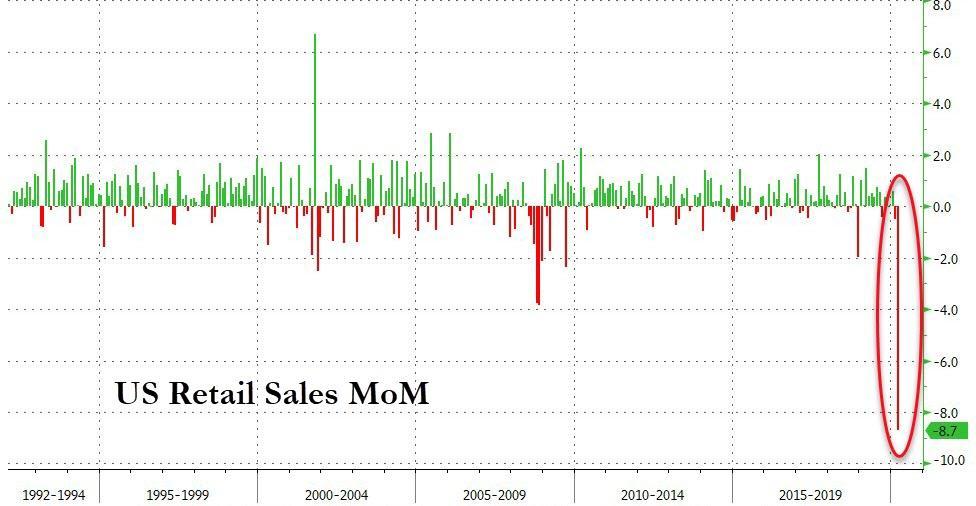
While we wait another two weeks to get the official report on the state of US consumer spending, let’s recall that the March number was abysmal, posting a record 8.2% sequential drop as a result of state closures in the second half of the month.

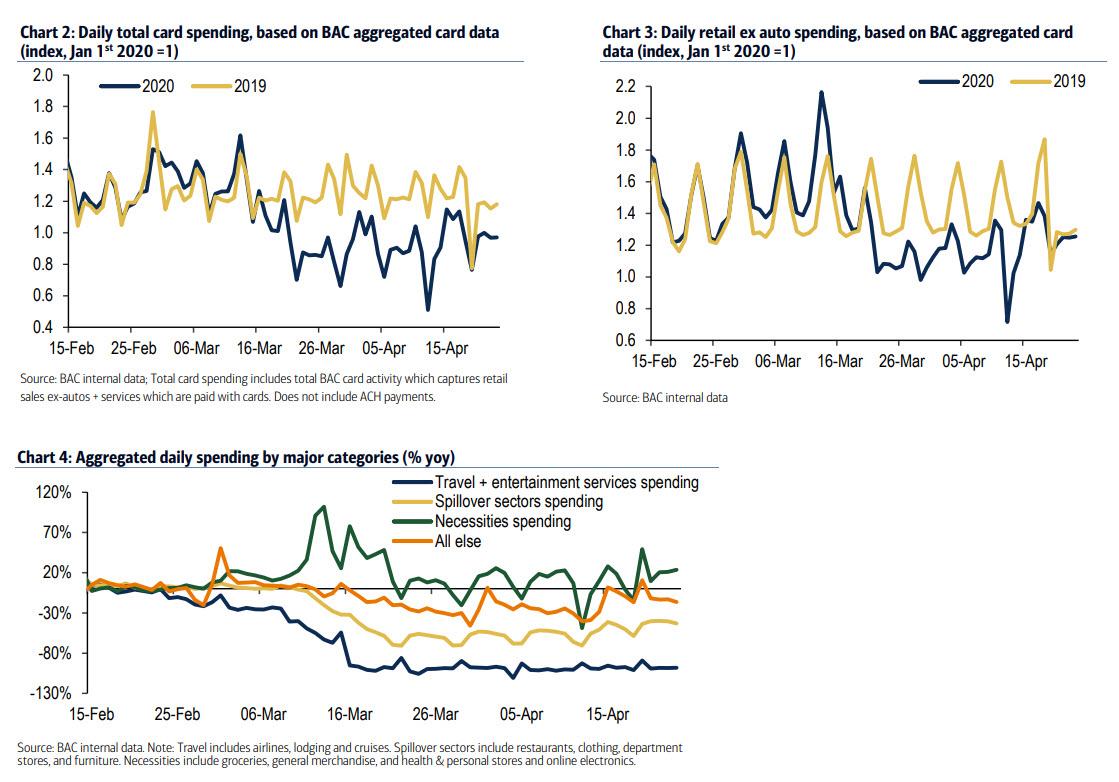
And while we previously pointed out that subsequent spending had continued to deteriorate, there is some good news in that the credit and debit card data as compiled by Bank of America through April 23, continued to point to stabilization in consumer spending.

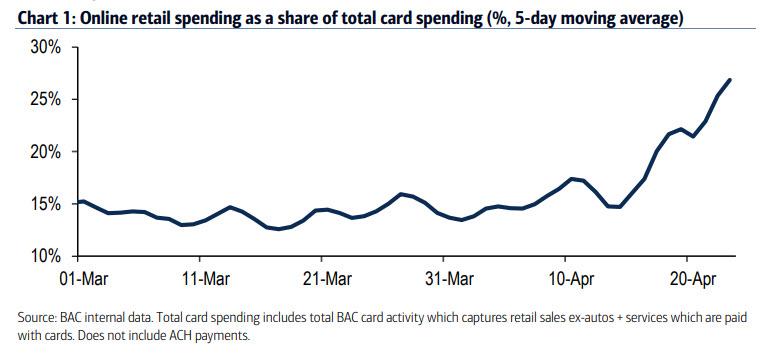
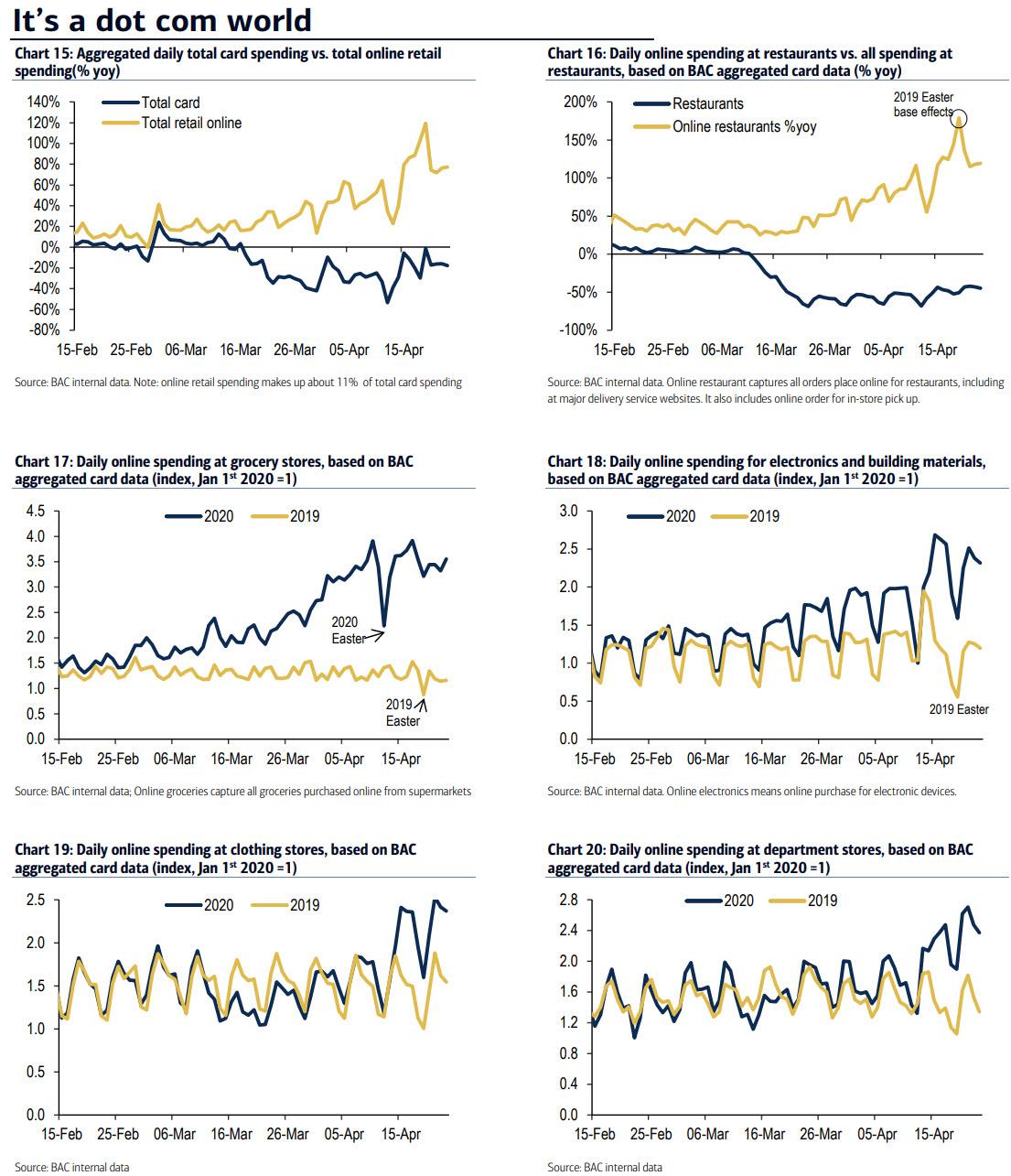
Going over the data, BofA notes that there continued to be a growing bifurcation in spending, with online activity continuing to dominate.

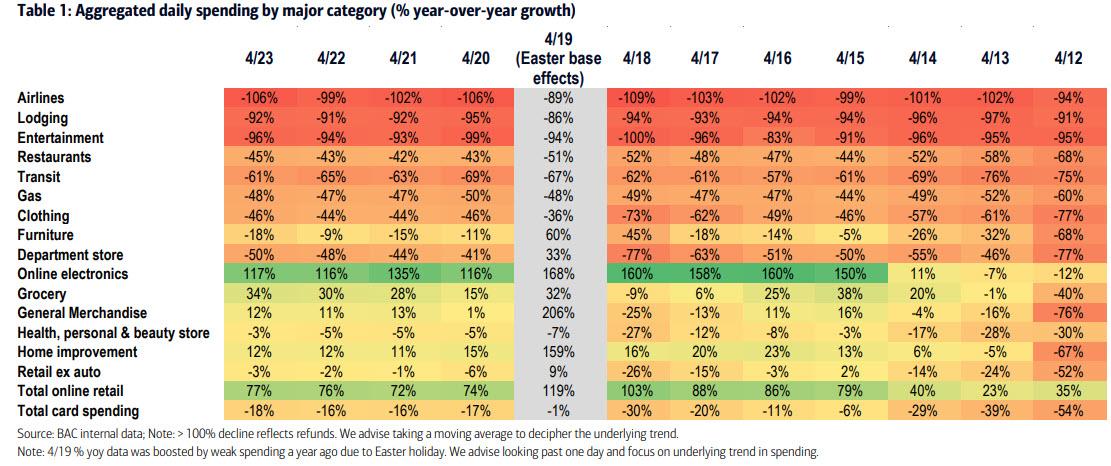
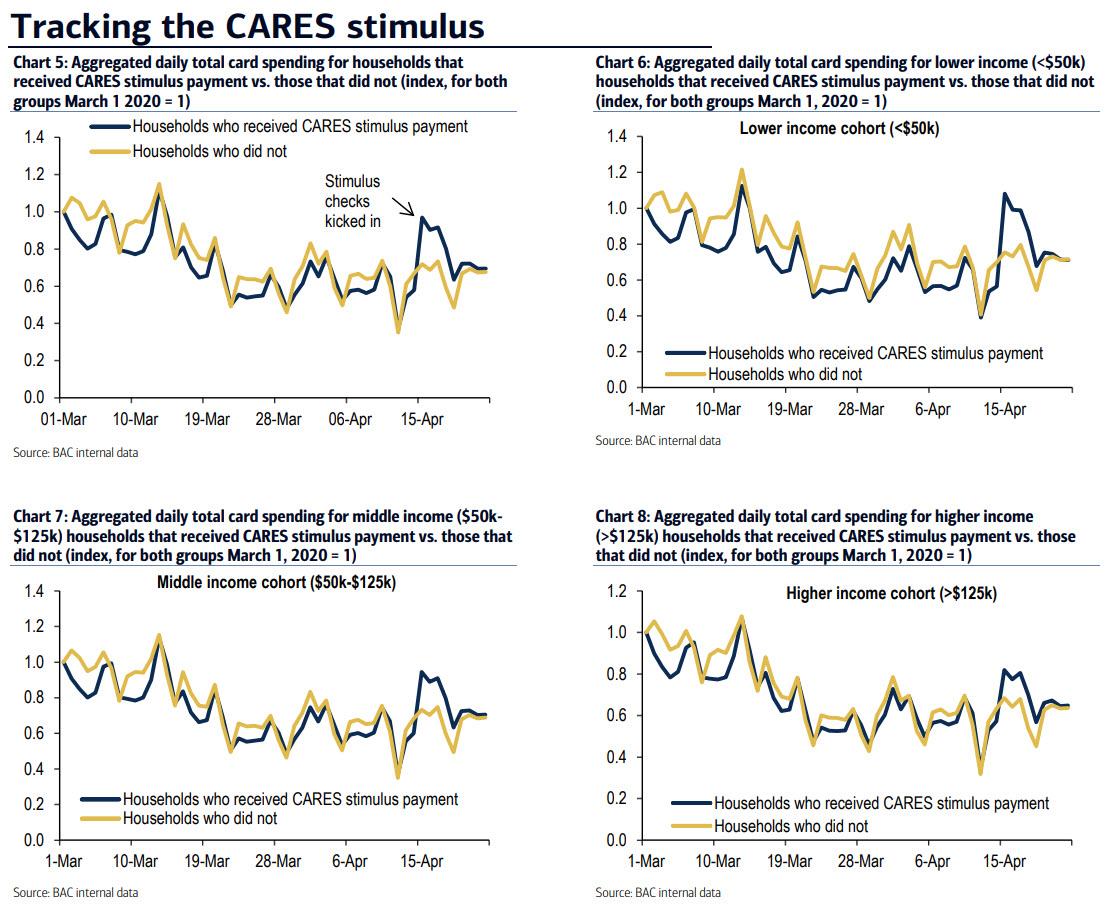
What was behind the tentative April spending stabilization? According to BofA chief economist Michelle Meyer, the key variable was the distribution of the CARES stimulus payments on April 15th – which totaled over $150bn according to the Treasury Department, and which helped boost spending in the middle of the month (as the table below shows, there was some noise in the data over the past two weeks due to the timing of Easter this year vs. last).

As a result, BofA observed a shift higher in aggregated spending for the 5 days following the stimulus payment among the population that received the stimulus. However, after the 5-day period, aggregated spending for those who received the stimulus payment converged to the trend of those who did not. “This shows a relatively transitory boost to spending from the stimulus” according to Meyer.

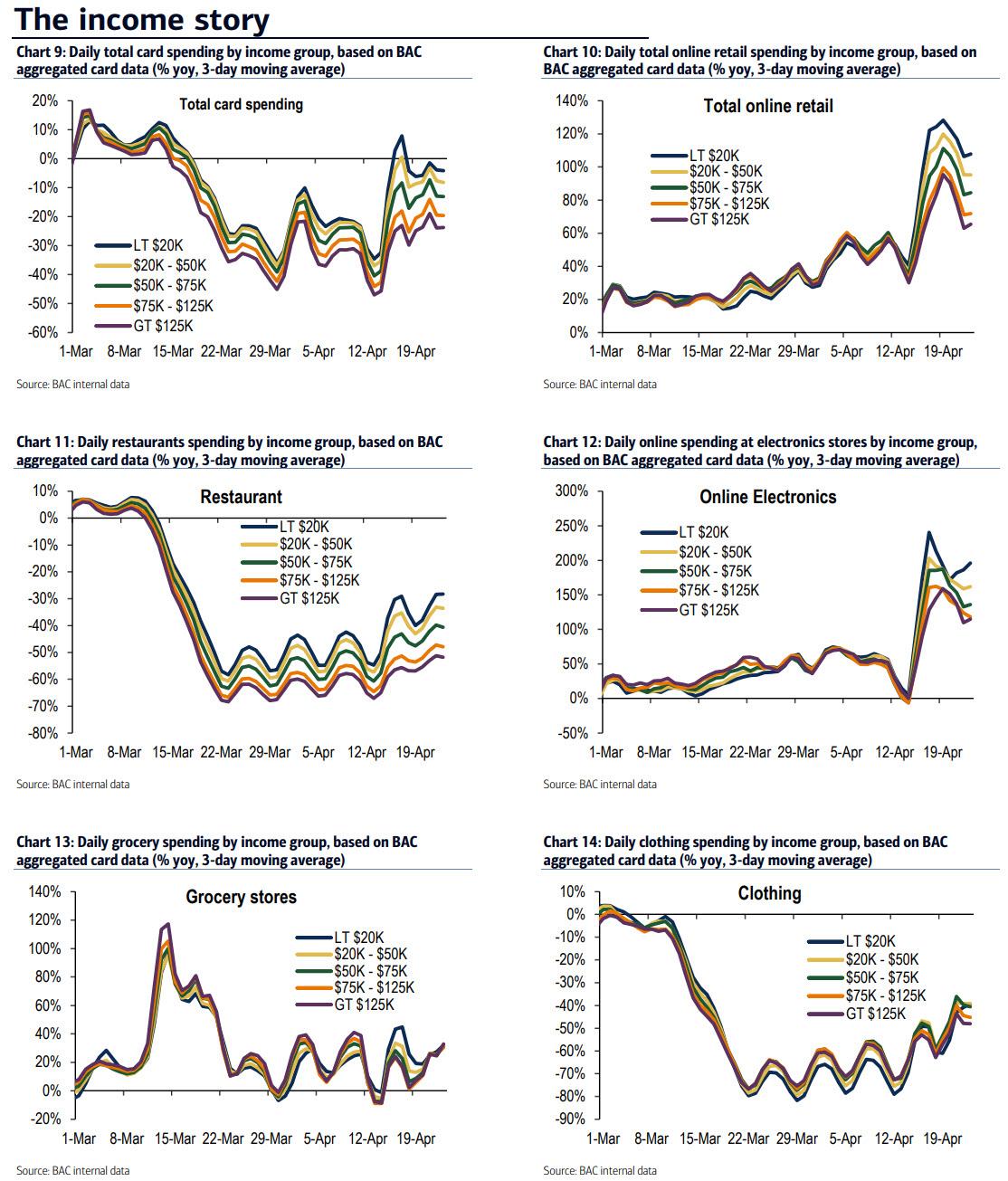
As expected, the stimulus disproportionately supported spending among the lower income cohort. BofA dug deeper into the composition of spending for this population relative to the other income groups and found a meaningful difference in spending by income group at restaurants and for online electronics where the recovery in spending for lower income households has been stronger than for the higher income ones. In contrast, spending for groceries has been comparable across income groups.

Bottom line: The good news is that consumer spending has stabilized, but mostly thanks to one-time stimulus checks. The bad news is that spending remains at low levels, and in BofA’s view a sustained improvement is unlikely until there is a recovery in the labor market, which as we will show in a follow up post may not happen until 2022.

With that in mind, here is what – and how – Americans spent money on  in the time of the coronavirus self quarantines.

As expected, the biggest winner remains Amazon thanks to the ongoing surge in online spending.

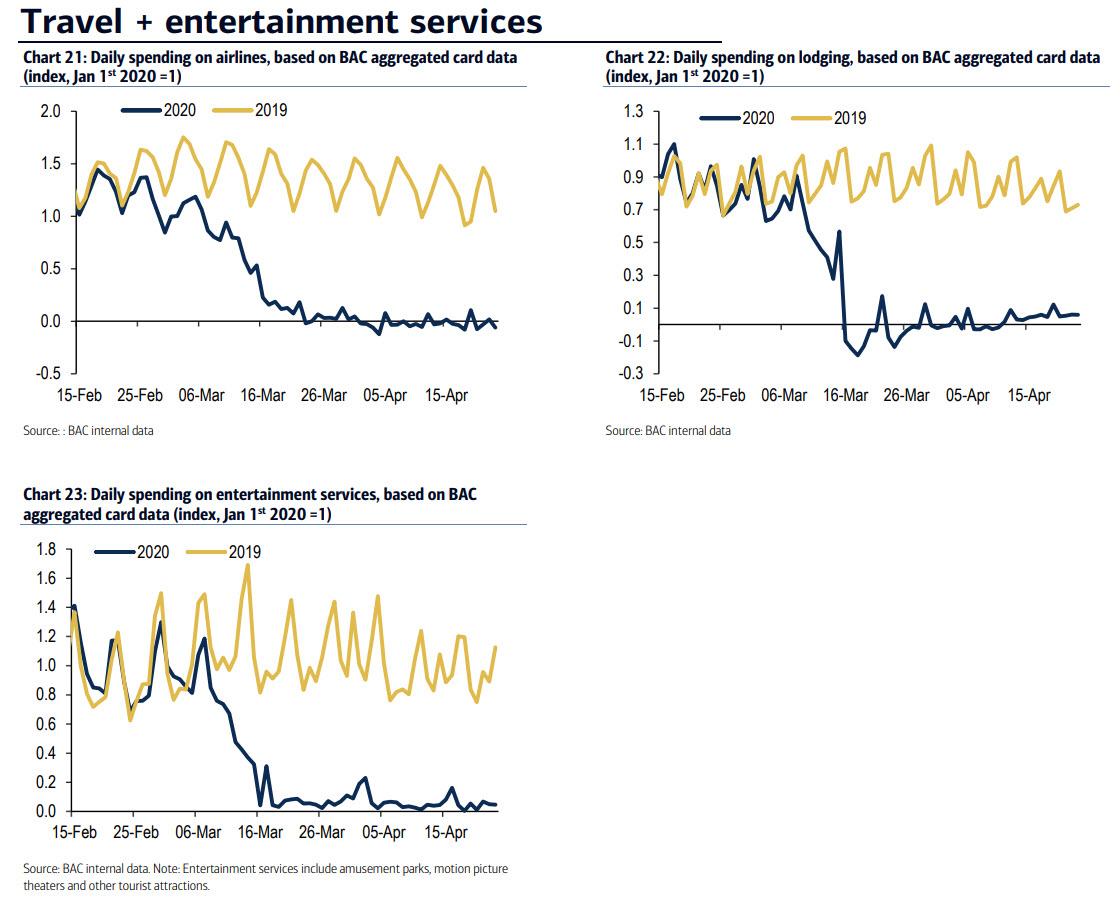
While online is the big winner, travel and entertainment spending is by far the biggest loser, collapsing to near zero.

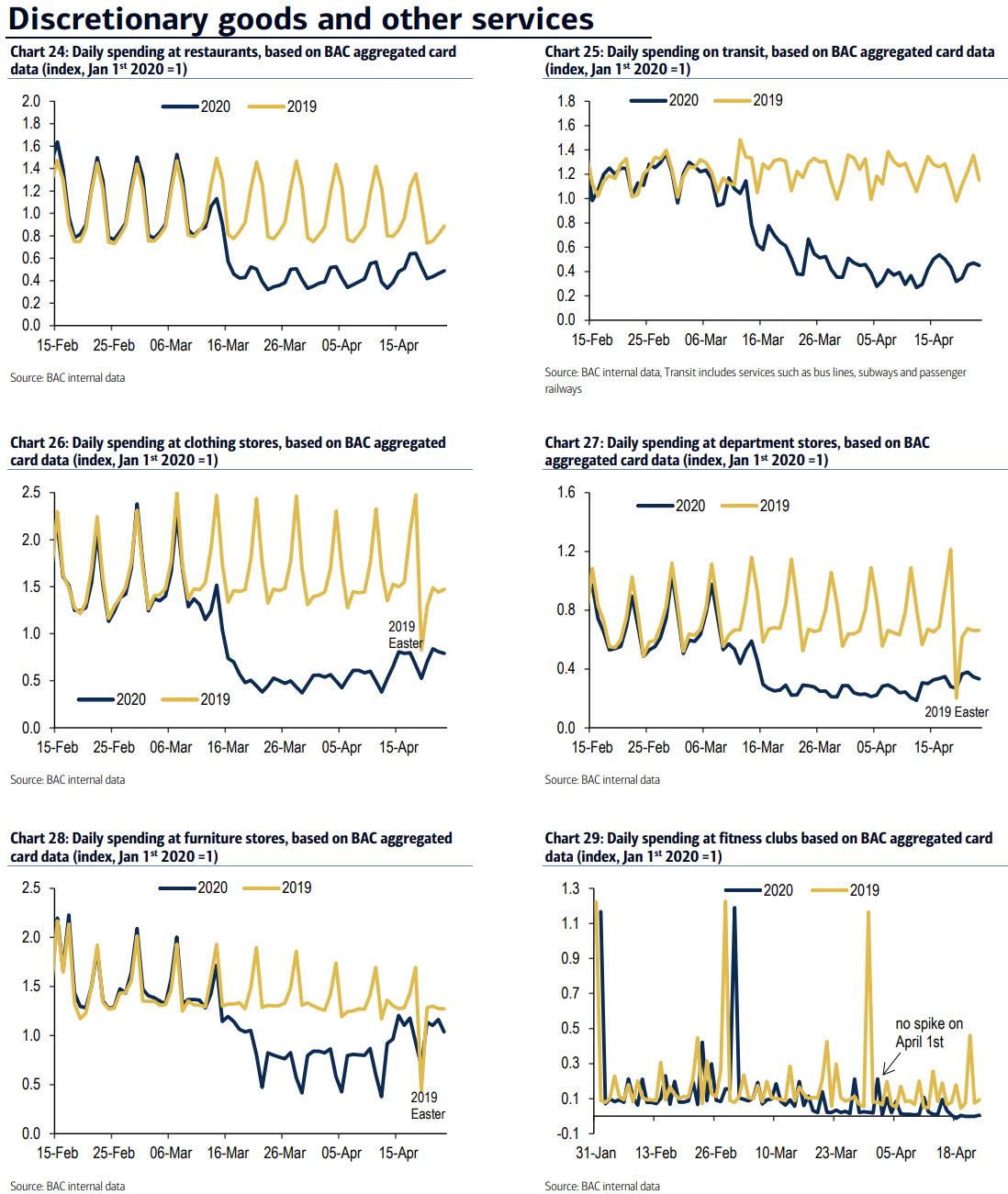
Discretionary spending is not far behind, with restaurant, transportation and clothing spending failing to rebound, although there has been an odd ramp in furniture store spending:

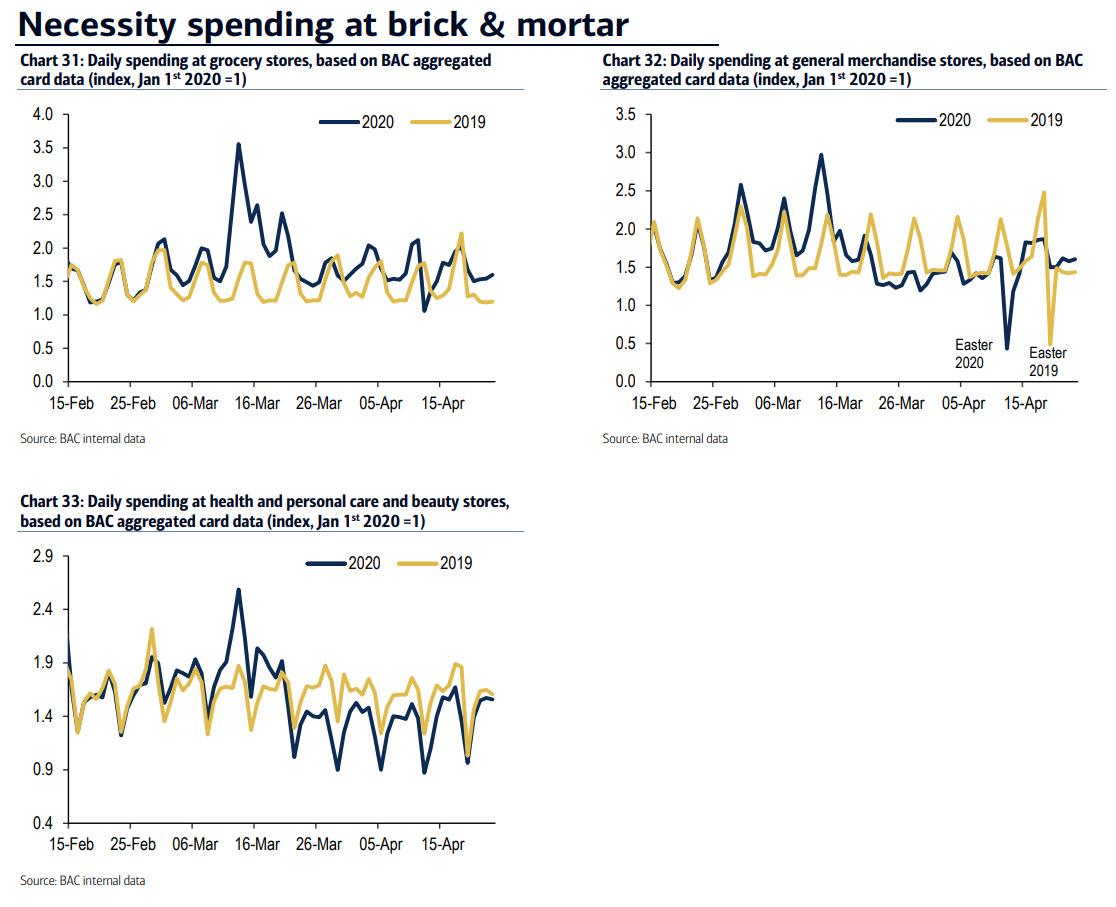
At the same time, spending at grocery, general merchandise and health stores is generally unchanged from a year earlier, although following a burst of spending in mid-March when Americans rushed out to hoard perishables, there appears to be a modest decline in spending in subsequent weeks as one would expect.

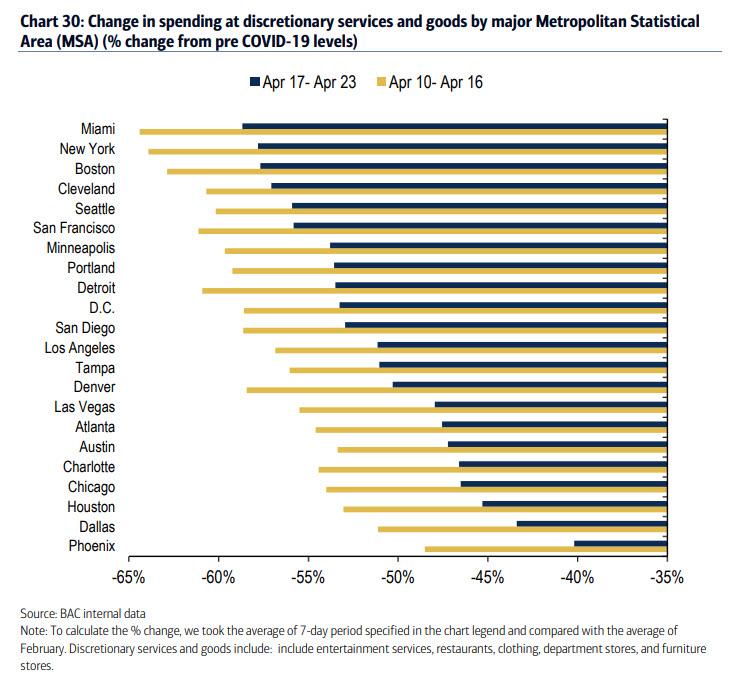
Finally, looking at spending my metro area shows a rebound in late April spending compared to the middle of the month across the country, although a wide dispersion remains with coastal cities such as Miami, New York, Boston, Seattle and San Fran hit the hardest, while landlocked, and less densely populated areas such as Phoenix, Dallas and Houston will likely be the first to emerge back to normal.


Tyler Durden

Mon, 05/04/2020 – 15:20

via ZeroHedge News https://ift.tt/3dfAXmv Tyler Durden

Platts: 6 Commodity Charts To Watch This Week

Platts: 6 Commodity Charts To Watch This Week

Via S&P Global Platts Insight blog,

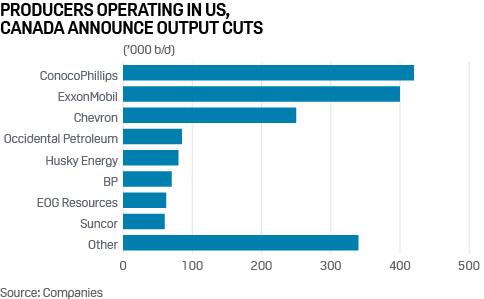
Oil producers in North America have announced vast cuts in output, led by ConocoPhillips, ExxonMobil and Chevron. Plus, contrasting gas market signals from both sides of the Atlantic, Brazilian corn exports under pressure and more, in S&P Global Platts editors’ pick of key trends in energy and commodities this week.

1. North American crude output set to decline in reaction to low oil prices…

What’s happening? Global oil companies have announced production cuts of roughly 4 million b/d in response to a collapse in prices. Of that total, around 1.8 million b/d has been announced by producers focused in the US and Canada, with ConocoPhillipsExxonMobil and Chevron leading the way. Production cuts could even be higher, as only some of the dozens of companies announcing spending cuts have detailed their output plans.

What’s next? Crude futures have found some support from the cuts, but the NYMEX front-month contract is still lingering below $20/b. The market will likely need to see more cuts to push prices substantially higher, whether from oil companies, or from OPEC and its allies, which have pledged cuts totaling 9.7 million b/d for May and June.

2. Falling rig count, bearish crude support US gas prices…

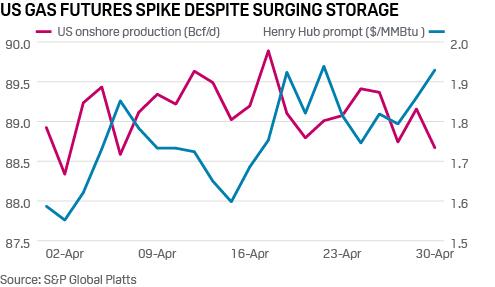
What’s happening? Despite US natural gas in storage sitting nearly 20% above the five-year average with hefty builds on the horizon likely, Henry Hub futures continue to strengthen as the prompt month approaches the $2/MMBtu mark. As US states discuss plans to begin easing restrictions related to the coronavirus pandemic, demand may see some upside throughout May, cutting into the storage surplus.

What’s next? Weak oil prices and declining rig counts also present a bullish risk to prices at Henry Hub for the second half of the year. Associated gas production is already showing declines. Total US production has averaged 92 Bcf/d the past 10 days, 300 MMcf/d below the April 1 through 20 average. The Bakken and DJ Basin lead US fields in recent declines, at 300 MMcfd/d and 150 Mcf/d, respectively.

3. … as gas glut sees Gazprom slash exports, sales price outlook

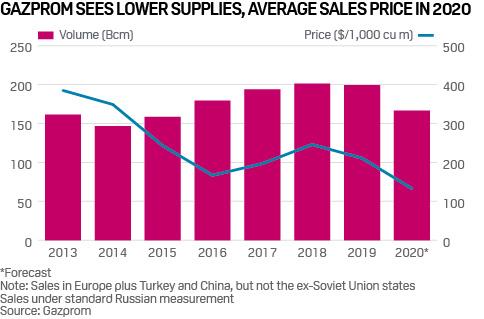
What’s happening? Russia’s Gazprom expects its gas exports to its main international markets to total 166.6 Bcm in 2020, which would mark a 17% reduction compared to last year. The forecast is the first Gazprom has given for 2020 and reflects the extreme shift in European gas market dynamics since the turn of the year. Gazprom has also signaled an expected realized gas price for 2020 as a whole of just $133/1,000 cu m, which would be a 37% decline year on year.

What’s next? Europe has witnessed sharp falls in gas demand due to the mild winter, high storage stocks and the economic impact of the coronavirus, reducing demand for Russian pipeline gas. Limited gas storage injection demand and continuing economic turmoil caused by the virus means a recovery for Russian sales in Europe may be problematic.

4. Brazil sees sluggish corn export pace amid mounting virus concerns

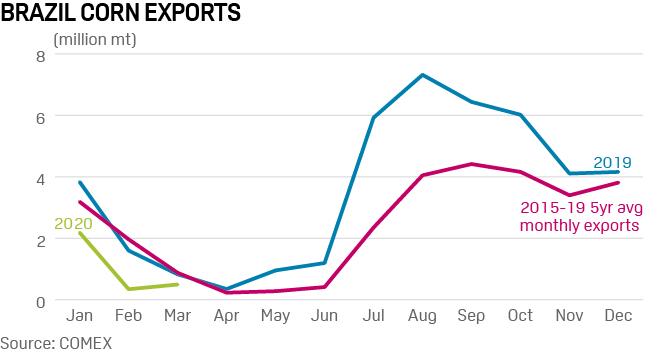
What’s happening? Brazil’s corn shipments have been significantly lower in 2020, after exporting a record quantity last year. Between January-March, Brazil exported 3 million mt of corn, down 56.5% from the same period last year. Depleted corn stocks, strong local demand, and high export prices have restricted exports in this new marketing season from Brazil.

What’s next? The National Food Supply Company has forecast Brazil’s corn export to reach 34.5 million mt in 2019-20, down 17.3% from the previous marketing season. However, experts doubt Brazilian corn exports will hit this level, as coronavirus-related restrictions are likely to bring down demand from the livestock and ethanol sectors. Concerns also remain as the pace of Brazil’s confirmed coronavirus cases keep surging. Moreover, in the US the collapse of ethanol demand in and the expectation of higher planted areas for corn this season mean the market is likely to be flooded with cheap corn.

5. European power demand stable as first signs of recovery emerge

What’s happening? UK electricity demand was trending up in late April and into May as chilly, unsettled weather swept in from the Atlantic, pushing mid-week demand up over 10% on week. This followed modest demand recoveries in both Spain and Italy earlier in April, these due to partial lifting of coronavirus lockdowns. System data for both Germany and France, meanwhile, showed stabilization of demand levels through April after the massive drops seen in March.

What’s next? The following weeks should see further incremental easing of lockdowns in European power markets, prompting a phased resumption in commercial and industrial activity. It is impossible to say when or even if the drastic declines seen to date will be erased. After the 2008 credit crunch, electricity demand bounced back to varying degrees in most markets, but never fully recovered to pre-crunch levels. This was in large part for positive reasons – as economies recovered, new investment drove down the energy intensity of equipment. It remains to be seen whether social distancing will have a similar constraining influence on recovering demand.

6. Steel demand slump, plant restarts raise specter of protectionism

What’s happening? Steel hot rolled coil prices are again under downwards pressure in Europe as coronavirus-related curbs have hit consumption, halting a recovery glimpsed early in 2020 after a slump in November amid global oversupply. Since March, Europe has seem an estimated 80% fall in steel demand from the automotive industry and 40% in construction.

What’s next? As some mills return to production after virus-related stoppages, price pressure is likely to increase, particularly as Chinese, Iranian and Russian mills are becoming more active in steel export markets. Protectionism is likely to rise: industry sources have reported the European Commission is now accelerating a review of its steel imports safeguards review, following a request from European steelmakers’ association Eurofer and the European Steel Tube Association (ESTA) for a 75% reduction in import quotas for Q2-Q3.


Tyler Durden

Mon, 05/04/2020 – 15:10

via ZeroHedge News https://ift.tt/2yjYhB0 Tyler Durden

California First To Be Approved For Up To $10 Billion Bailout From Feds To Pay Unemployment Benefits

California First To Be Approved For Up To $10 Billion Bailout From Feds To Pay Unemployment Benefits

As politicians argue over whether or not to bailout decades-long bad decisions on the basis of a sudden virus/lockdown-driven drop in revenues, California has stepped up to the plate with what appears to be a direct request for a bailout to fund the benefits for millions of newly-unemployed residents (and illegal immigrants).

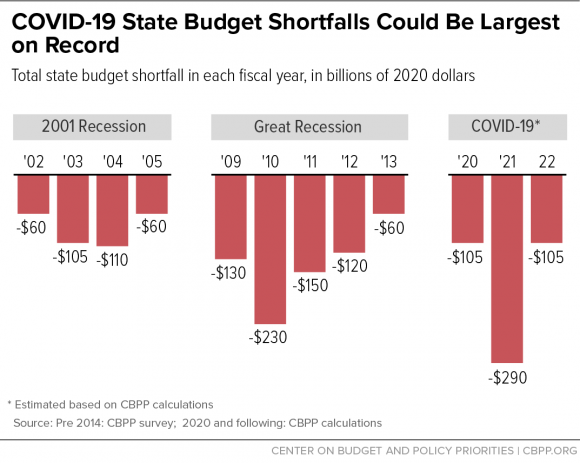
Just a day after California Governor Newsom warned of the state’s sudden budget collapse…

“Last year I did a May revise with a $21.4 billion budget surplus,” Newsom said on Friday during his daily coronavirus briefing, according to Bloomberg.

“This year I will be doing a May revise looking at tens of billions of dollars in deficit. We just went tens of billions in surplus in just weeks to deficits.

The Wall Street Journal reports that California has become the first state to borrow money from the federal government so it can continue paying out rising claims for unemployment benefits during the coronavirus pandemic.

The Golden State borrowed $348 million in federal funds after receiving approval to tap up to $10 billion for this purpose through the end of July, a Treasury Department spokesman said Monday.

“I’m doing everything I can to work with cities and counties, but we are not going to be in a position, even as the nation’s fifth-largest economy, to provide for the needs of all the cities and the counties without federal support,” said Newsom.

Meanwhile, in a  memo last week, Newsom’s finance director ordered departments to significantly slash spending immediately using strict measures, including bans on new goods and service contracts.

As the journal concludes, California serves as an early sign of the potential magnitude of the federal assistance that could be required if states are to continue paying out jobless benefits. It is one of more than 20 states and jurisdictions that entered the current economic crisis without enough money in their unemployment trust funds to pay benefits through a yearlong recession, according to Labor Department data.

With 30 million unemployment claims filed since the coronavirus pandemic resulted in the shutdown of broad swaths of the economy, states are reporting that they’ll need at least $1 trillion in aid from the federal government – which has already doled out over $2.2 trillion in relief for business loans, stimulus checks, expanded unemployment benefits and small business assistance.

And with a lack of tax revenue, states with bloated budgets and massive entitlement programs are facing significant pain in the months ahead.

The U.S. government has also approved loans of up to $12.6 billion for Illinois and up to $1.1 billion for Connecticut through the end of July to replenish state unemployment insurance funds, though the two states hadn’t yet started borrowing by the end of April. California was the only state to have accessed the program so far in the current downturn, the Treasury spokesman said.

One wonders if the reason that the other states haven’t been so quick to draw down on the loans is because they are hoping for a broader-based bailout from a Democrat-sponsored Congressional bill that enables pension benefits to be covered… and not just the jobless.


Tyler Durden

Mon, 05/04/2020 – 14:53

via ZeroHedge News https://ift.tt/2SzRwBH Tyler Durden

Be Warned, Coronavirus Snitches: You Too May Be Snitched On

Hundreds of St. Louis citizens who snitched to the government about businesses that defied closure orders are discovering that their messages are not confidential and their identities are subject to sunshine laws.

As part of the effort to slow the spread of the coronavirus, some city and state leaders have forced businesses they deem “nonessential” to shut down. St. Louis County encouraged people to report any such businesses that are still open via an online form.

The county received more than 900 complaints. And the complaints, apparently, were not anonymous. Indeed, they’re public records subject to the state’s sunshine laws. Now people who are angry at the extent and duration of government shutdown orders are using those laws to expose the people who filed the complaints.

KSDK, a local NBC affiliate, reported in late April that a man named Jared Totsch received a copy of these tipsters’ records and shared them on Facebook. When a KDSK reporter reached out to him to point to him that these tipsters are now worried about retaliation, Totsch responded that was partly the point.

“I’d call it poetic justice, instant Karma, a dose of their own medicine,” he responded. “What goes around, comes around. They are now experiencing the same pain that they themselves helped to inflict on those they filed complaints against.”

KDSK interviewed a tipster named Patricia (the station withheld her last name) who was worried about retaliation. “I saw a lot of businesses that were non-essential that were open and had lines outside, parking lots filled as if the order didn’t matter to them,” she explained to the station. “And that was kinda frustrating.” She has personal reasons for being worried about the spread of the coronavirus—she has lupus, and two other people in her home have autoimmune issues, so they’re in a higher health risk category than many others.

The whole fight feels like waves of resentment coming from opposite directions. There are huge economic costs to these businesses if they’re forced to shut their doors. These shutdowns are going to lead to bankruptcies and destroyed livelihoods.

But yes, there are huge health risks to people like Patricia. Plans to try to restart the economy tend to involve keeping those who are in high-risk categories in quarantine while others carefully start returning to work.

The Reason Foundation (which publishes this site) recently released a working paper that tries to avoid these anger-inducing one-size-fits-all responses and focus instead on containing infection clusters. Patricia needs to keep herself safe, but that doesn’t mean those businesses she saw needed to be closed in order to achieve that goal.

If more people realized that government’s responses have trended more toward authoritarian blanket demands rather than actual risk assessments and properly targeted protection measures, we’d all be better off moving forward.

from Latest – Reason.com https://ift.tt/3c4BOGv
via IFTTT

Be Warned, Coronavirus Snitches: You Too May Be Snitched On

Hundreds of St. Louis citizens who snitched to the government about businesses that defied closure orders are discovering that their messages are not confidential and their identities are subject to sunshine laws.

As part of the effort to slow the spread of the coronavirus, some city and state leaders have forced businesses they deem “nonessential” to shut down. St. Louis County encouraged people to report any such businesses that are still open via an online form.

The county received more than 900 complaints. And the complaints, apparently, were not anonymous. Indeed, they’re public records subject to the state’s sunshine laws. Now people who are angry at the extent and duration of government shutdown orders are using those laws to expose the people who filed the complaints.

KSDK, a local NBC affiliate, reported in late April that a man named Jared Totsch received a copy of these tipsters’ records and shared them on Facebook. When a KDSK reporter reached out to him to point to him that these tipsters are now worried about retaliation, Totsch responded that was partly the point.

“I’d call it poetic justice, instant Karma, a dose of their own medicine,” he responded. “What goes around, comes around. They are now experiencing the same pain that they themselves helped to inflict on those they filed complaints against.”

KDSK interviewed a tipster named Patricia (the station withheld her last name) who was worried about retaliation. “I saw a lot of businesses that were non-essential that were open and had lines outside, parking lots filled as if the order didn’t matter to them,” she explained to the station. “And that was kinda frustrating.” She has personal reasons for being worried about the spread of the coronavirus—she has lupus, and two other people in her home have autoimmune issues, so they’re in a higher health risk category than many others.

The whole fight feels like waves of resentment coming from opposite directions. There are huge economic costs to these businesses if they’re forced to shut their doors. These shutdowns are going to lead to bankruptcies and destroyed livelihoods.

But yes, there are huge health risks to people like Patricia. Plans to try to restart the economy tend to involve keeping those who are in high-risk categories in quarantine while others carefully start returning to work.

The Reason Foundation (which publishes this site) recently released a working paper that tries to avoid these anger-inducing one-size-fits-all responses and focus instead on containing infection clusters. Patricia needs to keep herself safe, but that doesn’t mean those businesses she saw needed to be closed in order to achieve that goal.

If more people realized that government’s responses have trended more toward authoritarian blanket demands rather than actual risk assessments and properly targeted protection measures, we’d all be better off moving forward.

from Latest – Reason.com https://ift.tt/3c4BOGv
via IFTTT

8 Possible Reasons for the Huge International Differences in COVID-19 Deaths

If you’re trying to figure out why some places have been hit especially hard by the COVID-19 pandemic while others so far seem to be largely unscathed, there is no shortage of hypotheses. But for each seemingly plausible explanation, there are counterexamples that complicate the story.

Reporting Differences

We know that the true number of infections in any given place is far larger than the number of confirmed cases, although exactly how much larger is a matter of much dispute. We also know that deaths are undercounted, especially if they happen at home and involve people with other serious medical conditions who are never tested for the virus. While the first gap is apt to be much bigger than the second gap, the size of both is likely to vary from one country to another, depending on testing rates and reporting practices.

Still, those differences by themselves cannot account for the striking international  differences in COVID-19 deaths. “Even in places with abysmal record-keeping and broken health systems,” The New York Times notes, “mass burials or hospitals turning away sick people by the thousands would be hard to miss, and a number of places are just not seeing them—at least not yet.”

Stage of the Epidemic

Fewer than 50,000 COVID-19 cases and fewer than 2,000 deaths have been reported in the entire continent of Africa, which has a population of 1.3 billion. That amounts to fewer than two deaths per million people, compared to nearly 200 per million in Europe and a bit more than that in the United States—a huge difference, even allowing for underreporting.

Judging from the first confirmed cases, COVID-19 spread to Europe about three weeks before it hit Africa. Although the death rate in Africa is bound to rise as the epidemic progresses there, the difference in timing cannot fully account for the enormous difference in fatalities per capita. And Japan, where the first COVID-19 case was reported on January 16, a week before the first confirmed cases in Europe, has a far lower COVID-19 death rate, although not as low as Africa’s. South Korea, which reported its first COVID-19 case on January 20, likewise has a remarkably low death rate.

Age Demographics

Since COVID-19 fatality rates are dramatically higher among the elderly, one obvious explanation is age demographics. The population of Africa, where the median age is about 20, is much younger than the population of Europe, where the median age is about 43.

As the Times notes, however, some countries with young populations, such as Iran (median age: 32) and Ecuador (median age: 28) are seeing relatively high numbers of COVID-19 deaths, although not as many per capita as Europe. And Japan, which has an even higher median age (48) than Europe, again provides a puzzling counterexample.

Social Customs

“In Thailand and India, where virus numbers are relatively low, people greet each other at a distance, with palms joined together as in prayer,” the Times notes. “In Japan and South Korea, people bow, and long before the coronavirus arrived, they tended to wear face masks when feeling unwell.”

Then again, the Times says, “there are notable exceptions to the cultural distancing theory. In many parts of the Middle East, such as Iraq and the Persian Gulf countries, men often embrace or shake hands on meeting, yet most are not getting sick.” Iraq, which has a population half as big as neighboring Iran’s but a substantially lower median age (21 vs. 32), has reported less than 2 percent as many COVID-19 deaths.

Climate

Since the COVID-19 virus does not seem to like heat and light, the Times notes, it makes sense that it has made relatively little progress in tropical countries such as Chad and Guyana but is more pervasive in places with more temperate climates, such as Italy and the United States. Yet “some of the worst outbreaks in the developing world have been in places like the Amazonas region of Brazil, as tropical a place as any.”

Population Density

It’s no surprise that New York City, which has the highest population density by far of any city in the United States, has had many more COVID-19 deaths per capita than places where people live farther apart. Antibody tests conducted by the state health department in April suggested that more than a fifth of the city’s population had been infected. Yet densely populated cities such as Hong Kong, Seoul, Tokyo, Bangkok, New Delhi, and Lagos have not seen anything like the cases and deaths reported in New York.

Government Policies

“Lockdowns, with bans on religious conclaves and spectator sporting events, clearly work,” the Times declares, citing the World Health Organization. “More than a month after closing national borders, schools and most businesses, countries from Thailand to Jordan have seen new infections drop.” Yet “counter-intuitively, some countries where authorities reacted late and with spotty enforcement of lockdowns appear to have been spared. Cambodia and Laos both had brief spates of infections when few social distancing measures were in place but neither has recorded a new case in about three weeks.”

South Korea’s response to COVID-19—focused on early and wide testing, coupled with aggressive contact tracing and targeted quarantines—has been notably different from the American response, which was crippled by a government-engineered test shortage and has featured broad business closures and stay-at-home orders. Government-mandated social distancing in South Korea has been significantly less strict and less sweeping.

Likewise in Japan, where schools were closed but there were no American-style lockdowns, although the government recommended precautions such as avoiding unnecessary outings. In Sweden, another country that has eschewed a broad lockdown, the COVID-19 death rate is higher than in other Scandinavian countries but lower than in such countries as Italy, Spain, France, Belgium, the Netherlands, and the U.K.

Luck

Some places may be seeing worse epidemics because they happened to have more “super-spreaders”: carriers who infected an unusually large number of people at particular gatherings. The Times cites several examples, including the Diamond Princess cruise ship, a funeral in Albany, Georgia, and a church service in Daegu, South Korea.

New York City’s epidemic seems to have been seeded by many international travelers, mainly from Europe. Other things being equal, places with fewer visitors can be expected to have fewer chains of transmission. That might be part of the explanation for the striking differences between New York and California, where the virus seems to have been spreading by mid-January (judging from a COVID-19 death, apparently via local transmission, on February 6 in Santa Clara County).

“Far-flung nations, such as some in the South Pacific and parts of sub-Saharan Africa, have not been as inundated with visitors bringing the virus with them,” the Times notes. “Health experts in Africa cite limited travel from abroad as perhaps the main reason for the continent’s relatively low infection rate.”

from Latest – Reason.com https://ift.tt/3djjYA2
via IFTTT