The Trump Administration’s Fight To Fund Scientists

The Trump Administration’s Fight To Fund Scientists

Authored by Paul D. Thacker via RealClearInvestigations,

The panic and outrage were palpable last February when President Trump announced plans to trim reimbursement rates for government-funded scientific research.

This is going to decimate U.S. scientific biomedical research,” Northwestern University biologist Carole Labonne told Bloomberg. “The lights will go out, people will be let go, and these [medical] advances will not occur,” David Skorton, CEO of the Association of American Medical Colleges, told PBS. “The goal,” University of Washington biologist Carl Bergstrom warned on BlueSky, “is to destroy U.S. universities.”

The sky has not fallen on American research in the 10 months since. The National Institutes of Health (NIH) is still paying the same 50% to 70% in indirect costs – the premium added on top of grants meant to reimburse universities for providing labs and other research infrastructure – because lawsuits have frozen the president’s proposed policy. One Trump official admits this is unlikely to change because the administration will almost certainly lose in court. The current system, which provides the lion’s share of billions of dollars each year for often-unspecified overhead costs to universities, has the backing of Congress. As it stands, there appears to be no momentum, even among Republicans, to reform the practice.

It’s basically a slush fund,” one NIH official told RealClearInvestigations. “We just don’t like to call it that.”

A RealClearInvestigations analysis of these indirect payments reveals a long, largely forgotten history of concern about taxpayer-sponsored research. Although many researchers have cast Trump’s proposal as an attack on science, this issue isn’t the need to fund research activities that sometimes lead to beneficial discoveries, but whether some of the billions that support the necessary infrastructure and equipment are actually being shifted to purposes such as staffing and buildings that have little or no direct connection to the actual research. 

In the late ’80s, Stanford faculty revolted against the university’s high overhead charges for diverting research dollars to a bloated administration and a campus building frenzy. Those concerns are still voiced by some.

If the universities truly believe that it takes 60-70% of a research grant to provide facilities, utilities, and other basic support, then that is easy to prove by opening the books,” said Sanjay Dhall, a research physician at the University of California, Los Angeles. “I suspect however, that opening the books would reveal that a significant chunk of these funds, or even the majority, are paying an army of unnecessary administrators.”

At a time when the value of college is being challenged because of exorbitant tuition and fees, and the federal government is struggling to rein in debt, the story of indirect funding offers a window into the history of runaway costs and the growing power of college officials. RCI has also learned that NIH Director Jay Bhattacharya has been selling a new plan that makes the grant process more competitive for institutions that were overlooked in the past. 

Indirect Costs Hard To Define

Distributing over $37 billion in grants every year, NIH is the largest funder of biomedical research on the planet, far exceeding the European Commission, which spends around $12 billion, and dwarfing the Gates Foundation’s $1 billion. 

Every NIH grant a university researcher receives provides two categories of funding: direct and indirect costs. The direct costs include all items the researcher submitted as part of the project’s budget, from laboratory equipment to a percentage of salaries.

Indirect costs are harder to define. The funding goes to administrators, and how they use it is shrouded in mystery. What’s more, indirect rates vary from university to university for reasons that few understand and can explain. 

While institutions charge private foundations like Gates a mere 10% and Rockefeller 15% for indirect costs, they charge the NIH much higher rates – 69% for Harvard, 67.5% for Yale, and 63.7% for Johns Hopkins. 

“How do you think Harvard built all those buildings?” one NIH official, a graduate of Harvard Medical School who insisted on anonymity, told RCI. “NIH indirect costs paid for that.”

When Trump first proposed the 15% cap in 2016, Harvard president Drew G. Faust told the student newspaper in late 2017 that she flew to Washington, D.C., to lobby Republicans in both the House and the Senate to stop it. “We’re bringing in quite a bit of money through federal contracts which provide money for a lot of buildings and other infrastructure that makes possible what we do going forward,” a Harvard dean told the student newspaper. “So if that was to all go away, we’d have to sit down and look at that.”

The Trump administration’s proposal to cap overhead at 15% would cost university administrators billions of dollars that they control. Among the many critics was Holden Thorp, editor-in-chief of the flagship journal Science and a former university administrator. He wrote an editorial last February titled “A Direct Hit” that described the cap as a “ruthless takedown of academia.”

The scientific community must unite in speaking out against this betrayal of a partnership that has enabled American innovation and progress,” he wrote.

In response to questions from RCI, Thorp said any change to NIH overhead funding should be done in partnership with the scientific community. “Indirect costs are used to secure debt on research facilities and were treated as very secure by banks and the rating agencies,” Thorp said. “Pulling all of that abruptly – without following processes with decades of precedent – is certainly betraying a partnership by putting the universities in difficulty with their lenders and bond ratings.” 

Inexorable Rise in Charges

It turns out that concerns over universities possibly misusing federal grant money date back more than half a century, according to Thorp’s own publication. In 1955, the federal government almost doubled the 8% premium paid for university overhead. A decade later, Science reported that Congress lifted the overhead ceiling to 20%, maintaining a flat rate to assure more taxpayer dollars were targeted at scientific research, and less spent on constructing new buildings. Some members of Congress believed that “the universities need not accept the grants if they can’t afford them.” Elected officials also worried that indirect costs would not go to research but to support other university efforts.

You might be surprised if you read the list of money being spent for research in various universities,” one senator said in a 1963 Science news story. “Not only to pay the teachers, but also to construct buildings and facilities around the school.” 

Despite these concerns, lobbyists convinced the government in 1966 to remove all caps, empowering universities to negotiate directly with federal agencies to set their own overhead rates. In 1966, overhead consumed 14% of NIH grant expenditures. By the late 1970s, it consumed 36.4%. When the federal government attempted to backpedal in 1976 to bring “spiraling indirect cost rates under control,” it failed. 

Both Republicans and Democrats have long championed increasing NIH budgets, partly because grants for research land in congressional districts scattered across the nation. Republicans have often been the NIH’s biggest supporters. Fifteen years ago, Congress launched investigations into the NIH’s poor monitoring of grants that were awarded to research physicians with undisclosed ties to the pharmaceutical industry. Despite the unfolding scandal, Republican Sen. Arlen Specter pushed through a 34% increase in the NIH’s budget in 2009. During the 2013 government shutdown, the NIH was one of the few agencies that Republicans pushed President Obama to keep open. Two years later, Republicans cut many parts of Obama’s proposed 2015 budget, yet gave the president even more money than the increase he requested for the NIH.

Like some elected officials, academics have also long complained that high overhead harms academic scientists by diverting NIH funding to administrators. In 1981, a University of California researcher published a study in Science, which showed how “Funding has thus been markedly reduced, and this has become a critical factor limiting research support in the United States.”

By 1983, indirect costs accounted for 43% of the NIH grant budget. In response, then-NIH Director James B. Wyngaarden pushed to make more money available for scientists by paying administrators only 90% of what they claimed in overhead. 

“[L]egislators tend to sympathize with the investigators who are more interested in seeing federal money spent for equipment and researchers’ salaries in their labs than for light and heat and the services of typists and bookkeepers,” reported Science at the time. 

However, Science reported that Wyngaarden was met with stiff opposition from university officials and their allies in Congress.

When Wyngaarden tried to deal with the matter by sending a report to Congress, Science reported, officials from several university lobby groups shut the report down, calling it not “acceptable.”

One of Wyngaarden’s biggest critics was Stanford President Donald Kennedy, whose school was then charging one of the highest rates for indirect costs. Kennedy convened a group to attack cost-saving proposals, stating in a letter, “The NIH proposals to reduce reimbursement of those costs … will directly damage the research effort as a whole.” 

This effort appeared to succeed until Kennedy himself became ensnared in a scandal that showed Stanford’s indirect costs charged to the NIH paid for a bevy of personal goods and upkeep on a yacht. 

Stanford’s Taxpayer-Funded Yacht

Stanford’s yacht, the Victoria, was valued at $1.2 million and became a symbol of excess, with walnut and cherry paneling, brass lamps, marble counters, and lavish woodwork. Administrators used the yacht as a fundraising venue to wine and dine campus bigwigs. NIH money had paid for overhead to maintain it. 

As Congress and federal investigators dug into Stanford’s accounting, they discovered that administrators had also redirected NIH research overhead to pay $2,000 a month for flowers at President Kennedy’s home, $7,000 for his bed linens, and $6,000 to provide him with cedar-lined closets. Another college official had hosted Stanford football parties and charged the NIH $1,500 for booze.

Humiliated in the media, Stanford was forced to lower the indirect rate it charged the NIH from 78% to 55.5%, and federal agencies launched audits of overhead charges at dozens of other universities, resulting in millions of dollars returned to the NIH. 

With the politics and the media on his side, Michigan Congressman John Dingell launched reforms to indirect charges. Stanford and other institutions were forced to halt expensive building campaigns. President Clinton proposed a cap on indirect costs in a “concerted effort to shift national spending from overhead to funding research.” As in the past, universities opposed the change, and the White House buckled.

“One way or another, I’ve been involved in controversy about indirect cost rates for about 30 years,” a chancellor at the University of Maryland told The Baltimore Sun in 1994. 

Kennedy resigned from the Stanford presidency, as did several of his administrators. Kennedy later joined Science as editor-in-chief – a predecessor to Thorp – while universities’ charges for indirect costs to the NIH eventually snapped back to their former pricing, which continues to this day.

RCI spoke with several academic researchers at institutions scattered across the U.S., working at both private and public-funded universities. None wished to be named about their concerns about how their administrators spend NIH indirect funding, with one professor noting that administrators determine your career, so it makes no sense to criticize their spending habits.

While university presidents say administrators strictly account for NIH indirect funds, the reality appears to be different. Professors who bring in large sums of NIH money, sometimes referred to as heavy hitters, can complain and get some of the indirect costs back from the administrators for their own research and even personal use. At some institutions, department heads can get a cut of the indirect costs to set up slush funds, monies they can dole out to favored professors, or even divert to their own labs.

Professor Dhall said that after he published a March letter in the Wall Street Journal that supported Trump’s cap on indirect rates, he was contacted by colleagues across the country. “They congratulated me on going public and vehemently agreed, in private,” he said. 

A congressional staffer who has spent decades investigating problems at the NIH said that nobody truly understands how universities negotiate their NIH overhead rates. And once that money gets to the university, it disappears into a byzantine accounting system that seems designed to confuse government auditors, who rarely inspect university books.

“It’s a complete black box,” he said. “I wish someone could explain it to me.”

Trump’s Play To Change the Game

The Trump administration will lose the fight to cap indirect costs at 15%, a senior HHS official told RCI, because of the universities’ outsize influence. During the first Trump administration, universities caught wind that Trump planned to cap overhead rates. As they had done for over half a century, university lobbyists ran to Congress to complain, only now they sought an alliance with the pharmaceutical industry.

Responding to lobbying pressure, Republicans in the House and Senate inserted a provision into the appropriations bill in 2018 to block Trump’s attempt to change universities’ indirect cost rates. That provision has been included in every succeeding appropriations bill.

While it does not seem likely that Congress will strip the schools in their states and districts of billions of dollars in funding, NIH Director Bhattacharya has been floating his own proposal to revamp indirect payments to make them more equitable in private talks with members of Congress and university leaders. Shortly before Thanksgiving, Bhattacharya gave a dinner talk to the Republican Main Street Caucus, a group of 85 GOP members of Congress who are critical behind-the-scenes players among Republicans now running the House. 

A dinner participant recounted to RCI that Bhattacharya noted that more than half of the NIH’s money goes to 20 universities located on both coasts. These elite universities win a lion’s share of the grant money, including indirect costs, because they have the money to attract excellent scientists, in part because NIH money helped them build great infrastructure. 

This creates a vicious cycle that guarantees NIH will continue to fund institutions that have already won past NIH money – and which charge high indirect costs. To end this cycle, Bhattacharya wants to break off indirect costs into a separate category of infrastructure grants that universities can compete to win.

During the talk, Bhattacharya said that all the universities in the entire state of Florida now get as much money as Stanford. Yet, there’s no reason Florida could not become a hub for scientific research if the federal government invested in its scientific infrastructure. 

If Florida can provide lab space at a lower cost than Stanford, he said, they should get the money. Bhattacharya also wants to make it easier for academics to take their grant to different universities. If a Harvard researcher is offered more space or better facilities at a university in Kansas, because building costs there are cheaper, that professor should be able to transfer his grant. 

The NIH already provides specific grants for infrastructure, and the hope is that spreading the billions in indirect costs across the country will gain political support. 

“He wants to get this money out to the middle of the country, not just the coasts,” said Congresswoman Mariannette Miller-Meeks, Republican from Iowa. Dr. Miller-Meeks is one of the few physicians in Congress and said she was impressed with Bhattacharya’s talk at the Main Street Caucus dinner. However, she is uncertain whether Democrats would embrace the new proposal in today’s polarized environment.

I would think there are members from the center of the country that would like to see more money in their district,” she said.

A spokesperson told RCI that NIH remains focused on ensuring that funding is used efficiently and that direct and indirect costs contribute to scientific productivity. “Bhattacharya’s proposal represents one of several ideas being discussed publicly about how to structure federal support for research infrastructure,” the spokesperson said. “NIH looks forward to continuing to work constructively with Congress on this issue.”

Tyler Durden
Wed, 12/31/2025 – 13:20

via ZeroHedge News https://ift.tt/LalRroM Tyler Durden

DOJ’s Inventory Of Unreleased Epstein Files Soars To 5.2 Million Pages

DOJ’s Inventory Of Unreleased Epstein Files Soars To 5.2 Million Pages

Already in violation of a statutory deadline and accused of engaging in rampant, unlawful redactions, it’s been revealed that the US Department of Justice has about 5.2 million pages of documents related to convicted sex offender Jeffrey Epstein that still need to be reviewed, according to a document reviewed by Reuters and inside sources cited by the New York Times

The Epstein Files Transparency Act, which was enacted in November, gave the DOJ a Dec. 19 deadline for releasing “all unclassified records, documents, communications, and investigative materials” relating to Epstein and his convicted co-conspirator Ghislaine Maxwell. It released some 100,000 pages on the due date, but now we learn that first batch represented a tiny 1.9% of the total inventory — before accounting for duplicates. 

The initial release of Epstein documents included this photo of former President Bill Clinton being embraced by an unidentified woman

With Republican Rep. Thomas Massie and Democratic Rep. Ro Khanna in discussions with other members of Congress about potentially holding Attorney General Pam Bondi in contempt, the DOJ is scrambling to amass a legion of 400 lawyers to work on the enormous task. Those lawyers will come from the DOJ’s Criminal Division, the National Security Division, the FBI and the US Attorney’s office in Manhattan, according to Reuters, with a goal of hammering out the mass-review between January 5 and 23. Until now, the DOJ has had almost 200 lawyers from the National Security Division reviewing the files. 

Of course, these extra lawyers being recruited into the project have other responsibilities, so the expectation is that they’ll allocate three to five hours a day to the Epstein files. Volunteers will be enticed with time-off awards along with the option to work the Epstein project remotely. 

Last week, DOJ said it had discovered more than a million more documents with potential links to the Epstein cases. Seeking to fend off criticism, the DOJ said:   

“We have lawyers working around the clock to review and make the legally required redactions to protect victims, and we will release the documents as soon as possible. Due to the mass volume of material, this process may take a few more weeks.”  

The threat of contempt isn’t the only form of heat Bondi and the Trump administration are facing. On Christmas Eve, a group of 12 senators sent a letter to DOJ Acting Inspector General Don Berthiaume demanding an audit of the DOJ’s handling of the Epstein files.

Beyond pointing to the failure to meet the Dec. 19 deadline, the senators said the huge number of redactions in the released documents have raised “serious questions as to whether the Department is properly applying the limited exceptions for redaction that are permitted under the Act. Any withholding or redaction beyond those specified circumstances is against the law.”

Does anyone really believe that Epstein and Maxwell were the only wrongdoers in this vast, sordid saga? 

Tyler Durden
Wed, 12/31/2025 – 13:00

via ZeroHedge News https://ift.tt/qhQsmMv Tyler Durden

“This Is A Perfect Storm”: Martin Armstrong Warns ‘War Is Coming’

“This Is A Perfect Storm”: Martin Armstrong Warns ‘War Is Coming’

Via Greg Hunter’s USAWatchdog.com 

Legendary financial and geopolitical cycle analyst Martin Armstrong says everywhere you look there is big trouble bubbling out of control.  

Armstrong sees the perfect storm closing in from all sides.  Let’s start with the war in Ukraine.  It looks like peace was possible until Russia claimed Ukraine attacked Putin’s residence.  Also, just today, a fresh headline reads “More than 600,000 Russians plunged into darkness as Ukrainian drones strike Moscow.”  Armstrong says,

“I don’t see this turning into a real sustainable peace. 

What they are trying to do is get a ceasefire so NATO can send in their troops pretending to defend Ukraine, and what’s going to happen is a false flag. 

They are going to say, oh, they shot one of our guys in the foot, therefore, that’s World War III.”

The extreme unpayable debt situation is worst in Europe.  Armstrong points out,

“Europe is so concerned with this idea of social justice. 

You can go on the Fed website and look at Europe’s miniscule quarterly growth rate and compare it to the United States. 

It’s a tiny fraction compared to the US.  Europe is committing economic suicide.  That’s what this war is about. 

If they don’t get war with Russia, the people are going to rise up with their pitchforks and go after parliament. . .. 

The EU is not going to survive.  It’s going to collapse. 

The computer says we are going into a stark global recession between 2024 and 2028.  The US will be the least affected, where Europe will probably be the worst.”

When it comes to metal, Armstrong says, “People who know war and crisis are coming are buying metals…”

We have creative destruction.  You have AI coming in and you have unemployment rising and you have GDP rising. . .. You have shortages in commodities on top of this. . ..  Then you have geopolitical nonsense. 

Anthony Blinken (Secretary of State in the Biden Administration) put sanctions on Russia.  Look at the metals.  What did it do?  It cut off the supply of gold, silver and platinum coming out of Russia.  Now, you have China putting in a ban on exporting silver as of January 1, 2026.  

This is rather important.  China controls about 60% of the supply of silver. . .. This is one of the reasons why silver jumped up dramatically. 

This is a perfect storm.  On top of all this, NATO is there only for war.  That is it. . ..

Socrates is still saying Europe will lose badly in a war with Russia.”

Armstrong sees a bull market for gold, silver and other metals for years ahead.  One big reason is shortages in the metals.  Armstrong says, “I don’t see these shortages going away.  The bull market is more likely to go into 2032.  It will be volatile, and then you’ve got war coming.  Once you get into war, prices are going to go up even more.  It’s all a mess.  This is a perfect storm.”
There is much more in the 55-minute interview.

Join Greg Hunter of USAWatchdog as he goes One-on-One with Martin Armstrong to talk about the perfect horrible storm coming for the world in 2026 for 12.30.25

Tyler Durden
Wed, 12/31/2025 – 12:35

via ZeroHedge News https://ift.tt/dparWRS Tyler Durden

The Big Lesson of the 2020s? Don’t Ignore the Economists.


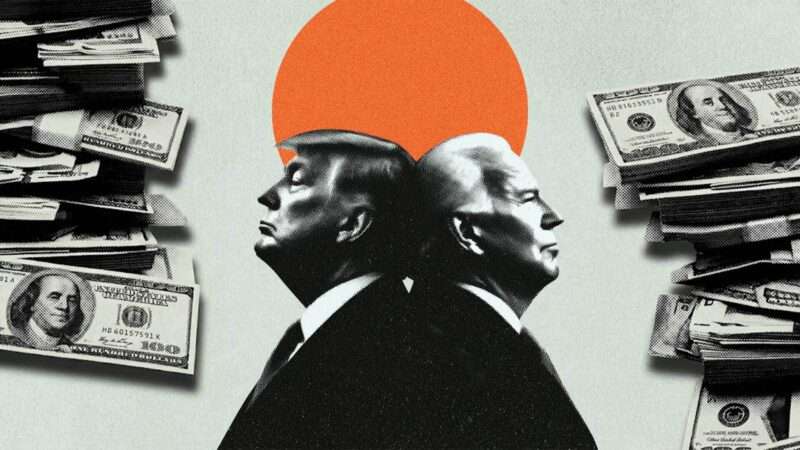
Donald Trump and Joe Biden | Illustration: Eddie Marshall | Midjourney

The 2020s, so far, have been one long and often painful lesson in what happens when policymakers tell economists to shut up and go away.

From the COVID-19 pandemic through Bidenflation and onto the Trump 2.0 trade wars, each successive administration to occupy the White House during this decade has made a critical error by assuming it could ignore economic principles—or simply substitute them for a different set of underlying assumptions. Those errors have been made in different ways and for different reasons, yes, but they share this common characteristic: a belief that economics is optional, and that tradeoffs can be eliminated if your motives are in the right place.

But that is simply not true, as circumstances have shown again and again.

Start with COVID, which is undeniably the defining story of the first half-plus-one-year of the 2020s. When the Trump administration and myriad state and local officials implemented lockdowns under the “15 days to slow the spread” promise in March 2020, it was largely at the behest of public health advisers.

The dominant attitude driving lockdown policies that closed schools, businesses, churches, playgrounds, and more was well articulated by Jon Allsop in the Columbia Journalism Review‘s newsletter. There is “no choice to be made between public health and a healthy economy—because public health is an essential prerequisite of a healthy economy,” he wrote in April 2020 as debate over “reopening” was ongoing.

That all-or-nothing approach reveals how little the economists were involved in the early decisions over COVID. “There are no solutions; only tradeoffs,” is how Thomas Sowell once put it, but during the early months of the pandemic, solutions were overly promised and tradeoffs were routinely ignored. That was a tremendous error.

“At its most basic, economics is about analyzing choices made under constraints. Politicians and government agencies made a vast range of public health decisions this past year that violated principles that good economists take for granted,” wrote Ryan Bourne, an economist with the Cato Institute, in a 2021 review of early COVID policies. “These decisions made the public health and economic welfare impacts of the pandemic worse than they needed to be. In that sense, the poor response to COVID-19 represents a failure to think economically.”

As the pandemic waned, the Biden administration repeated that mistake.

Soon after taking office, President Joe Biden’s team pushed for a “run it hot” approach to economic policy and openly dismissed fears of rising inflation. That came to fruition with the American Rescue Plan, a $1.9 trillion spending package that included $1,400 stimulus checks to households earning as much as $160,000 in joint income.

Larry Summers, a Harvard economist and veteran of the Biden administration, warned in a Washington Post op-ed that the American Rescue Plan would “set off inflationary pressures of a kind we have not seen in a generation.” Other top economists, including a former chairman of the International Monetary Fund, offered similar warnings.

Biden and Democrats in Congress did not listen. The result? Inflation of a kind America had not seen in a generation. The annualized inflation rate hit 9.1 percent in June 2022 and still has not returned to the 2 percent annualized rate that the Federal Reserve regards as its target.

Indeed, inflation has in some ways supplanted COVID as the dominant political narrative of the 2020s. Even though the current inflation level (2.7 percent annualized) is well below that 2022 peak, it is significantly higher than anything Americans experienced during the first two decades of the 21st century. No wonder everyone seems to be mad about how much things cost.

There were consequences to the Biden administration’s “run it hot” economic policy, and ignoring the economists did not make those tradeoffs go away.

The same can now be said for President Donald Trump’s tariffs, which his administration implemented over the objections of many economists. Vice President J.D. Vance took to X in July to declare that “the economics profession doesn’t fully understand tariffs.”

In reality, the tariffs are a huge tax increase—the largest tax increase in more than three decades, according to the Tax Foundation—and the tradeoffs are pretty much exactly what you’d expect to see after a big tax increase: greater revenue for the government (though not as much as Trump routinely claims), and a reduction of private sector productivity.

Trump and his allies promised that tariffs would usher in a “golden age” for American manufacturing. On the contrary, economists warned that tariffs would harm rather than help American manufacturing firms because the majority of all imports are raw materials and intermediate goods that go into making other products.

The proof is in the pudding. Higher taxes on those inputs caused the manufacturing sector to fall into a recession during 2025, and the sector has been shedding jobs. The trade deficit continues to grow. Meanwhile, tariffs have also pushed prices higher.

Economists can be frustrating to advisers in the policymaking process. The impulse to point out the inevitable tradeoffs in any policy can make it seem like their only purpose is to blow holes in the high-minded plans of the nation’s elected officials. But throwing them out of the room does not make foolish ideas more perfect. Six years of dismissing economic reality have not brought us utopia.

If our elected officials are looking for a handy New Year’s resolution for 2026, here’s an idea: Start listening to the economists again.

The post The Big Lesson of the 2020s? Don't Ignore the Economists. appeared first on Reason.com.

from Latest – Reason.com https://ift.tt/dwBhmxD
via IFTTT

Study: Short-Form Video Isn’t Rotting Your Brain


Screen Shot 2025-12-31 at 12.23.12 PM | llustration: Eddie Marshall | Midjourney

If you or your kids have spent too much time scrolling short-form videos during your holiday breaks, don’t fret—you probably haven’t suffered too much brain damage.

Wait, was that even a question? the less paranoid among you may be asking. Oh, my sweet child, I envy your ability to avoid the tech panic world. In certain circles, it’s taken as a given that watching short-form videos—TikTok content, Instagram Reels, etc.—will destroy your intellect, attention span, and mental health.

“Bingeing TikTok reels may be hazardous to your well-being,” organizational psychologist Adam Grant posted to X in November. In “71 studies, >98k people: The more short-form videos teens and adults watched, the more they struggled with attention, self-control, and stress and anxiety.”

AI investor Aadit Sheth put it even more starkly: “The most dangerous addiction today isn’t a substance,” he posted to X on December 4. “Research on 100,000 people confirms that heavy short-form video use is just voluntary cognitive decline. We are actively training our brains to fail at hard tasks.”

And, of course, tech-panic godfather Jonathan Haidt took it even further, describing what’s happening as “the global destruction of the human ability to pay attention.”

Did anyone read the study?

Because delving beyond the abstract gives us a much less dire picture than all that.

14 Chinese Studies Find TikTok Addicts Are Addicted to TikTok

Titled “Feeds, feelings, and focus: A systematic review and meta-analysis examining the cognitive and mental health correlates of short-form video use,” the study was published in Psychological Bulletin in September. And while the review overall included 71 previous studies, the analysis about cognitive traits, like attention—that is, the finding everyone seems to have glommed onto—only relied on 14 studies, all of which were conducted in China.

A review of 14 studies is not nothing, but it’s a lot less impressive and conclusive than a review of 71 studies with nearly 100,000 participants. And the fact that all of these studies come from China at least opens the possibility that the results aren’t generalizable to the U.S. or the whole world.

There’s a bigger issue: Almost all of these studies were specifically concerned with people with problematic or compulsive short-form video habits.

The negative effects of short-form video on cognition were largely linked to “addictive” use and strong emotional attachment to the habit, not short-form video consumption broadly and not even to how much time people spent watching short-form video.

Overall, more short-form video “engagement” was linked to poorer cognition, with a moderate, negative mean effect size. The correlation coefficient—known in statistics as r—was -0.34.

(A mean effect size of 0.10 represents a weak correlation, the review authors explain, while 0.30 represents a moderate correlation and 0.50 a strong correlation. “A positive correlation indicates that higher [short-form video] engagement is associated with better health indicators, whereas a negative correlation indicates the reverse.”)

But the effects weren’t equally distributed across cognitive domains or video engagement metrics. The analysis found no link between video engagement and reasoning ability, and only a weak negative association between video engagement and language skills or memory. There were no strong associations. The only moderate associations between short-form video engagement and cognition concerned attention (-0.38) and inhibitory control (-0.41), a measure of self-control and the ability to avoid impulsive behavior.

What’s more, negative cognitive effects were very weakly associated with short-form video duration—that is, with the amount of time people spent watching short-form video. Poorer cognition was only strongly associated with intensity of consumption (a measure of “emotional/psychological attachment” to short-form video apps) and moderately associated with addiction (defined as “habitual, uncontrollable use”).

This seems like a really important point (and hints at which way causation may flow here). The negative cognitive traits were at least moderately linked to compulsive watching of short-form videos (with a correlation coefficient of -0.37) and strongly linked to emotional dependency (-0.55), but only very weakly linked to the amount of time spent watching videos (-0.20).

Tech critics love to ignore the fact that we don’t know which way causation flows with studies like these. Their interpretations suggest that all people start at an equal level of cognitive ability and mental stability, and upon watching too many short-form videos (or spending too much time on social media, or whatever the crisis du jour is), this ability and stability starts to decline. But we all know that stability and intellect are not distributed equally. And it seems perfectly plausible that people already suffering from stress, social anxiety, poor self-control, and so on, may turn to digital distractions more frequently than do their more well-adjusted, less stressed, and less impulsive peers.

If the tech-panic interpretation were correct here, we would expect to see duration at least moderately tied to negative traits. The amount of time spent watching short-form videos would be a big deal, with a sort of dose-dependent effect—the more short-form videos you consume, the worse your cognition gets.

Or, to put it in popular parlance: The more scrolling, the more brain rot. But that’s not what we see.

Rather, we see people with problematic attachments to short-form video also suffering from poorer focus and inhibitory control.

And the fact that people with poor self-control are more likely to be compulsive or habitual scrollers seems like a pretty commonsense and nonalarming finding.

But nonalarming findings don’t get a lot of attention on social media and don’t lend themselves to regulatory intervention. So instead, we see people distorting, obfuscating, and exaggerating this review’s findings to make things appear much darker and more catastrophic.

Short-Term Video Use, Duration Not Significantly Linked to Mental Health

What about mental health—surely there must at least be some big doom and gloom finding here?

Nope.

The vast majority of the source studies included in this review—61 studies—looked at how short-form video consumption correlated with mental health. And the association was a negative one, with higher short-form video engagement linked to poorer mental health correlates. But the average effect size was quite weak, with a correlation coefficient of just -0.21.

Looking at specific mental health factors, the only moderate correlations concerned stress (-0.34) and anxiety (-0.33). (There were no strong associations.)

Short-form video engagement was just barely associated with well-being (-0.14) and weakly associated with depression and loneliness (-0.23 for each). It showed no significant association with body image or self-esteem.

And there was no significant association between the amount of time spent watching short-term videos or frequency of engagement and mental health correlates. The correlation coefficients here were -0.10 and -0.05, respectively.

The association between mental health and whether one watched short-form video at all was also trivial (-0.13), as was the tie between mental health and intensity of usage (-0.14).

The only moderate effect size was found when looking at the link between short-form video “addiction” and poor mental health (-0.32).

Again, we’ve got what’s not exactly an earth-shattering finding: People who feel addicted to short-form videos are also more likely to be anxious and stressed.

And, again, we’ve got little to suggest that watching short-form videos generally makes one worse off than those who don’t, or that poorer mental health is tied to duration or frequency of time spent doing so.

Big-Picture Problems 

Tyler Cowen wrote earlier this month about another study on video watching. This one also raised a lot of alarm over what were, ultimately, pretty small effects: “for each daily hour of video watching, a child experiences (on average) a reduction of non-cognitive skills of 0.091 standard deviations…less than a tenth of a standard deviation” and “likely smaller than the change in your cognitive ability over the course of a day,” as Cowen pointed out. He suggests that we shouldn’t ignore such findings (“this is a matter of genuine concern, and I believe many parents would be wise to limit their children’s video watching”) but, also, we should avoid Haidt-style theatrics about “the global destruction of the human ability to pay attention.”

Dramatic pronunciations about humanity’s doom seem to be weirdly appealing to people here, perhaps because they play to people’s sense of superiority or intrigue or nostalgia. But they’re rarely, if ever, borne out by the data and effect sizes we actually see.

There are also big-picture problems with claims like Haidt’s, including the fact that most people don’t watch short-form videos at all. Only about a third of U.S. adults say they use TikTok, and that tells us nothing about how often they do. Even among U.S. teenagers—where use of TikTok and Instagram stands around 60 percent and use of YouTube around 90 percent—a much smaller fraction (between 12 percent and 16 percent) report truly problematic use. If these apps are out to destroy human attention spans globally, they need to up their game.

We should also be careful about generalizing the “feeds, feelings, and focus” results globally because they’re not globally representative. Nearly three-quarters of the studies included in the review (74 percent) come from Asia, with just 11 percent from North America, 11 percent from Europe, 3 percent from Africa, and 1 percent from Central America.

And, of course—one more time, everybody!—correlation is not causation. Even when we find associations between tech use and negative traits, we cannot be sure tech use caused these negative traits. Maybe stress and short attention spans cause people to be more avid or enthusiastic users of social media or online video. Maybe some third factor, like life circumstances or an underlying mental condition, spurs both app addiction and stress or poor inhibitory control.

A substacker who writes under the pseudonym Owen Kellogg has been developing what he calls the Compensatory-Use Model of screen time. Data suggests that “phones do matter, but their role is often misunderstood,” he writes. “Instead of operating as a primary source of distress, heavy phone use appears to function as a compensatory behavior. When young people lack reliable sources of support or connection, they turn to tools that provide stimulation or regulation. Heavy screen use fills gaps left by unmet material and psychological needs.”

Of course, we have heard all sorts of “tech is rotting your brain” rhetoric before. “This is your brain on computers,” The New York Times intoned in a 2010 piece on how “juggling e-mail, phone calls and other incoming information” was undermining our ability to focus, with “deadly consequences.” Psychology Today warned, in 2009, that “Twitter makes you stupid.” The Guardian was ahead of the game, warning way back in 2000 that “computers rot our children’s brains.”

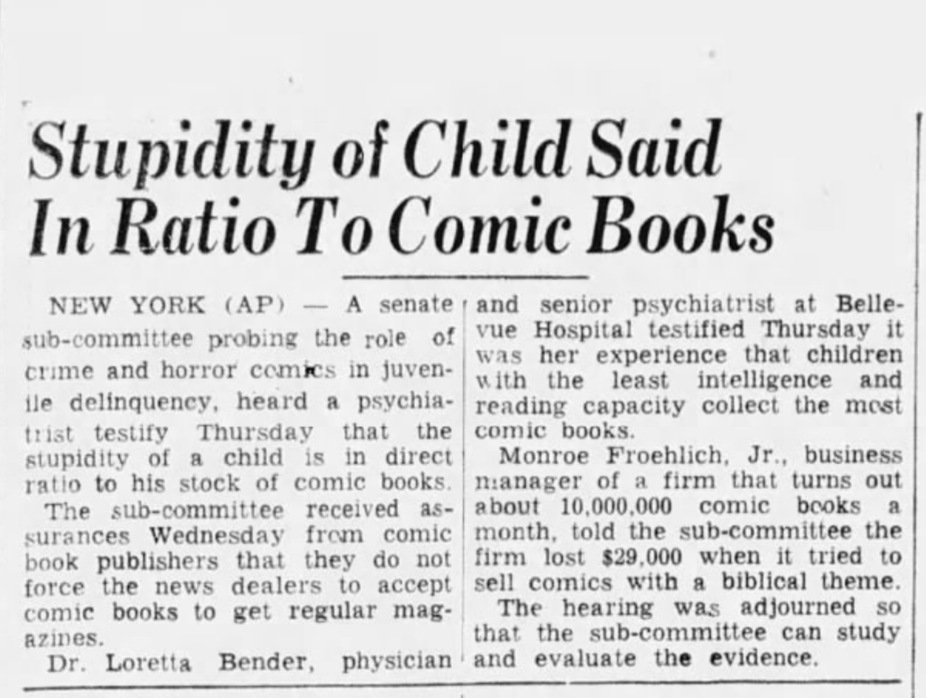
And before social media and email and iMacs, there was television to blame. In 1990, Time magazine warned about “every parent’s worst nightmare: the six-year-old TV addict” and how television was making children “less well informed, more restless and poorer students.” And “a senate sub-committee…heard a psychiatrist testify Thursday that the stupidity of a child is in direct ratio to his stock of comic books,” the Associated Press reported on April 23, 1954.

The “this time it’s different” people are going to need better data to convince me.


More Sex & Tech News

“The modern Internet is cooked”: Law professor Eric Goldman takes a look “at legal challenges to a dozen state censorship laws,” many of which “are headed towards the Supreme Court,” he writes.

Department of There Are Not Enough Eye-Rolls: New York Gov. Kathy Hochul has signed into law a measure requiring warning labels on social media.

The U.S. government is using real censorship to fight fake censorship, notes Mike Masnick. It has blocked five people from getting U.S. visas because of their efforts to “coerce American platforms to censor, demonetize, and suppress American viewpoints they oppose,” as the State Department put it. “That theory relies almost entirely on fabricated or grossly misrepresented evidence,” Masnick suggests.

App store age verification halted: A federal court has temporarily blocked a Texas law—which was set to take effect January 1—that required app stores to verify user ages before allowing them to download apps, and to block minors from downloading apps without parental permission.

Ditch that embarrassing old moniker: Gmail will now let users change their email addresses while still retaining all their data and services.

The post Study: Short-Form Video <em>Isn't</em> Rotting Your Brain appeared first on Reason.com.

from Latest – Reason.com https://ift.tt/3wA1uFO
via IFTTT

DHS Says REAL ID, Which DHS Certifies, Is Too Unreliable To Confirm U.S. Citizenship


Close up of a California REAL ID | Illustration: Eddie Marshall | Rickk6rj | Dreamstime.com | Nano Banana

Only the government could spend 20 years creating a national ID that no one wanted and that apparently doesn’t even work as a national ID.

But that’s what the federal government has accomplished with the REAL ID, which the Department of Homeland Security (DHS) now considers unreliable, even though getting one requires providing proof of citizenship or lawful status in the country.

In a December 11 court filing, Philip Lavoie, the acting assistant special agent in charge of DHS’ Mobile, Alabama, office, stated that, “REAL ID can be unreliable to confirm U.S. citizenship.”

Lavoie’s declaration was in response to a federal civil rights lawsuit filed in October by the Institute for Justice, a public-interest law firm, on behalf of Leo Garcia Venegas, an Alabama construction worker. Venegas was detained twice in May and June during immigration raids on private construction sites, despite being a U.S. citizen. In both instances, Venegas’ lawsuit says, masked federal immigration officers entered the private sites without a warrant and began detaining workers based solely on their apparent ethnicity.

And in both instances officers allegedly retrieved Venegas’ Alabama-issued REAL ID from his pocket but claimed it could be fake. Venegas was kept handcuffed and detained for an hour the first time and “between 20 and 30 minutes” the second time before officers ran his information and released him.

Lavoie’s declaration says that the agents “needed to further verify his U.S. citizenship because each state has its own REAL ID compliance laws, which may provide for the issuance of a REAL ID to an alien and therefore based on HSI Special Agent training and experience, REAL ID can be unreliable to confirm U.S. citizenship.”

It’s the punch line to a bad joke with a 20-year windup. When Congress passed the REAL ID Act in 2005. It was sold as a post-9/11 security measure to create uniform standards for state IDs, including clearly listing citizenship or lawful immigration status. State IDs that conformed to the requirements would be marked with a star. Contrary to the cheeky first sentence of this story, DHS insists that REAL ID is not a national ID system, and that it doesn’t involve a centralized national database. (Civil liberties groups say it amounts to a de facto national ID system anyway.) 

The rub was that REAL IDs would be required for entry to federal property, including, most significantly for the average American, airport security checkpoints. But the law was widely unpopular. There was such low compliance from states that enforcement was delayed seven times over the years, until finally beginning this May.

The project should have been scrapped years ago. America somehow survived two decades of terrorism-free air travel without REAL IDs. As Reason‘s Scott Shackford wrote in 2021, “The government is demanding that Americans give up more of their privacy to the feds, subject themselves to additional inane bureaucracy, and carry around proof that we’re citizens to be able to fly, even though none of that makes us more secure.”

And now we discover that DHS doesn’t even consider the thing proof of citizenship.

In a court filing in response to DHS, the Institute for Justice noted how incredible this position is. “REAL IDs require proof of citizenship or lawful status,” the Institute for Justice wrote. “DHS is the very agency responsible for certifying that REAL IDs, including Alabama’s STAR IDs, satisfy this requirement.”

The law firm argues that DHS’ policy of allowing officers to disregard proof of lawful presence likely violates the Fourth Amendment and DHS’ own regulations.

When asked to comment on Lavoie’s declaration, a DHS spokesperson said in a statement to Reason: “The INA requires aliens and non-citizens in the US to carry immigration documents. Real IDs are not immigration documents—they make identification harder to forge, thwarting criminals and terrorists.”

But of course, Venegas is a U.S. citizen, so he is not required to carry non-existent immigration documents.

DHS’ statement to Reason when Venegas’ lawsuit was first filed insisted that, “What makes someone a target for immigration enforcement is if they are illegally in the U.S.—NOT their skin color, race, or ethnicity.”

The agency never responded to a follow-up question asking why, then, Venegas was targeted.

This is the cynical two-step that the Supreme Court allowed this September when it overturned a ruling by the 9th Circuit Court of Appeals, which found that the Trump administration was likely violating the Fourth Amendment rights of citizens by seizing them based solely on factors such as “apparent race or ethnicity.” 

Justice Brett Kavanaugh released a concurring opinion in which he waved away concerns that allowing such profiling would lead to citizens and legal residents being unduly harassed.

“As for stops of those individuals who are legally in the country, the questioning in those circumstances is typically brief,” Kavanaugh wrote, “and those individuals may promptly go free after making clear to the immigration officers that they are U. S. citizens or otherwise legally in the United States.”

But what the Lavoie declaration makes clear—and what should be remembered every time a new national security boondoggle like the REAL ID is proposed—is that when our Fourth Amendment rights are eroded, there is no evidence or piece of plastic that will suffice to overcome an officer’s “reasonable suspicion” once the government decides you’re a target.

The post DHS Says REAL ID, Which DHS Certifies, Is Too Unreliable To Confirm U.S. Citizenship appeared first on Reason.com.

from Latest – Reason.com https://ift.tt/M4L7P8Y
via IFTTT

Study: Short-Form Video Isn’t Rotting Your Brain


Screen Shot 2025-12-31 at 12.23.12 PM | llustration: Eddie Marshall | Midjourney

If you or your kids have spent too much time scrolling short-form videos during your holiday breaks, don’t fret—you probably haven’t suffered too much brain damage.

Wait, was that even a question? the less paranoid among you may be asking. Oh, my sweet child, I envy your ability to avoid the tech panic world. In certain circles, it’s taken as a given that watching short-form videos—TikTok content, Instagram Reels, etc.—will destroy your intellect, attention span, and mental health.

“Bingeing TikTok reels may be hazardous to your well-being,” organizational psychologist Adam Grant posted to X in November. In “71 studies, >98k people: The more short-form videos teens and adults watched, the more they struggled with attention, self-control, and stress and anxiety.”

AI investor Aadit Sheth put it even more starkly: “The most dangerous addiction today isn’t a substance,” he posted to X on December 4. “Research on 100,000 people confirms that heavy short-form video use is just voluntary cognitive decline. We are actively training our brains to fail at hard tasks.”

And, of course, tech-panic godfather Jonathan Haidt took it even further, describing what’s happening as “the global destruction of the human ability to pay attention.”

Did anyone read the study?

Because delving beyond the abstract gives us a much less dire picture than all that.

14 Chinese Studies Find TikTok Addicts Are Addicted to TikTok

Titled “Feeds, feelings, and focus: A systematic review and meta-analysis examining the cognitive and mental health correlates of short-form video use,” the study was published in Psychological Bulletin in September. And while the review overall included 71 previous studies, the analysis about cognitive traits, like attention—that is, the finding everyone seems to have glommed onto—only relied on 14 studies, all of which were conducted in China.

A review of 14 studies is not nothing, but it’s a lot less impressive and conclusive than a review of 71 studies with nearly 100,000 participants. And the fact that all of these studies come from China at least opens the possibility that the results aren’t generalizable to the U.S. or the whole world.

There’s a bigger issue: Almost all of these studies were specifically concerned with people with problematic or compulsive short-form video habits.

The negative effects of short-form video on cognition were largely linked to “addictive” use and strong emotional attachment to the habit, not short-form video consumption broadly and not even to how much time people spent watching short-form video.

Overall, more short-form video “engagement” was linked to poorer cognition, with a moderate, negative mean effect size. The correlation coefficient—known in statistics as r—was -0.34.

(A mean effect size of 0.10 represents a weak correlation, the review authors explain, while 0.30 represents a moderate correlation and 0.50 a strong correlation. “A positive correlation indicates that higher [short-form video] engagement is associated with better health indicators, whereas a negative correlation indicates the reverse.”)

But the effects weren’t equally distributed across cognitive domains or video engagement metrics. The analysis found no link between video engagement and reasoning ability, and only a weak negative association between video engagement and language skills or memory. There were no strong associations. The only moderate associations between short-form video engagement and cognition concerned attention (-0.38) and inhibitory control (-0.41), a measure of self-control and the ability to avoid impulsive behavior.

What’s more, negative cognitive effects were very weakly associated with short-form video duration—that is, with the amount of time people spent watching short-form video. Poorer cognition was only strongly associated with intensity of consumption (a measure of “emotional/psychological attachment” to short-form video apps) and moderately associated with addiction (defined as “habitual, uncontrollable use”).

This seems like a really important point (and hints at which way causation may flow here). The negative cognitive traits were at least moderately linked to compulsive watching of short-form videos (with a correlation coefficient of -0.37) and strongly linked to emotional dependency (-0.55), but only very weakly linked to the amount of time spent watching videos (-0.20).

Tech critics love to ignore the fact that we don’t know which way causation flows with studies like these. Their interpretations suggest that all people start at an equal level of cognitive ability and mental stability, and upon watching too many short-form videos (or spending too much time on social media, or whatever the crisis du jour is), this ability and stability starts to decline. But we all know that stability and intellect are not distributed equally. And it seems perfectly plausible that people already suffering from stress, social anxiety, poor self-control, and so on, may turn to digital distractions more frequently than do their more well-adjusted, less stressed, and less impulsive peers.

If the tech-panic interpretation were correct here, we would expect to see duration at least moderately tied to negative traits. The amount of time spent watching short-form videos would be a big deal, with a sort of dose-dependent effect—the more short-form videos you consume, the worse your cognition gets.

Or, to put it in popular parlance: The more scrolling, the more brain rot. But that’s not what we see.

Rather, we see people with problematic attachments to short-form video also suffering from poorer focus and inhibitory control.

And the fact that people with poor self-control are more likely to be compulsive or habitual scrollers seems like a pretty commonsense and nonalarming finding.

But nonalarming findings don’t get a lot of attention on social media and don’t lend themselves to regulatory intervention. So instead, we see people distorting, obfuscating, and exaggerating this review’s findings to make things appear much darker and more catastrophic.

Short-Term Video Use, Duration Not Significantly Linked to Mental Health

What about mental health—surely there must at least be some big doom and gloom finding here?

Nope.

The vast majority of the source studies included in this review—61 studies—looked at how short-form video consumption correlated with mental health. And the association was a negative one, with higher short-form video engagement linked to poorer mental health correlates. But the average effect size was quite weak, with a correlation coefficient of just -0.21.

Looking at specific mental health factors, the only moderate correlations concerned stress (-0.34) and anxiety (-0.33). (There were no strong associations.)

Short-form video engagement was just barely associated with well-being (-0.14) and weakly associated with depression and loneliness (-0.23 for each). It showed no significant association with body image or self-esteem.

And there was no significant association between the amount of time spent watching short-term videos or frequency of engagement and mental health correlates. The correlation coefficients here were -0.10 and -0.05, respectively.

The association between mental health and whether one watched short-form video at all was also trivial (-0.13), as was the tie between mental health and intensity of usage (-0.14).

The only moderate effect size was found when looking at the link between short-form video “addiction” and poor mental health (-0.32).

Again, we’ve got what’s not exactly an earth-shattering finding: People who feel addicted to short-form videos are also more likely to be anxious and stressed.

And, again, we’ve got little to suggest that watching short-form videos generally makes one worse off than those who don’t, or that poorer mental health is tied to duration or frequency of time spent doing so.

Big-Picture Problems 

Tyler Cowen wrote earlier this month about another study on video watching. This one also raised a lot of alarm over what were, ultimately, pretty small effects: “for each daily hour of video watching, a child experiences (on average) a reduction of non-cognitive skills of 0.091 standard deviations…less than a tenth of a standard deviation” and “likely smaller than the change in your cognitive ability over the course of a day,” as Cowen pointed out. He suggests that we shouldn’t ignore such findings (“this is a matter of genuine concern, and I believe many parents would be wise to limit their children’s video watching”) but, also, we should avoid Haidt-style theatrics about “the global destruction of the human ability to pay attention.”

Dramatic pronunciations about humanity’s doom seem to be weirdly appealing to people here, perhaps because they play to people’s sense of superiority or intrigue or nostalgia. But they’re rarely, if ever, borne out by the data and effect sizes we actually see.

There are also big-picture problems with claims like Haidt’s, including the fact that most people don’t watch short-form videos at all. Only about a third of U.S. adults say they use TikTok, and that tells us nothing about how often they do. Even among U.S. teenagers—where use of TikTok and Instagram stands around 60 percent and use of YouTube around 90 percent—a much smaller fraction (between 12 percent and 16 percent) report truly problematic use. If these apps are out to destroy human attention spans globally, they need to up their game.

We should also be careful about generalizing the “feeds, feelings, and focus” results globally because they’re not globally representative. Nearly three-quarters of the studies included in the review (74 percent) come from Asia, with just 11 percent from North America, 11 percent from Europe, 3 percent from Africa, and 1 percent from Central America.

And, of course—one more time, everybody!—correlation is not causation. Even when we find associations between tech use and negative traits, we cannot be sure tech use caused these negative traits. Maybe stress and short attention spans cause people to be more avid or enthusiastic users of social media or online video. Maybe some third factor, like life circumstances or an underlying mental condition, spurs both app addiction and stress or poor inhibitory control.

A substacker who writes under the pseudonym Owen Kellogg has been developing what he calls the Compensatory-Use Model of screen time. Data suggests that “phones do matter, but their role is often misunderstood,” he writes. “Instead of operating as a primary source of distress, heavy phone use appears to function as a compensatory behavior. When young people lack reliable sources of support or connection, they turn to tools that provide stimulation or regulation. Heavy screen use fills gaps left by unmet material and psychological needs.”

Of course, we have heard all sorts of “tech is rotting your brain” rhetoric before. “This is your brain on computers,” The New York Times intoned in a 2010 piece on how “juggling e-mail, phone calls and other incoming information” was undermining our ability to focus, with “deadly consequences.” Psychology Today warned, in 2009, that “Twitter makes you stupid.” The Guardian was ahead of the game, warning way back in 2000 that “computers rot our children’s brains.”

And before social media and email and iMacs, there was television to blame. In 1990, Time magazine warned about “every parent’s worst nightmare: the six-year-old TV addict” and how television was making children “less well informed, more restless and poorer students.” And “a senate sub-committee…heard a psychiatrist testify Thursday that the stupidity of a child is in direct ratio to his stock of comic books,” the Associated Press reported on April 23, 1954.

The “this time it’s different” people are going to need better data to convince me.


More Sex & Tech News

“The modern Internet is cooked”: Law professor Eric Goldman takes a look “at legal challenges to a dozen state censorship laws,” many of which “are headed towards the Supreme Court,” he writes.

Department of There Are Not Enough Eye-Rolls: New York Gov. Kathy Hochul has signed into law a measure requiring warning labels on social media.

The U.S. government is using real censorship to fight fake censorship, notes Mike Masnick. It has blocked five people from getting U.S. visas because of their efforts to “coerce American platforms to censor, demonetize, and suppress American viewpoints they oppose,” as the State Department put it. “That theory relies almost entirely on fabricated or grossly misrepresented evidence,” Masnick suggests.

App store age verification halted: A federal court has temporarily blocked a Texas law—which was set to take effect January 1—that required app stores to verify user ages before allowing them to download apps, and to block minors from downloading apps without parental permission.

Ditch that embarrassing old moniker: Gmail will now let users change their email addresses while still retaining all their data and services.

The post Study: Short-Form Video <em>Isn't</em> Rotting Your Brain appeared first on Reason.com.

from Latest – Reason.com https://ift.tt/3wA1uFO
via IFTTT

Crew Paints Russian Flag On Iran-Linked Tanker To Avoid US Seizure

Crew Paints Russian Flag On Iran-Linked Tanker To Avoid US Seizure

The weird saga of the US-sought third tanker off Venezuela which was nearly boarded by US forces before fleeing into the Atlantic continues, after US officials have newly revealed more information.

US attempts to intercept the oil tanker Bella 1 in the Atlantic have been complicated after the ship’s crew painted a Russian flag on its hull. It has avoided and evaded the US Coast Guard for more than ten days after refusing to comply with an interception near Venezuela on December 21.

Reports based on US officials describe that the crew got creative in their evasion efforts, as they’ve added a Russian tricolor to the side of the vessel and so are now claiming it is operating under Russian jurisdiction.

This has created new complications, given Washington had secured a court order authorizing the ship’s seizure due to its alleged involvement in transporting Iranian crude. But now with the newly displayed flag Russian flag, this has made enforcement more difficult under international maritime law.

The tanker was traveling toward Venezuela without any cargo at the time that US Coast Guard forces tried to board it – and then it fled into open sea, after which US assets continued shadowing the ship.

Under the UN Convention on the Law of the Sea, authorities are allowed to board vessels that are flying false flags or lack proper registration – but in the scenario that Russia has officially registered the Bella 1, a forced boarding could risk diplomatic fallout and an international incident.

The tanker in question has been under US Treasury sanctions since 2024, as it has long been accused of transporting Iranian oil on behalf of Hezbollah, the Houthis, and Iran’s elite Islamic Revolutionary Guard Corps (IRGC).

The vessel is owned by Louis Marine Shipholding Enterprises, which is based in Turkey, and most of the crew are believed to be Russian, Indian, and Ukrainian.

The now apparently stymied attempt to apprehend the vessel comes soon on the heels of President Trump having ordered the US military to enforce a two-month “quarantine” of Venezuelan oil, signaling an intensification of gunboat diplomacy aimed at fostering regime instability in Caracas, with potential spillover effects that could ripple across the Caribbean into Cuba.

“While military options still exist, the focus is to first use economic pressure by enforcing sanctions to reach the outcome the White House is looking (for),” a US official told Reuters earlier this month.

“The efforts so far have put tremendous pressure on Maduro, and the belief is that by late January, Venezuela will be facing an economic calamity unless it agrees to make significant concessions to the U.S,” the U.S. official told Reuters.

According to analytics firm Kpler, Caracas has shipped nearly 900,000 barrels per day this year and relies on 400 dark-fleet tankers to transport the crude, much of which is bound for China. 

Tyler Durden
Wed, 12/31/2025 – 12:15

via ZeroHedge News https://ift.tt/1C5QP4q Tyler Durden

High Electricity Prices Are A Choice Blue States Make Every Day

High Electricity Prices Are A Choice Blue States Make Every Day

Authored by Isaac Orr & Tom Pyle via RealClearEnergy,

Americans are anxious about their utility bills – and with good reason. Three quarters of U.S. residents are concerned about their electricity and gas bills rising this year, and 80% feel powerless over how much they are charged for utilities. For nearly two-thirds of U.S. billpayers, simply keeping the lights on has become a growing source of financial stress.

(don’t say her name three times in front of a mirror)

Those concerns are grounded in reality. U.S. electricity prices rose 27% during the Biden administration and another 11% between January and September 2025. Yet despite a national narrative eager to blame President Trump’s One Big Beautiful Bill Act (OBBBA), the real drivers of high electricity prices are far closer to home.

Electricity affordability is shaped primarily by state policy choices, and states choosing the most expensive path are overwhelmingly blue. So, blue-state residents are experiencing the pain much more than those in red states.

A new report from Always On Energy Research and the Institute for Energy Research finds that 86% of states with electricity prices above the national average voted for Democratic presidential candidates in 2020 and 2024. In contrast, 80% of the 10 states with the lowest electricity prices are reliably red. That’s not a coincidence. Those high prices reflect a consistent pattern of state-level energy policies that dictate emissions reduction targets at the expense of affordability, reliability, and physics. 

States have the exclusive power to decide which resources supply their grids under the Federal Power Act. Governors, legislatures, and public utility commissions – not the White House – decide whether to impose renewable portfolio standards (RPS), enforce Net-Zero mandates, or prematurely retire reliable power plants. Those decisions directly determine how much families and businesses pay for electricity.

Today, 28 states enforce an RPS, requiring a certain percentage of retail electricity sales to come from renewable sources, and 16 states have 100% clean energy standards (CES) or carbon-free mandates. Many of these policies compel utilities to overbuild intermittent generation, such as wind and solar, thereby requiring significant investments in transmission, grid-scale storage, and backup generation to maintain reliability. The result is a higher total system cost, which is passed onto ratepayers in the form of higher electricity rates.

Consider that the U.S. average electricity price between January 2025 and August 2025 was 13.54 cents per kilowatt-hour. Each of the five most expensive states mandates 100% of their electricity come from renewable or carbon-free sources in the coming decades. Eight of the 10 states with the lowest electricity prices voted for the Republican presidential candidate in 2020 and 2024, and seven of the 10 don’t have renewable or carbon-free mandates.  

New York is a prime blue state example, where electricity prices were 58% higher than the national average during the same period. The Progressive Policy Institute (PPI) found that New York experienced the second-fastest increase in electricity prices nationwide, with residential customers suffering a 36% increase between 2019 and 2024. PPI points to “the immense capital investment required to transform the grid and specific policy choices that increase the cost of energy production,” as well as the closure of the Indian Point nuclear plant. 

It’s clear that Governor Kathy Hochul knows exactly which policy choices are driving up electricity costs — because she’s scrambling to roll them back. Ms. Hochul has delayed implementation of the state’s cap-and-tax mandates under the 2019 Climate Leadership and Community Protection Act (CLCPA), which includes a substantial renewable energy mandate requiring 70% renewable energy by 2030 and 100% carbon-free energy by 2040.

The state’s Department of Environmental Conservation defended the delay, arguing in court that the regulations would impose “extraordinary and damaging costs upon New Yorkers.” Ms. Hochul has approved two major natural gas pipelines and delayed implementation of the state’s ban on gas stoves in new buildings – a tacit admission that reliability and affordability still matter in New York.

California, however, remains committed to the most expensive path in the country with the fastest rate increase, now double the national average. For years, Governor Gavin Newsom and the California legislature have imposed on ratepayers a carbon-emissions reduction mandate, renewable mandates, solar cost-shifting through net metering, nuclear reactor closures, and EV charging subsidies.

For all of his climate-friendly posturing, Mr. Newsom signed a bill to ramp up oil drilling in Kern County, and his Energy Commission has delayed its plan to penalize refinery profits for five years. These reversals underscore a central truth: ideology will take a back seat to cost and reliability.

There’s a silver lining, however. While states can choose to raise electricity costs for their residents through bad policies, they can also choose to lower costs through good policies. For instance, Florida is the second-largest electricity producer in the country, behind only Texas. Residents require air conditioning for its hot, humid summers and heating in its mild winters. However, Florida delivers electricity at prices 2% below the U.S. average—mainly because it generates 75% of its power from imported natural gas. It has avoided aggressive climate mandates and delivers below-average electricity prices despite frequent hurricanes that require ongoing investment in the grid. 

Louisiana and Kentucky have also invested in wise policies. Louisiana posted the third-lowest electricity rates in the U.S. in 2025, and Kentucky had the lowest rates east of the Mississippi River. Nearly three-quarters of Louisiana’s electricity is generated from natural gas, leveraging its abundant natural gas production and robust pipeline network. Kentucky, similarly, leverages its coal resources to generate 67% of the state’s electricity, with another 26% by natural gas. Neither has pursued aggressive carbon emissions reduction or renewable energy mandates.

Pinning the blame on the federal government and President Trump, as Democrats have been eager to do, ignores the vital role that states play in delivering affordable, reliable electricity. Secretary of Energy Chris Wright recognizes the same, stating on Fox News that “Electricity prices have risen very fast in blue states with restrictive renewable portfolio standards.” 

The Department of Energy and President Trump can set the tone, but they don’t dictate the composition of state grids or the bills consumers receive each month. Those decisions rest squarely with governors, legislators, and regulators. Ultimately, it’s up to the states to prioritize reliable, affordable, dispatchable generation and drive down electricity prices.

High electricity rates aren’t an unavoidable consequence of modern life or federal policy. They are the predictable outcome of state-level choices that ignore reliability, undervalue dispatchable generation, and impose rigid mandates regardless of cost. Americans deserve leaders who recognize that keeping the lights on at a modest price isn’t optional. The states keeping electricity affordable today offer a roadmap for those willing to learn.

Isaac Orr is vice president of research at Always On Energy Research, a nonprofit energy modeling firm.

Tom Pyle is President of the Institute for Energy Research, a nonprofit energy research organization.

Tyler Durden
Wed, 12/31/2025 – 11:55

via ZeroHedge News https://ift.tt/WyGjsmY Tyler Durden

“Regulatory Theater”: Meta Created ‘Playbook’ To Obscure Scam Ads From Regulators, Avoid Forced Verification

“Regulatory Theater”: Meta Created ‘Playbook’ To Obscure Scam Ads From Regulators, Avoid Forced Verification

Last month Reuters revealed that roughly 10% of Meta’s annual revenue, or $16 billion, comes from advertising scams and banned goods – as the company only bans advertisers when its systems detect a 95% probability of fraud, while charging higher ad fees to suspicious buyers – a system critics describe as “pay to play.”

Data from fraud-reporting firm SafelyHQ shows Facebook is cited in 85% of scam reports that identify a platform, with more than 50,000 verified complaints collected so far, which CEO Patrick Quade suggests an implied victim count in the “tens of millions.”

Now, internal documents reviewed by Reuters indicate that Meta developed tools to both reduce scam advertising, and to limit regulators’ visibility into said ads after governments threatened measures that could severely cripple advertising revenue by forcing the company to reveal the identity of advertisers.

The efforts began last year after Japanese regulators highlighted a surge of scam advertising on Facebook and Instagram. The fraudulent ads included fake investment opportunities and artificial-intelligence-generated celebrity endorsements. Fearing that Japanese authorities might impose strict verification and transparency requirements that would materially affect its advertising business, the company launched an enforcement push aimed at reducing the number of fraudulent ads. At the same time, the documents show, the company focused on how those ads appeared to regulators.

The Ad Library and “Prevalence Perception”

Meta’s remedy centered on its ‘Ad Library,’ a public database designed to allow users to search for ads running on Facebook and Instagram. Meta employees realized Japanese regulators were using keyword searches in the library as a simple measure of the company’s effectiveness at tackling scams.

To improve performance on that measure, Meta staff identified the keywords and celebrity names most frequently used by Japanese Ad Library users. They then repeatedly ran those searches themselves, deleting ads that appeared fraudulent from both the Ad Library and Meta’s platforms.

Internally, the documents describe this work as managing the “prevalence perception” of scams. The stated objective was to make problematic content “not findable” for “regulators, investigators and journalists.”

Internal documents reviewed by Reuters show Meta studying Ad Library searches and adjusting enforcement to reduce the discoverability of problematic advertising. (Reuters)

The tactic produced rapid results. Within weeks, Meta staff reported finding fewer than 100 scam ads in a week, followed by several consecutive days in which searches returned none. A Japanese legislator publicly praised the apparent improvement, and Japan ultimately did not impose the advertiser-verification rules Meta had feared.

From Local Response to Global Strategy

Given their success in dealing with Japan, Meta incorporated the approach into what internal documents describe as a “general global playbook” for responding to regulatory scrutiny worldwide. The same techniques – scrubbing Ad Library search results and reducing the discoverability of scams – were later deployed in markets including the United States, Europe, India, Australia, Brazil and Thailand.

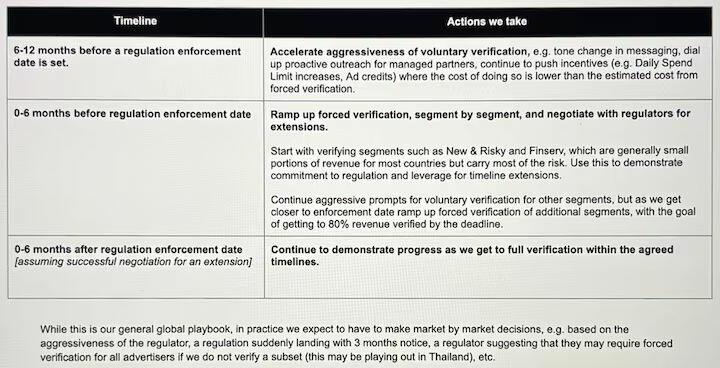
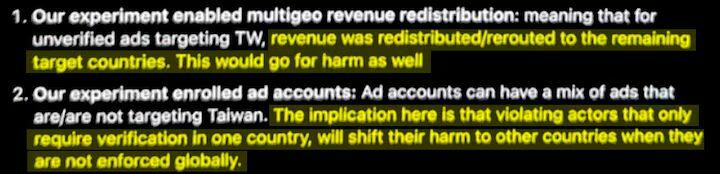
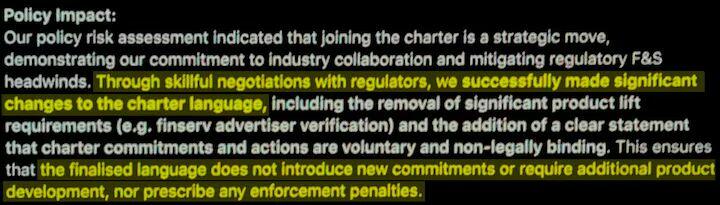
This was all part of a broader strategy for delaying or weakening regulatory action, according to the report – with the playbook guiding Meta officials to offer voluntary measures, requesting time to assess their impact, and resisting universal advertiser verification unless laws leave no alternative.

Former Meta fraud investigator Sandeep Abraham, who left the company in 2023, said the approach distorts the transparency the Ad Library was meant to provide. Rather than offering an accurate view of advertising on Meta’s platforms, he said, it presents a curated picture optimized for regulatory review. Abraham described the tactic as “regulatory theater.”

Internal documents reviewed by Reuters describe a “global playbook” aimed at delaying advertiser-verification mandates, even as company analyses show verification reduces scam ads but would cut revenue. (Reuters)

Meta disputes that characterization. Company spokesman Andy Stone told Reuters that removing scam ads from the Ad Library is not misleading because the ads are removed from Meta’s systems overall. Fewer scams appearing in the library, he said, indicate fewer scams on the platform.

“To suggest otherwise is disingenuous,” Stone said. 

Yet, the best solution would be costly – as Meta has long recognized that universal advertiser verification would significantly reduce scam activity. Internal analyses indicate the company could implement such a system globally in less than six weeks – yet the company has repeatedly balked at the cost. Executives estimated that universal verification would require roughly $2 billion to implement and could eliminate up to 4.8% of total revenue by blocking unverified advertisers. Despite generating $164.5 billion in revenue last year, nearly all from advertising, the company chose not to proceed.

Internal data show that unverified advertisers account for a disproportionate share of harm. One 2022 analysis found that 70% of newly active advertisers were promoting scams, illicit goods or low-quality products.

Instead of adopting verification, Meta chose what documents describe as a “reactive only” stance, accepting universal verification only where mandated by law.

Whack-a-Mole

Despite Meta’s playbook, Taiwanese regulators dropped the hammer – threatening steep fines for unverified financial scam ads. Meta rushed to comply with new rules requiring advertiser verification, which authorities said coincided with dramatic reductions in investment and impersonation scams.

Meta’s own analyses, however, showed that much of the blocked fraudulent advertising was rerouted to users in other countries, displacing both revenue and consumer harm rather than eliminating it. Unless verification was enforced globally, staff warned, Meta would be relocating scams rather than eradicating them.

Meta’s internal analyses, reviewed by Reuters, found that ads blocked in one market were often rerouted to others, preserving revenue while shifting consumer harm. (Reuters)

Even then, the documents show, the financial costs to Meta have remained small. Meta’s own tests showed verification immediately reduced scam ads in those countries by as much as 29%. But much of the lost revenue was recouped because the same blocked ads continued to run in other markets.

If an unverified advertiser is blocked from showing ads in Taiwan, for example, Meta will show those ads more frequently to users elsewhere, creating a whack-a-mole dynamic in which scam ads prohibited in one jurisdiction pop up in another. In the case of blocked ads in Taiwan, “revenue was redistributed/rerouted to the remaining target countries,” one March 2025 document said, adding that consumer injury gets displaced, too. “This would go for harm as well,” the document noted. -Reuters

Hong Kong is another example – where Meta lobbyists moved quickly in 2024 to blunt a proposal by financial regulators that would have required verification of advertisers promoting investment products. To preempt stricter rules, Meta staff helped regulators draft a voluntary “anti-scam charter” and coordinated with Google to present what one lobbyist described internally as a “united front.” The final language, the documents note, imposed no new verification requirements or product changes. In an internal message celebrating the outcome, a Meta lobbyist wrote that regulators had relaxed measures that would have forced identity checks for financial advertisers, adding that officials expressed “huge appreciation” for Meta’s participation. Hong Kong regulators later said advertiser verification was only one of several tools available to platforms and emphasized that they lacked authority to mandate such requirements, while urging social media companies to do more to detect and remove fraudulent content.

Internal documents reviewed by Reuters show Meta staff celebrating the success of lobbying efforts in Hong Kong that avoided new advertiser-verification requirements. (Reuters)

In a statement, Hong Kong financial regulators said that “advertiser verification is one of many ways social media platforms can protect the investment public.”

In light of these findings, Meta has assigned scam handling its highest internal risk rating for 2025, citing regulatory, legal, reputational and financial exposure. One internal estimate warned that potential liability in Europe and Britain alone could cost as much as $9.3 billion.

Meanwhile, regulatory scrutiny has intensified – with European authorities having formally requested information about Meta’s handling of scam ads, and two U.S. senators urging federal agencies to investigate the company. The attorney general of the U.S. Virgin Islands has sued Meta, alleging it knowingly profited from fraud. Meta has said it strongly disagrees with the allegations.

For now, the documents suggest Meta believes its approach is working.

Tyler Durden
Wed, 12/31/2025 – 11:35

via ZeroHedge News https://ift.tt/pTXhD4u Tyler Durden